Introduction
Although there has been a shift toward larger farm sizes in the United States (US) contributing the greatest share of farmgate sales, operations with sales under US$500,000 are still a majority of operations and an important component of US agricultural production in several products and regions. In fact, farms with annual sales between US$10,000 and 499,999 account for 36.6% of the total value of US agricultural production and comprise 40.9% of all US farmsReference Hoppe, MacDonald and Korb1.
Transportation distances for feed and marketable animals or products can affect economic viability and marketing decisions for small-scale US food-animal operations. Transportation of animals or products is generally required at three stages in the production and supply chain: feed acquisition, slaughtering of animals for meat production and transporting the final product for sale. In some cases, animals are also moved from one operation to another as they are grown to market weight. Each of these stages can represent a challenge for small-scale operations if travel distances are long, because transportation cost is proportional to distance.
Previous authors have expressed concerns about the economic implications of long travel distances for small-scale operations. For example, Goodsell et al.Reference Goodsell, Stanton, McLaughlin and Reith2 and Lewis and PetersReference Lewis and Peters3 noted that limited access to slaughter facilities may represent a barrier or economic challenge for small-scale operations that wish to market their meat products directly to consumers. In a Canadian study, pigs from small farms were transported longer distances to slaughter facilities than pigs from larger farmsReference Haley, Dewey, Widowski and Friendship4. Local and regional US studies by university extension offices described producer access to slaughter facilities in the context of locally marketed meat productionReference Bonelli, Herbert and Castrataro5–Reference Durham8. In a Massachusetts survey of 112 livestock and poultry producers, the average distance to slaughter facilities was 52 miles one-way6. Yet, having a slaughter facility located closer to the farm was the most commonly cited attribute that producers desired in a new slaughter facility6. In a study of 69 producers in the Northwestern US (Oregon, Washington and Idaho), 55% transported animals ⩾90 miles one-way to the processing plant, and 32% traveled over 150 miles one-wayReference Durham8. In Maryland, 50.0% of producers (n = 18) reported a distance of ⩾60 miles to the processing facility they used most often, and 11.1% (n = 18) reported a distance of ⩾100 milesReference Shepstone7. These studies used convenience samples of producers, thus results may not have been representative of all farms in the study areas. However, the disparate results suggest the need to more carefully describe how various regions may face different animal movement dynamics.
Movements of animals and products to and from agricultural operations can also spread diseases of significance to animal and human healthReference Kao, Green, Johnson and Kiss9, Reference Halvorson10. For instance, in the 2001 foot-and-mouth disease outbreak in the United Kingdom (UK), livestock markets were implicated in causing widespread disease dissemination11. Movement of animals to slaughter facilities can also be a route for disease spread between farms, since trucks and equipment used to transport animals to slaughter may be reused for other purposes. Feed deliveries to agricultural operations can also allow dissemination of disease via feed trucksReference Dorea, Vieira, Hofacre, Waldrip and Cole12 or contaminated feedReference Moreno-Lopez13–Reference Jenkins, Brown and Traub17.
In the UK and several other countries, data are available on livestock movements because of national farm identification-and-registration mandatesReference Vernon18–Reference Aznar, Stevenson, Zarich and Leon21. In the US, movement of livestock is not as well documented, though several studies have described movements of animals between operationsReference Dominguez22–Reference Lindstrom, Grear, Buhnerkempe, Webb, Miller, Portacci and Wennergren24. To the authors’ knowledge, no literature is available describing distances for movements of feed to small-scale US food-animal operations, and very few researchers have examined distances to slaughter facilities for US small-scale operationsReference Bonelli, Herbert and Castrataro5–Reference Durham8.
It is crucial that information on movement distances is available to prepare for animal disease outbreaks, and as localized marketing channels become more common, especially among small and mid-size farmsReference Low and Vogel25, such information may also help us to understand potential market barriers for small-scale operations in the US. Thus, the objectives of this article are to describe: (1) distances to animal feed sources; (2) distances to locations where animals or products were sold; and (3) distances to slaughter facilities for small-scale US food-animal operations. These locations are essentially the primary livestock supply chain for US small and direct market food-animal operations with annual sales between US$10,000 and 499,999. This information is needed to comprehend spatial factors that may influence producers’ marketing and management decisions and to better understand disease spread risks for this segment of the industry.
Methods
Data sources
The data analyzed in the present article were collected as part of a larger cross-sectional study conducted by the USDA's National Animal Health Monitoring System (NAHMS) and National Agricultural Statistics Service (NASS) as described previouslyReference Beam, Thilmany, Garber, Van Metre, Pritchard, Kopral and Olea-Popelka26. Farms were eligible to be included in the NAHMS study if they met both of the following inclusion criteria: (1) the farm had gross annual sales from US$10,000 to 499,999 during 2007 through 2009; and (2) an animal or animal product comprised the highest percentage of the farm's gross annual sales.
Study design and data collection
Study design and data collection were focused on developing a representative sample of a targeted set of producersReference Beam, Thilmany, Garber, Van Metre, Pritchard, Kopral and Olea-Popelka26. Briefly, a stratified systematic sample of 16,000 operations in all 50 states was selected in January 2011 from a USDA–NASS list frame of US agricultural operations meeting the inclusion criteria for the NAHMS study. The most recent NASS Census of Agriculture indicated that 349,792 operations met the inclusion criteria for the NAHMS study27. Strata for sample selection were based on farm sales (US$10,000 to 99,999; US$100,000 to 249,999; US$250,000 to 499,999) and number of commodities produced on the farm (1–3; 4 or more). Sample size determination was based on the goal of the NAHMS study, which was to estimate population prevalences for various management practices within the three farm-sales strata. Assuming a 70% response rate and design effect = 2, this sample size was adequate to estimate prevalences of 50% (±4%) and 20% (±3%) with 95% confidence28.
A questionnaire was mailed to the 16,000 selected operations in April 2011. Nonrespondents to the mailing were contacted via telephone between April 14 and May 18, 2011, and surveys were completed via computer-assisted telephone interview software by personnel at the NASS Arkansas Data Collection Center.
Inclusion criteria for this article
The target population for the present article was a subset of the population targeted in the NAHMS study. Specifically, this article focused on operations that had at least one head of a major food animal species (beef cattle, dairy cattle, swine, poultry, sheep or goats). Operations that exclusively raised other farm animal species, such as horses, were not part of the objectives of this article and were excluded from analysis.
Survey instrument
The full survey questionnaire consisted of 35 multipart questions in nine sections (questionnaire available at http://www.aphis.usda.gov/nahms). The majority of questions required yes/no, multiple choice or numeric responses. The questionnaire was pretested on nine small-scale operations raising a variety of animal species, and revisions were made based on input from pretest participants. On the questionnaire, information was collected about the total dollar value of agricultural products sold from the operation in 2010 (gross sales; the total of all sales before subtracting expenses or payment of taxes) by way of a multiple-choice question with seven categories (none, <US$10,000, US$10,000 to 49,999, US$50,000 to 99,999, US$100,000 to 249,999, US$250,000 to 499,999 and US$500,000 or more). The US$500,000 or more category was included because farm sales can fluctuate from year to year. Information on animal inventory during the 12 months prior to the survey was also collected on the questionnaire.
There was special attention to understanding various components of the increasingly unique supply chain for this group of producers. Producers were asked yes/no questions to determine if they used a slaughter facility, transported animals or products to sell them (e.g., to auction, other farms, fair, farmer's market), obtained feed that was transported/shipped by a supplier, or obtained feed that was transported to the operation by the producer. Producers were also asked to report the farthest one-way distance (in miles) to slaughter facilities, destinations where they sold animals or products, and feed sources (separately for feed shipped by a supplier and feed transported to the operation by the producer).
Statistical analysis
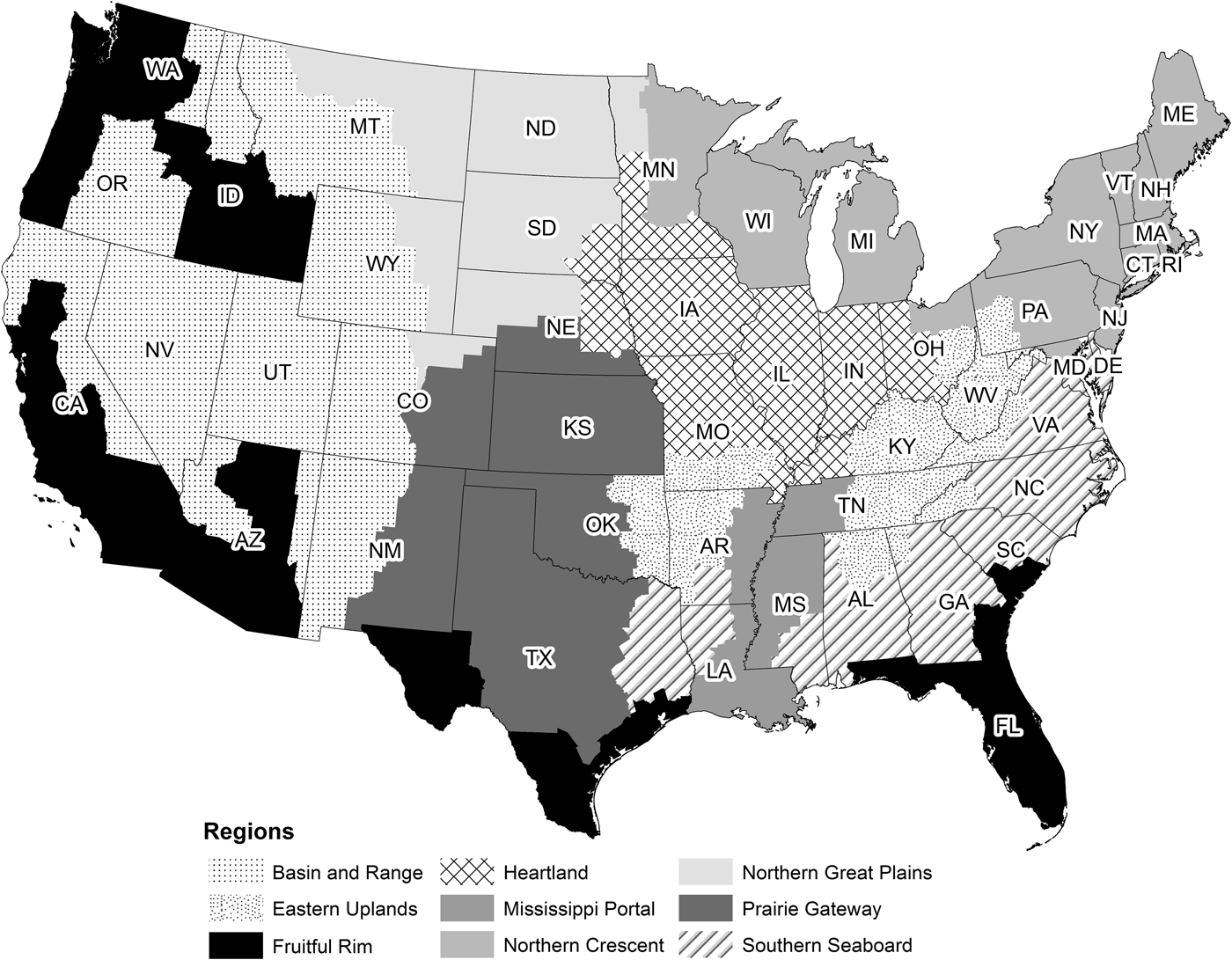
Operations were categorized based on animal type, farm sales in 2010 and geographic region for analysis and reporting. Operations that raised only one animal type were classified into 1 of 5 categories: beef cattle, dairy cattle, swine, poultry and sheep/goats. Sheep and goats were considered as one animal type. Operations that raised more than one animal type were classified into a single animal type category called mixed operations—a classification that could have implications for management and disease spread risk. Operations that exclusively raised other animal species (e.g., horses, bison) were excluded from analysis (see inclusion criteria). Categories for farm sales in 2010 were collapsed into the following five categories: <US$10,000, US$10,000 to 49,999, US$50,000 to 99,999, US$100,000 to 249,999 and US$250,000 or more. The geographic region categories were based on USDA–ERS Farm Resource Regions (Fig. 1).
USDA Economic Research Service farm resource regions. Reproduced, with permission, from the American Veterinary Medical Association.

Descriptive statistics were calculated to describe the sample of study respondents by survey response mode (phone versus mail), animal type, farm sales in 2010 and region. Descriptive statistics (5th, 25th, 50th, 75th, 95th percentiles and maximum value) were calculated for distance (miles) for movements of animals, products and feed (continuous variables). Because the majority of small-scale operations were cattle operations, descriptive statistics for movement distances were calculated by region for cattle operations only. Operations with missing data for a given variable were excluded from the analysis for that variable. Descriptive statistics and Box–Whisker plots were generated using a commercial statistical software package (SAS Version 9.2, RTI International, Research Triangle Park, NC).
Results
Survey respondents
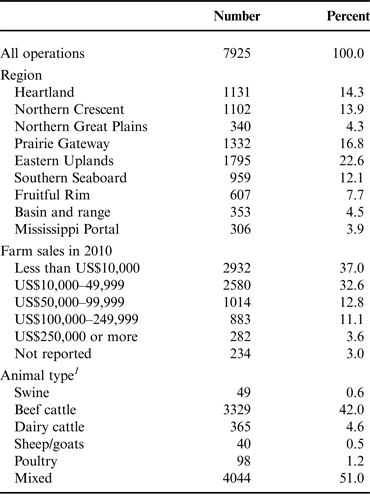
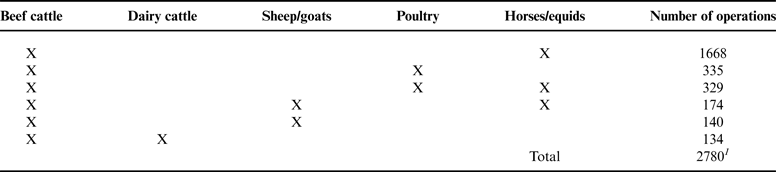
Of the 16,000 operations selected for the NAHMS study, 8186 (51.2%) completed the questionnaire, 1329 (8.3%) were ineligible because they no longer raised farm animals in the 12 months prior to the study, 4905 (30.7%) were not successfully contacted and 1580 (9.9%) refused participation. Of the 8186 respondents, 261 were excluded from this analysis because they had no inventory of cattle, swine, poultry, sheep or goats (these operations exclusively raised other species, such as horses). Therefore, 7925 operations were used for this analysis. Surveys were completed via mail for 4229 (53.4%) operations and via telephone interview for 3696 (46.6%) operations. The distribution of study respondents’ operation characteristics is shown in Tables 1 and 2. Among mixed operations, the most common species combination was beef cattle and horses (Table 2).
Distribution of operation characteristics (i.e., region, farm sales in 2010, and animal type1) for respondents to a 2011 survey of small-scale food-animal operations in the United States.
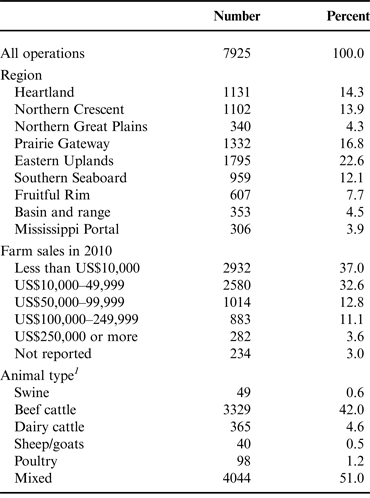
1 Operations with only one animal type were classified into five categories: swine, beef cattle, dairy cattle, sheep/goats and poultry. Sheep and goats were considered to be one animal type. Operations with more than one animal type were classified into a category called mixed operations.
Frequency of common animal type combinations on mixed small-scale US food-animal operations.
1 1264 mixed operations had other combinations of animals.
Distances for movements of animals, products and feed
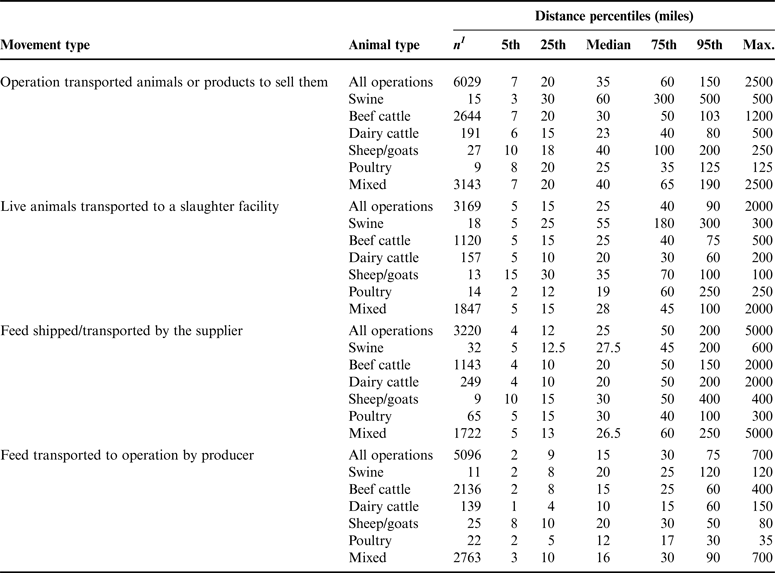
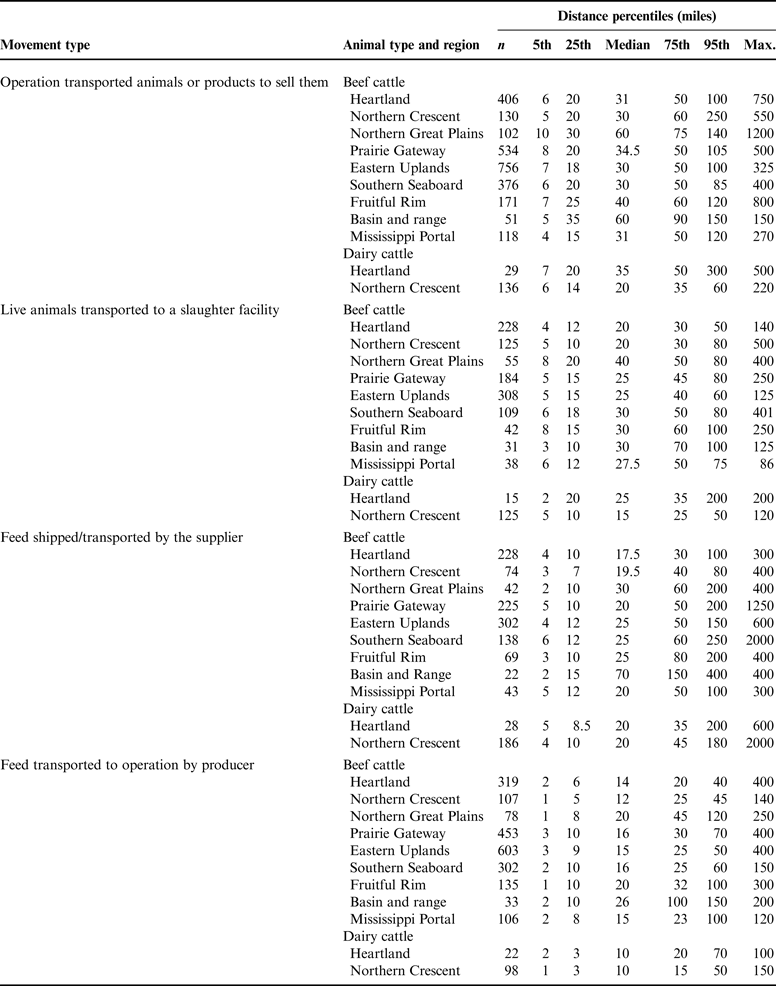
The distributions of responses for the farthest distance traveled for movements of animals, products and feed are summarized in Table 3. Some small-scale operations did not engage in a subset of movement types. For example, 81.1% of respondents (6176 of the 7616 operations that answered this survey question) had transported animals or products to sell them, and 6029 respondents reported the farthest transportation distance for this type of movement (Table 3). Similarly, 42.1% of respondents (3270 of the 7763 operations that answered this survey question) reported they transported live animals to a slaughter facility, and 3169 respondents provided the transportation distance. For feed sources, 43.0% of respondents (3322 of the 7722 operations that answered this survey question) had feed shipped from a feed supplier, and 3220 respondents provided the transportation distance from the feed supplier. In addition, 68.1% of respondents (5195 of the 7625 operations that answered this survey question) reported that the producer transported feed to the operation, and 5096 respondents reported the farthest transportation distance.
Descriptive statistics for the farthest distance (miles) to destinations for selling animals or products, slaughter facilities and feed sources for small-scale US food-animal operations.
1 Of the 6176 operations that reported transporting animals or products to sell them, 6029 answered the survey question about distance and 147 questionnaires had missing responses for distance. Similarly, there were 101, 102 and 99 questionnaires with missing responses for distance to slaughter facility, distance for feed shipped by supplier and distance feed was transported by producer, respectively.
Among operations that transported animals or products to sell them, 75% reported the farthest distance was 97 km (60 miles) or less and 95% of operations reported 241 km (150 miles) or less (Table 3). Among beef cattle operations, 95% of operations reported the farthest distance to locations for selling animals or products was 166 km (103 miles) or less, but the maximum reported distance was substantially higher at 1931 km (1200 miles) for beef cattle operations (Table 3).
Among operations that had animals transported to a slaughter facility, 75% of operations reported the farthest distance to the slaughter facility was 64 km (40 miles) or less and 95% of operations reported 145 km (90 miles) or less (Table 3). However, 25% of swine operations (n = 18) transported pigs 290 km (180 miles) or more to slaughter facilities, 5% of small ruminant (sheep and goats) or mixed operations transported animals 161 km (100 miles) or more, and 5% of poultry operations (n = 14) transported animals 402 km (250 miles) or more (Table 3). The median for the farthest distance traveled for feed shipped by a supplier ranged from 32 to 48 km (20–30 miles) for the various animal types (Table 3). The maximum reported distances for feed shipped by a supplier varied by animal type, ranging from 483 km (300 miles) for poultry operations to 8047 km (5000 miles) for mixed operations. For all movement types, the maximum transportation distance was reported by an operation classified as mixed animal (Table 3).
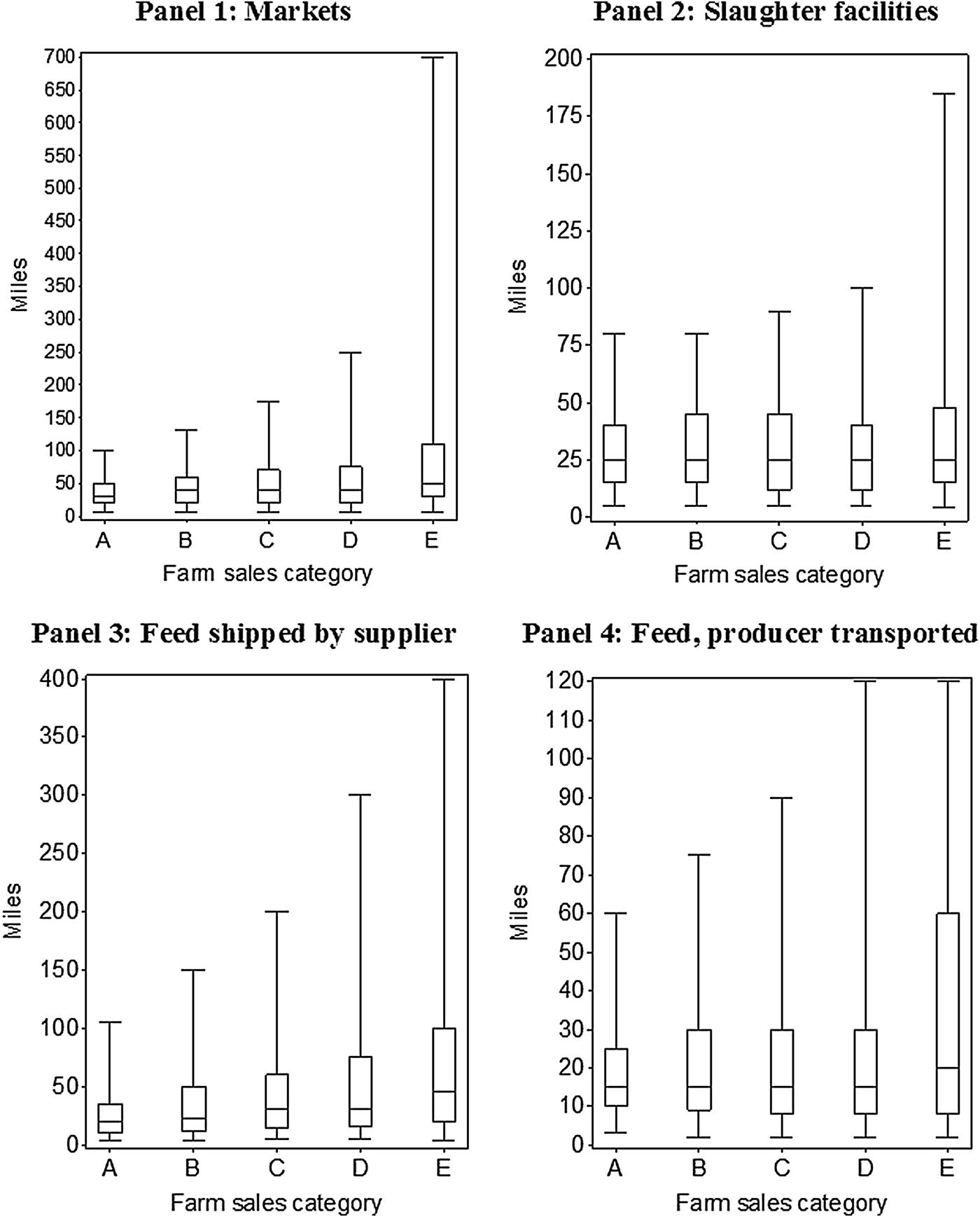
Movement distances by region for cattle operations are summarized in Table 4. Across regions, beef cattle operations in the Northern Great Plains region had the highest median distance to a slaughter facility [64 km (40 miles)]. For feed transported by a supplier, the median distance was highest for beef cattle operations in the Basin and Range region [113 km (70 miles)]. These findings are consistent with the lower density of population and commerce in those regions. Median transport distances were similar across different farm sales categories, but the 95th percentile for reported distance tended to increase as farm sales increased (Fig. 2). However, specifically for distance to slaughter facilities, the 95th percentile was similar across farm sales categories from US$10,000 to 249,999.
Transportation distances (miles) on small-scale US food-animal operations, by farm sales category. (Panel 1) Farthest distance animals or products were transported to sell them, (Panel 2) farthest distance animals were transported to a slaughter facility, (Panel 3) farthest distance feed was shipped/transported by the supplier and (Panel 4) farthest distance feed was transported to operation by producer. Boxes show the median and quartiles; whiskers show the 5th and 95th percentiles. Farm sales categories: A = gross annual sales <US$10,000, B = US$10,000 to 49,999, C = US$50,000 to 99,999, D = US$100,000 to 249,999 and E = US$250,000 or more.
Regional1 descriptive statistics for the farthest distance (miles) to destinations for selling animals or products, slaughter facilities and feed sources for small-scale cattle operations.
1 Some regions are excluded due to small sample size.
Discussion and Conclusions
This article described movement distances to animal feed sources, locations where animals or products were sold, and slaughter facilities for small-scale US food-animal operations. We specifically described the farthest distance traveled to these destinations to provide a worst-case scenario of how far disease could spread in the event of an outbreak, and to understand the maximum distances traveled by operations for marketing their animals or products. We found that most operations reported the farthest movement distances for feed, animals and products were <64 km (40 miles), while a low percentage of operations reported very long-distance movements [8047 km (5000 miles)]. The right-skewed distribution for movement distances observed in our article was consistent with animal movement data from the UKReference Vernon18 and SwedenReference Lindstrom, Sisson, Noremark, Jonsson and Wennergren29. Through an economic and business lens, these maximum distances may represent the affordable limit for transportation costs or, possibly, inefficiencies in marketing costs due to insufficient infrastructure for independent marketing channels in some regions of the country where we report right-skewed distributions of distances traveled.
This article included operations with at least one head of cattle, swine, poultry, sheep or goats, because we considered these to be the core livestock species in US agriculture. Some limitations of this analysis include that more than half of respondents (51.0%) raised more than one animal type. Because the study questionnaire did not ask which type of animal or product was moved, we reported results separately for operations that raised only one animal type. For mixed operations, it was not possible to determine which species of animal was being moved. Some operations reported they did not engage in movement of animals to slaughter or movement of animals and products for sale. It is possible the operations did not move animals to these destinations; on the other hand, it is also possible that producers did not report movements of animals or products because someone else (a marketing chain partner) was responsible for their transportation or sale.
Given its focus on small-scale food-animal operations, selection criteria for this study were based on having gross annual farm sales between US$10,000 and 499,999 during 2007–2009. Sales data for 2010 were collected on the survey questionnaire. We found that 37.0% (n = 2932) of responding operations had sales less than US$10,000 in 2010 and 66 operations (0.8%) had sales of US$500,000 or more. Because the selection criteria were based on farm sales during 2007 to 2009, these farms were still part of our target population. Some fluctuation in farm sales is expected from year to year. For many operations, recent economic conditions may have caused a decrease in animal numbers, and thus, gross sales may have declined since the list frame data were collected. We think the results in this article are generalizable to the US population of small-scale food-animal operations with annual sales between US$10,000 and 499,999 from 2007 to 2009 since a representative sample of farms was selected from a comprehensive list frame using these selection criteria. Furthermore, we think that both the selection criteria and the data on farm sales in 2010 are useful in understanding the population described in this article.
In some parts of the US, access to slaughter facilities may be a challenge for small-scale operations that wish to market their meat products directly to consumersReference Goodsell, Stanton, McLaughlin and Reith2, Reference Lewis and Peters3. This creates a potential market barrier and risk to independent producers dependent on surrounding supply chain businesses to carry out their business model. In contrast, some commodities (e.g., swine and poultry) are predominantly produced in a vertically integrated industry structure. Under vertical integration, a company (integrator) manages multiple steps in the supply chain. For instance, in the poultry industry, the majority of chicken meat is produced by companies that manage the entire process from the hatchery to processing of the final consumer product. Under vertical integration, the company owns the chickens and provides feed and veterinary services, while the producer provides the housing and labor for raising the birds. Such integration assures that necessary supply chain activities are provided by the ‘parent’ company. However, vertical integration may affect availability of slaughter facilities for independent producers in areas where vertical integration has become the ‘norm’ and could increase distance to slaughter facilities for those whose business strategies require them to retain ownership of their animals throughout the entire supply chain and value-added processing stage.
Other researchers have shown that long-distance transport to slaughter facilities can affect animal welfare, meat quality and food safetyReference Grandin30–Reference Torrey, Bergeron, Faucitano, Widowski, Lewis, Crowe, Correa, Brown, Hayne and Gonyou35. Perhaps that is why an emerging set of meat marketing strategies give assurances to customers about animal handling, but the need to transport long distances to retain ownership may run counter to the intended mission to assure a high quality animal product to those consumers.
Despite these concerns about long-distance transport, few peer-reviewed studies previously described slaughter transport distances in the USReference Dominguez22, Reference Marshall, Carpenter and Thunes36. Thus, data from the present article provide the context for future exploration of the relationships of distance with animal welfare and meat quality for small-scale operations. For instance, 95% of operations in the present analysis reported a maximum distance of 145 km (90 miles) or less to the slaughter facility, which suggested there were minimal animal welfare and meat quality concerns related to transport distance for the processing phase of the supply chain in this population overall. However, in this article, results suggested that a shortage of slaughter facilities may exist for 5% of small-scale swine and poultry operations, because the 95th percentiles for transport distance were 483 km (300 miles) and 402 km (250 miles), respectively, for these operation types. This may be associated with the higher level of production contracts used in these sectorsReference MacDonald and Korb37, suggesting that those producers who remain independent of processor contracts may have fewer options available when seeking a processing partner. Overly sparse supply chain infrastructure, such as these stated distances to slaughter, could increase the risk of widespread disease dissemination and create a financial burden on small-scale operations.
Among the small-scale operations in this analysis, the medians for movement distance were similar across operation sizes, but the 95th percentile for movement distance increased as farm sales increased. In some cases, area markets for commodities (e.g., feed) and products (e.g., milk) may not have been able to accommodate these relatively larger (though still small-scale) producers. In addition, economies of scale may have encouraged these producers to participate in markets and seek out feed sources that were farther from the farm. Other researchers also found a positive association between farm income and distance traveled to farmer's markets in West Virginia, and suggested that traveling farther to reach urban markets was lucrative for farmersReference Brown, Miller, Boone, Boone, Gartin and McConnell38. Future studies could explore movement distances to markets, slaughter facilities and feed sources on operations with sales of US$500,000 or more as a comparison to this study, but Low and Vogel (2011) note that direct market supply chains are most prevalent among small farmsReference Low and Vogel25. Thus, we assume that the 95th percentile for movement distance may ultimately decline as operation size gets larger, since larger operations may be able to support their own supply chain infrastructure. In this study, we did not gather specific information on distances traveled for direct marketing of products to consumers. Direct marketing is fairly common in this sector of agriculture27 and the most recent Census of Agriculture shows there is also a sizeable group of producers selling directly to restaurants or through intermediaries (such as food hubs), which may influence these distances going forward. Future studies could focus specifically on distances related to direct marketing.
Regional differences in transportation distance appear to correspond to variations in the density of human populations and business firm locations across all economic sectors. For instance, the median distance to destinations for selling animals and products was highest in the Basin and Range and Northern Great Plains regions, both of which have rural areas with sparse human populations. However, longer transportation distances in these regions are important to note given the importance of agriculture to the economies in these regionsReference Nickerson, Ebel, Borchers and Carriazo39, 40, and the risk of disruption that these distances may represent during catastrophic or unusual events.
In this article, differences were also seen in movement distances across different animal species. These variations by animal species are likely related to production and marketing differences for the various species. For example, cattle have a long production life cycle compared to meat chickens, and some species (e.g., poultry and swine) are predominantly produced in a vertically integrated industry structure. Furthermore, some commodities are marketed on a daily basis (e.g., milk in a dairy operation) while others are marketed once annually (e.g., calf crop in a cow–calf operation). These production and marketing differences may explain some of the managerial differences that would affect movement distances and may play an important role in producers’ marketing and farm management decisions.
This article provides valuable new data on distances for movements that were not previously described, or were minimally explored in the literature for small-scale food animal operations in the US. This information may be useful for understanding the spatial factors that may influence producers’ marketing and management decisions, and for comprehending movements and distance factors that could impact the risk of disease spread for this segment of the industry.