Do colonized peoples have a future? For much of the nineteenth century, colonists of North America and of the Antipodes thought that contact with a superior social order had revealed the fatal inadequacy of indigenous civilizations.Footnote 1 Native extinction could come in more than one form: natives were dying at unsustainably high rates from disease and violence (physical destruction); they were intermarrying with aliens (genetic attenuation); they were rapidly losing their distinctive civilization (acculturation). Responses to these projections included anguished regret and resignation, urgent intervention, and celebration. To write the history of colonial senses of native futurity we must develop many strands.
In this paper we will explore one such strand: the assertion that native peoples could survive if their adaptation were thoughtfully managed. A small network of Europeans working in Britain, Western Australia, and New Zealand operationalized the concept of “protection” as practices of knowledge and government, in particular the techniques and the optimism of the statistical movement and the public health movement. They believed that a program of native improvement had to be conceived in the environmental terms that were then being established for understanding and managing the British poor and the British child. Like the intellectual pioneers of British public health, these colonial humanitarians were keen to document problems and solutions in terms of population statistics.
The paper proceeds as follows: First, we will trace briefly the intellectual links between “protection,” statistics, and an environmental understanding of population vulnerability. Here we introduce the central figures in our Antipodean narrative. In the second and third sections, we review “population knowledge” about the native peoples of Western Australia and New Zealand in the 1830s to 1850s. We argue that in both colonies population knowledge was, during this period, mostly a speculative discourse actuated by security concerns and expressing a conventional demographic pessimism. In our next section we describe Francis Dart Fenton's 1859 commentary on the Maori population, as innovative in method and theme. The fifth section examines Florence Nightingale's response to Fenton's report and her engagement with Benedictine missionary Rosendo Salvado. We conclude by arguing that while these three figures did not prove by statistical reasoning that their hopeful techniques of managing and improving would save native peoples, their insistence that native peoples be represented as quantifiable, physical entities was a notable achievement in itself, offering as it did an alternative to idioms of description that presented indigenous peoples in terms of their primitive spirituality, psychology, and civilization. Through their materialism and environmentalism, these three quantifiers of natives (notwithstanding that they also were Christian) presented natives not as doomed races but rather as human aggregates that could be rendered governable through knowledge of their physical needs and capacities.
HUMANITARIANISM AND STATISTICS
In 1837, a House of Commons committee reported on the destruction of native peoples under British authority. The Report of the House of Commons Committee on Aborigines in British Settlements, known by the name of its chair, Thomas Fowell Buxton, proposed techniques of colonial “guardianship.” Lester has described the Buxton Report as “the definitive humanitarian analysis of the evils of settler-led colonialism and of unreconstructed colonial government.”Footnote 2 Its “corrective moral vision,” he writes, “lay at the heart not just of a specifically colonial humanitarian sensibility, but of early nineteenth century bourgeois reformist discourse as a whole.”Footnote 3
As “bourgeois reformist discourse,” the Buxton Report was attentive to the design of government, and so sketched a new government office—the “protector.” As well as taking steps to “civilize,” the protector was to report native numbers: “It is probable that the depopulation and decay of many tribes which … have sunk under European encroachments, would have been arrested in its course, if the progress of the calamity had from time to time been brought distinctly under the notice of any authority competent to redress the wrong. In many cases, the first distinct apprehension of the reality and magnitude of the evil has not been acquired until it was ascertained that some uncivilized nation had ceased to exist.”Footnote 4 With the exception of Laidlaw and Lester, historians have paid little attention to the protector as data collector.Footnote 5
Ian Hacking has documented the increasingly prolific “making up” of populations in late eighteenth and early-nineteenth-century Europe—the accelerated development of a “style of reasoning” called “statistical analysis of regularities of populations.”Footnote 6 The Buxton committee exemplified the intellectual and political movement in the 1830s to make “statistics” central to the public consideration of the social. The social and political turbulence of that decade made it desirable to know, via statistical tables, “the condition of England.”Footnote 7 The British Association for the Advancement of Science, founded in 1831, created a “statistical section” (F) in 1833. The Statistical Society of London commenced in 1834. A statistical office was set up under G. R. Porter at the Board of Trade in 1832, who in 1836 published The Progress of the Nation, a compilation of statistics intended to reveal the whole social system. In 1837 the General Register Office was created to collect vital statistics and to supervise a greatly expanded census beginning in 1841. By 1838, the Statistical Society of London was referring to its intellectual program as “social science.”Footnote 8 The Colonial Office was both a participant in and a product of the latest governmental thinking when it increased the headings under which it demanded more and more frequent statistical reporting via the Blue Books, in the years 1822–1837.Footnote 9 If the “condition of England” was open to statistical study, so too was the condition of the Empire's natives.
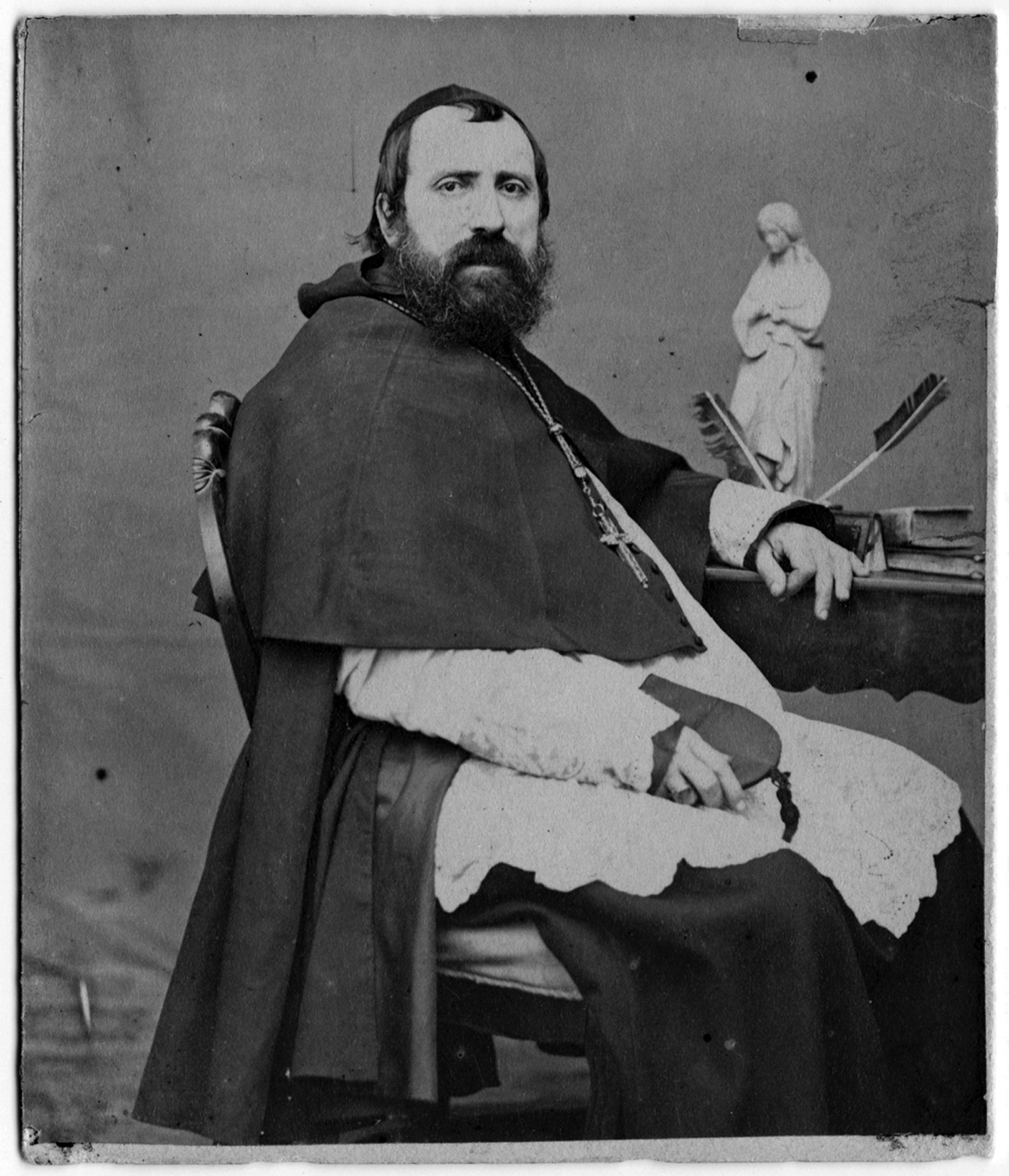
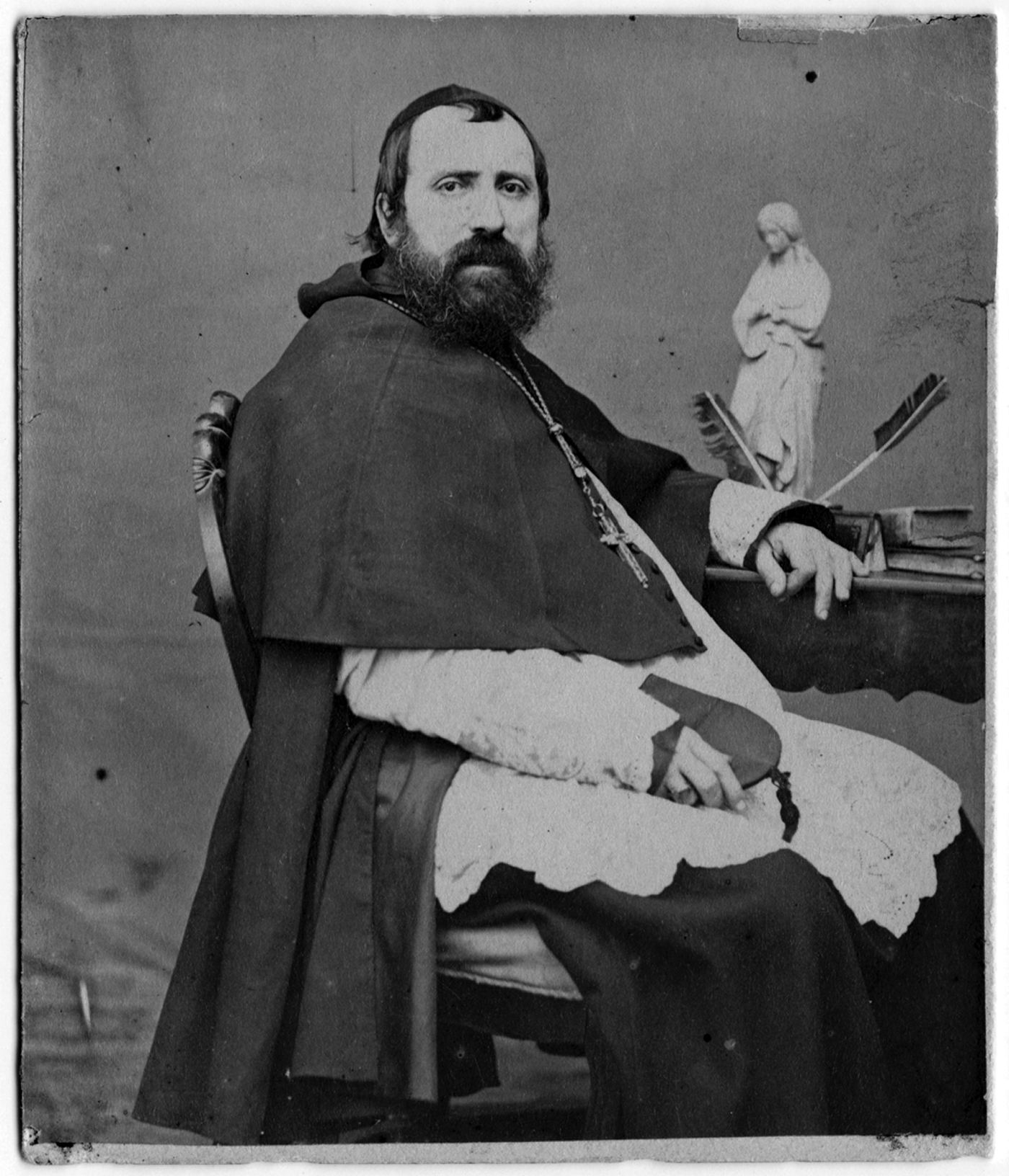
We will focus on three people who produced and circulated statistical knowledge of Antipodean indigenous peoples: Bishop Rosendo Salvado (1814–1900) in Western Australia, Francis Dart Fenton (1821–1898) in New Zealand, and Florence Nightingale (1820–1910) in Britain. Salvado founded the New Norcia mission north of the Swan River colony in 1847. As well as promoting agriculture, from the late 1850s he collected population statistics to include in reports to government and church authorities. Salvado used New Norcia data to promote his views about how to avert depopulation. In the 1860s, his statistical reporting boosted his intellectual authority among officials and others of humanitarian disposition.
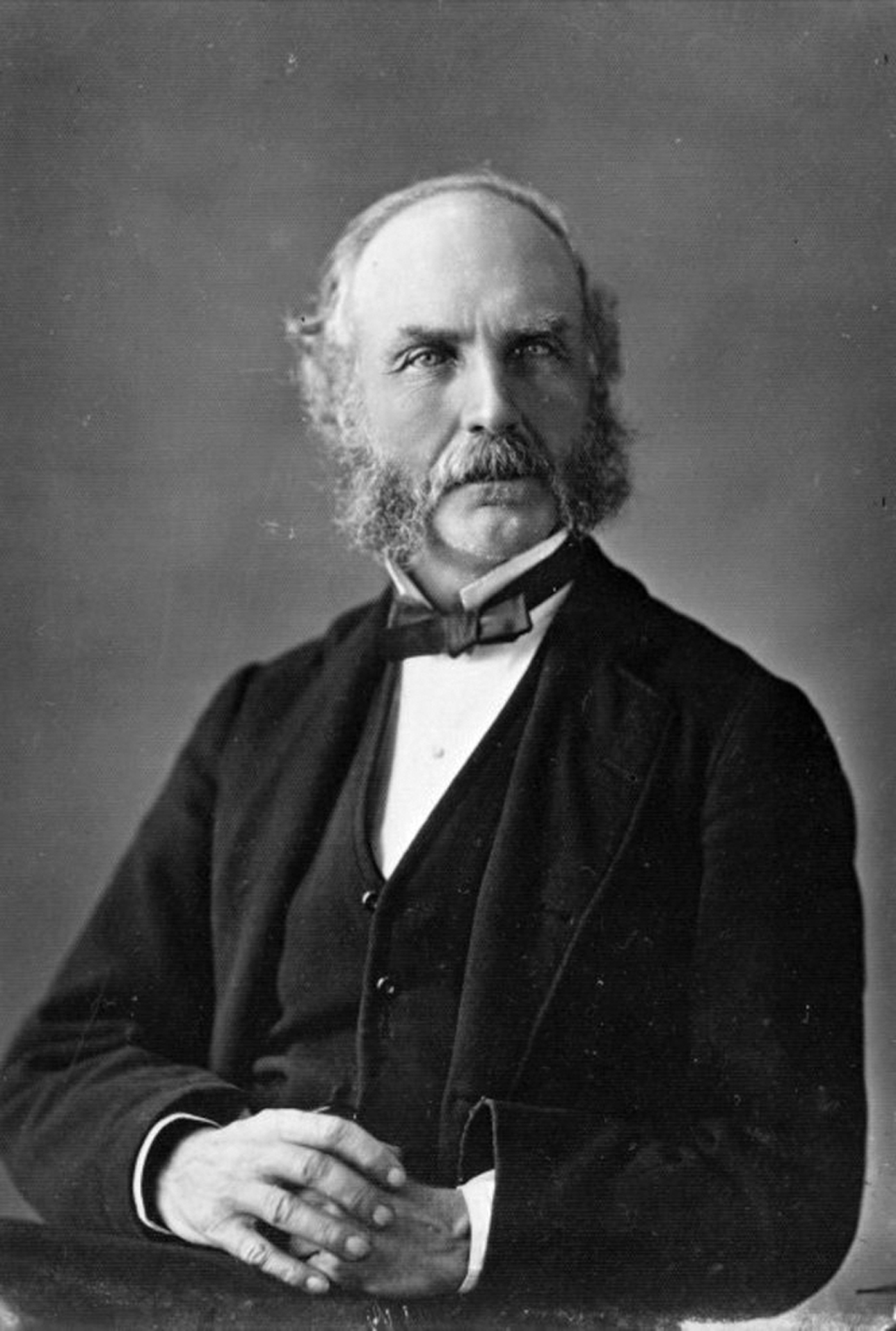
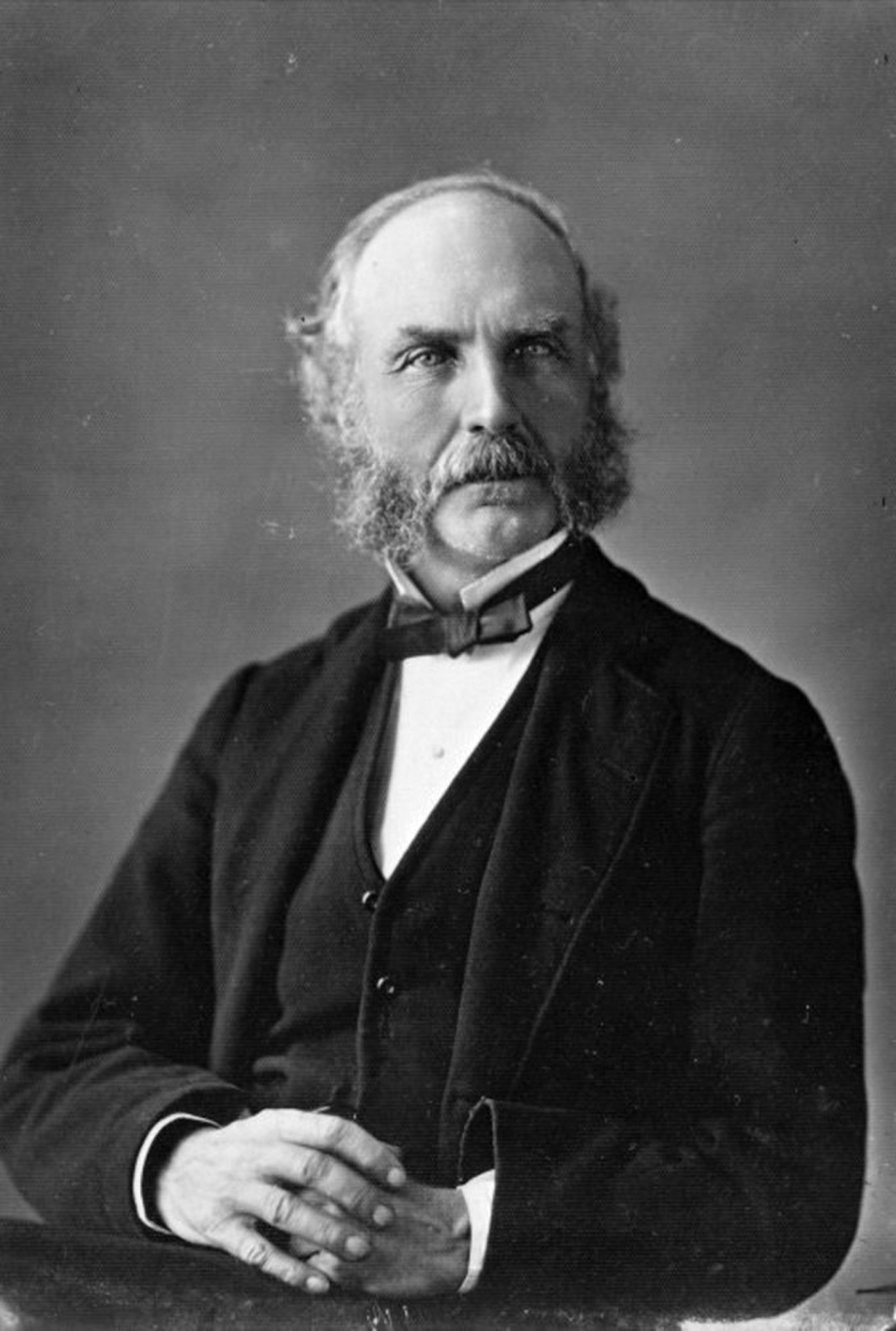
Fenton arrived in New Zealand in 1850, settling at Paetai near Taupiri in the Waikato. He learned to speak Maori. His block was 20 miles downriver from the Maraetai mission of the Church Missionary Society (CMS), under the Society's Robert Maunsell. Fenton met and impressed George Grey when the governor was visiting Maunsell's mission, and he accompanied Grey on his tour of the Waikato before taking up the job of register of deeds in Auckland. From 1852–1856, Fenton served as resident magistrate in Kaipara, north of Auckland, and in March 1856 he became native secretary.Footnote 10 Governor Gore Browne appointed Fenton resident magistrate in Waipa and Waikato in May of 1857. In 1858, he compiled such Maori population data as he could find and presented solutions to Maori decline.
“Francis Dart Fenton – a portrait from the 1870s.” Photographer unknown. Courtesy Alexander Turnbull Library, Wellington, New Zealand. Ref. PAColl-7489-01.
Nightingale arose from a British milieu in which the quantification of social phenomena was believed to be an essential step toward a better society. In 1853 she had distributed throughout European hospitals a questionnaire on health administration whose results she tabulated and applied as superintendent of an institution for “Sick Gentlewomen in Distressed Circumstances.” Subsequently, as a nurse to the wounded in the Crimean war, she urged reform of military health administration and in 1857 contributed her analysis of soldiers' mortality to a Royal Commission on the sanitary condition of the British Army. Nightingale's modus operandi was to argue from population data that she collected and analyzed, presenting accessible diagrams to make her point. One of her associates and mentors was “the most celebrated author of the laws of sickness,” William Farr, a doctor appointed to the General Registry Office. Farr influenced public health policies with his collations of statistical information on the health of England, an example being his Report on the Mortality of Cholera in England 1848–9 (1849).Footnote 11 Diamond and Stone noted Nightingale's “mystical belief that through statistics the laws of the world could be determined, which constituted the laws of God.”Footnote 12
Each of these three intellectuals was committed to counting certain features of native populations and using their findings to influence policy-making. Salesa has pointed out, “The colonial government was proud of” Fenton's Observation on the State of the Aboriginal Inhabitants of New Zealand (1859) “and disseminated it widely throughout the Empire.”Footnote 13 Nightingale, as we will see, was one of Fenton's more critical readers. In 1860, she corresponded with Salvado about his work at New Norcia Mission, and with George Grey about the implications of Fenton's 1859 account of the Maori population. In subsequent publications, Nightingale drew international readers' attentions to what she saw to be the lessons of Salvado's work. The circulation of Fenton's and Salvado's population reports enacted in British colonies of settlement the ambition of the “statistical movement” to render an informed, quantitative account of social problems. The imperial intellectual network that connected Grey with Fenton, Nightingale with Grey, and Nightingale with Salvado focused on two concerns of Victorian reformers: the health of children and youth, and the survival of native peoples.
In the early Victorian era, while advocates of statistics believed “the confusion of politics could be replaced by an orderly reign of facts,”Footnote 14 their pursuit of “facts” was influenced by what they believed and by what they thought they knew about the nature, sources, and remedies for the biological and social disorder of a governed population. Cullen has argued that the early statisticians' ideology of “improvement” combined environmentalism (which pointed to the insalubrious physical environment) with moralism (which highlighted the culpable indiscipline of the poor). “Within the statistical movement,” writes Cullen, “education and sanitary reform were … normally seen as complementary parts of the same programme.”Footnote 15 Education emerges in Cullen's account as the more important side of this pair. Reviewing the terms in which the early British statisticians represented Britain's urban poor, he elucidated their collective view that “the break down in social harmony” in Britain in the 1830s and 1840s had to be repaired by “a combination of physical, moral, and intellectual instruction.”Footnote 16 For those concerned with the Antipodean colonies, the degrading environment of the Australasian native was not the British statistical movement's noisome city or dangerous factory, but rather the itinerant domestic economy of the “savage,” and the colonists' unregulated land-taking and immoral, violent conduct. The urban poor of Britain, as wage laborers in an industrializing economy, would have to be “improved” in their towns and cities. Improvement of the natives of Australia and New Zealand—once reformed colonial law and administration had restrained the predatory colonists—would require changing how natives lived off the land.
Fenton and Salvado were among many colonists of Australasia who saw colonization as an opportunity to stage the material and moral improvement of backward peoples. To prosecute the physical, moral, and industrial dimensions of “civilization” required thoughtful institutional innovation within the school (classrooms, dormitories), the house, and the farm. Aborigines would be initiated into agriculture. Salvado wished to reconstruct Aboriginal sociality to form family units, each farming a holding at the mission.Footnote 17 The Maori were already growers and traders of crops, but improvers such as Fenton hoped to change their approach to farming, individualize their tenure, and intensify their use of land. He shared the widespread colonial view that Maori had more land than they needed and therefore could afford to sell land to the Crown authorities for resale to British colonists. They would benefit from farming more efficiently the land that they retained.
For both Maori and Aborigines, the transition to modern forms of agriculture would require that they become sedentary. In Salvado's practice, and in the CMS villages that Fenton admired along the Waikato River, the children were the priority candidates for settling natives, since it was essential to habituate them to school. In the environmentalist approach to “native protection” exemplified by these measurers of native populations, agriculture and schooling were thought necessary for native children, but sad experience suggested that poorly designed schooling might ruin the physiques of native youth, and so this had to be avoided. In his correspondence with Florence Nightingale, Salvado explored the risks of confining young Aborigines.
One of our purposes here is to show that it was not only governments that produced population knowledge in nineteenth-century colonies of British settlement: in both Western Australia and New Zealand its production was led by non-state authorities. This observation complicates a contrast drawn by Russell McGregor between Australia and New Zealand, when he argues persuasively that whereas Australia's colonial authorities were not committed to gathering native population data and were generally fatalistic about Aborigines' extinction, New Zealand authorities were more committed to data gathering and more skeptical of racial pessimism.Footnote 18 But if we shift our attention from government to mission authorities, the contrast across the Antipodes is not so sharp. In the situations of severely limited state capacity common to the Antipodean colonies during the period covered by this paper (the 1830s to 1860s), certain missionaries were pioneering collectors and analysts of population knowledge. Their small-scale experiments in demographic optimism were a significant step in the formation of governmental intelligence about native peoples, and their work drew the attention of the statistics-wielding public health advocate Florence Nightingale.
Before we detail the population knowledge produced by Salvado and by Fenton, we must review the difficult early steps in gaining colonial knowledge of native populations in Western Australia (where British authority began in 1829) and in New Zealand (1840). It was many years after colonial authorities asserted sovereign authority before they acquired the capacity, in either New Zealand or Western Australia, to measure accurately, at different points in time, the native populations within their territorial jurisdictions. The difficulties of counting nomads in Western Australia were explored by the Colony's 1870 census report:
So as to be able to form some approximate estimate of their entire numbers, divided into male and female adults, and male and female children, I sent Circulars to the several Resident Magistrates, seeking the best information they could collect, and suggested that valuable assistance might be obtained from the Police Officers in each District in this Service. The Magistrates were further requested to report on the numbers who have received any sort of education, or have been trained to habits of industry, as also on their Social condition, and whether their numbers are decreasing, and the cause. The result of this measure is not at all satisfactory, as affording anything like correct data of the number or Social condition of the Natives.Footnote 19
In New Zealand also, the colonial authorities admitted to administrative incapacity. The government first attempted a total native census in 1874, but as late as 1896 enumerators reported they could not complete their counts in some districts. Not until 1901 could Gilbert Mair claim that his staff in Eden, Manukau, Waikato, Raglan, Kawhia, Waipa, Piako, Ohinemuri, Thames, and Coromandel had visited “every settlement and dwelling place.”Footnote 20
Yet long before the Antipodean authorities had the capacity to count everyone across the territories, there was much discussion, both well and badly informed, of the sizes and the trends of native populations in certain regions. The resulting, common pattern of unwarranted extrapolation of limited observations to wide areas was “colonial population knowledge” of a kind. While the methodological shortcomings of such “knowledge” must torture the historical demographer, they do not impede our inquiry, because we are interested not in the actual characteristics of Aboriginal and Maori populations but rather in the themes of colonial discourses within which native peoples were represented in statistical terms.
COUNTING WESTERN AUSTRALIAN ABORIGINES INTO THE 1850S
Western Australia's Swan River settlement was established in 1829, and when Governor Stirling received the Western Australian colony's charter in January of 1832, he found himself in charge of a third of the continent. He could only speculate about how many Aborigines lived in that vast territory or how they might be distributed. That April, he surmised that “the Aboriginal Tribes” were “pretty equally spread over the whole Surface of the country on the conjectural average of one to each square mile.”Footnote 21 Security concerns further actuated Stirling's interest when settlers harassed by Aborigines asked him to appoint “an agent to go among the Natives to endeavor to conciliate them with a view to the adoption of such ulterior measures as shall appear desirable.”Footnote 22 On 1 August the Executive Council appointed Captain T. T. Ellis superintendent of Native Tribes and Mr. Charles Norcott as his assistant, with duties that included investigating the natives regarding “their haunts, numbers, disposition and personal qualifications, and their movements.”Footnote 23 Thus began official counting of Aborigines in Western Australia, and Ellis' and Norcott's monthly reports to the Executive Council soon demonstrated its difficulty. They staged a daily ration supply, but the number of Aboriginal people who attended these varied markedly from over a hundred to none at all, making it difficult to draw any conclusions whatsoever about the “population.”Footnote 24
Ellis was speared to death in a clash between soldiers and Aborigines in October 1834, and the following July Stirling offered his strategic assessment of the Aboriginal threat. Aborigines would be “very formidable enemies” of settlement were they to combine, but “they are incapable of acting together upon any pre-concerted plan.” He wrote also, “The aboriginal race must gradually disappear as the country is occupied….”Footnote 25 He appointed Francis Armstrong as the new superintendent of Aborigines—their “guardian and protector.” By May 1836 Armstrong had begun a statistical return for the Aborigines living around the settled districts. He released his early findings to the Perth Gazette in late 1836 and a final census report in 1837. After writing down “the names of every individual in most of the Swan Tribes,” he concluded that “the total number, including women and children, who are in the habit of visiting Perth, Guildford, Fremantle and Kelmscott, are estimated at nearly seven hundred; of whom the Interpreter can recognize, at sight, four hundred at least.”Footnote 26 Ellis had conducted his count from the Mt. Eliza station where Aborigines came in to receive rations. Armstrong was based at Mt. Eliza but was more mobile than Ellis had been, and this allowed him to get to know more people and to define what he saw as their “tribal boundaries.” He enumerated Perth, Guildford, Fremantle, Kelmscott, Pinjarra, and Murray River—all settled districts where people wanted protection from the natives.
Stirling in June 1837 set out his own opinions and estimates in a Statistical Report Upon the Colony of Western Australia. It ignored Armstrong's 1837 count, and focused on the theme of the unlikelihood of Aborigines conducting a concerted military campaign against colonists. Stirling wrote that it was “impossible to give any accurate account of their numbers; 750 have been known to visit Perth from the districts surrounding it to the extent of 40 miles each way.”Footnote 27
In February of 1839, Stirling was succeeded by John Hutt; whereas Stirling had been preoccupied with security, Hutt saw Aborigines as people to be “civilized,” and feared they would die out.Footnote 28 His two Aboriginal protectors were Perth-based Charles Symmons, who looked after “the whole line of coast from Perth to Augusta including all the locations, on this side of the hills on the Murray, Canning and Swan Rivers,” and Peter Barrow, based in York and controlling the stations from Toodyay to Williams River.Footnote 29 Henry Bland soon took over from Barrow as protector at York. From August 1840 there was an additional enumerator, the Wesleyan missionary Reverend Smithies, whose schools for Aborigines in Perth, Guildford, and Fremantle received government funds so long as they regularly reported strong Aboriginal attendances.Footnote 30
Governor Hutt was influenced by reports and statistics collected by explorer and advocate of “civilization,” George Grey. In 1837–1839, Grey had compiled a genealogy of Aborigines living around King George Sound, much more detailed than Armstrong's lists of 1837. His recommendations to Hutt and Lord John Russell in June 1840 offered a remedy to the colony's labor shortage: rewarding settlers who employed and trained Aborigines residing on their properties.Footnote 31 This Aboriginal employment policy was the context of Aboriginal Protector Symmons's first census of Aborigines for his district on 31 December 1840.Footnote 32 The York Protector Peter Barrow, however, found the Aboriginal population uncountable even in the settled districts. He reported in March 1841 that he had “visited every part of my field of labour, from the most northern to the most southern settlements … and have seen many of the natives; my knowledge, however, of their numbers is but scanty, nor is easily acquired. I am endeavouring to make a census of the black population, but this must of necessity be a work of much time.”Footnote 33 Francis Whitfield, the magistrate for the Toodyay/York region, compiled a list for the Toodyay district,Footnote 34 and Henry Bland, government resident of York and protector of the Aborigines after Barrow, prepared a list of Aborigines in the Avon, Albany, and York districts.Footnote 35
Without administrative coverage of the entire territory of Western Australia, officials in the period up to 1850 enumerated Aboriginal populations that were called into being by government initiatives. That is, certain actions constituted a “knowable” Aboriginal population—those who came in for rations, attended the schools, or were employed by whites. Officials extrapolated from that knowledge to the unknowable Aborigines who lived beyond the settled districts. The government and the settlers continued to comment on the difficulty of accurately estimating the Aboriginal population. In February 1841, Advocate General George Fletcher Moore published an estimate of three thousand for “those actually frequenting the settled districts.”Footnote 36 Governor Hutt reiterated this estimate in May 1841 when he was asked to defend the government's spending £200 per year on issuing flour to Aborigines to establish “a degree of order.”Footnote 37
The statistical information collected by the Aboriginal protectors and the Wesleyan schools in the period 1840–1850 recorded a large number of deaths from disease amongst those in contact with the settled areas. To Charles Symmons in March 1844, it seemed the Aboriginal population was decreasing due to the combination of Aboriginal child rearing practices and “the mortality occasioned by old age, casualties, or the ravages (as in 1843) of the influenza, or other local disease.”Footnote 38 In 1848 the Legislative Council discussed, inconclusively, whether the Aboriginal population was destined to decline.Footnote 39 The Colonial Secretary reflected in 1848 on the Aboriginal situation with “regret”: “In our mode of governing the natives it appears, we are not advancing with the progress of civilisation in other countries but retrograding….”Footnote 40 The census of October of 1848 included a section on the Aboriginal population, estimated at two thousand in the “located” regions; that is, where colonists' occupation of land was authorized by the government. This report warned, “An accurate Census of the Aborigines would seem most impracticable.”Footnote 41
While the protectors continued to report on the success of Aboriginal labor, the idea of extinction was at the front of their minds. Symmons in his 1852 report remarked that he saw few children “in the settled district” and “unless there is an influx from the bordering tribes, in another generation they will become all but extinct.”Footnote 42 With the apparent decline in the Aboriginal population and the inception of convict transportation in 1850 to relieve a labor shortage, the enumeration of the Aboriginal people of Western Australia became less important to the government, which nonetheless continued to support “civilizing” efforts.
One of these, to be discussed presently, was the initiative of two Benedictine monks. Dom Joseph Serra and Dom Rosendo Salvado arrived at the Swan River Colony in 1847 and established an Aboriginal Mission on the Victoria Plains, north of the then furthest limit of the farming pastoral lands of the Swan River settlement. Salvado had a vision of a self-supporting mission village that included monks and Aboriginal family groups. The Yuat, as the local Aborigines were known, would remain in their traditional territory while their country was held “in trust” by the missionaries. In this way, they “would experience a sense of social stability, denied to other groups forced off their lands by settlement or herded into centralized reserves.”Footnote 43 Salvado sought not only to convert the Yuat, but also to teach them to be peasant farmers.Footnote 44 As groups of Aborigines came and worked with the monks, portions of seeded land were allocated to working Aborigines.Footnote 45 By the end of 1848, Aboriginal families began to leave their children in the care of the mission. Salvado wrote in his memoirs, “These men who before would never have allowed anyone at all to touch their children, were happy now to entrust them to us, almost forcing us to take them into our midst.… They asked us to continue the instruction and baptize them (which we did in many cases).”Footnote 46 Salvado was ordered to return to Europe several times in his first decade in Australia and therefore did not live continuously at the mission until February 1857. Before we delve into Salvado's enumeration of Aborigines, we must present an overview of what colonists in New Zealand had been saying about the Maori population.
ESTIMATING THE MAORI AND THEIR DECLINE 1837–1857
In the years 1837–1840, when Britain was deciding whether to annex New Zealand and in what ways to regulate colonial settlement, the general view in London was that Maori were a declining race. The New South Wales Governor's British Resident James Busby reported in 1837, “The Depopulation of the Country has been going on, till district after district has become void of its inhabitants, and the population is, even now, but a remnant of what it was in the memory of some European residents.” Pondering the reasons, Busby mentioned venereal diseases, abuse of females, and infanticide. Unfortunately, even Maori under missionary influence were dying out quickly.Footnote 47
In 1838, when a committee of the House of Lords heard evidence on whether and how to colonize New Zealand, the Maori population trend was again a topic of speculation.Footnote 48 In a paper read to the Statistical Section of the British Association in 1838, Saxe Bannister, a London barrister who had been attorney general of New South Wales from 1823 to 1826, surveyed the evidence that the committee had heard. Some witnesses had cited Captain James Cook, who from his voyages had estimated there were one hundred thousand Maori in the period 1769–1773.Footnote 49 Bannister reported that Dandeson Coates of the CMS had estimated the number in 1838 as twice that (105,000 in the North Island, 95,000 in the South Island), and that J. S. Polack estimated 130,000 as the total Maori population when addressing the Emigration Commission that same year, and 150,000 in his 1838 book on New Zealand.Footnote 50
Bannister reported that the Reverend W. Gate, claiming to have seen most of the Maori himself, had put the figure at 180,000 on the North Island alone.Footnote 51 Bannister went on to say that many missionaries thought that the Maori were decreasing, though he noted Coates' dissenting view. Bannister neither offered any estimate of his own nor discerned any trend. On one hand, he said, contact with Europeans had increased the toll of diseases and the consumption of alcohol; on the other, their warfare had become less “sanguinary.”Footnote 52
In May–August of 1840, when a Select Committee of the House of Commons further explored the question of Maori depopulation, “expert” opinion was again a medley of speculations. J. L. Nicholas, author of Narrative of a Voyage to New Zealand (1817), admitted that his estimate of 150,000 and Cook's of 100,000 were “guess-work.”Footnote 53 When asked if “a great Depopulation has been going on of late Years,” he replied, “I understand very much so,” but admitted, “I only know that from reading publications.”Footnote 54 J. Watkins, a surgeon who had visited New Zealand in 1833 and 1834, was asked, “Is it the Fact that the Depopulation has been extremely rapid within the last few Years?” He replied uncertainly: “It is supposed it is more rapid than Europeans can account for; but I do not know how far that is the case.” He later added, when pressed on this issue, “There may have been Depopulation, but it is impossible to assign a Cause sufficient for it.” Asked, “You are not aware of it from your own personal Knowledge?” he replied, “I am not.”Footnote 55 The Committee asked Polack, who had lived in New Zealand as a trader in the years 1831–1837, if the population had decreased during his residence. He said that it had, largely through infanticide. Acknowledging that infanticide had decreased with the presence of Europeans, he opined that wars among the Maori had become more destructive because of their unequal access to firearms. When queried, “You do not consider that from those Two Causes, War and Infanticide, the population is likely to diminish in future?” Polack said he did not.Footnote 56
The resulting Report from the Select Committee on New Zealand pronounced no view as to whether the Maori population was falling.Footnote 57 When Standish Motte outlined a policy, based on the Buxton Committee's Report, for protecting native peoples subject to British colonization in 1840, he remarked of the Maori, “From a population supposed to extend to nearly a million of inhabitants in New Zealand, the tribes have been fast decreasing, and 200,000 is supposed to be the remnant of the population left by European rapine, cupidity and disease.”Footnote 58
To sum up, at the moment of British annexation of New Zealand in 1840, there was no single authoritative view on several issues: the size of the Maori population at the time of Cook's contact, the size of the Maori population in 1840, whether the trend of the Maori population was up or down, or the causes of that trend. There was much opinion, and in the absence of credible data opinion seems to have counted for many as “knowledge.” Throughout the 1840s and early 1850s the competition of confidently declared opinions continued.
After Maori killed twenty-two settlers, impatient for land, at Wairau in June 1843, another House of Commons Committee, chaired by Lord Howick, reviewed the Colonial Office's policy towards Maori. While the obligation of the Crown under the Treaty of Waitangi was the principal issue for the committee, the topic of Maori numbers came up incidentally. The committee asked Mr. Walter Brodie, who had owned land in the Bay of Islands, “Are you able to say whether, during the last fifty years, the native inhabitants of New Zealand have decreased in number?” He replied, “I have known some thousands die off since I have been in the country.” When asked to give an estimate, he responded, “One hundred thousand,” and added, “From missionary records, the population has been decreasing for the last 30 years.” The point of the question was whether the natives “in the next twenty or thirty years … will require a larger tract of country in cultivation than they have at this time, to maintain them.” “No, I should say not,” answered Brodie.Footnote 59 Businessman G. B. Earp opined that the population was diminished by war and infanticide.Footnote 60 When the committee asked J. C. Crawford if he knew the Maori population, he replied, “I have heard it stated at 100,000 on the two islands.”Footnote 61 While the Howick Committee's Report came to no conclusion as to the size and trend of the Maori population, its concern about the security of the colonists opened up a new reason for taking an interest in Maori numbers.
Having signed a treaty with Maori chiefs in February 1840, the British government that April appointed a protector, former CMS catechist George Clarke (senior). His reports increased the British capacity to know the disposition of the Maori, if not their number. In a table titled “Return of the Native Population of New Zealand, as far as it has been ascertained,” Protector Clarke estimated a Maori population of 109,550 in April 1845, and commented, “No complete or accurate census has yet been made of the native population.”Footnote 62
During the period of George Grey's first Governorship (1845–1853), estimates continued to vary. In May 1847, Grey told Colonial Secretary Earl Grey that Clarke's one hundred thousand (as he put it) was an overestimate.Footnote 63 Two years later, in July 1849, Grey estimated 120,000 in New Ulster Province alone (the North Island, north of the Patea River), in a dispatch to Earl Grey warning of Maori military strength.Footnote 64 Such liberties with numbers attracted critics with other bones to pick with the governor. John Dorset, chairman of the Settlers' Constitutional Association, disputed many points in Grey's recent dispatches that had justified the withholding of representative government from New Zealanders, and accused him of making “the number of natives, relatively to the Europeans, appear as large as possible.”Footnote 65 Governor Grey continued to offer comparatively high estimates to Earl Grey. On 30 August 1851, dispatching the constitution for New Zealand's provincial councils that his Executive Council had recently passed, the governor's account of the colony emphasized how scattered and vulnerable was the settler population. He estimated 120,000 Maori, “a very large proportion of whom are males capable of bearing arms.”Footnote 66
Grey's successor, Governor Wynyard, produced a figure of one hundred thousand in 1854, and the next year sixty-nine thousand.Footnote 67 Wynyard did not present the difference between the two figures as evidence of population decline. Rather, he was trying to craft a credible account of the threat to security offered by Maori and to estimate the colony's need for military reinforcement. Thus he gave the distribution and disposition of the sixty-nine thousand as follows: “The native population in the northern island is estimated at 51,000 for Auckland, 3,500 for New Plymouth, and 12,000 for Wellington, all armed and easily excited, but for the most part well-disposed and peaceably inclined towards the Europeans and the Government, as long as their passions are restrained by the pressure of an effective force.”Footnote 68
Throughout the variations among these estimates we can see the characteristic colonial preoccupations with security and land availability. The idea that Maori were depopulating was, if not welcome, then at least consistent with a sense of colonial destiny: as settlers poured in seeking land, the background story was that the Maori population had once been high, was now low, and would continue to go down. Ernest Dieffenbach, the New Zealand Company's naturalist, believed that a mysterious law was at work. Perhaps it was “one of Nature's eternal laws that some races of men, like the different kinds of organic being, plants and animals, stand in opposition to each other … where one race begins to spread and increase, the other, which is perhaps less vigorous and less durable, dies off.”Footnote 69
Against this self-serving orthodoxy, there were critics such as Edward Shortland, a “protector” in 1843–1844. His 1851 book The Southern Districts of New Zealand disputed that Maori were dying out. In 1855, CMS's missionary Richard Taylor, who worked in the Wanganui region from 1843–1860, wrote that early travelers had mistakenly inferred population wherever they found a pa (or fort). They had not understood that Maori built pa wherever they cultivated and that the unimproved agricultural practice of abandoning exhausted fields resulted in many disused pa. A pa-based estimate of precolonial numbers was therefore an overestimate: “The conclusion therefore is, that the native race was never very numerous, and that the present ills, which threaten its existence, are more than counter-balanced by the advantage of better food and clothing, and an altogether improved way of living. As religion, civilized habits, customs, and peaceful pursuits gain ground on the savage life of former days, the New Zealand race may not only endure the evils consequent on civilization, but even gain thereby.”Footnote 70
He estimated the extant population as closer to eighty thousand than to what he took to be the common estimate of one hundred thousand. He then cited his own local population counts. “From a census carefully taken in 1843, and another in 1853, it is found that the numbers have not decreased, but slightly increased, during that period.” He gave the increasing figures for Waitotatara and Wahreroa in these two years, and predicted “that another ten years will render them much more favourable.”
This opinion is grounded upon the alteration for the better which is taking place in their food. Ten years ago, in my district, the native did not cultivate wheat, and did not possess cattle; he has now abundance of both; in fact, of the former, more than he consumes. Hitherto the chief mortality has been amongst children, who literally were starved, having nothing but the breast until they could eat the potatoe [sic], which was their main support. It was not to be wondered, therefore, that the poor little creatures should be cut off; having so little stamina, the influenza [of 1844] became peculiarly fatal to them.Footnote 71
Taylor's reasoning evidently had no impact on Governor Gore Brown, who told William Molesworth on 14 February 1856 that the native population “is rapidly decreasing in numbers.”Footnote 72 Browne offered Molesworth no explanation, nor did he need to, since his report confirmed conventional wisdom. More of a critique than what Shortland and Taylor had offered would be required to shake the orthodoxy.
F. D. FENTON'S 1859 REPORT
Francis Dart Fenton's challenge in 1859 was to counter demographic pessimism, something made more difficult by the gloomy facts that he reported. While his best data, also based on CMS attentiveness to Maori well-being, showed population decline even under missionary care, his prognosis was not fatalist.
Fenton wished to improve the Maori. His late 1850s residence in the Waikato taught him that they were becoming alarmed at the increasing numbers and political strength of Pakeha (Europeans); he feared that they would withdraw from Pakeha and refuse en masse to sell land. The government had to approach Maori with credible and attractive plans for their civilization, he urged, not wait “until the action of a recognized law of nature, that the coloured must recede before the white race, shall accomplish a result which we profess to be endeavouring to avoid….”Footnote 73 He recommended government financial assistance to the Ngatikaiotaota, on the lower part of the Waikato River. Citing advice from missionary Robert Maunsell and reporting their accounts to the government, he predicted that the Maori, “will gradually learn that a limited piece of land, properly cultivated, is of more value to them than the vast tracts now held in a state of nature. They will thus be willing to sell their surplus lands. And adjoining tribes, anxious to adopt a system of which they have seen the practical advantages, will be anxious to sell land for the purpose of raising funds to enable them to commence a similar process. Thus will be destroyed the prejudicial effects of any land league.”Footnote 74 Educated Maori would have a place to work and live. The title to their land could be held communally or individually. Upon this foundation, Fenton proposed to lay a political superstructure. Tribes should elect, by majority, a native magistrate or warden, who would be recognized as a native assessor. It was thus as a political opponent of demographic pessimism that Fenton soon solicited from other resident magistrates a region-by-region survey of the Maori population.Footnote 75
Fenton's Observations on the State of the Aboriginal Inhabitants of New Zealand (1859) concluded with an appendix on the reformation of Maori property rights, advocating security of tenure not only from colonists but also from “the encroachments of the chief or tribe.”Footnote 76 While this appended schema was arguably the point of Fenton's publication, the “observations” themselves were a necessary descriptive preliminary. Evaluating the uneven quality of the data that correspondents had sent to him, he noted that some Maori had resisted enumeration. Only in the Waikato district could the trend in the Maori population be investigated scientifically, he reasoned, for only there could one compare 1858 data with an earlier believable count. Fenton's friends in the CMS had made available the “very perfect nominal census” for 1844 conducted by the reverends Maunsell, Ashwell, and Morgan of the CMS.Footnote 77 The unique longitudinal data from the Waikato were representative of New Zealand, Fenton argued, because of the diversity of Waikato's physical conditions: the Waikato Maori modeled total Maori population dynamics.
The provenance of the 1844 CMS data gave them credibility, for the Waikato region was a missionary success. Robert Maunsell was an expert on Maori language and society; he published a Grammar of the New Zealand Language, and his work also included translating the Old Testament from Hebrew to Maori. With his wife Susan he served at Maraetai at the Waikato Heads from 1839, along with Harriet and Benjamin Yate Ashwell who left Maraetai in 1842 to serve at Taupiri. Maunsell was known for his success in baptizing Maori, and the CMS boarding school at Maraetai, established in 1847, was also very highly regarded by Pakeha. The school was succeeded by another at Kohanga in the mid-1850s, where a Maori land gift allowed more scope for agricultural training. John Morgan had been among the first of the CMS missionaries to enter the Thames-Waikato region. He was in charge of the mission station at Otawhao, at Te Awamutu, from 1841 to 1863. Promoting settled agriculture, he envisaged “each family with their neat boarded cottage, surrounded by their orchards and wheatfields, the men employed in driving their Carts, … their women engaged with their sewing, … training their children in the habits of honest industry.”Footnote 78 With Grey's support and assistance, Morgan had introduced wheat and other crops and flourmills, and Otawhao became a showpiece, with its own boarding school and church.
Howe has argued that, compared with more embittered relations between Maori and missionaries in the Bay of Islands, the Maori in the Thames-Waikato region had seen much in the CMS to admire and emulate: “Under the influence and inspiration of European ideas and techniques a syncretic Maori cultural development began to evolve, in leisure time activities, in religion, social and political behaviour.”Footnote 79 Chiefs had shrewdly adapted so that they would continue to enjoy “popularity and prestige” among the younger generation who had found the new ways attractive. Howe infers from Mission sources that “The Maoris did not reject one set of religious values and adopt another. By mutual instruction and endless group discussion they selected and manipulated the most exciting, useful or relevant Christian ideas and rituals.”Footnote 80
While Howe in 1973 pointed to the cultural resilience of the Waikato Maori “still in control of their cultural system in 1840,” Fenton in 1859 had concluded from CMS population data that cultural inertia among the Waikato Maori had contributed to their recorded mortality.Footnote 81 Aggregating Waikato population counts at the two points in time—1844 and 1858—across nine districts and eleven tribes, Fenton found a decrease in their combined populations of 19.42 percent (17.34 for males, 21.82 for females). Total deaths had been 650, and total surviving births 320. Of 444 wives known to Fenton, 155 were barren, and 68 had lost all children born to them (221 had living children).Footnote 82
These data could have been cited to confirm demographic pessimism. To reconcile “population knowledge” that confirmed Maori decline with a discourse of “improvement” required Fenton's intellectual ingenuity. He argued that contiguity with Europeans was not itself a problem, for Maori decrease was least severe in the Rangiaohia region, where European presence was the densest for Waikato. In the climate of New Zealand, he asserted, any human being could prosper. He evoked immigrant vigor in the New World: the rate of the United States' white population increase was 35 percent every ten years. Fenton drew hope from this because, “There is a remarkable analogy of physical conditions between the inhabitants of North America and the people of this country. A similar abundance of fertile soil, extreme facility in obtaining the necessities of existence, and a climate of even greater salubrity, place the aboriginal inhabitants of New Zealand in circumstances of similar advantage for developing to the utmost the powers of rapid increase possessed by the human race generally.”Footnote 83
Fenton knew that the flourishing of North American immigrants was paralleled by the depopulation of Native Americans. However, he insisted that this did not have to be interpreted as evidence of the inevitability of native decline, as long as measured falls in population could be traced to specific causes: the excessive hunting of their game animals, intemperance, European diseases, and wars (with whites and with one another). Indians who adapted had flourished, he pointed out. Fenton cited information published in Church Missionary Intelligencer of March 1858 by the bishop of Rupert's Land about the Red River settlement of Canada's North West Regions. Fenton wrote that no evidence supported the theory that Maori women became barren after sex with a white man, citing instances of women with children by men of both races. He believed medical observers' accounts that said Maori were not particularly susceptible to disease, and smallpox had not visited the Maori. Liquor was not widely abused by Waikato peoples, nor had the greater tobacco use among Maori women living with whites reduced their fecundity. Fenton compared the Maori to the Irish: “It would thus appear that a low social condition does not necessarily prevent the growth of the numbers of the people at a rate equal to, or even greater than, that obtaining in countries of more advanced habits or greater modicum of comfort.”Footnote 84 Thus Fenton sought to cast doubt on the proposition “that the causes of the decrease of the Maori race arise from the contiguity of the Europeans, not from any diseases introduced by, or habits contracted from them.”Footnote 85
This cleared the way for Fenton to get to the specific and remediable causes of Maori depopulation. What had to be explained, he insisted, was the low average fertility of Maori women and the high death rate among their children. These demographic features were already present in the population by 1840, he suggested, inferring this from the characteristics of older Maori. He suggested that the cause was “unwholesome food and insufficient clothing.”Footnote 86 Fenton compared non-adult mortality at Christ's Hospital from 1814–1833 (citing G. R. Porter's Progress of the Nation) and the Otawhao School (in the care of Rev. J. Morgan) for the years 1849–1858, with that of the native villages of the Waikato (drawing from his 1844–1858 tables). He remarked, “How greatly the expectation of life may be increased during the years of childhood by good lodging and abundance of wholesome food, combined with a rational mode of discipline both moral and medical.”Footnote 87 At the Otawhao School, “The only peculiarity of the food consumed by these children is that the staple is wheat and wheaten flour instead of potatoes, and at all seasons of the year abundance of milk is supplied to them. Had the rate of mortality which forms the rule in Mr. Morgan's school obtained amongst the children in the native settlements during the last 14 years, the deaths between 1844 and 1858 would have been 82 instead of 192. The effect which such a beneficial change in the health of the young must have upon the movement of the entire population is too apparent to need remark.”Footnote 88
Fenton then conjectured that around 1830 the Maori population in Waikato had ceased to expand because of the introduction of putrid corn, manufactured by “continued steeping in water,” as a staple food.Footnote 89 The Maori had become scrofulous on such food, including salt meat, and now manifested “tumours, tabes mesent [tabes mesentrica, wasting of the body], and consumption and other lung diseases, besides a general prostration of vital energy both mental and physical … the Maori constitution appears to be rotten….”Footnote 90 He also hypothesized that over the last twenty generations Maori had inbred, though he did not insist on miscegenation as the solution; Maori could select partners more widely among Maori themselves. Fenton adduced many factors in the depopulation of Maori, yet his intention was to show that each one of them was remediable.
FLORENCE NIGHTINGALE AND THE PRACTICAL BASIS OF NATIVE HEALTH
British readers soon had access to a concise version of Fenton's report in Arthur Thomson's The Story of New Zealand: Past and Present, Savage and Civilized.Footnote 91 Thomson, a physician, listed the causes of Maori depopulation: “inattention to the sick (infants in particular, and girls more neglected than boys); infanticide; sterility; new habits; new diseases; evil effects arising from men intermarrying with scrofulous blood-connections, or what is better expressed by the term ‘breeding in and in.’Footnote 92 Should their rate of mortality go “unchecked, [it] must soon blot out the race from the land.”Footnote 93 He pointed to the countervailing impact of “peace, trade, civilization, and the use of animal food and wheaten flour.”Footnote 94
Thomson's discussion of Maori health, however brief, soon became a topic in Florence Nightingale's correspondence with George Grey. Grey and Nightingale had met in 1859 when Grey was governor of Cape Colony, South Africa, and they had discussed the losses in the Maori population.Footnote 95 After reading Thomson, Nightingale complained in a letter to Grey in April 1860: “Thomson and Fenton do not give much practical result.”Footnote 96 Ten days later she returned to the theme of Maori well-being, commenting on a passage in which Thomson had criticized missionaries for expecting Maori converts to be zealous in their piety: in Thomson's view, the beneficial transformation of Maori lay more in their economic than in their religious practices. Like the white settlers, the Maori “probably feels religion in the stir and distraction of the field, the farm, and the sea,” Thomson had written.Footnote 97 Commenting to Grey, Nightingale seemed warmly to agree; reading Thomson helped her to understand “why New Zealand Christians die. What idiots the missionaries, not the converts, must be….”Footnote 98
Her dismissal of missionaries and her desire for “practical” knowledge indicate a preoccupation: while Nightingale was devoutly Christian, her understanding of illness and health was firmly materialist. The well-being of natives would be determined not by their piety but by the practical structures of their new lives. In this view she was closer than her outburst implied to the philosophy and practice of some of the Antipodean missionaries whom she criticized. In an undated “Note:- on the New Zealand Depopulation Question,” she again lamented the absence of “practical” measures from Thomson's book. Noting that some Native American tribes were “increasing,” she declared: “Decrease therefore is not a universal law, when savages come into contact with civilization.”
Her remedy for Maori depopulation would begin with reducing Maori reliance on the pig (an introduced animal): “Bad habits, filth, laziness, skin diseases, and a tendency to worms and scrofula are results of the excessive use of swine's flesh, containing entazoa, which all improperly fed pork is liable to contain. The pig is, of all animals, the de-civilizer; Ireland and New Zealand both suffer under the incubus of Pigs and Potatoes. But in Ireland, although there is high mortality, there is also a large increasing power. Dr. Thomson is therefore wrong about the effects of Potatoes.”Footnote 99 She then pointed to three broad measures against six categories of disease. “Fever” and “chest diseases” “should be met by improvements in his dwelling and in his amount of active exercise”; diseases of the bowel and of the skin “by improvements in diet and personal habits”; scrofula and rheumatism “by clothing and house accommodation.” She also urged “some public step for improving the models, dimensions and ventilation of native huts.”Footnote 100
For native children, as for British children, schooling was both a necessity and a health risk:
Keeping [them] a great part of each day in a close room—cramming and exerting them with formulae meant designing carefully the physical aspects of their schooling. Clever bread-winning, stunted growth, high mortality, are what we produce. But this system would be fatal to a race subjected to it for the first time. In their children it produces, bad health; scrofula; consumption; & is in reality death with slow torture. At home, we find that as much (or more) is taught in three days as in six, (or in six half-days as in six whole days)—the physical system being developed by exercise or work IN THE OTHER THREE DAYS, (on six half-days). This is the clue to all proper school-management, especially among the uncivilized. If a child's brain is forced, whose father's brain has been free, the child dies. Children are killed by school discipline.Footnote 101
A badly designed school and too lengthy school day would promote sickness, not civilization. Among her letters to Grey is an undated note on the “aboriginal school”:
In an aboriginal school there should be, ample space, free ventilation, cheerfulness, half-time at least given to out-door work or play. The Education must have day-by-day reference to the past habits and history of the people. Its objects should be to draw them gradually into better habits and gradually to civilize them. This is still more the case in religious than in school training; For Religion produces a yet more rapid change in all the habits and objects. We see every day (among the civilized) diseases and death produced by too rapid a change in religious habits. How much more among the uncivilized. Bodily activity on all useful objects is especially required therefore among converts from heathenism and the active life of heathenism. Without it, the best man among the converts will fall under disease and thus become lost to the cause of Christianity. This cause necessarily withdraws them from a sphere of vicious activity, And a sphere of useful activity, must be substituted for it, (if they are to live).Footnote 102
Nightingale was then (in 1860) making contact with a Catholic missionary in Western Australia who shared both her commitment to statistical representation of vulnerable people and her views on the education of native children.
“Writing jubilee letter, New Zealand.” Artist unknown. London, W. E. & F. Newton (Between 1852 and 1857). The Jubilee refers to the 1849 Fiftieth Jubilee of the Church Missionary Society. Courtesy Alexander Turnbull Library, Wellington New Zealand, Ref. Curios-021-005.

SALVADO'S NEW NORCIA
On 31 December 1858, New Norcia conducted the first census of the Aboriginal population surrounding the Mission. Lists of named individuals grouped the enumerated Aborigines into eight named geographic areas to the south, west, and north of New Norcia: “Maura or New Norcia and its vicinity,” Bindoon, Gingin, Yatheroo, Wilbing, Curo, Bibino, and Dandaragan. The total number in these groups was 555. A penciled list of Aborigines of the Toodyay/Northam district—occupied by Europeans for three decades—added a further 185 Aborigines, making 740 for the whole region. Salvado's census categorized Aborigines by sex and age, and further divided them into family groups, listing and naming husbands, wives, and their children. Salvado also took note of bachelors and widows. While these lists show multiple marriages, the New Norcia list reveals that a decade of mission influence had established monogamy.Footnote 103
The detail of these lists attests to the confidence Salvado had been given by the Aborigines of the region; it is likely that the Yuat helped him collect data. Perhaps this is why the eastern district was not enumerated—the Yuat may not have had strong kin networks with the inland groups that were often feared by the Aboriginal groups closer to the coast. Enumeration by the guardian of Aborigines for the York district, Wilkinshaw Cowan, achieved much less. In 1857, Cowan had enumerated the Aboriginal population on the stations at York, Beverley, Toodyay, Victoria Plains, Gingin, Bindoon, and Northam. Presumably he counted at New Norcia, but without naming it as a distinct census district. Cowan's census was brief, admittedly incomplete, and lacked all of the categories that Salvado used, except gender. Cowan wrote that his census was only a “probable number of the Natives in the several districts” under his charge as guardian. In organizing the return, Cowan had directed the police to call at each station, and to “put down the numbers, both in and out of the employment of the settlers, of those Natives who claimed the ground as theirs.” However, the return for Toodyay, Victoria Plains, Gingin, and Bindoon contained only the numbers in the employment of the settlers. Therefore, Cowan averaged the York and Beverley numbers to get an estimate for the other stations. He did not differentiate in his census between those Aborigines in employment and those out of it, and simply gave a number for all.Footnote 104 His enumeration as government official lacked the intimacy of Salvado's as missionary.
“Bishop Rosendo Salvado after his Episcopal Consecration, 1853.” Courtesy New Norcia Archives, ACC 66671P.
When Nightingale began to organize a study of the mortality rates in native schools in Britain's colonies, in 1859, she found Salvado a ready ally in her statistical approach to the risks of civilization. Nightingale required that a detailed questionnaire be sent to all principals of native schools or native institutions. She developed her questions with advice from British public health and sanitation experts John Sutherland, William Farr, and Edwin Chadwick. Nightingale wanted to know how efforts of education and civilization were affecting the health of native children. Her questionnaire asked respondents to supply information to fill “A table showing the average number of native children only who have attended school during five years, if possible.” This table categorized Aboriginal children in the following terms: sex and age under five years; sex and age five to ten years; sex and age ten to fifteen years, and upwards of fifteen years. A second table would detail the diseases and death among Aboriginal children only. Other questions asked were the number of school days in each week; the annual number of holidays; the number of hours in instruction, play, or outdoor work; the amount of physical education; and details of the construction of the school buildings.Footnote 105 Salvado asked for a second copy of the questionnaire for the Mission's records.Footnote 106
Salvado's return, covering February 1857 to October 1860, enumerated “35 Boys,” none of whom had contracted any diseases; girls were not included since they were schooled in Fremantle. On the topic of education and exercise Salvado wrote some lengthy answers that described his method of “civilizing.” The last question of the return asked him to give any “further information as to the school, its construction, ventilation, diet and general arrangements [of the Aboriginal children] which bear on the health of the children.” Salvado answered the question about diet, and then added: “To avoid the deadly consequences of confinement they are mostly out of doors. The only exception being at school, meals, and at night when all sleep in a warm comfortable apartment. On the whole it will be found that the idea of bringing savages from their wild state, at once to an advanced civilization serves no other purpose than that of murdering them…. [The] system adopted at the Benedictine Mission of New Norcia has been successful up to the present in preventing the destructive effects of this error.”Footnote 107
Nightingale received returns from 143 schools in Ceylon, Natal, West Africa, and Canada. The Australian returns were from Western Australia—New Norcia, Annesfield in Albany, and the Sisters of Mercy in Perth—and from South Australia (from one hospital that accepted Aboriginal patients at Poonindie).Footnote 108 Nightingale drew up a series of tables of over thirty-five pages. In addition, she included extracts from Colonial Office reports that discussed the “mortality among Aboriginal races.”Footnote 109 From these tables, extracts, and reports Nightingale wrote her paper, “Sanitary Statistics of Native Colonial Schools and Hospitals,” which she read before a Congress of the National Association for Promotion of Social Sciences in Edinburgh. Disappointed at the poor quality of the returned data, she could not answer her questions with confidence. However, the study indicated the diseases from which Aboriginal children in schools were dying. The mortality of Aboriginal children in colonial schools was “double that of English children of the same ages,”Footnote 110 and most of the mortality was the result of preventable diseases. Western Australian schools yielded the highest death rate of any of the colonies in the study, with New Norcia the exception.Footnote 111 New Norcia data thus assisted Nightingale to make her point that Britain could civilize without killing the Aboriginal races. “The obvious physiological necessity,” she wrote, “of engrafting civilized habits on uncivilized races gradually through the means of systematic physical training appears to be nowhere recognized, except at New Norcia.”Footnote 112
“Number, name, height and weight of the Aboriginal Natives of New Norcia, 22nd May 1864” (excerpt). Courtesy New Norcia Archives, ACC 2953/9.
The uneven quality of her data also prompted her complaint “that statistics, capable of affording complete practical results when wanted, have scarcely made a beginning in the colonies…. The material [in the colonies] does not exist, or, if it does, it is in a very undeveloped state.”Footnote 113 She urged the colonies to establish a system similar to Britain's for recording vital statistics.
In early 1864, following a request from the colonial secretary for Salvado to furnish the governor with any information regarding the state of the mission at New Norcia, Salvado wrote a detailed report which was also sent to Nightingale through the Colonial Office.Footnote 114 “Information Respecting the Habits and Customs of the Aboriginal Inhabitants of Western Australia Compiled from Various Sources” disputed that the Aborigines were inevitably dying out. To make this case, Salvado had to confront the fact that in December 1860, immediately after he had returned Nightingale's questionnaire, a colony-wide measles epidemic had reached New Norcia, killing several Aboriginal boys. He acknowledged that Nightingale's question, “Can we civilize the Aborigines without killing them?” was “not a simple question but a difficult problem.”Footnote 115
When Nightingale attended the meeting in York of the National Association for Promotion of Social Sciences in 1864, her paper, “Note on the Aboriginal Races of Australia,” consisted largely of a long quotation from Salvado's report. She found his views “strongly confirmative of the views advanced as to the general principles on which the natives should be trained.”Footnote 116 Quoting Perth's Anglican Archbishop Matthew Hale as well, the point that Nightingale wished to establish in her York address was that prevention of disease was the better strategy, for Aborigines had proved to be impossible to manage once sick. For Nightingale and Salvado, this was perhaps the measles epidemic's most important lesson. To her audience, Nightingale quoted Salvado's comments on the importance of gymnastics and of breaks in schooling to perform physical work: “Of the two works, viz., physical and mental, I have given the preference to the former,” she quoted him as writing. Learning to read and write, while impressive to many naive colonial observers of missions and schools, was of secondary importance, she quoted Salvado to say, since it was by training in religion and in agricultural labor (cropping, but not herd-minding, he had clarified) that Aborigines would flourish beyond their schooling. Nightingale quoted Salvado as acknowledging that this approach was a “theory” and a “hypothesis,” but the heritage of Europeans made it plausible: farming had been “the high road by which they reached to their high state of civilization.” Salvado had been testing the hypothesis for seven years (since 1857), “rather too short to expect in it great things from a work and system depending on the age of children.” Nonetheless, as Nightingale revealed to her audience, Salvado could report: “We had several young natives able already to work for themselves when the measles decimated them, but at present 33 native boys and girls we have with us, four young men only are able to plough for themselves, and their joined crop yielded, this year, 200 bushels of wheat save 10. They themselves alone, ploughed the ground, threw the seed, harrowed the field, and at the proper season reaped materially the fruit of their hard labour.”Footnote 117 Nightingale commended Salvado for seeing the limitations of the “mere head-knowledge” that missionaries in the past had cultivated.Footnote 118 Activity, not spirituality, was her object. With such influential support for his “hypothesis,” Salvado continued his collection of statistical data about the Aborigines in his Mission, and he continued also to report on their condition to the Colonial Secretary and the local press.Footnote 119
CONCLUSION
In 1837 Buxton had recommended that the protector would, among other tasks, produce better knowledge of natives to inform public opinion and colonial policy. “Protection” was conceived as a goal of colonial policy at the same time as administrators and reformers were making new efforts to gather and circulate population statistics about problematic populations. However, according to Hasluck, there was a “deterioration of native policy” in Western Australia in the period 1850–1870, a slackening commitment to “protection” because colonists believed “that the natives were declining and must inevitably die out” and had “contempt for their capacity and for their persons.”Footnote 120 New Norcia was, in the second half of the nineteenth century, “a shady waterhole in an arid desert.”Footnote 121
We have located the leader of “this shady waterhole” in an Imperial network of intellectuals who shared thinking about native peoples: they saw the challenge of colonization to native well-being in the environmental terms that were then being established for understanding and managing the British poor and the British child, and they were keen to document problems and solutions in terms of population statistics. Lester has described the humanitarian networks and information flows of the middle decades of the nineteenth century as “engaging in a system of representation and contestation that transcended any one colonial space.”Footnote 122 This assessment fits the work of Fenton, Salvado, and Nightingale. Both Salvado and Fenton wanted the natives to avoid extinction by producing and consuming food in new ways, by sending their children to schools that respected their bodies, and by embracing settled Christianity and settled agriculture. To advocate that prospect and document its realization were the purposes of their statistical work.
They were thus elaborating the view, emerging in Britain in the 1830s, that the improvement of the urban poor in Britain and the improvement of the colonized native in the Antipodes must both include statistical accounts that represented problematic peoples as populations; that is, in terms more physical than moral. We do not question that humanitarian discourse included moralizing, evangelical themes, but rather want to underscore the material significance of missionary work. In the Antipodes, missionaries, and their allies such as Fenton, pioneered the formation of native populations as objects of colonial knowledge. Population knowledge is made possible through the administrative penetration of a bounded territory. The colonial Antipodes, in the thirty years following the Buxton Report, were just beginning to form their administrations. Official enumeration of natives was at best patchy in coverage; its intellectual ambition was limited by a residual concern for security (the size and cost of the required colonial counterforce that would protect settlers), and by fatalistic interpretation of casually observed native mortality. However, within the colonial apparatus there were the seeds of a new enumerative project: the missions. Both at Benedictine New Norcia and in the CMS missions in the Waikato and Wanganui regions there were men and women staging experiments in the clustering and sedentarization of colonized natives. In these highly localized sites of administrative intensity, missionaries were engaging colonized people in ways that made it both desirable and possible to count them. Children were of particular interest, since the schooled child was not only easily countable but also, in these humanitarians' view, eminently vulnerable. The production and circulation of these localized native enumerations equipped humanitarians in Britain and in the colonies with a colonial imaginary in which a series of population cases—the Irish, the Waikato Maori, the Yuat, North Americans (both native and immigrant), institutionalized Britons—could be brought into the same materialist frame of analysis, as they were by the innovative Fenton. In what we might call their “missionary materialism,” these enumerating observers authored an emergent statistical imaginary.Footnote 123