As the aging population increases, many older adults are unable to remain in their own homes and require residential support such as long-term care (LTC). LTC is defined as a home for residents who are unable to live independently, requiring access to nursing, personal care, support, and/or supervision (Health Canada, 2004). Though variability exists internationally between the definition of, and services provided in, LTC homes, the acuity and complexity of residents in LTC is a reality worldwide (Katz, Reference Katz2011). Residents in LTC are often frail, de-conditioned, and often have significant functional impairments increasing the risk for declining health and adverse outcomes (Canadian Institute of Health Information, 2013; Hirdes, Mitchell, Maxwell, & White, Reference Hirdes, Mitchell, Maxwell and White2011). Optimization of effective interventions for improving the function of residents in LTC, such as physical rehabilitation (PR) (Crocker et al., Reference Crocker, Forster, Young, Brown, Ozer, Smith and Greenwood2013), is necessary to prevent the negative sequelae of functional decline.
Although evidence suggests that PR can be an effective strategy for improving the function of residents in LTC, uncertainty remains with respect to the delivery of services. PR encompasses both active (e.g., exercise) and passive (e.g., therapeutic modalities) methods to maintain or improve mobility, physical activity, and overall health and wellness (Canadian Physiotherapy Association, 2012). PR could be delivered by a host of interdisciplinary team members (e.g., physical therapy, occupational therapy, recreation specialists, rehabilitation nursing). A recent systematic review of active PR methods revealed heterogeneity in the literature regarding the PR intervention model: delivery of interventions, time allocated to them, and staff members delivering them (Crocker et al., Reference Crocker, Forster, Young, Brown, Ozer, Smith and Greenwood2013). Additionally, important elements of PR delivery have not been considered in the literature to date, such as the level of PR intervention (i.e., resident, facility, and/or system) and the full scope of active and passive methods. Existing systematic reviews often focus on the efficacy of rehabilitation in a narrowly defined population or setting or on a limited scope of PR interventions (e.g., gait training). Additionally, the reviews may lack the clarity necessary to inform implementation. A broad scoping review highlights the characteristics of studies (populations studied; frequency, intensity, time, and mode of intervention; and professionals delivering it) and provides a clearer picture of knowledge gaps, all of which will inform implementation and future research.
Evaluation of the effect of PR is crucial to guide clinical decision-making, treatment planning, and quality improvement. However, there is inconsistency in the constructs used in the literature, and the levels of evaluation remain unclear. Researchers have used an overabundance of resident-level constructs to evaluate PR in LTC (Crocker et al., Reference Crocker, Forster, Young, Brown, Ozer, Smith and Greenwood2013). Although resident-level evaluation is important for treatment planning and outcome measurement, evaluation at multiple levels of the health care system is required to promote quality improvement (Donabedian, Reference Donabedian1966; Norton et al., Reference Norton, Murray, Doupe, Cummings, Poss, Squires and Estabrooks2014). Facility- and system-level evaluation allows for comparison between and within LTC homes and across the greater health care system, allowing opportunities for benchmarking and support for quality improvement initiatives (Donabedian, Reference Donabedian1966; Norton et al., Reference Norton, Murray, Doupe, Cummings, Poss, Squires and Estabrooks2014).
Researchers have recently highlighted the importance of quality indicators to the rehabilitation profession (Westby, Klemm, Li, & Jones, Reference Westby, Klemm, Li and Jones2016). Quality indicators can be used by both frontline and supervising therapists to guide clinical decision-making; evaluate treatment effectiveness; benchmark; report to stakeholders; and implement guideline recommendations (Westby et al., Reference Westby, Klemm, Li and Jones2016). However, the use of constructs other than at the resident level is not typical; therefore, an understanding of the outcomes researchers have used to evaluate PR in LTC, and at which levels, is necessary to guide future evaluation methods.
Determining eligibility for services is another ambiguous area of PR delivery in LTC that requires attention. Internationally, there are jurisdictional differences in utilization rates of PR services (Berg et al., Reference Berg, Sherwood, Murphy, Carpenter, Gilgen and Phillips1997; De Boer, Leemrijse, Van Den Ende, Ribbe, & Dekker, 2007; McArthur, Hirdes, Berg, & Giangregorio, Reference McArthur, Hirdes, Berg and Giangregorio2015), with some studies suggesting exclusion of residents with cognitive impairment (De Boer et al., Reference De Boer, Leemrijse, Van Den Ende, Ribbe and Dekker2007; McArthur, Hirdes, et al., Reference McArthur, Hirdes, Berg and Giangregorio2015). Additionally, variation exists across and within countries regarding length of stay and goals of care. In some countries and facilities, residents are admitted to LTC following an acute event with the goal of returning to the community (Kochersberger, Hielema, & Westlund, Reference Kochersberger, Hielema and Westlund1994; Medicare Payment Advisory Commission, 2012) whereas in others, residents are admitted indefinitely (Hirdes et al. Reference Hirdes, Mitchell, Maxwell and White2011). Often the decision involving who should receive services is left to the discretion of the therapist or the LTC home. Therefore, it is necessary to provide a synthesis of any tools to assist clinicians in determining who could receive PR services. Consideration should be given to identifying those residents who would benefit from PR in LTC to ensure an equitable and effective use of often scarce services.
The purpose of the current study was to perform a scoping review to inform clinical practice and future research. The objectives were to describe the types of PR evaluated in LTC, the outcomes used to evaluate them, and tools for determining eligibility (McArthur, Gibbs, et al., Reference McArthur, Hirdes, Berg and Giangregorio2015). Although variability exists in the definition of LTC internationally (Katz, Reference Katz2011), the purpose of the scoping review was to capture a broad perspective on the PR interventions that have been evaluated to date in residential facilities for medically complex, frail older adults. The results of a subsequent report will evaluate a third objective − to use the available evidence and stakeholder consultation to determine which new or existing quality indicators could be used to evaluate PR.
Methods
The methods of the current study have been reported in detail previously (McArthur, Gibbs, et al., Reference McArthur, Hirdes, Berg and Giangregorio2015). We conducted this scoping review according to the framework proposed by Arksey and O’Malley (Reference Arksey and O’Malley2005) and the suggestions of Levac, Colquhoun, and O’Brien (Reference Levac, Colquhoun and O’Brien2010). We posed three research questions as follows: (1) What types of PR have been evaluated for efficacy and effectiveness in LTC? (2) Which outcomes or quality indicators have been used when evaluating the efficacy or effectiveness of PR in LTC? (3) What tools or models exist or have been validated for decision-making in the allocation of PR resources in LTC?
Data Sources and Searches
Relevant articles were identified in MEDLINE Pubmed (1946–present), EMBASE Ovid (1974–present), CINAHL (1981–present), Cochrane Database of Systematic Reviews (1994–present), the Physiotherapy Evidence Database (PEDro), and the Occupational Therapy Systematic Evaluation of Evidence database (OTseeker). We chose databases for this review to ensure comprehensive coverage of health and medicine journals as well as the specialty journals in rehabilitation. We believe health and medicine are comprehensively covered by including MEDLINE, EMBASE, and Cochrane. Specialty journals in rehabilitation are covered in PEDro and OTseeker. We ran an initial search in August 2014, and ran updated searches in April 2015 and December 2016. A structured grey literature search was run in December of 2014 and 2016 in a broad Google search and on the following websites: Canadian Institute for Health Information; Ministry of Health and LTC; National Institutes of Health, and the Government and Legislative Libraries Online Publications Portal; Canadian Physiotherapy Association; Ontario Long-Term Care Association; American Academy of Physical Medicine and Rehabilitation; and the University of Waterloo library catalogue (a full government depository library). The first 100 pages of the Google search were screened by two team members following the same protocol employed for the literature review. The key concepts used in the searches were as follows: PR, LTC, interventions that have been evaluated, elderly, decisions regarding resource allocation, tools to assist in decision-making, and evaluation including quality indicators (McArthur, Gibbs, et al., Reference McArthur, Hirdes, Berg and Giangregorio2015). The key concepts were combined using the Boolean operator AND, and the search words within each concept were combined with OR. One final search was run in each database because the results for each research question could have been applicable to the other research questions (McArthur, Gibbs, et al., Reference McArthur, Hirdes, Berg and Giangregorio2015).
Study Selection
All abstracts were screened by two team members (CM and RP or JCG) and were included according to the following criteria: (1) participants must have currently resided in LTC defined as a home for residents unable to live independently, requiring access to nursing, personal care, support, and/or supervision (Health Canada, 2004); (2) participants must have been at a minimum mean or median age of 65 or older; (3) articles must have focused on PR as defined by the Canadian Physiotherapy Association (Canadian Physiotherapy Association, 2012); and (4) articles must have described an intervention or a tool for determining eligibility for services that had been validated (i.e., proof of face, construct, or criterion validity had been demonstrated). Case studies, mixed methods, prospective, longitudinal, retrospective case-control, randomized controlled trials, quasi-randomized clinical trials or controlled trials, clinical practice guidelines, systematic reviews, and relevant reports generated by policy-makers were included. We excluded articles if they discussed an invalidated tool, or if they were non-English full texts, clinical commentaries, editorials, interviews, legal cases, letters, newspaper articles, patient education handouts, abstracts, or unpublished literature.
Data Extraction and Quality Assessment
Two team members (CM and RP or JCG) extracted data and charted in duplicate using a pilot-tested data extraction form. Data extracted from the articles included (a) title, (b) authors, (c) location (country), (d) research question addressed (1, 2, and/or 3), (e) type of literature (e.g., peer-reviewed paper, policy report), (f) length of stay of residents (short-stay: fewer than 90 days; long-stay: greater than or equal to 90 days), (g) description of participants (age, sex, inclusion/exclusion criteria), (h) description of facility (e.g., nursing home, long-term care), (i) study design (e.g., randomized controlled trial, cohort study), (j) description of intervention (therapeutic goals/type, frequency, time/volume, duration, who delivered, level of intervention – resident, facility, system), (k) quality indicator addressed, (l) outcome of interest, (m) construct measured, (n) outcome measure used, (o) outcome level (resident, facility, system), (p) name and description of tool for decision-making, (q) population of tool for decision making, (r) country of implementation, and (s) description of validation process for tool (McArthur, Gibbs, et al., Reference McArthur, Hirdes, Berg and Giangregorio2015). We used the intervention target to describe the intervention, and if there was more than one target, we classified it as a “multi-target exercise program”. For example, if the target of the intervention was to improve balance we classified it as “balance”, but if the target was to improve balance and strength, we classified it as a “multi-target exercise program”. Although studies were not formally assessed for quality (e.g., blinding of assessors, randomization), we extracted the study design and reported it as a proxy measure of quality.
Data Synthesis and Analysis
The results were presented as described in the protocol for the current review (McArthur, Gibbs, et al., Reference McArthur, Hirdes, Berg and Giangregorio2015). After completing data extraction and analysis, we presented the preliminary results of the scoping review to a group of stakeholders with expertise in rehabilitation and LTC at a half-day meeting. Stakeholders were initially recruited by the first author at the commencement of the study to ensure that the research questions were relevant to the LTC sector and rehabilitation professionals. Stakeholders were then asked at the half-day meeting if there was any additional information they would like to know about the studies we had included. The stakeholders were not involved in any of the data extraction or analysis. The group of 14 stakeholders included clinicians working in LTC (physical therapist, occupational therapist, nurse, physician, and kinesiologist), researchers, administrators, and policy-makers). The stakeholders deemed it important to include a detailed description of the participants included in the articles, so we added this. Specifically, we added a description of functional status, cognition, and acuity to the summary of articles we included. Next, we sorted and described interventions under the domain of the quality indicator (QI) they addressed. For example, if the article reported activities of daily living (ADLs) as an outcome, that article was described under the domain of “ADLs”. We chose 12 a priori domains on the basis of QIs that are currently publicly reported in Ontario (wait times, incontinence, ADLs, cognitive function, pain, emergency department visits, falls, pressure ulcers, restraints, medication safety, human health resource, infections) (Health Quality Ontario, 2016). If articles reported domains of outcomes other than the aforementioned, we grouped those articles together and presented them under the other domains. Articles could be included under more than one domain if they reported outcomes across several domains. Articles reporting different results from the same study population were not grouped. Under each domain, we then further grouped interventions based on the level of intervention delivery (resident, facility, or system). Resident-level interventions were those that involved directly delivering services to the resident (e.g., an exercise class). Facility-level interventions had an element of involving the facility or were interventions delivered by the entire facility (e.g., education to staff, environmental changes, facility policies). Interventions at the system level had to involve changes external to the facility that instilled change across multiple homes (e.g., changes to regional or national funding policies, PR teams working across the system such as outreach teams). If interventions were delivered at more than one level, we categorized them by the delivery level of the intervention’s main component. We then described intervention details at the level of the main component. Finally, we tallied the frequency at which constructs and outcome measures were reported at the resident, facility, and system level, and expressed as a percentage of the total number of times that the domain was measured at that level.
Results
Description of Studies and Resident Characteristics
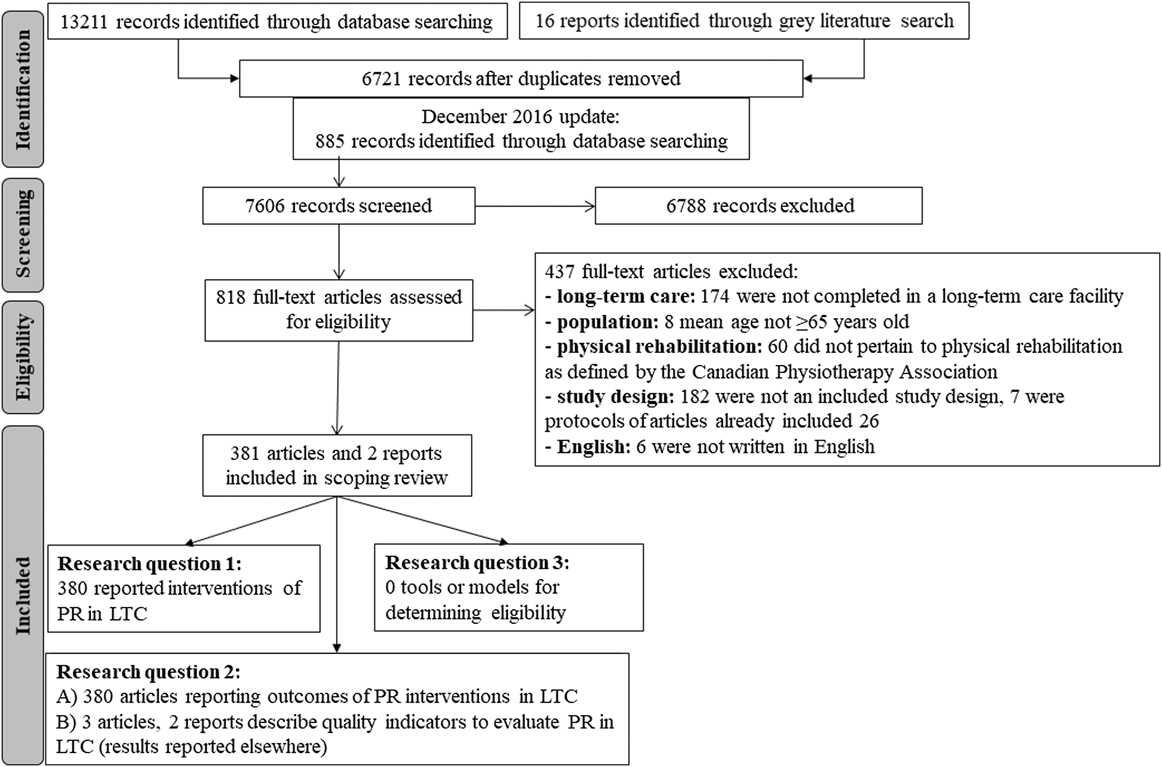
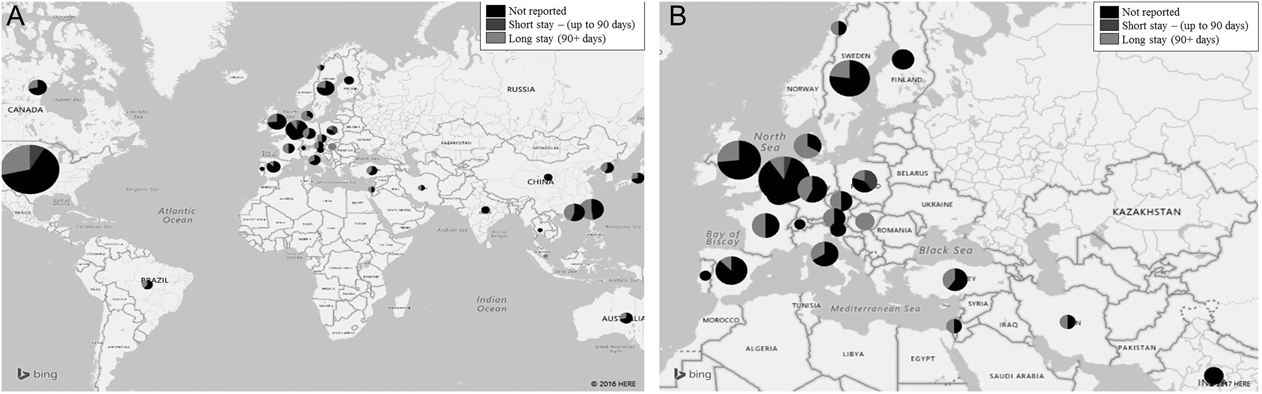
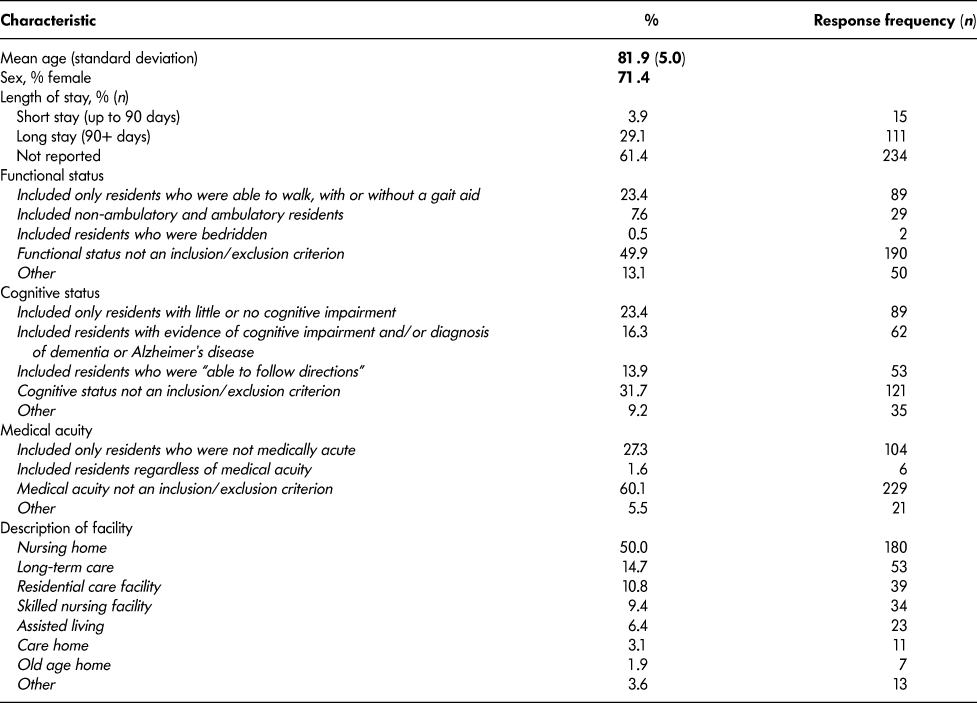
The scoping review included 381 articles and 2 reports (Figure 1; Supplementary Files 1a and 1b). The United States had the largest number of articles (25.0%, Figure 2). Most of the articles did not report the length of stay of residents (61.4%), and only 3.9 per cent of publications explicitly included short-stay residents (Table 1, Figure 2). The mean age of included residents was 81.9 ± 5.0 years and the majority were female (71.4%) (Table 1). Functional status was not mentioned in the inclusion and exclusion criteria of half (49.9%) the articles, but one quarter of studies (23.4%) required residents to be ambulatory with or without an assistive device (Table 1). Very few articles specifically included residents who were non-ambulatory (7.6%) or bedridden (0.6%). Additionally, only 16.3 per cent of the articles included residents with evidence of a diagnosis of dementia (Table 1). Finally, medical acuity was not an inclusion or exclusion criterion for most of the studies; however, 27.3 per cent explicitly stated that only residents who were not medically acute were included (Table 1).
Flow of articles through the scoping review

(a) Map of included articles, demonstrating proportions of length of stay. The size of the circle represents the number of articles originating from that country. The pie chart within the circle represents the proportion of articles that included residents who were short-stay (participants resided in the LTC home for up to 90 days), long-stay (90 days or more), or if the length of stay was not reported. (b) Close-up of Europe − map of included articles, demonstrating proportions of length of stay. Microsoft product screen shots reprinted with permission from Microsoft Corporation.

Description of participants included in articles

Research Questions 1 and 2: Description of Interventions and Outcomes
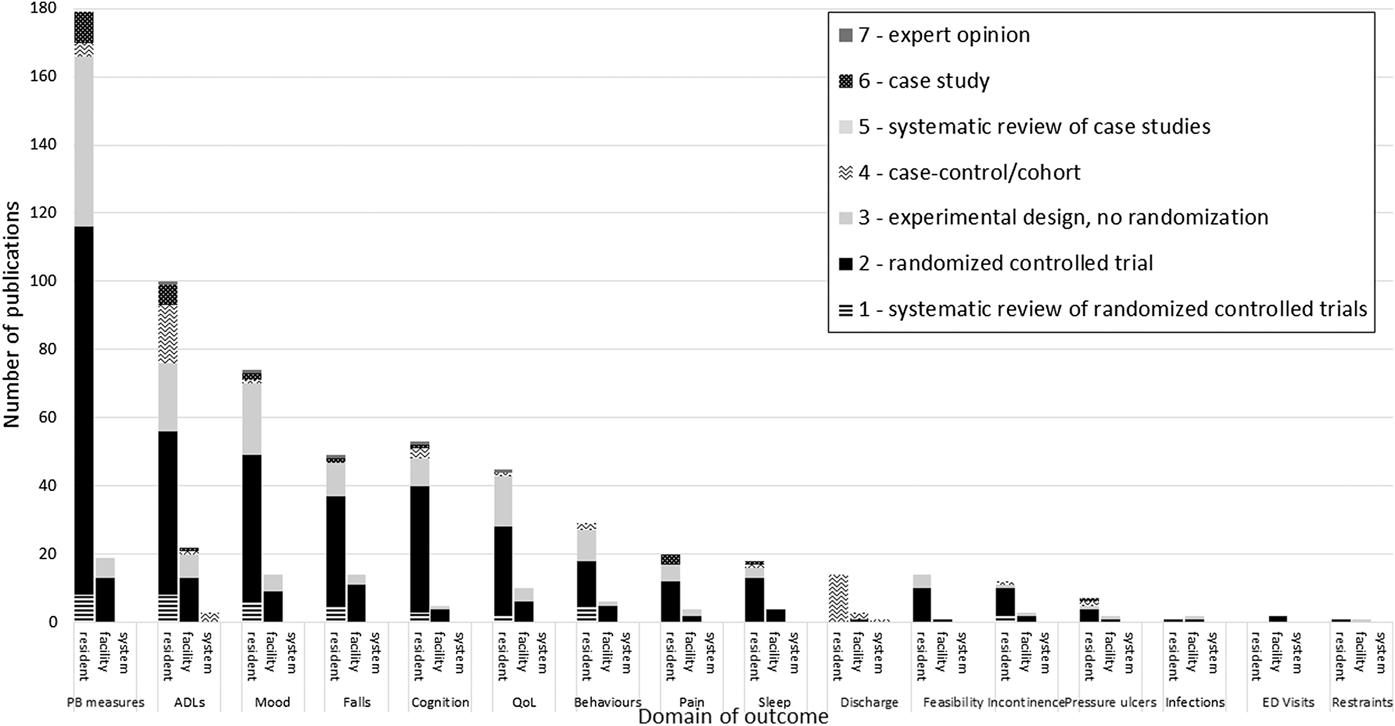
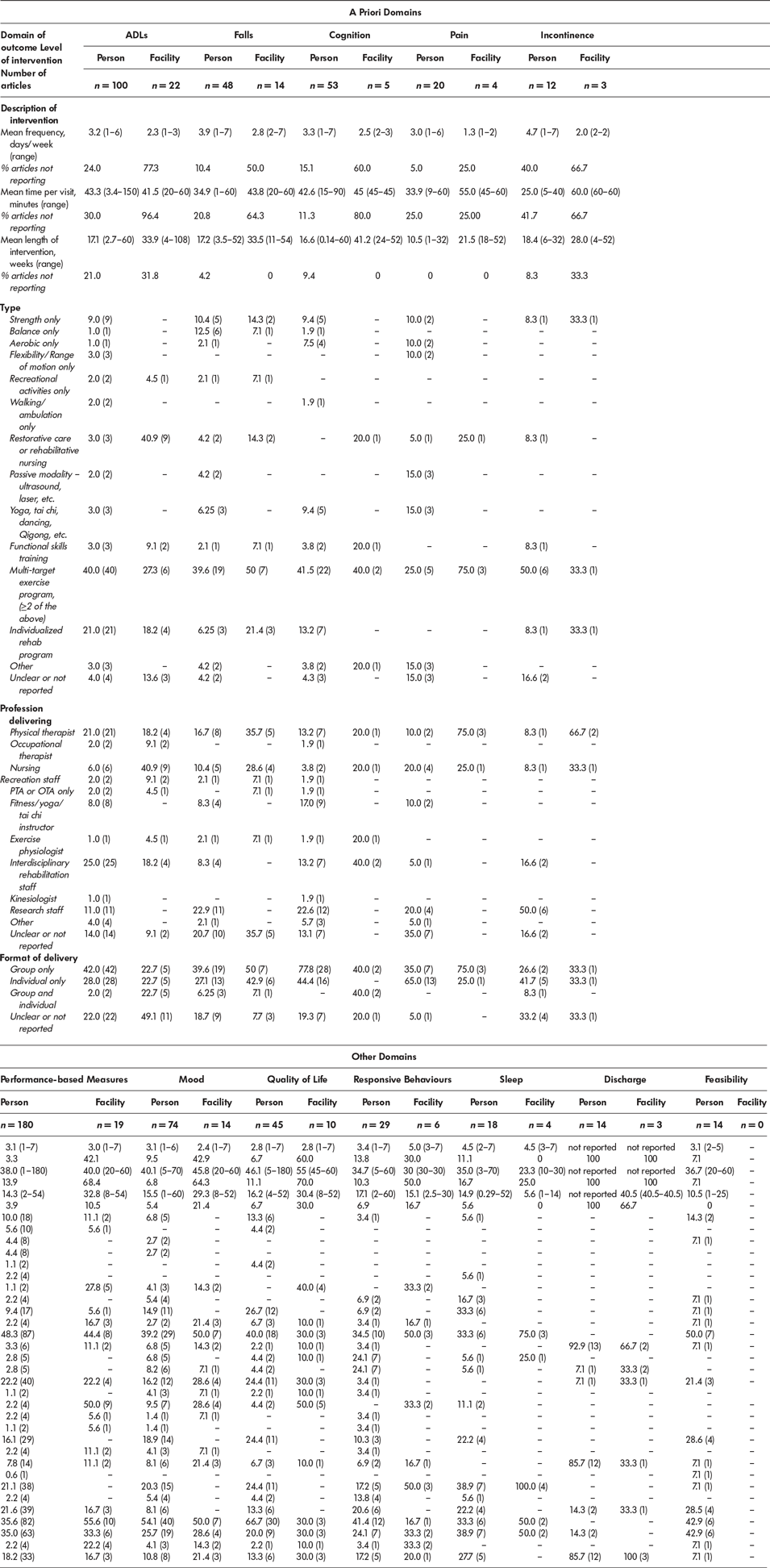
The included articles mapped onto the a priori and other domains; the level of evidence based on study design, and the level of intervention delivery, are found in Figure 3. Of the included articles, 322 described resident-level interventions, 44 described facility-level interventions, and 4 described system-level interventions. At all three levels of PR delivery, intervention components were often not reported − per cent of articles per domain not reporting a component ranged from 0 to 100 per cent (Table 2). The other domains identified were performance-based measures (e.g., Timed Up and Go test and the Berg Balance Scale), mood, quality of life, responsive behaviours, sleep, discharge, and feasibility. Feasibility was defined as the ease of delivering the PR intervention, with constructs measured including recruitment, retention, and adherence (Table 3). Performance-based measures were the most frequently reported outcomes for resident-level PR delivery (n = 180), followed by ADLs (n = 100) and mood (n = 74) (Figure 3). For facility-level PR delivery, the most frequently reported domains were ADLs (n = 22), performance-based measures (n = 198), falls (n = 14), and mood (n = 14). ADLs (n = 3) and discharge (n = 1) were the only reported outcome domains for system-level PR interventions.
Number of articles and level of evidence per domain of outcome at the resident, facility, and system levels

Description of person- and facility-level physical rehabilitation interventions presented by domain evaluated

ADLs = activities of daily living, PTA = physical therapy assistant, OTA = occupational therapy assistant
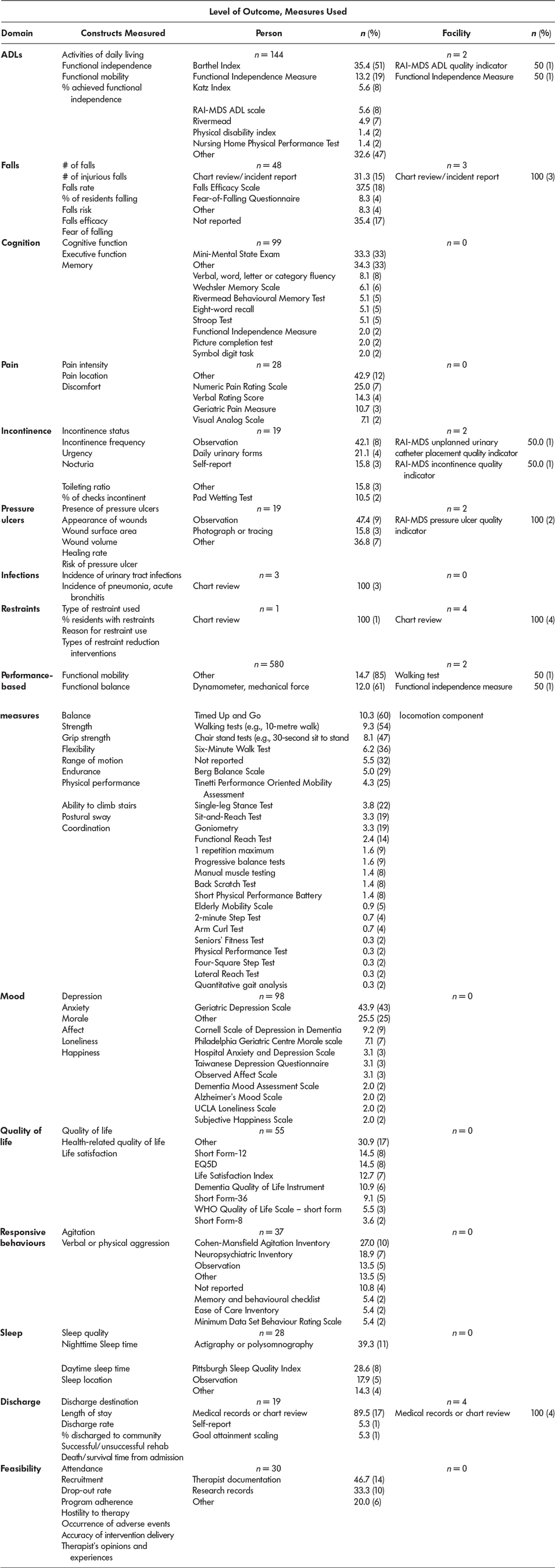
Constructs and outcome measures used are presented by the level of evaluation

ADL = activities of daily living; EQ5D = EuroQol 5-dimension quality of life scale; RAI-MDS = resident assessment index – minimum data set; WHO = World Health Organization
At the resident level, interventions were delivered, on average, 2.8 to 4.7 days per week for 25.0 to 46.1 minutes per session over a period of 10.5 to 18.4 weeks (Table 2). Results for outcome domains with fewer than 10 articles are reported in Supplementary File 2. The most frequently reported type of intervention across all domains was a multi-target exercise program, except for the discharge domain where individualized rehab was the most frequent program (Table 2). The type of professional delivering the interventions varied across all domains. However, research staff was most frequently reported as delivering six of the a priori domains (falls, cognition, incontinence, pressure ulcers, infections, and restraints) and three of the other domains (responsive behaviours, mood, and sleep) (Table 2). Interventions were delivered most often in a group setting, except for the domains of pain, incontinence, and sleep where they were delivered most often on an individual basis, or restraints and discharge where it was not reported how they were delivered (Table 2).
Facility-level interventions were delivered, on average, 1.3 to 5.0 days per week, for 23.3 to 60.0 minutes per session, over a period of 5.6 to 104.0 weeks (Table 2). Like resident-level interventions, facility-level interventions most often involved multi-target group exercise programs, except for ADLs and discharge domains which were frequently not reported (Table 2). Nursing staff and physical therapists most often delivered the interventions at the facility level, in contrast to the resident-level where most were delivered by research staff.
System-level interventions were far less common (n = 4). Frequency, time, or length of the delivery were not reported for any of the articles describing system-level interventions. These articles often stated that residents received physical rehabilitation but provided no descriptors. All four articles described individualized rehab professional programs, with two reporting delivery by interprofessional rehab staff and two not reporting who delivered the intervention. One article reported that the intervention was delivered on an individual basis; the other three did not report how the intervention was delivered.
The vast majority of outcomes were measured at the resident level, with the most common measures being a dynamometer, the Timed Up and Go test, walking tests (e.g., 10 metre walk), chair stand tests (e.g., 30-second sit to stand), the Geriatric Depression Scale, the Barthel Index, the Mini-Mental State Exam, and the Functional Independence Measure (Table 3). At the facility level, the only constructs that were measured were ADLs, falls, urinary incontinence, pressure ulcers, restraints, locomotion ability, and discharge (Table 3). System-level outcomes were measured in 11 articles. Number and duration of hospitalization episodes, cost and labour of service provision, discharge location, survival time, and process outcomes (e.g., number of referrals, reason for referrals) were the constructs measured at the system level.
Research Question 3: Tools or Models for Determining Eligibility for Services
Although two articles (Szczepura, Nelson, & Wild, Reference Szczepura, Nelson and Wild2008; Theodos, Reference Theodos2004) were identified as reporting a model for determining eligibility for PR services in LTC, neither article provided evidence of validation (i.e., proof of face, construct, or criterion validity demonstrated) and therefore we did not include them in the current review.
Discussion
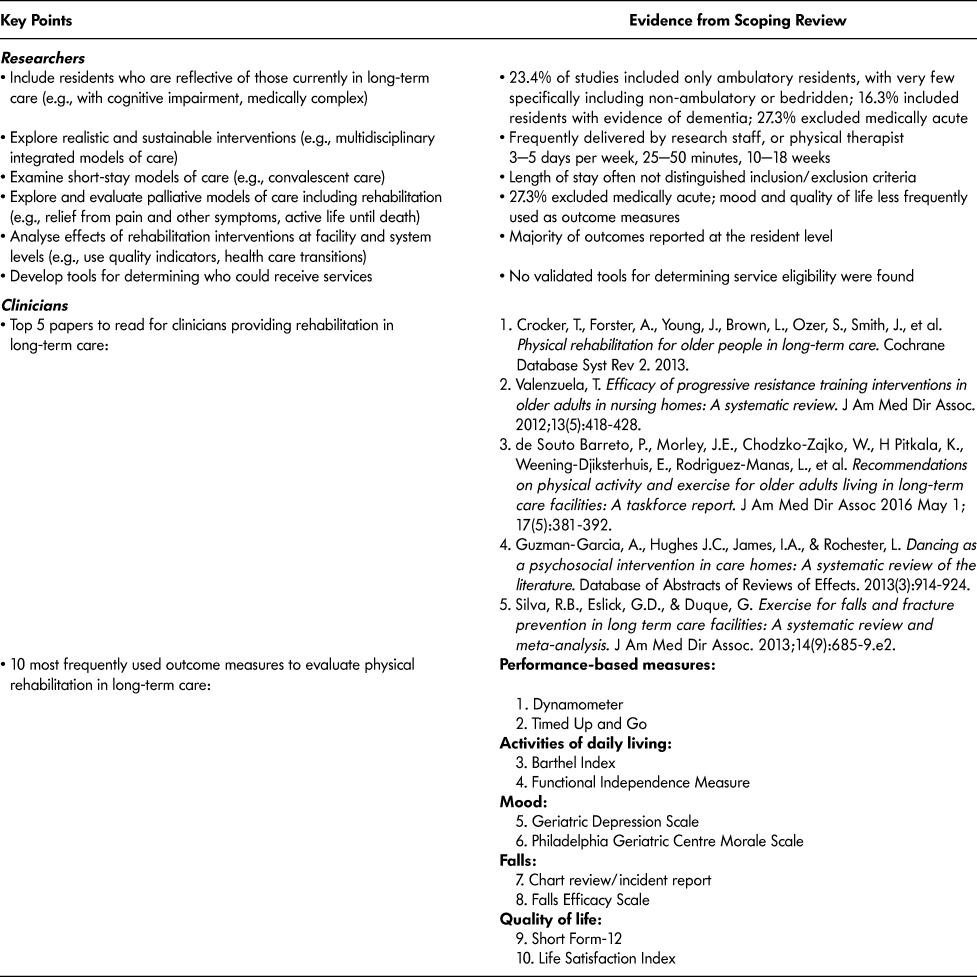
Our current review demonstrates that the majority of PR interventions are delivered and evaluated at the resident level with performance-based measures, ADLs, and mood being the most frequently reported outcomes. A key knowledge gap is research evaluating interventions and outcomes that reflect goals relevant to residents beyond mobility, falls, and independence, such as mood and quality of life. It is unclear whether the characteristics of the residents included reflect the medically complex residents who actually lived in LTC. Therefore, residents’ length of stay included in studies should be differentiated, and both functional and palliative goals should be contemplated. Intervention studies should explore realistic and sustainable delivery methods, as well as evaluate PR at multiple levels (e.g., resident and facility). Furthermore, tool development for determining service eligibility is imperative to ensure equality in access. Table 4 provides a summary of key take-home points for clinicians and researchers in PR and LTC.
Key points and take-home messages

Evidence from the current review is in line with recently developed recommendations for physical activity in LTC (de Souto Barreto et al., 2016). However, the sustainability and applicability of the results to rehabilitation professionals such as physical therapists are questionable. First, research staff or physical therapists were most frequently reported to deliver resident-level PR interventions. Consequently, research staff delivering PR interventions precludes the ability for knowledge translation and integration of the PR intervention into practice since they, and their resources, will often leave once the study is complete. Significant gaps in facilitating knowledge into practice are evident in the LTC sector, with less than 5 per cent of the knowledge translation literature focusing on LTC (Boström, Slaughter, Chojecki, & Estabrooks, Reference Boström, Slaughter, Chojecki and Estabrooks2012; Grimshaw et al., Reference Grimshaw, Thomas, MacLennan, Fraser, Ramsay, Vale and Donaldson2004). Second, the time and frequency for service delivery was, on average, approximately 45 minutes per session on 3 days per week, and physical therapists were often reported as the professional delivering the intervention. In many jurisdictions, access to physical therapy is limited and requires a limited-time episode of care, whereby rehabilitation services are provided for short periods for residents to achieve specific, time-bound goals (Ontario Ministry of Health and Long-term Care, 2013). Therefore, the opportunity for ongoing physical therapy services delivered solely by a physical therapist is not realistic in the current health care climate. There is a need to explore the effectiveness of pragmatic, multidisciplinary PR interventions that will assist in moving research into practice in LTC.
Our review demonstrates that performance-based measures or measures of ADLs, such as the Timed Up and Go test or the Barthel Index, are frequently used to evaluate the effect of PR in LTC. Clinicians can use these measures to evaluate their services within the context of the residents’ functional goals. Consideration should, however, be given to a more comprehensive set of resident-centred goals. Although improving physical function has been identified as a priority for residents and health care providers and is often the target of PR (Akishita et al., Reference Akishita, Ishii, Kojima, Kozaki, Kuzuya, Arai and Toba2013), independent ambulation may not be a realistic goal for all residents. Indeed, it has been suggested that rehabilitation requires a more extensive definition than merely achieving functional independence, in that consideration should be given to social, psychological, and emotional health (McGilton, Reference McGilton2015; Young, Reference Young2004). Therefore, clinicians should also consider measuring constructs aside from function such as mood and quality of life.
Based on the length of stay, and cognitive and functional abilities of the residents included in the current literature regarding PR in LTC, the participants were not representative of the population of residents currently living in LTC homes. First, most articles included in the current review did not report the residents’ length of stay. Although the majority of residents in Canada are long-stay (Hirdes et al., Reference Hirdes, Mitchell, Maxwell and White2011), there has been a recent increase in the number of short-stay, “convalescent” care beds in Ontario (Ontario Ministry of Health and Long-Term Care, 2007). Internationally, other short-stay models can be found; for example, in the United States residents in skilled nursing facilities often return to the community, whereas in Europe specific wards are dedicated to PR (Kochersberger et al., Reference Kochersberger, Hielema and Westlund1994; Leemrijse, De Boer, Van Den Ende, Ribbe, & Dekker, 2007; Medicare Payment Advisory Commission, 2012). Only a small proportion of articles examined in the current review explicitly described a population of short-stay residents included in their study, suggesting there is room for future work to determine the most appropriate PR interventions for residents who may be admitted to LTC for short-term rehabilitation.
On the other hand, for the vast majority of residents who are indeed long-stay, there is a need to include the expertise of PR into palliative care services. LTC has witnessed a global increase in the complexity and acuity of residents (Katz, Reference Katz2011), and PR is relevant to several aspects of palliative care principles, as defined by the World Health Organization, including relief from pain and other symptoms and helping residents to live as actively as possible until death (World Health Organization, 2016). Alternatives to pharmaceutical management of pain and palliation have also been expressed as priority areas for research in LTC (Brazil, Maitland, Ploeg, & Denton, Reference Brazil, Maitland, Ploeg and Denton2012). Additionally, although it is encouraging that a growing body of literature focuses on residents with dementia, only 16 per cent of the literature about PR in LTC included residents with dementia. In contrast, more than 80 per cent of the residents in LTC have some degree of dementia (Hirdes et al., Reference Hirdes, Mitchell, Maxwell and White2011). The discrepancy between the research and reality indicates that there may be selection bias within the current body of literature, wherein residents with dementia are excluded and the resulting population is not representative of the true LTC demographics.
In our current review, we were unable to identify any validated tools or models for determining eligibility for PR services in LTC. Jurisdictional differences in rates of residents receiving rehabilitation services both nationally and internationally suggest that access to services does not match resident need (Berg et al., Reference Berg, Sherwood, Murphy, Carpenter, Gilgen and Phillips1997; De Boer et al., Reference De Boer, Leemrijse, Van Den Ende, Ribbe and Dekker2007; McArthur, Hirdes, et al., Reference McArthur, Hirdes, Berg and Giangregorio2015). Development of tools to ensure equality in access to services that match the needs of residents is necessary so that services are received appropriately. Indeed, there may be subgroups of residents who require more intensive therapy while others may benefit from low-volume maintenance programs, and residents admitted to LTC indefinitely may have different needs than those whose goals include returning to the community. Leadership and future tool development are needed to guide research and policy decisions regarding who should receive PR in LTC.
Study Limitations
An inherent limitation of a scoping review is that it provides breadth on a topic rather than depth (Arksey & O’Malley, Reference Arksey and O’Malley2005; Levac et al., Reference Levac, Colquhoun and O’Brien2010). The current review provides a broad view of PR interventions and how they have been evaluated in LTC, but is unable to describe the effectiveness of those PR interventions on specific outcomes. On the other hand, providing a breadth of knowledge may prove useful to several disciplines of knowledge users in LTC including service providers (e.g., rehabilitation professionals, nurses, kinesiologists), administrators, and policy-makers. The majority of the literature found in this review was from the United States; therefore, conclusions involving reported interventions and outcomes measured are likely more reflective of PR in the United States. Additionally, since articles reporting on the same study population were not grouped, there may have been double counting of studies. However, we removed all duplicate articles so that only articles with the same population but different outcomes were included. An additional limitation of the current study is that only studies and grey literature published in English were included, limiting the review to articles published in English-speaking countries or to those that have funds for translation services. Lastly, the scope of the current review is limited in providing recommendations for approaches to rehabilitation for all international groups as there may be additional literature not included in our search strategy. For example, “intermediate care” is used in the United Kingdom for rehabilitation in LTC homes and might not have been captured in our search.
Conclusions
The majority of PR interventions are delivered and evaluated at the resident level, and the most common outcomes reported are performance-based measures, ADLs, and mood. A key knowledge gap was the consideration of PR in relation to goals relevant to residents such as quality of life. The characteristics of the residents included in future studies should reflect the medically complex residents who live in LTC, and residents’ length of stay included in studies should be differentiated. Intervention studies should also explore realistic and sustainable delivery methods. Finally, tool development for determining service eligibility is necessary to ensure equality in rehabilitative care across the LTC sector.
Supplementary Material
To view supplementary material for this article, please visit https://doi.org/10.1017/S071498081700040X