Introduction
The term ‘consanguineous’ can be broken down into the two Latin words con, meaning shared, and sanguis, meaning blood. A consanguineous relationship, therefore, can simply be described as a relationship between people who are related by ‘blood’, with a consanguineous marriage being a marriage between close biological lineages (Bittles, Reference Bittles2012). Consanguineous marriages have been prevalent and favoured in many parts of the world as a means to strengthen family ties, protect family property, ensure better social compatibility and provide safety, stability and durability to marriages (Mehndiratta et al., Reference Mehndiratta, Paul and Mehndiratta2007). In India, with its diverse social and cultural practices, the high prevalence of consanguineous marriage should have noticeable social and genetic implications (Modell, Reference Modell1991).
Evidence from developing countries shows that consanguineous marriage has a mixed relationship with intimate partner violence (IPV) (Bhatta & Haque, Reference Bhatta and Haque2015; Usta et al., Reference Usta, Khawaja, Dandachi, Tewtel, Djamba and Kimuna2015; Hamamy & Alwan, Reference Hamamy, Alwan, Kumar and Chadwick2016; Shaikh, Reference Shaikh2016; Weimer, Reference Weimer2019; Abolfotouh & Almuneef, Reference Abolfotouh and Almuneef2020). The practice of consanguineous marriage varies considerably across regions and countries. Globally, one-tenth of marital relationships are consanguineous (Bittles & Black, Reference Bittles and Black2010), with the practice being widespread in Middle Eastern, sub-Saharan African and South Asian countries (Islam, Reference Islam2012). Marriage between first cousins is the most common form of consanguinity (Modell & Darr, Reference Modell and Darr2002; Bittles, Reference Bittles2011; Islam, Reference Islam2012). More than half of consanguineous marriages in Egypt (Bittles, Reference Bittles2011) and a quarter of those in Jordan are between first cousins (Islam, Reference Islam2018). In Pakistan, 80% of consanguineous marriages take place between first cousins (Hussain & Bittles, Reference Hussain and Bittles1998).
Among the countries of South Asia, consanguineous marriage is markedly prevalent in India (9.9%). It is widely practised in southern India, mostly through arranged marriage (Bittles, Reference Bittles2001; Rao et al., Reference Rao, Asha, Sambamurthy and Rao2009; Sharma et al., Reference Sharma, Kalam, Ghosh and Roy2020). The prevalence of consanguineous marriage in the southern region of the country is six times higher than in the northern region (Bittles, Reference Bittles2001; Banerjee & Roy, Reference Banerjee and Roy2002; Sharma et al., Reference Sharma, Kalam, Ghosh and Roy2020). Uncle–niece marriages are specifically culturally endorsed in some Hindu communities in south India (Krishnamoorthy & Audinarayana, Reference Krishnamoorthy and Audinarayana2001; Padmadas & Nair, Reference Padmadas and Nair2002). Several socioeconomic factors significantly predict the prevalence of consanguineous marriage in India. Religious beliefs and cultural practices, level of education, place of residence and wealth status have been confirmed to be strong socioeconomic determinants of consanguineous marriage in the country (Jurdi & Saxena, Reference Jurdi and Saxena2003; Sharma et al., Reference Sharma, Kalam, Ghosh and Roy2020). A higher prevalence of consanguineous marriage has been observed in rural areas and among Muslim communities, illiterate or less-educated people and in socioeconomically poor communities (Bittles, Reference Bittles1994; Bittles & Black, Reference Bittles and Black2010; Sharma et al., Reference Sharma, Kalam, Ghosh and Roy2020) compared with their counterparts.
Globally, Muslim women face the highest proportion of all forms of violence (Dalal & Lindqvist, Reference Dalal and Lindqvist2012). In South Asia, 43% of women are estimated to have experienced IPV during their lifetime, which is the highest in the world, followed by women in the Middle East and North Africa (Pande et al., Reference Pande, Nanda, Bopanna and Kashyap2017). There is also a high rate of acceptance of spousal violence by married women due to male ‘superiority’ and patriarchal societal norms in these countries (Jewkes, Reference Jewkes2002). While physical violence is most prevalent in Bangladesh, it is well accepted by married women in India and Pakistan (Solotaroff & Pande, Reference Solotaroff and Pande2014). In this study, about 80% of men reported that they had engaged in at least two of the four forms of IPV, and around 22% had engaged in all four types. Only 15% had not engaged in any form of violence (Solotaroff & Pande, Reference Solotaroff and Pande2014). The fourth round of the National Family Health Survey (NFHS-4), conducted in 2015–16, shows that 14%, 31% and 8% of women in India face emotional, physical and sexual violence, respectively.
Indian men believe they have a right to beat their wives for certain transgressions (Jejeebhoy et al., Reference Jejeebhoy, Santhya and Sabarwal2013), and this instils a sense of fear in wives. As a result, husbands have marital control over their wives. Solotaroff and Pande (Reference Solotaroff and Pande2014) reported that, for women in Bangladesh, south India and Vietnam, spousal violence is considered acceptable for their intentional disobedience. The reasons for such justification are different across countries. Married women in Pakistan and Bangladesh believe that arguing with their husband is an acceptable reason for violence. In Nepal and India, the key reason for violence is the neglect of children. In the Maldives, it is the refusal to have sexual intercourse with the husband. Women with greater exposure to the outside world have a lower tendency to accept violence. Age is also an important factor in determining the experience of IPV since adolescent girls in Nepal and India face more IPV than adults (IIPS & ICF, 2017; MOH Nepal et al., 2017).
Several studies have investigated the relationship between consanguineous marriage and intimate partner violence (Stanley, Reference Stanley2012; Usta et al., Reference Usta, Khawaja, Dandachi, Tewtel, Djamba and Kimuna2015; Hamamy & Alwan, Reference Hamamy, Alwan, Kumar and Chadwick2016; Shaikh, Reference Shaikh2016; Weimer, Reference Weimer2019; Abolfotouh & Almuneef, Reference Abolfotouh and Almuneef2020), with diverse results. Stanley (Reference Stanley2012) found that the wives of alcoholic husbands faced more violence compared with those of non-alcoholic husbands in India, irrespective of consanguinity status. Hamamy and Alwan (Reference Hamamy, Alwan, Kumar and Chadwick2016) showed that, in Egypt, couples in first-cousin marriages experienced less spousal violence than their counterparts. This study also suggested that the dissolution of marriage and the incidence of divorce were lower among couples in a consanguineous marriage than those in a non-consanguineous one. A study by Bhatta and Haque (Reference Bhatta and Haque2015) on the Muslim minority in Nepal found that spousal violence was significantly lower among consanguineous unions compared with non-consanguineous unions. However, Shaikh (Reference Shaikh2016), drawing on evidence from Pakistan, found that women in a consanguineous marriage were more likely to report having ever been subjected to marital control behaviours or emotional and physical violence by their husbands than those in a non-consanguineous marriage.
Although previous studies have extensively analysed the association between consanguinity in marriage and spousal violence in Muslim-dominated countries such as Saudi Arabia, Egypt, Jordan and Pakistan (O’Hara et al., Reference O’Hara, Tsai, Carlson and Haidar2013; Usta et al., Reference Usta, Khawaja, Dandachi, Tewtel, Djamba and Kimuna2015; Shaikh, Reference Shaikh2016; Weimer, Reference Weimer2019; Abolfotouh & Almuneef, Reference Abolfotouh and Almuneef2020), studies in Hindu-dominated countries like India have been few and far between. Weimer (Reference Weimer2019) studied the relationship between consanguinity and spousal violence in India (DHS, 2015–16), along with Muslim-dominated countries like Jordan (DHS, 2012), Egypt (DHS, 2014) and Pakistan (DHS, 2017). It was hypothesized that women in a consanguineous marriage would be less likely to face spousal violence than women in a non-consanguineous marriage since they will have a better understanding of the specific behaviours of men that can lead to spousal violence. This understanding may reduce their risk of spousal violence. The study revealed that women in consanguineous marriages were less likely to face spousal violence than those in other marriages in all countries except India. Although the higher likelihood of spousal violence in a consanguineous marriage than in a non-consanguineous one in India may be explained by the prevalence of the practice of dowry, the effects of dowry on different types of violence are not known (Rastogi & Therly, Reference Rastogi and Therly2006; Naved & Persson, Reference Naved and Persson2010).
In this context, the present study aimed to explore the relationship between consanguineous marriage and physical, sexual, emotional and any form of spousal violence in India using data from the NFHS-4 conducted in 2015–16. Since India has diverse socio-cultural and spatial patterns of prevalence of consanguineous marriage (Kalam et al., Reference Kalam, Sharma, Ghosh and Roy2020) and spousal violence (Dalal & Lindqvist, Reference Dalal and Lindqvist2012), regional heterogeneity in the association between these two variables was also analysed.
Methods
Data sources and sample selection
This study drew data from the fourth round of the National Family and Health Survey (NFHS-4), which was conducted during 2015–16. The NFHS is the Indian version of the Demographic and Health Survey (DHS), which provides consistent and reliable estimates of fertility, mortality, family planning, child nutritional status, morbidity, utilization of maternal and child health care services and other related indicators, along with estimates of spousal violence and marriage (IIPS & ICF, 2017). The data are available in the public domain and can be accessed through the prescribed registration and approval process on the DHS Program website. Although the NFHS-4 covered a nationally representative sample of 601,509 households, comprising 699,686 women, only about 15% of samples were selected for the state module, which asked questions on spousal violence. A total of 64,691 currently married women aged 15–49 years (weighted 60,824 samples) were included in the present analysis after excluding those with missing information and non-responses.
Outcome variables
The outcome variables were ever experiencing emotional, physical, sexual violence by a woman’s husband. ‘Any spousal violence’ included any one the three types of violence. Emotional violence comprised humiliation, threat and insult. Physical violence included pushing, slapping, punching, kicking, threatening with knife or twisting. Forcing a woman to have unwanted sexual intercourse of any type was considered sexual violence.
Predictor variables
A relationship was considered to be consanguineous if the husband, prior to marriage, was a respondent woman’s first cousin from either her father’s or mother’s side, or a second cousin, uncle or other blood relative.
The explanatory variables or covariates included in the multivariate analysis were: respondent’s age group (15–19, 20–24, 25–29, 30–34 and 35–49 years), respondent’s level of education (no education, primary, secondary and higher), wealth quintile of household (poor, poorer, middle, rich and richer), place of residence (rural and urban), geographical region (North, South, West, East, Central and North-east), religion (Hindu, Muslim and Other), caste (Scheduled Caste [SC], Scheduled Tribe [ST], Other Backward Caste [OBC] and General Caste), husband’s education (no education, primary, secondary and higher), respondent’s working status (yes and no) and husband’s occupation (not working, professional/technical/managerial, sales/clerk, agriculture and skilled/unskilled manual labourer). Geographical regions were based on the NFHS-4 report (IIPS & ICF, 2017).
Statistical analysis
Univariate, bivariate and multivariate analyses were carried out to assess the adjusted association between consanguinity in marriage and spousal violence in India. The descriptive statistics presented the sample characteristics. The bivariate analysis showed the percentage distribution of spousal violence by consanguinity in marriage. The unadjusted and adjusted binary logistic regression models were separately applied for emotional, physical, sexual and any spousal violence. In the unadjusted binary logistic regression analysis, socioeconomic and demographic factors were not included in the model, while in the adjusted model these variables were included in the model. Unadjusted and adjusted probabilities in percentage form (margins) were estimated for ease of interpretation. A national sample weight for violence was used for making the estimates; all statistical analyses were carried out using STATA version 16.
Results
Sample characteristics
Table 1 shows the descriptive statistics of the outcome variables (emotional, physical, sexual and any violence) and predictors of the sample women. About 33% of the women reported ever facing some form of violence. Approximately 14%, 30% and 7% experienced emotional, physical and sexual violence, respectively. Around 12% had a consanguineous marriage, with the share among older-aged women being higher than that among younger ones.
Distribution of sample women by experience of different types of spousal violence and consanguinity in marriage, NFHS-4, 2015–16

CI = confidence interval.
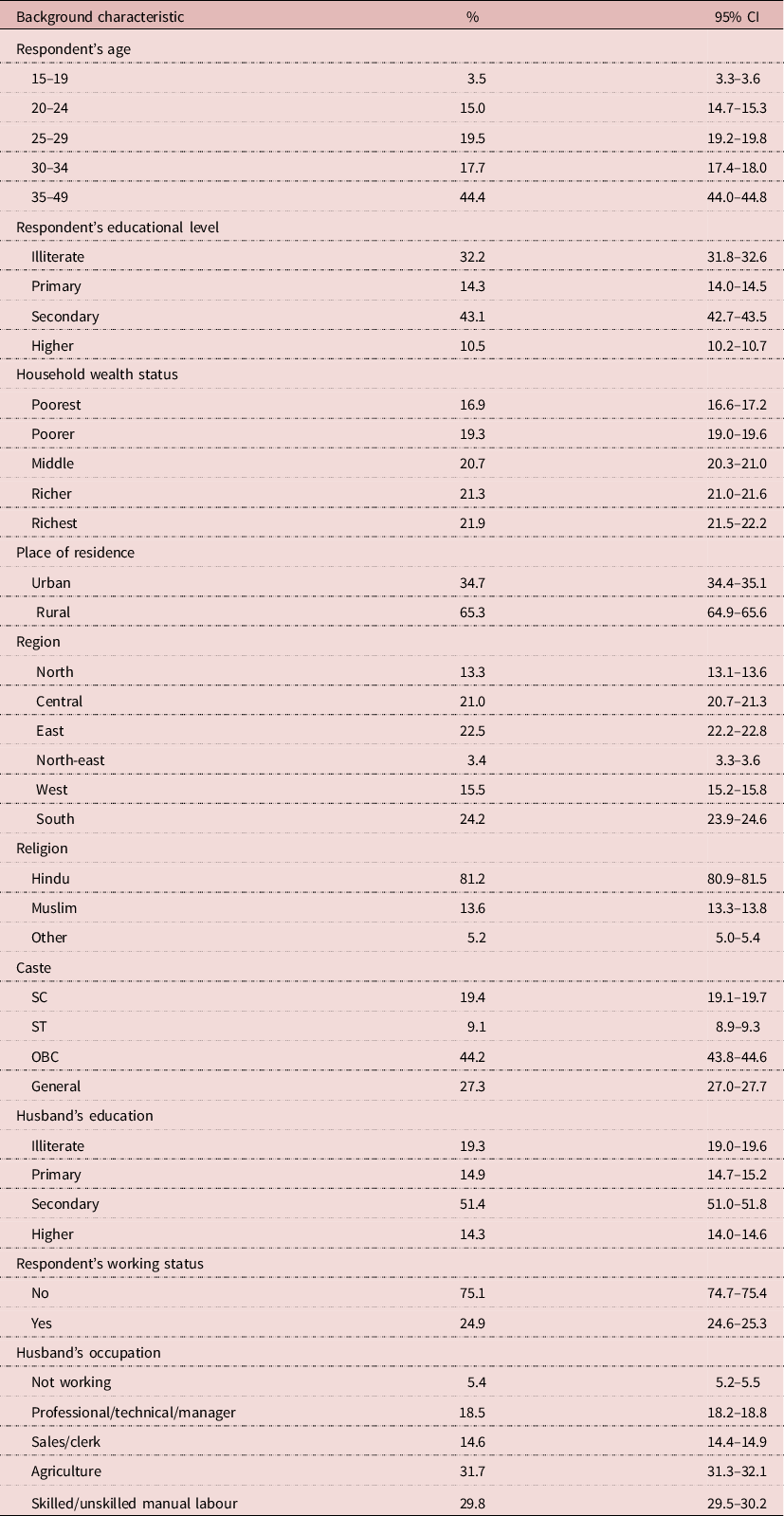
The distribution of the sample women across different socioeconomic and demographic characteristics is presented in Table 2. About 32% of the women were illiterate, while about 14%, 43% and 11% had primary, secondary and higher levels of education, respectively. A majority of the respondents (65%) resided in rural areas. Hindus made up the highest share of the sample women (81%), followed by Muslims (14%) and other (5%). In terms of caste, the highest share were OBC (44%), followed by the General Caste (27%), SCs (19%) and STs (9%). The largest proportion of the sample came from the South region (24%), followed by the East (23%), Central (21%), West (16%), North (13%) and North-east (3%) regions.
Descriptive statistics of the independent variables among sample women, NFHS-4, 2015–16 (N=60,824)

CI = confidence interval.
Prevalence of different types of spousal violence by consanguinity status
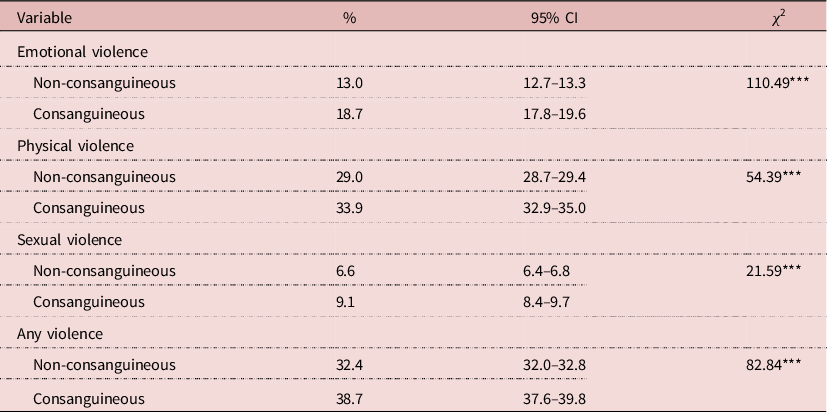
Table 3 presents the bivariate estimates of spousal violence by consanguinity in marriage among the sample women. The incidence of any violence was higher among women in a consanguineous marriage than those in a non-consanguineous marriage. In particular, the prevalence of any spousal violence was 38.7% (CI: 37.6–39.8) among consanguineously married women compared with 32.4% (CI: 32.0–32.8) among non-consanguineously married women. The prevalences of emotional violence were 18.7% (CI: 17.8–19.6) and 13.0% (CI: 12.7–13.3) among women in consanguineous and non-consanguineous unions, respectively. Similarly, the prevalence of physical violence was higher (33.9%, CI: 32.9–35.0) among women who had a consanguineous marriage than among those with a non-consanguineous marriage (29.0%, CI: 28.7–29.4). Women in a consanguineous marriage had a higher likelihood of experiencing sexual violence (9.1%, CI: 8.4–9.7) than those in a non-consanguineous marriage (6.6%, CI: 6.4–6.8).
Percentages of spousal violence by consanguinity in marriage among sample women, NFHS-4, 2015–16

***p<0.001.
Results of logistic regression models
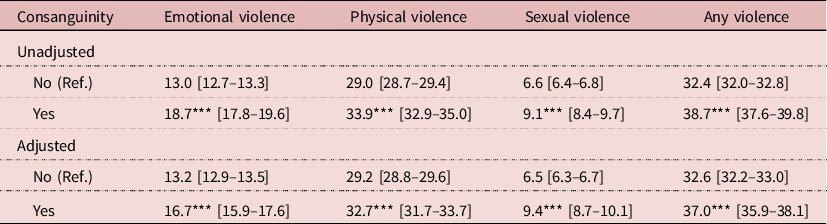
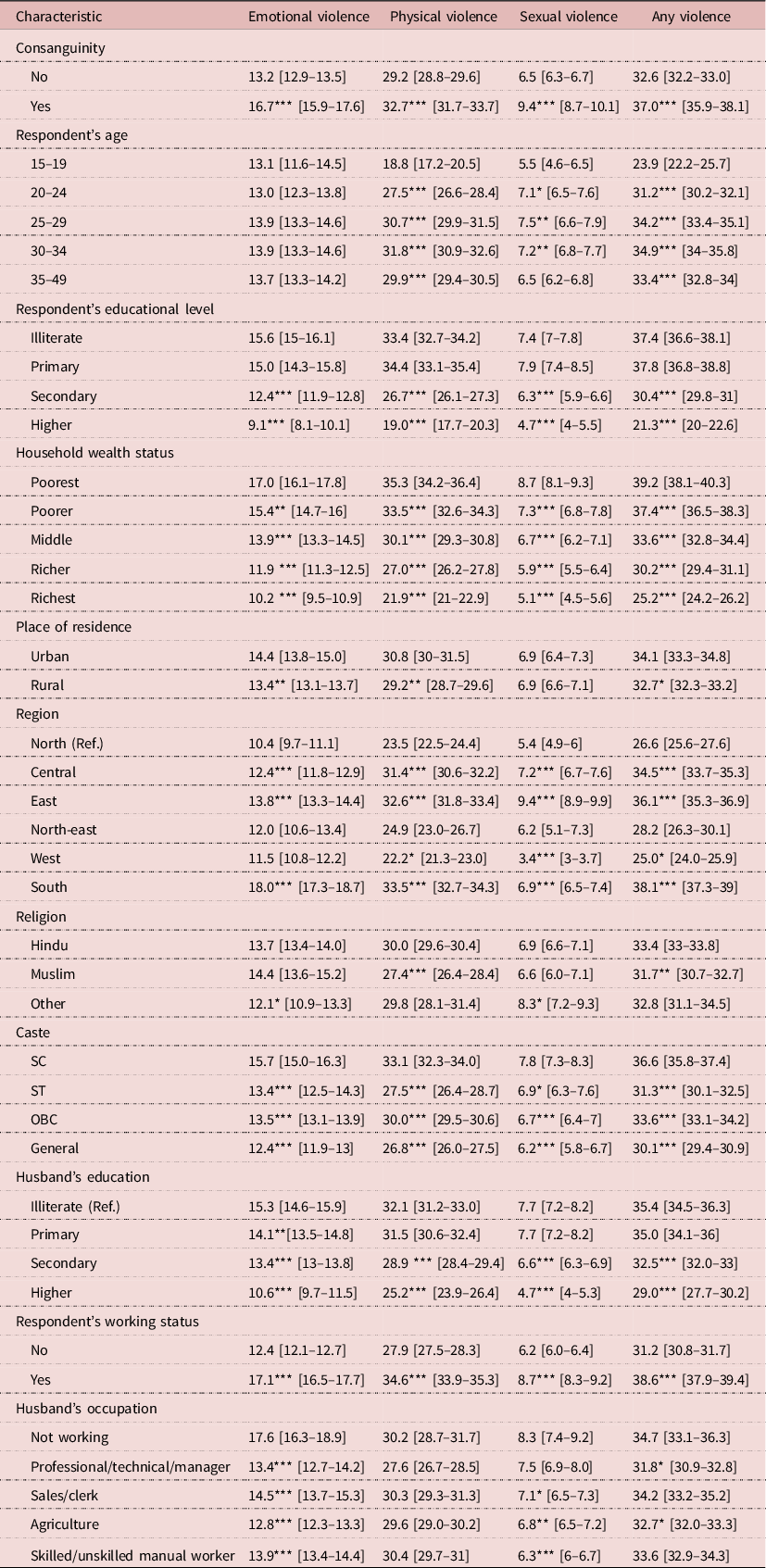
Table 4 presents the results of the binary logistic regression models, showing the unadjusted and the adjusted percentages of women who had experienced spousal violence. The adjusted percentage of women experiencing any spousal violence was higher among those in a consanguineous marriage (37.0%, CI: 35.9–38.1) compared with those in a non-consanguineous marriage (32.6%, CI: 32.2–33.0). In particular, the adjusted percentages for emotional, physical and sexual violence were 16.7% (95% CI 15.9–17.6), 32.7% (95% CI 31.7–33.7) and 9.4% (95% CI: 8.7–10.1), respectively, among consanguineously married women, which were higher than among non-consanguineously married women.
Unadjusted and adjusted percentages of spousal violence by consanguinity in marriage, NFHS-4, 2015–16

Ref. = reference category. All estimates significant at 95% confidence level.
In the adjusted model, the variables included were age of respondent, level of education, household wealth status, place of residence, religion, caste, husband’s education, working status of respondent, husband’s occupation and region.
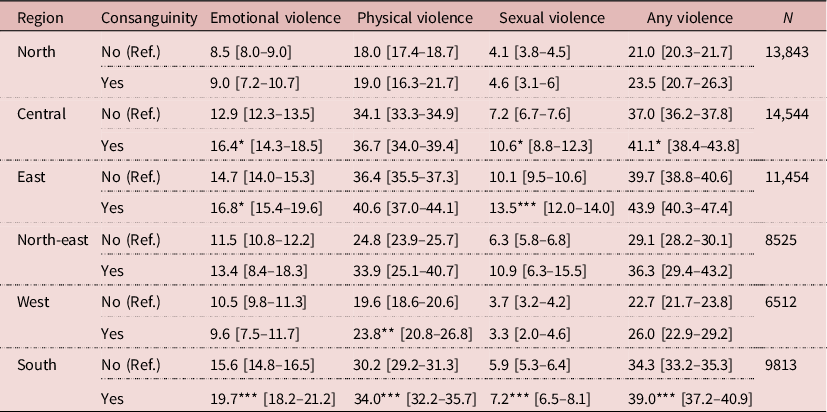
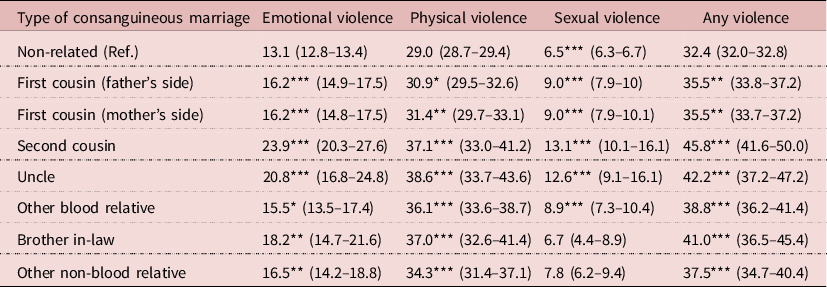
Table 5 presents the adjusted percentages of physical, emotional and sexual violence in consanguineous marriage by region. In the South region, the adjusted percentages of physical, emotional and sexual violence were significantly higher in consanguineous than in non-consanguineous marriages. In the Central and East regions, the adjusted percentages of emotional and sexual violence were higher among women in a consanguineous marriage compared with those in a non-consanguineous marriage. Analysis of the association between consanguineous marriage and spousal violence by state showed that the effects of consanguineous marriage were substantially higher in Karnataka, irrespective of type of spousal violence (data not shown). Consanguineous marriage with a second cousin, an uncle or any other blood relative was significantly associated with a higher percentage of spousal violence compared with among non-consanguineous marriages (Table 6). Since there is a higher prevalence of uncle–niece marriages in the southern Indian states, particularly Karnataka, the South region significantly predicted the association between consanguineous marriage and spousal violence.
Adjusted percentages of spousal violence in consanguineous marriage by region, NFHS-4, 2015–16

Ref. = reference category.
*p<0.05; **p<0.01; ***p<0.001.
Adjusted percentages of spousal violence by type of premarital relationship with current husband, NFHS-4, 2015–16

Ref. = reference category.
*p<0.05; **p<0.01; ***p<0.001.
The likelihood of experiencing spousal violence among women was significant for some of the socioeconomic and demographic factors (Table 7). The adjusted percentages of women experiencing physical and sexual violence increased with increasing women’s age. The likelihood of experiencing emotional, sexual or physical violence decreased with an increase in the level of women’s education. The risk of experiencing emotional, sexual or physical violence monotonically decreased from the poorest to the richest wealth quintiles. Women living in rural areas faced less emotional, physical and any spousal violence than their urban counterparts. All types of spousal violence were highest among women belonging to SCs, followed by those from the OBCs and the STs compared with women from the General Caste. Working women encountered more spousal violence than their non-working counterparts.
Adjusted percentages of spousal violence by consanguinity in marriage and other socioeconomic characteristics, NFHS-4, 2015-16

*p<0.05; **p<0.01; ***p<0.001.
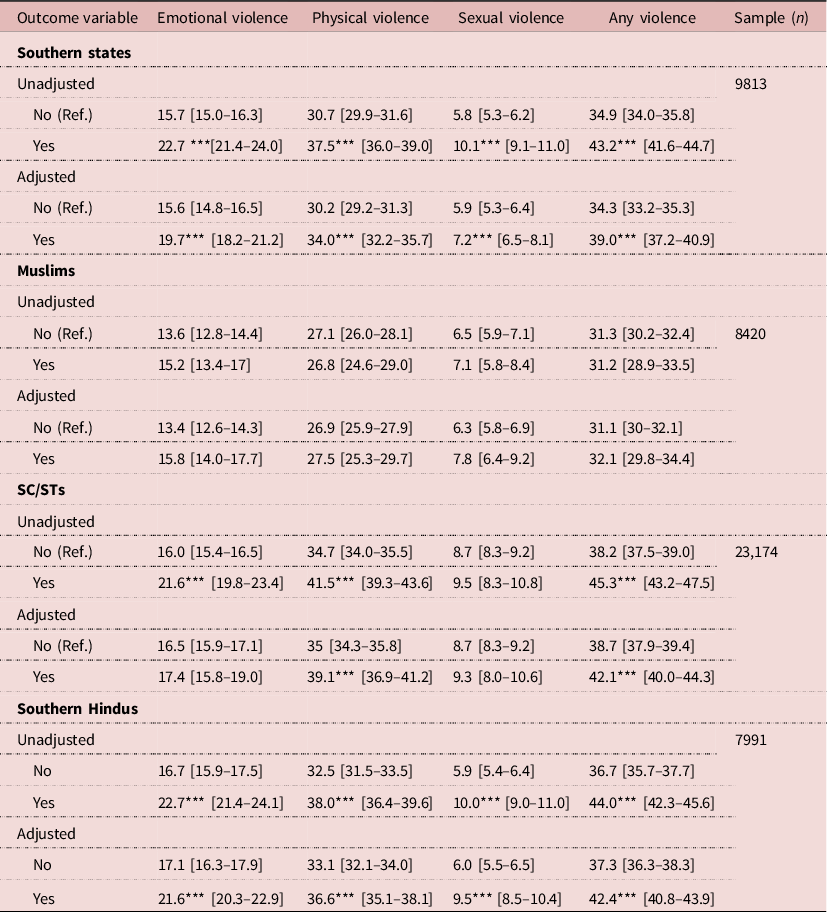
Table 8 shows the adjusted and unadjusted percentages of spousal violence were high in the southern states of India and among women from Muslim and SC/ST communities, and also among Hindus of southern India. The adjusted percentage of women experiencing any form of spousal violence was 5% higher among those in a consanguineous union (39.0%, CI: 33.2–35.3) compared with those in a non-consanguineous union (34.3%, CI: 32.2–35.3) in the southern states. A similar pattern was found among women from SC/ST communities and among southern Hindus, with the adjusted percentages of spousal violence being 3% and 7% higher among women in consanguineous unions than those in non-consanguineous unions. There was no significant relationship between consanguineous marriage and spousal violence among Muslims in India.
Adjusted percentages of spousal violence in consanguineous marriage in southern states of India among Muslims, Scheduled Castes/Tribes and southern Hindus of India, NFHS-4, 2015–16

Ref.=reference category.
*p<0.05; **p<0.01; ***p<0.001.
The adjusted percentages of emotional, physical and sexual violence among consanguineous married women were higher by 2%, 4% and 1%, respectively, than non-consanguineous married women in the southern states. Among the SCs/STs, the adjusted prevalence of physical violence was 4% higher among women in consanguineous marriages compared with those in non-consanguineous marriages. Along the same lines, in the Hindu community of southern India, an around 4% higher adjusted prevalence was found among women in consanguineous marriages than among those in non-consanguineous marriages for emotional, physical as well as sexual violence.
Discussion
This study contributes to the literature in two ways. First, it assessed the association between consanguineous marriage and different types of spousal violence in India. Second, it explored the regional heterogeneity in the association between consanguineous marriage and spousal violence. The findings reveal that there was a significant association between consanguineous marriage and spousal violence, irrespective of type of violence, in India 2015–16. Furthermore, there were regional differences in the association between consanguineous marriage and spousal violence. In particular, the southern and eastern regions had a significant relationship between consanguineous marriage and all types of spousal violence. Among SCs/STs and Hindus living in the southern states, the likelihood of spousal violence was found to be considerably higher in a consanguineous union than a non-consanguineous union. The relationship was not significant for Muslims living in India.
Previous studies have produced mixed evidence about the relationship between consanguineous marriage and spousal violence in developing countries. Contrary to the findings of the present study, data from countries in the Middle East and Africa have suggested that women in non-consanguineous marriages face a higher risk of spousal violence than those in consanguineous marriages (Usta et al., Reference Usta, Khawaja, Dandachi, Tewtel, Djamba and Kimuna2015; Weimer, Reference Weimer2019). Sometimes, emotional violence is the result of the practice of dowry in a society. In sub-Saharan Africa, instead of dowry, it is bride price that is extensively practised, which may be the reason behind the lower adverse effects of dowry on spousal violence in that part of the world (Lowes & Nunn, Reference Lowes, Nunn, Anderson, Beaman and Platteau2017). Bride price is paid to the bride’s family as compensation before marriage by the groom. Often, the bride price is seven or eight times the groom’s annual income (Anderson, Reference Anderson2007). If the bride fails to get pregnant, her family is required to return the bride price. Sometimes, bride price may also lead to physical and sexual violence as the groom believes that paying bride price gives him the right to mistreat his wife (Lowes & Nunn, Reference Lowes, Nunn, Anderson, Beaman and Platteau2017). A pre-existing acquaintance between bride’s and groom’s families may result in marriage without dowry. Since the groom’s family does not receive any materialistic gifts or money in the form of dowry, there is a low level of respect for the bride, which may lead to spousal violence in different forms. However, an in-depth study is required to understand the relationship between consanguineous marriage and spousal violence in a broader context in India.
In Muslim-majority countries in the Middle East and Africa, women who are in consanguineous marriages face a lower level of spousal violence than those in non-consanguineous marriages (Usta et al., Reference Usta, Khawaja, Dandachi, Tewtel, Djamba and Kimuna2015; Weimer, Reference Weimer2019). However, the present study found no association between consanguinity in marriage and spousal violence among Muslim women in India. Although the religiosity of Muslims of India does not differ from that of Muslims in the Middle East, the social and cultural practices of the former are plausibly similar to those of their Hindu counterparts. For instance, the practice of bride price is rare among India’s Muslims, while dowry is more common (Ghosh & Chattopadhyay, Reference Ghosh and Chattopadhyay2017). Perhaps this intermingling of social and cultural norms between Hindus and Muslims is a reason behind the dissimilar findings among the Muslims of the Middle East and those of India.
Although the practice of dowry is prevalent in Pakistan, just like in India, the country has a negative relationship between consanguineous marriage and spousal violence. This contrast may be due to the prevalence of watta-satta marriages in Pakistan. Watta-satta literally means ‘give–take’, and accounts for one-third of all marriages in rural Pakistan. This type of marriage involves the simultaneous marriage of a pair of siblings across two families, thus essentially exchanging brides. This establishes a mutual threat between the two families, where ‘a husband who mistreats his wife in this arrangement can expect his brother-in-law to retaliate in kind against his sister’ (Jacoby & Mansuri, Reference Jacoby and Mansuri2010). A qualitative survey conducted by the Pakistan Rural Household Survey (2004–05) revealed the socially accepted nature of watta-satta marriage, which essentially ‘….means that you will give a daughter and receive the same in return. It also implies that if our daughter will be in pain, we will treat your daughter the same way,’ (Jacoby & Mansuri, Reference Jacoby and Mansuri2010).
There are significant regional differentials in India in the association between consanguineous marriage and spousal violence. The southern and eastern states have consistent patterns of emotional, physical and sexual violence in consanguineous marriage. Previous studies have suggested that the practice of dowry is less common among consanguineous marriages than in non-consanguineous marriages (Do et al., Reference Do, Iyer and Joshi2013). A study conducted long ago in southern India established that there was a lower prevalence of dowry in consanguineous marriages than in non-consanguineous ones (Reddy, Reference Reddy1988). There have probably been changes in this trend in recent years. Besides, dowry may not be the only reason behind the association between consanguineous marriage and spousal violence. Reporting of violence may partially explain the regional heterogeneity in the relationship between consanguineous marriage and spousal violence. The reporting of violence may also depend upon the socio-cultural status of individuals, which varies considerably across states. Although the southern and the eastern regions have a similar relationship between consanguineous marriage and spousal violence, these two regions have different socio-cultural settings with respect to marriage and violence. For instance, in the southern Indian states, it is the uncle–niece marriage that prevails, while in the eastern states, it is cousin marriage that dominates. Furthermore, a higher proportion of women and men in the southern Indian states justify wife-beating compared with those in the Eastern Indian states (Solotaroff & Pande, Reference Solotaroff and Pande2014; IIPS & ICF, 2017). Existing evidence is insufficient to allow any conclusion to be made on the regional differences in the association between consanguineous marriage and spousal violence. Therefore, a detailed study is required to understand the regional differences in the causal linkages of spousal violence in the context of consanguineous marriage.
Consanguineous marriage is more prevalent among women belonging to SCs/STs and those from the southern Indian states, where the prevalence of spousal violence is also high. From this, one can speculate that there may be a spurious relationship between spousal violence and living in south India and belonging to SCs/STs. However, the findings show that there is no evidence of heterogeneous effects of consanguineous marriage on the spousal violence.
Level of education and wealth status have a strong association with spousal violence found in India. These findings are in line with those of previous studies. The chances of facing emotional, sexual and physical violence decrease with increasing levels of education and wealth status. Previous research has made similar observations, where after controlling for individual factors, the likelihood of spousal violence declined with an increase in literacy (Ackerson et al., Reference Ackerson, Kawachi, Barbeau and Subramanian2008). Perhaps education gives more freedom to women and encourages mutual decision-making in the household, which reduces the chance of spousal violence. Ackerson et al. (Reference Ackerson, Kawachi, Barbeau and Subramanian2008) showed that women without any form of education were more than five times more likely to face spousal violence than their college-educated counterparts in India. In addition, they showed that husband’s education was also an important indicator since the wives of uneducated men were almost twice as likely to face spousal violence as the wives of college-educated men. Women with higher levels of education than their husbands were more likely to face spousal violence than their counterparts (Ackerson et al., Reference Ackerson, Kawachi, Barbeau and Subramanian2008; Usta et al., Reference Usta, Khawaja, Dandachi, Tewtel, Djamba and Kimuna2015; Ahinkorah et al., Reference Ahinkorah, Dickson and Seidu2018). Previous studies have also found that wealth status plays a significant role in IPV because wealthier people have less economic stress, which helps reduce spousal violence. When classified into wealth percentiles, women in the lowest class always face the most violence (Ahinkorah et al., Reference Ahinkorah, Dickson and Seidu2018).
Working status of wife and husband were found to be significantly associated with spousal violence. Working women are more likely to face spousal violence. Perhaps working women have more autonomy in the household, which is not appreciated by their husbands in a patriarchal society like India (Dalal & Lindqvist, Reference Dalal and Lindqvist2012). Women whose husbands are not working are also more likely to face spousal violence. In general, husbands’ economic distress increases their controlling behaviour towards their partners (Schneider et al., Reference Schneider, Harknett and McLanahan2016).
Other socioeconomic factors, including place of residence and religious and caste identity, are also significantly associated with spousal violence in India, as observed in the present study. Women living in rural areas experienced less spousal violence compared with their urban counterparts. The findings of the current study are in line with several previous studies (Cull & Xu, Reference Cull and Xu2005; Vakili et al., Reference Vakili, Nadrian, Fathipoor, Boniadi and Morowatisharifabad2010; Dalal & Lindqvist, Reference Dalal and Lindqvist2012). However, they contradict findings in the USA by Peek-Asa et al. (Reference Peek-Asa, Wallis, Harland, Beyer, Dickey and Saftlas2011), who found that women in rural areas reported experiencing a higher severity of physical abuse than their urban counterparts. The present study found few differences in spousal violence across religions. However, caste emerged as an important predictor of spousal violence, with women from ST, ST and OBC communities facing a higher risk of spousal violence than those from the General Caste.
This study used cross-sectional data it was not possible to determine causation. A longitudinal study is required to establish causation between consanguineous marriage and spousal violence. However, this study provides comprehensive empirical evidence on the association between consanguineous marriage and types of spousal violence in India.
This study has several implications. First, in the context of mixed results on the association between consanguineous marriage and spousal violence in general, the evidence from India shows that spousal violence is more common in consanguineous union than in non-consanguineous union in this Hindu population-dominated country. Second, regional differences can have considerable effects on the association between consanguineous marriage and emotional, physical and emotional violence. In India, these differences may be partially explained by social and cultural variations across the regions, but a detailed study is required to understand causation. Third, the working statuses of the wife and husband have diverse and contradictory effects on spousal violence. If women work, they face all types of violence from their husbands. At the same time, if men do not work, they are more likely to perpetrate physical and emotional violence on their wives. This indicates that, in the transitional society of India where the gender–power imbalance in the household is the norm, attempts to establish a power balance between spouses could possibly lead to spousal violence. Fourth, other socioeconomic factors, such as levels of education of the wife and husband, household wealth status, and caste identity, are crucial factors for spousal violence in India.
The United Nations has adopted the Sustainable Development Goal (SDG-5) for gender equality and empowerment of women and girls. Target 5.2, in particular, ambitiously aims to eliminate any form of gender-based violence. Since consanguineous couples are at increased risk of spousal violence, they should be counselled at the community level to reduce violence between them of all kinds. Vulnerable couples can also be identified based on their socioeconomic characteristics, as identified in this study. Thus, the findings of this study, from the programmatic point of view, would be useful for achieving the SDGs in India by 2030.
Acknowledgments
The authors acknowledge Dr Sumela Ajmer for her tremendous support in this venture.
Funding
This research received no specific grant from any funding agency, commercial entity or not-for-profit organization.
Conflicts of Interest
The authors have no conflict of interest to declare.
Ethical Approval
The authors assert that all procedures contributing to this work comply with the ethical standards of the relevant national and institutional committees on human experimentation and with the Helsinki Declaration of 1975, as revised in 2008.