Teaching and researching interconnections between Aleksandr Pushkin and race should be low-hanging fruit for Slavists. Historically, it has not been uncommon to find statements claiming that Pushkin's “African blood was fundamental to his nature,” as a reporter for the New York Times argued in a review essay on nineteenth-century “Afro-American Art” published in 1976.Footnote 1 Almost fifty years later, in the midst of a global Black Lives Matter movement, there remain far too many missed opportunities to either interrogate or deepen our understanding of Pushkin's racial heritage. One consequence of this paradigm is that many scholars unwittingly minimize how race has shaped Pushkin criticism in the Anglosphere over the past two hundred years. Indeed, this tendency—both in the classroom, and in Pushkin Studies—perpetuates the misimpression that his African heritage is and was insignificant, at best. This essay brings together little-remembered newspaper records, correspondence, memoirs, and obscure abolitionist networks from the early nineteenth century onward to recover how frequently Pushkin's African heritage was invoked on both sides of the Atlantic.
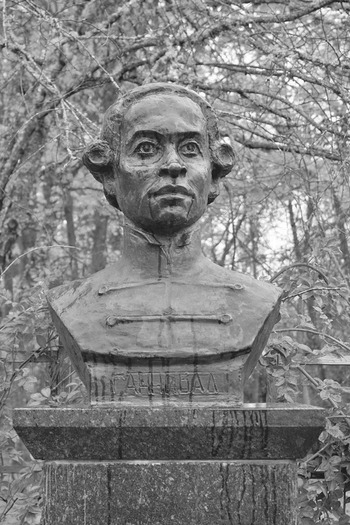
To be sure, there are excellent academic studies that have investigated how central Blackness in particular has been in conceptualizing Pushkin's life and posthumous reputation. Most scholarship on Pushkin's reception in the United States focuses on twentieth-century Black cultural history.Footnote 2 But the origins of these voluminous, transnational exchanges remain poorly understood. Indeed, they began at least a decade earlier than most Pushkin specialists assume. Moreover, nineteenth-century commentators on both sides of the Atlantic discussed Pushkin's racial lineage—as both a Russian, and as a canonical European writer of African descent—and much more so than is commonly acknowledged. To quote just one overlooked source, a short obituary published in Vermont's Watchman and State Journal, Montpelier's most influential newspaper, just three months after the poet's death in 1837 noted: “Negro Blood in Russia. A correspondent of the N.Y. Express, writing from Paris, notices the death of M. [Pushkin], the most distinguished writer and poet of Russia.” This brief announcement also informed readers that “Mr. Pouschkin was a favorite at Court although descended from a negro prince [his great-grandfather, Abram Petrovich Gannibal], who was made a present of to Peter the Great.”Footnote 3 (Fig. 1)Footnote 4
Bust of Abram Gannibal at Petrovskoe.

By foregrounding Pushkin's international reputation as an exceptional Black intellectual, a clearer understanding emerges of how this poet's racial lineage informed several texts penned by the canonical American novelist, Henry James. For decades, critics have studied James's social and professional ties to Ivan Turgenev in the 1870s.Footnote 5 Yet before the last quarter of the twentieth century, it remained ambiguous whether James had read Pushkin. Here it bears remembering that James was a second-generation Presbyterian Irish American, whose father and siblings were staunch abolitionists. Race, and challenging racist habits, mattered deeply to the Jameses. Or as James specialist Eric Haralson observed over two decades ago, “young Henry cut his aesthetic teeth on literature centered on race, from the adventure tales of Mayne Reid to miscegenation novels like Elizabeth Stoddard's Two Men (1865) to Uncle Tom's Cabin (1852), his ‘first experiment in grown-up fiction.’”Footnote 6 Though it is not widely known, a catalogue of James's library at the time of his death in 1916 confirms that he owned an 1868 edition of Pushkin's Eugene Onegin that had been published in Paris.Footnote 7 But up to the present, Pushkin's multiracial inheritance has not been considered in this body of scholarship.
The Irish heritage of the James family made their cultural interests in race and abolitionism personal. While the ethnic biases of Anglo-Saxon acquaintances of the Jameses paled in comparison to the ubiquity of anti-Black racism in the US, Ralph Waldo Emerson and others were deeply prejudiced against the Irish. In a private diary entry penned in 1851, Emerson complained that the “German & Irish…like the Negro,” had “too much guano” (excrement) in “their destiny.”Footnote 8 Statements like these help clarify why Henry James's two younger brothers elected to fight in two of the Union Army's first Black regiments. Garth Wilkinson “Wilky” James was seventeen when he joined the 54th regiment; Robertson James was only fifteen when he enlisted in the 55th. One leading biographer of the Jameses describes “Wilky's view” of joining “the first black regiment” as even “more auspicious” than his earlier enlistment in the 44th, a white regiment.Footnote 9
Rediscovering these clear yet understudied ties to abolitionism holds the potential to offer a clearer sense of how multiracial activism—literary and otherwise—was encouraged, transmitted, and re-interpreted on both sides of the Atlantic. Commentaries comparing American slavery and Russian serfdom were once ubiquitous in both mainstream and African-American publications up to the mid-twentieth century.Footnote 10 Moreover, the Jameses likely perceived ties between the Turgenev family and Pushkin as commensurate with their own commitments to interracialism and abolitionism. Ivan Turgenev's distant relative, the Russian diplomat Aleksandr Turgenev, was so close to Pushkin that Tsar Nicholas I tasked him with transporting the poet's dead body to his family's vault from St. Petersburg. Aleksandr's brother, the Decembrist Nikolai Turgenev, built an international reputation by critiquing Russian serfdom and American slavery in tandem.Footnote 11 Though Ivan was only distantly related to Aleksandr and Nikolai, his literary career was deeply informed by these famously liberal forebears.Footnote 12
When James became an intimate in Nikolai and Ivan Turgenev's overlapping Parisian circles in 1875, he gained an even deeper exposure to Pushkin's life and works. In 1972, A.D. Briggs reminded literary historians, “it is unthinkable that [Ivan] Turgenev and James should meet as they did on dozens of occasions, discussing European literature…without the name of Pushkin coming up for consideration.”Footnote 13 Briggs did not, however, question if Pushkin's race figured into these conversations.
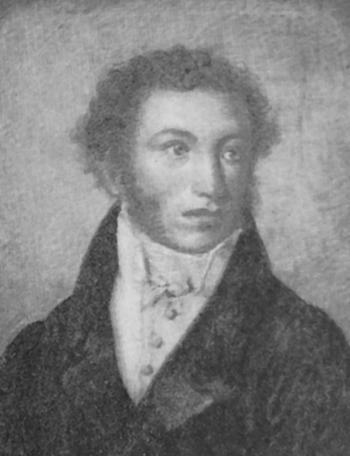
Several Russianists have pointed out that Pushkin's famous story “The Queen of Spades” (1833) was undoubtedly a key inspiration for James's 1888 novella The Aspern Papers. But none of this important scholarship has interrogated whether James veiled the story's references to Pushkin because of his Black African lineage. By recovering public and private speculations on the significance of Pushkin's Blackness, it becomes clearer why a “colorblind” approach to this question obscures what James may have hidden—or considered a potential liability. Conspicuously, during his career, James referred to Pushkin in print only twice, even as he repeatedly paid tribute to Turgenev.Footnote 14 The first time James cited Pushkin was in his review of Prosper Mérimée's translation of Pushkin's The Pistol Shot in 1874, describing the story as an “extremely energetic little tale.” Twenty-eight years later, in 1902, James cited Pushkin by name in his introduction to an English translation of Gustave Flaubert's Madame Bovary. This time, James's reference to Pushkin was even more superficial.Footnote 15 His avoidance of discussing Pushkin at length may have been an attempt to conceal how inspired he was by this preeminent Black author. (Fig. 2)Footnote 16
Miniature of Pushkin (1826).

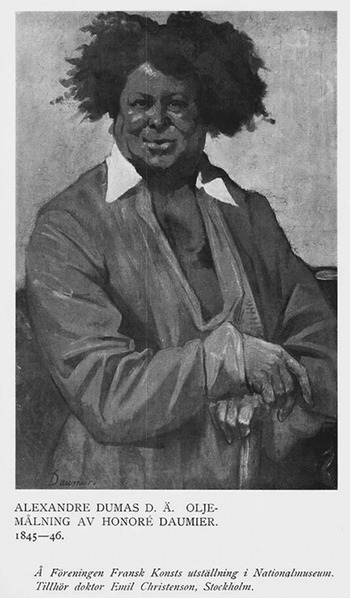
But it was impossible for James to erase Pushkin's unmistakable impact. Admitting how difficult it was to pin down this American author's exceptional ability to render a “classical combination of realism with harmony,” literary critic Edmund Wilson gestured toward some essential affinities between James and Pushkin. In an essay penned during the Great Depression, titled “The Ambiguity of Henry James,” Wilson conceded, “I have tried to describe [these attributes] in writing about Pushkin—which have been so rare in American and in English literature alike and of which James is one of the only examples.”Footnote 17 In other words, the eloquence of both writers belied how challenging it was to interpret their works. Decades later, several commentators have documented clearer connections between Pushkin and James. But unconscious biases have led these scholars to neglect facts that might have furthered their own arguments. Well beyond the abolitionist circles James socialized in, Pushkin and Alexandre Dumas père were the two most famous Black authors of the mid-nineteenth century. (Fig. 3)Footnote 18
Alexandre Dumas reproduction (1923).

James was also well aware that transatlantic discussions of abolitionism frequently denounced American chattel slavery and Russian serfdom in tandem. The eighteenth-century liberal Aleksandr Radishchev famously compared the horrors of these institutions in Journey from St. Petersburg to Moscow (1790). A century later, in a lengthy tribute to Ivan Turgenev first published in 1884, James argued that his dear friend and mentor's Memoirs of a Sportsman (1852) was “as much the same sort” as Harriet Beecher Stowe's Uncle Tom's Cabin (1852). James then explained that Turgenev's celebrated collection of short stories had been described as representing a major “contribution to the question of Russian serfdom as Mrs. Stowe's famous novel to that of American slavery.”Footnote 19
In the 1810s, Pushkin linked his opposition to serfdom and slavery with his own African roots. Many of the poet's contemporaries did as well. In his memoirs, Pushkin's acquaintance F. F. Vigel discussed how the poet composed his famous ode “Liberty” (1817) at the home of Alexander and Nikolai Turgenev. Vigel's explicitly racial (and racist) remarks dismissed Pushkin's poem, characterizing it as the ravings of an “eighteen-year-old boy…with a fervent poetic imagination and seething African blood in his veins.”Footnote 20 Pushkin's own references to his Black heritage were typically far less essentialist. In a letter to his friend Prince Viazemsky on the nationalist uprising in Greece (a cherished liberal cause in this period), Pushkin wrote: “About the fate of the Greeks one is permitted to reason, just as of the fate of my brothers the Negroes—one may wish both groups freedom from unendurable slavery.”Footnote 21 Though Pushkin's political views were sometimes contradictory, and evolved over time, his keen pride in both the African diaspora and his distinguished Afro-Russian forebears remained consistent.
The Turgenev and James families admired Pushkin's commitments to his Black heritage. Henry James befriended Ivan Turgenev the same winter that this Russian novelist first met Pushkin's daughter Natalia, the Countess Merenberg. The following year, in 1876, Merenberg approached Turgenev seeking his help to publish her parents’ love letters. Merenberg's life is poorly documented, but there are detailed accounts of Turgenev's efforts to honor Pushkin by publishing a slightly edited version of these letters in Herald of Europe.Footnote 22 This publication proved highly controversial: everyone from the scholar P.A. Annenkov to Merenberg's brothers to the general public strongly disapproved of the Countess's decision to publicize her parents’ private letters, especially since she had accepted money in exchange for the rights. What remains mysterious is the reason why Merenberg—who at this point was the wife of Prince Nikolaus Wilhelm of Nassau, the brother of the Duke of Luxembourg—needed money so badly.
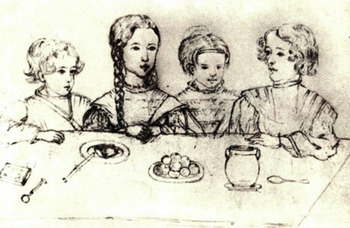
It is highly unlikely that Merenberg's racial heritage didn't affect her troubled personal life. Though rarely considered in Pushkin Studies, the long history of the future Countess Merenberg's romantic difficulties surely bears some relation to how she was racialized by contemporaries as “Negro.” In Russia, all of Pushkin's children lived under the shadow of their famous father, but Natalia in particular was reputed to have his “ardent” temperament and physical appearance, both of which were considered uniquely “African” in Russian noble society.Footnote 23 Just as racially ambiguous Americans were discouraged or prohibited from marrying white people, Pushkin's daughter similarly met serious opposition when she sought to marry into the upper European nobility.Footnote 24 (Fig. 4)Footnote 25
Pushkin's children at Gannibal's Mikhailovskoe estate (N. I. Frizengoff, 1839).

At age sixteen, Natalia fell in love with Count Nikolai Orlov, but Orlov's famous father, general and secret police chief Prince Alexei Orlov, disapproved of her as a partner. The following year, she married Mikhail Dubel΄t, the son of another secret police officer, as well as an inveterate gambler of whom her mother and stepfather disapproved. Though Natalia had three children with Dubel΄t, the marriage was unhappy, and she left the country with her children to live in Hungary with the Baroness A.N. Frizengoff in 1862. She and Dubel΄t finally severed ties in 1868, after a protracted and scandalous separation. During this saga, Natalia began living with Prince Nikolaus Wilhelm, whom she had met at a ball in Russia celebrating Alexander II's ascension to the throne years earlier.
After nearly a decade of marriage to a wealthy German aristocrat, why was Natalia strapped for cash in the second half of the 1870s? Scholars have already argued that Pushkin's wife Natalia gave these letters to her youngest daughter instead of her oldest, Maria, precisely because her unhappy marriage had put her into desperate financial straits, and that Natalia Aleksandrovna had tried to sell them several times during her protracted separation. The fact that she approached Turgenev even after her marriage to Prince Nikolaus Wilhelm suggests that this second relationship was also unstable. Here it bears pointing out that this union was immediately deemed “morganatic” (of unequal rank), although Natalia was granted the courtesy title of “Countess.” On account of this morganatic designation, she was also buried separately from her husband. Pushkin specialists have yet to seriously examine whether this designation was a racial slight.Footnote 26
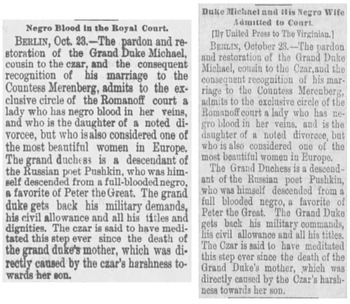
To be sure, this was Natalia's second marriage, and her maternal family had remained untitled nobility for hundreds of years. On the other hand, her great-great-grandfather's royal African heritage had been commonly acknowledged on both sides of the Atlantic for more than a half century by the time Natalia married Prince Nikolaus. But her ancestry was a major liability in the era of Darwinian scientific racism, as we know from accounts of racially ambiguous Black Americans. Indeed, multiple primary sources from this era dwell on Natalia's “African features” disdainfully. As S.M. Zagoskin commented in his memoirs: “Despite her not quite correct features, resembling her father's African type of face, [Natalia] could be a perfect beauty.”Footnote 27 Later, Ivan Turgenev would tell his brother that she resembled Pushkin exactly, “like two drops of water.”Footnote 28 Racializing Natalia only became more widespread when newspapers on both sides of the Atlantic obsessively documented the scandal surrounding the marriage of Countess Merenberg's daughter Sophia to Grand Duke Mikhail Mikhailovich of Russia. Alexander II was so opposed to this union that he sent angry telegrams to both the Duke of Luxembourg and the Prince of Nassau insisting that this marriage could not be legitimate; as a result, this union was also declared morganatic.Footnote 29 In the US, the deeply prejudiced sensation of “Negro blood in the royal court” (as the US headlines read) on the eve of the twentieth-century makes plain how dystopic preoccupations with “racial purity” became after the age of emancipation(s). (Fig. 5)Footnote 30
News headlines in 1891 emphasizing that Countess Sophie was a “Negro wife.”

Decades earlier, the relatively veiled controversies surrounding Natalia's morganatic marriage to Nikolaus were fictively rendered in The Europeans (1878). James published this novel shortly after Turgenev and Merenberg began negotiations on the sale of Pushkin's love letters. James's Europeans foregrounds the story of Eugenia, the morganatic wife of a German prince, whose marriage is inexplicably on the rocks. Readers learn only that her husband's brother, like Nikolaus Wilhelm's brother, is a powerful Duke. Despite Eugenia's desire to find a new husband in a wealthy, abolitionist—yet Anglophilic—enclave modeled after Concord, Massachusetts, she is resoundingly rejected. At the very beginning of the story, James's narrator makes plain that Eugenia, the Baroness Münster, is charming but too “exotic” (a quality that James scholars have already tied to this character's racial ambiguities).Footnote 31 If we take Briggs's 1972 claims about James and Turgenev's discussions about Pushkin seriously, it is all but impossible that James was unfamiliar with the morganatic Countess Merenberg's marital saga, which uncannily resembles the morganatic Baroness Münster's misfortunes.
All of these events took place in a moment when Russian intellectuals increasingly asserted that Pushkin's literary career was a symbol of cultural parity with western Europe. Fedor Dostoevskii's famous speech at the 1880 unveiling of the Moscow Pushkin monument amplified this campaign. When Dostoevskii (Turgenev's great rival), insisted that Pushkin embodied Russia's proximity to the “Aryan tribe” (ariiskoe plemia) and the “great Aryan family” (velikii ariiskii rod) of European nations, this highlighted attendant cultural and racial anxieties, as contemporaries noted.Footnote 32 Dostoevskii's speech was a moment of triumph for white supremacist intellectuals over Turgenev, Russia's previous liberal standard-bearer, as Marcus Levitt and Susanne Fusso have pointed out.Footnote 33 And as Marina Mogilner has painstakingly documented, numerous “scientific” attempts to square Pushkin's African heritage with his new role as a symbol of both Russian culture and the nation's ethnic-racial “type” followed soon thereafter.Footnote 34
More likely than not, the embrace of social Darwinism in this era prompted James to memorialize the saga of Pushkin's descendants once again in The Aspern Papers (1888). In the twenty-first century, few scholars disagree that this novella is a reworking of Pushkin's “Queen of Spades,” which James himself never acknowledged. James's Europeans (1878) had simply poked fun at the tribulations of a down-and-out morganatic German baroness. But by 1891, the Russian tsar's hostility to the unauthorized morganatic marriage of Prince Nikolaus and the Countess Merenberg's “Negro” daughter was nothing short of a highly publicized nightmare. Indeed, in this era there was a clear uptick in white hostility towards racially-ambiguous individuals, and especially those with “African blood.” This shift helps account for both the decreased emphasis on Pushkin's ancestry in late-nineteenth-century Russia, and James's own reluctance to admit how this internationally-famous Black poet had influenced his work for decades. Arguably these elisions still bear heavily on the academy's inability to fully unpack interconnections between James and Pushkin. An eerily similar paradigm thwarts the literate public's capacity to comprehend the recent furor, including death threats, prompted by the morganatic marriage of Meghan, Duchess of Sussex to England's Prince Harry—the latter of whom, ironically, is distantly related to Pushkin via his paternal grandfather and grandmother, the Queen of England. (Fig. 6)Footnote 35
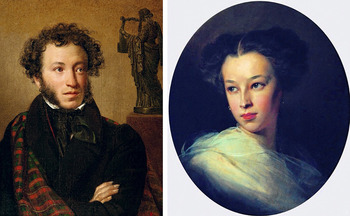
Image of Pushkin and his daughter Natalia.

Now more than ever, we need to nurture scholarly communities willing to be more candid about how race is marked, and how conceptions of race inform modern literary culture. Examining how perceptions of Pushkin's racial heritage have changed over time can and should advance this work. Intellectual prejudices are fueled by ignorance, and enabled by refusals to interrogate racial assumptions. While it is common knowledge in Russia that Pushkin's great-grandfather was a Black African, numerous complexities surrounding this family's racial lineage remain esoteric. Indeed, Pushkin's celebrated reputation as the “everything” of Russian literature may have caused some scholars to overlook the fraught and ever-changing role that the poet's African heritage has played not only on his descendants’ reputations in Russia, but also abroad.