Introduction
Popularly known as ‘tambiú tetra’, Astyanax bimaculatus (Linnaeus 1758) is a fish species belonging to the Characidae family, which is mostly comprised of freshwater fish from Brazil. According to Fricke et al. (Reference Fricke, Eschmeyer and Fong2018), this family contains approximately 1177 valid species of fish. Among these, A. bimaculatus is considered as one of the most important in the Astyanax genus (Vilela and Hayashi, Reference Vilela and Hayashi2001). Its ample distribution from the Brazilian northeast region to the Prata basin, large harvests and its importance in the sport of fishing are highlighted (Barbieri et al., Reference Barbieri, Santos and Santos1982). In addition it is the main constituent of some fish diets that include ‘saicanga’ (Oligosarcus longirostris), and ‘traíra’ (Hoplias malabaricus) (Andrian et al., Reference Andrian, Silva and Peretti2001).
Its adaptive plasticity is probably associated with the reproductive mechanisms and strategies developed during its lifetime that allow reproduction and survival in most varied habitats such as lakes, dams, streams, swamps and rivers. For this reason, A. bimaculatus has been used as a model for toxicology (Santos et al., Reference Santos, Cupertino, Matta, Oliveira and Santos2015; Marcon et al., Reference Marcon, Thomé, Mounteer, Bazzoli, Rizzo and Benjamin2017), substrate evaluation (Rezende et al., Reference Rezende, Filho, Pereira, Takabatake, Navarro, Santos, Silva and Filho2005), hormone induction (Felizardo et al., Reference Felizardo, Murgas, Andrade, lópez, Freitas and Ferreira2011) and in environmental impact studies (Mereles et al., Reference Mereles, Piñeyro, Marshall and Sousa2017; Normando et al., Reference Normando, Santiago, Gomes, Rizzo and Bazzoli2013). Moreover, this species is the subject of many related studies such as embryo development (Weber et al., Reference Weber, Arantes, Sato, Rizzo and Bazzoli2012), larval development (Vilela & Hayashi, Reference Vilela and Hayashi2001), nutrition (Andrian et al., Reference Andrian, Silva and Peretti2001) and reproduction (Barbieri et al., Reference Barbieri, Santos and Santos1982; Santos et al., Reference Santos, Campos, Camara and Mandelli1991). None of those studies, however, has described the morphology of gonadal development such as the spermatogenesis, oogenesis and the reproductive cycle.
Histology has been used to study reproduction in many fish species such as the tetra Astyanax altiparanae (Rodrigues et al., Reference Rodrigues, Siqueira-Silva, Quirino, Ninhaus-Silveira and Veríssimo-Silveira2015; Cassel et al., Reference Cassel, Chehade, Branco, Caneppele, Romagosa and Borella2017), the Danio Devario aequipinnatus (Chagas et al., Reference Chagas, Ninhaus-Silveira and Veríssimo-Silveira2016; De Jesus-Silva et al., Reference De Jesus-Silva, Oliveira, Ribeiro, Ninhaus-Silveira and Veríssimo-Silveira2018) and some Amazonian species including the Amazonian whitefish Plagioscion squamosissimus (Barbosa et al., Reference Barbosa, Rocha and Lucena Frédou2012) and the ‘piranha’ Serrasalmus gouldingi (Da Silveira Prudente et al., 2014). This tool is considered one of the most accurate approaches for analyzing reproductive development as it allows the determination of reproductive phases in males and females, defining, for example, time of first maturation, spawning type, reproductive period (Vazzoler, Reference Vazzoler1996) and fecundity (Mendes et al., Reference Mendes, Lee, Viana, Rocha and Ferreira2018).
This knowledge is important for understanding species population performance, in addition to helping conservation strategies and management of organisms and their environment (Vazzoler, Reference Vazzoler1996). This is true of species from the Amazonian region, where the rivers and lowlands pass through periodic modification due to flood cycles (Prudente et al., Reference Prudente, Ferreira, Rocha and Montag2015), modifying, subsequently, the reproductive aspects of habitant species, such A. bimaculatus, that are in theory physiologically linked to habitat fluctuation (Godinho et al., Reference Godinho, Lamas and Godinho2009).
Therefore, considering the economic, tourism, and ecological potentials of this species, this study aimed to characterize histologically gonadal development in male and females of A. bimaculatus to determine its reproductive cycle in streams from the Amazonian forest.
Material and methods
Place of collection
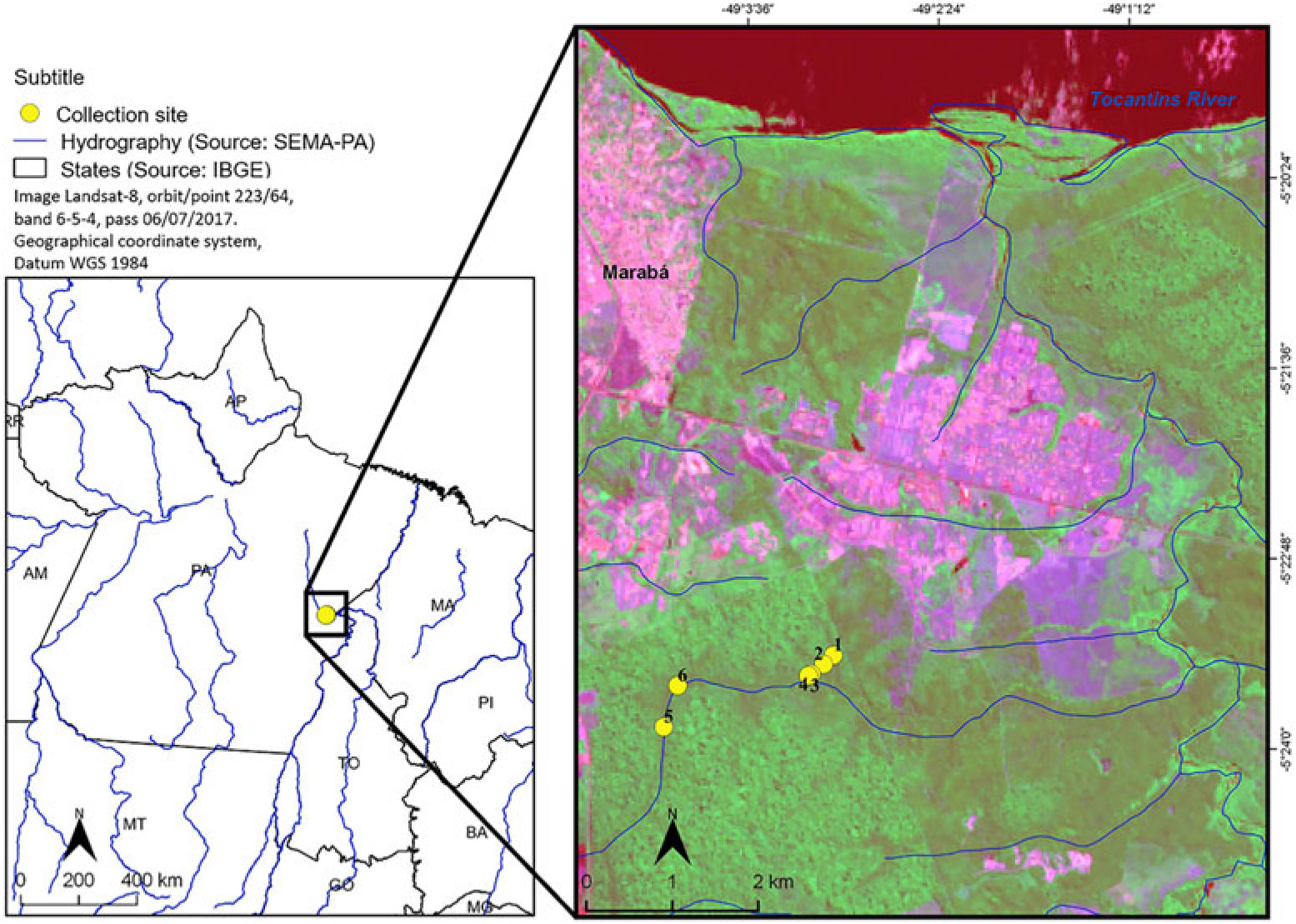
Collections were authorized by ICMBio (no. 62027-1) in small freshwater streams that opened inside the Amazon forest at the Fundação Zoobotânica de Marabá, PA, which occupies an area of 15,650 m2 (Fig. 1). The sampling perimeter was demarcated at the following points: 1 (05°23′24.5′′S and 049°03′03.9′′W); 2 (05°23′27.9′′S and 049°03′07.6′′W); 3 (05°23′31.6′′S and 049°03′12.3′′W); 4 (05°23′32.2′′S and 049°03′13.3′′W); 5 (05°23′51.6′′W and 049°04′08.0′′W); and 6 (05°23′06.0′′S and W 049°04′07.7′′W). However, specimens were found only at points 1, 2, and 3. Voucher specimens (voucher number: 25623) were deposited at the Collection of the Fish Biology and Genetics Laboratory at the Institute of Biosciences Universidade Estadual Paulista (UNESP), Botucatu, São Paulo State, Brazil.
Collection points area at the Zoobotânica Foundation of Marabá – PA. Source: Wellington Adriano Moreira Peres.

Amazonian streams are distinct, some presenting low water circulation (lentic waters) and others with a faster flow of water (lotic waters). In addition, they differ in depth (~0.5–1.5 m), turbidity, solar penetration (1.25–1.45 m, Secch disc) and amount of dissolved organic matter. However, in relation to temperature (25.8 ± 0.87), dissolved oxygen (3.11 ± 1.37), nitrite (0.125 ± 0.3) and water pH (7.06 ± 0.5) streams are very similar. Moreover, due to the water regime of this region with respect to full stoppage of rains between the middle of April and the end of October, many of those streams totally dry up during winter.
Sample collection
Collections occurred monthly from August 2017 to July 2018 with the aid of two nets (4.75 × 1.10 m) with a mesh of 1.0 × 1.0 mm that were used for trawling and waiting. Sampled specimens were taken to the laboratory where they were anesthetized in Eugenol (20 ml of Biodynamic Eugenol in 100 ml absolute alcohol) and submitted to euthanasia. Biometric data (total length (TL, cm), standard length (SL, cm), and weight (W, g)) were measured.
A ventro-longitudinal incision was made, and the gonads and liver from each specimen were removed. Livers were weighed to evaluate the hepatosomatic index (HSI) using the formula HSI = WL/WT × 100 (WL = weight of the liver; WT = total weight of the fish). Gonads were weighed to calculate the gonadosomatic index (GSI) using the formula GSI = WG/WT × 100 (WG: weight of the gonad; WT: total weight of the fish), and then fixed in Bouin solution (Cinetica) for 24 h for later preservation in 70% alcohol for histology.
Histological characterization
All materials were processed according to standard protocols for light microscopy analysis (Cordeiro et al., Reference Cordeiro, Maximino and Siqueira-Silva2019). Gonads were submitted to the inclusion procedure using methacrylate glycol (Historesin, Technovich, 7100). The material was then cut in 5 μm slices in a microtome (Leica, 2200) equipped with a glass razor. Sample slides were stained with toluidine blue and haematoxylin and eosin and then analyzed under an optical microscope (Leica CTR4000). Photodocumentation was performed using a camera (Leica DFC310 FX) and the Leica Application Suite 3.0.0 build 8134 program.
Statistics
To analyze the proportion of males and females, the chi-square test (χ2) (at 0.05% significance) was performed, hypothesizing a 1:1 ratio.
Results
In total, 35 specimens were collected (nine during autumn, seven in spring, four in winter and 15 in summer), comprised of 22 males and 13 females, representing an expected 1:1 sex ratio according to chi-squared test (χ2 = 2.314; P = 0.05). SL and weight of the females were 5.9 ± 0.95 cm and 4.8 ± 2.78 g on average, respectively. In the males, SL and weight were 5.0 ± 0.87 cm and 2.6 ± 1.76 g, respectively.
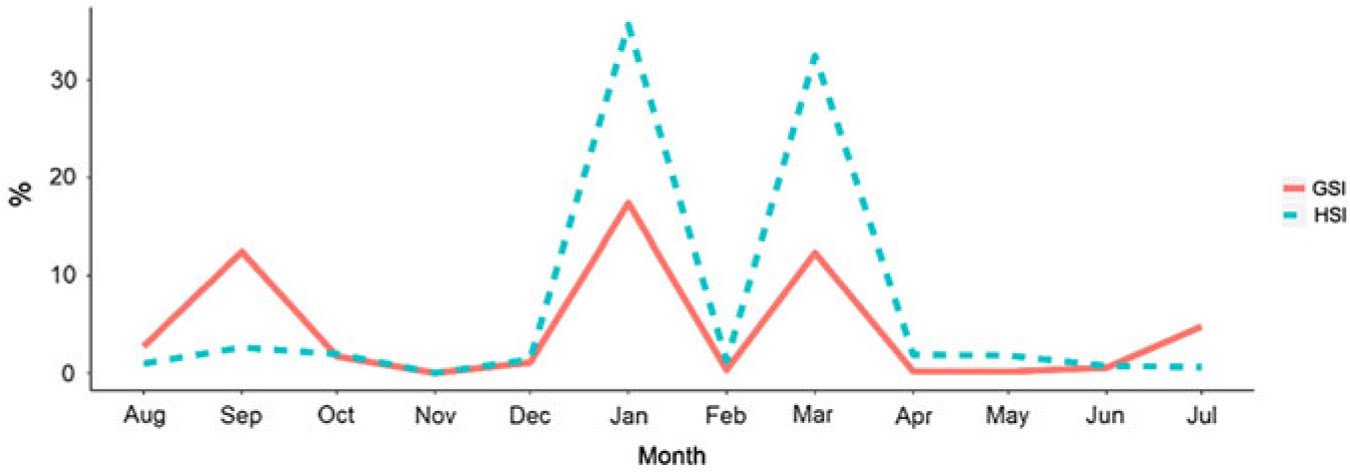
The GSI showed three peaks during the sampling period. A slight peak in September 2017 and two higher peaks in January and March 2018. These peaks were followed by decreasing values for the GSI in the following months. The hepatosomatic index (HSI) followed the same trend (Fig. 2).
Relationship of the gonadosomatic (GSI) and hepatosomatic (HSI) indexes during the 12 sampling months.

Females
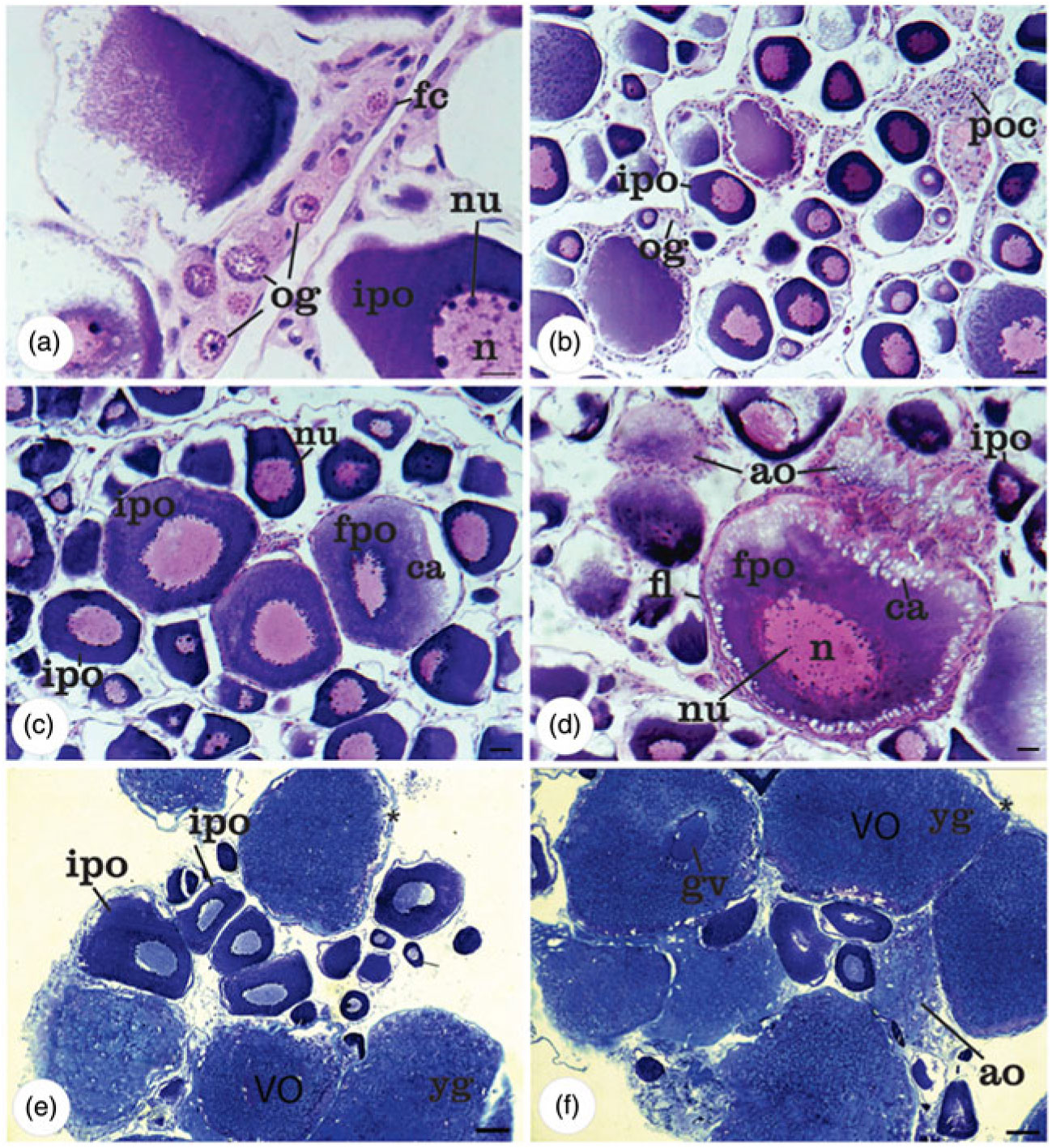
Definition of the maturation phases in A. bimaculatus females was carried out based on De Jesus-Silva et al. (Reference De Jesus-Silva, Oliveira, Ribeiro, Ninhaus-Silveira and Veríssimo-Silveira2018) for D. aequipinnatus species, and using Brown-Peterson et al. (Reference Brown-Peterson, Wyanski, Saborido-Rey, Macewicz and Lowerre-Barbieri2011) as support. The sampled female specimens were identified as having only two maturation phases, developing and spawning capable, as seen in Figs 3–5.
Oogenesis in A. bimaculatus. Developing: (a, b) initial pre-vitellogenic oocytes (ipo) with perinucleolar nucleoli (nu) and different Oogonia (og). Follicular cells are observed (fc); (c, d) initial pre-vitellogenic oocytes (ipo) and final pre-vitellogenic oocytes (fpo) with follicular layer (fl) and presence of cortical alveolus (ca) at the periphery. Spawning capable: (e, f) vitellogenic oocytes (vo) filled with yolk granules (yg) and germinal vesicular migration (gv). Abbreviations: ao: atresic oocytes; poc: post-ovulatory follicular complex. *: zona radiate; n: nucleus. Scale bars: (b) 50 μm; (a, c–f) 100 μm. Staining: (a–d) haematoxylin and eosin; (e, f) toluidine blue.

Developing
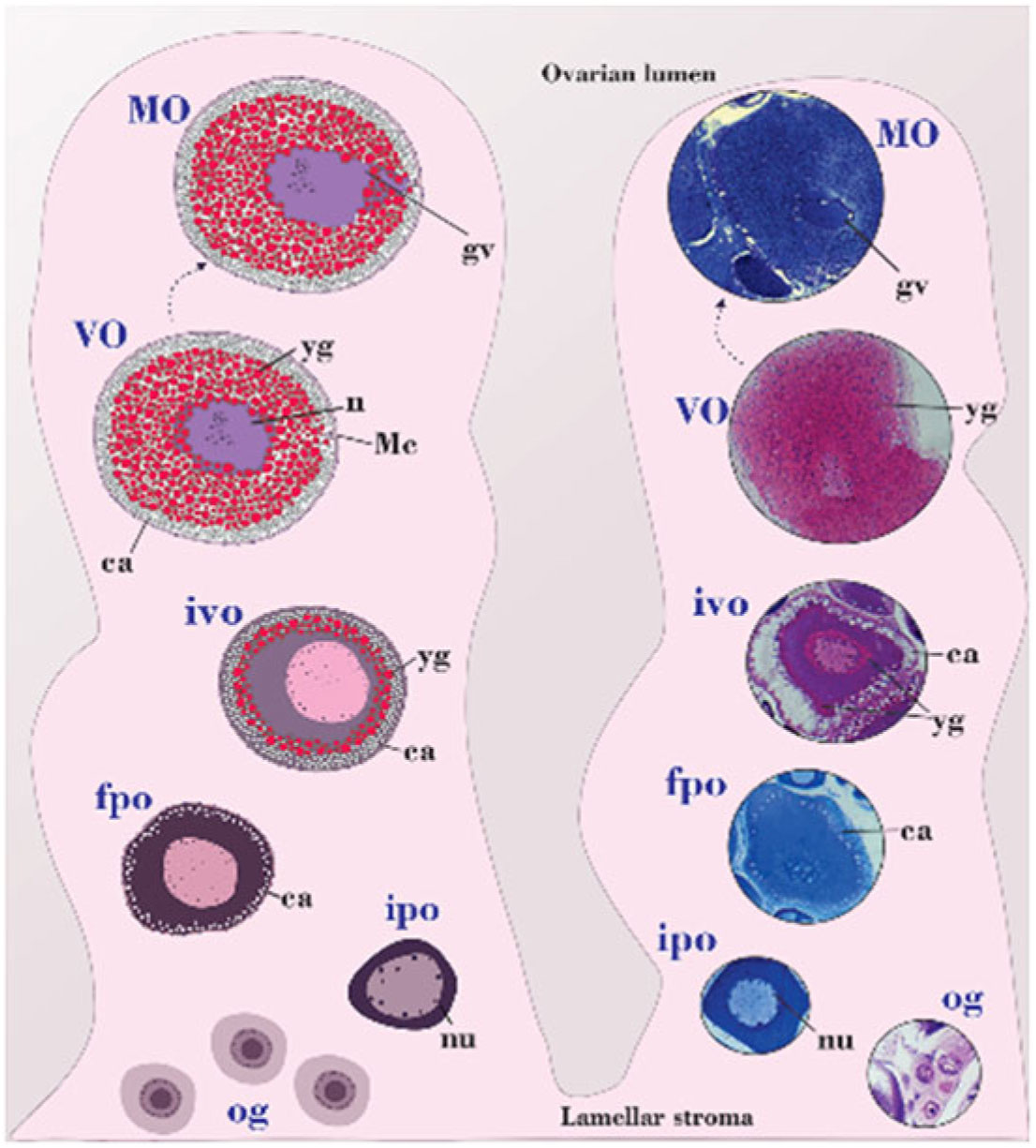
This maturation phase started with the oocytes in primary growth. Most present cells were at the beginning and end of the pre-vitellogenic stage. The initial pre-vitellogenic cells were characterized by an acidophilic round nucleus and the presence of a peripheral nucleolus. The cytoplasm was basophilic, and these cells were smaller than the final pre-vitellogenic cells. Oogonia at different stages of development were also visualized (Fig. 3a, b and 5). The pre-vitellogenic oocytes at the final stage of development were characterized by the appearance of cortical alveoli and the zona radiata. In addition, the cytoplasm became less basophilic (Figs 3c, d and 5). As the ovaries developed, initial pre-vitellogenic cells were observed less and the final pre-vitellogenic cells became increasingly apparent. Oocytes in secondary growth were now visible on the cortical alveoli and at the beginning of yolk deposition. Oocytes in atresia (Fig. 3d) and the post-ovulatory follicular complex (POC) were observed during this maturation phase (Fig. 3b).
Spawning capable
This phase was mainly characterized by the presence of vitellogenic oocytes, which can indicate that individuals are able to reproduce. Migration of the germinal vesicle to the periphery was observed in some oocytes (Figs 3f and 5). Despite the vitellogenic oocytes occupying more volume in the ovaries during this phase, initial and final pre-vitellogenic oocytes were still observed (Figs 3e, f and 5).
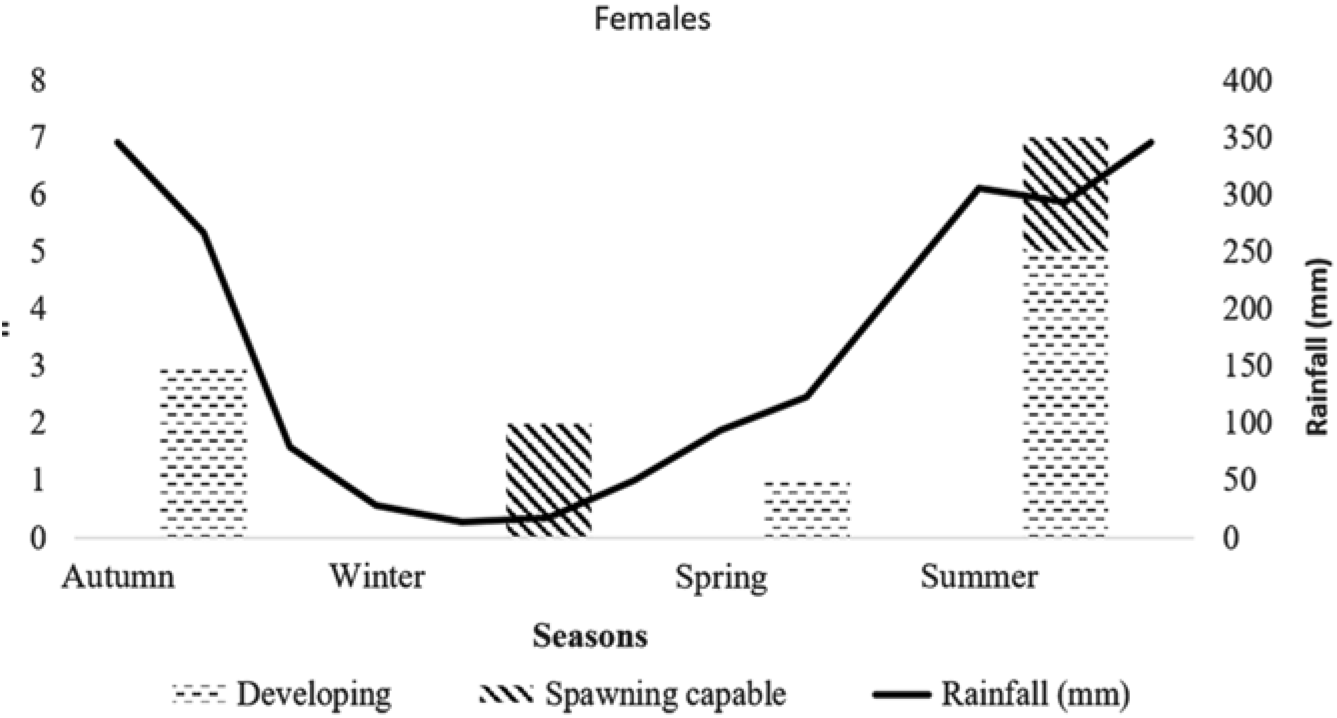
Animals were categorized according to their maturation status and subdivided throughout the seasons. Females suitable for spawning during winter and summer periods were observed (Fig. 4).
Gonadal development in females of Astyanax bimaculatus per season throughout the year. Pluviometry data obtained from Climate-Data.org.

Scheme illustrating oocyst development in Astyanax bimaculatus. (Og) oogonia; (ipo) initial pre-vitellogenic oocyte; (fpo) final pre-vitellogenic oocyte; (ivo) initial vitellogenic oocyte; (VO) vitellogenic oocyte; (MO) mature oocyte. Abbreviations: (nu) nucleoli; (ca) cortical alveoli; (yg) yolk granules; (n) nucleus; (Mc) micropila; (gv) germinal vesicle.

Males
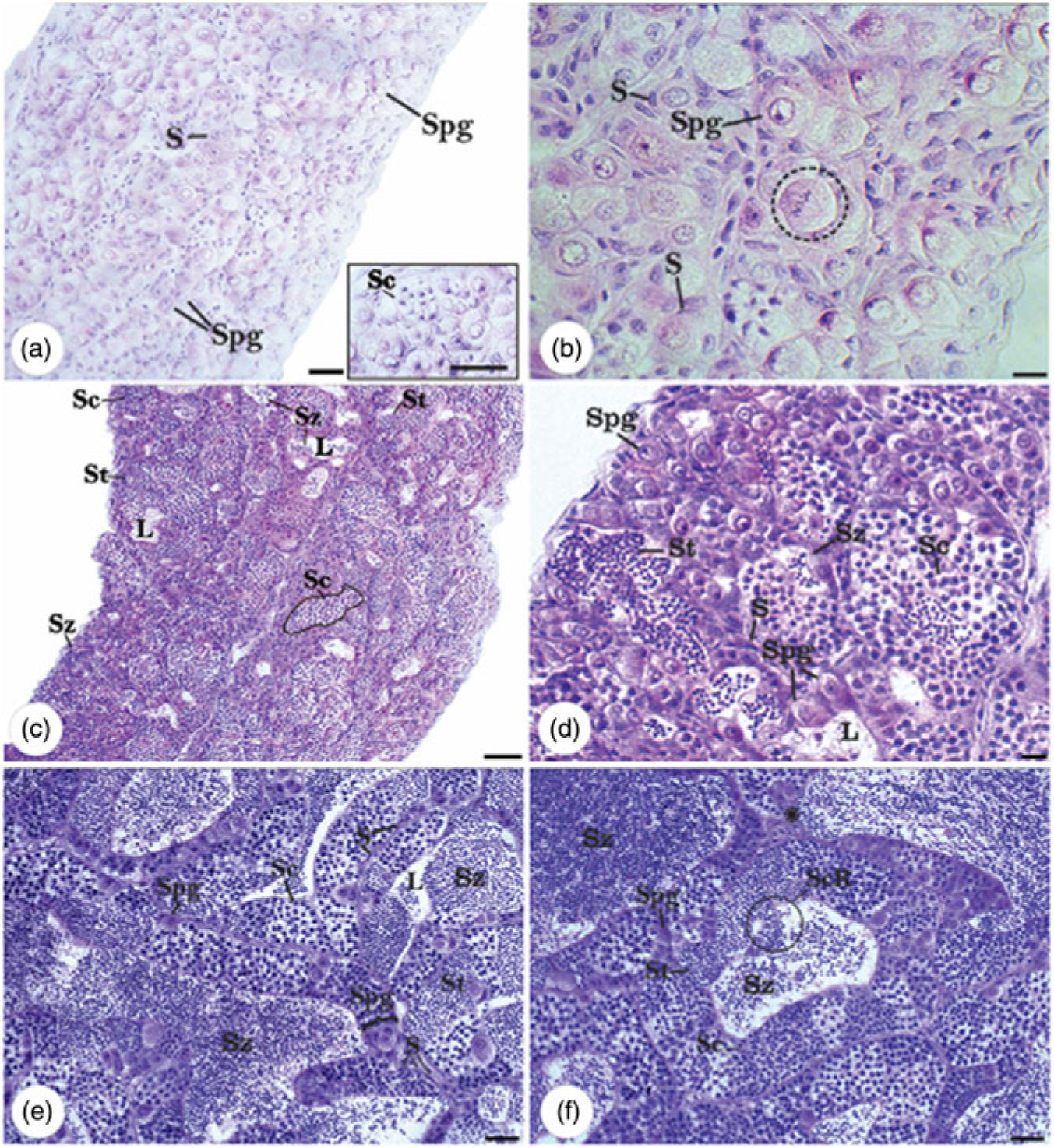
Testes of A. bimaculatus males were of the anastomosing tubular type, showing spermatogonia spread along the entire length of the germinal epithelium (Fig. 6).
Spermatogenesis in A. bimaculatus. Immature: (a, b) Proliferation of spermatogonia (Spg) in the beginning of gonadal development. Inset: Spermatocyte cyst (Sc). Initial maturation: (c, d) spermatogonia (Spg), cysts of spermatocytes (Sc) and spermatids (St), and some spermatozoa (Sz) released in the lumen (L) can be observed, and the germinal epithelium is still continuous. Mid maturation: (e, f) Persistence of many cysts of spermatocytes (Sc) and spermatids (St) and spermatic cyst rupture (ScR), releasing a large volume of spermatozoa (Sz) into the lumen (L). *Cases in which discontinuity of the germinal epithelium are known and observed. Abbreviation: S: Sertoli cell. (– – –): spermatogonia in mitosis. Scale bars: (a, c–f) inset: 25 μm; (b) 10 μm. Staining: haematoxylin and eosin.

To identify the development phases in A. bimaculatus testes, the description used by Siqueira-Silva et al. (Reference Siqueira-Silva, Vicentini, Ninhaus-Silveira and Veríssimo-Silveira2013) for the yellow peacock bass Cichla kelberi was referenced, using the classification proposed by Grier and Taylor (Reference Grier and Taylor1998) as basis with necessary adaptations for A. bimaculatus made. Five maturation phases for A. bimaculatus males were observed.
Immature
This phase was characterized by the intense presence of spermatogonia spread along the entire length of the testis and, consequently, corresponded to the absence of lumen. Spermatogonia are the cells that initiate spermatogenesis, other cells were formed as the development of these phases occurred and some spermatocytes could be seen during transition to initial maturation (Fig. 6a, b).
Initial maturation
In this phase, testes were characterized by the presence of a continuous germinal epithelium, in which it was possible to find a larger volume of spermatogenic cysts in all development stages, but mainly those of spermatocytes. Many spermatogonia can be visualized, spread along the epithelium and the lumen was already easily observed (Fig. 6c, d).
Mid maturation
One of the main characteristics of this phase was the beginning of discontinuity in the germinal epithelium, as many spermatocytes had started their rupture (Fig. 6f) to release spermatozoa into the lumen. Even with the rupture of some spermatocytes, many cysts and single spermatogonia were still observed. Spermatocytes cysts were still the most frequent in the testes (Fig. 6e, f).
Final maturation
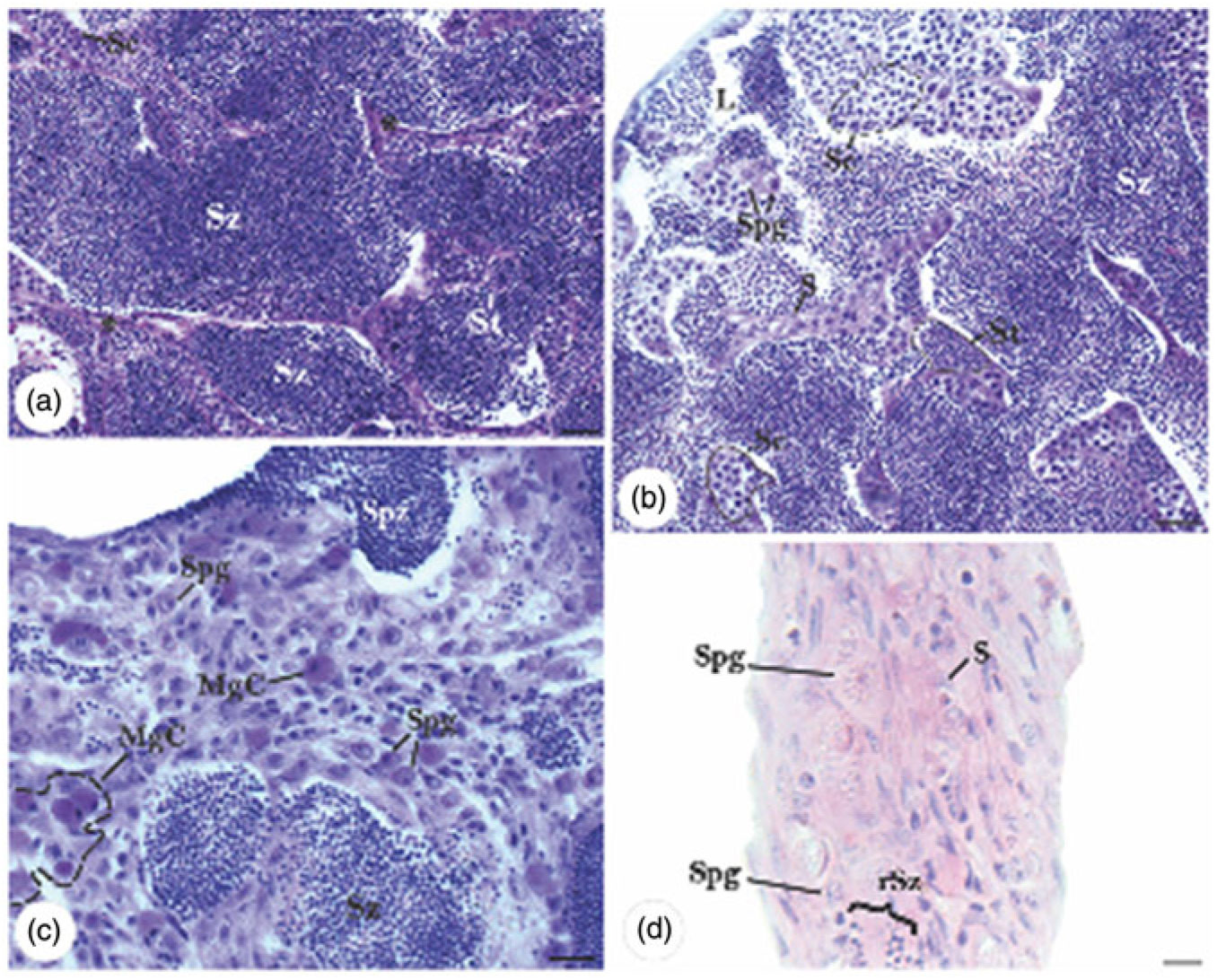
In this maturation phase, individuals were ready to release semen into the environment. This was characterized by advancement in discontinuity of the germinal epithelium (Fig. 7a), in which most spermatogenic cysts break, releasing spermatozoa to the testicular lumen. In the beginning of this phase, it was still possible to visualize cysts of spermatocytes and spermatids, however a reduced number of spermatid cysts were observed and the volume of spermatozoa in the lumen was noted during its progression (Fig. 7a, b). Melano macrophages centres started to be observed in some regions of the testes (Fig. 7c).
Spermatogenesis in A. bimaculatus. Final maturation: (a, b) Lumen (L) filled with spermatozoa (Sz) and discontinuous germinating epithelium (*) with some spermatocytes (Sc) and spermatids (St) cysts. Transition from final maturation to regression (c, d) with predominance of spermatozoa and in some regions melanomacrophagic centres (MgC). Regression: Residual spermatozoa (rSz) and spermatogonia (Spg) along the gonad. Scale bars: (a–c) 25 μm; (d) 50 μm. Staining: haematoxylin and eosin.

Regression
The regression phase appeared post-reproduction. It could be identified by testes flaccidity, its length reduction, a totally discontinuous epithelium, and by the presence of residual spermatozoa. Single Sertoli cells and melanomacrophagic centres were observed. The intertubular compartment (interstitium) occupied a large area of the testis at this period. As the regression progressed, residual spermatozoa were phagocytosed, and stem spermatogonia started to proliferate as the animal prepared to begin a new reproductive cycle (Fig. 7d).
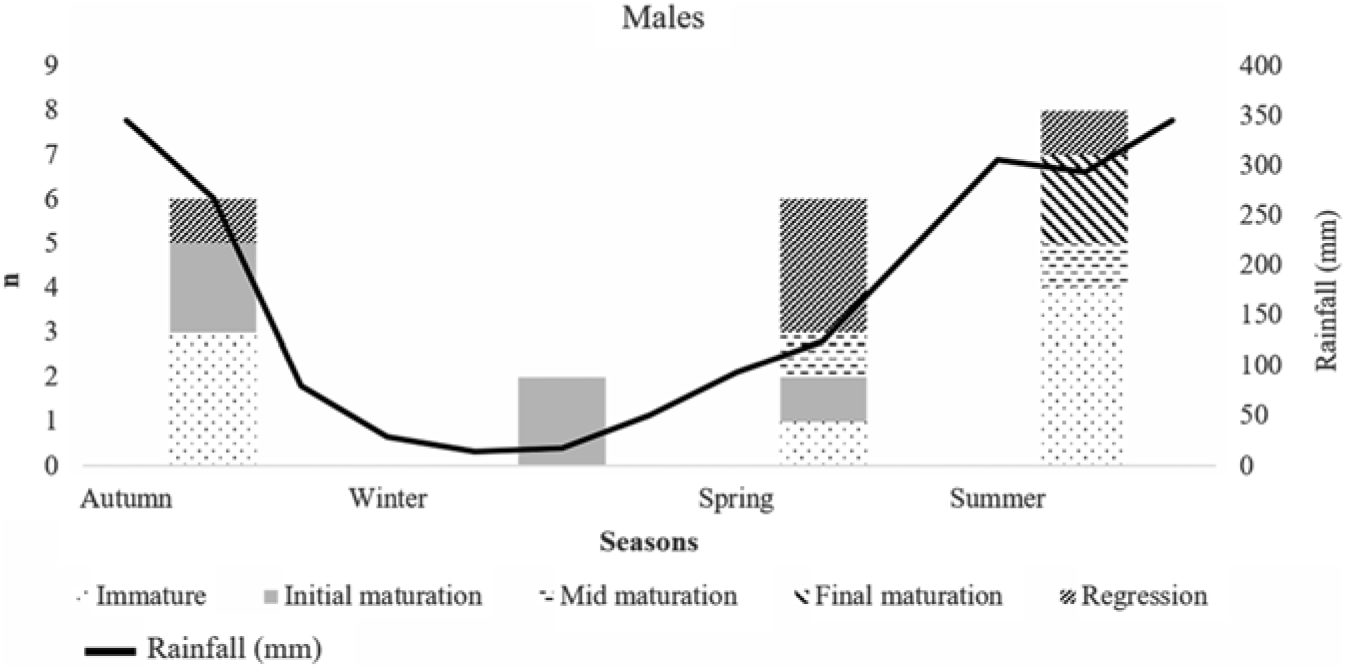
Males were categorized according to their maturation status and subdivided throughout the seasons. The final maturation peak was observed in the summer and other stages of maturation were found throughout the year (Fig. 8).
Gonadal development in males of Astyanax bimaculatus per season throughout the year. Pluviometry data obtained from Climate-Data.org.

Discussion
Compared with previous studies in other populations of the tetra A. bimaculatus, in which the number of females was always bigger than males (Santos et al., Reference Santos, Campos, Camara and Mandelli1991; Barreto et al., Reference Barreto, Ratton, Ricardo, Alves, Vono, Vieira, Rizzo and Bazzoli1998), here the ratio between the sexes was statistically proportional. Moreover, the reproductive strategy of the species was different from the population studied by Barreto and colleagues (Reference Barreto, Ratton, Ricardo, Alves, Vono, Vieira, Rizzo and Bazzoli1998) in the Rio Grande basin in São Paulo State as, in the present study, A. bimaculatus was capable of spawning in more than a single period during the year. Because of this multiple reproduction, gonadal development occurred rapidly, mainly in females. At the same time as the gonad reached the POC, indicating spawning, new oocyte development also occurred among these presenting oocytes at early stages. As A. bimaculatus is considered a ‘piracema’ species (Agostinho et al., Reference Agostinho, Gomes, Suzuki, Júlio-Junior, Carolsfeld, Harvey, Ross and Baer2003), which means that its reproduction occurs only once in the summer season (the period of the year with highest temperatures and rainfall levels), these results are innovative, showing the high adaptability of this species to the Amazonian streams.
Its reproductive plasticity is evidenced by the presence of spawning capable females in the winter period, specifically at the end of September when the rainfall index increased after the 3 months, following the lowest register of that parameter during the year. As temperatures in this region are constantly high throughout the year (24–34 ºC), rain increases may act as a reproductive trigger, making the species spawn (Winemiller, Reference Winemiller1989; Bailly et al., Reference Bailly, Agostinho and Suzuki2008). This capacity is probably related to the asynchronous development of their oocytes, previously reported by Agostinho and colleagues (Reference Agostinho, Gomes, Suzuki, Júlio-Junior, Carolsfeld, Harvey, Ross and Baer2003), that allows major reproductive flexibility and enables reproduction as soon as environmental conditions become favourable.
This scenario can help explain why only two maturation phases were observed in all females collected during the sampling period, hypothesizing that A. bimaculatus females are always prepared for reproduction, depending only on an environmental trigger. This behaviour has already been observed in other species such as the sardines Lycenaraulis grossiden and Platanichthys platana (Lopes et al., Reference Lopes, Reynalte-Tanaje and Nuñer2018), which demonstrated the ability to adjust their reproduction based in environmental conditions and to reproduce in any season of the year. Nevertheless, reproduction was mainly triggered by temperature for those species, differing from the present findings. Due to the absence of captured immature females, this difference may be related to low sampling.
The traditional reproductive index used to define maturation phases in fish is GSI, however this index is sometimes considered unable to demonstrate real reproductive status in some species. Because of this caveat, Brown-Peterson and colleagues (Reference Brown-Peterson, Wyanski, Saborido-Rey, Macewicz and Lowerre-Barbieri2011) contributed valuable research in which one objectives was to facilitate the definition of reproductive status using the association between macroscopic (GSI) and microscopic aspects (histology) findings. For A. bimaculatus, the GSI fitted well the histological analyses of the gonads, indicating the same period of reproduction. Therefore, using the approach proposed by Brown-Peterson et al. (Reference Brown-Peterson, Wyanski, Saborido-Rey, Macewicz and Lowerre-Barbieri2011), we reinforced the importance of the GSI as a good reproductive indicator, as already stated by Barbieri et al. (Reference Barbieri, Santos and Santos1982).
As for the GSI, the hepatosomatic index can be very important in understanding the energy expenditure and nutritional status of a species during its reproductive cycle. In most species, HSI is markedly reduced during reproduction (Querol et al., Reference Querol, Querol and Gomes2002; Zin et al., Reference Zin, Than and Naing2011). According to Lampert et al. (Reference Lampert, Azevedo and Fialho2004), food consumption is very intense in non-reproductive periods. This strategy allows obtained energy to be converted into gonadal increases and into nutrients to be stored for some reproductive strategies. This strategy is seen in species showing parental care, such the peacock bass (Kelber, Reference Kelber1999), in which the parent does not feed while taking care of the offspring. A. bimaculatus showed a different strategy with higher HSI during the reproductive periods. This finding must be linked to increase in food availability during periods of increased rain and scarcity of food during other periods.
In summary, the structural characteristics of A. bimaculatus were similar to those other species of the same family that live in neotropical regions (Siqueira-Silva et al., Reference Siqueira-Silva, Rodrigues and Nóbrega2018). Their testes were of the anastomosing tubular type and unrestricted spermatogonia, corroborating the Parenti and Grier (Reference Parenti and Grier2004) hypothesis that stated that most primitive fish in the phylogenetic scale present this testicular morphology.
The present study showed that a fish species can adopt different strategies of reproduction, being totally dependent on their habitat and, consequently, abiotic factors have an effect in the studied region. Those results emphasize the need for knowledge not only in basic aspects of reproduction biology, but also for crosslinking those characteristics to the surrounding habitat.
Acknowledgements
The authors are thankful for the Fundação Zoobotânica de Marabá, where the collections were held. The authors also acknowledge the Laboratory of Biotechnology/CEPTA – Pirassununga – SP, and the Reproductive and Molecular Biology Group – Institute of Biosciences of Botucatu (IBB–UNESP) for allowing these histological procedures.
Financial support
This work was supported by the Conselho Nacional de Pesquisa – CNPq (J.G.C., grant number 24/2017).
Conflict of interest
None.
Ethical standards
The authors assert that all procedures contributing to this work complied with the ethical standards of the relevant national and institutional guides on the care and use of laboratory animals.