Introduction
Development research abounds in mainstream macroeconomic studies. They tend to focus on how political–economic instruments may enhance economic growth in less developed countries.Footnote 1 Albert Hirschman and William Easterly are among the few economists to provide (quasi)cultural–ideological explanations of the shortcomings of international development aid programmes.Footnote 2
Early on, Hirschman cautioned against giving grants to ‘aid-hungry governments’ that would not have implemented the desired policies (e.g. economic reforms) if aid had not been given. Such aid would involve high ‘hidden costs’ and perhaps even nurture ‘recipient cultures’ consisting of unreliable politicians and unsustainable economies.Footnote 3 Similarly, Easterly argued that failure is most often due to lack of incentives among ‘the players of the development game’.Footnote 4 This includes lack of consensus among rival groups in recipient countries to promote overall economic growth at the national level.
Easterly's critique of the inefficiency of development aid is further developed in his recent book, where he suggests that aid might even be harmful:
The West's efforts to aid the Rest have been even less successful at goals such as promoting rapid economic growth, changes in government economic policy to facilitate markets, or promotion of honest and democratic government. The evidence is stark: $568 billion spent on aid to Africa, and yet the typical African country is no richer today than 40 years ago. Dozens of ‘structural adjustment’ loans have been made to Africa, the former Soviet Union, and Latin America, only to see the failure of both policy reform and economic growth. The evidence suggests that aid results in less democratic and honest government, not more.Footnote 5
This pessimism may be exaggerated, and Easterly and most others do not deny that individual development aid projects may have significant positive effects. Nevertheless, Easterly presents what may be termed the development aid puzzle: why have Development Assistance Committee members (DAC countries) continued to pour billions of dollars into poor countries over the last sixty years despite evident failure? Do we have a Samaritan's dilemma on our hands? Or has implementation simply failed?
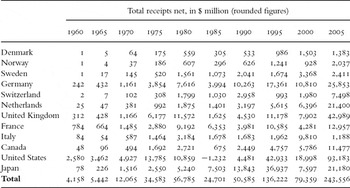
Table 1 shows that this substantial money flow has not decreased, rather the contrary. Whether we include all receipts as in the table (official development assistance, private donors, debt relief, etc.) or use official development assistance (ODA) alone, 2005 was a record year. And nothing indicates that this tendency will stop in the near future.Footnote 6
Geographical distribution of financial flows from twelve selected DAC donor countries to all developing countries, 1960–2005

Source: OECD electronic database, available at http://caliban.sourceoecd.org/vl=9865365/cl=36/nw=1/rpsv/home.htm (last visited 3 May 2007).
In the literature three motives have been stressed: altruism, political ideology (pro- or anti-communist) and national self-interest.Footnote 7 Certainly, for powerful global actors such as the United States, France and Japan, political, military and economic (trade) interests might be seen as primary motives. ‘Non-altruism’ is arguably part of the explanation, especially from the policy-maker perspective.
However, we want to emphasise here that this major reallocation of resources, which escalated during the 1960s, was fully voluntary – that is, not due to threats of violence or aggressive demands from recipient countries, although we do acknowledge that the UN Conference on Trade and Development (UNCTAD), dealing with trade, investment and development issues and effectively the recipients' lobby organisation, played an important role.
Note also that until today these often risky investments have widespread support among taxpayers in donor countries – citizens who choose to donate money to strangers living thousands of miles away and, moreover, accept very poor control over how this money is spent. Therefore, we suggest an ‘ideology matters’ approach to explain the aid riddle, a ‘goodness ideology’ that can be traced back to the 1948 UN Universal Declaration of Human Rights.Footnote 8 We do not suggest that this specific altruistic ideology – or ‘goodness ideology’ – prevailed in all donor countries. Historical sources, however, strongly suggest that in Scandinavian countries such as Denmark, this factor more than anything triggered development aid in the pioneering period from the early 1950s to about 1970, rather than political or economic concerns or abstract altruism.
Development discourse
By focusing on development aid as an outcome of altruistic ideology on the part of donor-citizens we hope to fill a gap in existing literature. There is a lack of thorough historical analyses that consider such ideological and discursive elements within a framework of adequate social science theory. There are examples of detailed, archive-based historical accounts, such as in a 2003 special issue of Contemporary European History entitled ‘Europe and the First Development Decade’.Footnote 9 But theoretical frameworks are often poorly developed or simply absent.
Many modernisation theorists distinguish between poor (underdeveloped) and rich (developed) societies, suggesting that economic development proceeds in a straight, unambiguous line.Footnote 10 The ‘naturalness’ of such phenomena has been strongly questioned by Arturo Escobar, who convincingly argues that development as a discourse was constructed by post-war development-policy makers in the United States and Europe.Footnote 11 Over a few years, this discourse became so strong that a space was created in which only certain things could be said (by those both for and against current development strategies). It strongly contributed to legitimating the voices of Western ‘experts’. Overall, Gilman views modernisation theory as a high-concept version of Americanism, implying materialism without class conflict, secularism without irreverence and democracy without disobedience. Along the same line, Rist argues that underdeveloped peoples were now forced to travel the ‘development path’ mapped out for them by others. Stoler and Cooper relate this discourse of development to colonial encounters and ‘civilizing missions’.Footnote 12
Development discourse is of considerable interest to scholars from a number of disciplines (history, anthropology, sociology, economics, political science, agriculture). Still, social-constructivist-inspired perspectives on development aid as an ‘invented’ or ‘constructed’ relation between rich and poor countries are scarce. This is partly due to an often one-sided, a-historical, unreflective and ethnocentric focus on economic growth parameters. New perspectives, we argue, tell other stories than the traditional ones, adding new pieces to the development aid puzzle.
Therefore we want to combine an anthropological–historical approach based on extensive empirical studies of Danish development aid in 1950–70 with a political economy approach (the Samaritan's dilemma), in order to elucidate the ‘goodness ideology’ established during this period. Furthermore, we shall focus on the development aid campaign within the influential Danish co-operative movement, using as historical sources the many rural journals and magazines from the period. We have scrutinised every issue of four influential journals to map out and analyse how a specific development aid discourse was formed step by step – influenced by local and global actors. These four journals, whose readership was primarily rural dwellers, are The Co-operative Magazine (Andelsbladet), Danish Youth (Dansk Ungdom, a magazine occupied with cultural issues), Weekly Magazine for Farmers (Ugeskrift for Landmænd) and Journal of Agricultural Economics (Tidsskrift for Landøkonomi). The most influential of these was the weekly Co-operative Magazine issued by the Central Co-operative Committee in Denmark. That is one reason why articles from this magazine are used as main sources in what follows. We were informed by a former editorial assistant that it was by far the most widely read agricultural magazine during the decade; in the mid-1960s circulation was about 20,000 copies. According to this editorial assistant, and somewhat surprisingly to us, this was mainly because it had exclusive rights to publish weekly quoted prices on agricultural products.Footnote 13
Our empirical study provides some important insights into the ideological climate in a Western country during a period when development aid to so-called ‘under-developed’ populations suddenly exploded. Thus we hope that our case study will have much wider implications than the specific Danish context by showing how the twentieth-century goodness ideology was discursively constructed by the use of nineteenth-century evolutionist theory, and how it was to lay the moral foundations for large-scale development aid from the West to the Rest after the Second World War.Footnote 14
More specifically, our thesis is that the west European discussions on ‘development’ may be derived from the evolutionary line of thought within the social sciences. Darwin's survival theory proposed in The Origin of the Species (1859) was adopted as the main principle for understanding the development of civilisation. Other early examples are Edward Tylor's history of institutions, Herbert Spencer's history of progress and the attempts by Lewis Morgan and Friedrich Engels to trace the origins of the family.Footnote 15
In these macro-interpretations of human history, the word ‘development’ (from French développer, ‘to unwrap’, derived from Latin develare, ‘to reveal’) assumed a particular normative significance, dividing the populations of the world into two halves: the successful and the less successful. Or ‘development’ could be put another way, as literally revealing population groups as being at various stages of development according to the ladder metaphor.
Empirically, social-evolutionist theories were confirmed by case studies of ‘primitive societies’ at the first stages of development. Thus distances in space came be used as an analogy for distances in developmental stages (rungs on a ladder), and history gradually came to be viewed widely as a ‘global development race’ between cultures and nations – no matter whether the goal of this development was seen to be the communist society, capitalism or technological perfection.
In fact, Western scientists were quite successful in promoting the idea of history as an evolutionary and teleological process; perhaps they still are. They posited that in the race of cultures in space there are ‘speedy’ and highly developed cultures or nations as well as slow and backward ones. This line of thought was adopted not only by Western populations but also by the so-called ‘primitive’ or ‘backward’ peoples themselves – see, for example, Escobar's observations.Footnote 16 In a similar approach, and much in line with Stoler and Cooper, the anthropologist Johannes Fabian termed this phenomenon allochronic discourses.Footnote 17 That is, Western scientific discourses placed non-Western peoples and cultures in other (previous) times, thereby constructing them as less developed than the peoples and cultures to which the scientists themselves belonged. Thus science, or more specifically ethnography, helped to create ‘an allochronic discourse according to which the other never occupies the same historical time as the Western observer’. In this way, non-Western countries became Third World countries.Footnote 18 Such equating of time and space show up in other anthropological case studies, most famously in Edward Said's seminal book Orientalism.Footnote 19
Our Danish case study shows that the evolutionist ideas of the nineteenth century were adopted in agricultural circles in Western countries, not least after the Second World War. At that time evolutionist terminology was transformed into an abstract and academic development terminology comprising a whole ‘family’ of powerful concepts. At the core of this ‘allochronic’ discourse was The Development, sometimes further specified (albeit no less abstractly) as The Structural Changes, The Centralisation or The Globalisation, always implying a risk of cultural stagnation. Not only did such terminology encourage an imperative to change the mode of agricultural production, in a dual movement it also became an imperative to help less developed countries in the global development race.
In what follows we shall trace the development discourse in Denmark in 1960–70, mainly by shedding light on the development aid discourse in the important and world-renowned Danish co-operative movement. Due to a strong ambition to export the successful ‘Danish co-operative model’ to developing countries, this movement had a major impact on state-sponsored development aid during this period, not least on technical development aid. First, we present the theoretical framework – the assumption of a Samaritan's dilemma – in the context of global development aid. Then we trace the formation of a development discourse in Denmark based on what we term a goodness ideology. To this end we use printed historical sources, mainly articles from rural, agricultural and co-operative journals and magazines published in 1960–70 in what is known as the great era of development aid optimism in Denmark. Finally, we analyse whether Danish development aid is an illustration of the Samaritan's dilemma.
The Samaritan's dilemma
We hasten to stress that we do not doubt the best intentions of givers, nor do we question the necessity of cross-border solidarity and responsibility. We do, however, point to the problem, in helping developing countries – hitherto simply called ‘primitive’ societies with no mitigating euphemisms – of the ideology of being good. The often overlooked core problem of countries that apparently cannot make it on their own (and therefore become eligible for help without reciprocal repayment) is that it simply may pay for recipients to stay helpless.
In other words, and as argued by political economist James M. Buchanan in his seminal article ‘The Samaritan's Dilemma’, a recipient profits from exploiting a donor or ‘Samaritan’, whose dominant strategy is being ‘good’.Footnote 20 Nannestad says that while the motivations of the Samaritan are morally irreproachable, those of the recipient are not. Basically it is a model of exploitation of the ‘good’ by the ‘not good’, made possible by the fact that being good is the Samaritan's dominant strategy. Both players are rational, but have different priorities: being morally good, being materially better off. Co-operation can replace the dominant strategy only if the players share priorities.Footnote 21
Buchanan considered increasing economic affluence as one possible explanation for the pervasive importance in twentieth-century Western society of what he termed the Samaritan's dilemma. Wealth makes it possible to choose ‘soft options’ such as ‘kindness to criminals’. Furthermore, this softness is strengthened by the ‘Puritan ethic’, where Christian love was ‘love of God’, which was effectively translated into a set of precepts for personal behaviour.Footnote 22
The dilemma arises from the ideology or dominant strategy of being good. Coate, for example, demonstrates how too much altruism may lead to unconditional transfers to the poor, who may then forgo insurance and rely on private charity to bail them out in the event of loss.Footnote 23 Likewise, Dijkstra argues that in cases where the recipient gets more money from the Samaritan, he will work less than the Samaritan would like him to. Thus the less money the recipient earns for himself, the more needy he becomes, and the more money he will get from the Samaritan. So, when the recipient moves first, he can extort more money from the Samaritan by working less.Footnote 24
This ‘Samaritan's dilemma’ is also present in the case of development aid, because donor countries cannot punish recipient countries by refusing to grant more aid because the result would be even more poverty in the short term. Thus the recipient may be rewarded in economic terms for staying helpless.
Formulated in anthropological terms, the risk is that we end up with no equal and mutually obliging reciprocal relations, that is, we have unbalanced reciprocity.Footnote 25 Moreover, according to Bauer,Footnote 26 what motivation should so-called ‘underdeveloped’, ‘developing’ or ‘depending’ populations have in order to improve their life conditions to satisfy other people's abstract ‘the development’ idea of what their future lives ought to be? Or is development aid in essence paid so that recipients accept futures imposed upon them?
As is widely documented in classical anthropological and sociological literature,Footnote 27 balanced reciprocity, implying a balanced power relationship, is only possible when the recipient is granted the realistic possibility of paying back – economically or otherwise – in the near or distant future. Otherwise, there seems to be a break in reciprocity, leading to powerlessness, dependency and the temptation to stay helpless, or, as Bauer writes, ‘being kept in that state’. Concrete personal relationships based on trust and social control seem to have been replaced by an abstract and impersonal donor relationship ‘system’ without efficient sanction mechanisms.
Contributing to the alleviation of poverty in recipient countries is one of the main goals of most aid organisations. However, stripped of personal contact and thus, of identity, trust and social control, unbalanced reciprocity in the form of unidirectional monetary development aid may often seem economically unproductive – mechanisms which have been observed even in ‘pure’ market exchanges.Footnote 28
As has been pointed out by the political scientist Elinor Ostrom, it is highly problematic to transfer visible capital (physical, economic, technological) or reified capital (human) to third world countries. Investment in an organisational framework that fosters invisible forms of capital such as social capital should be seen as equally as important as investments in physical capital. Ostrom concludes that ‘if external agents of change do not take into account the delicate balance of interests [among farmers] embedded in social capital when investments in physical capital are undertaken, efforts to improve productivity can have the opposite effect’.Footnote 29
Such objections to post-war international development aid also occur in the economic and political science literature. Thus Pedersen strongly questions whether foreign aid actually reduces poverty.Footnote 30 Within development economics studies, we find a school casting doubt on the usefulness of international development aid in its traditional forms, thus questioning the academic development-aid optimism of the 1950s and 1960s.Footnote 31 Here the surprising conclusion is that the result is often counterproductive, because long-term development aid may deepen poverty or further skew relative income distribution.Footnote 32 In short, we have a Samaritan's dilemma where the helpless remain helpless.
In the following section we use the case of Danish development aid in 1960–70 to shed light on the discourse and ideology of the global development race and its implicit goodness ideology.
The Danish co-operative movement
During the nineteenth century, a broad tradition of civic organisation was established in Danish rural areas. From the beginning of the century this organisation was driven by energetic entrepreneurs and was institutionalised in the form of associations, so numerous in the last part of the century that the period came to be known as Foreningstiden, ‘the associations era’.
This new civic society in the Danish countryside emerged after land reform in about 1800, which transformed a feudal economy into a capitalist free-market one. This motivated many new freeholders among formerly adscripted peasants to establish voluntary insurance associations to cover fire, cattle and health, simply to survive. During the last decades of the century, however, these networks were transformed into voluntary, co-operative associations that also provided a range of collective goods in so-called ‘co-operative villages’. This myriad of co-operative, democratically based associations was established by the peasants themselves, including wholesale societies from 1866, dairies from 1882, feedstuff purchase associations from 1883 and slaughterhouses from 1887 – to mention just the most important sectors. It is important to note that this close economic co-operation between Danish peasants and wealthy as well as poor farmers, also led to the formation of numerous cultural institutions during the second half of the century – community folk high schools, free schools, village halls, and so on. In this way a remarkable economic growth was set in motion alongside new cultural institutions that ultimately paved the way for a democratic take-over of political power by the peasants' party, Venstre (Left), in 1901.Footnote 33
In the 1960s, however, the co-operative organisational form underwent fundamental changes. Hitherto parish-based local associations were closed en masse due to organisational centralisation, to the regret of many farmers. How could this happen? From reading rural magazines and journals from the end of the Second World War to about 1970 – concerned with both cultural and with agricultural issues – it would seem that at that time development was seen as structural by the Danish rural population. Furthermore, the word ‘structure’ (from the Latin struere, ‘to construct’, ‘to build’) seems to imply that The development was a necessary and inevitable one, a kind of mandatory future – however unwanted and feared by the great majority of the population.Footnote 34 However, the sources indicate that the Danes, including the rural population, did not immediately give way to this new development terminology. Thus articles in rural journals published around 1960 reveal that Danish farmers found it difficult to understand the amazing Latin words being propagated by agricultural economists and other experts. Moreover, our archive studies of two parish dairies show that farmers even had difficulty in pronouncing and spelling words such as ‘rationalisation’ and ‘fusion’.Footnote 35 Nonetheless, by the mid-1960s, over an astonishingly short period, Danish farmers were becoming familiar with the new terminology. The import, internalisation and spread of a new ‘discourse of rurality’, on the initiative of a group of energetic and modernist-minded agricultural leaders and experts, gradually affected common farmers.Footnote 36
In this way ‘The structural changes’ – a term expressing external global market conditions and simultaneously implicitly promoting a modernist worldview – suddenly became reality for the rural population during the 1960s. With respect to empirical evidence, the structural changes were ‘proved’ by statistics, often referred to as ‘the talk of the numbers’ or, in sum, ‘The development’. Nobody can resist The development, was the conclusion reached by a still larger group of resigned farmers. Hence, farmers gradually stopped questioning the modernist post-war development paradigm. In fact, in the 1960s open criticism of the leading defenders of ‘the law of development’ became almost unthinkable. The few dissenters who dared offer public criticism of The rationalisation, The centralisation and The structural development were seen as reactionaries by agricultural leaders and experts within the, in agricultural circles, near-hegemonic co-operative movement.
Explicit comparisons were made with developing countries, where such reactionary elements also impeded progress and ‘natural development’, as it was often expressed. Some even argued that the Danish rural population – like that in the United States – lagged behind the more civilized urbanites, implying that the urban–rural relation was a direct reflection of that between developed and developing countries.Footnote 37
In an article in a Danish agriculturalist journal in 1963, the American agronomist Robert C. Cook addressed this issue with reference to the poor black farm workers in the American south: ‘With regard to income and upbringing, the rural population is typically far behind the urban population. This inherited difference threatens the rural youth now when our complicated and technological society demands more skills acquired through a more extended education.’Footnote 38
From the mid-1960s, the advocates of centralisation became increasingly impatient to realize their idea of only one co-operative dairy company, one co-operative wholesale society association, one co-operative slaughterhouse association, one co-operative chemicals and feedstuff company, and so on. At the same time centralisation was recommended by experts in international organisations, for example the International Co-operative Alliance (ICA), which was strongly in favour of a unified movement run by highly educated specialists.Footnote 39
Ideologically, the propaganda for full centralisation was rooted in the concept of a global development race. In this debate, influential arguments were that ‘other countries have overtaken Danish dairy production’, ‘the current methods of working are outdated’, ‘the Danish dairy industry must rationalise to keep its position among the leading countries’, ‘the dairy sector is lagging behind’.Footnote 40
That the time-honoured Danish co-operative dairy industry stood to lag behind in the near future was a worrying argument for all Danes, farmers and urbanites alike. Often such bogeys in the rural journals and magazines were supplemented by photos of poor people and primitive dairies in developing countries such as India and in Africa.Footnote 41
Thus the dairy culture was considered to be a barometer indicating the degree of economic development, and the risk was that this sector would lose its position if it failed to rationalise production. The fear of involution and degeneration led to a general consensus among top leaders in the co-operative sectors that a full merger was the only option available to ensure survival under the ‘law of development’. To fail to obey this law was (involuntarily!) to go native, even to become primitive – in short, to descend the development ladder.
The establishment of a goodness ideology in Denmark
Evidently the post-war development discourse in Denmark was not initiated domestically. As has been mentioned, the Latin-derived terminology was imported from the United States. Similarly, an altruistic ideology underpinning the new interest in development aid was imported, primarily from the UN institutions and Sweden. Thus, early on, the article ‘Welfare State – Welfare World’ by the Swedish economist Gunnar Myrdal seemed to have had a major impact on the Scandinavian debate. The article, which was published in three sections in Andelsbladet from February to March 1961, was described by the editorial board as ‘a serious comment on the efforts to assist the underdeveloped countries’.Footnote 42
Myrdal posited that the main problem was the nationalistic economic policies pursued by rich west European countries, which acted as a barrier to international economic integration.Footnote 43 In other words, the rich Western countries had strongly contributed to placing the underdeveloped countries in a vicious circle that prevented their industries from becoming competitive in the world market.Footnote 44 These evident shortcomings in the world economy tended to reinforce nationalistic groupings in the impoverished countries to such an extent that governments of underdeveloped countries would make aggressive and undue demands for compensation from the rich countries, termed by Myrdal ‘extortion politics’.Footnote 45
Myrdal did not talk about Samaritans' dilemmas; he thought that the tension of economic exploitation and aggressive counter-reaction could only be solved through ‘the world revolution’. This revolution would wipe out poverty and clear the way for a global welfare society – a future strategy that was seen as ‘natural, necessary, correct [and which] moves in the direction of progress’.Footnote 46 Such real progress would lead to ‘a democratic welfare world, which involves increased international solidarity on the side of both rich and poor countries, and increased international co-operation in order to give all people in the whole world the same possibilities . . . a world society based on equality and everybody's taking a full part in power’.Footnote 47
Thus during the 1960s ordinary Danish farmers began to share with Myrdal and his Danish advocates a strong vision of a global social conscience, global justice and ultimately a global welfare society world with no bad guys, only good guys. This seems somewhat paradoxical, as these farmers only a few years previously had expressed scepticism about ‘international solidarity’, which they associated with the urban labour union mentality. Apart from journal features such as letters to the editor, this ideological shift is also evident in a questionnaire carried out at the Annual Co-operative Wholesale Societies congress in 1966. To the question ‘Would you like to propose that the members of your wholesale society allocate 2 Danish kroner of their annual dividends to the co-operative movements in the underdeveloped countries?’, Two thirds of 316 delegates answered ‘yes’, with only one third answering ‘no’.Footnote 48
In Andelsbladet, the development assistance campaign took the form of seminars, conferences and articles authored by experts and consultants within the movement. The articles were often illustrated with pictures of poor, primitive and (often) black people. Overall, the message was that more development assistance was needed. In the mid 1960s typical headlines were, ‘Tragic riots must not weaken development aid from West’, ‘We have to contribute to international development aid’, ‘Work for underdeveloped countries is vital to us all’.Footnote 49
On the part of the experts, the Myrdal-inspired economist Poul Nyboe Andersen was among the most important advocates of development aid, from Denmark generally and from the co-operative movement specifically.
Like Myrdal, Nyboe Andersen wanted to increase the economic independence of underdeveloped populations. This was to happen in a process of democratisation, where the Danish contribution would be ‘to enter into positive co-operation with the developing countries through our help to them, and to give them knowledge of how we in the Western world have solved our societal problems’.Footnote 50 Following Nyboe Andersen, a co-operative organisational form implemented in the poor countries was to act as help to self-help – just as the agricultural co-operative movement had done in nineteenth-century rural Denmark.Footnote 51
That a Danish/Scandinavian co-operative movement with rich democratic traditions would be able to contribute significantly to development in poor countries became a widespread assumption in Denmark in the early 1960s. For example, in the ‘Freedom instead of Hunger’ campaign in spring 1964, Kjeld B. Juul, a consultant to the Danish Association for International Co-operation (Mellemfolkeligt Samvirke) and later on to the Food and Agriculture Organisation (FAO), used the development rhetoric of the day when stating in an interview that he recognised ‘the Scandinavian countries to be the most enlightened in the world’. Furthermore, they ‘should engage in a large-scale co-operative project, which they have the prerequisites to carry out’.Footnote 52
This thinking was in line with the vision of the international co-operative movement as the most important element in development work, and it was promoted by such powerful international organisations as the FAO, the International Labour Organization (ILO), the Organization for Economic Co-operation and Development (OECD) and the International Co-operative Association (ICA). However, even though they might share this vision, such organisations were often in mutual competition to implement the co-operative model in recipient countries – a fact widely documented in the Danish agricultural journals of the 1960s, not least Andelsbladet.Footnote 53
Overall, the importance of international development aid organisations after the Second World War appears vast in Denmark, a Scandinavian welfare society in the making. Historical sources clearly document that these aid organisations – most of them UN agencies – put considerable pressure on national governments. For example, at the ILO conference in Geneva in 1966 a resolution was unanimously approved recommending all member states to promote co-operative movements as ‘one of the most important means to economic, social and cultural development as well as human progress in the developing countries’.Footnote 54
We therefore understand why the idea of the Danish co-operative movement having a special mission in development work soon gained widespread political support. According to the prime minister, Jens Otto Krag, in 1963, ‘There is no doubt that our co-operative movement can be transplanted to more primitive forms – and the co-operative principle appeals to the underdeveloped countries.’Footnote 55 Likewise the foreign minister, Per Hækkerup, stated in 1964 that a co-operative movement striking the golden mean between capitalism and communism, ‘beyond any doubt [has] great prospects in the underdeveloped countries’.Footnote 56
The arguments used by protagonists of Danish development assistance can be categorised in three main strains, all sharing the underlying assumption of ‘the global development race’.
First, major Danish development aid was grounded in sincere concern about ‘global disasters’ (world war, political instability, overpopulation, etc.), which Myrdal and other experts warned would be the natural consequence of the chronic imbalance in the world economy. However, this overall concern did not preclude self-interest in the form of cultivating future markets for Danish exports.Footnote 57 Here the underdeveloped populations were seen as constituting a vast potential market.Footnote 58 Finally, there was the moral duty to help people in need. Judging from the journal articles, this seemingly non-economic rationale for Danish development aid appears to be the most important one, here labelled as ‘goodness ideology’.
This purportedly civil duty was also termed ‘global social consciousness’, that is, a Christian–altruistic social consciousness ‘extended’ to (primitive) populations living in other time–space dimensions. In a manifesto article by one of the most prominent leaders within the co-operative movement, entitled ‘Think in time – let's share our “fortune”’, the Danish rural population learned that Danes had been too ‘slow’ in helping the underdeveloped countries. In order to change this, the best remedy would be ‘a national enlightenment campaign . . . that should make people more sympathetic towards the perspectives of the development aid’ – an enlightenment campaign, which, it was stated, should aim to reach ‘the inner corners of secure Danish cosiness [hygge]’.Footnote 59 The imperative to be good, or to do good (even in the face of meagre development aid results), is reflected in many other statements. Typical assertions were that of Professor Pihl, who announced in 1961 that ‘today, it is beyond dispute that development aid is . . . a civil duty’, or an Andelsbladet editorial from 1961 arguing for the necessity of a ‘total change in our attitude towards underdeveloped peoples [an attitude, which previously] has been rooted in a mindset dating back to colonial times’.Footnote 60
It is interesting to observe that in their efforts to legitimise such unilateral giving and national propaganda campaigns, the three key arguments were conflated – albeit always resting firmly on the moral imperative to help all people in need. Danish hesitation to grant even more money was, according to Andelsbladet, due to ‘a lack of understanding, not only of people in great need, but also of the dangers inherent in not sharing with others our affluent society, whether it be in the form of education, money or something else [, or we shall risk] a very dangerous tension between the “rich” Northern hemisphere and the “poor” Southern hemisphere’, and so on. And finally, the typical ‘allochronic’ closing remark, which more than anything echoes the amazing decade of the 1960s: ‘Let us not come too late with our aid, because we did not think in time.’Footnote 61
The Danish co-operative movement and the white man's burden
The sources indicate that we should not underestimate the moral argument and the ‘goodness ideology’ behind it. It is quite amazing that an otherwise conservative and locally oriented peasant population (the Danish word bonde, ‘peasant’, originally meant ‘settled’) in a couple of years became convinced of the necessity to help people in need across the globe. In this way ‘global social consciousness’ was adopted between 1960 and 1965, and not only by urban Denmark – ever since, the ‘ideology of goodness’ has been an integral part of the Danish worldview and self-understanding, reflected in increased development aid from the Danish state, social science research and rapid growth in charity organisations, accompanied by various charity concerts and money collection drives – the effects of which, to put it mildly, can be highly doubtful.Footnote 62
It is also interesting how closely the ideology of goodness is linked to the idea of a global development race – a time threat or the lack of time used as the main engine for an ‘industry’ of good deeds beyond personal contact. Based on that worldview, it was believed that Danish nineteenth-century co-operative history would – or ought to – repeat itself in primitive ‘time-lagged’ countries.
So, after the Second World War and especially during the first part of the 1960s, the ‘extended sense of social responsibility’, which first appeared in Danish social legislation late in the nineteenth century in response to harsh economic liberalism, also came to include other countries in a post-colonial context. In short, it was a renaissance of what may be summarised as ‘the white man's burden’.Footnote 63
The white man's burden implied a moral imperative, the purpose of which was to mitigate the nemesis justly directed against former colonial masters. The feeling was that we from the West had invoked the anger of God and therefore had to right the wrongs we had committed, for example through exports of money and technical assistance. ‘I believe’, as Hækkerup stated in 1964, ‘that we [Danes] generally have done too little for the underdeveloped countries.’Footnote 64 His point was that Danes at that time had an extraordinary opportunity to ‘help along’ (ophjælpe) the poor populations, as it was often expressed, that is, to help them speed up their ascent of the development ladder, thus allowing them to approach the same high level as the Danes. ‘One has to remember’, Hækkerup continued, ‘that development necessarily has to proceed step by step, even though the underdeveloped countries, assisted by the developed countries, can reach our technical and economic level in a much shorter time than have we ourselves.’Footnote 65
Later that year, in December, an editorial in Andelsbladet baldly stated that the real mission was to bring civilisation to the primitive populations in the underdeveloped countries, not least to ‘darkest Africa’. Here, the Danish co-operative movement was to contribute to bringing to Africans ‘edifying, developing forces’. However, the editorial board could not promise the readers exactly ‘when these good forces get the better of ignorance, war and other evil forces in Africa’.Footnote 66 These and a host of other similar statements illustrate the whole atmosphere of a bad Christian conscience and the desire to repent and make amends. This goodness syndrome was an important argument for development aid in general, as well as for ‘exporting Danish co-operative principles’ specifically.
The implicit thesis of a ‘white man's burden’ was confirmed on a regular basis by the movement's consultants employed in development projects abroad. They saw the co-operative principles as a means of escaping primitiveness. From 1964–70 in particular, these consultants and experts wrote articles rich in statements and headings such as ‘The farmers of Guinea mix milk with river water’, ‘Agricultural consultants have to teach the Africans better methods of cultivation’, ‘Development aid to the underdeveloped countries creates a new way of thinking’, ‘The need for propagating the co-operative principles is enormous in Gambia’, ‘A reorganisation of the co-operative movement in Tanzania would bring members considerable economic gains’, and so on.Footnote 67 In this context, the term ‘co-operative upbringing’ was often applied, both within the Danish co-operative movement and in the ICA.Footnote 68
On several occasions the white man's burden was confirmed by the underdeveloped peoples themselves, but only by the most ‘modern’-thinking among them, typically young men with a university education visiting Denmark to participate in seminars on the issue arranged by the co-operative movement.Footnote 69 Thus, in their eagerness to partake in The Development several of these people described their own peoples as ‘primitive’ or ‘backwards’, for example the school leader in Holsteinsborg, Greenland, which, along with the Faroe Islands, was at that time recognised as an underdeveloped country, albeit an underdeveloped one the Danish co-operative movement wanted to help before all others.Footnote 70
Thus during the 1960s the ideology of goodness combined with one of a global development race were conflated and reflected in large-scale development aid. This is very similar to what happened in Norway, where ‘realist arguments’ gradually lost ground to ‘aid rhetoric’ after the Second World War.Footnote 71 Overall, it is surprising to see the lack of clear and sound arguments for development aid in west European countries, including such important donor countries as the United KingdomFootnote 72 and France.Footnote 73 And, astonishingly, such countries have since the 1950s continued to donate resources to regions unknown to the vast majority of Europeans – in the same ‘allochronic’ and non-personal way as always, voluntarily and without even being able to account for the precise effects.
As we have argued, in Denmark this happened due to Christian–European evolutionary ideology (monogenesis) aided by strong discursive effects. Where might such effects be traced to in actual practice during the 1960s? Danish employees in national and international organisations put pressure on the government, indicating that Denmark was lagging behind in a rather distinguished – and distinguishing – global development aid race among the rich countries. ‘Denmark donates 0.16 per cent of its GNP [gross national product] to development aid’, lamented Kjeld B. Juul in 1964, ‘while in the United States it has been decided to aim at granting 1 per cent of GNP’.Footnote 74 In sum, here also the laws of development seemed to govern the debate, reflected in statements like ‘there is a need for’ and ‘it is necessary’(to grant more money).
In the 1960s the agitators for more aid successfully convinced politicians to increase total Danish development aid to 1 per cent of GNP as suggested by the United Nations – even though some development aid enthusiasts had demanded a minimum of 3–4 per cent (that is, just for starters, in phase one!). Moreover, leaders, consultants and experts within the co-operative movement convinced ordinary members that the Danish co-operative movement should take the lead with regard to technical assistance – which they certainly did.
Conclusion
This article has been able to trace back the new development terminology of rural Denmark after 1945 to nineteenth-century evolutionist thinking. Our literature was Danish agricultural journals of the 1960s, and we have used the discourse analysis method. The value of this study is that, based on concrete evidence in the form of contemporary journals, our analysis revealed how ideology, a new ‘aid speak’, paved the way for concrete policy proposals with regard to Danish development aid after 1945. We further claimed that Danish development aid illustrated the Samaritan's dilemma because the ‘goodness’ ideology necessarily contains the perception of some people as being primitive and helpless. The paradox is that in this game, it may be advantageous for the recipient to stay helpless. Donor motives seem to be based almost solely on the dominant strategy of being good. Recipients are thereby encouraged to exploit the situation when a donor is willing to help. The specific case of Danish development aid during the 1960s appears to confirm Buchanan's Samaritan's dilemma hypothesis.
Using a historical–anthropological approach, we showed that technical development assistance within the famous Danish agriculturalist, co-operative movement was linked to an evolutionist ideology of developed and backward populations. Together with a strong altruistic Christian moral incentive to help – rooted in nineteenth-century monogenesis evolutionist thought – otherwise conservative farmers were convinced of the necessity to help underdeveloped peoples. The impact of the post-war development aid discourse clearly involved an ideology of goodness in Denmark and, ultimately, a Samaritan's dilemma – which was also the case in many other west European countries during that period. Although we do not deny the role of narrow, ‘egoistic’, economic interests of Danish agriculture and the Danish state on the one hand, and of strong lobby groups such as UNCTAD on the other, we do suggest that this ‘altruistic’ ideology more than anything else has laid the foundation for development aid in its inadequate present form, and that it should therefore be reconsidered if the desired goal of a more equal relationship between the countries of the world is to be achieved.