1. Introduction
In today's high tech society, numbers play a central role. We use them to calculate budgets, compare prices, understand food labels, and discuss journal impact factors. Not surprisingly, difficulties in handling numerical information can lead to serious impairments in everyday life (Ansari Reference Ansari2008; Butterworth Reference Butterworth1999; Reference Butterworth and Campbell2004; Reference Butterworth2005; Cohen Kadosh & Walsh Reference Cohen Kadosh and Walsh2007; Parsons & Bynner Reference Parsons and Bynner2005; Rubinsten & Henik Reference Rubinsten and Henik2009; von Aster & Shalev Reference von Aster and Shalev2007). Numbers can come in many forms; we can represent the same quantity, say “two” (here a word) as a digit (2), in Roman numerals (II), non-symbolically as on a dice (••), with our fingers, in a temporal series (e.g., a drum beat), or with other words (pair, duo, brace) that carry semantic as well as numerical meaning. The question of how we represent numbers and whether there is a unitary neuronal basis for all forms of numerical representation is therefore important. A full understanding of numerical representation is also important for the correspondence between comparative and developmental studies that use non-symbolic representation and studies in adults that can use symbolic and non-symbolic stimuli. Moreover, insights into the way we represent numbers are proving to be important for educational interventions, for diagnosis, classification, and the design of effective rehabilitation programs for people who suffer from numerical difficulties known as developmental dyscalculia. For example, the way in which some intervention programs are designed in order to help children with dyscalculia (Wilson et al. Reference Wilson, Dehaene, Pinel, Revkin, Cohen and Cohen2006a; Reference Wilson, Revkin, Cohen, Cohen and Dehaene2006b) is based on the idea of abstract representation. Therefore, it is assumed that training on numerosity will improve the numerical computation with digits.
2. The consensus
Over the last ten years a consensus view has emerged that assumes the underlying representation of numerical information to be abstract and to be focussed in the intraparietal sulcus (Dehaene et al. Reference Dehaene, Dehaene-Lambertz and Cohen1998). Here we reassess this abstract representation point of view. By abstract we adopt the previous operational definition (Dehaene et al. Reference Dehaene, Dehaene-Lambertz and Cohen1998, p. 356) that “Adults can be said to rely on an abstract representation of number if their behavior depends only on the size of the numbers involved, not on the specific verbal or non-verbal means of denoting them.” (See also McCloskey, Reference McCloskey1992, p. 497, for a similar definition.) Other, more recent studies, support this view and point out that “the intraparietal sulcus (IPS) as an important region for numerical cognition … represents number regardless of whether the input notation is symbolic (e.g., number words or symbols) or non-symbolic (e.g., dot patterns) and regardless of whether stimuli are presented visually or auditorily” (Libertus et al. Reference Libertus, Woldorff and Brannon2007, p. 2). Therefore, an operationalization of abstract representation in the present article is that neuronal populations that code numerical quantity are insensitive to the form of input in which the numerical information was presented (e.g., digits, verbal numbers, auditory, numerosity, etc.). In contrast, we define non-abstract representation as neuronal populations that code numerical quantity but are sensitive to the input in which the numbers were presented. Therefore, the neuronal populations that code the magnitude of the digit 7, or the word “SEVEN” will not be identical. However, the expected output for abstract and non-abstract representations is similar. For example, for both representations we know that 7 is larger than 6, and SEVEN is larger than SIX. Nevertheless, we will show here that non-abstract representation can be masked as a function of the response made by subjects and that detecting differences between different notations are optimised by probing automatic processing. Such a difference cannot be explained if the same neuronal population codes numerical quantity independent of the input.
There are several ways to define representation (for reviews, see Barsalou Reference Barsalou1999; Reference Barsalou2003; Markman & Dietrich Reference Markman and Dietrich2000), but in this target article we define representation only in the general sense that is most common in psychology and cognitive neuroscience. Here representation refers to patterns of activation within the brain that correspond to aspects of the external environment (Johnson & Munakata Reference Johnson and Munakata2005). We differentiate representation from processing; the latter includes representation, but relates to the sum of pre-representation (e.g., visual identification of the digit) and post-representation components (e.g., working memory, response selection). In the current case numerical representation relates to patterns of activation that are modulated by the numerical magnitude conveyed by the number.
We suggest in this review that the commonly held view of abstract numerical representation needs to be challenged; we present evidence supporting a contrary view, and provide future directions for empirical work in cognitive and developmental neuroscience.
3. Architectures for number processing
Models of number processing differ with respect to the issue of whether numbers are abstractly represented. There are many cognitive models in the field of numerical cognition (e.g., Cipolotti & Butterworth Reference Cipolotti and Butterworth1995; Gallistel & Gelman Reference Gallistel and Gelman1992; Noël & Seron Reference Noël and Seron1993; Reference Noël and Seron1997; Pillon & Pesenti Reference Pillon and Pesenti2001; Schwarz & Ischebeck Reference Schwarz and Ischebeck2003), but three central models are the most cited and are representative of the key features of different classes of models.
McCloskey and colleagues in a series of neuropsychological studies (e.g., Macaruso et al. Reference Macaruso, McCloskey and Aliminosa1993; McCloskey et al. Reference McCloskey, Caramazza and Basili1985; Sokol et al. Reference Sokol, McCloskey, Cohen and Aliminosa1991) have shown that a single, abstract representation can provide detailed qualitative and quantitative accounts of the errors made by acalculics (patients with acquired numerical difficulties). These findings led McCloskey (Reference McCloskey1992) to offer the abstract modular model that is composed of three distinct parts: the comprehension system, the calculation system, and the number production system. The comprehension system converts different notations of numbers (e.g., digit, verbal numbers, roman, etc.) into a common abstract format. The calculation system includes arithmetic facts such as the comparison task and calculation procedure, both of which are also a form of abstract quantity code. The production system produces the output in various notations as requested, such as digits, or spoken numerals. An important assumption in McCloskey's model is that an abstract internal representation carries out all numerical operations. This implies that all inputs, without exceptions, are converted into a single, modality-independent abstract representation and then are translated into the appropriate form of output. Consequently, the pattern of reaction times (RTs) between digits, verbal numbers, or any other symbolic notation should follow predictions based on abstract coding, because they are translated into one common representation. A general difference among the overall mean RTs might appear because of different processing times of different notation inputs (e.g., digits are responded to more quickly than roman numerals). However, an important prediction that follows from abstract coding is that there should not be RT interactions between the different notations. Rather, the abstract coding model predicts additivity between different numerical notations when one manipulates factors which influence the level of numerical representation.
While McCloskey's model strongly posits abstract representation, Campbell and colleagues (Campbell Reference Campbell1994; Campbell & Clark Reference Campbell and Clark1988; Campbell & Epp Reference Campbell and Epp2004) have suggested that numbers are not represented abstractly. According to their encoding complex hypothesis, separate modality-specific number codes exist. Therefore, number processing is mediated by modality-specific processes (e.g., visual, digit) and not by an abstract code. Consequently, they predict RT interactions between responses to numbers as a function of notation or stimulus modality. More precisely, they do not predict any additivity between different numerical notations; rather, they predict an interaction between notation and factors that are influenced by the numerical representations.
Dehaene (Reference Dehaene1992) combined features of the abstract modular model and the encoding complex hypothesis and composed the currently most accepted cognitive model: the triple-code model. Similar to the encoding complex hypothesis, this model does not assume a single central number representation. Instead, it assumes that there are three different codes with special and distinct functions for each. The first two codes are modality- and notation-dependent; The Arabic code, which resides in the left and right inferior ventral occipital-temporal areas, is responsible, for example, for multi-digit calculations. Simple calculations, verbal counting, and retrieval of arithmetic facts are executed via a verbal code, which is subserved by the left perisylvian area. However, numerical comparison and number approximation, which access the numerical representation, are performed using the third code, the analogue magnitude code, in which the representation, as in McCloskey's model (1992), is modality- and notation-independent. Hence, it is possible to find notation-dependent processing for arithmetic operations resulting from non-representation–related processes outside the analogue magnitude code (e.g., verbal code), while the numbers in the equation are represented abstractly by the analogue magnitude code. Therefore, this model, like the abstract modular model, predicts additivity between different numerical notations when one manipulates factors that influence the level of numerical representation. This idea was mentioned in several later works, for example, in Dehaene (Reference Dehaene1996) where the author writes “the same representation of number magnitudes should be accessed regardless of input number notation” (p. 60). In later works, which marked the transition of the abstract view from a purely psychological concept to a neurally instantiated one, it was stated that the IPS codes the abstract, rather than non-abstract, quantity meaning. For example, after reviewing neuroimaging studies, Dehaene and colleagues concluded that, “Those parametric studies are all consistent with the hypothesis that the HIPS [horizontal IPS] codes the abstract quantity meaning of numbers rather the numerical symbols themselves.” (Dehaene et al. Reference Dehaene, Piazza, Pinel and Cohen2003, p. 492).
4. Numbers are abstract
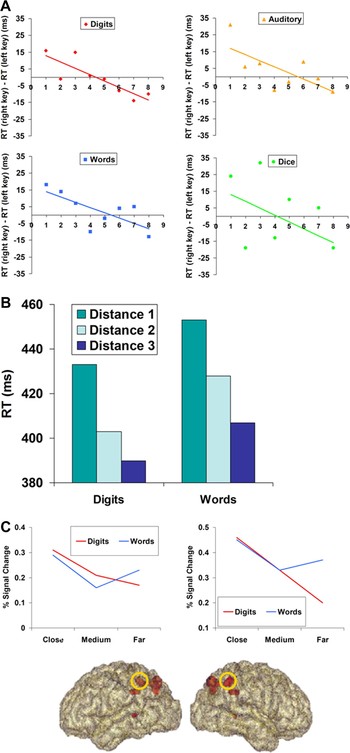
The logic behind the idea that numbers are represented in an abstract fashion can be examined in a straightforward way. If numerical representation is abstract, then the representation-related effects caused by one type of notation or modality should be identical for other notations or in other modalities. That is, the effect for each notation or modality should be additive, rather than interacting with the notation. Such effects have been observed for a variety of notations and modalities both at the behavioural (e.g., Barth et al. Reference Barth, Kanwisher and Spelke2003; Dehaene & Akhavein Reference Dehaene and Akhavein1995; Naccache & Dehaene Reference Naccache and Dehaene2001b; Schwarz & Ischebeck Reference Schwarz and Ischebeck2000) and the neuronal level (e.g., Dehaene Reference Dehaene1996; Eger et al. Reference Eger, Sterzer, Russ, Giraud and Kleinschmidt2003; Libertus et al. Reference Libertus, Woldorff and Brannon2007; Naccache & Dehaene Reference Naccache and Dehaene2001a; Pinel et al. Reference Pinel, Dehaene, Rivière and Le Bihan2001), thus supporting the idea that numbers are represented abstractly. The spatial numerical association of response codes (SNARC) effect is a classic example; subjects respond more quickly to small numbers with left-hand key responses than with right-hand key responses, and faster to large numbers with the right-hand key than with the left-hand key (e.g., responding to digit 3 will be faster with the left-hand key, whereas responding to digit 8 will be faster with the right-hand key) (Dehaene et al. Reference Dehaene, Bossini and Giraux1993; Fias & Fischer Reference Fias, Fischer and Campbell2004; Gevers & Lammertyn Reference Gevers and Lammertyn2005; for a recent meta-analysis see Wood et al. Reference Wood, Nuerk, Willmes and Fischer2008). The effect is independent of notation or modality (Nuerk et al. Reference Nuerk, Wood and Willmes2005; see also our Figure 1a). Similarly, in the numerical distance effect, RT increases as the numerical distance between two numbers decreases (e.g., RT to decide if 8 is larger than 2 is faster than RT to decide if 8 is larger than 6) (Moyer & Landauer Reference Moyer and Landauer1967). This effect too, by and large, is independent of notation (Dehaene Reference Dehaene1996; Dehaene & Akhavein Reference Dehaene and Akhavein1995; Naccache & Dehaene Reference Naccache and Dehaene2001b; Schwarz & Ischebeck Reference Schwarz and Ischebeck2000) (see our Figure 1b). These and other cognitive effects gave support for the triple code model (Dehaene Reference Dehaene1992). Extrapolating the idea of abstractness from this cognitive model (Dehaene Reference Dehaene1992) to the nervous system implies that within the IPS, the area most associated with numerical representation (see Cohen Kadosh et al. Reference Cohen Kadosh, Lammertyn and Izard2008f; Dehaene et al. Reference Dehaene, Piazza, Pinel and Cohen2003, for reviews and meta-analyses), the same neural population will be recruited to encode numerical quantity, whatever the format of presentation. Neuroimaging experiments have reported notation- and modality-independent brain activation in the IPS (Eger et al. Reference Eger, Sterzer, Russ, Giraud and Kleinschmidt2003; Naccache & Dehaene Reference Naccache and Dehaene2001a; Pinel et al. Reference Pinel, Dehaene, Rivière and Le Bihan2001; see also Venkatraman et al. Reference Venkatraman, Ansari and Chee2005, for evidence of format-independent processing of exact and approximate arithmetic in the IPS) (see our Figure 1c). Together these findings, both at the behavioural and the neuronal level, provide an apparently strong basis for the abstract representation of numbers. However, there are several limitations to this view.
Effects that underlie the idea that numerical representation is abstract. (A) The SNARC effect for different notations (digits, words, dice) and modalities (visual, auditory). In this experiment the subjects were instructed to decide whether a numerical stimulus is odd or even (i.e., parity judgement) by pressing the right or the left response key (key assignment was counterbalanced within subjects). The slopes that were obtained are independent of format. (B) The Distance effect for digits and words shows the same function independent of notation. In this experiment subjects were asked to decide by a button press whether the displayed number (i.e., the numbers 1 to 9, excluding the number five) is numerically larger or smaller than the standard number five. (C) Brain activation in the IPS (in orange circles) is modulated in similar ways as a function of the numerical distance between the compared digits, independent of the notations that were used (i.e., words or digits). Left IPS appears on the left side, right IPS appears on the right side. In this experiment the subjects decided whether a visually presented number was larger or smaller than a fixed reference number (65) by pressing a button with their right or left hand according to instructions. Adapted from Nuerk et al. (Reference Nuerk, Wood and Willmes2005), Pinel et al. (Reference Pinel, Dehaene, Rivière and Le Bihan2001), and Schwarz and Ischebeck (Reference Schwarz and Ischebeck2000) with permission. A color version of this figure is available online at www.journals.cambridge.org/bbs.

5. Numbers are not abstract
Despite the evidence presented in the previous section, the logic behind the assumption that numbers are represented in an abstract fashion is incomplete and suffers both from methodological and theoretical shortcomings. While it is true that different notations/modalities can yield similar behavioural effects, it does not follow that they therefore share a single neuronal representation. It is entirely possible, for example, that similar behavioural effects can be subserved by different brain areas, or neuronal populations in a single brain area, and in different time windows (Cohen Kadosh et al. Reference Cohen Kadosh, Cohen Kadosh and Henik2007a; Rumelhart & McClelland Reference Rumelhart and McClelland1986). It is also often overlooked that, at the behavioural and neural levels, the assumption that numbers are represented in an abstract fashion is based mainly on null results, that is, on finding no differences between notation or modality and the behavioural or blood oxygenation level dependent (BOLD) variable that correlates with numerical representation. Therefore, the conclusion that numbers are abstract may be due to a lack of statistical power, or the insensitivity of the paradigms used. Indeed, some studies have found differences or a tendency towards a difference between notations (e.g., digits, verbal numbers, numerosity, Mandarin numerals) (Campbell & Epp Reference Campbell and Epp2004; Dehaene Reference Dehaene1996; Dehaene & Akhavein Reference Dehaene and Akhavein1995; Droit-Volet et al. Reference Droit-Volet, Clement and Fayol2008; Ganor-Stern & Tzelgov Reference Ganor-Stern and Tzelgov2008; Koechlin et al. Reference Koechlin, Naccache, Block and Dehaene1999; Reynvoet & Ratinckx Reference Reynvoet and Ratinckx2004) or modalities (i.e., visual or auditory) (Barth et al. Reference Barth, Kanwisher and Spelke2003), but the implications of most of these results have either been ignored, or alternative explanations have been given that leave the idea of non-abstract representations unchallenged.
In addition to the fact that similar behavioural effects can be produced by different mechanisms (Cohen Kadosh et al. Reference Cohen Kadosh, Cohen Kadosh and Henik2007a; Rumelhart & McClelland Reference Rumelhart and McClelland1986), at the neuronal level, similar brain activations can stem from different neuronal populations that are co-localised within a single imaged voxel (volumetric pixels) and cannot be segregated with conventional neuroimaging techniques (Cohen Kadosh et al. Reference Cohen Kadosh, Cohen Kadosh, Kaas, Henik and Goebel2007b; Grill-Spector et al. Reference Grill-Spector, Sayres and Ress2006b; Nieder Reference Nieder2004). In other words, in the parietal lobes each voxel that is activated is sampled during the functional magnetic resonance imaging (fMRI) experiment (with a spatial resolution of ~3 cubic mm) and contains about 1.25 million neurons (Pakkenberg & Gundersen Reference Pakkenberg and Gundersen1997). Moreover, the neurons in this voxel can fire tens of impulses per second for different functions. However, different functions cannot be detected, as the fMRI signal – which indicates an increase in oxygenated blood bringing energy to active neurons – develops sluggishly, over several seconds. Therefore, observing similar activations at the voxel level for different notations (Pinel et al. Reference Pinel, Dehaene, Rivière and Le Bihan2001) or modalities (Eger et al. Reference Eger, Sterzer, Russ, Giraud and Kleinschmidt2003), or alternatively, observing similar time courses in event-related potentials (ERP) experiments that lack spatial resolution (Dehaene Reference Dehaene1996; Libertus et al. Reference Libertus, Woldorff and Brannon2007), is not sufficient to indicate abstract representation. This theoretical point is gaining experimental support from single-cell neurophysiology in monkeys. It has been shown, for example, that neurons that are sensitive to numbers, are also sensitive to features that have little to do with magnitude information (Nieder et al. Reference Nieder, Diester and Tudusciuc2006; see also Calabrese Reference Calabrese2007). Note that such a finding, although not speaking directly against the idea of abstract numerical representation, challenges the idea that numerical or magnitude representation is modular (Dehaene et al. Reference Dehaene, Dehaene-Lambertz and Cohen1998; McCloskey Reference McCloskey1992). Indeed modular representation of any single class of stimulus features of the world does not have a good history. Suggestions that the monkey or human brain contained a colour centre (Lueck et al. Reference Lueck, Zeki, Friston, Deiber, Cope, Cunningham, Lammertsma, Kennard and Frackowiac1989; Zeki Reference Zeki1980), a motion centre (Zeki Reference Zeki1974), or a word form area (Cohen et al. Reference Cohen, Dehaene, Naccache, Lehéricy, Dehaene-Lambertz, Henaff and Michel2000; McCandliss et al. Reference McCandliss, Cohen and Dehaene2003) – all good cases for attributes of the external world that one might expect to have a single locus of representation – have been found wanting; and each of these attributes has been found either to be multiply represented for different task demands at almost every level of the visuocognitive system (cf. Orban et al. Reference Orban, Dupont, Vogels, De Bruyn, Bormans and Mortelmans1996; Otten & Rugg Reference Otten and Rugg2001; Watanabe et al. Reference Watanabe, Harner, Miyauchi, Sasaki, Nielsen, Palomo and Mukai1998) or the “centre” has been found to be not specific to the attribute (cf. Merigan Reference Merigan1996; Price & Devlin Reference Price and Devlin2003; Xue & Poldrack Reference Xue and Poldrack2007). A priori, number information – which is less constrained than simple object features such as colour, form, and motion, and upon which we perform explicit and implicit computations – would seem to be a poorer candidate for a canonical representation.
Numerical representation is also modulated by task and automaticity. Various definitions have been attributed to the concept of “automaticity” (e.g., Carr Reference Carr1992; Hasher & Zacks Reference Hasher and Zacks1979; Logan Reference Logan1985; Posner Reference Posner1978). In the current article, we adopt Tzelgov et al.'s (Reference Tzelgov, Henik, Sneg and Baruch1996) definition (see also Barge Reference Barge1992) that a process is automatic if it does not need monitoring to be executed. Most studies that support the idea of an abstract representation are based on subjects carrying out intentional processing of numerical information. However, numbers are also represented automatically (for a review, see Tzelgov & Ganor-Stern Reference Tzelgov, Ganor-Stern and Campbell2005). Automatic and intentional processing can lead to very different inferences about the underlying representation (Cohen Kadosh et al. Reference Cohen Kadosh, Brodsky, Levin and Henik2008b; Reference Cohen Kadosh, Tzelgov and Henik2008g; Tzelgov & Ganor-Stern Reference Tzelgov, Ganor-Stern and Campbell2005), and brain activity (Cohen Kadosh et al. Reference Cohen Kadosh, Cohen Kadosh and Henik2007a, Lewis & Miall Reference Lewis and Miall2003; Orban et al. Reference Orban, Dupont, Vogels, De Bruyn, Bormans and Mortelmans1996). Indeed, task-dependency is a fundamental feature of brain representation and has been reported at every level of every perceptual and cognitive domain, including time perception (Lewis & Miall Reference Lewis and Miall2003), magnitude processing (Cohen Kadosh et al. Reference Cohen Kadosh, Cohen Kadosh and Henik2008c), face processing (Cohen Kadosh et al., in press), and visual processing (Orban et al. Reference Orban, Dupont, Vogels, De Bruyn, Bormans and Mortelmans1996). Mental representations can be probed when they are engaged by task demands or when their processing is automatic. The advantage of using automatic processing is that processing and behaviour are unaffected by task demands and intentional strategies (Cohen Kadosh et al. Reference Cohen Kadosh, Brodsky, Levin and Henik2008b; Reference Cohen Kadosh, Tzelgov and Henik2008g; Tzelgov & Ganor-Stern Reference Tzelgov, Ganor-Stern and Campbell2005).
This might imply that specific task requirements may induce humans to generate different representations (e.g., shared representation for different notations). Clearly, humans can generate numerical representations according to task requirements (Bachtold et al. Reference Bächtold, Baumuller and Brugger1998; Fischer & Rottmann Reference Fischer and Rottmann2005; Gertner et al. Reference Gertner, Henik and Cohen Kadosh2009; Hung et al. Reference Hung, Hung, Tzeng and Wu2008; Lindemann et al. Reference Lindemann, Abolafia, Pratt and Bekkering2008; Shaki & Fischer Reference Shaki and Fischer2008; Shaki & Petrusic Reference Shaki and Petrusic2005). For example, Bachtold et al. (Reference Bächtold, Baumuller and Brugger1998), in a numerical comparison task of the numbers 1 to 11 (excluding the number 6 which serves as the standard), found that subjects showed a normal SNARC effect when they conceived the numbers as distances on a ruler, which represents small numbers on the left and larger numbers on the right. Importantly, the SNARC effect was reversed (i.e., faster responses to small numbers with right-hand key responses than with left-hand key responses, and faster responses to large numbers with the left-hand key responses than with the right-hand key responses) when the subjects conceived the numbers as hours on a clock face, which presents small numbers on the right side, and large numbers on the left side. Thus, a limit to the abstract representation view we have to face is that observations consistent with shared representations may be true only for specific task conditions in any given experiment.
Clearly, then, the evidence that numbers are abstractly represented has several limitations: null results (Cohen Kadosh Reference Cohen Kadosh2008a; Dehaene Reference Dehaene1996; Schwarz & Ischebeck Reference Schwarz and Ischebeck2000; Shuman & Kanwisher Reference Shuman and Kanwisher2004), technical limitations (Ansari Reference Ansari2008; Nieder Reference Nieder2004), and task specificity (Ansari Reference Ansari2007; Ansari et al. Reference Ansari, Dhital and Siong2006a; Bachtold et al. Reference Bächtold, Baumuller and Brugger1998; Cohen Kadosh et al. Reference Cohen Kadosh, Brodsky, Levin and Henik2008b; Göbel et al. Reference Göbel, Johansen-Berg, Behrens and Rushworth2004; Van Opstal et al. Reference Van Opstal, Gevers, De Moor and Verguts2008a; Venkatraman et al. Reference Venkatraman, Ansari and Chee2005; Wood et al. Reference Wood, Nuerk and Willmes2006a). In the next section, we provide evidence that directly challenges the idea that numbers are represented abstractly. The line of experiments we turn to next shows that non-abstract representations exist in a variety of tasks and cultures.
6. Two ≠ II and 2 does not equal two
Given the ubiquity and importance of numbers and the early stage in life at which we learn about them, it is not surprising that, like words, they are eventually over-learned and processed automatically. Automatic numerical processing is an important ability that exists not only in human adults (Cohen Kadosh Reference Cohen Kadosh2008b; Cohen Kadosh & Henik Reference Cohen Kadosh and Henik2006; Dormal et al. Reference Dormal, Seron and Pesenti2006; Fias et al. Reference Fias, Lauwereyns and Lammertyn2001a; Henik & Tzelgov Reference Henik and Tzelgov1982; Lammertyn et al. Reference Lammertyn, Fias and Lauwereyns2002; Pavese & Umiltà Reference Pavese and Umiltà1998; Schwarz & Heinze Reference Schwarz and Heinze1998; Schwarz & Ischebeck Reference Schwarz and Ischebeck2003; Tzelgov et al. Reference Tzelgov, Meyer and Henik1992; Verguts & Van Opstal Reference Verguts and Van Opstal2005), but also in children (Gebuis et al. Reference Gebuis, Cohen Kadosh, de Haan and Henik2009; Girelli et al. Reference Girelli, Lucangeli and Butterworth2000; Mussolin & Noel Reference Mussolin and Noel2007; Rubinsten et al. Reference Rubinsten, Henik, Berger and Shahar-Shalev2002; Szucs et al. 2007; Zhou et al. Reference Zhou, Chen, Chen, Jiang, Zhang and Dong2007), and animals (Washburn Reference Washburn1994). The automaticity of numerical information processing gives one the opportunity to explore numerical representation per se, independent of one's strategies (Cohen Kadosh et al. Reference Cohen Kadosh, Tzelgov and Henik2008g; Ganor-Stern & Tzelgov Reference Ganor-Stern and Tzelgov2008; Tzelgov & Ganor-Stern Reference Tzelgov, Ganor-Stern and Campbell2005). Automaticity has been explored mainly by using conflict tasks, for example, the size congruity paradigm. Usually, in this paradigm subjects are presented with two digits on the computer screen (one digit in the left visual field, and one digit in the right visual field) and are required to compare the stimuli according to their physical size while ignoring their numerical value (e.g., 2 4), and to press the button that corresponds to the side of the physically larger stimulus (Cohen Kadosh Reference Cohen Kadosh2008b; Cohen Kadosh & Henik Reference Cohen Kadosh and Henik2006; Gebuis et al. Reference Gebuis, Cohen Kadosh, de Haan and Henik2009; Girelli et al. Reference Girelli, Lucangeli and Butterworth2000; Henik & Tzelgov Reference Henik and Tzelgov1982; Mussolin & Noel Reference Mussolin and Noel2007; Rubinsten & Henik Reference Rubinsten and Henik2005; Reference Rubinsten and Henik2006; Rubinsten et al. Reference Rubinsten, Henik, Berger and Shahar-Shalev2002; Schwarz & Heinze Reference Schwarz and Heinze1998; Schwarz & Ischebeck Reference Schwarz and Ischebeck2003; Szucs et al. 2007; Tzelgov et al. Reference Tzelgov, Meyer and Henik1992; Verguts & Van Opstal Reference Verguts and Van Opstal2005; Zhou et al. Reference Zhou, Chen, Chen, Jiang, Zhang and Dong2007). The stimuli can be incongruent (the physically larger digit is numerically smaller; e.g., 2 4), neutral (the stimuli differ only in the relevant dimension; e.g., 2 2), or congruent (the physically larger digit is also numerically larger; e.g., 2 4). A common finding is that incongruent trials, being slower to process than congruent trials (size-congruity effect), as reflected by slower RT, indicate that the numerical information is processed automatically. This paradigm has been employed in behavioural studies and has yielded an interaction between different notations and automatic processing of numerical information (Cohen Kadosh et al. Reference Cohen Kadosh, Henik and Rubinsten2008e; Ito & Hatta Reference Ito and Hatta2003). For example, Ito and Hatta (Reference Ito and Hatta2003) found that when participants compared the physical size of Kana scripts – the equivalent of verbal numbers – numerical information was not processed automatically. Therefore, the irrelevant numerical information did not interfere with the relevant physical size judgement. In contrast, when the same participants compared digits or Kanji numbers (ideographic script), a size-congruity effect was observed, thus indicating that the numerical information was processed automatically, and interfered the relevant physical size judgement. Similar results were found and extended by another laboratory (Cohen Kadosh et al. Reference Cohen Kadosh, Henik and Rubinsten2008e).
A recent study used a simple comparison task in which subjects had to compare the numerical values of digits or verbal numbers while examining the effect of numerical information in trial n – 1 on processing of numerical information in trial n (i.e., sequential effect) (Cohen Kadosh Reference Cohen Kadosh2008a). Others conducted a similar analysis on a similar numerical task (Dehaene Reference Dehaene1996; Schwarz & Ischebeck Reference Schwarz and Ischebeck2000) and similar stimuli (Dehaene Reference Dehaene1996), and did not find an interaction between notation and the distance effect or differential effects of trial n – 1 on trial n as a function of notation. However, these studies used a long response-to-stimulus-interval (RSI) (>1,500 msec), which is likely to produce expectancy effects (Soetens Reference Soetens1998), whereas automatic processing occurs under short RSI conditions (e.g., ≤200 msec) (see Neely [Reference Neely1977] for a similar idea for priming tasks). By using a short RSI of 200 msec, and a large number of subjects and trials, three results emerged which support the idea that non-abstract representations of numbers exist: (1) an interaction between notation and numerical distance in reaction time; (2) an interaction between notation, notation repetition, and numerical distance in error rates; and (3) an interaction between notation and the distance between the numerical distance in trial n – 1 and trial n with reaction time as the dependent variable (Cohen Kadosh Reference Cohen Kadosh2008a).
Dehaene and Akhavein (Reference Dehaene and Akhavein1995) used a same-different task, in which participants were asked to decide via a button press whether two members of a pair of stimuli, which are presented simultaneously, were the same or different. The notations were digit-digit (e.g., 2-2, 2-8), verbal number-verbal number (e.g., TWO-TWO, TWO-EIGHT), or a mixed notation (e.g., verbal number-digit; TWO-2, TWO-8). When the subjects compared the similarity of the numbers according to their numerical values, a distance effect independent of notation was observed. In contrast, in physical matching, when the participants compared the numbers according to their perceptual similarity, an interaction between notation and the distance effect was observed with a flat and not significant distance effect for mixed notation. Although the latter finding indicates that numerical representation is non-abstract, because numerical processing should be observed independent of the input (i.e., mixed notation vs. pure notation), Dehaene and Akhavein (Reference Dehaene and Akhavein1995) argued that numbers, whether digits or verbal, converge towards a common semantic representation.
In a recent study, Ganor-Stern and Tzelgov (Reference Ganor-Stern and Tzelgov2008) conducted two experiments: one with a same-different task and another with the size congruity paradigm. The same-different experiment was similar to Dehaene and Akhavein's (1995) study but with Indian numbers (a different notation for numbers that is used mostly in Arabic-speaking countries) instead of verbal numbers. In the physical comparison task they were not able to replicate the distance effect for digits, Indian numbers, or mixed notation. However, they argued that numbers were still processed automatically by finding what they called the “value interference effect,” that is, processing the numbers' numerical value impaired participants' “different” responses to different-notation pairs with the same numerical values (e.g., 8 in digit notation vs. 8 in Indian notation) compared with those with different numerical values (e.g., 8 in digit notation vs. 2 in Indian notation). However, this effect does not indicate semantic processing and it can be attributed to asemantic transcoding (e.g., due to phonological representation). In this case, the digit 8 and the Indian number 8 were recognized as representing the same numbers, even though the numerical representation was not accessed (see Dehaene & Akhavein Reference Dehaene and Akhavein1995, for a discussion on this scenario). Indeed, the lack of distance effect in Ganor-Stern and Tzelgov's (2008) experiment supports the idea that numerical information did not reach the level of the semantic representation. In another experiment, Ganor-Stern and Tzelgov found that digits, Indian numbers, and mixed-notation (digit and Indian numbers) caused interference to a physical size judgment, as reflected by the size-congruity effect. Again, they argued that this effect indicates abstract representation. However, one should note that the level of the interference interacted with notation, as well as with the numerical distance, thus replicating the findings by Ito and Hatta (Reference Ito and Hatta2003) and Cohen Kadosh et al. (Reference Cohen Kadosh, Henik and Rubinsten2008e). This result can be explained not as a result of abstract representation, but simply an interference during response selection, as was shown in several ERP and fMRI studies (Cohen Kadosh et al. Reference Cohen Kadosh, Cohen, Linden, Gevers, Berger and Henik2007c; Reference Cohen Kadosh, Cohen Kadosh, Henik and Linden2008d; Szűcs & Soltész Reference Szűcs and Soltész2007; Szűcs et al. Reference Szűcs, Soltész, Jármi and Csépe2007). Moreover, in another experiment, when subjects were asked to compare pairs of numbers for their numerical value, Ganor-Stern and Tzelgov found that the distance effect was modulated as a function of notation (i.e., interaction between notation and distance effect).
Together, these interactions provide results which cannot be explained by assuming an abstract representation – therefore challenging the central idea that numbers are processed in an abstract fashion, as was strongly suggested by the different architectures for numerical cognition (e.g., the abstract modular model [McCloskey 1992] and the triple-code model [Dehaene 1992] discussed earlier). Nevertheless, Ganor-Stern and Tzelgov (Reference Ganor-Stern and Tzelgov2008, p. 430) reached the conclusion that: “different notations are automatically translated into a common representation of magnitude, in line with M. McCloskey's (1992) abstract representation model.” However, as we have shown, examination of the details of their results does not allow one to conclude that numerical representation is abstract; rather, it seems to strongly support our view that numerical representation is not abstract.
In another study (Droit-Volet et al. Reference Droit-Volet, Clement and Fayol2008) 5-year-olds, 8-year-olds, and adults participated in a number bisection task in which numbers were presented sequentially to one group of participants or simultaneously to another group of participants. In this task, the subjects are trained to discriminate a “few” standard (e.g., 8 dots) from a “many” standard (e.g., 20 dots). They were then presented with comparison stimuli that contain intermediate values (e.g., 12 dots) or values equal to the standard, while being asked to decide if the comparison stimuli is more similar to the few or many standard. They found that the mode of presentation yielded different Weber-ratios (which indicate the sensitivity to discriminate two numbers). Namely, the Weber-ratio was larger during sequential presentation of numerical quantity compared to simultaneous presentation, and this difference was highly significant for adults and 8-year-old participants, and showed only a trend in the case of 5-year-old children. Importantly, this study, as in the study by Cohen Kadosh (Reference Cohen Kadosh2008a), used a large number of participants (more than 60 participants in each group), and thus increased the statistical power and sensitivity to evidence of non-abstract representation.
Other evidence which challenges the existence of abstract numerical representation and supports the existence of non-abstract representations comes from a recent study by Dehaene and colleagues (Dehaene et al. Reference Dehaene, Izard, Spelke and Pica2008). In their study, subjects from the Mundurucu tribe, an indigenous Amazonian group with a reduced numerical lexicon and little or no formal education, had to indicate the location of a given number (e.g., 6 dots) on a line segment with 1 dot at left and 10 dots at right. The number to be mapped appeared in a random order and in various forms (sets of dots, sequences of tones, spoken Mundurucu words, or spoken Portuguese words). For each number, adults and children pointed to a screen location. The responses for both children and adults were best fitted with a logarithmic curve (i.e., the larger the numbers were, the more closely they were mapped), a response that in the western culture is usually characteristic of young children (Siegler & Booth Reference Siegler and Booth2004). In contrast, the responses of adults who have been through a longer educational period were best fitted with a linear curve. Importantly, performance varied significantly with number notation within the more educated group. Responses for Portuguese numerals were best characterized by a linear function, but logarithmic for Mundurucu numerals and dot patterns from 1 to 10. These findings cannot be explained by an abstract representation, as different verbal numbers such as the Portuguese word QUATRO and the Mundurucu word EBADIPDIP donate the same number (FOUR) and should have led to similar mapping of the numbers independent of their notations.
Some evidence for non-abstract representations comes from replications of classic effects. For example, a recent study examined the effect of different notations on the SNARC effect (Hung et al. Reference Hung, Hung, Tzeng and Wu2008). In this study, the participants were asked to make a parity judgement, similar to the study by Nuerk et al. (Reference Nuerk, Wood and Willmes2005) that we described earlier (sect. 4, and Fig. 1a). While the numerical information in the study by Nuerk et al. (Reference Nuerk, Wood and Willmes2005) could appear as digits, German words, auditory German words, or as on a dice, the numerical information in Hung et al. (Reference Hung, Hung, Tzeng and Wu2008) appeared in three different notations: digits, which appeared horizontally in text, Chinese numerical words in the simple form (e.g., —), and in the complex form (e.g.,  ), which are presented in vertical text. Hung et al. did find that the SNARC was affected by the numerical notation, as indicated by the interaction between the magnitude category and the responding hand (i.e., the SNARC effect) and notation. This interaction was due to the SNARC effect only for digits. Inspired by previous studies that found the SNARC effect also with vertically aligned manual responses (faster responses to small numbers with bottom-hand key responses than with top-hand key responses, and faster responses to large numbers with the top-hand key than with the bottom-hand key) (Gevers et al. Reference Gevers, Lammertyn, Notebaert, Verguts and Fias2006a; Ito & Hatta Reference Ito and Hatta2004; Schwarz & Keus Reference Schwarz and Keus2004), they examined the effect of notation on this vertical SNARC effect. They found a consistent SNARC for the Chinese verbal numbers, but not for the other notations. The results might indicate, as Hung et al. suggested, that the representation of numbers in space is influenced, if not determined, by the dominant reading/writing experience. It is an open question why Nuerk et al. (Reference Nuerk, Wood and Willmes2005) obtained a null result for the interaction between the SNARC effect and notation. Different subjects, cultures, and stimuli, might contribute to the discrepancy between the studies. Nevertheless, the current study shows that different notations lead to different mapping of numbers in space. As mapping of numbers in space was shown to take place during the numerical representation (Mapelli et al. Reference Mapelli, Rusconi and Umilta2003; Zorzi et al. Reference Zorzi, Priftis and Umiltà2002), or even later, during the response selection (Gevers et al. Reference Gevers, Ratinckx, De Baene and Fias2006b), this result indicates that different notations do not converge into an abstract, single-representation, at least at the level of the numerical representation, and maybe even later.
Keochlin et al. (1999) conducted several experiments on priming and subliminal priming. In these experiments the subjects were asked to compare a stimulus (e.g., the number 4) to the number 5, which served as a standard. The numbers could appear as digits, verbal numbers, or numerosity. Although most of the findings by the authors were compatible with the abstract representation view (i.e., they did not find an interaction between distance and notation), the authors also obtained some results that are more in line with the non-abstract representation view. For example, in one experiment they used verbal numbers and digits. Although they did not find an interaction between notation and distance under regular priming, they obtained this interaction under subliminal priming (which might reduce subjective expectancy/strategies). In another experiment, they used numbers in digits or numerosity notations. They found an interaction between notation and quantity priming (reduction in RT as the numerical distance between the prime and target reduced), in both regular and subliminal priming. These results indicate that there are different representations of digits, verbal numbers, and numerosity. Subsequently, Koechlin et al. proposed the existence of separate notation-specific representations of quantity that converge at a post-representational stage of processing. It is important to note that they assumed that these distinct representations are revealed only under a demanding temporal condition (e.g., subliminal priming in which the prime is presented for as little as 66 msec). Nevertheless, this position has been ignored by most researchers in the field in favour of the abstract representation viewpoint.
Another effect which shows that numerical representation is not abstract is the compatibility effect (Nuerk et al. Reference Nuerk, Weger and Willmes2001; Reference Nuerk, Kaufmann, Zoppoth and Willmes2004a; Reference Nuerk, Weger and Willmes2004b; Wood et al. Reference Wood, Nuerk and Willmes2006b). The compatibility effect indicates that when people are comparing two two-digit numbers they are faster to compare the numbers if both the units and decades of a given number are systematically smaller or larger. For example people will be faster to compare the number 42 vs. 57 (4<5, and 2<7) than 47 vs. 62 (4<6, but 7>2). This effect seems to be independent of the distance effect (in both examples the distance effect is equal) (Nuerk et al. Reference Nuerk, Weger and Willmes2001; Reference Nuerk, Weger and Willmes2004b) or response selection (Nuerk et al. Reference Nuerk, Kaufmann, Zoppoth and Willmes2004a). This effect indicates that the numerical representation is not unitary, even within a single value (Dehaene et al. Reference Dehaene, Dupoux and Mehler1990), but might incorporate additional representations for tens and units. Importantly, the compatibility effect seems to be modulated as a function of notation. That is, the compatibility effect is smaller for verbal numbers than for digits (Nuerk et al. Reference Nuerk, Weger and Willmes2002).
Further support for the non-abstract view comes from a recent developmental study. Holloway and Ansari (Reference Holloway and Ansari2009) collected the reading and mathematical achievements of children at the ages of 6 and 8 years. The mathematical examination required the participants to answer as many single-digit addition, subtraction, and multiplication problems as possible within a 3-minute period. The reading skills were tested using a letter–word identification in which the participants needed to correctly read real words aloud to the experimenter, and word attack subtests, which required them to correctly pronounce pseudowords. Holloway and Ansari correlated these scores with the distance effect that was observed when these children compared numbers in digits (symbolic) or squares (non-symbolic) notations. The abstract representation would predict that the distance effect independent of notation might correlate with mathematical achievement. In contrast, the distance effect was only correlated with mathematical achievement (but not reading achievements) when the numerical notation was in digit form. In contrast, the distance effect when numbers appeared as squares did not predict mathematical achievements. Moreover, they also found an interaction between distance and notation, and a lack of correlation between the distance effect for digits and squares. These results clearly suggest that different developmental trajectories underlie the representation of symbolic and non-symbolic numerical magnitude. However, Holloway and Ansari interpreted these findings as resulting from a better mapping between digits and numerical magnitudes in children with better mathematical achievement, despite the fact that a better mapping of digits to abstract representation can explain overall faster RTs in children with better mathematical achievement, but cannot explain the differences in the distance effect, as the symbolic distance effect occurs at the level of the representation (Dehaene Reference Dehaene1996; Schwarz & Ischebeck Reference Schwarz and Ischebeck2000) or even later, during response selection (Cohen Kadosh et al. Reference Cohen Kadosh, Brodsky, Levin and Henik2008b; Link Reference Link1990; Van Opstal et al. Reference Van Opstal, Gevers, De Moor and Verguts2008a; Verguts & Fias Reference Verguts and Fias2004), but certainly not earlier.
Other differences between different numerical notations have been found when stimuli have been processed automatically. However, in these cases the explanations provided considered only what was consistent with the abstract view. For example, Fias (Reference Fias2001) used the SNARC effect to examine the processing of verbal numbers. A SNARC effect was observed when the participants were asked to make a parity judgement, but was not found when verbal numbers were processed automatically, that is, when the participants were asked to monitor the occurrence of certain phonemes of verbal numbers (i.e., whether there was an /e/ sound in the name of the written verbal number). Notably, in a previous study, the SNARC effect was observed for both parity and phoneme monitoring tasks with digits (Fias et al. Reference Fias, Brysbaert, Geypens and d'Ydewalle1996). These findings suggest that under unintentional processing, the spatial representation of the two notations might differ. However, Fias (Reference Fias2001) suggested that this difference between digits and verbal numbers was a result of inhibition of the semantic route by the non-semantic route only in the case of verbal numbers. Other studies also found a dissociation between digits and verbal numbers; however, these studies used naming tasks (Fias et al. Reference Fias, Reynvoet and Brysbaert2001b; Ischebeck Reference Ischebeck2003). Compared to manual tasks, naming tasks are prone to include verbal/phonological processes, because words are the preferred output format for naming (Dehaene Reference Dehaene1992). However, this explanation cannot account for the differences between different numerical notations in the studies that we described earlier, as they all required a manual response (Cohen Kadosh Reference Cohen Kadosh2008a; Dehaene & Akhavein Reference Dehaene and Akhavein1995; Dehaene et al. Reference Dehaene, Izard, Spelke and Pica2008; Droit-Volet et al. Reference Droit-Volet, Clement and Fayol2008; Ganor-Stern & Tzelgov Reference Ganor-Stern and Tzelgov2008; Ito & Hatta Reference Ito and Hatta2003). Thus, it might be that the differences between the notations reflect, at least partly, non-abstract representations, rather than solely preferred output format for naming (Dehaene Reference Dehaene1992).
Neuroimaging studies that have employed the size congruity paradigm using a single notation (Cohen Kadosh et al. Reference Cohen Kadosh, Cohen, Linden, Gevers, Berger and Henik2007c; Kaufmann et al. Reference Kaufmann, Koppelstaetter, Delazer, Siedentopf, Rhomberg, Golaszewski, Felber and Ischebeck2005; Pinel et al. Reference Pinel, Piazza, Le Bihan and Dehaene2004; Tang et al. Reference Tang, Critchley, Glaser, Dolan and Butterworth2006a) found activity associated with interference between digits and physical size in the IPS (i.e., larger BOLD signal change for an incongruent condition vs. congruent condition). However, when different notations are used (Ansari et al. Reference Ansari, Fugelsang, Dhital and Venkatraman2006b; Shuman & Kanwisher Reference Shuman and Kanwisher2004) these interference effects are not seen in the IPS, thus supporting the idea of non-abstract representation.
Numbers are apprehended automatically and even passively viewing them can activate a sense of magnitude, and therefore modulate neural activation in the IPS (Cantlon et al. Reference Cantlon, Brannon, Carter and Pelphrey2006; Piazza et al. Reference Piazza, Izard, Pinel, Le Bihan and Dehaene2004). This is an important issue because at least one previous study has shown that the activation in the IPS during intentional numerical processing can be due to response selection rather than numerical representation (Göbel et al. Reference Göbel, Johansen-Berg, Behrens and Rushworth2004). This methodological confound may therefore explain IPS activation that is attributed to numerical processing (Eger et al. Reference Eger, Sterzer, Russ, Giraud and Kleinschmidt2003; Naccache & Dehaene Reference Naccache and Dehaene2001a; Pinel et al. Reference Pinel, Dehaene, Rivière and Le Bihan2001) when similar response selection demands are associated with different types of representation, a proposition that is in line with recent studies (Cohen Kadosh et al. Reference Cohen Kadosh, Brodsky, Levin and Henik2008b; Van Opstal et al. Reference Van Opstal, Gevers, De Moor and Verguts2008a). Eger and colleagues (Eger et al. Reference Eger, Sterzer, Russ, Giraud and Kleinschmidt2003), for example, used a numerical target detection task to avoid using direct magnitude judgements. In this task, the nine subjects were presented with numbers between 1 and 9 and required to detect, via a button press, the appearance of a target number (e.g., 7). Numbers have been found to activate the IPS independent of modality (visual or auditory presentation). However, this task required the subjects to:
1. Process the numbers intentionally.
2. Look for a target number independent of modality. Given that the numerical representation is flexible and biased by task requirements (e.g., Fischer & Rottmann Reference Fischer and Rottmann2005; Gertner et al. Reference Gertner, Henik and Cohen Kadosh2009; Shaki & Petrusic Reference Shaki and Petrusic2005) this may lead the subjects to create a modality-independent response set.
3. Prepare a similar response selection for each type of representation: The closer the number is to the target the more likely it will be that the activity associated with response selection is similar across stimulus types (i.e., pressing the button when detecting the target). For example, if the target number is 7 (“SEVEN”), 6 (“SIX”) is numerically closer to 7 than 1 (“ONE”). This idea has been confirmed by behavioural results (Cohen Kadosh et al. Reference Cohen Kadosh, Brodsky, Levin and Henik2008b; Van Opstal et al. Reference Van Opstal, Gevers, De Moor and Verguts2008a).
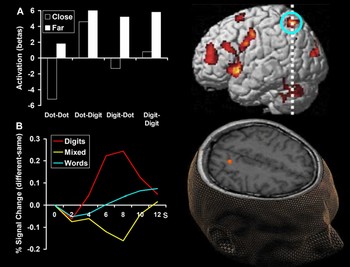
To examine whether numerical representation is abstract and independent of task requirements, two recent studies (Cohen Kadosh et al. Reference Cohen Kadosh, Cohen Kadosh, Kaas, Henik and Goebel2007b; Piazza et al. Reference Piazza, Pinel, Le Bihan and Dehaene2007) employed passive viewing in a modified adaptation paradigm (Grill-Spector et al. Reference Grill-Spector, Henson and Martin2006a; Sawamura et al. Reference Sawamura, Orban and Vogels2006). Using this paradigm, the repetition of the same stimulus reduces the responsiveness of single neurons in monkeys (Sawamura et al. Reference Sawamura, Orban and Vogels2006) and the BOLD signal in humans (Grill-Spector et al. Reference Grill-Spector, Henson and Martin2006a). In humans, BOLD signal adaptation occurs when the stimulus changes indicate that the neurons are not affected by the stimulus-specific adapting attribute. In contrast, BOLD signal recovery from the state of adaptation implies that different neuronal populations are activated and that these neurons are therefore differentially sensitive to some property of the adaptation and test stimuli. Recently, this paradigm has become popular in fMRI research, particularly because of the claim that it provides improved spatial resolution by revealing sub-voxel effects (Grill-Spector et al. Reference Grill-Spector, Henson and Martin2006a). Therefore, the adaptation paradigm can be used to address some of the limitations discussed earlier, such as spatial resolution, subjects' strategies, and response selection. In the study by Piazza and colleagues (Piazza et al. Reference Piazza, Pinel, Le Bihan and Dehaene2007), for example, subjects passively viewed dot arrays or digits that varied in numerical value; a quantity presented to induce signal adaptation was followed by a deviation in the quantity to result in signal recovery. The abstract hypothesis suggests that similar adaptation and recovery should occur, irrespective of which combinations of dot arrays and digits were used at the adaptation and test phases. The logic behind this suggestion is that both notations denote the same numerical quantity, and therefore the same neuronal correlate should be sensitive to the numerical quantity, irrespective of its format (Dehaene et al. Reference Dehaene, Dehaene-Lambertz and Cohen1998; Reference Dehaene, Piazza, Pinel and Cohen2003). The results, however, challenged the abstract representation: that is, there was an interaction between notation and recovery in the left and right parietal lobes. Moreover, the abstract representation posits that the recovery of the BOLD signal following the deviant stimuli should be of the same magnitude, again, irrespective of notation. That is, greater recovery should follow large numerical deviation (e.g., the number 50 after constant presentation of quantities between 17 and 19) in comparison to small numerical deviation (e.g., the number 20 after constant presentation of quantities between 17 and 19), and the magnitude of the recovery should not interact with notation. This again was clearly not the case; the left IPS, showed an interaction between notation and recovery that was modulated as a function of numerical distance. Although the authors focused more on the similarity observed in the right IPS between the notations, as indicated by the failure to find a significant interaction between notation, recovery, and numerical distance, the interaction between notation and recovery in both left and right IPS, and particularly the interaction between notation, recovery, and numerical distance in the left IPS (Fig. 2a), lend themselves to an explanation in terms of non-abstract representation.
Evidence of non-abstract representations from recent neuroimaging studies. (A) From the left, the recovery effect following the adaptation period for dot arrays and digits due to numerical deviations (Far, Close) was modulated by notation in the left IPS (turquoise circle). (B) The right IPS shows an adaptation effect (different quantity minus same quantity) for digits, but not for words or mixed notation. (Adapted from Cohen Kadosh et al. [2007b] and Piazza et al. [2007] with permission.) A color version of this figure is available online at: www.journals.cambridge.org/bbs.

Cohen Kadosh and colleagues (Cohen Kadosh et al. Reference Cohen Kadosh, Cohen Kadosh, Kaas, Henik and Goebel2007b) presented digits and verbal numbers in pairs. The pair could have an identical quantity (e.g., 8/eight after 8/eight), or a different quantity (e.g., 8/eight after 4/four). Adaptation was identified as the difference in the BOLD signal between pairs that did or did not differ in quantity. The results again indicated a deviation from abstract representation. Namely, the right IPS, but not the left IPS, showed an interaction between adaptation and notation. In particular, the adaptation in the right IPS appeared only when a digit preceded a digit (Fig. 2b). The results again challenge the idea that numbers are represented in an abstract fashion, in this case, in the right IPS, and are best explained in terms of non-abstract representation.
Thus, two studies, including one that purports to support abstract representation, reveal notation-dependent effects in the two key areas – the right and left IPS – associated with different numerical representations.
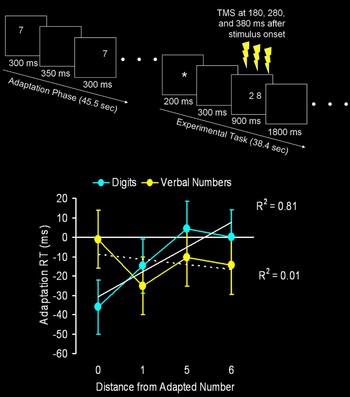
One might suggest that the lack of interaction between notation and adaptation in the left IPS in Cohen Kadosh et al.'s (2007b) study indicates the existence of an abstract representation. We examined the involvement of the left IPS in abstract representation by using a different technique, transcranial magnetic stimulation (TMS), together with an adaptation paradigm. This innovative combination of TMS and adaptation (termed TMSA) significantly increases the functional resolution and allows one to differentially stimulate distinct but spatially overlapping neural populations within a stimulated region (Silvanto & Muggleton Reference Silvanto and Muggleton2008a; Silvanto et al. Reference Silvanto, Muggleton, Cowey and Walsh2007). The paradigm is based on findings that the effects of TMS are determined by the initial neural activation state, with attributes encoded by the less active/excitable neural populations within the stimulated region being more susceptible to the effects of TMS. Thus, by using adaptation to manipulate neural activation states prior to the application of TMS, one can control which neural populations are stimulated by TMS (for reviews see Silvanto & Muggleton Reference Silvanto and Muggleton2008b; Silvanto et al. Reference Silvanto, Muggleton and Walsh2008). In our experiment the subjects were adapted to the digit 7, which repeatedly appeared on the screen for 45 seconds in different locations and fonts. Following this adaptation period, the subjects had to decide in a same-different task whether two numbers, digits, or verbal numbers on the screen are perceptually the same or different, while we stimulated the IPS with TMS during the period of 180, 280, and 380 msec post-stimulus presentation – a timing during which numerical representation processes are believed to take place (Cohen Kadosh et al. Reference Cohen Kadosh, Cohen, Linden, Gevers, Berger and Henik2007c; Dehaene Reference Dehaene1996; Libertus et al. Reference Libertus, Woldorff and Brannon2007; Szucs et al. 2007; Turconi et al. Reference Turconi, Jemel, Rossion and Seron2004). According to the abstract representation view, the participants' decision time would be affected by the adapted number 7, independent of the numerical notation. In contrast, if separate representations for digits and verbal numbers exist, as the non-abstract representation view predicts, one should expect to find that only the representation for digits was affected. The latter hypothesis was borne out. Only digits were affected by TMS to the left IPS, while words were not affected. Moreover, the TMS effect was most effective when the digit 7 appeared, and was attenuated as numerical proximity decreased. This was not the case for verbal numbers (Fig. 3). In a second experiment, the subjects were adapted to verbal numbers rather than digits. The results were exactly the opposite from the previous experiment, thus completing a double dissociation; TMS to the left IPS was most effective when the adapted verbal number appeared, and was attenuated as numerical proximity decreased. This experiment shows that non-abstract representations for digit and verbal numbers exist also in the left IPS (Cohen Kadosh et al., submitted b). These apparent differences between the neuroimaging findings and the current TMS results are most likely to be rooted in the fact that TMS and fMRI yield different measures of cause and correlation, respectively (Walsh & Pascual-Leone Reference Walsh and Pascual-Leone2003).
Non-abstract representations for digits and verbal numbers in the left IPS. In this TMS-adaptation experiment, the subjects were adapted to the digit 7. Top panel: Following this adaptation period the subjects had to decide whether a pair of numbers is perceptually same or different, while TMS was delivered to their IPS. Bottom panel: Adaptation was appreciated by the subtraction of the RT from a baseline condition, in which during the adaptation period the symbol # was presented instead of the digit 7 (i.e., no adaptation for numbers). TMS modulated only digits but not verbal numbers, as indicated by the interaction between notation and distance from the adapted number. This effect was maximal for the adapted digit, and reduced as the numerical distance from the adapted number increased. The straight white line shows the linear trend for the digits (which was significant), while the dotted white line shows the trend for the verbal numbers (which was not significant). A color version of this figure is available online at www.journals.cambridge.org/bbs.

7. Multiple representations of number
The fMRA findings in Piazza et al. (Reference Piazza, Pinel, Le Bihan and Dehaene2007) and Cohen Kadosh et al. (Reference Cohen Kadosh, Cohen Kadosh, Kaas, Henik and Goebel2007b) and the TMSA results illustrate the idea that improved spatial resolution and automatic processing (or controlling for task-related responses) can uncover non-abstract representations that are otherwise masked. Notably, these studies used different notations, different ranges of numbers, different designs, and different techniques: the generalizability of these findings is therefore likely to be high. Differences in the results between these studies are also apparent. The results in Piazza et al. (Reference Piazza, Pinel, Le Bihan and Dehaene2007) indicate that numerical representation for dots and digits is non-abstract in the left IPS, as illustrated by the interaction between notation and recovery (which was also significant for the right IPS) and notation, recovery, and numerical distance. In contrast, the study by Cohen Kadosh et al. (Reference Cohen Kadosh, Cohen Kadosh, Kaas, Henik and Goebel2007b) points towards the opposite conclusion, that is, that numbers in verbal number and digit notations are represented non-abstractly in the right IPS. However, the TMSA results showed that in the left IPS, too, numbers in verbal number and digit notations are non-abstractly represented. It seems clear, then, that non-abstract representation may be a feature of either IPS, and across different notations.
However, the parietal lobes in the fMRI studies also showed some pattern that at first sight supports the existence of abstract representation. There are four possibilities for this pattern:
1. Non-abstract and abstract representations coexist.
2. While an interaction between notations is a strong indication of the existence of non-abstract representation, the lack of such interaction does not necessarily indicate the existence of abstract representation, because it is based on an absence of evidence.
3. Piazza et al. (Reference Piazza, Pinel, Le Bihan and Dehaene2007) did control for task-related responses, but explicitly asked the subjects to pay attention to the quantity conveyed by the stimuli, and they were informed about the different formats and their approximate values. Moreover, immediately prior to the scanning session, subjects were shown approximately four exemplars of each numerosity (17:20 and 47:50 dots) and informed about their approximate range (~20 and ~50, respectively) in order to calibrate them to the respective value (Izard & Dehaene Reference Izard and Dehaene2008). Therefore, one cannot be sure if at least some of the subjects still processed the numbers intentionally (e.g., noting themselves that the number 49 was changed to 18 dots).
4. As originally pointed out by Piazza and colleagues (Piazza et al. Reference Piazza, Pinel, Le Bihan and Dehaene2007; for similar view, see also Tudusciuc & Nieder Reference Tudusciuc and Nieder2007), to explain the cross-adaptation that they observed, the apparent support for abstract representation within the parietal region might be due to non-abstract numerical representations that are characterised by separate but highly interconnected subassemblies of neurons. Therefore, when notations are mixed, activation of one given population (e.g., digits) would quickly spread to the other population (e.g., dots), thus leading to cross-notation adaptation in the absence of real abstract representation. This idea gains support from findings in the primate brain. For example, based on fMRI studies in humans it was believed that both covert and overt shift of attention are subserved by the same mechanism in the frontal eye fields (FEF) (Corbetta et al. Reference Corbetta, Akbudak, Conturo, Snyder, Ollinger, Drury, Linenweber, Petersen, Raichle, Van Essen and Shulman1998). However, single-neuron recordings in monkeys, which provide better spatial and temporal resolutions, demonstrated that covert and overt shift of attention in the FEF are associated with different neural populations (Sato & Schall Reference Sato and Schall2003), and that these dissociable populations are functionally interconnected (Schafer & Moore Reference Schafer and Moore2007).
8. Resolving the resolution problem
Single-cell neurophysiology offers better temporal and spatial resolution than human neuroimaging, and several recent studies have reported neuronal responses to quantity in the monkey brain (Nieder & Miller Reference Nieder and Miller2003; Roitman et al. Reference Roitman, Brannon and Platt2007), which resemble the predictions of numerical-related behavioural effects and computational models (Verguts & Fias Reference Verguts and Fias2004).
Neuronal populations coding for numbers are highly distributed in the IPS, and also highly overlapping with representations of other magnitudes (for a neuroimaging meta-analysis, see Cohen Kadosh et al. Reference Cohen Kadosh, Lammertyn and Izard2008f), therefore making it difficult to disentangle numerical representation from other magnitudes. However, a recent single-cell neurophysiology study provided evidence for the existence of neurons that are specialized for different magnitudes (Tudusciuc & Nieder Reference Tudusciuc and Nieder2007).
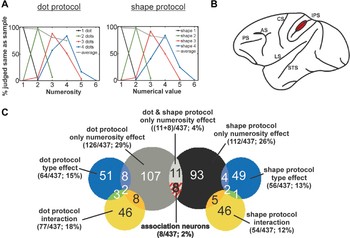
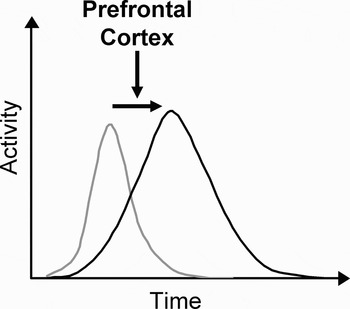
Another study that examined whether numerical representation depends on the format of presentation demonstrated that in the macaque parietal cortex responses to the same quantity are initially format-dependent (Nieder et al. Reference Nieder, Diester and Tudusciuc2006); different neuronal populations discharge to sequential presentation, while others discharge to simultaneous presentation of numerosity. At a later stage during the delay period, these format-dependencies converge to a shared representation of quantity in the parietal cortex. This shared representation may be due to recurrent processing in the prefrontal cortex, which was not examined in the current study, but it showed longer latency and greater activity during the memory-delay period compared to the parietal cortex in a previous study (Nieder & Miller Reference Nieder and Miller2004). This suggests that the parietal lobe is equipped with primary non-abstract representations that are later transformed into a shared representation, possibly due to the intentional task requirement. Recently, Diester and Nieder (Reference Diester and Nieder2007) showed that the neuronal populations for dots and digits in the parietal cortex of monkeys are notation-dependent. After training the monkeys to discriminate dot quantities, the monkeys were trained to associate digits with their corresponding dots (e.g., the digit 2 with two dots). Similar to humans, the behavioural results for digits and dots showed a similar function. However, Diester and Nieder (Reference Diester and Nieder2007) found that whereas many neurons in the prefrontal cortex (PFC) were activated by digits, dots, or by both digits and dots, neurons in the parietal cortex were activated primarily for either digits or dots (Fig. 4). Further training may lead to different representations (e.g., further specialisation, or alternatively a convergence towards a shared representation) and awaits further exploration. Of course, this result cannot give us 100% confidence that the basic representation of numbers in the human parietal lobes is non-abstract, because of the comparative question. However, it shows that even after months of training and although digits were explicitly associated with their corresponding dots, it is possible for neurons in the parietal lobes to be non-abstract. This result, together with the behavioural and neuroimaging data in humans (sect. 6), supports the idea that non-abstract representation is the basic representation in the parietal lobes.
Non-abstract numerical representations in the monkey's IPS. Two rhesus monkeys (Macaca mulatta) were trained initially in a delayed match-to-sample protocol to discriminate small numbers of dots (between 1 and 4). Later, over several months they learned to associate visual shapes (the digits 1, 2, 3, and 4) with corresponding numerosities. Finally, both notations appeared in a randomised manner within an experimental session. (A) Behavioural performance for Monkey #1 for dots and shapes. The curves show how often the monkeys judged the first test and sample to be equal. The performance to discriminate dots or shapes between 1 and 4 was quite high and comparable. (B) Lateral view of a monkey brain. The red circle represents the location of recording sites in the parietal lobe. (C) Venn diagram summarising the results in the IPS. Numbers correspond to the numbers of neurons selective for each class. Association neurons indicate neurons that have similar tuning functions for the numerical values in both protocols; Numerosity effect corresponds to neurons that were selective for a particular number; Type effect indicates neurons that were modulated by non-numerical visuospatial properties (e.g., physical size, font). It appears that most of the neurons in the IPS were non-abstract, as they showed selectivity for dots or shape (digits). In contrast, the amount of “abstract” neurons (coding both dots and shapes) was negligible. AS=arcuate sulcus; CS=central sulcus; PS=principal sulcus; STS=superior temporal sulcus; LS=lateral sulcus. (Adapted from Diester and Nieder [2007]. A color version of this figure is available online at www.journals.cambridge.org/bbs.

9. Prefrontal cortex and number: Operations not representations
We have confined our discussion so far to the parietal lobes, while not discussing the PFC. Some might argue that the PFC in the Diester and Nieder (Reference Diester and Nieder2007) study showed some pattern that might be compatible with the idea of abstract representation (although one should note that the majority of the neurons there showed activation that is in line with non-abstract representation). In terms of number research, the PFC has received less attention than the parietal cortex, but it is increasingly being seen as important in the field of numerical cognition, which starts mainly from the observation of numerons (neurons which are number-sensitive) in the PFC by Nieder and colleagues (Nieder et al. Reference Nieder, Freedman and Miller2002). There is no doubt that the PFC is involved in numerical processing (for a recent review, see Ansari Reference Ansari2008). However, we argue that the PFC is not involved in numerical representation, at least not in humans. The PFC is important for some numerical operations, but not representations (Duncan Reference Duncan2001; Revkin et al. Reference Revkin, Piazza, Izard, Zamarian, Karner and Delazer2008).
The cognitive system is replete with such dissociations of cognitive operations and sensory representations – the hippocampus, while important for reconstructing memories, does not contain the representations of the objects in those memories; the PFC is involved in sequencing behaviours, while not containing the representations of each action in a sequence; the cerebellum is important for skilled use of fingers and motor coordination, but its role may be to support cognitive functions which are implemented by other brain areas (Glickstein Reference Glickstein2007; Rosenbaum et al. Reference Rosenbaum, Carlson and Gilmore2001). There are several other reasons for our emphasis on the parietal cortex.
First, in human adults, only the IPS shows number-specific activation. This does not mean necessarily that this area is solely active in response to the given process. Posner (Reference Posner2003) encapsulates this view in another context in which he refers to activations observed in the same brain area under different task conditions:
Although it is not always easy to distinguish between a brain area being specific for a domain or performing a computation that is of particular importance for some domains, either can underlie a form of modularity …. Thus these areas and many others that have been described are modules in the sense that they perform specific mental operations … sometimes the operations are within a single domain, but sometimes they are more general. (Posner Reference Posner2003, p. 450)
In line with this idea, parts of the IPS show number-specific activation (Cohen Kadosh et al. Reference Cohen Kadosh, Henik, Rubinsten, Mohr, Dori, Van de Ven, Zorzi, Hendler, Goebel and Linden2005; 2008c). This was not found in the case of the PFC, which shows specificity for non-numerical magnitudes rather than numbers (Cohen Kadosh et al. Reference Cohen Kadosh, Henik, Rubinsten, Mohr, Dori, Van de Ven, Zorzi, Hendler, Goebel and Linden2005) or joint activation for numbers and other magnitudes (Cohen Kadosh et al. Reference Cohen Kadosh, Cohen Kadosh and Henik2008c).
Second, the activation in the PFC may reflect other factors than representation including training, working memory, strategy application (Gilbert & Burgess Reference Gilbert and Burgess2008), or changes in response strategy (although some of them are also modulated by the parietal cortex, as was described in sect. 5). For example, neurons in the PFC might respond to dots and digits because there is a similar response strategy for the digit 1 and the dot 1 when comparing them to other stimuli presented. Similarly, Tudusciuc and Nieder (Reference Tudusciuc and Nieder2007) have suggested that the PFC activation might relate to other functions of the PFC (e.g., cognitive control, working memory) that operates on parietal lobe functions (Miller & Cohen Reference Miller and Cohen2001).
Third, neuropsychological studies have found that neurological damage to the PFC leads to deficits in estimation, not because of representation impairment, but because of impairment at the level of translation from semantic representation to output (Revkin et al. Reference Revkin, Piazza, Izard, Zamarian, Karner and Delazer2008).
Fourth, there seems to be a shift from relying on the PFC during numerical processing to the IPS, as age increases (Ansari & Dhital Reference Ansari and Dhital2006; Ansari et al. Reference Ansari, Garcia, Lucas, Hamon and Dhital2005; Cantlon et al. Reference Cantlon, Brannon, Carter and Pelphrey2006; Kaufmann et al. Reference Kaufmann, Koppelstaetter, Siedentopf, Haala, Haberlandt, Zimmerhackl, Felber and Ischebeck2006). This decrease in the reliance on prefrontal regions, and the increase in posterior specialized neuronal circuits, might relate to increased reliability of processes of cognitive control, attention, and working memory with age (Ansari Reference Ansari2008), or might indicate the developmental transition into a stage in which numerical representation becomes more automatic, and therefore involves less PFC resources.
Fifth, in contrast to many studies that consistently found that parietal damage leads to acalculia and basic numerical processing deficits (Ashkenazi et al. Reference Ashkenazi, Henik, Ifergane and Shelef2008; Dehaene & Cohen Reference Dehaene and Cohen1997; Delazer & Benke Reference Delazer and Benke1997; Delazer et al. Reference Delazer, Karner, Zamarian, Donnemiller and Benke2006; Lemer et al. Reference Lemer, Dehaene, Spelke and Cohen2003; Takayama et al. Reference Takayama, Sugishita, Akiguchi and Kimura1994; Van Harskamp & Cipolotti Reference Van Harskamp and Cipolotti2001; Van Harskamp et al. Reference Van Harskamp, Rudge and Cipolotti2002; Vuilleumier et al. Reference Vuilleumier, Ortigue and Brugger2004), there is, at least to our knowledge, a lack of consistent evidence of acalculia resulting from frontal damage. In this respect, we do not refer to secondary acalculia – numerical difficulties due to non-numerical origin, such as working memory problems (Doricchi et al. Reference Doricchi, Guariglia, Gasparini and Tomaiuolo2005) – but to a primary acalculia, which is rooted at the level of the numerical representation.
Sixth, in monkeys, numerical information is first coded in the parietal lobes, and only later in the prefrontal cortex. This temporal lag is in line with our suggestion that the PFC is involved in numerically-related processes, which might be post-representational (Nieder & Miller Reference Nieder and Miller2004).
Still, in humans, it is possible that the PFC is involved in numerical representation, rather than operation, during early developmental stages. This idea is gaining support from several neuroimaging studies that found PFC activation in children and infants during numerical tasks (Ansari & Dhital Reference Ansari and Dhital2006; Cantlon et al. Reference Cantlon, Brannon, Carter and Pelphrey2006; Izard et al. Reference Izard, Dehaene-Lambertz and Dehaene2008; Kaufmann et al. Reference Kaufmann, Koppelstaetter, Siedentopf, Haala, Haberlandt, Zimmerhackl, Felber and Ischebeck2006). The idea that children activate brain regions that are outside the typical areas activated in adulthood is not unique to the field of numerical cognition, and is observed in other fields. For example, children represent faces in additional cortical areas to the occipitotemporal network: occipital face area (Pitcher et al. Reference Pitcher, Walsh, Yovel and Duchaine2007), fusiform face area (Kanwisher et al. Reference Kanwisher, McDermott and Chun1997), and the superior temporal sulcus that are consistently found in adults (Haxby et al. Reference Haxby, Hoffman and Gobbini2000), including the left and right PFC (Gathers et al. Reference Gathers, Bhatt, Corbly, Farley and Joseph2004; Passarotti et al. Reference Passarotti, Paul, Bussiere, Buxton, Wong and Stiles2003). (For a review, see Johnson et al. Reference Johnson, Grossman and Cohen Kadosh2009.)
One of the reviewers rightly pointed out that in the recent fMRI study by Piazza et al. (Reference Piazza, Pinel, Le Bihan and Dehaene2007), which we discussed in section 6, PFC activation was observed as a function of numerical processing, although the (adult) subjects passively processed the quantity. However, as was described in section 7, in this study Piazza and colleagues draw the attention of the subjects to the different numerical quantities, to the different formats, and to the change that will occur.
Future studies should take into account the possibility that the PFC activation, at least for human adults, might not reflect number-specific representation, but other functions that support or utilise numerical representation in the parietal lobes.
10. Abstract after all?
Our primary intention in this article has been to question the idea that the default numerical representation is abstract. We need, however, to account for the evidence that points towards abstraction and against our view. Assuming that abstract representation might after all exist under certain conditions, our contention, following Barsalou (Reference Barsalou2003), is that it occurs as a consequence of the intentional processing of numbers, which leads to explicit creation of connections between different notation-specific representations. We also contend that this cross-talk between notations occurs on-line on a task-by-task basis, but does not exist off-line. We can do no better than Barsalou's words: “abstraction is simply a skill that supports goal achievement in a particular situation” (Barsalou Reference Barsalou2003, p. 1184). We therefore suggest that when numerical representation is probed automatically (or implicitly), one will be more likely to find evidence for different numerical representations. However, when researchers use an intentional task, they might encourage the subject to modify the default non-abstract representations. Similar examples can be extracted from the mapping of numbers into space. There is good evidence that we map numbers from left to right as numerical value increases. However, under certain conditions one can represent numbers in reverse format, from right to left (Bachtold et al. Reference Bächtold, Baumuller and Brugger1998). Similarly, we argue that humans do not, as a default, represent numbers abstractly, but can adopt strategies that, in response to task configuration and demands, can create real or apparent abstraction.
As numerical representation is highly flexible, and not static, what are the neural correlates for such representations? While the IPS shows a consistent modulation for numerical quantity, in different paradigms and labs (Ansari et al. Reference Ansari, Dhital and Siong2006a; Reference Ansari, Fugelsang, Dhital and Venkatraman2006b; Castelli et al. Reference Castelli, Glaser and Butterworth2006; Cohen Kadosh et al. Reference Cohen Kadosh, Henik, Rubinsten, Mohr, Dori, Van de Ven, Zorzi, Hendler, Goebel and Linden2005; 2007c; Fias et al. Reference Fias, Lammertyn, Reynvoet, Dupont and Orban2003; Reference Fias, Lammertyn, Caessens and Orban2007; Pesenti et al. Reference Pesenti, Thioux, Seron and De Volder2000; Piazza et al. Reference Piazza, Izard, Pinel, Le Bihan and Dehaene2004; Tang et al. Reference Tang, Critchley, Glaser, Dolan and Butterworth2006a; Wood et al. Reference Wood, Nuerk and Willmes2006b, for reviews, see Ansari Reference Ansari2008; Brannon Reference Brannon2006; Cantlon et al. Reference Cantlon, Platt and Brannon2009; Cohen Kadosh et al. Reference Cohen Kadosh, Lammertyn and Izard2008f; Dehaene et al. Reference Dehaene, Piazza, Pinel and Cohen2003; Nieder Reference Nieder2005; Walsh Reference Walsh2003), other brain areas outside the IPS also show involvement during numerical processing – for example, the left precentral gyrus (Piazza et al. Reference Piazza, Mechelli, Price and Butterworth2006; Pinel et al. Reference Pinel, Piazza, Le Bihan and Dehaene2004), the right middle temporal gyrus (Cohen Kadosh et al. Reference Cohen Kadosh, Henik, Rubinsten, Mohr, Dori, Van de Ven, Zorzi, Hendler, Goebel and Linden2005; Pinel et al. Reference Pinel, Dehaene, Rivière and Le Bihan2001), the right superior temporal sulcus (Cohen Kadosh et al. Reference Cohen Kadosh, Henik, Rubinsten, Mohr, Dori, Van de Ven, Zorzi, Hendler, Goebel and Linden2005), the right precentral gyrus (Piazza et al. Reference Piazza, Mechelli, Price and Butterworth2006), the cerebellum (Fias et al. Reference Fias, Lammertyn, Reynvoet, Dupont and Orban2003), or the primary visual cortex, and the insula (Piazza et al. Reference Piazza, Pinel, Le Bihan and Dehaene2007). However, aside from the IPS, these areas did not show a consistent activation across studies and tasks. Therefore, the IPS may be the critical part of a distributed and highly interconnected network of regions that gives rise to the representation of numerical magnitude in particular task contexts.
In his dual code hypothesis, Paivio (Reference Paivio1971; for extensions see Barsalou et al. Reference Barsalou, Santos, Simmons, Wilson, De Vega, Glenberg and Graesser2008; Glaser Reference Glaser1992) suggested that semantic knowledge is represented internally by linguistic (verbal) and imagery (pictorial) codes, which involved internal translation between them. Similar to our view on numerical cognition, he proposed that the involvement of each code depends on the task demands. Generally, whereas picture stimuli tend to activate imagery codes, word stimuli are coded initially by the linguistic codes. Paivio further suggested that the dual code of linguistic and imagistic representations might underlie all of cognitive activities.
Our current cognitive neuro-anatomical approach is partly inspired by cognitive processes as described by the dual code theory and its extensions. Similarly, we propose that dual codes are active during numerical representation. Instead of the terminology of linguistic and imagery codes we use the terminology of automatic and intentional codes, respectively. At the first stage, there is an automatic activation of the numerical quantity that is modality- and notation-specific (similar to the linguistic representations in the Language and Situated Simulation model; for a review, see Barsalou et al. Reference Barsalou, Santos, Simmons, Wilson, De Vega, Glenberg and Graesser2008) in the IPS. This processing is crude and not as refined (Banks et al. Reference Banks, Fujii and Kayra-Stuart1976; Cohen Kadosh Reference Cohen Kadosh2008b; Tzelgov et al. Reference Tzelgov, Meyer and Henik1992). Later, the representation of numerical information in the IPS can be further refined. This refinement depends on the time of the activation, intentional processing, task demands, and is resource-dependent. The representation at this stage can be transferred to an on-line representation by a few, the majority, or the entire neuronal population in the IPS, which was activated at an earlier point during automatic numerical representation. This transition from automatic to intentional representation can be subserved by the PFC neural circuitry that is malleable, and its activity reflects learned associations and rules (Duncan Reference Duncan2001) (e.g., that 5 and FIVE have the same quantity) (see Fig. 5). Note, that because dot patterns are considered prelinguistic, the terminology of linguistic code cannot be applied here. As for the imagery code, which according to the dual code hypothesis is pictogram, a tentative suggestion is that in the western culture this will be a digit, as it is the most used pictogram for numbers in the western culture.
Automatic (gray) and intentional (black) numerical representations. Automatic numerical always precedes the intentional numerical processing. However, the height, shape, and offset of the two distributions are not fixed, and are context- and task-dependent. The transition from automatic to intentional representation in the IPS can be subserved by the PFC neural circuitry that is malleable, and its activity reflects learned associations and rules (Duncan Reference Duncan2001). Note that this division also mirrors the separation of approximate and exact systems with the former being fast and automatic, and the later slow and intentional. This model is similar to the Language and Situated Simulation model, in which the automatic and intentional representations correspond to linguistic and situated simulation systems (Barsalou et al. Reference Barsalou, Santos, Simmons, Wilson, De Vega, Glenberg and Graesser2008).

As the occurrence of automatic processing per se, without intentional processing, is rather limited (Perlman & Tzelgov Reference Perlman and Tzelgov2006), the height, shape, and offset of the distributions of the automatic and intentional numerical representations that are presented in Figure 5 are not assumed to be fixed, and are context- and task-dependent. For example, in some tasks the intentional processing can be more dominant than the automatic processing. Thus, the two distributions are only examples and can take place in many different forms, and in some conditions without or with minimal intentional processing. This model can explain the different behavioural and neuroimaging results that we reviewed in favour of non-abstract representations (automatic numerical processing), and those that might imply abstract representation (intentional numerical processing). For example, when the intentional representation is more dominant, there is a need for increasing statistical power in order to uncover the non-abstract numerical representation that occurs during the previous stage and is masked by the intentional processing that creates an on-line abstract representation. In addition, when no intentional processing is needed, the detection of non-abstract representation is easier to observe. Furthermore, this model can further explain the distinct and shared representations for general magnitude in the IPS (Cantlon et al. Reference Cantlon, Platt and Brannon2009; Cohen Kadosh et al. Reference Cohen Kadosh, Lammertyn and Izard2008f; Walsh Reference Walsh2003), which corresponds in the current case also to automatic and intentional, respectively.
As one of the reviewers pointed out, our terminology of initial automatic processing that is followed by an intentional and deliberate processing with increased precision can profitably extend the positions in the field of conceptual processing as reviewed by Glaser (Reference Glaser1992) and Barsalou et al. (Reference Barsalou, Santos, Simmons, Wilson, De Vega, Glenberg and Graesser2008). In short, Solomon and Barsalou (Reference Solomon and Barsalou2004; see Barsalou et al. Reference Barsalou, Santos, Simmons, Wilson, De Vega, Glenberg and Graesser2008, for a review of further studies) suggested that when task conditions allow the usage of shallow processing, participants use a superficial linguistic strategy. However, when a deeper conceptual processing is needed they use simulation (imagery), which occurs after the linguistic code. This interplay between linguistic and simulation codes can be modulated by automatic and intentional processing, respectively. Moreover, our terminology helps explain effects in other domains such as in language comprehension, conceptual processing, social processes, and education (for examples, see Barsalou et al. Reference Barsalou, Santos, Simmons, Wilson, De Vega, Glenberg and Graesser2008). For instance, children with developmental dyscalculia might experience difficulties in processing numbers because of deficits in automatic numerical processing (Rubinsten & Henik Reference Rubinsten and Henik2005; Reference Rubinsten and Henik2006). According to the current framework, this problem leads to a greater reliance on intentional processing, which leaves, in turn, less resources for manipulations when they are facing more complicated computation, or when they need to learn more advanced strategies (Butterworth Reference Butterworth and Campbell2004). However, one important distinction between our model and other modifications of the dual-code is that our neuro-anatomical framework includes the IPS, a critical area for numerical cognition. Other fields might depend on other brain areas/networks (e.g., temporal structures during language tasks), but we assume that the information processing, namely, the transition from automatic to intentional processing, is based on similar principles.
11. Future directions
The question of specialisation of numerical representation has been relatively neglected, compared to other functions such as face, colour, or object perception (Cohen Kadosh & Johnson Reference Cohen Kadosh and Johnson2007). Several possible directions of research can remedy this.
1. Single-cell neurophysiology. Following Diester and Nieder's (2007) study, it is important to examine how learning affects numerical representation in the parietal lobe. It might be that after longer training, neurons in the parietal lobe will show activation for both digits and dots. However, following the interactive specialisation approach (Cohen Kadosh & Johnson Reference Cohen Kadosh and Johnson2007; Johnson Reference Johnson2001; Johnson et al. Reference Johnson, Grossman and Cohen Kadosh2009), we believe that learning will lead to neuronal specialisation, just as observed with magnitude processing (Cohen Kadosh et al. Reference Cohen Kadosh, Lammertyn and Izard2008f; Cohen Kadosh & Walsh Reference Cohen Kadosh and Walsh2008; Holloway & Ansari Reference Holloway and Ansari2008). Another direction will be to use automatic and intentional tasks to examine whether the abstract representation in the prefrontal lobes is a function of natural representation or a result of strategies employed according to task requirements.
•• Developmental studies. By using habituation paradigms with sequential and simultaneous presentations, it is possible to examine whether infants habituate to the same quantity independent of format. However, one possibility is that the trajectory of numerical representation follows the same principle as other types of magnitude representations (Cohen Kadosh et al. Reference Cohen Kadosh, Lammertyn and Izard2008f; Holloway & Ansari Reference Holloway and Ansari2008), and other brain functions (Cohen Kadosh & Johnson Reference Cohen Kadosh and Johnson2007), and follows a trajectory from non-specific to increasingly specialised representations as a function of learning.
III. Automaticity and intentionality. The passive task used in different adaptation paradigms also has some limitations; the experimenter cannot know if some subjects decide to attend to and act on the numbers (Perlman & Tzelgov Reference Perlman and Tzelgov2006). Studying numerical representation by using automatic processing (e.g., Stroop-like paradigms) can yield a description of the numerical representation that is not dependent on specific task demands. Adopting this approach of contrasting the automatic and intentional processing of numerical information with different notations will yield a better characterisation of the abstract and non-abstract representations, and the conditions under which each representation is activated.
FOUR. Neuroimaging. Combination of techniques with good temporal resolution (magnetoencephalography, ERP) and spatial resolution (fMRI) can shed light on the model that we presented in Figure 5. These techniques will allow the detection of the representations under automatic processing, and the interplay between the representation under automatic and intentional representations in the IPS, and the possible recurrent processing from the PFC, in the case of intentional processing. Aside from fMRI, multivariate pattern recognition, an analysis that uses pattern classification algorithms to decode fMRI activity that is distributed across multiple voxels, can also provides a means to disentangle different neuronal substrates as a function of numerical representation.
5. Neuronal modelling. Not surprisingly, the issue of non-abstract representation has been neglected, possibly because of the salience and convenience of the view that numbers are represented in an abstract fashion. However, a few studies have addressed the issue of abstract representation, at least indirectly. Some of them lead to the conclusion that the properties of numerical representation for dots and digits might not be identical (Verguts & Fias Reference Verguts and Fias2004; Verguts et al. Reference Verguts, Fias and Stevens2005). A clear direction for future research in this field is to examine issues such as task-dependent representation, or typical and atypical development of numerical representations as a function of interaction between brain areas (Ansari & Karmiloff-Smith Reference Ansari and Karmiloff-Smith2002). A great deal is known about the behaviour of numerical systems and we also have good characterisations of the anatomy and functions of key areas to provide constraints on models.
12. Conclusion
The idea that numerical representation is not abstract has, in our view, been cast aside too readily. In contrast, the idea that number representation is abstract has become a premature default position that is not as strongly supported by the evidence on which it is based as its predominance may suggest. Here we have provided evidence from behavioural and neuroimaging studies in humans to single-cell neurophysiology in monkeys that cannot be explained by the abstract numerical representation, as they clearly indicate that numerical representation is non-abstract. It is an open question if numerical representation, at least under certain conditions, is abstract at all. We therefore suggest that before sleep-walking into orthodoxy the alternative idea is revitalised and given further consideration. Future studies should take into account the different methodological and theoretical arguments that we have raised in this target article, before concluding that numerical representation is abstract, as well as any other conclusions regarding the commonalities between processes.
ACKNOWLEDGMENTS
We would like to thank Kathrin Cohen Kadosh and the reviewers for their helpful suggestions. Roi Cohen Kadosh is supported by a Marie Curie Intra European Fellowship. Vincent Walsh is supported by the Royal Society.