Introduction
Unnatural death is becoming a significant public health challenge globally owing to its rising prevalence (Dandona et al., Reference Dandona, Dandona, Kumar, Shukla, Paul, Balakrishnan and Prabhakaran2017). It has a marked adverse and enduring impact on family members and households, as well as on society and a nation at large (Alkire et al., Reference Alkire, Peters, Shrime and Meara2018). A significant share of unnatural mortality globally is due to suicide, homicide and road traffic accidents (RTAs). The global suicide death rate is estimated at 11 per 100,000 population, and is greater among males than females. An estimated 0.9 million deaths occurred globally in 2016 due to suicide, largely among the population aged 10 to 45 years (Naghavi, Reference Naghavi2019). Suicide is thought to be the second-largest cause of death in the age group 15–29 years and third largest cause among those aged 15–39 years (Naghavi et al., Reference Naghavi, Abajobir, Abbafati, Abbas, Abd-Allah, Abera and Aboyans2017). The global homicide death rate is estimated to be 6.2 per 100,000 population, and is higher in South America, Central Africa and the Caribbean when compared with other world regions. The concentration of homicide deaths is not just regional, but also varies by sex, socioeconomic status and age group (United Nation Office on Drugs and Crime, 2013). Similarly, the annual death rate due to RTAs is 18.2 per 100,000 population globally, and is greatest in African and Southeast Asian regions. An estimated 1.35 million deaths occur globally each year due to RTAs and these are mostly among vulnerable road users: pedestrians, cyclists and motorcyclists. There is an unacceptably high prevalence of RTAs among children, and also among adults under the age of 30 (https://www.who.int/news-room/fact-sheets/detail/road-traffic-injuries). With the recognition of the public health significance of suicides, homicides and RTAs, the Sustainable Development Goals (SDGs) aim at a one-third reduction in these between 2015 and 2030 (United Nation, 2015).
Death rates due to suicides, RTAs and homicides present a major public health challenge in India. Road traffic accidents and suicides were the 10th and 11th leading causes of death, respectively, following a list of mainly non-communicable diseases, in India in 2016 (National Crime Records Bureau, 2015; Dandona et al., Reference Dandona, Dandona, Kumar, Shukla, Paul, Balakrishnan and Prabhakaran2017). Recent evidence suggests that around 8% of total deaths in India are due to RTAs and suicides, and accounted for a quarter of all deaths among those aged 15–39 years in 2016 (Dandona et al., Reference Dandona, Dandona, Kumar, Shukla, Paul, Balakrishnan and Prabhakaran2017). An estimated 0.2 million suicide deaths occur annually in India (National Crime Records Bureau, 2015). At the same time, there is significant variation in rates of suicide among the Indian states and socioeconomic classes (Subramanian et al., Reference Subramanian, Nandy, Irving, Gordon, Lambert and Davey Smith2006; Borooah, Reference Borooah2018). India is also a leading contributor to the total global RTA rate: an estimated 0.14 million fatalities and 0.47 million injuries occurred in India due to RTAs in 2013 (Singh, Reference Singh2017). Similarly, around 35,000 homicides were reported in India in 2010 – mostly in rural areas (United Nation Office on Drugs and Crime, 2013).
Unnatural deaths are concentrated among the young and adolescents in India, and this poses a grave challenge to household well-being, as well as causing a loss of human resources in the country (Alkire et al., Reference Alkire, Peters, Shrime and Meara2018). Young adults, farmers and adolescent girls seem to be particularly vulnerable to suicide (Patel et al., Reference Patel, Ramasundarahettige, Vijayakumar, Thakur, Gajalakshmi, Gururaj and Suraweera2012; Samuel & Sher, Reference Samuel and Sher2013; He et al., Reference He, Fang, Lin, Ma and Li2015; Basu et al., Reference Basu, Das and Misra2016; Merriott, Reference Merriott2016; Ruch et al., Reference Ruch, Sheftall, Schlagbaum, Rausch, Campo and Bridge2019). The suicide death rate is higher in rural areas and varies substantially across the economic classes and castes and by gender. Poverty, illiteracy, unemployment, mental illness, the stigmatizing caste system and religious superstitions are major factors in the rising trend in suicides and homicides in India (Patel et al., Reference Patel, Ramasundarahettige, Vijayakumar, Thakur, Gajalakshmi, Gururaj and Suraweera2012; Childers & Chiou, Reference Childers and Chiou2016; Naghavi et al., Reference Naghavi, Abajobir, Abbafati, Abbas, Abd-Allah, Abera and Aboyans2017; Liu et al., Reference Liu, Huang and Liu2018; Naghavi, Reference Naghavi2019; Sikary, Reference Sikary2019; Uddin et al., Reference Uddin, Burton, Maple, Khan and Khan2019). Poisoning and hanging are the two major means of death by suicide. Various social factors, such as social hierarchy, socioeconomic circumstances, social and cultural conflict, alcoholism, financial problems and poor health, have also been cited as reasons for people taking the extreme step of voluntarily ending their own life in India for both men and women (Uddin et al., Reference Uddin, Burton, Maple, Khan and Khan2019).
The rise in RTA fatalities and injuries, on the other hand, are the result of the growing number of motor automobiles, road congestion, inadequate traffic control and the violation of rules, such as speeding, not using a crash helmet, drink driving and not using a seat belt (Garg & Hyder, Reference Garg and Hyder2006; Mohan, Reference Mohan2009; Grimm & Treibich, Reference Grimm and Treibich2013; Hsiao et al., Reference Hsiao, Malhotra, Thakur, Sheth, Nathens, Dhingra and Jha2013; Rolison et al., Reference Rolison, Regev, Moutari and Feeney2018). These result in increased medical spending and economic losses to the household, as well as the nation.
The study of mortality in India has mainly focused on infants, children and maternal mortality (Ram et al., Reference Ram, Jha, Gerland, Hum, Rodriguez, Suraweera and Kumar2015; Guilmoto et al., Reference Guilmoto, Saikia, Tamrakar and Bora2018). Recently, the emphasis has been more on mortality due to non-communicable diseases and its burden of treatment and consequential early-age fatality (Dubey & Mohanty, Reference Dubey and Mohanty2014; Dandona et al., Reference Dandona, Dandona, Kumar, Shukla, Paul, Balakrishnan and Prabhakaran2017). However, to the authors’ knowledge, no systematic enquiry into unnatural mortality over the life course has been conducted in India using cross-sectional mortality data. There has been some exploration of the burden and correlates of suicide and RTAs based on National Crime Records Bureau (NCRB) data (Patel et al., Reference Patel, Ramasundarahettige, Vijayakumar, Thakur, Gajalakshmi, Gururaj and Suraweera2012; Singh, Reference Singh2017; Uddin et al., Reference Uddin, Burton, Maple, Khan and Khan2019). However, this data set probably underestimates mortality, as it only includes deaths registered with the police. The present study used reported unnatural mortality by age, sex and other attributes using data from NFHS-4, and attempted to estimate the Years of Life Lost (YLL) due to unnatural mortality in India.
Methods
Data
Data for this study were obtained from the fourth wave of the National Family Health Survey (NFHS-4) conducted in 2015–16. This is a nationally representative household survey which provides detailed information on household characteristics and the health of individual household members. The survey collected information on many demographic and health parameters from 601,509 households, 699,878 women, 112,122 men and 259,827 children from 90,000 primary sampling units (PSUs). The PSU is the minimum sampling unit, providing representative estimates at the district level (IIPS & ICF, 2017). The survey had a multistage random sampling design.
This study used the information on death collected through the survey household schedule, using the questions on the death of a usual member of the household in the last 3 years. The sex, age and selected causes of deaths were collected for each deceased person. A total of 74,945 deaths were reported in the surveyed households between 2011 and 2016, and this constituted the sample for analysis.
Outcome variable
The outcome variable was ‘unnatural death’. In the NFHS-4 respondents (heads of household) were asked about deaths occurring in their households over the 3-year period preceding the survey. Respondents reporting a deceased person in the household in the 3 years before the survey (N=74,945) were asked about the reason for the death with the question: ‘Was the death due to an accident, violence, poisoning, homicide or suicide?’ (binary reply: 1 ‘yes’; 2 ‘No’). Cases where the reply was ‘yes’ were considered ‘unnatural deaths’.
Explanatory variables
A comprehensive set of possible explanatory factors was used, based on the availability of variables in the data set and a review of the literature. These included the demographic characteristics of the deceased person, including sex (male/female) and age group (children [0–9 years], adolescents [10–19 years], adults [20–44 years], pre-elderly [45–59 years] and elderly [60 or more years]). Household characteristics included place of residence (rural/urban), caste (SC/ST/OBC/other), religion (Hindu/Muslim/other) and household economic status (poorest/poorer/middle/richer/richest quintiles).
Statistical analysis
First, a descriptive analysis of the study sample was made, then Years of Life Lost (YLL) was analysed. National and state estimates were calculated separately by sex and place of residence. The proportion of unnatural deaths out of total deaths was calculated for India and for each state separately. Age-specific death rates (ASDR) for the nation and states were taken from the Sample Registration System (SRS) abridged life tables (Registrar General of India, 2019). Age-specific mortality due to unnatural death was calculated by multiplying the ASDR by the proportion of deaths due to unnatural cases. Similarly, the populations for each state and for the nation as a whole for the year 2015 were estimated using extrapolation techniques basing on Census of India populations in 2001 and 2011. The numbers of deaths due to unnatural causes were estimated by multiplying the estimated population at each age by the ASDR.
The YLL was estimated as the sum of total person-years lost due to premature unnatural death in each geographical region as follows.
Let the number of deaths due to unnatural cases at age i be
 ${d_i}$
and the life expectancy at age i, in the age-specific abridged life table, be
 ${e_i}$
. Then, the YLL due to unnatural cases is obtained by summing
 ${d_i}$
×
 ${e_i}$
over all ages.
 $${\rm{YLL}} = \sum \limits_{I = 1}^n {d_i} \times {e_i}$$
The term
 ${e_i}$
was from the SRS bridged life tables (2013–17) (Registrar General of India, 2019). These estimates were also obtained for the states (mainly the major states) for which life tables were available.
Results
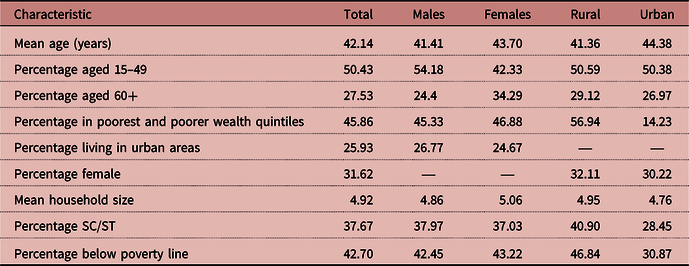
The average age of individuals in the study sample who had an unnatural death was 42.1 years (41.4 for males and 43.7 for females), and this was greater in urban than in rural areas. About half were aged 15–59 years and 27% were aged 60 and over. Thus, a major share of those having an unnatural death were in the productive years of their life. Shockingly, a quarter occurred in the later years of life (60+). Furthermore, the share of unnatural deaths was disproportionate across the socioeconomic status scale of the household, with the bottom 40% of households having 45.8% of unnatural deaths. However, this pattern was only strong in rural areas, and not in urban areas. In addition, there was a significant share of unnatural deaths in households below the poverty line and those from backward social groups (Table 1).
Characteristics of unnatural deceased persons by sex and urban/rural place of residence, India, NFHS-4

Unnatural deaths by region and state
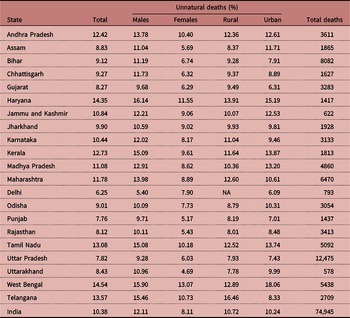
Table 2 shows the proportions of unnatural deaths to total deaths among the states by sex and place of residence. The overall proportion of unnatural death to total deaths in the country was 10.4%. In all regions, males had a greater proportion of unnatural deaths than females. The overall proportion in India was slightly higher in males (12.1%) than in females (8.1%); there was no difference in this pattern between urban and rural areas, but enormous variation was observed across the states. Among the major states, the proportion was highest in West Bengal (14.5%), followed by Haryana (14.4%), Telangana (13.6%) and Tamil Nadu (13.1%). These states are mainly economically and demographically advanced. On the other hand, the proportions of unnatural deaths were relatively lower in Delhi (6.3%) and in Punjab and Uttar Pradesh (both 7.8%). In 2015–16, the proportion of such deaths among males ranged from 5.4% in Delhi, to 15.9% in West Bengal. Among females a similar pattern was found, ranging between 4.7% in Uttarakhand and 13.1% in West Bengal. Some states showed higher unnatural mortality in their urban areas than rural areas, while others have a higher rate in rural areas. Of the total deaths, Telangana showed the highest proportion of unnatural death in its rural area, and the highest proportion among urban areas was observed in West Bengal.
Unnatural deaths as a proportion of total deaths by sex and urban/rural place of residence in selected states, India, NFHS-4

Only the major Indian states with a sample size of deaths of more than 500 are shown. Estimates for all other states not shown but are included in the all-India estimates.
Unnatural deaths by background characteristics
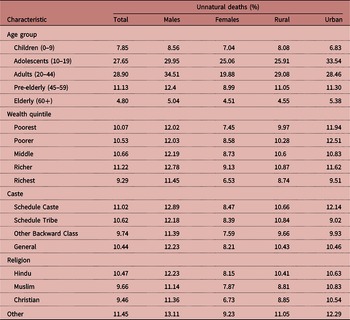
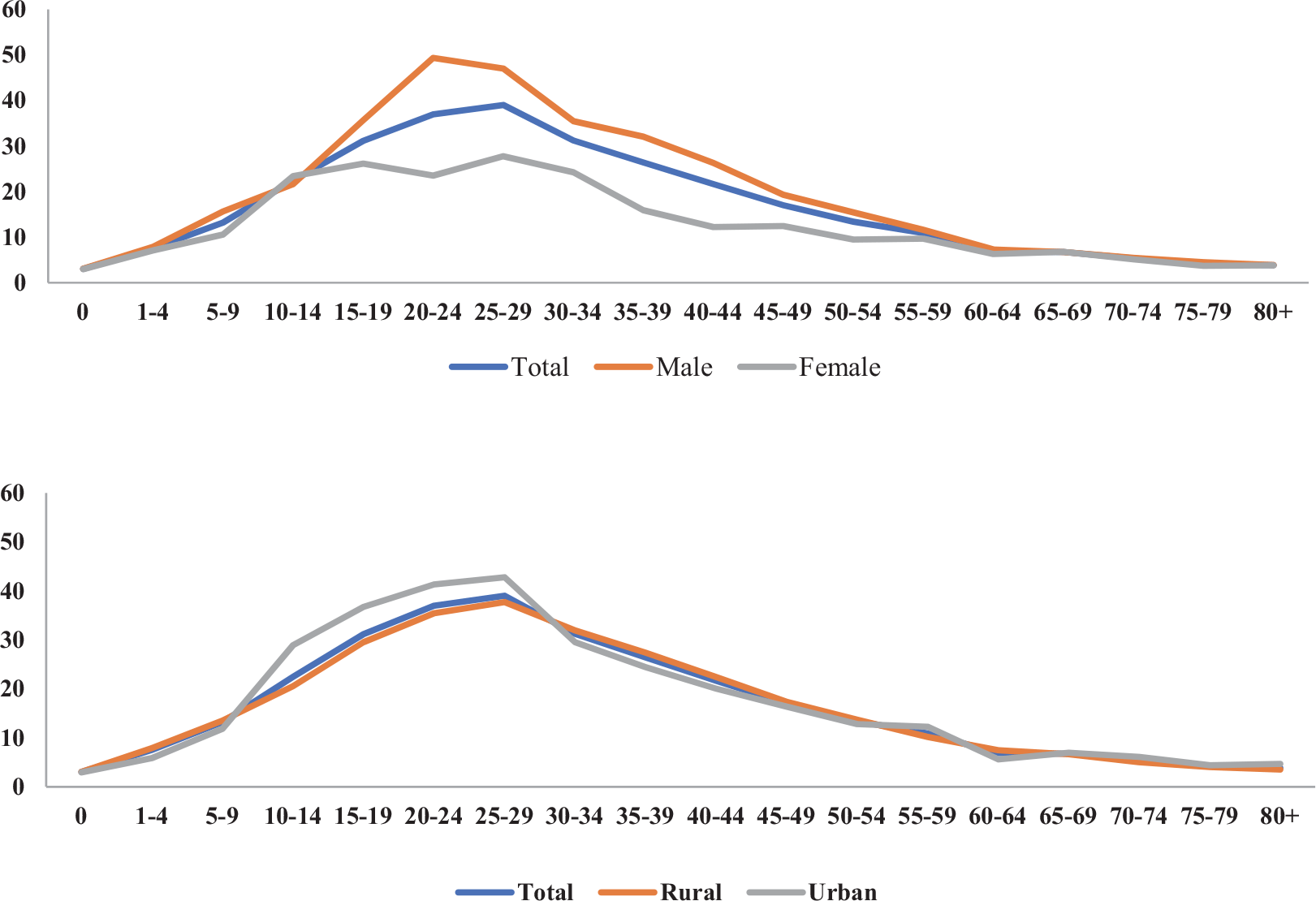
Table 3 shows the share of unnatural deaths among total deaths by selected background characteristics. The proportion was highest in the 20–34 years age group for both sexes, and declined systematically at older ages (see also Fig. 1). Thus, the age profile of the risk of unnatural mortality differed from that of overall mortality, rising up to adult ages and falling at older ages. The sex divide in proportion of unnatural deaths became distinct beyond the age of 15, with males being systematically more adversely affected than females, and this pattern persisted up to the age of 60. The rural–urban divide had a different pattern, with the share of unnatural deaths in urban areas being somewhat higher at ages 10–30. Otherwise the age pattern was similar between rural and urban areas.
Unnatural deaths as a proportion of total deaths by sex and urban/rural place of residence by selected background characteristics, India, 2015–16

Percentage of unnatural deaths to the total by sex of deceased and urban/rural place of residence and age group in India.

There was an obvious concentration of unnatural deaths at adolescent and adult ages, irrespective of sex and urban/rural place of residence, except for the fact that these were higher in males and in urban areas. However, a small share of unnatural deaths was among the elderly (5%), and this remains a matter of concern. Unnatural deaths were spread across households of every wealth category, with only a marginally lower prevalence in the richest households. This pattern held for sex as well as place of residence. Minority groups seemed to be slightly more vulnerable to unnatural deaths, but OBCs were least vulnerable. Again, this pattern held across the sex and urban/rural residence divide, although the male and urban bias persisted. Hindus were more vulnerable to unnatural death than minority groups such as Christians and Muslims.
Age-specific unnatural mortality in India and states
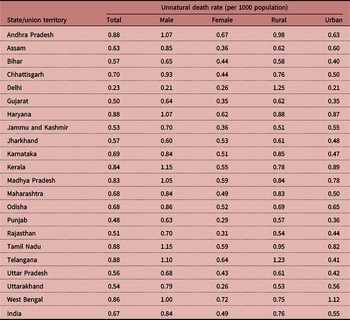
Table 4 shows the unnatural death rate per 1000 population by sex and urban/rural place of residence among selected states in India. Overall, the unnatural death rate in India was 0.67 per 1000 population, and ranged from 0.22 per 1000 in Delhi to 0.88 per 1000 population in Haryana and Andhra Pradesh. In India as a whole, the age-specific unnatural death rate was higher among males (0.84 per 1000) than females (0.49 per 1000). For males, Tamil Nadu and Kerala (both 1.15) had the highest death rates, while for females it was highest in West Bengal. Similarly, rural areas had higher unnatural death rates than urban areas. The rural areas of Delhi and Telangana had the highest unnatural death rates among the states, while for urban areas it was Kerala and Tamil Nadu.
Unnatural death rate (per 1000 population) by sex and urban/rural place of residence among selected states of India, 2015–16

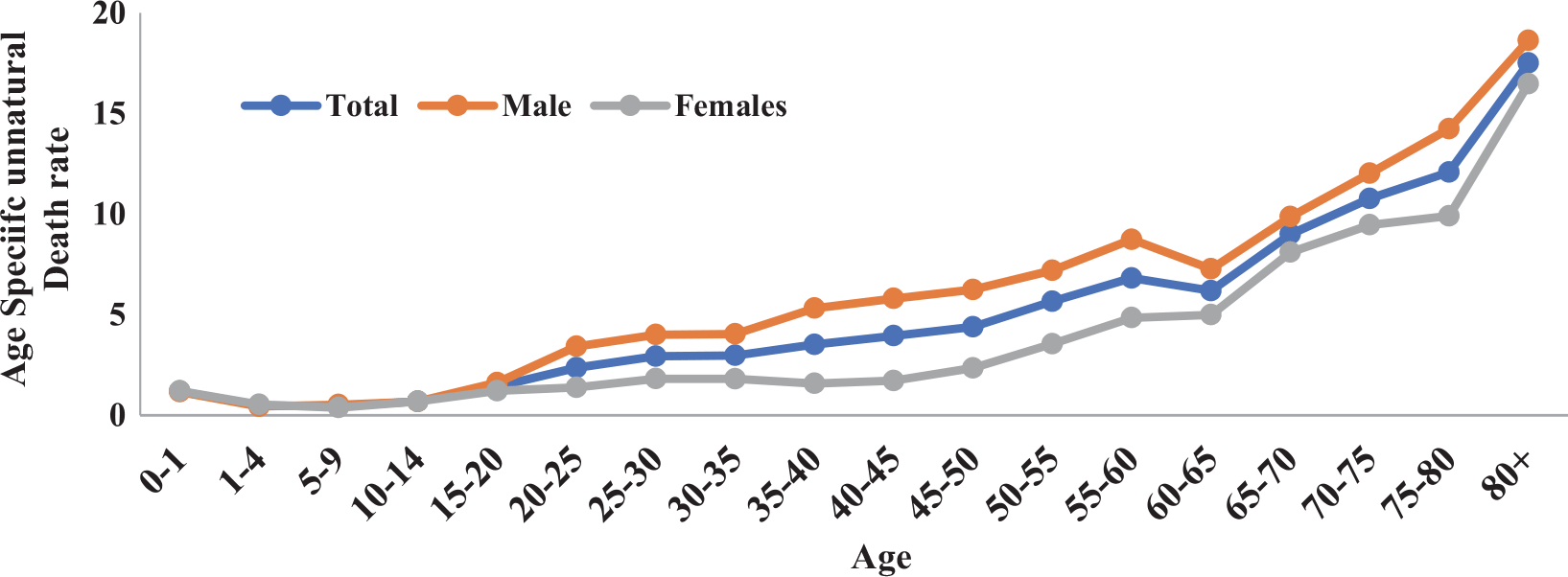
Unnatural mortality did not show strict differentials between the sexes and by urban/rural place of residence. However, by age pattern, a definite peak was observed in adults aged 20–29, and the peak was lower in females than in males (Fig. 1). Given the concentration of unnatural mortality at adult ages, the computation of age-specific unnatural mortality was in conformity with the regular age schedule of mortality. Though there was a reasonable share of unnatural mortality at older ages, age-specific unnatural mortality was high due to higher number of deaths at this age (see Fig. 2). In fact, with the attained mortality transition, mortality at later ages intensified in comparison to early years of life and the age distribution of unnatural deaths peaked in adulthood and slowly declined thereafter, making age-specific unnatural mortality at later ages persistently higher.
Age-specific death rates due to unnatural mortality in India by age group.

Years of Life Lost (YLL) by sex
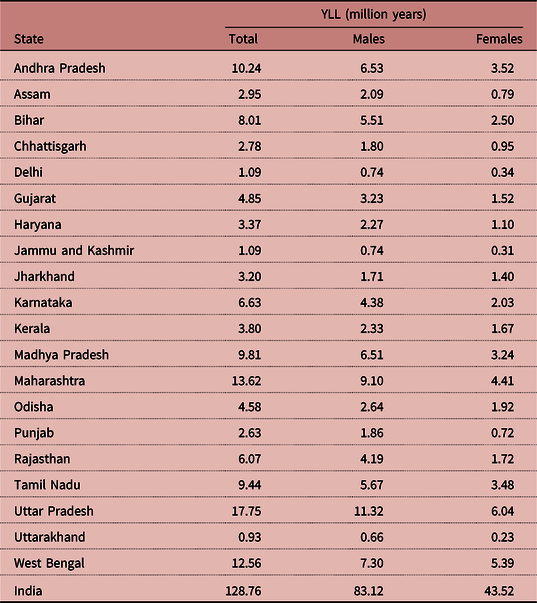
Unnatural death creates a socioeconomic burden given its predominance in the productive years of life. An assessment of the level of this effect is important to inform policy measures aimed at preventing the premature loss of life and its direct/indirect burden at the household level. This study aimed to provide quantitative evidence on the burden of unnatural mortality in India though a segregation of unnatural mortality by broad age groups. It was estimated that there were 128.7 million Years of Life Lost (YLL) in India in 2015 due to unnatural mortality (Table 5). The YLL was disproportionately higher for males at 83.12 million, with that for females being 43.52 million. Of the Indian states, Uttar Pradesh and Maharashtra had the highest YLL due to unnatural mortality. However, the large population size of these states put them at the top of the list of years of lives lost. Andhra Pradesh, followed by West Bengal, occupied the next highest two positions in the list of states for rates of unnatural mortality.
Years of Life Lost (YLL) (in million years) due to unnatural mortality by selected states of India, 2015–16

Discussion
With the ensuing epidemiological transition in India, there has been a visible improvement in the mortality situation in the country, both at the national and sub-national level. Strategies and programmes on declining mortality in India have mainly focused on declines in infant, child and maternal mortality (Saikia et al., Reference Saikia, Jasilionis, Ram and Shkolnikov2011; Ram et al., Reference Ram, Jha, Gerland, Hum, Rodriguez, Suraweera and Kumar2015; Asaria et al., Reference Asaria, Mazumdar, Chowdhury, Mazumdar, Mukhopadhyay and Gupta2019). With the rise in non-communicable diseases across the globe, changes in adult mortality, and especially premature mortality, should be highlighted when investigating mortality transition, especially in countries such as India with its ongoing epidemiological transition (Dandona et al., Reference Dandona, Dandona, Kumar, Shukla, Paul, Balakrishnan and Prabhakaran2017).
Premature mortality due to suicide, RTAs and homicides now constitutes a major share of preventable premature mortality in India (Patel et al., Reference Patel, Ramasundarahettige, Vijayakumar, Thakur, Gajalakshmi, Gururaj and Suraweera2012; Singh, Reference Singh2017; Sikary, Reference Sikary2019). This unnatural mortality has significant economic implications for households and the nation at large. The present study was an attempt to describe the phenomenon in India, determine its regional patterns and characteristic vulnerabilities, and in addition assess the consequential life years lost.
The study found a systematic pattern of variation in the prevalence of unnatural mortality across selected socio-demographic characteristics. It was higher among males than females, probably because males engage in more hazardous work, have higher suicide rates and more road traffic accidents due to drink drunken, overlooking traffic rules, and so on. This disproportionate burden of unnatural mortality among men is of concern given men’s traditional role as bread-winners in typical Indian households. This finding is consistent with the pattern found in previous studies, which have shown widespread gender differences in suicide and RTA rates in India (Dubey & Mohanty, Reference Dubey and Mohanty2014; Dandona et al., Reference Dandona, Dandona, Kumar, Shukla, Paul, Balakrishnan and Prabhakaran2017, Reference Dandona, Kumar, Dhaliwal, Naghavi, Vos, Shukla and Vijayakumar2018). A second, and equally alarming, observation is that around half of the total unnatural mortality burden was among the working-age population (ages 15–49). The level of burden was similar for the two sexes and in urban/rural areas. India is considered to be a young nation, benefiting from a demographic dividend due to its larger share of working-age population, so unnatural mortality in this younger, productive age group will undoubtedly result in a significant loss of human resources and thus economically disadvantage the nation.
The prevalence of unnatural mortality showed widespread regional variation, along with differences by sex and urban/rural place of residence. It was particularly frequent among adult boys and adolescent girls. The variation, against a national average of 10% of unnatural deaths, remains skewed towards males and rural residents. Also, higher levels of unnatural mortality were observed in the more economically developed states. The higher rates of unnatural mortality in some states could be attributable to major socio-demographic familial transition, which affects aspirations. India’s rapid economic growth, rapid urbanization and rising number of motor vehicles, along with road congestion, have contributed towards a rise in RTAs in these states. At the same time, suicides among farmers, stress among adolescents and honour killings are major suicidal events. Higher level of male mortality due to RTAs have been reported in many studies, but this could also be explained by various other social, economic and psychological factors. The higher rates of male suicide in India could be due to socioeconomic circumstances, interpersonal, social and cultural conflicts, alcoholism, financial problems, unemployment and poor health.
The observed higher rates of the unnatural mortality in males than females were replicated within Indian states. The more developed states, including the southern states and West Bengal, had the highest rates, probably due to higher suicidal deaths and RTAs, as reported in previous studies (Patel et al., Reference Patel, Ramasundarahettige, Vijayakumar, Thakur, Gajalakshmi, Gururaj and Suraweera2012; Kumar et al., Reference Kumar, Verma, Bhattacharya and Rathore2013; Sikary, Reference Sikary2019; Subramanian et al., Reference Subramanian, Nandy, Irving, Gordon, Lambert and Davey Smith2006; Dandona et al., Reference Dandona, Kumar, Gururaj, James, Chakma, Thakur and Srivastava2019; Menon et al., Reference Menon, Singh, Sharma, Yadav, Sharma, Kalaskar and Singh2019; Naghavi, Reference Naghavi2019).
The estimated 128.9 million annual years of lives lost due to unnatural mortality indicates the magnitude of the economic loss to the nation. Most of these lost lives were men. At the same time, the high burden of YLL in adults and adolescents is undoubtedly a matter of concern.
In conclusion, despite these limitations, this study was a preliminary attempt to assess the pattern of unnatural mortality in India with the characterization of associated household and regional factors. The findings should inform intervention measures. Suicide can be considered as a consequence of unmet aspiration arising out of evolving circumstance of despair or often undiagnosed and untreated, serious mental illness. Road traffic accidents are related to distracted driving, unsafe road infrastructure, inadequate law enforcement and inadequate post-crash care. Furthermore, the assessment of YLL highlights the pressing need to avoid/reduce unnatural mortality in the country. Further research is required to determine who are most vulnerable to unnatural mortality to inform interventions.
Study limitations
The study was based on sensitive information, with stigma being attached to suicidal deaths, which might have affected reporting levels. Similarly, accidental deaths among the young are disheartening to report given the grief associated with such events. Hence there is every likelihood of under-reporting of such deaths. Although the short 3-year reference period means there was a low chance of recall lapse, there was the potential of the inaccurate distinction between types of deaths – suicides, homicides and RTAs – collected through the single survey question. It was therefore not possible to calculate rates of unnatural deaths on account of three independent reasons separately. Finally there was a lack of information on individuals’ education and occupation, which would have enriched the analysis.
Acknowledgment
The authors express their gratitude to the reviewers for their constructive suggestions and to the editorial board of the Journal of Biosocial Science.
Funding
This research received no specific grant from any funding agency in the public, commercial or not-for-profit sector.
Conflicts of Interest
The authors declare that they do not have any conflicts of interest.
Ethical Approval
As the survey was based on secondary data and was available in the public domain, it did not need ethical approval.