INTRODUCTION
Of the halophytes, the species of the genus Sarcocornia (Amaranthaceae, subfamily Salicorniodeae) showed great productive potential when irrigated with saline water (Costa et al., Reference Costa, Bonilla, Oliveira, Alves, Lopes and Lucas2014a; Ventura and Sagi, Reference Ventura and Sagi2013; Ventura et al., Reference Ventura, Wuddineh, Myrzabayeva, Alikulov, Khozin-Goldberg, Shpigel, Samocha and Sagi2011a, Reference Ventura, Eshel, Pasternak and Sagi2015) and effluents from shrimp farms (Costa, Reference Costa2006; Costa et al., Reference Costa, Vicenti, Morón-Villarreyes, Caldas, Cardoso, Freitas and D'oca2014b). These perennial plants have succulent young shoots are sold as ‘Samphire’ or ‘Sea asparagus’ and are in high demand in gourmet kitchens not only for their salty taste but also for their high nutritional value (Ventura and Sagi, Reference Ventura and Sagi2013; Ventura et al., Reference Ventura, Wuddineh, Myrzabayeva, Alikulov, Khozin-Goldberg, Shpigel, Samocha and Sagi2011a, Reference Ventura, Eshel, Pasternak and Sagi2015; Bertin et al., Reference Bertin, Gonzaga, Borges, Azevedo, Maltez, Heller, Micke, Tavares and Fett2014). The cultivation of domesticated wild halophytes, which evolved an inherently high salt tolerance, has demonstrated that well-adapted plants can maintain high yields of useful products in up to seawater levels of salinity (Ventura and Sagi, Reference Ventura and Sagi2013). In the coming decades, the use of halophytes may be a viable commercial alternative to increase global food and biofuel production by farming salt-affected soils, drought areas and deserts that are irrigated with saline water (Ventura et al., Reference Ventura, Eshel, Pasternak and Sagi2015). However, regarding successful halophytes in saline agriculture (e.g. Salicornia bigelovii; Zerai et al., Reference Zerai, Glenn, Chatervedi, Lu, Mamood, Nelson and Ray2010), the domestication of Sarcocornia novel crops depends on breeding programs that produce plants with uniform growth, increased productivity and predictable nutritional quality (Ventura and Sagi, Reference Ventura and Sagi2013; Zerai et al., Reference Zerai, Glenn, Chatervedi, Lu, Mamood, Nelson and Ray2010). These desirable agricultural traits in halophytes can be achieved by the establishment of genetically defined lines and standardized cultivation conditions (Singh et al., Reference Singh, Buhmann, Flowers, Seal and Papenbrock2014; Ventura et al., Reference Ventura, Eshel, Pasternak and Sagi2015; Zerai et al., Reference Zerai, Glenn, Chatervedi, Lu, Mamood, Nelson and Ray2010).
Along the Atlantic coast of South and Central America, the subshrub Sarcocornia ambigua (Michx.) Alonso and Crespo (sin. Salicornia gaudichaudiana, Sarcocornia perennis) inhabits the intertidal zone of salt marshes and hypersaline salt flats (Freitas and Costa, Reference Freitas and Costa2014). This species has a simplified morphological structure that is characterized by cylindrical green stems, is succulent and segmented and was formed through an evolutionary process of merging pairs of verticillate leaves with the shoots of the plant. The shoots and seeds of S. ambigua have high nutritional quality and chemical characteristics for human (Bertin et al., Reference Bertin, Gonzaga, Borges, Azevedo, Maltez, Heller, Micke, Tavares and Fett2014; Costa, Reference Costa2006; Timm et al., Reference Timm, Silva, Bertin and Tavares2015) and animal diets (Bertin et al., Reference Bertin, Gonzaga, Borges, Azevedo, Maltez, Heller, Micke, Tavares and Fett2014; Costa et al., Reference Costa, Bonilla, Oliveira, Alves, Lopes and Lucas2014a), biofuel production (Costa et al., Reference Costa, Vicenti, Morón-Villarreyes, Caldas, Cardoso, Freitas and D'oca2014b) and the pharmaceutical industry (Bertin et al., Reference Bertin, Gonzaga, Borges, Azevedo, Maltez, Heller, Micke, Tavares and Fett2014). Canned conserve of S. ambigua showed high acceptance by trial consumers and recently the Company of Agriculture Research and Rural Extension of the southern Brazilian state of Santa Catarina (EPAGRI) had encouraged family farmers (owning small farms) to produce canned S. ambigua in wine vinegar (Timm et al., Reference Timm, Silva, Bertin and Tavares2015). A green bio-salt produced from S. ambigua shows low sodium chlorine content (30%) and it is rich in organic nutrients and bioactive substances (Dias, Reference Dias2015). Since 2005, field trials have shown that S. ambigua can achieve shoot yields of 9–23 tons of fresh weight per hectare under irrigation with saline shrimp farm effluent and saline well water after 3–4 months of cultivation (Costa, Reference Costa2006; Costa et al., Reference Costa, Bonilla, Oliveira, Alves, Lopes and Lucas2014a).
In 2010, the Laboratório de Biotecnologia de Halófitas (BTH) at the Federal University of Rio Grande (FURG, Brazil) began a breeding program of S. ambigua by identifying and crossing different biotypes in natural populations of southern Brazil (Freitas and Costa, Reference Freitas and Costa2014). This program generated two morphologically distinct pure lineages of this autogamous species, which were denominated BTH1 (red phenotype at maturity, prostrate growth and high reproductive investment) and BTH2 (green phenotype at maturity, upright growth and high-productivity vegetative shoots). Plant field trials of these two lineages are needed to evaluate their phenological (e.g. flowering and fruiting periods) and growth characteristics, as well as their nutritional quality under saline irrigation.
This study aimed to compare the vegetative growth, flowering, biomass production and mineral composition of f3 and f4 progenies of lineages BTH1 and BTH2 of S. ambigua and to evaluate the nutritional potential of these plants when produced in an irrigated field crop with saline effluent from shrimp farming.
MATERIALS AND METHODS
Source material
The source material for development of novel S. ambigua lineages was from a wild population of the Pólvora Island, Rio Grande, RS, Brazil (32°01′S; 52°06′W). Seeds of 100 f1 generation plants from the wild population showing half green erected shoots and the other half red prostrated shoots were obtained from a plot irrigated with saline effluent. The f1 generations were cultivated in wide rows (50 × 50 cm2) for full genotypic expression and maximum seed formation. Seeds from each lineage were bulked and planted in separate plots in the f2 generation. After all plants matured, seeds from each plant were collected, but only seeds of the most vigorous plant (large individual shoot biomass) of selected green erected and red prostrated phenotypes were used for planting the f3 generation. Selection of plants for the planting in the f4 generation was done in the same way.
The production of seedlings
This study used a total of four genotypes belonging to f3 and f4 progenies of the lineages BTH1 and BTH2 of S. ambigua. All of the plants were obtained from seeds of the germplasm of Laboratório de Biotecnologia de Halófitas (Institute of Oceanography, FURG, Rio Grande, RS, Brazil). The seeds were germinated at a thermoperiod of 30/20 °C and a photoperiod (12 h light/12 h dark) as per the protocol of Freitas and Costa (Reference Freitas and Costa2014).
The seedlings were transferred to Styrofoam trays with compartments (3.5 × 3.5 × 6 cm3), that were filled with a mixture (1:1) of organic compound (Humosolo Vida®) and fine beach sand and, 8 weeks later, to 50 cm3 plugs with the same substrate. Seedlings were maintained for a total of 25 weeks in an unheated greenhouse before being transplanted at the cultivation site. During the greenhouse cultivation, the average daily minimum, maximum and mean temperatures were 11.8 ± 0.2, 29.9 ± 0.3 and 20.8 ± 0.3 °C, respectively.
Trial design and growing conditions with saline effluent
From February to June 2014, plants of four progenies of S. ambigua were grown in a plot (6.5 × 3.5 m2) located at the Marine Station of Aquaculture, Federal University of Rio Grande (EMA-FURG) in Rio Grande, RS, Brazil (32°12′19″S; 52°10′45″W). The plot had nine planting rows 3.5 m long, which were separated by parallel grooves. The plot has been divided into small plots, each including two adjacent rows, with 10 cultivated plants per row, spaced 25 cm apart and with a distance of 60 cm between planting rows. The four progenies were randomly assigned to these plots, and in this completely randomized design each plant represented a replicate of the progeny treatment (n = 20 plants per progeny). Invasive plants were manually removed.
The soil of the experimental site was Orthic Quartzarenic Neosol, i.e. new soil, undeveloped with a high content of sand that was well-drained and characteristic of the coastal plain of Rio Grande do Sul. The plot soil was separated from the surrounding soil by a geomembrane that was inserted into the soil to a depth of 1 m to form a barrier. Plants were watered by filling up drainage ditches four times a day (at 6, 10, 14 and 18 h; 25 L min−1 for 15 min) up to a daily total of 1500 L of saline effluent from a Litopenaeus vannamei shrimp tank cultivated in a Biofloc Technology System (BFT), stocked with 120 shrimp m−2. An overflow pipe prevented the excessive accumulation of water in the plot during strong rainfall. The saline effluent was the main source of nutrients and water for S. ambigua plants (Costa, Reference Costa2006; Costa et al., Reference Costa, Bonilla, Oliveira, Alves, Lopes and Lucas2014a). During the growth period, the average values (± standard error; n = 9) of water salinity, pH, dissolved oxygen, nitrate, ammonium and phosphate were 7.67 ± 0.27 g NaCl L−1 (≈11.40 dS m−1), 8.42 ± 0.01, 8.05 ± 0.04 mg L−1, 4.00 ± 5.66 mg L−1, 0.04 ± 0.03 mg L−1 and 1.21 ± 0.04 mg L−1, respectively.
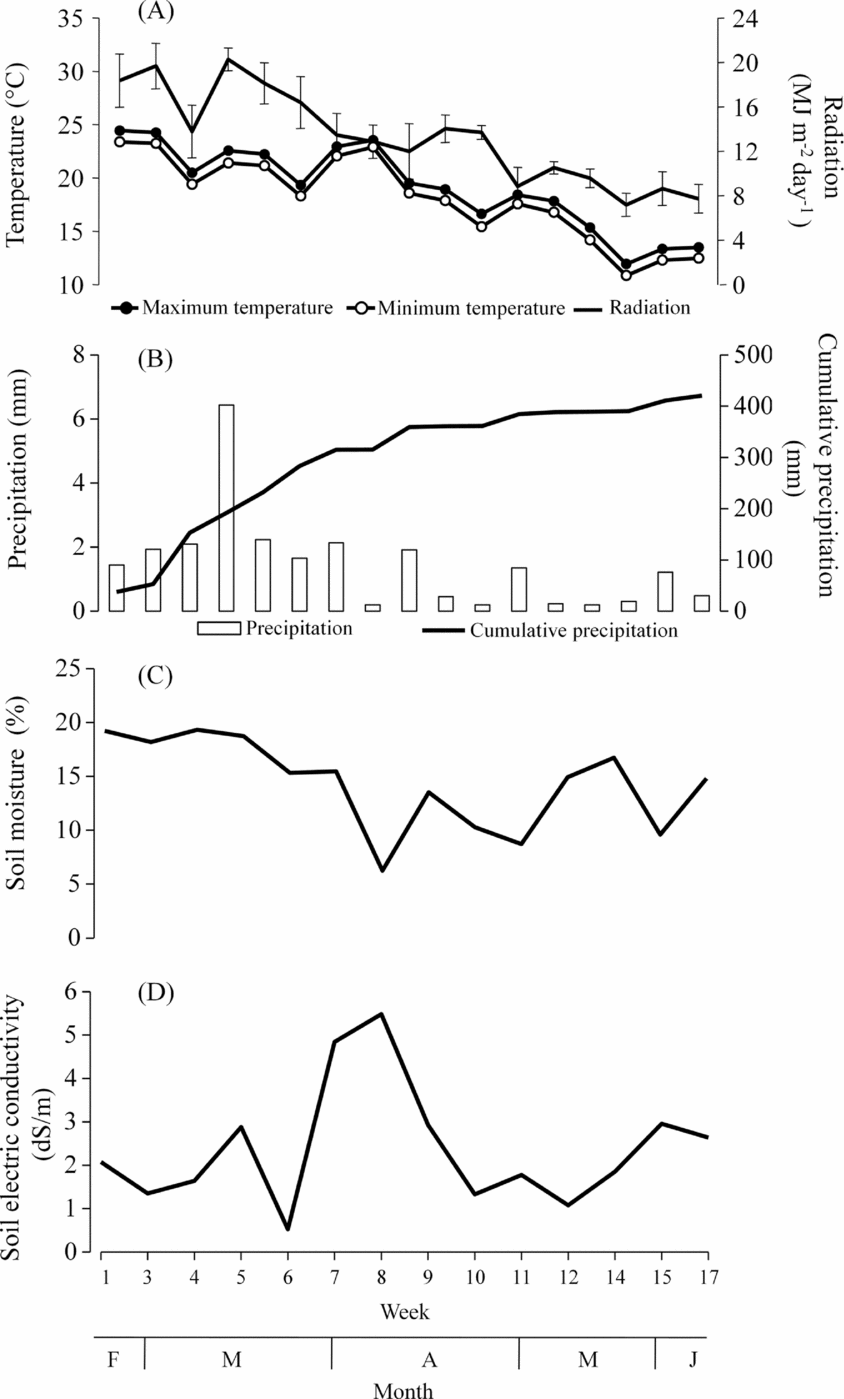
The daily data of precipitation, air temperature (minimum and maximum), radiation and photoperiod were obtained from the INMET station (Brazilian National Institute of Meteorology) located on the FURG campus (32°04′43″S; 52°10′03″W), approximately 20 km from the field site. Between February and June 2014, the plants in the experimental plot were exposed to minimum night temperatures between 3.8 and 30.4 °C (mean = 18.7 ± 0.4 °C), and the maximum daytime temperatures ranged from 4.6 and 31.9 °C (19.7 ± 0.5 °C; Figure 1a). The average daily solar radiation was 13.65 ± 0.47 MJ m−2 day−1, whereas during the first 8 weeks of cultivation, the weekly mean values oscillated between 13.25 and 20.34 MJ m−2 day−1, and higher temperatures were recorded (Figure 1a). During cultivation, the photoperiod decreased from 13 to 8 h with a mean value of 10.7 ± 0.1 h of light. The daily precipitation ranged between 0.0 and 34.4 mm (3.48 ± 0.07 mm day−1), and 420.6 mm accumulated until the end of 17 weeks of cultivation (Figure 1b).
(A) Weekly averages (± standard error) of air temperature (minimum and maximum values) and daily solar radiation, (B) weekly and cumulative precipitation of the city of Rio Grande (RS, Brazil) during 2014. (C) Weekly averages (± standard error) of soil moisture and (D) soil electrical conductivity (EC) of the experimental plot where four progenies of S. ambigua were cultivated with saline effluent of shrimp farming.

Soil samples were collected twice a week from planting rows 1, 4 and 8 at 0–10 cm depths. The soil moisture content was determined by the gravimetric method, and the soil electrical conductivity was estimated from 1:2 dry soil–distilled water ratio extracts (EC1:2) using a Hanna HI9835 conductivity meter. The soil moisture ranged between 2.7 and 23.9% (14.5 ± 0.6%; Figure 1c), and the EC1:2 soil ranged from 0.4 to 7.8 dS m−1 (2.5 ± 0.6 dS m−1; Figure 1d). Both the highest and lowest weekly averages of EC1:2 (5.5 ± 1.0 dS m−1) and soil moisture (6.3 ± 0.6%), respectively, were observed during the dry season (eighth week) when no precipitation occurred (Figure 1b). The soil moisture (F = 0.31), similar to the EC1:2 (F = 0.45), showed no significant differences (p > 0.05) between the three sampling points inside the plot (Table 1).
Averages (± standard error) of soil moisture and soil electrical conductivity (EC1:2) of three sampling points inside the experimental plot where four progenies of S. ambigua were cultivated with saline effluent of shrimp farming.

No significant differences (ANOVA; p > 0.05) between the three sampling points inside the plot were found (moisture: F = 0.31, p = 0.73, df = 2, 22; EC1:2: F = 0.45, p = 0.64, df = 2, 19).
Flowering, shoot biometry and biomass production
Shoot biometry was held before planting (25-week-old seedlings) and after 17 weeks of cultivation in the plot (e.g. plants at 42 weeks of age). The height (mm) and the number of primary branches of the shoots were quantified. The differences between the initial and final values of height and the number of branches of each plant were used to calculate the absolute vertical growth rate (AVG; cm per week) and the absolute rate of branch formation (ABF; branches per week), respectively. The plants were monitored weekly for the presence of reproductive structures (stigma, anther, and reproductive segments with seeds). These data were used to calculate the average pre-reproductive length period (PRL; time spent until the beginning of flowering), flowering season length (FSL) and percentage of individuals who flourished for each progeny (Zerai et al., Reference Zerai, Glenn, Chatervedi, Lu, Mamood, Nelson and Ray2010).
At the end of cultivation (June 2014), all of the plants were harvested just above ground level, and five plants of each progeny were randomly chosen and had their roots carefully removed from the sediment and bagged. In the laboratory, the plant samples were washed to remove soil and each plant had the longest branch of the shoot (LB) measured with a ruler (mm). Shoot and root components were weighed on a precision scale to determine the fresh weight. Subsequently, all of the samples were oven dried at 60 °C for 48 h and weighed on the precision scale to determine the dry weight.
Succulence and mineral composition
The succulence of plant tissues was estimated by the water content as estimated by the difference between the mass of fresh and dry plant matter. The macro- and micro-minerals were determined from the dry mass (n = 5 for each progeny) of shoots and roots according to Tedesco et al. (Reference Tedesco, Gianello, Bissani, Bohnen and Volkweiss1995) by spectrophotometry. The chemical analysis of the plant biomass was performed by the soil laboratory of the Federal University of Pelotas (Brazil).
Data analysis
A one-way Analysis of Variance (ANOVA) was conducted to test the differences in the soil moisture content and electrical conductivity (EC1:2) of the plot cultivation rows. One-way ANOVAs were used to test for any significant differences in biometric parameters, growth rates and biomass values between S. ambigua progenies. This later procedure was unbalanced due to the exclusion of a few plants identified with a partial loss of their shoot branches by insect grazing. The final sample sizes of the progenies BTH1-f3, BTH1-f4, BTH2-f3 and BTH2-f4 were 19, 20, 19 and 12, respectively. In order to accomplish the prerequisites of normality and homoscedasticity (Zar, Reference Zar2010), EC1:2 values were log10(10∗x) transformed. The initial number of shoot branches and the final shoot height were transformed by square root (x+1) and square root, respectively. The fresh-weights of vegetative segments, total shoot biomass and total plant biomass (shoot+roots) were transformed by log10(x), and the dry-weights of the same components were transformed by log10(10∗x). The ANOVAs were followed with a comparison by Tukey's HSD test at 5% significance. Only two plants of the progeny BTH1-f4 were detected with reproductive segments at the final harvest, and this progeny was not included in the ANOVAs of PRL and FSL. Differences among progenies in the percentage of flourished plants were tested by a Chi-square test (χ²) at 5% significance (Zar, Reference Zar2010).
RESULTS
Growth and flowering of plants
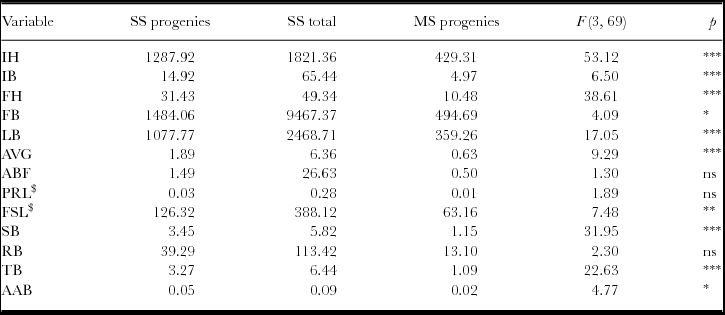
Initial values of the shoot height (F = 53.1, p < 0.001) and the number of shoot branches (F = 6.5, p < 0.001) of S. ambigua seedlings were significantly different among progenies, but there were no differences between lineages. The average heights of BTH2-f3 (17.3 ± 0.7 cm) and BTH2-f4 (15.9 ± 1.3 cm) were significantly (Tukey's test, p < 0.05) higher than those of BTH1-f3 (9.4 ± 0.3 cm) and BTH1-f4 (7.4 ± 0.6 cm). The initial number of shoot branches of BTH2-f3 (8.3 ± 1.2) and BTH2-f4 (5.1 ± 1.3) was also greater than that of BTH1-f3 (3.8 ± 0.8) and BTH1-f4 (2.6 ± 0.8).
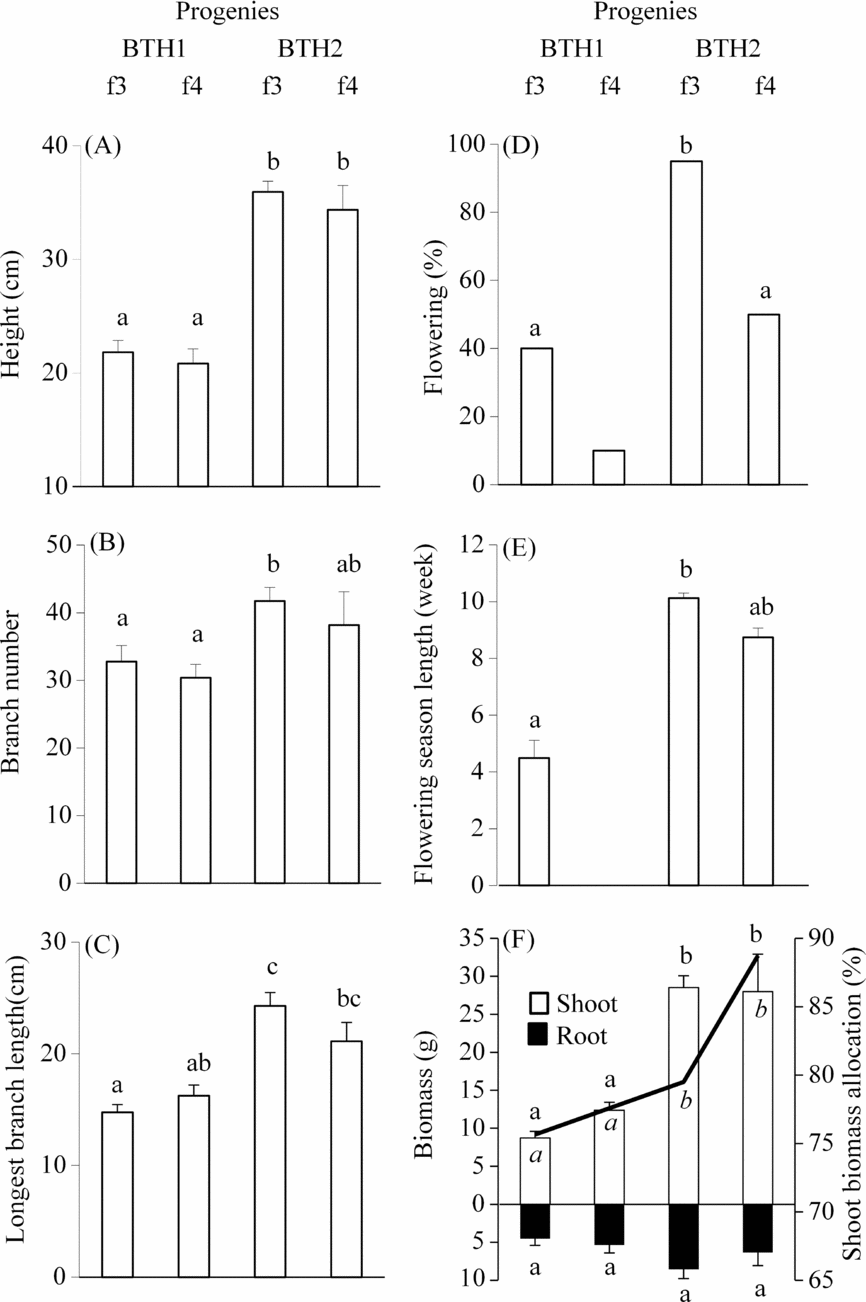
After 17 weeks of cultivation with saline irrigation, there was no mortality of the plants in the plot. The progenies BTH2-f3 and BTH2-f4 showed a significantly higher average height (F = 38.6, p < 0.001; Figure 2a), branch number (F = 4.1, p < 0.05; Figure 2b), longest branch length (F = 17.1, p <0.001, Figure 2c) and AVG (F = 9.3, p <0.001; Table 2) than BTH1-f4. The magnitude of the best performance of BTH2 over BTH1 progenies differed among variables, ranging from 57.5 to 72.5% in height and from 16.4 to 37.3% in branch number. The average longest LB was observed in BTH2-f3, which was 15.1–64.6% longer than the other progenies. A high AVG occurred in BTH2-f3 and BTH2-f4, corresponding to 1.09 ± 0.04 cm per week and 1.08 ± 0.31 cm per week, respectively. The ABF averages ranged from 1.64 ± 0.12 branches per week (BTH1-f4) to 1.97 ± 0.13 branches per week (BTH2-f3), but no significant differences were observed between progenies (F = 1.3, p > 0.05, Table 2).
Averages (± standard error) of (A) height, (B) branch number, (C) longest branch length, (D) percentage of flowering plants, (E) flowering season length, (F) shoot and root biomass, and percentage of biomass allocation to shoots (line and italic lowercase letters) of four progenies of S. ambigua after 17 weeks of cultivation with saline effluent of shrimp farming. Different lowercase letters represent significant differences between the averages (p <0.05), according to the Tukey test.

Analyses of variance of the biometric parameters of four progenies of S. ambigua cultivated with saline effluent of shrimp farming.

*p < 0.05; **p < 0.01; ***p < 0.001; ns: non-significant (p > 0.05).
$The progeny BTH1-f4 was excluded from ANOVA because only two plants of this progeny were detected with reproductive segments at the final harvest; F(2, 33).
IH, initial height (cm); IB, initial branch number; FH, final height (cm); FB, final branch number; LB, longest branch of the shoot (cm); AVG, absolute vertical growth rate; ABF, absolute rate of branch formation; PRL, pre-reproductive length period; FSL, flowering season length; SB, shoot fresh biomass (g); RB, root fresh biomass (g); TB, total fresh biomass (g); AAB, allocation to aerial biomass (%).
Values were transformed by: IB = square root (x+1); FH = square root; SB = log10(x); TB = log10(x).
The final percentage of individuals who flowered was significantly higher (χ²= 15.26, p <0.05) in BTH2-f3 (95%), with only 30–45% for BTH1-f3 and BTH2-f4 (Figure 2d). The flowering of BTH1-f4 was not statistically significant compared to the other progenies, as it was poor (10% of plants), and only a few reproductive segments were present per flowering plant. PRL showed no significant difference (F = 1.89, p >0.05) between plants (Table 2). However, FSL was shorter in BTH1-f3 (4.5 ± 0.6 weeks) than in BTH2-f3 (10.1 ± 0.2 weeks; F = 7.48, p <0.01; Figure 2e).
Individual biomass and allocation to shoot and root components
After 17 weeks of cultivation, the average total biomass (shoot+roots) of S. ambigua plants was 19.9 ± 1.6 g FW (fresh weight) or 2.9 ± 9.3 g dry weight (DW). Because the statistical results for the fresh and dry weights of the different components of the biomass were similar, only fresh weight data are presented below. The BTH2 progenies showed a total fresh biomass that was 115.8–205.3% higher than the BTH1 progenies (F = 22.6, p < 0.001; Figure 2f). The differences between the total biomass were mainly determined by the shoot biomass, which was significantly (F = 32.0, p < 0.001) greater in BTH2 (Figure 2f). Additionally, significant differences between the two generations of each lineage were not detected. There were no significant differences between the root biomass among the four progenies (F = 2.30, p > 0.05; Table 2). The BTH2 lineage showed greater allocation to aerial biomass (f3 = 79.5 ± 2.3% and f4 = 88.7 ± 1.1%) than BTH1 (f3 = 75.7 ± 4.5% and f4 = 77.6 ± 2.6%).
Succulence and mineral composition
S. ambigua plants had an overall average succulence of 85.8% water, which significantly varied between progeny (F = 4.27, p <0.01) but not between lineages (Table 2). More and less succulence was found in BTH1-f4 (86.6%) and BTH2-f3 (85.1%), respectively.
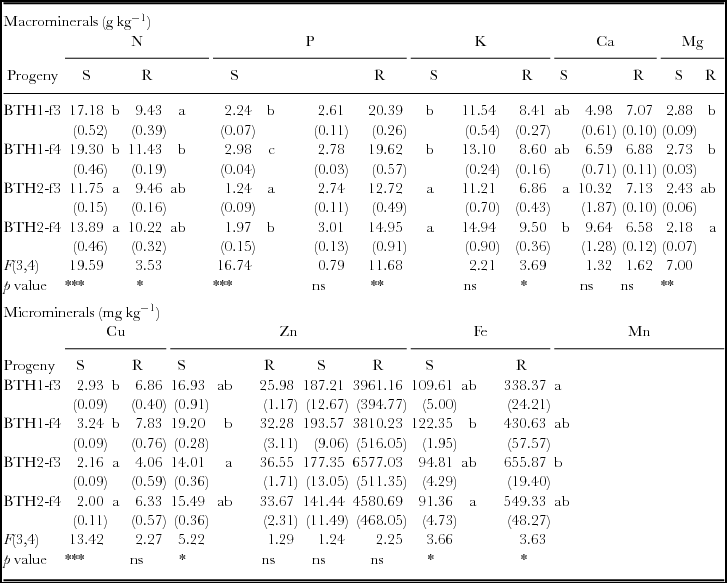
With the exception of Mg (F = 1.62, p > 0.05) and Fe (F = 1.24, p > 0.05), the average levels of the minerals in S. ambigua shoots showed significant differences between progenies (Table 3). The BTH1 lineage contained the highest levels of N (F = 19.59, p <0.001), K (F = 11.68, p <0.01) and Cu (F = 13.42, p <0.001), but no significant differences were detected for these minerals between the two generations of each lineage (Table 3). BTH1-f4 also had the highest P (F = 16.74, p <0.001), Zn (F = 5.22, p <0.05) and Mn shoot contents (F = 3.66, p <0.05) and statistically different from at least one of the progenies of the BTH2 lineage. In contrast, the highest shoot content of Ca (F = 3.69, p <0.05) was observed in BTH2-f4 (Table 3).
Averages (± standard error) of the contents of macrominerals and microminerals in dry shoots (S) and roots (R) of four progenies of S. ambigua cultivated with saline effluent of shrimp farming.

*p < 0.05; **p < 0.01; ***p < 0.001; ns: non-significant (p > 0.05).
Different lowercase letters (within a column) represent significant differences between the averages (p < 0.05), according to the Tukey test.
The mineral composition of the roots of S. ambigua showed high levels of Fe and Mn (Table 3) and less variability in the other minerals of progenies than for the shoot contents. Only the contents of N (F = 3.53, p <0.05), Mg (F = 7.00, p < 0.01) and Mn (F = 3.63, p < 0.05) were significantly different between progenies. The highest N content was observed in BTH1-f4 (11.4 ± 0.2 g kg−1 DW). BTH1 progenies had a higher Mg content in roots than did BTH2-f4, whereas Mn was more highly accumulated in BTH2-f3 roots (655.87 ± 19.40 mg kg−1 DW) than in BTH1-f3 roots (338.37 ± 24.21 mg kg−1 DW).
DISCUSSION
All of the studied S. ambigua progenies were easily propagated and able to grow and bear seeds in a field plot that was irrigated with saline effluent from shrimp farming. The two lineages showed consistent differences in biometrics, production and mineral composition of their biomass, which were maintained between consecutive generations of their plants. Morphological and colour differences between S. ambigua biotypes have been reported for wild salt marsh populations (Freitas and Costa, Reference Freitas and Costa2014; Medina et al., Reference Medina, Francisco, Wingfield and Casañas2008), but the heritability of these traits had not been previously demonstrated.
Biometric characteristics of the lineage
Both during the development phase of the seedlings in the greenhouse and after 17 weeks of growth in the field plot, the BTH2 progenies had higher development in height, branching of the shoot and length of the longest branch compared to the BTH1 progenies. Since the beginning of the breeding program of S. ambigua, the selection of the two lineages has been driven by crossing a pure line of plants with the most vigorous shoots but consistently the most vigorous red prostrated plants were smaller than robust green erect plants. This process resulted in a higher shoot biomass formation and a large allocation of gathering resources into shoot biomass, which was approximately 6% higher in BTH2 than in BTH1 progenies. Previously, shoot height and branching density have been associated with genetic differences between populations of Sarcocornia (Agawu, Reference Agawu2012; Ventura et al., Reference Ventura, Wuddineh, Myrzabayeva, Alikulov, Khozin-Goldberg, Shpigel, Samocha and Sagi2011a) and Salicornia genera (Agawu, Reference Agawu2012; Ventura et al., Reference Ventura, Wuddineh, Myrzabayeva, Alikulov, Khozin-Goldberg, Shpigel, Samocha and Sagi2011a; Zerai et al., Reference Zerai, Glenn, Chatervedi, Lu, Mamood, Nelson and Ray2010).
In addition to being taller, plants of the BTH2 lineage showed a shoot absolute growth rate (AVG) that was 43% higher than that of BTH1, allowing BTH2 plants to achieve a commercial shoot height of 10 cm (adopted in Israel for gourmet species of Salicornia and Sarcocornia; Ventura and Sagi, Reference Ventura and Sagi2013; Ventura et al., Reference Ventura, Wuddineh, Myrzabayeva, Alikulov, Khozin-Goldberg, Shpigel, Samocha and Sagi2011a) at 9 weeks of cultivation. A similar height and growth rate was achieved by “ecotypes” of Sarcocornia fruticosa grown at 25–100% seawater salinity (Ventura et al., Reference Ventura, Wuddineh, Myrzabayeva, Alikulov, Khozin-Goldberg, Shpigel, Samocha and Sagi2011a). As noted, shoot height is a trait of agronomic interest for the selection of salt asparagus varieties. Similar to the present study, Zerai et al. (Reference Zerai, Glenn, Chatervedi, Lu, Mamood, Nelson and Ray2010) showed that after 5 years of selective breeding of S. bigelovii in the United States and Eritrea (Africa), varieties were obtained with 44% greater shoot biomass and 29% heavier seeds (i.e. Eritrea) than their progeny-f2.
All of the S. ambigua progenies had a large investment in the primary branching of the shoot, whose average values ranged from 1.6 branches per week (BTH1-f4) and 2.0 branches per week (BTH2-f3). Similar values of branch production were observed in S. perennis after 6 weeks of growth in non-saline saturated soil (Adams and Bate, Reference Adams and Bate1994). Plants of three ecotypes of S. fruticosa grown in Israel (Agawu, Reference Agawu2012) produced on average 10 branches per plant after 16 weeks of irrigation with a 100 mM NaCl nutrient solution. This branching value is 67.1–76.0% smaller than that of BTH2-f3. The rate of branching and the number and length of the branches are characteristics that can be directly related to the reproductive investment in the Salicorniodeae subfamily because flowering and seed formation are concentrated in the apical parts of the branches (Davy et al., Reference Davy, Bishop, Mossman, Redondo-Goméz, Castillo, Castellanos, Luque and Figueroa2006). Accordingly, the greater length and the high number of branches of the BTH2 progeny are characteristics of agronomic interest because they optimize shoot biomass and seed yield by S. ambigua, which can be raw materials for the production of edible oil and biofuel (Costa et al., Reference Costa, Vicenti, Morón-Villarreyes, Caldas, Cardoso, Freitas and D'oca2014b).
The BTH2 lineage also showed a greater biomass allocation to aerial components than did the BTH1 lineage, particularly BTH2-f4, which on average invested 88.7% of the produced biomass to the shoots (compared to 75.7–77.6% of BTH1 progenies). Additionally, Greis (Reference Greis2009) observed greater intrapopulational variability in the biomass allocation to aerial components of the progeny-f1 of the actual progenies, which was between 70 and 85% of the total biomass under very similar field conditions and saline irrigation. Despite being a perennial plant, S. ambigua demonstrates a high proportion of biomass allocated to shoot biomass, and this feature has an agronomic value due to the economic interest in shoots and seeds as stated above. Our results show that the breeding program generated S. ambigua progenies (BTH2) that were capable of a larger and more homogeneous investment in shoot biomass.
After 17 weeks of field cultivation, the global average of shoot fresh weight of the studied S. ambigua progenies was 18.5 g. This value is relatively low compared to that of previous crops of S. ambigua with saline irrigation (6–55 dS m−1) in field plots (48 g after 15 weeks; Costa, Reference Costa2006; 430 g after 14 weeks; Greis, Reference Greis2009; 653 g after 24 weeks; Costa et al., Reference Costa, Bonilla, Oliveira, Alves, Lopes and Lucas2014a), which was apparently related to late planting in the current study (see the following section). However, this average value is greater than 3–4 g of fresh biomass for S. fruticosa plants grown for 8 weeks irrigated with a nutrient solution of 50–75% seawater salinity (Ventura et al., Reference Ventura, Wuddineh, Myrzabayeva, Alikulov, Khozin-Goldberg, Shpigel, Samocha and Sagi2011a), as well as 2–10 g of fresh biomass for Salicornia dolichostachya plants grown for 6–10 weeks in greenhouses and 20–30 dS m−1 salinities (200–300 mM NaCl; Katschnig et al., Reference Katschnig, Broekman and Rozema2013; Singh et al., Reference Singh, Buhmann, Flowers, Seal and Papenbrock2014).
Reproductive period and seed formation
The time to onset of flowering among the progenies of S. ambigua (6.2–7.7 weeks after planting) was up to 3 times shorter than that of native plants growing in salt marshes in southern Brazil (Azevedo, Reference Azevedo2000), which, when germinated in August, bloom in the following February after 25 weeks of the pre-reproductive period (PRL). The PRL at the field plot was also nearly two times shorter than that observed in the Eritrean breeding program of the commercial halophyte S. bigelovii (16.6 weeks; Zerai et al., Reference Zerai, Glenn, Chatervedi, Lu, Mamood, Nelson and Ray2010). These differences may have been caused by the use of 25-week-old seedlings (pre-germinated), in addition to the late planting in the plot (February), after which there was a decrease in the photoperiod of 13–10 h (harvest occurred in June). Ventura et al. (Reference Ventura, Wuddineh, Shpigel, Samocha, Klim, Cohen, Shemer, Santos and Sagi2011b) found that the reduction in the photoperiod stimulates the flowering of Salicornia and Sarcocornia species and that flowering inhibition (by the maintenance long photoperiods or the frequent cutting of the shoots) can maximize the vegetative growth of the species of these genera. Consequently, the short PRL before flowering and the small vegetative growth of the plants appear to have been an artefact of late planting.
The BTH1-f3 progeny had a shorter flowering season length (FSL) corresponding to 4.5 weeks. In the salt marshes of southern Brazil, S. ambigua plants originating from seed germination have an FSL of approximately 20 weeks (Azevedo, Reference Azevedo2000). This value is 3 times longer than the FSL of the BTH1-f3 progeny and 1–1.3 times longer than that of the BTH2 progenies grown in the field plot. The longer FSL of the BTH2 lineage (8–10 weeks) compared to that of BTH1 may be associated with the high investment in vegetative growth of the former and apparent antagonism of the vegetative × reproductive processes in Sarcocornia (Ventura and Sagi, Reference Ventura and Sagi2013; Zerai et al., Reference Zerai, Glenn, Chatervedi, Lu, Mamood, Nelson and Ray2010). More detailed studies of the reproductive biology of S. ambigua will evaluate this hypothesis of antagonism between the reproductive precocity and vegetative growth of the plants.
Succulence and mineral composition of progenies
S. ambigua progenies had a global average water content in their biomass of 85.8%. This figure is very similar to that of wild plants of this species in Brazil (88.2–88.6%; Bertin et al., Reference Bertin, Gonzaga, Borges, Azevedo, Maltez, Heller, Micke, Tavares and Fett2014) and Venezuela (84.5%; Medina et al., Reference Medina, Francisco, Wingfield and Casañas2008) and even the f1 progeny of the studied progenies (84.6%; Greis, Reference Greis2009). However, the succulence of S. ambigua was smaller than 95% of the water found in S. fruticosa plants in Spain (Redondo-Gómez et al., Reference Redondo-Gómez, Wharmby, Castillo, Mateos-Naranjo, Luque, Cires, Luque, Davy and Figueroa2006). Agawu (Reference Agawu2012) also cited succulence values greater than 80% for Sarcocornia persica plants that were irrigated with saline water (100–200 mM NaCl). All species of Sarcocornia genus are succulents and increase their water content in the cells when grown under high salinity (Adams and Bate, Reference Adams and Bate1994; Flowers et al., Reference Flowers, Hajibagheri and Clipson1986). Succulence is an adaptive mechanism for survival under saline stress conditions, resulting mainly from the compartmentalization of the Na ions in the vacuole and the dilution thereof by incorporating water in this structure, and it may also be associated with an increase in the thickness of cell walls of the epidermis and the cuticle (Flowers et al., Reference Flowers, Hajibagheri and Clipson1986). The succulence of Sarcocornia shoots is an attractive feature as a gourmet vegetable, often leading to its comparison to asparagus (Ventura and Sagi, Reference Ventura and Sagi2013); for example, Asparagus officinalis contains approximately 92% of water in its shoots (Bratsch, Reference Bratsch2014). The breeding program of S. ambigua did not affect this feature of the progenies.
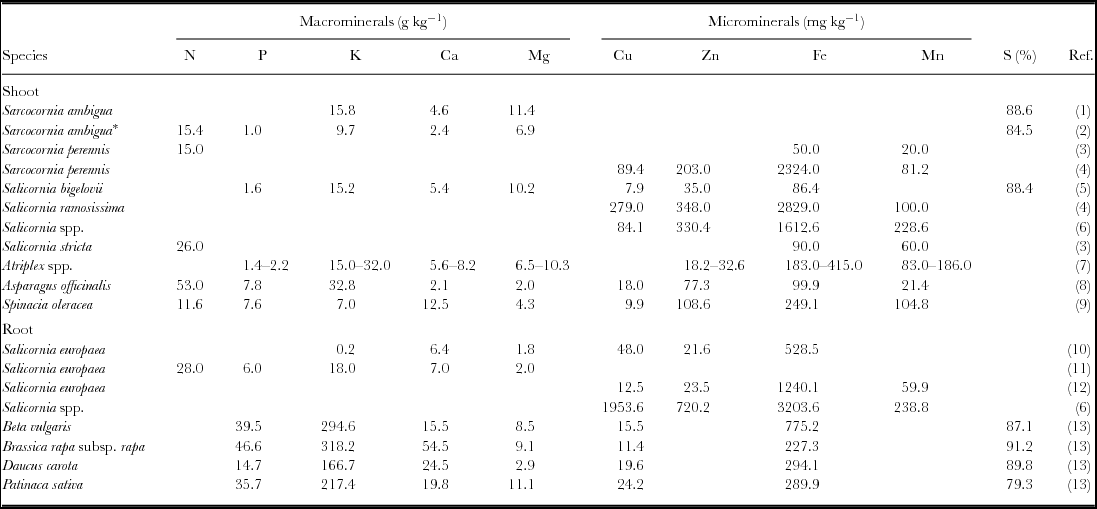
Several macromineral and micromineral concentrations in S. ambigua biomass were significantly higher in BTH1 progenies than in BTH2 (Table 3), especially in BTH1-f4, whose shoots contained the highest concentrations of N, P, K and Cu. The mineral composition of BTH1 roots also showed significantly higher concentrations of Mg than the BTH2 progenies. The average levels of N, K, P and Ca in BTH1-f4 shoots were higher than those in wild plants of S. ambigua and ranked in the mid-upper range of these mineral contents in other species of the subfamily Salicorniodeae and gourmet vegetables (Table 4).
Macrominerals and microminerals in dry shoots and roots of wild S. ambigua, other species of the subfamily Salicorniodeae and gourmet vegetables.

*Cited as Sarcocornia perennis.
References: (1) Bertin et al. (Reference Bertin, Gonzaga, Borges, Azevedo, Maltez, Heller, Micke, Tavares and Fett2014); (2) Medina et al. (Reference Medina, Francisco, Wingfield and Casañas2008); (3) Gorham and Gorham (Reference Gorham and Gorham1955); (4) Luque et al. (Reference Luque, Castellanos, Castillo, Gonzalez, Gonzalez-Vilches and Figueroa1999); (5) Lu et al. (Reference Lu, Zhang, Wang, Cai, Zhou and Zhu2010); (6) Smillie (Reference Smillie2015); (7) Norman et al. (Reference Norman, Masters and Barrett-Lennard2013); (8) Makus (Reference Makus1994); (9) Sheikhi and Ronaghi (Reference Sheikhi and Ronaghi2012); (10) Eslamzadeh (Reference Eslamzadeh2006); (11) Ushakova et al. (Reference Ushakova, Kovaleva, Gribovskaya, Dolgushev and Tikhomirova2005); (12) Milić et al. (Reference Milić, Luković, Ninkov, Zeremski-Škoric, Zorić, Vasin and Milić2012); (13) Mayer (Reference Mayer1997).
The average levels of N and K in the BTH1-f4 shoots were very similar (from 19.30 to 19.62 g kg−1 DW), and the values of both minerals were higher than those observed in S. ambigua shoots from the Venezuelan salt marshes (cited as S. perennis; Medina et al., Reference Medina, Francisco, Wingfield and Casañas2008) and of the K contents of wild plants of S. ambigua irrigated with an effluent of shrimp farming (Bertin et al., Reference Bertin, Gonzaga, Borges, Azevedo, Maltez, Heller, Micke, Tavares and Fett2014). Gorham and Gorham (Reference Gorham and Gorham1955) found 15 and 26 g N kg−1 DW in the shoots of S. perennis and Salicornia spp. of a salt marsh in eastern England, respectively. K and N concentrations in BTH1-f4 shoots were also higher than those reported for the commercialized species of Amaranthaceae, such as sea asparagus S. bigelovii (Lu et al., Reference Lu, Zhang, Wang, Cai, Zhou and Zhu2010) and spinach Spinacia oleracea (Sheikhi and Ronaghi, Reference Sheikhi and Ronaghi2012) (Table 4). However, the observed values of N and K do not exceed those observed in some vegetables, such as asparagus A. officinalis (Makus, Reference Makus1994) or species of halophytic fodder shrubs Atriplex from the saline soils of Australia (Norman et al., Reference Norman, Masters and Barrett-Lennard2013).
P content of the BTH1-f4 shoots was 0.4–2 times greater than that of the Venezuelan S. ambigua (Medina et al., Reference Medina, Francisco, Wingfield and Casañas2008), S. bigelovii (Lu et al., Reference Lu, Zhang, Wang, Cai, Zhou and Zhu2010) and the species of Atriplex (Norman et al., Reference Norman, Masters and Barrett-Lennard2013). However, some vegetables (S. oleracea; Sheikhi and Ronaghi, Reference Sheikhi and Ronaghi2012; A. officinalis; Makus, Reference Makus1994) may have higher shoot levels of P (Table 4). The amount of Ca and Mg in S. ambigua shoots is on a similar scale and BTH2-f4 showed the highest average value of Ca (9.50 g kg−1 DW) of the progenies. The average Ca concentration in BTH2-f4 shoots was 1–3 times higher than that of wild S. ambigua plants (Bertin et al., Reference Bertin, Gonzaga, Borges, Azevedo, Maltez, Heller, Micke, Tavares and Fett2014; Medina et al., Reference Medina, Francisco, Wingfield and Casañas2008) and S. bigelovii (Lu et al., Reference Lu, Zhang, Wang, Cai, Zhou and Zhu2010) (Table 4). This concentration is also intermediate among values found in vegetables (Makus, Reference Makus1994; Sheikhi and Ronaghi, Reference Sheikhi and Ronaghi2012) and Atriplex species (Norman et al., Reference Norman, Masters and Barrett-Lennard2013). On the other hand, the average Mg content in BTH1-f4 shoots was similar to that observed in S. ambigua plants from Venezuela (Medina et al., Reference Medina, Francisco, Wingfield and Casañas2008) and southern Brazil (Bertin et al., Reference Bertin, Gonzaga, Borges, Azevedo, Maltez, Heller, Micke, Tavares and Fett2014) but 48.3–49.7% lower than the contents ranging between 10.2 and 10.3 g kg−1 DW found in S. bigelovii (Lu et al., Reference Lu, Zhang, Wang, Cai, Zhou and Zhu2010) and Atriplex amnicola (Norman et al., Reference Norman, Masters and Barrett-Lennard2013). All of the halophytes cited above have shoots with 1.5–5 times more Mg than in gourmet vegetables, such as A. officinalis (Makus, Reference Makus1994) and S. oleracea (Sheikhi and Ronaghi, Reference Sheikhi and Ronaghi2012).
All progenies of S. ambigua grown with irrigation from saline effluent showed high levels of microminerals. The tissue levels of these minerals in species of Sarcocornia and Salicornia genera directly depend on the soil–water concentrations, and these plants are important bio-indicator species or metal hyperaccumulators (Curado et al., Reference Curado, Grewell, Figueroa and Castillo2014; Luque et al., Reference Luque, Castellanos, Castillo, Gonzalez, Gonzalez-Vilches and Figueroa1999; Smillie, Reference Smillie2015). Thus, wide variation ranges in metal content are quoted in the literature (Table 4), and toxic levels in plant tissues of these elements can be observed in some locations. The average content of Fe in BTH1-f4 shoots was 94–287% higher than 50–99.9 mg kg−1 DW that was cited for S. perennis and Salicornia spp. (Gorham and Gorham, Reference Gorham and Gorham1955), S. bigelovii (Lu et al., Reference Lu, Zhang, Wang, Cai, Zhou and Zhu2010), Salicornia europaea (Eslamzadeh, Reference Eslamzadeh2006) and A. officinalis (Makus, Reference Makus1994). However, similar and even higher levels were found in the cultivated shoots of S. oleracea (Sheikhi and Ronaghi, Reference Sheikhi and Ronaghi2012) or Atriplex leaves from Australian salt lands (Norman et al., Reference Norman, Masters and Barrett-Lennard2013). Extremely high shoot values of Fe (1613–2829 mg kg−1 DW) indicate soil enriched with metals, such as those observed in S. perennis and Salicornia ramosissima grown in salt marshes in southwest Spain (Luque et al., Reference Luque, Castellanos, Castillo, Gonzalez, Gonzalez-Vilches and Figueroa1999) and in Salicornia spp. during their summer growth peak at the estuary of the River Fal in southwestern England, which has received waste from deep mining for hundreds of years (Smillie, Reference Smillie2015).
Mn concentration (122.4 mg kg−1 DW) of BTH1-f4 was higher than in Salicornia spp. shoots of eastern England (Gorham and Gorham, Reference Gorham and Gorham1955), S. perennis (Gorham and Gorham, Reference Gorham and Gorham1955; Luque et al., Reference Luque, Castellanos, Castillo, Gonzalez, Gonzalez-Vilches and Figueroa1999), S. ramosissima (Luque et al., Reference Luque, Castellanos, Castillo, Gonzalez, Gonzalez-Vilches and Figueroa1999) and vegetables, such as A. officinalis (Makus, Reference Makus1994) and S. oleracea (Sheikhi and Ronaghi, Reference Sheikhi and Ronaghi2012). However, a higher shoot content of Mn was found in Salicornia spp. from a metal-contaminated marsh (Smillie, Reference Smillie2015) (Table 4).
Cu (3.2 mg kg−1 DW) and Zn (19.2 mg kg−1 DW) concentrations in BTH1-f4 shoots were lower than those cited for cultivated plants of S. bigelovii (Lu et al., Reference Lu, Zhang, Wang, Cai, Zhou and Zhu2010), A. officinalis (Makus, Reference Makus1994) and S. oleracea (Sheikhi and Ronaghi, Reference Sheikhi and Ronaghi2012). In the soils of southwest Spain that were contaminated with metals, Luque et al. (Reference Luque, Castellanos, Castillo, Gonzalez, Gonzalez-Vilches and Figueroa1999) found 89.4 mg Cu kg−1 DW and 203.0 mg Zn kg−1 DW in the shoots of S. perennis and 279 Cu kg−1 DW and 348 mg Zn kg−1 DW in S. ramosissima. However, Salicorniodeae plants can accumulate even higher amounts of these metals in their shoots, as Smillie (Reference Smillie2015) cited values of 84.1 mg Cu kg−1 DW and 330.4 mg Zn kg−1 DW for Salicornia spp., while Curado et al. (Reference Curado, Grewell, Figueroa and Castillo2014) reported levels of 167 mg Cu kg−1 DW and 193 mg Zn kg−1 DW for S. perennis. These last two figures are, respectively, 5042 and 905% higher than the average contents of BTH1-f4. Additionally, concerning all of the above-cited contaminated environments, the metal contents in the roots were 1-to-19-fold higher than in the shoots (Table 4).
The roots can represent 18–34% of the total biomass of cultivated S. ambigua progenies and have potential for nutritional supplementation for animals and humans. No data on the mineral composition of S. ambigua roots were found in the literature; however, the BTH1-f4 contents of N and P are smaller than those in the roots of S. europaea cultivated with saline (20 g NaCl L−1) nutrient solution (Ushakova et al., Reference Ushakova, Kovaleva, Gribovskaya, Dolgushev and Tikhomirova2005), whereas the K and Ca contents are similar, and the Mg content is higher (Eslamzadeh, Reference Eslamzadeh2006; Ushakova et al., Reference Ushakova, Kovaleva, Gribovskaya, Dolgushev and Tikhomirova2005) (Table 4). The contents of macrominerals of gourmet tubers, such as Daucus carota, Beta vulgaris and Brassica rapa subsp. rapa (Mayer, Reference Mayer1997), are also higher than the concentrations of Ca (135.3–728.0%), P (429.0–1575.9%), K (1172.1–2328.5%) and Mg (7.7–307%) in BTH1-f4 roots. Published data of trace minerals (Fe, Mn and Zn) in the roots of S. europaea (Table 4) reported values lower than those in BTH1-f4 (Fe = 3810.2 mg kg−1 DW, Mn = 430.6 mg kg−1 DW and Zn = 32.3 mg kg−1 DW). On the other hand, all studies cited in Table 4 that quantified Cu in the roots of S. europaea showed high average contents compared to those of S. ambigua progenies (7.8 mg kg−1 DW). Additionally, in estuaries contaminated by metals, Salicornia spp. (Smillie, Reference Smillie2015) has very high root concentrations of Cu (906.7 mg kg−1 DW), Mn (780.3 mg kg−1 DW), Zn (1506.6 mg kg−1 DW) and Fe (11,749.9 mg kg−1 DW), whereas S. perennis has high concentrations of Fe (25,833 mg kg−1 DW; Curado et al., Reference Curado, Grewell, Figueroa and Castillo2014).
CONCLUSION
The breeding program by traditional methods (i.e. crossing into pure lineages) of S. ambigua obtained two lineages with different agronomic characteristics in the short term (4 years). The BTH2 lineage showed great vegetative growth and biomass allocation for shoot formation, as well as twice longer flowering season length compared to that of BTH1. BTH1 lineage produced plants with higher shoot N, K and Cu contents and nutritional potential than BTH2 lineage. These halophytic lineages are presented as alternatives to food production with saline effluent from aquaculture on the temperate and tropical coast and inland salt-affected soils of South America.
Acknowledgements
This work was supported by the Brazilian National Research Council – CNPq (C.S.B.C.; grant number 573884/2008-0-INCTSAL).