


Highlights
-
• Canadian neurologists report diagnostic uncertainty in LGS; only 5% believe most cases are correctly identified, especially in adults.
-
• Sixty-seven percent rate current LGS treatments inadequate, citing limited efficacy and access barriers.
-
• Care gaps remain, including comorbidity screening and transition programs, underscoring the need for standards and pathways.
Introduction
Lennox-Gastaut syndrome (LGS) is a severe developmental and epileptic encephalopathy that typically begins between the ages 3 and 5. Reference Auvin, Arzimanoglou and Falip1 It has an estimated incidence of 0.1–0.28 per 100,000 per year and a prevalence of 1–5 per 10,000, with a slight male predominance. Reference Strzelczyk, Zuberi and Striano2 LGS consists of multiple drug-resistant seizure types, including tonic seizures, cognitive impairment, and characteristic electroencephalography (EEG) patterns, including slow spike-and-wave activity and generalized paroxysmal fast activity. Reference Specchio, Wirrell and Scheffer3 Diagnostic challenges may arise from evolving clinical and EEG features and broad etiologic heterogeneity; however, an accurate, syndrome-specific diagnosis remains essential to guide management and inform prognosis.
Management is individualized and frequently requires combination therapy due to the disorder’s refractoriness. While several anti-seizure medications (ASM) are approved for LGS, Reference Knowles, Warren and Mohamed4,Reference Zhang, Wang and Wang5 real-world practice also includes off-label agents, surgery, neuromodulation, and the ketogenic diet. Importantly, care extends beyond seizure control to address epilepsy-related comorbidities that frequently impact quality of life, Reference Keezer6 and the childhood onset of LGS necessitates planning for transition to adult services. Given the heterogeneity of etiology, evolving therapeutic options, and substantial burden of comorbidities, contemporary assessment of clinical practice is essential. To this end, a national survey endorsed by the Canadian League Against Epilepsy (CLAE) was created to characterize current care practices, identify barriers and gaps in care delivery, assess variability in access to interventions and transition programs, and evaluate knowledge of LGS natural history and comorbidity management.
Methods
A survey was developed after a review of the literature and discussion among two pediatric epileptologists with expertise in the management of LGS (AD, RW). Pediatric and Adult neurologists, epileptologists, and allied healthcare professionals across Canada were invited to participate in a web-based survey. A link to the anonymous survey was distributed through the CLAE and the Canadian Neurological Sciences Federation. Participation was voluntary. Data were gathered over a four-month time frame (May to September, 2025), and two separate reminders were sent to engage and encourage participation. The survey completion time was approximately 15 min. This study was considered a quality improvement project, and thus, formal ethics board approval was waived.
The final questionnaire included 41 closed questionnaire items and was divided into five sections. The first portion of the survey gathered demographic information such as participants’ practice settings and years of training. The second section asked questions regarding LGS diagnosis, including familiarity with the 2021 International League Against Epilepsy (ILAE) diagnostic criteria, Reference Specchio, Wirrell and Scheffer3 differences in diagnosis in adult versus pediatric patients, and genetic testing practices. The third section of the survey focused on medical and surgical management, such as commonly used ASMs, use of new ASMs, the promise of novel therapies studied in clinical trials, use of the ketogenic diet, and use of corpus callosotomy and neuromodulation techniques. The fourth part covered epilepsy comorbidities associated with LGS, such as evaluating sleep, mood, and behavior disturbances. The fifth part focused on counseling and natural history of LGS, including discussion about morbidity and mortality, and long-term outcomes and transition from pediatric to adult services. A copy of the survey can be found in Supplementary material 1. The questionnaires were imported into SurveyMonkey (www.surveymonkey.com), an online tool commonly used in web-based surveys. To evaluate the clinical decision-making of our participants, our questionnaire used rankings (e.g., rank these five priorities when prescribing an ASM for a patient with LGS), rating scales (e.g., clinical trials for novel therapies on LGS hold great promise in significantly changing the course of LGS [strongly agree] [agree] [unsure][disagree] [strongly disagree]), and multiple-choice questions (e.g., at what stage in your patient interactions do you initiate discussions about Sudden Unexpected Death in Epilepsy (SUDEP).
Pilot testing was completed by sending the survey to 8 physicians (3 pediatric epileptologists, 1 pediatric neurologist, 1 pediatric nurse clinician, and 3 adult epileptologists). Pilot participants were emailed the survey and were asked for their feedback regarding the relevance, clarity, and flow of questions. The survey was revised based on the feedback received from the pilot testing.
All survey responses were directly downloaded from SurveyMonkey as a data file. SurveyMonkey was set to block any attempt to complete the survey a second time from the same IP address. SurveyMonkey also ensured that all questionnaire items were answered before allowing the participant to submit their completed survey.
Data were summarized using descriptive statistics with frequencies and percentages reported for all categorical variables. Categorical responses between adult and pediatric specialists were compared using Pearson’s chi-square tests. Statistical significance was defined as a p-value < 0.05. Data were visualized using bar charts annotated with corresponding descriptive statistics, such as percentages and sample sizes, to illustrate any subgroup differences. All statistical analyses were performed using R Statistical Software, version 4.4.2 (R Core Team, 2024, Vienna, Austria).
Results
Respondent demographics
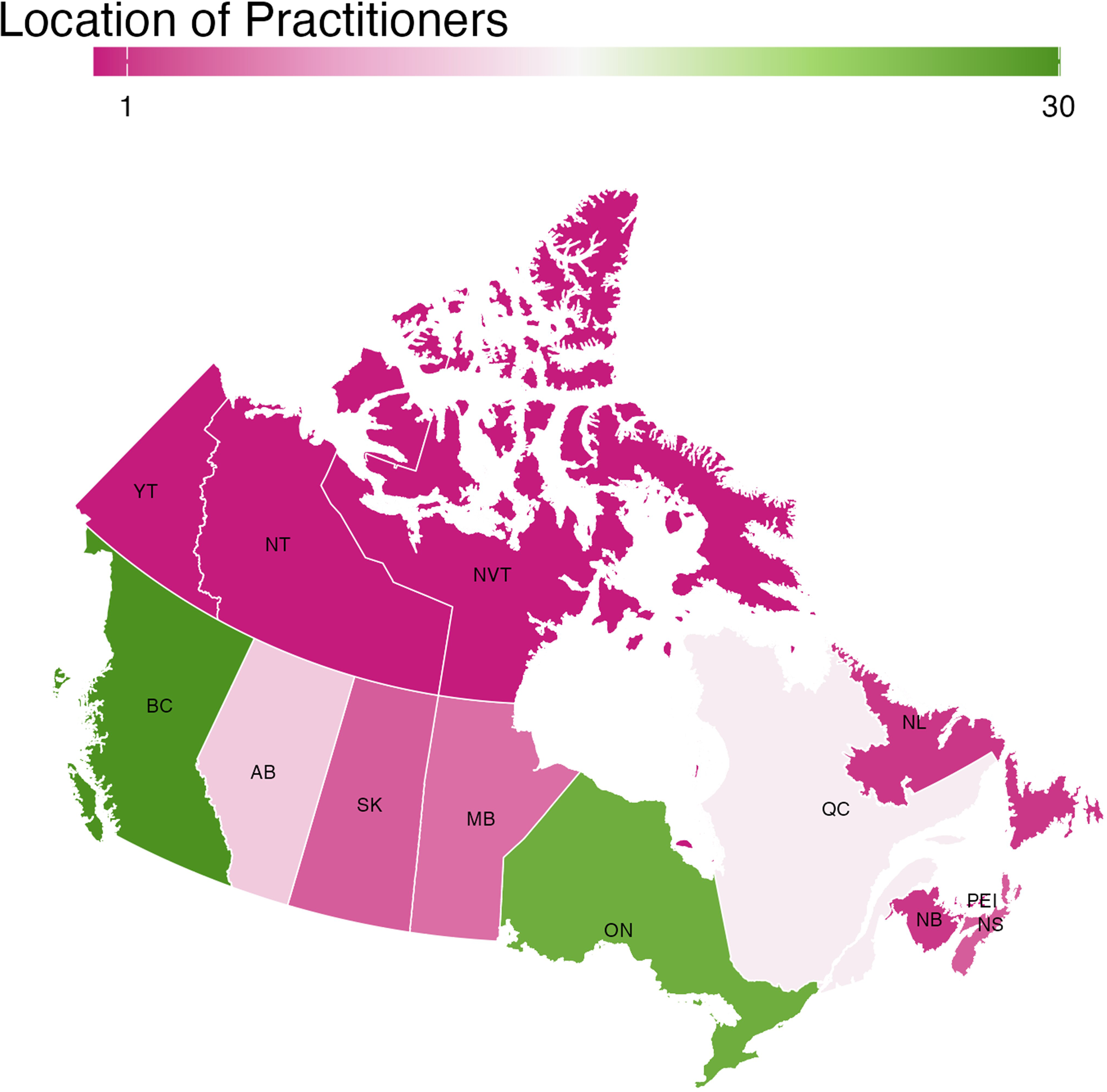
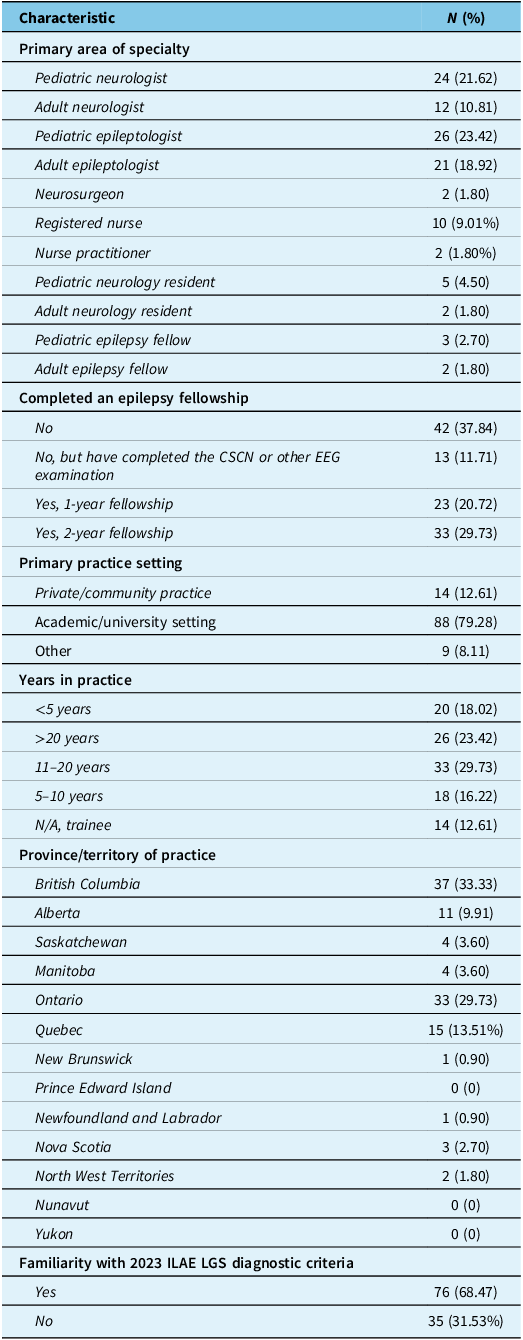
A total of 111 healthcare practitioners across Canada completed the survey between May and September 2025. Most respondents were Neurologists (77%, n = 85) practicing in academic settings (79%, n = 88), and half had completed an epilepsy fellowship (50%, n = 56). Respondents were primarily mid- to senior-career, with 39% (n = 43) reporting 11 to 20 years of practice. Clinical exposure to LGS varied: 45% (n = 50) followed ≤10 patients, whereas 16% (n = 18) managed >30 patients per year. Demographic data are summarized in Table 1, and geographic distribution is summarized in Figure 1.
Geographical distribution of participants. AB = Alberta; BC = British Columbia; MB = Manitoba; NB= New Brunswick; NS = Nova Scotia; NL = Newfoundland and Labrador; NVT = Nunavut; ON = Ontario; QC = Quebec; PEI = Prince Edward Island; SK = Saskatchewan; YT = Yukon Territory.

Demographics

Table 1. Long description
A table summarizing demographics of healthcare practitioners across Canada. The table has 10 rows and 4 columns. Column headers are Characteristic, N, and (%). Row 1: Primary area of specialty, Pediatric neurologist, 24 (21.62%). Row 2: Adult neurologist, 12 (10.81%). Row 3: Pediatric epileptologist, 26 (23.42%). Row 4: Adult epileptologist, 21 (18.92%). Row 5: Neurosurgeon, 2 (1.80%). Row 6: Registered nurse, 10 (9.01%). Row 7: Nurse practitioner, 2 (1.80%). Row 8: Pediatric neurology resident, 5 (4.50%). Row 9: Adult neurology resident, 2 (1.80%). Row 10: Pediatric epilepsy fellow, 3 (2.70%). Row 11: Adult epilepsy fellow, 2 (1.80%). Row 12: Completed an epilepsy fellowship, No, 42 (37.84%). Row 13: No, but have completed the CSCN or other EEG examination, 13 (11.71%). Row 14: Yes, 1-year fellowship, 23 (20.72%). Row 15: Yes, 2-year fellowship, 33 (29.73%). Row 16: Primary practice setting, Private/community practice, 14 (12.61%). Row 17: Academic/university setting, 88 (79.28%). Row 18: Other, 9 (8.11%). Row 19: Years in practice, <5 years, 20 (18.02%). Row 20: 5-10 years, 18 (16.22%). Row 21: 11-20 years, 33 (29.73%). Row 22: >20 years, 26 (23.42%). Row 23: N/A, trainee, 14 (12.61%). Row 24: Province/territory of practice, British Columbia, 37 (33.33%). Row 25: Alberta, 11 (9.91%). Row 26: Saskatchewan, 4 (3.60%). Row 27: Manitoba, 4 (3.60%). Row 28: Ontario, 33 (29.73%). Row 29: Quebec, 15 (13.51%). Row 30: New Brunswick, 1 (0.90%). Row 31: Prince Edward Island, 0 (0%). Row 32: Newfoundland and Labrador, 1 (0.90%). Row 33: Nova Scotia, 3 (2.70%). Row 34: North West Territories, 2 (1.80%). Row 35: Nunavut, 0 (0%). Row 36: Yukon, 0 (0%). Row 37: Familiarity with 2023 ILAE LGS diagnostic criteria, Yes, 76 (68.47%). Row 38: No, 35 (31.53%).
N = number of responses. LGS = Lennox–Gastaut syndrome, EEG = electroencephalography, CSCN = Canadian Society of Clinical Neurophysiologists.
Diagnosis and diagnostic criteria
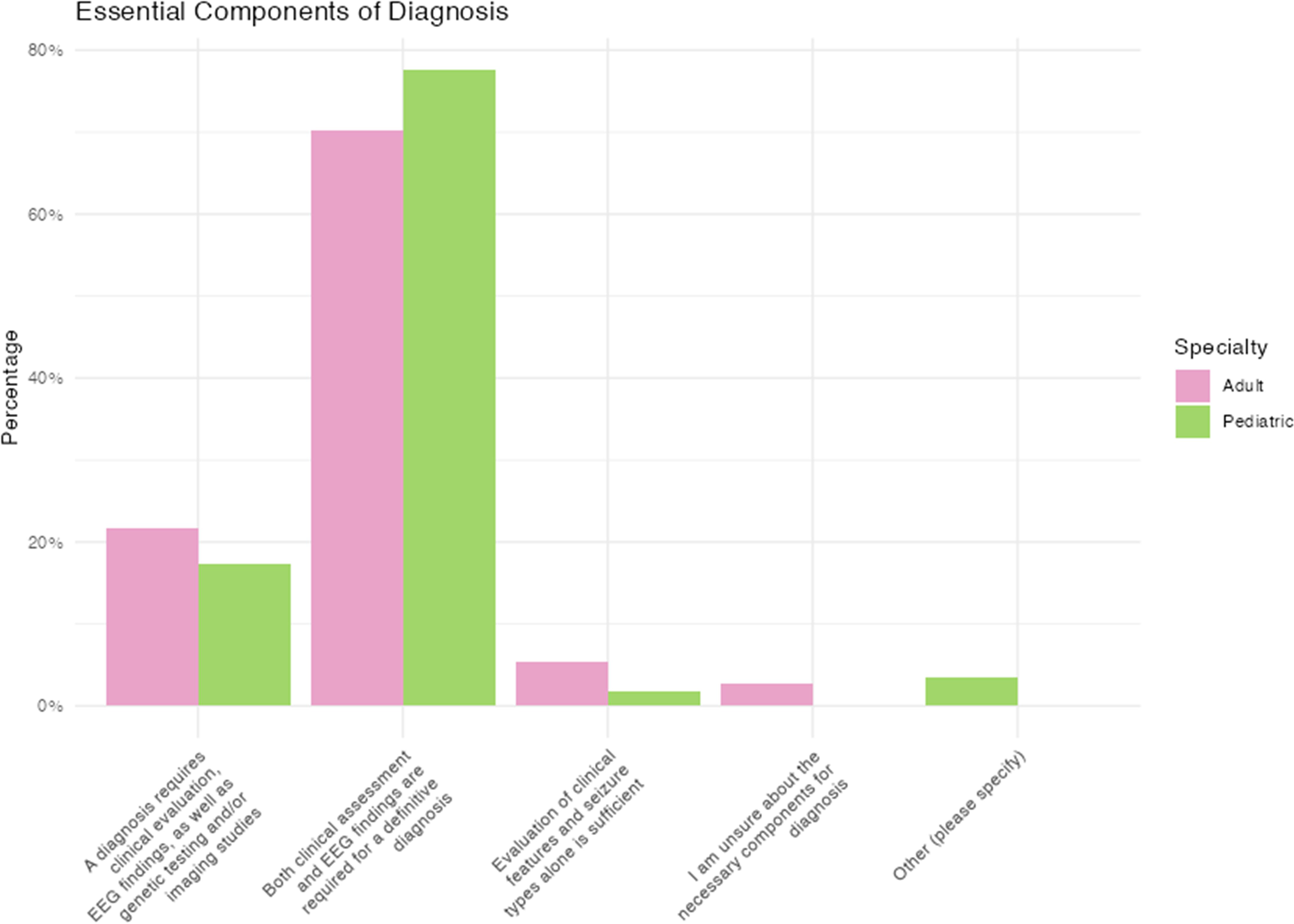
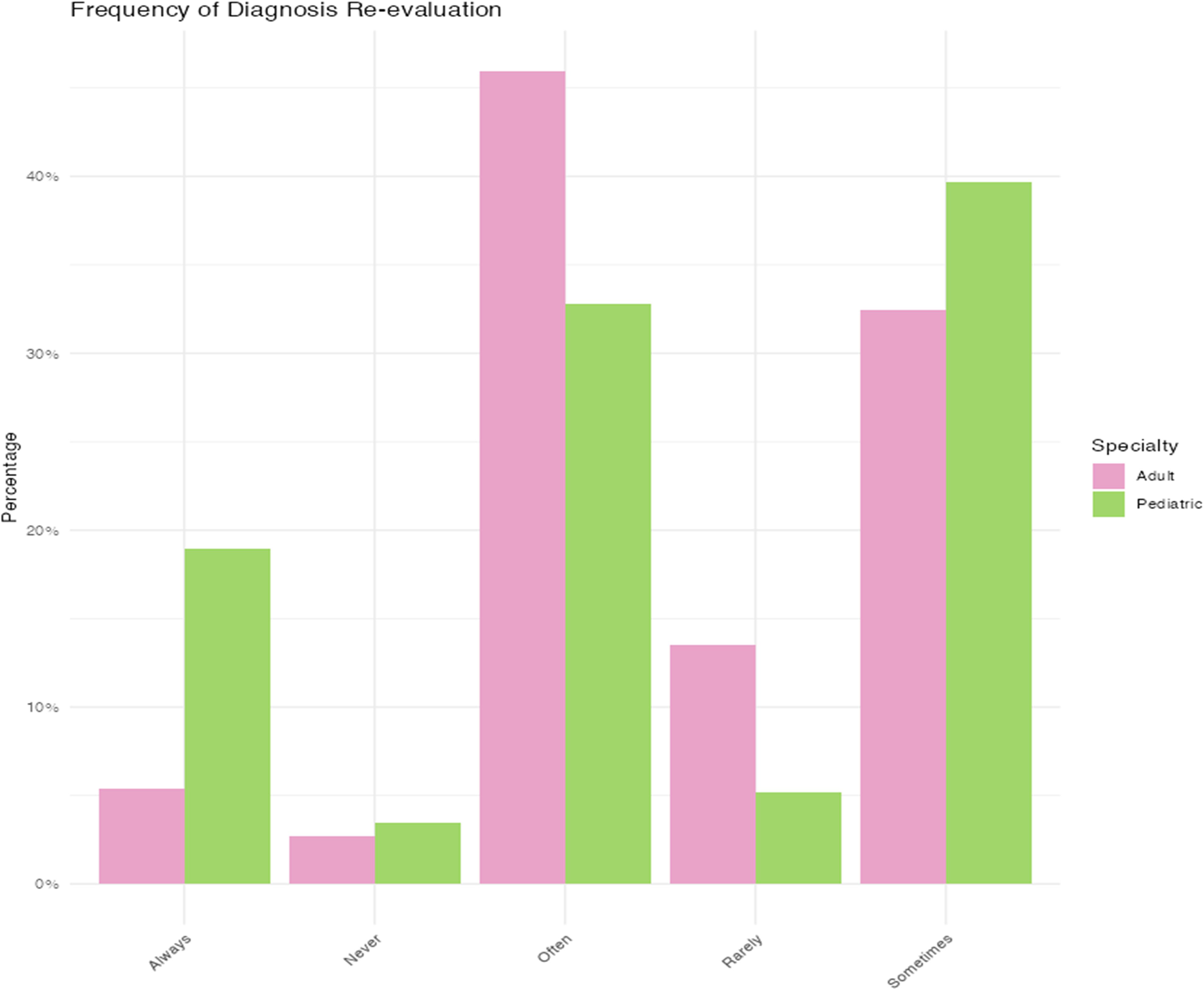
Most respondents (72%, n = 80) relied on both clinical assessment and EEG findings to confirm LGS, consistent with the ILAE diagnostic criteria, Reference Specchio, Wirrell and Scheffer3 while 21% (n = 24) additionally required genetic testing or neuroimaging (Figure 2). Although 68% (n = 76) were familiar with the 2022 ILAE criteria, diagnostic confidence was limited: 46% (n = 51) believed LGS is both over- and underdiagnosed, and only 5% (n = 6) believed that most patients are accurately diagnosed. Adult diagnosis was particularly challenging (46%, n = 51), mainly due to limited access to historical pediatric records and EEG data. Despite these uncertainties, 87% (n = 97) reported that an LGS diagnosis moderately (51%, n = 57) or significantly (36%, n = 40) influenced treatment selection in refractory epilepsy. Following the updated ILAE guidelines 36% (n = 40) reported often or sometimes reassessing LGS diagnoses in patients with drug-resistant epilepsy (DRE) (Figure 3).
Essential components of diagnosis of LGS. X–axis: essential diagnostic components. Y–axis: percentage of respondents. EGG = electroencephalography.

Re-evaluation of LGS diagnosis. X-axis: frequency of re-evaluation of LGS diagnosis. Y-axis: percentage of respondents.

Genetic testing practices
Genetic testing was widely adopted, with 67% (n = 74) almost always ordering gene panels or whole-exome sequencing when etiology was unknown, and only 4% (n = 4) reporting access barriers. Pediatric neurologists were more likely than adult neurologists to routinely order testing (81% vs 41%, p < 0.001), whereas adult neurologists more often used a case-dependent approach (43% vs 19%, p < 0.001) (Supplementary material 2).
Medical management
When prescribing ASMs, key priorities included preventing injury-causing seizures (96%, n = 106), reducing morbidity and mortality (76%, n = 84), minimizing psychiatric or behavioral adverse effects (76%, n = 84), and limiting sedation (59%, n = 66). The most common first-line ASMs were valproic acid (98%, n = 109), clobazam (82%, n = 91), lamotrigine (75%, n = 83), levetiracetam (54%, n = 60), and topiramate (41%, n = 46). Sex-specific differences in management were reported by 65% (n = 72), with 11% (n = 12) describing significant differences. Overall, 66% (n = 73) considered current LGS therapies inadequate. Regarding emerging treatments, 45% (n = 50) were optimistic about meaningful impact, whereas 50% (n = 56) were uncertain (Supplementary material 3).
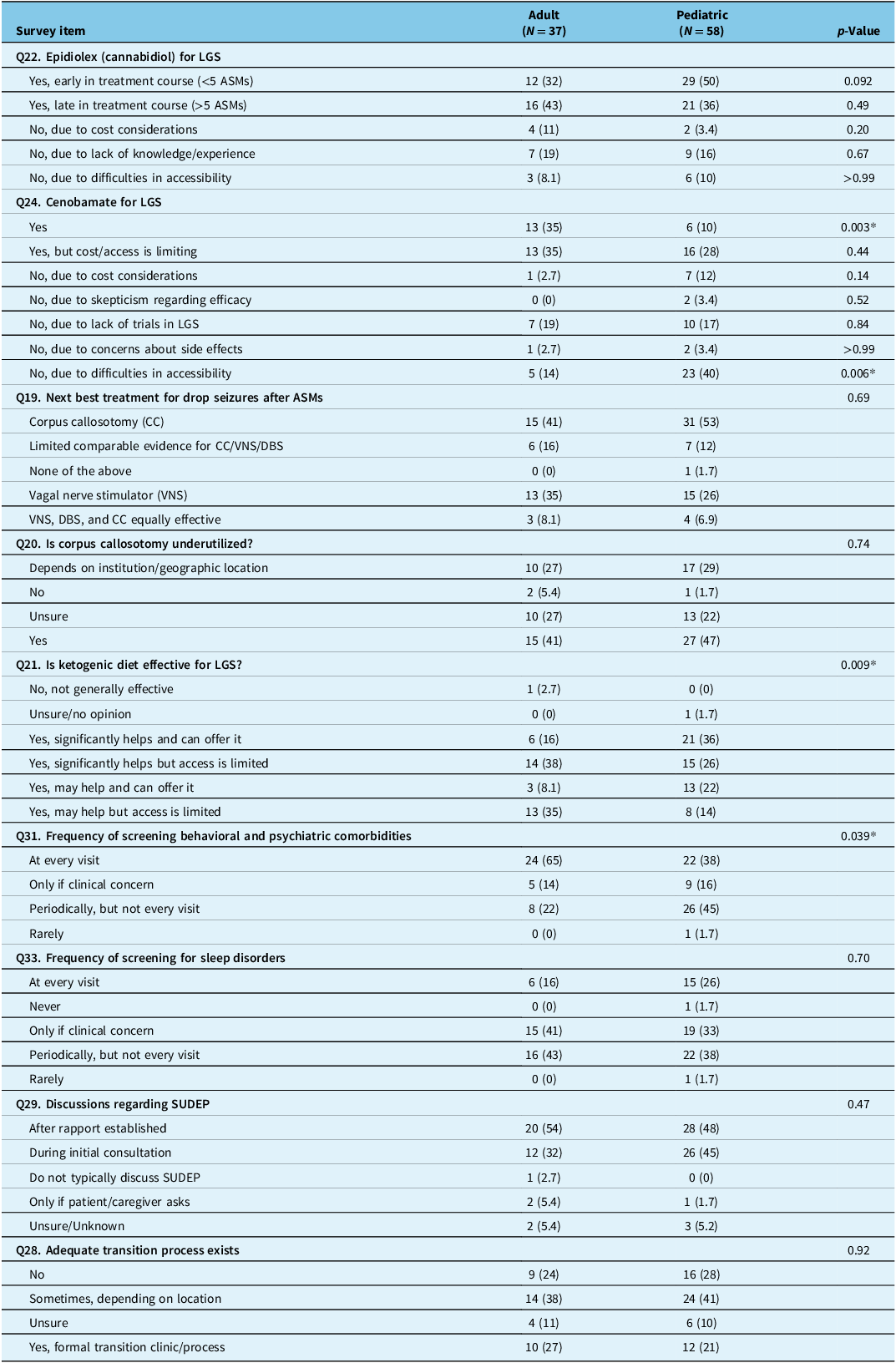
Following Health Canada approval in November 2023, cannabidiol use was viewed variably: 43% (n = 48) favored earlier use (<5 prior ASMs), while 42% (n = 47) preferred later introduction. Reported barriers included limited experience (14%, n = 16), accessibility (10%, n = 11), and cost (7%, n = 8). Patterns of cannabidiol prescribing were comparable between adult and pediatric neurologists (all p > 0.05; Table 2). Half of respondents (51%, n = 57) supported current indications for LGS, Dravet syndrome, and Tuberous Sclerosis Complex, while 32% (n = 36) favored broader use in DEEs. Cenobamate, though not specifically indicated for LGS, was reported as used off-label by 53% (n = 59), with major concerns including cost (34%, n = 38), limited trial data, uncertain efficacy, and adverse effects. Adult neurologists were significantly more likely to prescribe cenobamate for LGS (35% vs. 10%; p = 0.003). In contrast, pediatric neurologists more commonly identified accessibility difficulties as a barrier to prescribing cenobamate (40% vs. 14%; p = 0.006). Forty-five percent (n = 50) supported fenfluramine approval in Canada to expand treatment options, with concerns about cost (16%, n = 18), adverse effects, and cardiac monitoring requirements (11%, n = 12); 25% (n = 28) were uncertain about the need for approval.
Comparison of adult and pediatric clinician responses regarding management of Lennox–Gastaut syndrome

Table 2. Long description
The table compares responses from adult and pediatric clinicians regarding the management of Lennox-Gastaut syndrome. It includes survey items related to the use of cannabidiol, cenobamate, next best treatments, and screening practices. The table has 37 columns for adult responses and 58 columns for pediatric responses, along with p-values for statistical significance. Key survey items include the timing of cannabidiol use, barriers to prescribing, preferences for cenobamate use, next best treatments after ASMs, and screening frequencies for comorbidities and sleep disorders.
Refer to Supplementary material 1 for survey questions. Data are presented as n (%).
*Statistically significant (p < 0.05).
ASM = antiseizure medication; CC = corpus callosotomy; DBS = deep brain stimulation; LGS = Lennox–Gastaut syndrome; SUDEP = sudden unexpected death in epilepsy; Q = question; VNS = vagus nerve stimulation.
Non-pharmacological management
Confidence in offering the ketogenic diet varied, with 29% (n = 32) feeling confident, 31% (n = 34) noting potential benefits but facing access limitations, and 22% (n = 24) citing feasibility challenges. Significant differences were observed in perceptions of the ketogenic diet as a treatment option for LGS between adult and pediatric neurologists (p = 0.009). Pediatric neurologists more frequently indicated that the ketogenic diet could significantly help some patients and that they were able to offer it (36% vs. 16%), while adult neurologists more often reported that the diet may help but that accessibility or feasibility limited its use (35% vs. 14%).
For persistent tonic/atonic seizures, 50% (n = 55) identified corpus callosotomy as the preferred next intervention, followed by vagus nerve stimulation (28%, n = 31). Seven percent (n = 8) believed that corpus callostomy, vagal nerve stimulator, and the ketogenic diet were equally effective for persistent tonic/atonic seizures. Deep brain stimulation (DBS) was rarely utilized in the management of LGS (1%, n = 1), which may be reflective of resource limitations. Corpus callosotomy was perceived as underutilized by 43% (n = 48) of respondents, while an additional 28% (n = 31) indicated that its utilization varies according to institution or geographic region. These treatment preferences, as well as perceptions regarding the underutilization of corpus callosotomy, were similar between adult and pediatric neurologists, with no significant differences observed between groups (p = 0.69 and p = 0.74, respectively; Table 2).
Comorbidity management
Behavioral and psychiatric comorbidities were screened at every visit by 50% (n = 55), periodically by 34% (n = 38), and only when clinically indicated by 15% (n = 17). Adult neurologists were more likely to report screening for behavioral and psychiatric comorbidities at every visit compared with pediatric neurologists (65% vs. 38%), whereas pediatric neurologists more commonly reported screening periodically but not at every visit (45% vs. 22%; p = 0.039). Overall, 39% (n = 43) of respondents screened for sleep disorders at every visit, 23% (n = 25) screened periodically, and 37% (n = 41) screened only when clinical concerns arose; only 1% (n = 1) reported never screening. Sleep screening practices were comparable between adult and pediatric neurologists, with no significant differences observed between groups (Table 2). Limited clinic time was the most common barrier for behavioral/psychiatric (68%, n = 76) and sleep (53%, n = 59) screening. Additional challenges included insufficient resources [50% (n = 55) and 36% (n = 40)], uncertainty regarding screening methods [36% (n = 40) and 33% (n = 37)], and lack of validated tools for sleep for [35% (n = 39)]. Barriers stratified by adult and pediatric clinicians are summarized in Supplementary material 4. Pediatric neurologists more frequently reported limited screening of behavioral and psychiatric comorbidities utility due to challenges in effectively managing identified symptoms (41% vs 16%, p = 0.010).
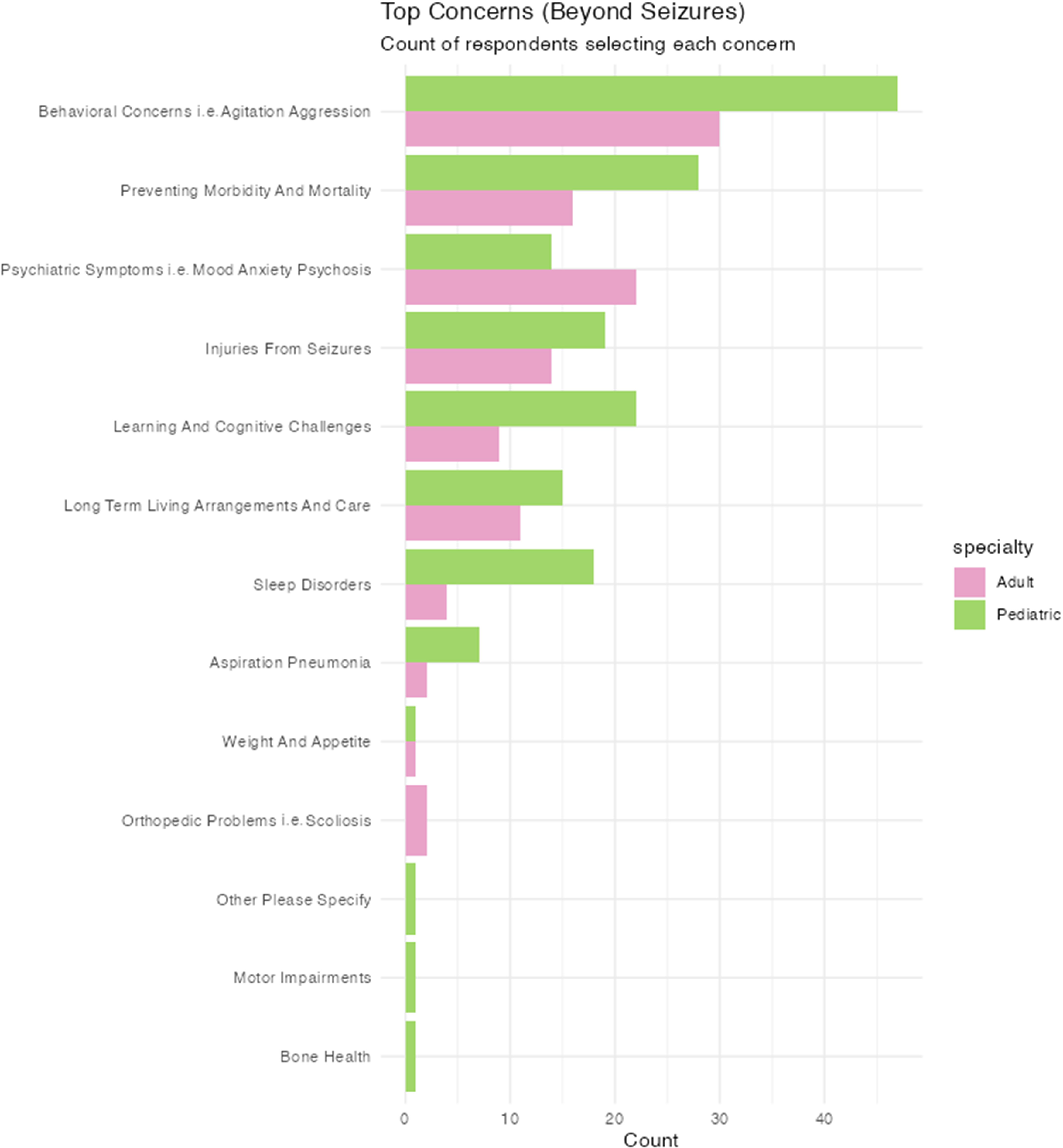
Beyond seizure control, primary concerns included aggression and behavioral dysregulation (83%, n = 92), psychiatric symptoms (39%, n = 43), cognitive impairment (34%, n = 38), and long-term care planning (25%, n = 28). Figure 4 demonstrates concerns based on adult and pediatric clinicians. Adult neurologists prioritized psychiatric symptoms more frequently (59% vs 24%, p < 0.001), whereas pediatric neurologists more often highlighted sleep disorders (31% vs 11%, p = 0.023). Adult neurologists prioritized psychiatric symptoms more frequently (59% vs 24%, p < 0.001), whereas pediatric neurologists more often highlighted sleep disorders (31% vs 11%, p = 0.023). The most cited LGS management obstacles were inadequate ASM efficacy (68%, n = 76), ASM adverse effects (38%, n = 42), comorbidity management (37%, n = 41), and limited medication access (35%, n = 39).
Top concerns (Beyond Seizures). Count: number of respondents.

Transition of care
Only 23% (n = 26) reported established epilepsy transition programs, 29% (n = 32) reported no adequate process, and 38% (n = 42) described inconsistent transition quality across regions.
Counseling and natural history
Half of respondents (50%, n = 55) reported discussing SUDEP after establishing rapport with patients and caregivers, while 40% (n = 44) addressed the topic during the initial consultation. A smaller proportion were unsure about the appropriate timing for SUDEP discussions (7%, n = 8), discussed it only when specifically raised by patients or caregivers (3%, n = 3), or did not routinely discuss SUDEP (1%, n = 1). The timing of SUDEP discussions did not differ significantly between adult and pediatric neurologists (p = 0.47; Table 2). Regarding long-term seizure remission, 49% (n = 54) were unsure whether LGS remits, 14% (n = 15) believed it never does, and 40% (n = 44) considered remission before age 50 rare but possible (Supplementary Figure 2 [S4]).
Discussion
This national survey provides a comprehensive national assessment of LGS diagnosis, management, and care delivery. By examining practices across pediatric and adult neurologists, epileptologists, and allied healthcare professionals, we identified significant care gaps and regional variability in this complex epilepsy syndrome. While previous international surveys have explored LGS care patterns, Reference Riva, D’Onofrio and Amadori7,Reference Riva, Coppola and Bonaventura8 this Canadian-specific investigation is essential given substantial interprovincial differences in healthcare infrastructure, epilepsy center resources, surgical program availability, ketogenic diet services, transition clinic access, clinical trial enrollment, and medication coverage policies, all factors that directly impact LGS care delivery.
Diagnostic challenges and evolving criteria
In our cohort, diagnostic uncertainty emerged as a prominent concern: 46% of respondents perceived LGS as both over- and underdiagnosed, and only 5% expressed confidence that most patients are accurately identified. This apparent paradox underscores the intrinsic complexity of the syndrome, characterized by heterogeneous clinical presentations, evolving seizure semiology over time, and diverse etiologies, all of which contribute to diagnostic ambiguity. Reference Wolf, Boyce and Pena9
Recent refinements to diagnostic criteria further underscore these challenges. The 2022 ILAE classification mandates the presence of tonic seizures in addition to multiple drug-resistant seizure types and requires characteristic EEG features (slow spike-wave or paroxysmal fast activity) prior to 18 years of age. Reference Specchio, Wirrell and Scheffer3 Encouragingly, most respondents were familiar with the updated criteria and considered clinical assessment combined with EEG findings necessary for diagnosis. Moreover, 72% reported often or sometimes re-evaluating LGS diagnoses in patients with DRE, suggesting that evolving guidelines may have prompted greater diagnostic scrutiny. However, re-examining the diagnosis may also be impacted by access to therapies or trials that are specifically approved for LGS. For example, a United States study reported a temporary increase in newly diagnosed LGS cases coinciding with the U.S. Food and Drug Administration (FDA) approval of Epidiolex. Reference Marcinski Nascimento, Li and Lin10
Diagnosis of LGS in adulthood was identified as particularly challenging, with 46% reporting greater difficulty compared to pediatric diagnosis. Hallmark pediatric features, multiple seizure types and 1.5–2.5 Hz slow spike-wave discharges, often attenuate or transform over time. Reference Oguni, Hayashi and Osawa11–Reference Yagi14 The transition from pediatric to adult care may also result in incomplete transfer of critical historical data, including early EEG findings and developmental history. Reference Kerr, Kluger and Philip15 Reduced tolerance for EEG testing in adulthood can further limit diagnostic confirmation. Reference Arzimanoglou, French and Blume16 Additionally, comorbidities that emerge or intensify in adolescence and adulthood, such as behavioral disturbances, cognitive impairment, and sleep disorders, may obscure the underlying epilepsy syndrome. Reference Kerr, Kluger and Philip15–Reference Pina-Garza, Boyce and Tworek17
Most clinicians also reported that an LGS diagnosis influences treatment selection in refractory epilepsy of known etiology, with 51% describing a moderate impact and 36% a significant impact. These findings suggest that syndrome-based diagnosis retains clinical relevance beyond etiologic classification alone. In the absence of accurate syndrome recognition among adults with DRE, implementation of LGS-specific therapeutic strategies may be delayed, with potential implications for long-term outcomes. Reference Montouris, Aboumatar and Burdette18,Reference Resnick and Sheth19
Etiologic investigation and genetic testing
The etiologic heterogeneity of LGS further complicates diagnosis. An underlying cause is identified in approximately 75% of cases and may be structural, genetic, metabolic, or combined (e.g., coexisting genetic and structural abnormalities). Reference Asadi-Pooya20 Determining etiology is often critical to selecting optimal therapy and in the realm of precision medicine. As genetic testing technologies advance and clinician expertise in variant interpretation improves, the proportion of cases without a defined cause continues to decline. Recent developments in genomic testing have substantially expanded understanding of LGS biology. Consistent with other DEEs, LGS demonstrates both genetic heterogeneity (multiple genes producing a similar phenotype) and allelic heterogeneity (different variants within a single gene resulting in distinct phenotypes).
In our cohort, approximately 70% of respondents routinely pursued genetic testing when etiology was unknown, and only 4% cited access limitations, indicating broad availability across practice settings. Pediatric neurologists were significantly more likely than adult neurologists to consistently pursue genetic testing in cases of unknown etiology, likely reflecting differences in training, practice patterns, and access to genetic services between pediatric and adult care environments. The high rates of genetic testing in this cohort are significant, because the identification of a genetic etiology may inform prognosis, recurrence risk counseling, and, increasingly, precision treatment strategies.
Pharmacological management: Gaps between evidence and practice
Current therapeutic landscape
At present, interpretation of the evidence for the medical management of LGS remains constrained by important methodological limitations. There are no monotherapy trials and no direct head-to-head comparisons among ASMs in LGS. Furthermore, meta-analyses are limited by heterogeneity in outcome measures, variable definitions of drop seizures, and potential selective reporting, restricting definitive comparative conclusions. Over the past three decades, multiple randomized controlled trials (RCTs) have evaluated the efficacy and safety of ASMs for LGS-associated seizures. However, owing to the highly refractory nature of LGS, these studies have been conducted as adjunctive (add-on) trials rather than monotherapy trials. Reference Brigo, Jones and Eltze21 Regulatory approvals by the FDA and the European Medicines Agency (EMA) include felbamate, lamotrigine, topiramate, rufinamide, clobazam, and more recently, cannabidiol and fenfluramine for LGS-associated seizures. Reference Knowles, Warren and Mohamed4,Reference Zhang, Wang and Wang5
Despite these indications, our findings highlight divergence between regulatory approvals and real-world prescribing patterns. Valproic acid was used by nearly all respondents (98%), followed by clobazam (82%), lamotrigine (75%), levetiracetam (54%), and topiramate (41%). Although valproic acid does not hold a specific LGS indication, it remains widely endorsed as first-line therapy and continues to anchor clinical practice. Reference Nelson and Knupp22 Similarly, the frequent use of levetiracetam, also without LGS-specific approval, reflects reliance on observational data supporting its broad-spectrum efficacy and favorable tolerability. Reference Montouris, Aboumatar and Burdette18,Reference Nelson and Knupp22 Conversely, although felbamate is approved by the FDA 23 and the EMA, 24 it has not received Health Canada approval, and its use is limited by the risk of serious adverse effects, such as aplastic anemia. Reference Leppik25
Novel agents and barriers to access
The therapeutic landscape for LGS has broadened with agents targeting novel mechanisms, yet uptake remains variable. Cannabidiol demonstrated efficacy in two placebo-controlled RCTs in LGS. Reference Devinsky, Patel and Cross26,Reference Thiele, Marsh and French27 Following Canadian approval in November 2023, clinicians were divided on timing: 43% favored earlier use (after fewer than five prior ASMs), whereas 42% preferred later introduction. Reported barriers included limited experience (14%), accessibility (10%), and cost (7%).
Fenfluramine showed efficacy for LGS in a Phase 3 placebo-controlled RCT Reference Knupp, Scheffer and Ceulemans28, and 45% of respondents supported Canadian approval to expand treatment options, although it is not currently available for LGS in Canada. However, concerns regarding cost (16%) and cardiac monitoring requirements (11%) tempered enthusiasm. Real-world data for cenobamate in LGS have recently emerged, Reference Aguilar-Amat Prior, Alonso Singer and Oliva Navarro29,Reference Samanta30 with off-label use reported by 53% of respondents, informed by data suggesting responder rates of approximately 50%. Reference Aguilar-Amat Prior, Alonso Singer and Oliva Navarro29 Cost remained a constraint (34%). However, additional larger studies are needed to confirm the effectiveness of cenobamate in LGS and to guide management. Adult neurologists were significantly more likely than pediatric neurologists to prescribe cenobamate for LGS, reflecting greater adoption of this therapy in adult practice. In contrast, pediatric neurologists were significantly more likely to identify limited accessibility as a barrier to its use, highlighting challenges in access to cenobamate within pediatric care settings.
Together, these findings highlight the interplay between emerging evidence, regulatory status, and practical barriers, particularly cost and access, in shaping prescribing decisions. Despite therapeutic expansion, 66% of respondents considered current treatment options inadequate. The lack of comprehensive, evidence-integrated treatment algorithms incorporating trial data, real-world outcomes, comorbidities, drug interactions, and patient preferences leaves clinicians without clear comparative guidance.
Although several novel agents are in development, Reference Hahn, Jiang and Villanueva31,Reference Dell’isola, Verrotti and Sciaccaluga32 half of respondents (50%) were uncertain whether ongoing trials will meaningfully alter the long-term trajectory of LGS, reflecting cautious optimism shaped by decades of incremental progress.
Balancing efficacy and tolerability
Therapeutic goals in LGS are increasingly expanding beyond seizure reduction to encompass cognition, behavior, and quality of life. Furthermore, beyond seizure pathogenesis, ASMs are associated with systemic and central nervous system adverse effects, including psychiatric, cognitive, and sleep disturbances. Reference Strzelczyk and Schubert-Bast33 Accordingly, when prescribing ASMs, clinicians prioritized minimizing treatment-related functional impairment, particularly psychiatric or behavioral adverse effects (76%) and sedation (59%).
Epilepsy comorbidities remain difficult to measure systematically and are incompletely evaluated in ASM trials. Cannabidiol has been associated with caregiver-reported gains in alertness, executive function, and quality of life, although other studies show no significant quality-of-life change. Reference Lamonarca, Mintz and Bayarres34–Reference Rosenberg, Louik and Conway36 Fenfluramine may improve executive function at higher doses but requires vigilance for serotonin-related adverse effects. Reference Lamirault and Simon37,Reference Hagena and Manahan-Vaughan38 Together, these data highlight the need for standardized assessment of cognitive, behavioral, and quality-of-life outcomes to better inform individualized treatment decisions.
Sex-specific considerations
Most respondents (65%) reported sex-specific differences in LGS management, with 11% describing substantial differences. Although valproic acid is commonly recommended as first-line therapy, its use in women of childbearing potential requires careful, individualized risk–benefit assessment due to its well-established teratogenic risk. Reference Pack, Oskoui and Williams Roberson39 While many females with LGS may be unlikely to pursue pregnancy given the severity of disease, management decisions must still account for reproductive potential, hormonal considerations, and adverse effects such as valproate-associated polycystic ovary syndrome. Reference Duncan40
Non-pharmacological interventions
Surgical management and neuromodulation
Structural etiologies may also present with LGS, and when a focal structural lesion is identified, resective surgery may significantly reduce seizure burden. Reference Cross, Auvin and Falip41,Reference Kang, Eom and Hong42 In the absence of a surgical target, palliative options include vagal nerve stimulation (VNS), DBS, and corpus callosotomy. VNS has demonstrated efficacy in LGS, Reference Dibue, Greco and Spoor43 although device implantation may not be acceptable to all patients and families. Evidence suggests that corpus callosotomy appears more effective than VNS for reducing drop seizures, but as it is a more invasive procedure, it may also not be suitable for all LGS patients. Reference Lancman, Virk and Shao44,Reference Roth, Bergman and Weil45 Targeting the centromedian thalamic nucleus with DBS has shown promising seizure reductions (25–100%) in small studies, Reference Warren, Dalic and Bulluss46,Reference Dalic, Warren and Bulluss47 but further research is needed to clarify its role in LGS. Reference Aungaroon48 Furthermore, responsive neurostimulation is being increasingly studied in the LGS population.
In our survey, nearly half of respondents favored corpus callosotomy for medication-refractory drop seizures, while approximately one-third preferred VNS, with no significant differences observed between adult and pediatric neurologists in treatment preferences. DBS was rarely selected (1%), likely reflecting limited availability and supporting evidence, and 7% considered corpus callosotomy, VNS, and DBS equally effective. Despite perceived efficacy, corpus callosotomy was viewed as underutilized, either broadly (43%) or depending on institutional or regional factors (28%), and these perceptions were similar between adult and pediatric neurologists. Together, these findings highlight potential barriers related to access, surgical referral patterns, and possible gaps in care delivery.
Ketogenic diet
The ketogenic diet has been shown to reduce seizure frequency and is generally well tolerated in individuals with LGS, although sustained seizure freedom remains uncommon. Reference Lemmon, Terao and Ng49,Reference Skrobas, Duda and Brylinski50 In our cohort, perceptions of its role reflected a balance between recognized clinical benefit and practical implementation challenges. Many clinicians acknowledged that the ketogenic diet can meaningfully improve outcomes in selected patients; however, concerns regarding accessibility, institutional support, and long-term feasibility appeared to limit broader adoption. Pediatric neurologists were more likely to report that the diet could significantly benefit patients and was feasible to offer in practice (36% vs. 16%), whereas adult neurologists more frequently acknowledged potential benefit while citing limitations related to accessibility and feasibility (35% vs. 14%). Collectively, these findings suggest that despite supportive evidence, logistical and structural barriers continue to impede the integration of dietary therapy into routine LGS management, particularly within adult practice settings.
Comorbidity management: recognition without resources
LGS imposes a substantial burden beyond seizures alone. Patients frequently experience cognitive impairment, physical disability, behavioral disturbances (e.g., hyperactivity, aggression, autistic traits), and sleep disorders, all of which significantly affect quality of life. Reference Kerr, Kluger and Philip15,Reference Cross, Auvin and Falip41,Reference van Rijckevorsel51 Neurodevelopmental impairment reflects a complex interaction between underlying etiology, recurrent seizures, and ASM-related adverse effects, with downstream consequences for cognition, communication, attention, behavior, and sleep. Reference Cross, Auvin and Falip41 In our survey, management of comorbidities was identified as one of the three most challenging aspects of LGS care (37%), underscoring its central role in long-term management.
Although clinicians widely acknowledge the importance of screening for “non-seizure” symptoms, implementation remains inconsistent. Approximately half reported screening for behavioral and psychiatric symptoms at every visit, and fewer did so routinely for sleep disorders. Adult neurologists reported more frequent routine screening for behavioral and psychiatric comorbidities than pediatric neurologists, suggesting differences in screening practices across care settings. The reasons for this finding are unclear and were not directly explored in the survey. However, pediatric neurologists were more likely to report that the utility of screening is limited by challenges in effectively managing identified symptoms. This finding may indicate that barriers to accessing appropriate behavioral health resources influence screening practices and perceptions of the value of routine screening. Future studies are needed to better understand the factors that shape screening behaviors and the availability of supports for managing behavioral and psychiatric comorbidities in individuals with LGS. Time constraints emerged as the predominant barrier, followed by limited resources to address identified concerns. Additional challenges included uncertainty regarding optimal screening approaches, limited availability of validated tools, particularly for sleep, and difficulty managing comorbidities once detected. Only a small minority reported no barriers, indicating that these obstacles are systemic rather than site-specific.
Validated instruments for behavioral assessment, Reference Schader, Schmidlechner and Cornell52,Reference von Wrede, Witt and Jessen53 as well as sleep measures, Reference Arvin, Taebi and Khazaeipour54 are available but not uniformly integrated into practice. Comorbidities profoundly influence patient and family well-being and should inform ASM selection to avoid exacerbating cognitive or behavioral symptoms. The pervasive structural barriers identified highlight the need for streamlined screening tools and improved access to multidisciplinary resources to optimize comprehensive LGS care.
Transition: A critical gap in continuity
Access to structured transition programs was highly variable: only 23% of respondents reported formal epilepsy transition processes, 29% identified no adequate pathway, and 38% described inconsistent quality depending on geography. These findings point to significant regional disparities during a critical phase of LGS care.
As LGS typically persists into adulthood, effective transition planning is essential. This period is particularly vulnerable for individuals with intellectual disability and behavioral comorbidities, who may experience heightened anxiety when leaving established pediatric providers, potentially destabilizing behavior and disrupting continuity of care. Reference Nabbout and Camfield55,Reference Goselink, Eklund and Olsson56 System-level factors further complicate transition: overstretched pediatric services may transfer adolescents prematurely, while adult systems are often less equipped to manage complex neurodevelopmental disorders and operate under different care models. Reference Nabbout and Camfield55,Reference Borlot, Tellez-Zenteno and Allen57 This structural mismatch creates a gap at a developmentally sensitive time marked by evolving autonomy and legal responsibilities. Reference Borlot, Tellez-Zenteno and Allen57
The limited availability of formalized transition programs represents a clear and modifiable gap in care. Structured, collaborative pediatric–adult transition pathways could enhance continuity, reduce distress, and support sustained, syndrome-specific management into adulthood.
Counseling, prognosis, and natural history
Reported mortality rates range from 3% (median follow-up period: 8.5 years) to 7% (median follow-up period: 9.7 years), most commonly due to seizure-related accidents, Reference Glauser58 and may be as high as 25% (median follow-up period: 20 years) in patients with severe underlying neurological conditions. Reference Camfield and Camfield59 Notably, a recent German 10-year insurance database study reported a mortality rate of 2.88% among patients meeting strict LGS criteria. Reference Strzelczyk, Schubert-Bast and Simon60 This apparent decline may reflect improvements in diagnostic accuracy and the availability of broader therapeutic options that enhance seizure control and reduce the risk of injury.
In our cohort, most clinicians proactively addressed SUDEP: 50% introduced it after establishing rapport, 40% during the initial consultation, and only 1% never discussed it. This reflects growing recognition of the importance of transparent communication about mortality risks, enabling families to make informed decisions regarding treatment and seizure management. Reference Whitney, Jones and Sharma61
Natural history studies showing that while electroclinical features evolve over time, LGS generally carries poor long-term outcomes, with only occasional cases achieving complete seizure freedom. Reference Hancock and Cross62 However, respondents expressed uncertainty about LGS remission: 49% were unsure, 14% believed remission never occurs, and 40% considered rare remission possible before age 50.
Limitations
This study has notable strengths, including survey development grounded in literature review and pilot testing, with respondent specialty distribution reasonably reflecting the Canadian neurologist and epileptologist workforce. However, several limitations warrant consideration.
Sample size was modest (n = 111), and generalizability to all Canadian epileptologists and neurologists remains uncertain. Respondents likely represent a self-selected group more inclined to participate in research surveys, with potential overrepresentation of academic practitioners and mid- to senior-career physicians. The survey format precluded detailed explanations for responses, limiting interpretation of reasoning underlying practice patterns. Voluntary participation through national organizations prevents accurate estimation of nonresponse bias, and findings cannot be directly extrapolated to the entire Canadian neurology workforce. Despite these constraints, the study provides valuable insights into current LGS care practices and identifies actionable gaps for quality improvement initiatives.
Conclusion
This national survey highlights persistent gaps and variability in LGS care despite therapeutic advances. Diagnosis remains challenging, especially in adults, with inconsistent re-evaluation of patients with DRE. Management is complicated by variable efficacy, adverse effects, and limited access to ASMs, surgical interventions, neuromodulation, and the ketogenic diet. Comorbidity screening is valued but often hindered by time, tools, and support constraints, and transitions from pediatric to adult care remain fragmented.
These findings underscore the need for formal, LGS-specific guidelines, standardized care networks, and improved clinician and family education. Harmonizing evidence-based therapies, expanding access, implementing robust screening tools, and establishing structured transition programs are critical steps to enhance outcomes for individuals with LGS in Canada.
Supplementary material
The supplementary material for this article can be found at https://doi.org/10.1017/cjn.2026.10644.
Author contributions
AD: Conceptualization, study development, data collection, writing, editing. RW: Study development, data collection, editing.
Funding statement
This study received no funding.
Competing interests
The author(s) declared the following potential conflicts of interest with respect to the research, authorship, and/or publication of this article: Anita Datta has received honoraria for speaking for Jazz and Biomarin Pharmaceuticals. She has served on the advisory board for Acadia and Pendopharm Pharmaceuticals. Robyn Whitney has received consulting fees from Jazz Pharmaceuticals and Pendopharm.
Ethical standard
Ethics approval waived as this is a quality improvement study.


 Open access


Target article
Practice Patterns and Care Gaps in Lennox-Gastaut Syndrome: A Call for Action
Related commentaries (2)
Reviewer Comment on Datta et al. “Practice Patterns and Care Gaps in Lennox–Gastaut Syndrome: A Call for Action”
Reviewer Comment on Datta et al. “Practice Patterns and Care Gaps in Lennox–Gastaut Syndrome: A Call for Action”