An ethnographic archive has multiple facets. It can unlock buried memories, break down temporal barriers, reinvent a sense of cultural identity or belonging, revive an abandoned tradition, gauge the transformation or continuity of traditions, serve as a musical/cultural reference, and much more (Seeger Reference Seeger1986, Reference Seeger1996; Brinkhurst Reference Brinkhurst2012; Lundberg Reference Lundberg, Pettan and Titon2015). The legacy of the ethnographic archive has a vital role in the development and establishment of ethnomusicology as a discipline. Archival documents, sound recordings, images, objects, and artifacts have created boundless opportunities in ethnomusicological studies and knowledge production for music cultures.
Typically, the control and access of these archival materials are bound by hefty canons of legal compliance and regulation. Recent debates consider whether ethnomusicologists have failed to re-establish the connection between the archives and the community members whose music cultures have been deposited in the archive. This gap has raised serious concerns in ethnomusicology about power, access, and ownership in archival practice (Seeger Reference Seeger1986, Reference Seeger1996; Vallier Reference Vallier2010; Brinkhurst Reference Brinkhurst2012; Lundberg Reference Lundberg, Pettan and Titon2015).
In this article, I critically reflect on these issues in ethnographic archival practice. I underscore the potential of the combined strategy of applied ethnomusicology and the paradigm of Participatory Action Research (PAR). Further, I demonstrate this combined strategy through a case study of the Digital Community Archive (DCA), a community collaborative participatory project initiated by a Nepalese immigrant community in Edmonton, the capital city of Alberta, Canada. Reflecting on the idea via a case study of the DCA project, this article proposes a Community Collaborative Participatory Archive (CCPA) model that entails collaborative, egalitarian, and grassroots participation, shared roles, and authority in the archival creation and development process. Positioning CCPA as a new archival practice, this article argues that CCPA can assist in filling the gaps in current ethnomusicological archival practice, specifically connected to power, access, and ownership, and aid in documenting, re-creating, and revitalizing a community’s music and cultural practices.
An Ethnographic Archive: Issues of Power, Access, and Ownership
In the majority of cases, archival collections produced by ethnomusicology either remain in dark basement shelves (or on personal computer hard drives) or are housed by institutions which funded the research and kept under their power and control (Seeger Reference Seeger1986, Reference Seeger1996; Lundberg Reference Lundberg, Pettan and Titon2015). Highlighting the inaccessibility and obscurity of an archive, Anthony Seeger, one of the pioneers to advocate these issues through scholarship in the discipline, remarks, “[a]rchives clearly have an image problem. Most people associate archives with dark, lifeless places hidden in basements and guarded by monsters whose principal function is to deny blameless people access to what they want” (1986:89). Gaining access to or having any archival engagement with their own recordings becomes limited, difficult, or––in many cases––impossible for the culture bearers, their descendants, and their communities.
Drawing a historical connection with comparative musicology, John Vallier questions “how [could] ethnomusicology and its archival collection…be implicated in such a heavy web of power differentials [?]” (Reference Vallier2010:40). While pointing out the power difference, he further argues in strong words, “at its historical core the ethnomusicology archive is a colonial archive, one that is ultimately an arena in which researchers employ archival power to re-represent people and their communities” (ibid.:41). In the same vein, Seeger states,
Ethnomusicology, and archives themselves, are inextricably part of the colonial period. The establishment of sound archives was part of an epoch that saw the consolidation of the mercantile and political expansion of Europe and the United States throughout the world. Although the motives may have been different in each case, there is no doubt that the material wealth, musical instruments, and recorded sounds of much of the world were accumulated in the Occident. (Reference Seeger1986:266)
Over the past three decades, ethnomusicologists have been raising questions about the access and use of these collections. Seeger posits, “[i]f we keep our field recordings and record collections to ourselves, effectively removing them from public circulation, are we not depriving the other countries of the materials from which they could develop their own ethnomusicological studies?” (ibid.:267). Seeger’s key argument is that the ethnomusicology archive has a great potential to assist as a resource for “the descendants of the people upon whose recordings the theories were based [and they] would often like to obtain the original recordings for their own contemporary social and political uses” (ibid.:266).
In more recent work, Aaron Fox remarks on “ethnomusicology’s broader racist and colonialist legacy” (Reference Fox and Bohlman2014:523) of archive-building structures, examining the case of the Laura Boulton Collection of Traditional and Liturgical Music housed at and owned by Columbia University’s Center for Ethnomusicology. Based on the repatriation project of returning the collection to the Iñupiat indigenous community of Alaska that he led after he was appointed the director of Columbia University’s Center for Ethnomusicology in 2003, Fox provides suggestions to,
think critically about that [racist and colonialist] legacy and about how to address it and heal its lingering and still caustic effects of our discipline and its relations with its scholarly enterprise, by confronting the moral obligations the discipline has incurred, but not always honoured, in the past. (Reference Fox and Bohlman2014:523)
Some collectors and ethnomusicologists who collected creative materials from their researched community have commodified the field recordings. For example, Seeger produced a commercial recording project of the music, speech, myth, and curing invocation of the indigenous Brazilian Indian tribe called Suyá. Similarly, collector Laura Boulton commercially released multiple albums from the field recordings of the indigenous people of North America as well as sold her collection to Columbia University. In Seeger’s case, commercial production has created crucial issues of ownership and intellectual rights of the recordings and obscurity in sharing the wealth (royalties) of the commodified creative materials (Seeger Reference Seeger1996). In Boulton’s case, the archive of her collection at multiple institutions (Columbia University, the Library of Congress, Indiana University, and the Laura Boulton Foundation) and their commercial use caused several obstacles in relation to passing on the intellectual property rights, copyrights, and ownership of the field recordings of the indigenous peoples of North America. Aaron Fox, who manages the Laura Boulton Collection of Traditional and Liturgical Music, remarks that there was “not one single mention of the people whose voices are recorded in the collection” (Reference Fox, Anderson and Geismar2016:203). Further, the Indiana University Archives of Traditional Music receives royalty payments for the recordings from Smithsonian Folkways (then Folkways). Fox (Reference Fox, Anderson and Geismar2016) notes that the community of descendants of the original creators (indigenous peoples) of the recordings never received any share of it. A growing number of indigenous scholars are addressing this issue, perhaps most importantly Robin (Gray Reference Gray, Gunderson, Lancefield and Woods2019, Reference Gray2022) and Trevor (Reed Reference Reed2009, Reference Reed, Gunderson, Lancefield and Woods2019), who are not only repatriating songs but also raising awareness of the necessity of such work.
Applied Ethnomusicology and PAR as a Combined Strategy
Scholars trace the historical context of applied ethnomusicology back to the late 1800s and early 1900s in the Native American research in the United States (Dirksen Reference Dirksen2012; Titon Reference Titon, Pettan and Titon2015). After the formation of ethnomusicology as a discipline in the 1950s, the founders of the discipline briefly mentioned applied work in their publications. For example, Alan Merriam referred to such applied work as “applied or action anthropology” (Reference Merriam1964:43) and Bruno Nettl compared applied ethnomusicology to “applied anthropology” (Reference Nettl1964:11). However, the concept of applied ethnomusicology received very little attention among scholarly until the 1990s (Titon Reference Titon, Pettan and Titon2015). In the past two decades, applied ethnomusicology has been increasingly popular as a method drawing on ethnomusicological scholarship, knowledge, and understanding for societal usefulness (Harrison Reference Harrison2016).
Nevertheless, even though strategies guided by applied ethnomusicology have proven to be very effective, there remain limitations in the approach. The concept of applied ethnomusicology does not explicitly state the participatory nature of the involvement of the grassroots subject in ethnomusicological research. While ethnomusicologists, universities, or nongovernment organizations using the applied initiatives or interventions may gain the intended results, a top–down approach taken during the process of planning, designing, implementing, and evaluating the project fails to democratize the research by depriving the minority research communities of active participation (Tan Reference Tan, Pettan and Titon2015). Ana Hofman (Reference Hofman, Harrison, Mackinlay and Pettan2010) raises two key issues in applied projects led by ethnomusicologists and nonprofit organizations. First, the ethical concern––the risk of imposing the researcher’s ideological concepts onto the researched communities while protecting or empowering them through the researcher’s own model––and second, the hierarchies in relationships––maintenance of the subordinate position of researched groups by excluding their self-promotion and self-representation while acting as an agent through promoting their music cultures. She suggests that researchers should take more balanced and responsible roles towards themselves, towards their discipline, and towards the people they are working with. She further suggests that community organizations and global politics should also take a similar approach whose dominant interests greatly impact the research.
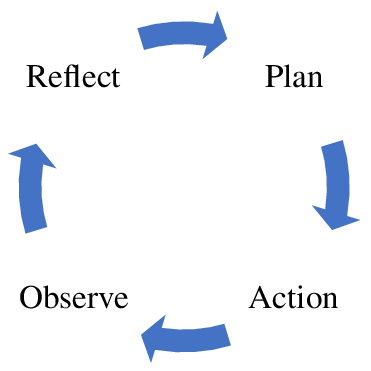
In this context, PAR can be a powerful paradigm for achieving the defined theoretical goal of applied ethnomusicology (Frishkopf Reference Frishkopf2017). The fundamental objective of the PAR model (Figure 1) is collaborative commitment, symmetrical relationships (researcher-participants), joint decision-making, collective action, and positive social change. PAR offers an egalitarian notion in research, and the fundamental groundwork to achieve this result is a transformation of the relationship from subject/object to subject/subject (Fals-Borda Reference Fals-Borda, Fals-Borda and Rahman1991; McTaggart Reference McTaggart and McTaggart1997; McIntyre Reference McIntyre2008).
The Participatory Action Research (PAR) cycle.

PAR suggests the grassroots participation of the researched group at all stages of research. Michael Frishkopf writes, “[a]s is typical of PAR, each project phase entails a cycle of planning, acting, observing, and reflecting, involving the network as a whole” (Reference Frishkopf2017:44). When an entire project is controlled by the researcher, the researched group does not have any role, access, or authority in decision-making during the planning, project design, implementation, or evaluation of the research. PAR breaks this monopoly, creates respect, and democratizes the involvement and participation of researched groups, contributing towards the production of scientific knowledge collectively (Fals-Borda Reference Fals-Borda, Fals-Borda and Rahman1991). According to PAR advocate Muhammad Anisur Rahman, “[a]n immediate objective of PAR is to return to the people the legitimacy of the knowledge they are capable of producing through their own verification system, as fully scientific” (Reference Rahman, Fals-Borda and Rahman1991:15).
Collaboration is not a new concept in applied ethnomusicology. Applied work often engages ethnomusicologists, non-profit organizations, universities, stakeholders, and the like. Inclusion of the PAR-guided participatory aspect in ethnomusicological research––intensely participatory research that involves the researched groups at all stages (planning, designing, and implementing) of research with shared roles and equal authority to make a decision––can be instrumental in contributing valuable knowledge to the field.
In a recent publication, drawing on the framework of PAR and applied ethnomusicology, I proposed a concept of “participatory ethnomusicology” as a possible approach and argued that it can help to fill this theoretical and methodological gap and achieve desired goals in ethnomusicology (Giri Reference Giri and Grant2022a). In the following section, I present a case study of the PAR-guided collaborative and participatory DCA project carried out with the Nepalese immigrant community of Edmonton.
A Digital Community Archive (DCA) Project with Nepalese Canadians in EdmontonFootnote 1
Better living conditions, more affordable medical care, a safer environment, and a strong education system have made Canada a favourable destination for skilled Nepalese immigrants (Giri Reference Giri2021, Reference Giri and Grant2022a, Reference Giri2022b, Reference Giri2023). When Canada eliminated racial criteria in 1962 and shifted to a language, education, and occupation-based “point system” (Wayland Reference Wayland1997), Nepalese immigrants started to come to Canada. According to the 2021 Census “Ethnocultural and Religious Diversity” data, there was a total of 21,975 Nepalese immigrants in Canada. The data shows 45 Nepalese immigrants in Canada before 1981. Nepalese immigration remained relatively static until 2005, however, when it appears that many Nepalese immigrants started to come to Canada. Most Nepalese immigrants (11,585) live in Ontario, whereas Alberta (5,140) and British Columbia (2,305) have the second and third largest population sizes across Canada (Statistics Canada 2022).
Most Nepalese migrants in Edmonton came from different parts of Nepal from the 1980s and the present day.Footnote 2 The ethnic or cultural origin data from the 2021 Canadian Census reports a total number of 1,860 Nepalese immigrants currently residing in the city.Footnote 3 Nepalese immigrants in Edmonton primarily reside in Southeast neighbourhoods––Mill Woods, The Meadows, Ellerslie, and Summerside; Southwest neighbourhoods––Heritage Valley, Kaskitayo, Riverbend, and Terwillegar Heights; Northwest neighbourhoods––Carlton, Cumberland, Hudson; Northeast neighbourhoods––Castle Downs; and Downtown neighbourhoods. The vast majority of Nepalese in Edmonton are from Indo-Aryan ancestry, particularly Brahman and Chhetri ethnic and caste groups. After Brahman and Chhetri, the Newar ethnic and caste group––Tibeto-Burmese ancestry––from Kathmandu valley and across the Hill region comprises the second largest major population. There are also a few families of Mongolian descent and indigenous people (e.g., Gurung, Magar, Rai, Limbu, and Tamang). Most of these Nepalese immigrants practice Hinduism and some ethnic groups such as Newar and Gurung practice both Hinduism and Buddhism (Giri Reference Giri2021, Reference Giri2023, Reference Giri2025).
I position myself in this research project as a graduate researcher, a coparticipant, and a resource person. I came to Canada for my graduate studies at the University of Alberta in August 2016. This community collaborative research project unfolded as a result of the good rapport established with the community during the first 3 years of my graduate programme. In those years, I actively engaged in various roles such as community artist, cultural coordinator, and Nepalese language school music teacher. All these instances, roles, and responsibilities, aided me in integrating with the community, gaining their trust, and establishing a faithful relationship to work with the community on a collaborative research project. One aspect that positively helped in this process was my cultural insider role. I was born in Nepal, I am fluent in the Nepalese language, and I share the same culture with the Nepalese group residing in Edmonton. Before coming to Canada, I lived 30 years of my life in Nepal. Hemetek considers that both “insiders’ and outsiders’ views [are] necessary for the research results as well as for their application” (Reference Hemetek, Klisala, Elizabeth and Svanibor2010:196). Mclntyre (Reference McIntyre2008) and Fals-Borda (Reference Fals-Borda, Fals-Borda and Rahman1991) also highlight how local knowledge contributes as one of the key aspects of success in a research project. Referring to these scholars, my linguistic, cultural, and musical understanding made positive contributions to building a relationship with the community as well as to the entire research project.
As a coparticipant, I actively participated in the research like every other participant. Pettan terms such a position “direct mediation”––the “scholar himself or herself actively participates in the application of scholarly knowledge, understanding, and skills” (Reference Pettan, Svanibor and Titon2015:34). Mclntyre argues that in Participatory Action Research, “the participants are the key decision makers, the ones responsible for how, when, and why a research project proceeds” (2014:26). Certainly, I participated in every decision-making process as a coparticipant as the research project evolved, but my role was not to act as a leader of the project––to make them or force them do activities related to the research project––nor to be the sole authority to determine the actions in relation to the project. Multiple times at different stages of the research, I had to remind the collaborators that I was not the sole decision maker or authority to drive the research in a particular direction. As a graduate student, I brought a particular set of ethnomusicological knowledge, skills, and resources to the project that contributed to the overall success of the research.
Through my active socio-cultural involvement and engagement with the Nepalese community of Edmonton between 2016 and 2019, I gained a better understanding of the community and the people. My 3 years of connection contributed to building trusting relationships and friendships. While working with the community, I had an opportunity to both observe and listen to various concerns vis-à-vis lack of public recognition, homogenization under neighbouring South Asian communities based on culture and language, declining musical and cultural practices, issues of racial challenges, race or colour based stereotypes, and institutional barriers that are commonly faced by other visible minority immigrants in Canada (see Naidoo Reference Naidoo1992 Huffey and Lai Reference Huffey and Daniel1992; Barsan and Zong Reference Basran and Zong1998; Giri Reference Giri and Diotimain press). The community members opened up and expressed concerns about strengthening their cultural identity and minimizing the future risk of its endangerment. Further, they demonstrated an interest in developing a long-term initiative to support their musical and cultural heritage.
In 2019, I was in the third year of my studies in ethnomusicology and was developing initial ideas for my doctoral research project. I consulted with some of the community representatives, cultural leaders, local musicians, and songwriters. They included Ai Gurung and Ram Krishna Sharma, former Presidents (2013–2014 and 2017–2018) of the Nepalese Canadian Society of Edmonton (NECASE), Krishna Adhikari (a member of the music group Nepali Bhajan-Kirtan Samuha [NBKS]), Parmeshwor Baral and Krishna Neupane (members of the Nepalese family cultural group, Barha Ghare Family Cultural Group [BGFCG]), Nawaraj Subedi (former President [2019–2022] of the Nepal Heritage Society [NHS]), Bishnu Gnawali and Prem Shrestha (local musicians), and Yam Ghimire and Sharmila Pokharel (community songwriters). They invited me to collaborate with them in designing a project aimed at exploring and improving community issues pertaining to the community’s cultural continuity, sustainability, and well-being.
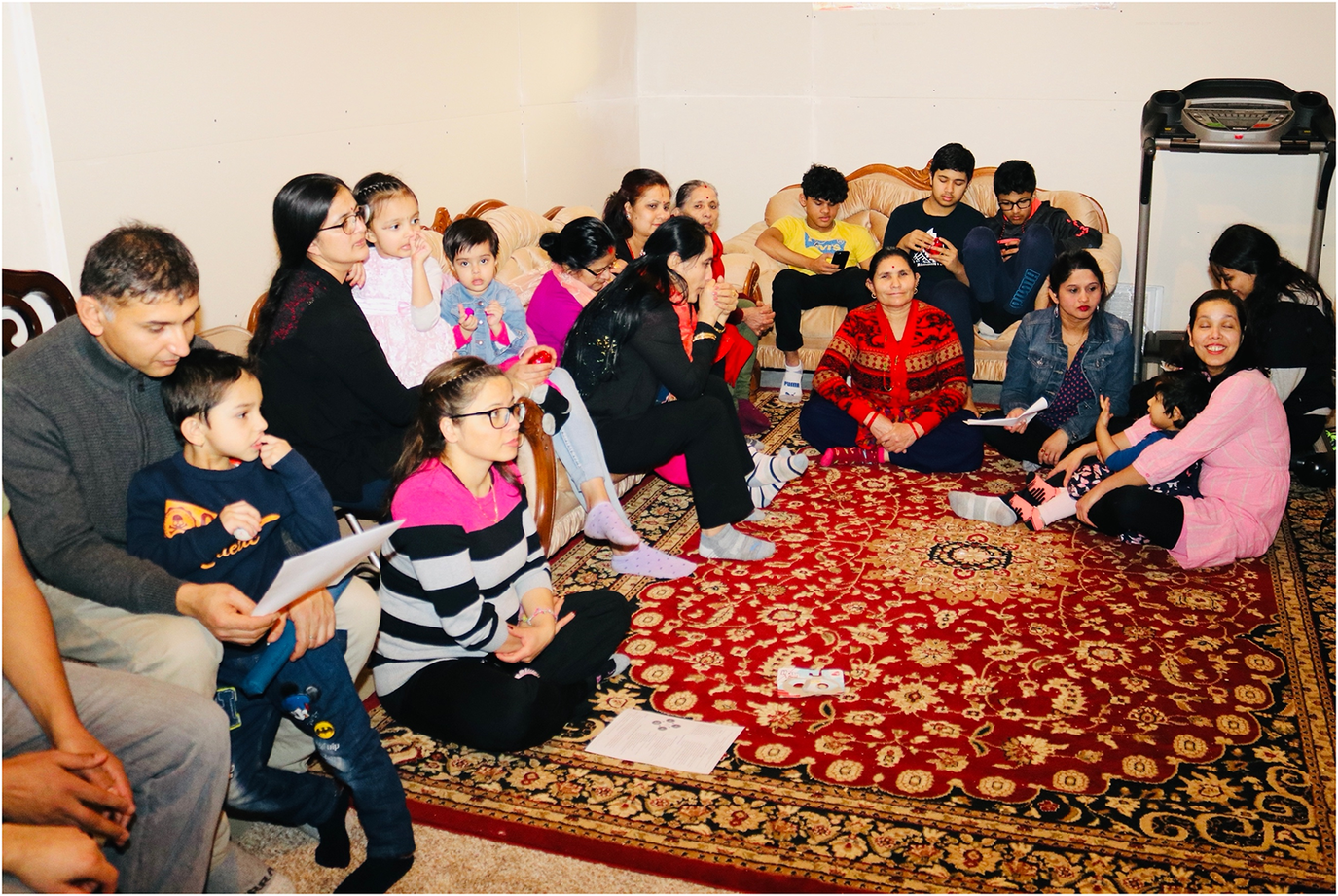
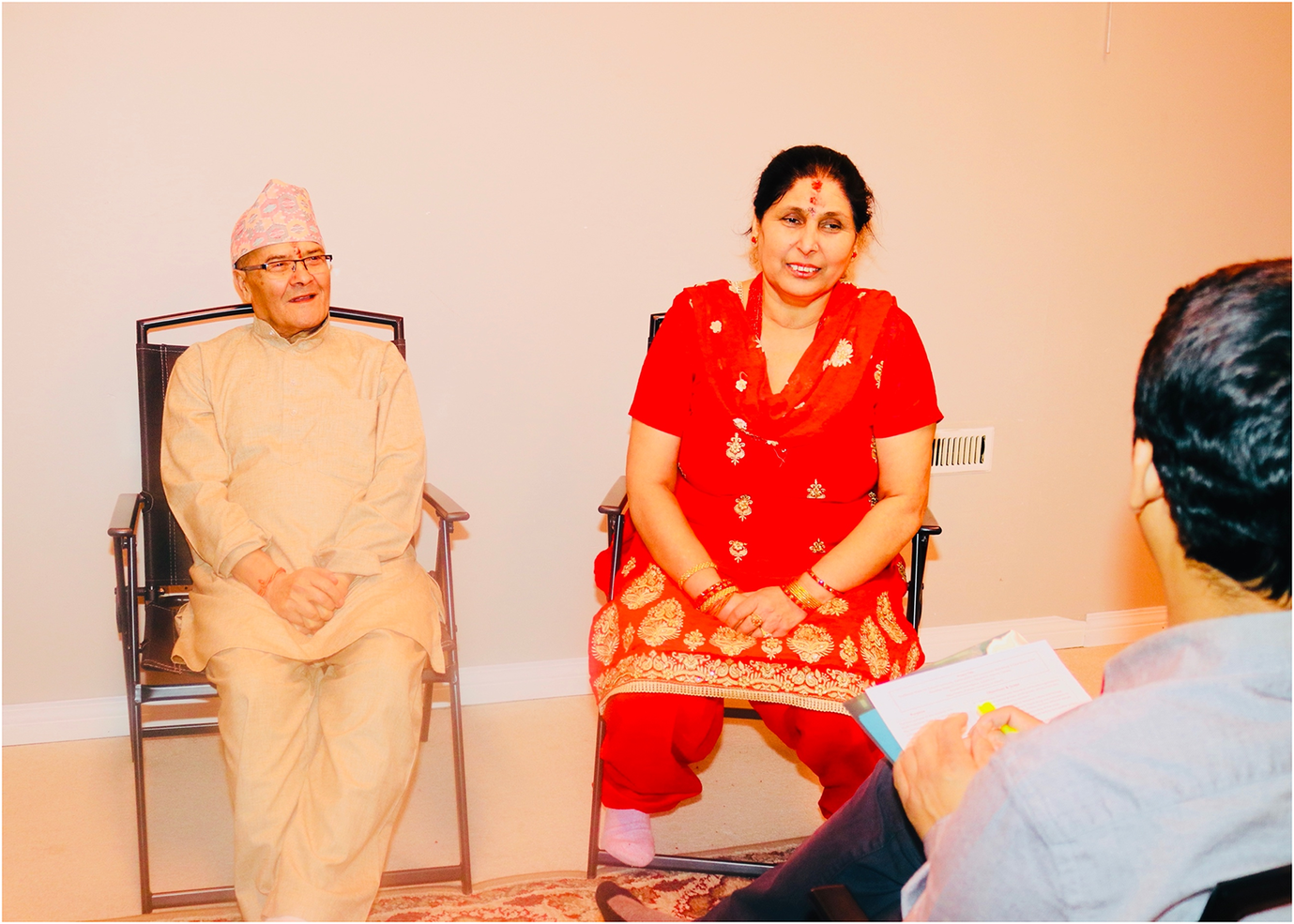
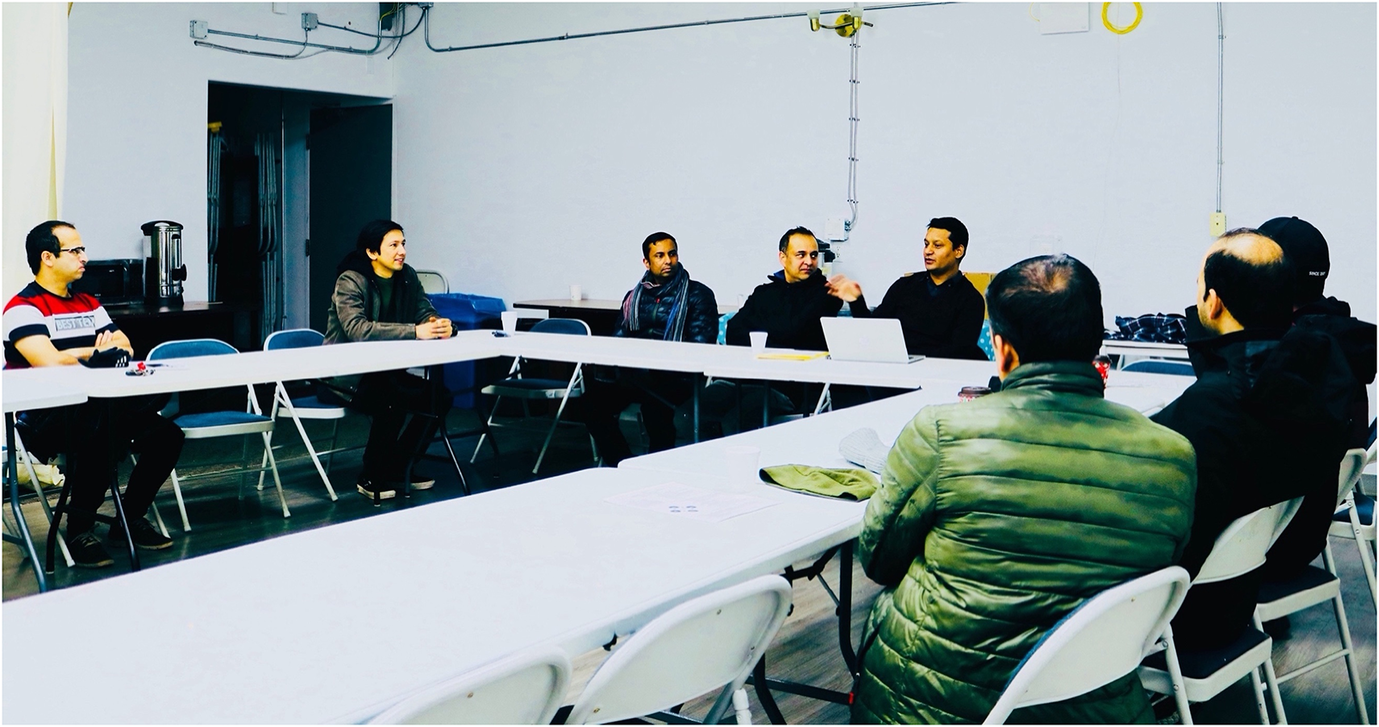
A door was opened for collaboration. The first formal step of the research commenced when we collaboratively carried out a Community Needs and Resource Assessment (CNRA) between 01 November 2019 and 11 February 2020. This process was conducted as a method of semi-structured interviews, group discussions, and collective reflections on the outcomes of these interviews and discussions. I developed the semi-structured interview questionnaire guide based on the earlier consultation with the community representatives, cultural leaders, local musicians, and songwriters. The interview participants, cultural groups, and community organizations for the interview and discussion were identified through community referrals. I sent an invitation to key community members, including traditional knowledge holders, cultural leaders, local artists, musicians, songwriters, and youth, to participate in an interview. Similarly, I sent an invitation via email to all Edmonton-based Nepalese community organizations and cultural groups, including their representatives, to welcome them to participate in a group discussion: NECASE, We and the World Center, Newa Cultural Society of Alberta (NCSA), Nepali Literary Club of Alberta (NELCA), BGFCG, NHS, Himalayan-Rocky Sports Club (HRSC), and NBKS. A total number of 40 participants, one community cultural group called BGFCG, and one community organization called NHS of the Nepalese immigrant community of Edmonton agreed to participate in the interview and group discussions (e.g., see Figures 2, 3 and 4). The key research collaborators were also identified during this stage.
Group dialogue with the cultural group, Barha Ghare Family Cultural Group (BGFCG), during our Community Needs and Resource Assessment (CNRA), 11 January 2020. Photograph by author.

Semi-structured interview during our CNRA, 11 January 2020. Photograph by Suman Poudyal.

Group discussion with the Nepal Heritage Society (NHS) in Action for Healthy Community Hall, 11 February 2020. Photograph by NHS member.

The CNRA unveiled multiple issues within the community, such as fear of losing identity due to overgeneralization based on culture, language, and heritage; lack of public recognition and representation in the Canadian socio-political and socio-cultural milieu; the declining practice of cultural heritage due to Canadian cultural and language influences, as well as a lack of enough resources, cultural training, and promotion; depression stemming from challenges with the recognition of professional qualifications, credentials, and experience in the Canadian labour market; and immigrant-related stressors occurring from financial concerns, isolation barriers, and the adaptation to a new culture and language.
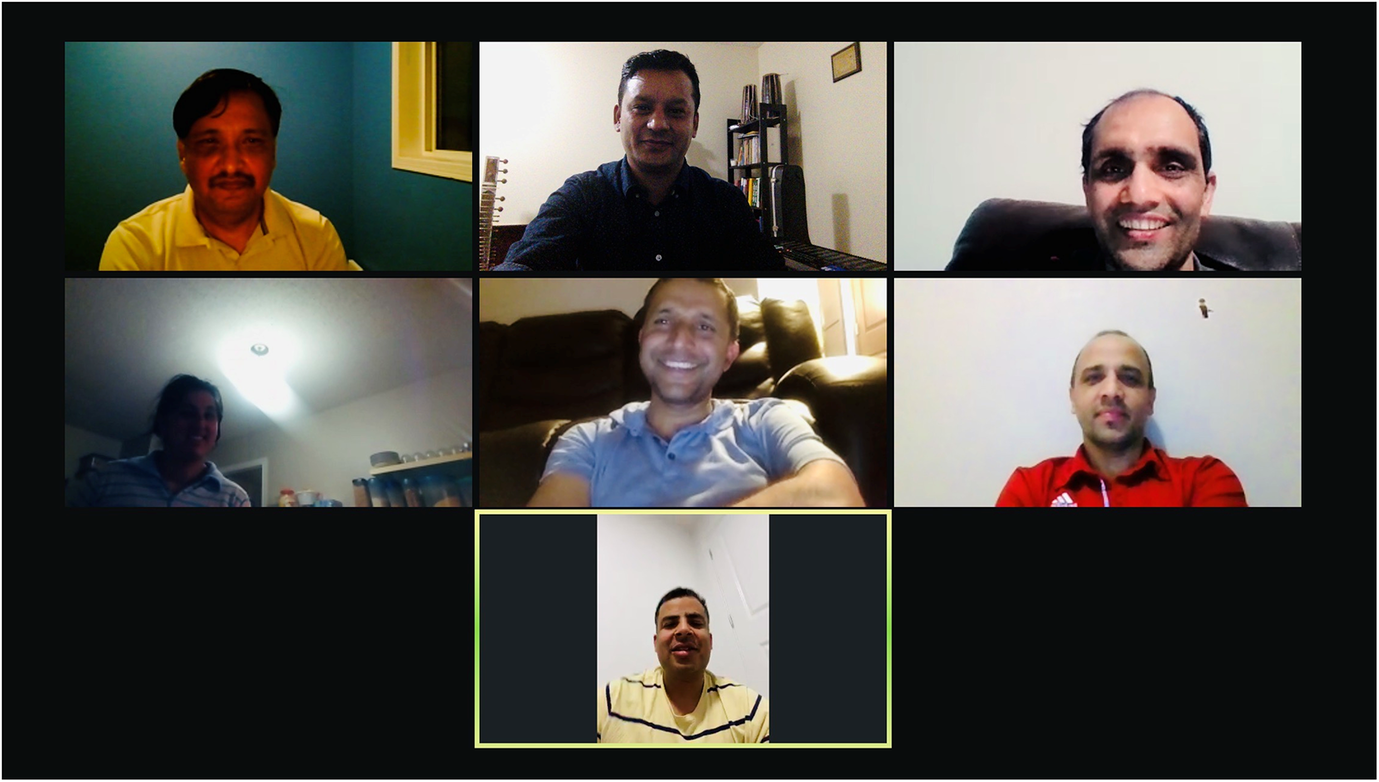
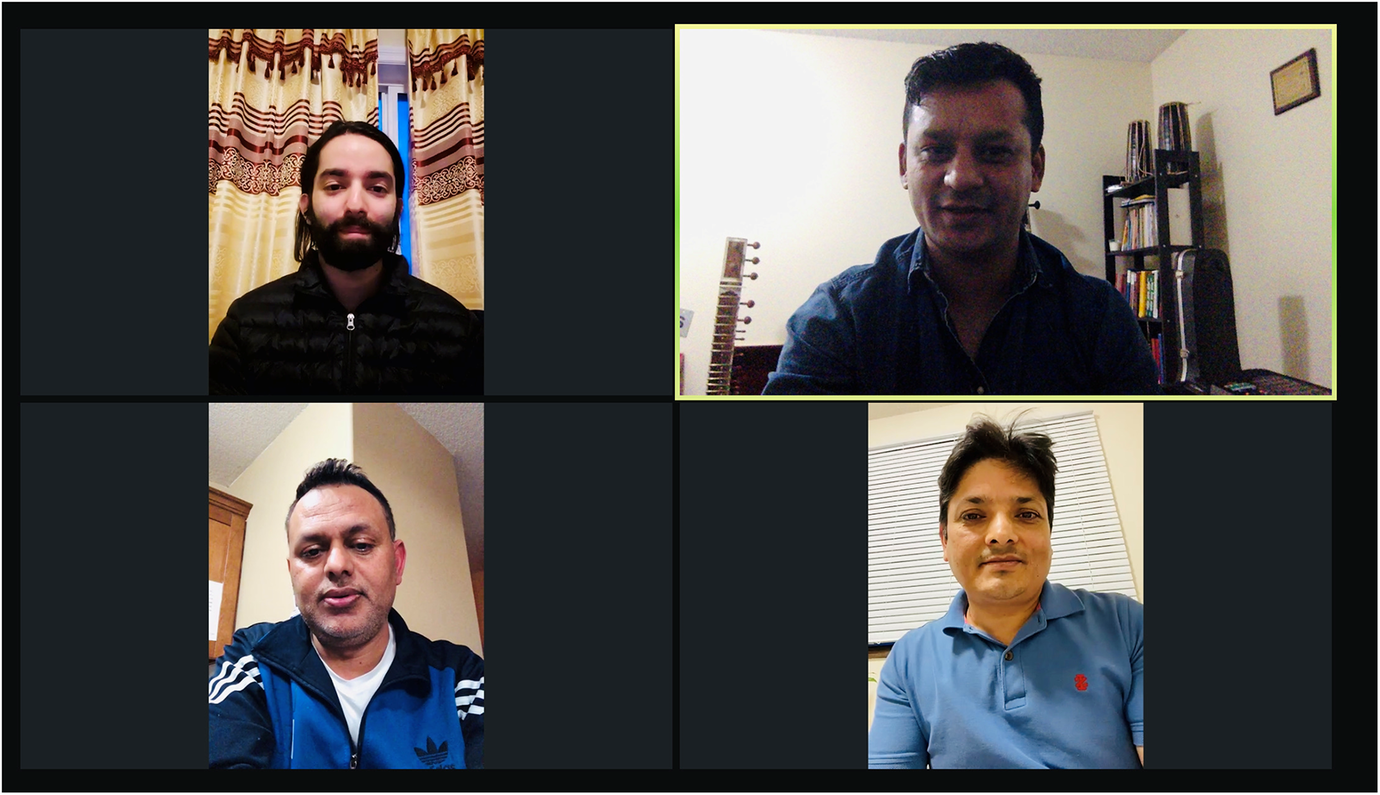
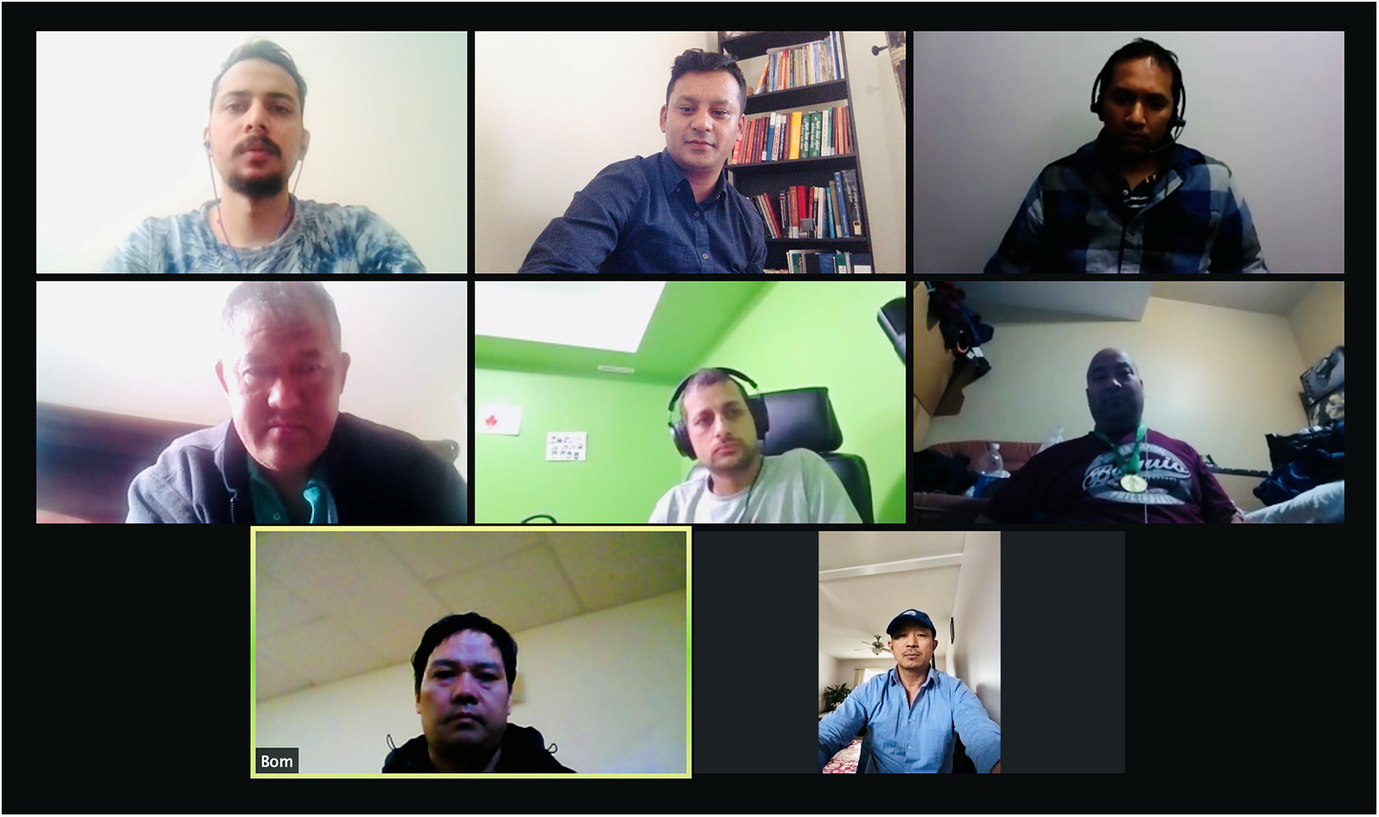
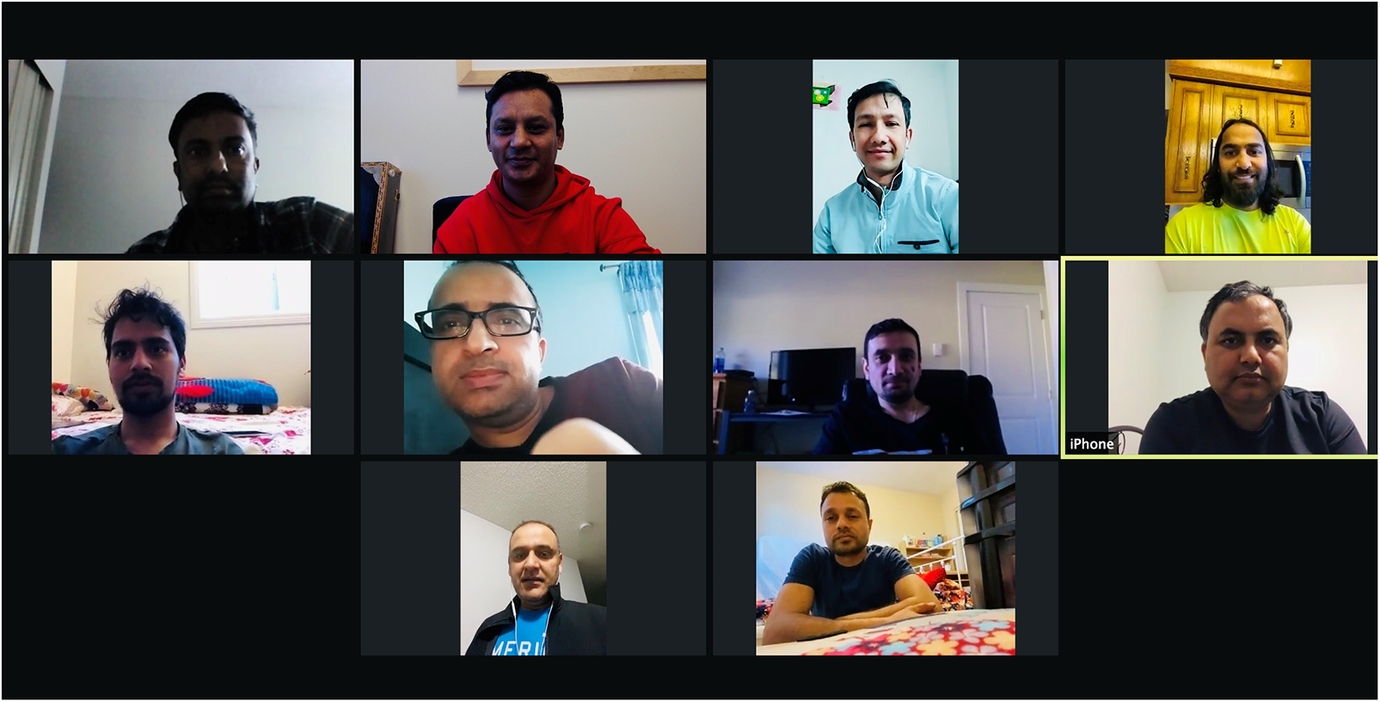
As soon as the CNRA was completed, the outbreak of the global COVID-19 pandemic reached Canada. The community underwent a complete disconnection for a year. The fear, isolation, uncertainty, and government-implemented series of social distancing measures massively impacted the community. Although the restriction on in-person gatherings was still in effect and the threat of the COVID-19 pandemic was present, the community gradually restored its connection virtually through Zoom meetings, emails, and phone calls in March 2021. I facilitated multiple dialogues and consultations with the community. NHS, BGFCG, NBKS, community song writers, and community musicians participated in those group discussions (see Figures 5, 6, 7 and 8).
Project formulation discussion with members of BGFCG on Zoom, 20 March 2021. Screenshot by author.

Project formulation discussion with members of the traditional musical group NBKS on Zoom, 21 March 2021. Screenshot by author.

Project formulation discussion with community musicians on Zoom, 7 March 2021. Screenshot by author.

Project formulation discussion with board members of the NHS on Zoom, 14 March 2021. Screenshot by author.

In these series of dialogues and discussions, participants reviewed the issues that emerged from the CNRA. Based on these issues and our analysis of available resources, the groups formulated three intervention projects with the specific goals of addressing the immediate needs of the community: (1) the Traditional Music Teaching (TMT) project, (2) the Heritage Music Ensemble (HME) project, and (3) the Digital Community Archive (DCA) project.
The DCA project entailed the creation and development of a community-based virtual ethnographic archive that houses social, cultural, historical, artistic, and teaching and learning resources, including audio, video, and image materials of music, musical instruments, history, arts, culture, community rituals, traditional practices, interviews, memoirs, articles, creative writings, and teacher-training curricula. After formulating a plan for the DCA, we shared our roles and collectively outlined a few goals: collect historical materials (images, memoirs, interviews, documents) from the community (specifically, community elders); invite community members to contribute music, culture, and heritage related materials; invite younger generations to create new materials (audio, video, written) such as songs, poems, stories, drawings, and descriptions based on various cultural themes; invite community musicians to record short videos of instrumentation demonstrations and their descriptions; and invite community music, language, and art experts to develop various teaching and learning materials. We also agreed on the collaborative ownership of the archive, including its management with the support of community IT experts.
To achieve these goals, we reached out to the elders to document the history of the community through interviews. The elders were also asked to share images, videos, stories, performances, journals, souvenirs, and anything else they have which would help to explain the history of the Nepalese immigrant community. Further, they were asked to write short articles about the social and cultural practices of the community since their arrival based on their memories. Similarly, we connected with other knowledge and culture bearers of music, arts and cultural heritage in the community to document the musical instruments, musical sounds, and list of festivals and rituals specifically practised in the Edmonton community. We also invited community members, specifically youths and children, to submit their artistic or creative materials based on Nepalese art, music, and culture.
We collected over 500 archival materials, including sound recordings, video recordings, cultural images, musical instruments, memories, interviews, historical documents, and artistic, creative, and teacher-training materials. We are still collecting archival materials, sorting out the contributions, and organizing, documenting, and cataloguing them. Recently, we have started working on creating a website (nepaleseheritage.ca) to store, manage, and make the archival materials available virtually to the public.
Community member and IT specialist Krish Thapa is assisting in designing the web portal, uploading the archival materials, and overseeing the technical part of the website. Shiva Adhikari, a representative from the NHS, is gathering the Nepalese history and traditional heritage-related archival materials. Krishna Adhikari, a representative from the NBKS, is documenting the musical heritage of the community. And Sharmila Pokharel, a representative from the community songwriters, is collecting memoirs and artistic, creative, teaching, and learning materials. Other members of the collaborating group are supporting the project from within their capacity.
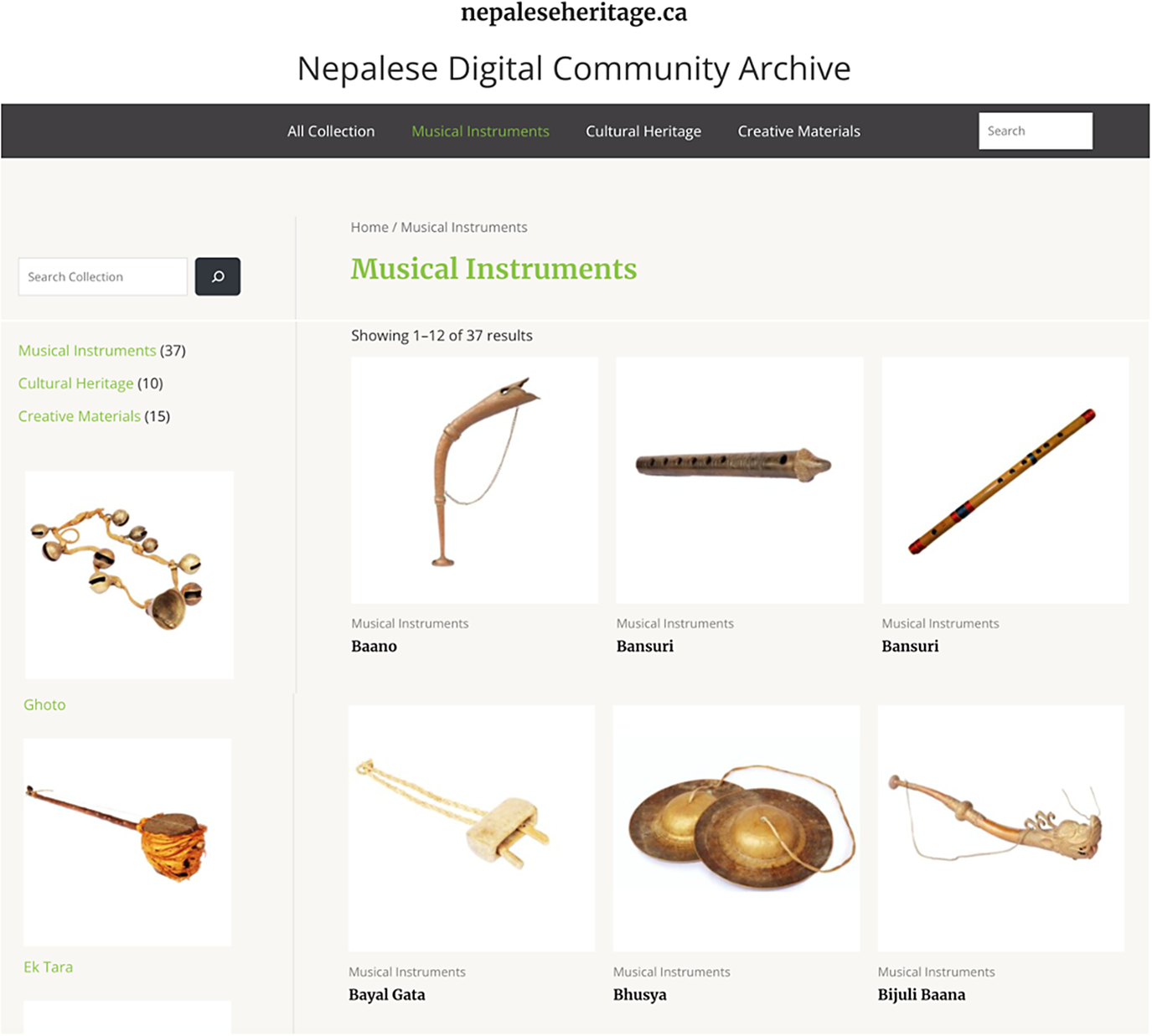
Alongside the collection and documentation, the goal of the website is to develop it into a central hub for community members, community organizations, researchers, musicians, students, younger generations, and members of the public interested in learning about Nepalese history, culture, music, and art. The website contains specific pages on each of the categories––Musical Instruments, Cultural Heritage, Creative Materials, Audio-Video Materials, Educational Resources, and Useful Links (see Figure 9).
Screenshot of the musical instrument page from the website, nepaleseheritage.ca, taken on 21 December 2022.

The “Musical Instruments” page of the website consists of all the materials on Nepalese traditional musical instruments contributed by the community. The “Cultural Heritage” page comprises historical images and images of rituals, festival celebrations, and lifecycle rites. The “Creative Materials” page consists of creative artistic materials such as drawings, paintings, essays, and poems created by younger generations of the Nepalese community of Edmonton. Each of the images on the website provides specific information regarding the contributor, image type/format, image dimensions, image received date, image taken date, and such. The “Audio-Visual Materials” page documents all the audio-video materials related to all categories, including musical sounds, interviews, community performances, heritage celebrations, and traditional cultural pedagogies. The “Useful Links” page offers links to community and cultural heritage organizations across Edmonton, Alberta, and Canada. The creation of this virtual archive is still in progress and the community collaborators are enhancing the metadata of these archival materials through multiple group reflections.
We conducted several individual and collective reflections at different points in time during the implementation of the DCA project. Based on those reflections, we pointed out various challenges. Some key immediate challenges are: (1) the community requires additional training for digitising the materials and creating, arranging, and organising a database of the materials, (2) the community requires financial resources to maintain the online archive, (3) the process of collecting archival materials, specifically the historical materials, is time-consuming, and it is difficult to obtain consent of those who have left the Edmonton community and moved elsewhere within or outside of Canada, and (4) the community collaborators have various personal, family, and professional commitments and the work progress (designing the website, uploading archival materials, and finding details of each of the collected materials) is very slow. Aside from these underlying challenges, the project turned out to be effective in making several positive impacts on the community.
CCPA: A New Model for Archival Practice
Returning to the foremost inquiry into the gaps between an ethnomusicology archive and community culture bearers, and specifically to the issues of power, access, and ownership, a CCPA can be a viable tool. The key idea of this applied ethnomusicology and PAR driven project is to engage the community groups in creating their archive using local knowledge, resources, active participation, and direct control.
The first issue I have highlighted relates to power differences in ethnomusicological archival practices that have deprived people and communities of their self-representation as well as agency in the knowledge production process. Symmetrical power relationships in research suggest grassroots participation, shared authority, active involvement, and equal decision-making roles in all phases of research––from identifying the problem or need to formulate the project, implementing the project, and evaluating the results. Tan remarks:
For any cultural development project to be sustainable, communities must be empowered and gain confidence to take action in order to make changes in their lives. There is also a need to democratize research and promote collaboration between the researcher and the community so that the latter is engaged and feels a sense of ownership in the entire process of change. (Reference Tan, Pettan and Titon2015:111)
As Tan argues, the approach of using active involvement and equal decision-making roles in all phases of research helps the community groups to identify their own needs, become confident, and overcome feelings of powerlessness.
Rice suggests that this equal partnership is essential in ethnomusicological research today: “[s]tudying music in conditions of gross social and economic inequality can drive ethnomusicologists to rethink their methods and move them away from vertical knowledge structures to horizontal ones in which knowledge is created in equal partnership with communities” (Reference Rice2014:204). In the same vein, Araújo argues that the “old roles played out through research (insider/outsider; engaged native/neutral foreign observer) [should] be thought over carefully and replaced by new [roles]” (Reference Araújo2008:13).
The CCPA approach can fill this gap of power differences in ethnomusicological archival practice. The crucial part of this approach is democratization in the archival creation and development process. To illustrate, in the case of the DCA project, the Nepalese immigrant community actively engaged in and shared their opinion during all stages of the archival creation process. They collectively participated in the DCA project activities, from collecting and documenting historical materials to contributing musical and other cultural materials and creating artistic or creative materials, to achieve a common goal of archival creation. They took the power to decide on what intervention to formulate and how to implement it based on their needs and available resources. This equality in power relations encourages belongingness, and this belongingness can give participants “responsible agency in the production of knowledge and improvement of practice” (McTaggart Reference McTaggart and McTaggart1997:29). This grassroots participation, shared authority, and equal decision-making developed a deep sense of belongingness among the Nepalese immigrant community members, helping engender a commitment to continuing the DCA initiative with the goals of social and cultural recognition, strengthening cultural identity, and sustaining cultural heritage.
A second major gap is gaining or accessing people’s own recordings that are under the possession of institutions/curators/depositors who own the recordings. An example can be drawn from the experience of Seeger, whose contract with the collection depositor (Indiana University Archive) fell into conflict with an access and restriction agreement for the collections of the Suyá Indians of Brazil (Reference Seeger1996:92–93). As Seeger and Chaudhury remark, “[t]he price of obtaining legal copies often seems to be high and the wait for them seems to be too long” (Reference Seeger and Chaudhuri2015:24). A CCPA can play a contributing role in the accessibility of archival resources for the community in their time of need.Footnote 4 Communities and their descendants will no longer have to go through this challenge of accessing their own materials in the future if they develop and maintain their own archives. Moreover, a CCPA can serve an invaluable role in documenting culture and heritage that has the potential to transform into a historical asset in the long run.
The final gap is the issue of ownership of archival materials and their commodification without the consent of the actual culture bearers and without any share of the wealth collected from the commodification. A collectively owned CCPA can prevent such exploitation and inversely engender revenue for the community if the archive is managed competently. Aside from these positive aspects, this CCPA approach can also serve in the re-creation and revitalization of a community’s culture and heritage. A website developed by an interdisciplinary group of scholars from Cape Breton and abroad––along with Cape Breton’s Eastern and Central European Community partners (Ostashewski Reference Ostashewski2015; Ostashewski et al. Reference Ostashewski, Favaro, Rosenblum, Nalepa, Zoric and Vukobratovic2015)––demonstrates how a “digital curation project served (continues to serve) as a space for the continual collaborative re-creation of [overshadowed] communities and histories” (Ostashewski et al. Reference Ostashewski, Favaro, Rosenblum, Nalepa, Zoric and Vukobratovic2015:90). There might be plenty of communities who do not have their history documented and are facing difficulties today in reviving their traditions, teaching their heritage to newer generations, or connecting with their history. Based on the experience of working in collaborative archiving in Brazil and India, Seeger and Chaudhuri argue that “[w]orking with local communities can also increase an archive’s collection, improve documentation, and increase its usefulness for traditional bearers and their communities” (Reference Seeger and Chaudhuri2015:25). For example, when actively involved in the creation and development of a CCPA, community members can contribute a wide range of locally produced knowledge, histories, stories, experiences, and musical and cultural materials.
In the case of the Nepalese immigrant community’s DCA, the community members brought different sets of cultural, musical, literary, leadership, and management knowledge, skills, and strengths to the project. For example, the community musicians and cultural experts offered their musical and cultural knowledge to be documented for archival purposes. Community groups and organizations utilized their leadership and management skills to mobilize, connect, and collect the archival materials. Youths offered their creative skills to produce Nepalese art, music, and culture-related materials for the archive. I, as a researcher, co-participant, and resource person, helped to develop the questionnaire and provide training for interviewing community elders to document the history of the community, digitizing collected materials, and creating metadata, and I aided in facilitating meetings and dialogues among the collaborators. These activities and roles performed by the community demonstrated their appreciation and use of local knowledge. Grant suggests, “documentary activities can fortuitously work in favour of revitalisation, for example by stimulating performance practice, raising prestige, or renewing community interest. Yet by its nature, documentation yields outcomes that are fossilisations of the music or language they represent” (Reference Grant2010:51). As Grant suggests, these documentation activities of the histories, memories, cultural practices, rituals, festivals, musical instruments, and sounds are “fortuitously” assisting in a “renewal, revitalization, and recreation of traditional arts,” building cultural resilience towards sustainability.
Conclusion
In this article, I shed light on three key issues of power, access, and ownership endured in ethnomusicological archival practice. I foregrounded the possible suitability of a combination of applied ethnomusicology (using academic knowledge for societal benefits) and PAR (grassroots participation, shared roles, and joint decision-making), demonstrating a case study of the DCA project conducted with Nepalese immigrants in Edmonton, where I played a role as researcher, coparticipant, and resource person. Referring to the combined concept of applied ethnomusicology and PAR and drawing on the efficacy of the DCA project in the discussion, this article proposed the CCPA as a new practice of archiving in ethnomusicology. I argued that a CCPA model can positively assist in filling some current gaps in the ethnographic archive and contribute to documenting, re-creating, and revitalizing the music and cultural practices of a community.
The relationship between ethnomusicologists and musical communities is vital to our research. We study musical culture in communities, often live within these communities during fieldwork, write and publish about the community, talk about the community and their music in academic meetings, get tenure-track positions based on research on the community, and call ourselves institutionalized experts of those music cultures. While our academic life revolves around the community, and they and their music cultures are at the core of our research, our disciplinary tenets of objectivity, neutrality, and pure research swiftly make them peripheral to our research and knowledge production processes. Two decades ago, Alviso posed a question: “would it not be ideal for research to be applied for the benefit of all sides involved––especially for the benefit of our research subjects, who are often poor and oppressed?” (Reference Alviso2003:90). In relation to the ethnographic archive and asymmetrical relationships between archive, archivist, archive gatekeepers, and culture bearers discussed in this article, perhaps the relevance of this question is even greater today. In the context of issues discussed in this article, more engagement with members of relevant communities in the archiving process and working towards an equitable, fairer, enduring outcome—Landau and Fargion describe this as “proactive archiving” (Reference Landau and Fargion2012:136)—is much needed.
Acknowledgements
This article is based on my doctoral research. The research was supported by a Society for Ethnomusicology “21st Century Fellowship Award 2021,” a Society for Asian Music “Graduate Student Small Grant Award 2021,” and the University of Alberta International “Edmonton Consular Corps Award 2021.” I am grateful to Lonán Ó Briain, General Editor of Traditions of Music and Dance, for his invaluable suggestions and comments, which gave me much more clarity and direction for this article. I appreciate the anonymous reviewers whose feedback assisted me in writing this article. My sincere thanks to all the community collaborators (Nepal Heritage Society, Barha Ghare Family Cultural Group, Nepali Bhajan-Kirtan Samuha, community songwriters, and community musicians) and participants (children, youths, and their parents) of the Nepalese minority immigrant community of Edmonton, Alberta, Canada.