Introduction
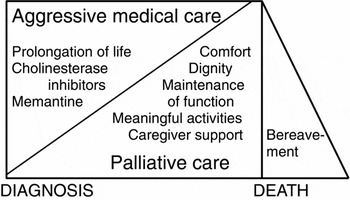
Recent failure of several drugs developed to decrease beta-amyloid levels, dashed hopes for availability of a disease modifying agent any time soon. Therefore, clinicians will be faced with AD patients, who will require a special approach to care both from psychosocial and medical aspects in all stages of their dementia for the indefinite future. In an absence of curative strategies, palliative care that is attempting to improve symptoms of AD and treat intercurrent medical conditions is appropriate. However, aggressive care and palliative care are not mutually exclusive and both can be provided at the same time. Aggressive care may be more important in the earlier stages of the AD, while palliative care may predominate in later stages (Figure 1).
Types of care in dementia.

According to WHO, “palliative care is an approach that improves the quality of life of patients and their families facing the problem associated with life-threatening illness, through the prevention and relief of suffering by means of early identification and impeccable assessment and treatment of pain and other problems, physical, psychosocial and spiritual” (2013). Attached to this definition are several bullets expanding on different aspects of palliative care. Although they are skewed towards patients with cancer, the bullets can be modified to provide framework for description of palliative care in patients with AD and other progressive degenerative dementias. This paper will explore four aspects of palliative care for individuals with dementia: application in an early stage, improvement of quality of life, dying as a normal process, and caregiver support.
1. Palliative care is applicable early in the course of illness, in conjunction with other therapies provides relief from pain and other distressing symptoms.
Palliative care principles apply from the time of diagnosis of AD or other progressive degenerative dementias. It is important to notify the individual who received diagnosis about the nature of the diagnosis and the consequences for individual's future life. Diagnosis allows for early initiation of treatment with cholinesterase inhibitors that may delay progression of the disease. People with this diagnosis can also make end-of-life decisions when they can still understand what they are, and can evaluate the benefits and burdens of aggressive medical treatments when their dementia progresses to an advanced stage. The person with early memory loss may also develop strategies for dealing with cognitive impairment, e.g. notes to themselves, written directions for using utensils, etc.
Advance directives
The person diagnosed with an irreversible dementia should be notified about likelihood of being unable to make decisions about themselves in the future. Therefore, they should be encouraged to plan ahead regarding their financial matters, preferred place of residence and acceptance of aggressive medical interventions when their dementia becomes severe. It is important to elicit preferences of people with dementia because their wishes and the preferences of family caregivers may differ (Dening et al., Reference Dening, Jones and Sampson2013). In addition to advance directives, people who were diagnosed with dementia need to name a person to make medical decisions when the person with dementia can no longer make them. Advanced directives must be put in writing according to state laws and should represent ongoing dialogue between person with dementia and his/her family caregiver or person designated to make healthcare decisions. This process would increase agreement between persons with dementia and their caregivers and avoid situations where a caregiver wants to override advance directives made by the patient in the past.
Pain
Although pain is not a usual consequence of dementia, people with dementia should be carefully monitored for presence of pain. Pain could be present because of other chronic and intercurrent conditions, most commonly osteoarthritis and diabetic neuropathy. Because of memory deficits people with dementia are less likely to report pain, and when they develop aphasia they may not be able to report it verbally in ways that are easily understood. Crying out or rejecting care may be their way of communicating pain or discomfort. Therefore, it is important to monitor non-verbal cues that would indicate presence of pain. Several scales were developed for measuring presence and severity of pain in non-communicative individuals (Volicer, Reference Volicer2009). However, some symptoms included in the scales may not indicate pain, and pain could be manifested by behaviors that are not included in the scales. Using the scale that has happy and sad faces do not usually provide a true indication of pain as the person with dementia may point to the happy face even though they are in pain as that is how they want to feel.
Although some studies suggested that pain perception is decreased in dementia, objective measurement of pain sensitivity indicates that people with dementia perceive pain at least as well as cognitively intact individuals. Measurement of pain sensitivity by functional MRI in 14 patients with AD and 15 age-matched controls showed that moderate pain was evoked with similar stimuli in both groups and was associated with a common network of pain-related activity involving cingulate, insula, and somatosensory cortices (Cole et al., Reference Cole2006). Compared with controls, people with AD showed greater amplitude and duration of pain-related activity in sensory, affective, and cognitive processing regions consistent with sustained attention to noxious stimulus. Similarly, facial response to noxious stimulation was significantly increased in people with dementia compared to controls while autonomic response tended to be diminished. An increased sensitivity to pain may be related to decreased levels of beta-endorphin in cerebrospinal fluid of patients with AD that is related to the severity of dementia and has been reported by several studies. Since Alzheimer patients rarely, if ever, progress to a persistent vegetative state, and pain seems to be perceived even in patients in a minimally conscious state, pain detection and treatment is important even for patients in very advanced dementia.
Many people with dementia living in nursing homes experience pain and some of them are untreated of undertreated. It was reported that 54% of nursing home residents have at least one indication for analgesic therapy but 69% of them do not receive any non-pharmacological therapy and 63% of analgesics are prescribed only as needed instead of as a regular dose that would prevent pain (Cramer et al., Reference Cramer, Galer, Mendelson and Thompson2000).
There are several consequences of untreated pain in people with dementia including impairment of activities of daily living (ADL), mood, and involvement in activities. Pain is also associated with several behavioral symptoms occurring in people with dementia: socially inappropriate behavior, resistance to care, abnormal thought process, and delusions. Administration of acetaminophen (3,000 mg/day) to residents in nursing facilities made them spend more time in social interaction, engage with media, talk to themselves, engage in work-like activity, and experience less unattended distress than when they received placebo (Chibnall et al., Reference Chibnall, Tait, Harman and Luebbert2005). In another study, participants in the intervention group received individual daily treatment of pain for eight weeks according to the stepwise protocol, with acetaminophen, morphine, buprenorphine transdermal patch, or pregabalin. The control group received usual treatment and care. There was a significant gradual decrease of behavioral symptoms in the intervention group during the study, with some rebound increase of symptoms after the study ended (Husebo et al., Reference Husebo, Ballard, Sandvik, Nilsen and Aarsland2011).
Behavioral symptoms of dementia
People with dementia may suffer from variety of behavioral symptoms but some of them may not be directly related to the dementia itself. The causes of behavioral symptoms include environmental factors, physical factors, cognitive impairment, and psychiatric conditions. Environmental factors include inappropriate temperature, noise, and access barriers that the individuals may try to overcome. Overhead paging is very confusing to someone with dementia. Bathrooms need to be clearly marked with a picture of a toilet not “rest room” sign. White toilets need to have a contrasting color behind the toilet so the person can find it. Nursing facilities must try to make the space match the purpose of the room. Dining rooms that are not too large and look like a dining room, bathing and shower rooms that are not frightening, especially when the bathtub has a lift. Simple decorations like bathroom wall covering, pictures of old fashioned bath tubs and pretty towels are reminders of the function of the room.
Physical factors include pain, as described in the previous section, hunger, thirst, or presence of intercurrent diseases, e.g. urinary tract infection. Cognitive impairment causes inability to initiate meaningful activities resulting in boredom, low self-esteem, and lack of understanding of verbal communication that may result in conflict with caregivers or other residents. Psychiatric conditions include depression, anxiety, and psychotic symptoms: delusions and hallucinations. Before any symptom can be considered to be caused by dementia itself, all environmental factors and physical factors should be evaluated and excluded.
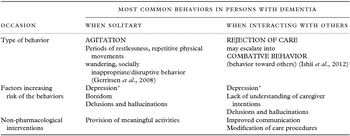
It is important to distinguish behavioral symptoms of dementia that occur when the person is solitary and symptoms that occur when the individual interact with others (Table 1). Unfortunately, often all behavioral symptoms are called agitation not taking into account this distinction. It is better to reserve the term “agitation” for symptoms that occur when the person is solitary, which communicate to others that is the person is experiencing unpleasant state of excitement, and which remain after interventions to reduce internal or external stimuli have been carried out, e.g. restlessness and crying out. The most common behavior that occurs when the person is interacting with others is rejection of care (Ishii et al., Reference Ishii, Streim and Saliba2012). The persons with dementia may reject caregiver's attempts to provide care because they do not understand caregivers’ intentions and the need for care. If the caregiver persists in trying to provide care, the patients may defend themselves from this unwanted attention, become combative and may strike the caregiver. They may be considered aggressive, but such a label is blaming the victim because the patients consider the caregiver to be an aggressor.
Types of most common behavioral symptoms in dementia

*Depressive symptoms may include negative statements, anger, expression of what appear to be unrealistic fears, repetitive health complaints, repetitive anxious complaints or concerns, sadness, and crying (Burrows et al., Reference Burrows, Morris, Simon, Hirdes and Phillips2000).
Agitation and rejection of care differ in their relationship to severity of dementia. While agitation may occur even in early stages of dementia, prevalence of rejection of care increases with dementia severity. This increase is correlated with decrease of the persons’ ability to understand, which makes communication between them and the caregivers increasingly difficult. However, there is some similarity between causes of these symptoms because both of them are related to depression. Thus, presence of even minor depressive condition should be considered and treated when people with dementia exhibits these symptoms. However, the distinction between agitation and rejection of care is very important because beyond addressing depression each of these conditions require different treatment. Agitation is best treated by providing meaningful activities as will be described in the next section. Rejection of care is best treated by improving communication between the caregiver and the patient, by distraction or by changing care strategy (e.g. substituting bed bath for shower bath).
2. Palliative care offers a support system to help patients live as actively as possible until death; will enhance quality of life, and may also positively influence the course of illness; integrates the psychological and spiritual aspects of patient care.
Palliative care is not about dying, it is about quality of life throughout the trajectory of an illness that is more than keeping a person clean, fed, and dressed. Helping people with dementia to LIVE, not just to exist, is particularly challenging for family caregivers and professional care partners who are responsible for meeting their physical and psychosocial needs. This is because the disease process lasts for many years causing a gradual decline of a person's physical and cognitive status. The average length of life for someone with AD is 4.2 years for men and 5.7 years for women after diagnosis (Larson et al., Reference Larson2004). A person with memory problems has probably experienced symptoms for several years before diagnosis so the life expectancy is realistically 6–10 years.
One aspect of quality of life for most people is their ability to engage in activities that interest them and to be among others, not isolated in their rooms or placed in front of the nurses’ station where they become “invisible.” The challenge for activity professionals is to develop programs that are “no fail” for the person with memory loss, that will stimulate their minds as well as their bodies and be meaningful throughout the disease process. Even in the early stage of dementia a person rarely if ever self-initiates activities and activities must be offered to them in a way that interests them, do not threaten them, and most important of all are enjoyable.
As dementia progresses, there is need for programs tailored to the severity of cognitive impairment. Ideally, there should be at least two different programs: “The Club” for people with moderate and severe dementia and Namaste Care™ for people with severe and terminal stage. It is beneficial if the two programs are available at the same site, because the residents may switch from one to the other according to how they feel that day.
The Club
This program is designed for residents with moderate memory loss. Often because of lack of judgment, there become a safety risk for them and are moved to a special care unit where they are free to walk around but cannot leave the unit unsupervised. The Club was developed because it was observed that residents rarely, if ever self-initiate meaningful activities. When they are not engaged in a group activity monitored by an activity professional they often wander which increases their risk of falling and losing weight. When not engaged, they may sleep during the day and wake up at night. Without a program to engage them in meaningful activities, residents feel lonely and show signs of depression.
The Club starts right after a resident have finished his/her breakfast. Rather than wandering away from the dining area or sleeping at the table he/she is asked to do “volunteer” work. Each resident is given items to sort, e.g. playing cards, poker chips, or old fashioned buttons that meet his/her individual interests. This activity helps increase their self-esteem as they are told how important this volunteer work is to others (Leung et al., Reference Leung, Orrell and Orgeta2014). At the end of this activity each resident is thanked for their work. All activities are individualized so they interest the resident and all are “no fail.” Occasionally a resident has never done this type of activity and does not want to participate but they may be encouraged to stay in the room where they can be observed, with perhaps cup of coffee and the daily newspaper.
As soon as the rest of residents have finished breakfast, the nursing assistants escort them to The Club room. A wipe off board is used to help people see and hear the activity. The program simply starts the day with an engaging activity that is enjoyable. The Club's programs are designed to use right brain activities that stimulate residents’ creativity and left brain activities that are more logical. Residents seem to enjoy helping the activity professional who cannot remember the day and may say “I cannot remember what today is but I do remember that yesterday was Monday.” The residents enjoy pointing out that the day is now Tuesday and of course the leader tells them she needs help spelling Tuesday. “Thank you” the leader says to her “ helpers.” Then the leader says she can remember that yesterday was the 10th so today is the? Someone will shout out that today is the 11th. They are thanked for that information and the month, day, and date are written on a wipe off board. The leader might say if today is the 11th let us see if we can name 11 vegetables, girls’ names, or words that remind them of current season. This activity stimulates conversation and engages the residents in the discussion. For instance, someone suggests the name Rose. That leads to a discussion on roses, question if anyone ever grew roses, to the little poem “Roses are Red” and the residents may create their own version of the poem. This activity is stimulating and fun. It shows that indeed “laughter is the best medicine.”
This morning discussion is followed by physical exercises and then a beverage is served. While the residents are enjoying the morning “juice bar,” conversation might include reminiscence and only good news from the local newspaper. This is followed by a program that changes every day to meet the interests of all people; one day it might be a cooking class, gardening, or a craft. About 20 minutes before lunch a discussion of food is initiated to stimulate participants’ appetites. The nursing assistants then escort people to lunch, often to the tune of a dance band, again to stimulate their appetites (Maraki et al., Reference Maraki, Tsofliou, Pitsiladis, Malkova, Mutrie and Higgins2005).
After lunch, some people are encouraged to take a nap while others return to The Club for a quiet activity such as hand massage or listening to a story. At about 2 pm, most of the residents return for the afternoon programs that include some kind of physical activity like bowling or batting balloons around. Scores are kept to stimulate the left brain. A beverage and a snack are served and then some type of brain activity is offered, e.g. asking a resident to suggest a word and then another resident is asked to say the next word which has to start with the last letter of the previous word. The day ends before dinner but there are evening programs that are led by the nursing assistants. These programs usually consist of trivia, sing-a-longs, or whatever the staff feel comfortable doing. In one community, the staff is mainly from Jamaica and every night they sing and dance to their native music, a treat for both the staff and the residents. Before bed, beverages are offered and for those who want to stay up, a classic movie is played. When The Club is offered, the majority of residents sleep all night without medication.
The Club has helped to lower falls and the use of psychotropic medications and decreased isolation (Volicer et al., Reference Volicer, Simard, Pupa, Medrek and Riordan2006). People in The Club are engaged for most of the day and behavioral symptoms simply do not occur or are managed by keeping them busy and happy.
Namaste Care
When the residents reach the advanced stage of dementia they can no longer participate in traditional programs like The Club. At this stage, they are often kept fed, groomed, and changed but isolated in front of a television, where they are sleeping, or in their rooms. They may be also sitting on the outside of a group activity in which they cannot participate. Activity professionals offer individual visits but they occur just a few times a week. This is existing, not living with quality in their lives. It is also a time when the burdens of medical intervention such as cardiopulmonary resuscitation (CPR), tube feeding, and hospitalizations far outweigh their benefits, yet families want to know that something special can be offered to their loved ones, other than just maintaining their existence.
The Namaste Care program was developed to provide meaningful activities for people with advanced dementia. Namaste is a Hindu term meaning “to honor the sprit within.” It is a seven day a week program that occurs at least four hours a day (Simard, Reference Simard2013). It was originally developed for skilled nursing facilities and now with the population of people with advanced dementia rising in assisted living communities, it had also become a program for them.
This program is led by a dedicated Namaste Carer, who is usually a nursing assistant, or several nursing assistants who take turns rotating every 30 minutes or every hour in the Namaste Care room. The environment is an important element of Namaste Care as it sets the tone for the peace and tranquility; the lights are lowered, the scent of lavender permeates the air and relaxing music is played. Residents are selected for the program because they are not able or choose not to participate in other activity programs (Simard and Volicer, Reference Simard and Volicer2010). They are transported or escorted to the Namaste Room where they are greeted warmly and if they are in a wheelchair, usually uncomfortable for people with advanced dementia, they are placed in a comfortable lounge chair. A soft blanket or quilt is tucked around them and they are assessed for discomfort and pain. A beverage is offered continuously during the morning and afternoon sessions. Offering fluids is important for persons with dementia because in addition to age-related blunted thirst (Hooper et al., Reference Hooper, Bunn, Jimoh and Fairweather-Tait2014) they lose body water faster than healthy individuals since their release of vasopressin in response to dehydration is decreased (Albert et al., Reference Albert, Nakra, Grossberg and Caminal1989).
Meaningful activities for people with advanced dementia are ADL's provided in a slow manner with a loving touch approach. Faces are washed soothingly and for the ladies a Ponds Cold Cream, a scent from the past, is gently applied to their skin. The men have a drop of “Old Spice” aftershave lotion added to face cream a scent they usually can identify with. Their hair is combed, perhaps reminding them of their mother's loving touch. Hands are soaked in a basin of warm water, dried, and lotion applied. The room is so peaceful even agitated residents or those experiencing bothersome hallucinations are usually comforted.
Before lunch, the lights are turned up and lively music is played. Seasonal and holiday items are shown; e.g. roses in the summer, interesting gourds and small pumpkins in the fall, and a basin of snow in the winter. Blowing bubbles always produces a smile because it perhaps brings back memories of birthday parties. The residents are taken to their rooms to be changed and then to the dining room for lunch. After lunch, some residents are taken to their rooms for a nap while others are changed and return to the Namaste Care room.
Afternoon programs may include a nature video, soaking resident's feet in a basin of warm water then moisturizing them with lotion. Range of motion to music help residents feel as if they were dancing. Sometimes the Namaste Carer reads something, or may take the time to give a man an “old fashioned” shave. Many times families visit in the afternoon. It is often difficult and sometimes heartbreaking when their loved one does not recognize them and cannot carry on a conversation. The Namaste Carer may show the family member some activities their loved one enjoys, like giving a hand massage or offering a special treat. Families report that their visits are longer and more meaningful when they take place in the Namaste Care room.
The Namaste Care program has been offered in the United States for over ten years and is now in Australia and the United Kingdom. The outcomes in all settings show a decrease or elimination of the use of antipsychotic medications, and increased family and staff satisfaction. Quality of life until the end-of-life is the goal of palliative care and Namaste Care helps that goal become a reality.
3. Palliative care intends neither to hasten nor postpone death; affirms life and regards dying as a normal process.
Medical interventions provided for people with dementia should consider several specific features of dementia. A shorter life expectancy should eliminate interventions that have only long-term effect, e.g. treatment with cholesterol lowering agents. Another specific feature is that people with dementia are less likely or unable to report symptom of a disease and also side-effects of treatment. Therefore, it is important to avoid overtreatment of chronic conditions, e.g. hypertension or diabetes, which may result in serious consequence, e.g. dizziness with a fall or a hypoglycemia. Finally, it is important to realize that any medical intervention may result in discomfort that is greater if the person with dementia does not understand the need for the treatment.
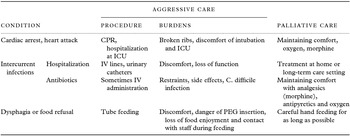
Before any medical treatment is initiated, its compatibility with goals of care should be evaluated. The goals of care may change during the course of a progressive degenerative dementia. There are basically three main goals of care: survival, maintenance of function, and comfort (Gillick et al., Reference Gillick, Berkman and Cullen1999). The problem is that these goals cannot be achieved simultaneously and there is a need for prioritization of these goals. In mild dementia, the main goal may be survival but achieving this goal may require hospitalization in an intensive care unit (ICU) which decreases comfort and leads to loss of function. In moderate dementia, the main goal of care may be maintenance of function and that may include avoidance of hospitalization. In severe and terminal stages of dementia, the main goal of care may be comfort and that goal would exclude aggressive medical interventions that cause discomfort. Knowledge of benefits and burdens of different medical interventions is necessary for decisions which of them should be used or excluded based on the goals of care. Table 2 provides summary of aggressive and palliative interventions that will be described in more detail below.
Management of medical conditions

CPR = cardiopulmonary resuscitation, ICU = intensive care unit, IV = intravenous, PEG = percutaneous enteric gastrostomy. For references see text.
Cardiopulmonary resuscitation
CPR is a stressful experience for those who survive, often associated with injuries such as broken ribs, and often necessitating mechanical respiration. The ICU produces additional confusion and, almost invariably, delirium. Most patients who survive CPR are more cognitively impaired than they were before the arrest. Furthermore, the CPR experience is often so traumatic for the patient's families that a “do not resuscitate” directive is requested, preventing repetition of the CPR. Other residents of long-term care facilities who witness the CPR procedure are frequently upset as well.
The immediate survival after CPR was lower in nursing homes than in other settings (10.4% vs. 18.5%), and no nursing home patients survived to hospital discharge, while 5.6% patients from other settings survived. In the presence of dementia, successful CPR is three times less likely, almost as low as in metastatic cancer. Therefore, CPR is not recommended unless the primary goal of care is survival at all costs with maintenance of function and comfort distant second and third goal.
Transfer to an acute care setting
Transfer of the elderly individuals to an emergency room or hospital exposes them to serious risks. Shortly after their hospital admissions, deterioration can occur in mobility, transfer, toileting, feeding, and grooming, with few if any of these functions improving significantly by discharge. Development of functional decline is related to older age, nursing home residency, low body mass index, inflammatory markers, high-level of comorbidity, and cognitive decline. There is an association between hospitalization of cognitively intact people and risk of developing cognitive decline and dementia. Hospitalization is especially burdensome for people with advanced dementia close to the end-of-life. It is more likely if the patient has a feeding tube, was hospitalized at ICU, or has stage 4 decubitus ulcer. As a result, careful consideration should be given to the decision to hospitalize.
Transfer from a long-term care facility to an acute care setting is most often due to an infection and/or breathing difficulties. Pneumonia is the leading cause of infection among residents in long-term care facilities, and its median reported incidence is 1 per 1,000 patient-days. Risk of pneumonia is increased in residents who are bedridden, have a debilitating neurological disease, or who require tube feeding. Other risk factors include older age, male gender, swallowing difficulty, and inability to take oral medications. Since many of these risk factors are not amenable to intervention, the rate of recurrent pneumonia is high. The mortality rate from pneumonia is increased by altered mental status, and cognitive impairment increases the mortality risk almost seven times. Most studies have found that mortality is also increased in patients with impaired functional status, even if living in the community.
Transfer of long-term care facility residents to an acute care hospital may not be optimal for management of infections and other conditions. A study that reviewed hospital records of 100 unscheduled transfers to a hospital found that 36% of emergency room transfers and 40% of hospital admissions were inappropriate (Saliba et al., Reference Saliba2000). These numbers increased to 44% of emergency room transfers and 45% of hospital admissions when advance directives were considered. Immediate survival and mortality rates from pneumonia are comparable, regardless of whether the treatment is received in the long-term care facility or the hospital. Long-term outcomes are, in fact, better for residents treated in a nursing home. Similarly, two months after the onset of pneumonia, a greater proportion of hospitalized individuals had declined in their functional status or died. The improved outcome in non-hospitalized residents was present, however, only in those with a lower respiratory rate during the episode, and was best seen in residents who were independent or mildly dependent at baseline.
The available data indicate that transfer to an emergency room or hospital has significant risks and relatively few benefits for elderly individuals. This management strategy should be used only when it is consistent with the overall goals of care, and not as a default option. The transfer to an emergency room or hospital is especially problematic in an individual with advanced dementia.
Artificial nutrition and hydration
Nutritional problems are common in elders with dementia, especially in those who are homebound or reside in an institution. These problems may result in protein–calorie undernutrition and increases the risk of dying. The causes of this undernutrition in nursing homes include, inability or unwillingness to eat caused by neurogenic dysphagia, anorexia resulting from a brain disease, anorexigenic drugs, poor dental status, the loss of taste and smell, an environment that may not be conducive to eating, and apathy (Volicer et al., Reference Volicer, Frijters and Van der Steen2013). Eating difficulties are particularly common in individuals with dementia. Apraxia prevents patients from using utensils correctly, and ultimately disrupts their ability to eat unassisted. In addition, patients may intermittently refuse food. Eating apraxia can be managed by hand feeding, and food refusal may be improved by administration of antidepressants or appetite stimulants. As dementia progresses, patients develop swallowing difficulties, often choking on solids as well as liquids. Choking is sometimes managed by thickening of food and liquids but this strategy may not be effective and can result in undernutrition and dehydration.
Elders with chewing and swallowing problems caused by dementia are sometimes provided with tube feeding. However, recent analysis of seven observational controlled studies did not find any evidence of increased survival, improved nutritional status, or the prevalence of pressure ulcers in older people with advanced dementia receiving tube feeding (Sampson et al., Reference Sampson, Candy and Jones2009), and the lack of effect on survival was supported by another analysis of eleven studies (Hanson, Reference Hanson2013). Feeding tubes should be used with caution in the elderly patients because they can pose a significant burden. In a survey of patients rating discomfort levels of procedures, the nasogastric tube was considered the most uncomfortable, followed by mechanical ventilation and physical restraints. Tube feeding also deprives the patient of the taste of food, the pleasure of eating, and contact with caregivers during the feeding process.
Because of the lack of benefits and significant burden, many physicians, supported by both secular and religious ethicists, often recommend against the use of tube feeding in patients with advanced dementia although some Jewish ethicists recommend percutaneous tube feeding before any nutritional deficit occurs. On the other hand, short-term tube feeding limited to several weeks may be justified in individuals recovering from a stroke or an acute infection. Even if tube feeding has been instituted in a person with dementia, who is in severe condition, it may be discontinued. It is possible to convert tube feeding to hand feeding and, in some cases, patients may be able to feed themselves again. Survey of elderly nursing home residents showed that less than one third would want to be fed by a tube if they developed eating difficulties. Three quarter of them would just want a modified diet and 60% would want oral feeding despite repeated aspirations (Low et al., Reference Low, Chan, Hung and Chye2003).
It should also be realized that voluntary food refusal is often initiated even by cognitively intact individuals. One survey reported that patients have chosen to stop eating and drinking because they were ready to die, saw continued existence as pointless, and considered their quality of life poor. Eighty-five percent of these patients died within 15 days of stopping food and fluids, and nurses rated their deaths as “good” (Ganzini et al., Reference Ganzini2003). Foregoing artificial nutrition and hydration in patients with severe dementia who no longer eat or drink is not associated with discomfort because individuals who are dying no longer feel hunger or thirst. Terminal dehydration is actually beneficial for dying patients because it decreases respiratory secretions avoiding need for suctioning, gastrointestinal secretion decreasing the risk of vomiting and diarrhea, and possibly decreasing perception of pain because of secretion of endorphins. On the other hand, terminal hydration may decrease patient's comfort and may require administration of diuretics to treat edema.
Antibiotic therapy
Antibiotic therapy is quite effective in treatment of an isolated episode of pneumonia or other systemic infection. In most patients, it is preferable to limit antibiotic therapy to oral preparations, which are at least equally, if not more effective than parenteral antibiotics. Intravenous therapy can be quite difficult in cognitively impaired individuals if they do not understand the need for it and try to remove the intravenous catheters, necessitating the use of physical restraints or psychotropic drugs. In patients with poor oral intake, intramuscular administration of antibiotics, e.g. cephalosporins, offers a reasonable alternative.
The effectiveness of antibiotic therapy may be limited by the recurrent nature of infections in advanced dementia. Dementia severity increases the mortality after pneumonia because of aspiration and weight loss. Antibiotic therapy prolongs survival in very few patients who have terminal stage of dementia and in most cases just prolongs the dying process. Most patients who did not receive antibiotics died during the first three days while most patients who received antibiotics died during the ten days (Van der Steen et al., Reference Van der Steen, Lane, Kowall, Knoll and Volicer2012). The effectiveness of antibiotic therapy depends on hydration status of the patients. There was no difference in mortality rate among nursing home residents who had sufficient water intake and either did or did not receive antibiotics. Antibiotics were much less effective in nursing home residents who had insufficient water intake and mortality rate was highest in nursing home residents who did not receive antibiotics and had insufficient water intake (Szafara et al., Reference Szafara, Kruse, Mehr, Ribbe and Van der Steen2012).
Antibiotics might not play a significant role in the maintenance of comfort in people with dementia suffering from pneumonia. A large recent study actually found that the comfort level was lower in patients receiving antibiotics than in those who did not receive them (Givens et al., Reference Givens, Jones, Schaffer, Kiely and Mitchell2010). It is most likely, that the discomfort depends on the quality of palliative treatment that is provided for patients who do not receive antibiotics. Analgesics, antipyretics, and oxygen, if necessary, provide comfort in the absence of antibiotics. There is some evidence that palliative treatment of patients with pneumonia recently improved (Van der Steen et al., Reference Van der Steen, Meuleman-Peperkamp and Ribbe2009).
Antibiotic use may cause significant adverse effects. Patients may develop gastrointestinal upset, diarrhea, allergic reactions, hyperkalemia, and rarely, agranulocytosis. Overuse of antibiotics may lead to development of Clostridium difficile infection and may increase microbial resistance to antibiotic treatment. Diagnostic procedures such as blood drawing and sputum suctioning, which are necessary for the rational use of antibiotics, can cause discomfort and confusion in people with dementia who do not understand the rationale. Furthermore, most infections are recurrent in people with dementia, because the underlying causes, such as swallowing difficulties and development of aspiration, persist. A decision whether to use antibiotics in advanced dementia should take into consideration the recurrent nature of infections, the adverse effects produced by antibiotics and the accompanying diagnostic procedures, and the potential lack of any significant enhancement of patient comfort.
4. Palliative care offers a support system to help the family cope during the patient's illness and in their own bereavement; uses a team approach to address the needs of patients and their families, including bereavement counseling.
Establishing diagnosis of AD or other progressive degenerative dementia designates other individuals, in most cases family members as caregivers. These caregivers may experience anticipatory grief which is the process of experiencing normal phases of bereavement in advance of the loss of a significant person. They may be grieving and “missing the person” they once knew. Being a female caregiver, reporting higher levels of objective caregiving burden, and higher depression levels had independent, statistically significant relationships with anticipatory grief.
Family need support from the time of patient's diagnosis in making several decisions. The first decision may be about disclosure of the diagnosis to the patient if the health providers did not do it themselves. Reasons for favoring disclosure include a patient's or family member's right to know, the possibility of assistance in coping with and understanding dementia, slowing down the progression of the disease by an early treatment, as well as the increased probability of accepting treatment and life activity changes. Reasons for favoring the withholding of disclosure included the risk of causing the patient emotional disturbance, worsening the disease, and the possibility of causing suicidal ideation. However, the patients are sometimes relieved when they hear the diagnosis because they were afraid that they were going “crazy.” In a study of 150 family members who came to a clinic with the patients, almost all (93%) of subjects favored disclosure of the diagnosis if, hypothetically, they personally were affected by AD. However, a smaller majority of family members (76%) favored disclosure of the diagnosis to current AD patients. The willingness of diagnosis disclosure may be affected by cultural differences.
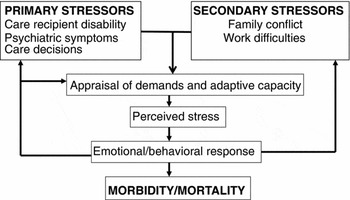
As dementia progresses, functional dependence, unsafe behavior, and behavioral symptoms of dementia create a need for constant patient supervision that poses a great burden for the caregivers. Caregiving in dementia is more stressful than caregiving for physically impaired older adults and is as stressful as caregiving for persons with cancer. Caregivers of individuals with dementia give up their vacation or hobbies more often, have less time for other family members and report more work-related difficulties than caregivers of individuals with physical impairment. There is a high incidence of depression in family caregivers, and even professional staff needs support when facing end-of-life decisions. Since AD and other progressive dementias last on the average eight years, caregivers often have to cope with functional impairment and behavioral symptoms for many years. Burden of caregiving results in decreased health-related quality of life. The stress of caregiving also increases the risk of developing AD by the caregiver. Factors affecting caregiver stress are depicted in Figure 2.
Burdens of caregiving, adapted from Schulz and Martire, Am. J. Geriatr. Psychiatry 12:204, 2004.

Consequences of caregiving are influenced by caregivers’ closeness with the person with dementia. In a study of 234 care dyads, higher baseline closeness was associated with better mental health and lower depression. When closeness was maintained, there was worsening of mental health and more depression. In contrast, caregivers who reported a loss of closeness in their relationship with the care recipient from pre- to post-dementia displayed improved mental health and depression, but worse physical health over the course of the study. Closeness of care dyads also influences progression of dementia with dementia progressing more rapidly over a period of three years in low closeness dyads.
Cognitive impairment of the care recipient is often less stressful for the caregivers than behavioral symptoms of dementia. Group-based behavioral interventions reduced distress related to neuropsychiatric symptoms among caregivers of individuals with AD and neuropsychiatric symptoms of care recipients. Caregiver support also resulted in 28% reduction in the rate of nursing home placement that was related to greater satisfaction with social support, improved response to patient behavior problems and decreased depression. Improved caregiver coping strategies were even associated with slower dementia progression (Tschanz et al., Reference Tschanz2013).
Although caregiver distress is related to the direct provision of care for the people with dementia, the distress does not cease after the individual is institutionalized. Caregivers often feel that they have failed their loved ones by placing them in an institution. Social support for caregivers of institutionalized individuals with dementia is very important because depressive symptoms and anxiety is as high in caregivers after they institutionalized their relative as when they were in-home caregivers. The use of antidepressants does not change and the use of anxiolytics increases in caregivers after placement. There is need for counseling even after institutionalization to reduce caregiver depression and pre-death grief symptoms.
Caregivers also need support when making decisions about palliative and hospice care. End-of-life education with caregivers resulted in lower rates of ventilation, ICU admissions, and earlier hospice enrollment. A decision aid increases caregiver knowledge and decreases their decisional conflict regarding long-term tube feeding (Mitchell et al., Reference Mitchell, Tetroe and O’Connor2001). Video depiction of a patient with advanced dementia after hearing a verbal description of the condition results in proxies selecting more often comfort care than listening only to a verbal description. A free decision aid about assisted feeding and tube feeding is available on line at www.med.unc.edu/pcare/resources/feedingoptions.
Conclusions
Palliative care should be provided to patients diagnosed with progressive dementia and their caregivers from the time of diagnosis. Caregiver support and appropriate treatment of psychiatric and medical problems promotes quality of life of both caregivers and patients. It is important to realize that advanced dementia is a terminal illness for which the main goal of care may be providing comfort instead of prolongation of life at all costs.
Conflict of interest
Volicer has none; Simard published a book about Namaste Care program which is described in this paper.