Introduction
Heartfailure in children, due to myocardial disease, is a serious problem with a high intervention rate in the first year following diagnosis.Reference Towbin, Lowe and Colan1,Reference Daubeney, Nugent and Chondros2 The mortality following admission with heart failure appears to have improved over the past decades, and this is probably due to improved multidisciplinary care coupled with more widespread availability of cardiac transplantation.Reference Singh, Canter and Shi3–Reference Shamszad, Hall and Rossano5 It is known that some adults and children with suspected myocarditis may recover normal function if they can be supported through the acute phase.Reference D’Ambrosio, Patti and Manzoli6–Reference Gagliandi, Bevilacqua and Bassano9 It is also recognised that recovery can occur in both childrenReference Everitt, Sleeper and Minmin10 and adultsReference Figulla, Rahlf, Nieger, Luig and Kreuzer11 who are diagnosed with idiopathic dilated cardiomyopathy and who have no evidence of myocardial inflammation. There is clearly an overlap between these two groups. The possibility of recovery in patients with heart failure, due to heart muscle disease, complicates decision-making if a suitable donor organ becomes available, particularly if this is relatively early after presentation. The application of ventricular assist devices (VADs) to the paediatric age group has increased the possibility of providing longer-term support for these children and potentially allow time to wait for a suitable donorReference Zafar, Castleberry and Khan12,Reference Almond, Morales and Blackstone13 or, at least potentially, to allow the recovery of function. The purpose of this study was to describe the outcome of children with a structurally normal heart who present with a first episode of heart failure, to a transplant unit, and to assess the impact that VADs have had on mortality, transplantation, and recovery.
Methods
Setting
In the United Kingdom there are two heart transplant units for children, and both of these units also provide VAD support. Freeman Hospital, Newcastle upon Tyne Hospitals NHS Foundation Trust is one of these units and also has a direct catchment area having a population of about 3 million people. Freeman Hospital, situated in the northeast of England, tends to take heart failure referrals from the northern part of the UK, but referral routes throughout the United Kingdom and Ireland are flexible and often depend on bed availability.
VADs
The Paediatric VAD programme was started in Freeman Hospital in the year 1999. The Berlin Heart EXCOR paracorporeal device is used in children > 5 kg who need single or biventricular support. The Heartware, continuous flow device, is considered in children over 20 kg who do not require support for the right ventricle. At our institution, 80% of VADs are Berlin Heart devices reflecting the age and weight profile of the patient population. Heparin (with monitoring of antiXa) is the initial agent used for anticoagulation, and patients are transitioned onto warfarin depending on clinical progress/nutrition. An anti-platelet agent (aspirin) is usually introduced at the end of the first week. If aspirin effect is inadequate, it is replaced by dipyridamole. Patients on Berlin Heart devices can usually be managed on the ward but are not considered for hospital discharge. Patients on Heartware devices are considered for hospital discharge and are supported by the VAD team with regular phone contact and visits with close monitoring of anticoagulation regimen. VAD implant was considered for all patients with intractable heart failure and formally discussed with the multi-disciplinary team. VAD was not used as a destination therapy in this time frame for children.
Patient population
Children (< 18 years) with a first episode of heart failure, between 1 January, 2010 and 31 October, 2016, were identified from the department database, and the notes and clinical data were reviewed. Cardiomyopathies were classified according to the World Health Organization classification. Children with CHD, an arrhythmic aetiology, or a non-cardiac cause were excluded. Children known to have a neuromuscular disorder were also excluded as they may follow a different treatment algorithm.
Outcome
The primary outcome of the hospital admission was defined as either death, recovery, chronic heart failure, or transplant, and only the primary outcome was used for analysis; i.e. if death occurred after transplant, the patient outcome was coded as transplant. Follow-up was to discharge from hospital, but all patients attended clinic and we retrieved copies of clinic visit letters. Recovery was defined as a fractional shortening of ≥ 30%. Patients on VADs have a routine weekly echocardiogram. If there is evidence of some recovery of function, the patient has a formal isoprenaline challenge in the intensive therapy unit (ITU), with monitoring of blood gases, central venous pressure, and cardiac function on echo/Doppler. If this is satisfactory, VAD removal is considered. As utilised by other groups,Reference Andrews, Fenton, Ridout and Burch14 patients were also divided into subgroups according to age at the time of admission: < 1 year; ≥ 1 to < 5 years; ≥ 5 to < 10 years; ≥ 10 years.
Statistical analysis
Survival and freedom from intervention was assessed using Kaplan–Meier curves. The Log-rank test was used to compare subgroups (Prism version 7.0d). Competing outcomes methodology was used to calculate the time-related probabilities of patients dying, receiving a heart transplant, or living without transplantation (Excel version 16.10).
Ethics
Caldicott approval was granted for the review of the defined patient dataset for this study. The study was reviewed, and the non-requirement for approval by an NHS Research Ethics committee was confirmed by the chair of North East–Tyne & Wear South Research Ethics committee.
Results
In the 6.5 years’ time frame of this study, there were 100 paediatric (< 18 years old) patients with a first presentation of heart failure, who fulfilled study criteria. The mean number of children per year, from the northeast catchment was 4.4, giving an incidence of approximately 0.75 cases per 100,000 children per year, which is in keeping with that reported in other studies on acute heart failure presentation.Reference Andrews, Fenton, Ridout and Burch14
Demographic data
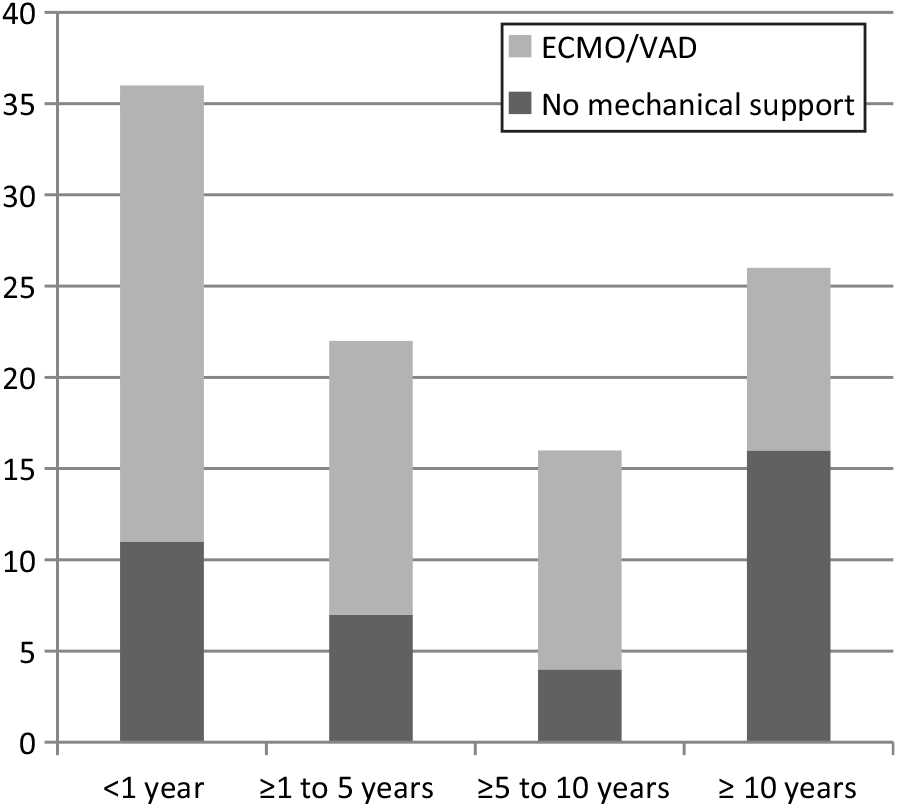
The mean age at presentation was 24 months (range 1 day–16 years). The median weight at presentation for the total study population was 20 kg (range 2.1–73 kg). Diagnoses were idiopathic dilated cardiomyopathy, n = 62; suspected myocarditis, n = 23; restrictive cardiomyopathy, n = 7; chemotherapy related, n = 4; hypertrophic cardiomyopathy, n = 2; left ventricular non-compaction, n = 2. Patients were divided into subgroups according to age at the time of admission, and Figure 1 shows the relative proportions of children in the four age categories; overall 36% were in the < 1-year-age group and a further 22% in the ≥ 1 to < 5 years age group.
The number of patients by age group and proportion who required support with ECMO or VAD.

Outcomes
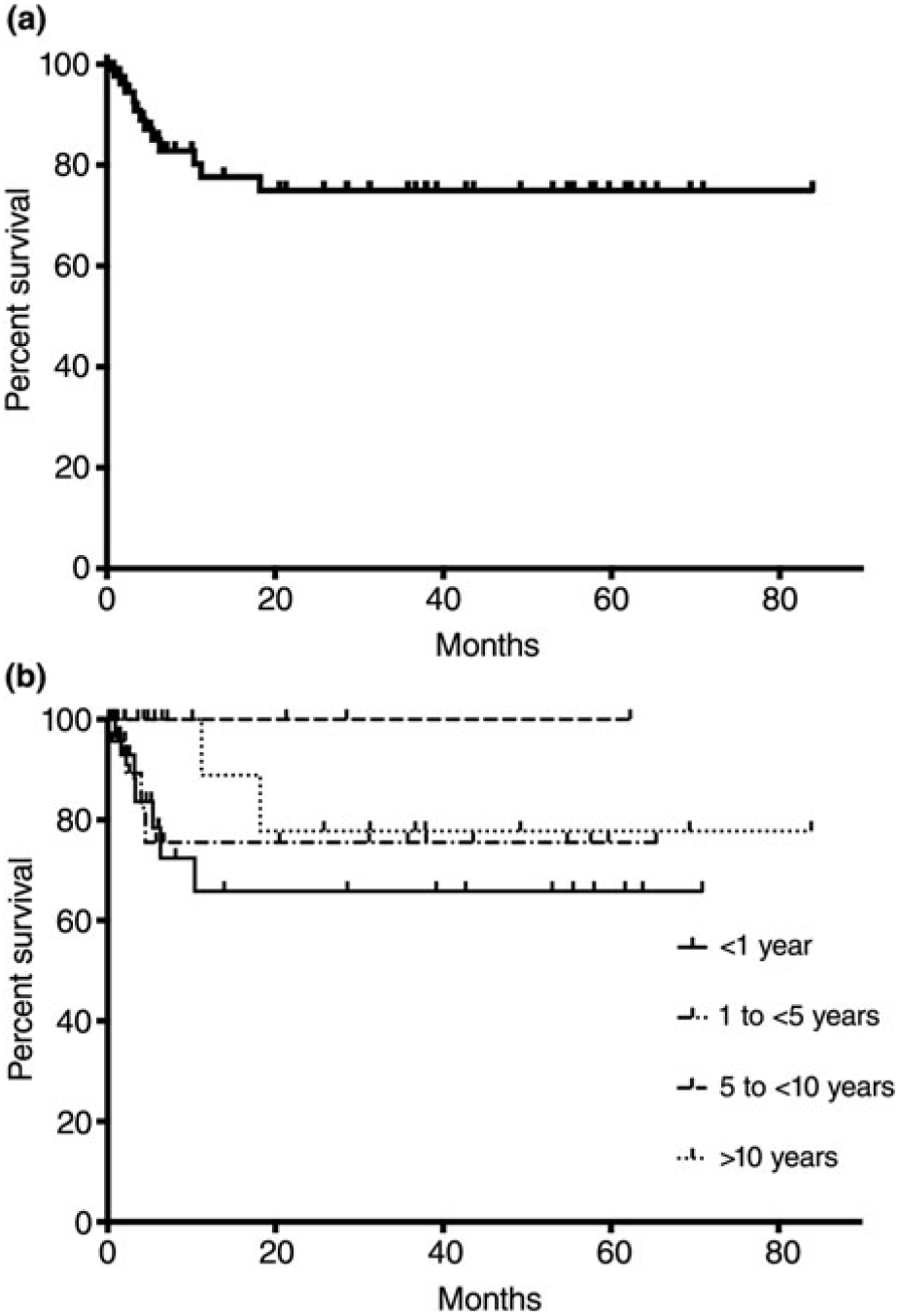
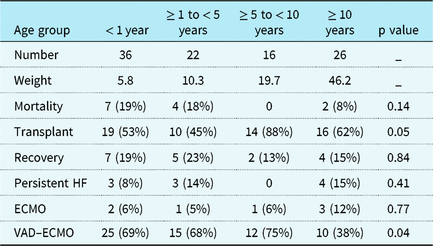
The in-hospital mortality was 12%. There was one late, out-of-hospital, death; 18 months post discharge, in a patient who had persistent impairment of heart function (Fig 2 shows Kaplan–Meier survival curves). There was a trend of improved survival in the older children, but this did not reach statistical significance, probably due to the relatively small numbers in the four subgroups (Fig 2b). It can be seen, from Table 1, however that most of the deaths occurred in the younger children as 84% of the deaths, (11/13), occurred in those who were < 5 years old on admission.
(a) Kaplan–Meier survival curve for the total group (n = 100) from time of admission. (b) Kaplan–Meier survival curves, subdivided into age groups, from time of admission. p = 0.14, Log rank test.

Outcome in 100 children admitted to hospital with a first episode of heart failure, subdivided according to age group

HF = heart failure; ECMO = extracorporeal membrane oxygenation; VAD = ventricular assist device.
All p values are Chi squared, except for mortality which is log rank from the survival curves.
The outcome in 100 children admitted to hospital with a first episode of heart failure, subdivided according to age. Weight is in kg (mean).
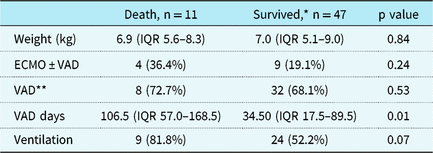
We therefore looked in more detail at the children who were < 5 years old, and Table 2 compares those who died with those who survived. The Berlin Heart device was used in all except one patient, and therefore the type of VAD could not be statistically analysed. The shorter duration of VAD support was the only factor which was associated with survival (36 days in survivors versus 106 days in non-survivors, p = 0.01). The causes of death on VADs were mainly (60%) due to haemorrhage (neurological and pulmonary). Even though thromboembolic events were relatively common in patients on VAD (25%), it was a direct cause of death in only two patients. The other main cause of death was multi-organ failure (usually related to sepsis) in about 15%.
Differences between survivors and non-survivors in the 58 children who were <5 years old at the time of admission to hospital

ECMO = extracorporeal membrane oxygenation; VAD = ventricular assist device.
Differences between survivors and non-survivors in the 58 children who were < 5 years old at the time of admission to hospital.
* 29 transplanted.
** Berlin Heart device used in all except one patient.
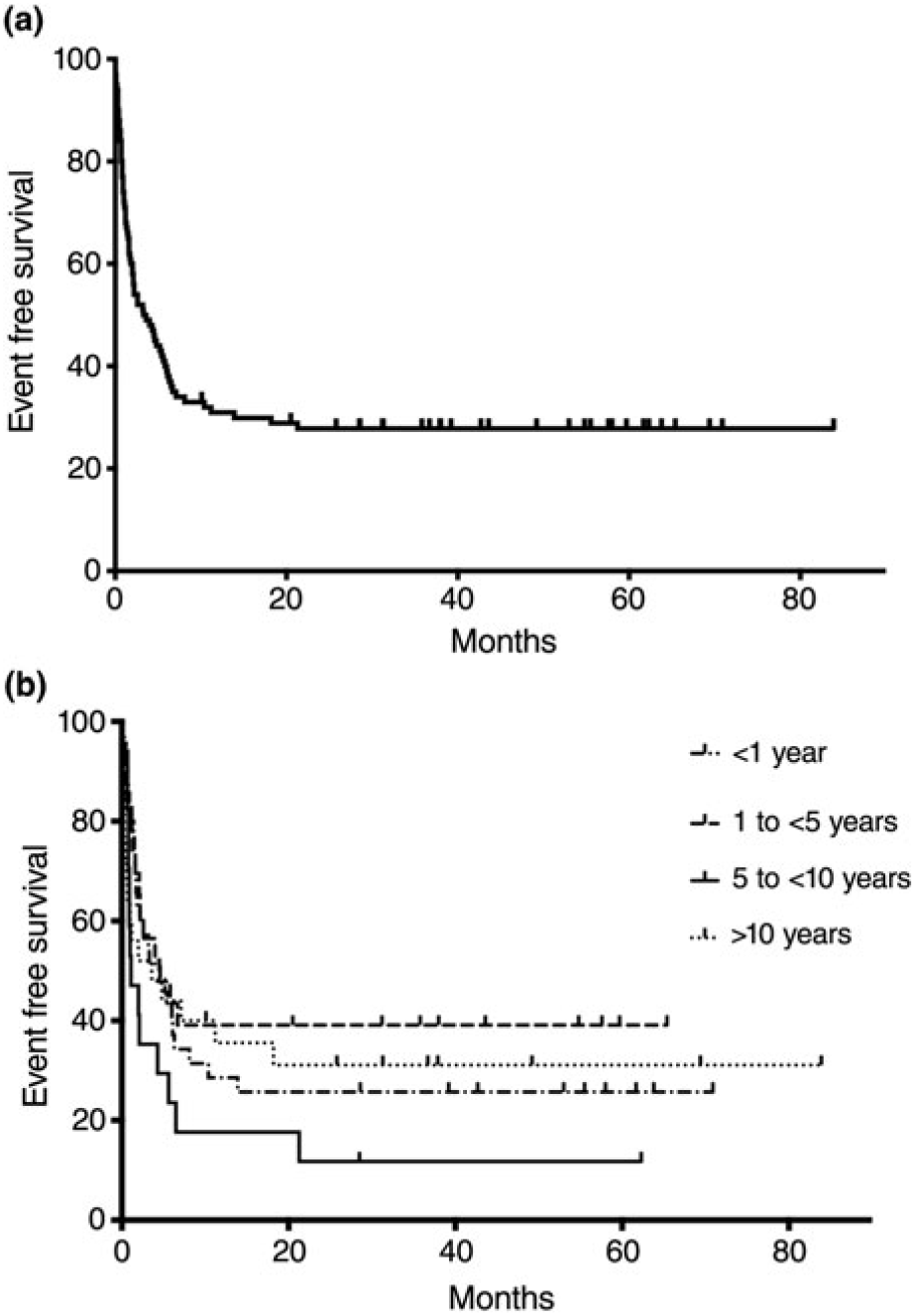
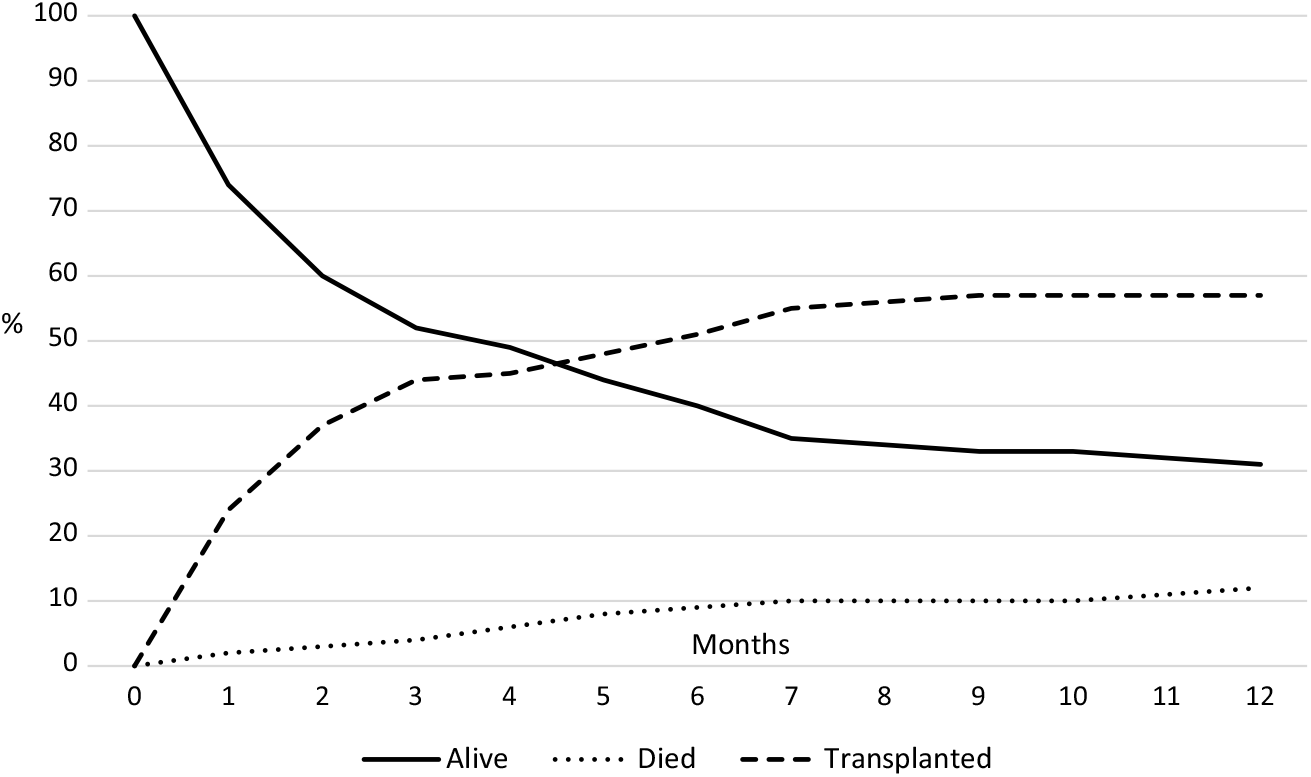
Fifty-nine per cent were transplanted prior to discharge, and 47(79%) of these were on a VAD at the time of transplantation. There was a significant correlation between age and transplantation (p = 0.04). The mean waiting time for a transplant was 70 days. Seventy-two per cent of patients, therefore, had either a transplant or died following the first presentation with heart failure. The event-free survival for the total group (and the age subgroups) is shown as a Kaplan–Meier curve in Fig 3 and the competing outcomes analysis in Fig 4. Overall, at 1-year post admission, 28% had survived without a transplant and had either recovered (18%) or continued to show the impairment of systolic function (10%). The proportion that recovered function for the respective age groups was 19, 23, 13, and 15%.
(a) Kaplan–Meier curve for survival without transplant for the total group (n = 100). (b) Kaplan–Meier curve for survival without transplant, stratified into age groups. p = 0.26, Log rank test.

Competing outcomes of death, transplantation, and survival without transplant in the 100 children.

Discussion
Heart failure in the paediatric population remains a seriousReference Alexander, Daubeney and Nugent15,Reference Pietra, Kantor and Bartlett16 and poorly understoodReference Webber17,Reference Arola, Touminen, Ruuskanen and Jokinen18 condition. The application of VADs to children allows more prolonged support for the more severely compromised patients and is likely to facilitate reduction in waiting list mortality and to continue the trend towards improved outcomes.Reference Singh, Canter and Shi3,Reference Zafar, Castleberry and Khan12,Reference Hollander, Bernstein, Yeh, Dao, Sun and Rosenthal19 Most of the currently available data describe outcome prior to the widespread availability of these devices, and our study represents one of the largest, single centre series, in this area. It shows that, in this era, where prolonged support is available to many children, overall, about two-thirds of patients either die or have a heart transplant within 1 year of presentation to a specialist unit and that the mortality is significant (> 10% in our series), with most of the deaths in the younger subgroup. Even though VADs have undoubtedly made a major impact on stabilising the severely compromised child, there is still a significant problem in safely bridging younger children to either transplantation or recovery.
The most common causes of acute heart failure in children with structurally normal hearts are dilated cardiomyopathy or suspected myocarditis, and the remainder is usually associated with left ventricular non-compaction, familial cardiomyopathy, and inborn errors of metabolism.Reference Lipshultz, Sleeper and Towbin20,Reference Nugent, Daubeney and Chondros21 In this study we focused on those who presented with a first episode of heart failure due to heart muscle disease, and most children had either dilated cardiomyopathy or suspected myocarditis. Transplantation is often required for these patients, and the wait for a suitable organ can be prolonged, particularly in the younger cohort. This is evident in our data with a lower proportion of the older children requiring VAD support. The availability of the EXCOR device, a paediatric-specific device, which can be used down to a weight of about 5 kg, has offered the potential to provide prolonged haemodynamic support to many children. This device is often referred to as the Berlin Heart, and initial reports were encouraging. A multi-centre report from the United States of AmericaReference Morales, Almond and Jaquiss22 demonstrated the efficacy of the Berlin Heart device, and the overall mortality in the 73 children, where the device was used, on a compassionate care basis, was 23%. A subsequent larger multi-centre report,Reference Almond, Morales and Blackstone13 on 204 children, showed that the risk of a significant neurological event was about 30% at 1 year and mortality remained significant (26% at 1 year). The complication rate with the continuous flow devices (e.g. Heartware) may be lower but will not be generally feasible for children < 15 kg for the foreseeable future.
Heart failure, due to heart muscle disease, often presents at a young age, and a prospective study from the United Kingdom & Ireland, of 104 children, reported a mean age at presentation of 1 yearReference Andrews, Fenton, Ridout and Burch14 and 75% were < 5 years old. The studies on the Berlin Heart show that younger age is an important risk factor for morbidity and mortality.Reference Almond, Morales and Blackstone13,Reference Morales, Almond and Jaquiss22 Our study reinforces this with most of the deaths occurring in the < 5-year age group, and the length of time on the VAD (which was the Berlin Heart in most cases) was significantly associated with mortality. Unfortunately, therefore, the main technical challenges with VAD and mortality are in the subgroup of children who are < 5 years old at presentation.
In children who present with acute heart failure, recovery of function is also an important issue. In the previously mentioned prospective study of 104 children who presented with a first episode of heart failure, which was carried out in 2003, 12% required extracorporeal membrane oxygenation (ECMO) support but, as far as we can determine, none received a VAD as part of the initial presentation.Reference Andrews, Fenton, Ridout and Burch14 A follow-up report on this cohortReference Andrews, Fenton, Dominquez and Burch23 showed that 44 (42%) had normal function on echocardiogram at a median follow-up of 9 years and that 50% of these were on no medication. There are also data to show that children with a diagnosis of idiopathic dilated cardiomyopathy may show late recovery of function.Reference Everitt, Sleeper and Minmin10,Reference Alvarez, Orav and Wilkinson24,Reference O’sullivan, Roche, Crossland, Chaudhari, Kirk and Hasan25 One of the other questions raised by the data presented is that the recovery rate we report (18%) may be considered low, as one may have hoped that the provision of medium-term support would allow, or possibly even facilitate, recovery. We should consider the possibility that the insertion of a VAD may itself inhibit or complicate the recovery process as the ventriculotomy required may have an important negative impact. Recovery in patients with a VAD in place, however, is well described for both pulsatile and non-pulsatile devices in both adults and children.Reference Jones, Cassidy and Kirk26–Reference Simon, Primack and Tueteberg28 The availability of a safe prolonged period of circulatory supportReference Blume, Rosenthal and Rossano29 should facilitate research in this area.
Limitations of study
The main limitation of this study is that this involved a selected group of patients who were admitted to a specialist, transplant unit, and therefore this study represents those at the more severe end of the heart failure spectrum. We have no information on the children with less severe symptoms that were managed in non-specialist units. This study therefore is not designed to inform discussions regarding children with symptoms of heart failure that do not require transfer to a transplant unit but hopefully will be useful when counselling families of children where the clinical concern is such that transfer to specialist units is requested. As this was not a prospective study, there is limited information on factors such as possible virus exposure and symptom duration. We did not examine echocardiographic and other factors that may be associated with outcome as a standard echocardiographic protocol was not used and some of initial studies done in the referring hospital.
Summary
The study demonstrates that heart failure in the paediatric population that results in referral to a specialist centre has a relatively poor prognosis in terms of regaining clinical stability without recourse to transplantation or insertion of a VAD. The majority of the children who present are in the < 5-year-old age group, and about two-thirds of children, treated in a transplant centre, with a first episode of heart failure, will either die or have a heart transplant as part of their hospital admission. Most of the deaths are in the < 5-year-old group, reflecting the continuing difficulties with providing prolonged, safe mechanical support in this subgroup, where the wait for a suitable donor organ is often prolonged. Therefore, in the absence of increased donor availability, there is a need to develop safer circulatory support, particularly for the younger subgroups. It is also important that such advances do not compromise, and ideally would even help, the potential for recovery of function.
Acknowledgements
We are grateful to the extended VAD team and ITU staff who have cared for these patients and also provided data on protocols and outcome.
Author ORCIDs
John J. O’sullivan 0000-0003-0241-7478
Financial Support
This research received no specific grant from any funding agency, commercial or not-for-profit sectors.
Conflict of Interest
None.