

On the morning of 27 February 1797, the Bank of England opened its doors to customers as usual. The day's business was, however, significantly different. Since the end of the seventeenth century, the Bank of England note had been a ‘promise to pay’, meaning one could demand exchanging a banknote into coins. On this day, the Bank of England announced that it would no longer honour that promise, or as Kevin Barry described it, the banknote became ‘a promise to pay promises with promises'.Footnote 1 The crowd of people who came to the Bank that morning saw, possibly with a sense of imminent financial doom, a handbill stating that the privy council had ordered the Bank of England's directors to ‘forbear issuing any Cash in Payment’.Footnote 2
In spite of the apparent gravity of the situation, existing scholarship does not tell us much about this event. The consequence of the suspension of the Bank's cash payments is, in contrast, far better known. The impact on emerging monetary economics has also been well researched. Indeed, the debate that culminated in 1810–11 over the nature of paper money and its implications to the national financial policy and the overall financial system, came to be known as the ‘Bullionist Debate’, in which classical monetary theory was consolidated.Footnote 3 Thereafter, in the late 1810s, advocates of the link between paper money and precious metal, represented by David Ricardo, with strong support from liberal Tory politicians like William Huskisson, steered Britain towards adopting the gold standard, which – practically in 1815 and officially in 1821 – ended the suspension of cash payments.Footnote 4
Historians have contemplated the causes and consequences of the suspension of cash payments, but, curiously, their efforts have not extended to the event of suspension itself.Footnote 5 This neglect starkly contrasts with the perception of contemporaries. For example, William Cobbett wrote that the suspension would be remembered as an event ‘amongst the most memorable in the annals of England’.Footnote 6 This comment may sound like another example of Cobbett histrionics, but the fact remains that paper money was a topic to which Cobbett devoted a significant part of energy and time, as did many of his contemporaries.
By the end of the eighteenth century, the Bank of England – ‘the Bank’ – had come to occupy the central position in the British financial system. Throughout the century, the amount of banknotes multiplied, though at least until the later part of the century the use of the Bank of England note was limited, both geographically and socially.Footnote 7 The suspension of cash payments in 1797 dramatically altered this situation. With the stoppage of cash payments and huge issues of small notes – a consequence of withdrawing the 1755 and 1777 acts – a significant amount of banknotes appeared in ordinary economic transactions. Consequently, the landscape of monetary transaction in Britain was transformed. Thus, the event should not be treated in the narrow confines of financial or monetary history. Rather, and as this article demonstrates, this event was inextricably linked with certain political traditions and memories about the past, as well as the practice of the use of paper money. In other words, it was the culmination of the historical development in the culture of money in eighteenth-century Britain.
The suspension of cash payments by the Bank of England can be located within two broad contexts. The first is its place in the history of money. In the major part of its history, money has been identified with precious metals, especially gold and silver. The introduction of paper money in Europe from the late seventeenth century still maintained the link between precious metals and via convertibility between them. Such a situation naturally led to the domination of the so-called metalist idea of money, which saw the foundation of money in the value of scarce metals, and paper as something to represent the value, not the value itself.Footnote 8 However, the economic and political reality of the time soon began to challenge this, and in the eighteenth century, several countries introduced inconvertible paper money.Footnote 9 Probably the most famous, or rather infamous, example of inconvertible paper money is the assignat, issued from 1789 by the French revolutionary government. Initially acclaimed as the saviour of the revolution, assignats soon brought about hyperinflation and quickly collapsed, leaving bitter memories among the French population.Footnote 10 In comparison, Britain's Bank Restriction Period is one of the most successful in European history,Footnote 11 and its success exhibits a certain peculiarity in the development of Britain's monetary system. Apart from the case of America, most of the early forays into inconvertibility hinged upon state sovereignty or authority. The Swedish Riksbank was owned by the parliament, and during the inconvertibility period, the authority of the king and parliament was the source that legitimated the banknote without the backing of any precious metal. Even with assignats, legitimacy stemmed from the revolutionary government, though an official guarantee was provided by linking the currency with the confiscated church estate. By contrast, the Bank of England was a private company run by its directors, all of whom represented financiers and traders rather than specific political interest groups; therefore, its credit was not directly derived from the state.
The second context is the development of the theory of money. As the traditional metalistic view of money was challenged by the reality, other views started to gain ground. The most conspicuous was the so-called nominalist view of money, which contended that money did not necessarily have to consist of precious metal, but that paper could also be a legitimate form of money.Footnote 12 The controversy between the metalists and nominalists broke out in Sweden and America, while the Bullionist Controversy in Britain was one of the most well-known variations of such debate.Footnote 13 These debates were by no means battles over the metaphysics of money. They were grounded in the economic issues of the time, most notably inflation, which seemed to intensify at the time of inconvertible paper money, highlighting a suspected link between the quantity of money and the general price level. It was argued that, if the issue of money was severed from a fairly stable standard, such as gold, there would be the possibility of artificial inflation. The debate over the nature of paper money was thus closely linked with the diagnosis of the effect of money on the entire economy, and hence with states' attitudes towards money, something perhaps not as sophisticated as to be called monetary policy.
As much as intellectual and policy debates were activated in Britain by the suspension, it also prompted far-reaching change in the society's attitude towards money. Money in the form of coinage, and paper as its representation, was an idea that had long been taken for granted by the large part of the British population, but now that paper money had lost its link to precious metal, the concept of money suddenly became unstable.Footnote 14 This probably had no immediate impact on everyday monetary practice, but the experience of inconvertible money had a profound impact upon the popular notion of money. This reconceptualization of money was all the more important in Britain, because, as already noted, the wielding of state authority in the introduction and use of inconvertibility was relatively inconspicuous. In other words, in Britain, inconvertible paper money was grounded less in coercion or fiat, and more in credit and trust. The people's acceptance of inconvertible paper money – both in the notional and practical sense – played an indispensable part in the nationwide adoption of paper as money.
This leads to another strand in the historical perspective. As forcefully argued by Benedict Anderson, the nationally circulating media has made a prominent contribution in consolidating national unity in the modern nation-state.Footnote 15 Particularly with newspapers and other printed media, the synchronic circulation of shared information and images led to the creation of a sense of national contemporaneity, a sense of belonging and living in an imagined community. A number of scholars, such as Eric Helleiner, have argued for money as a vessel imparting a sense of community, as it is a mass-produced medium circulated nationally.Footnote 16 However, the link between nationalism and national currency is not as simple as it seems. On the surface, a Bank of England note has little to invoke the sense of belonging to a nation-state, and that was so especially until the mid-twentieth century when it first featured the image of the sovereign.Footnote 17 As a promissory note issued by a private corporation, the banknote was not a straightforward nationalistic medium. But if that was so, how could a Bank of England note appeal to the sense of unity in a diverse population that was spread across the country, let alone to people in Scotland, Ireland, and Wales? Nevertheless, it does seem to have nurtured a sense of contemporaneity, for example, by frequently appearing in economic transactions and functioning as a measure of value.
More importantly, the banknote was also founded on solidarity, both regionally and nationally, which was expressed in people's willingness to accept the note. As Edmund Burke proclaimed, the banknote in Britain depended upon ‘the total exclusion of all idea of power from any part of the transaction’ as ‘not one shilling of paper-money of any description is received but of choice’.Footnote 18 Hence, there was no mono-directional relationship emanating from banknote to nationalism; rather, they complemented each other in terms of building a certain type of community, a community not necessarily centred around the concept of the nation-state. The suspension of cash payments can be seen as a point of convergence for the above contexts, whilst it foregrounded the social experience of money and its complex relation with nationalism.
I
Economy and warfare contributed equally to the suspension crisis of 1797. Throughout the 1790s, Britain's finances were punctuated by crises. After 1793, when a war broke out between Britain and France, there were two fairly serious financial crises, one in 1793 and one in 1795. They were caused by the unstable economic conditions of the British Isles and their vulnerability, either real or perceived, to enemy attacks. The crisis of 1797 was not a sudden eruption of financial instability: it was the result of a series of events that unfolded starting in late 1796.
On 21 December 1796, a French fleet arrived in Bantry Bay, Ireland. Although there was no landing of French forces, the fleet remained in the bay for two weeks almost unchecked, as the British naval fleet was stationed at Spithead.Footnote 19 The attempted French invasion cast serious doubts as to the security of the territory under British influence and, at the same time, unsettled the financial situation in Ireland and Britain, two nations connected by formal and informal ties, including various types of monetary transactions.Footnote 20 In Ireland, a shortage of money started immediately after the French fleet's arrival, with the city of Cork, one of the largest financial centres in that country – and the closest major city to Bantry Bay – directly affected by the events.Footnote 21 On 6 January 1797, a Cork merchant reported that ‘all Business here is at a stand, no Money in Circulation’.Footnote 22 Cork bankers briefly stopped cash payments, following the recommendation of the city of Cork committee.Footnote 23 A similar measure was briefly discussed in Dublin, but, on this occasion, the city managed to overcome the shortage of money without stopping payments.Footnote 24 In any case, evidence suggests that the financial difficulties possibly extended beyond the south-western part of the country.Footnote 25
After the French expedition to Bantry Bay, Britain was besieged with recurrent invasion alarms,Footnote 26 with rumours that the next target might be Aberdeen, or somewhere on the east coast of England.Footnote 27 William Pitt's government took the same view on the target of the next invasion attempt. Accordingly, the protection of the east coast was strengthened. What the government probably did not know was that the French had already decided on their next targets, namely western ports and towns, from where the invasion forces were to proceed on to Bristol, Liverpool, and Chester.Footnote 28
On 18 February, banks in Newcastle were swarming with people trying to exchange banknotes into coins. There was another run on banks in Midlothian the previous day,Footnote 29 but the Newcastle run was much larger in scale and more profound in its impact. The exact amount of banknotes brought in for exchange is not known, but the fact that Newcastle banks were closed from the following day shows that a substantial amount of cash was withdrawn and that bankers expected that further demand for cash would follow.Footnote 30 The cause of the run was, according to Newcastle banker Rowland Burdon, the ‘apprehension of an immediate invasion’.Footnote 31 As Newcastle was not the actual target of the French, this apprehension was almost groundless. So where did it come from?
The Newcastle Chronicle provides the answer as to who was responsible for this alarm:
[A]n alarm arising from the absurd measures of Ministry, in causing returns to be made to the Government of the grain, live stock, carts, defensive instruments, &c. has created amongst the farmers a great degree of suspicion and apprehension of the stability of the Different Banking-house in this country; amongst others, those of this town.Footnote 32
The ‘absurd measures’ referred to above were a wartime procedure called ‘driving the country’ which was devised by the duke of Richmond in 1793. The chief component of this procedure was to remove horses and other means of transportation from an area where an invasion was imminent, thereby retarding the movement of invading troops once they arrived.Footnote 33 Ironically, however, the implementation of ‘driving the country’ had incited an unintended panic in Newcastle.Footnote 34 One of the major reasons why the state's information gathering had led to a financial panic was that this type of intrusion into the local community was relatively novel.Footnote 35 Just as reliance on statistical information was itself recent at the end of the eighteenth century, so too was the government's gathering of local information by employing local magistrates and constables, a practice only started in the 1790s.Footnote 36 Following the population controversy and some local enumerations prompted by it, the British people's suspicion of ‘numbering’ might have been subdued to a certain extent, but it was yet to be totally dispelled.Footnote 37 Combined with the unsettling nature of the state's information gathering in the local community, the enquiry made by army officials in early 1797, when the invasion attempt at Bantry Bay was still a fresh memory, was taken as a clear sign of a pressing danger. The preparation of a wartime measure, based on misinformation regarding the next invasion, was thus fanned into a blazing financial panic.Footnote 38 News of the Newcastle panic reached London rapidly, and, around the same time, some London bankers, such as Harley and Cameron, started to feel acute pressure and turned to the Bank of England as the de facto lender of last resort.Footnote 39
It was at this time that a real invasion attempt was made, with French troops landing in Wales on 22 February. It was by no means a successful invasion attempt: the 1,400 invading soldiers surrendered only four days later.Footnote 40 The French Directory aimed, first of all, to incite insurrection among the disaffected and poor in Britain in order to facilitate the progression of the invading troops into the inland cities. The second aim of the invasion was to interrupt British commerce.Footnote 41 The latter ‘avowed objective’ was, according to E. H. Stuart Jones, achieved as the invasion attempt successfully dealt a blow to the British financial system.Footnote 42 Even so, it is not entirely plausible to attribute the unusual amount of withdrawals from the Bank of England on 23 and 24 February, amounting to £90,000 and £130,000 respectively, solely to the unsuccessful invasion attempt.Footnote 43 A substantial increase in cash demand had already started by the time of invasion;Footnote 44 therefore, the French invasion could only be seen as an exacerbating factor in the already fragile state of finances. Thus, the suspension crisis needs to be seen as a sequence of events starting with the invasion at Bantry Bay and the ensuing financial instability, followed by the French landing in Wales and the nationwide liquidity crisis. By widening our perspective in this way, one can more readily understand why the government immediately recognized the French invasion in Wales as both a military and a financial threat by convening the privy council on the Sunday immediately after the French landing and unanimously deciding to suspend the Bank of England's cash payments.Footnote 45
II
On the day of the Bank's suspension of cash payments, a large meeting was held at the Mansion House in London. The meeting carried a resolution, to which about a thousand signatures were immediately appended.
[T]o prevent embarrassments to Public Credit, from the Effect of any ill-founded or exaggerated Alarms, and to support it with the utmost Exertions at the present important Conjuncture…That We, the undersigned,…do most readily hereby declare, that we will not refuse to receive Bank Notes in Payment of any Sum of Money to be paid to us, and we will use our utmost Endeavours to make all our Payments in the same Manner.Footnote 46
This London meeting has frequently been mentioned by historians as the only tangible reaction to the suspension, showing that the transition from convertible to inconvertible paper money was fairly smoothly achieved. The economic historian, John Clapham, wrote that, after the Order and the London declaration, ‘[a]lmost at once the metallic reserve began to improve’.Footnote 47 Similarly, Emmanuel Coppieters pointed out that the meeting guaranteed the use of the Bank of England note between bankers and merchants.Footnote 48
Recently, Matthew Rowlinson and Eric Helleiner have separately picked up this episode as demonstrating the link between nationalism and trust in finance.Footnote 49 Yet other elements were involved too. For instance, opposing the general praise of this ‘patriotic’ act, William Cobbett denounced the declaration as a government ploy, insisting that it was prearranged by Pitt and the Bank's directors.Footnote 50 In fact, on 23 February, the governor and deputy governor of the Bank had suggested to Pitt that they hold ‘some general meeting of the Bankers and chief Merchants of London…in order to bring on some resolution for the support of the public credit’.Footnote 51 The Bank apparently proceeded with the proposal: a document in the Bank's archives confirming that the lord mayor and some London bankers were invited to the Bank just before the London meeting.Footnote 52 The Bank's evident role in organizing the London meeting does not, however, necessarily warrant Cobbett's comment that the meeting was sponsored by the government.Footnote 53
Nine days before the London meeting, on 20 February, the principal tradesmen in Newcastle had met together at Turner's Inn, in order to take a collective measure against the run on banks that was forcing the local banks to stop payment. The solution decided upon at this public meeting was to issue a declaration: ‘that we, whose Names are hereunto subscribed, will receive the Notes of all the banks here, in Payment as usual’.Footnote 54 It is important to note that this meeting was held before a similar measure was discussed by Pitt and the Bank's representatives. Following the gathering in Newcastle, and prior to the Fishguard landing, at least five meetings issued declarations: in Sunderland, Durham, Newcastle,Footnote 55 and South Shields.Footnote 56 These meetings preceded the London meeting, and took place without government involvement. Furthermore, the existence of these early declarations suggests that the London meeting's declaration was not an entirely unorthodox measure; rather, it was an already existing form of collective action for responding to financial disturbances.
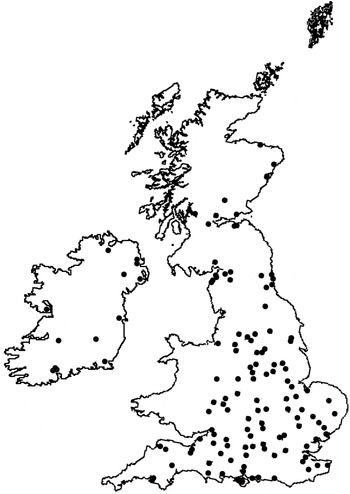
As the London declaration was not the first, nor was it the last. After the Bank of England suspended its cash payments, a series of public meetings were held in the cities and towns in Britain, and those meetings issued declarations. The Bristol bankers were among the first to be informed of the privy council's decision by their London agents, which enabled the city to hold a meeting on the day of the suspension.Footnote 57 News of the suspension quickly spread around the country. On 1 March, Bath, Hull, Northampton, and Oxford issued declarations. St. James's Chronicle reported: ‘At Yarmouth, Lynn, Beccles, Canterbury, York, Bristol, Shrewsbury, and, in short, every town of consequence in the kingdom, the inhabitants have agreed to similar resolutions in support of their several Banks, and of the Bank of England.’Footnote 58 During the 1797 suspension crisis, adoption of this method spread surprisingly widely and quickly. In contemporary newspapers, about 150 such declarations in England, Scotland, and Ireland can be identified (Figure 1) – due to the lack of local newspapers in the period, there is, however, no direct evidence about declarations in Wales. Apart from major commercial centres, declarations were issued in places ranging from Plymouth, the Isle of Wight, and Sandwich in England, to Aberdeen and Banff in Scotland, and Londonderry and Limerick in Ireland. However, there are several places where no record of a declaration has been found, such as Leicester and Cornwall. The reason cannot be easily ascertained – perhaps it is simply due to a lack of surviving evidence, or it might indicate that some places could not find sufficient numbers of participants.Footnote 59 In any case, the scale of the declaration movement testifies that London was not the only place which responded to the suspension crisis. The declaration movement spread well beyond the financial and commercial centres as it covered most of the major cities and towns – as well as some minor ones – of the British Isles. This demonstrates that the suspension of cash payments had far-reaching geographic and social impacts on Britain.
The declaration movement, February – April 1797. Compiled from Aberdeen Journal; Bath Herald and Register; Berrow's Worcester Journal; Cambridge Chronicle; Derby Mercury; Edinburgh Evening Courant; Felix Farley's Bristol Journal; Hampshire Chronicle; Ipswich Journal; Jackson's Oxford; Kentish Chronicle; Leeds Mercury; Lincoln, Rutland, and Stamford Mercury; Manchester Mercury; Morning Chronicle; Norfolk Chronicle; Northampton Mercury; Norwich Mercury; Nottingham Journal; Portsmouth Gazette and Weekly Advertiser; Reading Mercury; Sheffield Courant; Shrewsbury Chronicle; Staffordshire Advertiser; Sussex Weekly Advertiser; Cumberland Pacquet; Dublin Journal; Exeter Flying-Post; Shrewsbury Chronicle; Star; Times; York Courant.

The scarcity of contemporary records does not allow us to see the details of the organization of the public meetings. We can, however, assume that the meetings were organized around local political leaders – if not by them – from the fact that their names appeared at the top of the signatories in most cases, for example, the lord mayors in London and Dublin, the lord provost in Edinburgh, and mayors of other places.Footnote 60 In certain places at least, such as Edinburgh and Newcastle, meetings of bankers preceded public meetings. One such case was Norwich, where the process was well organized. Following the arrival of the news from London during the evening of 27 February, several banks were shut and a meeting of local bank proprietors was held the next day.Footnote 61 A court of mayoralty was then held at the city hall and a resolution confirmed the bank proprietors’ decision, which was further endorsed by principal merchants at an even larger meeting.Footnote 62 The process, from the banks’ decision to suspend payments, confirmation by the local authority, and public endorsement, was meticulously staged by the local community.
The suspension's impact went beyond England. The Bank of Scotland's London agent, Thomas Coutts & Co., sent a dispatch on the day that the privy council convened (despite it being a Sunday and the privy council's order not being made public until the next day).Footnote 63 The dispatch arrived in Edinburgh on the Monday when a meeting of bankers was immediately organized by the three chartered banks – the Bank of Scotland, the Royal Bank of Scotland, and the British Linen Company – and by a private bank, Forbes & Co.Footnote 64 After this meeting of bankers, a public meeting was convened by the lord provost. Impressed by the scale of the meeting, William Forbes of Forbes & Co. wrote: ‘the greatest number of respectable citizens I ever saw met together to the number of Some hundreds; who all unanimously agreed to Support the Banks & the Credit of the Country’.Footnote 65 In Ireland, the Bank of Ireland did not suspend its cash payments until some days after receiving news of the French landing at Fishguard. It was, in fact, when they received the news of the stoppage at the Bank of England that the Irish bank finally decided to suspend its cash payments.Footnote 66 With the order from the lord lieutenant and the Irish privy council, the Bank of Ireland's stoppage started on 2 March, three days after its English counterpart. The following day, just as the case in Scotland, the lord mayor of Dublin called a public meeting at the mansion house, attended by over 250 people, which duly and unanimously adopted a declaration.Footnote 67
The series of events described above clearly demonstrate that the success of Britain's transition to inconvertible paper money cannot entirely be attributed to the event in London. Undoubtedly, the London declaration had a symbolic status and was especially important – hence, latter-day historians have mostly chosen to talk about it, forgetting the others – but to ignore other declarations is to miss a crucial point: that it was a national movement supported by various local communities across the nation. Even the London declaration had a much wider scope than most historians have thought. The London declaration was not complete as it was first issued. But immediately following this, the declaration was supplemented by about 1,000 signatures. On the day of the meeting, according to the London Chronicle: ‘The Mansion-house was crouded [sic] for the whole day, by persons pressing forward to sign the…Resolution’, whilst it was also placed in London's major taverns and streets, eventually garnering around 4,000 signatures.Footnote 68 A similar situation occurred in other places. For example, in Ashford, it was signed by ‘upwards of 100 persons’.Footnote 69 It is also highly likely that the declarations printed in newspapers listed only a limited number of participants. In Newcastle, the declaration was placed in the Exchange to invite signatures,Footnote 70 and the Leeds Mercury reported that, in total, 689 people signed the declarations of Newcastle, Durham, and Sunderland.Footnote 71
It is clear that simply issuing a declaration was not deemed sufficient to assuage the potential contagion of financial instability. Attracting the widest possible support was the key to the success of suspension. The process of appending the declarations with a large number of signatures also suggests that both the public meetings and their declarations were an act to consolidate, visualize, and display public support for, or trust in, the financial system. Nevertheless, such a unity was by no means achieved effortlessly, as nationwide solidarity required the binding together of different interests.
III
All of the declarations expressed the need to support public credit by way of accepting banknotes. Noticeably, some declarations mentioned their willingness to accept local banknotes only, while in others both local banknotes and the Bank of England note were mentioned.Footnote 72 In some cases, the declaration was accompanied by communal pressure. A Bristol newspaper issued a warning to publicans not to obstruct the note's circulation.Footnote 73 Such a coercive tone was probably a reflection of insecurity with regards to the legal status of local banks' suspension. There were no legal grounds on which to suspend cash payments except for the Bank of England, and even its suspension needed to be sanctioned by retrospective legislation.Footnote 74 In contrast, local banks were not granted such legal remedy and, theoretically, the holders of their banknotes could demand cash payments if they wanted. In other words, their suspensions rested upon public confidence, a voluntary agreement between bankers and their customers.
The banks' customers were not the only people the banks needed to persuade. The declarations were directed at a wider audience. A Newcastle declaration of 22 February, for example, specifically stated that banknotes would be accepted for rent payment.Footnote 75 As one of the most substantial types of cash payment for most people at the time – and the suspension crisis took place in the period of annual rent payments – assuring the acceptability of banknotes for that purpose was clearly important in encouraging people to use that medium of payment. It was also to forestall the possibility of further bank runs. Most especially, the lower classes were regarded as susceptible to the temptation of encashing the note they held. The Newcastle banker Rowland Burdon believed that the run in mid-February, part of the nation-wide financial disturbance, was caused by small farmers. Further down the social scale, the crowd demanding payment for banknotes in Scotland were, as William Forbes noted, ‘mostly of the lowest and most ignorant classes, such as fisherwomen, carmen, street-porters, and butcher's men’.Footnote 76 With this contemporary understanding of the potential causes of financial disquietude, declarations functioned as a message directed at the general public, assuring them that banknotes would be accepted. People like Forbes believed, probably rightly, that Britain's business community and wealthy classes had already become accustomed to the use of paper money, and if there was anyone who needed persuading to use banknotes, it was those who were not handling good sums of money on a daily basis.Footnote 77 This extra layer of declarations' meaning suggests the central importance of the acceptance of banknotes. In the minds of the participants of the declaration movement, the acceptance was the basis of banknote circulation as well as the surest way to prevent a bank run.Footnote 78
As already mentioned, a substantial first-hand account of the event has yet to be discovered. After all, the meetings were largely spontaneous rather than the result of contemplation and planning. What the latter-day historians have are a number of the declarations that appeared in print, mostly in newspapers. One such, the declaration in Leeds, is a catalogue of well-established merchants in and around the city, a regional commercial centre.Footnote 79 There is no indication of the initiator of the meeting, but heading the list of signatories was John Blayds, a prominent merchant and three-time mayor,Footnote 80 who had a close connection with the local bank, Beckett's. The incumbent mayor's merchant house, Clapham and Hall, is also listed among the signatories. The participants were overwhelmingly from the city's merchant houses. The Leeds declaration's pledge to accept both the local banknotes and the Bank of England note reflected the national and international scope of the Leeds merchants' activity. With a contemporary commercial directory, forty of the seventy-five names appearing on the declaration can be identified.Footnote 81 Those names include Leeds's leading merchant families Smithsons, Rayners, Oats, the international trading family of Rhodes, the large-scale manufacturers of Wormald, Foundain, and Gott, as well as those who were directly involved in banking such as Bishoff's. The list of signatories in Leeds provides a snapshot of the business and social network that existed in the city at the time. Simultaneously, it shows how deeply such a network was mediated by the use of paper money. That said, the participants of the declarations were not always confined to bankers and their wealthy customers. In the Aylesbury declaration, for instance, the names of farmers, grocers, inn-holders, butchers, bakers, a peruke maker, the vicar, and the dissenting minister also appeared in the list of signatories.Footnote 82 The working classes may not have attended the declaration meetings, but those who were closely linked with daily economic transactions certainly did.
The published list of the signatories of the London declaration contains 3,455 entries. About two-thirds of these are accompanied by an address, either their places of residence or business premises. By comparing this list with a contemporary commercial directory, it is possible to obtain a fairly detailed knowledge of the occupational composition of the signatories.Footnote 83 Out of the 1,521 names thus identified, the largest occupational group is that of merchants, amounting to 584. Another conspicuous group is the bankers. Fifty-nine bankers are found in the list, which shows that most of the bankers in London participated in the declaration (a total of sixty-nine bankers are listed in the London directory). In contrast, only eleven stock brokers and eighteen insurance brokers are present. In any case, a variety of different trades appear in the list, such as sixty-nine linen drapers, ninety-nine warehousemen, forty-three grocers, thirty-four haberdashers, twenty-one stationers, twenty-six sugar refiners, sixteen brewers, and nineteen ironmongers. It is almost impossible to find out the identity of those who signed as individuals, especially when most of them are not accompanied by their addresses. Very few names with aristocratic titles are listed, and there is no way to tell whether this was because they omitted their titles or if they did not come forward to sign the document. In many ways, the list is incomplete, but it is enough to show that the participants did come from a wide range of occupations, even though this does not necessarily mean the declaration embraced cross-class support. Like the case of Leeds, there in no instance in which a signatory's working-class background is suggested.
Apart from the identity of participants, the London declaration gives us some hints as to the historical meanings of the declaration. The meeting was chaired by Brook Watson who was the lord mayor and a Bank of England director.Footnote 84 With the Order of the Privy Council legitimizing the suspension of the Bank of England – and its note circulation occupied a monopolistic status in and around the metropolis – there was no fundamental problem like the one that the local banks faced regarding the legitimacy of suspension. However, solidarity could not be taken for granted. During the meeting, Benjamin Travers, a grocer known for his radical politics, suggested holding a ‘more public Meeting’ to consider the resolution's propriety. This suggestion was rejected by the majority due to a concern that ‘the Jacobins would croud some public Hall early, and pass a negative Resolution’.Footnote 85 There was, therefore, a certain tension, which might jeopardize the solidarity of the meeting. It was in this tense atmosphere that Watson invoked the precedent of 1745, ‘when it was unanimously agreed by the principal Merchants not to refuse Bank-notes in payment, but to give them every possible currency’.Footnote 86 This refers to the financial crisis of 1745, when, in September of that year, the Jacobites' successful military campaign at Prestonpans caused a run on the Bank of England.Footnote 87 The Bank had tried to exchange its notes for silver, not gold – though the latter was then customary – to impede a torrent of withdrawals being made by the customers fearful of the progression of the Jacobite troops into London. Faced with a devastation of the Bank's finance, London merchants decided to take collective action. A meeting had been organized by prominent financiers including Samson Gideon, Theodore Janssen, and John Barnard, and a resolution was issued:Footnote 88 ‘We the undersign'd merchants and others…do hereby declare, that we will not refuse to receive bank notes.’Footnote 89 Under this declaration – identical to that of the 1797 London meeting – 1,140 signatures were gathered in five days and the ‘hurry’ ceased.Footnote 90 In February 1797, Watson, and probably the Bank directors too, were convinced that re-enacting the declaration of 1745 would be a powerful measure against the threat of financial debacle. The collective memory of London's business community was thus revived to support Britain's financial system once again.
Amidst the mobilization of nationalistic spirit, financial instability was rhetorically transformed into a crisis of communal solidarity. In fact, there was no mention of the French invasion in the 1797 London declaration. What was instead singled out as the cause of the crisis was ‘the Effect of any ill-founded or exaggerated Alarms'. With this rhetorical manoeuvre, the 1797 declaration, and its 1745 equivalent alike, aimed at ensuring coherence within the community of banknote users. For Henry Fielding, a fervent admirer of the ‘ever-memorable Association in Defence of Public Credit’ of 1745, the enemies, who were more obnoxious than the Jacobites, were those who, driven by cowardice, tried to withdraw money from the Bank, ‘the Contrivers and Abettors of this detestable Scheme…the most flagitious and profligate Enemies of their Country’.Footnote 91 In 1797, Watson was not alone in invoking memories of 1745,Footnote 92 and the historical analogy to the event of 1745 was made elsewhere.Footnote 93 From this historical linkage of financial crises, economic nationalism was only a small step away. The Newcastle Advertiser, for instance, employed the unmistakable language of economic nationalism when it described, in early March 1797, the declarations as having demonstrated a spirit equal to ‘the patriotism of English merchants and capital Stock-holders that protected public credit, by supporting the Bank of England in the year 1745’.Footnote 94
The declaration thus had a historical dimension, and it was largely on this historical foundation that economic nationalism found the most potent expression. The declarations had layers of meaning, and, similarly, their legitimacy came from multiple sources. This probably reflected the situation of banknote circulation. The Bank of England was not the sole issuer of the banknote in eighteenth-century Britain. The national banks of Scotland and Ireland, as well as numerous country banks, also issued their own notes. As already mentioned, the Order of the Privy Council relieved the Bank of England from making cash payments, but it did not extend this to other banks. This meant that acceptance of banknotes – apart from those of the Bank of England and the Bank of Ireland – rested upon voluntary agreement.Footnote 95 Hence, it was not entirely surprising that some meetings tried to invest a certain authority alongside the declarations. In Surrey, a declaration was made during the adjournment of the general quarter session, thus imparting, as Cobbett pointed out, ‘something of a magisterial weight and authority’.Footnote 96 Similarly, Baron Hotham's eloquent charge to the grand jury of the Essex assizes recommended ‘more than the ordinary exercise of their jurisdiction’, after which the grand jury issued a unanimous resolution to receive banknotes.Footnote 97
Even where there was no outright recourse to semi-legal authority, the collective act of declaration undoubtedly had a certain binding power in the context of the socio-economic life of eighteenth-century Britain, where the traditional ‘economy of obligation’ still regulated a large part of everyday economic life.Footnote 98 At a time when the economic transaction had yet to become a commercial exchange between anonymous economic actors, publicly committing oneself to an economic obligation – in the case of the 1797 declaration, that of accepting banknotes – meant that the subsequent fulfilment of the obligation was monitored by the economic community to which one belonged. The signatories of the declarations were living in a society which was still largely dependent upon what Margot Finn called ‘a scaffolding of extra-legal customs, obligations and expectations’.Footnote 99 The economic obligation implied in the declarations of 1797 did not go much beyond the acceptance of banknotes, but the gravity of that promise could have been quite similar to the one which appeared in a declaration issued by a Newcastle meeting in 1793. In that year, the banks of that city were hard-hit by the outbreak of the war with France, the early effect of which was particularly severe in the north.Footnote 100 A resolution was issued, accompanied by the amount to which the signatories would be liable in case local banks failed. The stated obligations ranged from £500 to £20,000 per person.Footnote 101
The suspension brought out a type of nationalism in British society, and, at the same time, it foregrounded the traditional economic network centred on obligation. In stark contrast to some historians' claim that the economic transaction had become highly anonymized by the end of the eighteenth century,Footnote 102 the declaration movement reveals the continuing relevance of personal and communal trust. The nuances of the nationalism expressed in the realm of finance also require a careful interpretation. It cannot be assumed that the nationalism of the London declaration was wholly identical to those in other places, such as Newcastle, Norwich, and Aylesbury, let alone those in Scotland and Ireland.Footnote 103 The geographically uneven circulation of the Bank of England note, given the varied degree of its use, does not entirely explain certain variations, such as the exclusion of the Bank of England note in some declarations. However, the issue here is not the form of diverse economic nationalism, but how the differences were translated into a unified expression.
IV
The declaration movement of 1797 was not a totally monolithic movement. There were some potential conflicts of interest. Differing theoretical views on paper money did not, at least during the suspension crisis, pose any serious problem. Conflicts were more likely to arise in three other areas: those of politics, geography, and class. Most especially, the political divisions at the time could have become a serious obstacle to achieving solidarity, with the most tangible threat undoubtedly coming from the political radicals.Footnote 104 To late eighteenth-century British radicals, the financial system represented Old Corruption. Such animosity could flare up into a physical attack on the Bank, as it did in 1780 during the Gordon Riots.Footnote 105 This ‘portentous challenge to authority’, as Nicholas Rogers described it, had a significant symbolic meaning as well as a practical significance in attempting to bring down state machination.Footnote 106 That is, to the Gordon rioters, the Bank appeared as representing the power of the state, even though it was in principle a private institution. Similar to this was the plot of Captain Despard, whose plans were exposed five years after the suspension, and which aimed at taking over the Tower of London, the treasury, and the Bank.Footnote 107 Although the suppression of radical societies in 1795 effectively contained the large-scale organized activities of popular radicalism, the surviving threat from radicals was still sufficient to warrant the government's fears that, with some encouragement from an invasion scare, violent action might at any time materialize.Footnote 108
By 1797, suspicion of paper money had already become deeply embedded in the minds of radicals, especially after Thomas Paine provided it some theoretical support in his pamphlet, The decline and fall of the English system of finance (1796).Footnote 109 However, unlike the period after the 1810s, the popular radicals of 1797 had yet to possess effective tactics to deploy the anti-paper rhetoric for their cause. There is only scant evidence to suggest the existence of an organized attempt to sabotage the acceptance of banknotes, though the United Irishmen tried to ‘discourage the circulation of banknotes’ before 1796.Footnote 110 However, this did not mean that organizations like the London Corresponding Society failed to see the significance of the suspension. The March issue of its Moral and Political Magazine published a special report on the suspension in which the Bank's ‘real insolvency’ and ‘most precarious security’ were strongly condemned.Footnote 111
It was probably more than coincidence that one of the origins of the declaration movement was an anti-radical political movement. Public declaration was a method extensively used by the association movement in the early 1790s, when, to counteract the radical societies, John Reeves initiated the formation of an ‘Association for the Preservation of Liberty and Property against Republicans and Levellers’, which fashioned itself as the defender of the constitution, as established in 1688–9.Footnote 112 Following the historical precedents of the collective declaration of allegiance, from November 1792, the association published a declaration in newspapers that expressed its loyalty to the constitution.Footnote 113 The movement swiftly spread to the whole country, greatly assisted by newspapers circulating the association's political message.Footnote 114 Inspired no doubt by Reeves's association, other groups of people also issued similar declarations. Among these groups, and one of the most conspicuous, was the ‘Merchants, Bankers, Traders, and Other Inhabitants of London’, which issued a declaration in December of that year.Footnote 115 The same group, representing London's commercial community, again issued a declaration three years later, amidst the royalist backlash occasioned by an assault on George III's carriage.Footnote 116
Allusion to the association movement of the early 1790s was often made by participants in the declaration movement of 1797, not least because there was a clear overlap of participants, such as a London merchant, Samuel Bosanquet, then one of the Bank of England's directors. Bosanquet was the chair of the meetings held in 1792 and 1795, and was also one of the eminent signatories of the 1797 London meeting.Footnote 117 In the immediate aftermath of the suspension and at the level of language, the declarations were often described as ‘associations’. For example, the earl of Chesterfield publicly expressed his determination to ‘join any Association that might be formed here, for the Support of Public Credit’,Footnote 118 whilst ‘associations’ was the term usually employed to describe the declaration movement in parliament.Footnote 119 In spite of the temporal proximity of the 1797 declaration movement and the association movement, however, their similarity should not be overstated. In particular, reading too much into the aspect of loyalist propaganda in the two movements would simplify the matter too much. According to Donald Ginter, even the declarations of 1792–3 had a much wider scope than a simple loyalist demagogy. The declarations were capable of representing ‘every type of contemporary ideological position short of revolutionary republicanism’.Footnote 120 The form of declaration was therefore intended less as a rock-solid ideological touch-stone, against which one's political allegiance was judged, than as creating a common ground, where only a small minority, those who were determined to overturn society and its shared values, would be excluded. It was this inclusive nature of public declaration, rather than the narrowly defined message of loyalism, that was conveyed and exploited during the suspension crisis. In fact, there was hardly any mention of the king or government in the declarations of 1797. The nationalism thus embodied in the declarations was directed at the preservation of public credit, rather than the constitution. In a sense, what made the declaration movement possible was the very fact that it succeeded in obscuring political allegiance.
By replacing the political implication of suspension with the objective of upholding public credit through accepting banknotes, the declaration movement enrolled the widest support available, including some radical elements such as the radical grocer Benjamin Travers. And the orderly proceedings through which the city of Norwich, a renowned ‘Jacobin’ city, issued declarations also points to the existence of a broad swathe of support for the movement beyond any narrow definitions of political allegiance.Footnote 121 In the declaration movement of 1797, the collective memories of both the association movement and the 1745 London meeting enforced the legitimacy of the reciprocal relationship between the banks and the users of banknotes. At the junction of these historical memories, it was not particularly important who organized the meeting. It would be much more plausible to consider the declaration as emerged out of collective initiative of the community of banknote users.
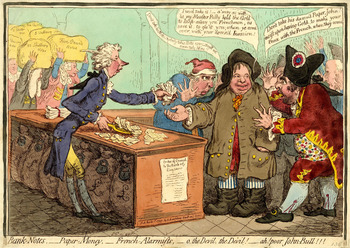
The politically ambiguous, if not entirely neutral, nature of the declaration explains the seemingly contradictory situation that ensued. In late March and April, numerous petitions for reform and for dismissal of the ministry were sent to George III, coming from all over the country.Footnote 122 In London, even Brook Watson was involved. These circumstances strongly support the above argument whereby the wide following of the declaration movement by no means points to the existence of indisputable unity under the banner of pro-ministry or loyalist sentiment. Rather, the support base of the movement shows that it was almost impossible to reduce the economic nationalism, which appeared during the suspension crisis, to political factions: the politics of paper money was not always subservient to party politics. The caricaturist James Gillray probably did not fully understand this when he attempted to visualize the situation using the language of party politics. Still, his artistic genius betrayed him by capturing the fundamental point (Figure 2). In the print, Fox exhorts John Bull, who is extending his hands to accept a Bank of England note, to insist on having coins, in order to make peace with the French. John Bull is adamant that he will accept the Bank of England note, letting Pitt hold on to the gold, but only in order to give it to the Frenchmen when they arrive.Footnote 123 There is obvious logical confusion in John Bull's statement: accepting the banknote is both to keep away the French, and, at the same time, to give gold to the invaders when they arrive. Placing John Bull in between Pitt and Fox failed to convey the meaning, which Gillray possibly intended, of sharp political contrast over the issue of suspension; in effect, the picture offers a visual testimony that the acceptance of the banknote was an act that defied the dominance of party political logic.
James Gillray, ‘Bank notes, – paper money, – French alarmists, – o the devil, the devil! – ah! poor John Bull!!!’, published in March 1797. © Trustees of the British Museum.

Like the obfuscation of political allegiance in the declaration, the meaning of public credit was equivocal. In some declarations, where the participants pledged to accept only local banknotes, public credit simply meant local credit, even if the participants of local meetings recognized that regional finance formed an inseparable part of national finance. Nevertheless, the practical link between regional and national finance levelled out regional variations in economic patriotism, and along with this, their difference of meaning. This erasure of difference in economic nationalism was grounded in the necessity of local finance. Local banks, as well as Scottish national banks, had no legal authority to suspend cash payments. It was only by pretending that they were following the example of the Bank of England that other banks could gain some de facto authority for their suspension. The public meeting in Norwich, for example, stated clearly that the city's banks were ‘to follow the regulation of the Bank of England as far as possible’, which entailed endorsing the Bank of England's suspension, from which other banks' suspension derived their legitimacy.Footnote 124 In other words, as long as local communities met the crisis with the combination of suspension and declaration, their acts were inevitably subsumed under the national movement, whose ultimate effect was to strengthen the legitimacy of the Bank of England's suspension of cash payments.
The declaration movement thus enabled Britain to diffuse political and regional tensions. Furthermore, even the long-standing dichotomy of monied and landed interests was, for a moment, obliterated. At least up to the 1832 Reform Act, the landed interest maintained substantial power over the nation's politics. Even though their economic power had dwindled a little with Britain's industrialization and the ascent of monied interest, the landed elite were still a major force in society.Footnote 125 Above all, they constituted a group of principal customers for the banks and merchants, and holders of national debt. During the suspension crisis, the involvement of the landed interest was no less conspicuous than that of the bankers and merchants.Footnote 126 Immediately after the suspension, the privy councillors issued a declaration underlining the fact that the councillors were committed to the Bank's suspension as individuals.Footnote 127 At a more local level, Newcastle landowners publicly denounced the run on banks and forced people to bring back the cash withdrawn: the landowners demanded rent payments in cash, threatening that those who failed to do so would be allowed no future arrears.Footnote 128 The cash thus obtained was presumably to be paid into the local banks. Where such regurgitation of cash was not necessary, landowners, such as the duke of Northumberland and bishop of Durham, announced their willingness to accept banknotes for rent payments on their estates.Footnote 129
The potential threat against achieving solidarity implied by the three – politics, geography, and class – levels of economic nationalism was momentarily effaced, and merged into a single, national movement to support public credit. The declaration movement itself was not, as some have assumed, a crude, momentary eruption of economic nationalism. It was grounded on the social and political conventions of collective action developed in the long eighteenth century. What was notable in the period following the suspension was the fact that it was a financial disturbance that set in motion the mechanism to translate various differences into a coherent movement, a movement so potent that it enabled Britain to thwart a nationwide financial crash. In other words, the declaration movement shows us the moment when trust in the financial system was consolidated and visualized into tangible form in the face of a potentially devastating financial crisis.
V
In the period during and immediately after the suspension crisis, the consolidation of trust through economic nationalism played a crucial part in sustaining Britain's financial system. The extent to which the declaration movement helped normalize the financial situation cannot be shown in monetary or other objective terms, but, at the very least, not a single bank run was reported in the follow-up to the suspension.Footnote 130 Such instantaneous success would not have been possible without nationwide support of public credit, including both national and local financial institutions and networks. Nor did the government have any difficulty in legalizing the suspension. The acts relating to the suspension went through parliament swiftly. On 2 March, an act permitting the Bank to issue notes for less than £5 was passed; on 10 March, the acts of 1775 and 1777 prohibiting the issue of small notes were suspended, and on 20 March, the Bank Restriction Act came into being.Footnote 131 All these were completed within less than a month of the suspension. Reports on the financial situation of the Bank of England from a committee of secrecy were published on 21 April but did not cause significant debate in or out of parliament. Soon, in April and May, mutinies at Spithead and Nore arrested the nation's attention. While in parliament, Grey's Parliamentary Reform Bill was defeated, which led Fox and some of his followers to abandon parliamentary politics, leaving only a small number of MPs to question the government's financial policy in the legislature.Footnote 132 Thus, in June, when the Restriction Act was originally intended to expire, Pitt summarily informed the Bank of England of his intention to continue the suspension, even though he knew very well that the Bank's reserves were sufficient for resuming cash payments.Footnote 133 With the far-reaching support from the country that was shown during the suspension crisis, combined with the absence of serious challenge to his financial helmsmanship, there was no pressing reason for Pitt to relinquish the financial free rein gained by severing the link between precious metals and paper money.Footnote 134
As this article has demonstrated, the 1797 suspension crisis was occasioned as the result of a series of financial panics and a defence policy blunder by the government. The situation was fraught with possibility, which could well have ended up causing a financial calamity on a significant scale. Despite this, the suspension is not remembered as a national crisis, simply because it was narrowly avoided. It is the nature of the memory of financial crises that when a crisis is fended off, it is treated as a minor episode in history. As a consequence, financial history is replete with stories of financial crashes in which, once too often, it is villains and fraudsters who are the main protagonists, rather than those who strove to protect, stabilize, and normalize the financial system. The episode of the suspension crisis is a victim of such a disaster-driven approach to financial history. No less forcefully than the episodes of financial disaster, the suspension crisis shows us something far more significant than a narrowly avoided financial crash. The declaration movement points to the existence of historical precedents, by resorting to which the stoppage of cash payments was legitimized for the Bank of England and other banks in England, Scotland, and Ireland. The use of public declarations worked to eliminate the potential threat to solidarity by dissolving political, regional, and class diversity at least with regards to the support of public credit.Footnote 135
By dissecting the process of consolidating and visualizing trust in the financial system, the complexity of economic nationalism – hitherto mostly employed as a catch-all phrase to describe the collaborative partnership, or complicity, between the economic activity and the nation-stateFootnote 136 – can be firmly located in the historical development of Britain's financial system and social life with money. For much of the eighteenth century, the end of economic nationalism was considered to lie in its advancement of national interest. Therefore, economic commentators such as David Hume argued that the holding of the financial stake of a country, through the purchase of national debt for example, needed to be accompanied by one's sense of attachment to the country.Footnote 137 A theoretical inversion to this view of economic nationalism is to see economic motives as a driving force in defending the country.Footnote 138 These two views are, in fact, both sides of the same coin: whatever the motives and personal consequences are, economic activity is supposed to serve the interests of the state. The suspension crisis foregrounded the changing relationship between the traditional idea of national interest – still strongly influenced by mercantilist thinking – and the expanding realm of finance. In late February, 1797, the national financial system, expressed as ‘public credit’, loomed large in British society. During the crisis, the protection of public credit was given supreme status, and the full might of economic nationalism was mobilized, overriding political and military concerns. Although the declaration movement by no means encompassed the entire nation, support for the financial system, the Bank of England and the banknote emanated from more diverse social and geographical backgrounds than most historians have previously admitted. It may well have been an exceptional episode, but in light of the long-term development of Britain's economy and society, in which finance played a prominent role, the suspension crisis was a significant moment when, if only momentarily, finance replaced patria as the object of nationalism.