Introduction
On 29 August 1945, two weeks after Japan's surrender had effectively ended the Second World War, the Communist daily, Xinhua ribao, published a letter signed by ‘a group of women workers’ and addressed to Mao Zedong.Footnote 1 Excited by the Communist leader's recent arrival in Chongqing and anticipating his deliberations with Chiang Kai-shek for China's post-war reconstruction, the five cotton mill hands expressed their joy and admiration for Chairman Mao.
Dear Mao Zedong—our people's leader, Upon hearing the news of your arrival to Chongqing, we were so overjoyed we did not know what to do. Other people would have interfered if we had cried out in joy, but if we had kept silent we would have felt depressed. At best we quietly hid in our dormitory and giggled among ourselves.
Mr. Mao, you probably feel we are ridiculously childish, but please don't laugh at us. For so many years we have suffered through inhumane days, always treated like cattle and horses and denied even the slightest freedom. We have always believed that we could not continue on like this, that we would find a liberator. From [reading] the newspapers, from listening to many of our friends, we know the Chinese [people] have a great liberator that is you. We welcome you and support your proposals. This has been our hope for many years.
It is you who have told the Chinese people how to defeat the Japanese devils; it is you who have helped the Chinese people stand up (fanshen); it is you who have brought to the Chinese people the hope of a genuine peace and unity. Your arrival has brought us infinite hope and happiness. How can we express our joy?
We truly do not know what is the best thing to do, but write you this letter to express our admiration and gratitude.
We sincerely convey our blessings to you.
A group of women workers: Lin Hua, Wu Suzhen, Jiang Lianzhen, Hu Pi, Zhang Defang
One cannot deny the letter's propaganda value in its effort to sway public opinion in favor of the Communists and fuel the cult of Mao, yet the reader may also note the hopes and grievances of women workers, transformed by the War of Resistance against Japan. Political controls on workers and social restraints on women were such that the cotton mill workers felt they had to repress a public display of their emotions. Yet the very act of writing a letter to Mao Zedong was a bold political statement. Writing from the wartime capital of Chongqing, the workers implicitly criticized the Nationalist government for subjecting them to the unjust treatment of being like ‘cattle and horses’ (a trope familiar to all who had lived through the class-inflected nationalist movements of the 1920s), while singing Mao's praises as the leader who would liberate them from injustice.Footnote 2 Having the letter published in Xinhua ribao reinforced its political message, given that Chiang Kai-shek had banned the official Communist newspaper's circulation among factory workers.Footnote 3
Two years later, with China convulsed in civil war, Chongqing cotton mill workers once again wrote to the Chinese leadership, but this time to Chiang Kai-shek. In their manifesto, women workers denounced their labour union secretary and Three People's Principles Youth Corps (Sanqingtuan) district leader, Ye Zhou, for having sexually harassed a woman worker at the Yufeng Cotton Mill. Rebuffed by the worker, Zeng Weishao, Ye sought vengeance by instructing one of his henchman to humiliate her and stick a cigarette butt in her hair during the showing of a film at the factory. The incident led to a brawl at the assembly hall, fed into a larger power struggle at the union, and prompted the women workers to press their case for basic human rights through political demonstrations, petitions to government authorities, and appeals to public opinion.
Chairman Jiang of the Nationalist Government, all ministries, legal bodies, schools, newspapers, and to all our male and female compatriots, we beg to inform you: We are a group of women workers at the Yufeng Cotton Mill who abide by the law and behave ourselves, but who have had the misfortune to encounter the brutality of one of our factory union leaders. He has subjected our unfortunate sisters to the most severe indignities and oppression. We truly cannot stand it any more!
We have left behind our families to join the factory and to earn several thousand yuan each month. We work hard all year round. Although we are weak and have limited abilities, we have fulfilled to the best of our abilities our responsibilities for the country's economic reconstruction. But now we have encountered the worst misfortune. In order to vent our pent up hatred and to prevent a reoccurrence of this incident, we cannot endure any longer!
In theory the union was established for our welfare and interests, but one of those in charge of this factory's union never cared for our welfare, and instead used the union to commit endless brutal acts that humiliated, bullied, and oppressed us. . .
Whenever he sees a pretty woman worker, he tries every conceivable means to seduce her. Because she had resisted, Ms. Ou was beaten up by his henchman, Chen Longdan. Zeng Weishao was also beaten because she had rejected Ye Zhou.
We are all women workers, weak and with limited abilities. We have been trampled on already far too long by Ye Zhou. To help ourselves and express to society our suffering and the truth, we demand that government authorities:
1. Strictly punish the perpetrators—Ye Zhou, Guo Ruzhong and others.
2. Take responsibility for all costs and medical expenses of the injured workers.
3. Reform the union.
4. Promise that no such incident will ever reoccur.
We will not rest until we achieve these goals. We sincerely submit this manifesto.
Manifesto of all women workers at Yufeng Cotton Mill to expose the atrocity of this factory's union secretary Ye Zhou, dated 30 March 1947.Footnote 4
The document uses several rhetorical devices frequently found in women workers’ writings. To gain public sympathy, the authors play on gendered stereotypes of weak, subordinate women. Similarly to the letter to Mao Zedong, in which the authors describe themselves as bashful girls, the manifesto underscores the workers’ frailty and ‘limited abilities’. The writers stress that they have placed their loyalties to the nation and its economic reconstruction ahead of their personal and family interests. As migrant workers, they have left their families to work for the nation, but their sacrifices for the Resistance have been betrayed by the male union director's abuse and failure to implement the union's corporatist mission. Moreover, both documents underscore that industrial women workers shared similar experiences, a sense of injustice, and social identity—epitomised by the words ‘we women workers’—based on their production value and their identity as women. As the historian Reinhart Koselleck has noted, ‘it is possible to articulate or linguistically create a group identity through the emphatic use of the word “we”’.Footnote 5 In short, the letters point to the formation of new gender and class identities among industrial workers and suggest that wartime work had politicized the mill hands.
Upon joining the workforce in the late 1930s, most cotton mill hands were uneducated girls recruited from Chongqing's surrounding countryside. They were expected by their managers to endure hard work and remain physically confined to the factories, which—for added measure—were surrounded by high walls and barbed wire. Yet by the War's end, women workers had become politicized. They were defying the authorities by penning manifestoes and petitioning government officials to redress injustices. Textile workers also played a prominent role in Chongqing's post-war labour movement which, while fuelled by economic crisis, had strong political undertones.
This study of women workers’ politicization builds on recent scholarship that highlights how the Anti-Japanese War caused dramatic social and political changes which affected women. Reflecting the title of her masterful survey of the Anti-Japanese War and its human costs, The Chinese People at War: Human Suffering and Social Transformation, Diana Lary vividly depicts the social dislocation and social levelling inherent in the War. Increased social and geographical mobility radically changed women's status. ‘The war brought a revolution in the status of many women—the possibility and often the necessity of emancipation from the domestic prisons in which many had existed before the war.’Footnote 6
Changes in women's status were accompanied by political activism. Louise Edwards’ study of Chinese women's suffrage counters the assumption that the exigencies of war and Nationalist Party repression limited feminist organizing. She shows how women activists used the wartime parliament—the People's Political Council—and a rhetoric of equal citizenship, but separate gendered patriotic duties, to achieve minimum electoral quotas in 1947 for women in national government bodies.Footnote 7 In her pioneering study of women's experience in wartime Chongqing, Danke Li uses oral histories to demonstrate the important contributions they made to the Resistance: work in the formal and informal sectors of the economy, relief efforts for war veterans, fundraising, and participating in rural service teams throughout Sichuan. Li suggests that their shared sacrifices and vital role in the war effort stimulated women's political consciousness and led to demands for gender representation and equality. In contrast to Edwards’ more cautious evaluation that feminist consciousness was limited to middle-class urbanites, Li stresses that a ‘majority of ordinary Chinese women’ developed a heightened consciousness of unequal gender relations: ‘Their wartime experiences made them more aware of the existing gender divisions of labour as well as the traditionally unquestioned role of women.’Footnote 8
Although these histories show how the Anti-Japanese War transformed women's social and political status, they neglect to assess the impact of industrialization on working women and the role played by women in the process of proletarianization which supported wartime industrialization. Chongqing's emergent heavy industry is the backdrop for two recent books on wartime labour and industrial enterprise reform, yet its exclusively male workforce precludes discussion of women's wartime experience. In the course of the war, Chongqing's population nearly tripled, surpassing the one million mark in 1945, while forced and rapid industrialization transformed the wartime capital from a commercial entrepôt into southwestern China's industrial centre.Footnote 9 Under state economic planning, heavy industry (steel mills, chemical plants, and arsenals) emerged as one pillar of the Nationalist economy. In documenting the origins of the work-unit (danwei) system, Morris Bian shows how the systemic crisis caused by the Anti-Japanese War led the Nationalist government to create new institutions associated with a state enterprise system that increased bureaucratization and expanded social welfare services.Footnote 10 Focusing instead on the social effects of war, industrialization, and bureaucratization within Nationalist China's largest and most strategic industry—the armaments industry—I argue that Chongqing's arsenal workers engaged in three interlocking conflicts between 1937 and 1953: a war of national liberation, a civil war, and a class war. Challenging studies that stress workers’ particularistic or regional identities, I contend that class formation and nationalism were mutually reinforcing.Footnote 11
Using as a case study the cotton mills—the wartime capital's largest employer of female industrial labour with over 13,000 workers—this paper examines the role of women labourers in the process of working-class formation. Women's participation in Chongqing's industrial labour force and industrial conflict was fuelled by economic demands and a quest for human dignity that were both reflective and constitutive of dramatic changes in working women's expectations and consciousness. The politicization of women workers was a by-product of the Anti-Japanese War, which sparked debate about the public role of women in society and the economy. Despite calls for women to remain in the domestic sphere, by 1945 close to 75 per cent of the more than 400,000 women living in Chongqing were working in the industrial, commercial, and service sectors.Footnote 12 Increasingly, both state and society viewed women's participation in the labour force as essential to carry on the War of Resistance. This view informed women's own sense of self-worth as they saw that they were contributing to the war effort, a message reinforced by political education and literacy campaigns undertaken by factory reformers.
Working under the auspices of the Women's Advisory Committee of the General Association for the Advancement of the New Life Movement (Xinshenghuo yundong cujin zonghui funü zhidao weiyuanhui), factory reformers played a key role in politicizing women workers. (Both Communists and Nationalists participated in Women's Advisory Committee's leadership and grassroots organization.) As a manifestation of United Front politics, the political programme implemented by factory reformers stressed patriotism and socially moderate policies. The education campaign launched in the factories between 1939 and 1943, however, had the unintended effect of raising women worker's expectations of better treatment. Workers’ desire for higher social status and social welfare benefits proved to be a powerful motive for labour activism. Moreover, when women workers protested against their abysmal working and living conditions or enlisted factory reformers on their behalf as de facto union representatives, they wielded wartime patriotic rhetoric instilled by the education campaign that had equated women's production with the fate of the nation.
The aftermath of the Anti-Japanese War marked the high point in women worker's politicization through their participation in the labour movement and class conflict that tore apart the cotton mills. Utilizing the rhetoric that factory and state officials had failed to honour their wartime sacrifices to justify collective action, the cotton mill workers participated in strikes, slowdowns, and demonstrations to protest against class exploitation and sex discrimination. Both male and female workers participated in the conflict, motivated by the desire to improve their treatment (daiyu), a term signifying both higher pay and higher social status. Women workers perceived their mistreatment as a product of the difference in status between themselves and male staff members and arising from the segregated and hierarchical order of the factory in particular and the societal scorn for women cotton mill hands in general. Moreover, activists used a gendered repertoire of collective action by manipulating stereotypical notions of women's frailty to press for their interests. More often, though, women workers participated in ‘masculine’ forms of class violence that marked the social disintegration of the war.
Wartime industrialization and the development of Chongqing's cotton textile industry
Until the mid-1930s, Chongqing served as a commercial hub for eastern Sichuan and its economy centred on handicrafts and the export of cloth, foodstuffs, tung oil, and hog bristles. Under the sponsorship of warlord Liu Xiang, several large-scale modern factories were established, but in 1933 the bulk of the city's 13,000 residents who were classified as ‘workers’ laboured in small workshops specializing in weaving, tanning, food processing, and match manufacturing.Footnote 13
The pre-war development of the cotton textile industry was also characterized by limited mechanization and household production. The establishment of Chongqing as a treaty port in 1891 and the 1898 opening of a steamboat line along the Yangzi River by the British promoted the importing of Hubei and Indian cotton yarn and delayed the introduction of mechanized spinning until the wartime relocation of modern cotton mills. Consequently, the pre-war cotton textile industry consisted of weaving and dyeing of cloth. Several technological advances in weaving—the introduction of the foot-pedal loom in 1905, the substitution of wooden pull shuttles for cast shuttle looms, and the use of iron wheel looms—spurred the concentration of labour into larger ‘factories’. Nevertheless, when Chongqing's cotton weaving reached a peak in production and scale in 1933, over 90 per cent of the 1,300 factories remained family-run workshops, with 24,000 looms producing over one million bolts of cloth. Increased imports and domestic turmoil, high taxes, and technological problems, however, reduced production to 400,000 bolts by the eve of the War.Footnote 14 Before the War, Chongqing had only one mechanized plant—the Sanxia zhiran chang [Three Gorges Weaving and Dye Factory] established by the shipping magnate Lu Zuofu in 1930.
With Japanese forces quickly occupying China's industrial centres along the coast, the Nationalist government's decision to make Chongqing its provisional wartime capital in 1938 and to relocate over 400 factories, including 92 textile plants, to the interior helped transform Chongqing into Nationalist China's industrial base. Between 1937 and 1940 Chongqing was the destination for the relocation of an estimated 243 factories.Footnote 15 Although Chongqing's industrialization was comprehensive, involving metallurgy, machinery, chemicals, textiles, transport, food processing, and mining, both wartime demand and the expanded managerial role of the state privileged heavy industry. By 1944 approximately 100,000 workers were employed in metallurgy, machinery, chemical, and the arms industries compared to roughly 29,000 workers employed in light industry, in which textiles played the leading role.Footnote 16
The relocation of four large-scale mills stimulated Chongqing's modern cotton industry.Footnote 17 In August 1938, the Rong family business (China's largest capitalist enterprise) moved 50,000 spindles from Shanghai's Shenxin Mill to two destinations—Baoji, Shaanxi and Chongqing. Manager Zhang Jianhui's 25-year-old sister, Zhang Yingfen, supervised the acquisition of land in Chonqing's Nan'an district and directed reassembly. By 20 January 1939 the Mill had started production. A week later, the Yufeng Cotton Mill began production, having moved from Zhengzhou, Henan, and despite losing a fifth of its machinery in the rapid currents and treacherous shoals of the Yangzi. In relocating from its base in Hankou, the Yuhua Cotton Mill also lost a portion of its 3,000 tons of equipment to Japanese air raids at the river port of Yichang, but this may have been a blessing in disguise. While building a new factory in Nan'an district, Yuhua replaced its old-style conveyor belts with power driven machinery and by 1 July 1939 was operating some 10,000 spindles. Production was delayed until May 1941 at the fourth large-scale plant—the Shashi (Hunan) Cotton Mill—to raise sufficient capital and to clear wasteland in Lijiatuo district for assembling the Mill.
The four mills formed part of a major transformation of Chongqing's industrial landscape. Profitable conditions between 1939 and 1941—increased demand for cotton yarn by the Chinese military and refugees, limited external supply caused by the Japanese military blockade which raised the price of cotton yarn, and the large supply of cheap labour in Sichuan—supported growth.Footnote 18 At the peak of wartime production in 1942, the four mills employed 10,235 workers (some 77 per cent of the city's entire cotton mill workforce), operated roughly 80 per cent of the city's 100,000 spindles, and produced 91 per cent of the total of 60,000 bales of cotton yarn.Footnote 19
Production gradually declined after 1942 because of raw material shortages, onerous taxation, and state regulation of raw cotton and cotton products. A leading scholar of the cotton industry highlights the August 1943 to November 1945 period as a ‘complete regulatory phase’ when the Cotton Yarn and Cloth Administration (Huashabu guanzhiju) implemented price controls and sought to regulate production. Although a Commodities Department, which purchased cotton yarn, set prices by estimating the average cost of yarn production and adding a 20 per cent profit margin for industrialists, production became much less profitable without corresponding price controls on oil, electricity, and machinery. Moreover, the Cotton Yarn and Cloth Administration had difficulty meeting the demand for raw cotton. By late 1944, the Administration had received 750,000 kilograms of raw cotton, only one-fifth of its projected supply to the cotton mills. Consequently, the Administration directed the Yufeng Cotton Mill and other mills in April 1945 to reduce monthly output by 50 per cent relative to December 1944 production figures.Footnote 20 By 1945 production had plummeted by 40 per cent, from 60,019 to 35,727 bales.Footnote 21
Although economic crisis paralysed most of Chongqing's industries in the immediate post-war era, the textile industry experienced a resurgence with the expansion of mills and production. In the first eight months after V-J Day, close to one-fifth of Chongqing's factories stopped production and went out of business. By contrast, in 1946 production of cotton yarn increased to 51,000 bales. The change in economic fortunes for the big mill owners may have further emboldened workers’ expectations that they would be justly rewarded for their wartime sacrifices, but the mill owners stubbornly claimed that they were still recovering from the impact of state regulation. During the conflict generated by workers’ demands for an annual bonus for 1945, Su Taiyu, chairman of the board at the Yuhua Cotton Mill, denounced them, saying:
In looking at last year's bonus, more than 8 million yuan was spent for common labourers and skilled workers. Yesterday during negotiations we already agreed to the sum of 1.78 million yuan, over ten times last year's amount. This is no small amount, but the workers remain dissatisfied. Where is their conscience? Before mid November of this year, our factory was under official regulation and didn't earn much, if any, legal profits. Although a free market has been put into place since mid November, we have barely maintained production because of insufficient materials. We have maintained the livelihood of the workers, yet they still make insatiable demands. . .Footnote 22
Continued expansion of the cotton industry and the promise of employment in the post-war period may have helped ease workers’ discontent. In 1948, production reached 77,427 bales based on an operating capacity of 140,000 spindles, which was facilitated by the addition of three new large-scale mills and the resumption of production in small-scale factories that had shut down in 1945.Footnote 23 Increased production was helped in part by a tripling in the amount of raw cotton (1.2 million quintals) imported from the United States which, as part of its aid package to China, had specified that $70 million be used to buy American cotton.Footnote 24 Perhaps sensing opportunities for profit and new markets developed in the interior, most large-scale mills in Chongqing chose not to return to the coast and favoured consolidation. In 1947 the Yuhua Cotton Mill, for instance, joined forced with Dahua (Xi'an) and Daxing (Shijiazhuang). By 1949 Yuhua had 65,000 spindles and its production had increased six-fold compared to a decade earlier. In 1947 the Yufeng Cotton Mill transformed and expanded its branch factories, with the addition of the Chongqing and Hechuan cotton mills, each with 60,000 spindles. The Fourth Shenxin Mill incorporated a Ministry of Military Affairs textile mill and set up the Yuxin Spinning and Weaving Company, which had over 10,000 spindles. By 1949, Chongqing mills operated over 170,000 spindles (80 per cent of the provincial total) with annual production of 77,000 bales of yarn and 200,000 bolts of cloth.Footnote 25
Origins of the workforce and women's activism
Rapid wartime industrialization contributed to the large influx of women and children joining the labour force. The high rate of labour force participation stemmed from the social dislocation created by the War and increased demand for women in the workforce. Women joined the cotton mills for a variety of personal and political reasons—economic survival, distance from family pressures, and fulfilling the nationalist ideal of wartime production for the Resistance. The decision to work, switch jobs, and pursue education constituted various forms of activism, a harbinger of women's political participation during the labour movement.Footnote 26
The industry in Chongqing, as elsewhere, was marked by a strict gender division of labour, with women exclusively spinning cotton yarn and men taking on most of the weaving and dyeing jobs.Footnote 27 During the War, men continued to occupy skilled positions in machine repair, but the mechanization of cotton spinning and weaving allowed factory management leeway to exploit female and child labour. According to Chen Changzhi, women comprised over 70 per cent of the workforce and typically earned half the wages of men. Child workers comprised roughly 15 per cent of the workforce and earned less than a third of regular workers’ wages.Footnote 28 A wartime survey of the Yuhua Cotton Mill presents a more complicated picture of the industrial hierarchy, indicating a growing number of women in managerial and skilled positions. Among classified ‘skilled workers’, 2,258 were women and 180 were men. Female ‘skilled workers’ (most likely operatives) earned on average 1,800 yuan, approximately two-thirds of the wage earned by their male counterparts. The 539 male and 88 female ‘common labourers’ earned the same average wage: 1130 yuan. Given that women comprised more than three-quarters of the entire workforce, it is not surprising that one finds a high concentration of women occupying lower supervisory jobs. At Yuhua, 59 out of 71 foremen were women. At the general staff level, women occupied approximately one-quarter of all 34 positions. Even among technical personnel, women comprised some 13 per cent of all 52 positions.Footnote 29
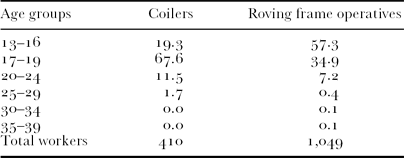
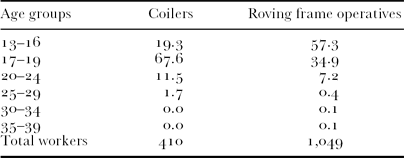
By the War, approximately 70 per cent of cotton mill workers were girls and young women, most between the ages of 14 and 18.Footnote 30 As Table 1 indicates, the majority of female operatives employed in the Roving Section of the Yuhua Cotton Mill were child workers, defined by the Nationalist government's Factory Act of 1931 as those aged between 14 and 16. Coilers were slightly older, with most in their late teens.
Age distribution (per cent) of Yuhua Cotton Mill women workers, 1944
Source: Yuhua shachang zhigong mingce, CQA, 0231 quanzong, 6 mu, 9 juan, pp. 1–98.
Textile factories were legally required to recruit women no younger than 16, but those hungry for a job often misrepresented their age and height. Ye Qingbi, a former operative at the Yuhua Cotton Mill, recalls how her recently widowed mother had no choice but to send away 13-year-old Qingbi and her younger sister from rural Fuling county to find work in the city:
The next day, both of us went to the Yuhua Textile Factory to apply for jobs. When we got there, I saw hundreds of young country girls waiting in line to be interviewed for a job. There was a minimum requirement for height. Both my sister and I were short and small. I tiptoed and barely met the requirement and was hired. But my younger sister did not make it and had to return home. During the war years, textile factories hired unmarried women only. The majority of us were child labourers. We all had to receive three months of unpaid job training.Footnote 31
As Ye's account suggests, managers ignored the child labour law, since they felt girls with dexterous fingers could more readily handle fine spinning, the production process that required the most operatives. The young workers were subject to exploitative contractual terms by means of the xunlian gong system, according to which new recruits were trained for three months, given free room and board, and a minimum allowance, but no wages until they graduated to become zhenggong (formal workers). Managers also benefited from hiring young single women thus avoiding having to support workers’ dependants. Such considerations led cotton mills to prohibit their workers from marrying. Ironically, although the prevalence of intra-class marriage (so popular that Yufeng managers described it as a ‘flaming wind’) indicated that workers had severed their ties to the countryside, the practice was deemed ‘detrimental to factory regulations’. Starting from April 1946, any male and female workers who married one another were fired.Footnote 32
By breaching societal norms regarding the proper domestic roles for wartime women, the decision of Ye Qingbi and the ‘hundreds of young country girls’ to join the labour force was a manifestation of cotton mill workers’ activism. The rapid expansion of the female labour force in Chongqing and throughout Nationalist-controlled China was a deeply divisive issue. Between 1940 and 1943 a polemic ensued over the question of women's entry into the labour market sparked by the Dagongbao article, ‘Weilan zhong de yidian andan’ [A touch of gloom in the blue sky] and the Fujian provincial chairman's publication of ‘My ideal country’, both of which exhorted women to remain home and aspire to the traditional Confucian model of becoming ‘worthy wives and good mothers’ (Xian qi liang mu). This call was reinforced when in September 1939 the postal service restricted employment of women, which led to similar injunctions among government agencies, hospitals, businesses, and schools. The provincial chairman of Fujian, in particular, ordered all government agencies to limit or prohibit the hiring of women staff members. By the early 1940s, however, an outcry among postal employees, women's associations, and the press led the Fujian chairman to shelve his previous interdiction on women's employment. Similar debates were held in Chongqing. Deng Yingchao and Zhou Enlai, leaders of the Chinese Communist Party's Southern Bureau, condemned the ‘new worthy wife and good mother ideology’ as a prop of patriarchal society.Footnote 33 By 1942, the Nationalist government banned discrimination against women seeking public service positions.Footnote 34 Supporting women's participation in the workforce, the government identified women's labour as patriotic. The state-sponsored textbook, Workers Literacy Text, distributed among women workers, advocated: ‘Big Brother goes to the battleground, Big Sister joins the factory; Big Brother kills the enemy at the front, Big Sister works hard producing at the Rear; the Front and Rear are united, driving off the foreign devils to enjoy the peace.’Footnote 35
Despite their call for women to join the public sphere out of desire to serve the nation, even some women factory reformers remained ambivalent about women's role in the labour force. Many believed that a woman's ‘essential’ nature was in the home, that factory work should be regarded as a temporary supplement to family income. Stereotypes of rural women may have also informed reformers’ views. ‘The vast majority of the women workers tend to be naïve, pure and honest; perhaps some will say that they are fairly slow witted, simple, and undisciplined.’Footnote 36 Better, thus, to protect such youth from the moral depravities commonly associated with factory work. These assumptions underlie a survey conducted in the early 1940s by the Women's Advisory Committee-sponsored factory relief teams. An initial round of questions on the worker's family life assumed that all women shared the goals of marriage and child rearing. The interviewer proceeded to ask about the worker's motives for entering the productive workforce, how many years they intended to work, and their post-war plans. These questions indicated, at least from the interrogator's viewpoint, that industrial work was not considered a long-term commitment and was less desirable than staying at home.Footnote 37
For the vast majority of cotton mill workers, ‘home’ was a place of destitute poverty best left behind. Economic necessity motivated many to leave the rural areas of eastern Sichuan for the factories. An analysis of Yufeng Cotton Mill's 1948 roll list indicates that 74 per cent (N = 3,737) of all 5,030 workers came from eastern Sichuan, many from counties such as Baxian, Fuling, and Hechuan, contiguous to Chongqing.Footnote 38 A variety of push factors fuelled migration from eastern Sichuan to Chongqing. The region had one of—if not the highest—tenancy rates in the country. Although John Buck concluded from his 1941 survey of Sichuan agriculture that the tenant situation was ‘not as serious as is commonly believed’, especially for farmers engaged in rice production, the hilly terrain and inefficient irrigation methods in eastern Sichuan rendered the land less productive than the fertile Chengdu plain. Peasants struggled to pay onerous rents, among the highest in China and, as Buck notes, tenant farmers existed in a state of perpetual debt.Footnote 39 Moreover, numerous miscellaneous levies, which had become the primary, albeit unofficial, source of revenue for local governments contributed to the tenuous livelihood of peasant households. It is no surprise, therefore, that in a survey of 3,100 women workers taken before 1944, 1,209 stated that they had sought employment in the cotton mills in response to ‘economic oppression’.Footnote 40 Poverty compounded family strife, which was the primary motive to join the workforce for close to 40 per cent of all respondents.
Many cotton mill workers viewed factory work as an opportunity to leave their families and carve out a sphere of personal autonomy. One mill hand recalled how she had left home to resist an arranged marriage: ‘A girl from a small family marrying into a rich family would have condemned me to a cattle and horse-like existence whereby I could never stand up. I didn't want that.’Footnote 41 The possibility of becoming more self-reliant and educated motivated many of the respondents. Over 16 per cent (512 workers) of those surveyed sought to learn a skill, while a smaller minority, who had been forced to drop out of school, were attracted to the work and study programme of the factory. Finally, some 156 workers placed patriotism (boosting national production) as their primary reason for joining the workforce.Footnote 42
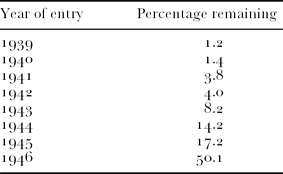
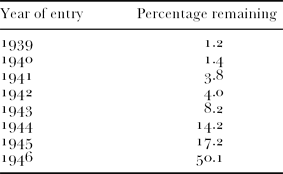
Leaving one's factory job was another form of activism. By the early 1940s a number of factors were contributing to extremely high turnover rates, a trend which continued throughout the War.Footnote 43 These included the oppressive heat and working conditions during the long summer months, the fear of air raids, the poaching of workers by other cotton mills, workers’ desire to try other lines of work or their distaste for factory life, which for so many young women was often their first industrial experience.Footnote 44 As a result, short tenure was the norm, as shown by a 1946 survey of the Fourth Shenxin Cotton Mill, where most workers left during their first year of work (see Table 2). The matter was of grave concern to managers, who despaired of never increasing productivity: ‘The Chongqing factory spindles have been operating already eight years thus worker capacity should have long ago reached the standard, but because the rate of mobility among Sichuanese women workers is so great, we often recruit new hands to replenish the workforce, so workers’ ability on average can not be raised.’Footnote 45
Tenure rates of workers at the Fourth Shenxin Cotton Mill (1946)
Source: Shanghai shehui kexueyuan jingji yanjiusuo (1980). Rongjia qiye shiliao: Maoxin Fuxin Shenxin xitong, Vol. 2: 1937–1949, Shanghai renmin chubanshe, Shanghai, p. 372.
Contemporary observers interpreted labour mobility as proof that young women viewed their jobs as a conduit to marriage and a life of domesticity. According to the anthropologist T'ien Ju-k'ang, ‘what many women wanted from their jobs was not professional training and permanent independence, but enough temporary financial independence to enable them to exercise a choice, free of family pressure, with regard to their future. Their goal was still marriage and home life.’Footnote 46 It is no doubt true that when asked about what kind of man they wanted to marry, women workers invariably thought of marriage as a path to upward social mobility and mentioned those in better circumstances as a possible mate. In order of preference, the 2,000 respondents to a factory relief team survey listed businessmen, soldiers, intellectuals, and civil servants as desirable husbands. It is indicative of just how far women workers sought to distance themselves from their rural origins that almost none mentioned marrying peasants.Footnote 47 But Tian's assumption that workers left the factory for the home is questionable when so many workers frequently changed jobs and were adamant about their intention to continue working. The same survey found that two-thirds of women respondents preferred to work rather than return to the home. Fifty per cent said they wanted to continue working after the victory against Japan. As the survey concluded: ‘Women workers may not like the life of the worker, but they have recognized that labour is a means to carve out a livelihood and the vast majority prefer to struggle with their work and do not want to return home to depend on their family.’Footnote 48
Women's desire for independence from familial obligations stoked their quest for education. On the one hand, the Chinese Communist Party promoted education, like work, as a form of personal liberation. Li Yongxiang, who worked at the Yufeng Cotton Mill, recalls how Big Sister Li, an underground Party member, encouraged her to study and avoid marriage at an early age: ‘Look at those old ladies, they look like playthings with their red cheeks and red lips. It's intolerable. You should study because after Liberation you can put your education to good use.’Footnote 49
For women like Tu Chunhua, who began working at the Yuhua Cotton Mill in 1944 when she was 14, such injunctions were unnecessary:
One day I went to play at my brother-in-law's. There was a certain Mrs. Chen who told my elder sister, ‘Your younger sister isn't bad looking’. She wanted to introduce me to a friend . . . That boy was tall and well built and he wore a heavy wool suit and shoes. While everybody went to play cards at Mrs. Chen's home, I was alone in the room when that boy took out his business card and put it on the table. It was one of those section chief's cards. He wanted a marriage engagement with me. I thought to myself, damn it, has he lost his mind! I told him, ‘I'm so young. Will you pay for my education’? He said we'd talk about it later, but I said that wouldn't do. He said, ‘Let's just have fun’. I didn't say anything to my mother or sister and just left, but I didn't know my way home. I took a rickshaw to the Second Cotton Factory [Yuhua]. Later, mother, sister and my brother-in-law came looking for me. They said I was brave. I finally did enter a literacy class after Liberation.Footnote 50
Women actively pursued education in the cotton mills despite facing numerous obstacles. They viewed learning, and writing in particular, as a form of empowerment and a means of becoming self-reliant. Otherwise they risked dependency on male staff to help them write letters to their families in return for sexual favours.Footnote 51 As a testament to the importance of education for mill hands, in April 1939, in one of the first wartime protests, Zhang Xiuhua and four other women worker representatives at Yufeng Cotton Mill submitted a petition to the Ministry of Economics requesting a three eight-hour shift system so that productivity could be increased and workers have more rest; the implementation of general education classes for workers and the setting up of a reading room; the establishment of a workers’ club and a workers’ clinic; and a wage increase so that workers could nourish their families and pay for their children's education. The representatives emphasized that education was even more important than daily necessities. To make their case more persuasive, they linked workers’ desire for education with the success of the national resistance:
The desire for learning far surpasses the necessity to eat and be clothed . . . The factory has emphasized production but ignored the promotion of education. We request that women workers receive at least two hours of instruction; in addition set up a reading room so that students can achieve basic literacy and increase their common knowledge; this will strengthen the War of Resistance.Footnote 52
In the first years of the war, managers discouraged factory education programmes for fear they would add to workers’ fatigue, interfere with production, and generate potentially subversive ideas. These concerns were allayed by the emergence of state-sponsored factory relief teams directed by the Women's Advisory Committee of the General Association for the Advancement of the New Life Movement. Established in Nanchang, Jiangxi in February 1934 with the goal of promoting the New Life Movement, the Committee's organization was changed in July 1938 to reflect United Front politics. Song Meiling retained her leadership position, while Chinese Communist Party members, led by Deng Yingchao, assumed deputy directorships. Participants at the grassroots level tended to be young, middle class, educated women. According to a Chinese Communist Party report of 1941, cadres sent to the factories were often members of the Three People's Principles Youth Corps.Footnote 53
Six factory relief teams operated in Chongqing's largest textile plants where they organized four levels of literacy and cultural classes for workers (three for women, one for men) from 1939 to 1943. The number of participants, totalling over 30,000, attests to workers’ desire to learn to read and write, although it remains difficult to assess the effectiveness of the literacy programme.Footnote 54 The long work shifts exhausted workers and made regular attendance difficult. Moreover, factory relief team members may have exaggerated their own contributions when they indicated that upon arriving in 1939 at the cotton mills, illiteracy rates were as high as 90 per cent, but had dropped dramatically to 42 per cent by the spring of 1943.Footnote 55 A survey of Yufeng's ninth term of classes held in 1942 indicates that 65 per cent of some 1,064 women workers were illiterate.Footnote 56 Data from a Yuhua factory history presents a more sanguine picture. The majority of its 2,600 workers were at least functionally literate; just 14 per cent were illiterate, 5 per cent had achieved a junior middle school level, 36 per cent were reading at a senior elementary level, and 45 per cent had reached junior elementary level.Footnote 57
From the perspective of the Nationalists and industrial managers, the factory education programme served a broader purpose beyond expanding literacy. Seeking to win the hearts and minds of the cotton mill workers and defuse the risk of social conflict stemming from the added strains of wartime production, factory authorities advocated using education to promote discipline, inculcate proper moral behaviour, and raise productivity. The Women's Advisory Committee described the factory relief team's mission as, ‘Raising the cultural and political levels of workers, imbuing them with a sense of national consciousness and fostering a proper production ethos; implementing welfare to improve workers’ livelihood; mediating disputes between labour and capital’.Footnote 58 Besides attending literacy classes, workers were organized into choruses to sing patriotic songs, and learn about the Three People's Principles as well as tenets of the New Life Movement.Footnote 59 Moral inculcation of traditional Confucian values was especially pronounced at the Yufeng Cotton Mill, which gave its worker participants a lengthy list of goals and admonitions to encourage diligence, education, thrift, and respect for authority and the collective as a means of boosting wartime productivity.Footnote 60
To what extent political indoctrination programmes correlated with working-class support for the Nationalist party or its Youth Corps is an open question. The presence of the Sanqingtuan and Guomindang varied among cotton mills. Perhaps because of its Shanghai origins, the Fourth Shenxin Cotton Mill acquired a reputation for fostering a more business-oriented culture with few political and ideological controls. At Yuhua, by contrast, political controls were ‘most severe’, and upper and middle level staff and foremen had all joined the Nationalist Party.Footnote 61 As the United Front collapsed in the post-war period, the Guomindang and Sanqingtuan became a visible presence through mass inductions. At Shenxin, for instance, the Youth Corps now aimed for all workers to join its organization.Footnote 62
The participation of Communist organizers in the factory education programme, however, provided a political counterpoint to the Nationalists, which weakened Guomindang influence. By the early 1940s, underground Communists had succeeded in using factory relief teams as a legal cover to begin forging links with workers.Footnote 63 In 1941, Fan Yuming, the Chinese Communist Party member and factory relief instructor, for instance, supported apprentices at the Yufeng Cotton Mill when they implemented a slowdown to protest against physical and verbal abuse and a restrictive leave policy. Besides helping the young women to write down their grievances and present a petition to management, Fan assumed the role of mediator in a meeting between the apprentices and management and convened a meeting in the city between the factory director and Women's Advisory Committee members to press for improving working conditions to meet the needs of the Resistance.Footnote 64 Moreover, daily contact with the cotton mill workers led instructors to develop some sympathy for the workers’ plight and to fight for their interests. In its report to the Department of Social Affairs, the Chongqing Workers Relief Unit used an instructor's report from the Yufeng Cotton Mill which had underscored how ‘workers’ trust in the government had weakened’ because of delays in convening a labour union preparatory committee. The instructor also warned of dire consequences if excessively short mealtimes were not lengthened: ‘Regarding mealtime restrictions, the workers are not used to the new system and deeply suffer. If it is not amended any time soon, a disturbance is likely to arise at any moment.’Footnote 65 In short, factory relief instructors became de facto union representatives.
From workers’ own perspectives, the literacy campaign and other classes offered a path to individual self-advancement, the promise of more independence and social mobility, and a means of political participation in the Resistance. A union study from the mid-1950s observed that after the war broke out, women cotton mill workers who had received some education ‘were quite willing to participate in national salvation work; some liked to sing national salvation songs in their free time, read newspapers, and were very concerned about the War’.Footnote 66 A case in point is the Sichuanese labour activist Gao Qunyao, who had joined the Yufeng Cotton Mill at the age of 15, participated in a literacy class, and befriended educated women who introduced her to progressive literature and stimulated her political activism. As she recalls:
I often went to play at Older Sister Guozhen's and through her met [the underground Party member and Zhejiang native] Chen Chuyun. They taught me how to read and write, so gradually I developed an intense urge to become more cultured. I took advantage of the production breaks during air raid warnings to read and study under a lamp in the air raid shelters. I began to progress and Chen Chuyun gave me Gorky's Mother, materials regarding the May Fourth Movement and December Ninth Movement, the Xinshidai [New era] magazine, and the Hundred Days of Reform [1898] texts of Kang Youwei. As I worked and studied, my thought gradually became more progressive, and I wanted to become a new woman.Footnote 67
Most mill hands did not share Gao's experience of participating in the politicized reading societies promoted by the underground party. Nevertheless, the levels of overall educational achievement were linked to the high degree of militancy among mill hands during the post-war labour movement, as education raised workers’ expectations and their confidence to question their lowly status and harsh working conditions.
Conditions of work and life
The politicization of women workers was also fuelled by a shared class position, irrespective of the division of labour or regional provenance. Regionalism also influenced Chongqing society, which comprised Sichuanese migrants as well as refugees and migrant populations from outside the province who had accompanied the relocated factories, schools, and government administrations to the wartime Nationalist capital. Some tensions did arise between Sichuanese—referred to as ‘upriver’ people (shangjiang ren)—and ‘downriver’ people (xiajiang ren)—those migrants from the central Yangzi and coastal regions. Yet the narratives of class fragmentation or, at best, workers’ mixed loyalties to their native place and class ties that Emily Honig draws for Shanghai are less applicable to the case of Chongqing. Relocated cotton mills took only a small portion of their operatives to Chongqing to train newly recruited mill hands; consequently, Sichuanese occupied most positions in the labour force. Given that most cotton mill workers were young recruits from the Sichuan countryside, typically first-generation workers unused to the discipline of the wartime labour regime, workers’ protests converged over the enforcement of industrial time, the quality of food, and delays in issuing New Year bonuses. Many tenant farmers in eastern Sichuan were accustomed to receive extra rice from their landlords at New Year, making the delays in industrial bonuses, a major form of income, doubly difficult to accept. Moreover, the abysmal working conditions prompted women to form bonds of solidarity as a protective or coping mechanism and fostered a sense of betrayal that their shared sacrifices for the war effort were not being honoured, an issue that came into play in the post-war labour movement.
Most cotton mill workers toiled for long hours. Almost all cotton mills in Chongqing adopted two work shifts, each lasting 12 hours—‘in at six, out at six’—(liu jin liu chu) with a half-day of rest every tenth day when mill hands alternated shifts. The Fourth Shenxin Mill was the exception when it moved to a three eight-hour shift system in June 1941, so that, as the industrialist Huang Yiqing declared, ‘worker's rate of mobility and stoppages will decrease, while production and productivity will increase’.Footnote 68 Further deliberations on the need to adopt three eight-hour shifts highlighted the exhaustion and stress created by the constant air raids and long working hours:
Sichuanese workers do not lag in terms of knowledge and skills, but they are weak in constitution and the long work hours and exhaustion have decreased productivity. Moreover, the stress of frequent air raids combined with the long work hours have sapped workers’ energy and as a result their productivity has decreased, while consumption of resources and machinery have increased the price of products.Footnote 69
Despite Shenxin's recognition of the harmful effects of long shifts, the eight-hour shift only applied to women workers (so that they could ‘adjust’ to exhaustion) while male workers continued to work two 12-hour shifts.
At other mills, the shifts were prolonged for an extra hour by the queue workers faced when they left the workshops and had to be searched. One by one women passed through two parallel bars while guards ordered them to hold up their arms to let the soushen po, a group of older women, frisk them from top to bottom. When guards felt it was necessary, they ordered workers to undo their clothes and remove their shoes to check whether they had concealed any ‘stolen goods’. If women workers expressed any dissatisfaction, they would be hectored or physically abused by the guards. The ultimate humiliation occurred when they were forced to remove their sanitary napkins for inspection.Footnote 70
Restrictions on meals were especially grating to workers unused to time discipline. Production often continued during meals, forcing workers either to eat while working besides their machines, or to take turns eating. At the Yufeng Mill, management deemed time of such essence that meals were limited to seven minutes for men and 15 minutes for women, regardless of whether they had eaten their fill. Workers’ bitter hatred of this ‘new system’ prompted factory relief team leaders to petition the Ministry of Economics in 1941 to ‘ameliorate conditions before an incident inevitably occurred’.Footnote 71 When labour unrest did indeed break out after the New Year in 1942, the Chongqing workers relief team repeated their call for reform. Yet managers across the industry remained fixated on the belief that meals were a time for fraternizing and dawdling. At Yuhua, even talking during a meal was prohibited, and ‘if anyone violated the rule, the person would not be allowed to eat’.Footnote 72
Food was ample but often abysmal. Workers typically had porridge and a steamed bun for breakfast, three dishes and a soup for lunch and dinner, and porridge if they worked the night shift. The dishes consisted of pickled vegetables, peas, broad beans, water spinach, and bean sprouts.Footnote 73 At least once a week, workers would consume large amounts of pork, a practice known as da yaji. As one factory relief instructor described:
Eating their fill is not the problem, but because of the large number of people or neglect by the cooks, workers frequently find insects, hair, cotton fibers and even wood chips in their food, insufficiently hot dishes, rotten vegetables, and the same meals repeatedly served. Thus, although management has spent money for the food, workers are dissatisfied.Footnote 74
Protests over bad food erupted at both cotton mills on 23 February 1942, when Yufeng workers held a one-day strike and workers at the Military Textile Plant smashed several hundred rice bowls, allegedly the handiwork of a ‘traitorous party member’, Liu Xiafei, who had led a Communist cell at Yufeng before transferring to work at the Military Textile Plant.Footnote 75 Despite sending personnel to investigate, the Ministry of Social Affairs reported that the situation had still not improved after a month and that a woman reeler was instigating women workers to continue labour protests.Footnote 76
In textile factories throughout China, mill hands shared crowded quarters. The rooms generally held four bunk beds for eight workers, but sometimes as many as two dozen women shared a room. Chen Suzhen, who was apprenticed at a Military Textile Mill at the age of ten, recalls that:
We slept in rooms that were a dozen or so square meters with bunk beds that were only the width of one's body. The rooms held twenty to thirty people. There was no public bathroom, only a spittoon that we used before going to work. When the weather heated up, the room was infested with fleas and bugs.Footnote 77
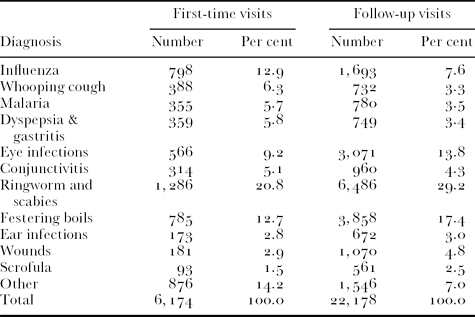
Sleep proved difficult, as ‘during the summer after going to bed the “airplanes” (mosquitoes) started their air raids from above, while the “tanks” (fleas) attacked us from below. We were so tired after a day's work that we “donated blood” to the mosquitoes and fleas.’Footnote 78 Workers on different shifts slept on the same bed, facilitating the spread of infections and disease, especially eye infections, skin diseases, and tuberculosis. Since workers did not receive medical treatment for tuberculosis, Table 3 does not list this infectious disease, but it was the single most common illness. According to a reporter from the liberal Minzhubao, ‘For every hundred sick women workers, at least twenty and up to fifty are infected with pulmonary tuberculosis.’Footnote 79
Medical diagnosis of workers at the Fourth Shenxin Cotton Mill (1945)

Source: Shanghai shehui kexueyuan jingji yanjiusuo (1980). Rongjia qiye shiliao: Maoxin Fuxin Shenxin xitong, Vol. 2:1937–1949, Shanghai renmin chubanshe, Shanghai, p. 369.
Illness was often caused by sheer exhaustion and poor working conditions. Without ventilation machines or equipment to guard against dust, workers’ faces became covered with cotton filaments and fluff, making it difficult to breath. Once summer arrived, the workshops turned into ‘food steamers’ (zhenglong).Footnote 80 The walls, made of bamboo fences plastered with mud and lime to ward off the wind and rain, prevented ventilation and radiated the heat, which frequently rose above 40° C. Coupled with the heat from the machinery and crowded conditions, the stifling atmosphere of the workshops caused workers to ‘frequently feel dizzy and nauseous’.Footnote 81 Hot and humid conditions led to numerous skin ailments while poor lighting exacerbated eye diseases.
Mill hands also faced the risk of occupational hazards. Upon entering the workshop workers stood on their feet for 12 hours, traversing four to five kilometres just to keep track of their machines. With the exception of a few single motor-generated spinning machines, line shaft motors powered each work process. Accidents regularly happened because the workshops lacked a protective cover for the machinery or fenders to provide safety. Women working the fly frames repeatedly got their hands caught in the line shafts, sometimes permanently maiming their fingers. In a most horrific accident, one woman was killed when her waist was caught in the line shaft. At best, injured workers received two month's wages and would be taken home by factory security guards. At worst, manager workers often blamed the workers for accidents and fired them.Footnote 82
The high rates of industrial accidents were caused in part by an intensification of work during the 1940s. When the Yufeng Cotton Mill began production in 1939, regulations stipulated that piercers in the spinning room would oversee eight wooden staffs, each consisting of eight spindles. By 1942, intensity had increased to workers handling 18 staffs or 144 spindles. Yet another increase occurred after V-J Day to one worker overseeing 24 staffs. By 1947 regulations stipulated that certain workers would operate 36 staffs or 288 spindles. At the same time, the speed of the rollers on the spinners doubled from 80 to 160 rotations per minute. A number of machines reached speeds as high as 210 rotations per minute. Based on the number of spindles workers oversaw and the speed of rotation, the workload between 1940 and 1947 increased two to three times.Footnote 83
Despite increased productivity, wages decreased because of hyperinflation. Individual production for spinners increased more than four times from 14 to 62 kilos between 1939 and 1946 whereas their purchasing power decreased. Between 1939 to February 1946, monetary wages increased 1,326 times, but prices increased 1,717-fold in the same period. Put in more concrete terms, whereas in December 1939 a worker's average monthly wage could purchase 146 jin (catty) of rice, by February 1946, a mill hand could only buy 118 jin of rice, and by January 1949 that had tumbled to 64 jin. By 1947, workers’ real income had fallen by 40 per cent compared to 1939. By January 1949, income had decreased an additional 56 per cent.Footnote 84 Among 3,897 workers surveyed in 1944, already some 2,035 were ‘unable to make ends meet’ and 1,806 of these workers still had to support their families.Footnote 85
In response to these arduous conditions, mill hands forged bonds with one another first and foremost as industrial workers. Solidarity on the shop floor, for instance, enabled operatives to get extra rest. As Ye Qingbi relates:
Because we had to start so early in the morning, we were tired and sleepy all the time. It was dangerous to be sleepy when we had to operate the machines. Life was very difficult in the factory, but the workers were kind and tried to take care of one another. We created a sleeping corner behind the machines in workshop and took turns sleeping there. When the foreman or inspection managers were coming, we would warn everyone to go back to their post. If we were caught sleeping, we would be fired. We worked well together, and we were never caught.Footnote 86
Out of work, women workers developed friendships that crossed generational lines. Workers would spend after work hours in their dorm rooms speaking ‘bitterness’, talking about how they left home to work; some grieved about how their abusive mothers-in-law had driven them into the factory; others related fleeing arranged marriages or family misfortune. Grieving with each other lightened their heavy hearts and, according to one activist, led workers to develop a ‘simple class feeling’ (pusu de jieji ganqing). Footnote 87 This incipient class consciousness developed out of the mill hands’ everyday struggles as well as during their leisure time. Workers enjoyed each other's company, using their day off to ‘go out and have a fun time, buy a few things, some cloth, a handkerchief or hair ribbons’. Tu Chunhua recalls the rapport she developed with her older ‘sisters’, the term women most often used to address each other. ‘For instance when we went to work at the night shift, they [the older workers] would provide cover for young workers who had gone to rest. Those who lived in the same dormitory would help each other clean clothes and bring in water for rinsing.’Footnote 88 Younger workers reciprocated by helping older women do small tasks, giving wedding gifts, helping them to arrange their rooms (upon marriage), inviting them for a meal or knitting clothes for their children.
These affective ties formed the basis of organized sisterhoods (jiebang jiemei) that helped young women cope with their everyday struggles. Sisterhoods comprised three to five friends and, like their counterparts in Shanghai, provided protection against the domination of gangs—the Paoge or Gelaohui were most prevalent in Chongqing—and served as a form of mutual aid and income pooling.Footnote 89 One activist recalled, for instance, how her sisterhood provided her with sufficient food after she had been fired for her militancy and was reduced to eating two meals of rice gruel every three days.Footnote 90 Sisterhoods also served a political function for the Communist underground. Often indistinct from reading societies, the sisterhoods became a forum where women workers read Xinhua ribao and were introduced to radical literature. Moreover, underground Communist organizers used sisterhoods to mobilize workers, since the Party stipulated that each sister develop three to five new ‘friends’ and thus broaden their influence.Footnote 91 Much to the consternation of Nationalist authorities, by the eve of the Spring Festival in 1943, the Military Commission reported that the ‘traitorous party had already instigated workers to join a labour struggle for end-of-the year bonuses’. Moreover, Yuhua cotton mill women workers were reported to have formed sisterhoods and planned ‘to use them as cover while waiting for the opportunity to mobilise’.Footnote 92
The wartime ‘labour movement’ and the struggle for equal treatment
In response to these arduous living and working conditions, workers signed petitions and took part in slowdowns and (wildcat) strikes, the latter in defiance of the 1942 National Mobilisation Act's prohibition of strikes. The Anti-Japanese War was not lacking in industrial conflict, but collective action tended to be isolated, unorganized, and spontaneous. The historian Qi Wu speculates that since labour responded to the patriotic call of the War of Resistance against Japan, nationalist unity overrode class contradictions, inhibiting the emergence of a labour movement.Footnote 93 Such a view may exaggerate the effectiveness of Nationalist state propaganda, which emphasized the multi-class alliance of the United Front. It cannot be denied, though, that state repression had a chilling effect on the organization of labour, especially after the January 1941 New Fourth Army Incident. As a former labour activist recalled, placards with the warning: ‘Strikes, slowdowns and assembly in mass to create disturbances are prohibited; violators will be severely punished’ lined the entrances of most factories and mines.Footnote 94 For Communist labour organizers, the White Terror—dating back to Liu Xiang's crackdown on demonstrations on 31 March 1927—had reduced the Chongqing labour movement to a stage of ‘infancy’.Footnote 95
Workers’ mobility also impeded organizing a labour movement during the Anti-Japanese War. The high rate of turnover, which had reached its peak by the early 1940s, made for extremely fluid organizations, such that existed. Skilled workers, especially in heavy industry, were tempted to leave factories and ‘strike it rich’ by setting up their own machine shops or becoming brokers in the sale of hardware, tools, and electrical equipment. By contrast, many unskilled male workers recruited from the countryside tolerated wretched working conditions and low wages in exchange for three guaranteed meals and to avoid conscription.Footnote 96
In some factories, too, the workforce was divided along generational lines. A core of skilled workers, who had migrated to Sichuan when the mills relocated, was less wary of confrontation with management because their skills were in high demand during Chongqing's initial phase of industrialization. As a case in point, in 1941 mill hands protested against unfair treatment when the Yuhua Cotton Mill issued bonuses only to staff personnel; however, the protest lost momentum because of disunity in the worker ranks, ‘especially among newly recruited Sichuanese women workers who feared losing their rice bowls and lacked the spirit to struggle’. Their feelings were assuaged upon receiving a small token sum of money, but this infuriated veteran workers, who ‘threw down the money to express their opposition’.Footnote 97
Limited organizational resources, which meant that the Chinese Communist Party found it difficult to forge links with mill hands, also impeded a wartime labour movement. Party reports of 1941 read like an exercise in self-criticism, admitting, ‘the Party devotes insufficient attention and aid to the labour movement, especially among women textile workers’.Footnote 98 Already in 1939, the Central Party Women's Committee had noted ‘the insufficient attention paid to women's work by the entire Party’, but placed much of the onus on an ‘extreme shortage of women party cadres’ and a ‘portion of women who scorn the women masses and still feel that it is damaging to work among labouring women’.Footnote 99 Two years later, only 4 per cent of cadres were working in the cotton mills compared to 19 per cent in the exclusively male defence industry, which the Chinese Communist Party deemed more strategically important.Footnote 100 This neglect and ‘scorn for the women masses’ derived in part from the cadres’ social composition; many cadres during the late 1930s were intellectuals who had limited contact with workers. Prejudices against labourers may have influenced the report's conclusion which blamed workers’ ‘low cultural level’ for their inability to forge ties with the outside world. Whereas women mill hands, as we have seen, did protest against their specific work conditions, perhaps Party members (still predominantly male during the late 1930s and early 1940s) believed the labour movement should address more abstract issues such as the right to unionize.
The Chinese Communist Party finally established a foothold in the cotton industry by adopting legal methods (a tactic advocated by Mao Zedong and Zhou Enlai for Party work in Nationalist-controlled China) and joining government-sponsored work relief teams. United Front work rather than mobilization remained the primary goal as Zheng Jiyu, an underground party member, recalls from his work at the Yufeng Cotton Mill:
The organisation kept emphasizing that although cadres engaged in factory work should protect workers’ interests and lead economic struggles, their present mission was to propagate the resistance and national salvation. They did not want me to develop the party organisation in the factory . . . our main task was to establish a united front in the War of Resistance, because the national crisis overrode class contradictions.Footnote 101
Zheng's comrade, Shen Jiyun, who worked as a factory relief team advisor from 1940 until 1942, reiterated the corporatist labour ideology of the Nationalists:
We tried to improve women workers’ welfare and struggled with management to improve meals, the hygienic conditions in the dorms, treatment of the sick, to win a convalescence period for workers, as well as to negotiate conflicts between workers. But our mission was not to mobilise workers and develop the party organisation. We sought the agreement and support of management to gain these goals in the context of advancing production and supporting the War of Resistance.Footnote 102
Attention to patriotic work, such as raising contributions for wounded soldiers or posting wall newspapers that articulated the anti-Japanese resistance message, had the unintended political effect of raising workers’ sense of self-worth and their expectations of proper treatment. Numerically, the Party's presence in the cotton mills remained minimal, almost invisible. Yufeng, for instance, had only eight Chinese Communist Party members working between the spring of 1940 and August 1945 to promote party directives and engage with the Guomindang in a ‘rational, advantageous and measured’ (youli, youli, youjie) struggle. Still, it is perhaps no coincidence that Yufeng was at the centre of post-war labour conflict.
Independent of how much organization the Chinese Communist Party provided, many of the women workers’ grievances during the entire decade of the 1940s stemmed from their sense of injustice and unfair treatment. For both male and female workers—and this was not unique to the textile industry—their desire for better treatment from management was central to their demands and collective action. As factory relief teams reported:
Very few workers are satisfied with factory life . . . Although women workers frequently complain that the work hours are too long and the wages too low, their biggest complaint is that the managerial personnel have no human sympathy, frequently adopt an official air and talk like bureaucrats. They don't respect workers’ humanity and even physically and verbally abuse them. Even when workers are sick it is difficult to request a leave. Thus, the average worker feels she leads a life of oppression and can not work in peace.Footnote 103
Compounding workers’ sense of oppression was the social stigma attached to manual labour. Although pervasive throughout all industrial sectors and affecting both sexes, women cotton mill workers—derisively called ‘little cotton mill sisters’ (shamei)—were treated with even less respect than their male counterparts. As Tu Chunhua relates, cotton-factory work was considered low status labour. ‘None of us were respected. The Guomindang soldiers would look at you when you came out of the factory and shout, “shamei!” Those wounded soldiers would even spit at us if they encountered us outside.’Footnote 104 Some women responded by concealing their cotton-factory identities, removing any trace of cotton filaments from their hair and hiding their mess tins. Other mill hands felt so scorned and vulnerable for having violated social mores, especially the belief held by some urbanites and rural conscripts that women should not fraternize in public where men were also present, that they cut their hair, cross dressed, and joined brotherhoods. One female activist recalls that when she was 14 years old, she and 13 other girls struck up a ‘brotherhood’ (da xiongdi) to protect themselves, thwart male domination, and carve out a sphere of independence and freedom of mobility.Footnote 105
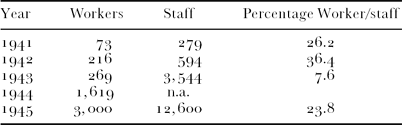
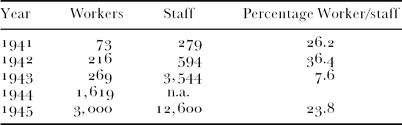
Just as the struggle for subsistence, even survival, fuelled workers’ participation in labour disputes, moral issues of fairness and injustice often underlay their demands. Unequal treatment between production workers and managers reinforced the class divisions in the textile industry and shaped workers’ class consciousness. Workers’ grievances typically revolved around the segregation and discrimination they endured at the hands of staff personnel. Letters from workers published in Xinhua ribao relate common grievances over unequal access to reading rooms, rationing, consumer cooperatives, and entertainment; segregated housing, mess halls, and toilets; and disparities in salaries and bonuses, all of which pitted the two groups against each other. As data from Table 4 indicate, the average monthly worker wage ranged anywhere from one-twelfth to one-third of the average monthly salary of administrative and technical staff personnel.
Yufeng Cotton Mill average monthly wages of workers and staff (yuan)
Source: Zhongguo renmin zhengzhi xieshang huiyi xinan wenshi ziliao xiezuo huiyi (1989). Kangzhan shiqi neiqian xinan de gongshang qiye [Relocation of business enterprises to the southwest during the Anti-Japanese War], Yunnan renmin chubanshe, Kunming, p. 256.
Cotton mill workers’ demands for greater dignity and better treatment stemmed from pervasive institutional discrimination at the hands of staff personnel. Although a minority of women began to occupy technical and administrative positions (zhiyuan), most were older men—highly educated, more affluent, and primarily from provinces outside Sichuan—who had moved to the wartime capital along with their factories during the late 1930s.Footnote 106 Ninety per cent of the 85 staff members at Yuhua Cotton Mill who were at or above the rank of department chief had graduated from a university or technical school and most supervisors had received training at advanced vocational schools.Footnote 107 Workers viewed discrimination through the lens of regionalism. The fact that close to 90 per cent of staff members came from eastern and central China, whereas the bulk of production workers were Sichuanese, reinforced the class consciousness of mill hands who resented the benefits accorded to technical and administrative personnel.
For certain workers, moral injustices translated into a consciousness of class. Workers expressed their grievances in terms of a producer consciousness, stressing the moral value of work and using the language of rights and class. One anonymous worker questioned the monthly rationing of food after being informed that only staff members could purchase a catty of sugar:
I am also human and also Chinese. Why does even the appreciation of food have to be divided by class? Is it possible that workers are constitutionally different from staff officers? Staff officers are people; workers are people, why does one have to make such distinct class divisions as this?Footnote 108
Although middle and low ranking staff members also suffered a decline in their livelihood, the unequal distribution of benefits led workers to perceive staff in hostile terms, as the owners’ ‘running dogs’.Footnote 109
The gulf between staff and workers was a frequent catalyst for protest. Several days before the Spring Festival in 1942, the Yufeng Cotton Mill issued its year-end bonus. Women workers became disgruntled when they realized how little they had received compared to the bonuses issued to staff members, equivalent to three months’ salary. To make matters worse, while staff members were honoured with banquets of duck, fish, and chicken dishes to celebrate the New Year, women workers were ‘treated’ to cold pork lard with the usual fare of pickled vegetables, dried broad beans, and vegetables. The abnormally cold and snowy weather on the first day of the year aggravated workers’ sense of misery. In response, workers from the day shift decided to wreck the mess hall, overturning the tables and destroying all the rice bowls and dishes. By the time the next shift of workers arrived at the mess hall, everything was destroyed. All the workers began clamouring for food, causing personnel to run for cover.Footnote 110
Workers’ sense of injustice was exacerbated by their perception that management (as represented by zhiyuan) was unfairly profiting from their wartime sacrifices. Seeking a raise that had been promised months before, workers petitioned the Chongqing Department of Social Affairs in January 1945 for redress:
Respectfully, we beg to state: we are workers of the Yufeng Cotton Mill, we are the representatives for three thousand workers, we have shed blood and suffered untold injustices and bitterness . . . They [management] have all struck it rich, but the blood and sweat has been squeezed out of the workers! With such a high cost of living, we have been hounded to death.Footnote 111
Despite state oversight of labour arbitration committees, workers often found that management ignored government mandates. Over 3,000 workers at Yufeng went on strike in July 1945 to protest against the management's refusal to comply with a government injunction of 1 May that would have aligned wages with the cost-of-living index. Although wages were the root cause of the strike, issues related to the unfair and abusive treatment of workers were important too. Workers demanded that management prohibit supervisory personnel from physically and verbally abusing workers, and abolish the gate ticket system whereby supervisors used the inspection of gate tickets to oppress women workers.Footnote 112 Workers also sought the same status as staff members by demanding the right to purchase discounted cloth, receive equal treatment at the factory cooperative, and be allowed to participate in the management of the cooperative alongside representatives from staff personnel.Footnote 113 While questions of both economic disparity and fairness fuelled these periodic incidents of conflict during the Anti-Japanese War, they would coalesce during the immediate post-war period.
The post-war labour movement
In his study of the strikes that swept the arsenals this author notes, ‘If there was ever a “revolutionary moment” before the Communists rose to power, it was in 1946, not 1949, when workers were “ready to go”.’Footnote 114 Class warfare also struck the textile industry and, with it, the alienation of workers from both industrial and state authorities. Women workers’ participation in the post-war labour movement, fuelled by their struggles for economic justice and desire for higher social status, used both legal forms (especially petitions and letters to the press which were couched in the wartime nationalist rhetoric of shared sacrifice) and extralegal means, namely violence. It is an open question whether the representation of cotton mill workers as inherently violent and prone to ‘insurrection’ (baodong) were simply pretexts by industrialists and the state to justify the use of repressive force. Archival records from the Department of Social Affairs and Chongqing Municipal Police which document Chongqing's industrial conflict point to a fear among the industrialists and political authorities of a potential class revolt among workers. This perception of class war and the discourse of violence were grounded in reality: at the height of the labour movement during the immediate post-war period, workers sought to forge broad alliances across factory lines. One can posit that the end of the war opened up a political space for collective action in which a conjuncture developed between elements of class solidarity on the part of both male and female workers and the erosion of managerial authority in the factories.
The labour movement in Chongqing reached a peak between October 1945 and 1946, when the city witnessed 423 disputes, including 80 strikes, involving close to 100,000 workers, employed at over 450 factories.Footnote 115 Economic grievances, stemming from the erosion of real wages and the risk of unemployment, formed the subtext of the post-war labour movement. The Department of Social Affairs, which arbitrated labour-capital disputes, ascribed most conflict to economic issues. Of the 280 disputes documented for 1946, 187 were over layoffs, 58 over wages, 22 over unfair treatment, three over contractual violations, two over work time, and eight over ‘other’ matters.Footnote 116 However, official accounts ignored how political repression fuelled class conflict after the Anti-Japanese War. Ninety-five disputes in January and February of 1946, many of them violent, provoked Minister of Social Affairs Yu Zhenggan to prohibit all strikes and slowdowns. According to one estimate, between September 1945 and March 1946, heavy handed methods used by armed spies, security guards, and military forces led to the death of 13 workers in a dozen cases.Footnote 117
Disputes in the textile industry were some of the most violent. In December 1945, the Ministry of Military Affairs ordered its Second Military Textile Mill to merge with the First Military Textile Mill. The entire workforce comprising 400 men and 1,000 women immediately demanded severance pay. When there was no response from the director, over 100 women workers stormed his office and destroyed property. That night the entire workforce stopped production, only to resume work the following day.Footnote 118 Relative calm ensued until after the New Year's festivities. Opposed to the proposed merger for fear of losing their jobs, workers issued five demands to the factory director, including a guarantee that ‘workers who had posts would not be arbitrarily fired’.Footnote 119 According to one official account, the director agreed to all five demands, yet on 14 February a minority of workers who resisted the merger angrily left the meeting convened by the factory director, entered the factory's machine room, and destroyed equipment. The factory's spy squad apprehended a woman worker who had entered the machine room and detained her for interrogation. Despite blaming the entire incident on workers, the official source acknowledges that their solidarity with the woman under interrogation led to the ensuing confrontation. ‘As a result, workers became infuriated and the entire workforce rushed to the interrogation room leading to a dispute with the spy team.’ In the confrontation, workers destroyed the spy squad's living quarters, injured the spy squad leader, and took a rifle and two bayonets.Footnote 120 Police Chief Tang Yi stressed the violent nature of the workers (irrespective of their sex) and the need for a stronger security presence at the factory:
Violence occurred this morning at 9 am at the Second Military Textile Mill. Our police led forces to suppress and curtail the violence. Recently because the factory was planning to move, over one hundred male workers and a small quantity of women workers who refused to go, put forth the following condition: they demanded that management issue severance pay, but when the factory director had still not replied, these male and female workers became violent and broke a few parts of the factory's machinery. The security forces fired off their guns as a show of force, but the workers have seized two of their guns. At the time, the guards had arrested two workers who had used an iron rod to beat and injure the security guard chief and completely destroy the security guards’ office. We then sent plainclothes police to disperse the workers. We have since heard that the workers had planned to destroy the entire factory . . . Because our forces are limited, we request permission to send a security force to reside at the factory to suppress and maintain stability.Footnote 121
One should be wary of the self-serving rhetoric of the police report and not generalize that cotton mill workers had an inherent disposition to violence because they were first-generation workers, still tied to rural traditions of protest. Rajinarayan Chandavarkar's observation that a discourse of violence served to ‘justify repressive action’ against Bombay's working class is instructive in this regard.Footnote 122 At one level, violence was the simplest way to exact revenge. The cross dresser, Li Yongxiang, recounts how she participated in the violence at the Second Military Textile Mill when she saw machinists being arrested and beaten so hard by spies that the cotton came out of their padded clothes:
At the time, we wore vests and pants and carried our hair short. We looked like young men. When I saw the fight, I grabbed an iron rod and rushed forward to hit the spies. I forced the squad leader into a managerial office and whacked him several times so that blood gushed from his head. After venting my anger, I fled the factory.Footnote 123
Steve Smith offers a psychological interpretation: that women workers’ propensity for violence in both Shanghai and St Petersburg was a manifestation of both anxiety and resistance to strong patriarchal norms. ‘Such aggression was possibly a symptom of the psychic and physical effort needed to break through the tight constraints of patriarchal control. From one angle, it can be read as a reflection of anxiety about weakness, a form of overcompensation for feelings of inferiority in the direction of aggression and compulsiveness—what Alfred Adler called the “masculine protest”.’Footnote 124 Women's opposition to patriarchal norms through the use of violence is evident in a strike in April 1941 in reaction to the Yufeng Cotton Mill's decision to adopt piecework and to stop giving a morning snack of gruel to night shift workers. According to one of the strike leaders:
We first got hold of all the rods used for reaming cotton and beat up the woman inspector who conducted the body search. When the factory guard began to blow a whistle we tied her hands up so she couldn't sound the alarm. At one point we were so angry with one of the body search inspectors that we took a sanitary napkin covered in our blood and stuck it on her face, shouting at her, ‘Isn't this cotton?’ We worked her over so well, she never dared again to be so aggressive with us.Footnote 125
In this instance, the women reelers targeted a female authority figure who had reminded them on a daily basis of their traditional gendered roles as ‘people of the inner domain’, by curtailing their freedom of movement and human dignity.
Cotton mill workers proved to be the most militant sector of the working class, participating in collective action more often than workers in any other industry. Workers at the Yufeng Cotton Mill, for instance, held one slowdown, four petition drives, and 18 strikes in the course of the decade.Footnote 126 Labour disputes arose over workers’ demands for shorter working hours (eight rather than 12-hour shifts), increased wages, better food, ending physical and verbal abuse, and bonuses. Reductions or delays in the distribution of year-end bonuses sparked conflict between cotton mill workers and management almost every year, since workers derived more income from bonuses than their annual wages. As an American consular official noted, ‘The workers treated these bonuses (traditionally issued at New Year's) as deferred payment of wages, although they had always been at the mercy of the employer to collect them.’Footnote 127 Bonuses were the equivalent of a forced loan on the part of the worker to the employer, albeit without interest and no guarantee of return payment.
Bonuses were at the heart of a prolonged dispute during the first months of 1946 between mill hands and their employers at the three large-scale cotton mills (Yufeng, Yuhua, and Shenxin). Starting in late 1945, Yufeng workers demanded a year-end bonus worth 400 per cent of their annual wage, the distribution of pingjia (fair-priced) cloth regulated by the government, and that the welfare cooperative bonus be based on workers’ shareholdings rather than the total number of products sold. After making no headway, workers began a factory-wide slowdown on 17 January. The dispute at Yufeng had an immediate ripple effect on the other cotton mills. The next day, the union leader at the Fourth Shenxin Cotton Mill requested that workers receive a Victory Bonus, arguing that cotton mill workers had worked arduously and had made sacrifices, just like their brothers at the front. ‘Those in the military have already received preference by being issued a Victory Bonus. Likewise our labouring workers in the rear have exerted bitter labour to produce and share no differences with the military.’Footnote 128 On 19 January at 4 pm, over 1,000 male and female workers at Shenxin stopped work. Direct action had the desired effect: the Department of Social Affairs promised to respond to workers’ demands by 22 January if workers would resume production.Footnote 129 Meanwhile, seeking to curry favour with the Department of Social Affairs or to increase the union's leverage with management at the Yuhua Cotton Mill, the union director described his own efforts to control the situation amid impeding peril.
Recently labour unrest has occurred repeatedly such as at Yufeng Cotton Mill when on January 17 the entire factory went on strike. Shenxin and Yuhua are also teetering on the verge of collapse. There is the strong possibility of a strike because it is difficult to prevent the workers at these two mills from fanning the flames in secret . . . If we don't find a means of resolution as soon as possible, we won't be able to maintain order.Footnote 130
A fleeting truce was achieved at all three cotton mills when the Department of Social Affairs assembled representatives of labour and capital as well as various concerned administrations (such as the Department of Labour, Guomindang, and Sanqingtuan) on 22 January at each factory. Management refused to issue a formal Victory Bonus on the grounds that private enterprises and factories had no legal basis for issuing such a bonus, but in recognition of their sacrifices during the war, they announced that common labourers would receive an additional 30 per cent bonus on top of their annual 30 per cent bonus. Common labourers (who were predominantly male) would receive a bonus worth 60 per cent of their annual income while skilled workers would receive up to 120 per cent of their 1945 income. These figures were considerably less than the 100 to 200 per cent of annual income proposed by Yuhua workers, which left many workers unsettled.Footnote 131
Reflecting the deep mistrust workers had for both management and their union, on 24 January the ‘ringleaders’ of the ‘insurrection’ told workers coming off their night shifts that management were not even prepared to give them one cent. Thereafter a combination of both spontaneity and organization propelled the uprising forward. According to the police, mill hands at the Second Military Textile Mill and workers at the neighbouring Yuhua Cotton Mill coordinated action to start at 6 am. Workers at the former plant were aggrieved that they had not received similar treatment to those at Yufeng: an end-of-year bonus, an increase in night shift wages, and the issuance of pingjia cloth.Footnote 132 By 5.50 that morning, the entire night shift workforce at Yuhua began to search for the factory director and general manager, demanding news of the settlement. After being cornered in an office, the factory director reiterated that the Department of Social Affairs had mediated an agreement over the bonus issue before slipping out of the building from a side door. Enraged by his curt manner, workers used iron rods to break down the office door. Perhaps as a diversionary tactic, one of the accused leaders, Yu Zhicheng, led several workers in dousing the kitchen with cooking oil before setting it on fire. As guards and police rushed to put out the fire, Yu was said to have cursed ‘the running dogs of capitalists’, and yelled, ‘Kill the running dogs!’Footnote 133
After sounding the factory whistle to signal to the Military Textile Mill and neighbouring factories that Yuhua's entire workforce was rebelling, over 2,000 workers surrounded the resident factory office of the Yongli Bank and administrative buildings one to four (containing the district Guomindang party office, the union office, and managerial offices) and then proceeded to smash windows, doors and furniture, and destroy account books. Military Textile workers responded in kind by destroying their factory gate and smashing windows. Over 30 factories in the vicinity were said to have gone on strike.Footnote 134 In a potent symbolic and political act, Yuhua workers smashed the assembly hall where they trampled on the portrait of Sun Yat-sen and tore the national flag to shreds.Footnote 135 Indicative of their animosity towards staff personnel, other workers entered the dormitory of staff members and destroyed their clothing and private belongings. Order was reinstated at the factory only after Garrison Command sent in soldiers from the Sixth Company of the Spy Division's Second Battalion to suppress offenders and arrest the alleged leaders, a mix of both female and male workers.Footnote 136 The Second Military Textile Mill resumed production the following day, but workers at Yuhua only went back to work on 4 February.Footnote 137
Similar rancour was felt at Yufeng where negotiations were much more protracted. In an effort to gain public sympathy, women mill hands detailed their grievances in a letter to Xinhua ribao. The workers demanded a bonus worth 100 per cent of their 1945 wages, but management would only concede to 60 per cent. Workers shut down the machines, seeking a response by the evening of 23 January. Management held firm to the 60 per cent offer and on the following day began to ‘arbitrarily beat up our women workers from the Yi shift’. In response, women workers of the Jia shift surrounded the factory director, which led to a police intervention and the further concession that each worker would receive an additional 10,000 yuan.Footnote 138 Workers rejected the offer. In the meantime, the industrial union had organized worker pickets at the front and back gates to control movement and to impose control over the strike. Factory authorities were shocked that the union had ‘caused this factory administration to lose systematic control and that [managerial] personnel had lost their freedom’ and requested that the Chongqing Garrison Command send in soldiers ‘to suppress by force in order to avoid any unforeseen disturbances’.Footnote 139 According to the workers’ letter, Garrison Command sent in 100 soldiers armed with machine guns to force workers to accept the conditions for the 60 per cent bonus. Once more workers appealed to the public by highlighting their wartime sacrifices and demands to be treated with human dignity:
Why do you send in the army? Has a day gone by without our working twelve hours? Aside from our sleep and meals, haven't we always sweated by our machines in hard labour? We have lived like cattle and horses for seven to eight years. Is it possible we have broken the law now that we demand a bit of bonus cash to celebrate this victorious year?Footnote 140
A second round of disputes broke out over questions of fairness. In early February, cotton mill workers at the Yufeng branch factory in nearby Hechuan objected to the fact that their wages were lower than those of their fellow workers at the main factory. It was only fair, they argued, that their bonus should be increased by an additional two-thirds; otherwise they threatened to strike.Footnote 141 In a similar fashion, disgruntled workers at the Yufeng Cotton Mill in Chongqing questioned the arbitration decision by pointing out that wages for 1945 at Yuhua and Shenxin were far higher than at Yufeng, therefore to apply the same percentage of bonuses was grossly unfair. (Yufeng workers charged that Yuhua workers earned as much as 600,000 yuan per year, while young women workers could earn a minimum of 50,000 to 60,000 yuan. By contrast, Yufeng workers received a minimum of 20,000 to 30,000 yuan and a maximum of 200,000 yuan. These disparities were due in part to reduced production at Yufeng following the end of the war.) Besides seeking a bonus equivalent to that issued by the Yuhua Cotton Mill, the Yufeng union demanded a 1945 welfare cooperative bonus and implementation of three eight-hour shifts.Footnote 142 By 12 February, workers were threatening a slowdown if they were not adequately compensated.Footnote 143 In response, Pan Shijing, a Yufeng manager, obtained the military support of the 85th division and stationed soldiers at the factory to ‘protect machinery and all property, protect the safety of all staff personnel, halt any occurrence of mass assembly and struggle, halt all violence, and have a patrol inspect on an hourly basis the factory district’.Footnote 144 In addition, according to Xinhua ribao, workers charged the factory authorities of hiring thugs to beat up union leaders and worker representatives.Footnote 145
Despite this environment of intimidation, by 22 February workers and management had reached an agreement that had been mediated by the Department of Social Affairs. Worker activism had paid off as management made several concessions on welfare provisions. The working day would be reduced to 10 hours, women would receive wages for five weeks during maternity leave if they had worked at the factory for over a year, movies would be shown once a week, and books would be added to the library. Workers were also given more of a say in the implementation of social welfare by having representation alongside staff personnel on the welfare committee, which would oversee the nursery and ‘implement education and athletics in real earnest’. A food committee would be established whereby workers would elect a representative to oversee and manage canteen meals. Signifying a shift in the power arrangement of the factory, management would now invite the union's director and standing committee members to participate in factory meetings involving industrial relations. In return for these concessions, workers acquiesced to the factory director's decision to dismiss over 400 workers from the factory, some of whom were male activists in the machine repair shop. This decision was made more palatable to the remaining workers by the promise of a 30 per cent wage increase and improved welfare services.Footnote 146
The sacrifice of fellow male workers may reflect rifts among the cotton mill workers along gender lines. Nowhere were such divisions more starkly drawn than in the industrial unions operating in the textile industry. Although archival documentation on unions is frequently limited to roll lists, a murder case shows how a brotherhood, known as the Earthly Killers (Di sha), sought to establish an industrial union at the Yuhua Cotton Mill in the early 1940s as a means of retaining its influence. Thwarted by managerial personnel, who cultivated their own henchmen to become elected union officials, the gang leader arranged a fateful meeting at a riverbank, where his followers stabbed to death a foreman, one of the elected union officials.Footnote 147
Just as gangs viewed the unions as a power base, the Nationalist Party used unions to restrict workers from gravitating towards the Communists and the labour movement. In November 1946 the Sichuan provincial government recommended: ‘Strengthen union organizations to truly control workers if the traitorous party instigates strikes and slowdowns’.Footnote 148 Contested over by fraternal orders and the Nationalists, unions remained off limits to most women workers. Although unions could make alliances with workers, as noted in the bonus disputes of spring 1946, they were also abusive towards mill hands, prompting calls for reform and genuine representation.
Shaped by their experiences, workers’ activism could also be gender specific. There was a marked difference in satisfaction levels among male and female textile workers towards their working conditions. Women were far less tolerant of poor working conditions, because they occupied the less skilled operative jobs, typically learned in a few weeks, whereas men monopolized the highest paying machinist posts.Footnote 149 Workers’ demands reflected this gender specificity, with strikes to establish nursing facilities, demands to prohibit men from frisking women when undertaking body searches, and calls to end the physical and verbal abuse of women. Although specific to women's needs, such demands did not necessarily provoke schisms among workers along gender lines. In a sign that both men and women workers could unite over such goals, in February 1946 machinists (all of them male) at the Yufeng Cotton Mill had put forth eight demands, including prohibiting the use of child labour, implementing maternity leave wages, and setting up a nursery.Footnote 150
The disproportionate number of women working in the textile industry did shape the form and strategies used in collective action. Alongside the more ‘masculine’ forms of violence, mill hands resorted to a more plaintive repertoire of protest. In the same strike incident in which women workers shoved a sanitary napkin into a forewoman's face, workers at Yufeng Cotton Mill began to weep while they presented their demands (reinstatement of time rate wages, reinstatement of the snack, and freedom of movement on Sundays) to a representative from the Ministry of Economics.Footnote 151 In a petition drive involving over 800 workers from Yufeng Cotton Mill who assembled at the Department of Social Affairs to demand increased bonuses and punishment for those who had beaten up workers, ‘all the petitioners began to wail and cry saying that all their women representatives they had selected in the past had been beaten up and that they were still in the hospital’.Footnote 152 The recurrent use of tearful remonstration (ku su) was not incidental but rather a strategy encouraged by the underground Chinese Communist Party. As Party strategists explained, ‘These “backward” methods would deflect suspicion that workers were being led by the Chinese Communist Party and help them garner public sympathy, especially if the New Life Movement committee represented workers in putting forth their conditions.’Footnote 153
The effort to project themselves as weak and vulnerable was also evident in the rhetoric of women workers’ petitions. As the two letters presented in this paper's introduction suggest, women used gendered stereotypes to gain public sympathy. Underscoring their frailty was also a reflection of the enormous toll that wartime work and disease had on women's bodies. As women worker representatives explained when petitioning to reduce working hours, ‘After each person completes twelve hours of work, they are physically in complete tatters and mentally exhausted. Even physically robust men cannot withstand day after day without any rest while those who are weak women have an especially difficult time enduring.’Footnote 154 Just as their brothers had sacrificed their lives on the battlefield, women workers had sacrificed their bodies for wartime production.
Conclusion
War had a radicalizing effect on women textile workers in Chongqing. Just as—or perhaps even more—than their employees, by the end of the war, managers were conscious of a class divide which they ascribed to the politicization of the workforce. These anxieties were expressed by the manager of a wool spinning and weaving factory, which had relocated from Shanghai to Chongqing:
Before the war, my largest factory was operated in Shanghai. For many years, half of our labour troubles arose from the workers’ demand for increased wages or for a bonus at the end of the year. So long as their income was sufficient to maintain them and their families, they were satisfied and worked steadily. But during the war, their attitude changed perceptibly, as shown by the labour disputes in our plants near Chungking. There they frequently demanded a voice in discussing questions relating to their position in the factory and also relating to the conduct of our business. Occasionally they expressed the wish to participate in the activities of the factory by electing workers’ delegates to talk over matters of mutual interest with the representatives of the management.Footnote 155
The belief that Chongqing's workers were politicized as a class by the war's end was also a common thread running through the documents that circulated among top government leaders. In his 24 May 1947 report to Mayor Zhang Dulun, Social Affairs Department Director Zhao Guanxian cites a report from Chen Jia, head of the Fourth Shenxin Cotton Mill industrial union, stating, ‘prices have risen sharply and if wages are not adjusted workers will be unable to maintain their livelihood. Earnestly request to adjust wages and improve treatment; otherwise, the entire city's labour [force] will ally to take effective action . . .’Footnote 156 Perhaps the union director's letter exaggerates the threat of a general labour strike as a bargaining chip, but regardless of its veracity, the document indicates how government officials envisioned the potential threat of a united working class.
The spectre of a politicized working class clashed with the gendered stereotypes of cotton mill workers that both social reformers and factory managers had relied on when dealing with the thousands of young women who worked in the Chongqing textile plants. For factory instructors, the young women epitomized their vision of the naïve, emotional country girl who needed to be nurtured by paternalistic managers. As they concluded in a report on wartime women textile workers:
Because most women workers are from the countryside and have just left their families they do not have any training for collective life, they have not tempered themselves in any struggle, nor do they know about the modern characteristics of the factory. They are only a group of strongly emotional young girls. They hope for warmth, courtesy and sympathy, thus managers must care for them, show consideration for them, protect them, instruct them and be their managers.Footnote 157
Managers, too, structured the lives of their female employees in such a way as to confine and limit them to the factory, reaffirming neo-Confucian principles of domestic seclusion for women.
Yet women workers’ activism, both in terms of their decision to enter the industrial labour force as well as their participation in the labour movement, defied such patriarchal social norms and expectations. Activism went hand-in-hand with women workers’ notions of gender identity. The opportunity to live and work in the city both reflected and reinforced a desire for self-reliance among young women. However constrained they were because of their arduous working conditions, the very same conditions promoted workers’ solidarity and an incipient class consciousness. Educational opportunities in the cotton mills also contributed to a greater sense of self-confidence among women. These shifts in consciousness during the 1940s motivated many women to try and affect social change through participation in the labour movement, demanding to be treated with human dignity, and seeking higher social status.
Women's participation in the public sphere and the workforce, whether in the commune or factory, as a means of liberation was a central feature of socialist construction. Consequently, those women who remained in the domestic sphere came under attack by women who identified themselves in terms of their labour rather than their femininity. As the All-China Trade Union Federation reported, those Chongqing cotton mill workers ‘with some education especially abhorred housewives (jiating funü)’.Footnote 158 Written in 1955, the source reflects the values of the Maoist era, but the experience of wartime women workers is testimony to the fact that notions of economic independence and self-reliance, which spurred such animosity towards housewives, were already fully evident by the early 1940s. In this sense the social changes and conflict that accompanied women's wartime work helped prepare the ground for Communist rule.