Introduction
Depression is the most common psychological consequence of a stroke. Depression after stroke (post-stroke depression) occurs in around half of all stroke patients (Ayerbe et al., Reference Ayerbe, Ayis, Wolfe and Rudd2013). This figure contrasts with the 12% mood disorder prevalence reported in the general population (Kessler et al., Reference Kessler, Aguilar-Gaxiola, Alonso, Chatterji, Lee, Ormel, Ustun and Wang2009). The presence of post-stroke depression is associated with adverse outcomes including increased mortality, functional impairment and institutionalisation (Williams et al., Reference Williams, Ghose and Swindle2004). These associations may arise due to a combination of differences in comorbidities, lifestyle factors, neurobiological factors such as immunologic and inflammatory disorders, and reduced compliance with medication or post-stroke therapy (Gainotti et al., Reference Gainotti, Antonucci, Marra and Paolucci2001; Ayerbe et al., Reference Ayerbe, Ayis, Crichton, Rudd and Wolfe2014).
In order to better understand the natural history and mechanistic development of post-stroke depression, it is important to have an understanding of pre-stroke mood problems. Moreover, knowledge of pre-stroke depression may aid treatment decisions and guide policy regarding, for instance, risk factor screening (Towfighi et al., Reference Towfighi, Ovbiagele, Husseini, Hackett, Jorge, Kissela, Mitchell, Skolarus, Whooley and Williams2016). However, prevalence rates of pre-stroke depression are not well established and highly cited papers on the topic have reported differing estimates. Reported rates of pre-stroke depression prevalence within studies have ranged from <1% to 52% (Wulsin et al., Reference Wulsin, Alwell, Moomaw, Lindsell, Kleindorfer, Woo, Flaherty, Khatri, Adeoye, Ferioli, Broderick and Kissela2012; Liu et al., Reference Liu, Yingying, Haitang, Lu, Wu, Geng, Wang, Lu, Li, Tang, Lu, Zhang, Liu, Yuan and Wang2017). This stark variability in reported rates may in part reflect differing assessment methods employed. Indeed, when utilsing the same patient cohort, but adopting differing pre-stroke depresison assessment methods, McCarthy et al. (Reference McCarthy, Sucharew, Alwell, Moomaw, Woo, Flaherty, Khatri, Ferioli, Adeoye, Kleindorfer and Kissela2016) and Wulsin et al. (Reference Wulsin, Alwell, Moomaw, Lindsell, Kleindorfer, Woo, Flaherty, Khatri, Adeoye, Ferioli, Broderick and Kissela2012) reported differing rates (13% v. 52%).
Pre-stroke depression is often cited as a risk factor for post-stroke depression (De Ryck et al., Reference De Ryck, Brouns, Geurden, Elseviers, De Deyn and Engelborghs2014; Kutlubaev and Hackett, Reference Kutlubaev and Hackett2014; Robinson and Jorge, Reference Robinson and Jorge2016); yet there is also inconsistency in this regard. Several recent studies (De Ryck et al., Reference De Ryck, Fransen, Brouns, Guerden, Peij, Marien and De Deyn2013; White et al., Reference White, Attia, Sturm, Carter and Magin2014; Lewin-Richter et al., Reference Lewin-Richter, Volz, Jobges and Werheid2015; Schottke and Giabbiconi, Reference Schottke and Giabbiconi2015) have failed to find significant associations between pre-stroke and post-stroke depression, prompting suggestions that no meaningful risk association actually exists (Schottke and Giabbiconi, Reference Schottke and Giabbiconi2015). It is currently unclear why some studies have found associations between pre-stroke and post-stroke depression, where others have failed. Inadequate regression-model power and differences in covariate control or assessment method may be contributing factors to the inconsistency.
In a literature that is seemingly disparate with potentially biased papers, a comprehensive review, critical appraisal and synthesis can aid our understanding of the topic. The primary aim of this review was to summarise the prevalence of pre-stroke depression reported across the literature. Our secondary aim was to summarise the association between pre-stroke and post-stroke depression.
Methods
A systematic review of the literature based on a pre-registered protocol (PROSPERO identifier: CRD42017065544) was conducted. All aspects of planning, conduct and reporting were guided by the Meta-analysis Of Observational Studies in Epidemiology (MOOSE) consensus statement (Stroup et al., Reference Stroup, Berlin, Morton, Olkin, Williamson, Rennie, Moher, Becker, Sipe and Thacker2000). All aspects of title searching, data extraction and risk of bias (RoB) assessment were performed by two independent researchers trained in systematic review (MT, OM). Decisions were made by consensus with recourse to a third arbitrator as necessary (TQ).
Search strategy
Initial scoping of the literature suggested that pre-stroke depression was rarely the primary focus of original research and was more often described as a covariate in studies that investigate post-stroke mood disorder. Thus, our search strategy adopted two complementary approaches to the literature. A specific search with a focus on pre-stroke depression was performed (search A) as well as a more sensitive search with a focus on post-stroke depression, to identify papers from which data on pre-stroke depression could be obtained (search B; see online Supplementary Materials).
As our emphasis was on published, peer-reviewed journals, we did not search grey literature beyond the scope of the included search engines and hand searches. There were no restrictions placed on the basis of language; however, foreign-language studies were only included if they could be translated into English.
Search A: A search syntax incorporating commonly used terms to describe pre-stroke depression (see online Supplementary Materials) was created and multidisciplinary databases across a variety of platforms were searched: Medline (OVID), EMBASE (OVID), psycINFO (EBSCO), Web of Science (Thomson Reuters), CINAHL (EBSCO) from inception to July 2017. This was supplemented by hand searches of references of identified papers and relevant reviews.
Search B: For our review of post-stroke depression, we used a search strategy that had informed a recently published systematic review on the topic (Ayerbe et al., Reference Ayerbe, Ayis, Wolfe and Rudd2013). Studies and relevant reviews identified via the search were hand searched for additional studies. We then screened the studies reporting the prevalence of pre-stroke depression.
Inclusion/exclusion criteria
Study designs
Observational studies, published in peer-reviewed journals, that had a focus on mood and that reported pre-stroke depression prevalence were included. The focus was on studies assessing pre-stroke depression retrospectively, and over a period that could reasonably be thought to encapsulate life-course depression prevalence.
As we were interested in the natural population frequency of pre-stroke depression, any studies that recruited exclusively from clinical trials or that artificially enriched the population with ‘cases’ to allow matched case–control analyses were not included. Studies that prospectively assessed depression at a pre-stroke baseline and then followed patients up until an index stroke were also excluded if they did not assess depression at least every 2 years or more. Due to the typically sporadic time frame covered for the assessment of depression before stroke occurrence, prolonged periods with no assessment are liable to underestimate overall pre-stroke depression prevalence by systematically missing interim incident depression.
Exposures
Studies were accepted if they defined depression according to recognised clinical criteria that were current at the time of the primary paper (e.g. Diagnostic and Statistical Manual of Mental Disorders version III/IV; International Classification of Diseases version 10); or if they defined depression using a cut-off point on a validated scale designed for assessing depression or depressive symptoms. Any defined form of depression, including minor depression, was included. Due to the often lax reporting of pre-stroke depression, it can be unclear how a study has defined the depression prevalence that they present (e.g. DSM IV major depression prevalence only or a combination of major depression, minor depression and dysthymia). Therefore, where studies did not operationalise the pre-stroke depression definition, but defined post-stroke depression consistent with our criteria, the pre-stroke depression data were included and coded on the assumption that pre-stroke depression was defined according to the same criteria that was applied for post-stroke depression. Moreover, data were included if the pre-stroke depression assessment method employed was likely to include a definition that was consistent with our criteria (e.g. utilisation of medical records to determine a prior clinical diagnosis of ‘depression’; self-report of a prior clinical diagnosis of ‘depression’).
Patients/participants
Studies were included where patients had a stroke or transient ischaemic attack of any form consistent with the World Health Organisation (WHO) definition (Hatano, Reference Hatano1976). Studies were excluded if they: (1) excluded patients with depression; (2) were restricted to a selected stroke cohort (e.g. females only; highly restricted age groups); (3) had mixed populations (e.g. stroke and non-stroke populations in study sample) unless the stroke-specific data could be extracted separately; (4) only used antidepressant prescription as evidence of depression; (5) if the depression rates could not be separated from other mental health disorders (e.g. ‘psychiatric history’); (6) had excessively non-generalisable exclusion criteria (e.g. exclusion of vascular risk factors, such as hypertension or diabetes, common to the typical stroke population).
Study selection
Studies identified from electronic databases were exported to Covidence software (version 1.0, Veritas Health Innovation, Australia) for screening. After de-duplication, titles and abstracts were screened for relevance. Potentially relevant full texts were reviewed against the inclusion/exclusion criteria.
To assess validity of the search strategy, a third researcher (TQ) who was independent of the search pre-specified five important papers or reviews that were relevant to the pre-stroke depression topic (Hackett et al., Reference Hackett, Yapa, Parag and Anderson2005; Reid et al., Reference Reid, Jia, Cameon, Feng, Wang and Tueth2010; Ayerbe et al., Reference Ayerbe, Ayis, Wolfe and Rudd2013; De Ryck et al. Reference De Ryck, Brouns, Geurden, Elseviers, De Deyn and Engelborghs2014; Robinson and Jorge, Reference Robinson and Jorge2016). Validity was assessed by describing how many of these titles were returned on initial searching.
Assessment of RoB
RoB was assessed at study level. The potential important biases vary for our two review aims, so we used differing approaches to RoB assessments for each. For our first aim of describing prevalence of pre-stroke depression, we utilised the Critical Appraisal Skills Programme (CASP) cohort study tool, adapting it for our purpose. Specifically, we judged potential RoB based on the focus of the paper, cohort recruitment method, stroke diagnosis method, pre-stroke depression assessment method and study population inclusion/exclusion criteria.
For our secondary aim of describing the association between pre-stroke and post-stroke depression, a stroke-specific RoB assessment tool was adopted for use in studies describing risk factors (Counsell and Dennis, Reference Counsell and Dennis2001). This tool assessed RoB according to the following criteria: covariates controlled for; event–covariate ratio; control for collinearity; and, as a secondary category, we incorporated control for post-stroke care pathway. Rationale for our model assessment can be seen in the online Supplementary Materials.
Data extraction and analyses
The reported numbers of patients with pre-stroke depression along with the total sample size, setting, time frame covered, country, first-ever stroke (yes/no), means for assessment of pre-stroke depression and definition of pre-stroke depression were extracted from each study. Where studies defined multiple forms of pre-stroke depression in their sample (e.g. major depression, minor depression, dysthymia), each subtype of depression was grouped together to form one whole depression sample. Additional data regarding post-stroke depression assessment method and covariates controlled were extracted only for studies included in our investigation into the risk association between pre-stroke and post-stroke depression.
All data were extracted to a pre-specified template and stored on an electronic spreadsheet (Excel, version 2016, Microsoft, USA). Where data were not available from the primary paper, author teams were contacted.
Meta-analyses were conducted using Comprehensive Meta-Analysis software version 3 (Biostat, USA).
Our primary meta-analysis was designed to give a summary estimate of prevalence of pre-stroke depression. Due to our expectation that the true pre-stroke depression prevalence rate will vary within the population, we created a random-effects model to generate a pooled estimate of prevalence.
Our second meta-analysis pooled adjusted odds ratios (ORs) and confidence intervals (CIs) of pre-stroke depression association with post-stroke depression from all studies utilising multiple regression analysis into a random-effects model.
Heterogeneity was assessed through visual inspection of forest plots and by describing I 2.
Publication bias for pre-stroke/post-stroke depression association analysis was determined by visually examining a funnel plot.
The overall strength of our summary data on prevalence rates and the pre-stroke/post-stroke depression association was judged using GRADE criteria (Atkins et al., Reference Atkins, Eccles, Flottorp, Guyatt, Henry, Hill, Liberati, O'Connell, Oxman, Philips, Schunemann, Edejer, Vist and Williams2004).
Pre-specified subgroup analysis describing the effect of method of assessment for pre-stroke depression on prevalence rate was conducted. Studies were separated by assessment and data pooled where the assessment method utilised had relevant data from a minimum of five studies. Random-effects analysis of variance (ANOVA) was run, to explore the contribution of assessment method to observed heterogeneity of reported prevalence rates between studies.
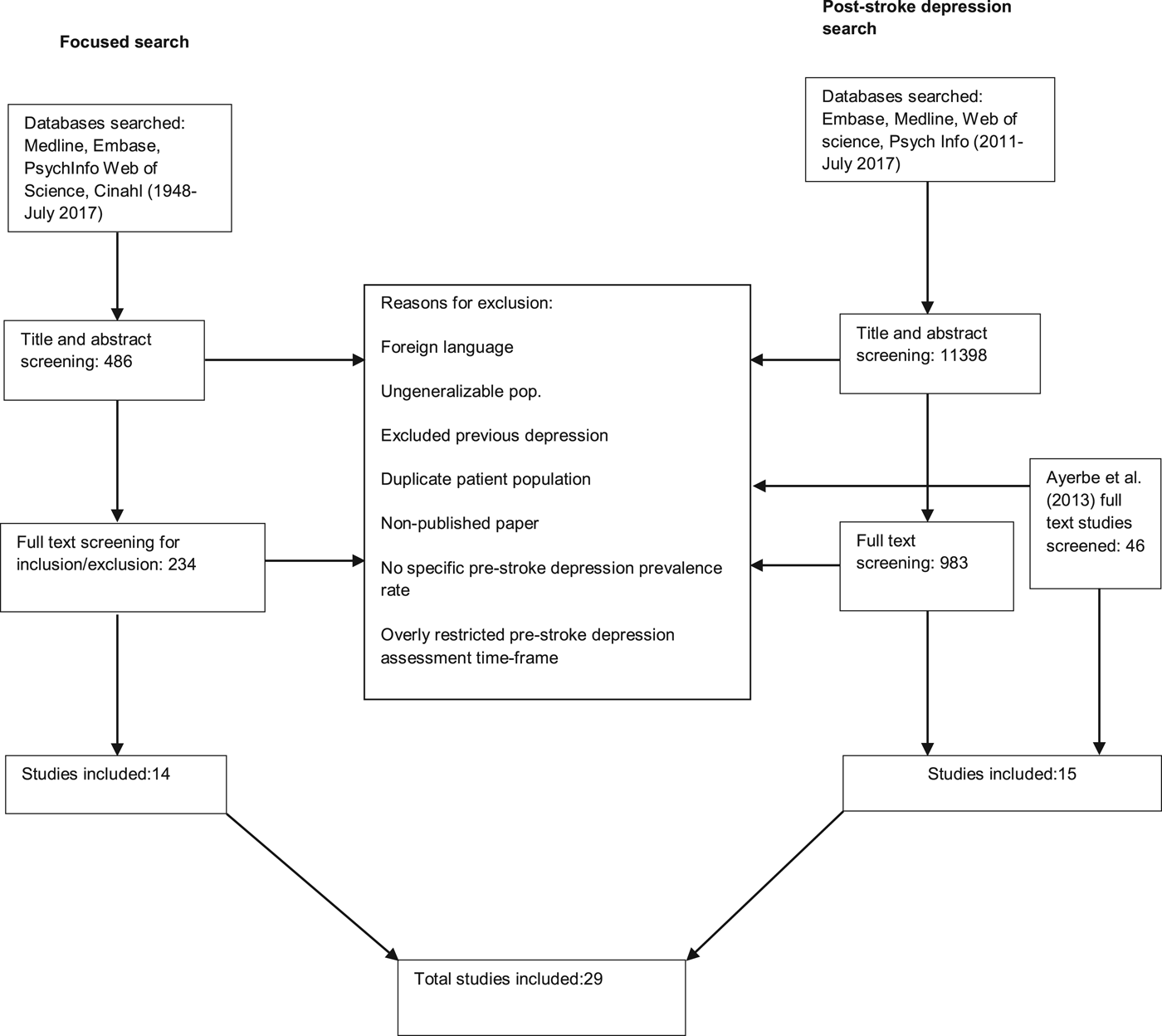
If any study was overly influential on pooled pre-stroke depression rate or ORs and presented ‘outlier’ data, then sensitivity analysis was performed, removing the outliers and re-running the analyses. We also conducted pooled-prevalence-related sensitivity analyses based on the time frame covered in the studies, utilisation of a screening method only to assess pre-stroke depression and type of depression included within the sample (e.g. major depression only) (Fig. 1).
Flow chart of systematic search.

Results
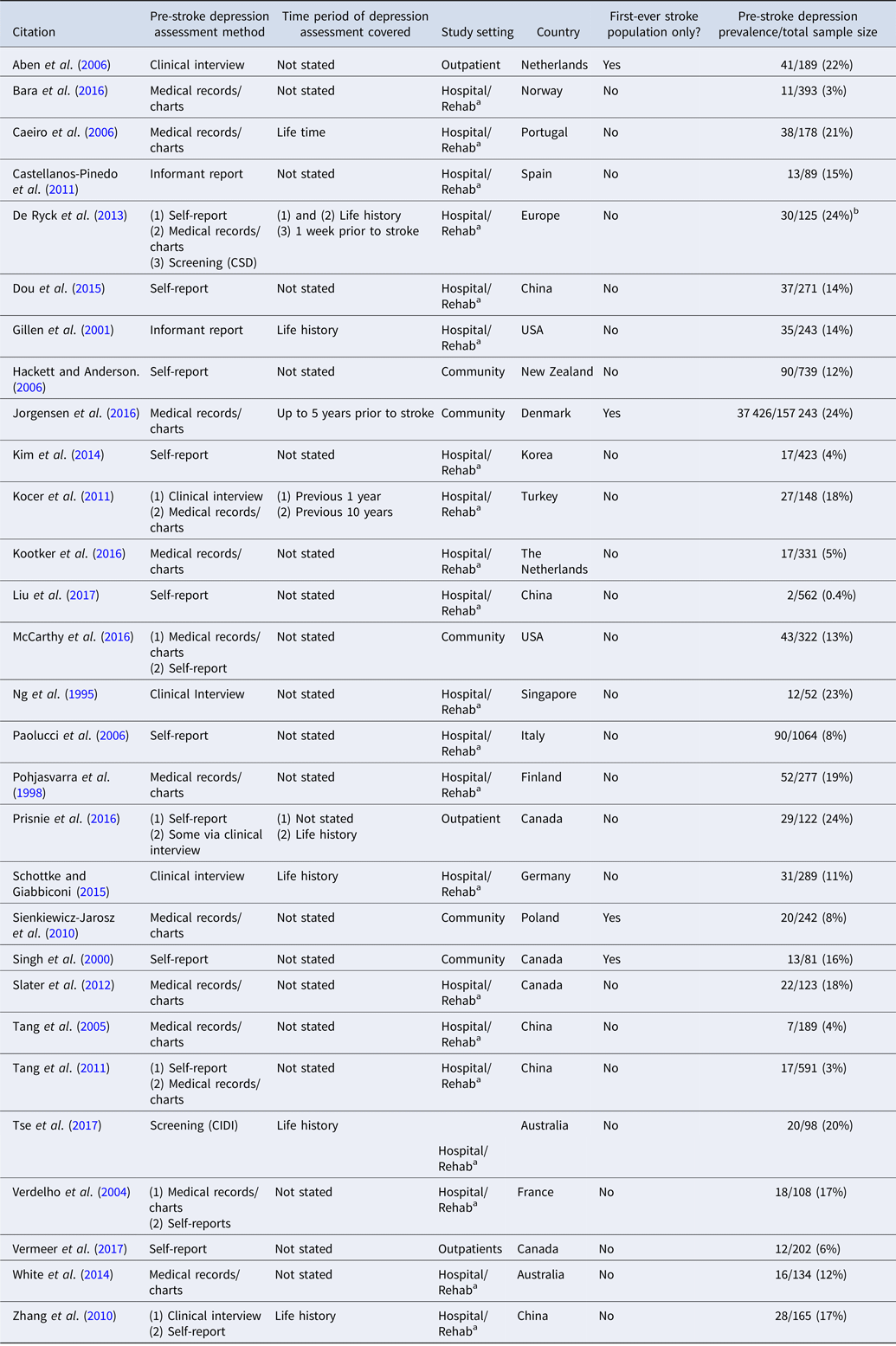
After excluding duplicates, our combined searches identified a total of 11 884 studies. A total of 29 studies (Ng et al., Reference Ng, Chan and Straughan1995; Pohjasvarra et al., Reference Pohjasvarra, Leppavuori, Siira, Vataja, Kaste and Erkinjuntti1998; Singh et al., Reference Singh, Black, Hermann, Leibovitch, Ebert, Lawrence and Szalai2000; Gillen et al., Reference Gillen, Tennen, McKee, Gernert-Dott and Affleck2001; Verdelho et al., Reference Verdelho, Henon, Lebert, Lebert, Pasquier and Leys2004; Tang et al., Reference Tang, Chang, Chiu, Ungavari, Wong, Mok, Wong, Richards and Ahuja2005, Reference Tang, Lu, Chen, Chu, Mok, Ungavari and Wong2011; Aben et al., Reference Aben, Lodder, Honig, Lousberg, Boreas and Verhey2006; Caeiro et al., Reference Caeiro, Ferro, Santos and Figueira2006; Hackett and Anderson, Reference Hackett and Anderson2006; Paolucci et al., Reference Paolucci, Gandolfo, Provinciali, Torta and Toso2006; Sienkiewicz-Jarosz et al., Reference Sienkiewicz-Jarosz, Milewska, Bochynska, Chelmniak, Dworek, Kasprzyk, Galecka, Szcepanska-Szarej, Chwojnicki, Zyluk, Slowik and Ryglewicz2010; Zhang et al., Reference Zhang, Wang, Liu, Zhao, Xue, Zhou, Wang and Wang2010; Castellanos-Pinedo et al., Reference Castellanos-Pinedo, Hernandez-Perez, Zurdo, Rodriguez-Funez, Hernandez-Bayo, Garcia-Fernandez, Cueli-Rincon and Castro-Posada2011; Kocer et al., Reference Kocer, Kocer, Degirmenci and Eryilmaz2011; Slater et al., Reference Slater, McClure, Mahon, Foley and Teasell2012; De Ryck et al., Reference De Ryck, Fransen, Brouns, Guerden, Peij, Marien and De Deyn2013; Kim et al., Reference Kim, Stewart, Kang, Bae, Kim, Shin, Kim, Park, Cho and Yoon2014; White et al., Reference White, Attia, Sturm, Carter and Magin2014; Dou et al., Reference Dou, Tang, Lu, Jiang and Wang2015; Schottke and Giabbiconi, Reference Schottke and Giabbiconi2015; Barra et al., Reference Barra, Evensen and Valeberg2016; Jorgensen et al., Reference Jorgensen, Wium-Andersen, Wium-Andersen, Jorgensen, Prescott, Maartensson, Kragh-Anderson and Osler2016; Kootker et al., Reference Kootker, van Mierlo, Hendricks, Sparidans, Rasquin, de Kort, Visser-Meily and Guerts2016; McCarthy et al., Reference McCarthy, Sucharew, Alwell, Moomaw, Woo, Flaherty, Khatri, Ferioli, Adeoye, Kleindorfer and Kissela2016; Prisnie et al., Reference Prisnie, Fiest, Couts, Patten, Atta, Blaikie, Bulloch, Demchuk, Hill, Smith and Jette2016; Liu et al., Reference Liu, Yingying, Haitang, Lu, Wu, Geng, Wang, Lu, Li, Tang, Lu, Zhang, Liu, Yuan and Wang2017; Tse et al., Reference Tse, Douglas, Lentin, Linden, Churilov, Henry, Davis, Donnan and Carey2017; Vermeer et al., Reference Vermeer, Rice, McIntyre, Viana, Macaluso and Teasell2017) met our inclusion criteria (164 993 patients; see Table 1). We requested additional data from seven authors and received data from one (Acknowledgements). Validity of our search strategy was supported as all pre-specified papers were identified in the initial search.
Summary of included studies describing pre-stroke depression

CIDI, Composite International Diagnostic Interview; CSD, Cornell Scale for Depression.
a Acute hospital or rehabilitation hospital.
b Pooled rate for De Ryck et al. (Reference De Ryck, Fransen, Brouns, Guerden, Peij, Marien and De Deyn2013) includes only those patients identified as depressed via medical records/self-report. Twenty-one patients were also identified as depressed according to a CSD cut-off; however, it was not possible to determine the extent of overlap between these 21 patients and those identified as depressed via medical records/self-reports.
Prevalence of pre-stroke depression
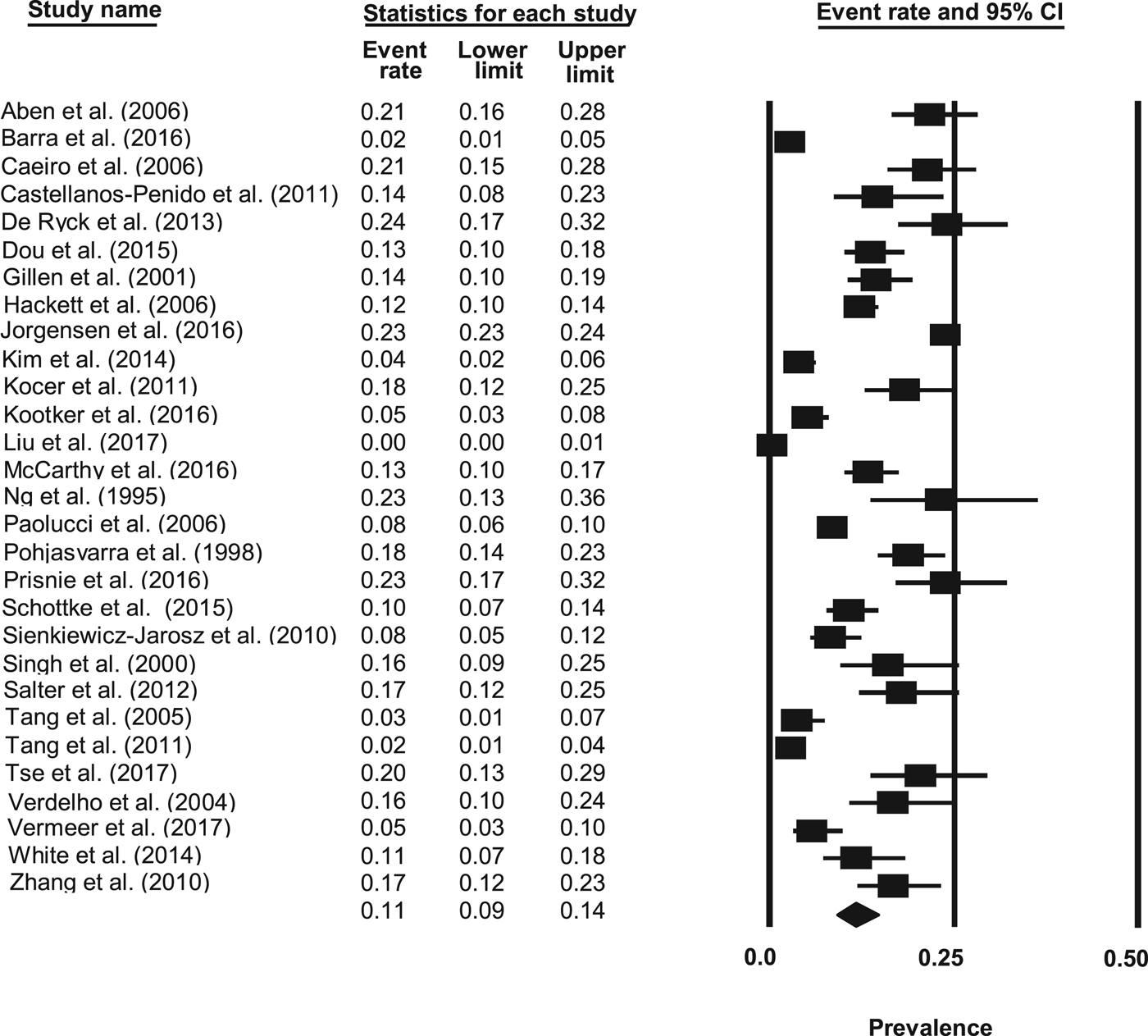
Pooled prevalence of pre-stroke depression was 11.6% (95% CI 9.2–14.7; 29 studies; total participants n = 164 993). There was substantial heterogeneity across studies (I 2 = 95.8) (see Fig. 2).
Forest plot of pooled pre-stroke depression prevalence.

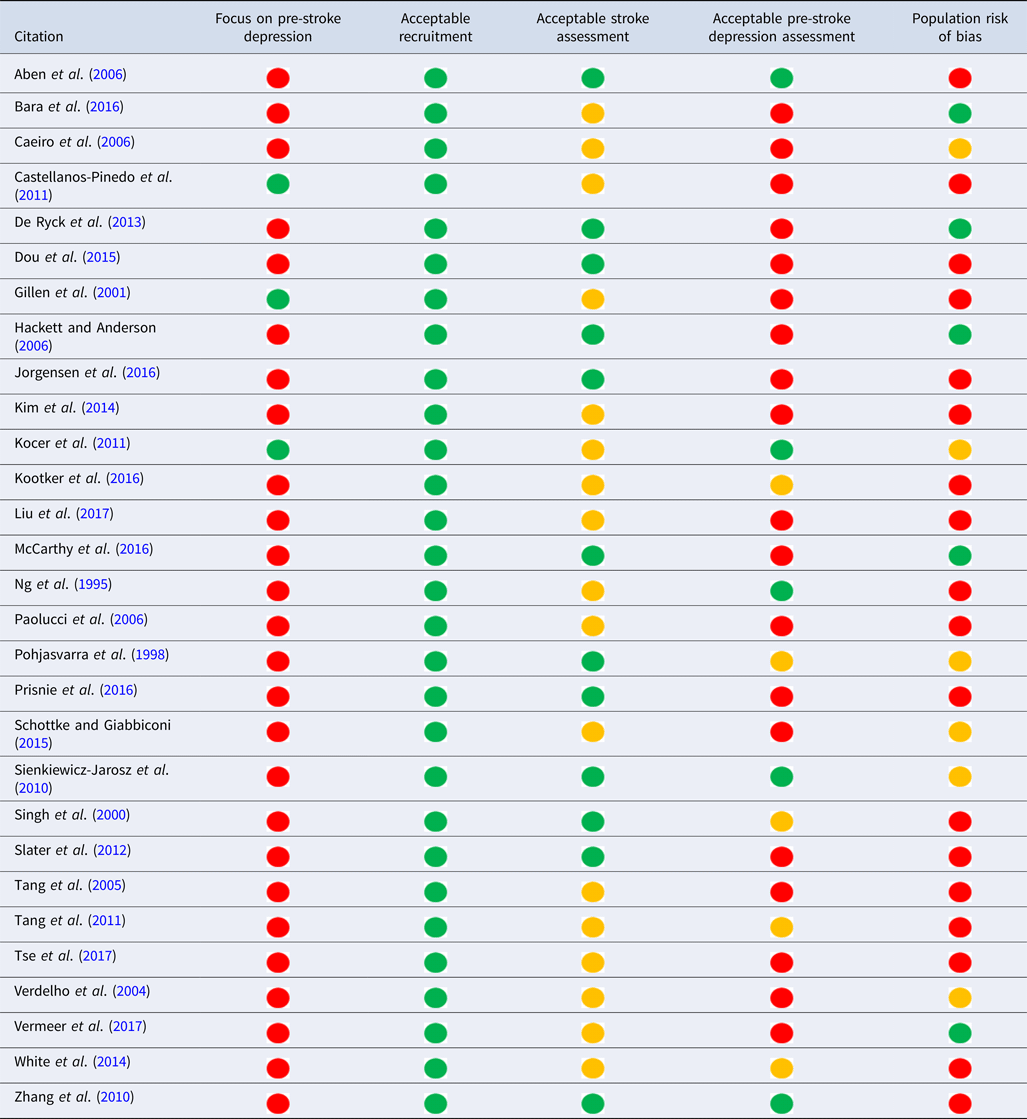
RoB assessment of studies suggested potential bias in reported pre-stroke depression rates in all included studies (see Table 2). Particular issues were around validity of the pre-stroke depression assessment [25 studies (83%) were at high or uncertain RoB] and external validity of the included participants [25 studies (83%) were at high or uncertain RoB], the latter primarily due to excluding patients with pre-stroke dementia/cognitive impairment (13 studies; 44%). Seventeen (59%) studies had an uncertain RoB in stroke assessment.
Risk of bias assessment for studies describing the prevalence of pre-stroke depression

Code:  1 high risk of bias;
 unclear risk of bias;
 low risk of bias.
GRADE evaluation suggested that the strength of evidence to support our summary estimate of prevalence was ‘very low’ (see online Supplementary Materials).
There was substantial variation in the method of pre-stroke depression assessment employed across studies. Pre-stroke depression was assessed using at least five different methods; eight studies utilised more than one method for assessing depression (see Table 1). The most commonly used methods were medical records/charts (utilised in 14 studies) and self-reports (utilised in 12 studies). The standard of reporting of assessment method within studies was mixed; most studies provided only minimal details of assessment method employed.
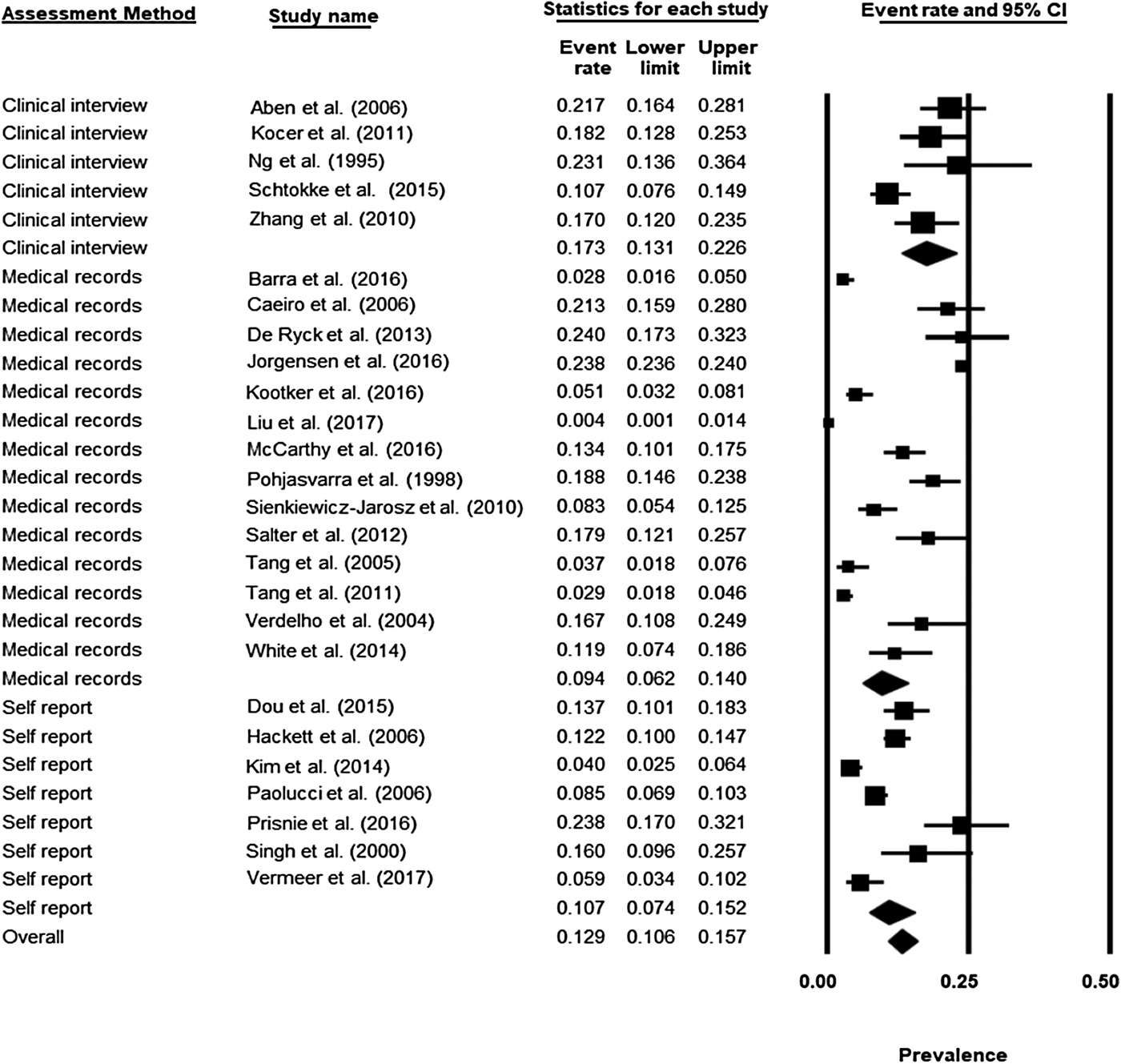
We described summary estimates of pre-stroke depression based on the assessment method for self-reports, medical records/charts and clinical interviews. Prevalence was 10.7% (95% CI 7.4–15.2); 9.4% (95% CI 6.2–14.0) and 17.3% (95% CI 13.1–22.6), respectively (see Fig. 3). Random-effects ANOVA suggested that the method of assessment was an important contributor to between-study heterogeneity (p = 0.02).
Forest plot of prevalence by assessment method.

Sensitivity analysis
No outliers were apparent in our analyses; however, three studies were identified that were restricted in duration of pre-stroke assessment (i.e. ⩽1 year) and hence had been excluded, but otherwise met our inclusion criteria (Burvill et al., Reference Burvill, Johnson, Jamrozik, Anderson, Stewart-Wynne and Chakera1995; Nuyen et al., Reference Nuyen, Spreeuwenberg, Groenwegen, Van den Bos and Schellevis2008; Dossa et al., Reference Dossa, Glickman and Berlowitz2011). Sensitivity analysis was performed by inserting these three studies into our primary pre-stroke depression prevalence meta-analysis; the resultant pooled rate (11.8%; 95% CI 9.6–14.5) suggests that excluding such studies had minimal impact on our reported rate. In addition, as one study (Tse et al., Reference Tse, Douglas, Lentin, Linden, Churilov, Henry, Davis, Donnan and Carey2017) established a pre-stroke depression prevalence rate via a screening method, which could be more indicative of depressive symptoms, rather than depression per se, we performed sensitivity analysis by removing this study; resultant pooled rates (11.4; 95% CI 8.9–14.5) suggest that inclusion of this study did not bias our analysis. Only two studies explicitly reported that they limited their reported sample to major depression only (Kocer et al., Reference Kocer, Kocer, Degirmenci and Eryilmaz2011; Schottke and Giabbiconi, Reference Schottke and Giabbiconi2015); hence we also removed these two studies. Again, resultant pooled rate (11.4; 95% CI 8.9–14.6) suggests that restriction to major depression only had minimal impact on overall pooled rate.
Association with post-stroke depression
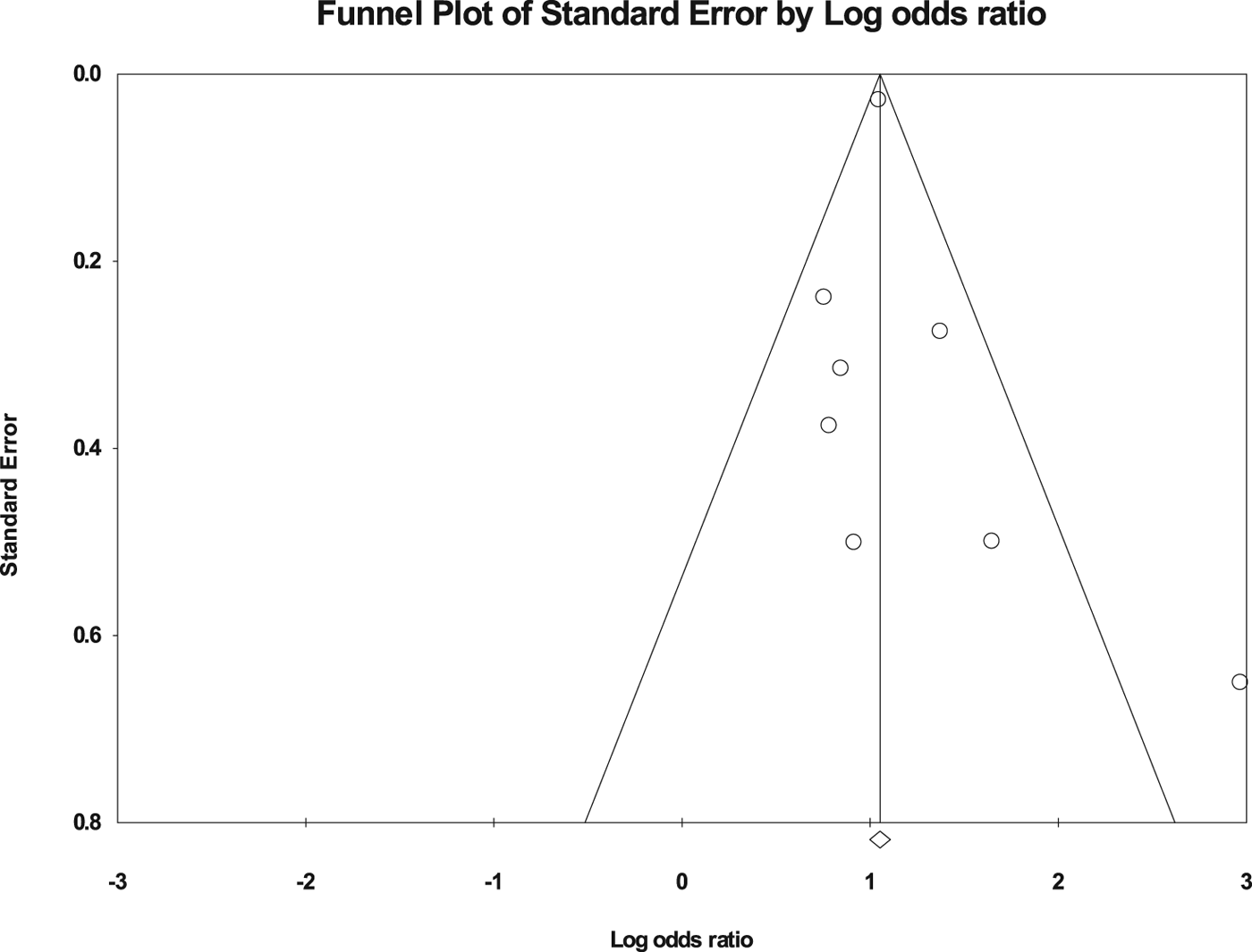
The association between pre- and post-stroke depression was described in 24 studies (83%) (see online Supplementary Materials); 14 (58%) reported significant associations (see online Supplementary Materials). Multiple logistic regression analyses were described in 15 studies (see online Supplementary Materials) and 11 (73%) reported significant associations (see online Supplementary Materials). The resulting funnel plot did not suggest reporting bias (see Fig. 4). Assessment methods employed to assess pre- and post-stroke depression were variable, as were chosen covariates included in regression models (see online Supplementary Materials).
Funnel plot assessing publication bias of odds ratio data reported in studies.

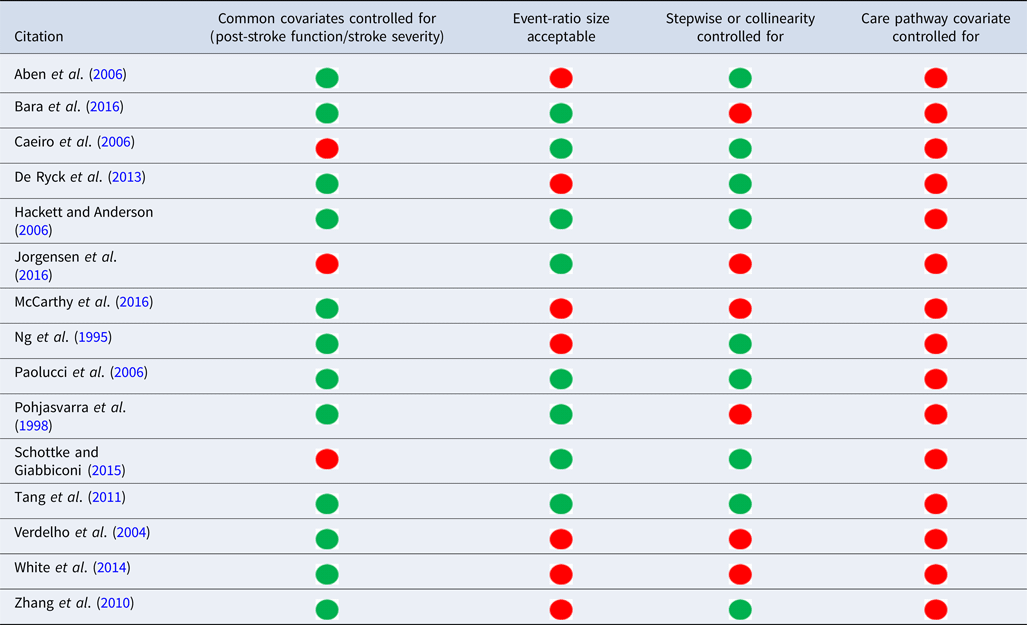
The papers describing association models were at RoB (see Table 3). In particular, no studies controlled for post-stroke care pathway. Three out of four studies employing multiple regression models that failed to observe a risk association were underpowered (Aben et al., Reference Aben, Lodder, Honig, Lousberg, Boreas and Verhey2006; White et al., Reference White, Attia, Sturm, Carter and Magin2014) or failed to control for important covariates (Schottke and Giabbiconi, Reference Schottke and Giabbiconi2015); one study had a very small pre-stroke depression prevalence (Barra et al., Reference Barra, Evensen and Valeberg2016).
Risk of bias assessment of multiple logistic regression models employed to evaluate pre-stroke/post-stroke depression association

Code: high risk of bias; low risk of bias.
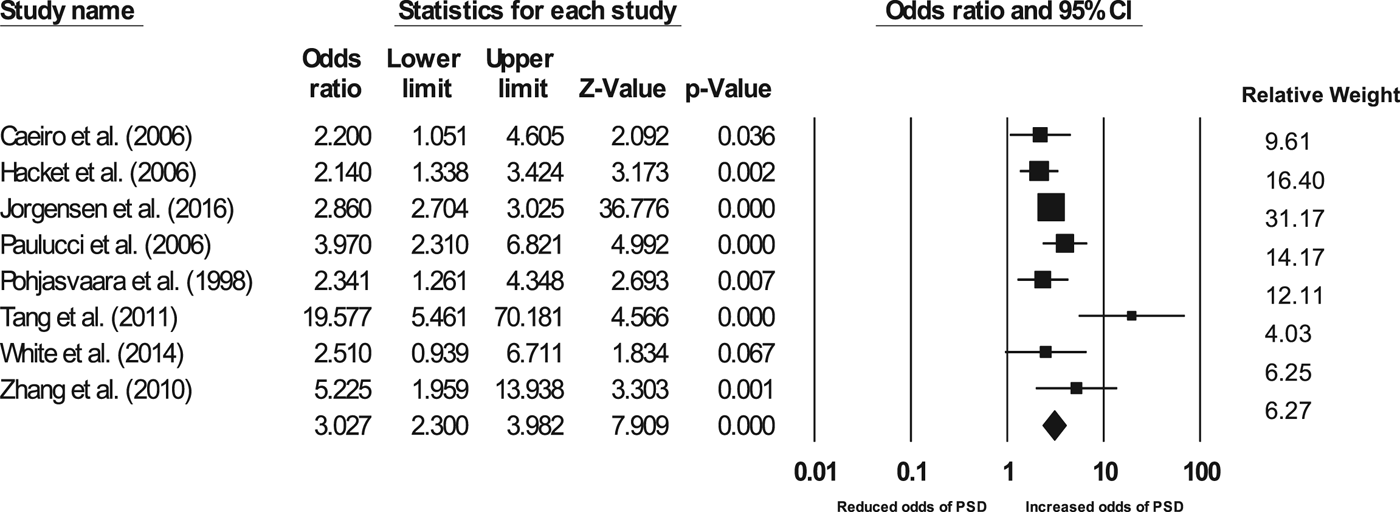
OR data were available for nine studies in total. However, one study was removed from analysis due to a lack of symmetry of log values (McCarthy et al., Reference McCarthy, Sucharew, Alwell, Moomaw, Woo, Flaherty, Khatri, Ferioli, Adeoye, Kleindorfer and Kissela2016). This left eight studies with a combined sample size of 37 483 for meta-analysis. Random-effects analysis suggested a pooled OR of 3.03 (95% CI of 2.30–3.98) (Fig. 5). One study (Tang et al., Reference Tang, Lu, Chen, Chu, Mok, Ungavari and Wong2011) appeared to be a clear outlier; hence, sensitivity analysis was performed by removing this study and re-running the analysis. This did not meaningfully alter the strength of association (2.85; 95% CI 2.70–3.02).
Forest plot of odds ratios for developing post-stroke depression (PSD) based on the presence of pre-stroke depression.

GRADE evaluation suggested that the strength of evidence to support our summary estimate of association was ‘very low’ (see online Supplementary Materials).
Discussion
Prevalence
The primary aim of our review was to describe the natural stroke population prevalence of pre-stroke depression based on the data from typical stroke settings. Our results suggest a pooled pre-stroke depression prevalence rate of ~12%, which is identical to the 12% mood disorder prevalence rate most commonly reported in the general population (Kessler et al., Reference Kessler, Aguilar-Gaxiola, Alonso, Chatterji, Lee, Ormel, Ustun and Wang2009). This is somewhat surprising given that depression is a risk factor for stroke (Barlinn et al., Reference Barlinn, Kepplinger, Puetz, Illigens, Bodechtel and Siepmann2014). We note that pre-stroke depression was assessed in diverse ways across studies and that there was a significant trend towards increasing prevalence with increasing complexity of testing. This indicates that the more one looks for pre-stroke depression, the more it is discovered, which is in keeping with the research suggesting variable detection of pre-stroke depression according to the assessment method employed (Zhang et al., Reference Zhang, Wang, Liu, Zhao, Xue, Zhou, Wang and Wang2010; Wulsin et al., Reference Wulsin, Alwell, Moomaw, Lindsell, Kleindorfer, Woo, Flaherty, Khatri, Adeoye, Ferioli, Broderick and Kissela2012; McCarthy et al., Reference McCarthy, Sucharew, Alwell, Moomaw, Woo, Flaherty, Khatri, Ferioli, Adeoye, Kleindorfer and Kissela2016; Prisnie et al., Reference Prisnie, Fiest, Couts, Patten, Atta, Blaikie, Bulloch, Demchuk, Hill, Smith and Jette2016). On this basis, the 17% pre-stroke depression rate, evident when in-depth interviews, were utilised to investigate the presence of pre-stroke depression, may be more reflective of the actual pre-stroke depression prevalence, existent within the stroke population.
Comparing pre-stroke depression rates (17%) to recent estimates of post-stroke depression (39–52%; Ayerbe et al., Reference Ayerbe, Ayis, Wolfe and Rudd2013) demonstrate that rates of depression after stroke are several multiples higher than the rates of depression present before a stroke. These results suggest that the majority of cases of post-stroke depression are not simply the re-manifestation or ‘unmasking’ of pre-stroke depression. Our findings are therefore in line with the suggestions that the majority of cases of post-stroke depression are the product of the experience and consequences of the stroke itself (Ayerbe et al., Reference Ayerbe, Ayis, Wolfe and Rudd2013).
Risk association
As a secondary aim, we described the association between pre-stroke and post-stroke depression. Recent findings prompted suggestions that the pre-stroke state is ‘not a meaningful predictor’ of depression after stroke (Schottke and Giabbiconi, Reference Schottke and Giabbiconi2015). Our meta-analysis results suggest that pre-stroke depression at any point over the life time increases the odds of post-stroke depression by as much as 3.0 (95% CI 2.3–4.0), when compared with those without pre-stroke depression. Notably, of the 15 studies that utilised multiple logistic regression analysis to investigate the association, two of the four studies that failed to find an association were underpowered in their event-per variable ratio (Aben et al., Reference Aben, Lodder, Honig, Lousberg, Boreas and Verhey2006; White et al., Reference White, Attia, Sturm, Carter and Magin2014); one study (Schottke and Giabbiconi, Reference Schottke and Giabbiconi2015) failed to control for important covariates, and one reported a very low rate of pre-stroke depression (Barra et al., Reference Barra, Evensen and Valeberg2016). We would therefore suggest it as inaccurate to conclude that the pre-stroke state is not a meaningful predictor of depression after stroke and would encourage researchers to include pre-stroke depression as a case-mix adjuster in all future studies of post-stroke depression.
Strengths and limitations
We present a methodologically robust synthesis of the published literature, following best practice in conduct of observational systematic review. However, quality of primary data mandated a low GRADE rating: prevalence rates reported across studies were heterogeneous and studies had RoB. Specifically, the limitations of the available papers may risk underestimating pre-stroke depression rates. Particular issues were regarding sensitivity of pre-stroke depression assessment and exclusion of patients with pre-stroke cognitive impairment. The pooled rate may alternatively be inflated by inclusion of rates that reflect depressive symptoms rather than depression per se; although, our sensitivity analysis indicates that such rates were not overly influential towards the pooled prevalence that we report. More significantly, we cannot say for certain what form of depression our pooled rate describes, as explicit definitions of pre-stroke depression were lacking. Typically employed assessment methods (i.e. medical records, self-reported prior diagnosis, clinical interview) could conceivably incorporate any form of clinical depression (e.g. major depression, minor depression and dysthymia all inclusive), or may be predominantly constrained to major depression only. Clearer reporting in this regard would benefit the field.
Similarly, our assessment of the pre-stroke/post-stroke depression association has methodological limitations. Authors may have been more likely to give ORs where an association was apparent; hence, our summary quantitative analysis is at risk of reporting bias, albeit this was not evident in the corresponding funnel plot. Studies were heterogeneous in both covariates controlled for and assessment method utilised for both pre- and post-stroke depression assessment, which could potentially bias or confound reported associations; for instance, the strength of reported ORs may be heightened or diluted due to differences in control for stroke severity, or ability to accurately detect pre-stroke depression within a sample. Taking all this into account, our GRADE estimate of confidence in this evidence was ‘very low’. We also note that no included studies controlled for the possible influence of alterations in care pathway following assessment of pre-stroke depression. It seems plausible that recording pre-stroke depression, clinically, would result in greater use of pharmacological treatment, likelihood of referral for psychological assessment or more frequent assessment for post-stroke depression (Reid et al., Reference Reid, Jia, Cameon, Feng, Wang and Tueth2010; Slater et al., Reference Slater, McClure, Mahon, Foley and Teasell2012). As a result, although current evidence is favourable regarding a relevant risk association between pre-stroke and post-stroke depression, we must remain cautious, and changes to the approach for investigating this association are needed. In particular, we would advise future studies seeking to assess risk factors for post-stroke depression to be aware of the potential care pathway-related confound and encourage greater consistency of depression assessment (both pre- and post-stroke).
Finally, we used two complementary approaches to inform our literature search, one specific search designed to find papers with a focus on pre-stroke depression and a more sensitive search with a post-stroke depression focus. Through various internal and external validity checks, we believe we have captured all the relevant studies. However, it is possible that we may have missed prospective cohort studies with depression and stroke data where these variables are only available as secondary outcomes data and there have been no specific publications relating to depression and stroke.
Future directions
Our findings suggest avenues for further research. Optimal methods for assessing pre-stroke depression should be established, particularly as differences in assessment tool properties could interfere with correct identification of risk associations or result in improper patient care plans. Second, it would be beneficial to ascertain whether depression severity (e.g. major depression only v. ‘any depression’) is a source of variance for the risk of developing depression after stroke. Finally, the literature presents a clear correlation between pre-stroke and post-stroke depression; however, the specific aetiology of this association remains unknown. Previous studies have suggested that genetic factors may play a role (Ayerbe et al., Reference Ayerbe, Ayis, Wolfe and Rudd2013). The presence of particular psychological characteristics may also be relevant. For instance, selective attention towards negative attributes can lead to depression following disease (Rodin and Littlefield, Reference Rodin and Littlefield1991) and is also a characteristic attributable to depression. Hence, a prior history of this cognitive style may increase the likelihood that this way of thinking will arise post-stroke, thus heightening the risk of developing depression after stroke. Understanding the nature of the pre-stroke/post-stroke depression association should therefore help to tailor better treatment methods.
Clinical implications
Stroke patients are at considerable risk of developing depression, and having depression prior to the stroke event only serves to further heighten this risk. On this basis, it is important that clinicians are aware of the relevance of pre-stroke depression to the potential development of depression after a stroke, as well as the prevalence of the condition within their patient population (likely one in six).
Clinicians should also be aware of the potential limitations of relying upon medical records or patient self-reported diagnoses as means of identifying pre-stroke depression. It is likely that reliance upon such methods will fail to identify a substantial number of patients with the condition.
Conclusions
It seems clear from the existent literature that the prevalence of pre-stroke depression is strikingly lower than the depression prevalence observed after a stroke. Nevertheless, it appears that pre-stroke depression is an important and relevant clinical variable regarding the development of post-stroke depression.
We would suggest that in those patients where pre-stroke depression is apparent, a high index of suspicion for post-stroke depression would be appropriate.
In a research context, efforts to investigate pre-stroke depression are currently hampered by the challenge of reliably assessing it: the most commonly employed methods utilised to detect pre-stroke depression are at risk of underestimating the prevalence of the condition. Utilisation of more thorough assessments of pre-stroke depression along with a careful consideration of relevant confounds and adequately powered statistical models are essential to the enablement of a more developed and nuanced understanding of pre-stroke depression and its relationship with post-stroke depression.
Supplementary material
The supplementary material for this article can be found at https://doi.org/10.1017/S0033291718002003
Acknowledgements
We thank our funders. We would also like to thank Professor Merete Osler and Dr Terese Jorgensen for providing odds ratio data for our meta-analysis.
Author contributions
MT and TJQ conceived the study. OM was the second reviewer on the paper. DJS, LA and JE contributed to the supervision, interpretation of results and critical review of draft manuscripts. MT and TJQ drafted the paper. All authors contributed to the writing of the paper. MT is the guarantor.
Financial support
MT is part funded by Chest Heart and Stroke Scotland; this work is part of the APPLE programme of work funded by the Stroke Association and Chief Scientist Office Scotland. TQ is supported by a Stroke Association, Chief Scientist Office Senior Lectureship.
Conflict of interest
None.