




No CrossRef data available.
Article contents
- Abstract
- JAVA: A SKETCH OF THE INSTITUTIONAL FRAMEWORK OF THE RICE MARKET
- A NOTE ON SOURCES
- A FIRST IMPRESSION OF SEASONAL FLUCTUATIONS
- THE INTERLINKAGE OF RICE AND CREDIT MARKETS
- THE FRAGMENTATION OF THE CAPITAL MARKET: EVIDENCE FROM THE PAWNSHOPS
- WHAT DETERMINED SEASONAL VARIATION IN RICE PRICES?
- CHANGES IN THE SEASONAL VARIATION IN GRAIN PRICES
- CONCLUSION
- References
On the Efficiency of Markets for Agricultural Products: Rice Prices and Capital Markets in Java, 1823–1853
Published online by Cambridge University Press: 31 January 2005
Article contents
- Abstract
- JAVA: A SKETCH OF THE INSTITUTIONAL FRAMEWORK OF THE RICE MARKET
- A NOTE ON SOURCES
- A FIRST IMPRESSION OF SEASONAL FLUCTUATIONS
- THE INTERLINKAGE OF RICE AND CREDIT MARKETS
- THE FRAGMENTATION OF THE CAPITAL MARKET: EVIDENCE FROM THE PAWNSHOPS
- WHAT DETERMINED SEASONAL VARIATION IN RICE PRICES?
- CHANGES IN THE SEASONAL VARIATION IN GRAIN PRICES
- CONCLUSION
- References
Abstract
I use rice prices in three cities to analyze the efficiency of the marketing system and the institutional framework of Javanese agriculture, 1823–1853. I show that imperfections in rural capital markets caused the extreme fluctuations in rice prices and that the segmentation of the capital market modifies the McCloskey and Nash interpretation of the relationship between seasonal fluctuations of grain (or rice) prices and interest rates. I argue that these fluctuations proxy peasants' stress. Finally, I hypothesize that institutional and market failures explain the “noneconomic” behavior of Javanese peasants in Boeke's theory of dualistic economic development.
Information
- Type
- ARTICLES
- Information
- Copyright
- © 2004 The Economic History Association
The neo-institutional approach developed by Douglass North and other economists maintains that the quality of the institutional framework determines the pace and the character of the process of economic development. If property rights are well protected and transaction costs are low, markets can function efficiently, making possible processes of commercialization and specialization.1
North, Structure and Institutions.
One of the obvious reasons is that the institutional setting of a particular region is a complex phenomenon, related to property rights of labor, land, and capital; to government policies (in this case the political economy of the colonial state); and to the efficiency of the marketing system. Yet, the bottom line of the neo-institutional approach is that these institutions were important because they affected the functioning of markets; therefore, a case can perhaps be made that their failure should show up in the way in which markets worked in practice. In recent studies the point has been made that the efficiency of capital markets can be measured by the (real) interest rate: the lower it is, the greater the trust that the debtor will honor his obligations appears to be. This measure makes it possible to chart the growing efficiency of European capital markets during the Early Modern period, or to identify institutional changes—those following the Glorious Revolution, for example—that resulted in significant improvement in the efficiency of capital markets.2
On the Early Modern period, see Epstein, Freedom, pp. 18–24, 61–63. On the Glorious Revolution, see North and Weingast, “Constitutions.”
This article argues that the seasonal variation in the prices of the most important agricultural commodities—of rice, wheat, or rye—can also be used as a proxy for the degree of efficiency of the marketing system. The fundamental importance of these markets for less developed and largely agricultural economies is obvious: the degree to which peasants will be stimulated to increase output and market surpluses will be closely related to the functioning of the markets for their staple products. If those markets are characterized by great uncertainties, such as huge fluctuations in prices, it will be difficult for peasants to predict the market prices of the extra output they plan to produce, or to discover trends in absolute and relative prices that should guide them into the diversification of their activities or the development of new systems of cultivation (for example, hiring additional labor or buying manure in order to increase output). The market in such cases produces random “noise,” and the prices peasants receive for their products may appear to them to be just a matter of chance. Large, unpredictable variations in prices may therefore have an effect similar to that of hyperinflation: the market does not produce the appropriate information for economic decision making, and a strategy focusing on subsistence or barter may be optimal. The net result may be underinvestment (because the returns to investment are unpredictable) or investment in the wrong activities.3
Timmer (“Does Bulog”) discusses the same issues in relation to contemporary rice markets in Indonesia.
This article focuses on one aspect of the variability of those prices, seasonal fluctuations. The obvious reason for the existence of seasonal variation is that harvests are concentrated in seasonal periods, and the increase in grain prices some time after the harvest is a necessary compensation for the costs of storage of crops. These storage costs consist of the actual costs of storing the commodity, the losses that occur during storage, and the interest on the capital that is invested in it. Donald McCloskey and John Nash showed in 1984 that the monthly increase in grain prices after harvest should be identical to the sum of those costs, and used this identity to estimate the interest rate in English agriculture during the thirteenth and fourteenth centuries.4
McCloskey and Nash, “Corn.”
Poynder, “Grain Storage.”
One of the strong points of the McCloskey and Nash approach is its focus on the link between the capital market and the grain market. They conceptualize this link as a one-way causality: the level of the interest rate causes a certain level of seasonal variation. Recent literature on rural markets in developing countries suggest that those links may be much more complex and intimate; the concept of interlinkage has been coined to analyze this. “An interlinked transaction is one in which two parties trade in at least two markets on the condition that the terms of all such trades are jointly determined.”6
Bell, “Credit Markets,” p. 797.
Stiglitz, “Economic Organization.”
Bhaduri, “On the Formation”; and Braverman and Srinivasan, “Agrarian Reforms.”
JAVA: A SKETCH OF THE INSTITUTIONAL FRAMEWORK OF THE RICE MARKET
By all standards, the institutional framework for market exchange was poorly developed in nineteenth-century Java. Rights to land and labor were not clearly defined to begin with. There is a long and complicated literature on this issue, going back to the first inquiries into this matter in the middle of the nineteenth century, which cannot be summarized in any detail here.9
Van Niel, Java; Boomgaard, Children, pp. 64–85; and Breman, Control.
Van Niel, Java, pp. 5–28.
This “fuzzy” set of property rights to land and labor may have been a solution to the problems of organizing and maintaining a “centralized” agrarian state in a region in which markets were extremely thin and the higher layers of society depended on direct tributes by the peasantry. It was, however, not conducive to the endogenous growth of markets. The interventions by the administration of the Verenigde Oostindische Compagnie (Dutch East India Company, hereafter VOC), which during the eighteenth century became increasingly dependent on the income generated by forced export production, also tended to stabilize this system as they learned to convert their claims to land and labor into cheap export products.11
Nagtegaal, Riding the Dutch Tiger.
Boomgaard, Children, p. 82.
As a result two more-or-less separate systems of the control over land evolved: in the “marginal” eastern and western parts of Java the peasants de facto became the private owners of the land, but local elites continued to claim part of the land or its produce, whereas in the central core of Java (and in particular in the Pasisir, the north coast), systems of communal ownership of the land evolved, in which the land was often redistributed after a number of years.13
See Koloniaal Verslag 1882, which contains the first attempt to measure the extent of communal and private property in those parts of Java that were under direct Dutch rule.
This structure of overlapping claims to (the product of) land and labor, which could be found in other Asian regions as well, was not the only impediment to market exchange.14
Feeny, “Decline”; and Bhargawa and Richards, “Defining Property Rights.”
In 1846 the price lists discussed in the next section distinguish, for example, between a koyang of 27 picul (of 125 pounds) in Batavia, of 28 picul in Semarang and of 30 picul in Surabaya.
Korthals Altes, “Prices,” p. 117.
Until the reforms of the 1850s, money was chaotic too. Two different kinds of coins—large denomination silver coins and small copper change—were in use after the reintroduction of the Netherlands Indies guilder in 1816. As the colonial authorities thought there was an almost unlimited demand for copper coins, the Dutch started to manufacture and import large quantities of them, resulting in a sharp relative decline of their value. Silver coins disappeared from circulation during the 1820s because of hoarding and exports of silver to other parts of Asia. This meant that paper money had to be introduced for large, commercial transactions, but this money tended to lose part of its value after some time, contributing to the monetary chaos.17
De Bree, Gedenkboek, vol. 1, pp. 147–59.
The details of the monetary history of this period are covered by Van Laanen, “Money”; and De Bree, Gedenkboek, vol. 1.
Other weaknesses of the marketing system were the fact that transport costs were relatively high because of the underdeveloped nature of the infrastructure, and that at markets, city gates, and bridges taxes were levied on products that were brought to the market place (and sometimes, illegally, also on people moving to the town). These taxes were almost always farmed out to Chinese merchants who, according to Dutch (liberal) authors, used their position to squeeze the peasantry who came to town to sell their products. The most burdensome of these taxes was abolished in the early 1850s.19
De Waal, Aanteekeningen, pp. 303–14; Vitalis, “Over de pachten”; and Diehl, “Revenue Farming.”
Elson, “Famine” and Village Java, pp. 257 ff.
Boomgaard, “Buitenzorg.”
Elson, “Famine.”
The demand for rice came from the towns. The urbanization ratio was relatively low, however—less than 7 percent lived in cities with more than 20,000 inhabitants—and appears to have declined during the nineteenth century.23
Boomgaard, Children, p. 159.
Boomgaard and Gooszen, “Population Trends,” p. 213.
Creutberg and Boomgaard, eds., Changing Economy, vol. 4, table 6.
Hugenholtz, “Famine.”
A NOTE ON SOURCES
In 1823 the Bataviasche Courant, the official government gazette and newspaper of the merchant community of Batavia, began to publish market prices of a number of consumption goods: rice, firewood, coconut and peanut oil, and, at the same time, but in separate tables, the maximum prices of a number of European consumption goods (wheaten bread, pork, and beef) as set by the local government. In 1824 and 1825 market prices in Semarang and Surabaya—the other important trading towns on the north coast of Java—were also included in these tables, and this continued when the newspaper was renamed into the Javasche Courant in 1828. The aim of these pricelists was clearly to increase the transparency of these markets for European buyers. In separate tables the Javasche Courant also published information on the import prices of commodities, sometimes in the form of ads from local merchants who announced that they had imported European commodities, which could be bought at their warehouse, sometimes in the form of a price list to inform the general public.27
Korthals Altes, “Prices,” p. 117.
During most of the period under study (1823–1853) the journal appeared twice per week, on Wednesday and Saturday, and often one of these issues contained a price list. Sometimes, when many official publications had to be printed or for reasons that are unclear, no price lists were published during a certain week, and occasionally for more than a couple of weeks in a row. It is therefore not possible to construct weekly listings of these prices, but monthly quotations are no problem. I selected those prices that were closest to the middle (i.e., the fifteenth) of each month, but in some cases I had to use lists from, for example, the fourth (December 1839) or the twenty-second (April 1826). During the first years the Batavia prices were often quoted as a range between minimum and maximum prices (for example 110 to 121 guilders on 14 May 1825). After the middle of 1827 single prices became usual; when ranges were quoted I calculated the average between minimum and maximum. From January 1841 onwards three different qualities of rice were distinguished, although prices of all three classes were not always published. I concentrated on second-class rice, for which the price information was most abundant (this choice was also consistent with the calculation of an average between maximum and minimum prices before 1827).
As mentioned previously, there was some confusion about the measure of the koyang, which was used throughout the 1823–1855 period. The Surabaya and the Semarang koyang were somewhat larger than the Batavia koyang, but it is not entirely clear by how much, although it must have been in the range of 5 to 10 percent. During the early 1840s, when the currency chaos was reaching its apex, the price lists also state that they are based on payment in copper coins; all prices were expressed in Netherlands Indies guilders.
The general impression of this source is that the quality of the information is high, mainly because the prices published changed very frequently. There are no reasons to assume that the Javasche Courant, or the sources used by them—the local merchants—had reason to misrepresent the state of the rice market. Rice was traded widely but was not a major commodity for the Dutch merchants residing in the three cities, who concentrated on other export crops (coffee and sugar in particular). The prices from the Javasche Courant show the same trends as other price data from this period, in particular those from the export statistics.28
Taken from De Bruyn Kops, Statistiek; and Van Zanden, “Market Integration.”
A FIRST IMPRESSION OF SEASONAL FLUCTUATIONS
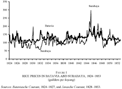
Rice prices in these three market towns do not show a long-term trend between the early 1820s and the early 1850s. During most of the period prices fluctuated between 60 and 150 guilders per koyang (see Figure 1, for prices in Batavia and Surabaya). There were two notable exceptions, however: during the second half of the 1820s prices were on average relatively low—between 80 and 100 guilders in Semarang and Surabaya, about 110 guilders in Batavia—and during the second half of the 1840s, when Java was struck by a number of harvest failures (and the currency was very weak), prices moved up to much more than 150 guilders, especially in Semarang and Surabaya.29
Hugenholtz, “Famine,” pp. 159–61.
Elson, “Famine.”

RICE PRICES IN BATAVIA AND SURABAYA, 1824–1853 (guilders per koyang)
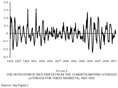
Monthly prices of rice fluctuated strongly in the three market towns. Figure 2, which presents the average deviation from the centered 13-month moving average of the three market cities, shows this clearly.31
This method to quantify seasonal fluctuations was applied to make my results comparable to those of Van der Eng, Agricultural Growth, p. 173; the same method was applied to estimate seasonality for Semarang in Figure 3.

THE DEVIATION OF RICE PRICES FROM THE 13-MONTH MOVING AVERAGE (AVERAGE FOR THREE MARKETS), 1825–1852

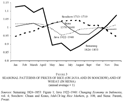
SEASONAL PATTERNS OF PRICES OF RICE (ON JAVA AND IN SOOCHOW) AND OF WHEAT (IN SIENA) (annual average = 1)
There is evidence that the market prices in the three cities understate the actual seasonal fluctuations in rice prices in the small rural markets where peasants marketed most of their rice. In a small booklet on the Javanese rice market published in 1888—the first significant publication on this issue—H. A. de Groot presents a table of the average rice prices on the countryside of Java, as collected by the civil servants who were involved in the cadastral survey in the late 1870s. These data show an even more pronounced seasonal pattern, in which prices of padi during the paceklik (February/March) were more than double prices directly after the harvest (in June/July).32
De Groot, Studie, p. 49.
Anonymous, “Algemeen overzigt,” p. 91.
In comparative perspective those seasonal patterns stand out (Figure 3). Studies of rice prices in Java during the interwar period show that they fluctuated within a rather narrow band of plus or minus 10 percent of average annual prices in the 1920s and even less—plus or minus 5 to 7 percent—in the 1930s.34
Van der Eng, Agricultural Growth, p. 173.
Poynder, “Grain Storage,” p. 7.
Figure 3 gives the example of Soochow in the early eighteenth century from Chuan and Kraus, Mid-Ch'ing Rice Markets, p. 108.
According to the McCloskey and Nash approach, the increase of the price between the immediate after-harvest period and the paceklik is identical to the costs of storage plus the interest rate on the capital invested in the rice. The actual costs of storage were probably rather low in the Javanese countryside. Because the Javanese maintained that “old” rice was superior in quality to the rice of the new harvest, “old” rice even commanded a certain premium over the new crop, which (partially) compensated for the minimal losses that might occur.37
See Mears, Rice Marketing, pp. 81–85, who, however, describes the situation in the 1950s.
The calculation is based on Van der Kemp, Handboek, p. 346; storing rice in the warehouses of the state near the docks was much more expensive: in 1832 the monthly rate was 5 cents per picul (about 1/30 of a koyang) per month, 1 to 2 percent of its value (or 12 to 24 percent on an annual basis); official storage rates are quoted in Archives Ministry of Colonial Affairs 1814–1849 (in National Archive The Hague) no. 3042.
The conceptual problem with this approach is that it assumes a more-or-less integrated capital market on which peasants and merchants could borrow money at similar interest rates. In that case it makes sense to try to establish “the” interest rate on the countryside of medieval England, or in rural Java. But capital markets in underdeveloped countries were often highly fragmented, and the links between capital markets and markets for food products were often much more complex than is implied by the McCloskey and Nash approach. I therefore turn to the concept of interlinkage to analyze the causes of the extreme fluctuations in rice prices in more detail.
THE INTERLINKAGE OF RICE AND CREDIT MARKETS
The contemporary literature that may shed some light on the seasonal patterns in rice prices is extremely thin. Dutch administrators and scholars who studied different aspects of the Javanese economy in the nineteenth century were much more interested in (the markets for) Javanese exports crops such as coffee and sugar. The first analysis of the rice market by H. A. de Groot (1888) contains not only a description of the functioning of the rice market, but also an analysis of its failures.
The first important point that De Groot makes is that the degree of integration of regional markets was very low, or even absent, which is in striking contrast to the markets for export crops, which were well integrated. He gives the example of the two markets linked by the river Brantas: Surabaya, the second biggest city of Java, and Plosso, an important regional market town. The latter town exported large quantities of rice to Surabaya, where De Groot was a civil servant for two and a half years. Transport costs between them were rather low; he estimated them at fl 0.50 per picul. In 1885 and 1886 market prices per picul in Plosso ranged from f 3 to f 4.50, about half the level in Surabaya (f 6 to f 8). The difference was sometimes more than 100 percent of the prices in Plosso and much larger than transport costs.39
De Groot, Studie, p. 9
Next, De Groot starts to analyze the actual functioning of the rice market. It was dominated by Chinese merchants, who advanced money against extremely high interest rates to peasants in the months before the harvest when prices were high and rice was in short supply. This “exploitation” of the Javanese peasantry by the Chinese middlemen is a familiar subject of the writings of Dutch civil servants in this period. In an earlier, anonymous paper, published in the authoritative Tijdschrift voor Nederlandsch-Indie of 1859, four different forms such a transaction could take were distinguished.40
Translated and reprinted in Fernando and Bulbeck, Chinese Economic Activity, pp. 23–25.
These were not isolated complaints about the indebtedness of the peasantry. The literature on this period is full of examples of the capital shortage in the countryside and the fact that Chinese merchants were the sole suppliers of credit there.41
See Elson, Village Java, pp. 14–15.
Hageman, “Anteekeningen.”
De Groot, Studie, p. 18.
De Groot's analysis helps to explain the strong seasonal patterns of rice prices. That markets were so poorly integrated is attributed by De Groot to the fact that the Chinese who monopolized the local rice markets, also dominated the trade between those local markets and the cities, the main importers of the rice. His argument can be translated in the following way: the transaction costs of collecting the rice at the local level were very high; a lot of inside knowledge was required to play the role of local moneylender, and the costs of monitoring the relatively small transactions with the peasants were relatively large. This means that it was almost impossible for outsiders to penetrate this market, and that local traders had a natural monopoly on the rice market thanks to their control of the credit market. Moreover, the Chinese had a tendency to work together and create a virtual monopoly of the sale of rice in the import market. Both features of the rice market—its strong seasonal pattern and the lack of regional integration—were therefore interconnected.
The argument that rural markets “failed” because Chinese middlemen-moneylenders had local monopolies is present in much of the colonial literature of the period. Among the causes were poorly specified property rights of peasants—the only collateral they often could offer was their ability to produce a certain amount—and the high costs of these transactions relative to the small amounts of money that were involved. To limit problems of adverse selection and moral hazard, peasants-as-debtors had to be screened and monitored carefully. This required detailed inside knowledge of the village and often also involved cooperation between the moneylender and the village head, and perhaps also members of the higher layers of the rural elite, who had effective means of enforcing the contract that was concluded between moneylender and peasant. This cooperation with the local elite might also be costly; the “exchange” of presents might, for example, have been a normal part of this relationship. The large role that was played by inside knowledge restricted the degree of competition between merchants, and made it difficult and costly for outsiders to penetrate this market. A final point is that the local monopolies of (groups of) Chinese middlemen were also embedded in the political economy of the colonial state, which raised a large part of its money by farming out taxes to the same Chinese. Groups of Chinese (kongsi) were in fact competing for the leasing of these taxes in order to get access to the countryside, which was restricted by the colonial state in order to protect the peasants. In particular the lease of the most important “tax” of all, on the sale of opium, was the arena in which different kongsi competed with each other over this access.44
Rush, Opium.
THE FRAGMENTATION OF THE CAPITAL MARKET: EVIDENCE FROM THE PAWNSHOPS
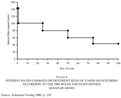
The literature on interlinkage strongly suggests that fragmentation of the capital market was at the core of this phenomenon. It is, however, very difficult to study those largely informal capital markets in any detail, as they have not left many traces, apart from the articles written by Dutch civil servants on this aspect of rural society. The civil servants may have been biased as reporters, because to some extent the Chinese whom they criticized were a competing elite trying to extract surplus from the Javanese peasantry in ways that were not sympathetic to Dutch administrators. One way to get some grip on the degree of fragmentation of the rural (and urban) credit markets is by analyzing a particular institution, the pawnshop. The colonial government claimed to have a monopoly on all credit transactions smaller than a hundred guilders against a security (a valuable commodity) as collateral. Already in the eighteenth century the VOC had exploited this monopoly for the city of Batavia, and from the early 1820s onwards the system of pandhuizen spread to the other parts of the island controlled by the colonial administration. This monopoly was leased out to the highest bidder, which was invariably a Chinese, who paid increasingly large sums for the privilege. However, in order to protect the borrower from being exploited by the leaseholder of the pandhuis, pawning was strictly regulated. The interest rates on these loans were bound to a maximum, which varied from 6.5 percent per month for loans smaller than one guilder to 3 percent per month for loans of fl 100. As almost all loans were very small, the average interest rate must have been close to 70 to 80 percent on an annual basis.45
See De Waal, Aanteekeningen, pp. 337–46; and Diehl, “Revenue Farming,” p. 224.
One of the reasons why interest rates are often extremely high in the countryside of an underdeveloped region did not apply to the credit supplied on the basis of a pawn: transaction costs of these loans were relatively low, because the leaseholder of the pandhuis did not have to bear costs for the selection and monitoring of his clients and took very small risks indeed. In fact, one of the most common abuses was that the pawn keeper assessed the value of the pawn much too low and speculated on the incapacity of the borrower to repay the loan, which made it possible for him to make an extra profit out of the sale of the pawn. It can therefore be argued that the system of pawnshops was a relatively transparent segment of the capital market with low transactions costs; normally one would expect the interest rate on these loans to be close to the opportunity costs of the Chinese pawn keeper (i.e., the rate at which he had access to capital). This did not happen, however. The financial specialist De Waal, who studied the system of pandhuizen in the 1850s, concluded that almost all rules were ignored by the leaseholder of the pawnshop and that interest rates were often much higher than the maximum set by the government.46
De Waal, Aanteekeningen, pp. 344–46.
One possible reason for the failure of interest rates on pawns to come down was the monopoly claimed by the colonial government and farmed out to the Chinese middlemen. It was argued in the 1860s that the lack of competition made it possible to keep interest rates high. If this interpretation was correct, the abolishment of the monopoly would have brought interest rates down. This reasoning and the detailed report on the excesses of the system of pandhuizen by De Waal (1865) contributed to the end of the system in 1870. It was replaced by a system in which any citizen could buy a licence (for the rather high sum of fl 50) to run a pawnshop. Their number increased sharply—from about 250 in 1869 to 998 in 1879—but interest rates, instead of coming down, went up to 10 percent per month or more (another element of the liberal reforms was to decontrol interest rates).47
Diehl, “Revenue Farming,” p. 224; and Fernando and Bulbeck, Chinese Economic Activity (reprint of paper by Fokkens).

INTEREST RATES CHARGED ON DIFFERENT SIZES OF LOANS (IN GUILDERS) ACCORDING TO THE 1880 RULES FOR PAWN HOUSES (percent per annum)
The failed experiment to liberalize the pawnshops suggests that the government monopoly itself was not the source of the large profits that were made on this segment of the capital market. The real problem was that the capital market was highly fragmented, and that, because of high transactions costs, interest rates on the generally small loans on the private market were extremely high. In this particular segment of the capital market the pawn keeper could therefore profit from the large disparity between his capital costs—the Chinese had access to relatively cheap sources of capital—and the very high interest rates on the other segments of the capital market. The profits that could be made in this way were not the result of monopoly, but of the fact that this small segment of the capital market did not have the large transaction costs that drove up interest rates on the rest of the (rural, informal) capital market. The government tried to expropriate this surplus by claiming the monopoly of the pandhuizen, which were leased to the Chinese. The sums the pawn keepers were prepared to pay are therefore an indication of the fragmentation of the capital market (and of the demand for this kind of credit). Those sums were substantial: they rose from about fl 70,000 in the mid 1820s to fl 129,000 in 1835, fl 318,000 in 1843, and fl 422.000 in 1862.48
De Waal, Aanteekeningen, pp. 340–42.
The institution of the pawnshops and the way they developed during the nineteenth century therefore is strong evidence for the existence of a fragmented capital market, in which the peasantry had to pay extremely high interest rates, and the Chinese middlemen had access to much cheaper sources of capital. The 1880 rules probably give the best set of estimates of rural interest rates in this period, which varied between 40 percent on large loans and 143 percent on tiny ones. In a detailed study of money and credit in Buitenzorg in 1805, Boomgaard found similar interest rates on debts against a collateral of land or livestock of 40 or 50 percent annually.49
Boomgaard, “Buitenzorg.”
De Bree, Gedenkboek, vol. 1, pp. 341, 351; see also Boomgaard, “Buitenzorg.”
WHAT DETERMINED SEASONAL VARIATION IN RICE PRICES?
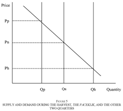
The analysis of the seasonal variation in rice prices suggested by De Groot can be summarized in the following way. Assume for a moment that the demand for rice is constant (i.e., the demand curve does not change in time), and that the peasants will under normal circumstances sell during each quarter a constant share of their output to pay for taxes and for the purchase of industrial commodities (these assumptions will be abandoned soon). In a “normal” quarter peasants will therefore sell a*O to the market, where a is the share of output that is marketed each quarter, and O is total output of rice. When, due to some external shock, they run out of rice during the fourth quarter, they will borrow money (to the tune of L), which means that in that quarter they have to sell Qp = a*O − L/p4 to the market, in which p is the price of rice during that quarter. Directly after the harvest, they will have to sell Qh = a*O + (L/p1)(1 + r) to meet their obligations, in which r is the interest rate charged on the loan (see Figure 5). If the loan is a quantity of rice, the supply during the paceklik will be Qp = a*O − Lr (where Lr is the “real” loan), and after the harvest Qh = a*O + Lr*(1 + r).

SUPPLY AND DEMAND DURING THE HARVEST, THE PACEKLIK, AND THE OTHER TWO QUARTERS
It follows that the difference in price during the paceklik and after the harvest (Pp/Ph) is the result of three factors. The first is the size of the loan in relation to the size of the marketed surplus: the higher the marketed surplus is (i.e., the less “thin” the market is), the smaller the impact of the loan will be; the larger the loan, the bigger the price difference will be. The second is the rate of interest on the loan: a high interest rates results in a big spread between seasonal prices. The third is the elasticity of demand for rice: the more inelastic the market is, the more prices will change during the year. Strong seasonal variation was, to sum up, the result of thin markets, high indebtedness, high interest rates, and inelastic demand for and supply of rice.
The assumption that peasants market a constant share of output each quarter is untenable, however. Their marketing strategy will be related to (among other things) the interest rates they face on rural capital markets and the expected seasonal fluctuation in rice prices. The important point that follows is that because buyers (Chinese merchants) and sellers (Javanese peasants) face different opportunity costs of the capital invested in rice stocks (because of the fragmentation of the rural capital market), there is not one unique “equilibrium” seasonal pattern of rice prices. Instead, there is a range over which the seasonal price of rice can move. The upper end of the range is determined by the interest rates peasants have to pay on their loans. If the price of rice was expected to increase by more than the interest rate between harvest and paceclik, it would pay peasants to arbitrage rice by buying at harvest and holding through the year (or in practice, not sell their rice directly after harvest). The lower bound is set by Chinese merchants arbitraging at the (much lower) interest rates they paid. If the seasonal pattern of rice prices is within this range, peasants will find it profitable to sell their surplus immediately after the harvest, and merchants will for the same reason buy this surplus immediately. This is exactly what De Groot and others witnessed: the rice trade was concentrated in the months directly after the harvest.
This range of seasonal price fluctuations is, in my view, an important modification of the McCloskey and Nash view. The next issue is obviously what determines the actual seasonal pattern in a certain year: will it be close to the upper or the bottom end of the range? Again, the Java case may shed some light on this issue.
CHANGES IN THE SEASONAL VARIATION IN GRAIN PRICES
As noted earlier, Figure 2 suggests that there were important changes in the degree of seasonal variation during the 1825–1852 period. In the 1830s, when the Cultivation System was introduced, the degree of seasonal variation decreased, whereas it went up sharply in the 1840s, peaking during the famines of the second half of that decade (after which seasonal fluctuations went down again). In this section I explore these changes, focusing on the decline of seasonal variation during the 1830s.
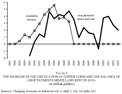
This softening of the seasonal pattern coincided with two interconnected changes, both related to the introduction of the Cultivation System in the early 1830s. The government issued large amounts of copper coins in these years, which boosted the domestic money supply. Moreover, this money was used as plantloon for the peasants who cultivated export crops for the colonial government. During the second half of the 1830s these payments were much larger than the land rent the peasants had to pay, which resulted in sizeable net transfers of money to the peasantry (see Figure 6). In the first years of the Cultivation System there are signs that the grip of the Chinese merchants on the rice-cum-capital market declined, thanks to these injections of new money into the rural economy. To make this point Elson quotes a resident (the highest administrator in a residency) saying that “the increasing industry and prosperity among the people has a further consequence that they are now no longer compelled to sell a portion of the padi and rice product for any price in order to pay their land rent.”51
Elson, Village Java, p. 260.

THE INCREASE IN THE CIRCULATION OF COPPER COINS AND THE BALANCE OF CROP PAYMENTS MINUS LAND RENT IN JAVA (in million guilders)
After about 1840 the continued issuing of large amounts of copper money resulted in the currency crisis outlined already: “bad money” had driven out the “good money” (silver coins), and the monetary system was increasingly destabilized.52
Van Laanen, “Money”; and De Bree, Gedenkboek.
See Elson, “Famine”; and Hugenholtz, “Famine.”
The changing effects of the Cultivation System on peasants' standards of living—after increasing purchasing power during the 1830s, the system became increasingly exploitative during the 1840s—is clearly visible in the evidence on seasonal fluctuations in rice prices (Figure 2). Seasonal fluctuations were rather limited during the second half of the 1830s, but the decline of the net transfer to the peasantry in the 1840s coincided with the strong increase in seasonal variation during these years. An important implication of this is that the degree of seasonal variation can therefore be interpreted as an index of the degree of stress that peasants had to cope with, the degree to which they were unable to finance their regular expenses and had to turn to middlemen for credit. In times of stress the seasonal patterns increased markedly. In periods when real incomes and the availability of cash went up, seasonal variation went down. The consequence was that in times of stress the terms of trade for peasants worsened because they had to sell at lower prices directly after the harvest and buy at higher prices during the paceklik; of course the opposite happened during good years.
CONCLUSION
I argue in this article that information on the seasonal variation in prices of basic foodstuffs can be used to analyze the quality of the institutional framework of a peasant economy. I have shown that the extremely large price spread in Javanese rice markets is linked to the dependence of peasants on the credit supplied by Chinese middlemen at rather unfavourable terms, interest rates being as high as 40 to perhaps 140 percent on an annual basis. But the information on seasonal variation in rice prices cannot be directly translated into an estimate of “the” interest rate on the countryside, as McCloskey and Nash have argued, for the simple reason that rural capital markets were highly segmented. Chinese middlemen had access to much cheaper sources of capital (with interest rates as low as 6 to 9 percent per annum) than the peasants (who had to pay up to 140 percent annually). The price spread in the rice market could fluctuate in between those two extremes. Moreover, the extent to which prices fluctuated during a given period was probably related to the degree of stress to which the rural economy was exposed: in times of harvest failures and shortages of money, fluctuations were much more extreme than in more years of abundance.
One of the core problems of the Javanese rice market was the interlinkage between the market for this product and the credit market. Peasants, who were almost always short of money, had to borrow on the basis of their ability to supply rice after the harvest. Modern intermediation theory argues that for both lender and borrower it is efficient to limit problems of adverse selection and moral hazard by establishing long-term relationships, which make it possible to have lower interest rates. The interlinkage of rice and credit markets implied, however, that the same Chinese middlemen also came to dominate the trade in rice and were able to acquire local near-monopolies in this product (and in other foodstuffs). Commercialization therefore often went hand in hand with a growing dependence on local middlemen. Dutch civil servants, writing about the excesses of this system, saw that this led to the proletarianization of parts of the peasantry; they lost access to the land and became increasingly dependent on wage labor for European plantations. Interlinkage also meant a loss of information: in this package deal two transactions were combined into one, which meant that it was unclear what the interest rate or what the rice price of the dual transaction was. The absence of information on prices and interest rates of course hindered the emergence of transparent markets at the local level. Moreover, the market prices that could be quoted were characterized by enormous seasonal fluctuations and probably—in view of the segmented nature of the rice market—a lot of random noise. In large regions of Java civil servants therefore had great difficulty in defining “the” price of padi (which was necessary for the land rent), and reported extremely large margins within which rice prices fluctuated.
The high degree of seasonal variation in rice prices had a number of negative side effects for the peasants: it resulted in a decline in their terms of trade, as they sold during the period of low prices, and had to buy again during the paceklik. Moreover, it drove up the real interest rate paid by those peasants who had a loan in money (who received for example fl 5 before the harvest and had to pay back fl 7.50 afterwards).
To this combination of institutional failures of the rice-cum-credit market can be added their poor integration, already pointed out by De Groot.54
In a separate paper I analyze this aspect of market failure; see Van Zanden, “Market Integration.”
In fact, from the perspective of a peasant, market production may have seemed to be part of a system to exploit his labor and that of his family. Greater involvement in the market appeared to result in greater exploitation by the middlemen, who were able, through their strong control of local markets, to cream off the surplus produced by the peasants. These market failures resulted in weak incentives to increase market production, and stimulated the kind of behavior that some economists, anthropologists, and sociologists have described as being typical for peasants, for example, a strong sense of “leisure preference” or the wish to keep the market “at arm's length.”55
Wolf, Peasants.
Boeke, Tropisch-koloniale staathuishoudkunde; the best introduction is the collection of essays in Gonggrijp et al., Indonesian Economics.
His views were criticized strongly by other colonial experts (see the papers in Gonggrijp et al., Indonesian Economics); this debate can be seen as a precursor of the debate on peasant rationality in the late 1970s, see Scott, Moral Economy; and Popkin, Rational Peasant.
A final point concerns a comparison with Early Modern Europe. The institutional framework for market exchange in nineteenth-century Java was quite different from that of Early Modern Europe. At first sight there appear to be some similarities, because in large parts of Europe markets were thin too and external demand for basic foodstuffs was also relatively small. But property rights were probably much better defined in western Europe than on Java, and dependence on middlemen appears to have been much smaller in the west. Moreover, in large parts of Europe interest rates were much lower than on Java. Gregory Clark estimated, for example, that interest rates in the English countryside declined from about 10 percent before the 1350s to 5 percent at about 1400. Epstein found a similar decline of interest rates for other parts of Europe in the 1350–1550 period.58
Clark, “Cost”; and Epstein, Freedom, pp. 61–63.
McCloskey and Nash, “Corn”; and Poynder, “Grain Storage.”
I would like to thank Peter Boomgaard, Pierre van der Eng, David Feeney, Knick Harley, Nick Poynder, and the anonymous referees of this JOURNAL for their valuable comments on previous drafts of the article.
References
Anonymous.
1848:
“Algemeen overzigt van de toestand van Nederlandsch Indië gedurende het jaar 1846.”
Tijdschrift voor Nederlandsch Indië
10
24–60.
Bataviasche Courant.
Batavia:
Landsdukkerij,
1823–1827.
Bell C.
1988.
“Credit Markets and Interlinked Transactions.” In Handbook of Development Economics,
vol. 1,
edited by H. Chenery and T. N. Srinivasan,
763–830.
Amsterdam:
North Holland,
Bhaduri A.
1977
“On the Formation of Usurious Interest Rates in Backward Agriculture.”
Cambridge Journal of Economics
1, no. 4
431–50Google Scholar
Bhargawa M., and J. F. Richards.
2002.
“Defining Property Rights in Land in Colonial India: Gorakhpur Region in the Indo-Gangetic Plain.” In Land, Property, and the Environment,
edited by J. F. Richards,
235–63.
Oakland, CA:
Institute for Contemporary Studies,
Boeke J. H.
1910.
Tropisch-koloniale staathuishoudkunde.
Amsterdam:
De Bussy,
Boomgaard Peter.
1986:
“Buitenzorg in 1805: The Role of Money and Credit in a Colonial Frontier Society.”
Modern Asian Studies
20 1
33–58.Google Scholar
Boomgaard Peter.
1987.
Children of the Colonial State: Population Growth and Economic Development in Java, 1795–1880.
Amsterdam:
Free University Press,
Boomgaard P., and A. J. Gooszen.
1991.
“Population Trends 1795–1942.”
Changing Economy in Indonesia,
vol. 11,
edited by P. Creutzberg and P. Boomgaard.
Amsterdam:
Royal Tropical Institute,
de Bree L.
1928.
Gedenkboek van de Javasche Bank 1828–24 januari–1928.
2 vols.
Weltevreden:
Kolff,
Breman Jan.
1983.
Control of Land and Labour in Colonial Java.
Leiden:
KITLV,
Braverman A., and T. N. Srinivasan.
1984.
“Agrarian Reforms in Developing Rural Economies Characterized by Interlinked Credit and Tenancy Markets.” In Contractual Arrangements, Employment, and Wages in Rural Labor Markets in Asia,
edited by H. P. Binswanger and M. R. Rosenzweig,
63–81.
New Haven, CT and London:
Yale University Press,
Bruyn Kops G. F. de.
1857.
Statistiek van den Handel en de Scheepvaart op Java en Madura.
Batavia:
Lange & Co,
Chuan H., and R. A. Kraus.
1975.
Mid-Ch'ing Rice Markets and Trade: An Essay in Price History.
Cambridge, MA:
East Asian Research Center,
Clark Gregory.
1988
“The Cost of Capital and Medieval Agricultural Technique.”
Explorations in Economic History
25, no. 3
265–94Google Scholar
Creutzberg P., and P. Boomgaard, eds.
Changing Economy in Indonesia,
16 volumes.
Amsterdam:
Royal Tropical Institute,
1975–1996.
Diehl F. W.
1993.
“Revenue Farming and Colonial Finances in the Netherlands East Indies, 1816–1925.” In The Rise and Fall of Revenue Farming,
edited by J. Butcher and H. Dick,
196–232.
Basingstoke:
Macmillan,
Elson R. E.
1985:
“The Famine in Demak and Grobogan in 1849–50: Its Causes and Circumstances.”
Review of Indonesian and Malaysian Affairs
19 1
39–85.Google Scholar
Elson R. E.
1994.
Village Java under the Cultivation System.
Sydney:
Allen & Unwin,
Eng Pierre van der.
1993.
Agricultural Growth in Indonesia: Productivity Change and Policy Impact since 1880.
Groningen:
University of Groningen,
Epstein Stephen R.
2000.
Freedom and Growth: The Rise of States and Markets in Europe 1300–1750.
London:
Routledge,
Feeney David.
1989:
“The Decline of Property Rights in Man in Thailand, 1800–1913.“
This Journal
49, no. 2
285–96.Google Scholar
Fernando M. R., and D. Bulbeck.
1992.
Chinese Economic Activity in Netherlands India: Selected Translations from the Dutch.
Singapore:
Institute of Southeast Asian Studies,
Gonggrijp G., J. H. Boeke, et al.
1966.
Indonesian Economics: The Concept of Dualism in Theory and Practice.
The Hague:
W. van Hoeve,
Groot H. A. de.
1888.
Studie over rijstprijzen.
Soerabaija:
Fuhri,
Hageman J.
1859:
“Aanteekeningen nopens de industrie, handel en nijverheid van Soerabaja.”
Tijdschrift voor nijverheid en landbouw in Nederlandsch Indie
5
137–52.Google Scholar
Hugenholtz Wouter R.
1986.
“Famine and Food Supply in Java 1830–1914.” In Two Colonial Empires,
edited by C. A. Bayly and D. H. A. Kolff,
155–88.
Dordrecht:
Martinus Nijhoff,
Javasche Courant, officieel nieuwsblad.
Batavia:
Landsdrukkerij,
1828–1853.
Kemp P. H. van der.
1894.
Handboek tot de kennis van 's Lands Zoutmiddel in Nederlandsch-Indie.
Batavia:
G. Kolff & co,
Koloniaal Verslag
1880–1882 (Report on the state of the colonies), included in Handelingen der Staten Generaal,
Den Haag:
Landsdrukkerij,
1880–1882.
Korthals Altes W. L.
1994.
“Prices (Non-Rice) 1814–1940.“
Changing Economy in Indonesia,
vol. 15,
edited by Creutzberg P., and P. Boomgaard.
Amsterdam:
Royal Tropical Institute,
Laanen J. T. N. van.
1980.
“Money and Banking 1816–1940.M.“
Changing Economy in Indonesia,
vol. 6,
edited by Creutzberg P., and P. Boomgaard.
Amsterdam:
Royal Tropical Institute,
McCloskey D., and J. Nash.
1984
“Corn at Interest: The Extent and Cost of Grain Storage in Medieval England.”
American Economic Review
74, no. 1
174–87Google Scholar
Mears L.A.
1961.
Rice Marketing in the Republik of Indonesia.
Djakarta:
University of Indonesia,
Ministry of Colonial Affairs 1814–49, National Archive The Hague.
Nagtegaal L.
1996.
Riding the Dutch Tiger: the Dutch East Indies Company and the northeast coast of Java, 1680–1743.
Leiden:
KITLV Press,
Niel Robert van.
1992.
Java under the Cultivation System.
Leiden:
KITLV Press,
North Douglass C.
1981.
Structure and Change in Economic History.
New York:
Norton,
North Douglass C.
1990.
Institutions, Institutional Change and Economic Performance.
Cambridge:
Cambridge University Press,
North Douglass C., and Barry R. Weingast.
1989:
“Constitutions and Commitment: Evolution of Institutions Governing Public Choice in Seventeenth-Century England.“
This Journal
49, no. 4
803–32.Google Scholar
Parenti A.
1942.
Prezzi e mercato del grano a Siena, 1546–1785.
Siena,
Popkin S.L.
1979.
The Rational Peasant: The Political Economy of Rural Society in Vietnam.
Berkeley:
University of California Press,
Poynder Nick.
1999.
“Grain Storage in Theory and History.”
Paper presented at Third Conference of European Historical Economics Society,
Lisbon,
Rush J. R.
1990.
Opium to Java: Revenue Farming and Chinese Enterprise in Colonial Indonesia, 1860–1910.
Ithaca, NY:
Cornell Press,
Scott James C.
1977.
The Moral Economy of the Peasant: Rebellion and Subsistence in Southeast Asia.
New Haven, CT:
Yale University Press,
Stiglitz Joseph E.
1988.
“Economic Organization, Information, and Development.” In Handbook of Development Economics,
edited by H. Chenery and T. N. Srinivasan,
vol. 1,
93–160.
Amsterdam:
North Holland,
Timmer C Peter.
1996:
“Does Bulog Stabilise Rice Prices in Indonesia? Should It Try?”
Bulletin of Indonesian Economic Studies
32
45–74.Google Scholar
Vitalis L.
1851:
“Over de pachten in het algemeen, de onzedelijkheid van sommige, en de verdrukking waaraan de overmatige misbruiken van andere de Javaansche bevolking blootstellen.“
Tijdschrift voor Nederlandsch Indië,
13
365–86.Google Scholar
de Waal E.
1865.
Aanteekeningen over koloniale onderwerpen.
's-Gravenhage:
Martinus Nijhoff,
Wolf Eric R.
1966.
Peasants.
Englewood Cliffs, NJ:
Prentice Hall,
van Zanden Jan Luiten
2003.
“Market Integration in Colonial Java: The Rice Market 1823–1940,“
working paper IISG,Google Scholar
RICE PRICES IN BATAVIA AND SURABAYA, 1824–1853 (guilders per koyang)
THE DEVIATION OF RICE PRICES FROM THE 13-MONTH MOVING AVERAGE (AVERAGE FOR THREE MARKETS), 1825–1852
SEASONAL PATTERNS OF PRICES OF RICE (ON JAVA AND IN SOOCHOW) AND OF WHEAT (IN SIENA) (annual average = 1)
INTEREST RATES CHARGED ON DIFFERENT SIZES OF LOANS (IN GUILDERS) ACCORDING TO THE 1880 RULES FOR PAWN HOUSES (percent per annum)
SUPPLY AND DEMAND DURING THE HARVEST, THE PACEKLIK, AND THE OTHER TWO QUARTERS
THE INCREASE IN THE CIRCULATION OF COPPER COINS AND THE BALANCE OF CROP PAYMENTS MINUS LAND RENT IN JAVA (in million guilders)
 You have
Access
- 11
- Cited by