




No CrossRef data available.
Article contents
Differences in susceptibility of the European eel (Anguilla anguilla) and the Japanese eel (Anguilla japonica) to the swim-bladder nematode Anguillicola crassus
Published online by Cambridge University Press: 14 September 2004
Abstract
The swim-bladder nematode Anguillicola crassus originates from the Far East where it is a parasite of the Japanese eel (Anguilla japonica). After A. crassus was introduced to Europe, it became a predominant parasite of the European eel (Anguilla anguilla). A study performed with experimentally infected eels (98 days, 23 °C) revealed significant differences in the susceptibility of the two eel species to this parasite. The recovery rate of 30 administered infective A. crassus larvae (L3) from A. japonica was less than half of that from A. anguilla (33·2% and 13·8%, respectively). Almost 60% of the worms recovered from A. japonica were found as dead, encapsulated and necrotic larvae in the swimbladder wall. In contrast, no dead larvae were found in A. anguilla. Additionally, the development of the worms was shown to be significantly slower in A. japonica compared with A. anguilla. The lower survival rate of the worms, together with their slower development, resulted in a significantly lower adult worm burden (11 and 428 mg wet weight, respectively) and in a decreased reproductive success in A. japonica compared with A. anguilla. These results demonstrate that the original host, A. japonica, possesses more effective defence mechanisms against A. crassus than does the non-adapted host, A. anguilla.
Information
- Type
- Research Article
- Information
- Copyright
- 2004 Cambridge University Press
INTRODUCTION
The dracunculoid nematode Anguillicola crassus was originally endemic to East Asia as a parasite of the Japanese eel, Anguilla japonica (Nagasawa, Kim & Hirose, 1994; Taraschewski et al. 1987). The parasite's life-cycle involves invertebrate intermediate hosts, chiefly cyclopoid copepods, which ingest the free-living 2nd-stage larvae. Within the haemocoel of the intermediate host, the larvae develop into the 3rd-stage larvae (L3) that are infective to eel definitive hosts and a wide variety of paratenic hosts via predator–prey transmission (Nagasawa et al. 1994; Moravec & Skoríková, 1998). Further development to the 4th larval stage (L4) occurs in the swim-bladder wall of the eel final host. After the final 4th moult, the adult worms dwell in the swim-bladder lumen and feed on their host's blood (Nagasawa et al. 1994).
In the early 1980s, A. crassus was introduced into Europe, probably with importation of eels from Taiwan into Germany. The first report of this parasite in Europe was in 1982, and in the following years, A. crassus proved to be a successful colonizer within the indigenous European eel (Anguilla anguilla) populations. Within 10 years it became a dominant parasite of A. anguilla over most of Europe (Moravec, 1992; Kirk, 2003), commonly with prevalences of about 80% (e.g. Sures et al. 1999). Meanwhile, the parasite had also been reported from North Africa and the eastern coast of North America (Kirk, 2003). The spread of the parasite over the European continent seems only to be limited in Northern Scandinavia by the prevailing low water temperature (Höglund et al. 1992; Knopf et al. 1998).
Anguillicola crassus was described as a new species by Kuwahara, Niimi & Itagaki (1974), who found the nematode in the swim-bladder of cultivated A. japonica and A. anguilla in Japan, and mentioned that ‘the worms are very commonly found in the air bladder of A. anguilla’. Egusa (1979) reported only negligible pathological effects of A. crassus on A. japonica whereas this parasite caused morbidity among A. anguilla cultivated in Japan. According to Egusa (1979), only 10–40% of cultured A. japonica, but ‘several tens of percent and occasionally nearly 100 percent’ of cultured A. anguilla were infected with A. crassus. Additionally, he stated that ‘the number of nematodes per eel is usually one to three, but occasionally attains to about 20’ in A. japonica, but ‘5 to some dozen and occasionally exceed 30’ in A. anguilla. However, to our knowledge, the differences in susceptibility reported by Egusa (1979) have never been investigated experimentally. It was the aim of the present study to evaluate via experimental infections differences in the susceptibility to A. crassus between the original host A. japonica and the new host A. anguilla.
MATERIALS AND METHODS
Source of eels
Anguilla anguilla weighing about 95 g were obtained from an eel farm free of Anguillicola crassus (Domäne Voldagsen, Einbeck, Germany). Some 40 eels were checked to confirm the absence of the parasite. Anguilla japonica were imported as glass-eels from Japan and raised in a recirculation system free of A. crassus to a weight of about 95 g. Since feeding by metamorphosed young eels begins only at the end of the glass-eel stage and at the beginning of subepidermal pigmentation (Tesch, 1999), an infection of these eels with A. crassus was very improbable.
Third-stage larvae of Anguillicola crassus and infection
Infective 3rd-stage larvae (L3) of A. crassus were produced and given to the eels via intubation as previously described by Knopf et al. (1998). Briefly, 2nd-stage larvae (L2) were collected from the swim-bladder lumen of naturally infected eels originating from Lake Müggelsee, Berlin. Wild-caught planktonic copepods were used as intermediate hosts. After 14 days at 20 °C, L3 were isolated from the copepods according to the method of Haenen, van Wijngaarden & Borgsteede (1994). For the experimental infection, groups of 30 L3 were suspended in approximately 100 μl of RPMI-1640 medium (Sigma, Taufkirchen, Germany) in the cavities of a round-bottomed microtitre plate. This larval suspension was orally administered to the eels by means of a stomach tube (1·5 mm diameter). Subsequently, the cavities of the microtitre plate were checked for remaining L3, in order to determine the exact dose of larvae that had been successfully administered to each eel. Each eel received at least 25 L3.
Experimental design
The eels were divided into 2 groups of A. anguilla and 2 groups of A. japonica, each containing 50 eels with a mean body weight of about 95 g, and maintained in 400 l tanks that are part of an experimental recirculation system. After 3 weeks of acclimatization, 1 group of each eel species was experimentally infected with 30 L3 of A. crassus per eel. The other groups of both eel species were sham-infected with the medium, and served as controls. All groups were fed with eel pellet food (European Eel Grower 28, Trouw Nutritor, Putten, Netherlands) at a daily rate of 1·5% of the body weight of the eels. Water temperature was adjusted to 23 °C.
At day 98 post-infection (p.i.) eels were killed by decapitation and the swim-bladder was examined, and living and dead/encapsulated larvae and adults of A. crassus in the swim-bladder wall or swim-bladder lumen, were enumerated. Larvae with a body length exceeding 1·5 mm were counted as L4 (Knopf et al. 1998). Male and female adult worms were individually weighed. Nematodes showing no reaction to mechanical stimulation were considered dead. The presence of A. crassus eggs in the swim-bladder lumen was evidence of reproduction of the nematodes.
Statistical analysis
Differences in eel mortality, and percentage of eels containing eggs of A. crassus in the swim-bladder, between experimental groups were analysed with the χ2-test. Differences in worm numbers and worm percentages between two experimental groups were analysed using the Mann–Whitney U-test. Statistical analysis of sequentially measured values within a group were performed with the Kruskal–Wallis test. Significance was accepted when P<0·05. Statistical analyses were performed with SPSS 9.0 (SPSS Inc., Chicago, USA).
RESULTS
An ongoing mortality occurred within both groups of A. anguilla from the 4th week post-infection until the end of the experiment. At 98 days p.i., mortality was 52% for the group infected with A. crassus, and 40% for the uninfected control, showing no significant difference. Most likely, this mortality was caused by a heavy infection with the gill monogenean Pseudodactylogurus bini which was introduced into the recirculation system together with the eels. Within both groups of A. japonica, all eels survived until the end of the experiment.
Of the experimentally infected A. japonica, 10% did not contain larval or adult worms (if not specified, in the text that follows, ‘worms’ refers to both larvae and adults), 32% had only dead worms, and 58% had living worms. Of the experimentally infected A. anguilla, all specimens had living worms. The recovery of administered A. crassus, whether as living or dead worms, varied significantly between eel species, being 13·8% in A. japonica and 33·2% in A. anguilla (Table 1). Dead, encapsulated and necrotic larvae of A. crassus in the swim-bladder wall were seen only in A. japonica, where they constituted almost 60% of the number of recovered parasites (Table 1). The percentage of living L3 and L4, related to the total number of recovered worms, did not differ significantly between the 2 eel species (Table 1). However, the percentage of living L4 related to the number of living worms, was significantly higher in A. japonica than in A. anguilla (Table 2).
Table 1. Fate of 30 L3Anguillicola crassus administered to individual Anguilla japonica and Anguilla anguilla at day 98 p.i. (23 °C) (Expressed as % recovery; % living L3, L4, dead larvae, living and dead adults are calculated from the number of recovered worms (whether dead or alive). Numbers of eels are given in parentheses. Asterisks indicate significant differences between the 2 eel species (N.S.=not significant; *** P<0·005).)

Table 2. Composition of the Anguillicola crassus infrapopulation in experimentally infected Anguilla japonica and Anguilla anguilla at day 98 p.i. (23 °C) (Calculated from the numbers of living worms; wet weight of individual male and female A. crassus, wet weight of all adult worms per swim-bladder, and percentage of eels containing eggs/L2 in the swim-bladder lumen. Sample sizes are given in parentheses. Asterisks indicate significant differences between the 2 eel species (N.S.=not significant; * P<0·05; *** P<0·005).)

Whereas only 27% of the recovered worms became adult in A. japonica, 94% of the worms became adult in A. anguilla during the 98-day experiment (Table 1). Only approximately 1% of the adult worms in A. japonica were dead, but about 9% of the adult worms in A. anguilla were dead (Table 1). Excluding dead parasites from the calculation, the percentages of adult worms in A. japonica and A. anguilla were 60% and 93%, respectively (Table 2). The different recovery rates and percentages of adult worms in the 2 eel species correspond to significantly different numbers of adult worms per eel (1·5±1·9 in A. japonica and 8·8±3·6 in A. anguilla).
The adult A. crassus found in the 2 eel species differed significantly in their wet weight. Male and female worms in A. japonica were about 10-fold lighter compared to the specimens found in A. anguilla (Table 2). The different numbers and wet weight of adult A. crassus resulted in an approximately 40-fold lower worm burden (wet weight of adult A. crassus per eel) in A. japonica than in A. anguilla (Table 2). The reproduction of A. crassus, indicated by the presence of eggs containing the 2nd stage larvae (L2), was observed in only 2% of A. japonica, but in 88% of the surviving infected A. anguilla (Table 2).
DISCUSSION
The findings of the present experimental study strongly indicate that the defence mechanisms of A. japonica against A. crassus are more effective than those of A. anguilla, even during the first infection with this parasite. The recovery of A. crassus from A. japonica (13·8%) was significantly lower than that in A. anguilla (33·2%), and almost 60% of the worms found in A. japonica were encapsulated dead larvae in the swim-bladder wall, whereas, no encapsulated larvae were found in A. anguilla. Neither encapsulated larvae nor severe pathological changes of the swim-bladder wall have previously been reported for A. anguilla experimentally infected with A. crassus (e.g. Haenen et al. 1989). However, encapsulated and destroyed L3 and L4 were found in the swim-bladder wall of wild A. anguilla by Molnár et al. (1993) and Molnár (1994). Molnár (1994) described that, commonly, even in the same swim-bladder, some larvae elicited a cellular host reaction, and others did not. He suggested that a successful cellular host response might develop after repeated invasions by larvae, but until now we have no experimental evidence for the development of a protective immunity against A. crassus in A. anguilla. Although it was possible to characterize the antibody response against A. crassus in A. anguilla (Knopf et al. 2000a), it appears that this is elicited only by the adult worms, and it remains unclear if the antibodies have any protective function (Knopf et al. 2000a).
It remains unclear if, and how, the presence of encapsulated larvae of A. crassus is due to protective immune mechanisms, or whether only less active or dead larvae are merely isolated by the host via encapsulation. Whyte, Chappell & Secombes (1989) obtained experimental evidence from rainbow trout that killing of the eye-fluke Diplostomum spathaceum by activated macrophages, was increased if the target flukes were opsonized with antibodies; and for mammals there are indications that antibody-dependent cell-mediated effector mechanisms are involved in the killing of several pathogenic helminth species (Butterworth, 1984). Assuming that this mechanism might also be effective against A. crassus, could explain the low killing capacity of A. anguilla, because no larval-specific antibody response could be demonstrated in this eel species (Knopf et al. 2000a). Würtz & Taraschewski (2000) did not find signs that phagocytes of A. anguilla attached to the larvae of A. crassus migrating in the host's tissue, and thus concluded that the phagocytic granulocytes and macrophages found around, but not attached to, the larvae probably only remove cell debris caused by their destructive activity.
However, to date, our knowledge about the immune response of eel species to A. crassus is limited, because experimental studies on the immune response have only focused on the antibody response of the host (cellular aspects have yet to be evaluated), and most studies concern A. anguilla. Although in A. anguilla no antibody response has previously been detected against the invasive L3, a clear antibody response was detected against the outer cuticle of the adult worms (Knopf et al. 2000a). Cuticular antigen preparations from adult worms have been shown to possess a high specificity for immunoserological tests to investigate the immune response of A. anguilla (Höglund & Pilström, 1995; Knopf et al. 2000b; Sures & Knopf, 2004), and for A. japonica (Ushikoshi et al. 1999). Nielsen (1999) used an enzyme-linked immunosorbent assay (ELISA), performed with polyclonal antibodies raised against immunoglobulins from A. anguilla, to compare the antibody response of A. japonica and A. anguilla to intraperitoneally injected excretory/secretory (ES) and outer cuticle antigen preparations from adult A. crassus. The experiment revealed a higher antibody response of A. japonica against ES-antigens from A. crassus compared to that of A. anguilla against A. crassus. Consequently, Nielsen (1999) concluded that differences in intensity of the antibody response might partly explain the assumed different susceptibility of the 2 eel species to infections with A. crassus (see Introduction section).
The higher percentage of larval stages found in A. japonica than in A. anguilla indicates that the development of A. crassus is significantly slower in the former eel species. This difference in the duration of development of A. crassus in the 2 eel species was also manifest in the approximately 10 times lower wet weight of the few adult worms that were found in A. japonica compared to those found in A. anguilla. Finally, although the same number of infective larvae were administered to both species of eels, the lower number, and smaller size of adult worms resulted in a lower worm burden and reproductive success of A. crassus in A. japonica compared to A. anguilla.
The more effective defence mechanisms in A. japonica than in A. anguilla, coupled with the slower development and the slower reproduction of A. crassus, can explain the lower prevalence and intensity of this parasite in A. japonica compared to A. anguilla under aquaculture conditions in Japan (Egusa, 1979). Interestingly, the mean numbers of adult A. crassus found in the present study after a single experimentally administered dose of 30 L3 (1·5±1·9 in A. japonica, 8·8±3·6 in A. anguilla), are similar to the numbers mentioned by Egusa (1979) to be usual for naturally infected eels in Japanese aquaculture (1–3 in A. japonica, 5 and more in A. anguilla). Evidence for density-dependent constraints on the infrapopulation growth of A. crassus in A. anguilla has been found by Ashworth & Kennedy (1999). They examined naturally infected eels, either immediately post-capture or after maintenance under zero-reinfection conditions in the laboratory, and concluded that an increasing intensity of adult worms leads to a decrease in larval development and maturation of females. A small percentage of dead adult worms (9·3%), as found in our experimentally infected A. anguilla, has previously been observed in both experimental studies (Knopf et al. 1998) and also in field studies (Kennedy & Fitch, 1990).
From an evolutionary point of view, it appears reasonable that the original host A. japonica, has better developed defence mechanisms against A. crassus than does the non-adapted host A. anguilla. One might assume that during co-evolution, development of both the host's immune system and the parasite, to a condition of mutual tolerance, resulted in a balanced host–parasite system without significant harm to the host. This assumption is supported by the statement of Egusa (1979) that A. crassus causes almost ‘no serious damage’ to A. japonica. In contrast, the immune response in the non-adapted A. anguilla appears to be less effective, and severe pathological changes of the swim-bladder wall in eels living under natural conditions are attributed to A. crassus (van Banning & Haenen, 1990; Molnár et al. 1993; Molnár, Szakolczai & Vetési, 1995; Würtz & Taraschewski, 2000). Several of the observed inflammatory changes, such as dilated blood vessels and infiltration of inflammatory cells, are immunopathological effects, and the question arises if the immune response of A. anguilla against A. crassus is more harmful than protective.
The 33·2% recovery of administered A. crassus in A. anguilla at day 98 p.i. was comparable to previous experimental studies with this host–parasite system. Published recovery rates after a single infection with different numbers of L3 and different durations of the experiment range from 10% to 48%. De Charleroy et al. (1990) infected eels with 8 larvae, maintained them for 4 weeks at 16·5 °C, and then recovered 38·2% of the worms. Höglund & Thomas (1992) infected eels with 40 L3 isolated from paratenic fish hosts (black goby, Gobius niger), and recovered 22% of the worms after 8 weeks at 20 °C. Haenen et al. (1996) performed single infections with 1–40 L3 and a water temperature between 18 and 20 °C for 8 weeks. This resulted in recovery rates ranging from 10 to 20%. Knopf et al. (1998) recovered 35 and 48% of 20 L3 in 2 experiments in which eels where maintained for 17 weeks at 19 °C. Furthermore, the percentages of the developmental stages (L3, L4 and adult), the wet weight of male and female adult worms and the reproductive success (measured as percentage of eels in which the parasites have reproduced) of A. crassus in A. anguilla in the present experiment were similar to the results obtained in these previous experiments (Knopf et al. 1998). This shows, that experimental infections with A. crassus performed under similar conditions produce reproducible results, even if differences between individual eels result in a high variability of the data.
Further insights into the immune response of eels against A. crassus, might be obtained by comparative studies with A. crassus and the closely related eel species A. japonica and A. anguilla. The obvious difference between the 2 eel species in their ability to kill the larvae of A. crassus offers a promising possibility of investigating the underlying immunological principles. Additional opportunities to extend this approach are possible since the American eel Anguilla rostrata is also susceptible to A. crassus (Kirk, 2003), and A. anguilla is also a suitable host for 2 other Anguillicola species, the South African Anguillicola papernai (unpublished data), and Anguillicola novaezelandiae, that was introduced from New Zealand to Italy (Moravec & Taraschewski, 1988).
We are most grateful to Professor Kazuo Ogawa, University of Tokyo, for organizing the shipment of the Japanese glass eels.
References
REFERENCES
ASHWORTH, S. T. &
KENNEDY, C. R. (1999).
Density-dependent effects on Anguillicola crassus (Nematoda) within its European eel definitive host.
Parasitology 118,
289–296.CrossRefGoogle Scholar
BUTTERWORTH, A. E. (1984).
Cell-mediated damage to helminths.
Advances in Parasitology 23,
143–235.Google Scholar
DE CHARLEROY, D.,
GRISEZ, L.,
THOMAS, K.,
BELPAIRE, C. &
OLLEVIER, F. (1990).
The life cycle of Anguillicola crassus.
Diseases of Aquatic Organisms 8,
77–84.CrossRefGoogle Scholar
EGUSA, S. (1979).
Notes on the culture of the European eel (Anguilla anguilla L.) in Japanese eel-farming ponds.
Rapports et Proces-Verbaux des Réunions. Conseil International pour l'Éxploration de la Mer 174,
51–58.Google Scholar
HAENEN, O. L. M.,
GRISEZ, L.,
DE CHARLEROY, D.,
BELPAIRE, C. &
OLLEVIER, F. (1989).
Experimentally induced infections of European eel Anguilla anguilla with Anguillicola crassus (Nematoda, Dracunculoidea) and subsequent migration of larvae.
Diseases of Aquatic Organisms 7,
97–101.CrossRefGoogle Scholar
HAENEN, O. L. M.,
VAN WIJNGAARDEN, T. A. M. &
BORGSTEEDE, F. H. M. (1994).
An improved method for the production of infective third-stage juveniles of Anguillicola crassus.
Aquaculture 123,
163–165.CrossRefGoogle Scholar
HAENEN, O. L. M.,
VAN WIJNGAARDEN, T. A. M.,
VAN DER HEIJDEN, M. H. T.,
HÖGLUND, J.,
CORNELISSEN, J. B. J. W.,
VAN LENGOED, L. A. M. G.,
BORGSTEEDE, F. H. M. &
VAN MUISWINKEL, W. B. (1996).
Effects of experimental infections with different doses of Anguillicola crassus (Nematoda, Dracunculoidea) on European eel (Anguilla anguilla).
Aquaculture 141,
41–57.CrossRefGoogle Scholar
HÖGLUND, J.,
ANDERSSON, J.,
WICKSTRÖM, H. &
REIZENSTEIN, M. (1992).
The distribution of Anguillicola in Sweden and its association with thermal discharge areas.
Irish Fisheries Investigations Series A (Freshwater) 36,
143–150.Google Scholar
HÖGLUND, J. &
PILSTRÖM, L. (1995).
Mechanical isolation and characterization of antigens from adult Anguillicola crassus.
Fish and Shellfish Immunology 5,
51–60.CrossRefGoogle Scholar
HÖGLUND, J. &
THOMAS, K. (1992).
The black goby Gobius niger as a potential paratenic host for the parasitic nematode Anguillicola crassus in a thermal effluent of the Baltic.
Diseases of Aquatic Organisms 13,
175–180.CrossRefGoogle Scholar
KENNEDY, C. &
FITCH, D. J. (1990).
Colonization, larval survival and epidemiology of the nematode Anguillicola crassus, parasitic in the eel, Anguilla anguilla, in Britain.
Journal of Fish Biology 36,
117–131.CrossRefGoogle Scholar
KIRK, R. S. (2003).
The impact of Anguillicola crassus on European eels.
Fisheries Management and Ecology 10,
385–394.CrossRefGoogle Scholar
KNOPF, K.,
NASER, K.,
VAN DER HEIJDEN, M. H. T. &
TARASCHEWSKI, H. (2000 a).
Humoral immune response of European eel Anguilla anguilla experimentally infected with Anguillicola crassus.
Diseases of Aquatic Organisms 42,
61–69.Google Scholar
KNOPF, K.,
NASER, K.,
VAN DER HEIJDEN, M. H. T. &
TARASCHEWSKI, H. (2000 b).
Evaluation of an ELISA and immunoblotting for studying the humoral immune response in Anguillicola crassus infested European eel (Anguilla anguilla).
Diseases of Aquatic Organisms 43,
39–48.Google Scholar
KNOPF, K.,
WÜRTZ, J.,
SURES, B. &
TARASCHEWSKI, H. (1998).
Impact of low water temperature on the development of Anguillicola crassus in the final host Anguilla anguilla.
Diseases of Aquatic Organisms 33,
143–149.CrossRefGoogle Scholar
KUWAHARA, A.,
NIIMI, A. &
ITAGAKI, H. (1974).
Studies on a nematode parasitic in the air bladder of the eel. I. Description of Anguillicola crassa n. sp. (Philometridae, Anguillicolidae).
Japanese Journal of Parasitology 23,
275–279.Google Scholar
MOLNÁR, K. (1994).
Formation of parasitic nodules in the swimbladder and intestinal walls of the eel Anguilla anguilla due to infections with larval stages of Anguillicola crassus.
Diseases of Aquatic Organisms 20,
163–170.Google Scholar
MOLNÁR, K.,
BASKA, F.,
CSABA, G. Y.,
GLÁVITS, R. &
SZÉKELY, C. S. (1993).
Pathological and histopathological studies of the swimbladder of eels Anguilla anguilla infected by Anguillicola crassus (Nematoda: Dracunculoidea).
Diseases of Aquatic Organisms 15,
41–50.CrossRefGoogle Scholar
MOLNÁR, K.,
SZAKOLCZAI, J. &
VETÉSI, F. (1995).
Histological changes in the swimbladder wall of eels due to abnormal location of adults and second stage larvae of Anguillicola crassus.
Acta Veterinaria Hungarica 43,
125–137.Google Scholar
MORAVEC, F. (1992).
Spreading of the nematode Anguillicola crassus (Dracunculoidea) among eel populations in Europe.
Folia Parasitologica 39,
247–248.Google Scholar
MORAVEC, F. &
SKORIKOVA, B. (1998).
Amphibians and larvae of aquatic insects as new paratenic hosts of Anguillicola crassus (Nematoda: Dracunculoidea), a swimbladder parasite of eels.
Diseases of Aquatic Organisms 34,
217–222.CrossRefGoogle Scholar
MORAVEC, F. &
TARASCHEWSKI, H. (1988).
Revision of the genus Anguillicola Yamaguti, 1935 (Nematoda: Anguillicolidae) of the swimbladder of eels, including descriptions of two new species, A. novaezelandiae sp. n. and A. papernai sp. n.
Folia Parasitologica 35,
125–146.Google Scholar
NAGASAWA, K.,
KIM, Y.-G. &
HIROSE, H. (1994).
Anguillicola crassus and Anguillicola globiceps (Nematoda: Dracunculoidea) parasitic in the swimbladder of eels (Anguilla japonica and A. anguilla) in East Asia.
Folia Parasitologica 41,
127–137.Google Scholar
NIELSEN, M. E. (1999).
An enhanced humoral immune response against the swimbladder nematode, Anguillicola crassus, in the Japanese eel, Anguilla japonica, compared with the European eel, A. anguilla.
Journal of Helminthology 73,
227–232.Google Scholar
SURES, B. &
KNOPF, K. (2004).
Individual and combined effects of cadmium and 3,3′,4,4′,5-pentachlorobiphenyl (PCB 126) on the humoral immune response in European eel (Anguilla anguilla) experimentally infected with larvae of Anguillicola crassus (Nematoda).
Parasitology 128,
445–454.CrossRefGoogle Scholar
SURES, B.,
KNOPF, K.,
WÜRTZ, J. &
TARASCHEWSKI, H. (1999).
Richness and diversity of parasite communities in European eels Anguilla anguilla of the River Rhine, Germany, with special reference to helminth parasites.
Parasitology 119,
323–330.CrossRefGoogle Scholar
TARASCHEWSKI, H.,
MORAVEC, F.,
LAMAH, T. &
ANDERS, K. (1987).
Distribution and morphology of two helminths recently introduced into European eel populations: Anguillicola crassus (Nematoda, Dracunculoidea) and Paratenuisentis ambiguus (Acanthocephala, Tenuisentidae).
Diseases of Aquatic Organisms 3,
167–176.CrossRefGoogle Scholar
TESCH, F. W. (1999).
Der Aal, 3rd Edn. Parey,
Berlin.
USHIKOSHI, R.,
INUI, T.,
MANO, N. &
HIROSE, H. (1999).
A method for specific antibody detection from Japanese eel by indirect ELISA using cuticular antigen of Anguillicola crassus.
Fish Pathology 34,
81–82.CrossRefGoogle Scholar
VAN BANNING, P. &
HAENEN, O. L. M. (1990).
Effects of the swimbladder nematode Anguillicola crassus in wild and farmed eel, Anguilla anguilla. In
Pathology in Marine Science
(ed. Perkins, F. O. & Cheng, T. C.), pp.
317–330.
Academic Press,
New York.CrossRef
WHYTE, S. K.,
CHAPPELL, L. H. &
SECOMBES, C. J. (1989).
Cytotoxic reactions of rainbow trout, Salmo gairdneri Richardson, macrophages for larvae of the eye fluke Diplostomum spathaceum (Digenea).
Journal of Fish Biology 35,
333–345.CrossRefGoogle Scholar
WÜRTZ, J. &
TARASCHEWSKI, H. (2000).
Histopathological changes in the swimbladder wall of the European eel Anguilla anguilla due to infections with Anguillicola crassus.
Diseases of Aquatic Organisms 39,
121–134.CrossRefGoogle Scholar
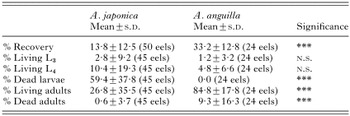
Table 1. Fate of 30 L3Anguillicola crassus administered to individual Anguilla japonica and Anguilla anguilla at day 98 p.i. (23 °C)

Table 2. Composition of the Anguillicola crassus infrapopulation in experimentally infected Anguilla japonica and Anguilla anguilla at day 98 p.i. (23 °C)
 You have
Access
- 49
- Cited by