Child abuse and neglect have well-documented implications for multiple domains of functioning across the life span (Cicchetti & Toth, Reference Cicchetti, Toth and Cicchetti2016; Trickett & McBride-Chang, Reference Trickett and McBride-Chang1995). In 2014, over 700,000 confirmed cases of abuse and neglect were identified in the United States (US Department of Health and Human Services, 2016), with one in four children expected to experience abuse or neglect at some point during childhood (Finkelhor, Turner, Shattuck, & Hamby, Reference Finkelhor, Turner, Shattuck and Hamby2015). Given the prevalence of abuse and neglect along with its harmful effects and significant public health costs (Fang, Brown, Florence, & Mercy, Reference Fang, Brown, Florence and Mercy2012; Norman et al., Reference Norman, Byambaa, De, Butchart, Scott and Vos2012), we need to better understand the health trajectories associated with adverse experiences in childhood.
Literature examining the association between abuse/neglect and adult health provides a framework for our investigation, but is limited in several ways. Here, we examine previous research that has linked abuse and neglect to physical health in general and cardiovascular health in particular and how different types of abuse/neglect predict those outcomes. We will especially highlight longitudinal studies in which abuse/neglect was assessed prospectively that went on to measure physical health in middle adulthood.
Within the domain of physical health, studies of children who are maltreated by caregivers, as well as children living in poverty, suggest that psychological stressors experienced early in life place these individuals at heightened risk for significant pathological outcomes and elevated rates of both morbidity and mortality (Miller, Chen, & Parker, Reference Miller, Chen and Parker2012). Explicating a biological embedding model of processes leading to health outcomes, Miller et al. propose that stress-related processes that occur during sensitive developmental periods, when immune function is highly malleable, become embedded in the functioning of physiological regulatory systems. According to this model, exposure to abuse or neglect during childhood shapes the functioning of stress-sensitive and inflammatory regulatory systems in the body, which in turn contribute to cardiovascular and metabolic health outcomes across the life span.
There are several biomarkers that are likely to be affected by stress in childhood and provide information about subsequent adult health. C-reactive protein (CRP), blood pressure, and markers of obesity are key indicators of cardiometabolic health known to have strong associations with morbidity and mortality. CRP is an indicator of inflammation in blood that increases as a function of stress. Higher levels of CRP forecast morbidity and mortality due to many health problems, and in particular cardiovascular disease, even when controlling for other risk factors in adulthood (Chew et al., Reference Chew, Bhatt, Robbins, Penn, Schneider, Lauer and Ellis2001; Ridker, Glynn, & Hennekens, Reference Ridker, Glynn and Hennekens1998; Ridker, Hennekens, Buring, & Rifai, Reference Ridker, Hennekens, Buring and Rifai2000; Taylor, Lehman, Kiefe, & Seeman, Reference Taylor, Lehman, Kiefe and Seeman2006). Mean arterial blood pressure (MAP) is also a marker of cardiovascular health, with higher levels presaging increased risk for later morbidity and mortality (Sesso et al., Reference Sesso, Stampfer, Rosner, Hennekens, Gaziano, Manson and Glynn2000; Strandberg, Salomaa, Vanhanen, Pitkälä, & Miettinen, Reference Strandberg, Salomaa, Vanhanen, Pitkälä and Miettinen2002). Higher levels of adiposity, reflected in body mass index (BMI) and waist-to-hip ratio, is also an indicator of adult health, predicting both cardiovascular disease (Czernichow, Kengne, Stamatakis, Hamer, & Batty, Reference Czernichow, Kengne, Stamatakis, Hamer and Batty2011) and overall mortality (Masters et al., Reference Masters, Reither, Powers, Yang, Burger and Link2013; Solomon & Manson, Reference Solomon and Manson1997). Thus, individuals who experience stressful events during childhood, such as abuse and neglect, may be especially prone to experiencing negative cardiovascular health outcomes in adulthood.
Empirical Relations Between Early Maltreatment and Adult Health Outcomes
Research addressing whether and how the experience of childhood abuse and/or neglect is related to adult physical health outcomes has examined a range of different health outcomes using both prospective and retrospective designs. For example, in a prospective investigation of confirmed abuse/neglect cases matched with nonabused controls, Widom, Czaja, Bentley, and Johnson (Reference Widom, Czaja, Bentley and Johnson2012) found that individuals who had experienced maltreatment earlier in life were at significantly greater risk for a variety of diseases, including diabetes, lung disease, vision problems, and worse oral health, with significant overlap between these different health outcomes. In retrospective studies, higher levels of reported abuse/neglect as well as other adverse childhood experiences correlate with poorer self-reported health outcomes in middle adulthood (Felitti et al., Reference Felitti, Anda, Nordenberg, Williamson, Spitz, Edwards and Marks1998; Min, Minnes, Kim, & Singer, Reference Min, Minnes, Kim and Singer2013).
Research investigating the impact of abuse/neglect on cardiovascular health has found associations between self-reported adverse experiences and increased cardiovascular disease in middle adulthood (at age 56 years; Anda et al., Reference Anda, Brown, Dube, Bremner, Felitti and Giles2008; Dong et al., Reference Dong, Giles, Felitti, Dube, Williams, Chapman and Anda2004) as well as self-reported maltreatment and cardiovascular disease in early adulthood in a nationally representative sample (at mean age 32 years; Batten, Aslan, Maciejewski, & Mazure, Reference Batten, Aslan, Maciejewski and Mazure2004). Moreover, self-reported abuse/neglect has been linked with increased levels of CRP and BMI in a psychiatric sample in early adulthood (at age 27 years; Hepgul et al., Reference Hepgul, Pariante, Dipasquale, DiForti, Taylor, Marques and Mondelli2012) and in a nonclinical sample (at age 46 years; Matthews, Chang, Thurston, & Bromberger, Reference Matthews, Chang, Thurston and Bromberger2014).
Of particular note, the Dunedin Multidisciplinary Health and Development Study has also examined the association between childhood abuse/neglect and several adult health outcomes. Using a measure of childhood maltreatment based on reports of maternal rejection, harsh discipline, disruptive caregiving changes, physical abuse, and sexual abuse, the Dunedin researchers have found that maltreatment predicts elevated CRP levels (Danese et al., Reference Danese, Moffitt, Pariante, Ambler, Poulton and Caspi2008; Danese, Pariante, Caspi, Taylor, & Poulton, Reference Danese, Pariante, Caspi, Taylor and Poulton2007) and both increased BMI and blood pressure at age 32 (Danese et al., Reference Danese, Moffitt, Harrington, Milne, Polanczyk, Pariante and Caspi2009). These findings provide prospective evidence consistent with the view that abuse and neglect experiences have long-term effects on adult physical health.
Research examining individual types of maltreatment and adult physical health has shown that physical abuse, sexual abuse, and neglect are related to cardiovascular health outcomes. However, the unique impact of each type of maltreatment remains underinvestigated, especially within prospective longitudinal studies. In studies that have assessed a single type of retrospectively measured maltreatment, self-reported physical abuse has been shown to predict the number of medical diagnoses in adult men, such that men who report physical abuse also report more medical diagnoses of health problems in adulthood (Springer, Sheridan, Kuo, & Carnes, Reference Springer, Sheridan, Kuo and Carnes2007). In addition, BMI has been implicated as a link in the association between childhood physical abuse and poor adult health (Springer, Reference Springer2009). Self-reported physical abuse has also been uniquely associated with adult heart disease (Fuller-Thompson, Brennenstuhl, & Frank, Reference Fuller-Thomson, Brennenstuhl and Frank2010) and with all-cause mortality for women at mean age 47 (Chen, Turiano, Mroczek, & Miller, Reference Chen, Turiano, Mroczek and Miller2016). Self-reported sexual abuse, in contrast, is associated with greater obesity in both men (Fuemmeler, Dedert, McClernon, & Beckham, Reference Fuemmeler, Dedert, McClernon and Beckham2009) and women (Felitti, Reference Felitti1991). With regard to neglect, Lissau and Sorenson (Reference Lissau and Sorensen1994) found that neglect measured at age 10 years predicts obesity at age 20 years in a prospective study. Thus, research suggests that physical abuse, sexual abuse, and neglect predict cardiovascular outcomes and general health problems in adulthood, at least when the types of maltreatment are examined individually.
However, when different types of maltreatment are compared or are both included as predictors in models of adult health, the research reveals some inconsistent results. Two retrospective studies, for example, have found evidence for the impact of both physical and sexual abuse on adult health outcomes. Examining retrospective reports of physical and sexual abuse in a sample of adult women, Rohde et al. (Reference Rohde, Ichikawa, Simon, Ludman, Linde, Jeffery and Operskalski2008) found that both forms of abuse predicted greater obesity in adulthood. Examining retrospective reports of physical abuse, sexual abuse, and neglect in a multinational sample, Scott et al. (Reference Scott, Von Korff, Angermeyer, Benjet, Bruffaerts, de Girolamo and Kessler2011) found that both physical and sexual abuse, but not neglect, predicted heightened risk of heart disease in adulthood. Two other retrospective studies have also found evidence for stronger or unique predictive effects of physical abuse (compared with sexual abuse and neglect) on adult risk for cardiovascular health, indexed by BMI (Thomas, Hypponen, & Power, Reference Thomas, Hypponen and Power2008; Williamson, Thompson, Anda, Dietz, & Felitti, Reference Williamson, Thompson, Anda, Dietz and Felitti2002). Bentley and Widom (Reference Bentley and Widom2009) also demonstrated this pattern in a prospective investigation. Viewed together, these diverging results highlight the need for a closer examination of the sequelae of abuse and neglect types to achieve a more nuanced understanding of the antecedents of adult physical health outcomes.
The Need for a Prospective Study Testing Different Types of Maltreatment on Multiple Indicators of Adult Health
Retrospective studies of self-reported abuse and neglect survivors offer important insights into how perceptions of childhood experiences predict adult health. However, prospective designs featuring observer-coded abuse and neglect mitigate concerns about the inherent subjectivity of retrospective reports as well as participant experiences of vulnerability and stigmatization, which could lead some individuals to minimize or deny the abuse they encountered (Shaffer, Huston, & Egeland, Reference Shaffer, Huston and Egeland2008; Widom & Morris, Reference Widom and Morris1997; Widom, Raphael, & DuMont, Reference Widom, Raphael and DuMont2004; Widom & Shepard, Reference Widom and Shepard1996). Among the prospective studies that have examined the effects of childhood abuse and neglect on health outcomes, none to our knowledge has simultaneously investigated multiple types of maltreatment and multiple indicators of cardiovascular and subjective health. In addition, studies have prospectively assessed and compared different types of abuse and neglect, but they did not measure cardiovascular outcomes (apart from obesity; see Bentley & Widom, Reference Bentley and Widom2009; Widom et al., Reference Widom, Czaja, Bentley and Johnson2012). Conversely, although Danese et al. (Reference Danese, Pariante, Caspi, Taylor and Poulton2007, Reference Danese, Moffitt, Pariante, Ambler, Poulton and Caspi2008, Reference Danese, Moffitt, Harrington, Milne, Polanczyk, Pariante and Caspi2009) found evidence of the association between abuse/neglect on multiple cardiovascular biomarkers (e.g., BMI, blood pressure, and CRP), their undifferentiated measure of maltreatment was not able to elucidate the implications of different types of abuse/neglect. Lissau and Sorenson (Reference Lissau and Sorensen1994) have documented the prospective impact of neglect on adult obesity, but they used a limited measure of neglect (i.e., parental support and child hygiene) that was not assessed until middle childhood.
To clarify the associations between childhood abuse and/or neglect and adult physical health outcomes, there is value in demonstrating that associations between specific types of abuse and/or neglect and adult health outcomes remain significant when other possible confounds and current health-relevant variables are statistically controlled. This is important because there are well-established racial and socioeconomic differences in health outcomes in adulthood (e.g., Bleich, Thorpe, Sharif-Harris, Fesahazion, & LaVeist, Reference Bleich, Thorpe, Sharif-Harris, Fesahazion and LaVeist2010; McLaren, Reference McLaren2007; Mensah, Mokdad, Ford, Greenlund, & Croft, Reference Mensah, Mokdad, Ford, Greenlund and Croft2005; Sobal & Stunkard, Reference Sobal and Stunkard1989). In addition, children of color (Fluke, Yuan, Hedderson, & Curtis, Reference Fluke, Yuan, Hedderson and Curtis2003) and children from low socioeconomic status backgrounds (Drake, Lee, & Johnson-Reid, Reference Drake, Lee and Jonson-Reid2009; Garbarino & Crouter, Reference Garbarino and Crouter1978) are overrepresented in reports of experiencing abuse and neglect during childhood. Although the consequences of child abuse and neglect are distinct from socioeconomic risk (Trickett, Aber, Carlson, & Cicchetti, Reference Trickett, Aber, Carlson and Cicchetti1991), children from lower socioeconomic backgrounds may often experience relatively worse outcomes when abused.
Research suggesting there are distinct health consequences of child abuse and/or neglect would also provide evidence of the unique explanatory power of early experiences, controlling for more proximal (and presumably potent) predictors of cardiovascular and subjective health. For example, being physically active and having a healthy diet in adulthood are both associated with lower blood pressure (Dickinson et al., Reference Dickinson, Mason, Nicolson, Campbell, Beyer, Cook and Ford2006; Halbert et al., Reference Halbert, Silagy, Finucane, Withers, Hamdorf and Andrews1997), lower BMI (Garrow & Summerbell, Reference Garrow and Summerbell1995; Kay & Singh, Reference Kay and Singh2006), and lower CRP levels (Nicklas et al., Reference Nicklas, Ambrosius, Messier, Miller, Penninx, Loeser and Pahor2004; Pitsavos et al., Reference Pitsavos, Panagiotakos, Tzima, Lentzas, Chrysohoou, Das and Stefanadis2007; Stewart et al., Reference Stewart, Flynn, Campbell, Craig, Robinson, Timmerman and Talbert2007). Taking these health behaviors into account provides a stronger test of the unique association between adverse childhood experiences and adult health outcomes.
The Current Study
The current study builds and expands upon previous studies of maltreatment and physical health by examining the unique predictive significance of multiple types of abuse and neglect for multilevel markers of cardiometabolic and subjective health. Using data from the Minnesota Longitudinal Study of Risk and Adaptation (MLSRA; Sroufe, Egeland, Carlson, & Collins, Reference Sroufe, Egeland, Carlson, Collins, Grossmann, Grossmann and Waters2005), an initially socioeconomically at-risk sample that has been followed from birth to age 39 years, we examined the potential long-term associations between physical abuse, sexual abuse, and physical/cognitive neglect in childhood and physical health at midlife. The MLSRA project has investigated the predictive significance of abuse and neglect for a wide variety of child and adult outcomes since its inception (e.g., Egeland, Reference Egeland, Starr and Wolfe1991), but the project has not examined these variables in relation to adult physical health outcomes. Revised abuse/neglect codes, updated to conform to revised definitions of these constructs (Leeb, Paulozzi, Melanson, Simon, & Arias, Reference Leeb, Paulozzi, Melanson, Simon and Arias2008), afford the opportunity to examine the implications of childhood of abuse and neglect with additional precision.
Leveraging this unique prospective data, we examined to what extent childhood abuse and neglect are related to both biological measures of cardiometabolic health and self-reported measures of general health quality and the number of health problems/conditions in adulthood. We hypothesized that experiencing any type of abuse or neglect during childhood (from ages 0 to 17.5 years) would predict poorer health outcomes in adulthood (between ages 37 and 39 years). However, we did not have any a priori hypotheses regarding the unique predictive significance of any specific maltreatment type, given the inconsistent results in the few existing prospective studies. We also hypothesized that experiencing child abuse and/or neglect would predict worse health outcomes, controlling for childhood demographic risk factors (sex, race, and socioeconomic status) and current self-reported health-related behaviors (assessed at age 32 years).
Method
Participants
The study included participants from the MLSRA (Sroufe et al., Reference Sroufe, Egeland, Carlson, Collins, Grossmann, Grossmann and Waters2005). In 1975–1976, 267 mothers in their third trimester of pregnancy were recruited to participate (M age = 20.6 years, age range = 12–34 years). All mothers were living below the poverty line and were receiving free prenatal services through the Minneapolis Department of Health. The participants were first-born children of these mothers. At the time of their child's birth, 48% of the mothers were teenagers, 65% were single, and 42% had no high school education. Of the original sample, 115 individuals (58% women) participated at the age 37-year and 39-year assessments and had valid codes for childhood abuse/neglect. These 115 participants were used for the current analyses. Within this sample, 57% of the participants were White/non-Hispanic and 34% were non-White. The sample differed significantly from the original sample with respect to sex (χ2 = 4.69, p = .03), with the current sample more likely to be female than in the original sample. Participants in the current sample did not significantly differ from those in the original sample with respect to participant race, maternal education, or maternal age at birth.
Measures
Adverse caregiving: Abuse and/or neglect experiences
The MLSRA uses the rubric childhood experiences of adverse caregiving as an umbrella term to refer to a variety of atypical parent–child experiences that were prospectively measured in the MLSRA cohort and are believed to be harmful to children's development (see Raby, Labella, Martin, Carlson, & Roisman, Reference Raby, Labella, Martin, Carlson and Roisman2017). The present study focused exclusively on information collected about MLSRA participants' adverse caregiving experiences of physical abuse, sexual abuse, and physical/cognitive neglect. This information was recoded to apply contemporaneous definitions of abuse and neglect, to identify the specific perpetrator and ages of the abuse and neglect experiences, and to assess the reliability of those coding decisions. Coding criteria were based on definitions developed by the Centers for Disease Control and Prevention (CDC) in order to “promote consistent terminology and data collection related to child maltreatment” (Leeb, Paulozzi, Melanson, Simon, & Arias, Reference Leeb, Paulozzi, Melanson, Simon and Arias2008, p. 4). The coding included (a) neglect of a child's basic physical or cognitive needs, defined as a caregiver's failure to provide adequate hygiene, shelter, clothing, medical care, supervision, or education; (b) physical abuse, defined as a caregiver's “intentional use of physical force against a child that results, or has the potential to result in, physical injury” (Leeb at al., Reference Leeb, Paulozzi, Melanson, Simon and Arias2008, p. 14); and (c) sexual abuse, defined as sexual contact (e.g., molestation, rape) or noncontact exploitation (e.g., intentional exposure of child to pornography) by a custodial caregiver or by a perpetrator 5 or more years older than the target child. Although the CDC criteria addresses only sexual abuse perpetrated by a caregiver, the inclusion of noncaregiving perpetrators and the use of a 5-year cutoff is consistent with other research in this area (e.g., Stoltenborgh, Bakermans-Kranenburg, & van IJzendoorn, Reference Stoltenborgh, Bakermans-Kranenburg and van Ijzendoorn2013).
These CDC definitions were supplemented by a set of more specific coding guidelines that distinguished clear indicators of physical abuse, sexual abuse, and physical/cognitive neglect from ambiguous indicators that were not sufficient for classification in isolation of other evidence. These additional guidelines were developed in consultation with MLSRA senior researchers, Minnesota state law, and available research literature (e.g., Barnett, Manly, & Cicchetti, Reference Barnett, Manly, Cicchetti, Cicchetti and Toth1993) and are available from the first author upon request. However, the classifications of childhood experiences of abuse or neglect do not necessarily reflect criteria for maltreatment used by child protective services, which vary from state to state.
Although emotional unavailability or lack of caregiver responsiveness has proven to be an important dimension of adverse caregiving (especially for young children) with pernicious developmental consequences (National Scientific Council on the Developing Child, 2012; Sroufe et al., Reference Sroufe, Egeland, Carlson, Collins, Grossmann, Grossmann and Waters2005), this dimension was not included in the current coding criteria because of insufficient information across developmental periods. Similarly, exposure to violence between caregivers and other forms of environmental violence were not included in the current set of codes. Exposure to violence between caregivers is captured by a separate variable in the MLSRA data set (e.g., Narayan, Englund & Egeland, Reference Narayan, Englund and Egeland2013), and insufficient information was available to adequately code exposure to other forms of environmental violence.
Judgments regarding abuse and neglect experiences were made for participants whose records had been previously flagged as potentially ever abused or neglected (n = 139, 52% of the original sample). For these cases, all available data collected from birth to 17.5 years (up to 25 assessments) were reviewed for information regarding caregiving quality, physical discipline, supervision, home environment, physical and sexual assault, child protective service involvement, and foster care history. Information was obtained from parent–child observations, caregiver interviews, reviews of available child protection and medical records, adolescent reports, and teacher interviews. Disclosures of childhood physical or sexual abuse during the Adult Attachment Interview (George, Kaplan, & Main, Reference George, Kaplan and Main1985), a retrospective interview regarding early caregiving experiences administered at 19 years of age, were not included in the present set of codes except in situations in which an experience of abuse was initially identified based on records through age 17.5 years, but there was insufficient detail to code the specific developmental period or perpetrator (e.g., an adolescent disclosed a history of sexual assault without specifying whether the perpetrator was a peer). In these cases, available Adult Attachment Interviews were consulted for clarifying information.
Coding focused on the presence or absence of physical abuse, sexual abuse, and/or neglect in each of four developmental periods (infancy: birth to 24 months; early childhood: 25 months to 5 years; middle childhood: 6–12 years; and adolescence: 13–17.5 years). For incidents of physical and sexual abuse, coders additionally specified the perpetrator. Perpetrators included maternal caregivers (biological mothers, stepmothers, grandmothers), paternal or father figures (biological fathers, stepfathers, adoptive fathers, and mothers' live-in boyfriends), and nonparental figures (relatives, neighbors, babysitters, and family friends). Two coders reviewed each case and demonstrated good to excellent reliability for all parameters. Kappa values were between 0.80 and 0.98 for presence or absence of physical abuse, sexual abuse, and/or neglect; 0.80 and 0.84 for presence or absence of each subtype during each development period; and 0.80 and 0.98 for incidents of physical or sexual abuse by each category of perpetrator. All discrepancies were resolved by consensus.
Within the full sample of MLSRA participants (N = 267), 102 individuals were classified as having ever experienced physical abuse, sexual abuse, and/or neglect; 81 were coded as not having experienced abuse or neglect; and the status of 84 was deemed unclear due to missing data (see below). By developmental period, 47 individuals were classified as being abused and/or neglected in infancy (of the 211 with sufficient data to allow for confident classifications of abuse and/or neglect during this developmental period), 66 in early childhood (of the 185 with sufficient data during this developmental period), 66 in middle childhood (of the 190 with sufficient data during this developmental period), and 21 in adolescence (of the 179 with sufficient data during this developmental period).
Within the current sample of 115 participants, 61 (53%) had experienced abuse and/or neglect at least once. In terms of developmental period, 20 (17%) of the current sample had experienced abuse and/or neglect during infancy, 38 (25%) during early childhood, 44 (38%) during middle childhood, and 17 (15%) during adolescence (not mutually exclusive). In terms of chronicity, 20 (17%) of this group experienced abuse and/or neglect during only one developmental period, 19 (17%) during two periods, 12 (10%) during three periods, 3 (3%) during all four developmental periods and 7 (6%) with insufficient data for determining abuse/neglect chronicity. With respect to type of abuse or neglect experienced, 24 (21%) participants in the current sample had experienced sexual abuse, 40 (35%) had experienced physical abuse, and 35 (30%) had experienced neglect (not mutually exclusive). There was substantial overlap among abuse/neglect types: 26 (23%) participants experienced one type of abuse/neglect, 23 (20%) experienced two types, 5 (4%) experienced all three, and 7 (6%) had insufficient data for determining number of abuse/neglect types.
In order to separate participants who had not experienced abuse and/or neglect from those with missing data, the abuse and neglect variables were coded as missing if (a) the participant was not coded as having been abused or neglected based on the available information, and (b) the participant was missing two or more full assessments within any given developmental period. Within the current sample, only participants with valid (i.e., nonmissing) abuse and neglect codes were included. For purposes of analyses, experience of any form of physical or sexual abuse or physical/cognitive neglect (abuse/neglect) from birth to age 17.5 years was coded (1 = present; 0 = absent). In addition, physical abuse, sexual abuse, and physical/cognitive neglect were individually coded as present (code = 1) or absent (code = 0) across development from birth to age 17.5 years.
Cardiometabolic risk
At age 37 years, four biomarkers of cardiometabolic risk were assessed. Trained research assistants measured each biomarker during a 2.5-hr lab session. At the beginning and end of each session, blood pressure was measured using an Onrom Model BP785 oscillometric blood pressure monitor while participants were seated. The two systolic blood pressure measurements were averaged, and the two diastolic blood pressure measurements were averaged. MAP, the average level of pressure in the arteries during the cardiac cycle, was then calculated with the following formula: MAP = [(2 × diastolic) + systolic]/3 (Katz & Ruoff, Reference Katz, Ruoff, Hedges, Custalow and Roberts2004). BMI was calculated based on height and weight measurements using the following formula: BMI = bodyweight (kg)/height (m)2; CDC, 2015). The waist to hip ratio was assessed by dividing the measurement of each participant's waist at the narrowest point from the measurement of his or her hips at the widest point (World Health Organization, 2011).
CRP was assayed from blood acquired via finger pricks using hs-CRP kits from Health Management Systems. The blood samples were assayed for CRP by DBS Diagnostics at CoreMedica Labs. CRP was collected at both age 37 and age 39 years. To increase reliability of CRP measurement, scores from age 37 and age 39 years (r = .59) were averaged when applicable. If a participant had a CRP score from only one assessment, that score was used as his/her CRP value. CRP values were dropped for participants who scored abnormally high (i.e., ≥10 mg/l) following guidelines set by other studies that have analyzed CRP (Miller & Cole, Reference Miller and Cole2012; Yeh & Willerson, Reference Yeh and Willerson2003). Unusually high scores indicative of active disease processes were dropped before averaging across the age 37-year and age 39-year assessments.
An exploratory factor analysis using maximum likelihood estimation indicated that a one-factor solution adequately explained all four biomarkers of cardiometabolic risk. Specifically, only the first factor (explaining 56.5% of the variance) had an eigenvalue greater than 1.0, and all four biomarkers loaded more than 0.72 on this factor. Based on these results, a composite measure of cardiometabolic risk was created by standardizing and averaging the four biomarker measures (α = 0.74). Among the participants, 86 (75%) had all four cardiometabolic risk measures included in their composite, 16 (14%) had three measures, 8 (7%) had two measures, and 3 (3%) had one indicator. Two participants provided none of the indicators, so they were not included in cardiometabolic risk analyses.
Self-report health ratings
At age 37 years, participants rated their subjective overall physical health (i.e., “How would you rate your overall physical health?”) on a 5-point Likert-type scale (5 = excellent, 1 = poor). The mean score for self-reported health quality was 3.13 (SD = 1.04).
Health problems
To assess the number of health problems, participants reported whether or not they currently experienced any of several possible health problems: high blood pressure, high cholesterol, angina, chest pain, coronary heart disease, heart attack, stroke, diabetes, prediabetes or high blood sugar, weak or failing kidney, kidney stones, bladder infections, bronchitis, wheezing, asthma, emphysema, pneumonia, cancer, blood disorders, skin problems, digestive problems, ulcer, celiac disease, eye disorders, bone or joint disease, endocrine disorder, HIV or AIDS infection, chronic infections, neurological disorders, back problems, migraine headaches, dizzy or fainting spells, and anxiety or other problems not included in the list. The number of problems reported by each participant was summed (M = 2.69, SD = 2.11).
Demographic covariates
Demographic covariates were selected based on their known impact on health outcomes and their standard inclusion in prior MLSRA investigations (e.g., Raby, Roisman, Simpson, Collins, & Steele, Reference Raby, Roisman, Simpson, Collins and Steele2015; Sroufe et al., Reference Sroufe, Egeland, Carlson, Collins, Grossmann, Grossmann and Waters2005). These variables included sex (1 = female, 0 = male); race (1 = White/non-Hispanic, 0 = otherwise); maternal socioeconomic status (SES) as measured by the Duncan Socioeconomic Index (Duncan, Reference Duncan and Reiss1961); and maternal education as measured by highest level of education attained. The Duncan Socioeconomic Index, which assesses occupational prestige and family income, was an averaged index from the child's birth to age 17.5 years (up to seven assessments: at birth, age 42 months, age 54 months, first grade, second grade, sixth grade, and age 16 years). Maternal education represented the mother's highest level of attained education from birth to age 17.5 years (up to seven assessments: at birth, age 42 months, first grade, second grade, third grade, sixth grade, and age 16 years). These variables were constructed to align with the developmental time frame used for the abuse and neglect coding.
Self-reported health-related behaviors
At age 32 years, prior to completing the objective and subjective adult health assessments at age 37–39 years, participants were asked about their eating, exercise, and sleep behaviors. Participants indicated how often they ate three balanced meals a day on a 5-point Likert-type scale (5 = always, 1 = never), the extent to which they were physically active (3 = quite active, 2 = moderately active, 1 = quite inactive), and how often they engaged in physical exercise: recreationally, exercise related to their job, and exercise not related to their job on a 4-point Likert-type scale (4 = regularly, 1 = never). These items were subjected to an exploratory factor analysis using maximum likelihood estimation. The factor analysis indicated that a two-factor solution adequately accounted for these five health-related behavior indicators. Specifically, the first factor involved physical activity unrelated to the participant's job, frequency of eating three balanced meals a day, and recreational physical activity. It explained 46.0% of the variance, had an eigenvalue greater than 1.0, and the three items loaded more than 0.77 on this factor. The second factor involved physical activity related to the participant's job and nonrecreational physical activity. It explained 21.9 % of the variance, had an eigenvalue greater than 1.0, and the two items loaded greater than 0.81 on the factor. The items on the first factor (physical activity unrelated to the participant's job, frequency of eating three balanced meals a day, and recreational physical activity) were standardized and averaged to create the self-report health behavior composite (α = 0.69) that was used as a covariate in the analyses reported below. The second factor containing work-related and nonrecreational physical activity was unrelated to age 37–39 year health, and therefore was unlikely to provide a more rigorous test of the impact of abuse/neglect on adult health. As such, it was not included in subsequent analyses.
Results
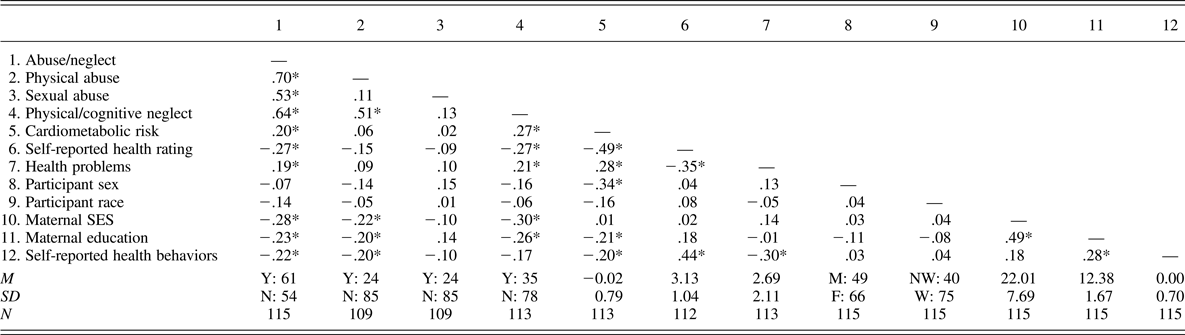
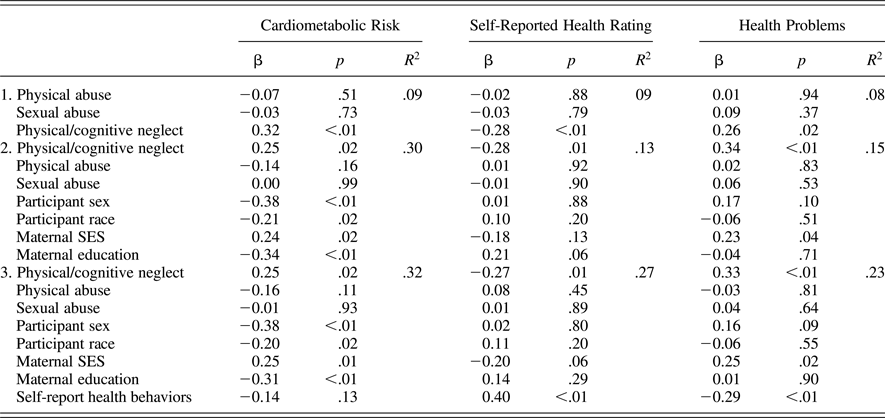
Descriptive statistics and zero-order correlations among the primary variables are reported in Table 1. The predictive significance of physical abuse, sexual abuse, and physical/cognitive neglect for adult health was tested using a series of linear regressions, which are reported in Table 2. All analyses were conducted using R via RStudio (RStudio Team, 2017).
Correlations among and descriptive statistics of abuse/neglect, cardiometabolic and self-reported health outcomes, demographic covariates, and self-reported health behaviors

Note: NW, non-White; W, White; M, male; F, female; Y, yes; N, no. For participant sex, 1 = female, 0 = male. For participant race, 1 = White/non-Hispanic, 0 = non-White. For all abuse or neglect subtypes, 1 = present (yes), 0 = not present (no).
Descriptive statistics are frequencies for abuse and neglect types, sex, and race; all other descriptive data are means and standard deviations.
*p ≤ .05.
Predicting adult health at age 37–39 from childhood abuse/neglect
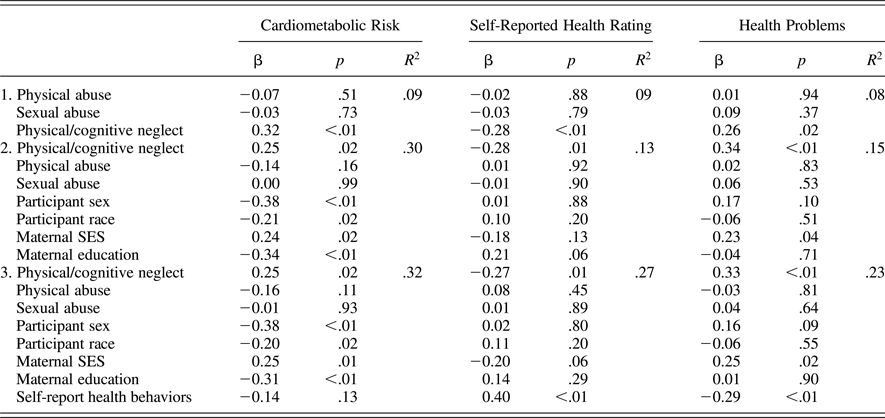
Note: For cardiometabolic risk and health problem models, N = 106; for self-reported health rating models, N = 105. For participant race, 1 = White/non-Hispanic, 0 = non-White. For participant sex, 1 = female, 0 = male. For cardiometabolic risk and self-report health problems, positive regression coefficients indicate worse health outcomes; for self-report health ratings, positive regression coefficients indicate better health outcomes. SES, socioeconomic status.
Zero-order correlations
In the first phase of the analyses, correlations between the overall experience of abuse/neglect and adult health and between the independent types of physical abuse, sexual abuse, and physical/cognitive neglect and adult health indicators were examined (see Table 1). Experiencing abuse/neglect in childhood was associated with greater cardiometabolic risk (r = .20, p < .05), lower self-reported health ratings (r = –27, p < .05), and more self-reported health problems (r = .19, p < .05) in middle adulthood. The results also revealed significant correlations between physical/cognitive neglect and greater cardiometabolic risk (r = .21, p < .05), lower self-reported health ratings (r = –.27, p < .05), and more self-reported number of health problems (r = .21, p < .05) in middle adulthood. Neither physical abuse (all |rs| < .15, all ps > .12) nor sexual abuse (all |rs| < .10, all ps > .32) significantly predicted any of the health outcome measures.
Regression analyses
Following the correlational analyses, physical abuse, sexual abuse, and physical/cognitive neglect were simultaneously entered into each of three regression models predicting age 37–39 year health outcomes to determine the unique association of each type with each of the adult health outcomes. Controlling for the other types, physical/cognitive neglect was the only type that accounted for significant variation in the health outcomes, significantly predicting all three adult health indicators (i.e., cardiometabolic risk, self-reported health ratings, and self-reported number of health problems; see Table 2, Step 1).
Given these findings, subsequent regression analyses compared the three types of abuse/neglect on adult health outcomes, controlling for health-related demographic factors (e.g., sex, race, maternal SES, and education; see Table 2, Step 2) and adult health behaviors (see Table 2, Step 3).
Controlling for the demographic covariates (see Step 2), physical/cognitive neglect continued to independently predict higher cardiometabolic risk, as did maternal SES. Being White rather than non-white, female rather than male, and having a mother with higher education also predicted lower cardiometabolic risk, indicating better physical health. Neglect also predicted lower self-reported ratings of overall health and increased numbers of self-reported health problems. Physical abuse and sexual abuse did not significantly predict any of the health outcomes when controlling for demographic covariates.
Controlling for both the demographic covariates and self-reported adult health behavior measure (see Step 3 in regressions presented in Table 2), physical/cognitive neglect remained a significant and independent predictor of greater cardiometabolic risk. Consistent with the previous analyses, neglect also significantly predicted poorer self-reported overall health and a larger number of self-reported health problems. Physical abuse and sexual abuse did not significantly predict any of the health outcomes when controlling for demographic covariates and self-reported adult health behavior. The self-reported adult health behavior measure did not significantly predict cardiometabolic risk, controlling for the demographic covariates and physical/cognitive neglect. However, it did significantly predict better self-reported overall health and fewer self-reported health problems.
Discussion
The current research examined the association between childhood abuse and neglect and biologically measured and self-reported adult health outcomes. The results indicate that experiencing any abuse or neglect in childhood forecasts poorer health outcomes in adulthood than those who did not experience abuse/neglect. Specifically, the experience of physical/cognitive neglect, but not physical or sexual abuse, predicted more negative health outcomes in middle adulthood. Physical/cognitive neglect during childhood (i.e., experienced at any point between birth and age 17.5) predicted higher cardiometabolic risk, lower perceptions of health quality (measured by self-reported ratings), and more self-reported health problems in middle adulthood (at age 37–39). These associations between childhood neglect and adult health outcomes at midlife persisted even after statistically adjusting for the experience of physical and sexual abuse in childhood, various health-related demographic factors, and self-reported health maintenance behaviors at age 32 years. This provides reasonably robust evidence regarding the long-term significance of adverse caregiving experiences for health outcomes over a considerable temporal lag. Moreover, the results align with previous prospective investigations suggesting that experiencing abuse and neglect may undermine health long after childhood ends. In addition, these findings are consistent with the notion of unique and specific implications of physical/cognitive neglect (vs. other forms of maltreatment) for both cardiometabolic and subjective health. It is noteworthy, however, that other variables such as race, gender, and SES also predicted various health outcomes, highlighting the complex biological and environmental processes and interactions that characterize development (Cicchetti & Toth, Reference Cicchetti, Toth and Cicchetti2016).
Why neglect?
Unlike previous retrospective (e.g., Scott et al., Reference Scott, Von Korff, Angermeyer, Benjet, Bruffaerts, de Girolamo and Kessler2011) and prospective studies (e.g., Widom et al., Reference Widom, Czaja, Bentley and Johnson2012), histories of physical abuse and sexual abuse did not predict poorer biological or self-reported health outcomes in adulthood in the current study. Rather, only cognitive/physical neglect predicted both poorer biological and self-reported health outcomes. The unique association of neglect with health outcomes may be a function of the health risks inherent in the definition of physical/cognitive neglect. Children experiencing neglect often lack medical care or shelter, which have direct associations with child health (Minkovitz, O'Campo, Chen, & Grason, Reference Minkovitz, O'Campo, Chen and Grason2002; Wood, Valdez, Hayashi, & Shen, Reference Wood, Valdez, Hayashi and Shen1990). Children who lack sufficient medical care and/or shelter may be at increased risk for infections or developing chronic health care problems.
In addition, neglect predicts higher childhood BMI among socially disadvantaged children (Knutson, Taber, Murray, Valles, & Koeppl, Reference Knutson, Taber, Murray, Valles and Koeppl2010). Although associations between neglect and high BMI may seem counterintuitive, past research has demonstrated that experiencing food insecurity (having limited or uncertain access to enough nutritious food) is associated with obesity (e.g., Casey et al., Reference Casey, Simpson, Gossett, Bogle, Champagne, Connell and Weber2006). In addition, children who suffer from food insecurity and who live in households facing maternal stressors are especially at risk for becoming overweight (Gundersen, Lohman, Garasky, Stewart, & Eisenmann, Reference Gundersen, Lohman, Garasky, Stewart and Eisenmann2008). Neglect may be more likely to directly disrupt child health, which can perpetuate poor health outcomes into adolescence and beyond.
One reason for the predictive power of neglect compared with other forms of abuse in this study may be explained by the presence of neglect (vs. physical or sexual abuse) at multiple time points across development. Although abuse and neglect were coded as present or absent across childhood, in the current sample, 20 participants experienced neglect at two or more time points, compared with 11 participants who experienced physical abuse at two or more time points and 4 participants who experienced sexual abuse at two or more time points. In addition, the experience of physical/cognitive neglect may be more chronic within developmental time points (spanning multiple years) than sexual and physical abuse. Participants classified as experiencing physical or sexual abuse may have experienced only one such incident, whereas participants experiencing neglect likely faced it on a day-to-day basis, even if only in one developmental period.
The early risk nature of the MLSRA sample may also have contributed to the comparatively greater predictive power of physical/cognitive neglect on adult health outcomes. All MLSRA families began the study below the poverty line, and many lived in poverty for years thereafter. Although there is variation of SES within the MLSRA participants, the group as a whole falls lower on the socioeconomic distribution. Chronic poverty is a significant risk factor for child neglect (Slack, Holl, McDaniel, Yoo, & Bolger, Reference Slack, Holl, McDaniel, Yoo and Bolger2004), is more strongly associated with neglect than with other forms of abuse (Drake & Pandey, Reference Drake and Pandey1996; Jones & McCurdy, Reference Jones and McCurdy1992), and is one of the most common risk factors in those experiencing chronic neglect (Jones & Logan-Greene, Reference Jones and Logan-Greene2016). Although neglect is likely to be detrimental to children across socioeconomic backgrounds, the MLSRA sample has specific characteristics that make children especially vulnerable to both the likelihood of being neglected and the detrimental outcomes associated with neglect.
The chronicity of neglect fits well with the biological embedding model proposed by Miller and Chen (Reference Miller and Chen2013) and Miller et al. (Reference Miller, Chen and Parker2012). According to this model, adverse childhood experiences, especially those related to poverty, should affect biological outcomes via alterations in immune system functioning. The short-term development of pro-inflammatory responses, which may be adaptive in harsh environmental conditions, should place individuals at greater risk of long-term susceptibility to chronic disease across the life course. Maternal nurturance, which can serve as a buffer of stress-related effects, may be suboptimal for children who experience physical and cognitive forms of caregiving neglect. Considering the associations between neglect, poverty, and harsh caregiving conditions (e.g., poor nutrition, family instability, and insufficient parental supervision), the biological embedding model provides a very useful framework for explaining the unique effects of neglect in the present study and for guiding future investigations.
Limitations and future directions
The current study has some limitations. First, our sample size is not large enough to detect higher-order interaction effects or mediational processes that could further explain connections between early neglect and adult health outcomes. Second, multisite investigations are needed to compare the results of at-risk versus normative samples using the same child abuse criteria and outcome variables to examine this association within the full spectrum of sociodemographic variation. Some of the mixed and conflicting results of prior maltreatment studies could be attributable to where participants tend to fall along the SES continuum.
Third, as is true of all childhood neglect studies, the present research cannot make causal claims. Animal models, however, have provided causal evidence that research with humans cannot (Teicher, Tomoda, & Andersen, Reference Teicher, Tomoda and Andersen2006). Research involving nonhuman primates, for example, has confirmed that early life maltreatment influences both stress-related hormones (Sanchez, Reference Sanchez2006) and obesity (Danese & Tan, Reference Danese and Tan2014) in primates later in life. In addition, although clear variation in abuse and neglect history (including the absence of abuse/neglect) is present in the MLSRA sample, our study did not compare outcomes of abuse/neglect cases with demographically matched controls, whereas other studies have (e.g., Bentley & Widom, Reference Bentley and Widom2009; Widom et al., Reference Widom, Czaja, Bentley and Johnson2012). This increases the possibility that an unmeasured variable might be responsible for the association between abuse/neglect and adult health. Nonetheless, the predictive significance of neglect on adult health outcomes above and beyond several demographic risk factors attenuates this limitation to some degree.
Fourth, the health outcome variables used in this study did not include a comprehensive range of cardiovascular health indices. The indicators employed were selected because of their strong association with mortality and the ease with which these data could be collected in a nonmedical environment. Future studies that collect more exact measurements of cardiovascular disease (rather than correlates of it) may provide a clearer understanding of how early adverse experiences are biologically embedded in ways that ultimately affect adult physical health.
There are several important future directions for investigators to pursue. Broadly speaking, there is need for further investigations of the impact that childhood physical/cognitive and others forms of neglect have on adult health outcomes beyond those examined in the current study. Given the prevalence of abuse and neglect in society, Stoltenborgh et al. (Reference Stoltenborgh, Bakermans-Kranenburg and van Ijzendoorn2013) have noted the dearth of studies that have examined associations between chronic neglect and adult physical health. The long-term effects of childhood neglect on health suggested here highlight the need for the development of interventions that reduce child maltreatment and promote resilience in both children and their families. Even though neglect is the most prevalent form of maltreatment (US Department of Health and Human Services, 2016), knowledge of prevention strategies and targeted interventions related to neglect are limited. A recent literature review suggests that intervention strategies targeting multiple levels of risk may be the most effective at reducing rates of neglect (Tyler, Allison, & Winsler, Reference Tyler, Allison and Winsler2006). However, even comprehensive approaches that involve reducing risks and increasing protective factors often fail to yield change in fundamental physical and psychological caregiving practices and related child protection status (DePanfilis & Dubowitz, Reference DePanfilis and Dubowitz2005). Significant efforts are needed to improve and refine multilevel prevention and intervention policies and programs to reduce childhood neglect, not only to benefit the well-being of children, but also to improve life-long trajectories of stress-related health conditions.
In short, the current study contributes to our understanding of the unique associations between specific types of abuse and neglect on multiple markers of adult biological health, and it underscores the importance of addressing childhood neglect in particular to promote adult health outcomes. Continued research in this area, including the investigation of social and contextual influences, may help delineate the mechanisms by which early stressors lead to vulnerability to disease processes and support the development of strategies for improving health and well-being from an early age.