Introduction
Suicide attempt in adolescence and young adulthood is an important public health problem, with rates ranging from 3.1 to 8.8% in community samples of youth aged 15–25 years (Cha et al., Reference Cha, Franz, Guzmán, Glenn, Kleiman and Nock2018; Nock et al., Reference Nock, Borges, Bromet, Cha, Kessler and Lee2008, Reference Nock, Green, Hwang, McLaughlin, Sampson, Zaslavsky and Kessler2013; Orri et al., Reference Orri, Scardena, Perret, Bolanis, Temcheff, Séguin and Geoffroy2020a, Reference Orri, Séguin, Castellanos-Ryan, Tremblay, Côté, Turecki and Geoffroy2020b). Suicide attempt is associated with important health and social consequences, such as the increased risk of suicide mortality (second leading cause of death in 15–24 year-olds), poor mental and physical health, and negative social outcomes (Bostwick, Pabbati, Geske, & McKean, Reference Bostwick, Pabbati, Geske and McKean2016; Goldman-Mellor et al., Reference Goldman-Mellor, Caspi, Harrington, Hogan, Nada-Raja, Poulton and Moffitt2014; Hawton & O'Connor, Reference Hawton and O'Connor2012; Reinherz, Tanner, Berger, Beardslee, & Fitzmaurice, Reference Reinherz, Tanner, Berger, Beardslee and Fitzmaurice2006). Early identification of individuals at risk for suicidal behavior is critical in order to implement timely preventive interventions.
Despite risk factors such as exposure to violence (Geoffroy et al., Reference Geoffroy, Boivin, Arseneault, Renaud, Perret, Turecki and Côté2018, Reference Geoffroy, Boivin, Arseneault, Turecki, Vitaro, Brendgen and Côté2016; Geoffroy, Orri, Girard, Perret, & Turecki, Reference Geoffroy, Orri, Girard, Perret and Turecki2020), drug abuse (Gobbi et al., Reference Gobbi, Atkin, Zytynski, Wang, Askari, Boruff and Mayo2019), and psychopathology (Arsenault-Lapierre, Kim, & Turecki, Reference Arsenault-Lapierre, Kim and Turecki2004; Orri et al., Reference Orri, Galera, Turecki, Forte, Renaud, Boivin and Geoffroy2018a, Reference Orri, Scardena, Perret, Bolanis, Temcheff, Séguin and Geoffroy2020a, Reference Orri, Séguin, Castellanos-Ryan, Tremblay, Côté, Turecki and Geoffroy2020b; Orri, Perret, Turecki, & Geoffroy, Reference Orri, Perret, Turecki and Geoffroy2018b; Turecki, Reference Turecki2005) being important proximal predictors of adolescent suicidal behavior, past studies including a recent meta-analysis suggested that exposure to adversities during the perinatal period may also substantially contribute to increased susceptibility to suicidal behavior later in life (Geoffroy, Gunnell, & Power, Reference Geoffroy, Gunnell and Power2014; Orri et al., Reference Orri, Gunnell, Richard-Devantoy, Bolanis, Boruff, Turecki and Geoffroy2019; O'Donnell & Meaney, Reference O'Donnell and Meaney2017; Turecki & Brent, Reference Turecki and Brent2016). For example, evidence showed that perinatal factors such as poor fetal growth (e.g. low birth weight), adverse socioeconomic environment (e.g. low socioeconomic status), family characteristics (e.g. nonintact family), and exposure to alcohol/drugs during pregnancy are associated with suicide risk in both adolescence and adulthood (Cnattingius, Svensson, Granath, & Iliadou, Reference Cnattingius, Svensson, Granath and Iliadou2011; D'Onofrio et al., Reference D'Onofrio, Class, Rickert, Larsson, Långström and Lichtenstein2013, Reference D'Onofrio, Rickert, Frans, Kuja-Halkola, Almqvist, Sjölander and Lichtenstein2014; Geoffroy et al., Reference Geoffroy, Gunnell and Power2014; Mittendorfer-Rutz, Rasmussen, & Wasserman, Reference Mittendorfer-Rutz, Rasmussen and Wasserman2004; Orri et al., Reference Orri, Gunnell, Richard-Devantoy, Bolanis, Boruff, Turecki and Geoffroy2019). Documenting the association between such perinatal factors and suicide attempt may help with the early identification of children more at risk of suicide later in life (Aizer & Currie, Reference Aizer and Currie2014; Gunnell, Reference Gunnell2015).
Current knowledge of associations between perinatal factors and suicide-related outcomes has several gaps. First, previous studies showing associations between perinatal adversity and suicide risk have focused on one or few factors (Orri et al., Reference Orri, Gunnell, Richard-Devantoy, Bolanis, Boruff, Turecki and Geoffroy2019), and a comprehensive study lacks in assessing a range of fetal, psychosocial, obstetric, and parental health factors. Second, previous studies have not considered the co-occurrence of such perinatal factors within the same individual. For example, low birth weight is more common in infants from impoverished backgrounds, mothers who smoked during pregnancy, suffer from depression (Grote et al., Reference Grote, Bridge, Gavin, Melville, Iyengar and Katon2010) and have low education (Aizer & Currie, Reference Aizer and Currie2014; Parker, Schoendorf, & Kiely, Reference Parker, Schoendorf and Kiely1994). By relying on statistical models such as multiple regression, previous studies documented independent associations of a limited range of perinatal factors with suicidal behavior [e.g. the effect of birth weight on suicidal behavior as if all mothers have equal levels of depression, education, smoking (D'Onofrio et al., Reference D'Onofrio, Class, Rickert, Larsson, Långström and Lichtenstein2013, Reference D'Onofrio, Rickert, Frans, Kuja-Halkola, Almqvist, Sjölander and Lichtenstein2014; Mittendorfer-Rutz et al., Reference Mittendorfer-Rutz, Rasmussen and Wasserman2004)], but did not capture the co-occurrence of multiple risk factors among the same individual (e.g. accounting for the fact that mothers having low birth weight children are also more likely to experience depression, low education, and to smoke). Third, perinatal factors are also associated with later emotional [e.g. depression (Gale & Martyn, Reference Gale and Martyn2004)], behavioral [e.g. hyperactivity-impulsivity (Class, Rickert, Larsson, Lichtenstein, & D'Onofrio, Reference Class, Rickert, Larsson, Lichtenstein and D'Onofrio2014; Lim et al., Reference Lim, Liu, Schoeler, Cecil, Barker, Viding and Pingault2018), and conduct problems (Mathewson et al., Reference Mathewson, Chow, Dobson, Pope, Schmidt and Van Lieshout2017)], interpersonal (e.g. peer victimization), and cognitive problems (Flensborg-Madsen & Mortensen, Reference Flensborg-Madsen and Mortensen2017). As these problems are also independent risk factors for suicidal behaviors (Geoffroy et al., Reference Geoffroy, Boivin, Arseneault, Turecki, Vitaro, Brendgen and Côté2016; Richard-Devantoy et al., Reference Richard-Devantoy, Orri, Bertrand, Greenway, Turecki, Gunnell and Geoffroy2019; Turecki & Brent, Reference Turecki and Brent2016), the association between perinatal adversity and suicidal behavior reported in previous studies is likely to be explained, at least partially, by such factors (Orri et al., Reference Orri, Gunnell, Richard-Devantoy, Bolanis, Boruff, Turecki and Geoffroy2019). Therefore, studies are needed to clarify whether the association of perinatal factors with suicidal behavior is mediated by more proximal childhood factors.
This study aimed to (1) identify clusters of children presenting distinct risk profiles of perinatal adversity (including fetal, obstetric, psychosocial, parental mental health problems, and substance use); (2) test the association between identified perinatal adversity profiles and suicide attempt by early adulthood; (3) determine if perinatal adversity profiles are independently associated with suicide attempt, or whether the association is explained by childhood emotional, behavioral, interpersonal, and cognitive problems that are a consequence of perinatal adversity. We utilized data from two independent birth cohorts to provide replication of our findings.
Methods
Participants and data
Data were from the Québec Longitudinal Study of Child Development (QLSCD) in Québec, Canada, and the Avon Longitudinal Study of Parents and Children (ALSPAC) in the UK. QLSCD (which is conducted by the Institut de la statistique du Québec, ISQ) is an ongoing birth cohort initially including 2120 singletons born in 1997/98 to mothers living in the Canadian Province of Québec (http://www.jesuisjeserai.stat.gouv.qc.ca/default_an.htm). Participants were selected from birth registers following a random procedure based on living areas and birth rates. The target population represents 94.5% of the Québec population of singleton births, including all ranges of socioeconomic status. Families were included if pregnancy lasted 24–42 weeks and if the mother could speak French or English. The QLSCD protocol was approved by the ISQ and the St-Justine Hospital Research Centre ethics committees, and informed consent was obtained at each assessment. ALSPAC is an ongoing birth cohort: pregnant women resident in Avon, UK, with expected dates of delivery 1 April 1991 to 31 December 1992 were invited to participate. The cohort initially included 14 062 live births and 13 988 children who were alive at 1 year of age. More were added in a later data collection, for a total of 15 589 live births (14 901 children alive at 1 year of age) (Boyd et al., Reference Boyd, Golding, Macleod, Lawlor, Fraser, Henderson and Davey Smith2013; Fraser et al., Reference Fraser, Macdonald-Wallis, Tilling, Boyd, Golding, Davey Smith and Lawlor2013; Northstone et al., Reference Northstone, Lewcock, Groom, Boyd, Macleod, Timpson and Wells2019). Ethical approval for the study was obtained from the ALSPAC Law and Ethics committee and local research ethics committees, and informed consent was obtained from participating families. Informed consent for the use of data collected via questionnaires and clinics was obtained from participants following the recommendations of the ALSPAC Ethics and Law Committee at the time. Please note that the study website contains details of all the data that is available through a fully searchable data dictionary and variable search tool (http://www.bristol.ac.uk/alspac/researchers/our-data/). One of each twin pair was excluded at random for the current analysis, and it should be noted that only a subsample of ALSPAC (n = 8369) had data from obstetric records extracted due to funding restrictions (detail available from authors on request).
All participants were followed-up until early adulthood (i.e. 20 years for QLSCD and 21 years for ALSPAC) with repeated assessments from parents/teachers/self-reports and linkage with hospital records.
We included 1623 participants from QLSCD (845, 52.1% females; representing 77% of the original sample) and 5765 participants from ALSPAC (3356, 58.2% females; representing 41% of the original sample) with information on a suicide attempt. Included participants differed from non-included on some characteristics, such as being more likely to be female, and having parents with higher socioeconomic status (see online Supplementary Table S1). To reduce the influence of differential attrition on our analyses, we used inverse probability weighting, in which weights represent the probability of inclusion in the sample estimated from characteristics independently predicting missingness. Missing data on prenatal and perinatal variables (online Supplementary Table S1) were handled using Full Information Maximum Likelihood.
Suicide attempt by early adulthood
Suicide attempt (i.e. self-harm with intent to die) was assessed via self-report questions at 13, 15, 17 and 20 years in QLSCD and at 16 and 21 years in ALSPAC. In QLSCD, adolescents endorsing serious thought of attempting suicide were asked: ‘in the past 12 months: how many times did you attempt suicide?’ (0 v. ⩾1). At age 20, lifetime suicide attempt was also assessed through the questions: ‘Did you ever go to the emergency department for a suicide attempt’, and ‘Have you ever been hospitalized for a suicide attempt’. In ALSPAC, adolescents reporting self-harm, i.e., positive answer to the question: ‘Have you ever hurt yourself on purpose in any way (e.g. by taking an overdose of pills or by cutting yourself)?’ were asked: ‘On any of the occasions when you have hurt yourself on purpose, have you ever seriously wanted to kill yourself?’, and ‘wanted to die’ to assess intentionality. In both cohorts, if a participant endorsed any of the suicide attempt questions or manifested an intent to die at any time point, they were coded as positive for our outcome.
Perinatal adversity
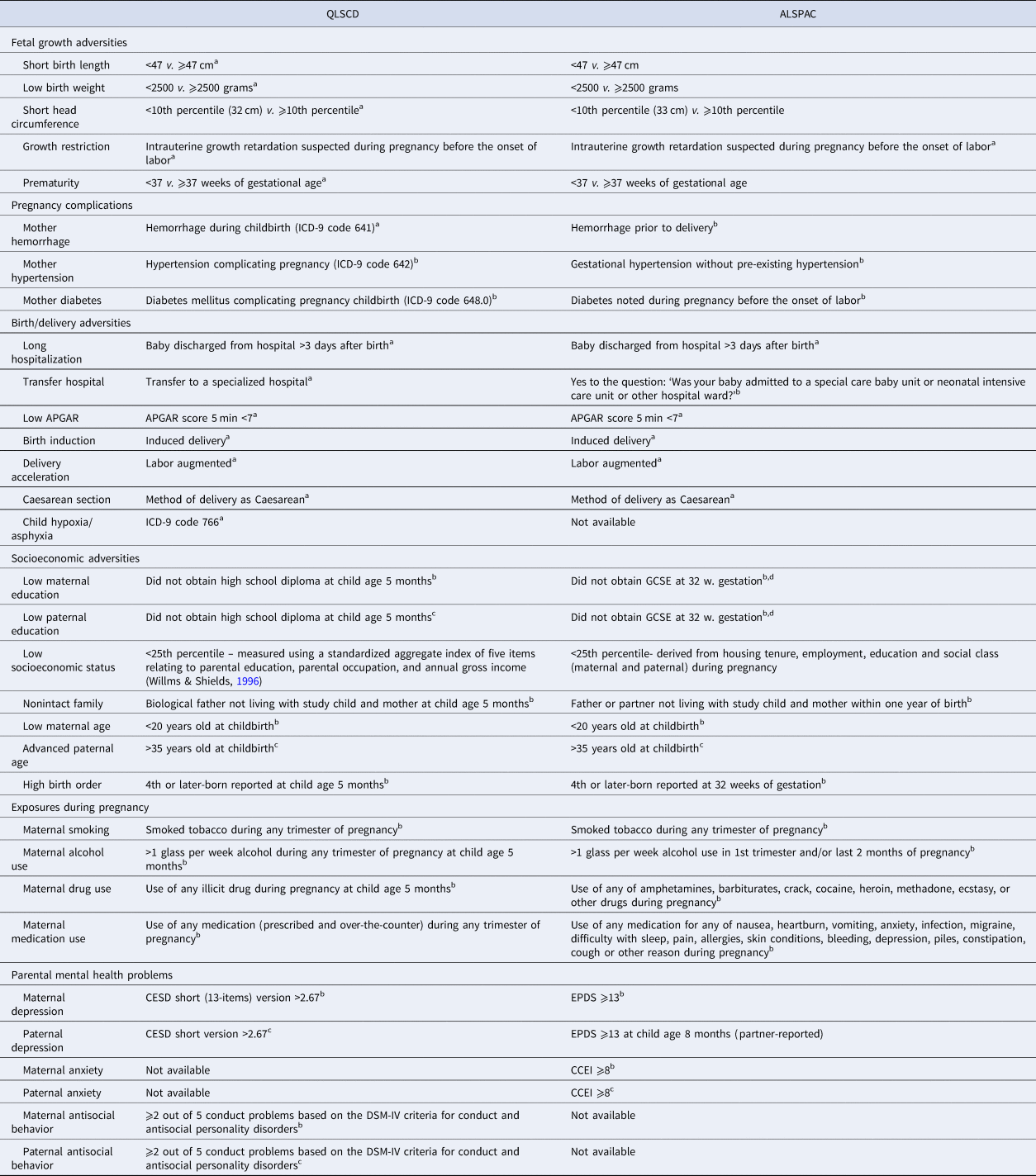
We assessed 32 perinatal adversity factors, including adversities related to fetal growth, socioeconomic status, exposure to substances during pregnancy, and exposure to parental mental health problems. These variables are detailed in Table 1.
Description of the perinatal adversity measures in QLSCD and ALSPAC
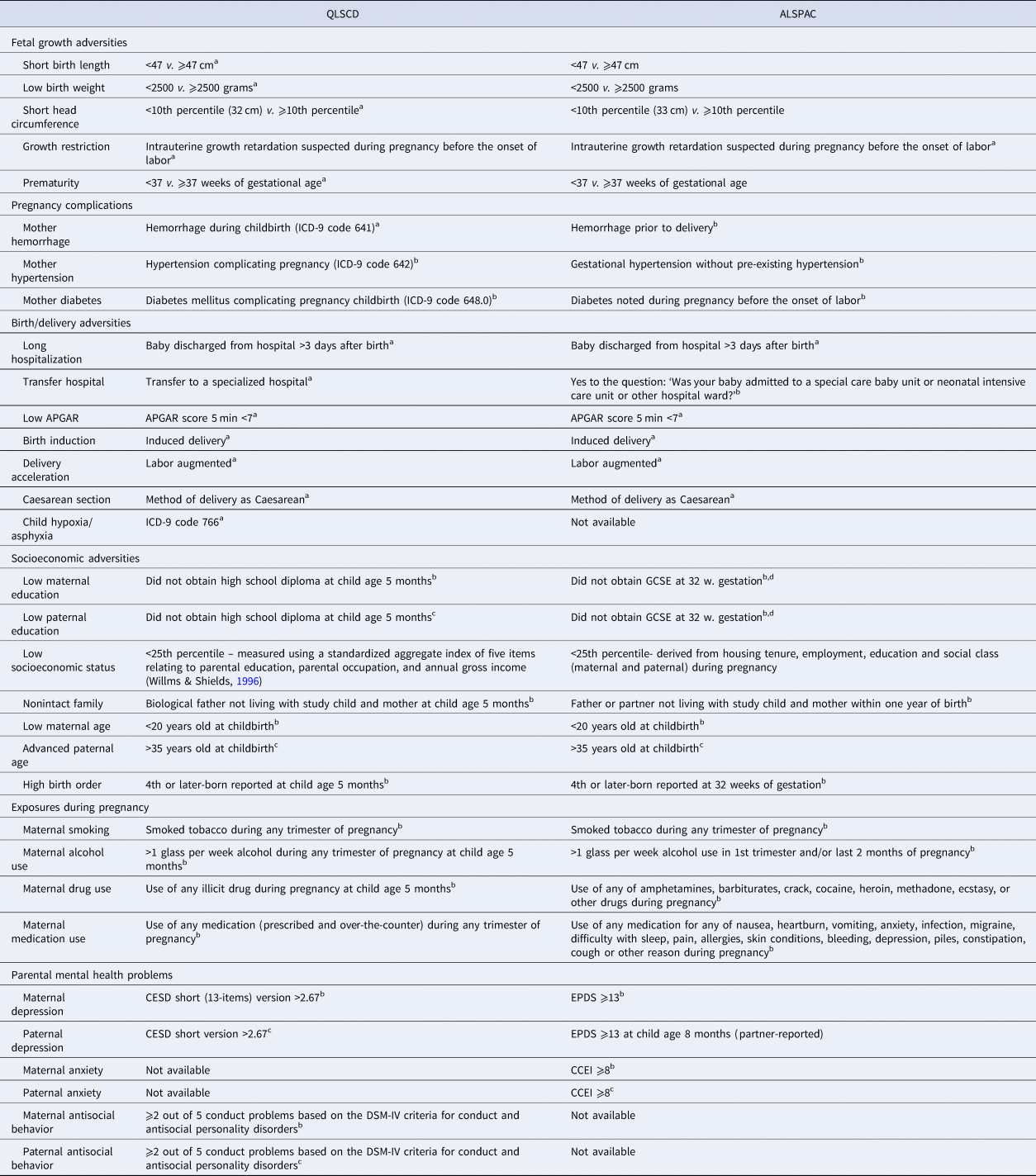
APGAR, Appearance, Pulse, Grimace, Activity, and Respiration; CCEI, Crown Crisp Experiential Index; CESD, Centre for Epidemiological Study Depression Scale; DSM, Diagnostic and Statistical Manual of Mental Disorders; EPDS, Edinburgh Postnatal Depression Scale; GCSE, General Certificate of Secondary Education – age 16; ICD, International Classification of Diseases.
Mother and father reports have been collected when the children were 5 months of age in QLSCD and 8 months of age in ALSPAC (where not otherwise specified).
a From medical records.
b Mother-reported.
c Father/partner-reported.
d Collected at 32 weeks of gestation.
Mediators
In both cohorts, we used teacher ratings of emotional and behavioral problems, self-reports of peer victimization, and standardized assessments of cognitive skills. Emotional (i.e. anxiety/depressive symptoms) and behavioral (i.e. conduct and hyperactive-impulsive) problems were assessed with the Social Behavior Questionnaire (Murray, Eisner, & Ribeaud, Reference Murray, Eisner and Ribeaud2019) in QLSCD at ages 6, 7, 8, 10, and 12, and with the Strengths and Difficulties Questionnaire (Goodman, Reference Goodman1997) in ALSPAC at ages 7/8, and 10/11. Peer victimization was assessed with a modified version of the Self-report victimization scale (Ladd & Kochenderfer-Ladd, Reference Ladd and Kochenderfer-Ladd2002) in QLSCD at ages 6, 7, 8, 10, and 12, and with a modified version of the Bullying and Friendship Interview Schedule (Wolke, Woods, Bloomfield, & Karstadt, Reference Wolke, Woods, Bloomfield and Karstadt2000) in ALSPAC at ages 8 and 10. Cognitive skills (i.e. verbal intelligence) were measured using the Peabody Picture Vocabulary Test (Dunn, Thériault-Whalen, & Dunn, Reference Dunn, Thériault-Whalen and Dunn1993) in QLSCD at age 4, 7, and 10, and with the Wechsler Preschool & Primary Scale of Intelligence and the Wechsler Intelligence Scale for Children (Wechsler, Reference Wechsler1949) in ALSPAC at ages 4 and 8, respectively. Each measure was averaged across the available data points. We provided details on each measure in online Supplementary Table S2.
Statistical analysis
Analyses were conducted in QLSCD and subsequently replicated in ASLPAC. Models were estimated using Mplus version 7.3 and 8 (Muthén & Muthén, Reference Muthén and Muthén1998–2017) with Maximum Likelihood and robust (Huber-White) standard errors.
Descriptive statistics and associations
Prevalence of each perinatal adversity was estimated for each cohort. Then, we described the association between each perinatal adversity and suicide attempt from sex-adjusted binary logistic regression. This was estimated in both cohorts separately, then estimates were pooled using inverse-variance weighted meta-analysis.
Identifying perinatal adversity profiles
We used Latent Class Analysis to identify homogeneous groups of children having distinct patterns of exposure to the 32 perinatal adversity factors (Lanza & Rhoades, Reference Lanza and Rhoades2013; Orri et al., Reference Orri, Pingault, Rouquette, Lalanne, Falissard, Herba and Berthoz2017). Latent Class Analysis models with 1–6 latent classes were sequentially fitted, and the optimal number of classes was chosen considering established fit indices (Bayesian Information Criterion, Vuong-Lo-Mendel-Rubin Likelihood Ratio Test), the proportion of participants in each class, and the interpretability of the model. Entropy, indicating the accuracy with which models classify individuals into their most likely class (range 0–1, higher values indicating better classification accuracy) was also considered. After the selection of the best model in each sample, individuals were assigned to a latent class according to their highest posterior probability.
Association of perinatal adversity profiles with suicide attempt
We used binary logistic regression (adjusted for sex) to estimate the association between the identified perinatal adversity profiles and later suicide attempt (total effect). No sex × profile interaction was found.
Mediation analysis
We conducted mediation analysis in Mplus using the product of coefficients method for the perinatal profiles showing evidence of total association with suicide attempt. We calculated the indirect (i.e. the association between perinatal adversity profiles and suicide attempt through mediators) and direct effects (i.e. the association between perinatal adversity profiles and suicide attempt independent from – not explained by – the mediators). Additionally, we calculated the proportion of the association that was mediated using the ratio between indirect and total effects. Models with all mediators entered simultaneously and models with each individual mediator were estimated.
Estimating pooled effect sizes
For all models, associations were estimated for each cohort, then the estimates were pooled using inverse-variance weighted meta-analysis.
Results
Prevalence of suicide attempt
The prevalence of suicide attempt was similar in both QLSCD (134 of 1623, 8.3%) and ALSPAC (484 of 5765, 8.4%). In both cohorts, girls were more likely to report a suicide attempt than boys (QLSCD: girls, n = 91 of 845, 10.8%; boys, n = 43 of 778, 5.5%; p < 0.001; ALSPAC: girls, n = 383 of 3356, 11.4%; boys, n = 101 of 2406, 4.2%; p < 0.001).
Prevalence of perinatal adversities and association with suicide attempt
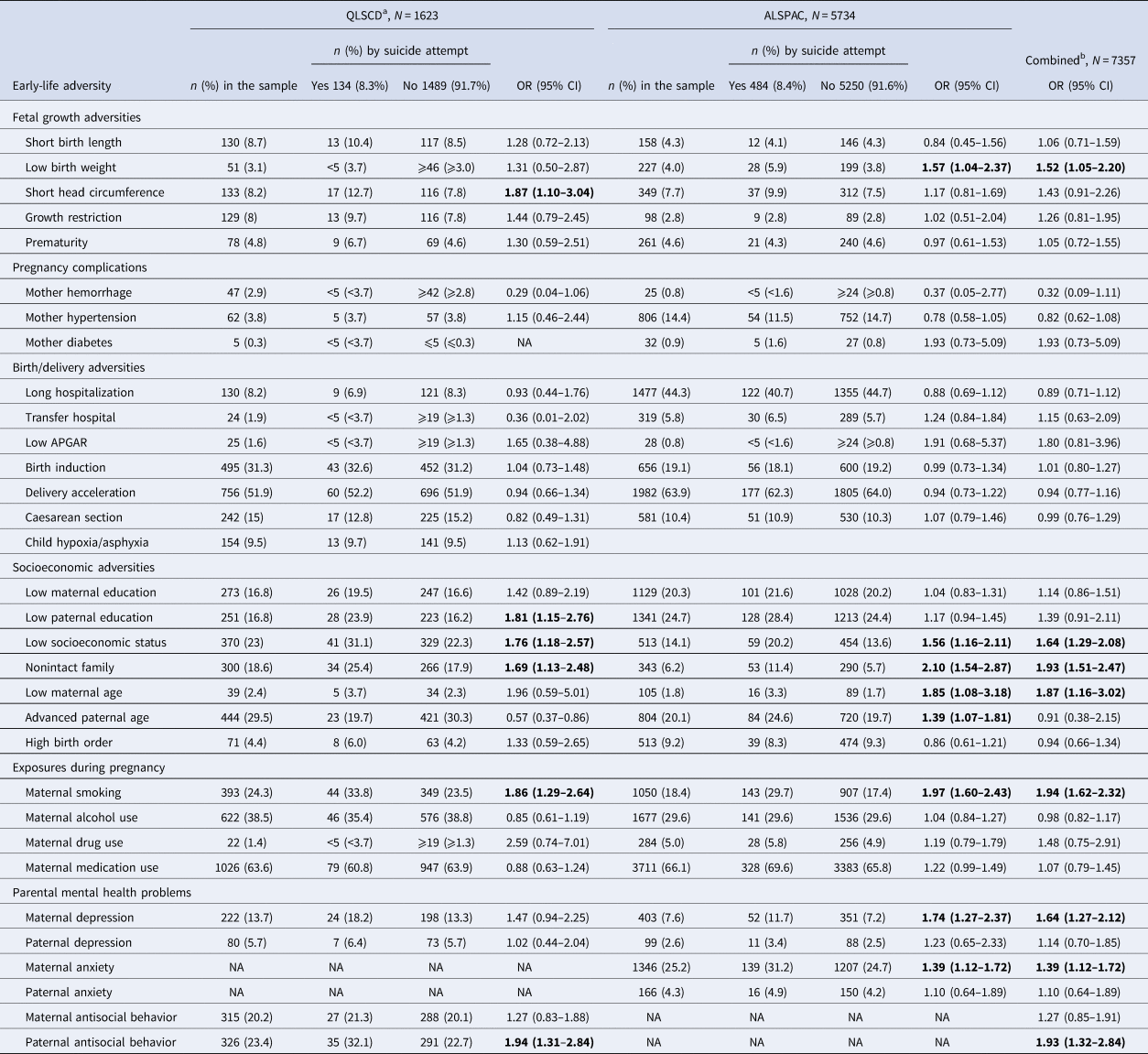
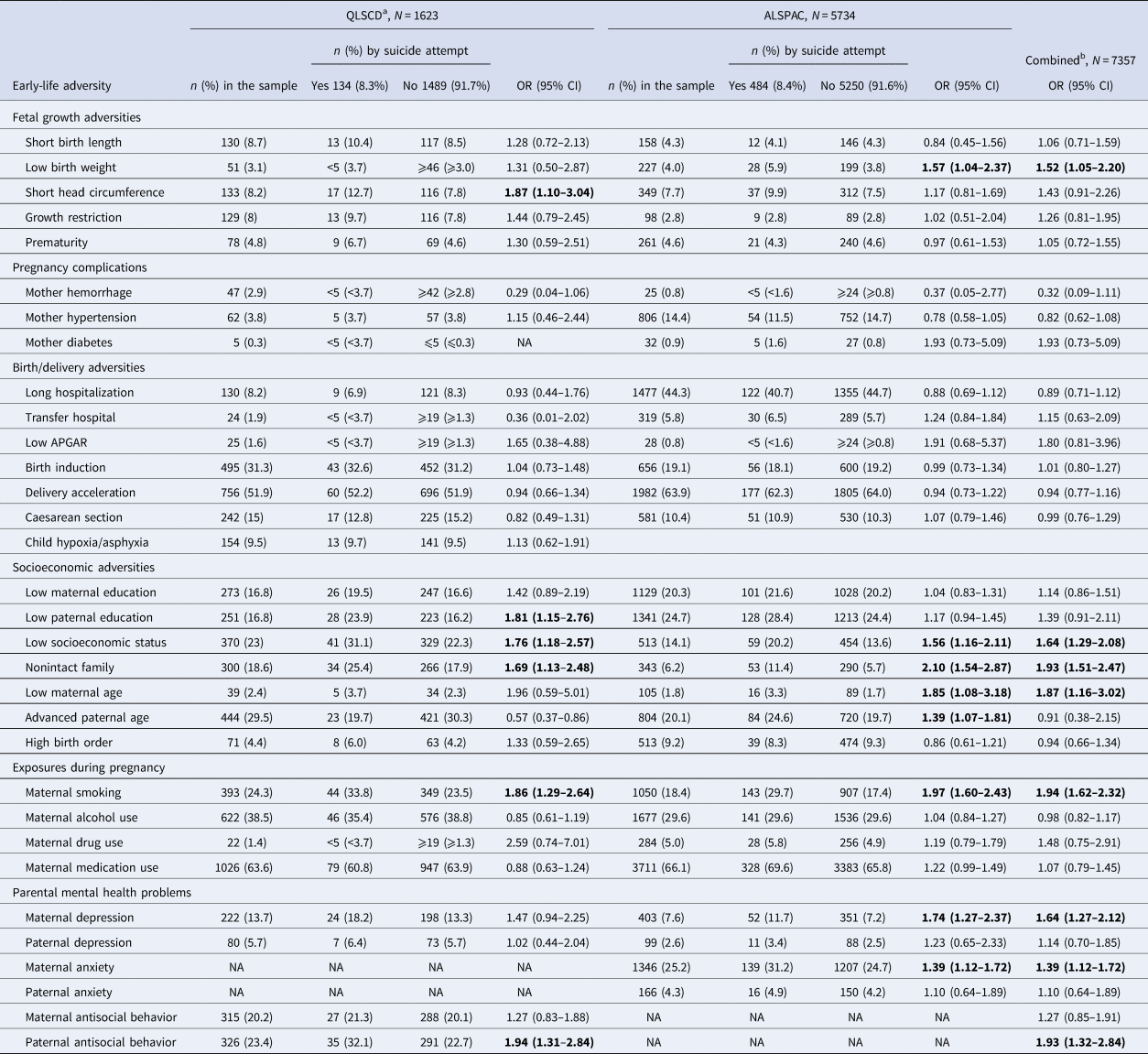
Most perinatal adversities were similarly prevalent in the two cohorts, with several exceptions (e.g. short birth length, long hospitalization; see Table 2). Associations of each perinatal adversity with suicide attempt are reported in Table 2. Evidence of association with suicide attempt was found for low birth weight (OR 1.52, 95% CI 1.05–2.20), low socioeconomic status (OR 1.64, 95% CI 1.29–2.08), nonintact family (OR 1.93, 95% CI 1.51–2.47), low maternal age (OR 1.87, 95% CI, 1.16–3.02), exposure to smoking during pregnancy (OR 1.94, 95% CI 1.62–2.32), maternal depression (OR 1.64, 95% CI 1.27–2.12), anxiety (OR 1.64, 95% CI 1.27–2.12), and paternal antisocial behavior (OR 1.93, 95% CI 1.32–2.84) when estimates from both cohorts were pooled.
Distribution of perinatal adversities in QLSCD and ALSPAC, and association with suicide attempt
NA, not available.
Odds Ratios (OR) are adjusted for sex and estimated using inverse probability weighing to account for attrition.
Number below 5 and associated proportion have been rounded at <5 (data reporting rule to ensure confidentiality). This may contain zero.
a Data were compiled from the final master file of the Québec Longitudinal Study of Child Development (1998–2018), ©Gouvernement du Québec, Institut de la statistique du Québec.
b OR were pooled using fixed-effect meta-analysis. Bold values represent estimates with p-value < 0.05.
Perinatal adversity profiles
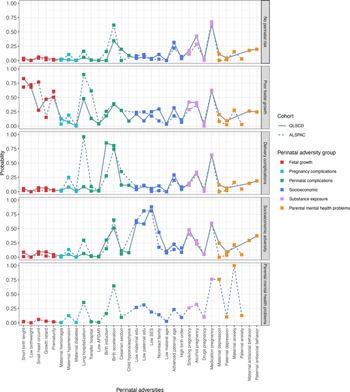
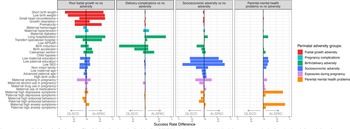
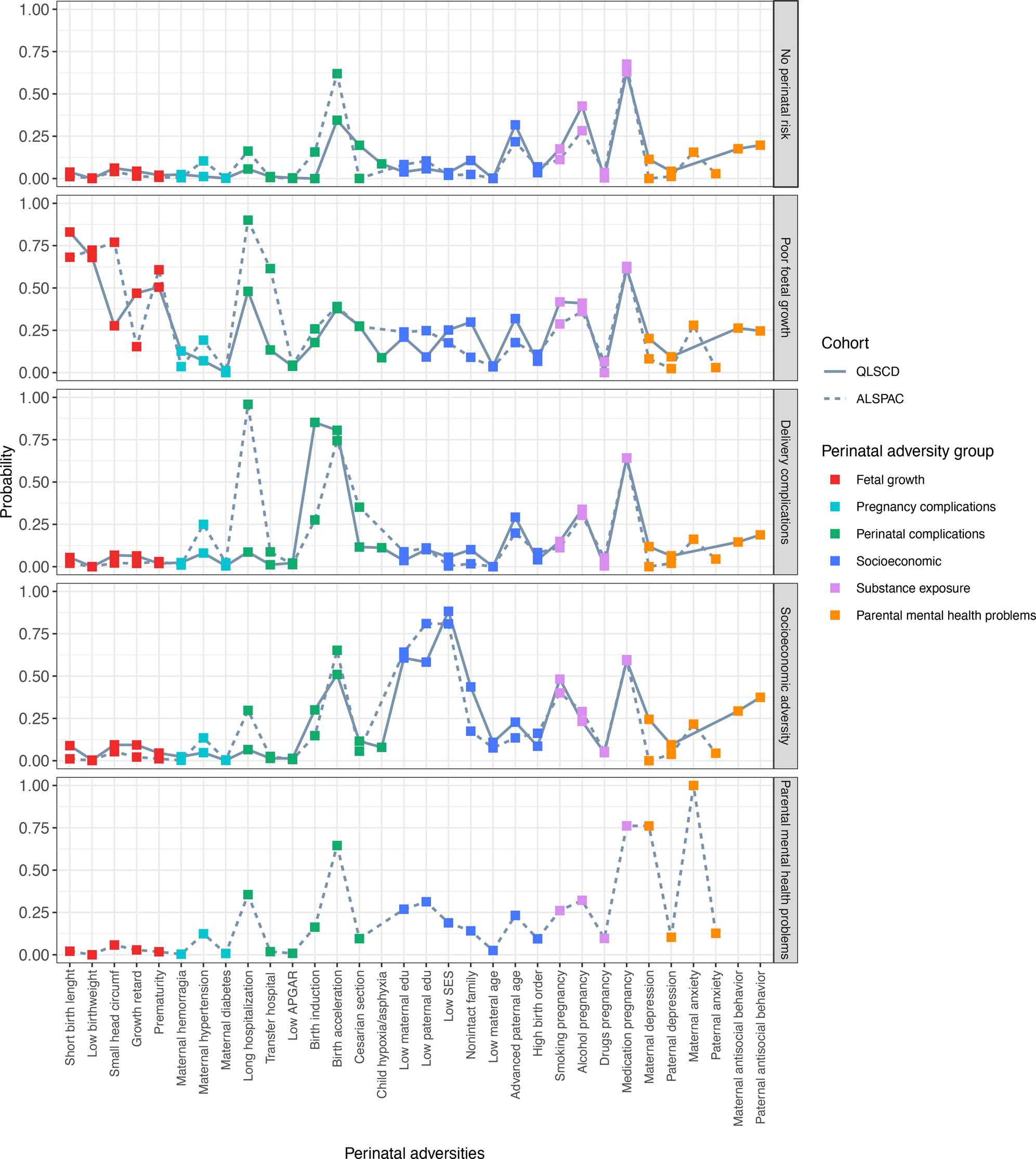
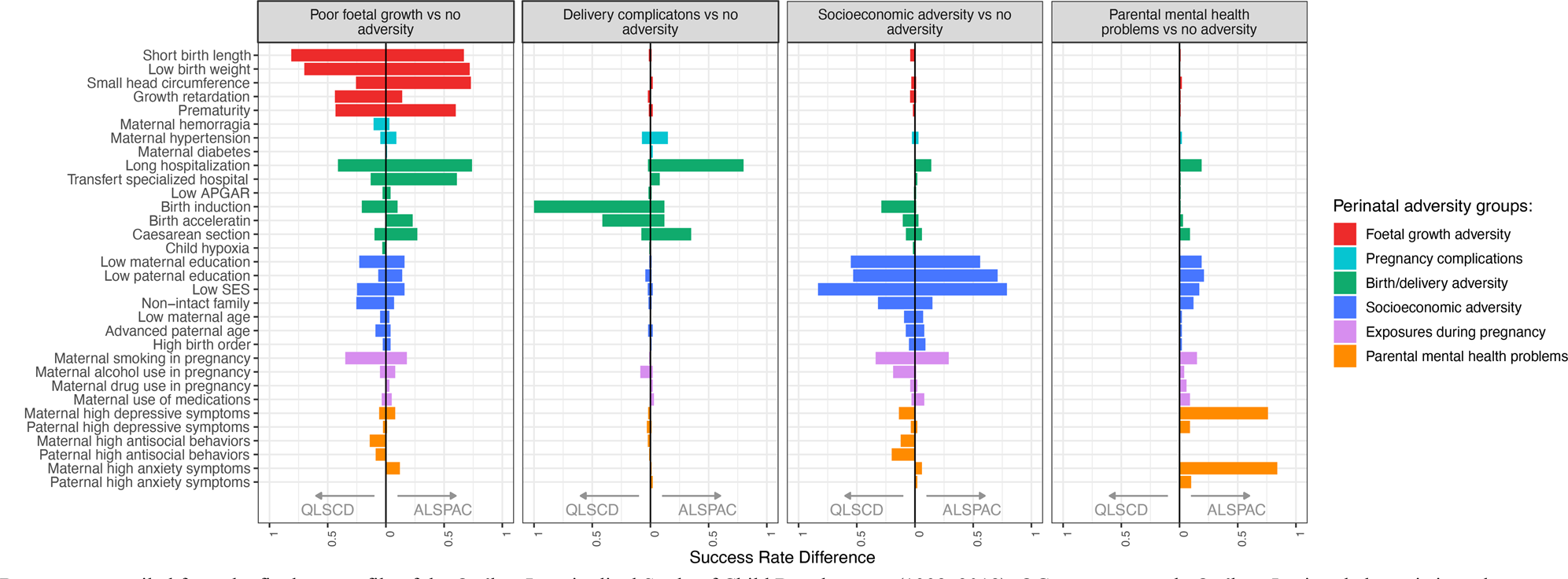
We identified the following perinatal profiles (Fig. 1): Poor fetal growth (n = 75, 4.6% in QLSCD; n = 298, 5.2% in ALSPAC), including children with the highest probabilities of showing fetal growth adversity, but also showing high probability of other adversity such as birth/delivery adversity, psychosocial adversity and to be exposed to maternal smoking in pregnancy, and having mothers showing depression; Socioeconomic adversity (n = 351, 21.6% in QLSCD; n = 946, 16.5% in ALSPAC), including children with the highest probabilities of being born in a socioeconomically disadvantaged milieu, exposures to smoking, drugs, alcohol, and medications during pregnancy, and, in QLSCD only, parents with antisocial behaviors and high depressive symptoms; Delivery complications (n = 397, 24.5% in QLSCD; n = 591, 16.6% in ALSPAC), including children born with caesarean section and having longer neonatal hospitalization; Parental mental health problems (n = 448, 7.8% in ALSPAC only), including children with parents having high rates of anxiety and depressive symptoms. The remaining children were part of the No perinatal risk profile (n = 801, 49.5% in QLSCD; n = 3091, 53.9% in ALSPAC), including children with an average probability of all perinatal adversity factors. The difference in the prevalence of the 32 perinatal adversities in each profile compared to the reference profile (i.e. No perinatal risk) is reported in Fig. 2. The proportion of girls and boys within the identified profiles was similar in QLSCD (p = 0.877) but varied in ALSPAC (p < 0.001) with a somewhat higher proportion of boys in the delivery complications profile than other profiles (47% v. ⩽42% for other profiles).
Perinatal profiles identified using latent class analysis in the Québec Longitudinal Study of Child Development (QLSCD, N = 1623; solid lines) and in the Avon Longitudinal Study of Parents and Children (ALSPAC, N = 5735; dotted lines). For each profile (indicated in the right-end panel label). The y-axis represents the estimated probability for each perinatal adversity (reported in the x-axis). Perinatal adveristies were color-coded according to the groups of perinatal adversities. Entropy was 0.813 in QLSCD and 0.732 in ALSPAC. SES, socioeconomic status. Data for the QLSCD were compiled from the final master file of the Québec Longitudinal Study of Child Development (1998–2018), ©Gouvernement du Québec, Institut de la statistique du Québec.
Comparison between the prevalence of perinatal adversities in each adversity profile compared to the reference profile in the Québec Longitudinal Study of Child Development (QLSCD, N = 1623) and the Avon Longitudinal Study of Parents and Children (ALSPAC, N = 5735). For each perinatal adversity profile (panel), the figure shows the difference between the prevalence of each perinatal factor (y-axis) in each perinataladversity profile v. the reference profile (Low perinatal risk profile) in QLSCD (left side of each panel) and in ALSPAC (right side). Comparison of the prevalence was done using the Success Rate Difference (SRD), a measure of effect size computed as follows: SRD = (rategroup 1 – rate reference group). For example, in QLSCD, the difference in short birth length rate between children in the Poor fetal growth profiles v. No perinatal risk profile was 81% (see first panel, left side), while for children intheSocioeconomic adversity profile, this difference was 4% (see the third panel, left side). SES, socioeconomic status. Data forthe QLSCD were compiled from the final master file of the Québec Longitudinal Study of Child Development (1998–2018),©Gouvernement du Québec, Institut de la statistique du Québec.
Association of perinatal adversity profiles with suicide attempt
Prevalence of suicide attempt by profile, in QLSCD and ALSPAC respectively, was 14.9% (11 of 74) and 11.1% (33 of 298) in the Poor fetal growth profile, 10.5% (37 of 351) and 10.2% (96 of 946) in the Socioeconomic adversity profile, 7.6% (30 of 397) and 6.5% (62 of 951) in the Delivery complications profile, 12.5% (56 of 448) in the Parental mental health problems profile, and 7.0% (56 of 801) and 7.7% (237 of 3091) in the No perinatal risk profile (online Supplementary Fig. S1).
Sex-adjusted logistic regression showed that children in the Poor fetal growth profile were more likely to attempt suicide by early adulthood than children in the Low perinatal adversity profile, with pooled OR across QLSCD and ALSPAC of 1.89, 95% CI 1.04–3.44 (cohort-specific ORs were QLSCD: 2.84; 95% CI 1.32–6.10, ALSPAC: 1.51, 95% CI 1.02–2.23). Children in the Socioeconomic adversity (pooled OR 1.42, 95% CI 1.08–1.85; QLSCD: OR 1.76; 95% CI 1.10–2.81; ALSPAC: OR 1.30, 95% CI 1.01–1.67) and in the Parental mental health problems (ALSPAC only: OR 1.74, 95% CI 1.27–2.40) profiles also had increased risk of suicide attempt by early adulthood, compared with children in the No perinatal risk profile. Finally, children in the Delivery complications profile did not show an increased risk of later suicide attempt (pooled: OR 0.92, 0.71–1.86; QLSCD: 1.06, 0.64–1.75; ALSPAC: 0.87, 0.65–1.18) compared with children in the No perinatal risk profile.
Direct and indirect association between perinatal adversity profiles and suicide attempt
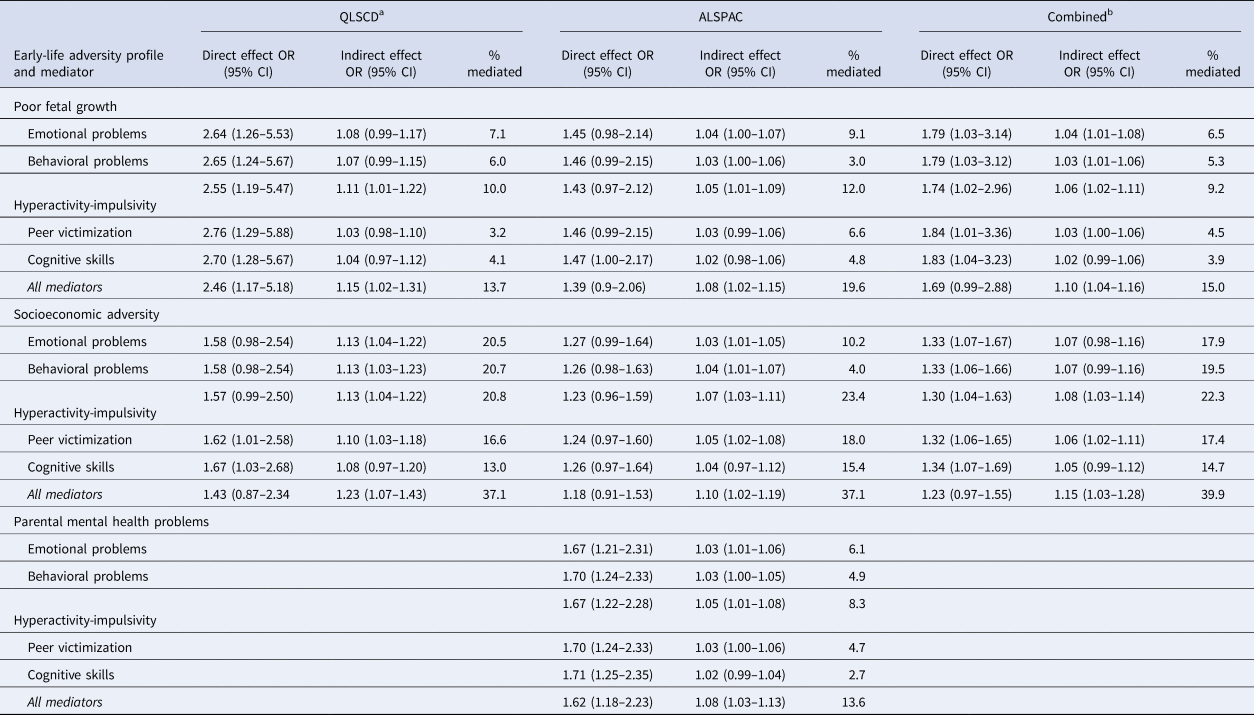
Mediation analysis investigated the proportion of the increased risk of attempting suicide for children in the Poor fetal growth, Socioeconomic adversity, and Parental mental health problems profiles that were explained by our putative mediators. For the Poor fetal growth profile, we found that the putative mediators explained 15.0% of the association (13.7% in QLSCD and 19.6% in ALSPAC), with a pooled OR for the indirect effect of 1.10 (95% CI 1.04–1.16; see Table 3 for cohort-specific and mediator-specific direct and indirect effects). Similar results were observed for the Parental mental health problems profiles, with mediators explaining 13.6% of the association (indirect effect OR 1.08; 95% CI 1.03–1.13). However, for the Socioeconomic adversity profile, the investigated mediators explained a larger portion of association (39.9% in the pooled analysis, 37.1% in each cohort), with an OR for the indirect effect of 1.15; 95% CI 1.03–1.28. Results were consistent for each mediator analyzed singularly, with hyperactivity/impulsivity appearing as the key mediator in all analyses.
Direct and indirect effect of perinatal adversity profiles on suicide attempt in QLSCD, ALSPAC, and pooled estimates
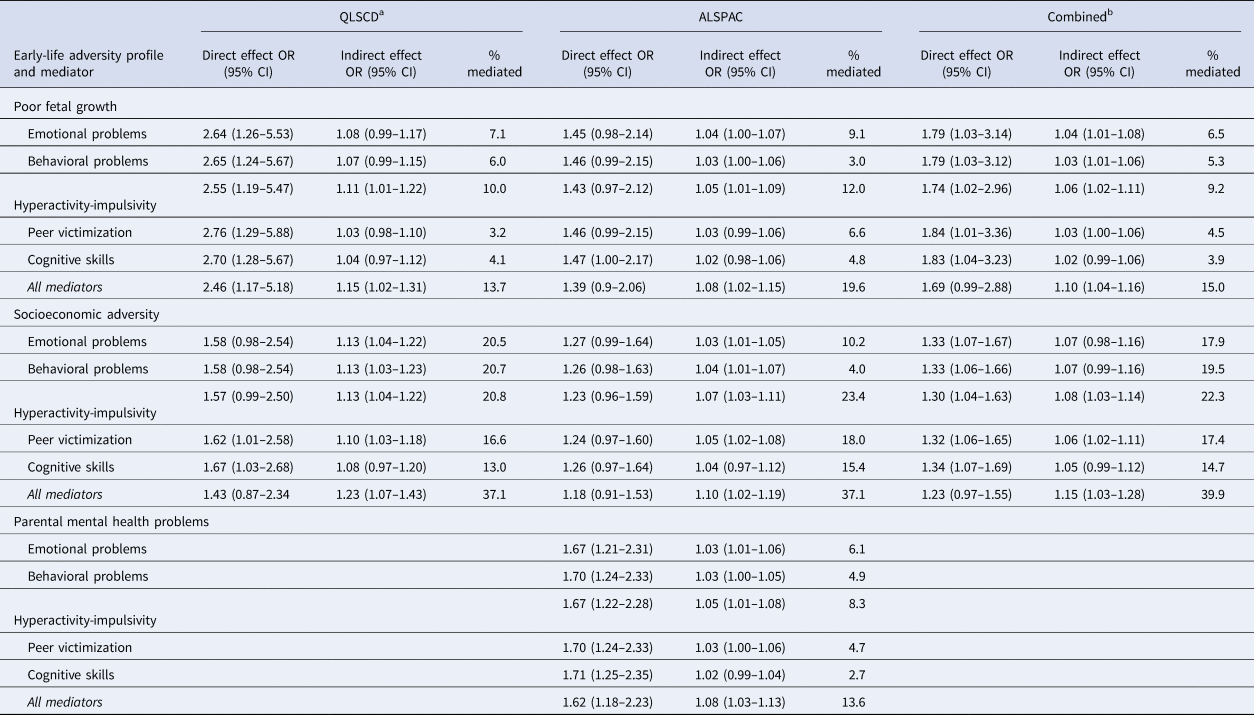
The indirect is the association between perinatal adversity profiles and suicide attempt through mediators, while the direct effects are the association between perinatal adversity profiles and suicide attempt independently from (i.e. not explained by) the mediators.
a Data were compiled from the final master file of the Québec Longitudinal Study of Child Development (1998–2018), ©Gouvernement du Québec, Institut de la statistique du Québec.
b Odds Ratios (OR) were pooled using inverse-variance weighted meta-analysis. The reference profile is Low perinatal risk.
Discussion
To our knowledge, this is the first study identifying distinct profiles of exposure to a range of perinatal adversities and elucidating pathways leading to suicide attempt by early adulthood. Using two large independent population samples, we identified five profiles of perinatal adversity, which were similar in the two samples in terms of nature of adversity, population prevalence, and association with a suicide attempt. The similarity of findings in the two cohorts, coming from two different continents, gives confidence that findings were not sample-specific. However, despite the aforementioned similarity, we also found some differences, most of which related to delivery complications rates. For example, the prevalence of long hospitalization was higher in ALSPAC compared to QLSCD for each profile (especially in the Delivery complication and Socioeconomic adversity profiles). This may be related to differences in the healthcare system and medical protocols, as well as to measurement differences and the differential extraction of obstetric data for a selected subsample of mothers in ALSPAC. Profile clustering children exposed to parental mental health problems were identified only in ALSPAC. In this cohort, the larger sample size (Nylund, Asparouhov, & Muthén, Reference Nylund, Asparouhov and Muthén2007), the presence of parental anxiety measures (not assessed in QLSCD), and the assessment of maternal depression closer in time with childbirth compared to QLSCD [postnatal depression prevalence declines sharply over time; (Vliegen, Casalin, & Luyten, Reference Vliegen, Casalin and Luyten2014)] may explain why this profile was not identified in QLSCD.
Our profiles were mainly characterized by high rates of a specific group of perinatal adversities (e.g. fetal growth adversities for children in the Poor fetal growth profile). However, some profiles also presented higher rates of adversities pertaining to other adversity groups, compared with the No perinatal risk profile. For example, children in the Poor fetal growth profile also had higher rates of long hospitalization and birth induction (although lower than for children in the Delivery complications profile), low parental education and SES (although lower than for children in the Socioeconomic adversity profile), and maternal smoking in pregnancy (similar to children in the Socioeconomic adversity profile). This finding indicates that perinatal adversities tend to cluster not only within each group (e.g. several fetal adversities cluster together) but also across groups (e.g. fetal and psychosocial adversities cluster together), as previous studies suggested (Aizer & Currie, Reference Aizer and Currie2014; Grote et al., Reference Grote, Bridge, Gavin, Melville, Iyengar and Katon2010; Parker et al., Reference Parker, Schoendorf and Kiely1994).
We found increased risk of suicide attempt for children who had poor fetal growth. This finding is in line with a previous meta-analysis (Orri et al., Reference Orri, Gunnell, Richard-Devantoy, Bolanis, Boruff, Turecki and Geoffroy2019) showing higher risk of suicide, suicide attempt, and suicidal ideation among children with low birth weight. However, while this meta-analysis did not find associations for other factors such as prematurity, premature children were overrepresented in our Poor fetal growth profile. This finding, which originates from the utilization of a person-centered approach (i.e. LCA) as opposed to a variable-centered approach (i.e. regression), indicates that a given factor may not be a risk factor in the population as a whole, but can be so for a specific subgroup of children presenting with a cluster of adversities (e.g. low birth weight, prematurity, as well as socioeconomic adversities and exposure to smoking in pregnancy). This is especially evident for delivery complication adversities: caesarean section, which has similar prevalence in the Poor fetal growth and Delivery complications profiles, may be a marker of suicide risk only for children presenting with all associated adversities characterizing the Poor fetal growth profile. This finding calls for a multidisciplinary approach in the assessment of perinatal risk factors, in which information from multiple domains (obstetric, psychopathology, early fetal growth, socioeconomic) needs to be considered jointly to estimate the individual risk of later suicide attempt.
In line with previous studies showing negative effects of deprived socioeconomic environments on mental health and suicide risk (Orri et al., Reference Orri, Gunnell, Richard-Devantoy, Bolanis, Boruff, Turecki and Geoffroy2019; Poulton et al., Reference Poulton, Caspi, Milne, Thomson, Taylor, Sears and Moffitt2002), we found that children in the Socioeconomic adversity profile were at higher risk of suicide attempt. Individual socioeconomic adversities were also those who showed the most consistent associations across the two cohorts at the population level (i.e. not considering profiles). It is worth noting that maternal and paternal socioeconomic adversity were similarly overrepresented in this profile, in line with evidence on assortative mating (Nordsletten et al., Reference Nordsletten, Larsson, Crowley, Almqvist, Lichtenstein and Mataix-Cols2016).
This study also provides insights into mechanisms leading to increased suicide risk for children in the Poor fetal growth, Socioeconomic adversity, and Parental mental health problems profiles, suggesting that different pathways are involved for children in different profiles. On the one hand, the increased suicide attempt risk of children exposed to psychosocial adversities was largely explained by childhood emotional, behavioral, interpersonal problems and lower cognitive skills. Prevention of these problems across childhood may be helpful in order to reduce suicide attempt in youth. On the other hand, those symptoms explained a small proportion of the increased suicide attempt risk of children exposed to fetal growth adversities and parental mental health problems. This suggests that to improve suicide prevention for those children, it is critical to identify other mechanisms implicated in the pathways to suicide attempt. A biological understanding of the consequences of fetal growth problems on the brain (Walhovd et al., Reference Walhovd, Fjell, Brown, Kuperman, Chung and Hagler2012) and the role of pre-existing vulnerability to psychopathology (Nivard et al., Reference Nivard, Gage, Hottenga, van Beijsterveldt, Abdellaoui, Bartels and Middeldorp2017) is still poor, and research pointing in this direction may substantially contribute to better understand suicidal risk in those children.
Strengths and limitations
This study is based on large population-based cohorts with over 20 years of follow-up, allowing adequately powered analyses to study rare outcomes and exposures. Main findings have been replicated across the two independent samples, strengthening confidence in our conclusions. However, the following limitations should be noted. First, because of attrition, analyses were conducted on a subset of the initial representative samples. Although we used inverse probability weighting to account for the probability of missing at follow-up, caution should be used in generalizing our findings because unmeasured factors can still affect differential attrition. Second, both samples come from high-income western countries, therefore it is unknown if results will generalize to other populations. Third, despite the overall similarity in the measures of our perinatal factors across QLSCD and ALSPAC, important differences for some factors were present (e.g. maternal depression). Fourth, although we did not find any sex-interaction, our analyses might have not been powered enough to detect such differential associations for boys and girls. Fifth, although we investigated a wide range of perinatal factors, they are not an exhaustive list of all potential perinatal influences on a suicide attempt. For example, the inclusion of factors such as maternal nutrition, stressful life events, and exposure to specific drugs during pregnancy, exposure to traumatic events and violence (unmeasured in our study) may have helped us refine our latent classes. In the same way, it is important to acknowledge that other mediators that those investigated in this study may explain the observed associations, and future study should identify other potential pathways.
Conclusions and implication of the findings
Most research on the early risk factors for suicide focuses on the independent role of one (or few) factors. By using a comprehensive approach, this study showed that perinatal risk factors for suicide cluster in distinct profiles, which have specific associations with a suicide attempt, as well as specific mediation pathways explaining these associations. This suggests that early-life suicide prevention requires health care professionals to adopt a multidisciplinary approach targeting a constellation of factors from different domains (psychological, obstetric, socioeconomic) to effectively reduce later vulnerability to suicide. Furthermore, the way these factors cluster together also determined the pathways leading to a suicide attempt. Therefore, while potential interventions focusing on reducing the risk of childhood behavioral, emotional, interpersonal, and cognitive problems may substantially reduce suicide attempt risk for children exposed to socioeconomic adversity, targeting such factors may be less effective for children exposed to poor fetal growth and parental mental health problems. This information may help in targeting suicide prevention interventions.
Supplementary material
The supplementary material for this article can be found at https://doi.org/10.1017/S0033291720002974.
Acknowledgements
This publication is the work of the authors and Drs Orri, Russell, Geoffroy, and Mars serve as guarantors for the contents of this paper. We are extremely grateful to all families who participated in the QLSCD, as well as all the professionals involved in the cohort project. We are extremely grateful to all the families who took part in this study, the midwives for their help in recruiting them, and the whole ALSPAC team, which includes interviewers, computer and laboratory technicians, clerical workers, research scientists, volunteers, managers, receptionists, and nurses. This project is funded by a grant from the European Union's Horizon 2020 research and innovation program awarded to Dr Orri (#793396), the Canadian Institute of Health Research, the Medical Research Foundation, and by the Medical Research Council (Grant ref: MR/R004889/1) Pathways to self-harm: Biological mechanisms and genetic contribution PI: Becky Mars. The UK Medical Research Council and Wellcome (Grant ref: 217065/Z/19/Z) and the University of Bristol provide core support for ALSPAC. A comprehensive list of grants funding is available on the ALSPAC website (http://www.bristol.ac.uk/alspac/external/documents/grant-acknowledgements.pdf); this research was specifically funded by the Wellcome Trust (Grant ref: GR067797MA and 217065/Z/19/Z). The Québec Longitudinal Study of Child Development was supported by funding from the ministère de la Santé et des Services sociaux, le ministère de la Famille, le ministère de l’Éducation et de l'Enseignement supérieur, the Lucie and André Chagnon Foundation, the Institut de recherche Robert-Sauvé en santé et en sécurité du travail, the Research Centre of the Sainte-Justine University Hospital, the ministère du Travail, de l'Emploi et de la Solidarité sociale and the Institut de la statistique du Québec. Additional funding was received by the Fonds de Recherche du Québec - Santé (FRQS), the Fonds de Recherche du Québec - Société et Culture (FRQSC), the Social Science and Humanities Research Council of Canada (SSHRC), the Canadian Institutes of Health Research (CIHR). Dr Geoffroy hold a Canada Research Chair (Tier 2) and a Young Investigator Award from the American Foundation for Suicide Prevention. Drs Turecki and Boivin hold a Canada Research Chair (Tier 1). Dr Turecki holds a NARSAD Distinguished Investigator Award and is supported by grants from the CIHR (FDN148374 and EGM141899). Drs Boivin, Geoffroy, and Turecki are supported by the FRQS through the Quebec Network on Suicide, Mood Disorders, and Related Disorders. Dr Tremblay is funded by the SSHRC. BM and DG were supported by the NIHR Biomedical Research Centre at University Hospitals Bristol NHS Foundation Trust and the University of Bristol.
Conflicts of interest
None.
Ethical standards
The authors assert that all procedures contributing to this work comply with the ethical standards of the relevant national and institutional committees on human experimentation and with the Helsinki Declaration of 1975, as revised in 2008.