Introduction
Ageing in place is a policy goal promoted by countries around the world (World Health Organization, 2007). Ageing in place has been shown to strengthen attachment, security, independence and autonomy among older people (Wiles et al., Reference Wiles, Leibing, Guberman, Reeve and Allen2012). Apart from modifying the physical environment (Lehning, Reference Lehning2012; Scharlach and Lehning, Reference Scharlach and Lehning2013), adequate social support and health care are crucial factors enabling older adults to continue living in their homes and communities (Greenfield et al., Reference Greenfield, Scharlach, Lehning, Davitt and Graham2013; Greenfield, Reference Greenfield2015). Given the increased medical needs of older adults, particularly for those aged 80 and older (the ‘oldest-old’), the question of how to integrate health and social services has become a key policy concern for countries faced with rapidly ageing populations (Cameron et al., Reference Cameron, Lart, Bostock and Coomber2014). This issue is particularly pressing in China, where the majority of older adults continue to live in their communities.
Long-term care in Shanghai, China
Shanghai, one of the most highly urbanised metropolitan regions in China, is also a key laboratory for testing elder-care policies with one of the most rapidly ageing populations in the country. According to data from the Shanghai Municipal Government Development Research Center (2016), there were 4.14 million residents aged 60 or above with Shanghai hukou (household registration) status by the end of 2014, accounting for 28.8 per cent of the city's official population; 18.2 per cent or 753,200 of these older adults were aged 80 + . Shanghai residents also have one of the highest life expectancies at birth in the world at 83.18 years (80.83 for men and 85.614 for women) (Shanghai Bureau of Statistics, 2018). Exacerbated by nearly four decades of stringent birth control policies limiting most families to a single child, Shanghai is now facing a looming elder-care crisis.
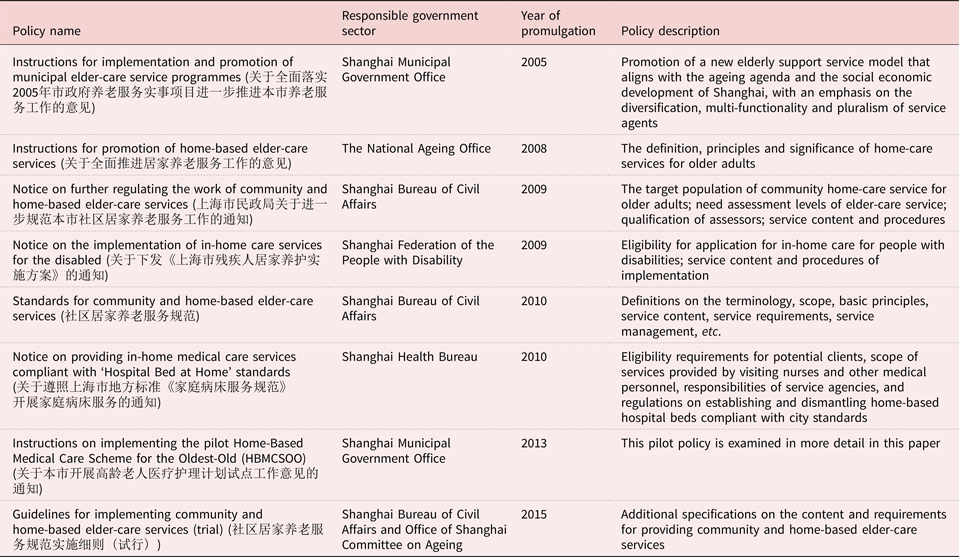
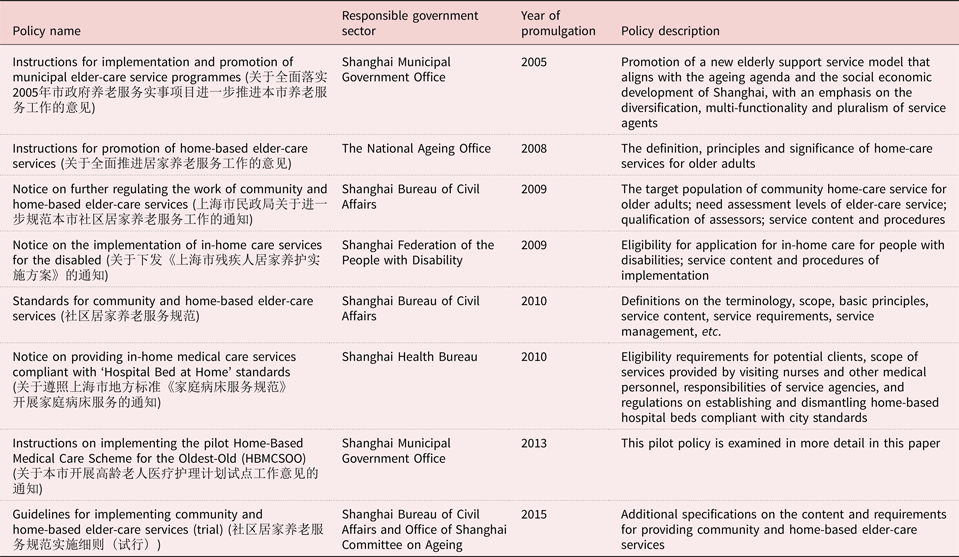
Given its unique position, Shanghai has been targeted by the Chinese government as a key site for testing and implementing new social and medical reforms (Feng et al., Reference Feng, Zhen, Gu, Wu, Duncan and Purser2013). A series of policy initiatives over the past decade have been launched to improve social and health care services for older adults in Shanghai (see Table 1). These policy initiatives must be understood in the context of China's evolving service delivery system, which has transformed dramatically over the past 70 years. During the socialist era under Mao Zedong's leadership (1949–1976), urban health-care services were primarily provided by state-owned enterprises and work units. Families were responsible for taking care of their ageing members, with the duty to care for one's ageing parents enshrined in the Chinese constitution (Wang, Reference Wang2012). A few state-run institutions provided care for a limited sub-set of older people who had no income or adult relatives. Beginning with the Reform and Opening Era launched by Deng Xiaoping in 1978, a fledgling private sector began to emerge with more health and social services available for older people extending beyond family and state institutions. Families also experienced significant structural change as the economy boomed and the existing household registration (hukou) system loosened, launching a new era of domestic migration within China. Intergenerational living patterns shifted, with able-bodied adults often leaving younger and ageing family members behind as they moved from place to place to find jobs. Coupled with stringent birth planning policies limiting most families to a single child, families experienced profound changes that significantly impacted on the existing elder-care system. The shrinking family size and decreasing family support have pushed elder-care responsibilities to the society (Chen, Reference Chen2015). More recently, at the national level, the Chinese government's Twelfth Five-year Plan implemented in 2011 established three tiers of service for older adults: home-based services as the basis of the elder-care system, community-based care as the back-up and institutional care as a supplement (Yip and Hsiao, Reference Yip and Hsiao2008). At the municipal level, the Shanghai government has also implemented a series of policies that establish home-based community care as the primary pillar of services for older adults. Under this system, all policy programmes are implemented by the residents’ neighbourhood committees at the community level. Yet elder-care responsibilities are shared by a number of entities including the family, the community, the government and the private sector (Xu and Chow, Reference Xu and Chow2011). Home-based community care policies have prioritised the provision of personal care and housekeeping services by home-care agencies directly in the homes of older adults.
Policies governing home- and community-based care services in Shanghai, 2005–2015
The provision of health care as the weak link
Although many daily service needs have been met through Shanghai's municipally funded elder-care system, the provision of health care stands out as a distinct weak link. For residents with official Shanghai hukou status, the Resident Medical Insurance (RMI) system provides differential coverage for medical services based on the type of care and level of institution (Shanghai Municipal Government Bureau of Human Resources and Social Security, 2014). The RMI system prioritises reimbursement for hospitalisation and outpatient services provided by primary, secondary and tertiary hospitals. Furthermore, medical and nursing resources are concentrated in these medical facilities, particularly at major tertiary hospitals. The distribution of and reimbursement for health services in Shanghai have created a system in which cost-effective nursing and rehabilitation services are largely unavailable outside medical institutions (Lei et al., Reference Lei, Feng and Wu2016). As a result, older adults tend to prioritise major tertiary hospitals when ill, even though many may only need routine and simple medical care that could be administered in a home-based setting. This has led to the problem of overcrowding in China's urban hospitals, which has further exacerbated issues of access and quality of care for older adults facing both minor and major medical issues. Furthermore, older adults are also confronted with significant obstacles of ageing in place. This service gap for health care has been especially acute for the oldest-old, who generally are at more risk of physical and mental impairment (Baltes and Smith, Reference Baltes and Smith2003).
China, like many rapidly ageing societies, has recognised the need for developing integrated care policies for older residents that address both their social and medical needs. Over the past several years, the State Council issued a series of directives promoting the integration of health and social services for older adults (for a complete list, see Table 1). Recently, the Office of the State Council (2015) issued a national policy entitled ‘Guiding Opinions on Promoting the Integration of Health Care and Elderly Services’ (关于推进医疗卫生与养老服务相结合的指导意见). The key provisions of this seminal policy entailed: (a) extending health-care services to community and home-based care; (b) creating a seamless connection between front-line medical institutions and community elder-care service agencies; (c) establishing a record system to monitor the health of older residents in the community; and (d) providing health management services for those 65 and older. The integration of health care and social services within the community setting has been heralded as a good way to improve the health status of older people, as well as an important component of resolving the inefficient use of health-care resources by reducing hospitalisation rates for older adults (Shao, Reference Shao2014).
Shanghai's Home-Based Medical Care Scheme for the Oldest-Old
The Shanghai municipal government initiated a pilot project in 2013 entitled the ‘Home-Based Medical Care Scheme for the Oldest-Old’ (HBMCSOO; gāolíng lǎorén yīliáo hùlǐ zhèngcè; 高龄老人医疗护理政策). The goal was to strengthen ageing-in-place arrangements and pave the way for establishing an integrated long-term care system throughout the metropolis. Drawing on the RMI system, the pilot programme aimed to provide professional home-based medical care to older adults aged 80 and above. The pilot programme was initiated in July 2013 at six street-level communities located in three districts across Shanghai (Pudong, Yangpu and Changning). Eligibility criteria included: official Shanghai hukou status, aged 80 or older, previous participation in the Shanghai RMI system; confirmed disability status (mild, moderate or severe) as determined by a geriatric care assessment, and in residence living at a home address within the scope of the administrative divisions of the pilot communities. The home-based medical services would be provided by designated primary health institutions including nursing stations, clinics and nursing homes. Ninety per cent of the service cost would be covered by pooled funding from basic medical insurance, with the remaining balance paid by individual medical retirement accounts (or out-of-pocket by the individual for any remaining expenses). Home-based medical services provided by health aides would cost 65 yuan (approximately US $10) per visit, while medical services provided by registered nurses would cost 80 yuan (approximately US $11.50) per visit. The cost is considered favourable compared to other out-of-pocket costs incurred by individuals. For instance, the out-of-pocket cost of medical services provided by registered nurses is approximately 50 per cent of the consultation fee of tertiary hospitals (18 yuan). After the initial implementation at six sites, the pilot programme was extended to three additional districts in Shanghai in November 2014.
Despite the promise of this pioneering pilot programme to fill a much-needed gap in home-based care for at-risk elders, municipal policy makers have been frustrated to observe that the number of actual beneficiaries has fallen far short of their projections to reach 20 per cent of the ‘oldest-old’ population in Shanghai. For example, less than 150 people in two of the trial districts received HBMCSOO services during the initial two-year pilot period, accounting for only 0.93 per cent of the oldest-old population in these two districts. The overall participation rate among the oldest-old was minimal, presenting a large gap between anticipation and implementation. To tackle this problem, the Shanghai Office of Medical Insurance made repeated attempts to adjust the trial policy, but the complicated nature of long-term care and the blurred boundaries among different government agencies involved in policy implementation became obstacles to the further promotion of the policy. Our research team conducted an evaluation of the HBMCSOO pilot programme in 2015, which provided an important test case for revealing the promises and pitfalls of developing an integrated long-term care system in Shanghai. The pilot of the HBMCSOO aimed to integrate health care into the existing home-based elder-care system in a rapidly ageing, developing country. Through interviews with different stakeholders involved in policy implementation and reception, we attempted to investigate the reasons why the HBMCSOO did not fulfil expected outcomes. By uncovering the challenges involved in implementing this pilot project in Shanghai, our research not only provides suggestions for how to integrate health services into the existing home-based elder-care system in urban China, but also provides important comparative insights on the promises and pitfalls of implementing integrated elder-care to promote ageing in place in diverse local communities around the world.
Research design and methods
We utilised semi-structured interviews and survey techniques in order to assess the HBMCSOO policy for a wide range of stakeholders located in the four Shanghai communities selected by the municipal government for the initial pilot project. These included three street-level (jie dao) communitiesFootnote 1 in Yangpu District (identified in the paper as KJ, WJC and WZ) and one community in Pudong New District (PD). Interviewed stakeholders included current service users, potential applicants, community health centre staff members responsible for client recruitment, administration officials from the community, community committee cadres in charge of publicising the policy and nursing agency managers contracted as direct service providers under the policy. This study underwent ethical review and was approved by Fudan University as well as the research committee of the Shanghai municipal government. Potential participants were informed about the purpose of the study as an evaluation of the municipal government's pilot programme. Consent was obtained orally prior to each interview. Interviews were recorded for those participants who agreed; the voice recordings were subsequently deleted after a full transcription was created in order to protect participants’ confidentiality. As this study was an evaluation of the HBMCSOO pilot programme, the research team provided an anonymised report of the findings to the Shanghai municipal government.
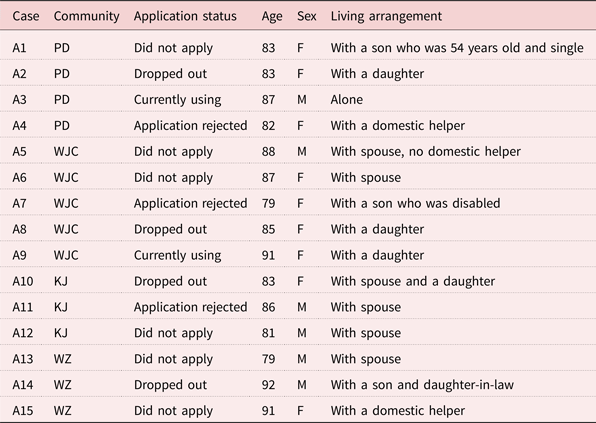
To understand the experiences of current and prospective service users, we interviewed older adults who were eligible for participation in the HBMCSOO pilot programme, organising into five categories: (a) those who were currently using the programme, (b) those whose applications were rejected, (c) those who did not apply to the programme and did not hire domestic helpers, (d) those who dropped out of the programme after successful enrolment, and (e) those who hired domestic helpers without applying to the programme. The five categories were identified based on potential factors that might impact HBMCSOO service utilisation. We conducted semi-structured interviews with these older adults at their homes. In cases where they were unable or unavailable to participate themselves in the interview, we interviewed their family care-givers. Interview questions addressed their service use experiences and their perceptions of the HBMCSOO policy. A total of 15 older adults participated in these semi-structured interviews (for a summary of their key demographic characteristics, see Table 2).
Oldest-old interviewees: prospective, current and past users of the ‘Home-Based Medical Care Scheme for the Oldest-Old’ (HBMCSOO) Programme
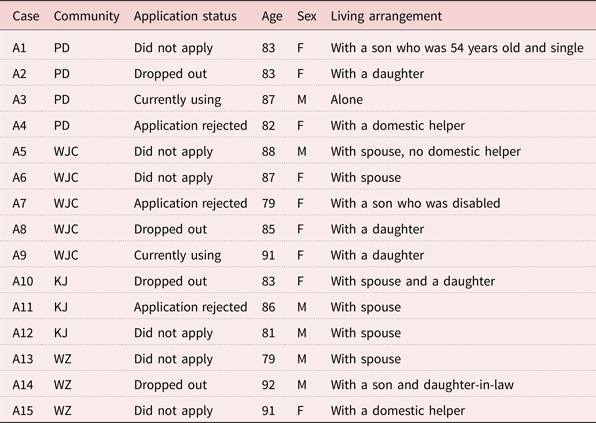
Notes: KJ, WJC and WZ: communities in Yangpu District. PD: community in Pudong New District. F: female. M: male.
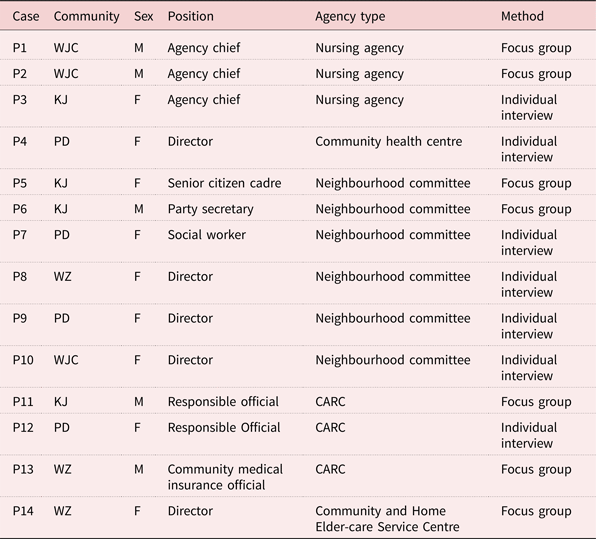
In addition to the service users, we also conducted hour-long individual and focus group interviews with key service providers involved in the implementation of the policy. Localised community health centres were responsible for assessing service applications, while nursing agencies were contracted as service providers under the HBMCSOO policy. We thus interviewed representatives from both types of organisation. We also interviewed key community leaders involved in the implementation of the HBMCSOO policy. This included representatives of the local Community Affairs Reception Centre (CARC), a branch of the street-level community government which was responsible for publicising the policy and conducting the preliminary review of applications from their specific communities. CARC representatives also co-ordinated the work schedule of the nursing staff and provided training for community cadres to introduce the policy in their local neighbourhoods. We also interviewed members of each localised neighbourhood committee, who were responsible for conveying the policy to older residents living in their neighbourhoods. A total of 14 key informants from various CARCs and neighbourhood committees in the four communities were interviewed. The profiles of the diverse range of service providers we interviewed are summarised in Table 3. The interviews were conducted with separate interview guides tailored to the different types of participant. The interviews were recorded and transcribed by graduate research assistants trained and supervised by the authors. The three co-authors analysed the data using a thematic analysis approach, which integrates a ‘top-down’ theoretical perspective with a ‘bottom-up’ data-driven approach (Taylor and Ussher, Reference Taylor and Ussher2001; Braun and Clark, Reference Braun and Clarke2006). We coded the transcripts according to patterns we identified in participants’ observations, feelings and thoughts. These emergent meanings were further refined into significant broader themes while still preserving the vivid descriptiveness of the original data.
‘Home-Based Medical Care Scheme for the Oldest-Old’ (HBMCSOO) service providers: key informants from nursing agencies, neighbourhood committees and Community Affairs Reception Centres (CARC)
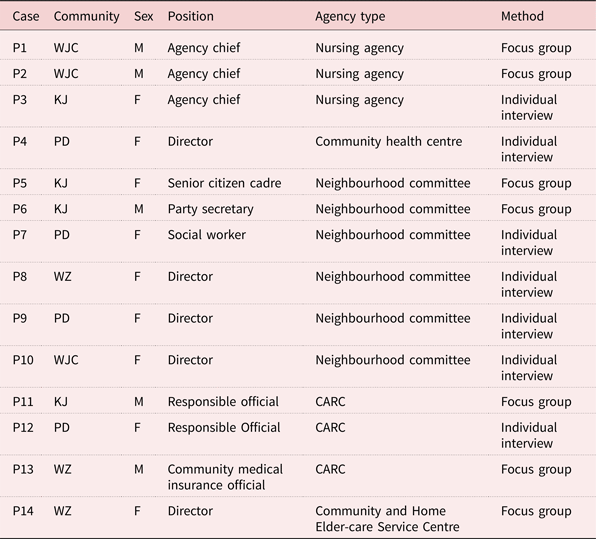
Notes: KJ, WJC and WZ: communities in Yangpu District. PD: community in Pudong New District. F: female. M: male.
We also collected data on daily working hours and duties of elder-care service providers to compare the delivery of home-based medical care services with home-based community care for the oldest-old. A total of 28 work log questionnaires were collected from HBMCSOO service providers, who documented their daily working hours and the specific services they provided during a one-week period. The questionnaires were distributed by the HBHC community officers and the nursing agency managers. A small honorarium was paid to each respondent for completing the questionnaire.
Findings
Based on our thematic analysis of the collected data, we identified two key reasons for the under-utilisation of the HBMCSOO programme: the distortion of policy implementation and the inadequate professionalisation of community-based elder-care workers.
Key finding 1: The distortion of policy implementation
Problematic implementation of policy directives contributed in large part to the under-utilisation of the HBMCSOO pilot programme. The most critical issues centred on inadequate criteria for assessing programme eligibility, misdirected publicity and a fragmented system of community service delivery among competing government agencies.
An overly rigid standard for assessing eligibility
The indicators used to determine programme eligibility frequently proved to be too rigid to identify at-risk elders in need of home-based medical care services. First, the ‘oldest-old’ age requirement was an inadequate and controversial criterion for determining the eligibility of applicants in need of home-based medical services. According to the initial guidelines piloted in 2013, only older adults above the age of 80 were eligible to apply for services under the HBMCSOO programme. But we found that if the assessors rigidly followed the age criteria in determining applicants’ eligibility to participate, this actually excluded a significant number of older adults who could have benefited from home-based medical services. For instance, we interviewed a 79-year-old woman from the WJC community (Case A7) who suffered from uraemia and needed to receive regular haemodialysis. She lived with her son who was severely disabled and unemployed. Besides the extremely precarious situation of the woman herself, she was also the primary care-giver for her son. However, her application for the HBMCSOO was rejected simply because she fell a few months short of the age threshold. The case of A7 particularly highlights the need to adjust the policy to enable broader inclusion by expanding the eligibility criteria beyond age alone.
Secondly, the assessment was generally conducted by medical professionals (specifically doctors and nurses) who utilised a set of assessment tools emphasising the physical indicators of applicants. This focus on physical criteria often meant that social indicators were ignored, especially those related to socio-economic status and family relations. For the 79-year-old woman from WJC described above (Case A7), medical professionals who conducted the assessment ignored the woman's specific family context, including her role as the primary care-giver for her disabled son. During the course of our interviews, we identified a number of older adults who were truly in need of home-based medical care but were excluded by the policy. A more comprehensive assessment of applicants’ needs could be achieved by broadening the range of professionals involved in conducting the eligibility assessment to include not just doctors and nurses, but also social workers, psychologists, nutritionists and ethnographers attuned to socio-economic and cultural factors shaping the medical needs of older adults.
Misdirected publicity
The low number of applicants also reflected ineffective publicity for the pilot programme. All of the neighbourhood committee staff members we interviewed from each of the four surveyed communities indicated that they had fully conveyed the content of the policy to their community residents. Yet they noted with frustration that their residents failed to respond. As the official in charge of the CARC in KJ Community explained:
We did our best. Our community cadres distributed the brochures from door to door. Since we have a name list of the residents, we took records if the residents received it or not, and we also noted down why did the household not receive the brochures, for example, moving, or rejecting. We also set up a stall once a month in the neighbourhood for inquiries. But the publicity effect was not satisfactory and many elders think they don't need it. (Case P11)
A community official responsible for medical insurance in another Yangpu district community (Case P13) also noted that cadres in his community conducted door-to-door introductions of the policy, yet not many older residents applied for the programme. He estimated that up to a third of potential service users in his catchment area did not apply to the pilot programme despite their eligibility for services.
When we focused on potential service recipients living in these neighbourhoods, however, we noticed that the cadres’ claims of comprehensive publicity did not correspond to residents’ actual experiences. In our interviews with six residents who did not apply for the programme, two of them claimed that they were completely unaware of the pilot programme. Others expressed confusion about the policy's guidelines, scope and eligibility requirements. We found that although community officials claimed that their dissemination of the policy had covered all residents living in their jurisdiction, their methods and channels of communication did not effectively target the most vulnerable members of their older population, in particular those who were frail, disabled, suffering from dementia, recently hospitalised and/or severely ill. For example, older adults suffering from health problems and their family members are more likely to be away from their homes seeking medical treatment at tertiary care hospitals elsewhere in the city, thus missing door-to-door presentations offered by their community cadres. Moreover, the need for HBMCSOO services may fluctuate over time depending on unanticipated events in peoples’ lives, including personal crises such as a sudden stroke or familial challenges such as a change in jobs for adult children who serve as care-givers. Those newly discharged from the hospital may also face increased need for in-home medical care that they may have previously not required. Targeting these individuals and circumstances thus requires flexibility and multiple channels in order to ensure that the changing needs of a dynamic population are being met. Our evaluation identified that more innovative methods and increased frequency of publicising programmes for vulnerable populations are needed. Case management professionals such as social workers can help play an important role in this task, creating broader awareness of relevant policies or services. particularly for the most vulnerable individuals.
A fragmented system of community service delivery
The disconnection among service stakeholders also contributed to the under-utilisation of the pilot programme. Medical services were provided by different government agencies with separate regulatory oversight: services provided through the HBMCSOO programme were overseen by the local branches of the municipal government, while the community health centres located in each street-level community were regulated directly by the Shanghai Department of Health. This contributed to the fragmentation in the provision of community medical services. Without a direct link to the community health centres, the HBMCSOO programme was not able to draw on existing networks and resources to provide home-based medical services. For example, one of the biggest problems was that home health aides contracted under the HBMCSOO programme did not have authorisation to obtain medical supplies for their clients. Patients had to first obtain the medical supplies and equipment themselves through a hospital visit; only then would these supplies be available at home for the visiting aides and nurses to employ. As the senior citizen cadre in charge of the KJ neighbourhood committee (Case P5) explained:
The urethral catheterisation package cannot be purchased by the [home health aides]. Patients must first buy [the equipment] from the hospital, and then ask a nurse from the community health centre to visit their home and help change the catheter due to regulations on medical equipment operation. The home health aides and nurses [in the HBMCSOO] do not have access to the catheterisation packages.
An 83-year old woman (Case A2) withdrew from the HBMCSOO programme precisely because of this problem.
Another problem rooted in the fragmented system of community service delivery was the repeated and often redundant assessments carried out by different service providers to determine eligibility and needs. Potential clients who may be eligible both for medical services under the HBMCSOO programme as well as general domestic services provided by other municipal agencies often found themselves subjected to the same screenings and questionnaires performed by multiple government agencies. These clients would benefit from a streamlined assessment system given the similarities in evaluation categories and procedures, thus saving both time and human resources.
Key finding 2: The inadequate professionalisation of community-based elder-care workers
The second major factor impeding the delivery of home-based medical care services under the HBMCSOO programme involved the inadequate professionalisation of the contracted elder-care workers. The medical services they provided were seen as very basic and limited both by the recipients as well as the providers themselves. The training for elder-care workers contracted by the HBMCSOO programme was highly abbreviated and simplistic, mainly encompassing basic skills of bathing, feeding, moving and diaper-changing for elderly clients. Many of these tasks were perceived as domestic care rather than specialised medical services. While basic training was providing for skills such as inserting and removing catheters, HBMCSOO workers received insufficient practice opportunities. No training was provided for more specialised skills such as delivering intravenous medication and other medical care applications. Furthermore, the inadequate training and compensation policies contributed to high turnover rates among the HBMCSOO providers themselves, further exacerbating the lack of professionalisation among this new cohort of service providers.
Insufficient skills and a limited range of medical care services
The HBMCSOO programme was specifically intended to bridge the health-care gap for Shanghai's oldest-old, thus enabling them to continue living in their communities rather than being hospitalised or institutionalised. Under the HBMCSOO pilot policy, each enrolled client was eligible to receive an hour of basic and clinical care up to three times per week from the contracted nursing agencies, depending on their assessed needs. Basic care included changing bed sheets, bathing clients, assisting with administering medical treatments and routine medication. Clinical care involved taking measurements of body temperature, pulse, respiration, blood pressure and blood glucose levels. More advanced clinical care included muscle injections, catheterisations, and guidance on a range of topics including tube care, health counselling and disease management.
Insufficient training opportunities and low compensation rates made it difficult for HBMCSOO providers to attract qualified nurses to work for the programme. As the chief of the KJ community nursing agency (Case P3) reported, his agency was staffed with only six nurses and 12 home health aides. Furthermore, clients and their families questioned the quality of nursing services provided by the contracted agencies. For example, the daughter of Mrs W (Case A8) complained that the HBMCSOO home health aide did not wash her 85-year-old mother's hair well. She also expressed doubts about the professionalism of the home health aide, noting the worker's negative attitude towards her job. Eventually this family decided to withdraw from the HBMCSOO programme as they believed the care of the home health aide was not as good as that provided by family members. The daughter of another client, 91-year-old Mrs H living in WJC community (Case A9), refused to allow the HBMCSOO home health aide to give baths to her elderly mother. Citing the inadequate training of these home health aides, Mrs H's daughter worried about her mother falling in the bathroom and only permitted the home health aide to towel her mother clean on the bed.
Consequently, many recipients and potential users complained that the actual services provided through the HBMCSOO policy were inadequate in meeting their medical needs and often indistinguishable from more general domestic services. For example, the HBMCSOO home health aide for 87-year-old Mr X (Case A3) primarily helped him with cooking, bathing, massages and cleaning. From Mr X's perspective, the services provided by the so-called health aides under the HBMCSOO were ‘not as medical as it was supposed to be’. Another HBMCSOO recipient, Mr F (Case A14), was provided with a home health aide who was supposed to help him with bathing. However, as his daughter-in-law noted, ‘it is not convenient for the female home health aide to help my father take a bath, and he would also feel embarrassed if she did’. The home health aide thus ended up mainly helping Mr F wash his face and feet, which he and his family regarded as a superfluous service. Not surprisingly, Mr F ultimately decided to quit the HBMCSOO programme. Several other beneficiaries and their families (Cases A2, A8 and A10) also decided to end their participation because the limited and low-quality medical services provided under the HBMCSOO could be provided by ordinary informal care-givers. In other words, many older people and their families deemed the HBMCSOO service as effectively equivalent to general domestic services.
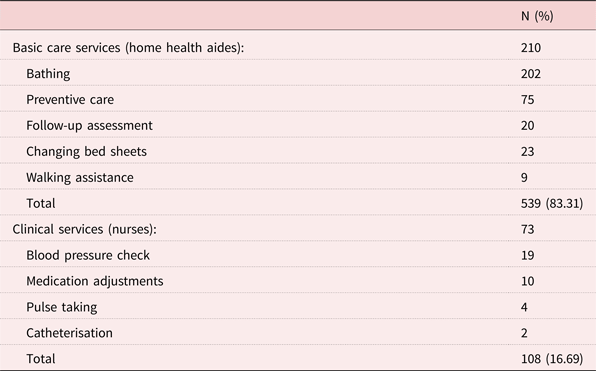
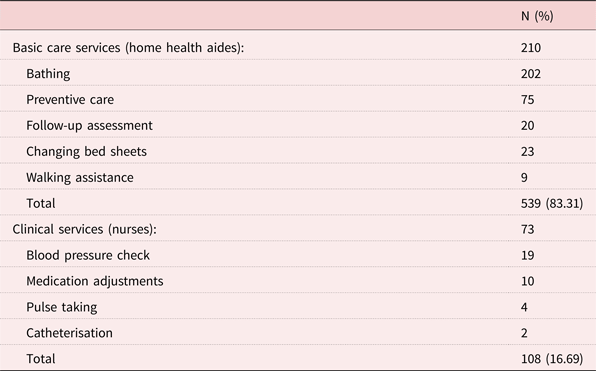
In order to understand further the nature of the services provided under the HBMCSOO policy, we collected work log questionnaires from 28 contracted service providers. As Table 4 illustrates, HBMCSOO workers overwhelmingly provided more basic services rather than clinical care, with 83 per cent of their documented activities during a single representative week consisting of basic care.
Logbook of services provided by a ‘Home-Based Medical Care Scheme for the Oldest-Old’ (HBMCSOO) nursing agency in a single week
A focus group interview we conducted with HBMCSOO-contracted nursing agencies further confirmed the inadequate duration and limited scope of medical care services offered under the programme (Cases P1 and P2). While an hour of home-based health care a few times per week might be adequate for the healthiest members of the target population, many of the oldest-old clients we interviewed needed much more intensive medical care and assistance. For these clients, one hour per day of contracted services was far from enough. As one official in charge of the CARC in Pudong explained: ‘The service time is very limited. Even when elders pay money [for the programme], their problems cannot be resolved’ (Case P12). Not surprisingly, families often made informal care arrangements instead, hiring their own private care-givers whose duties overlapped with those provided by the HBMCSOO home health aides. The inadequate training and limited services provided by the contracted service providers thus limited the attractiveness of the HBMCSOO programme for the target population.
High turnover of service providers
Another major concern was the high turnover rate of workers hired through the HBMCSOO programme. The contracted care-givers were collectively known in Chinese as hùlǐyuán (护理员), which can be translated literally as ‘care-giving worker’ or more accurately as ‘home health aide’. As the case of the nursing agency in KJ community (Case P3) illustrates, the contracted home health aides were typically in their forties and predominantly female. Each home health aide served approximately seven clients, earning an average salary of 2,500 RMB (US $416 in 2013) per month. The salaries provided by the HBMCSOO programme were considered low for Shanghai, one of China's most expensive cities. For comparison, the minimum monthly wage set by the Shanghai Municipal Government Bureau of Human Resources and Social Security in 2013 was 1,620 RMB (US $270) per month (Xinhua News Agency, 2013). while average monthly salaries in 2014 averaged 7,214 RMB (US $1,163) (China Daily, 2014). The relatively low salary levels provided by the HBMCSOO made it difficult to attract and retain qualified service providers in a competitive market. The high turnover rates of HMBCSOO workers subsequently had a negative impact on the stability of service relationships. As the chief of the nursing agency contracted to provide HBMCSOO services in the KJ community (Case P3) explained, ‘the rapid turnover of home health aides kept the elderly clients in a state of constant adjustment to new care-givers, which made the elders and their families feel frustrated’. Retaining qualified nurses, who tended to have more training and could carry out a wider range of responsibilities than their home health aide counterparts, was an especially thorny problem for these in-home nursing service agencies. As the chief of the nursing agency providing HBMCSOO services in the WJC community (Case P1) noted in a focus group interview, ‘compared with nurses working in the hospital, our agency nurses earn much less. Many of them left after gaining a certain period of work experience’.
Our evaluation of the pilot HBMCSOO policy revealed that inadequate training, lack of professionalisation and high turnover rates of contracted service providers ultimately limited the attractiveness of the in-home medical services programme for the target population.
Discussion
Integrated care programmes in North America and Europe that combine social support with medical services have been shown to have positive effects on the quality of care for older people, especially for those living with chronic disease (Ouwens et al., Reference Ouwens, Wollersheim, Hermens, Hulscher and Grol2005; Beswick et al., Reference Beswick, Rees, Dieppe, Ayis, Gooberman-Hill, Horwood and Ebrahim2008). Elder-care experts working in these countries have proposed integration strategies that include organised provider networks, clinical information systems, case-managed and multi-disciplinary delivery systems and self-management support (Glendinning et al., Reference Glendinning, Coleman and Rummery2002; Ouwens et al., Reference Ouwens, Wollersheim, Hermens, Hulscher and Grol2005; Kodner, Reference Kodner2006). But how effective are these Western-based models in promoting continuity and co-ordination of care in the context of China? Although a number of Chinese policy statements have declared the importance of integrating health and social care services for older adults over the past decade, effective integrated social systems of community care have not yet been established (Zhou and Walker, Reference Zhou and Walker2016). Based on our study findings, we suggest some ways of contextualising ‘integrated care’ for older adults in local Chinese communities.
In our analysis of the HBMCOO pilot programme, we identified two key factors impeding the integration of home-based health services into Shanghai's elder-care system: (a) the distortion of policy implementation and (b) the inadequate professionalisation of community-based elder-care workers. It is noteworthy that municipal policy makers did take into account some of the factors we identified in our evaluation report and revised the policy accordingly before implementing a city-wide programme starting in 2016. In the revised policy, the eligibility threshold was lowered to age 70, thus targeting a wider range of potential clients who may be in need of in-home health services. Furthermore, training of contracted workers was strengthened under the revised policy (Shanghai Municipal Government Office of the Social Construction Committee, 2016). In response to identified shortcomings, each district began developing a wider scope of training for professional health aides starting in 2016. The trainees could obtain a primary qualification certificate certifying them as professional health aides for older adults if they passed the final examination. The professional health aides were also required to master basic knowledge of mental health services under the revised policy. The assessment process for identifying qualified participants has also been further developed (Shanghai Municipal Government, 2018). It specifies that the assessment is only valid for a maximum of two years. However, during this two-year period, the applicant can apply for another round of assessment if there is a change in his or her self-care ability. While it has been encouraging to witness the changes implemented by policy makers, these improvements have mostly focused on minor practical adjustments to programme details. Based on our inter-disciplinary research, we propose a more revolutionary overhaul in the design and delivery of in-home health services which integrates care-giving in the local Chinese context.
The first factor we uncovered, the distortion of policy implementation, reflects the mismatch between policy goals and the actual implementation process in these Shanghai neighbourhoods. This underscores the importance of understanding service delivery processes in local communities. The second factor we identified, inadequate professionalisation, reflects the tension between limited social resources and health-care needs in the contemporary Chinese context. The relatively low wages provided to contracted workers was a significant disincentive for attracting highly trained nurses and skilled home health aides in urban Shanghai. Furthermore, the current elder-care system suffers from a lack of national standards for long-term care training and service delivery (Yang, Reference Yang2016). Potential service providers thus faced an ambiguous career path, leading to an inadequately professionalised elder-care workforce. While increasing the professionalisation of the workforce offers a promising direction for improving quality of care and facilitating ageing-in-place arrangements, it is also important to situate this in the context of China's existing community resources and the service delivery system.
Hereby, we identify the following components necessary to contextualise integrated care in local Chinese communities.
‘Seamless connection’ among service agencies
The co-ordination of different service agencies for clients eligible for multiple programmes has been a long-standing policy challenge, even in societies where a developed care system has been built (Grabowski, Reference Grabowski2012). As we confirmed in our study of the HBMCSOO, the fragmentation of the Chinese health-care delivery system severely undercut the successful implementation of the pilot policy. As currently managed, the HBMCSOO is overseen by the local branches of the municipal government, community health services by the Municipal Department of Health, while other home-based daily care services for older adults was the province of the Municipal Department of Civil Affairs. The lack of communication among different service providers led to overlapping and often contradictory evaluation and service provision, as well as a waste of resources. In this case, an integrated structure established at the community level could help to transform a dispersed system into a unified service provision system that is co-ordinated and scalable (Glendinning, Reference Glendinning2003). In the case of urban China, local neighbourhood committees have played a key role in connecting government services with local residents since the Maoist era. A single platform co-ordinated at the local neighbourhood committee level could be established to distribute and manage cross-departmental resources (Yang, Reference Yang2016), enabling different stakeholders involved in health and social service provision for older adults to co-ordinate and co-operate with each other with more attention to meeting the individual needs of their clients.
Holistic assessment on the basis of a unified needs assessment system
The Shanghai government has already recognised the need for a unified needs assessment system for elder-care provision, mandating that the Municipal Health Bureau, the Municipal Civil Affairs Bureau and the Municipal Bureau of Human Resources and Social Security work together to establish a single set of standards by the end of 2017 (Shanghai Municipal Government Office, 2016). While these policy advancements are commendable steps in building an integrated care system, the current proposed system has mainly focused on assessing activities of daily living, basic cognitive abilities and severity of disease (Shanghai Municipal Government Office, 2016). Yet older adults also experience psychological and social changes as they age. As our findings demonstrate, the assessment process for the Shanghai HBMCSOO suffered from inflexible standards and an over-emphasis on age as well as physical indicators of health. We argue that the degree of frailty, disability and severity of disease must be contextualised with respect to key social indicators (such as family structure, living arrangement, available social support, access to caring resources). This bio-psycho-social approach (Engel, Reference Engel1977; Kleinman, Reference Kleinman1980; Borrell-Carrio et al., Reference Borrell-Carrio, Suchman and Epstein2004) to needs assessment should be given more weight than age itself during the enrolment process. Rather than a focus on the ‘oldest-old’, a more effective policy would target the most vulnerable among older adults.
Needs assessment for older adults should be a holistic process situating a person in his or her environment, including evaluations of physical and mental health, functional ability, social support, family structure and financial resources (Evashwick, Reference Evashwick2005). Given the interdependent structure of Chinese society (Fei, Reference Fei2013), assessors might also need to interview other relevant informants including family members, physicians, non-familial care-givers, etc. The assessment interview in the pilot scheme generally took an hour and was conducted by a health-care worker. Our proposal for a more holistic assessment conducted by an inter-disciplinary team should also be able to be carried out within this time-frame, particularly if the process involves interviewing the potential client's existing care-givers. It is also important to recognise that many applicants for the HBMCSOO service have multiple and often changing needs during the extended assessment process and waiting period. On the basis of a holistic picture of the older adult's current and projected status, assessors can better integrate the HBMCSOO service not just into a ‘personalised’ care plan (Coulourides et al., Reference Coulourides, Wilber and Mosqueda2016) but, ultimately, a ‘contextualised’ care plan that accounts for the inter-dependent structure of Chinese society.
Optimising the service delivery process via established community agents
Our findings pointed out the ineffective publicity for the HBMCSOO policy and the underlying disconnection among the various service delivery segments. In North America, the social service delivery system is dominated by professional service organisations which provide services directly to their clients. In urban China, residents’ neighbourhood committees play a crucial role in enabling government and social organisationsFootnote 2 to gain access to clients and deliver services (Xu and Chow, Reference Xu and Chow2011). These quasi-governmental committees are distributed across all neighbourhoods in China, and are considered the most basic and bottom-level component in the political hierarchy. They are responsible for implementing a wide range of policy programmes at the community level and are acquainted with the situation of each household under their purview. These neighbourhood committees thus form an indispensable link between service programmes and their clients. The Shanghai municipal government introduced a recent directive on social governance at the grassroots level, requiring street-level government and the members of the residents’ committees to strengthen their service management capacities (Communist Party of China, Shanghai Committee, 2014). This offers a good opportunity to enhance the role of the residents’ committee as the key link between policy measures and potential elder-care clients in the neighbourhoods.
The community cadres serving on the neighbourhood committees are key representatives who have been working in the community for years. Given the existing institutional structure characterising the urban Chinese socio-political landscape, we argue that training these established community officials to take on the role of case managers would be a cost-effective way of providing integrated elder-care in local Chinese communities. While this recommendation may not be feasible or desirable in jurisdictions outside China, our interviews revealed that neighbourhood committee cadres have already assumed various tasks that in a Western context would be carried out by a professional case manager, such as introducing services to older adults in need, assisting with their applications for home-based health and social services, and following up with the changing needs of the vulnerable segments of the residents. With further professional training, the local community officials could take on a more formal role as case managers to facilitate the link between needs and resources under a framework of ‘contextualised’ elder-care plans.
Self-management and informal care empowerment
While promoting the professionalisation of the health-care workers will require time and effort to raise the quality of personnel training and construct a comprehensive human resource system for retaining skilled workers, there is immediate need for in-home medical services in local Shanghai communities. Particularly, most of the potential HBMCSOO service recipients were older adults with medium- to long-term medical care demands. As our findings illustrate, HBMCSOO users often complained that the limited service time was too short to fulfil their medical care needs. Institutionalising these older adults in tertiary care hospitals or nursing facilities would remove them from their communities and pose a drain on health-care resources. Yet providing 24/7 continuously available in-home care is often too expensive and impractical, particularly in developing countries. How can we address this gap between service needs and cost-effective delivery?
We suggest incorporating health education and informal care empowerment as a key component in future policy adjustments. Health education can help improve clients’ and families’ health literacy, help inform their health-care decisions, and enhance their self-care and self-management ability (Glanz et al., Reference Glanz, Rimer and Viswanath2008). For example, recently, a survey in China revealed that hypertriglyceridemia and high Body Mass Index are associated with hypertension (Hong et al., Reference Hong, Wongtonggkam, Ward, Xiaio, Wang, Peng and Wang2017). With changing lifestyles from traditional to Western norms, health education can equip people with the information to help them reduce their risk factors of hypertension, meanwhile reducing the health-care cost. Additionally, older adults with severe disabilities are more likely to receive informal care from closer kin such as spouses or children (Hu and Ma, Reference Hu and Ma2018). By empowering care-givers such as adult children, spouses and non-familial care providers with greater education and training to offer appropriate care, this model would help promote the wellbeing of the informal care-givers, improve the relationship between older adults and their care-givers, and raise the quality of life for older adults (Jones et al., Reference Jones, Winslow, Lee, Burns and Zhang2011).
Following two decades of development, health-oriented social work in Shanghai has shifted from hospitals to local communities, with the bulk of services targeting health literacy promotion, palliative care, counselling for patients and their family care-givers, assistance with medical rehabilitation for patients and health management (Wang and Tan, Reference Wang and Tan2014). These services are being vigorously developed by non-profit organisations in local communities throughout Shanghai (Guo, Reference Guo2016). However, these resources have not yet been integrated into the community health-care system at the policy level. Older adults and families who want to promote ageing in place would benefit from a more integrated approach that co-ordinates the various service resources.
For cities throughout China, as well as those around the world with immigrant Chinese populations, integrated care systems must take into account the interdependent structure of Chinese society (Fei, Reference Fei2013). In terms of needs assessment, not only should the physical indicators be examined, but social factors including family structure, family relationships and informal care arrangements must also be taken into account. Rather than a ‘personalised’ model focusing on the potential individual client, a ‘contextualised’ interpersonal model should be developed that incorporates other key participants including family members, physicians, non-familial care-givers, etc. Additionally, given the specific role of spouse and adult children as care-givers for the disabled and elderly in Chinese contexts (Hu and Ma, Reference Hu and Ma2018), it is important to complement formal service arrangements by empowering family care-givers.
In summary, although Shanghai's pilot HBMCSOO programme presents a unique case, the challenges we identified reflect broader issues of interest to policy makers and elder-care providers around the world: namely how to integrate the complex range of elder-care services in order to enable the oldest-old to continue living in their communities. It is important to note that integrated care for older adults’ ageing in place is not a matter of merely applying best practices and models from North American and European contexts. Instead, integrating health and social care services in developing countries like China requires careful contextualisation in terms of local social and institutional arrangements. Only by taking into account the Chinese context and the structure of society can policy makers and service providers figure out what factors hinder service provision, and what factors contribute to successful implementation. Based on this understanding, we suggest construction of a single platform to access cross-departmental resources, holistic assessments based on the current unified needs assessment system, optimising the service delivery process via established community agents, and promotion of self-management and informal care empowerment. Lessons learned from Shanghai's HBMCSOO pilot programme provide important insights on the design and provision of long-term care services to promote successful ageing-in-place measures in communities around the world.
Financial support
The study was supported by the Major Program of the National Natural Science Foundation of China (grant number 71490733) and the Shanghai Philosophy & Social Science Foundation (grant number 2017BSH002).
Ethical standards
This study was approved by Fudan University and the research committee of the Shanghai municipal government.