Introduction
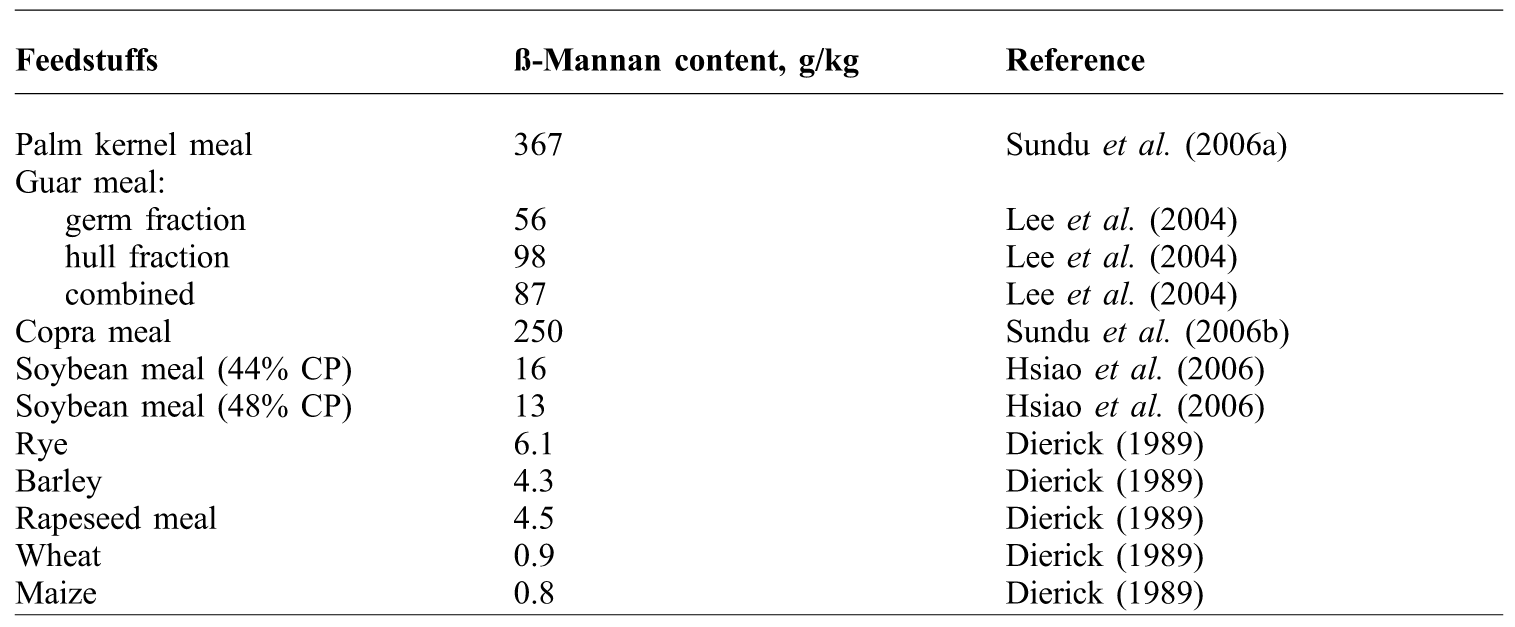
Non-starch polysaccharides (NSP), which include cellulose, hemicellulose, and pectin substances can influence nutrient digestion and have an impact on gut dynamics through various mechanisms (Choct, Reference CHOCT1999). Mixed-linked ß-glucans are classified as hemicellulose and are more abundant in most cereal ingredients than mannans. The prevalence of an NSP does not necessarily rank it as a target for NSP-ase action. Hemicelluloses include mannan, arabinan, xylan, and galactan (Dhawan and Kaur, Reference DHAWAN and KAUR2007). Mannan as a hemicellulosic polysaccharide is second to xylan in abundance in nature (McCleary, Reference McCLEARY1988). Therefore, after xylanases, mannanases are the second most important enzymes for the hydrolysis of hemicelluloses (Chauhan et al., Reference CHAUHAN, PURI, SHARMA and GUPTA2012). ß-Mannan is usually found in soybean meal (SBM), sesame meal, palm kernel meal, copra meal, and guar meal (Dhawan and Kaur, Reference DHAWAN and KAUR2007). It is a highly anti-nutritional factor in poultry diets (Odetallah et al., Reference ODETALLAH, FERKET, GRIMES and McNAUGHTON2002). Approximate content of ß-mannan in some feedstuffs is presented in Table 1.
Approximate content of ß-mannan in some feedstuffs.

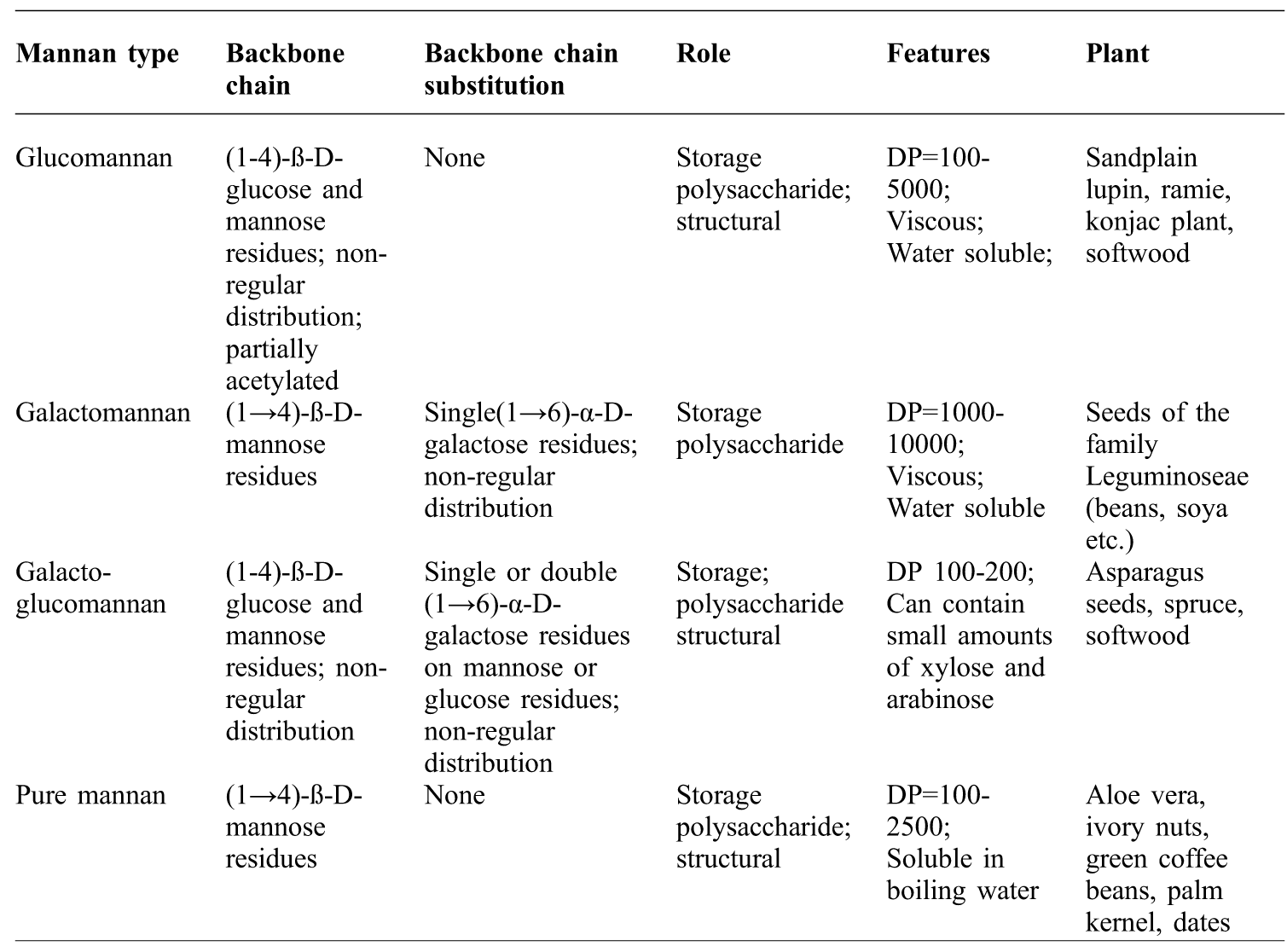
According to Petkowicz et al. (Reference PETKOWICZ, REICHER, CHANZY, TARAVEL and VUONG2001), the family of mannan comprises four subfamilies: glucomannans, galactomannans, galactoglucomannans, and pure (linear) mannans (Table 2). Water-soluble galactomannan, which is the primary storage form of carbohydrates in leguminous seeds, may comprise up to 20% of their total dry weight (McCleary, Reference McCLEARY1988). Soybean meal's ß-mannans are linear polysaccharides formed from repeating ß-1-4 mannose and α-1-6 galactose molecules bound to the ß-mannan backbone (Jackson et al., Reference JACKSON, GERONIAN, KNOX, MCNAB and MCCARTNEY2004).
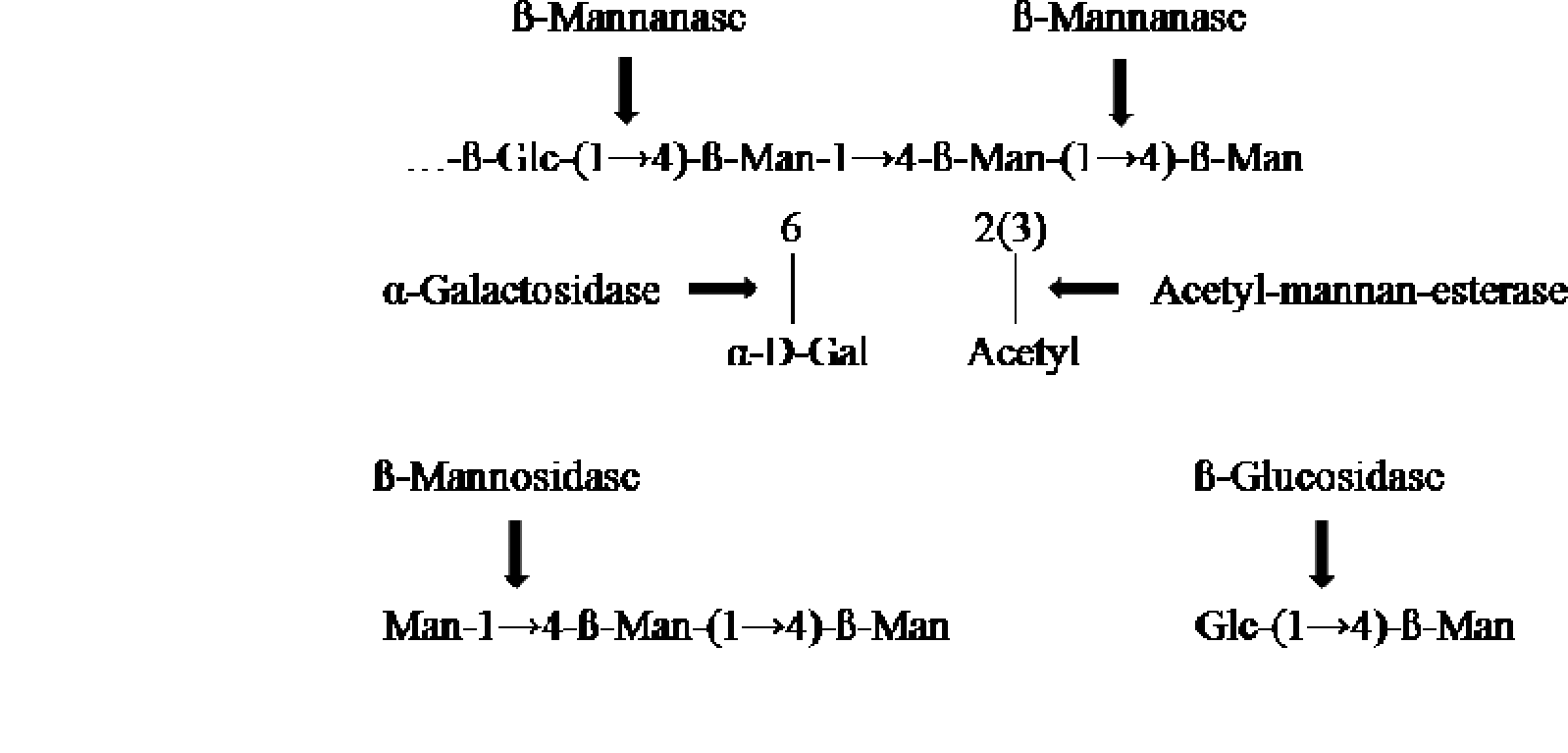
Endo-ß-mannanases are endohydrolases that cleave the internal glycosidic bonds of the mannan backbone, producing ß-1,4-manno-oligosaccharides (Chauhan et al., Reference CHAUHAN, PURI, SHARMA and GUPTA2012). The degree of mannan hydrolysis may depend on the substitution extent and distribution (e.g., galactose in D-mannan backbone; Stalbrand et al., Reference STALBRAND, SIIKA-AHO, TENKANEN and VIIKARI1993), on the acetylation degree (McCleary, Reference McCLEARY1991), on the ß-mannanase source (e.g., Bacillus, Aspergillus etc.; McCleary, Reference McCLEARY1979), and on the specific dose rate of mannanase used. Exo-acting ß-mannosidase as well as ß-glucosidase are both needed for the complete hydrolysis of ß-mannan (Moreira and Filho, Reference MOREIRA and FILHO2008). Removal of side groups from galactomannan, glucomannan, and galactoglucomannan requires additional enzymes, namely, α-galactosidase and acetyl mannan esterase (Van Zyl et al., Reference VAN ZYL, ROSE, TROLLOPE and GORGENS2010; Figure 1). However, the most important mannan- and galactomannan-cleaving enzymes for animal nutrition are endo-ß-mannanase and α-galactosidase since feedstuffs used in avian nutrition contain mostly either galactomannan and/or linear mannans.
ß-Mannanase supplementation has been demonstrated to have positive effects on performance and nutrient digestibility in poultry fed corn-SBM-based diets as well as diets containing guar meal, copra meal, and other ß-mannan-containing components (Jackson et al., Reference JACKSON, FODGE and HSIAO1999; Reference JACKSON, JAMES, ANDERSON and HSIAO2002; Reference JACKSON, GERONIAN, KNOX, MCNAB and MCCARTNEY2004; Odetallah et al., Reference ODETALLAH, FERKET, GRIMES and McNAUGHTON2002; Daskiran et al., Reference DASKIRAN, TEETER, FODGE and HSIAO2004; Wu et al., Reference WU, BRYANT, VOITLE and ROLAND2005; Gutierrez et al., Reference GUTIERREZ, ZHANG, CALDWELL, CAREY, CARTWRIGHT and BAILEY2008; Li et al., Reference LI, CHEN, CHEN, LI and CAO2010). Some of these positive effects have been ascribed to mechanisms that are different compared to the modes of action of other NSP carbohydrases. The objective of this review is to describe modes of action of endo-ß-mannanase in poultry in order to provide a better understanding of the mechanisms leading to improved performance and nutrient digestibility by dietary supplementation of this enzyme.
Chemical structure and role of mannans in plants (based on reviews from Matheson (Reference MATHESON1990) and Schröder et al. (Reference SCHRÖDER, ATKINSON and REDGWELL2009).
1 DP=degree of polymerization, an indicator of polysaccharide chain length.
Enzymatic hydrolysis of galactoglucomannan (Glc=glucose; Man=mannose; Gal=galactose) (Puls and Schuseil, Reference PULS and SCHUSEIL1993).
Modes of action
There are several mechanisms that may explain positive effects of ß-mannanase supplementation on performance and nutrient digestibility in poultry. These mechanisms (modes) of action can be grouped as follows: effect on viscosity of substrate in the gut; release of D-mannose as an energy source; suppression of the proliferation of harmful microorganisms in the gut; effect on immunity and release of trapped or bound nutrients.
effect on viscosity of substrate in the gut
Besides being a post-germinative reserve in plants, galactomannans of leguminous plants can serve as imbibing substances in the early stages of germination, taking up high amounts of water for the distribution around the embryo (Buckeridge et al., Reference BUCKERIDGE, SANTOS and TINE2000). Similar to soluble arabinoxylans and ß-glucans, high molecular weight soluble guar and copra galactomannans can dissolve in the digestive tract forming high viscosity digesta. Because of their high viscosity in the intestine, galactomannans can have negative effects on nutrient digestion that can be overcome with ß-mannanase supplementation (Jackson et al., Reference JACKSON, GERONIAN, KNOX, MCNAB and MCCARTNEY2004). In contrast, water-insoluble linear mannans with a very low degree of galactose substitution, as for example in palm kernel meal, would not form any viscous solutions in the digestive tract (Düsterhöft et al., Reference DÜSTERHÖFT, POSTHUMUS and VORAGEN1992). Thus, an increase in the digesta viscosity in poultry could be expected only by inclusion of feedstuffs containing high level of water soluble galactomannan (guar meal or copra meal).
The adverse effects of highly viscous guar galactomannanas on poultry performance have been already shown in the 1950s and 1960s (Borchers and Ackerson, Reference BORCHERS and ACKERSON1950; Vohra and Kratzer, Reference VOHRA and KRATZER1964a; Reference VOHRA and KRATZER1964b). Guar and copra mannans highly viscous consistency may slow gastric emptying, affect the mixing of substrate with digestive enzymes and reduce the contact of nutrients with enterocytes (Read, Reference READ1986). Guar gum, the endosperm of guar seeds, has been often used to mimic inclusion of feed ingredients high in galactomannan to practical diets (Daskiran et al., Reference DASKIRAN, TEETER, FODGE and HSIAO2004). Borchers and Ackerson (Reference BORCHERS and ACKERSON1950), and Vohra and Kratzer (Reference VOHRA and KRATZER1964a) already observed highly sticky faeces and depressed growth in birds fed guar meal or guar gum. These adverse effects were eliminated when an enzyme preparation from the sprouted guar beans was added to those diets.
Stephen and Cummings (Reference STEPHEN and CUMMINGS1979), by using the dialysis bag technique in vitro, reported that 1 g guar gum had the capacity to hold 21 and 27 g water after 24 and 48 h incubation period, respectively. Rainbird et al. (Reference RAINBIRD, LOW and ZEBROWSKA1984) showed in growing pigs that water absorption was significantly reduced from solutions containing guar gum due to the high water-holding capacity of guar gum's ß-mannans. Daskiran et al. (Reference DASKIRAN, TEETER, FODGE and HSIAO2004) observed in broilers higher water consumption per unit feed consumption with increasing dietary guar gum. The authors suggested that the birds had to drink more water to keep proper mixing of digestive enzymes with substrate. In the Daskiran et al. (Reference DASKIRAN, TEETER, FODGE and HSIAO2004) study, ß-mannanase supplementation tended to decrease water consumption per unit feed consumed in broilers.
A high intestinal viscosity may hinder digestive process through different mechanisms. This in turn should lead to a reduced overall nutrient digestibility. Kratzer et al. (Reference KRATZER, RAJAGURER and VOHRA1967) reported that guar gum reduced fat, nitrogen, and metabolisable energy utilisation in chickens. Maisonnier et al. (Reference MAISONNIER, GOMEZ and CARRE2001) showed that increased intestinal viscosity induced by guar gum supplementation to a corn-based diet decreased lipid, protein, and starch apparent digestibilities in broilers. In contrast, ß-mannanase supplementation significantly improved protein, lipid, and metabolisable energy utilisation in broilers fed corn-SBM-copra meal-based diets (Sundu et al., Reference SUNDU, KUMAR and DINGLE2006b). The authors suggested that ß-mannanase might have increased digesta flow rate due to the greater hydrolysis of copra meal leading to improved nutrient utilisation. Thus, the use of ß-mannanase for reduction of viscosity of copra containing diets is as relevant as the use of xylanases to reduce that in wheat based diets (Dhawan and Kaur, Reference DHAWAN and KAUR2007).
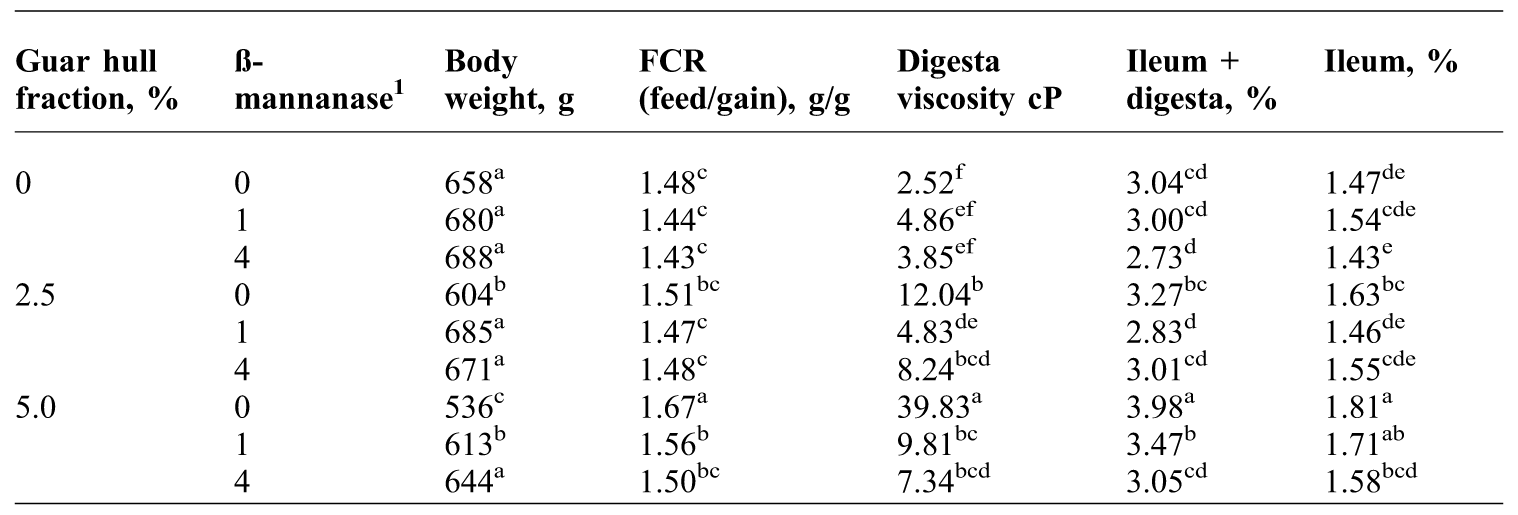
Another negative effect of a high intestinal viscosity is the increase in the mass of intestinal tissue (Poksay and Schneeman, Reference POKSAY and SCHNEEMAN1983; Smits et al., Reference SMITS, VELDMAN, VERSTEGEN and BEYNEN1997). Poksay and Schneeman (Reference POKSAY and SCHNEEMAN1983) suggested that the changes of the digestive tract in high viscous diets could be the result of the adaptation to deal with the greater amount of substrate in animals as well as to compensate for the decrease in the absorption rate. The gastrointestinal tract uses approximately 20% of all dietary energy to maintain digestion and absorption processes (Weurding et al., 2003). Thus, the gut size influences the basal metabolic rate, and any decrease in its size and digesta viscosity by ß-mannanase supplementation to the guar and copra meal containing diets could improve dietary energy utilisation by the bird (Daskiran et al., Reference DASKIRAN, TEETER, FODGE and HSIAO2004). Lee et al. (Reference LEE, BAILEY and CARTWRIGHT2003) showed that ß-mannanase supplementation to the diets containing guar meal hull fraction significantly reduced intestinal viscosity as well as relative ileal full and empty weights in broiler chicks, increased body weight, and reduced feed conversion ratio (Table 3).
It was demonstrated that guar gum significantly decreased postprandial plasma insulin and gastric inhibitory polypeptide in humans (Morgan et al., Reference MORGAN, TREDGER, MADDEN, KWASOWSKI and MARKS1985) and in pigs (Ellis et al., Reference ELLIS, ROBERTS, LOW and MORGAN1995), which led to reduced glucose absorption. The effect of the reduced glucose absorption was ascribed to the increase in digesta viscosity due to ß-mannans. Correlation analysis showed an inverse linear relationship between glucose absorption and guar gum concentration in the diet (Ellis et al., Reference ELLIS, ROBERTS, LOW and MORGAN1995). Low et al. (Reference LOW, RAINBIRD and GURR1982) suggested that the effect of guar gum on glucose absorption might be the result of changed motility in the stomach and small intestine, reduced stomach emptying, poorer mixing of digesta in the gut, and reduction in the absorption rate across the brush border membrane. Therefore, ß-mannanase supplementation to the diets containing more than 8 g galactomannan from guar or copra per kg feed (Vohra and Kratzer, Reference VOHRA and KRATZER1964a; Reference VOHRA and KRATZER1964b; Lee et al., Reference LEE, BAILEY and CARTWRIGHT2003; Daskiran et al., Reference DASKIRAN, TEETER, FODGE and HSIAO2004; Shastak et al., Reference SHASTAK, ADER and ELWERT2014) can reduce intestinal viscosity and thereby improve nutrient utilisation due to increasing digesta flow, ameliorating mixing of substrate with the digestive enzymes, enhancing nutrients contact with the intestinal wall, reducing intestinal size, and increasing glucose, lipid, protein, and water absorption. Thereby, it should be emphasised that soy mannans do not play a significant role in increasing intestinal viscosity in poultry possibly as the result of differences in structure, solubility, and concentration compared to the mannans in guar and copra (Gullon et al., Reference GULLON, GULLON, ALONSO, DOMINGUEZ and PARAJO2009).
Body weight, cumulative feed conversion, viscosities of ileal contents and ileal weight with and without digesta as a percentage of body weight in broilers fed varying concentrations of guar meal hull fraction and ß-mannanase to 20 d of age (Lee et al., Reference LEE, BAILEY and CARTWRIGHT2003).
a-fMeans within a column with no common superscript differ significantly (P < 0.05).
1Enzyme was added at 0, 1, or 4 times the recommended concentration of 1.09 × 10⁵ units/kg.
release of D-mannose as an energy source
As it has been pointed out, besides ß-mannanase, ß-mannosidase, and α-galactosidase are required for a complete decomposition of ß-mannans. ß-Mannanase alone liberates short ß-1,4-manno-oligomers (mostly mannobiose, mannotriose, and mannotetraose), which can be further degraded to mannose by ß-mannosidases (Chauhan et al., Reference CHAUHAN, PURI, SHARMA and GUPTA2012). However, some mannanases, e.g. Aspergillus niger ß-mannanase, can also hydrolyse mannotriose, liberating free mannose (Eriksson and Winell, Reference ERIKSSON and WINELL1968; Yamazaki et al., Reference YAMAZAKI, SINNER and DIETRICHS2009). Jackson et al. (Reference JACKSON, GERONIAN, KNOX, MCNAB and MCCARTNEY2004) pointed out that positive significant effects of ß-mannanase on performance in poultry fed corn-SBM-based diet could not be explained by simply making ß-mannan available as an energy source because ß-mannan content in such diet is only 0.4-0.7%. Moreover, only a part of the absorbed D-mannose can be metabolised by the chicken (Duran et al., Reference DURAN, CANO, PERAL and ILUNDAIN2004). This implies that ß-mannanases modes of action extend far beyond providing the bird with the additional available energy.
suppression of the proliferation of harmful microorganisms in the gut
ß-Mannanase supplementation to ß-mannan containing diets leads to release of short ß-1,4-manno-oligosaccharides (ß-1-4-MOS) and D-mannose. It is also possible to enzymatically pretreat ß-1-4-mannan-rich components (palm kernel meal, guar meal, copra meal etc.) in order to enrich them with ß-1-4-MOS before including them into poultry diets. Such ß-1-4-MOS obtained, for example, by guar gum hydrolysis were shown to reduce the adhesion of pathogenic bacteria to intestine epithelial cells in vitro (Kunz et al., Reference KUNZ, VOGEL, KLINGEBERG, LUDWIG and RITTIG2001). In vivo, Agunos et al. (Reference AGUNOS, IBUKI, YOKOMIZO and MINE2007) demonstrated that ß-1-4 mannobiose (ß-1-4-MOS) supplemented broiler feed reduced Salmonella enterica caecal colonisation, carriage, and faecal shedding during the first two weeks post-hatch. ß-1-4-Manno-oligosaccharide composition obtained by hydrolysis of guar, palm kernel, or copra meal significantly inhibited colonisation of Salmonella in the intestine of broiler and layer chicks (Morikoshi and Yokomizo, Reference MORIKOSHI and YOKOMIZO2004). Similarly, exogenous ß-mannanase supplementation to corn-SBM-guar meal-based moult-inducing diets significantly reduced Salmonella enteritidis colonisation in late-phase laying hens challenged with this pathogenic bacterium compared to the enzyme-free diet (Gutierrez et al., Reference GUTIERREZ, ZHANG, CALDWELL, CAREY, CARTWRIGHT and BAILEY2008). Supplementation of 20% ß-mannanase treated copra meal to broiler diet decreased Escherichia coli and Salmonella population in faeces compared to non-enzymatic treated copra meal group (Khanongnuch et al., Reference KHANONGNUCH, SA-NGUANSOOK and LUMYONG2006).
ß-1-4-MOS reduce the pathogenic bacteria count in the intestine of poultry by prevention of bacterial adhesion to the gut due to saturation of binding sites (a mannose-specific binding site) on the bacterial surface (Ofek et al., Reference OFEK, MIRELMAN and SHARON1977). Thus, microorganisms which have a mannose-specific binding site on their surface (Salmonella, Escherichia etc.) can be bound by ß-1-4-MOS or D-mannose in the intestinal lumen and expelled by the bird's physiological mechanical defence mechanisms such as mucous secretion and peristalsis (Oyofo et al., Reference OYOFO, DROLESKEY, NORMAN, MOLLENHAUER, ZIPRIN, CORRIER and DELOACH1989). Therefore, ß-1-4-MOS has been proposed for the therapy and prophylaxis of infectious diseases, bowel diseases, Colon carcinoma and inflammatory diseases in humans (Kunz et al., Reference KUNZ, VOGEL, KLINGEBERG, LUDWIG and RITTIG2001).
ß-1-4-Manno-oligosaccharides show excellent prebiotic efficacy on humans and terrestrial animals at low doses (Cuong et al., Reference CUONG, DUNG, HIEN and THU2013). The reason for the prebiotic effect of ß-1-4-MOS is that it can be used as nutrients by Bifidobacteria and Lactobacilli but not, for example, by Clostridium perfingens and Escherichia coli, thereby promoting healthful intestinal microflora (Asano et al., Reference ASANO, NAKAMURA, HOSHINO, AOKI, FUJII, IMURA and IINO2001). Gullon et al. (Reference GULLON, GULLON, ALONSO, DOMINGUEZ and PARAJO2009) reported that administration of hydrolyzed guar gum led to higher colonic contents of short-chain fatty acids, and higher Lactobacilli and Bifidobacteria concentrations in human bowel. 1-4-Manno-oligosaccharide from coffee mannan having very similar structure compared to palm kernel ß-1-4-mannan was shown to significantly reduce interleukin-10 production and to suppress ovalbumin-specific IgE in serum of mice suggesting an anti-allergic effect of ß-1-4-MOS (Ozaki et al., Reference OZAKI, FUJII and HAYASHI2007). The latter is thought to be due to change in the intestinal microflora caused by activation of the T helper cells (Th1) through prebiotic effect of ß-1-4-MOS (Ozaki et al., Reference OZAKI, FUJII and HAYASHI2007).
Supplementation of 0.1% mannanase-hydrolysed copra meal to broiler diets significantly increased body weight gain compared to the control group (P<0.05) while feed intake was not significantly different among the groups (Ibuki et al., Reference IBUKI, FUKUI and YAMAUCHI2013). The correlation analysis revealed a significant correlation between the dosage of mannanase-hydrolysed copra meal and the cell aria of the duodenum, jejunum and ileum. The authors concluded that the morphological changes in the small intestine might have increased intestinal absorptive function and thereby improved the growth of broiler chickens despite similar feed intake between different experimental groups. Mehri et al. (Reference MEHRI, ADIBMORADI, SAMIE and SHIVAZAD2010) showed that exogenous ß-mannanase supplementation to a corn-SBM-based diet significantly increased villus height and crypt depth, decreased goblet cell number, epithelial thickness, and ratio of crypt depth to villus height in different section of the small intestine of broiler chickens. These changes in the morphological structure of the small intestine could have been related to releasing ß-1-4-MOS and reducing immune challenge, although it is believed there are other, unknown mechanisms at play.
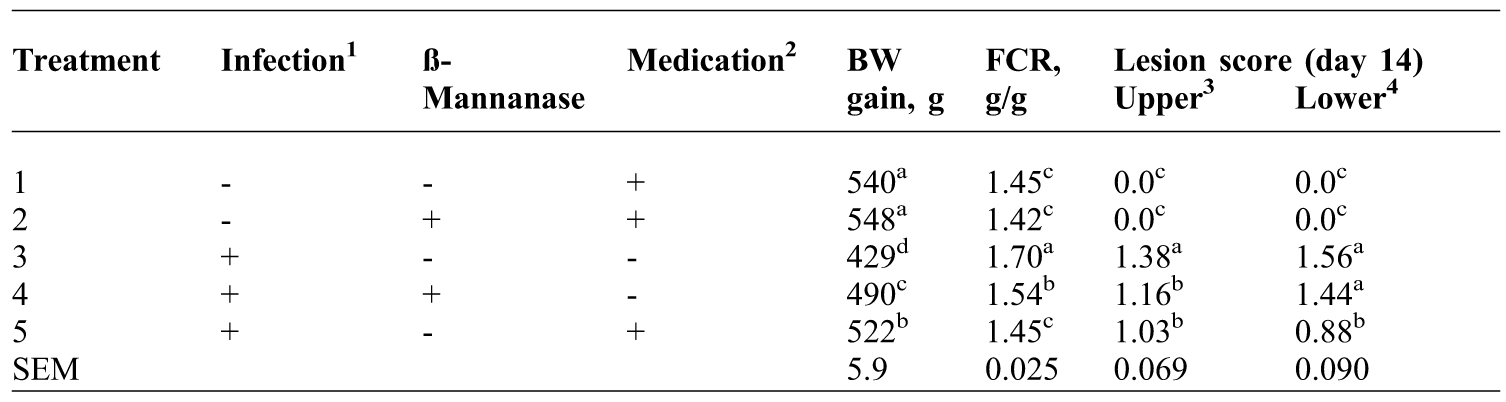
Jackson et al. (Reference JACKSON, ANDERSON, HSIAO, MATHIS and FODGE2003) reported that exogenous ß-mannanase showed microbial modulating properties in broilers fed corn-SBM-based diets and challenged with Eimeria and Clostridium perfringens in two experiments. The enzyme ß-mannanase significantly reduced the severity of challenge by Eimeria and Clostridium verified by significant improvements in body weight gain and a reduction in intestinal lesions compared to enzyme-free diet in experiment 1 (Table 4). In experiment 2, the degree of improvements for ß-mannanase supplemented treatment was not different from the birds treated with the antibiotic bacitracin methylene disalicilate and only slightly less compared to the birds treated with bacitracin and the coccidiostat, salinomycin.
Many published studies (not cited here) have investigated the effects of α-1-6-MOS on poultry performance and health. Compared to plant ß-1-4-mannans, yeast mannans consist of α-1-6-linked mannose main chain, containing side chains of different structure (Ballou, Reference BALLOU1976). Thus, ß-1-4-MOS obtained by degradation of plant ß-mannans have a different structure in comparison with α-1-6-MOS derived from the cell wall of yeast. The differences in the efficacy between these types of MOS cannot be excluded and further studies are needed for this purpose. Furthermore, ß-1-4-MOS produced from SBM mannan may be quite different from those produced from copra and guar mannans. Until a definitive study can show that SBM produced MOS give similar results compared to other types of galactomannans, the mechanism discussed in this section, although possible, is not proven for SBM mannan. Therefore, ß-mannanase by degrading some types of ß-1-4-mannans may provide bifidogenic factors (MOS), which can promote Bifidobacteria and Lactobacilli population in birds’ intestine suppressing colonisation of some harmful microorganisms in the gut.
Effect of infection, ß-mannanase and medication on performance of 8-21 d old broilers (Jackson et al., Reference JACKSON, ANDERSON, HSIAO, MATHIS and FODGE2003).
a-dMeans within columns without common superscripts are significantly different (P < 0.05).
1Orally inoculated with E. acervulina and E. maxima on day 7. On days 11, 12 and 13, birds were given broth cultures of C. perfingens.
2Salinomycin (60g/ton) and bacitracin methylene disalicilate (50g/ton).
3Area most affected by E. acervulina.
4Area most affected by E. maxima.
effect on immunity
It has been shown that ß-mannan in SBM can stimulate an innate immune response causing depression in birds’ performance (Dale et al., Reference DALE, ANDERSON and HSIAO2008). The authors concluded that plant derived ß-mannan could be regarded as a pathogen associated molecular pattern analog for poultry, which induced a metabolically costly over-boost of the innate immune system. Thus, ß-mannans in the intestine may cause an increased proliferation of monocytes and macrophages resulting in higher cytokine production in poultry (Wu et al., Reference WU, BRYANT, VOITLE and ROLAND2005). Acemannan, an Aloe vera derived polymannose with similar chemical properties to ß-mannans in SBM (Jackson et al., Reference JACKSON, GERONIAN, KNOX, MCNAB and MCCARTNEY2004), was shown to activate macrophages in growing chicken and induce nitric oxide synthesis through macrophage mannose receptors (Karaca et al., Reference KARACA, SHARMA and NORDGREN1995). Acemannan induced the macrophage's activation by increasing the level of nitric oxide synthase at the level of transcription (Ramamoorthy et al., Reference RAMAMOORTHY, KEMP and TIZARD1996). Nitric oxide, an intermediate metabolite of L-arginine (Karaca et al., Reference KARACA, SHARMA and NORDGREN1995), was shown to act as cytostatic effector in the elimination of viral replication (Karupiah et al., Reference KARUPIAH, XIE, BULLER, NATHAN, DUARTE and MACMICKING1993) and was found to be toxic for tumour cells (Draiper and Hibbs, Reference DRAIPER and HIBBS1988). This complex response to the ß-mannan containing compounds may lead to unnecessary losses in dietary energy utilisation. ß-Mannanase supplementation can improve dietary energy utilisation in corn-SBM-based diets in broilers (Li et al., Reference LI, CHEN, CHEN, LI and CAO2010) and laying hens (Wu et al., Reference WU, BRYANT, VOITLE and ROLAND2005). The effect of ß-mannanase on energy utilisation was partly attributed to the reduced immune challenge caused by ß-mannan in the diets (Li et al., Reference LI, CHEN, CHEN, LI and CAO2010). This was confirmed through the lower relative weight of main immune organs (thymus, spleen, and bursa), and the lower serum IgG and IgM concentration by ß-mannanase supplementation to the corn-SBM-based diets (Li et al., Reference LI, CHEN, CHEN, LI and CAO2010). Dale et al. (Reference DALE, ANDERSON and HSIAO2008) reported decreased plasma levels of the acute phase protein AGP (indicating less immune response) by removing SBM or by supplementing ß-mannanase in broiler diets.
release of trapped or bound nutrients
NSPs could decrease nutrient digestibility through the encapsulation of the starch and protein inside the cereal endosperm (Bedford, Reference BEDFORD1993). Providing NSP-degrading enzymes may disrupt such structures and improve nutrient digestion (Bedford and Schulze, Reference BEDFORD and SCHULZE1998). In the case of ß-mannanase, this may not be a valid mechanism for legumes because they contain only a minor portion of some high mannose-type N-glycans linked to the storage glycoproteins (Kimura et al., Reference KIMURA, OHNO and TAKAGI1997). Thus, it is unlikely that hydrolysing this portion of mannan-like structures would affect nutrient utilisation in poultry.
Sundu et al. (Reference SUNDU, KUMAR and DINGLE2006b) reported that ß-mannanase supplementation to corn-SBM-copra meal-based diet significantly improved dry matter, protein, and lipid digestibility possibly due to releasing of proteins and lipids linked to the ß-mannan backbone. However, the backbone of mannans in copra, soy or guar beans does not usually contain proteins or lipids (Moreira and Filho, Reference MOREIRA and FILHO2008). For example, during mannan deposition in the seeds of the family Leguminosae, the endosperm and aleurone cells are completely filled with pure galactomannan without binding or encapsulating other nutrients or molecules (Meier and Reid, Reference MEIER and REID1977). Thus, a possible mechanism of ß-mannanase action could be the hydrolysis of ß-mannans of aleurone layer, which might lead to a better exposition of ß-mannans in the endosperm for the further enzymatic degradation.
Significance of single modes of action
Improvements in performance and nutrient digestibility in birds due to ß-mannanase supplementation in a particular situation might be the result of a single- or combined mode of action. It is understandable that the significance of single mechanisms in performance improvement can vary depending, for example, on the diet composition, ß-mannanase source, age of birds, or on the hygiene in a particular poultry house. Corn-SBM-based diets contain moderate amounts of ß-mannan and a considerable increase in the intestinal viscosity is not usually expected by feeding these diets to poultry. Thus, the main effect of ß-mannanase added to corn-SBM-based diets could be due to reducing immune challenge caused by ß-mannan and/or releasing 1-4-ß-MOS in the intestinal tract. In contrast, diets containing even moderate amounts of guar meal may significantly increase viscosity in the gut and the reduction in digesta viscosity due to ß-mannanase supplementation could be considered as one of the main mechanisms in improving avian performance. Moreover, the effect of reducing intestinal viscosity by ß-mannanase may be more pronounced in growing birds compared to egg producing birds. Bedford (Reference BEDFORD1993) reported lower intestinal viscosity in layers compared to broilers by feeding similar NSP containing diets, considered due to increased digestive capacity and gut maturity/motility of older birds.
Hygienic conditions in a particular poultry house could play an important role in the degree of response to ß-mannanase supplementation. For example, more pronounced effects of ß-mannannase addition might be expected in poultry houses or flocks with sanitary problems. Under such circumstances, ß-mannanase may fully express its inhibiting effects on microbial proliferation and growth.
In vitro studies show that ß-mannanases from different origins have varying abilities to release MOS from its ß-mannan backbone (McCleary, Reference McCLEARY1979). Bacillus subtilis, for example, was reported to degrade galactomannan to mannobiose, mannotriose, mannotetraose, and mixed galacto-MOS (Emi et al., Reference EMI, FUKUMOTO and JAMAMOTO1972). In contrast, Rhizopus niveus ß-mannanase was unable to hydrolyze MOS with polymerisation degree less than or equal to four (Hashimoto and Fukumoto, Reference HASHIMOTO and FUKUMOTO1969). The differences in hydrolysis pattern between ß-mannanase sources or products could also lead to variable efficacy in vivo. Moreover, several other factors such as range of resistance against proteolytic enzyme activities, pH optimum, type, and source of ß-mannans in the diet (galactomannans vs. linear mannans) may also affect the efficacy of ß-mannanase.
Despite possible differences in hygiene, dietary composition, and other factors between various experiments, research has shown that ß-mannanase supplementation can be beneficial under a wide range of different conditions. As suggested by Odetallah et al. (Reference ODETALLAH, FERKET, GRIMES and McNAUGHTON2002), ß-mannanase supplementation might even be economically feasible without effect on body weight gain if it allowed usage of cheaper ingredients in poultry diets. Since the demand for animal products increases with a raising global population and increasing available income, conventional feedstuffs may be insufficient for sustainable poultry production in the near future (Lyayi and Davies, Reference LYAYI and DAVIES2005). ß-Mannanase may allow substitution of SBM with cheaper ß-mannan rich alternatives.
Conclusions
Improving the nutritional value of ß-mannan containing diets has been the focus of scientific research in the last few decades. The introduction of commercial ß-mannan-cleaving enzymes to the market was an important step for reducing the anti-nutritive effects of this hemicellulosic polysaccharide in poultry nutrition. ß-Mannanase may be a useful enzyme in poultry nutrition which possesses a broad spectrum of different modes of action. Identification and clarification of the mechanisms by which ß-mannanase supplementation affects nutrient digestion, metabolism, overall performance, and health of birds, is important for the further optimisation of the application of this enzyme in avian nutrition. Moreover, there is still considerable opportunity to broaden ß-mannanase usage in nutrition of domestic fowl. As suggested by Dhawan and Kaur (Reference DHAWAN and KAUR2007), due to the advances in genetic engineering novel ‘tailor-made’ mannanases with desirable properties may soon be introduced to the market. The application of such highly effective ß-mannanases could help in designing balanced poultry diets aiming at maximum performance at the lowest cost.
Acknowledgments
Joshua Jendza and Leon Hall are thanked for constructive comments on the draft of the manuscript.