Propionibacterium thoenii P127 (ATCC 4874) was discovered as a bacteriocin producer strain during screening of several propionic acid bacteria isolates (Grinstead, Reference Grinstead1989). Previously, it was not applicable to obtain bacteriocin production in liquid medium, but the bacteriocin was extracted from solid medium on which strain P127 was grown (Lyon & Glatz, Reference Lyon and Glatz1991). Such extracted bacteriocin did not exhibit any activity against strains of P. freudenreichii, but was active against P. thoenii, P. jensenii and P. acidipropionici. The viable count of the sensitive strain P. thoenii P5 was reduced by 99·6% using this extract. The activity of the extract was protease-sensitive, and moderately thermostable (80 °C, 30 min). Furthermore, the extract was inhibitory for some Gram-negative bacteria, yeasts and moulds. Several typical food-borne pathogens and spoilage microorganisms belonging to the genera Bacillus, Staphylococcus, Clostridium, Yersinia, and two species of Salmonella were found to be insensitive (Lyon & Glatz, Reference Lyon and Glatz1991).
The bacteriocin was purified by several methods (Lyon & Glatz, Reference Lyon and Glatz1991, Reference Lyon and Glatz1993; Paik & Glatz, Reference Paik and Glatz1995). Generally, the cells were grown for 14 d in sodium lactate broth at 32 °C and a constant pH 7·0. Purification of the bacteriocin involved ammonium sulphate precipitation of the culture supernatant, binding of precipitated proteins to a cation exchanger at pH 6·5 and elution by a salt gradient. The active fraction was thereafter concentrated by dialysis against solid polyethylene glycol and subjected to reverse phase HPLC. The activity was eluted late in the elution gradient, indicating a highly hydrophobic compound. The recovery of activity was close to 100% for the whole procedure, although minor components were detected. The active fractions from the reverse phase chromatography step were all dominated by a 9700 Da peptide. The peptide was estimated to contain 99 amino acids with a calculated molecular weight of 9328 Da and N-terminal sequencing gave the following sequence: N-V-D-A(T)-R-T(C)-A(T)-R-T(A)-P. This sequence did not share homology with any protein in the sequence databases. From the data presented by Paik & Glatz (Reference Paik and Glatz1995), it could be expected that the culture produced about 2 mg/l of the peptide; however, the activity was low. The cultures showed an activity of 2·5 AU/ml. The specific activity of the purified peptide was 2 AU/mg, which is three orders of magnitude less than what is seen for bacteriocins from LAB and propionicin T1 (Deegan et al. Reference Deegan, Cotter, Hill and Ross2006; De Vuyst & Leroy, Reference De Vuyst and Leroy2007).
Gollop & Lindner (Reference Gollop and Lindner1998) investigated the mode of action of propionicin PLG-1 on different bacterial strains. Most LAB bacteriocins studied affected efflux of potassium ions from sensitive cells in surrounding medium. Propionicin PLG-1, however, did not affect efflux of potassium ions or UV absorbing material from the sensitive Lactobacillus strain, whereas nisin did. The authors concluded that propionicin PLG-1 has a mode of action previously not seen with other bacteriocins. It was shown that the bacteriocin interfered with the glycolysis of the target organism, and it was suggested that the bactericidal effect could be ascribed to inhibition of metabolism. Strain P127 could produce propionicin PLG-1 in skim milk. Psychrotrophic spoilage or pathogenic food-borne microorganisms such as Listeria monocytogenes, Pseudomonas fluorescens, Vibrio parahaemolyticus and Yersinia enterocolitica were killed or inhibited when inoculated into skim milk fermented by strain P127 and incubated at 10 °C. A mutant of strain P127 that did not produce propionicin PLG-1 did not affect the growth of the spoilage or pathogenic strains.
The greatest advantage of propionicin PLG-1 is to inhibit or kill the growth of the above mentioned food-borne pathogens. Therefore, it was suggested that propionicin PLG-1 has a potential use as a food preservative since it was stable after long-term storage in a dry or frozen state and rapidly kills sensitive cells upon exposure in culture medium or skim milk (Lyon et al. Reference Lyon, Sethi and Glatz1993; Hsieh & Glatz, Reference Hsieh and Glatz1996). Furthermore, a novel method for propionicin PLG-1 detection was described (Leversee & Glatz, Reference Leversee and Glatz2001). Such method that was based on the construction of polyvalent anti-PLG-1 antiserum allowed the detection of propionicin PLG-1 precisely even on the μg-scale. Gollop et al. (Reference Gollop, Toubia, Ben-Shushan and Zakin2003) modified the growth medium of P. thoenii P127, allowing a high production system of the antibacterial peptide PLG-1. Tawfik et al. (Reference Tawfik, Sharaf, Effat and Mahanna2004) used P. thoenii P127 metabolites to preserve Domiati cheese.
Although intensive studies have been performed on propionicin PLG-1 chemical structure and antimicrobial activity (Lyon & Glatz, Reference Lyon and Glatz1991, Reference Lyon and Glatz1993; Paik & Glatz, Reference Paik and Glatz1995; Thierry et al. Reference Thierry, Falentin, Deutsch, Jan, Foquay, Fox and McSweendy2011), nothing was reported about its gene sequence and its molecular characterisation. Thus, we have reported for the first time plg-1 gene sequence and investigated its DNA alignment with other studied propionibacteria bacteriocin genes. Furthermore, we have extended propionicin PLG-1 antimicrobial spectrum by screening its activity on some common food-borne pathogens present in our climate (Escherichia coli DH5α, List. monocytogenes 18116, and Salmonella enterica 25566) in order to know if this bacteriocin has antimicrobial activity on these strains. Finally, the problem of propionicin PLG-1 production by very small amounts was resolved by cloning plg-1 gene expressing propionicin PLG-1 into different dairy starters to find the most promising LAB that could be used to produce propionicin PLG-1 in sufficient amounts for further fermentation studies.
Materials and methods
Microbial strains, plasmids and growth conditions
All microbial strains used in this study and their media are listed in Table 1. Esch. coli DH5α was grown in LB (Luria Bertani) medium at 37 °C (Green & Sambrook, Reference Green and Sambrook2012). List. monocytogenes 18116 and Sal. enterica 25566 were grown in BHI (Brain Heart Infusion) medium at 37 °C according to manufacturer's instructions (Difco, 2012). Lactobacilli strains were grown in MRS medium (de Man et al. Reference de Man, Rogosa and Sharpe1960), whereas lactococcal strains were grown in M17 medium (Oxoid, UK) containing 5 g/kg glucose (GM17) (Takala & Saris, Reference Takala and Saris2002). Lactococcus lactis MG1614 harbouring the vector pLEB590 was grown in GM17 containing nisin (60 IU/ml) (Takala & Saris, Reference Takala and Saris2002). All lactococcal and lactobacilli strains were grown at 30 °C. All propionibacteria strains were grown on mNLB (Modified Sodium Lactate) medium (Gollop et al. Reference Gollop, Toubia, Ben-Shushan and Zakin2003).
The antimicrobial activity (mm) of different LAB transformants compared with P. thoenii P127

Data are expressed as mean ± sd. Means in the same column with different lowercase letters are significantly different (P ≤ 0·05). Means in the same row with different capital letters are significantly different (P ≤ 0·05)
Genomic DNA isolation, extraction from gel, primers designing, and specific PCR
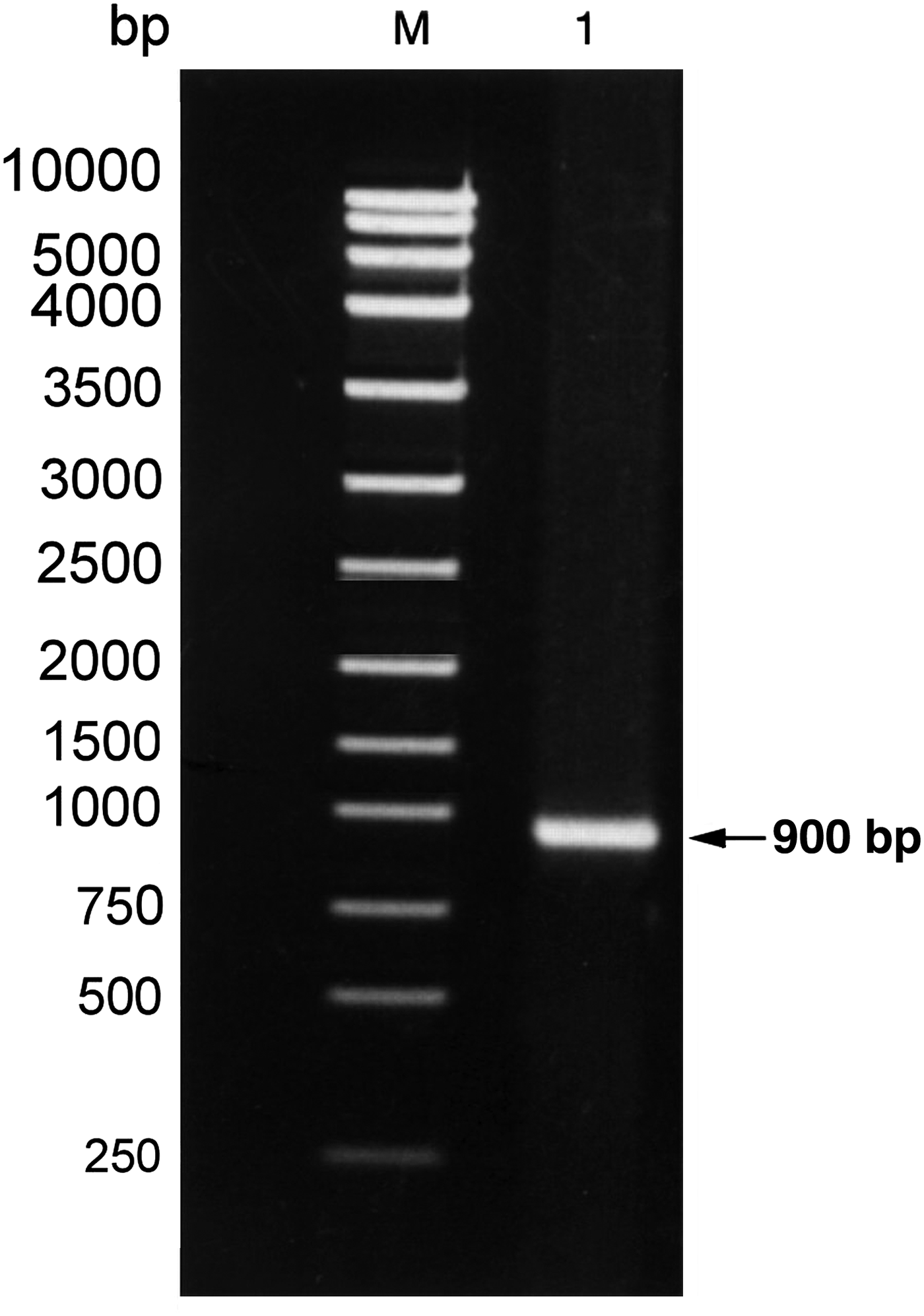
Genomic DNA was isolated using Fermentas® genomic DNA purification kit, whereas DNA bands were extracted from gel (Fig. 1) using AxyPrepÔ DNA Gel Extraction Kit. The sequence of the structural gene (plg-1) was obtained by PCR using degenerate primers based on the N-terminal amino acid sequence, followed by a primer-walking strategy. Final primers (PLG1-F, GGATCCAATGTCGATGCCAG and PLG1-R, TGGGGTCGAGTTGCAGACCCCAAT) were designed using Geneious® software (v. 4·0·2) to isolate the complete sequence of plg-1 gene of P. thoenii P127. PCR experiments were carried out with a Thermal Cycler (Techne, UK); Gold Master Mix Beads were used as recommended by the manufacturer (Bioron, Germany). The reactions (volume, 20 μl) were performed with 50 pmol of each primer. The PCR conditions used for amplification of DNA fragments containing the plg-1 gene included a hot start at 94 °C for 3 min, followed by 35 cycles of denaturation at 94 °C for 30 s, annealing at 59 °C for 30 s, and polymerisation at 72 °C for 6 min.
Isolation of PCR product containing plg-1 gene using the most convenient specific primers (900 bp, lane 2) beside the 1Kb DNA ladder (Fermentas, EU) (lane 1)
DNA manipulations
Isolation of plasmids from Esch. coli was carried out using BioBasic® EZ-10 plasmid spin column kit, whereas isolation of plasmids from LAB was performed using a mini-prep isolation method (Shareck et al. Reference Shareck, Choi, Lee and Miquez2004). Purification of DNA samples was performed using Fermentas® DNA purification spin column kit. DNA digestions, DNA ligations, and electroporation of Esch. coli strains were carried out according to Green and Sambrook (2012), while electroporation of lactobacilli strains was carried out according to Kim et al. (Reference Kim, Han, Oh, You and Kim2005) and electroporation of lactococcal strains was performed according to Pontes et al. (Reference Pontes, de Azevedo, Chatel, Langella, Azevedo and Miyoshi2011).
Nucleotide sequence accession number
The PCR products were sequenced using ABI Prism 377 DNA sequencer (Perkin-Elmer, USA). The DNA sequence described here has been deposited in the European Nucleotide Archive under accession number HE814565.
Bacteriocin assay
Antimicrobial activity was determined by a microtitre plate assay (Holo et al. Reference Holo, Nilsen and Nes1991). Each well of the microtitre plate contained 50 μl of two fold serial dilutions in LB or GM17 of the bacteriocin samples and 150 μl of a 100-fold diluted fresh overnight culture of the indicator strain. The plates were incubated at 30 °C for 24 to 48 h, and growth inhibition of the indicator organisms was measured spectrophotometrically at 620 nm with a microtitre plate reader. One bacteriocin unit (BU) was defined as the amount of bacteriocin that inhibited the growth of the indicator organism by 50% compared with a control culture without bacteriocin.
Data analysis
This study aimed to evaluate the capacity of propionicin PLG-1 expression by LAB transformants. Analysis of variance was carried out on all measured parameters among the control (P. thoenii P127, the natural producer of propionicin PLG-1) and LAB transformants to determine any significant differences during propionicin PLG-1 expression. The study was repeated in triplicate and five strains were used for each replicate (n total = 15 and n total for each treatment = 5). Statistical procedures were performed using LSM-PROG GLM of the SAS program (SAS Institute, Cary, NC, USA). Statistical significance was defined at P ≤ 0·05.
Results
Isolation of plg-1 gene of P. thoenii P127 using degenerate PCR primers and sequencing of the PCR product
It was reported that the N-terminus of the bacteriocin PLG-1 is NVDARRARAP (Paik & Glatz, Reference Paik and Glatz1995; Ben-Shushan et al. Reference Ben-Shushan, Zakin and Gollop2003). Therefore, such protein sequence was translated to its convenient DNA sequence using (ExPASy) SIB Bioinformatics Resource online tool (http://www.expasy.org) and a DNA alignment between our different sequences and the reference sequence was performed using the online website EMBL-EBI ClustalW2 program (http://www.ebi.ac.uk/Tools/msa/clustalw2/) to find the DNA sequence that is most homologous to plg-1 gene N-terminus.
The relationship between different fully sequenced propionicins
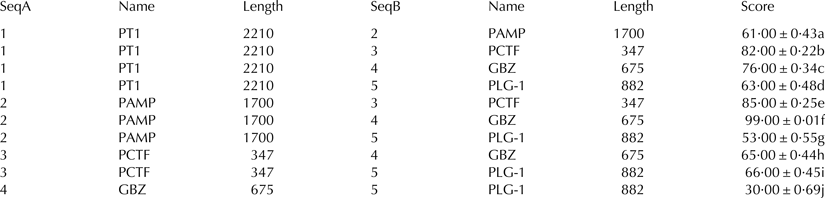
Since this is the first paper to describe plg-1 gene sequence, a relationship between different fully sequenced propionicins was performed. Figure 2 shows that the sequence of PLG-1 is composed of an open reading frame of 318 nucleotides (99 aa). This data was obtained using the NCBI ORF finder website (http://www.ncbi.nlm.nih.gov/gorf/gorf.html). The amino acids sequence was further analysed using the web-based program ProtScale (http://web.expasy.org/protscale/) and the web-based program ProtParam (http://web.expasy.org/protparam). Table 2 reports the sequence homologies of different propionicins in score numbers.
Nucleotides sequence and the amino acids sequence of plg-1 gene. The red capital letters represent sequence homologies to that of Ben-Shushan et al. (2003)
The relationship between different propionicins PT1, PLG-1, PAMP, GBZ, and PCTF
Data are expressed as mean ± sd. Means in the Score column with different lowercase letters are significantly different (P ≤ 0·05)
Propionicin PLG-1 is well known to contain 99 amino acid residues with a MW of about 10 000 Da (10283·9 Da). Paik & Glatz (Reference Paik and Glatz1995) have previously sequenced the N-terminus of propionicin PLG-1 and calculated its MW to be 9328. Their calculated MW agrees closely with that of 9690, determined on PAGE. The predicted amino acid composition result was similar to that of Paik & Glatz (Reference Paik and Glatz1995) with minor differences. Neutral (Gly) and hydrophobic (Ala, Ile, Leu, Val and Pro) residues make up 20·1 and 42·4%, respectively. Such results were similar to that of Paik & Glatz (Reference Paik and Glatz1995); 20 and 42%. Propionicin PLG-1 is predicted to contain two amino acid residues of tryptophan. Paik & Glatz (Reference Paik and Glatz1995) noted that tryptophan might be destroyed by the acid hydrolysis method employed.
Cloning and expression of plg-1 gene of P. thoenii P127 into LAB
Propionicin PLG-1 gene (plg-1) was cloned into pLEB590 and electroporated into different LAB strains. The expression vector (pLEB590) was constructed totally from lactococcal DNA to be used as a cloning vehicle for LAB (Takala & Saris, Reference Takala and Saris2002). Such vector fulfilled all necessary requirements to be a food-grade vector; hence, it has a small size (3·1 Kb), a multiple cloning site (MCS), a nisin immunity gene (nisI) as a dominant food-grade selection marker, a high copy number, and a high stability for several generations. It has a potential for use in dairy processes, in order to construct improved LAB starter strains.
Electroporation of pLEBPLG-1 into LAB strains
Electroporation efficiency of different LAB strains harbouring pLEBPLG-1 was indicated. It reached to 4·2 × 109 cfu/μg DNA for Lactococcus lactis LL108, while that for Streptococcus thermophilus ATCC19258 was found to be 4·1 × 109 cfu/μg DNA. On the other hand, Lactobacillus bulgaricus DSM20080 and Lb. plantarum TF103 recorded 5·1 × 108 and 5·2 × 108 cfu/μg DNA, respectively.
Screening for the antimicrobial activity of LAB transformants against Esch. coli DH5α, List. monocytogenes 18116, and Sal. enterica 25566
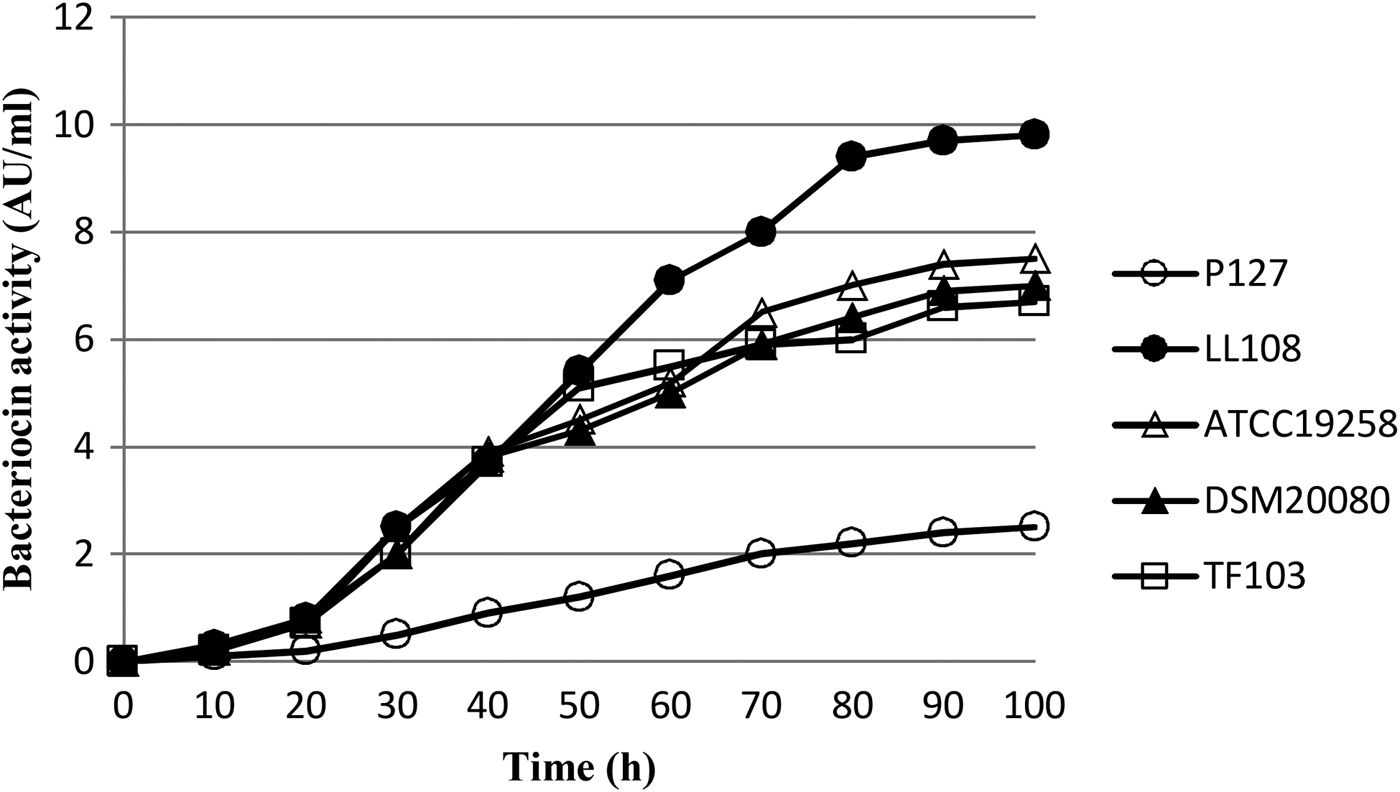
The inhibitory activity was detected in liquid culture, and maximum antimicrobial activity was found in the log and early stationary growth phases of LAB transformants and P. thoenii P127, respectively (Fig. 3). Among the investigated microorganisms, Esch. coli DH5α was the most sensitive on agar plates as well as in the microtitre plate assay.
Bacteriocin activities (AU/ml) of Lc. lactis LL108 (black circle), Str. thermophilus ATCC19258 (white triangle), Lb. bulgaricus DSM20080 (black triangle), and Lb. plantarum TF103 (white square) comparing with the bacteriocin activity of P. thoenii P127 (white circle)
Propionicin PLG-1 has strong antimicrobial activity against the examined pathogens with special emphasis on Esch. coli DH5α that was the most sensitive strain, while Table 1 indicates such antimicrobial activity by inhibition zone diameters (mm) compared with the natural propionicin PLG-1 producer (P. thoenii P127). Thus, propionicin PLG-1 was successfully over-expressed using pLEB590 as a multi-copy expression vector.
Discussion
Several research articles have been published on the characterisation and proteomics of propionicin PLG-1 but none of them investigated its genetic characterisation in depth. For example, Hsieh & Glatz (Reference Hsieh and Glatz1996) examined the long-term storage stability of propionicin PLG-1 and recommended it as a food preservative. Accordingly, Paik & Glatz (Reference Paik and Glatz1997) enhanced propionicin PLG-1 production using fed-batch fermentation. Gollop et al. (Reference Gollop, Toubia, Ben-Shushan and Zakin2003) developed an efficient system for the antibacterial peptide PLG-1 production in order to be used as a natural preservative in food industries. On that basis, Tawfik et al. (Reference Tawfik, Sharaf, Effat and Mahanna2004) used the P. thoenii P127 whole crude metabolites to preserve Domiati cheese and named such crude extract as Propiogard. Such product proved to prolong Domiati cheese shelf life regardless of the deviations occurring in its specifications (Codex, 2012). Therefore, it was aim to focus on plg-1 gene cloning and expression in LAB.
After the analysis of DNA sequences of different propionicin genes using DNA alignment tools, it was noticed that pamA gene of P. jensenii LMG3032 and gbz-1 gene of P. thoenii P127 are very close to each other (score = 99·0), while plg-1 gene of P. thoenii P127 does not share significant homologies with other genes. Paik & Glatz (Reference Paik and Glatz1995) indicated previously that propionicin PLG-1 seems to be different from other reported LAB bacteriocins and this indication remains true. Such observation suggests that PLG-1 bacteriocin has a different mode of action than other well-known bacteriocins. However, pamA, gbz-1 and plg-1 genes have significant sequence homologies only in their N-terminus (ARAPH). This means that the latter three genes have the same leader signal peptide (ARAPH) which direct the newly synthesised bacteriocins to be extracellular secreted through the secretory protein-conducting channel present in the plasma membrane.
Propionicin PLG-1 belongs to class II bacteriocins according to the classification of Riley & Chavan (Reference Riley and Chavan2007). Its MW is about 10 000 Da with no modified amino acids. Propionicin PLG-1 does not belong to class IIa even its positive antilisterial activity because it does not share homology with the N-terminal consensus sequence (Tyr-Gly-Asn-Gly-Val-Xaa-Cys) across that group and it does not belong to class IIb also because it is not composed of two peptides. Class IIc includes all class II bacteriocins that do not fall into class IIa or IIb. This group is divided into two sub-groups: bacteriocins containing one or two cysteine residues or bacteriocins without cysteines. Propionicin PLG-1 does not fall into either of these sub-groups as it contains five cysteine residues. This is similar to the findings of Ben-Shushan et al. (Reference Ben-Shushan, Zakin and Gollop2003) for the bacteriocin GBZ-1 classification. Through some bioinformatics analysis, propionicin PLG-1 was found to have an isoelectric point (pI) of 9·01 (using ProtParam) and a net charge of +4 (using ProtScale). We have noticed that such bacteriocin has worked efficiently in a wide range of pH (from 3 to 8; data not shown) and consequently it could be used as a food additive without the fear of losing its activity due to any normal changes in pH.
It was noted that LAB transformants over-expressed propionicin PLG-1 about three orders of magnitude more that the natural producer (P. thoenii P127). Such result was expected since pLEB590 vector has a strong LAB promoter (P45) that affected plg-1 transcription and further translation to give significant amounts of propionicin PLG-1 from the LAB transformants to inhibit the examined food-borne pathogens more efficiently than P. thoenii P127 (Table 1). Furthermore, it was noticed that among the LAB transformants, Lc. lactis LL108 (harbouring pLEBPLG-1) was the strain that most over-expressed propionicin PLG-1 (9·8 AU/ml). This could be explained since pLEB590 was constructed totally from lactococcal DNA, thus it worked more efficiently in lactococci.
The modified LAB transformants have the ability to produce such bacteriocin during its growth in dairy products and prolong their shelf life without any change of the final food product specifications including colour, taste, and texture. Therefore, they can be used as promising dairy starter cultures with dual-purpose to decrease the chances of dairy products contamination with food-borne pathogens especially where warm humid climates prevail. Furthermore, the most efficient LAB strain (Lc. lactis LL108) will be used for further fermentation studies with some optimisation steps to produce propionicin PLG-1 with sufficient amounts to be added as a promising food additive to prolong the shelf life of different dairy products.
The present work was supported using the fund of the International Centre for Genetic Engineering and Biotechnology (ICGEB, Italy).