




No CrossRef data available.
Article contents
Distinct patterns of Trypanosoma cruzi infection in Leontopithecus rosalia in distinct Atlantic Coastal Rainforest fragments in Rio de Janeiro – Brazil
Published online by Cambridge University Press: 18 November 2004
Abstract
Previous studies on infection of Trypanosoma cruzi in the Poço das Antas Biological Reserve population of wild free-ranging Leontopithecus rosalia have shown the presence of genotype T. cruzi II, associated in Brazil with human disease. Herein, this study has been extended, the infection being evaluated in L. rosalia of 3 different tamarin populations, inhabiting distinct forest areas located in the same Atlantic Coastal Rainforest. Edentata, Marsupialia, Rodentia and Chiroptera were examined exclusively in the Poço das Antas Biological Reserve. Excluding Chiroptera, T. cruzi infection was found in all orders. Biochemical and molecular characterization demonstrated that golden lion tamarins maintained stable infections by T. cruzi II. The isolates from the other mammals corresponded to T. cruzi I, suggesting independent transmission cycles occurring among the sylvatic mammals inside Poço das Antas Biological Reserve. Significant differences in the infection patterns presented by the 3 populations of wild and captive-born golden lion tamarins were noticed. In Poço das Antas a considerably higher number of positive haemocultures from tamarins with positive serological titres was observed in comparison to those obtained from other areas. The implications for conservation and public health of an active sylvatic cycle in the Atlantic Coastal Rainforest of Rio de Janeiro are discussed.
Keywords
Information
- Type
- Research Article
- Information
- Copyright
- © 2004 Cambridge University Press
INTRODUCTION
Trypanosoma cruzi, a Trypanosomatidae kinetoplastid, is a heterogeneous species composed of significantly distinct subpopulations regarding biological, biochemical and molecular parameters. The attempts that have been made to establish a correlation between these markers and any biological parameter has led to great controversy (Gonçalves et al. 1990; Morel & Simpson, 1980; Andrade, Brodskyn & Andrade, 1983). More recently, molecular markers discriminated 2 main lineages in the taxon that in Brazil were associated respectively with the sylvatic transmission cycle (T. cruzi I/Z1 and Z3) and with the domestic transmission cycle (T. cruzi II/Z2), (Fernandes et al. 1998; Anon, 1999). Nevertheless, these associations are not so clear, as several wild mammalian species infected with T. cruzi II and humans infected with T. cruzi I have already been reported in different ecosystems (Fernandes et al. 1998; Pung et al. 1998; Pinho et al. 2000; Lisboa et al. 2000; Coura et al. 2002). Consequently, to minimize misinterpretation, data on the fauna composition of a given study area should always be taken into account, when fieldwork for isolation of T. cruzi subpopulations for further characterization of the parasite and epidemiological studies are proposed. It is known that the dispersal of parasites is limited by the dispersal of their hosts. In the case of T. cruzi, an extremely heterogeneous taxon, several mammal species and vectors that circulate in different ecosystems are included in complex transmission cycles (Fernandes et al. 1998).
The definition of a given mammal species as a reservoir of a parasite is often based on a single report of an animal infection by this same parasite. Indeed, the mentioned studies seldom develop an infection follow-up of the putative reservoir host species, in order to determine the stability of infection or the behavioural pattern of the animal – a very important parameter that demonstrates the importance of the host species in the dispersion of the parasite, thereby establishing the animal's reservoir status.
Central and South American primates are often infected with Trypanosoma species, including T. cruzi, T. rangeli, T. evansi, T. simiae, T. minasense, T. saimirii, T. lambrechti, T. devei, T. sanmartini and T. diasi (Ziccardi et al. 2000). The genus Leontopithecus includes the largest primates of the family Callitrichidae and is represented by 4 species, golden (L. rosalia), golden-headed (L. chrysomelas), black (L. chrysopygus) and black-faced (L. caissara) lion tamarins, all endemic to the remaining fragments of the Atlantic Coastal and semideciduous forests of southeastern Brazil (Dietz, Peres & Pinder, 1997).
Lion tamarins, diurnal and predominantly arboreal, eat mostly insects, fruits, and small vertebrates such as lizards and birds. They live in small families (5–6 individuals) that occupy stable territories and use tree holes as sleeping sites (Dietz & Baker, 1993). The wild population is currently fragmented in different subpopulations, spread throughout isolated forests, and the number of protected areas for each of them is insufficient in both number and size (Kierulff & Rylands, 2003). Nowadays lion tamarins are submitted to one of the most important conservation programs, in close collaboration with the Brazilian Government Institution for the Environment and Natural Resources – IBAMA. The golden lion tamarin program emphasizes how the adoption of a ‘flagship’ species and publicity of the remnant population problem in depleted environments can promote considerable public attention and, consequently, support for preservation and conservation of both the animal species and their associated habitat (Dietz, Baker & Miglioretti, 1994).
Our work concerning T. cruzi II infection in the wild population of L. rosalia, in the Poço das Antas Biological Reserve, Rio de Janeiro (Fernandes et al. 1998; Lisboa et al. 2000) led to further studies to consider: (i) the number of positive haemocultures recovered from tamarins with anti-T. cruzi circulating antibodies in Poço das Antas compared to those haemocultures from positive testing tamarins from other areas and (ii) the maintenance of T. cruzi II in this wild population of tamarins.
Another question to be considered is the eventual risk for the adjacent human community and for the biotic environment, since conservation programs include the translocation of lion tamarins. It is worth mentioning that several studies have reported emerging diseases due to translocation of wild species from one environment to another (Cunnigham, 1996; Pozio et al. 2001; de Thoisy et al. 2001). Tropical forests are increasingly being destroyed throughout Brazil, especially the Atlantic Rainforest. Therefore, preservation of the biodiversity will depend almost entirely upon conservation units, particularly those that guarantee complete protection of the ecosystems they contain. Consequently, complete protection must include constant and thorough animal health status surveillance. There is also the opportunity to study evolutionary relationships between host and pathogens, with implications for animal and human health and conservation.
In this study, we followed up T. cruzi infection in golden lion tamarins from (i) Poço das Antas Biological Reserve, (ii) Reintroduction Areas and (iii) União Biological Reserve, in order to observe the eventual differences in the patterns of T. cruzi infection among animals in distinct fragments and the stability of T. cruzi II infection in these animals. The biological, biochemical and molecular characterization of T. cruzi isolates were performed. The other representative mammal species of the Poço das Antas Biological Reserve were also examined.
MATERIALS AND METHODS
The Golden Lion Tamarin Conservation Program
An international conservation initiative for Atlantic Coastal Rainforest of southeastern Brazil has been established to formulate and implement an integrated strategy for the preservation of critically endangered golden lion tamarins and their habitat. Three main management schedules are included in this program (Fig. 1). (i) Poço das Antas Biological Reserve, protected since 1973 and located in the municipality of Silva Jardim, Rio de Janeiro, Brazil (22°30′–33′S, 42°15′–19W), is a remnant of coastal Atlantic forest. The reserve is isolated from other forested lands for almost its entire perimeter, and it is itself a patchwork of grasslands and forests of secondary succession. Poço das Antas holds the largest population of wild golden lion tamarins in Brazil. The ecology and behaviour of these tamarins have been studied since 1984, being the second longest field study of a neotropical primate (Ryland & Kleiman, 2002). In this area 94.54% of total population, were examined. (ii) Reintroduction Program introduced zoo-born animals into 24 privately owned farms (Reintroduction Areas) in order to increase the size, genetic diversity and geographical distribution of the golden lion tamarin population in wild regions. There were no tamarins on these farms prior to the initiation of the program. The forested areas, ranging from 9 to 1000 ha, are surrounded by cattle pastures. In this area 23% of the total population was examined. (iii) União Biological Reserve contains a population of wild translocated tamarins and their descendants. This program began in 1993 and consists of moving groups of tamarins from small, threatened forest patches into the reserve. This forest is better preserved than Poço das Antas Reserve and there were no tamarins living there before the program began. In this area 71·6% of the total population was examined.

Fig. 1. Trypanosoma cruzi in Leontopithecus rosalia. Map of the golden lion tamarins program in Atlantic Coastal Rainforest of Rio de Janeiro, Brazil (Poço das Antas Biological Reserve, União Biological Reserve and Reintroduction Areas).
These areas are composed of different types of habitat (hilltop forest, hillside forest, corridors, swamp forest, and pastures) and microhabitats (bromeliads, other epiphytes, palm crows, palm leaf sheaths, woody crevices, lianas vine tangles, tree bark and bamboos). Deforestation and fires had reduced the extent of the habitats and no large tracts of pristine forest remain. The climate is seasonal; most of the rain is concentrated within the warmer months, from October to March (Dietz et al. 1994).
Golden lion tamarins were sampled from all 3 aforementioned populations. In the Poço das Antas Biological Reserve we studied the prevalence of T. cruzi in the wild population of L. rosalia as well as in other species of wild mammals included in the orders Edentata, Marsupialia, Rodentia and Chiroptera. Triatomine vectors were searched for in all studied areas, all of which were no more than 30 km from the Poço das Antas Reserve.
Mammal capture and triatomine search
Wild mammals were captured with Tomahawk traps and anaesthetized with 20 mg/kg body weight Ketamine hydrochloride (Ketalar®, Parke-Davis) for blood collection. Traps were positioned in platforms 1·5 m above ground, on the ground and in trees and baited with a mixture of corn, oats, fruits, bacon and peanut butter. Tamarins were captured in several groups of all ages. Triatomines were searched for in different types of microhabitats such as ground burrows, tree hole cavities, palm trees, bromeliads and bamboos.
Parasitological follow-up
Blood smears
Two blood smears from each animal were Giemsa stained and examined for patent parasitaemia.
Haemoculture
Approximately 100 μl of whole blood obtained by femoral vein puncture was placed on NNN medium (Novyl, McNeal and Nicolle) and covered with an overlay of LIT (Liver Infusion Tryptose) containing 10% foetal bovine serum and 140 mg/ml of gentamicin sulphate. The tubes were examined every 14 days for 2 months in cases where serological results were negative, and for longer periods in positive cases, with subsequent amplification in the same medium for further characterization, while others were preserved in liquid nitrogen.
Re-examination of tamarins
Tamarins in the Poço das Antas Biological Reserve, the União Biological Reserve and in Reintroduction Areas were re-examined by the same methods at distinct times varying from 6 months to 5 years, in order to observe infection patterns and infection stability.
Serodiagnosis
Indirect immunofluorescence assay (IFA)
This was performed with an anti-monkey conjugate (IgG whole molecule-FITC conjugate, Sigma, St Louis, MI). Antigen was prepared using the F strain of T. cruzi. Epimastigotes from LIT liquid medium were washed 3 times and finally suspended in phosphate-buffered saline (PBS). This final suspension, adjusted so that about 40 flagellates could be counted per dry high power field, was distributed on the appropriate slides and air-dried at room temperature. No fixative was used. The slides were stored in cans with silica gel at −20 °C for no longer than 1 month.
Characterization of Trypanosoma cruzi
Biological characterization
Groups of 6 outbred Swiss mice weighing 18 g each were intraperitoneally inoculated with 1×10⁵ metacyclic forms of the parasite that were derived from stationary phase culture. The parasitaemia was followed every other day from fresh blood smears and counts were performed in a Neubauer chamber.
Biochemical characterization
The isoenzymatic electrophoretic profile analysis was performed according to Momen & Salles (1985). The enzymes tested were glucose phosphate isomerase (GPI; E.C. 5.3.1.9), malic enzyme (ME; E.C.1.1.1.40), isocitrate dehydrogenase (IDH; E.C. 1.1.1.42), glucose 6 phosphate dehydrogenase (G6PDH; E.C.1.1.1.49) and malate dehydrogenase (MDH; E.C.1.1.1.37). Each electrophoresis included Y (T. cruzi II) and F (T. cruzi I) as reference strains.
Molecular characterization
DNA extraction and mini-exon genotyping: epimastigote growing cultures at the end of the log phase were centrifuged at 4000 g. The cells were washed 3 times with saline solution (0·9%), resuspended in 1 ml of TE (10 mM Tris–HCl pH 8·0, 10 mM EDTA pH 8·0) and incubated at 56 °C for 2 h with 100 μg/ml proteinase K and 0·5% SDS. The DNA of the lysed cells was extracted with phenol-chloroform (1[ratio ]1) and precipitated after the addition of sodium acetate and ethanol (Sambrook, Fritsch & Maniatis, 1989). Differential amplification of part of the non-transcribed spacer of the mini-exon gene was achieved using a pool of 5 oligonucleotides. Three oligonucleotides derived from a hypervariable region of the T. cruzi mini-exon repeat: TC1: 5′ CTCCGCCACCTCCTTCGGGGCC 3′, TC2: 5′ CCTGCAGGCACACGTGTGTGTG 3′ and C3: 5′ CCGCGWACAACCCCTMATAAAAATG 3′ and one oligonucleotide from a specific region of the T. rangeli non-transcribed spacer (TR: 5′ CCTATTGTGATCCCCATCTTCG 3′) were used as upstream primers. A common downstream oligonucleotide, corresponding to sequences present in the most conserved region of the mini-exon gene (ME: 5′ TACCAATATAGTACAGAAACTG 3′) was used as the opposing primer in the multiplex reaction. The PCR conditions used in this study were in accordance with Santos et al. (2002). The amplification products were analysed by 2% agarose gel electrophoresis, followed by ethidium bromide staining and UV visualization.
RESULTS
Three main aspects concerning the transmission cycles of T. cruzi have been observed: (i) significant differences in the T. cruzi infection patterns in the golden lion tamarin populations submitted to the 3 programs mentioned, (ii) L. rosalia is able to maintain long lasting high parasitaemias by T. cruzi II and (iii) the confirmation by biochemical characterization that both genotypes, T. cruzi I and T. cruzi II, circulate simultaneously in independent transmission cycles among sylvatic mammals in the Poço das Antas Biological Reserve (Fig. 2).

Fig. 2. Agarose gel electrophoresis of PCR products, corresponding to a hypervariable region of the mini-exon gene non-transcribed spacer, that are to characterize T. cruzi I (200 bp); T. cruzi II (250 bp); ZIII (150 bp) and T. rangeli (100 bp). Molecular weight markers (M) correspond to ϕ X DNA digested with Hae III. Lane 1, control negative; lane 2, Dm28c; lane 3, CLBrener; lane 4, Rb3 (Rhodnius brethesi – Barcelos, Amazonas); lane 5, San Agustin; lane 6, sloth (Bradypus torquatus); lane 7, opossum (Didelphis marsupialis); lane 8, rodent (Nectomys squamipedes); lane 9, golden lion tamarin (Leontopithecus rosalia); lane 10, re-captured golden lion tamarin (L. rosalia) and lane 11, vector (Panstrongylus megistus).
Poço das Antas Biological Reserve
Regarding L. rosalia, a significantly high number of positive haemocultures from seropositive tamarins (66·2%) was observed in Poço das Antas in comparison with tamarins from Reintroduction Areas and the União Reserve (Table 1). The serological titres varied from 1[ratio ]10 to 1[ratio ]1280 and the average was 1[ratio ]160. The parasite was isolated by haemoculture from tamarins with serological titres from 1[ratio ]10 onwards. No patent parasitaemia was observed in the tamarins examined.

Distinct infection percentages were detected among the tamarin groups and among the individuals of the groups. Tamarins probably acquired the infection as juveniles soon after weaning, since no seropositive infants were noticed. The infection by T. cruzi was diagnostic in adults (48%), subadults (>12 months; <24 months) (26%) and juveniles (6–12 months) (25%). Apparently the social behaviour of tamarins, peculiar to age, modulates the risk of infection by T. cruzi since infection was not observed in weanlings and infants. Males and females displayed the same rate of infection, confirming that sexual behaviour does not interfere in the acquisition of T. cruzi as previously described (Lisboa et al. 2000).
All T. cruzi isolates from tamarins were phenotyped as zymodeme 2 and genotyped as T. cruzi II. In spite of the biochemical and molecular homogeneity observed in these T. cruzi isolates, the biological characterization of the 41 T. cruzi tamarin isolates showed different infection patterns for Swiss mice: (i) high parasitaemia (106 parasites/ml at peak) with mortality (48·8%), (ii) high parasitaemia without mortality (12·2%), (iii) subpatent (parasites not detectable by fresh blood smears) with mortality (4·8%), (iv) subpatent without mortality (14·6%), (v) intermittent parasitaemia with mortality (7·3%) and (vi) intermittent parasitaemia (parasites detectable only occasionally in fresh blood smears) without mortality (12·2%).
The infection in golden lion tamarins can be considered stable because re-examination after distinct time-intervals up to 5 years resulted in positive haemocultures. The same T. cruzi biochemical and molecular profile (Z2/TCII) was demonstrated in all re-captured tamarins (Fig. 2). This did not happen with respect to the ‘in vivo’ behaviour pattern of the isolates: (i) 6 out of 9 T. cruzi isolates displayed a decrease in virulence and (ii) 3 maintained the same pattern for Swiss mice.
Active transmission of T. cruzi to tamarins is still occurring since serum conversion and positive haemocultures were observed in 17 out of 32 animals (53·1%) that had initially been negative in the IFA test (Table 2).

Serological conversion was found in tamarins of all ages but mainly in adult tamarins (n=11) in comparison to subadults (n=4) or juveniles (n=2), at intervals of 6 months (n=5), 12 months (n=7), 24 months (n=2), 36 months (n=2) and 48 months (n=1).
Concerning the other mammals examined in the Poço das Antas Biological Reserve infection by T. cruzi I, but not by T. cruzi II, was observed in all orders except Chiroptera, confirming that in the sylvatic environment there are no physical boundaries or limits between the transmission of T. cruzi across forest strata: arboreal, intermediary or ground (Table 1). No animal presented patent parasitaemia. The experimental infection of Swiss mice with T. cruzi isolates derived from B. torquatus (n=1), N. squamipes (n=1), H. brasiliensis (n=2) and D. marsupialis (n=2) resulted in high parasitaemia; however, there was no mortality for Swiss mice (Table 3).

Multilocus enzyme electrophoresis (MLEE) has shown that these isolates displayed the zymodeme 1 profile, while all isolates derived from L. rosalia were characterized as zymodeme 2. The biochemical characterization confirmed the mini-exon genotypes previously reported (Fernandes et al. 1998; Lisboa et al. 2000).
Reintroduction Areas and União Biological Reserve
Contrary to observations in the Poço das Antas Biological Reserve, positive haemocultures were rare in Reintroduction Areas and in the União Biological Reserve in spite of the high seroprevalence registered among the tamarins. Therefore, in Reintroduction Areas and in the União Reserve, the patterns of tamarin infection were similar: (i) positive serological titres varied from 1[ratio ]10 to 1[ratio ]160, with mean values lower than those observed in tamarins from Poço das Antas, (ii) males and females showed the same infection rates, (iii) no patent parasitaemia was observed in tamarins examined and (iv) active transmission occurred in both areas, since serological conversion was present in recaptured tamarins (Table 2).
An important variation of seroprevalence in 14 Reintroduction Areas was observed, varying from 0 to 100%. The association between tamarin population density and seroprevalence was positive (r=0·59; R2=0·35) but not statistically significant (P=0·12 D.F.=1·7).
In Santa Helena adjacent to Poço das Antas, T. cruzi was isolated from only one tamarin by haemoculture in spite of the high prevalence of positive serological titres (57·7%), even higher than prevalence in tamarins from the Poço das Antas Reserve. In the União Biological Reserve T. cruzi was isolated from only 2 tamarins. The serological (IFA) test showed significant serum prevalence among the distinct tamarin groups since some groups displayed no infected tamarins, whilst in other groups all members tested positive. The same was detected in social groups of the Poço das Antas Reserve.
The experimental infection of Swiss mice with T. cruzi isolates derived from Reintroduction Areas and the União Reserve resulted in: (i) high parasitaemia and mortality for Swiss mice (n=1) and (ii) subpatent parasitaemia and no mortality (n=2) (Table 3). The biochemical and molecular characterizations typed the T. cruzi isolates as zymodeme 2/T. cruzi II.
Triatomine search
One specimen of Triatoma vitticeps and 1 of Panstrongylus megistus, both infected with T. cruzi genotype T. cruzi II (Z2) (Fig. 2), were found in human dwellings near the forest in the Bom Retiro Farm (Reintroduction Areas) and the União Biological Reserve, respectively. No triatomine vectors were found in the Poço das Antas Biological Reserve. The experimental infection of Swiss mice with T. cruzi isolates derived from the collected triatomines resulted in high parasitaemia and mortality for Swiss mice (Table 3).
DISCUSSION
Even though Chagas disease was first described 9 decades ago, many aspects of the ecology of transmission cycles and parasite–host relationships have still not been completely clarified, especially those aspects related to the sylvatic cycle. In the Poço das Antas Biological Reserve the prevalence of T. cruzi infection in golden lion tamarins was significantly higher, compared to the prevalence in the other animal species; thus, in this fragment of the Atlantic Coastal Rainforest of Rio de Janeiro, the golden lion tamarins are the most important reservoirs of T. cruzi, at least of T. cruzi II. The high percentages of positive haemocultures show that these animals are highly infective for the vectors.
Biochemical characterization confirmed molecular findings that all golden lion tamarins and vectors were participating in the same sylvatic transmission cycle, since all isolates were in the genotype TC II (zymodeme 2). The isolates derived from sloths, rodents and marsupials were typed as T. cruzi I (zymodeme 1), supporting the suggestion that different sylvatic cycles may occur in the same forest fragment (Jansen et al. 1999). A further result supports the independence of these two sylvatic transmission cycles: the fact that there was no register of any P. frenata infected by T. cruzi, in spite of this marsupial being able to maintain the infection by T. cruzi II (Pinho et al. 2000).
We detected more biological heterogeneity in the T. cruzi II isolates from tamarin than in the T. cruzi I isolates from the other sylvatic mammals (sloths, marsupials and rodents). These data are in accordance with Tibayrenc & Ayala (1999) who described T. cruzi II as exhibiting more heterogeneity than T. cruzi I, based on the hypothesis that T. cruzi II circulates in a greater number of mammalian hosts than T. cruzi I after its divergence.
Our results show that the biological characterization does not necessarily reflect the biochemical and molecular characterization of T. cruzi, since we observed an important diversity in the biological profile of the T. cruzi II isolates. Moreover, experimental infection of Swiss mice showed that the majority of T. cruzi isolates from tamarins tended to be more virulent and pathogenic for the Swiss mice than the T. cruzi I isolates from sloths, marsupials and rodents, confirming other studies (Andrade et al. 1983).
The level of parasitaemia remained unchanged in golden lion tamarins of Poço das Antas since these animals maintained infection by T. cruzi with high positive haemocultures for up to 5 years. No clinical evidence of disease was observed, although clinical evaluation is recognized as limited because wild animals have an ability to mask clinical symptoms and stress (Caldecott & Kavanagh, 1983).
The velocity of T. cruzi transmission to tamarins was variable and occurred mainly within adults suggesting that younger animals are less exposed to infection. Adults spend a lot of time grooming and huddling, but they also often fight with other groups, making oral contamination possible. In spite of studies suggesting that primates do not include triatomines in their diet (Coimbra-Filho, 1972; Coimbra-Filho, 1981), we do not discard the oral route as a possible mechanism of infection since the young, in particular, are subject to taste experimentation.
Microenvironmental peculiarities are probably very important in the transmission cycle of T. cruzi in the wild since we observed that infection rates differed in the specific home ranges of the tamarin groups, as expressed by the distinct percentages of T. cruzi infection among the social groups. Nevertheless, no correlation regarding the size of the study areas and the tamarin population density, percentage and pattern of infection was observed. These data show that individual forest fragments, even if located in the same biome, must be considered as biological units. This observation re-emphasizes that transmission of T. cruzi in the wild is complex and involves several variables, even with regard to a single mammalian species. Futhermore, regarding enzootic investigations of T. cruzi, no generalizations or evolutive inferences should be made based on a single host species or on a specific environment.
The high recovery rate of T. cruzi from infected tamarins in the Poço das Antas Reserve by haemoculture was unexpected. Indeed, haemocultures from chronically infected humans and animals are rarely positive (Dias, 1968; Monteón-Padilha et al. 2001). The consistently positive haemocultures showed that parasitaemia of infected tamarins from the Poço das Antas Reserve is higher than that of tamarins from the other studied forest fragments, leading to the concept that T. cruzi infection patterns in Poço das Antas is more severe than in the Reintroduction Areas and in the União Reserve.
Three possibilities may explain this feature: (i) reinfection, (ii) concomitant infection by other parasites and (iii) improper management conditions of this forest fragment. Indeed, reinfection seems to be irrelevant because no statistically significant increase in the percentage rates of positive haemocultures was noticed following experimental reinfections by T. cruzi in hamsters (Cabrine-Santos et al. 2001). The same results were detected in experimental studies on dogs and mice, as parasitaemia levels decreased with successive infections (Machado et al. 2001; Cabrine-Santos et al. 2001). Moreover, the low rates of serological conversion, considering the golden lion tamarins wild population coexistance, suggest that reinfection by T. cruzi does not justify the elevated degrees of parasitaemia observed in the animals from Poço das Antas.
The lower parasitaemia observed in the primates of Reintroduction Areas and in the União Reserve indicates that, although the animals were exposed to triatomines, they were more capable of controlling the circulating flagellate infection than the tamarins from Poço das Antas. Futhermore, the high recovery rate of the parasite by haemocultures suggests that the population of tamarins from Poço das Antas are more infective for the vectors in comparison to the other wild golden lion tamarin populations examined. The severity of Chagas disease in humans is frequently attributed to parasite genotype, host genetic background or both (Andrade et al. 1999; Devera, Fernandes & Coura, 2003; Macedo et al. 2004). In the present situation tamarins display a homogeneous background and all T. cruzi isolates, the same genotype. Nevertheless distinct infection patterns in very close areas of a same biome were observed.
Immune response for parasite control is usually costly for hosts. This expense may be expressed by lower reproduction rates and decrease of daily activity (Gustafsson et al. 1994; Ilmonen, Taarna & Hasselquist , 2000; Bonneaud et al. 2003). We still do not know the resources that the golden lion tamarins allocate to T. cruzi infection control. Nevertheless, the higher parasitaemia, in the tamarins of Poço das Antas suggests that resources are being applied to other survival strategies instead of parasite control.
We would like to thank the Golden Lion Tamarin Program and the Brazilian Government Institution for the Environment and Natural Resources – IBAMA for the facilitation of this study. Financial support has been provided at various times by PAPES-FIOCRUZ, UENF-FENORTE and IRD/CNPq. We would like to express our sincere gratitude to Dr Vera Bongertz for manuscript revision, to Mitchell Raymond Lishon for English correction, to Leandro Andrei Beser de Deus for providing the map, Rodrigo Mexas for providing the photograph plates and Alcidinéia Ivo for technical support.
References
REFERENCES
ANDRADE, V.,
BRODSKYN, C. &
ANDRADE, S. G. (
1983).
Correlation between isoenzyme patterns and biological behaviour of different strains of Trypanosoma cruzi.
Transactions of the Royal Society of Tropical Medicine and Hygiene
77,
796–799.CrossRefGoogle Scholar
ANDRADE, L. O.,
MACHADO, C. R. S.,
CHIARI, E.,
PENA, S. D. J. &
MACEDO, A. M. (
1999).
Genetic variability of Trypanosoma cruzi: implications for the pathogenesis of Chagas disease.
Molecular and Biochemical Parasitology
100,
163–172.CrossRefGoogle Scholar
ANON. (
1999).
Recommendations from an International Symposium to Commemorate the 90th Anniversary of the Discovery of Chagas Disease. April 11–16. Rio de Janeiro, Brazil.
Memórias do Instituto Oswaldo Cruz
94,
429–432.
BONNEAUD, C.,
MAZUC, J.,
GONZALES, G.,
HAUSSY, C.,
CHASTEL, O.,
FAIVE, B. &
SORCI, G. (
2003).
Assessing the cost of mounting an immune response.
American Naturalist
161,
367–379.CrossRefGoogle Scholar
CABRINE-SANTOS, M.,
LAGES-SILVA, E.,
CHAPADEIRO, E. &
RAMIREZ, L. E. (
2001).
Trypanosoma cruzi: characterization of reinfection and search for tissue tropism in hamsters (Mesocricetus auratus).
Experimental Parasitology
3,
160–167.CrossRefGoogle Scholar
CALDECOTT, J. &
KAVANAGH, M. (
1983).
Can translocation help wild primates?
Oryx
17,
135–139.Google Scholar
COIMBRA-FILHO, A. F. (
1972).
Aspectos inéditos do comportamento de saguis do gênero Callithrix (Callithricidae – Primates).
Revista Brasileira de Biologia
32,
505–512.Google Scholar
COIMBRA-FILHO, A. F. (
1981).
Animais predados ou rejeitados pelo saui-piranga, Leontopithecus r. rosalia (L. 1766) na sua àrea de ocorrência primitiva (Callitrichidae, Primates).
Revista Brasileira de Biologia
41,
717–731.Google Scholar
COURA, J. R.,
JUNQUEIRA, A. C. V.,
FERNANDES, O.,
VALENTE, S. A. S. &
MILES, M. A. (
2002).
Emerging Chagas disease in Amazonian Brazil.
Trends in Parasitology
18,
171–176.CrossRefGoogle Scholar
CUNNIGHAM, A. A. (
1996).
Disease risks of wildlife translocation.
Conservation of Biology
12,
1139–1141.Google Scholar
DE THOISY, B.,
VOGEL, L.,
REYNES, J.,
POULIQUEN, J.,
CARME, B.,
KAZANJI, M. &
VIÉ, J. (
2001).
Health evaluation of translocation free – ranging primates in French Guiana.
American Journal of Primatology
54,
1–16.Google Scholar
DEVERA, R.,
FERNANDES, O. &
COURA, J. H. (
2003).
Should Trypanosoma cruzi be called “cruzi” complex? A review of the parasite diversity and the potential of selecting population after in vitro culturing and mice infection.
Memórias do Instituto Oswaldo Cruz
98,
1–12.CrossRefGoogle Scholar
DIAS, J. C. (
1968).
Reinfection of Bambui community by triatominae with Chagas' disease. II.
Memórias do Instituto Oswaldo Cruz
66,
197–208.CrossRefGoogle Scholar
DIETZ, J. M. &
BAKER, A. J. (
1993).
Polygyny and female reproductive success in golden lion tamarins, Leontopithecus rosalia.
Animal Behavior
46,
1067–1078.CrossRefGoogle Scholar
DIETZ, J. M.,
BAKER, A. J. &
MIGLIORETTI, D. (
1994).
Seasonal variation in reproduction, juvenile growth and adult body mass in golden lion tamarins (Leontopithecus rosalia).
American Journal of Primatology
34,
115–132.CrossRefGoogle Scholar
DIETZ, J. M.,
PERES, C. A. &
PINDER, L. (
1997).
Foraging ecology and use of space in wild golden lion tamarins (Leontopithecus rosalia).
American Journal of Primatology
41,
289–305.3.0.CO;2-T>CrossRefGoogle Scholar
FERNANDES, O.,
MANGIA, R. H.,
LISBOA, C. V.,
PINHO, A. P.,
MOREL, C. M.,
ZINGALES, B.,
CAMPBELL, D. &
JANSEN, A. M. (
1998).
The complexity of the sylvatic cycle of Trypanosoma cruzi in the Rio de Janeiro state (Brazil) revealed by the non-transcribed spacer of the mini-exon gene.
Parasitology
118,
161–166.Google Scholar
GONÇALVES, A. A.,
NEHME, N. S. &
MOREL, C. M., (
1990).
An improved silver staining procedure for schizodeme analysis in polyacrylamide gradient gels.
Memórias do Instituto Oswaldo Cruz
85,
101–106.CrossRefGoogle Scholar
GUSTAFSSON, L.,
NORDLING, D.,
ANDERSSON, M. S.,
SHELDON, B. C. &
QVARNSTROM, A. (
1994).
Infections diseases, reproductive effort and the cost of reproduction in birds.
Philosophical Transactions of the Royal Society, B
346,
323–331.CrossRefGoogle Scholar
ILMONEN, P.,
TAARNA, T. &
HASSELQUIST, D. (
2000).
Experimentally activated immune difference in female pied flycatchers results in reduced breeding success.
Proceedings of the Royal Society, B
267,
665–670.CrossRefGoogle Scholar
JANSEN, A. M.,
PINHO, A. P. S.,
LISBOA, C. V.,
CUPOLILLO, E.,
MANGIA, R. H. &
FERNANDES, O. (
1999).
The sylvatic cycle of Trypanosoma cruzi: a still unresolved puzzle.
Memorias do Instituto Oswaldo Cruz
94 (Suppl. 1),
203–204.CrossRefGoogle Scholar
KIERULFF, M. C. &
RYLANDS, A. B. (
2003).
Census and distribution of the golden lion tamarin (Leontopithecus rosalia).
American Journal of Primatology
59,
29–44.CrossRefGoogle Scholar
LISBOA, C. V.,
DIETZ, J.,
BAKER, A.,
RUSSEL, N. N. &
JANSEN, A. M. (
2000).
Trypanosoma cruzi infection in Leontopithecus rosalia at the Reserva Biológica de Poço das Antas, Rj, Brasil.
Memórias do Instituto Oswaldo Cruz
95,
445–452.CrossRefGoogle Scholar
MACEDO, A. M.,
MACHADO, C. R.,
OLIVEIRA, R. P. &
PENA, S. D. J. (
2004).
Trypanosoma cruzi: genetic structure of populations and relevance of genetic variability to the pathogenesis of Chagas Disease.
Memórias do Instituto Oswaldo Cruz
99,
1–12.CrossRefGoogle Scholar
MACHADO, E. M.,
FERNANDES, A. J.,
MURTA, S. M.,
VITOR, R. W.,
CAMILO, D. J. Jr,
PINHEIRO, S. W.,
LOPES, E. R.,
ADAD, S. J.,
ROMANHA, A. J. &
PINTO DIAS, J. C. (
2001).
A study of experimental reinfection by Trypanosoma cruzi in dogs.
American of Journal of Tropical Medicine and Hygiene
65,
958–965.CrossRefGoogle Scholar
MOMEN, H. &
SALLES, C. A. (
1985).
Enzyme markers for Vibrio cholerae: identification of classical, El Tor and environmental strains.
Transactions of the Royal Society of Tropical Medicine and Hygiene
79,
773–776.CrossRefGoogle Scholar
MONTEÓN-PADILHA, V.,
HERNÁNDEZ-BERERRIL, N.,
BALLINAS-VERDUGO, M. A.,
ARANDA-FRAUSTRO, A. &
REYES, P. A. (
2001).
Persistence of Trypanosoma cruzi in chronic chagasic cardiopathy patients.
Archives of Medical Research
32,
39–43.CrossRefGoogle Scholar
MOREL, C. &
SIMPSON, L. (
1980).
Characterization of pathogenic trypanosomatidae by restriction endonuclease fingerprinting of kinetoplast DNA minicircles.
American of Journal of Tropical Medicine and Hygiene
29,
1070–1074.CrossRefGoogle Scholar
PINHO, A. P.,
CUPOLILLO, E.,
MANGIA, R. H.,
FERNANDES, O. &
JANSEN, A. M. (
2000).
Trypanosoma cruzi in the sylvatic environment: distinct transmission cycles involving two sympatric marsupials.
Transactions of the Royal Society of Tropical Medicine and Hygiene
94,
509–514.CrossRefGoogle Scholar
POZIO, E.,
CASULLI, A.,
BOLOGOV, V. V.,
MARUCCI, G. &
LA ROSA, G. (
2001).
Hunting practices increase the prevalence of Trichinella infection in wolves from European Russia.
Journal of Parasitology
87,
1498–1501.CrossRefGoogle Scholar
PUNG, O. J.,
SPRATT, J.,
CLARK, C. G.,
NORTON, T. M. &
CARTER, J. (
1998).
Trypanosoma cruzi infection of free-ranging lion-tailed macaques (Macaca silenus) and ring-tailed lemurs (Lemur catta) on St. Catherine's Island, Georgia, USA.
Journal of Zoo Wild Medicine
29,
25–30.Google Scholar
RYLAND, A. &
KLEIMAN, D. G. (
2002).
Lion Tamarins: Biology and Conservation.
Smithsonian Institution Press,
Washington DC.
SAMBROOK, J.,
FRITSCH, E. F. &
MANIATIS, T. (
1989).
Molecular Cloning. A Laboratory Manual.
Cold Spring Harbor Laboratory Press,
Cold Spring Harbor, NY.
SANTOS, S. S.,
CUPOLILLO, E.,
JUNQUEIRA, A.,
COURA, J. R.,
JANSEN, A.,
STURM, N. R.,
CAMPBELL, D. A. &
FERNANDES, O. (
2002).
The genetic diversity of Brazilian Trypanosoma cruzi isolates and the phylogenetic positioning of zymodeme 3, based on the internal transcribed spacer of the ribosomal gene.
Annals of Tropical Medicine and Parasitology
96,
755–764.CrossRefGoogle Scholar
TIBAYRENC, M. &
AYALA, F. J. (
1999).
Evolutionary genetics of Trypanosoma and Leishmania.
Microbes Infection
1,
465–472.CrossRefGoogle Scholar
ZICCARDI, M.,
LOURENÇO-DE-OLIVEIRA, R.,
LAINSON, R.,
BRIGIDO, M. C. O. &
MUNIZ, J. A. P. C. (
2000).
Trypanosomes of non-human primates from the National Centre of Primates, Ananindeua, State of Pará, Brazil.
Memórias do Instituto Oswaldo Cruz
95,
157–159.CrossRefGoogle Scholar
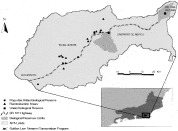
Fig. 1. Trypanosoma cruzi in Leontopithecus rosalia. Map of the golden lion tamarins program in Atlantic Coastal Rainforest of Rio de Janeiro, Brazil (Poço das Antas Biological Reserve, União Biological Reserve and Reintroduction Areas).
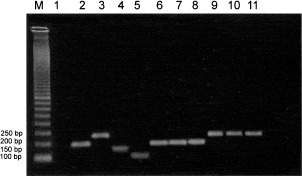
Fig. 2. Agarose gel electrophoresis of PCR products, corresponding to a hypervariable region of the mini-exon gene non-transcribed spacer, that are to characterize T. cruzi I (200 bp); T. cruzi II (250 bp); ZIII (150 bp) and T. rangeli (100 bp). Molecular weight markers (M) correspond to ϕ X DNA digested with Hae III. Lane 1, control negative; lane 2, Dm28c; lane 3, CLBrener; lane 4, Rb3 (Rhodnius brethesi – Barcelos, Amazonas); lane 5, San Agustin; lane 6, sloth (Bradypus torquatus); lane 7, opossum (Didelphis marsupialis); lane 8, rodent (Nectomys squamipedes); lane 9, golden lion tamarin (Leontopithecus rosalia); lane 10, re-captured golden lion tamarin (L. rosalia) and lane 11, vector (Panstrongylus megistus).
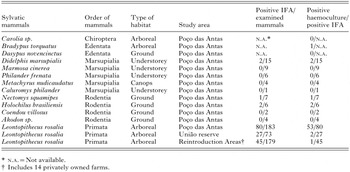
Table 1. Trypanosoma cruzi transmission cycles in the wild environment: serological and parasitological data of sylvatic mammals of the Atlantic Coastal Rainforest of Rio de Janeiro, Brazil

Table 2. Trypanosoma cruzi in Leontopithecus rosalia: serological conversion observed in golden lion tamarins from Poço das Antas Reserve, Reintroduction Areas and the União Biological Reserve, Atlantic Coastal Rainforest, Rio de Janeiro, Brazil
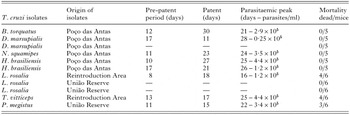
Table 3. Experimental infection of Trypanosoma cruzi isolates from sylvatic mammals and vectors in the Poço das Antas Biological Reserve, in the União Biological Reserve and in the Reintroduction Areas, Rio de Janeiro, Brazil
 You have
Access
- 31
- Cited by