Aggression and hostility relate to incident cardiovascular disease (CVD) and mortality (Chida & Steptoe, Reference Chida and Steptoe2009; Klabbers, Bosma, van den Akker, Kempen, & van Eijk, Reference Klabbers, Bosma, van den Akker, Kempen and van Eijk2013; Siegler, Peterson, Barefoot, & Williams, Reference Siegler, Peterson, Barefoot and Williams1992; Wong, Sin, & Whooley, Reference Wong, Sin and Whooley2014). High resting heart rate (HR) and blood pressure (BP) also relate to CVD and mortality (Menown et al., Reference Menown, Davies, Gupta, Kalra, Lang, Morley and Padmanabhan2013). Hostile and aggressive individuals might be expected to have a high HR and react strongly to aggressive challenges, and, indeed, some evidence supports this (Chida & Hamer, Reference Chida and Hamer2008; Suarez, Kuhn, Schanberg, Williams, & Zimmermann, Reference Suarez, Kuhn, Schanberg, Williams and Zimmermann1998; Suarez & Williams, Reference Suarez and Williams1989, Reference Suarez and Williams1990). However, we recently observed in an adult male sample that aggressive and hostile individuals typically had a low resting HR, and that a low HR was associated with relatively good health (Jennings, Pardini, & Matthews, Reference Jennings, Pardini and Matthews2017). However, the subset of aggressive/hostile individuals with relatively high HR remained at risk for CVD. Notably, studies have operationalized hostility and aggression through different self-report instruments. Evidence for cardiovascular risk has frequently been drawn from cynical hostility items (Cook–Medley) (Chida & Steptoe, Reference Chida and Steptoe2009), while our evidence also included self-reports of overt aggression (Buss–Perry hostility/aggression items).
Two meta-analytic reviews of the literature have found a consistent relation between low resting HR level and aggression (Lorber, Reference Lorber2004; Portnoy & Farrington, Reference Portnoy and Farrington2015). The relationship was present and similar in both cross-sectional and longitudinal studies and across types of aggression, for example, reactive aggression and violence. The earlier review (Lorber, Reference Lorber2004) reported marginal effects for adolescents, but the later review confirmed the effect across age, but with a smaller effect in adults (Portnoy & Farrington, Reference Portnoy and Farrington2015). In the studies reviewed, HR was largely defined as a continuous measure rather than defining thresholds for low and high HRs. Relative scaling defining low and high HRs permitted comparisons across development given the overall decrease in HR from childhood to adulthood. Lorber (Reference Lorber2004) also reported that greater HR reactivity to stress was related to aggression in adults, but this was not evident in children or adolescents. The nature of the relationship in adolescents may be particularly important given the emergence of risky, health-damaging behavior during this developmental period (Casey, Reference Casey2015; Crone, Duijvenvoorde, & Peper, Reference Crone, Duijvenvoorde and Peper2016; Duell et al., Reference Duell, Steinberg, Chein, Al-Hassan, Bacchini, Lei and Alampay2016). Notably, the relationship between HR and aggression/hostility emerges early in development (Ortiz & Raine, Reference Ortiz and Raine2004; Raine, Fung, Portnoy, Choy, & Spring, Reference Raine, Fung, Portnoy, Choy and Spring2014).
Does any existing relationship between aggression and low HR during adolescence carry into adulthood? Does the stability or change in this relationship have implications for health risk? We addressed these questions in a longitudinal sample, the Pittsburgh Youth Study (PYS), with psychophysiological assessments conducted once during adolescence and once during adulthood. Our prior work (Jennings, Pardini, & Matthews, Reference Jennings, Pardini and Matthews2017) was based on the adult assessments in this sample. In the PYS, a community sample was gathered beginning in elementary school with selection for individuals at higher risk for antisocial behavior (Fite, Raine, Stouthamer–Loeber, Loeber, & Pardini, Reference Fite, Raine, Stouthamer-Loeber, Loeber and Pardini2010; Loeber et al., Reference Loeber, Menting, Lynam, Moffitt, Stouthamer-Loeber, Stallings and Pardini2012; Loeber, Stouthamer–Loeber, & Farrington, Reference Loeber, Stouthamer-Loeber and Farrington2008). A subsample participated during adolescence in a psychophysiology study (Fite et al., Reference Fite, Raine, Stouthamer-Loeber, Loeber and Pardini2010; Gatzke–Kopp, Raine, Loeber, Stouthamer–Loeber, & Steinhauer, Reference Gatzke-Kopp, Raine, Loeber, Stouthamer-Loeber and Steinhauer2002; Loeber, Pardini, Stouthamer–Loeber, & Raine, Reference Loeber, Pardini, Stouthamer-Loeber and Raine2007). A majority of the individuals from this substudy were also available for testing in a subsequent study that assessed cardiovascular health and medical history (Boylan, Jennings, & Matthews, Reference Boylan, Jennings and Matthews2016) that occurred when the individuals were in early middle age. This sample allowed us to examine the stability of the key HR and HR reactivity variables as a function of developmental period and how these related to risk for CVD. Health indices were available in young adulthood so we could ask how psychophysiological measures from teen and adult years were related to self-reported health, metabolic risk, and BP.
We had three primary hypotheses. First, aggression would be related to low HR concurrently at both periods, based on the directionality shown in both groups in the meta-analytic reviews (Lorber, Reference Lorber2004; Portnoy & Farrington, Reference Portnoy and Farrington2015). Second, maintenance of low HR at both ages would be associated with relatively better health in adulthood compared to those with higher HR at both ages. Third, those with high aggression and high HR, particularly as adults, would show the greatest health risk relative to those with lower HR. Finally, we explored the positive and negative characteristics of individuals with different patterns of HR/aggression relationships over development. This was done to see whether particular sets of individuals might show psychological characteristics that might place them at future risk relative to our observations of their current health risk.
Method
Participants
Participants were recruited from the youngest cohort of the PYS (Loeber et al., Reference Loeber, Stouthamer-Loeber and Farrington2008), a longitudinal study of 503 boys initially recruited from Pittsburgh Public Schools in 1987–1988 when they were in the first grade; 849 boys were randomly chosen to undergo a multi-informant (i.e., parent, teacher, child report) screening that assessed early conduct problems, with half of the sample from the top 30% of the screening measure, and the rest randomly selected from the remainder. The boys’ mean age at screening was 6.9, and racial composition was predominately White (40.6%) and Black (55.7%). At age 16, a substudy was performed on the 335 boys available from the initial 503 boys. Attrition due to refusal, incarceration, and movement of residence is described in Raine et al. (Reference Raine, Dodge, Loeber, Gatzke-Kopp, Lynam, Reynolds and Liu2006).
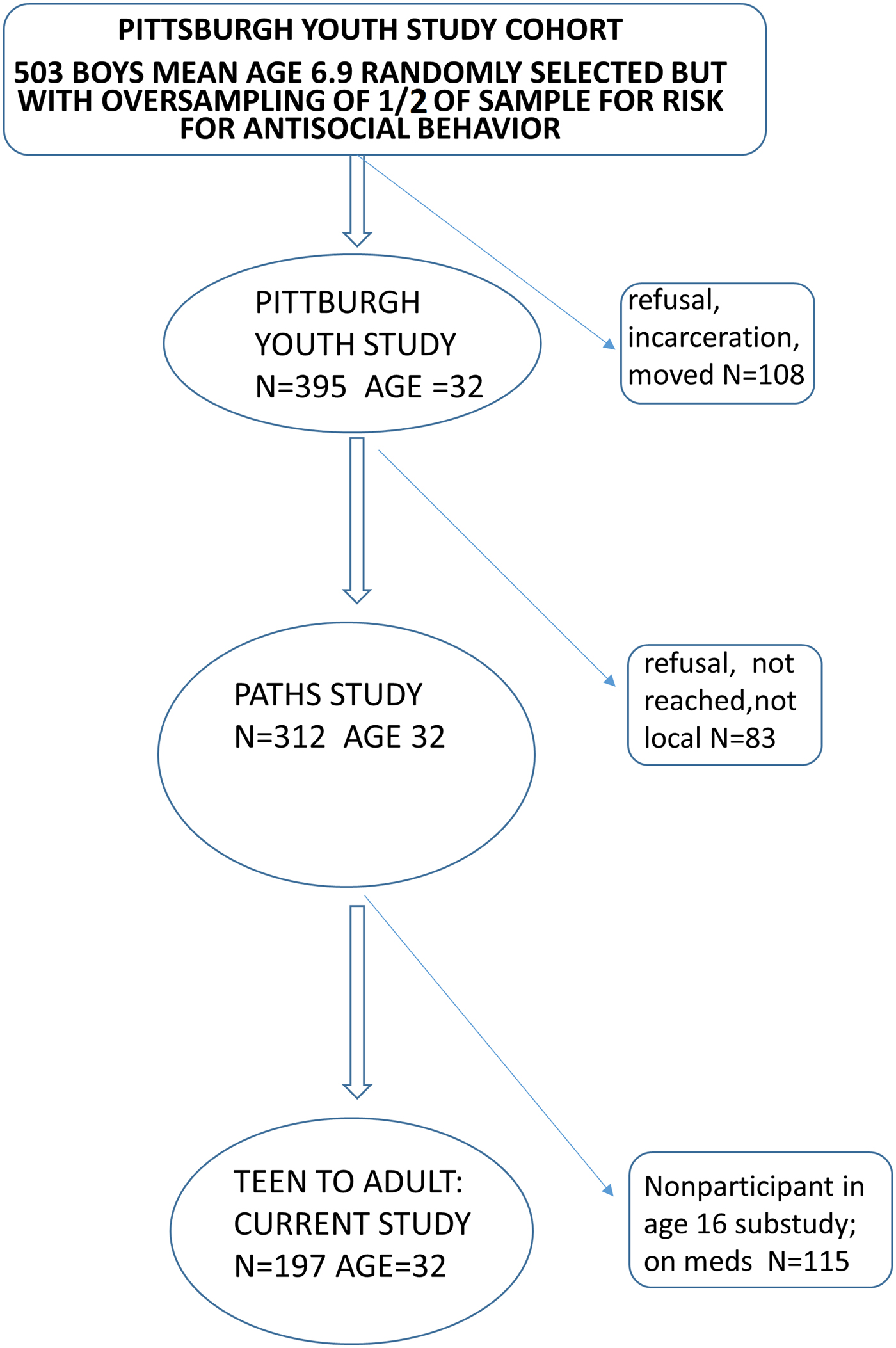
In adulthood (mean age = 32 years; range 30–34 years), PYS participants were contacted to participate in a study (termed the PATHS study) examining early developmental factors associated with risk for CVD. Eligibility criteria were still enrolled in PYS; not mentally disabled; not incarcerated; and alive living in the Pittsburgh area or planning on returning to Pittsburgh. Of the 395 eligible men, 312 (79%) participated in some or all of the protocol. Among those eligible but who did not participate, 22 declined participation, 19 failed to respond to messages or missed appointments, and 42 could not be located.
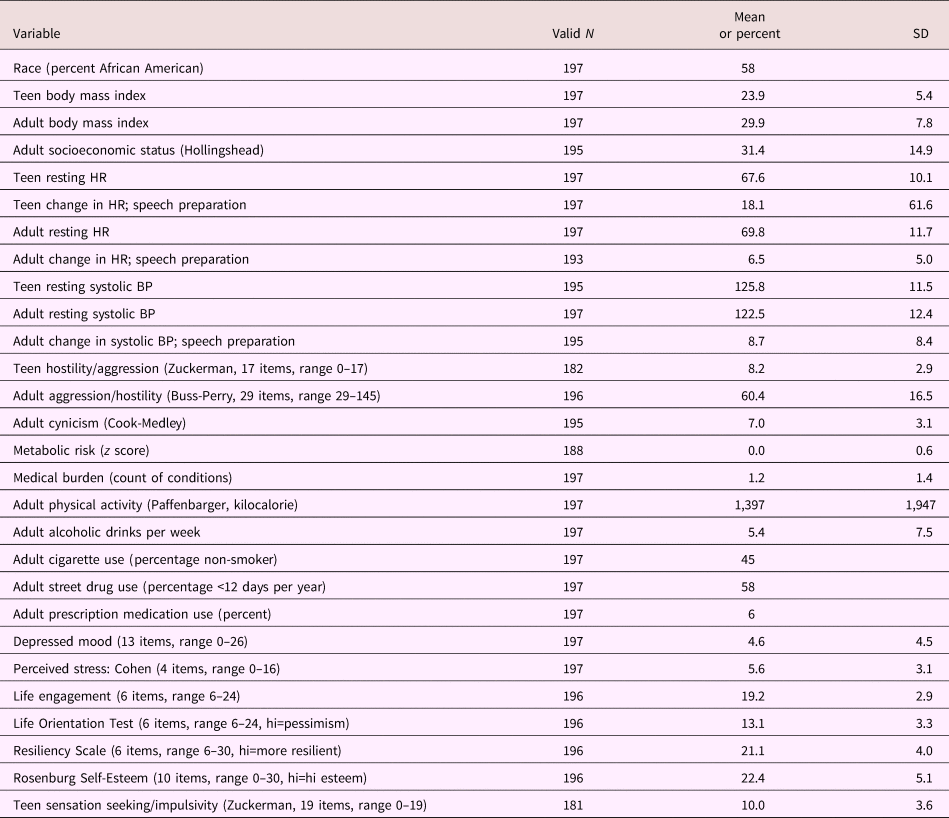
The current data are from 197 men so recruited who also participated in the PYS substudy at age 16 and who were not on prescribed medications influencing the autonomic nervous system, for example, beta blockers. Figure 1 presents a flow chart depicting the sample selection originating from the initial PYS recruitment. Table 1 presents the characteristics of these men at teen (mean age = 15.7, range: 14 to 18) and adult years (mean age 32.1, range: 31–34 years). Note that due to the missing data for some variables, the n varies slightly between analyses as different variables are assessed. This study was approved by the Institutional Review Board at the University of Pittsburgh, and all men provided written, informed consent.
Derivation of the current sample from the parent Pittsburgh Youth Study and the sample taken at middle age. Participant loss at the difference phases is indicated.

Characteristics of the sample

Procedure
Both examinations required multiple days with a portion of one day devoted to psychophysiological data collection. Consent and questionnaire administration typically occurred at another time. Participants were instructed not to eat, drink (including alcoholic and caffeinated beverages), smoke, or strenuously exercise within 3 hours of the laboratory study (teen study) or 8 hours (adult study). Participants were uniformly seated in a comfortable chair throughout the psychophysiological testing. In both examinations, a 5-minute resting period preceded the administration of each task. In the adult study, a preliminary 10-minute resting period was also administered while watching a nature video. This video was also used in the pre-task rest periods. In the teen study, rest periods required quiet sitting only. Tasks that were comparable between the examinations were the rest periods and preparation for a speech about a personally stressful event; in the adult study, preparation was for 3 minutes and the speech itself 4 minutes; for the teen task, preparation and speech were both 2 minutes. Participants were told that they would be required to perform the speech in the presence of the experimenter, that is, the experimenter remained in the subject room during the delivery of but not the preparation for the speech. Reactivity results are derived from the speech preparation periods for both the adult and teen data.
Measures
Aggression and hostility
Measures related to aggression and hostility were available at both age periods, but the exact scales differed. At the teen age (16 years), the Zuckerman measure of aggression covering hostility and verbal aggression was available. The verbal aggression and aggression/hostility scales were highly correlated, r = .91. Current analyses used as the teen score the combined verbal aggression/hostility scale (Zuckerman, Kuhlman, Joireman, Teta, & Kraft, Reference Zuckerman, Kuhlman, Joireman, Teta and Kraft1993; Zuckerman, Kuhlman, Thornquist, & Kiers, Reference Zuckerman, Kuhlman, Thornquist and Kiers1991). The combined sensation seeking and impulsivity Zuckerman scales were also examined due to the theories relating low heart to both of these traits (see Portnoy et al., Reference Portnoy, Raine, Chen, Pardini, Loeber and Jennings2014). At the adult period, the Buss–Perry scale was used covering physical aggression, verbal aggression, anger, and hostility (Buss & Perry, Reference Buss and Perry1992). To maintain comparability with the teen combined score and due to the inter-correlation of subscales and high relationship (r's > .75) with the total score, the overall Buss–Perry score was used for adults in analyses. The Cook–Medley cynical hostility scale (13-item version) assessed at the adult time period was also examined due to its relationship to CVD incidence and mortality (Cook & Medley, Reference Cook and Medley1954). However, the Cook–Medley scale was correlated r = .49 with the Buss–Perry total score, and it related less strongly to teen aggression/hostility. Given these relationships, we chose to report only analyses using the Buss–Perry total score for the adult index.
Personality/behavioral measures
A set of inventory measures was used to characterize men in their negative emotions and positive characteristics. Level of perceived stress was assessed with the Perceived Stress Scale (Cohen, Kamarck, & Mermelstein, Reference Cohen, Kamarck and Mermelstein1983). Recent depressed mood was assessed with the 13-item Recent Mood and Feelings Questionnaire (short form) (Angold, Costello, Messer, & Pickles, Reference Angold, Costello, Messer and Pickles1995). Higher scores indicated more stress and depressive symptoms.
Purpose in life was measured with the six-item Life Engagement Test (Scheier et al., Reference Scheier, Wrosch, Baum, Cohen, Martire, Matthews and Zdaniuk2006). Participants rate the extent of their agreement to statements such as, “I have lots of reasons for living,” on a 4-point scale. Optimism was evaluated through the Life Orientation Test—Revised (Scheier, Carver, & Bridges, Reference Scheier, Carver and Bridges1994). This scale has six items (e.g., “In uncertain times, I usually expect the best”), and ratings are made on a 4-point scale. Self-esteem was evaluated using the Rosenberg Self-Esteem Scale (Rosenberg, Reference Rosenberg1965). Participants rated the extent to which they agreed with 10 items (e.g., “I feel that I have a number of good qualities”) on a 4-point scale. The brief resilience scale assessed this trait with six items (e.g., “I tend to bounce back quickly after hard times”), and ratings are made of a 5-point scale with high scores indicating greater resilience (Smith et al., Reference Smith, Dalen, Wiggins, Tooley, Christopher and Bernard2008). For all measures, higher scores reflect greater psychological resources.
Health behaviors and socioeconomic status
Participants were asked about their health using questions from the PYS. They reported whether they had smoked cigarettes in the last year and the average number of cigarettes smoked per day; responses were coded into never or not in the last year, <10 cigarettes per day, or >10 cigarettes per day. Participants were queried on street drug use. Responses were coded into never, <12 days per year, or >12 days per year. Reported number and frequency of alcoholic drinks were indexed as drinks per week. The Paffenbarger physical activity assesses average kilocalories expended in leisure activities, walking, and stair climbing per week (Paffenbarger et al., Reference Paffenbarger, Hyde, Wing, Lee, Jung and Kampert1993).
Participants were also asked educational attainment and current occupation. These were coded into the Hollingshead occupational status and educational categories and summed after weighting the occupation relatively more, as is standard (Hollingshead, Reference Hollingshead1975).
Psychophysiological measures
Electrocardiogram as well as thoracic and calf impedance measures were collected continually during the experimental session. Impedance measures were not analyzed given the aims of the current report. A modified Lead 2 electrocardiogram was used and attachment and collection followed procedures stipulated in the guidelines for this measure (Jennings et al., Reference Jennings, Berg, Hutcheson, Obrist, Porges and Turpin1981). This and the signal from a respiratory belt were transduced in the adult study by Biopac System (Goleta, CA) modules (electrocardiogram and RSP modules of 100C series) and in the teen study by Grass Instruments model 12 modules. All signals were digitized at a 1000-Hz sampling rate with a 16-bit analog to digital converter and stored for analysis by MindWare Technologies (Gahanna, OH) software (adult study) or laboratory software (teen study). Resting BP was available from both examinations. In the PATHs examination, BP was assessed with a CARESCAPE Dinamap V100 Vital Signs Monitor (GE Medical Systems Information Technologies, Inc.) with an arm size appropriate occluding cuff place on the participant's nondominant arm. The automated BP monitor collected BPs every 2 minutes during the rest and speech preparation tasks during the adult study. Comparable BP measurements were taken only during the baseline during the teen study with the auscultatory technique. All values were expressed as average values for a condition, that is, rest or preparation for speech.
Health outcomes
Adult metabolic measures
Metabolic factors were assessed via blood draw at the adult session but were not available from the teen session. Serum glucose was determined by electroimmunoassay. The lab coefficient of variation (CV) is 2.1%. Insulin was measured using a radioimmunoassay procedure, with a lab CV of 2.6%. Total cholesterol, HDL-C, and triglycerides were determined by conventional enzymatic procedures. The lab CV between runs are 1.3% and 2.1%, respectively. LDL-C was calculated indirectly using the Friedewald, Levy, and Fredrickson (Reference Friedewald, Levy and Fredrickson1972) equation: LDL-C = Total cholesterol – HDL-C – 0.2 (Total Triglycerides).
Metabolic risk
Measures composing the metabolic syndrome were derived from the ATP-III standard. Due to the age of our participants, the binary metabolic syndrome score was not used, but each of the components was measured and converted to a z score based on our sample. Components were then combined using unit weighting (Fabrigar, Wegener, MacCallum, & Strahan, Reference Fabrigar, Wegener, MacCallum and Strahan1999; Jennings et al., Reference Jennings, Heim, Kuan, Gianaros, Muldoon and Manuck2013). Metabolic risk factors include abdominal obesity (waist circumference), triglycerides, HDL-C (weighted – 1 when combined), and fasting glucose (systolic blood pressure, SBP, was not included given the redundancy with our separate analyses of this variable). Participants taking prescription medication for lipid reduction or diabetes were scored as missing for the metabolic risk score.
Blood pressure
SBP from the initial rest period of the adult study was used as an index of the typical BP of the individual. In the interest of protecting against experiment-wise error, we selected only a single BP index and chose SBP due to its known relationship to subsequent CVD (Izzo, Sica, & Black, Reference Izzo, Sica and Black2008).
Medical burden
Medical burden was determined from a clinical interview covering common medical conditions: cardiovascular, asthma, epilepsy, arthritis, diabetes, endocrine, digestive, pulmonary, and neurologic. Participants were asked, “Has a nurse or doctor ever told you that you have…”. Burden was determined by a simple sum of the conditions reported (Cundiff, Boylan, Pardini, & Matthews, Reference Cundiff, Boylan, Pardini and Matthews2017).
Results
Participant characteristics
The characteristics of the participants at teen and adult years are shown on Table 1. The initial n is 197, but technical and non-reporting loss decreased the n as shown for some variables.
Stability of cardiovascular and aggression/hostility indices
Prior to examining our first hypothesis, the stability of HR and aggression measures was determined. Both HR and aggression were somewhat stable over the teen to adult years. Pearson product moment correlations showed significant stability over teen to adult ages for most indices, albeit uniformly accounting for less than 25% of the variance. Correlations were significant at p < .005 or better for HR level (r = .37), for HR reactivity (r = .20), and for SBP (r = .48). Teen aggression/hostility was correlated r = .34 (p < .005) with adult aggression/hostility.
Bivariate relationships of cardiovascular, aggression/hostility, and health
Hypothesis 1 suggesting that aggression/hostility and HR would be related concurrently at both ages was confirmed. Teen HR was correlated r = –.21, p < .01 with teen aggression/hostility. Adult HR was correlated r = –.21, p < .01 with adult aggression/hostility. Teen HR was not significantly related to adult aggression/hostility nor was adult HR significantly related to teen aggression/hostility. HR change to speech preparation was unrelated to aggression/hostility at either age.
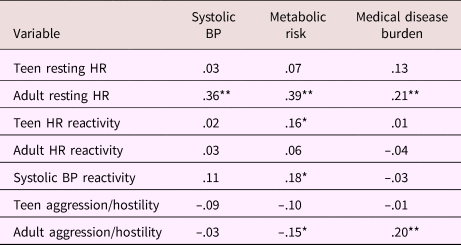
The bivariate relationship of HR to health within adolescent and adult ages was first examined prior to examining the developmental hypotheses. Teen HR was unrelated to adult health, but high HR in adulthood was related to poorer health at adulthood. Table 2 shows the relationships between teen and adult HR and BP measures and adult indices of health. Though aggression was related to lower HR at both ages, higher adult resting HR was significantly related to each of the health indices: higher SBP, greater metabolic risk, and larger medical disease burden. SBP reactivity as an adult as well as HR reactivity as a teen were related to greater metabolic risk; HR reactivity as an adult was unrelated to health indices. Adult indices of aggression/hostility were related to medical burden but inversely to metabolic risk.
Correlation of physiological measures at both ages to adult health indices (Teen aggression/hostility was unrelated to subsequent health indices.)

*p < .05, **p < .01.
Note: N varies between 186 and 197. Teen aggression/hostility was unrelated to subsequent health indices.
Developmental patterns of HR and aggression/hostility
Our hypotheses suggested that low HR across both teen and adult years would be related to relatively better health (hypothesis 2) and that the combination of high aggression/hostility and high HR across teen and adult years would be most strongly related to poorer health (hypothesis 3). The influence of stability of low and high HR as well as change over time was examined by sorting the participants into those maintaining similar ranking within the samples over time and those changing between teen and adult years. A similar, but separate, sorting was done for aggression/hostility. Quartiles of HR level and aggression/hostility measures (pairing Zuckerman teen aggression/hostility with adult Buss–Perry total aggression/hostility) were computed for teen and adult measures. Participants were then characterized into one of five groups: (a) low at both time points (both quartile 1; quartile 1 or 2 at either age but not 2 at both), (b) transitioning from low to high (quartile 1 as a teen to quartiles 3 or 4 as adult, or from quartile 2 to 4), (c) mid-level at both ages (consistently in 2nd or 3rd quartile), (d) transitioning from high to low (3rd or 4th quartile as teen to 1st or 2nd as adult) , and (e) high at both time points (4th quartile at both ages or 4th quartile at one age combined with 3rd quartile at the other). A general linear model (Statistica 64, Dell, Tulsa OK) then examined how these developmental patterns for HR and for aggression/hostility related to health variables. Prior to these analyses, we examined variables that might potentially confound any relationship between health variables and HR or aggression/hostility. Given the number of potential confounding variables relative to our sample size, we sought to remove variables as possible covariates if they showed minimal relationships with health or HR. Potential covariates examined and subsequently not included in models were: the risk score used to guide sampling in the PYS, physical activity, and street drug use. Covariates retained were race, adult socioeconomic status (SES), weight gain, alcohol, and tobacco use.
General linear models were run separately for adult BP, metabolic scores, and medical burden. The model was run first with HR developmental group, aggression/hostility developmental group, interaction of HR and aggression/hostility, and covariates of race and adult SES. A second model examined the further effect of adult behavioral risk factors: HR developmental group, aggression/hostility group, interaction of HR, and aggression/hostility with covariates of race, adult SES, weight gain, alcohol, and tobacco use.
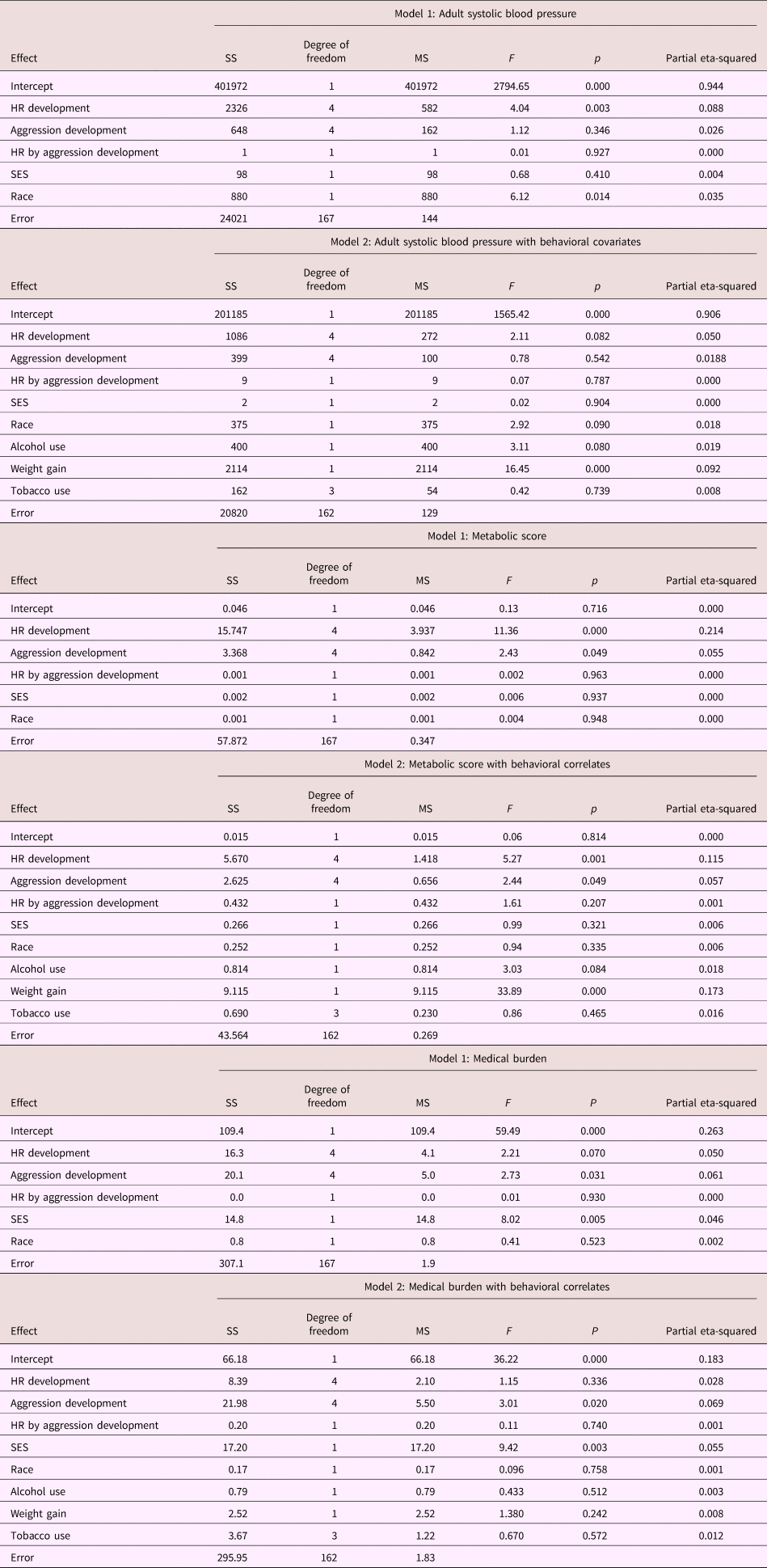
Table 3 presents the resulting F values for the HR development groups and the aggression development groups for the two models as applied separately to each of the health variables. In model 1, HR development group relates significantly to SBP and the metabolic score, and the aggression/hostility development group relates significantly to the metabolic score and medical burden. In Model 2, weight change was significantly related to greater SBP and metabolic score, but the relationships of HR development and aggression/hostility development groups to the metabolic score remained significant. Among the covariates, the Black race significantly related to higher SBP, and higher Hollingshead SES index was significantly related to less medical burden.
Health outcomes as a function of HR and the aggression/hostility developmental pattern

HR = heart rate; SES = socioeconomic status.
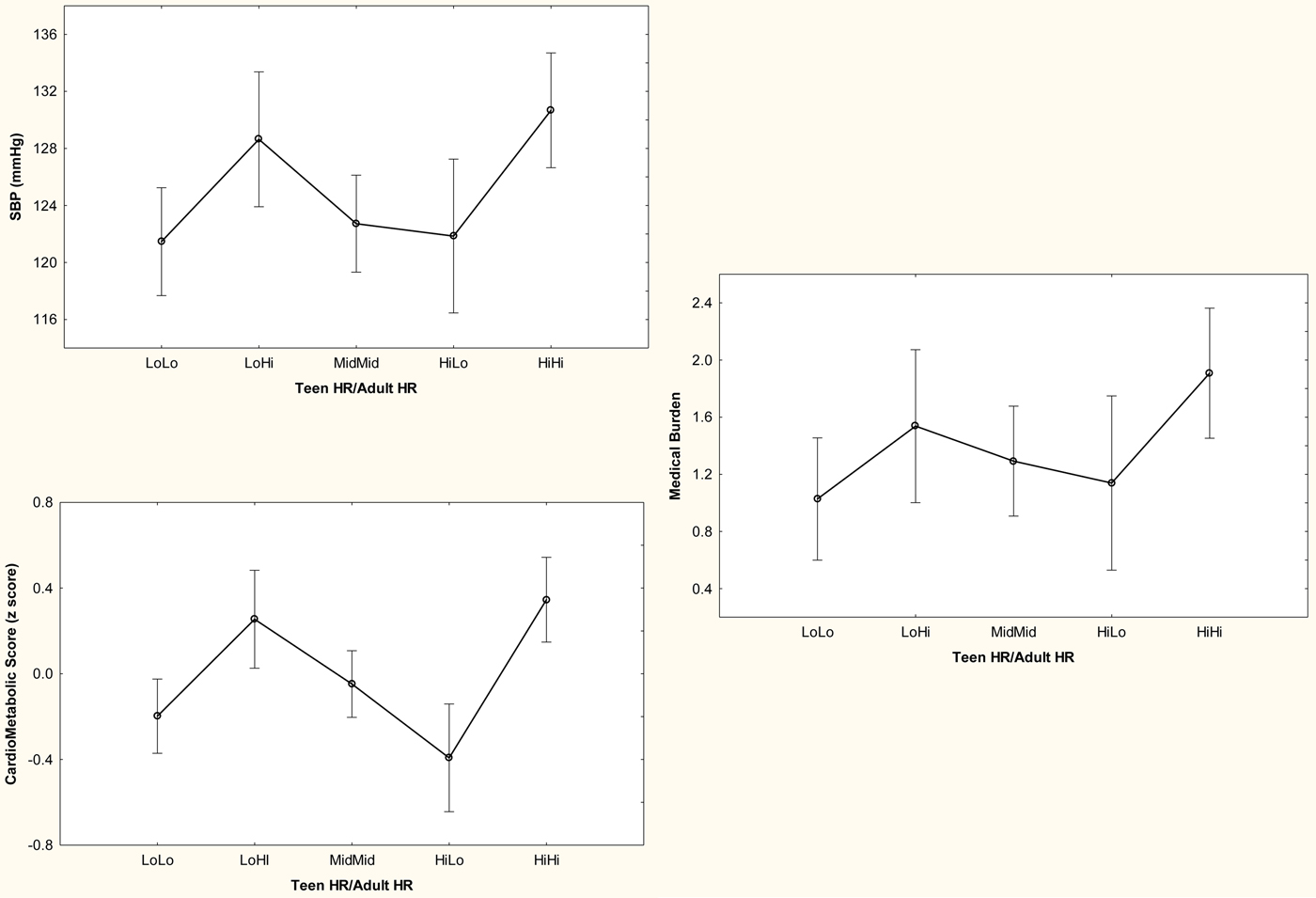
Figure 2 illustrates the pattern of results relating the HR development pattern to the three health variables. The results show a consistent relation between HR and health. The relations are significant for SBP and metabolic risk; low HR in adulthood is associated with relatively better health, and high HR in adulthood is associated with relatively poorer health. Specific tests of hypothesis 2 did not show that low HR across teen and adult periods was associated with better health relative to other developmental patterns. Individual comparisons showed that those with a relatively low HR at both teen and adult periods did show better health across all indices relative to those with a consistently high HR (p’s < .007). Their health risk, however, was not more favorable than those with consistently medium levels of HR or those going from high HR as a teen to low HR as an adult. Similarly, comparisons for those with consistently high HR showed that their risk was comparable to those transitioning from low HR as a teen to high HR as an adult. Overall, the comparisons support the relation of poor health to high HR as an adult and question our hypothesis of suggesting that continuity of low HR would be particularly healthful and that continuity of high HR would be particularly unhealthy.
Adult SBP, metabolic risk, and medical burden each shown separately as a function of the developmental pattern group for HR level. Whiskers are 95% confidence intervals. On the x-axis, LoLo is low HR as a teen and low as an adult; similarly each initial label is teen level and second label is adult level. Mid is mid-level and Hi is high level. See text for combinations of quartiles creating these levels. Covariate adjusted plots.

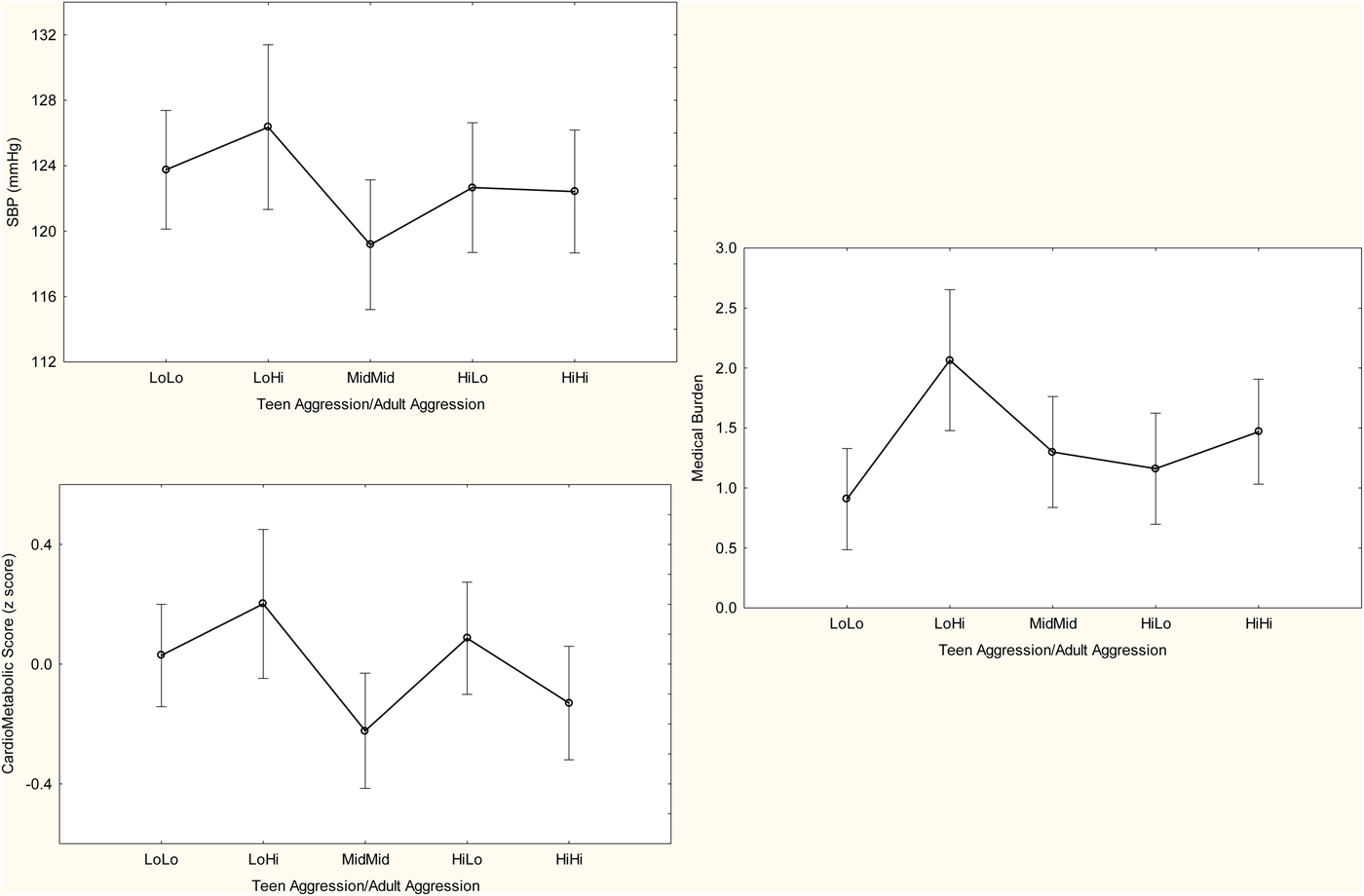
Figure 3 shows the pattern of results for the influence of aggression/hostility development pattern on the health variables. Those high in aggression/hostility as an adult but low in teen years appear to be higher in metabolic score and medical burden as an adult. Individual comparisons supported the relatively poor health of those transitioning from relatively low aggression/hostility as a teen to relatively high as an adult. This pattern showed a greater mean metabolic score than those with middle level aggression/hostility at both ages (p = .009) and those with consistently high levels (p = .04). Those with the relatively low to relatively high aggression/hostility pattern over age also showed a greater medical burden as an adult relative to all other groups except the group high in aggression/hostility at both ages (p’s < .048).
Relations of aggression/hostility development patterns between Teen/Adult ages shown separately to SBP, metabolic score, and medical burden. Means are adjusted for all covariates. Whiskers indicate 95% confidence intervals. On the x-axis, LoLo is low aggression/hostility as a teen and low as an adult; similarly each initial label is teen level and second label is adult level. Mid is mid-level and Hi is high level. See text for combinations of quartiles creating these levels.

The interaction term shown in Table 3 tested hypothesis 3. This term was created by multiplying mean centered z scores for HR and aggression/hostility at both age periods. If the conjunction of higher HR and higher aggression/hostility within age period led to poorer health than other combinations of HR and aggression/hostility, then this interaction should be statistically significant (and support hypothesis 3). Both the teen and adult interactions, however, failed to yield any significant relationships to health variables (Table 3).
Sensitivity analyses eliminating those on medications did not significantly alter the results for the HR developmental pattern, but the relationship of the aggression/hostility developmental pattern to the medical burden was reduced to just below conventional significance levels.
Exploration of HR combined aggression/hostility groups. Given that both HR and aggression/hostility developmental patterns related to health outcomes, we performed a set of exploratory analyses to see whether combined HR and aggression/hostility patterns were also related to available personality and behavioral variables at the adult time period because HR relationships with health risk were clear in adults only. Given the descriptive nature of these analyses and the modest and variable effects of race and SES in our primary analyses, simple one way analyses of variance were performed without covariates. Analyses, however, were repeated separately within race groups, and results were comparable, particularly for the adult HR/aggression groups.
We first asked whether characteristics as a teen were related to adult personality and behavioral variables. We then asked the same question but relating adult HR and aggression/hostility characteristics to concurrent personality and behavioral variables. This was accomplished with median splits for HR and for aggression/hostility at the separate age levels. Four groups were formed: (a) low HR, low aggression/hostility; (b) low HR, high aggression/hostility; (c) high HR, low aggression/hostility; and (d) high HR, high aggression/hostility. These groupings based on the teen data were then related to adult personality and behavioral characteristics; the separate groupings based on the adult data were similarly related to the concurrent personality and behavioral characteristics.
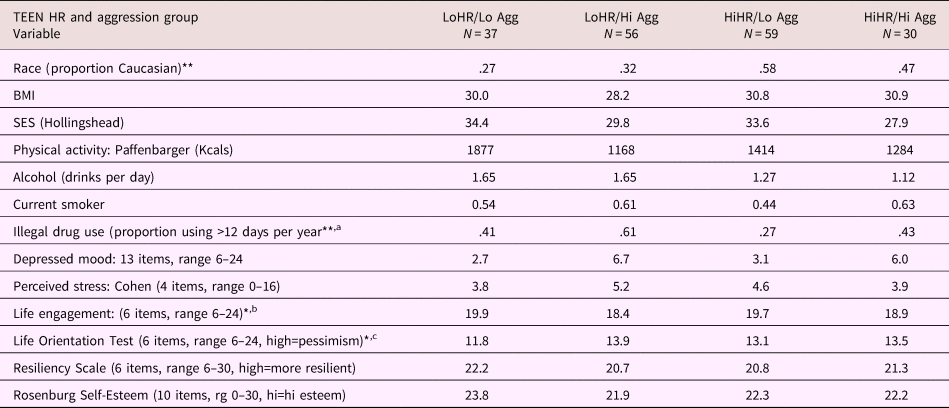
Tables 4 and 5 show the results of these analyses. Overall group differences are indicated, as are the results for post hoc Tukey honestly significant difference tests that were performed to compare means showing significant overall group differences. As seen in Table 4, teens with below median HR and above median aggression/hostility showed as adults greater street drug use, marginally less life engagement, and greater pessimism relative largely to the groups with low aggression/hostility.
Adult characteristics of individuals selected into different groupings of HR and aggression/hostility as assessed when a teen

*p < .05, **p < .01 based on analysis of variance comparison of four groups, main effect: F (3,177–178) ≥ 2.96 or chi square, df = 3. Individual comparison results following analysis of variance: aDifference between LoHr/HiAgg and HiHR/LoAGG, p < .01. bDifferences between LoHR/HiAgg. and both HiHR/LoAgg, and LoHR/LoAgg, p < .10. cDifference between LoHR/HiAgg and LoHR/LoAgg, p = .02. dDifference between LoHR/HiAgg and both LoHR/LoAgg and HiHR/LoAgg, p < .01 and both LoHR/LoAgg and HiHR/LoAgg, p ≤ .01.
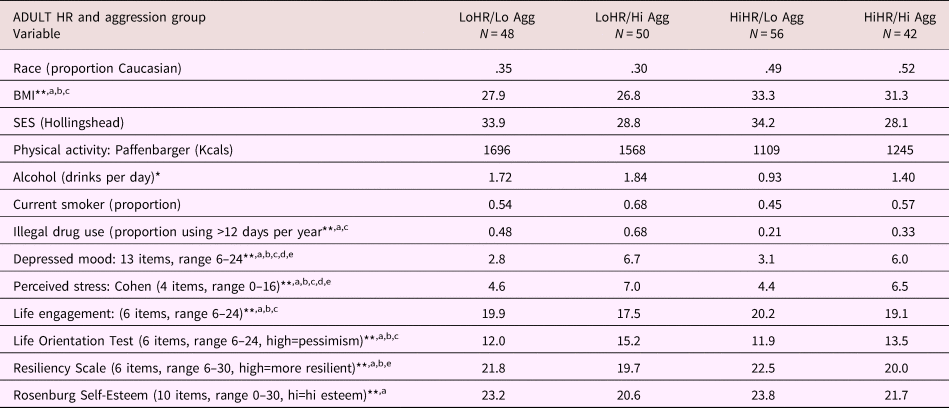
Adult characteristics of individuals selected into different HR and aggression/hostility groups at the adult age

*p < .05, **p < .01 based analysis of variance comparison of four groups F (3,177–178) ≥ 2.96 or chi square, df = 3. Individual comparison results following analysis of variance: aDifferences between LoHR/HiAgg and HiHR/loAgg significant at p < .03 or better. bDifferences between LoHR/HiAgg and LoHR/LoAgg different at p < .05 or better. cDifferences between LoHR/HiAgg and HiHR/HiAgg, p < .05. dDifference between LoHR/LoAgg and HiHR/HiAgg, p < .05. eDifference between HiHR/LoAgg and HiHR/HiAgg, p < .05. fDifference between both LoHR/LoAgg and HiHR/LoAgg compared to both LoHR/HiAgg and HiHR/HiAgg, p = .02.
The adult age grouping of HR and aggression/hostility, shown in Table 5, yielded a plethora of differences centered on differences between those with below median HR and above median aggression/hostility as an adult. This group differed with groups with low aggression/hostility by showing greater alcohol use, street drug use, depressive affect, perceived stress, and pessimism but less body mass index (BMI), life engagement, resilience, and self-esteem. The same pattern was significant for differences with the HiHR/HiAggHos group except for the absence of a significant difference in resilience and the presence of a significant difference in street drug use.
Due to hypotheses that low HR initiated sensation seeking/impulsivity, we further examined the correlation of sensation seeking assessed as a teen with concurrent HR and aggression/hostility as well as adult HR, aggression/hostility, and health variables. Sensation seeking/impulsivity was correlated r = –.21 (p = .003) with teen HR and r = .34 (p < .001) with teen aggression/hostility. It was correlated r = –.03 (ns) with adult HR and r = .25 (p < .001) with adult aggression/hostility. Adult SBP (r = –.15, p = .03) was related to teen sensation seeking/impulsivity, but other health variables were not correlated. The relationship between teen HR and teen aggression/hostility remained statistically significant (r = –.16, p = .03) when teen sensation seeking/impulsivity was partialled out of the relationship. The reduction in variance explained due to the addition of sensation seeking/impulsivity was marginally significant (p = .05).
Discussion
The current results verified our initial hypothesis regarding the stable association between low HR and aggression/hostility (Lorber, Reference Lorber2004; Portnoy & Farrington, Reference Portnoy and Farrington2015). Both teen and adult HR levels related to concurrent aggression. Relations were modest but present and consistently showed that lower HR was related to higher levels of aggression/hostility. Our results support the presence of the relationship in adults as well as adolescents — an age range where the evidence was previously unclear (Lorber, Reference Lorber2004), although it was supported in the later meta-analysis (Portnoy & Farrington, Reference Portnoy and Farrington2015). Prior reports (Chida & Steptoe, Reference Chida and Steptoe2009; Klabbers et al., Reference Klabbers, Bosma, van den Akker, Kempen and van Eijk2013) suggest both that higher cynicism, aggression, and hostility are related to greater cardiovascular risk and that greater cardiovascular reactivity is related to cardiovascular risk. In the current study, hostility/aggression was not related to higher cardiovascular levels and reactivity at either age, although hostility/aggression as an adult was related to greater medical burden.
Low HR has been interpreted variously as indicating a state of low arousal that then leads to sensation seeking or indicates fearlessness. Aggressive behavior has large genetic components, and the relationship of low HR to aggression seems largely if not entirely genetically determined (Baker et al., Reference Baker, Tuvblad, Reynolds, Zheng, Lozano and Raine2009; Tuvblad, Narusyte, Grann, Sarnecki, & Lichtenstein, Reference Tuvblad, Narusyte, Grann, Sarnecki and Lichtenstein2011; Tuvblad, Wang, Bezdjian, Raine, & Baker, Reference Tuvblad, Wang, Bezdjian, Raine and Baker2016). Given the genetic basis, low HR has been seen as a precursor of aggressive behavior, though subsequent links between HR and psychological traits and social exposures remain unclear (Latvala, Kuja-Halkola, Almqvist, Larsson, & Lichtenstein, Reference Latvala, Kuja-Halkola, Almqvist, Larsson and Lichtenstein2015; Raine, Reference Raine2015). Portnoy et al. (Reference Portnoy, Raine, Chen, Pardini, Loeber and Jennings2014) reviewed these interpretations and provided a model suggesting that impulsive sensation-seeking and not fearlessness partially mediates the relationship between low HR and aggression/non-violent delinquency (see also Glenn & Raine, Reference Glenn and Raine2014).
Earlier work in a large Dutch sample also supported the importance of sensation-seeking, but this was confirmed among only adolescent boys, not girls (Sijtsema et al., Reference Sijtsema, Veenstra, Lindenberg, van Roon, Vernulst, Ormel and Riese2010). Choy et al. (Reference Choy, Raine, Portnoy, Rudo-Hutt, Gao and Soyfer2015) supported a mediation model with a causal flow from social adversity to low HR to increased aggression/antisocial behavior. Our results are generally consistent with these perspectives as sensation-seeking/impulsivity was related to our teen index of aggression/hostility. Sensation seeking/impulsivity did not, however, mediate the relationship between HR and aggression/hostility. Teen aggression/hostility was related to both low HR and sensation seeking/impulsivity. The relationship of low HR and teen aggression/hostility remained but was marginally reduced after sensation seeking/impulsivity was covaried. These relationships are cross-sectional and as such are far from definitive, but somewhat consistent with the view that low HR may initiate sensation seeking/impulsivity in a portion of individuals with low HR. Indices of fearlessness were not available so we cannot comment on the alternative interpretation of the relationship. However, the concept of low arousal if defined as a physiological state common to all indices of sympathetic activation and parasympathetic de-activation can be generally questioned (Berntson et al., Reference Berntson, Cacioppo, Binkley, Uchino, Quigley and Fieldstone1994; Lacey & Lacey, Reference Lacey, Lacey, Obrist, Black, Brener and DiCara1974; Raine, Reference Raine2002) and seems questionable in this dataset, given the absence of any positive correlation of teen HR level with SBP or HR response to the speech challenge. Low HR could specifically indicate greater parasympathetic cardiac influence. Prior work including HR variability indices of parasympathetic influence, however, has not been entirely consistent with this view; Raine (Reference Raine2002) reviews these findings and provides a comprehensive examination of developmental factors related to antisocial behavior.
Health in adulthood was related to both HR level and aggression/hostility. Higher HR in adulthood was related to high BP, more medical burden, and metabolic risk. Higher adult aggression/hostility was related to greater medical burden. Reactivity of SBP was also related to metabolic risk. The relationship of HR level to health as an adult was surprisingly similar across available health measures — metabolic risk, prevalence of medical conditions, and SBP.
Developmental patterns
We did not support our second hypothesis that maintenance of low HR at both ages would be associated with relatively better health in adulthood. Compared to those with higher HR, those with intermediate HR levels or transitioning from high HR as a teen to low HR as an adult showed comparable health to those with stable low HR. We also did not support our third hypothesis that the combination of high HR and high aggression/hostility, particularly as adults, would be particularly toxic to health. The developmental pattern of sustained high HR or a transition from low HR in teen years to high HR in adult years was, however, most strongly related to poorer health status. Individuals with low HR as a teen and adult were thus somewhat protected from poor health outcomes despite hostile/aggressive behavior. Aggression/hostility remained only modestly related to health variables regardless of HR level. Trends were consistent with epidemiological work showing poor health among those with life-course persistent and adolescent onset conduct problems (Odgers et al., Reference Odgers, Caspi, Broadbent, Dickson, Hancox, Harrington and Moffitt2007). Research examining teen BMI and change in BMI from teen to adulthood has suggested that HR and BMI are closely related, and variance explained by our HR developmental pattern was reduced significantly when change in BMI was added as a predictor in analyses of adult SBP and metabolic risk. Neither BMI (result not shown) nor weight change when added as predictors, however, eliminated the relationship between metabolic risk and the differing patterns of HR change between teen and adult years. The pattern of results suggested that weight gain was related to an increase in average resting HR and that both then were related to higher SBP and greater metabolic risk.
An exploratory analysis was done to characterize the individuals with different combinations of HR level and aggression at teen and adult years. The combination of low HR and high aggression/hostility as a teen was more common among African Americans and related to adult street drug use, pessimism, and low life engagement. As an adult, low HR and high aggression/hostility continued to relate to street drug use, pessimism and low life engagement, and additional relationships emerged with greater alcohol use, depressed mood, perceived stress, less resilience, and low self-esteem. These individuals with low HR and high aggression/hostility did, however, maintain a lower BMI relative to other adult groupings. These results suggest that, despite current reasonable cardiovascular health, those with low HR and high aggression used drugs and alcohol and expressed pessimism about their future, that is, they generally reported poor psychological health. The resolution of these paradoxical relationships may require examination at later age periods. A possible scenario is that these individuals are not at risk for CVD morbidity/mortality in middle age, but will be with aging, because the latter risk factors are most clearly associated with chronic diseases of aging. These results bear some resemblance to two recent reports on a longitudinal sample of African Americans from the southern US. In these studies (Brody et al., Reference Brody, Yu, Chen, Miller, Kogan and Beach2013; Miller, Brody, Yu, & Chen, Reference Miller, Brody, Yu and Chen2014), relative SES-related disadvantage was combined with a composite measure of positive development, self-control/competence. Over ages from late childhood to early adulthood, the development of health risk and psychological risk, for example, depressive mood was compared to the SES and self-control measures. The result (Brody et al., Reference Brody, Yu, Chen, Miller, Kogan and Beach2013) most similar to the current result was the finding that poorer health was related to positive development/self-control among those with a lower SES. The combination of positive psychological characteristics and poor health is related to the pattern in our participants with higher HR who show more positive characteristics than the participants with low HR and high aggression/hostility. Numerous differences between these studies and the current one preclude definitive conclusions, but taken together they do suggest that positive psychological and health habit characteristics cannot be uniformly assumed to lead to reduced health risk. The relatively good health at early middle age of aggressive/hostile individuals with low HR may be consistent with evolutionary views, suggesting that those with an expectation of a short life span show different behavioral characteristics than those with a longer expectation (Ellis & Boyce, Reference Ellis and Boyce2008; Ellis et al., Reference Ellis, Del Giudice, Dishion, Figueredo, Gray, Griskevicius and Wilson2012; Ellis & Del Giudice, Reference Ellis and Del Giudice2014).
Limitations
Our study has some limitations. Only two developmental periods were examined limiting our ability to look for mediation of changes in HR and hostility/aggression. The only comparable reactivity task between teen and adult ages was speech preparation/speech task. A reactivity task more clearly designed to elicit hostile/aggressive psychological engagement might have yielded different relationships. We also acknowledge the complexity of hostility/aggression and note our limited operationalization of the concept at each of the two ages studied. Although we did control for race in our analyses, we were unable to specifically examine important factors related to race, for example, experience of discrimination. We were only able to examine men, although HR and hostility/aggression are related in women (Portnoy & Farrington, Reference Portnoy and Farrington2015).
In sum, these developmental patterns seem to identify two groups of men with distinctive physiological profiles that then relate differently to early middle age health outcomes/health risk factors. One group with high HR at teen and adult years, or who are transitioning to high HR, shows substantial health risk at early middle age. A significant portion of this risk may be related to increase in BMI, which becomes related to HR during adulthood. The other group with consistently low HRs or transitioning to low HR in adulthood is characterized by aggressive/hostile tendencies, but also by relatively good health. Any increased cardiovascular risk in this group due to aggression/hostility must occur at later ages.
A number of clear implications can be drawn from our study that should guide future research. First, although low HR relates to a relatively healthy profile at early middle age, it relates to an unhealthy psychological profile that may presage later health risk. Research on low HR and health in middle and later age is clearly required. If health risk does increase with age, a clear opportunity exists at early middle age for psychological intervention designed to improve coping while maintaining relative good health in those with low HR. Second, despite indications of a genetic underpinning, low HR as a teen does not uniformly lead to low HR as an adult. We do not know what behavior patterns and experiences might “normalize” HR to mid-levels while tempering aggression. Finally, factors such as those underlying any racial and gender differences should be further examined. We were unable to examine countervailing factors such as emotion regulation capabilities or the ability to inhibit aggressive thoughts/actions. Aggression and hostility are threats both to the individuals themselves as well as to our communities. We clearly need further disciplined understanding of how aggression and hostility relate to physiological underpinnings and their interaction with individual and environmental characteristics.
Financial support
This research was supported by the National Heart, Lung, and Blood Institute at the National Institutes of Health (R01HL111802 and T32HL07560). Data collection for the Pittsburgh Youth Study has been funded by the National Institute on Drug Abuse (DA411018), National Institute on Mental Health (MH48890, MH50778), Pew Charitable Trusts, and the Office of Juvenile Justice and Delinquency Prevention (96-MU-FX-0012).
Acknowledgments
Special thanks to the study originators, Drs. Rolf Loeber and Magda Stouthamer-Loeber.