Calc-silicate rocks, which are metamorphic rocks composed mostly of plagioclase feldspar, amphibole, garnet, quartz and occasionally epidote, are sporadically distributed throughout the Neoproterozoic Moine Supergroup of Scotland. The Moine Supergroup comprises a thick sequence of sedimentary rocks, deposited in fluviatile (Bonsor & Prave Reference Bonsor and Prave2008) and shallow marine environments between c.950 Ma and 870 Ma (Mendum et al. Reference Mendum, Barber, Butler, Flinn, Goodenough, Krabbendam, Park and Stewart2009), intruded by some minor igneous intrusions, all of which were subjected to regional metamorphism and deformation events (Strachan et al. Reference Strachan, Holdsworth, Krabbendam, Alsop, Law, Butler, Holdsworth, Krabbendam and Strachan2010). The sediments were derived from the denudation of the c.1000 Ma Grenville Orogen and deposited off the eastern margin of Laurentia into a foreland basin. The value of calc-silicate rocks as indicators of metamorphic grades was first established in Scotland by Kennedy (Reference Kennedy1949). Generally, they occur as thin bands or lenses, commonly less than 15 cm thick, and have sharp upper and lower contacts with their host metasediment. They are defined as containing less than 5 % free carbonate minerals (Rosen et al. Reference Rosen, Desmons and Fettes2004). Calc-silicates from the Moine rocks of NW Scotland occur within psammites and semi-pelites, and contain combinations of plagioclase feldspar, hornblende ± biotite, garnet, quartz, zoisite, and minor calcite (Winchester Reference Winchester1972). The amount of zoisite is inversely proportional to the amount of calcite, suggesting that the latter is consumed to create zoisite. Calcite is often preserved as inclusions in garnet, implying it was present in the rock before garnet formed. Grain sizes generally vary from 0.1 mm to 1 mm.
A study of Moine calc-silicate rocks from the Morar area charted the mineralogical changes which took place with increasing metamorphic grade (Tanner Reference Tanner1976). The lower grades are typified by quartz, albitic plagioclase feldspar, garnet, biotite ± hornblende and zoisite; whereas at higher grades, zoisite disappears and the plagioclase composition reaches bytownite and hornblende replaces biotite. The garnet Alm70-60–Gro30-40 is ubiquitous in the sequence. Further work on these rocks showed that Na and K are lost from the calc-silicate during prograde metamorphism (Tanner & Miller Reference Tanner and Miller1980).
Epidote-bearing calc-silicates within the Moine Supergroup of Scotland were described by Winchester (Reference Winchester1975). These occurrences form bands and lenticles less than 10 cm thick and occur within the Morar and Loch Eil groups. While the bulk chemical composition is similar to that of the common zoisite-garnet type, it differs in that garnet is absent and epidote takes the place of zoisite. Concentrations of zirconium up to 766 ppm are reported, a value which is high for clastic sediments but normal for igneous rocks with alkaline/intermediate compositions. Winchester's (Reference Winchester1975) conclusion was that epidote was a detrital mineral and the rock may have been related to an epidotic grit lithology, similar to that in the Sleat Group (Torridonian) described by Stewart (Reference Stewart2002). Some epidotic calc-silicates were considered to have possibly originated from volcanic ash deposits (J. A. Winchester, pers. comm. 2009).
Historically, references to putative tuffs in the Proterozoic of Scotland are scarce, but four examples (one of Lewisian age and three of Moine age) are quoted here and are presented to show that volcanogenic rocks can masquerade as something different. One calc-silicate rock from the Scourian complex of NW Scotland has been described as a plagioclase–clinopyroxene–scapolite rock. However, when the chemical composition was re-calculated on a volatile-free basis, the rock became essentially a clinopyroxene–plagioclase rock (i.e., a gabbro) (Rollinson Reference Rollinson1980). A study of hornblendic rocks from the Moine successions west of the Great Glen (Rock Reference Rock1984) identified two samples whose chemical composition suggested they were formed from contemporary volcaniclastic deposits. Two epidote hornblende schists from the Moine Supergroup of Sutherland were considered to represent penecontemporaneous volcanic ash deposits (Moorhouse & Moorhouse Reference Moorhouse and Moorhouse1979). Garnetiferous hornblende schists near to the contact of the Glenfinnan and Loch Eil groups. Moine Supergroup, were thought to represent volcanic horizons (Peacock Reference Peacock1977).
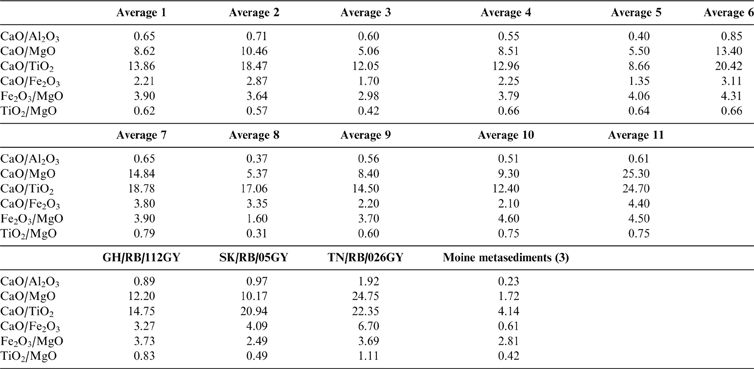
This work was triggered by the identification of grey quartz–albite–chlorite–muscovite–calcite rocks (cognate to altered variants named 'brown beds') in prehnite–pumpellyite to low greenschist facies environments in the Dalradian Supergroup (Batchelor Reference Batchelor2004a, Reference Batchelorb) and in the Torridonian Supergroup (Batchelor et al. Reference Batchelor, Prave, Oliver and Raeburn2008; Batchelor Reference Batchelor2011) which were all interpreted as tuffs. Circumstantial evidence from geochemical, mineralogical and field relationships led to the hypothesis that these grey tuffs could convert to calc-silicate rocks under amphibolite facies metamorphism. Three grey tuffs have CaO values of 9.8 %, 10.5 % and 16.1 %. Values of CaO in 75 published analyses of calc-silicates yielded a range of 3.0–21.6 % CaO (Winchester Reference Winchester1972, Reference Winchester1975; Tanner Reference Tanner1976) (Table 1).
Average values of major element oxide ratios for calc-silicate rocks, tuffs and metasediments.

Average 1: Epidotic calc-silicates (Winchester Reference Winchester1975)
Average 2: Garnet-zoisite calc-silicates (Winchester Reference Winchester1972)
Average 3: Calc-silicates from Fannich (Winchester Reference Winchester1972)
Average 4: Calc-silicates (Tanner Reference Tanner1976)
Average 5: Calc-silicates (this work), Mallaig (6)
Average 6: Calc-silicates (this work), Morar (10)
Average 7: Calc-silicates (this work), Arisaig (11)
Average 8: Calc-silicates (this work), Lochailort (12)
Average 9: Calc-silicates (this work), Ardalanish Bay, Mull (7)
Average 10: Calc-silicates (this work), Uisken Bay, Mull (5)
Average 11: Calc-silicates (this work), Cannich (6)
This study is based on experimental petrology and geochemical analysis of suites of Moine calc-silicate rocks collected from the Northern Highlands of Scotland. Their geographical distribution is shown in Figure 1 and their stratigraphical affiliations are shown below. The terminology for the Moine Supergroup stratigraphy is based on Mendum et al. (Reference Mendum, Barber, Butler, Flinn, Goodenough, Krabbendam, Park and Stewart2009).

Map of calc-silicate rock suites, with localities marked *. Moine groups adopted from Strachan et al. (Reference Strachan, Smith, Harris, Fettes and Trewin2002). Abbreviations: GG = Grampian Group (with stippled ornament); HBF (inset) = Highland Boundary Fault; LEG = Loch Eil Group; MG = Morar Group.

1. Sample descriptions
1.1. Mallaig
A suite of six calc-silicate beds, not all contiguous in exposure, were sampled from roadside exposures at Mallaigmhor [NM 680 974]. Samples CS/RB/001–004 are situated on the west side of the road from Mallaig. CS/RB/005, 006 were collected c.60 m downhill from the former samples, on the east side of the road [NM 680 973]. Sample thicknesses vary from 10 mm to 30 mm. The host rocks are near-vertical semi-pelites of the Morar Pelite Formation, Morar Group. The general mineral assemblage is lamellar-twinned plagioclase feldspar, biotite (up to 2 mm long) with abundant pleochroic haloes (indicative of zircon), quartz (interlocking grains), poikilitic garnet, actinolite and rare zoisite, epidote and titanite. Only one sample (CS/RB/006) contains free calcite.
1.2. Morar
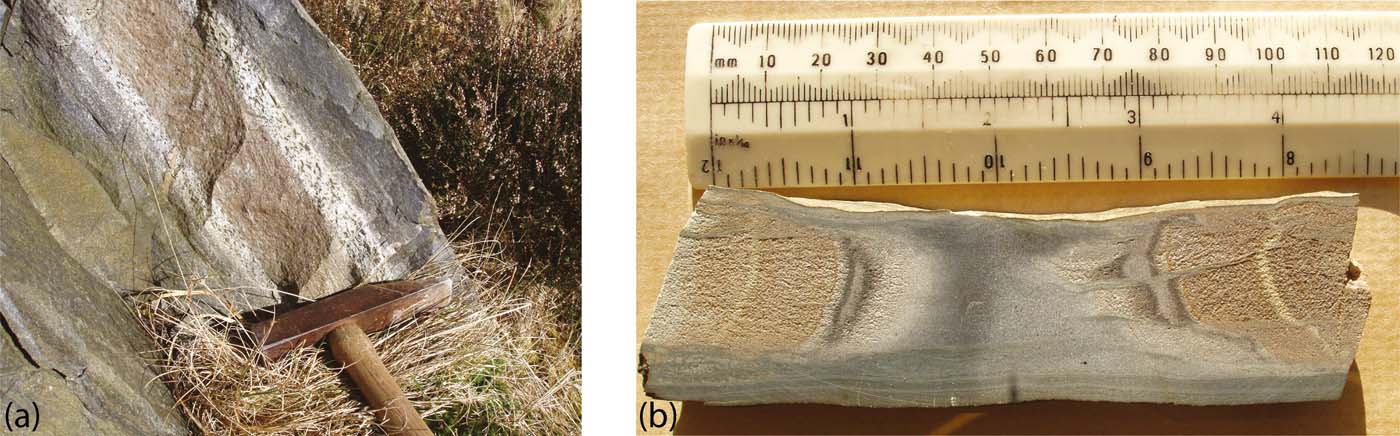
A stratigraphically-coherent suite of calc-silicate beds (TN/RB/077–TN/RB/086) occurs at a roadside cutting over a length of 53 m on the east side of the A830 at [NM 674 914], 2 km SSW of Morar village. Samples vary in thickness from 20 mm to 140 mm. The host rocks belong to the Morar Pelite Formation, Morar Group. One typical sample (TN/RB/083) displayed the following mineral assemblage: lamellar-twinned plagioclase feldspar; biotite (up to 2mm long) containing pleochroic haloes; quartz; zoisite; poikilitic garnet; calcite; and hornblende. Grain size varies from 0.1 mm to 0.2 mm. This suite belongs to the Zone 1–Zone 2 transition of Kennedy (Reference Kennedy1949). Four samples (TN/RB/078, 080, 081, 082) contain a narrow zone, varying from 5 mm to 50 mm, of a brown crumbly material within the boundaries of the calc-silicate rock, reminiscent of the Dalradian and Torridonian “brown beds” (Batchelor et al. Reference Batchelor, Prave, Oliver and Raeburn2008) (Fig. 2). It would be consistent with the effect of sub-aerial weathering of a residual calcite matrix, implying that all calcite was not consumed during the metamorphic transformation of the original lithology.
Calc-silicate bed with crumbly brown interior band, Morar Group, Morar. Hammer head scale = 15 cm. (b) “Brown Bed” alteration product at the periphery of the central grey bed (tuff), Sleat Group, Torridonian Supergroup, Isle of Skye.

1.3. Arisaig
A relatively recent road exposure on the A830, 1.5 km E of Arisaig [NM 674 860], provided the opportunity to sample a continuous sequence of calc-silicate rocks CS/RB/007–017. Samples vary in thickness from 20 mm to 90 mm. The mineral assemblages comprise lamellar-twinned plagioclase feldspar, actinolite, biotite, quartz, calcite, poikilitic garnet, titanite and zoisite. Garnet often encloses calcite.
1.4. Lochailort
A near-vertical suite of psammites and semi-pelites are well-exposed in a roadside cutting on the north side of the A830, opposite its junction with the A861 [NM 767 823]. These rocks form part of the Upper Morar Psammite Formation, Morar Group (Johnstone & Mykura Reference Johnstone and Mykura1989; Mendum et al. Reference Mendum, Barber, Butler, Flinn, Goodenough, Krabbendam, Park and Stewart2009). Sample thicknesses vary from 12 mm to 50 mm. The mineralogy of this suite comprises lamellar-twinned plagioclase feldspar showing variable degrees of sericitisation, biotite which has partly altered to chlorite, quartz and garnet associated with calcite. These rocks differ from the previous three suites in lacking amphibole, zoisite and epidote.
1.5. Mull – Ardalanish Bay
Calc-silicate rocks occur within semi-pelites of the Assapol Group, tentatively assigned to the Glenfinnan Group (mid-Moine Supergroup) by Holdsworth et al. (Reference Holdsworth, Harris and Roberts1987), at Ardalanish Bay, 3.5 km south of Bunessan, Isle of Mull [NM 381 186]. Samples vary in thickness from 15 mm to 70 mm.
Samples were collected from west to east in the order CS/RB/034–040, and the succession here dips 50° NW. Sample CS/RB/040 from the east end of Ardalanish Bay yielded the following mineral assemblage: plagioclase feldspar (An40–80); poikilitic garnet; quartz; interstitial zoisite; actinolite, titanite; calcite (residual inside garnet); and subhedral zircon.
1.6. Mull – Uisken Bay
A sequence of psammites, which belong to the Assapol Group, tentatively assigned to the Glenfinnan Group by Holdsworth et al. (Reference Holdsworth, Harris and Roberts1987), is exposed around HWM [NM 392 188] in the middle of Uisken Bay. The general dip direction is 25° SE. Six calc-silicate rocks (CS/RB/044 to CS/RB/049) were collected; thicknesses varied from 20 mm to 70 mm over a horizontal distance of 13 m. The general mineral assemblage comprises clinozoisite, poikilitic garnet (enclosing calcite), zoisite, chlorite, quartz, titanite and calcite. One sample (045) contains no feldspar, while another (048) contains plagioclase feldspar and biotite, but no amphibole.
1.7. Cannich
A suite of seven calc-silicate rocks (CS/RB/050–056) were collected from a road cutting on the east side of the A831, 1 km east of Cannich [NH 349 315]. These beds occur in psammites and semi-pelites, assigned to the Upper Glenfinnan Group–Lower Loch Eil Group by Mendum et al. (Reference Mendum, Barber, Butler, Flinn, Goodenough, Krabbendam, Park and Stewart2009), and dip 45° SE. Thicknesses vary from 40 mm to 150 mm. Sample 053 contains abundant zoisite, quartz, biotite (with pleochroic haloes after zircon), garnet and titanite. No feldspar was identified, implying it has been consumed in the formation of zoisite.
2. Experimental work
Two grey tuffs which occur in the Torridonian Supergroup (Batchelor Reference Batchelor2005, Reference Batchelor2011) comprise albite, chlorite, quartz, calcite and muscovite in prehnite–pumpellyite facies to low greenschist facies metamorphic environments. In order to test whether or not the grey tuffs could generate mineral assemblages similar to calc-silicates under high P/T conditions, their bulk chemical compositions were plotted on Eskola's ACF diagram, following Miyashiro (Reference Miyashiro1994). The three variables were calculated on an atom basis thus: A = Al2O3 + Fe2O3 – Na2O – K2O; C = CaO – (3.3xP2O5); F = FeO + MgO + MnO. The grey tuffs generated a mineral composition centred around vesuvianite (idocrase), with sample TN/RB/026GY trending towards the wollastonite pole. On this basis, experimental runs were carried out at the Grant Institute, University of Edinburgh. The two tuff samples (TN/RB/026GY from the Diabaig Formation and SK/RB/05GY from the Sleat Group) were run at 6kB/600°C (amphibolite facies) for 400 hours. Approximately 20 mg of powder from each sample were sealed dry into welded Pt capsules (length 1 cm, diameter 3 mm, wall thickness 0.1 mm). Samples were placed in an internally-heated gas vessel, brought to run pressure, and then heated to final run temperature over 15 minutes. Argon was used as the pressure medium, and pO2 was close to the Ni–NiO buffer at the relevant temperatures. Samples were fast-quenched by cutting power to the vessels and subsequent cooling was exponential, with an 80 % temperature drop in five minutes.
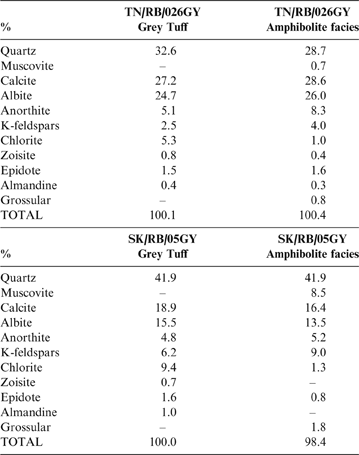
The products were examined by X-ray Diffraction (XRD) to ascertain their mineralogical composition and the data were compared with the composition of the original material. The data are presented in Table 2. The output from XRD was re-calculated using Rietveld software. This software does not select minerals arbitrarily, so an estimate of likely phases has to be input manually. The main points to note are that Ca–plagioclase increases, chlorite decreases, zoisite falls and grossular garnet appears, the latter mineral being a key component of calc-silicate rocks. While not shown, amphibole grows at the expense of chlorite.
Mineralogical composition of high P/T products. Sample locations: TN/RB026GY: Lower Diabaig, Highland Region, [NG 7925 6025], Diabaig Formation, Torridon Group. SK/RB/05GY: 1 km east of Kyle of Lochalsh, Highland Region, [NG 7725 2725], Loch na Dal Formation, Sleat Group, Torridonian.

3. Geochemistry
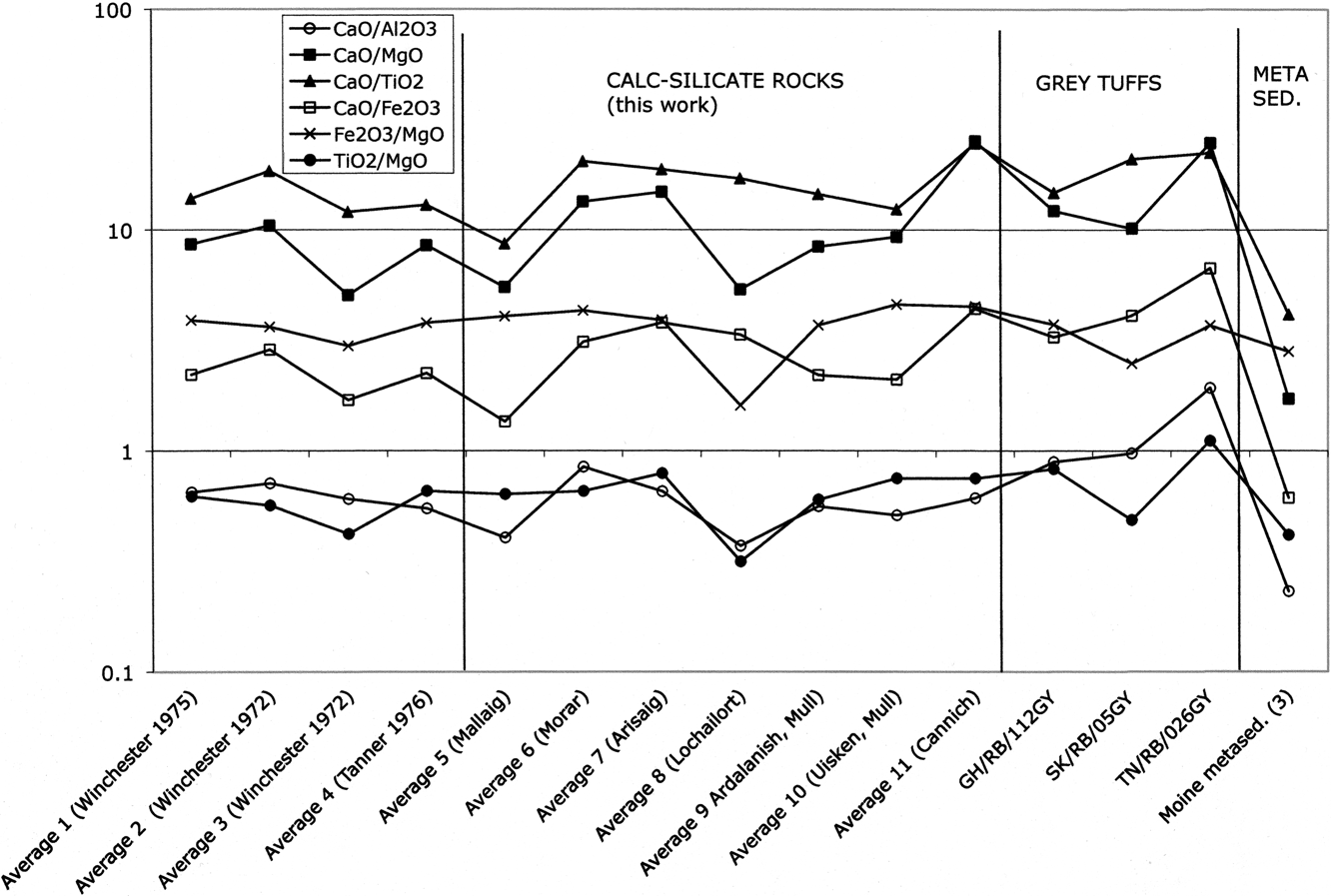
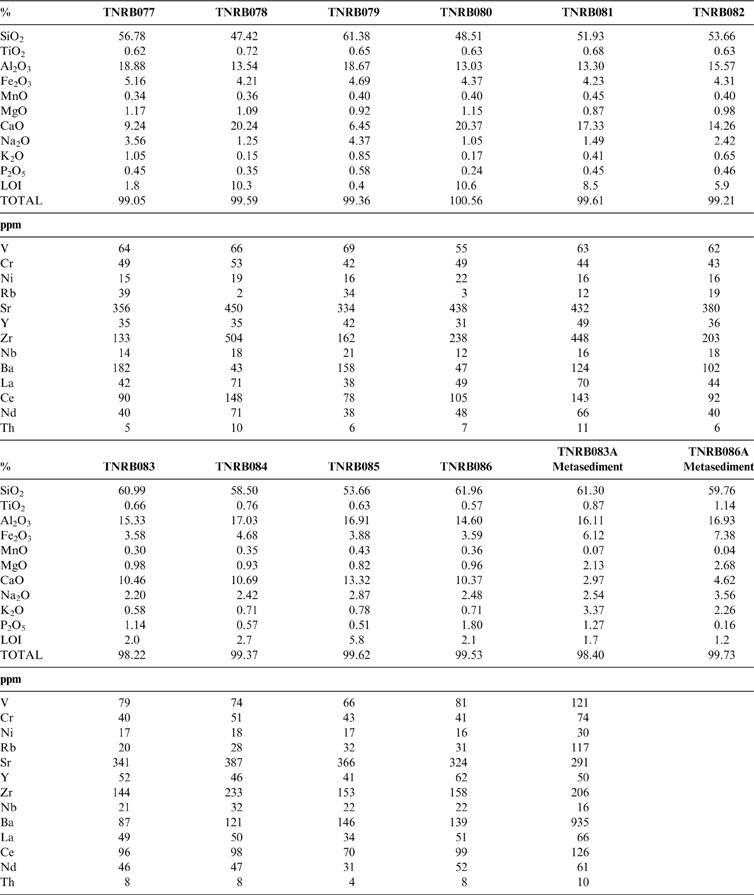
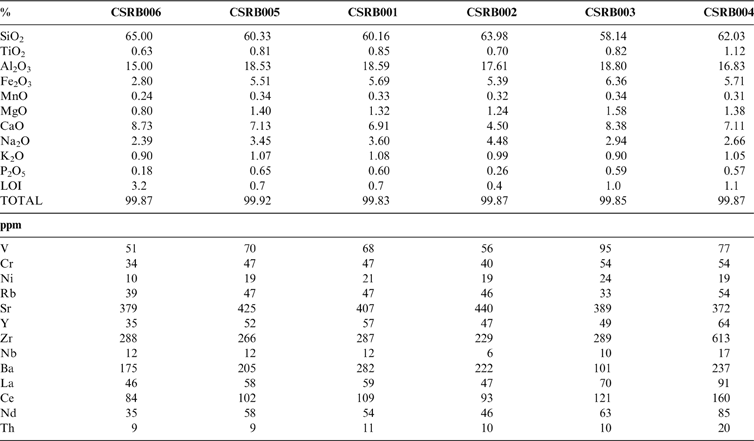
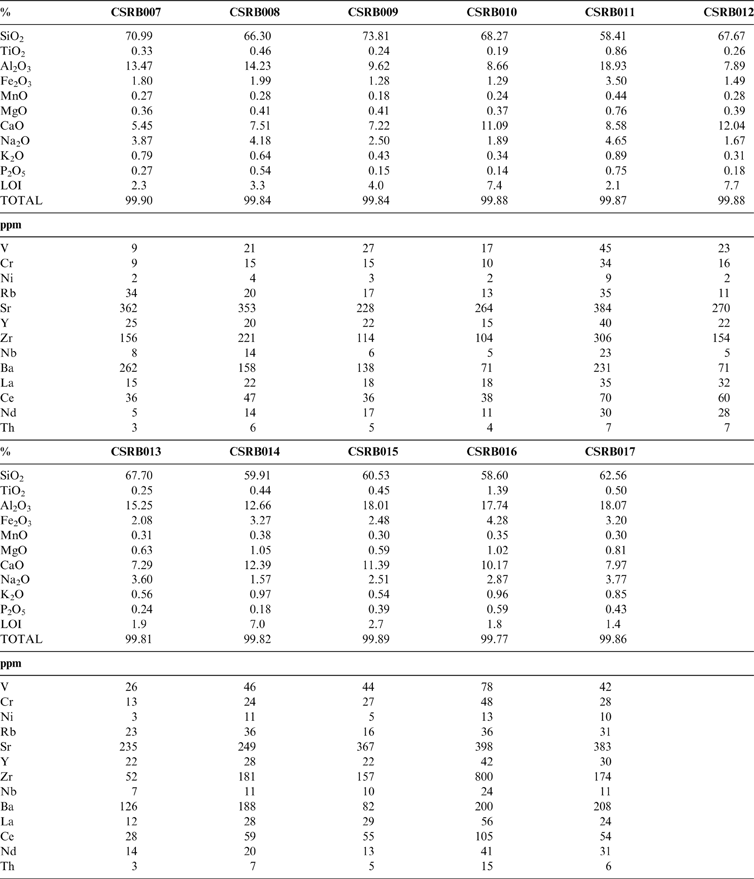
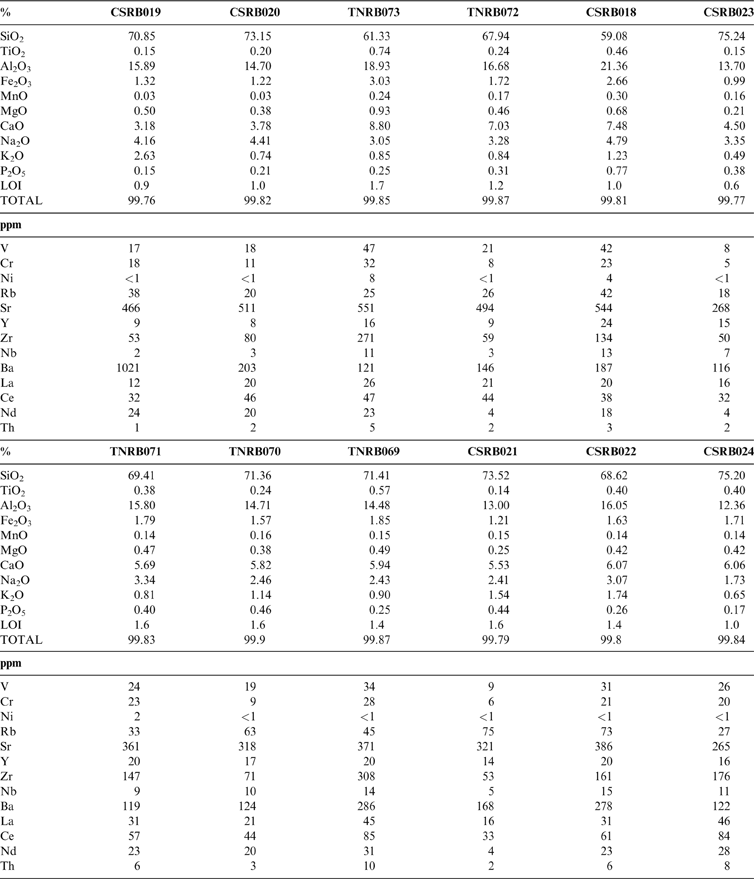
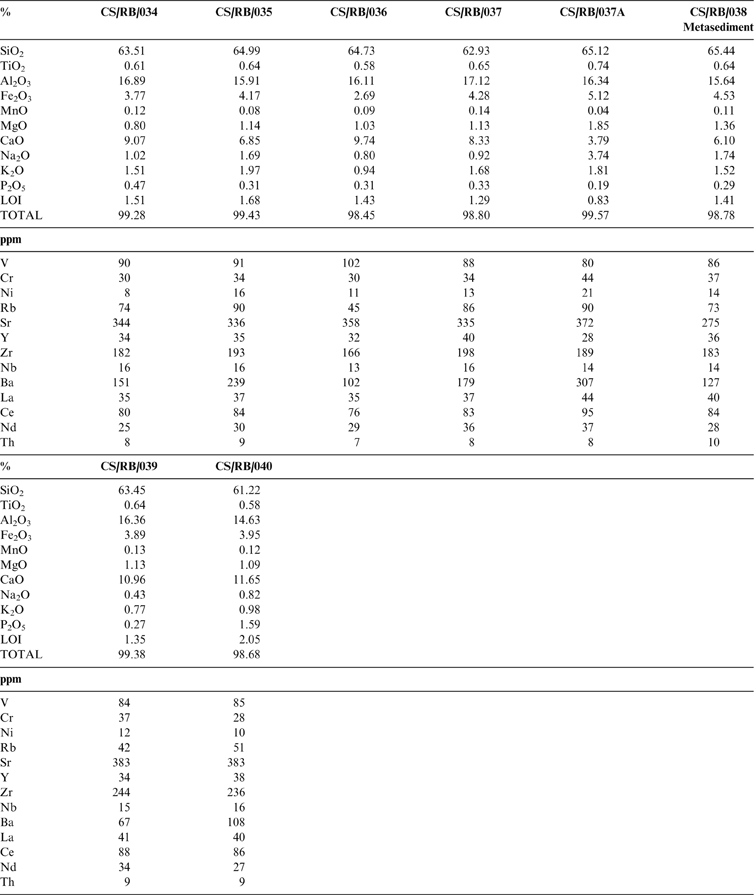
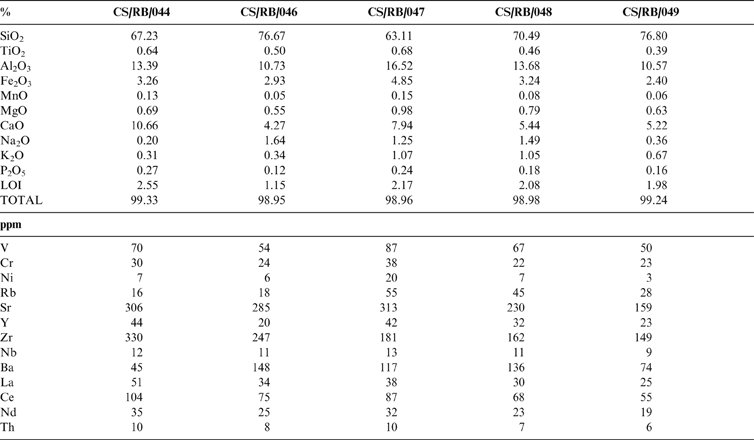
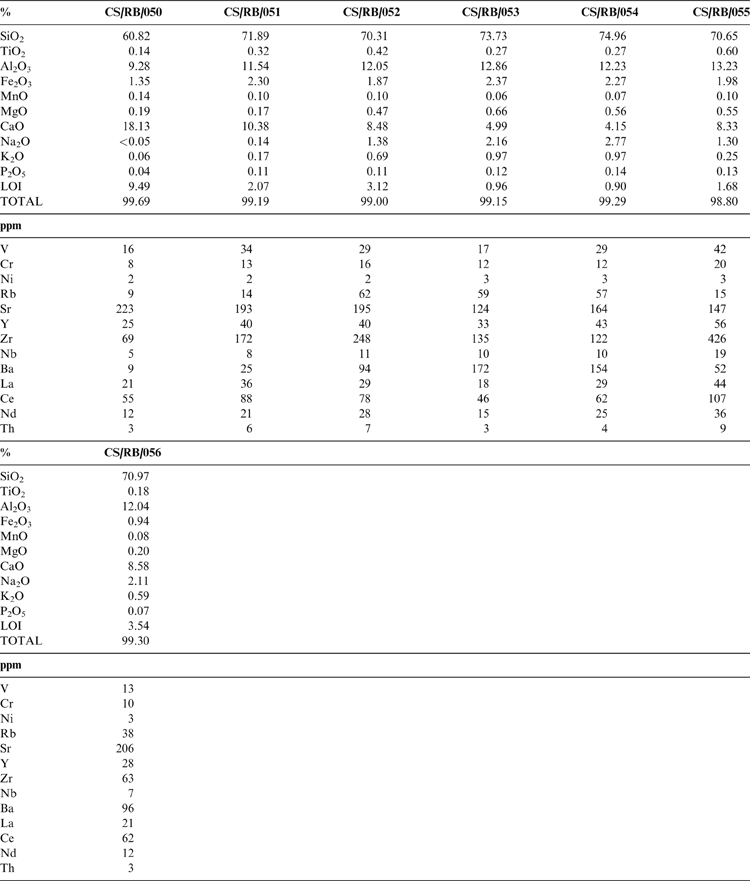
Geochemical data for calc-silicates are presented in Table 3. The range for SiO2 is 47.4–76.8 %, with an average value of 63.9 % (mean of 58). The first point to note is these new data (Averages 5–11) compare favourably with published data (Averages 1–4) and the grey tuffs, as displayed in Figure 3. Also worthy of note is how the data for the host metasediments differ from the calc-silicate chemistry, with the exception of Fe2O3/MgO. Values for Zr in the dataset reach 800 ppm (Table 3). Some epidotic calc-silicates from the Moine Supergroup (Winchester Reference Winchester1975) also have values of Zr considered high for sedimentary rocks (400–700 ppm). These high levels of Zr were attributed by Winchester (Reference Winchester1975) to the presence of heavy mineral bands.
Oxide ratios of data from published calc-silicate rocks and data from this work, Proterozoic tuffs and Moine metasediments.

Geochemical data for a suite of calc-silicate rocks from Morar.

Geochemical data for a suite of calc-silicate rocks from Mallaig.

Geochemical data for a suite of calc-silicate rocks from Arisaig.

Geochemical data for a suite of calc-silicate rocks from Lochailort.

Geochemical data for a suite of calc-silicate rocks from Ardalanish Bay, Mull.

Geochemical data for a suite of calc-silicate rocks from Uisken Bay, Mull.

Geochemical data for a suite of calc-silicate rocks from Cannich.

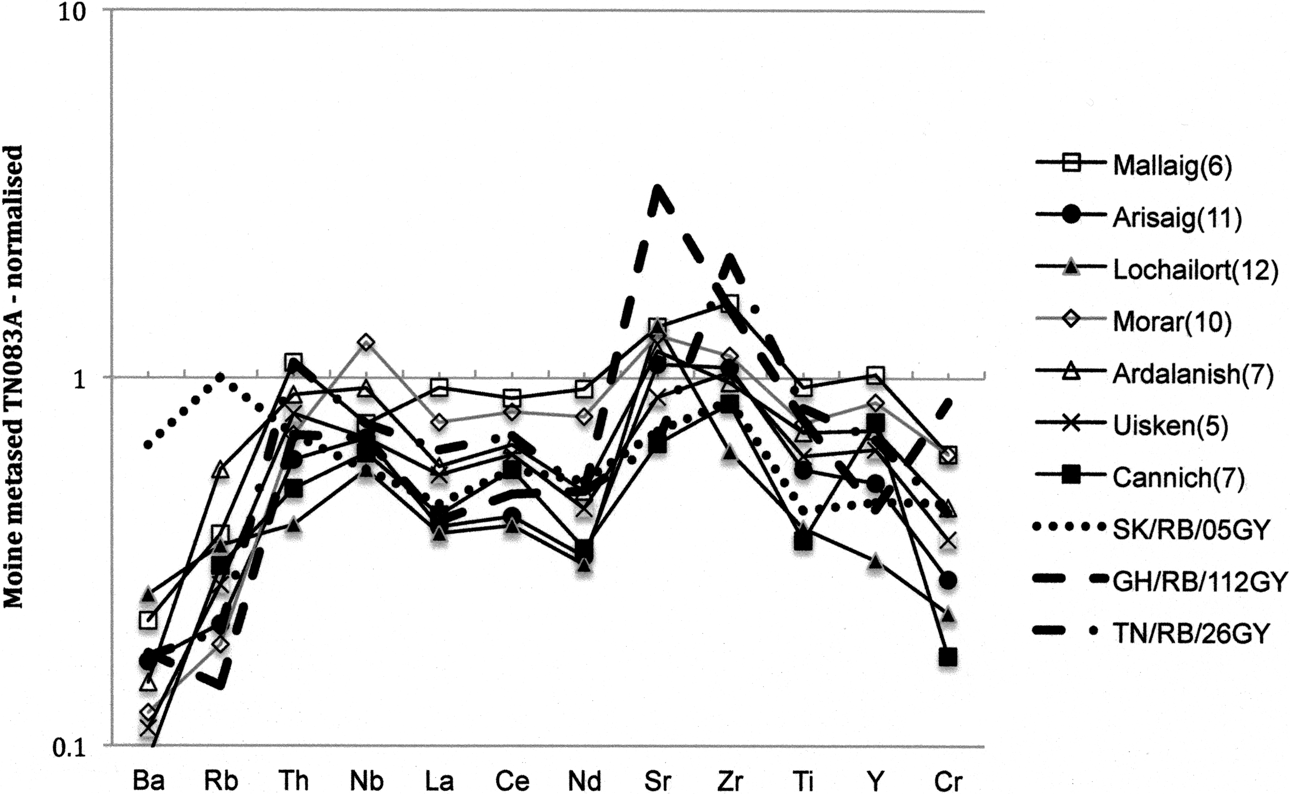
Trace element data for each sampled area were averaged to generate a mean value for each group, in order to simplify the diagram (the number of samples are shown in parentheses). These mean data, together with three Proterozoic tuffs (Batchelor Reference Batchelor2005, Reference Batchelor2011; Batchelor et al. Reference Batchelor, Prave, Oliver and Raeburn2008), were normalised to a host Moine metasediment (TN/RB/083A from Morar) (Fig. 4). The diagram suggests the calc-silicate rock suites differ sufficiently from the metasediment to justify further investigation into their origin.
Calc-silicate rock groups (mean of n samples) and Proterozoic tuffs, normalised to a host Moine metasediment (semi-pelite).

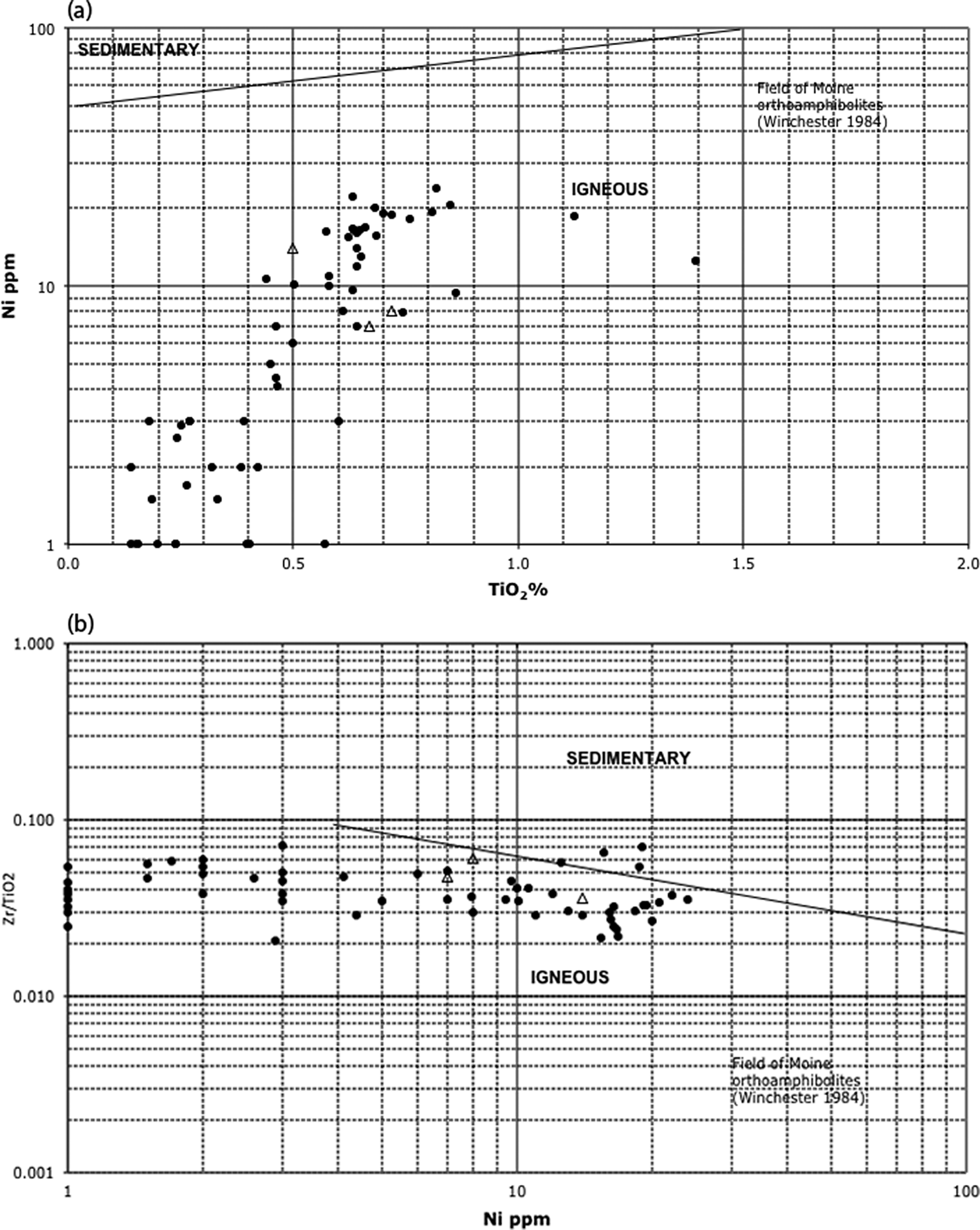
In order to discriminate between an igneous or a clastic origin, recourse was made to the use of geochemical discrimination diagrams for amphibolites. Winchester (Reference Winchester1984) was able to distinguish between orthoamphibolites (igneous) and para-amphibolites (sedimentary) using TiO2 vs Ni (Fig. 5a) and Ni vs Zr/TiO2 (Fig. 5b). The three grey tuffs and most of the Moine calc-silicates plot in the igneous field.
(a) Bivariate plot of TiO2 vs. Ni for all calc-silicate rocks. Open triangles represent grey tuffs. Sedimentary-igneous boundary after Winchester (Reference Winchester1984). (b) Bivariate plot of Ni vs. Zr/TiO2 for all calc-silicate rocks. Open triangles represent grey tuffs. Sedimentary–igneous boundary after Winchester (Reference Winchester1984).

In order to assess how coherent or otherwise are the compositions of the separate calc-silicate rock assemblages, a Zr/Nb–Ti/Th plot was used (Fig. 6), where Zr/Nb reflects alkalinity and Ti/Th reflects magmatic fractionation. These elements were selected by the author as an alternative to the Zr/TiO2–Nb/Y discrimination diagram of Winchester & Floyd (Reference Winchester and Floyd1977), when it was reported that Y can become mobile in altered rocks (Hill et al. Reference Hill, Worden and Meighan2000). Calc-silicate rocks compositions stretch across the dacite–andesite–alklaine potassic fields. This is in keeping with the major element compositions which range from 47 % SiO2 to 77 % SiO2. This diagram helps to discriminate between the Mallaig, Morar and Ardalanish (Mull) groups which form distinct domains. The Lochailort suite shows a bimodal distribution, with the five samples with higher Ti/Th (less evolved) representing the youngest five samples in the sequence. Two of the five Uisken (Mull) samples (047, 048) overlap with Ardalanish (Mull) sample 040, the oldest of that group, whilst Uisken 044 has an affinity with the Mallaig/Morar samples. The Arisaig group shows a wide scatter. The Morar set have a distinct alkaline affinity, with three exceptions (078, 081, 080), which plot with the Mallaig set, a group which has a more calc-alkaline nature. The Ardalanish samples display a more transitional character. The dotted line, which defines the oval ring in this diagram, represents the compositional field of Dalradian tuffs (Batchelor Reference Batchelor2004a, Reference Batchelorb) and Torridonian tuffs (Batchelor Reference Batchelor2005, Reference Batchelor2011).
Bivariate plot of Zr/Nb vs. Ti/Th. Volcanic rock fields data from Wilson (Reference Wilson1989). Superimposed (dotted oval) represents the field of Dalradian tuffs (Batchelor Reference Batchelor2004a, Reference Batchelorb) and Torridonian tuffs (Batchelor Reference Batchelor2005, Reference Batchelor2011).

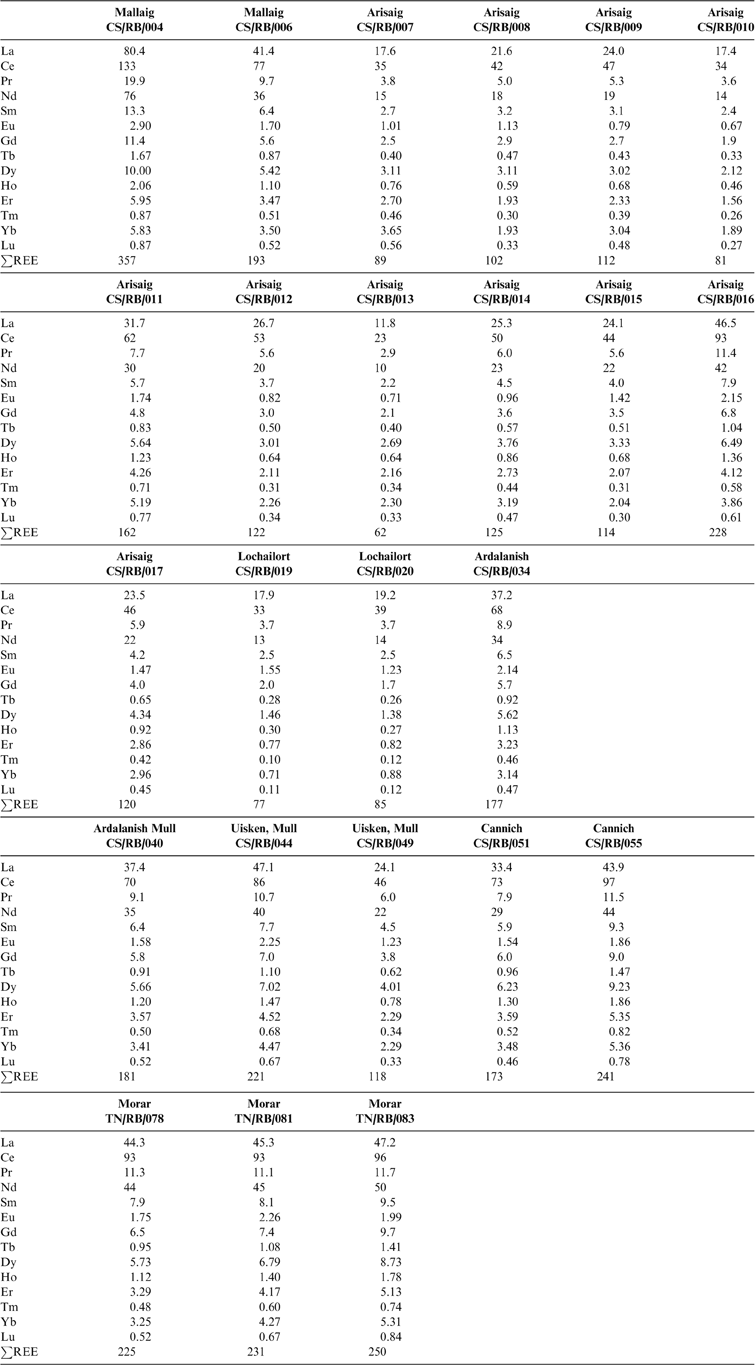
A subset of samples from each group was analysed by ICP–MS for the rare earth element (REE) content and these data are presented in Table 4. A chondrite-normalised REE spider diagram (Fig. 7) for all samples shows light REE (LREE) enrichment for most samples and modest negative Eu anomalies. The exceptions are the two Lochailort samples (CS/RB/019, 020) – the two lowermost dotted lines – which uniquely display a positive Eu anomaly and a strong heavy REE (HREE) depletion relative to the rest of the samples. This latter feature could reflect an augmented concentration of plagioclase, perhaps from a feldsparphyric source.
Chondrite-normalised rare earth elements (REE) for all calc-silicate rocks.

REE for selected calc-silicate rocks.

4. Discussion
The recent identification in Scottish Meso- to Neo-proterozoic rocks of a grey lithology comprising albite, quartz, chlorite and calcite (with minor muscovite) as metamorphosed tuffs of an intermediate composition (Batchelor et al. Reference Batchelor, Prave, Oliver and Raeburn2008; Batchelor Reference Batchelor2011) led to the speculation that they could be the precusors of calc-silicate rocks after higher grade metamorphism. Intriguingly, Kennedy (Reference Kennedy1949) predicted this possibility when he surmised that quartz–albite–chlorite–calcite rocks in the Sleat Group of the Torridonian Supergroup on the Isle of Skye could be precursors of Moine calc-silicate rocks, a statement which simultaneously explained the origin of calc-silicate rocks but also implied an age equivalence between Torridonian and Moine successions; an idea first controversially proposed by Ben Peach in Peach et al. (Reference Peach, Horne, Gunn, Clough and Hinxman1907), but recently resurrected by Krabbendam et al. (Reference Krabbendam, Prave and Cheer2008).
Calc-silicate rock comprises plag + actin + gross gt + qtz ± cc (± epid ± zo). Epidote and zoisite are intermediate phases. Metamorphic mineral pathways from low-grade (prehnite–pumpellyite) metamorphism of three protolith assemblages to (indicated ≫) amphibolite facies assemblages are listed here:
ANDESITE: alb + cc + musc + chl + qtz≫plag (olig) + actin + gt + qtz + musc
GREY TUFF: alb + qtz + chl + cc + musc≫plag + actin + qtz + gross gt + musc
PELITE: chl + musc + qtz ± alb ± cc≫andal ± cord + bi + qtz + alm gt + plag
Clearly, andesite will generate a metamorphic assemblage similar to a grey tuff and calc-silicate rock, whereas a pelite will not. A lime-rich pelite (or marl) could generate a similar assemblage to andesite, depending on the relative amount of calcium and magnesium.
The similarities in bulk geochemical composition and field relationships between calc-silicates and the “grey beds” (tuffs) are suggestive of air-fall tuffs. The relatively high levels of plagioclase feldspar (20–30 %) also support an igneous protolith. This pre-supposes that the metamorphic reaction would be essentially a closed system, although Na and K can be lost (Tanner & Miller Reference Tanner and Miller1980). The tholeiitic character of the calc-silicate samples described here is clear as in all cases Fe2O3/MgO ≫1 (Fig. 2). The LREE enrichment (Fig. 7) is also characteristic of continental tholeiitic sequences (Wilson Reference Wilson1989). This is consistent with magmatism within an extensional tectonic environment, an environment known to have existed off the eastern margin of Laurentia during late-Mesoproterozoic and early-Neoproterozoic times (Cawood et al. Reference Cawood, Nemchin, Strachan, Kinny and Loewy2004). Though 100 Myr older, the Keenawanan province is an example of a large flood tholeiitic basalt event c.1.1 Ga (van Schmus et al. Reference van Schmus, Martin, Sprowl, Geisman and Barendsen1990). The lithologies range from tholeiitic basalt to weakly alkaline basalt through to Fe-andesites and rhyolites. This range of lithologies encompass the SiO2 ranges mentioned earlier (average value 63.9 %), which implies an intermediate igneous composition. The proposal that calc-silicate rocks originally formed as tuffs would imply an explosive regime fed by tholeiitic andesitic to dacitic magmas.
Extensional magmatism has been described within the Moine Supergroup of Scotland in which metagabbros and tholeiitic metadolerite dykes were emplaced in the Glenfinnan and Loch Eil groups. The metagabbros have been dated at 873 ± 6 Ma (Millar Reference Millar1999). In general, andesitic tholeiites occur in continental flood basalt provinces whose mineral composition is typically plagioclase feldspar ± clinopyroxene + quartz + FeTi oxides, with plagioclase occurring as phenocrysts and in the groundmass. The abundance of plagioclase feldspar explains the low value or total absence of a negative Eu anomaly.
Calc-silicate rocks have traditionally been described as metamorphosed marls or calcareous muds. Based on the geochemical evidence presented, it is proposed that they should be considered as metamorphosed tuffs. The arguments to support this proposal are given below:
• Arkoses, which contain high levels of feldspar, are commonly coarse grained (1–5 mm) proximal deposits, and are unlikely to form thin fine-grained beds with sharp upper and lower contacts;
• Feldspar in metamorphosed clastic rocks tends to be fine-grained albite;
• Plagioclase feldspar is less common in clastic rocks that K-feldspar;
• Lamellar-twinning in plagioclase feldspar is an igneous characteristic;
• Feldspar concentrations in mudrocks are generally <5 %, as opposed to 20–50 % in the grey tuffs and calc-silicate rocks;
• Zr, Ti, Ni plots support an orthoamphibolite (igneous) affinity (Winchester Reference Winchester1984);
• High concentrations of Zr (up to 800 ppm) could be generated by alkaline trachytic magmas (Wilson Reference Wilson1989);
• Isolated populations of thin beds which differ from their host is typical of tuffs which represent episodic phases of volcanism;
• If part of the Moine Supergroup (Upper Morar Psammite) had been deposited in braided river plains (Bonsor & Prave Reference Bonsor and Prave2008), it is hard to conceive how a lime-rich marl could be formed and deposited in such an environment, except by invoking a marine or lagoon incursion on a regular basis and an equally rapid regression. In contrast, an ash cloud could dump a layer of volcanic ash instantaneously.
Another key issue in this debate relates to the relative rarity of carbonate deposits in the Palaeo-, Meso- and early Neoproterozoic. Marbles are described in the Lewisian Loch Maree Group, in association with banded ironstones, and in the Lewisian inlier near Dornie. Carbonates are known in the Stoer Group, lower Torridonian Supergroup, but these are associated with algal mats and stromatolitic structures, while other deposits indicate that calcite pseudomorphed gypsum in what are described as evaporite lake deposits (Stewart Reference Stewart2002). Earlier reports of marbles in the Moine succession (Read et al. Reference Read, Phemister and Ross1926) were later considered to be thrust slices and infolds of Lewisian basement (Holdsworth et al. Reference Holdsworth, Strachan, Harris, Gibbons and Harris1994). No mention is made of carbonates in Moine sequences by Mendum et al. (Reference Mendum, Barber, Butler, Flinn, Goodenough, Krabbendam, Park and Stewart2009). In other words, widespread carbonate precipitation was not a common feature of the Torridonian and Moine supergroups. Significant carbonate deposition doesn't appear until the early Dalradian, when the Ballachulish Limestone is deposited in the middle of the Appin Group. Age constraints on this are provided by a date of 806 Ma for the Grampian Shear Zone (Noble et al. Reference Noble, Hyslop and Highton1996) and the 720 Ma-old Port Askaig Tillite (basal Argyll Group) (Condon & Prave Reference Condon and Prave2000). These dates would suggest an age of c.750 Ma for the first significant limestone deposit in the Neoproterozoic, 120 million years later than the youngest Moine rocks.
5. Conclusion
Consideration of field relationships, mineralogy and geochemistry suggest that calc-silicates could represent altered tuffs derived from tholeiitic sources of intermediate compositions erupted from extensional tectonic environments. Given the paucity of datable zircons, attention should be given to matching calc-silicate assemblages in terms of stratigraphy, relative thicknesses and abundance, which would allow correlation of the barren Moine metasedimentary sequences of Scotland and contemporary deposits elsewhere. Unique REE signatures of calc-silicates rocks could be used to refine or even re-appraise existing ideas of Moine stratigraphy. This hypothesis could help to explain the apparent paucity of volcanic rocks over some 220 Myr of geological time during the Proterozoic, when Torridonian and Moine rocks were being deposited in an active extensional basin.
6. Acknowledgements
This work was carried out during the tenure of a Leverhulme Emeritus Fellowship (Grant No. EM/20343) held by the author. The grey tuffs were sampled by the author while employed as a Research Fellow funded by a Leverhulme Trust Research Grant (Grant No. F/00268/AB) awarded to Dr. Tony Prave, University of St. Andrews. Sample GH/RB/112 was discovered by Andrew Raeburn during his undergraduate dissertation project at the University of St. Andrews. High pressure and temperature experiments were carried out by Dr Steve Elphick and Dr Ian Butler, University of Edinburgh, and XRD analyses of the products were carried out by Dr Nic Odling, University of Edinburgh. XRF analyses were provided by Angus Calder, University of St. Andrews, and PANalytical Ltd. REE data were provided by BGS, Keyworth. John Winchester (Keele) is thanked for helpful advice and discussion, and for permission to inspect his collection of thin sections lodged at BGS, Edinburgh. Thanks go to Roy Fakes (BGS) for the loan of thin sections.