Implications
Antioxidants have been used to improve post-slaughter meat quality in broilers subjected to stress. This study approved that Forsythia suspensa extract as a potential natural antioxidant showed positive effects in preventing broilers against oxidative injury induced by chronic physiological stress and improvements in the meat quality for human consumption.
Introduction
Broilers are usually raised intensively and frequently faced with varieties of physical, psychological and physiological stress (El-Senousey et al., Reference El-Senousey, Chen, Wang, Atta, Mohamed and Nie2018), which can result in undesirable meat quality and high economic losses (Pan et al., Reference Pan, Ma, Zhao, Shang, Long, Wu and Piao2018a). Nowadays, increasing measures have been undertaken to alleviate the negative effects of stress in order to improve post-slaughter meat quality in broilers (Wang et al., Reference Wang, Zhu, Li, Liu, Li, Gao, Zhou and Zhang2015; El-Senousey et al., Reference El-Senousey, Chen, Wang, Atta, Mohamed and Nie2018). Forsythia suspensa, a popular traditional Chinese herbal medicine, is generally regarded as a natural source of antioxidants (Lu et al., Reference Lu, Piao, Zhang, Wang, Piao and Kim2010; Matkowski et al., Reference Matkowski, Jamiolkowska-Kozlowska and Nawrot2013). A series of our previous studies have verified that Forsythia suspensa extract (FSE) could effectively protect broilers against stress injury induced by high temperature (Wang et al., Reference Wang, Piao, Kim, Piao, Shen and Lee2008), high stocking density (Zhang et al., Reference Zhang, Piao, Zhang, Li, Yi, Liu, Li and Wang2013), chronic corticosterone (CS) administration (Zeng et al., Reference Zeng, Li, Piao, Liu, Zhao, Xu, Zhang and Niu2014) or transportation (Pan et al., Reference Pan, Ma, Zhao, Shang, Long, Wu and Piao2018a). These effects may depend on the duration of stress, i.e., acute (short-term effect) or chronic (long-term effect). Recently, we have also proved the protective effects of FSE against CS-induced breast muscle oxidative injury mimicking pre-slaughter acute stress (Pan et al., Reference Pan, Zhao, Ma, Shang, Long, Wu, Wang and Piao2018b). Given these previous results, we speculate that FSE may have the potential to improve the post-slaughter meat quality of poultry under chronic physiological stress conditions.
Hypothalamic-pituitary-adrenal axis could be activated, and glucocorticoids are released from the adrenal cortex when birds are subjected to stress (Zeng et al., Reference Zeng, Li, Piao, Liu, Zhao, Xu, Zhang and Niu2014; El-Senousey et al., Reference El-Senousey, Chen, Wang, Atta, Mohamed and Nie2018). Dexamethasone (DEX) is a synthetic glucocorticoid and could be used to mimic the natural steroid cortisol (Watteyn et al., Reference Watteyn, Wyns, Plessers, Russo, De Baere, De Backer and Croubels2013). It has been widely employed to establish a chronic stress model to evaluate the adverse effects of physiological stress in poultry species (Puvadolpirod and Thaxton, Reference Puvadolpirod and Thaxton2000a; Gao et al., Reference Gao, Lin, Wang, Song and Jiao2010; Min et al., Reference Min, Sun, Niu and Liu2016; Lv et al., Reference Lv, Peng, Zhang, Fan, Liu and Guo2018). However, few studies have used the chronic stress model to focus on the oxidative responses of muscles, especially the vulnerable breast muscles in broilers (Pan et al., Reference Pan, Zhao, Ma, Shang, Long, Wu, Wang and Piao2018b). We hypothesized that dietary FSE supplementation could be beneficial for the prevention of oxidative injury in post-slaughter breast muscles caused by mimic chronic physiological stress in broilers. Therefore, this study evaluated the potentially protective effects of FSE against post-slaughter breast muscles oxidative injury treated by DEX injection mimicking chronic physiological stress in intensive production.
Materials and methods
Preparation and composition of Forsythia suspensa extract
Forsythia suspensa extract was derived from a climbing plant widely distributed in China. The dried fruits of Forsythia suspensa were purchased from Tong Ren Tang Company (Beijing, China), and FSE was prepared using the methods described by Wang et al. (Reference Wang, Piao, Kim, Piao, Shen and Lee2008). The major active antioxidant constituents isolated from FSE have been identified as forsythoside A (33.0 mg/kg), forythialan A (82.6 mg/kg), phillygenin (33.4 mg/kg) and phillyrin (163.4 mg/kg) in our laboratory (Lu et al., Reference Lu, Piao, Zhang, Wang, Piao and Kim2010).
Birds, design and diets
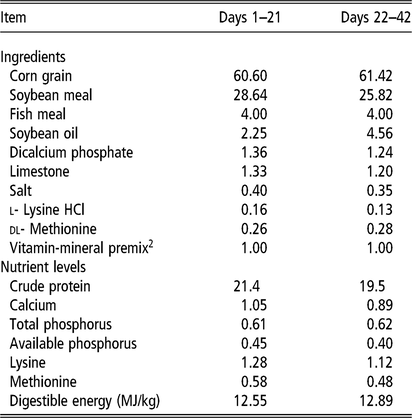
A total of 144 one-day-old male Arbor Acre broiler chickens (weighing 46.0 ± 1.3 g), purchased from Arbor Acres Poultry Breeding Company (Beijing, China), were randomly allotted to one of four treatments in a 2 × 2 factorial arrangement. The treatments included FSE supplementation (0 or 100 mg/kg of diet) and intramuscular injection of DEX (2 mg/kg of BW) or saline (sham control) for 6 consecutive days beginning at 42 days of age. Each treatment had six cages with six birds per cage. All diets were fed in mash form and were based on corn-soybean meal (Table 1). The essential nutrients provided in diets met National Research Council (1994) recommendations.
Diet composition and nutrient levels of the experimental broiler (%, as-fed basis)1

1 Forsythia suspensa extract (100 mg/kg) was directly mixed in the diet.
2 The premix provided the following per kilogram of diet: iron, 100 mg; copper, 10 mg; manganese, 80 mg; zinc, 60 mg; iodine, 0.35 mg; selenium, 0.3 mg; vitamin A, 10 000 IU; vitamin D3, 2 850 IU; vitamin E, 30 IU; vitamin K3, 2 mg; vitamin B12, 1.2 mg; riboflavin, 6 mg; nicotinic acid, 40 mg; pantothenic acid, 12 mg; pyridoxine, 3 mg; biotin, 0.2 mg; and choline chloride, 800 mg.
The trial included a starter phase (days 1 to 21) and a finisher phase (days 22 to 48). All birds were inoculated with inactivated infectious bursa disease vaccine on days 14 and 21 and Newcastle disease vaccine on days 7 and 28. All birds had ad libitum access to feed and water. Birds were raised in wire-floored cages in an environmentally controlled room with continuous light. The ambient temperature was maintained at 33°C at the beginning and decreased to a final temperature of 24°C at 35 day and thereafter.
Sample collection and handing
Body weight and feed intake were recorded at the start and end of DEX treatment to calculate the growth performance. At 48th day of age, one bird per cage close to the average BW was selected to slaughter. Blood was collected and then centrifuged at 3000 × g for 10 min at 4°C to obtain serum. Immediately after death, left breast muscles were excised from the warm carcasses. After homogenization, the muscles were cryogenically frozen in liquid nitrogen (−196°C), and stored in a −80°C freezer. The right breast muscles were taken to measure post-mortem meat quality in a 4°C cell.
Chemical analysis
Serum metabolite analysis. Serum levels of glucose (GLU) and uric acid (UA) were measured using an Automated Biochemistry Analyzer (Hitachi 902 Automatic Analyzer, Hitachi, Tokyo, Japan) using colorimetric methods. Corticosterone concentration was assessed with a commercial enzyme immunoassay kit (Cusabio Biotech. Co., Ltd., Wuhan, China).
Meat quality and fatty acid profile measurement. Within 10 min postmortem, meat color was measured using a Chromameter (CR-410, Konica Minota, Tokyo, Japan). The pH values at 45 min and 24 h postmortem were measured using a glass penetration pH electrode (pH-star, Matthaus, Germany). Value of pH decline within 24 h postmortem (ΔpH) was calculated as ΔpH = pH45min − pH24 h. About 30 min later postmortem, drip loss over 24 h, measured using the plastic bag method, was calculated as a percentage: ((initial weight–final weight)/initial weight) × 100.
The homogenized skinless breast meat tissue was defrosted in a 4°C cell and breast (20 g) samples lyophilized for 60 h using a freeze dryer were analyzed for fatty acid (FA) composition. The FA profiles were determined by gas chromatography (6890 series, Agilent Technologies, Wilmington, DE) and expressed as the proportion of each individual FA to the total FA present in the sample (Pan et al., Reference Pan, Zhao, Ma, Shang, Long, Wu, Wang and Piao2018b). The following FA combinations, total saturated FA (SFA), total monounsaturated FA (MUFA), polyunsaturated FA (PUFA), MUFA/SFA and PUFA/SFA ratio, were calculated.
Lipid and protein oxidation analysis. Before analysis, tissues were minced and homogenized (10% w/v) in ice-cold sodium, potassium phosphate buffer (0.01 M, pH 7.4) containing 0.86% NaCl (Lu et al., Reference Lu, Piao, Zhang, Wang, Piao and Kim2010). The homogenate was centrifuged at 3 000 × g for 10 min at 4°C, and the resultant supernatant was used for analysis.
Protein concentration was determined using a Pierce BCA protein assay kit (Pierce Biotechnology, Rockford, IL) and was expressed as mg/ml. Lipid oxidation in muscle samples was measured as 2-thiobarbituric acid-reactive substances, and protein oxidation was reflected by carbonyl concentration. The malondialdehyde (MDA) and carbonyl content were determined using kits from Cayman Chemical Company (Ann Arbor, MI) and values were expressed in nmol/mg of protein.
Free radical scavenging and anti-oxidative activity. The 1,1-diphenyl-2-picryl-hydrazyl (DPPH) radical-scavenging activity of the supplements was estimated (Blois Reference Blois1958). A volume of 1 ml of 0.2 mM DPPH prepared in methanol was added to 200 μl supernatant and 800 μl distilled water. The mixture was vortexed and left to stand at room temperature (20°C to 22°C) for 30 min. A tube containing 1 ml of methanol and 1 ml of DPPH solution was used as control, whereas methanol alone was used as a blank. The absorbance of the solution was measured at 517 nm using a spectrophotometer (SPECTRAmax 340PC, Molecular Devices, Sunny Vale, CA). The scavenging activity of meat against DPPH radical was expressed as percentage of control and calculated as inhibition rate of DPPH = (1– (absorbance of sample/absorbance of control)) × 100%.
The total-antioxidant capacity (T-AOC) and activities of superoxide dismutase (SOD), catalase (CAT) and glutathione peroxidase (GSH-Px) in breast muscles were determined with kits (Nanjing Jiancheng Bioengineering Institute, Nanjing, China) considering the manufacturer’s instructions.
Statistical analysis
Data were analyzed using the GLM procedure of SAS (version 9.2, 2008) by a 2 × 2 factorial design. The cage was the unit for performance and individual bird for other parameters. The main effects consisted of DEX, FSE and their interaction. Results were expressed as Least Square Mean and SEM. Probability values less than 0.05 were considered significant and less than 0.10 as the tendency to significance.
Results
Growth performance and serum metabolites
The DEX treatment resulted in lower (P < 0.05) average daily gain and feed efficiency, whereas feeding of FSE significantly increased (P < 0.05) average daily gain and feed efficiency (Table 2). However, the significant interaction of DEX and FSE indicated that FSE feeding only increased feed efficiency in DEX-treated broilers (P < 0.05).
Effects of Forsythia suspensa extract (FSE) on growth performance of broilers treated with dexamethasone (DEX) from days 42 to 481

SEM = standard error of mean.
a–c Means with different superscripts in the same row differ significantly (P < 0.05).
1 DEX– = saline injection; DEX+ = DEX injection; FSE– = basal diet without FSE supplementation; FSE+ = basal diet with 100 mg/kg FSE supplementation.
Dexamethasone increased the CS, GLU and UA levels in serum of broilers (P < 0.05), whereas CS, GLU and UA concentrations were unaffected by FSE supplementation (Table 3). There was a significant interaction for UA concentration between FSE and DEX (P < 0.05), in that the serum UA level of DEX-treated broilers was decreased by FSE (P < 0.05).
Effects of Forsythia suspensa extract (FSE) on serum metabolite parameters of broilers treated with dexamethasone (DEX)1

SEM = standard error of mean.
a–c Means with different superscripts in the same row differ significantly (P < 0.05).
1 DEX– = saline injection; DEX+ = DEX injection; FSE– = basal diet without FSE supplementation; FSE+ = basal diet with 100 mg/kg FSE supplementation.
Quality and fatty acid profile of the breast muscles
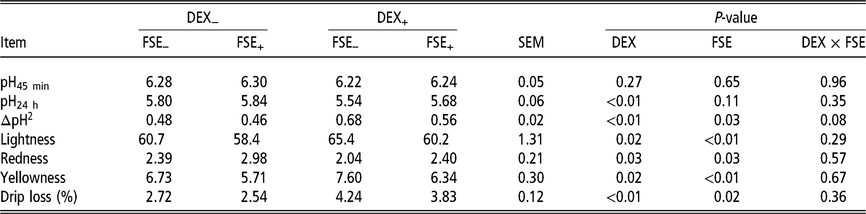
Breast muscle pH values at 24 h was decreased (P < 0.05) and ΔpH increased (P < 0.05) in DEX-treated birds, whereas ΔpH was decreased (P < 0.05) after FSE supplementation (Table 4). The lightness and yellowness values increased (P < 0.05) and the redness values decreased (P < 0.05) in broilers injected with DEX. Conversely, FSE increased the redness values of the breast muscles (P < 0.05) and decreased the lightness and yellowness values (P < 0.05). Drip loss of the breast muscles increased (P < 0.05) by DEX treatment and decreased (P < 0.05) by FSE supplementation.
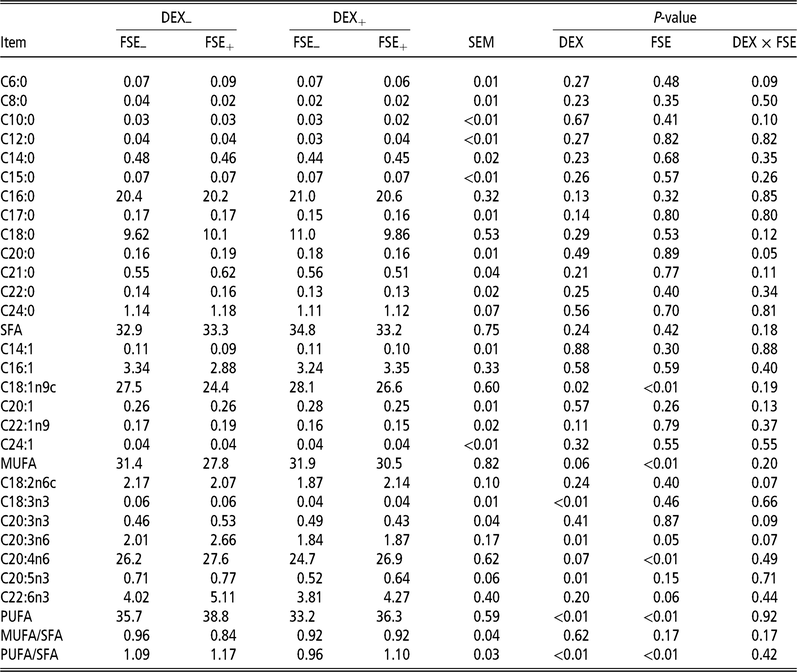
The interaction between DEX and FSE on FA profiles of the breast muscles was not significant (Table 5). Concentrations of C18:1 (P < 0.05) and MUFA (P = 0.06) was or tended to be greater in the breast muscles of DEX-treated birds. Dexamethasone decreased (P < 0.05) the concentrations of C18:3n-3, C20:3n-6, C22:5n-3 and PUFA and tended to (P = 0.07) decrease C20:4n-6 content in the breast muscles. The ratio of PUFA/SFA in the breast muscles was decreased by DEX treatment (P < 0.05). There were lower C18:1 and MUFA concentrations in the breast muscles of birds supplemented with FSE (P < 0.05). In addition, FSE increased C20:4n-6 and PUFA content (P < 0.05) and tended to increase C20:3n-6 (P = 0.05) and C22:6n-3 content (P = 0.06). The ratio of PUFA/SFA in the breast muscles was increased by FSE supplementation (P < 0.05).
Effects of Forsythia suspensa extract (FSE) on meat quality in breast muscle of broilers treated with dexamethasone (DEX)1

SEM = standard error of mean.
1 DEX– = saline injection; DEX+ = DEX injection; FSE– = basal diet without FSE supplementation; FSE+ = basal diet with 100 mg/kg FSE supplementation.
2 ΔpH = pH45min − pH24 h.
Effects of Forsythia suspensa extract (FSE) on fatty acid profiles in breast muscle of broilers treated with dexamethasone (DEX)1

SEM = standard error of mean.
1 DEX– = saline injection; DEX+ = DEX injection; FSE– = basal diet without FSE supplementation; FSE+ = basal diet with 100 mg/kg FSE supplementation; SFA = saturated fatty acids; MUFA = monounsaturated fatty acids; PUFA = polyunsaturated fatty acids.
Oxidative and anti-oxidative status of the breast muscles
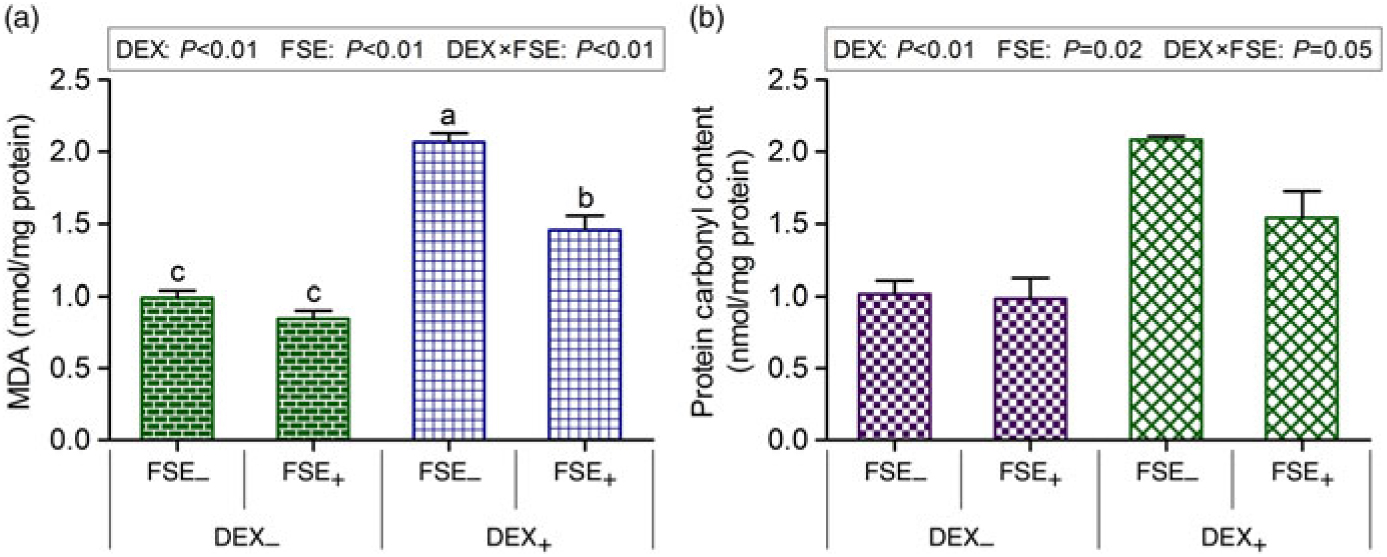
There were significant interactions (P < 0.05) between FSE and DEX for MDA and carbonyl content in the breast muscles (Figure 1). Dexamethasone generally increased MDA and carbonyl content (P < 0.05), whereas FSE decreased MDA and carbonyl content only in breast muscles of broilers treated with DEX (P < 0.05).
Effect of Forsythia suspensa extract (FSE) on lipid peroxidation (a) and protein oxidation (b) of breast muscle in broilers treated with dexamethasone (DEX). DEX− = saline injection; DEX+ = DEX injection; FSE– = basal diet without FSE supplementation; FSE+ = basal diet with 100 mg/kg FSE supplementation; MDA = malondialdehyde. Values represent the mean ± SE (n = 6 broilers per treatment). a–cMeans with different superscripts differ significantly (P < 0.05).

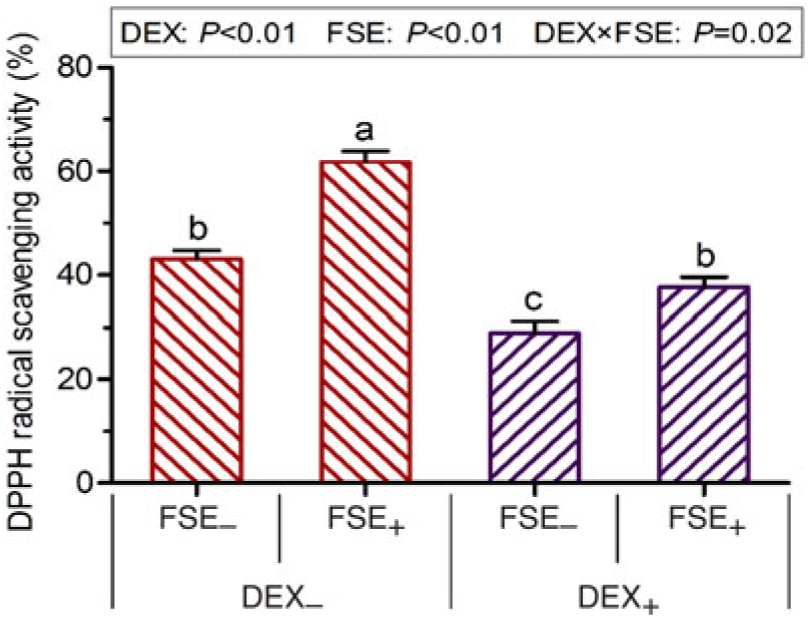
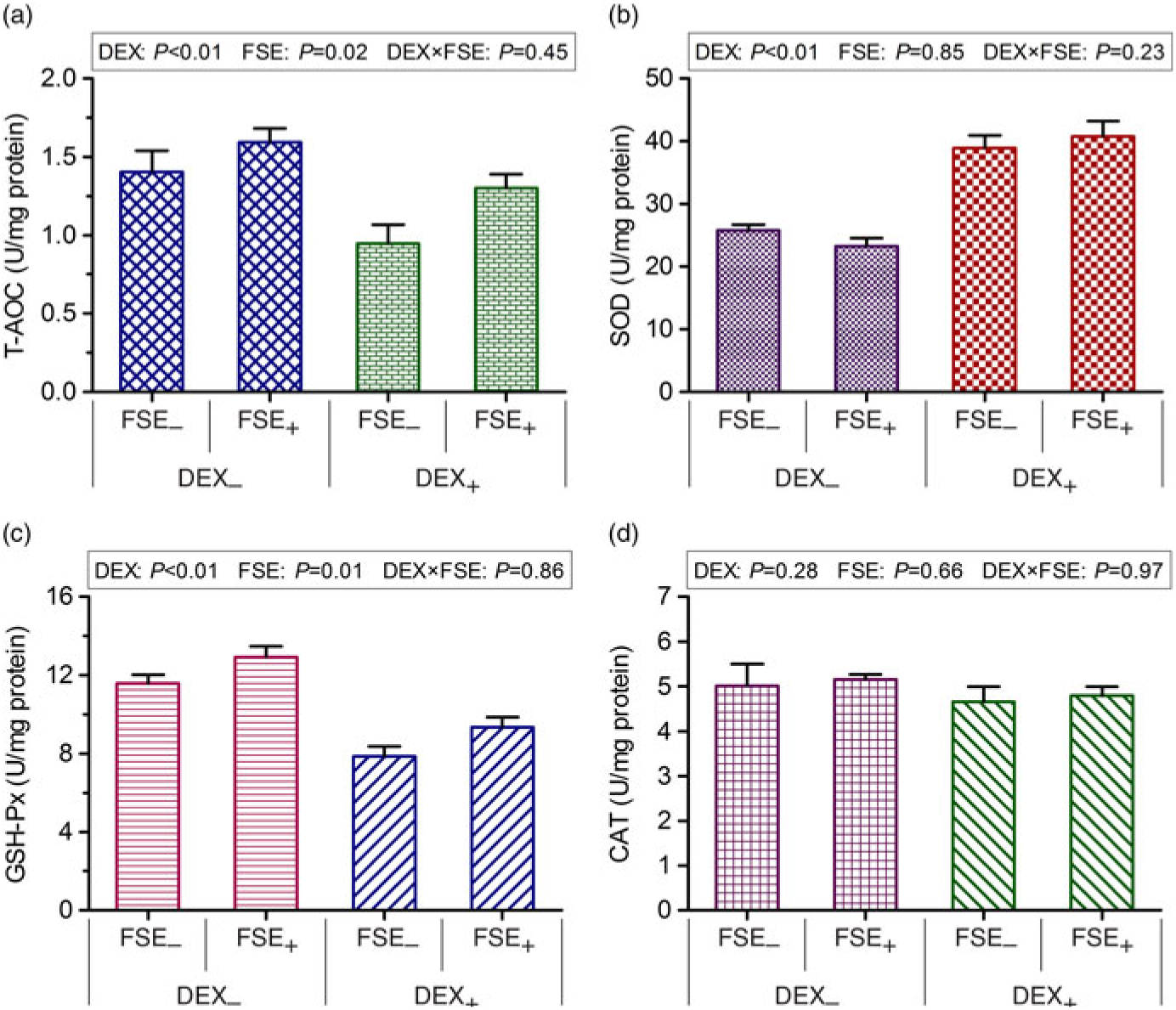
Inhibition of DPPH radicals in breast muscles was decreased (P < 0.05) by DEX and increased (P < 0.05) by FSE (Figure 2). No significant interactions between DEX and FSE were observed for the antioxidant activities of the analyzed breast muscles (Figure 3). The T-AOC and GSH-Px activities in the breast muscles were lower in DEX-treated birds than those without DEX treatment (P < 0.05) and were higher in birds supplemented with FSE than without FSE (P < 0.05). The SOD activity was improved by DEX and not changed by FSE. Neither DEX nor FSE affected CAT activity in the breast muscles of the birds.
Effect of Forsythia suspensa extract (FSE) on 1,1-diphenyl-2-picryl-hydrazyl (DPPH) radical scavenging capability in breast muscle of broilers treated with dexamethasone (DEX). DEX− = saline injection; DEX+ = DEX injection; FSE– = basal diet without FSE supplementation; FSE+ = basal diet with 100 mg/kg FSE supplementation. Values represent the mean ± SE (n = 6 broilers per treatment). a–cMeans with different superscripts differ significantly (P < 0.05).

Effect of Forsythia suspensa extract (FSE) on antioxidant defense systems including total antioxidant capacity (T-AOC; a), superoxide dismutase (SOD; b), glutathione peroxidase (GSH-Px; c) and catalase (CAT; d) in breast muscle of broilers treated with dexamethasone (DEX). DEX– = saline injection; DEX+ = DEX injection; FSE– = basal diet without FSE supplementation; FSE+ = basal diet with 100 mg/kg FSE supplementation. Values represent the mean ± SE (n = 6 broilers per treatment).

Discussion
Consistent with previous studies, stress induced by DEX treatment significantly suppressed the growth performance of broilers (Gao et al., Reference Gao, Lin, Wang, Song and Jiao2010; Min et al., Reference Min, Sun, Niu and Liu2016; Lv et al., Reference Lv, Peng, Zhang, Fan, Liu and Guo2018). In the present study, treated birds with retarded growth consumed the similar amount of feed compared with non-treated birds, which disagrees with the previous results that chronic stress decreased the feed intake of DEX-treated broilers (Lin et al., Reference Lin, Decuypere and Buyse2004; Gao et al., Reference Gao, Lin, Wang, Song and Jiao2010). On the other hand, the enhanced feed expenditure for resistance to DEX-induced stress was responsible for the reduced feed efficiency, which has been similarly reported by Yuan et al. (Reference Yuan, Lin, Jiang, Jiao and Song2008) and Gao et al. (Reference Gao, Lin, Wang, Song and Jiao2010). Expectedly, FSE improved the growth performance of DEX-treated broilers, which is similar to our previous result that FSE enhanced the performance of broilers exposed to CS challenge (Zeng et al., Reference Zeng, Li, Piao, Liu, Zhao, Xu, Zhang and Niu2014), indicating FSE had a potential to alleviate retarded growth caused by stress in broilers.
Serum levels of CS and GLU are regarded as extremely sensitive and reliable indicators of stress in broilers (Puvadolpirod and Thaxton, Reference Puvadolpirod and Thaxton2000b; Lin et al., Reference Lin, Sui, Jiao, Jiang, Zhao and Dong2007). As stress-induced physiological response indexes, birds normally show increased circulating CS and GLU levels when subjected to stress (Gao et al., Reference Gao, Lin, Song and Jiao2008; Zhang et al., Reference Zhang, Gao, Zhu, Li, Jiang, Dai and Zhou2011; Zeng et al., Reference Zeng, Li, Piao, Liu, Zhao, Xu, Zhang and Niu2014). As an oxidative stress biomarker, UA is concomitantly excreted as a major end product of the nitrogen metabolism by birds, and thus stress can cause a dramatic increase in UA level because of gluconeogenesis partially by protein catabolism (Glantzounis et al., Reference Glantzounis, Tsimoyiannis, Kappas and Galariso2005; Dong et al., Reference Dong, Lin, Jiao, Song, Zhao and Jiang2007; Gao et al., Reference Gao, Lin, Song and Jiao2008). In the present study, the increase in circulating CS, GLU and UA levels in DEX-treated birds indicates exacerbated gluconeogenesis and protein degradation, which may be partially related to the decreased growth performance and increased protein carbonyl content in the breast muscles. The birds supplemented with FSE had lower serum UA level, which is in accordance with lower protein carbonyl contents in the breast muscles, indicating preventive changes to counteract the oxidative injury induced by DEX. The increase in both stress indexes and stress-induced response indexes indicates that the chronic physiological stress model was successfully proposed by exogenous DEX exposure.
Stressful stimuli may induce free radical generation and cause cellular damage resulting in lipid peroxidation and protein oxidation (Estévez, Reference Estévez2015). Generally, MDA, the end product of lipid peroxidation, can be used as a direct biomarker of radical-induced damage and endogenous lipid peroxidation (Perai et al., Reference Perai, Kermanshahi, Nassiri Moghaddam and Zarban2014). It has been identified that DEX treatment increased MDA content in the muscle cell of chickens (Zhang et al., Reference Zhang, Gao, Zhu, Li, Jiang, Dai and Zhou2011). In the current study, the increased MDA content in breast muscles of DEX-treated birds indicated DEX-induced lipid oxidative injury. Dietary FSE supplementation reduced the MDA levels in the breast muscles of the DEX-treated birds, suggesting that lipid peroxidation associated with DEX administration could be attenuated by FSE supplementation. Similarly, the protective effect of FSE against MDA was consistent with the study conducted by Wang et al. (Reference Wang, Piao, Kim, Piao, Shen and Lee2008) who stated that FSE can lower MDA concentration of the muscles in broilers under heat stress. Not only the stress but also the secondary products of lipid peroxidation caused by stress will induce protein oxidation (Fellenberg and Speisky, Reference Fellenberg and Speisky2006; Lu et al., Reference Lu, Harper, Zhao, Estienne and Dalloul2014). Carbonyl derivatives as important oxidation by-products of amino acid residues reflect the extent of oxidative damage (Lu et al., Reference Lu, Harper, Zhao, Estienne and Dalloul2014). In this study, the increased carbonyl concentration indicated that breast muscles of DEX-treated birds were sensitive to protein oxidation. The increased carbonyl level was depressed by FSE supplementation, consistent with our previous study (Pan et al., Reference Pan, Zhao, Ma, Shang, Long, Wu, Wang and Piao2018b) and the MDA results in the present investigation, which indicates that FSE could prevent breast muscles under stress condition from protein oxidation.
A rapid and stable method to assess the antioxidant activity is to analyze the disappearance of free radicals such as DPPH (Samarth et al., Reference Samarth, Panwar, Kumar, Soni, Kumar and Kumar2007). In the present study, the decreased DPPH radical scavenging capability indicated less antioxidant activity in breast muscles of DEX-induced broilers. The free-radical scavenging effects of FSE by measuring DPPH activity have been proved by our previous studies (Wang et al., Reference Wang, Piao, Kim, Piao, Shen and Lee2008; Lu et al., Reference Lu, Piao, Zhang, Wang, Piao and Kim2010; Pan et al., Reference Pan, Ma, Zhao, Shang, Long, Wu and Piao2018a and Reference Pan, Zhao, Ma, Shang, Long, Wu, Wang and Piao2018b). The remarkable DPPH scavenging ability toward normalization in DEX-treated broilers supplemented with FSE indicates the improvement in antioxidant activity, which was concurrently confirmed by decreased oxidation indices including MDA and carbonyl content and increased antioxidant activities including T-AOC and GSH-Px activities in this study.
Antioxidant defense systems usually consist of enzymatic and non-enzymatic antioxidants for oxidative damage resistance (Pan et al., Reference Pan, Ma, Zhao, Shang, Long, Wu and Piao2018a). The SOD, CAT and GSH-PX mainly comprise the antioxidant enzymes (Cheng et al., Reference Cheng, Song, Zheng, Zhang, Zhang, Zhang, Zhou and Wang2016). The DEX-induced oxidative stress could significantly reduce the activity of GSH-PX and increase the MDA level (Eid et al., Reference Eid, Ebeid and Younis2006; El-Senousey et al., Reference El-Senousey, Chen, Wang, Atta, Mohamed and Nie2018). In the current study, the decreased T-AOC in breast muscles of DEX-treated broilers indicates that DEX injection may suppress the non-enzymatic antioxidant levels. Dhabhar (Reference Dhabhar2009) reported that chronic stress may induce the suppression of immune responses. Unexpectedly, DEX increased SOD activity, which was surprising and confusing, and CAT activity was not affected by treatments, which is in disagreement with the result that DEX treatment reduced CAT activity in the muscle cell of chickens (Zhang et al., Reference Zhang, Gao, Zhu, Li, Jiang, Dai and Zhou2011). The inconsistent and non-coordinated activities of antioxidant enzymes were not clearly explained, and further research is warranted. As hypothesized, muscle T-AOC and GSH-Px activity were improved by FSE supplementation, indicating that the antioxidant status of the broilers was improved to protect boilers against DEX-induced muscle lipid and protein oxidation to maintain the meat quality.
The higher drip loss indicates that the water-holding capacity of the breast muscles was decreased by DEX treatment, which may be caused by more exudative loss resulting from oxidative injury of muscle cell membranes. The lower meat drip loss in the muscles of birds supplemented with FES reveals an increased water-holding capacity to maintain meat quality. The significantly negative effects of DEX stress on breast muscle pH values indicate the fast acidification after slaughter, which was similar to the results of Gao et al. (Reference Gao, Lin, Song and Jiao2008) and Pan et al. (Reference Pan, Ma, Zhao, Shang, Long, Wu and Piao2018a). Generally, the pH value variation in muscle is ascribed to glycogenolysis (Zhang et al., Reference Zhang, Gao, Zhu, Li, Jiang, Dai and Zhou2011). The increased rate of pH decreases postslaughter, which is a direct reflection of muscle acid content, influences drip loss and color in meat (Le Bihan-Duval et al., Reference Le Bihan-Duval, Debut, Berri, Sellier, Santé-Lhoutellier, Jégo and Beaumont2008). The increase in lightness and yellowness values accompanied with the decrease in redness values of the breast muscles in DEX-treated poultry may be related to the water-holding capacity in meat, as it has close relations with tenderness, savor and color (Zhang et al., Reference Zhang, Gao, Zhu, Li, Jiang, Dai and Zhou2011; Petracci et al., Reference Petracci, Mudalal and Cavani2015). Low pH and redness values, high lightness and yellowness values and increased drip loss in meat illustrated that meat quality decreased, which may be partially attributed to oxidative injury induced by DEX treatment, because oxidative injury could damage lipids, proteins and DNA, and as a result, decrease meat quality (Lu et al., Reference Lu, Ji, Luo, Liu and Yu2006; Gao et al., Reference Gao, Lin, Wang, Song and Jiao2010). Meanwhile, data derived from the present study showed that dietary FSE partially alleviated the decrease in meat quality, which may be ascribed to its antioxidant function (Pan et al., Reference Pan, Ma, Zhao, Shang, Long, Wu and Piao2018a and Reference Pan, Zhao, Ma, Shang, Long, Wu, Wang and Piao2018b).
Fatty acid profiles in muscle lipid could be altered by oxidative stress induced by glucocorticoid (Gao et al., Reference Gao, Lin, Wang, Song and Jiao2010). In the present study, the MUFA content did not increase significantly in the muscles of DEX-treated birds. However, the increased concentrations of C18:1 and the decreased C18:3n-3, C20:3n-6 and C20:5n-3 and total PUFA content in the muscles after DEX treatment indicated DEX could increase the fatty acid saturation. It could be suggested that oxidative stress after DEX treatment results in a reduction of double bonds in PUFA including C18:3n-3, C20:3n-6 and C20:5n-3 accompanied with higher C18:1 fatty acid contents, which was consistent with the changes of muscle FA in DEX treated broilers (Gao et al., Reference Gao, Lin, Wang, Song and Jiao2010). Conversely, FSE improved PUFA percentage accompanying with decreased MUFA concentration in the breast muscles, which may indicate that FSE reduces the negative effects of oxidative alterations thereby decreasing the reduction of double bonds of PUFA, accompanied with higher PUFA and lower MUFA contents. Some of the PUFA in animal products may be beneficial for human health (Salma et al., Reference Salma, Miah, Maki, Nishimura and Tsujii2007). Therefore, FSE may desirably change the fatty acid profile in the breast muscles of poultry under stress conditions. Further studies are warranted to identify these positive functions.
Conclusions
Overall, the chronic physiological stress mimicked by DEX administration accelerated muscle lipid and protein oxidation by decreasing radical scavenging activity and antioxidant activities, and thus decreased growth performance and meat quality. Dietary FSE supplementation elevated protective effects by directly scavenging free radicals and activating antioxidant capacity. Therefore, FSE could be a potential natural antioxidant to have positive effects and benefits in preventing broilers against oxidative injury induced by chronic physiological stress and to improve the meat quality for human consumption.
Acknowledgements
This work was financed by the National Natural Science Foundation of China (No. 31372316; 31772612).
Declaration of interest
The authors declare no conflicts of interest.
Ethics statement
All procedures of animal handling were approved by the Animal Care and Use Committee for Livestock at the China Agricultural University (CAU 2016).
Software and data repository resources
None of the data were deposited in an official repository.