INTRODUCTION
Data on the foraging habits of common bottlenose dolphin (Tursiops truncatus Montagu, 1821), hereafter CBD, in the Mediterranean Sea are scarce. Available evidence from the Ligurian Sea and the Spanish Mediterranean coast shows it to feed mostly on demersal and benthic fish and partly on benthonic and necto-benthonic cephalopods (Orsi Relini et al., Reference Orsi Relini, Cappello and Poggi1994; Blanco et al., Reference Blanco, Salomon and Raga2001). In those regions, most items of its prey consist of commercially important species (Orsi Relini et al., Reference Orsi Relini, Cappello and Poggi1994; Blanco et al., Reference Blanco, Salomon and Raga2001). The average diet of bottlenose dolphins in the eastern Ionian Sea was assumed to be composed of 35% Merluccidae, Mullidae and Gadidae, 20% Sparidae, Mugilidae and Moronidae, 15% Congridae, 15% cephalopods, 2.5% Clupeidae, Engraulidae and Scombridae, 2.5% small Carangidae and Belonidae and 10% other families (Bearzi et al., Reference Bearzi, Agazzi, Gonzalvo, Bonizzoni, Costa and Petroselli2010). Information for the Levantine Basin is lacking.
Bottom trawlers broadly exploit the same niche as CBDs; consequently, interaction may be expected wherever the two overlap. In Israel, excluding newly introduced small-scale fish farming, bottom trawlers are the only type of fishery demonstrating a significative interaction with CBDs. Along the Israeli coastline 20–25 bottom trawlers work practically continuously throughout the year. During 232 half-day coastal surveys conducted by the Israel Marine Mammal Research & Assistance Center (IMMRAC) between 1998 and 2007, CBD was the only cetacean species sighted, sightings also spanning all seasons (Scheinin, Reference Scheinin2010). Trawler towing tracks as well as CBD sightings practically cover the entire coastal strip, extending ~10 km from shore. Fifty-two per cent of the CBD encounters during the surveys occurred in the vicinity of bottom trawlers. Searching time from leaving port until first sighting of CBD was significantly shorter while searching near trawlers vs elsewhere. Foraging following a trawler by CBD was the most prevalent behavioural pattern encountered, in frequency as well as in contribution to the time-budget (Scheinin, Reference Scheinin2010). There was no evidence indicating that this foraging mode is practised by only a fraction of the population (i.e. Corkeron et al., Reference Corkeron, Bryden, Hedstrom, Leatherwood and Reeves1990). When examining the 23 photo-identified dolphins sighted four times or more, all were observed foraging behind a bottom trawler at least once (Scheinin, Reference Scheinin2010).
Interactions between dolphins and coastal, small-scale commercial fisheries in the Mediterranean Sea have a long history (Reeves et al., Reference Reeves, Read and Notarbartolo di Sciara2001; Bearzi, Reference Bearzi2002; Diaz Lopez et al., Reference Diaz Lopez, Marini and Polo2005; Diaz Lopez, Reference Diaz Lopez2006; Lauriano et al., Reference Lauriano, Caramanna, Scarno and Andaloro2009; Fossa et al., Reference Fossa, Lammers and Orsi Relini2011), mainly involving trammel and gill-nets. Interactions involving bottom trawlers frequently occur here as in other parts of the world, with the main species implicated being the CBD (Northridge, Reference Northridge1984; Consiglio et al., Reference Consiglio, Arcangeli, Cristo, Marini and Torchio1992; Silvani et al., Reference Silvani, Raich and Aguilar1992; Goffman et al., Reference Goffman, Kerem and Spanier1995; Marini et al., Reference Marini, Consiglio, Arcangeli, Torchio, Casale, Cristo and Nannarelli1995; Fertl & Leatherwood, Reference Fertl and Leatherwood1997; Trites et al., Reference Trites, Christensen and Pauly1997; Mussi et al., Reference Mussi, Gabriele, Miragliuolo and Battaglia1998; Pace et al., Reference Pace, Pulcini and Triossi1999; Bearzi et al., Reference Bearzi, Agazzi, Bonizzoni, Costa and Azzellino2008a; Gonzalvo et al., Reference Gonzalvo, Valls, Cardona and Aguilar2008). Based on the available data, by-catch in trawling nets appears to be a relatively uncommon occurrence in most Mediterranean areas (Bearzi, Reference Bearzi2002; Gonzalvo et al., Reference Gonzalvo, Valls, Cardona and Aguilar2008). However, high mortality rates in bottom trawl nets have been reported from the Mediterranean coast of Israel, by-catch in inshore gill-nets, mostly calves, being rather rare (Goffman et al., Reference Goffman, Kerem and Spanier1995; Kent et al., Reference Kent, Leibovitch, Goffman, Elasar and Kerem2005). Foraging behind bottom trawlers is perceived to be an obvious strategy to improve foraging efficiency by saving time and energy (Fertl & Leatherwood, Reference Fertl and Leatherwood1997). The seemingly increased motivation of the local CBD population to obtain an easy but risky meal near and from the bottom trawl net may arise from a relative shortage of food in its ultra-oligotrophic (Azov, Reference Azov1986; Herut et al., Reference Herut, Almogi-Labin, Jannink and Gertman2000; Thingstad et al., Reference Thingstad, Krom, Mantoura, Flaten, Groom, Herut, Kress, Law, Pasternak, Pitta, Psarra, Rassoulzadegan, Tanaka, Tselepides, Wassmann, Woodward, Wexels Riser, Zodiatis and Zohary2005) and over-fished (Pisanty & Grofit, Reference Pisanty and Grofit1991) natural marine environment.
The possibility of competition between the two ‘top predators’, dolphins and fisheries, for resources that are naturally limited (due to low productivity) and/or artificially limited because of over-fishing and destruction of the benthic habitat by intensive trawling (Mirarchi, Reference Mirarchi, Dorsey and Pederson1998; DeAlteris et al., Reference DeAlteris, Skrobe and Castro2000) is perhaps the most crucial element in the inter-relationship in Israeli waters. From the fishery standpoint, questions could be posed such as: would lower numbers or total absence of CBDs allow the operation of a larger fleet? Is the current commercial value of the yield compromised by the presence of local CBDs? From the dolphin standpoint: would the partial or total shutdown of the trawler fleet increase the environment's carrying capacity for CBDs? Are local individuals nutritionally compromised due to the operation of the fleet? The complexity of marine food webs and the low accessibility of relevant data, make it difficult to provide quantitative evidence for prey depletion. Chronic nutritional stress in dolphins may be a subtle and scarcely noticeable threat, exposed only by a careful investigation of a long enough stranding record (Bearzi et al., Reference Bearzi, Fortuna and Reeves2008b). Over-fishing is usually revealed by declining values of catch per unit effort (CPUE) in face of a constant or increased fishing effort (Beamish et al., Reference Beamish, McFarlane and Benson2006). Where there is insufficient data to produce accurate time trends in CPUE, top predator population declines may be the first and only sign of over-fishing (Trites & Donnelly, Reference Trites and Donnelly2003).
A rough estimate of the size of the local CBD population, based on (trawler unrelated) encounter rate, mean group size and effective detection distance along a cumulative track-line of 3000 km, came out to be 360 animals (Scheinin, Reference Scheinin2010). A constant mean annual stranding rate of ~5 animals year−1 (IMMRAC, unpublished data) suggests that the population size is stable. This number of animals will roughly consume 1280 t of prey annually (Young & Phillips, Reference Young and Phillips2002), as compared to a mean annual trawl-fishery yield of 1300 t (Shapiro & Sonin, Reference Shapiro and Sonin2006). On this account only, the scene is set for potential competition and mutual negative impact between the two actors (Bearzi et al., Reference Bearzi, Agazzi, Gonzalvo, Bonizzoni, Costa and Petroselli2010). Proving competition, however, would entail intentional removal or addition of one and monitoring the effect on the other (Schoener, Reference Schoener1983), a totally impractical assignment in the present setting. Another prerequisite for competition would be resource partitioning, one which is much more amenable to experimental testing.
The question of common important prey items may be addressed by analysing the stomach contents of dead animals and comparing their diet to the inventory of the trawler fish catch. Examination of stomach contents is the standard method of assessing the diet of macro-organisms in general and dolphins in particular. The residence time of food in the dolphin's stomach is not long; and hard items that are swallowed whole, such as bones and cephalopod beaks, are often regurgitated (Morris & Lockyer, Reference Morris and Lockyer1988; Silva-Jr et al., Reference Silva, Jardim Pandolfo and Sazima2004; Mizrahi et al., Reference Mizrahi, Kerem, Goffman, Lernau and Spanier2009). For this reason, whole prey items will be found only in individuals that have recently fed, particularly by-caught animals drowned in the act of feeding. Otherwise, elements that do tend to remain in the fore-stomach and also in the folds of the glandular second stomach are the otoliths (‘ear stones’) (Fitch & Brownell, Reference Fitch and Brownell1968), which are also relatively resistant to digestion (Wijnsma et al., Reference Wijnsma, Pierce and Santos1999). These elements, the shape of which is species specific, together with the beaks of cephalopods, form the basis for identifying prey items by comparison to available catalogues (Lombarte et al., Reference Lombarte, Chic, Parisi-Baradad, Olivella, Piera and García-Ladona2006) and/or to otolith and beak collections of local species. In the present research, stomach contents of CBDs were analysed in a region from which little if any previous information on the diet of CBDs is available and for which otolith catalogues for local fish species do not exist.
Analysing diet using stomach contents has its problems, as many stomachs of stranded animals are empty, or digested materials are not suitable for dietary research (Barros & Odell, Reference Barros, Odell, Leatherwood and Reeves1990; Santos et al., Reference Santos, Pierce, Ross, Reid and Wilson1994). Moreover, stranded animals may represent a potentially biased sample of the population, as sick or injured animals may not be feeding normally prior to death (Santos & Pierce, Reference Santos and Pierce2003). We have attempted to circumvent these problems by additionally measuring tissue levels of the naturally occurring stable heavy isotopes, Carbon-13 and Nitrogen-15 (hereinafter 13C and 15N), which have provided complementary data to marine mammal feeding ecology by indicating the animals' geographical food source and trophic position, respectively (Hobson & Welch, Reference Hobson and Welch1992). The long-term diet of cetaceans is reflected through their tissue δ13C and δ15N values, and the use of stable isotope analysis (SIA) is gaining popularity in studies of their ecology (Lesage et al., Reference Lesage, Hammill and Kovacs2001).
In the wild, polyspecific temporal associations of top predators such as dolphins, sea lions, tunas, seabirds and sharks jointly foraging on the same prey are quite frequent (Das et al., Reference Das, Lepoint, Loizeau, Debacker, Dauby and Bouquegneau2000). Nevertheless, C and N stable isotope signatures may provide finer grading of the trophic level of marine top predators. Thus, based on δ15N values of muscle tissue, the north-east Atlantic albacore tuna, Thunnus alalunga, was found to hold a higher trophic position than the striped dolphin, Stenella coeruleoalba and the common dolphin, Delphinus delphis; differences in their δ13C muscle values, however, point toward different migration patterns (Das et al., Reference Das, Lepoint, Loizeau, Debacker, Dauby and Bouquegneau2000). The fisheries which try to target food items of high trophic position are in effect another top predator that should enter ecosystem food web analysis (Trites et al., Reference Trites, Christensen, Pauly, Boyd, Wanless and Camphuysen2006).
While SIA is effective at integrating long-term assimilation of nutrients, it may not necessarily reflect short-term feeding patterns (Persson & Hansson, Reference Persson and Hansson1999; Johannsson et al., Reference Johannsson, Leggett, Rudstam, Servos, Mohammadian, Gal, Dermott and Hesslein2001; Hart & Lovvorn, Reference Hart and Lovvorn2002). Also, for the case in question, another shortcoming of SIA is that while it may place two predators at the same trophic level, the two may exploit different dominant prey items with little or no competition. Therefore it is recommended that whenever possible, SIA should be combined with gut content analysis (Rau et al., Reference Rau, Mearns, Young, Olson, Schafer and Kaplan1983; Mihuc & Toetz, Reference Mihuc and Toetz1994; Whitledge & Rabeni, Reference Whitledge and Rabeni1997; Beaudoin et al., Reference Beaudoin, Tonn, Prepas and Wassenaar1999; Johannsson et al., Reference Johannsson, Leggett, Rudstam, Servos, Mohammadian, Gal, Dermott and Hesslein2001; Grey et al., Reference Grey, Thackeray, Jones and Shine2002; Renones et al., Reference Renones, Polunin and Goni2002). The two techniques, in tandem, can be complementary (Yoshioka et al., Reference Yoshioka, Wada and Hayashi1994; Vaz et al., Reference Vaz, Petrere, Martinelli and Mozeto1999; Davenport & Bax, Reference Davenport and Bax2002; Grey et al., Reference Grey, Thackeray, Jones and Shine2002) and will likely aid in interpretation of processed data (Evans-White et al., Reference Evans-White, Dodds, Gray and Fritz2001; Parkyn et al., Reference Parkyn, Collier and Hicks2001).
We can summarize by stating that the potential for a mutually-affecting competition exists, but that its proposed existence would first of all require knowledge about whether the two potential competitors indeed harvest the same trophic level of the food web and the same members of that level. The main aim of this research is to address the latter question by use of stable isotope and stomach content analyses. To our knowledge, such a comparison has never been attempted. Comparing the trophic position of the Israeli CBD to that of its Mediterranean and global counterparts could also prove pertinent to the studied issue.
MATERIALS AND METHODS
Study area
The study area is in the easternmost part of the Levantine Basin of the Mediterranean. The basin is warm, hyper-saline, and highly oligotrophic, as a result of high evaporation rates, very low river runoff and limited vertical mixing (Azov, Reference Azov1986; Herut et al., Reference Herut, Almogi-Labin, Jannink and Gertman2000; Thingstad et al., Reference Thingstad, Krom, Mantoura, Flaten, Groom, Herut, Kress, Law, Pasternak, Pitta, Psarra, Rassoulzadegan, Tanaka, Tselepides, Wassmann, Woodward, Wexels Riser, Zodiatis and Zohary2005). The coastline is virtually featureless, with no significant estuarine rivers and only a few (mainly seasonal) streams. It is sandy in the south and sandy and rocky in the north, with a few small islets near the coast. The bottom is sandy near shore, and changes with depth to clay with calcareous rocky patches, mostly concentrated in the northern part of the study area (Garfunkel & Almagor, Reference Garfunkel and Almagor1985). It follows a gradual slope which becomes steeper to the north.
Bottom-trawling in Israel
The bottom-trawl fishery is the major component of the Israeli commercial fishing industry, which, since 2005, is responsible for ~60% of the total landings. This very high percentage by Mediterranean standards is partly due to collapsing artisanal fisheries, which include pelagic purse seiners, inshore gill and trammel netters and inshore bottom long-liners (see Edelist et al., Reference Edelist, Rilov, Golani, Carlton and Spanier2013a for a review of Israeli fishery takes). The Israeli trawl fleet is a multi-species fishery, targeting dozens of species. In 1991, fearing that fish stocks available for the bottom trawl fleet were being over-exploited, the Israeli Department of Fishery (IDOF) assessed the trends of the bottom trawl catch between the years 1963 and 1990 along the Israeli coastline, as available from the annual reports of the IDOF (Pisanty & Grofit, Reference Pisanty and Grofit1991). A few findings arose from this work:
1. Between those years the number of trawlers operating in the Israeli trawling grounds increased from 22 to 31. The effort, measured in fishing power units 100 Hp (horse power) day−1 increased from less than 4000 in 1963 to more than 10,000 in 1987, and more than 15,000 in 1990.
2. The process of increase in effort was coupled with improvements in fishing methods: introduction of shrimp nets and high-opening (Engel) trawls; the use of radar for navigations; and sonar which helped in finding additional trawling grounds.
3. The increase in fishing capacity did not cause a proportional increase in fish yield; however, there was an increase in the effort diverted to catching shrimps with a resultant increase in yield.
4. An analysis, using Fox's version of the surplus yield model (Fox, Reference Fox1970), indicated maximum sustainable yield (MSY) at about 1500 t and combined efforts of 11,540 Hp day−1. Since the effort at the time exceeded 15,000 Hp day−1, and following a reassessment after 3 years of maintaining the 1990 level of effort, it was decided by the IDOF to permanently limit the size of the fleet at its 1990 level of 31 vessels (Pisanty, Reference Pisanty1998). In practice, only 22 vessels are operating with revenues that barely cover the costs.
No further significant management measures in the bottom trawl fishery have been taken since. A recent unpublished new appraisal by independent local fishery experts indicated that while as yet there is no evidence for recruitment overfishing and that overall annual catch rates are stable at ~1300 t, there is an increase in discard/unit catch with a high percentage of undersized fish being discarded. The overall trophic level is stable, with the decline of some predator species being compensated by an increase in others, brought about by gear modifications and improvements in technology (Scheinin, Reference Scheinin2010). Most experts agree that the limitation of fleet size is not enough and that a seasonal moratorium on trawl-fishing is recommended (D. Golani and D. Edelist, personal communication).
The local trawl-fishing effort originates from three main ports of departure: Haifa (Kishon), Jaffa and Ashdod (since 1966) (Figure 1). It is mostly done between the 20 m bottom contour to the 400 m contour, giving a total fishing-ground of roughly 2500 km2. A bottom trawl operating full-time would, on average, work 250 days per year, 24 h a day. The duration of a single tow, commonly between 3–5 h, mainly depends on the expected density of fish (aggregated or dispersed), on the slope and on features of the benthos. The catch is sorted into commercial species and size, by-catch (non-commercial species and undersized commercial species) is discarded at sea. Similar commercial species with a similar expected market price are commonly boxed and weighed together and therefore are at best reported at the family rank (Shapiro & Sonin, Reference Shapiro and Sonin2006).
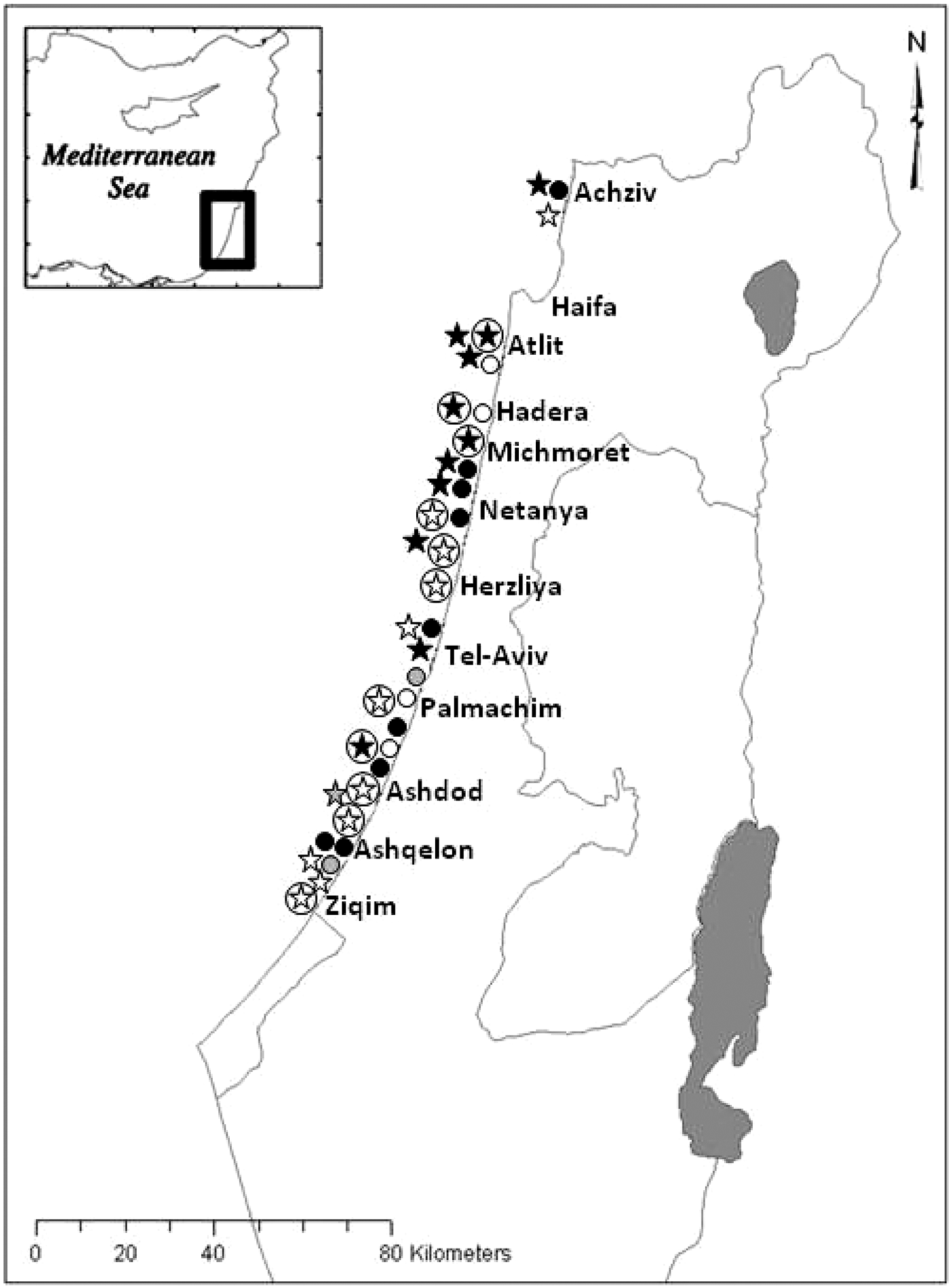
Geographical locations along the Israeli coastline of stranded/by-caught common bottlenose dolphins from which samples were collected. Symbol key:  – stable isotopes;
 – stomach contents;
 – specimens checked for both. Gender: female – white; male – black; unknown – grey.

Fishery data sources used or consulted in this study include:
1. Annual reports of the IDOF, in particular that of 2006 (Shapiro & Sonin, Reference Shapiro and Sonin2006), the annual data of which were collected for the Department by the senior author and which also summarizes the annual data of the previous decade. IDOF catch analysis is performed at the port, as sorted and boxed by the fishers. This is the source that was used to conduct all comparisons with the fisheries catch and is reported in the text and Tables as IDOF together with years or year range.
2. Data obtained from catch analysis of 266 hauls conducted on-board nine different commercial trawlers, three from each of the major fishing ports, in ~100 sea days, between October 2008 and December 2011 (Edelist, Reference Edelist2013). A representative sample of 4–12 kg from each haul was taken on deck and items, including ones to be discarded were identified to species level, measured and weighed. These data were not used in the actual study but rather consulted to try to clarify and explain some results. As such, they are referred to as ‘unpublished personal communications by D. Edelist’ in the Discussion.
Stomach content
The data-base for this aspect of the study included 26 prey-containing CBD stomachs collected between 1996 and 2008 by IMMRAC researchers working within the framework of the University of Haifa. Of these, 18 stomachs were excised from beached carcasses and eight from fresh by-caught animals handed over by trawler crews (Figure 1). Morphometric measures of the animals were obtained (Norris, Reference Norris1961) and teeth for age determination were extracted from all specimens. Age determination was performed by C. Lockyer (Age-Dynamics, Denmark) and P.E. Gol'din (Department of Zoology, V.I. Vernadsky Taurida National University, Simferopol, Ukraine). Following standard methodology of decalcification, freeze-microtomy and light microscopy of haematoxylin-stained thin sections (Hohn et al., Reference Hohn, Scott, Wells, Sweeney and Irvine1989; Hohn, Reference Hohn, Leatherwood and Reeves1990; Gol'din, Reference Gol'din2004), age was estimated as the number of complete growth layer groups (GLG) (Hohn et al., Reference Hohn, Scott, Wells, Sweeney and Irvine1989; Hohn, Reference Hohn, Leatherwood and Reeves1990). The following exceptions were made for some animals <4 years old:
1. Animals were judged to be neonates from external appearance: fetal folds, folded dorsal fin and/or presence of umbilical cord.
2. Animals were judged to be 0.25 years old if they were non-neonates, had a neonatal line present in the tooth section and had a thinner layer of postnatal compared to prenatal dentine.
3. Animals were judged to be 0.5, 1.5, 2.5 or 3.5 years old if their latest GLG was forming but not completed.
During the necropsy of the dolphins, intact stomachs were ligated at the oesophagus (cephalad to any prey items present in the latter) and at the duodenum, removed, and stored at about −20°C until further analysis. During later examination, all stomach compartments were opened along a midline incision that followed its curvature. The bulk of the content (usually partly frozen) was manually removed and the rest was rinsed out through a 0.5 mm mesh size sieve. Prey items were subsequently sorted and preserved. Whole or partially digested prey items were identified and preserved in 70% ethanol. Identifiable bone elements and cephalopod beaks were removed and preserved in 70% ethanol. Fish otoliths removed from whole skulls or found free, were collected and stored dry in plastic vials to await species identification.
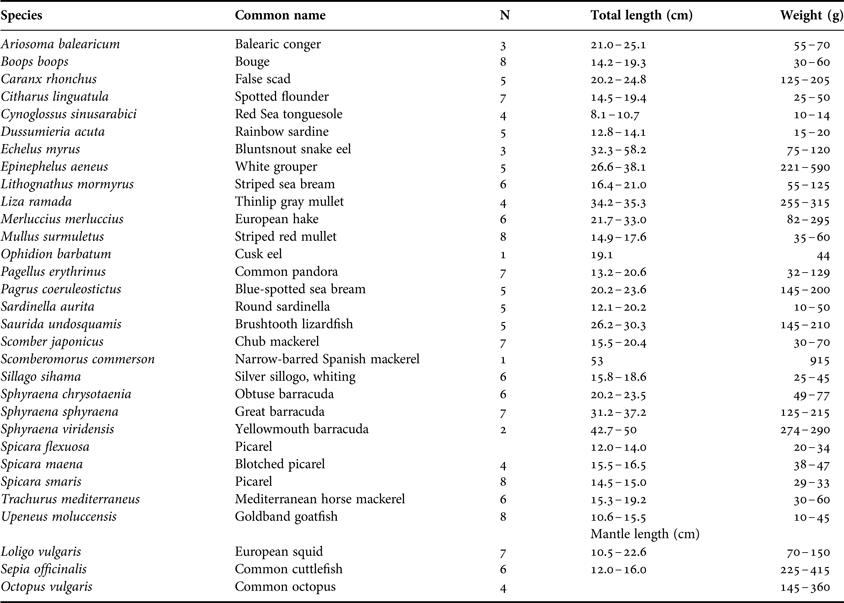
All prey remains were identified to the most specific taxonomic rank possible. A binocular microscope (Olympus SZX7 Stereo Microscope) was used to examine the fish's sagittal otoliths. Otoliths were first compared to a self-prepared reference collection of 28 fish species. The latter was assembled by extraction of sagittal otoliths from fresh specimens of commercial and non-commercial species obtained from the bottom trawler catch (Table 1). Identification of otoliths not found in the reference collection was then attempted by use of a published guide (Lombarte et al., Reference Lombarte, Chic, Parisi-Baradad, Olivella, Piera and García-Ladona2006), aided by a guide to eastern Mediterranean fish species (Golani et al., Reference Golani, Öztürk and Başusta2006). Cephalopod beaks were identified using the reference collection (Table 1). Fish nomenclature and details on fish habitat were derived from Golani et al. (Reference Golani, Öztürk and Başusta2006) and www.fishbase.com. Details on cephalopod habitat were derived from Norman (Reference Norman and Debelius2000). Weights, fish total length and cephalopod mantle length of the specimens in the reference collection are presented as ranges (minimum and maximum values) (Table 1). Total length (TL) in fish refers to the length from the tip of the snout to the tip of the longer lobe of the caudal fin. Mantle length in cephalopods was measured along the dorsal midline from the mantle margin to the posterior tip of the body, excluding long tails.
List of the reference collection (fish otoliths and cephalopod beaks) assembled from the bottom trawler fish and invertebrate catch.
The total number of prey items per identified species and per alimentary tract was recorded. Sagittal otoliths were relied upon to estimate the minimum number of consumed individuals (MNI) per species. Otoliths were identified as right or left, and the MNI was estimated by the larger number of either side. In cases where separation of otoliths by side was not possible, MNI was estimated by halving the number of otoliths. Cephalopod beaks were sorted into upper and lower, and the largest count of either provided the estimate of the MNI ingested.
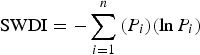
The following form of the Shannon–Wiener diversity index (SWDI) (Krebs, Reference Krebs1999) was used to estimate the diet diversity of individual stomach contents as well as that of the combined content:
 $${\rm SWDI} = - \sum\limits_{i = 1}^n {\lpar {P_i}} \rpar \lpar \ln P_i\rpar$$
where n = number of species (species richness), P i = proportion of total sample belonging to ith species.
Where species-level identification of remains was not possible, species richness was defined as the number of distinct and differentiable taxa within the sample. To characterize the overall diet of the sampled population in biological terms, we derived three standard indices of importance for individual prey taxa: (1) frequency of occurrence (the percentage of stomachs in which it was found); (2) fraction of the total number of prey items; and (3) percentage of total prey weight; lacking an otolith-size: specimen–weight relationship, weight was estimated from the mean mass of items in the reference collection. A combined index of relative importance (IRI) for each prey species was calculated, modified from Pinkas et al. (Reference Pinkas, Oliphant and Iverson1971), as:
 $${\rm IRI} =\lsqb \lpar \percnt \; {\rm number} + \percnt \; {\rm weight}\rpar \times {\rm frequency}\, {\rm of}\, {\rm occurrence}\rsqb /100$$
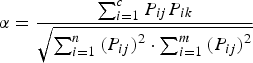
One general index that is used as a measure of resource overlap between two species occupying the same niche and which may be adapted to assess the degree of prey-species overlap between the CBD's stomach contents and bottom trawl fishery catches (Bearzi et al., Reference Bearzi, Agazzi, Gonzalvo, Bonizzoni, Costa and Petroselli2010) is a modification of the Pianka niche overlap index α (Pianka, Reference Pianka1974):
 $${\rm \alpha }=\displaystyle{{\sum\nolimits_{i=1}^c {{P_{ij}}{P_{ik}}} } \over {\sqrt {\sum\nolimits_{i=1}^n {{{\lpar {P_{ij}}\rpar }^2}} \cdot \sum\nolimits_{i=1}^m {{{\lpar {P_{ij}}\rpar }^2}} } }}$$
where n = number of different prey items in the diet of predator j (CBD), m = number of different prey items in the ‘diet’ of ‘predator’ k (bottom trawl fleet) c = number of prey items common to both predators, P ij and P ik = percentages of prey item i in the diets of predator j and predator k, respectively.
The index ranges between 0 and 1, and the similarity is higher the closer the index is to 1. The combined stomach contents (j) and the mean total annual catch (k) were used to calculate α. Since the commercial annual catch is most often reported as tonnage at the family level, for consistency, we used families as prey items for both predators and %weight for P ij and P ik, respectively.
A further assessment of dolphin–fishery competition in economic terms (what we termed ‘commercial competition’) may be gained by evaluating the potential commercial value of the dolphins' diet. Towards this end, reconstructed prey items in dolphin stomachs were allocated relative commercial importance (RCI) values, ranging between 0 and 3, as derived from the average prices to retail sellers in Israel's main fish auctions. A 0 value meant no commercial importance and values of 1, 2 and 3 were allotted to items selling for <5, 5–10 and >10 $ kg−1, respectively. While prices constantly fluctuate, the relative values of the categories are maintained.
The RCI values were used for three purposes. The first was to find out whether demographic characteristics influence the commercial importance of an individual's diet. For that purpose, individual stomach contents were assigned commercial values (CV), computed as:
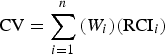 $${\rm CV}=\sum\limits_{i=1}^n {\lpar {W_i}\rpar \lpar {\rm RC}{{\rm I}_i}\rpar }$$
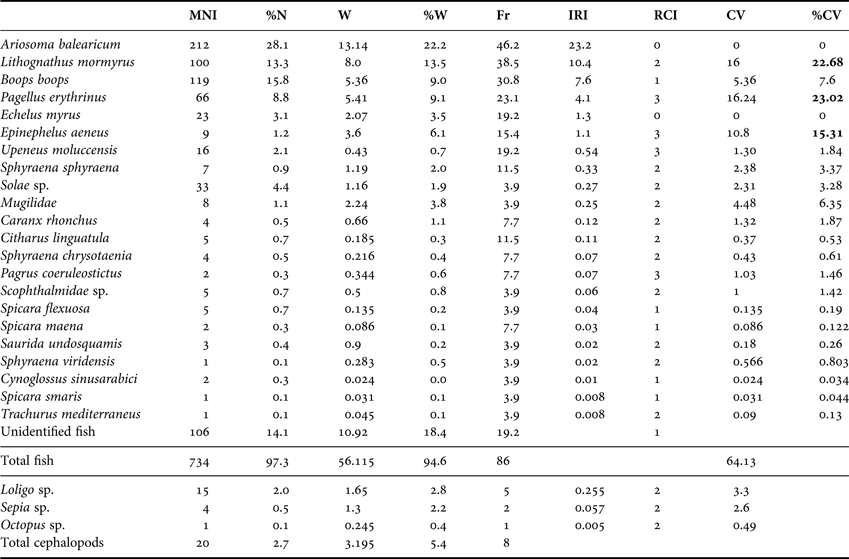
with W i and RCIi being the weight and RCI values of the ith prey item in a given stomach content, respectively (Table 2). The second, more qualitative evaluation of commercial competition was to allocate commercial values (product of weight and RCI) to items in the combined stomach content, so as to judge which are the main contributing items (last two columns in Table 3). The last purpose was an actual comparison of the pooled diet to the mean annual catch in terms of commercial importance (Tables 4 & 5; Figure 2). For this purpose the mean annual catch in the years 1995–2000, 2005 and 2006 was sorted by contribution to the gross income and each contributing item was allotted a RCI. The contribution of categories 1, 2 and 3 (0 is discard) to the gross income was then computed (last column of Table 4). For comparison, prey species in the combined content were partitioned by RCI values. Unidentified fish species, which by definition have zero or low commercial importance were allotted a value of 1. Each category received a CV, being the product of its combined weight and its RCI value (Table 5). The partitioning of the pooled content into the four categories by CV, by frequency of occurrence and by mass could then be used to evaluate the commercial impact of dolphin food consumption.
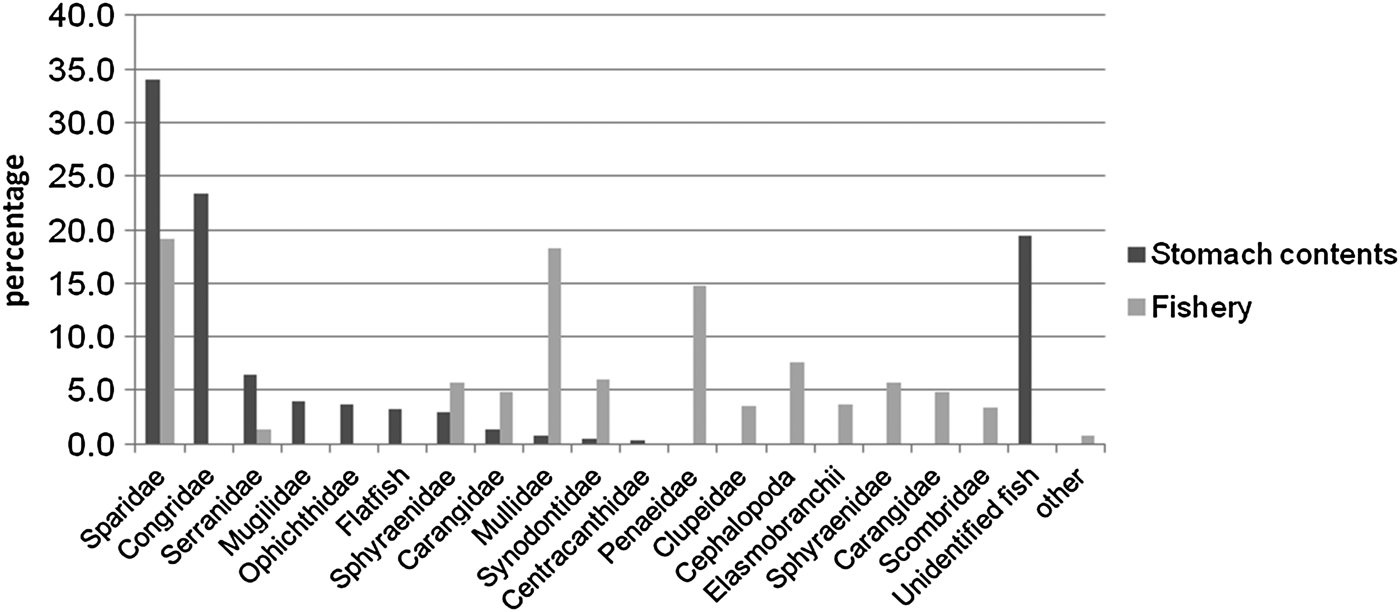
Comparison between the percentages by reconstructed weight of different fish families in the common bottlenose dolphin stomach contents and in the local trawl fishery catch between the years 1996–2006 (Shapiro & Sonin, Reference Shapiro and Sonin2006).
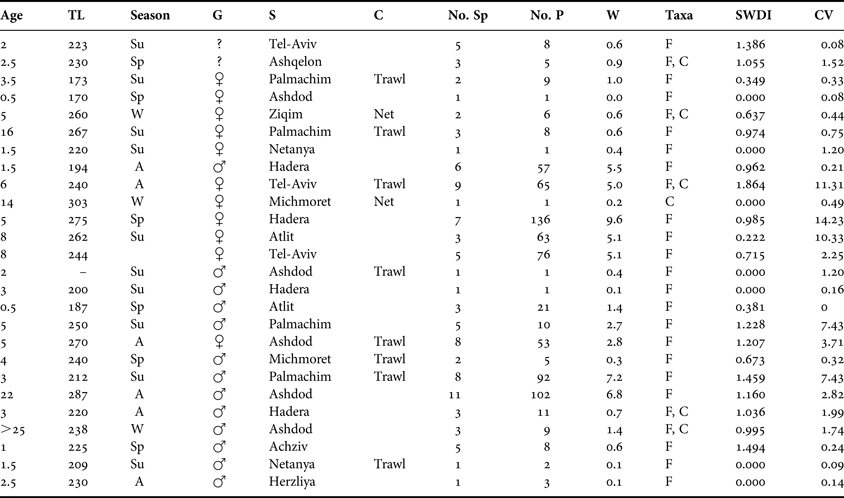
Data on stranded and by-caught common bottlenose dolphins for which stomach contents were analysed (N = 26). TL, total length in centimetres; G, gender; S, site of stranding; C, cause of death; No. PS, number of prey species; No. PI, number of individual prey items; W, estimated total weight of prey content in kilograms; Taxa, F-fish, C-cephalopod; SWDI, Shannon–Wiener diversity index; CV, commercial value of stomach content.
Prey found in pooled stomach contents of 26 common bottlenose dolphins from the Israeli coastline between the years 1996 and 2008. MNI, minimum number of individuals; %N, percentage of total number of prey individuals (754); W, weight (kg); % W, percentage of total weight (59.3 kg); Fr, frequency of occurrence; IRI, index of relative importance; RCI, relative commercial importance; CV, commercial value; %CV, percentage of combined CV (70.52). Table sorted by IRI.
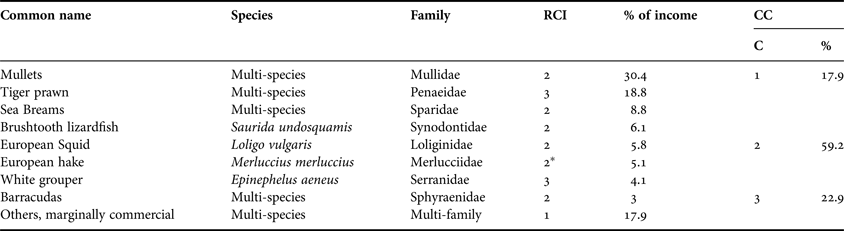
Partitioning by taxa of the trawl fishery mean gross income, as reported by the Israeli Department of Fishery (1995–1999; 2005–2006). CC, contribution by relative commercial importance (RCI) category (C).
*, large fish would merit an RCI of 3, but are rare in the catch.
The combined stomach contents of the 26 common bottlenose dolphins examined, categorized by the relative commercial importance (RCI) of the contained species. Fr(2), % stomachs containing only this category (other abbreviations as in Table 3).
Stable isotopes
Epaxial muscles of 23 CBDs, 20 beached and three freshly by-caught animals along the Israeli Mediterranean coastline were sampled between 2001 and 2007 (Figure 1). Eleven individuals were analysed for both stomach content and stable isotopes. Between 2 and 8 specimens each of 23 fish species, three cephalopod species and one crustacean (shrimp), representing the commercial catch, were collected on-board commercial bottom trawlers during five regular fishing sorties (Table 7). The latter were spread over the year 2006 and spanned most of the coastline. These specimens were also used to create the bulk of the otolith and beak reference database described above. The arm region of the epaxial muscle beneath the dorsal fin was sampled from the fish, mantle samples were taken from the cephalopods and abdominal muscle from the crustacean. It was important to sample the same tissue from similar anatomical sites, since each tissue has different isotope-enrichment values (Lesage et al., Reference Lesage, Hammill and Kovacs2001). Phytoplankton was sampled using a 55 µm mesh plankton net, during a cruise of EcoOcean's RV ‘Mediterranean Explorer’ over the Israeli shelf in June of 2007. All samples were stored frozen at −20°C and later lyophilized.
It is common practice to remove lipids from samples of fish muscles prior to stable isotope analysis or to adjust the data for lipid content (using the formulae of McConnaughey & McRoy, Reference McConnaughey and McRoy1979). When the fat content in the sample is low, however, this is unnecessary (Davenport & Bax, Reference Davenport and Bax2002), and as fish and crustaceans along the Israeli coastline which had been analysed for fat content were found to have low lipid levels (Herzberg, Reference Herzberg1965a, Reference Herzbergb), reflecting the generally oligotrophic waters in the Levantine Basin, we did not follow this procedure. Lipids were also not extracted from dolphin muscle.
Nitrogen and carbon stable isotope composition (δ15N and δ13C) were determined using a continuous flow isotope ratio mass spectrometer Europa 20–20 with ANCA SL preparation module (PDZ Europa Ltd., UK). Laboratory working standards for N (urea and ammonium sulphate solutions) were calibrated vs IAEA N-1 and IAEA N-2 (NH4)2SO4 with δ15N +0.4 and +20.3‰, respectively. Standards were calibrated and results were reported relative to atmospheric nitrogen. For C isotope analyses, urea and cane sugar were used as working standards, calibrated vs IAEA-CH7 (polyethylene) and USGS24 (graphite) standards. Standard deviations (SDs) of the measurement of both isotopes were determined on multiple analyses of working standards and were generally ≤0.2‰, while the SD of samples was ≤0.3‰.
The results are expressed in per ml as relative δ values:
 $$\delta = \left({\displaystyle{{{R_{{\rm sample}}}} \over {{R_{{\rm standard}}}}} - 1} \right)\times 1000 \quad \lsqb \permil \rsqb$$
where R represents the 15N/14N or 13C/12C ratio.
The δ15N signatures were converted to trophic level, TrL, according to the relationship (Hobson & Welch, Reference Hobson and Welch1992):
 $${\rm TrL=1+\lpar }{D_{\rm m}} - P{\rm \rpar /TEF}$$
where: D m = δ15N value of the consumer's muscle tissue (‰); P = δ15N value of phytoplankton; and TEF = trophic enrichment factor in 15N for a particular tissue.
The latter value was set to 3.4‰ for all community components except marine mammals (Lesage et al., Reference Lesage, Hammill and Kovacs2001), which represents the average TEF obtained for muscle tissue or whole animals of a variety of freshwater and marine species other than marine mammals (Lesage, Reference Lesage1999). The TEF for muscle tissue of marine mammals is generally accepted to be 2.4‰ (Hobson et al., Reference Hobson, Schell, Renouf and Noseworthy1996). The TrL of CBD was calculated using:
 $${\rm TrL=2+\lpar }{D_{\rm m}} - P - {\rm TEF\rpar /TEF}$$
Statistical analysis
In an attempt to relate the derived parameters associated with prey consumption to dolphin demographic attributes, four dependent variables, the SWDI and the CV of the stomach contents and the stable isotope ratios, δ 15N and δ 13C, were evaluated by means of generalized linear models (GLMs) (McCullagh & Nelder, Reference McCullagh and Nelder1989), using the Gaussian distribution family and the identity link function. Stomach contents with an estimated total weight of less than half a kilogram were excluded from the statistical analysis, leaving a sample of 19 stomachs. The independent variables: gender, body length, age categories (0–3, 3–10 and older than 10 yr), season and stranding location (due to the small sample size, locations of stranding were partitioned into North & South, dividing the Israeli coastline into two sections of equal lengths), were entered step-wise (forward) as covariates. All subsets were considered and the best-fitted model was chosen by comparing Akaike's information criterion (AIC) values (Burnham & Anderson, Reference Burnham and Anderson2002). The P value of the omnibus test which is a likelihood-ratio chi-square test of the current model vs the null model was assessed too. A value of less than 0.05 indicates that the current model outperforms the null model. Distributions of the dependent variables were tested for normality using Kolmogorov–Smirnov and Shapiro–Wilk tests. All were found to be normally distributed except CV which required log-transformation in order to pass the normality test. Due to the small sample and the dubious interpretation vis-á-vis the main research topic, interactions between covariates were not considered. All analyses were performed using SPSS software 19th edition (IBM®).
RESULTS
Stomach contents
Stomach contents of 26 CBDs (11 females, 13 males and 2 of unknown gender), stranded or by-caught over the course of 14 years were examined (Table 2; Figure 1). These dolphins ranged from 170 to 303 cm in total length and were between 1 and 25 years of age. Twenty-five out of 26 individuals had preyed on fish (Table 2), and four of these had also preyed on cephalopods. One individual's stomach contained only cephalopod remains, though this gut may not be representative since the dolphin also had a mass of fishing net in its fore-stomach which had also strangulated its larynx. Judging from this individual's cachectic condition, it had probably starved to death over a very long period (Levy et al., Reference Levy, Kerem, Brenner, Scheinin, Morick, Ratner and Goffman2009). The mean number of unique prey taxa in each stomach was 3.9 (±SD 2.8), and the number of prey items found per stomach ranged from 1 to 136 (mean 29 ± SD 38.3). The estimated weight of prey in each stomach varied considerably, ranging between 27 and 9618 g (mean 2281.1 g ± SD 2717.6) (Table 2).
The best fitted GLM for assessing the SWDI of the stomach contents (AIC: 21.785; Omnibus test likelihood ratio chi-square: 10.33 P = 0.035) indicated that gender, location of stranding (north/south), age categories and body length, all had a significant effect on the model (P = 0.039, 0.006, 0.018 and 0.019, respectively). Male, longer, older and south-stranded CBD had significantly higher mean SWDI values. Most prey species were found both on the northern and on the southern coast of Israel, apart from the Loligo sp. beaks which were found in five different stomachs in the south and none in the north of Israel. No significant effects of any of the tested co-variates were found on the log CV of the stomach contents.
Remains of at least 754 prey items with an estimated combined weight of 59.3 kg were retrieved, of which 734 prey items (97.3%) were fish and 20 prey items (2.7%) were cephalopods. The most important prey species, both numerically and by weight was the Balearic conger Ariosoma balearicum, a non-commercially important fish (Table 3). The unidentified fish comprised 10 distinct species with a combined count of 106 prey items. The sparids Pagellus erythrinus and Lithognathus mormyrus were the most commercially important dietary items consumed by the bottlenose dolphins (Table 3 in bold). The only other commercially important dietary item is the serranid Epinephelus aeneus, but it showed a rather low IRI, having occurred in only four (15%) of the examined stomachs (Table 3 in bold).
The overall similarity of biomass composition between dolphin stomach contents and fisheries catch in the study area was expressed by a Pianka index of 0.49.
Since the catch composition data collected from the fishing fleet by the IDOF was mainly reported at the family rank, fish species data from gut analyses were also grouped into families for comparison (Figure 2). The sea breams (family Sparidae) were the only taxon showing considerable preponderance in the stomach contents of the dolphins as well as in the commercial catch. The mullets (family Mullidae) were rarely found in dolphin guts, despite their major importance to the fishery. Shrimps and prawns (Penaeidae), another prevalent item in the catch were totally lacking in dolphin stomachs as were representatives of Clupeidae, Scombridae and Elasmobranchs, all being part of the catch.
Commercial competition may be appraised by comparing Tables 4 and 5. Mullets and prawns, on which CBD do not compete, together comprise 50% of the gross income of the trawl fishery. Sparidae, with the highest potential degree of competition accounts for less than 10% of the income. Sixty per cent of the gross income derives from the Medium category (RCI = 2), with the rest almost equally divided between the Low and the High categories (Table 4).
Table 5 shows 46.4% of the combined mass and 66% of the combined commercial value of the dolphin's stomach content, to have medium to high commercial value. A quarter of the reconstituted mass would be considered discard by the fishery. Each of the three CV categories contributes almost equally to the pooled CV of the contents. Most individual contents of full stomachs had representation of two or of all three categories and only one or two individuals could be considered as seemingly showing preference for either ‘high quality’ or ‘low quality’ prey.
Stable isotopes
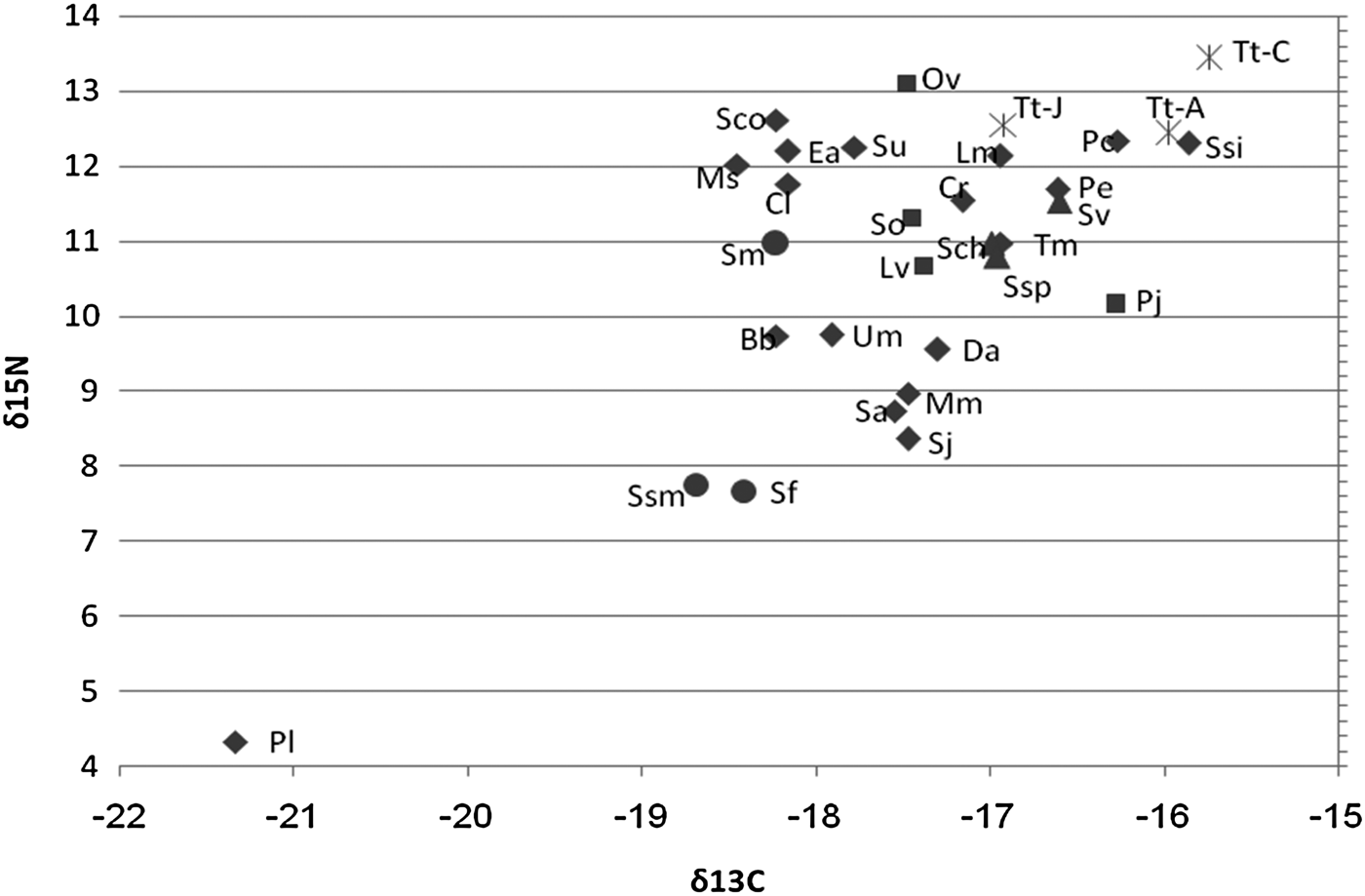
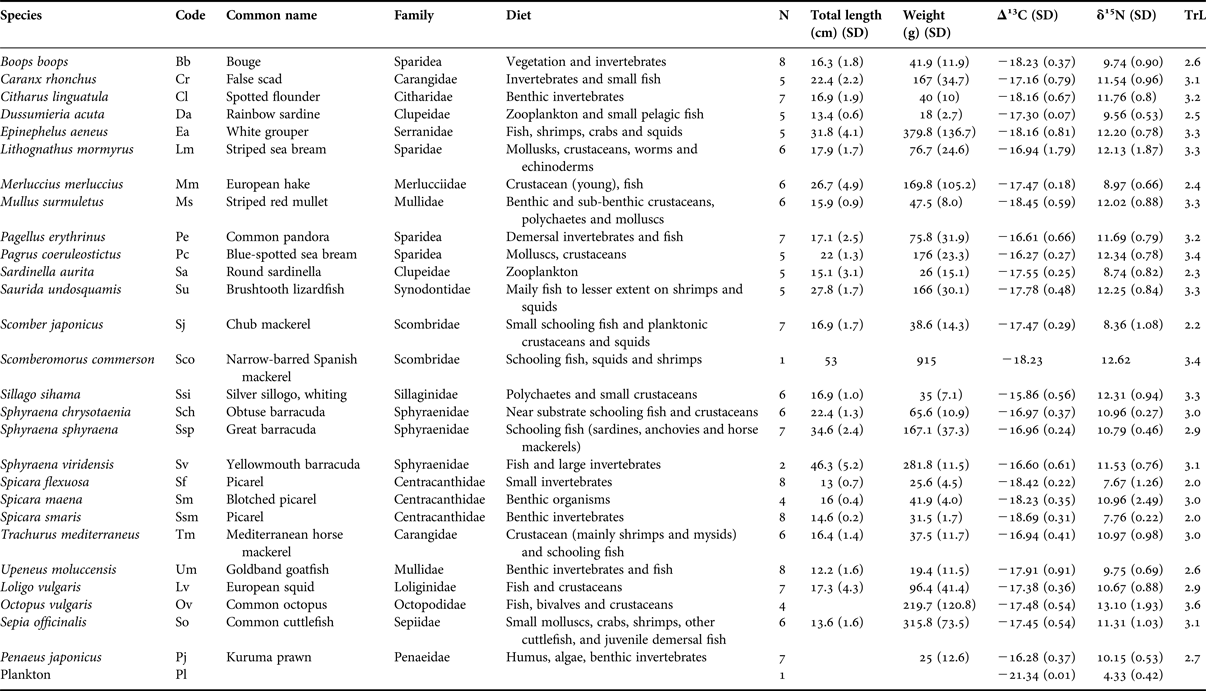
The isotopic composition of CBD and their potential prey (commercial fish and invertebrates) are summarized in Tables 6 and 7 and in Figure 3.
Mean δ 13C and δ 15N in the muscle of invertebrates, fish and common bottlenose dolphins (CBDs). For abbreviations of the fish and invertebrates see Table 6. Symbols: * – CBD Tt-C = CBD calves, Tt-J = CBD juveniles, Tt-A = CBD adults; ■ –invertebrates; ▴ – Sphyraenidae family; • – Centracanthidae family; ♦ – all the rest.
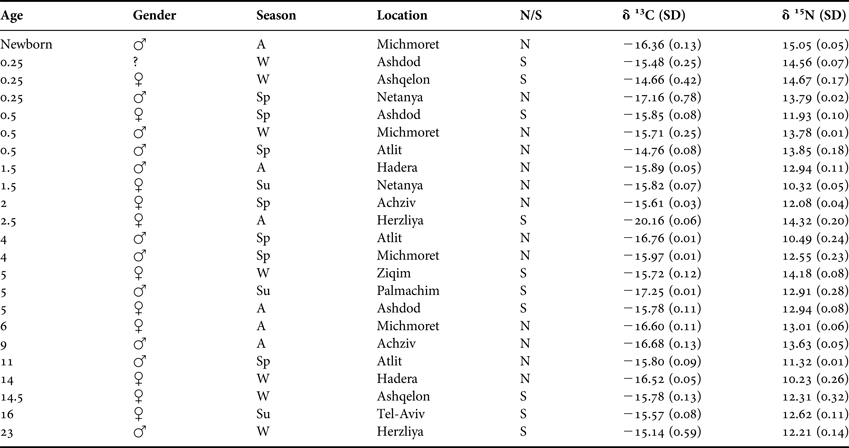
Summary of the δ 15N and δ 13C values from the 23 common bottlenose dolphins sampled along the Israeli coastline. Age (years); length (cm); N, north; S, south.
Diet, length, weight, stable-isotopic composition (mean of N sampled specimens) and computed trophic level (TrL) of selected commercial fish and invertebrates in the Israeli bottom-trawl fishery catch. Diet information from Golani et al. (Reference Golani, Öztürk and Başusta2006) and Norman (Reference Norman and Debelius2000).
The best fitted GLM for assessing the δ15N (AIC: 48.404, omnibus test likelihood ratio chi-square: 13.2; P = 0.067) indicated that location of stranding (north/south) and season had a significant effect on the model (P = 0.029 and 0.038, respectively). CBD specimens stranded in the southern part of Israel showed a significantly higher mean δ15N value than their counterparts in the north. Dolphins which have stranded in the autumn had the highest mean δ15N value, followed by winter, summer and dolphins stranded during spring had the lowest value. No significant effects of any of the co-variates were found for the δ13C of the CBD tissue.
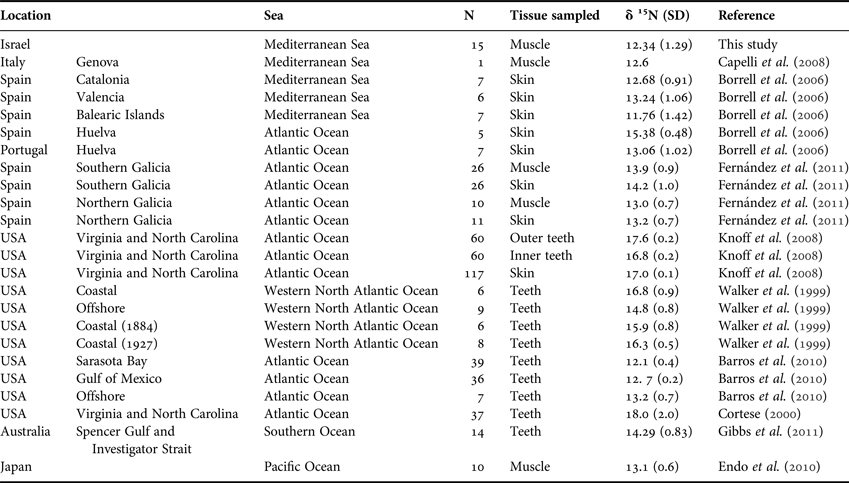
The average trophic level calculated for the non-suckling CBD was 4.35 (SD: 0.52). No significant difference was found between mean δ15N values of calves (0–2 years) and of all the other age classes (3–25 years) (t-test, P = 0.11), although the trend was in line with higher values in the calves. The average value for the δ15N for the Israeli CBD older than 2 years was 12.34 (SD: 1.29) which is relatively low when comparing to values in other world regions, taken from the literature, as summarized in Table 8. Looking at Figure 3, there is no distinct gap in δ15N values as would have been expected from a top predator and its potential prey, with some predatory species such as Octopus vulgaris and Scomberomorus commerson holding similar or slightly higher trophic positions.
Summary of the δ 15N values found in common bottlenose dolphin tissues from the literature.
DISCUSSION
Stomach contents
Competition with fisheries for limited resources is one of the main potential threats to Mediterranean CBD (Bearzi et al., Reference Bearzi, Fortuna and Reeves2008b). Both an overall reduction in available prey mass and a reduction in the mean trophic level of the food web caused by over-fishing, if carried far enough, might force dolphins to spend more time foraging at the expense of socializing and courting and may compromise the accumulation of energy reserves needed for thermoregulation, lactation, etc. (Bearzi et al., Reference Bearzi, Politi and Notarbartolo di Sciara1999). By comparing the diet of the local CBD, as reflected by stomach contents, to the commercial trawler catch, it was found that little less than half of the diet's computed mass was of medium-to-high commercial importance to the local fishery (Table 5). The Pianka niche overlap index showed similar overlap (0.46). Bearzi et al. (Reference Bearzi, Agazzi, Gonzalvo, Bonizzoni, Costa and Petroselli2010) found in Greece (Ionian Sea) an overlap of 0.75 in this index between the assumed CBD diet and the local bottom trawl fishery catch. However, in the Greek case the total biomass removed by fisheries exceeded that computed to be removed by dolphins by a factor of 33 (Bearzi et al., Reference Bearzi, Agazzi, Gonzalvo, Bonizzoni, Costa and Petroselli2010).
When comparing the partitioning of the CBD stomach contents and the local trawl fishery catch to the different fish families (Figure 2), Sparidae was the only family consumed appreciably by both potential competitors. Sparidae is a very diverse family in terms of commercial value and when summing all members of this family in the bottom trawl catch, a medium commercial value is obtained (Scheinin, Reference Scheinin2010). Since Sparidae accounts for only 8.8% of the annual gross income (Table 4), it follows that the local CBD population may have a considerable impact on the Sparidae catch of the local bottom trawl fishery fleet but only a minor direct effect on the total catch.
Analysis of dietary diversity (SWDI) indicated ontogenetic shifts in diet, with older and larger animals eating a more diverse diet. This is likely to reflect age-related increasing experience, improved diving and prey-catching abilities and increased stomach capacity (Santos et al., Reference Santos, Fernández, López, Martínez and Pierce2007). The fact that the majority of animals in our sample were juveniles would point to the gain of experience occurring rather early in life. Inclusion of a larger number of mature animals may have extended the age range of this trend, or else may have shown adults to mainly eat bigger specimens of the same species, as was found for CBD on the Spanish Mediterranean coast (Blanco et al., Reference Blanco, Salomon and Raga2001). The commercial value of the contents was age independent, meaning that any potential impact on the fishery and whatever competition that may exist involves all age-classes.
There are conflicting reports as to gender differences in diet. Barros & Odell (Reference Barros, Odell, Leatherwood and Reeves1990) reported a lack of such differences for CBD stranded in the south-eastern United States. On the Israeli coast, males ate a more diverse diet than females. Blanco et al. (Reference Blanco, Salomon and Raga2001) concluded that there are sexual intraspecific differences in the diet of CBD in the western Mediterranean, with males eating bigger but fewer fish and that it is possible to infer interdependence between feeding and social behaviour of this dolphin, as also described in other marine mammals (Bowen & Siniff, Reference Bowen, Siniff, Reynolds and Rommel1999).
Common bottlenose dolphins which stranded in the southern part of Israel had significantly higher mean SWDI values than those stranding in the north. These findings are not in line with an observed lack of difference in SWDI values of the bottom trawl catch in the south and north of Israel (D. Edelist, personal communication of unpublished data). The finding could be explained by the fact that there were many more full stomachs in the south than in the north (Table 2). Post hoc correlation analysis between SWDI and stomach contents weight gave a very significant correlation (P = 0.001).
As for the actual composition of the diet, previous studies on CBD diets in other parts of the world showed them to take advantage of locally abundant prey: demersal and pelagic fish species, cephalopods and crustaceans (Shane et al., Reference Shane, Wells and Wursig1986; Barros & Odell, Reference Barros, Odell, Leatherwood and Reeves1990; Barros & Wells, Reference Barros and Wells1998; Barros et al., Reference Barros, Parson and Jefferson2000; Santos et al., Reference Santos, Pierce, Reid, Patterson, Ross and Mente2001). This led some authors to consider bottlenose dolphins as opportunistic in their feeding habits. However, feeding experiments carried out by Corkeron et al. (Reference Corkeron, Bryden, Hedstrom, Leatherwood and Reeves1990) in Australia showed that although ‘bottlenose dolphins are wide-ranging feeders, they demonstrate clear preferences when given a choice of food items’.
The diet of CBD along the Israeli coastline is mainly composed of fish, cephalopod prey being much less abundant. This finding matches the results of previous studies in the western Mediterranean Sea (Blanco et al., Reference Blanco, Salomon and Raga2001), in Scottish waters (Santos et al., Reference Santos, Pierce, Reid, Patterson, Ross and Mente2001) and in Sarasota Bay, Florida (Barros & Wells, Reference Barros and Wells1998). Evidence of CBD feeding on shrimp and following shrimping boats has been widely reported (Gunter, Reference Gunter1951; Leatherwood, Reference Leatherwood1975; Barros & Odell, Reference Barros, Odell, Leatherwood and Reeves1990). In Israel, while shrimp is a major catch of the bottom trawl (Shapiro & Sonin, Reference Shapiro and Sonin2006), no evidence of shrimp was found in any of the stomach contents.
Considering single species, two are of particular interest. The European hake Merluccius merluccius, which has been reported to be an important part of the CBD diet in the Spanish Mediterranean (Blanco et al., Reference Blanco, Salomon and Raga2001), the Ligurian Sea (Orsi Relini et al., Reference Orsi Relini, Cappello and Poggi1994) and the Adriatic Sea (Miokovic et al., Reference Miokovic, Kovacik and Pribanic1997), was not found in any stomach in Israel. This is consistent with the low numbers of hake caught by the Israeli bottom trawl fleet (Shapiro & Sonin, Reference Shapiro and Sonin2006), suggesting that this taxon may be locally rare and relatively unavailable as prey. Conversely, the Balearic or bandtooth conger Ariosoma balearicum, a sand burrowing littoral species which occurs throughout the Mediterranean, was the dominant item in the Israeli CBD diet but absent in the diets of the above-mentioned more western Mediterranean CBD populations. This rather small (~25 cm) and slender fish is abundant in the local trawler catch but is discarded. We believe that the dolphins either forage on fish disturbed from their burrows by the net, or else on fish that escape/protrude through the mesh of the cod-end.
Always when dealing with stomach contents, the question arises as to whether it represents the diet of healthy dolphins. Leatherwood & Reeves (Reference Leatherwood, Reeves and Haley1978) compared stomach contents of three netted and two stranded dolphins from North Carolina and New Jersey, and found that the most abundant fish species were shared, with comparable representation, among both groups of dolphins. In contrast, Ross (Reference Ross1984) reported differences in the percentage of fish and squid in the stomach of nine stranded dolphins and nine netted bottlenose dolphins in southern Africa. He suggested that cephalopod beaks may be retained for a longer period in the stomach of stranded dolphins than are fish remains such as otoliths. This has been shown experimentally to be true of northern fur seals (Callorhinus ursinus), where passage rates for squid beaks and fish otoliths were shown to differ by at least 9 h (Bigg & Fawcett, Reference Bigg, Fawcett, Beddington, Beverton and Levigne1985). This could result in an overestimation of the proportion of cephalopods consumed by stranded animals (Finely & Gibb, 1982; Ross, Reference Ross1984). The local CBD did not show a preference for cephalopods (Table 3).
Out of 26 stomach contents, 10 were reported to belong to trawl by-caught animals. Typically trawler by-caught dolphins show no external marks, yet the stomachs of six more individuals were full of relatively fresh food remains, suggesting that they too were (unreported) by-catch victims. This would bias the results towards the diet of the dolphins feeding from and around trawl-nets, where some form of commensalism seems inevitable. However, behavioural data from the local population (Scheinin, Reference Scheinin2010) show that the entire resident population tends to engage in this feeding mode, so the sample may indeed be representative of the local healthy population.
Stable isotopes
The CBDs show opportunistic feeding behaviour and a diverse diet, especially when bottom trawlers operate within their home range (Barros & Odell, Reference Barros, Odell, Leatherwood and Reeves1990), as a consequence of which it is impossible to define a universal TEF value between the CBD and its prey. Published values of δ15N TEFs of marine mammals range between 2 and 3‰ (reviewed in Lesage, Reference Lesage1999), a range similar to estimates of overall trophic-level enrichments in marine food webs (Schoeninger & DeNiro, Reference Schoeninger and DeNiro1984; Fry, Reference Fry1988; Hobson et al., Reference Hobson, Piatt and Pitocchelli1994). The constancy of this relationship for high-protein tissues is probably related to basic kinetic processes associated with nitrogen enrichment during protein synthesis (Macko et al., Reference Macko, Estep, Hare and Hoering1983; Galimov, Reference Galimov1985). Hobson et al. (Reference Hobson, Schell, Renouf and Noseworthy1996), when examining captive seals, found that a δ15N TEF of 2.4‰ is expected between the seals and their potential prey. The mean δ15N of adult CBD from the present study was 12.34‰ (SD = 1.29). When subtracting a TEF of 2.4‰, a mean δ15N for its prey of about 9.9‰ is arrived at. From Figure 3 and Table 7, it is evident that muscle tissue levels of most commercial species are above this δ15N value, confirming the stomach content result that CBD along the Israeli coast taps a lower trophic level than the trawl fishery, thereby being of less concern to the latter. While 46.5% of the pooled stomach content mass comprised commercially important fish, all or part of the latter might have been smaller than commercial size and therefore having lower δ15N values. This point should be settled through size measurements of sufficiently large samples of otoliths, both from stomach contents and trawler-catch items, which is the subject of a planned follow-up study.
When comparing the mean δ15N value of Israeli CBD to published values of δ15N for other CBD populations (Table 8), it is clear that the Israeli population lies at the lowest end of the trophic scope of the species. While caution is needed when comparing results of SIA performed by different laboratories, since there is expected variation, the overall trend probably holds. Any one or a combination of the following may explain this finding:
1. The fish stocks in the Levantine Basin are at a relatively low mean trophic level due to oligotrophy.
2. The local CBD is ‘foraging down the food web’, targeting species of lower trophic levels than its worldwide counterparts due to over-exploitation and benthic habitat destruction/deterioration caused by the bottom-trawler fleet.
3. The local CBD, being relatively small (Sharir et al., Reference Sharir, Kerem, Gol'din and Spanier2011), feeds on smaller-sized fish
4. The local CBD habitually feeds on small fish that escape the trawl-net cod end and that are discarded during on-deck sorting of the catch.
The contribution of the fisheries will be hard to prove, as δ15N values of dolphins with the fisheries out of the picture are lacking.
Common bottlenose dolphin specimens stranded in the southern part of Israel showed a significantly higher mean δ15N value than those stranded in the north. When assessing the trophic level of the bottom trawl fish catch, based on IDOF records, there was no significant difference between the south and north of Israel. Yet, when evaluating regional differences in total lengths of representatives of the Sparidae family, southern individuals were found to be significantly longer (D. Edelist, personal communication of unpublished data). Since this family forms an important part of local CBD diet and since larger fish of the same species have a higher δ15N value (Renones et al., Reference Renones, Polunin and Goni2002), this finding might have contributed to the regional difference in δ15N that was found. In this regard, it should be stressed that all or part of the Israeli CBD population are most probably not confined by international borders and that the sampled animals may very well have foraged in Lebanese, Gazan and/or Egyptian waters. Even assuming that the ichthyofauna is similar throughout the Levantine Basin, diets may change regionally as, for instance, there are no bottom trawlers operating in Lebanon. Any bias that may have been introduced by this fact has not been accounted for other than noting that such bias would have been expected to elevate the trophic position of local CBD, such that the reported low value may even be conservative.
The question of the suitability of using stranded marine mammals for isotopic studies is raised, as many of them may have poor body condition (Das et al., Reference Das, Beans, Holsbeek, Maguer, Berrow, Togan and Bauquegneau2003). δ15N values might increase in starving animals as they are forced to use their own tissue proteins for survival (Gannes et al., Reference Gannes, Del Rio and Koch1998). In birds, nutritional stress has led to a substantial increase in diet-fractionation values (Hobson & Clark, Reference Hobson and Clark1992; Gannes et al., Reference Gannes, Del Rio and Koch1998). In contrast, Arctic ground squirrels Spermophilus parryii plesius in poor and excellent body condition had similar δ15N values (Ben-David et al., Reference Ben-David, McColl, Boonstra and Karels1999) and muscle and δ13C values did not differ between porpoises from the North Sea displaying poor, moderate and good body condition (Das, 2002). In the present study, an adult dolphin with very poor physical body condition (Levy et al., Reference Levy, Kerem, Brenner, Scheinin, Morick, Ratner and Goffman2009) had the lowest δ15N. As noted above, it is assumed that the majority of the sampled dolphins were healthy by-caught victims. Another potential confounding effect, the possible change of δ15N during the decay process of a beached animal, has recently been shown not to exist (Payo-Payo et al., Reference Payo-Payo, Ruiz, Cardona and Borrell2013).
Finally one should acknowledge an inter-annual variability in stable isotope values in the marine environment as well as within prey sources. Stable isotope samples of prey items were obtained during a short time period while samples in dolphins were collected over several years. During that time span, there is the potential for water body isotope composition, the feeding habits of prey, and the actual composition of prey to change considerably. The Levantine Basin in particular is during the last decades in an enhanced dynamic state of warming (Somot et al., Reference Somot, Sevault and Déqué2006) and of species invasions from the Red Sea (Galil & Rilov, Reference Rilov, Galil, Rilov and Crooks2009). Yet, even though such invasions are expected to lower the trophic levels of indigenous ecosystems (Byrnes et al., Reference Byrnes, Reynolds and Stachowicz2007), it has been suggested that within the Levantine fish assemblage, invasion has actually maintained existing trophic levels by replacing indigenous species with invaders that utilize similar niches and resources in a nutrient-deprived ecosystem near or at its carrying capacity (Edelist et al., Reference Edelist, Scheinin, Sonin, Shapiro, Salameh, Rilov, Benayahu, Schulz and Zeller2013b).
CONCLUSIONS
In general, a trawler might be considered by the dolphins a moving patch of food. By moving with it, dolphins may presumably save foraging time and energy (Fortuna et al., Reference Fortuna, Bearzi and Delfino1997). Interacting with trawlers incurs a variable risk. While in the Balearic Islands in the western Mediterranean Sea, cetacean by-catch in trawling nets appears to be a relatively uncommon occurrence (Gonzalvo et al., Reference Gonzalvo, Valls, Cardona and Aguilar2008), in Israel the danger of being by-caught in a bottom trawl rig is more acute, as roughly a third of the reported annual CBD mortality is by-caught victims (Kent et al., Reference Kent, Leibovitch, Goffman, Elasar and Kerem2005).
The stomach contents and the stable isotope analysis show that the local CBD diet mainly includes low trophic level fish. Comparing the diet of the local CBD to the commercial catch of the trawl fleet, it was found that a little less than half of the CBD diet was of medium-to-high commercial importance to the local fishery (Table 5), suggesting that the local CBD population has a minor to moderate direct effect on the local bottom trawl fishery fleet in general, however it may have a major direct effect on the Sparidae catch.
Does the bottom trawl fleet in Israel have a major impact on the local CBD population? Does it indeed offer an attractive foraging option or are its benefits partly or wholly off-set by forcing the dolphins to forage down the food web, thereby actually increasing the temporal and energetic investments of foraging? Fishing may reduce food availability by decreasing the size and abundance of preferable prey (Trites et al., Reference Trites, Christensen, Pauly, Boyd, Wanless and Camphuysen2006) but may also increase food availability if dolphins learn how to get fish entangled in nets and/or discarded from fishing vessels. CBDs are known to interact with trawlers to forage on the discarded fish (Corkeron et al., Reference Corkeron, Bryden, Hedstrom, Leatherwood and Reeves1990; Svane, Reference Svane2005; Gonzalvo et al., Reference Gonzalvo, Valls, Cardona and Aguilar2008), to manipulate the cod-end to gain access to the catch (Broadhurst, Reference Broadhurst1998), to swim or perhaps even draft at the mouth of the net, catching the fish that do not keep pace with the net just before being sucked inside (Stephenson et al., Reference Stephenson, Wells and King2008) and to enter the net to feed on captured fish (Jaiteh et al., Reference Jaiteh, Allen, Meeuwig and Loneragan2013), at times resulting in entanglement and death by drowning.
Bottom trawling, in bad company with other fishing modes, is threatening coastal fish stocks as well as the industry itself with the spectre of biological and commercial collapse through habitat destruction, overcapacity and overfishing (Pauly et al., Reference Pauly, Christensen, Guènette, Pitcher, Sumaila, Walters, Watson and Zeller2002; Worm et al., Reference Worm, Hilborn, Baum, Branch, Collie, Costello, Fogarty, Fulton, Hutchings, Jennings, Jensen, Lotze, Mace, McClanahan, Minto, Palumbi, Parma, Ricard, Rosenberg, Watson and Zeller2009). Meanwhile, even in oligotrophic and heavily trawled areas such as Israel, the generalist, resilient and resourceful CBD seems to maintain a sizable population that successfully shares the benthic niche with the trawlers. One should even keep an open mind to the seemingly absurd possibility that applying a moratorium on trawl-fishing would in the short run adversely affect the local CBD population.
Several research avenues may be pursued in order to expand the research presented and to improve our knowledge on the topic of cetacean–fisheries interaction in general: as far as stomach contents go, a larger database needs to be assembled to allow the use of clustering and multi-dimensional scaling analyses in order to fine-structure the dietary habits of the population. Whenever possible, the composition of the unsorted content of the haul should be sampled and analysed in instances of dolphin by-catch. Constructing growth curves for all commercially important catch items should be performed in order to allow a better assessment of the sizes preyed upon by the dolphins. Regarding stable isotopes, using teeth and bone from recent and museum-stored specimens (Walker et al., Reference Walker, Potter and Macko1999) or better still, archaelogical remains (Schwartz, Reference Schwartz1991), may allow isolation of the fishery effect on the diet. Teeth from old animals store the isotopic ratio record from several decades and may also be used to reveal more recent historical trends in dietary habits (Mendes et al., Reference Mendes, Newton, Reid, Frantzis and Pierce2007). Finally, once dietary items have been defined through stomach content, bone and teeth material and mixing model SI analysis may be used to identify the fractional contribution of a number of prey sources that are actually assimilated by the consumer (Hall-Aspland et al., Reference Hall-Aspland, Hall and Rogers2005).
ACKNOWLEDGEMENTS
Thanks to O. Goffman, M. Elasar, S. Granit, N. Hadar, A. Levy, S. Amiel, E. Ratner, D. Morick, G. Yamin, and to all the devoted IMMRAC volunteers, for contributing to the field data collection. Special thanks to P. Gol'din for conducting age determinations.
FINANCIAL SUPPORT
This study was partially supported by the Hatter Grant for Maritime Studies.