Reporting on the results of the 1935 World Population Conference hosted in the capital of the “new Germany” for members of the nation's medical community, the renowned racial anthropologist and director of the prestigious Kaiser-Wilhelm-Institut für Anthropologie, menschliche Erblehre und Eugenik (KWIA), Eugen Fischer (1874–1967), commented on the significance of a new type of physician, one whose duties were intricately linked with the goals of the Nazi state. Just as the house doctor of old was able to prevent and recognize when an individual patient was in imminent medical danger by having carefully watched over his charge—intervening when necessary—so, too, must the Erbarzt (genetic doctor) do the same for the entire Volk by overseeing, and, if need be, managing, the hereditary lineages of all its composite members. This not merely entailed evaluating the trajectory of genetic diseases in different segments of the German population, but it also demanded something equally important. “As getreuer Ekkehardt [loyal Ekkehardt] with his hand on the pulse of the life of his Volk,” Fischer commented, the genetic doctor had to supervise its racial purity. This was to ensure that its racial essence—the presupposition of all cultural and mental attributes of the Volk—was inherited unchanged.Footnote 1
As one of Germany's quintessential mandarins, it is not surprising that Fischer was familiar with the phrase “getreuer Ekkehardt”—associated as it was with medieval Germanic heroic legends and now, in the Third Reich, invested with new emotional and political capital.Footnote 2 Fischer did not disclose where he first encountered the term. Whatever his ultimate source for the “getreuer Ekkehardt,” Fischer found the recently coined term “Erbarzt,” to which it referred, especially fortunate. It relied, Fischer asserted, on a creative combination of two good German words and hence avoided the use of Latin or foreign terms such as Genetik or Mendelismus that were in political disrepute. More particularly, however, the individual who devised the expression “Erbarzt” and would spend much of his professional career inspiring all physicians to become “genetic doctors” was none other than Fischer's own beloved Division Director of Human Heredity at the KWIA, Otmar Freiherr von Verschuer (1896–1969). In 1934, while still a member of the Fischer team in Dahlem, von Verschuer founded Der Erbarzt, a supplementary journal to the official publication of the German medical establishment, Das Deutsche Ärzteblatt.Footnote 3 One year later, in 1935, von Verschuer was afforded the opportunity to head a research center of his own in Frankfurt, the Institut für Erbbiologie und Rassenhygiene.Footnote 4 It was here, on the banks of the river Main, that von Verschuer, a world-famous specialist on studies of twins, demonstrated his “loyalty” to his science, his eugenic ideals, and his Nazi Party patrons until, in late 1942, he was called to Berlin to replace his mentor Fischer as director of the KWIA.
It can hardly be argued that von Verschuer is a stranger to the scholarly community. Over the last thirty years, this “loyal genetic doctor” has been a subject, if not always the focus, of an ever-expanding historiography that deals with the herculean task of assessing the role of biomedicine in the Third Reich. Although the more general “Faustian bargain” forged between von Verschuer and members of the Nazi medical bureaucracy has certainly not been ignored, most of the interest in this contested human geneticist still stems from his egregious medical transgressions while director of the KWIA between 1942 and 1945.Footnote 5 At this time he actively collaborated in “racial research” with his former doctoral student and assistant at Frankfurt, Josef Mengele (1911–1979), while the latter was stationed at Auschwitz as SS camp physician. Interestingly, despite the scholarly obsession with his connection to Mengele during his Berlin directorship, the institute that von Verschuer headed for more than seven years and the site where he first became professionally acquainted with his notorious protégé has not received the attention it deserves.Footnote 6
This article seeks to make a contribution to both our knowledge of the internal workings of one of the most important human genetic research centers in Nazi Germany as well as our understanding of the specifics of racial policy practice in the Third Reich by focusing on the Institut für Erbbiologie und Rassenyhygiene. After investigating the behind-the-scenes establishment of the Frankfurt institute, I will outline some of its stated tasks and how its new director found himself embroiled in conflict with the politically aggressive nazified Frankfurt Stadtgesundheitsamt (Municipal Public Health Office) over an equitable division of “practical duties.” Then I will focus on a recent and heretofore uninvestigated archival find intricately linked to National Socialist racial policy: 247 erb- und rassenkundliche Abstammungsnachweise (racial certificates) completed in von Verschuer's institute between 1936 and 1945.Footnote 7 Issued by the Reichsstelle für Sippenforschung (Reich Office of Genealogical Research), which later, as of 1940, was known as the Reichssippenamt (Reich Genealogical Office, RGO), these ancestral decisions could, at least beginning in 1941, mean the difference between life and death for the person under investigation.Footnote 8 An analysis of the racial certificates constructed at von Verschuer's Frankfurt institute can hence disclose valuable information on the relationship between National Socialist racial policy and practice. Moreover, it speaks to the contested issue of whether such ancestral examinations were undertaken according to “scientific criteria” of the day, while simultaneously demonstrating the sometimes subtle, sometimes not-so-subtle, mixture of ideological prejudice and scientific practice as they combined in these examination procedures.Footnote 9 Finally, considering the nefarious collaboration between von Verschuer and Mengele during the war years and the historiographical preoccupation with their medical offenses, it is also worth asking whether the loyal genetic doctor and his former student's duties as Gutachter for the RGO can help to explain why they decided to undertake their notorious investigation of “specific proteins” at the world's most infamous death and slave labor camp.Footnote 10
The Origins of the Institut für Erbbiologie und Rassenhygiene
According to the local Frankfurt newspaper, Morgenblatt, the ceremonial opening of the Institut für Erbbiologie und Rassenhygiene was a gala affair. On the afternoon of June 19, 1935, most of Frankfurt's city, Nazi Party, and university notables, as well as numerous distinguished scientific and high state officials from outside the region gathered at the “Haus der Volksgesundheit” on the left bank of the Main to opening remarks by the newly appointed rector of the University of Frankfurt, Walter Platzhoff. “If science serves truth,” Platzhoff informed his audience, “this is especially the case for genetics and racial hygiene.”Footnote 11
Whether the guests in attendance viewed the newest university research center—the third of its kind in Germany—in such lofty, abstract terms is unknown, but this was certainly not how Hans Holfelder, then dean of the faculty of medicine, attempted to realize his goal of establishing such an institute a bit more than a year earlier. In a letter dated May 3, 1934, Holfelder justified his request to the Prussian Minister of Education, Bernhard Rust, by pointing to the “incalculable importance” of genetics and racial hygiene for the “goals of German health.” In the same document the dean not only proposed establishing a Lehrstuhl for genetics and racial hygiene, but he also named Otmar Freiherr von Verschuer as one of his top two candidates. Von Verschuer, Holfelder remarked, was a “world-renowned scholar” who, through his numerous publications in the field of human genetics, “provided the scientific basis for the National Socialist population policy worldview.” Although von Verschuer did not possess a combative nature and was not a Nazi Party member, given the very nature of his specialty, “he adheres to the principles” of National Socialism. The second candidate was the Nationalsozialistische Deutsche Arbeiterpartei (NSDAP) “old-fighter” and Privatdozent Lothar Loeffler (1901–1983). Considering the different strengths and weaknesses of the men, Holfelder decided not to rank them.Footnote 12
It was not accidental that the two individuals given equal preference for the position were both disciples of Fischer. Indeed, the KWIA director was the one who initially informed Holfelder of the interest on the part of Rust's Ministry in creating new chairs for genetics at Prussian universities and hence paved the way for the institute.Footnote 13 Although his name was offered as a candidate, Loeffler ultimately declined to head the proposed institute, allegedly because the Frankfurt environment was “too Jewish”; he managed to secure what for him was a more desirable institute directorship in Königsberg sometime after the middle of 1934.Footnote 14 This left von Verschuer as the only viable scientist for the job.
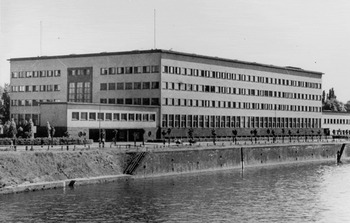
Although the significant financial issues regarding the creation of a research center in Frankfurt needed to be worked out, Rust's Ministry recognized, as Fischer informed Holfelder as early as 1933, that additional chairs and institutes for genetics had to be established to ensure “a new generation of uniformly trained scientific cadres” in the field.Footnote 15 As such, the political will at the state level to initiate something on the Main River existed early on. By January 1935, all the Frankfurt city officials as well as the university rector enthusiastically supported the institute's construction. A detailed letter from the city financial administration announced that a permanent home for the new research center would be established in the second story of the large administration building of the Allgemeine Ortskrankenkasse located at 140 Gartenstraße, directly on the left bank of the Main (see Photo 1).Footnote 16
Von Verschuer's institute was located in the Frankfurt “Haus der Volksgesundheit,” the fomer Allgemeine Ortskrankenkasse, 140 Gartenstraße, on the left bank of the Main River.

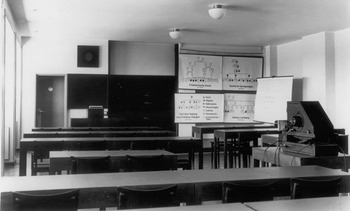
Meanwhile, back in Berlin, von Verschuer was busy drawing up the physical and budgetary plans for the institute. With six rooms slated for the director, an Oberarzt, and four Assistenten, in addition to a seminar room, an auditorium, three rooms for specialized research, two rooms for secretaries, a laboratory, a library equipped with a room just for journals, an archival room, a photography studio and dark room, and an animal stable as well as a garage, his proposal was hardly modest. And these were merely the requirements for the institute. Von Verschuer also expected numerous additional rooms, equipment, and personnel for a separate clinical department as well as a Poliklinik. He estimated the yearly personnel cost for his proposed seventeen-member scientific and nonscientific staff at about 42,600 Reichsmarks; the budget for equipment and utilities would add up to approximately 52,500 Reichsmarks. “This kind of facility is necessary,” von Verschuer asserted, “to do justice to the tasks of a genetic institute.”Footnote 17 (See Photo 2.)
A classroom in von Verschuer's institute, 1935.

On February 6, 1935, the Reich Ministry of Education sent a letter marked “immediate attention” to the Frankfurt University Kuratorium confirming that it was ready to approve the institute, pending confirmation from the Ministry of Finance.Footnote 18 Rust recognized the high cost of establishing such research centers, and he did not plan on granting permission for any additional ones in the near future. Von Verschuer's institute would be responsible “for all scientific work concerning genetic and racial issues for the entire western and southwestern portion of the Reich.”Footnote 19 By this time, the city of Frankfurt, continuing its tradition of supporting its unique Stiftungsuniversität, agreed to provide the room for the institute free of charge as well as pledge support for half of the institute's personnel and equipment expenses in perpetuity.Footnote 20 Given the prestige that such an institute would bring to Frankfurt, city administrators, including the Oberbürgermeister, firmly believed that the expense “would be worth it to us.”Footnote 21 The Reich government would absorb the rest of the costs. At this point, von Verschuer was sufficiently convinced that plans for the institute would materialize such that he was ready to come to Frankfurt to discuss final details. “I have a lot of trust in our Frankfurt project,” he wrote Kurator Wisser, and “believe that with a total effort all can be accomplished.” In March, the Ministry of Finance finally agreed to the budget of the future Institut für Erbbiologie und Rassenhygiene. Although the future director did not get everything he wanted, he reasoned that the curtailments “were not so essential as to pose a hindrance.” Finally, on May 2, 1935, von Verschuer was formally appointed director—Rust's Ministry even allotted the institute a one-time sum of 70,000 Reichsmarks for start-up costs. The deal almost two years in the making was done.Footnote 22
Men of Science, Men of Practice: Splitting the Spoils with the Stadtgesundheitsamt
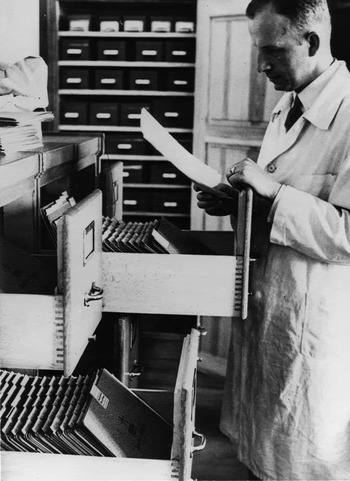
In his speech at the opening ceremonies of the institute, the new director articulated its multifaceted tasks. Although the building was standing and the numerous renovations were completed, his seven-year experience with Fischer at the KWIA taught von Verschuer the importance of continually selling his product to existing and potential future local, state, and party patrons. What he was most interested in marketing was that which was dearest to his heart, human genetic research. The best sales strategy: lay bare its usefulness for the main client, the National Socialist state. “Our young science is charged with an abundance of practical tasks,” von Verschuer explained to his audience, that could only be accomplished through “tireless research.” To be sure, the “rich results of genetic research” had already paid dividends for the foundations of Nazi racial policy. “But we are standing at the beginning of a new development,” von Verschuer reminded his listeners. An expansion of legislation would surely follow statutes already on the books, such as the Gesetz zur Verhütung erbkranken Nachwuchses (Law for the Prevention of Hereditarily Diseased Offspring, or the Sterilization Law), and it was necessary to prepare through a sustained and systematic organization of human genetic research. The days of casual, individual studies were over. “Only large-scale research undertaken in teamwork at specialized institutes capitalizing on the latest advances in scientific methodology could promise real success.”Footnote 23 Von Verschuer's dream of big science in the field of human genetics would also pay off as a foreign policy weapon. Researchers had a responsibility, he continued, to ensure that the field of genetic and racial care “maintains such a solid foundation that it is immune from any growing outside attack,” such as that exhibited at a recent international scientific meeting.Footnote 24 Party officials were equally concerned that National Socialist racial policy be viewed as “scientific” outside Germany's borders.Footnote 25 (See Photo 3.)
Von Verschuer standing in front of his research files on twins while in Berlin-Dahelm. He naturally hoped to expand these files greatly in Frankfurt.

But what kind of research program did von Verschuer have in mind? He desired nothing less than to establish a genetic register for all twins and families in the greater Frankfurt region. In consort with his team of assistants, the director hoped to record all the significant physical and mental character traits of this large population of more than half a million. Beyond that, the loyal genetic doctor wished to document the role of heredity in a host of diseases among all the dwellers in the area, chart the transmission of genetic abnormalities over generations, and assess the influence of the environment on such hereditary defects over time. Von Verschuer recognized, of course, that this was no small undertaking and that it would require the help of a host of professionals outside his field, including the individual subjects. But “through fortitude and patience, through accommodation and sensitivity,” and above all, “through a warm heart,” he could accomplish this all-important mission.Footnote 26 By all measures the director was quite successful; as of 1938, genetic information was on file for approximately 250,000 Frankfurt residents—about half the city's population.Footnote 27
The second task of the institute was devoted to training the next generation of medical professionals in the field of genetic and racial care through teaching. The new government did the best it could during its first two years to make up for the deficit in chairs and institutes devoted to this critical area by offering various training courses. But this was merely a stopgap measure, von Verschuer insisted. And it would be impossible to find the necessary candidates for the desperately needed chairs for human heredity and racial hygiene unless a sufficient number of young physicians had a chance to take appropriate courses and engage in research through multiyear assistantships. “It will be my special concern to insure that the Frankfurt institute meets this goal.” But given the prominence of “health” in the discourse and practice of the Third Reich, the training of medical students—the nation's future doctors, regardless of specialty—in human genetics and its allied subjects was of primary importance.
The answer was to revamp the medical curriculum so that each of its stages included more exposure to these areas. For example, during their preclinical years medical students would attend an introductory lecture in human genetics, followed by more specialized courses as part of the clinical curriculum. Finally, at the end of their studies, all medical students would take part in a capstone course in the institute's genetic clinic. Here they would go beyond theory and experience, firsthand, myriad types of genetic deformities that plagued the Volk. Such experiential learning would prove especially important for those who would eventually go on to serve on the hereditary health courts or as genetic counselors.Footnote 28 We also know that in subsequent years von Verschuer and his colleagues were involved in what may be described as an outreach program in human genetics and racial hygiene by lecturing to audiences at various state and party medical organizations and hosting continuing education courses at the institute.Footnote 29
The “practical applications of genetics” constituted the third focus of the institute, and von Verschuer was explicit about the prerequisite for such nationally important work: the establishment of a so-called state-licensed Beratungsstelle für Erb- und Rassenpflege (counseling center for genetic and racial care) at the institute. As was the case with the Poliklinik für Erb- und Rassenpflege briefly directed by von Verschuer in Berlin between late 1934 and his Frankfurt appointment, such counseling centers were set up by SS-Obersturmbannführer Arthur Gütt as part of a larger project that involved the formation of a centralized and nazified administrative health-care system.Footnote 30 Head of the Amt für Volksgesundheit in the Ministry of the Interior and “father” of the notorious sterilization law, Gütt instituted these centers not only for genetic counseling purposes, but also to screen couples for high-profile Nazi marriage loans. Later they were also used as a clearinghouse for mandatory marriage fitness certificates. Most importantly, perhaps, these centers were designed to aid in the task of registering and certifying those individuals who potentially fell under the guidelines of the sterilization law. They thus played an important role in providing expert testimony for the hereditary health courts and appellate courts that ultimately decided who would go under the knife. Only the existence of a Beratungsstelle, von Verschuer argued, could ensure that the training of future genetic doctors was “compelling and relevant,” affording them real “life practice” through their direct involvement in the execution of genetic care. Assistants and institute guests had to have the opportunity to gather experience in marriage counseling, sterilization-qualifying examinations, and other relevant genetic assessments. Naturally, von Verschuer continued, the institute had to curtail the amount of “practical duties” it could undertake. Research and teaching had to take precedence. As such, a division of labor with those institutions dedicated solely to “practical work” was unavoidable. But finding an equitable way to accomplish this would not be difficult, von Verschuer suggested optimistically. “Just as we men of science find it necessary and joyful to work closely with the men of practice, so, too, will they [the men of practice] find it valuable to have professional experts at their side”Footnote 31
What the new director neglected to mention to his attentive audience that June day—for obvious reasons—was that he had just recently been embroiled in controversy with the Frankfurt Municipal Public Health Office over control of these “practical duties.” While von Verschuer was in Frankfurt that February to discuss final details for the institute, he met with Stadtarzt Dr. Kurt Gerum, head of the Department of Genetic Certificates at the Municipal Public Health Office. As the physician within the Frankfurt Stadtgesundheitsamt with the most experience in the area of genetic health, Gerum had been carrying out many of the duties of a Beratungsstelle as early as late 1933.Footnote 32 Highly ambitious and jealous of the prestige bestowed upon others in the Nazi racial policy theater, Gerum sought to gain recognition for his valuable practical work in the field of racial hygiene by ingratiating himself with party bigwigs. Given the personality of the Stadtarzt, it is not difficult to imagine his reaction to von Verschuer's request that Gerum turn over all the certificate-writing duties of his department to the future director of the Institut für Erbbiologie und Rassenhygiene.Footnote 33
If the “loyal genetic doctor” lacked his mentor's perception in Nazi Party political matters, he was every bit as determined as Fischer to create a scientific empire and construct his own power base. As a world-renowned specialist in research on genetic diseases, von Verschuer was not about to let some mere municipal bureaucrat get in his way. His retort to Gerum's argument that it would be “uneconomical” to have certificate-writing duties turned over to the institute was clear: receiving the records would serve his science. Von Verschuer firmly informed the Stadtarzt that the several thousand reports processed for marriage loans and the information contained in sterilization applications could be used to create genealogical charts of the individuals and families in question—in other words, they would provide the raw data for his research emporium. While in Dahlem, von Verschuer had served on the Hereditary Health Court in Berlin, a task that gave him access to additional valuable material for his human genetic studies.Footnote 34 He naturally hoped to further expand his files on twins in Frankfurt. In April 1935, some eight weeks after their first meeting, the director was again blunt. He arrogantly apprised Gerum that Frankfurt was to have but one place where genetic certificate writing would take place, namely in his institute. Moreover, his institute would conduct all necessary examinations for marriage loans, sterilizations, citizenship acquisition, etc. Stripped of its present duties, Gerum's Department of Genetic Certification in the Stadtgesundheitsamt would be reduced to enlarging its current genetic records and archival holdings; it would also transfer all records necessary for von Verschuer's institute to complete future genetic examinations. Finally, as if to add insult to injury, the director offered Gerum the use of a guest office at his institute, where, under von Verschuer's direction, he could participate in the certificate-writing process.Footnote 35
It is unclear whether von Verschuer thought he could get away with his “work plan.” The director may have believed he had the clout to thwart the aspirations of Gerum, but he probably did not count on the resistance of the head of the Stadtgesundheitsamt, Werner Fischer-Defoy. For the loyal genetic doctor, control over these “practical duties” was of importance primarily as a mechanism to feed his expanding research base. Fischer-Defoy, who, after all, backed the creation of the institute with von Verschuer at the helm, must have felt somewhat betrayed. He likely eyed the director's attempt to usurp Gerum's territory as a direct threat to his own authority and the future role that the Frankfurt Stadtgesundheitsamt would play in National Socialist racial health-care policy. This was especially true since, according to the current statutes, genetic examinations and certificate writing was the province of the municipal public health offices.Footnote 36 Fischer-Defoy apparently forced von Verschuer to curb his appetite; a compromise would be found.
Although the behind-the-scene details are opaque, in the end, the spoils of the Stadtgesundheitsamt were shared. Some two weeks before von Verschuer gave his ceremonial speech, he wrote to Gütt's office requesting that his institute be granted the permission to serve as an official Beratungsstelle for Frankfurt, with all the rights and privileges pertaining thereto. He ended his appeal by noting how important it was to “take part in the practical application of genetic and racial care for that portion of our Volk that fell under the jurisdiction of his institute.”Footnote 37 Apparently wishing that von Verschuer would extend the good “practical work” that he began in the Berlin Poliklinik, Gütt made an exception and granted the institute the right of a Beratungsstelle in October 1935. But so as to not offend the Frankfurter Stadtgesundheitsamt completely, there would now be two centers for racial and genetic care in the city. Fischer-Defoy's Municipal Public Health Office would house Beratungsstelle I, responsible for the area north of the Main River. Beratungsstelle II, directed by von Verschuer and operating out of his institute, was in charge of the significantly smaller population south of the river. Although conflict over turf and areas of competence would continue throughout the first half of 1936, it eventually came to a modus operandi between the two men.Footnote 38
Nazi Racial Legislation and the Demand for Ancestral Proof
Whereas the loyal genetic doctor had to be satisfied with sharing the spoils with the Stadtgesundheitsamt in practical matters dealing with the genetic fitness of “Aryan” Germans, the director and his research team enjoyed a monopoly in the city—indeed in all southwestern Germany—on passing biological judgment over individuals whose racial ancestry was contested by the Reich Genealogical Office (RGO), and, after 1938, also in family court cases.Footnote 39 This privilege—if one could call it that—resulted in the preparation of some known 247 racial or ancestral certificates in the institute, most of them completed during von Verschuer's tenure as director. Given his responsibilities, the head of such a university research center could not be expected to undertake these practical duties alone; indeed several of his assistants, including the institute newcomer Josef Mengele, helped to manage the workload by performing the necessary examinations, standardizing the results, and sending the reports to the offices that required them.
The history, tasks, and institutional role of the RGO have been detailed elsewhere, and summary overview must suffice for purposes of this essay. As early as April 1933, Frick established a Reich Ministry Expert for Racial Research with “old-fighter” Achim Gercke as its head.Footnote 40 The government had already envisioned the need for racial legislation. But given the difficulty of immediately being able to spot a Jew or Mischling (partial Jew) on the basis of obvious anthropological features such as was possible with Afro-Germans, it was necessary first to secure and centralize all written records “containing information about our ancestors in the past hundreds of years.” Hence, in the absence of any agreed-upon racial markers for Jews—all discussions of the “Jewish nose” notwithstanding—Jewish race would be determined by religion.Footnote 41 As such, Frick demanded the direct or indirect appropriation of all genealogical records from church files and civil registries as well as requisite data from Jewish communal archives such as the Reichsvereinigung der Juden in Deutschland.Footnote 42 The Minister clearly hoped to ascertain an individual's “racial history,” so to speak, by the books.
But this proved to be illusory in some cases. The passage of the 1933 Law for the Restoration of the Professional Civil Service was the first major instance in which a sizable percentage of the German population was required to demonstrate its “racial acceptability” to the state. Although most of the more than four million individuals impacted by the law could provide the necessary birth, marriage, and baptismal certificates for themselves and their ancestors that counted as proof for the “kleiner Ariernachweis” (small Aryan certificate), others were unable to do so. Foundlings, adoptees, and those who were born out of wedlock often either lacked impeccable proof of their racial ancestry or possessed no relevant documentation at all. Moreover, racial clarity was also lacking in some cases of “Mischlinge.” The RGO was established in 1935 within the Ministry of the Interior to tackle just these serious racial challenges facing the nation. By this time, however, Gercke was ousted from his earlier position as Reich Ministry Expert for Racial Research on the charge that he was a homosexual; Kurt Mayer, a former member of the SS Race and Settlement Office, was subsequently chosen to replace him. The RGO's Abstammungsbescheid (certificate of ancestry) served as the official verdict concerning the person's racial composition. Beginning with the implementation of the Nuremberg Laws in September 1935, the RGO replaced the contested and ambiguous label “Aryan” with the allegedly more precise phrase “German or related blood.” Following the nomenclature of the law, those individuals who did not get a clean bill of racial health were designated by the RGO as either Jews, first-degree Mischlinge, or second-degree Mischlinge, depending upon how many “racially alien” members turned up in their family tree.Footnote 43
Although the RGO normally used genealogical evidence to produce its Abstammungsbescheid, in some relatively rare cases, especially involving individuals born out of wedlock, the necessary written documentation could not be found even with the means available to this office. On the basis of a secret decree issued by Frick's Ministry, the RGO was given permission to use so-called Erb- und Rassegutachten (genetic and racial certificates) for these situations. These certificates had their origin in the “Erbgutachten” (genetic certificate) first produced by Otto Reche, an Austrian anthropologist, in 1926 for use in a paternity case. Beginning in 1928, such certificates began to win slow acceptance as evidence in the German courts, and it was von Verschuer who wrote the first one in his country that same year. Whereas it was common to employ a blood test as part of the examination necessary for paternity cases, such a test could only exclude a possible father; it was not capable of positively identifying the biological male parent. Given that the blood test was almost always inconclusive, the examination process had to be based on an anthropological Ähnlichkeitsanalyse—a comparison of 120 to 130 physical genetic traits that involved portions of the ear, nose, eyes, hair, skin, skull, and the papillary patterns in the fingers and the drawings of lines in the palm. First the mother and child would be examined for these traits. Those characteristics in which the child differed from its mother would then be sought in the potential fathers. Depending on their rarity and the documented regularity of their inheritance, individual characteristics were weighed differently in the examination process. Visible genetic deformities or abnormalities were especially important, as they could almost single-handedly point to the correct biological father, if it was found in one of the suspect males as well as the child. More often, however, it was necessary to base a conclusion on a comparison of numerous traits.Footnote 44
After 1933 the Erbgutachten became the erb- und rassenkundliche Abstammungsnachweise, or, as they were sometimes called, the erbbiologische Abstammungsgutachten. But this was more than a mere name change. Whereas the original purpose of the use of examinations in the court process during the late Weimar Republic was to track down the biological father to aid the child both financially and emotionally, during the Third Reich it was frequently used to determine whether the child was a “national comrade” (i.e., whether he or she possessed “German or related blood”). The emphasis was now on the child, not the father. Moreover, in those paternity cases where the racial status of the biological father was in doubt, the child in question was often an adult. Indeed, many of the potential fathers of the “children” whose racial ancestry was unclear and hence required the help of the RGO were no longer living or had fled Nazi Germany. As such, these men could not be examined in person and the examiner had to make due with photos, many of which were not taken by professionals and were in poor condition. Although the use of blood tests and the Ähnlichkeitsanalyse remained the same, in instances where racial ancestry was in doubt, examiners attempted to categorize the examinee racially based on ostensible racial character traits of Jews found in the writing of the “racial expert” Hans F. K. Günther or the German psychiatrist Ernst Kretschmer.Footnote 45
Neither the RGO nor the examiners differentiated between those exams designed for normal paternity court cases and those undertaken to determine an individual's racial ancestry. But as the RGO was only interested in the latter, examiners in the eight institutes that were accredited to provide the erb- und rassenkundliche Abstammungsnachweise, including, of course, von Verschuer's institute, were at first not flooded with new practical tasks. Only four percent or less of all RGO investigations required a biological examination.Footnote 46 The situation changed dramatically in 1938, however. At this point the courts were given the right to investigate the legitimacy of a child. One year later, any individual gained the right to go to court to contest his or her “blood heritage.” Given the draconian legal measures and increasing extra-legal humiliation facing Jews and Mischlinge following Reichskristallnacht, it is little wonder that anyone who had a shred of hope of being found to possess less “Jewish blood” took the opportunity to have it settled by the courts. This often took the form of individuals who alleged that their legal father was not their biological one. At this point, the directors of the ever-increasing number of certifying institutes did have something to complain about. They were inundated with court requests for racial certificates, and they clearly could not keep up with the workload. The conditions became so dire that only in paternity cases where the racial ancestry of a person was in question did the courts request biological testimony. But even then, the institutes suffered a backlog of unprocessed or uncompleted certificates. This situation lasted until the end of the Third Reich.Footnote 47
An Ambivalent Portrait: Racial Certificates at the Institut für Erbbiologie und Rassenhygiene
Whereas in theory and practice the new director had so far only concentrated on weeding out “hereditarily diseased” individuals from the body politic, it was clear that the new institute would also directly serve the antisemitic obsessions of the Third Reich. As such, it came as little surprise to von Verschuer that his new research center would be one of the first to be accredited by the RGO for racial certification examinations. Although the loyal genetic doctor would never dream of refusing such a nationally critical “practical task,” it appears that he was less than enthusiastic about it—especially if one compares his attitude toward the racial certificate process with his push to power in securing a monopoly over documentation dealing with sterilization and marriage loans.Footnote 48 The reason: the racial certification process was neither scientifically interesting nor did it feed his research. “I would like to point out,” the director wrote to the university Kuratorium, “that the examinations for these certificates are scientifically useful in only extremely rare cases.” They were seldom “of special value,” even for the training of the institute assistants. In fact, von Verschuer maintained, this “practical work” represented an “additional burden” for them.Footnote 49 While it is certainly true that the director was trying to get additional monetary compensation for his assistants allegedly “burdened” by the demands of the RGO, his statements imply that he would have preferred if institute time and human resources could be spent elsewhere.
What can we say about the racial certificates? I should begin by mentioning that I only examined (i.e., took notes on) 120 such Rassegutachten. The reason for this is twofold: not all of the certificates housed in the Hessisches Hauptstaatsarchiv were completed during von Verschuer's directorship (von Verschuer was official head of the KWIA as of October 1, 1942), and of those that were undertaken during this period, not all of them reveal the name of the examiner.Footnote 50 Although I did not read the remaining relevant files with an eye toward a thorough statistical analysis, some interesting numbers and facts emerged from the study. First, approximately forty-five percent of all examinations for paternity cases at the institute during 1935–1945 involved ancestral proof. This contradicts the statement that Rassegutachten comprised only a small percentage of all paternity cases.Footnote 51 Second, the experience at the Frankfurt institute certainly corroborates the general view that the new regulations of 1938 and 1939 opened the floodgates for litigation demanding racial certificates. The director's first official request from the RGO came on January 31, 1936. According to a report written by von Verschuer in July that same year, the institute had thus far received ten requests for racial certificates from the RGO, although I found only six in the files housed in the archive.Footnote 52 Of the cases I perused, there were at least eleven petitions from the RGO for 1937.Footnote 53 The remaining Rassegutachten were produced between 1938 and 1942—at a time when the law allowed the courts and vulnerable individuals to apply for such certificates themselves.
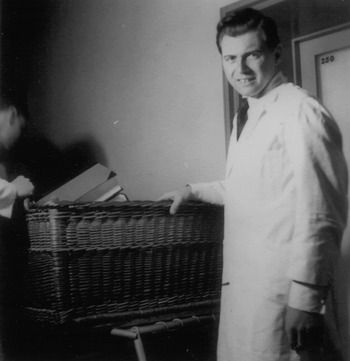
Third, between 1936 and 1940 almost all of the racial examinations were carried out by four of von Verschuer's assistants: Leonore Liebenam, F. Schwarzweller, Hans Grebe, and Josef Mengele. Von Verschuer became acquainted with the first two future colleagues while in Berlin, as they attended courses under his direction at the KWIA. Liebenam almost certainly recommended herself to the director through her interest in twins while working in the Pediatrics Clinic at the University of Frankfurt. Apparently her lack of Nazi Party membership at the time did not work to her disadvantage. Schwarzweller was also granted a position almost immediately. His area of research was deformities of the limbs, a special area of concern at the institute.Footnote 54 It is not known whether Grebe, an early supporter of National Socialism who joined the party and SA in 1933, knew von Verschuer while he was attending medical school in Berlin. In 1935, however, he was in Frankfurt serving as an army sports trainer in the University Medical Faculty, and one can assume that his close geographical proximity to von Verschuer facilitated his appointment to the institute. In 1936 Grebe completed his dissertation under von Verschuer on the frequency of hereditary and nonhereditary causes of blindness; he became an Assistent two years later.Footnote 55 Mengele, the most notorious of his assistants, came to von Verschuer no later than January 1, 1937, having passed his state exam in medicine as well as having completed a Ph.D. in anthropology from the University of Munich. Prior to his position as Assistent in the Frankfurt institute in June 1938, Mengele held several temporary positions as he worked toward a second Ph.D. in medicine. His appointment came immediately after the completion of his medical dissertation on “Kinship Examination in Cases of Cleft Lip, Jaw, and Palate” for which he received the distinction summa cum laude. On March 30, 1939, the Frankfurt University Medical Faculty awarded him his degree. By this time Mengele was not only a Nazi Party member but had also joined the SS.Footnote 56 (See Photo 4.)
Josef Mengele at von Verschuer's institute in Frankfurt, ca. the late 1930s.

Of the racial certificates that bore the name of the examiner, Liebenam and Schwarzweller together may have produced no more than seven Rassegutachten. Although the director himself carried out a few examinations before 1940, the overwhelming majority of them were assigned to Grebe and Mengele. The latter performed at least twice as many as the former, although Grebe, unlike the future SS Lagerarzt, stayed at the institute until von Verschuer left in 1942. By 1940, the loyal genetic doctor himself had to take on a very large percentage of the cases that came his way, as most of his male assistants were by then compelled to promote the Reich's racial interests through their military service rather than in the institute laboratory.Footnote 57 Of all the institute members, Mengele seems to have undertaken the largest number of racial certificates.
Finally, von Verschuer and his colleagues involved in the racial certification process were all Nazi Party members, with one possible exception.Footnote 58 Membership in the NSDAP, however, does not appear to have impacted the examiners' evaluations in a manner one might expect. Of the 120 racial testimonials, only four declared the people in question to be “full Jews.” Grebe was the examiner in two of the cases, and as one examination took place for a second time in 1941, it might well have amounted to a death sentence for the unfortunate person. The second two cases involved von Verschuer in two court judgments concerning “Rassenschande” (racial defilement).Footnote 59 Whereas one resulted in acquittal although the verdict was later reversed, the second resulted in a conviction. These will be discussed later in the essay. Virtually all the rest of the cases involved deciding whether an individual was a “first-degree Mischling, a second-degree Mischling, or a person of German or related blood.”
The results of these cases might appear somewhat surprising. More than twice the number of certificates assessed the person in question to be of “German or related blood” rather than “Mischling” of either degree. Although Grebe examined far fewer cases than Mengele or von Verschuer did, he rendered in percentage terms the harshest verdict for the individual. Von Verschuer most frequently offered the most favorable testimonial for the individual, but even Mengele's judgment was more than two to one in favor of the examinee being “Aryan.”
These results do not, of course, mean that either Mengele or his mentor was “soft” on Jews. Both men viewed themselves as “objective” scientists who came to their judgment through as thorough an Ähnlichkeitsanalyse as possible. Indeed, von Verschuer's letter to Fischer urging him to participate in the 1938 conference on the “Jewish question” hosted by the notorious Reich Institute for the History of the New Germany demonstrates the ambiguity of the loyal genetic doctor's attitude. In discussing how participation might be viewed by some elements abroad, the loyal genetic doctor used the ubiquitous Nazi phrase “international Jewry.” Yet he had the following to say about the upcoming event:
The talks will receive a lot of attention, and, as such, [attending] provides a special opportunity to contribute to a calmer view of these issues. This duty, in my opinion, legitimizes participation. . . . we do not need to fear that such a talk will damage our scientific image. . . . It is, however, important that our racial policy—even in the Jewish question—receive an objective scientific grounding that will be accepted in larger circles.Footnote 60
The director's letter to Fischer after having delivered a lecture on the “Jewish question” a year earlier entitled “What Can the Historian, Genealogist, and Statistician Contribute to the Study of the Biological Jewish Problem?” also shows the same ambivalent stance with regard to Germany's largest group of “racial aliens.” In his note, von Verschuer remarked that “his talk was received with applause, even if the extreme antisemites could certainly not have been pleased.”Footnote 61 As we will see, the certification process in Frankfurt was not automatically used as a weapon to turn individuals whose racial ancestry was in doubt into “racial aliens,” the clear willingness of von Verschuer and his colleagues to confer legitimacy to the Nazi regime's antisemitic policies notwithstanding. At least after he embarked on his career as a loyal genetic doctor, von Verschuer's unequivocal desire to prevent racial mixing between Jews and “Aryans” was tempered by his understanding of himself as a scientist.
How “Scientific” was the Certification Process?
As the examiners in question all considered themselves respectable scientists, it is worth asking to what degree, if any, the racial certification process was “scientific.” Prior to the widespread use of DNA testing, anthropological-morphological similarity analysis was frequently used in paternity cases in numerous countries, including postwar Germany, when blood tests could not determine the biological father.Footnote 62 As such, it is not the use of the Ähnlichkeitsanalyse per se that was scientifically questionable in the Third Reich. At issue is its application in Nazi Germany to assess an individual's racial ancestry and, more particularly, the inclusion of so-called racial traits in the certification process. Since, interestingly, only four of the 120 racial certificates I examined involved individuals about whom one did not suspect Jewish ancestry, special attention should focus on how examiners evaluated alleged “Jewish racial traits,” the assessment of which was an important criterion for the RGO.Footnote 63
The RGO required the examiner to respond to variations of the following three questions: 1) is it probable that the German-blooded man is the subject's biological father; 2) or is it more probable that the Jewish man is the biological father; 3) does the subject exhibit Jewish racial characteristics?Footnote 64 The five investigators at the institute frequently employed what was called an “Examination Form for Ancestral Certificates” as the basis of their testimonials. The thirty-two-page questionnaire listed the name and relevant data (i.e., date of birth, address, occupation, religion) of the mother and “child.” The form included three additional spaces for the names and information of up to three potential fathers. After comparing the mother, “child,” and potential fathers on the basis of general bodily traits such as height, head form, nose size and shape, ear length, etc. on page 2, the rest of the questionnaire contained all the possible variations of the characters in question. To use but one example, under “Hair,” one finds a subset for “color, form, thickness, hairline, hair crown, and cowlick,” each of which contained numerous possibilities (such as dark-brown or brown for color; and taut, limp, wavy, or curly for form). Moreover, a + was placed if the trait was present; a ++ or +++ represented that the particular characteristic was very prominent or extremely prominent, respectively. More than four pages of the form were devoted to various parts of the nose! All three to five parties to the examination were compared with respect to all these various traits as well as their relative prominence. The questionnaire did not include a separate category labeled “racial characteristics.” In practice, the decision of whether the Jew or German-blooded man was the father was based on a comparison of all the manifold traits with those in which the child differed from the mother. At this point, usually a four- to seven-page summary report was typed up that described how the mother, child, and the potential fathers compared in some of the most important traits.Footnote 65 Finally, the examiner addressed the three questions.
Answering any of the questions in Frankfurt was frequently made difficult as one of the potential fathers, usually the Jewish man, was commonly not available to examine in person. More often than not, nonprofessional photos had to be used in place of the missing party, although both the examiner and the RGO complained about this state of affairs. In at least one 1941 case, neither of the two potential fathers could be examined, and photos existed only for the German-blooded man—a precarious situation for an investigation to be sure. In this case, however, Grebe decided that the subject's
phenotype does not deviate from that of the average southwest German population. . . . the subject lacks obvious Jewish traits. Striking is only the large convex nose that can be seen in profile owing to the flattening of its tip. As the mother's nose is large, however, and convex noses can be found among German-blooded individuals, this trait does not lead one to conclude the existence of an alien racial taint.
Von Verschuer's assistant assessed that the father was probably a man of “German or related blood.”Footnote 66 Although one scholar has criticized the use of photos in the racial certification process as “unscientific,” given the circumstances, extremely few such cases could have been decided without them. This was a situation that was as politically untenable for the examiners as it was for the RGO. But with so little to go on, Grebe appears to have given the subject the benefit of the doubt. He was not the only one to do so.Footnote 67
Although all institute examiners responded to the RGO's third question regarding “Jewish character traits,” the ambiguity of just what constituted them provided the examiners obvious leeway in their assessment. There are numerous cases in which one of the five investigators found traits in the subject that could appear to be “Jewish” but pronounced the biological father to be “Aryan.” Consider the case of N.F. Von Verschuer examined the male subject in 1940 and undertook his analysis with the aid of photos. The director's judgment:
In individual traits the subject does not in any way fall outside the normal degree of variation of the German population. He exhibits no typical Jewish characteristics. As [his] photo indicates, given the total physiognomic picture, it is not outside the realm of possibility to assume that the father of the subject is a Jew. The nearly straight line from forehead to nose . . . the turned-down convex form of the nose, a morphologically non-describable impression of the eye form are not completely unsuspicious, especially given the comparison with his mother from whom he differs in these traits. But it could well be that one does the subject an injustice by uttering such suspicions, as there are certainly many German-blooded people who are of this type . . . By the uncertainty of the entire situation, I would consider it legitimate to accept that a man of German or related blood was his father.Footnote 68
Some two years earlier, Mengele examined a certain W.K. who definitely “looked Jewish,” yet von Verschuer's favorite was not ready to pronounce him so.
On the basis of the anthropological examination—including both the individual physical traits as well as the total physical and mental impression—one can say that the parents of the subject can be completely integrated into the average German population . . . The genetic analysis of the various traits of the subject demonstrates that his phenotype is the product of individual traits that all exist in the average German population. It is only the special combination of the characteristics inherited from his father and mother that make him stand out as appearing racially alien.Footnote 69
Moreover, in that same year, V.B. and his daughter E.B. were examined by Mengele to determine whether they could be naturalized as German citizens; V.B. was married to a German-blooded woman. Apparently von Verschuer's doctoral student had little to go on except the examination of the two individuals. Their “racial type,” he argued, is not frequently seen in the German-blooded population, but it did not absolutely fall outside its range. Mengele thus concluded that although their citizenship was not “positively desirable,” it also “did not give cause for concern.”Footnote 70 Needless to say, institute examiners also used the appearance of “Jewish traits” in a manner that was unambiguously prejudicial to the examinees and their relatives. The Rassenschande files are a case in point.
So, what can be said about the “scientific” nature of the racial certification process? Legal expert Eric Ehrenreich has argued in his publications that the researchers who participated in this process and wrote allegedly scientific articles about race, especially von Verschuer, were “unscientific” even by the standards of the day. First, he noted how von Verschuer's 1938 article, “The Racial Biology of the Jews”—the one based on the infamous 1938 conference on the “Jewish question” held under the auspices of the Reich Institute for the History of the New Germany—had no predictive value in helping to decide who was a Jew. Second, Ehrenreich quoted von Verschuer himself as admitting that “a . . . single characteristic by which one can identify Jews is unknown.” Third, he also accused von Verschuer of circular reasoning and making claims from unproven assumptions (e.g., that Jews have uniform psychic characteristics). The author held up the 1913 German publication of American anthropologist Maurice Fishberg's Die Rassenmerkmale der Juden as an example of so-called good science from which the likes of von Verschuer could have profited, had he only wanted to. Ehrenreich implied that von Verschuer not only pursued a “pseudoscientific” agenda in the field of racial science, but also did so willfully.Footnote 71
These assertions warrant a response. Ehrenreich's first three specific claims about von Verschuer's work on the “Jewish question” are true—but they miss the point. Probably most German biomedical scientists who served the Third Reich, including von Verschuer, accepted the premise of physical and “mental” “Jewish traits,” however difficult they were to pin down in individual cases. One could, of course, argue that von Verschuer's acceptance of the premise of “Jewish traits”—or any so-called racial psychological character traits for that matter—is not “science.” From that standpoint, much of early twentieth-century anthropology was not scientific. But as historian of science Robert Proctor pointed out long ago, “science is what scientists do.” Science is what is accepted as science in peer-reviewed journals and funded by scientific agencies. To go back to Thomas Kuhn, what constitutes science at any given time is sociologically determined.Footnote 72
Did von Verschuer think in categories of “science” and “pseudoscience”? In his important volume, Studying the Jew: Scholarly Antisemitism in Nazi Germany, historian Alan Steinweis correctly noted that the distinction between science and so-called pseudoscience did not exist in the mind of von Verschuer (and other human geneticists) at the time. Steinweis also reminded us that many of the sources used by von Verschuer in the written version of his talk were originally penned by Jewish scholars; von Verschuer merely placed them in a Nazi context. In addition, Steinweis argued that there was no commonly agreed-upon scientific methodology for studying the racial biology of the Jews in the 1930s, a point noted by other scholars. And finally, based on my own extensive research on von Verschuer, there is no evidence to support Ehrenreich's allegation that von Verschuer deliberately engaged in “pseudoscience” for abject political purposes, the human geneticist's clear antisemitic outlook notwithstanding. Indeed, as we have seen, he specifically wrote his mentor Fischer that they should attend the 1938 antisemitic conference held by the Reich Institute for the History of the New Germany so that together they could place the “Jewish question” on a more “objective” scientific footing.Footnote 73 It seems extremely doubtful that von Verschuer would have written these private words to Fischer had he wished willfully to promote “pseudoscience.” Moreover, given the value both they and the Nazi government placed on their international scientific reputations, appearing blatantly “unscientific” in the public arena could only be detrimental to all parties involved. Fischer and von Verschuer could reasonably assume that many, if certainly not all, human geneticists and anthropologists both inside and outside Germany would accept their analyses as falling within the realm of acceptable scientific discourse on the subject, even if they disagreed with them. In light of all these considerations, we should be wary of dismissing von Verschuer's publications dealing with “Jewish traits” and the racial certifications based on them, as “pseudoscience”—as something no thinking individual had any reason to accept. It goes without saying, however, that to argue that the construction of Rassegutachten was based on accepted scientific practice at the time is not to claim that this particular application of human genetics was ethical.
That having been said, in a 1941 court case the director made clear that the phenotypical analysis of the subject is merely one piece of information among others.Footnote 74 Based on my examination of the files, it appears that in most cases von Verschuer and his colleagues relied on the normal Ähnlichkeitsanalyse in tandem with the standard serological blood test to arrive at a judgment about whether a subject was “racially alien.” They then used the accepted ambiguity surrounding the appearance of “Jewish characteristics” to pay lip service to the RGO's required third question. This is not, of course, to say that the examiners in von Verschuer's institute lacked prejudice toward Jews. Consider the following example. Von Verschuer appeared to be in a quandary over the racial ancestry of a certain M.S. In the director's 1936 racial certificate he argued that one cannot tell whether M.S.'s “Jewish appearance” was the result of Jewish blood or the “unfortunate accidental combination of individual traits.” When the RGO later asked the loyal genetic doctor to explain his testimony, he stuck to his opinion. Without a photo of M.S's father, von Verschuer maintained, it was impossible to provide any degree of certainty regarding the subject's racial ancestry. His phenotype could still be merely an unlucky roll of the dice.Footnote 75 This case lays bare the mixture of ideological prejudice and scientific practice at play in the certification process.
Scientific Credibility and Political Controversy
The institute files demonstrate that von Verschuer's standing as a scientist not only gave him credibility with the courts and the RGO but also sometimes helped individual subjects. In 1941 the director examined W.T. The woman was trying to prove that her biological father was not her Jewish legal father. Although her legal father had already emigrated to the United States and was not available for an examination, the loyal geneticist concluded that H. Israel W. was “with almost absolute certainty” not the father of W.T. “According to my conviction,” the director insisted, “the [Aryan] K.N. is the biological father.” The state court in Frankfurt accepted von Verschuer's racial certification with the following statement:
The scientific and ideological qualities of the expert Prof. Dr. Freiherr von Verschuer [and] his long service as a racial scientist for the Reich Office of Genealogy bring the guarantee that when he testifies that it is apparently impossible for the Jew to be the father, the prosecution must accept that his demand for proof has been furnished.Footnote 76
The director's scientific authority even aided individuals not investigated by him. As the head of the institute, von Verschuer felt responsible for defending the integrity of his assistants. When the RGO failed to accept Grebe's conclusion that a female subject he examined did not have Jewish blood, the assistant's superior wrote a letter of protest. The director got his way and a new ancestral certificate was written stating that the woman in question was of “German or related blood.”Footnote 77
To be sure, von Verschuer's professional standing was also used to the detriment of subjects. In 1939 the director received a letter from the RGO asking that the Ukrainian J.S. be examined, as he was suspected of Rassenschande; indeed, at the time of the letter he was sitting in a Mannheim jail. J.S. admitted that he was brought up Jewish and was probably circumcised (why he did not know for sure is not explained), but that his father's mother and his own mother were not Jews. Allegedly, there was no genealogical proof to back these statements. The RGO requested a “quick and preferential treatment” of this case. Grebe was placed in charge of J.S.'s examination and came to the conclusion that although the man definitely had Jewish blood, he could not tell exactly how much. Fearing that J.S. might be acquitted owing to insufficient ancestral proof, the prosecuting attorney in Mannheim sent von Verschuer a letter imploring the director for a more precise answer. He asked von Verschuer to state what proportion of Jewish blood ran in the veins of the man he wished to keep behind bars. The loyal genetic doctor continued to back the testimony of Grebe, again emphasizing that the exact racial ancestry of a subject could not be derived from the phenotype alone. Apparently, however, von Verschuer believed J.S. had enough Jews in his family tree to make him a Jew. In February 1940 von Verschuer wrote the prosecuting attorney regarding the outcome of the case. On the basis of the director's testimony, J.S. was sentenced to four years in prison and five years in a detention camp.Footnote 78
The only instance of Rassenschande that involved examiners at the Frankfurt institute and that has thus far attracted scholarly attention concerns the case of H.A.Footnote 79 According to all genealogical records, the young architect H.A. was a “full Jew,” although his parents had converted before his birth and he was raised Protestant. In what was probably a prehearing, H.A. admitted to having had a sexual liaison with a full-blooded “Aryan” woman over a period of years, but contended his Jewish legal father was not his biological one. There was a very large amount of written evidence to support his contention that he was born out of wedlock to a particular German-blooded man.Footnote 80 Apparently the prosecuting attorney requested that H.A. undergo an examination at the Frankfurt institute, and in July 1937 Mengele completed it. Based on the Ähnlichkeitsanalyse of H.A. with his legal parents and a photo of the alleged biological father, Mengele came to the conclusion that the legal father was “probably” also the biological one. The summary statement, however, argued that “[H.A.] should be viewed as a full Jew.”Footnote 81
There are a few things to note: 1) this was one of the earliest cases in which Mengele examined a subject at the institute; indeed, he was not yet even officially an Assistent, nor had he completed his second doctorate at the time he undertook the examination. This means that von Verschuer must have had great confidence in his abilities as an examiner—something corroborated by the fact that the director allowed Mengele to attend the trial hearing in his place one month later; and 2) it is not clear whether von Verschuer also examined H.A. The summary statement spoke of “we,” but it is possible that the director merely “signed off” on Mengele's report.Footnote 82
At the Frankfurt trial held on September 14, 1937, H.A. was acquitted of the charge. Among other things, the court held that at the trial hearing, Mengele admitted that there was only a “probability” that H.A's Jewish legal father was also his biological one. This stood in contrast to the summary statement of the testimonial that H.A. “should be viewed as a full Jew.” The court found this illogical; it also believed that the examiner underplayed the physical similarities between the potential “Aryan” father and H.A. These concerns, combined with H.A.'s physical appearance (blond-haired and blue-eyed) and the not inconsiderable written testimonials taken under oath that supported the non-Jewish man as biological father, led the court to its conclusion.Footnote 83
Upon learning of the decision, von Verschuer wrote a letter to the Reich Ministry of Justice, the Reich Ministry of the Interior, and Dr. Gross of the Racial Policy Office of the NSDAP in which he claimed that the court's verdict undermined the Nuremberg Laws. As the director viewed it, the court's decision turned a Jew into a “half-Jew.” In von Verschuer's opinion, the Nuremberg Laws placed individuals in racial categories on the basis of normal genealogical evidence or an Abstammungsbescheid from the RGO. Von Verschuer obviously wanted to clarify the case from his point of view. The director argued that he was not writing them because he wished “to get involved in the appeal of the case” or make a statement about the “conclusiveness” of the racial examination process. Rather, he wanted to offer a “practical suggestion” that would bring “a uniform standard of measure for judging ancestry.” The loyal geneticist's proposal was that normal genealogical documents or an Abstammungsbescheid from the RGO should be definitive in determining racial ancestry “until the opposite is proved.” This could only be done through the completion of a different Abstammungsbescheid issued from the RGO which must then be accepted by the courts as final proof. Von Verschuer obviously distrusted the courts to interpret the results of racial certificates any way they chose to, especially as the judges were not trained in racial science.Footnote 84
Both Gross and an unknown representative of the RGO responded to von Verschuer's suggestion. Both found problems with the plan, although the RGO official promised to “dig more deeply into the issue and keep it in mind.”Footnote 85 For the Nazi officials, however, the real issue was the general lack of “precise” racial certificates that were allegedly the result of “excessive caution” on the part of the scientific examiners. The official from the RGO believed that the “false decision” in H.A.'s case was based on the “lack of clear and precise information” on the part of Mengele in his certificate and his “fickle” testimony at the trial hearing when the defense lawyer repeatedly pointed to the defendant's “Aryan” appearance. One must remember, he reminded von Verschuer, “that in cases that violate the Law Protecting German Blood and Honor, the criminal judge must prove that the accused is a Jew.”Footnote 86 Only then can punishment follow. Gross, too, blamed von Verschuer's favorite. “I do not think,” he argued, “that the court would have ignored a totally clear position of the assistant,” had he given one.Footnote 87 As it turns out, the Frankfurt verdict was overturned in a higher court in Wiesbaden in 1938. Luckily for H.A., he had by that time fled to Brazil.Footnote 88
Whether von Verschuer had actually examined H.A. or simply “signed off” on Mengele's judgment, the director's letter of complaint and his “suggestion” were not motivated by a desire to imprison H.A. for Rassenschande. Indeed, he specifically stated that this was not the case in his letter. Nor does it prove, as Müller-Hill seemed to suggest, that von Verschuer was somehow a racial fanatic.Footnote 89 At issue here was most probably the loyal geneticist's own scientific reputation as well as that of his favorite. After all, the director did sign the racial certificate, and he felt responsible for the actions of his assistants. If his assistants were not useful in contentious court cases, what did it mean for the future of von Verschuer and his institute? Moreover, if Mengele were to have any credibility as an examiner in the future (and von Verschuer obviously wanted him to), then his reputation needed to be protected as well. The responses von Verschuer received from Gross and the RGO demanded that racial testimonials be more exact, something that the director and his assistants were not always able to provide. Apparently, however, Mengele learned from his mistake. I found no other case where the courts questioned a racial certificate from him or any other institute member. From the material presented in this essay thus far, and from the files I examined, the RGO also accepted the testimony of the examiner most of the time. And this testimony, as we have seen, has more often than not been favorable for the subject.
The files also contain cases that demonstrate the polycratic nature of racial policy in the Third Reich. For example, in early 1941 brother and sister A.L. and M.R., both “full Jews” according to the genealogical records, claimed that that they were sired not by their Jewish legal father but by an “Aryan” man. The RGO requested a racial certificate from the institute, and Liebenam completed it. She found the siblings to be “half-Jews,” and the RGO accepted this testimony. The Thüringisches Landesamt für Rassewesen headed by the fanatical Karl Astel as well as the Thüringische Ärztekammer wrote to the RGO to dispute the findings, however, and notified von Verschuer of the complaint. The Landesamt and the Ärztekammer apparently expected that von Verschuer would at least discuss the case with them. Obviously resenting anyone who questioned the authority of his institute in such matters, the loyal genetic doctor promptly wrote to the RGO. The director claimed that he was not answerable to anyone other than the RGO and that to involve the Landesamt or the Ärztekammer would amount to “overstepping the boundaries of my authority.” His task, he reminded the RGO, was merely to write a racial certificate that they requested. It appears that von Verschuer's response settled the matter.Footnote 90
Another case where racial policy practice was in dispute involved J.K. In January 1938 the RGO requested a racial certificate for the would-be doctor J.K. to determine if his father was a Jew. The RGO asked if the institute would waive the normal fees, as J.K. was a very good medical student but had no money. Mengele undertook the examination and determined that J.K.'s biological father was Jewish, although he could not say so definitively. Soon thereafter, the RGO's Abstammungsbescheid declared him to be a first-degree Mischling. Almost four years later, the Ministry of the Interior questioned the 1938 conclusion of the RGO, claiming that Mengele's racial certificate only spoke of “probability.” J.H. had subsequently joined the army of his own accord and was serving (probably in some medical capacity) in November 1941. The Ministry of the Interior forced the RGO to declare J.H. an “Aryan” and reprimanded it for insinuating that a person is part Jewish without definitive proof. The final Abstammungsbescheid declared J.H.'s ancestry to be “German or related blood.”Footnote 91
Did the Freiherr Fudge?
In his book Murderous Science, Müller-Hill raised a thorny issue relevant to this essay. If the examiners “falsified data on humane grounds they became party to fraud. . . . If, on the other hand, they did their work scrupulously, they became accessories to murder, at least after 1942.”Footnote 92 In other words, those charged with preparing racial certificates faced a moral dilemma: either they betrayed their profession as scientists to help vulnerable individuals or they forfeited their obligations to humanity by accepting the deadly consequences facing their subjects to remain true to their science. How did the loyal genetic doctor behave?
As it turns out, it is extremely difficult to answer this query. Except in the rare cases where the director specifically stated that he was giving the subject the benefit of the doubt, we cannot know whether a favorable assessment was based on scientific criteria or whether he fudged the data deliberately to aid an individual. There are, however, some trends worthy of note. We have seen that in the case of J.H., who was serving in the Wehrmacht, the Ministry of the Interior demanded that the RGO revise its Abstammungsbescheid to the advantage of the medic. It cannot be overlooked that in at least five cases, the loyal genetic doctor himself pronounced potential Mischlinge who were serving in the armed forces as having “German or related blood.” In 1940, the director simply gave the soldier A.P. the benefit of the doubt.Footnote 93 During the following year, A.W. appeared at the institute in uniform; von Verschuer declared him an “Aryan,” allegedly on the basis of his acting in a “non-Jewish” manner.Footnote 94 In another instance, von Verschuer pronounced a potential half-Jew “Aryan” who was expecting a child by a soldier on the eastern front soon to receive leave.Footnote 95 In yet another 1941 case, the director was willing to examine corporal W.L., a Mischling, although he did not even have a request from the RGO to do so. His girlfriend, as it turns out, was expecting a child.Footnote 96
But von Verschuer did not always get his way. In late 1940, the Luftwaffe asked the director to examine K.S. to determine if he was a Mischling. The only thing he had upon which to render a decision was K.S. and his mother. No picture of either potential father was available. On the basis of this slim evidence, the loyal geneticist argued that mother and son had different traits and that the latter possessed no “Jewish characteristics.” As such, von Verschuer concluded that K.S. had an “Aryan” father and was hence “German-blooded.” Yet according to the RGO, the mother married the Jewish father after the child was born and then herself converted to Judaism. As no real proof could be given to substantiate the subject's claim of having a non-Jewish biological father, the RGO was unwilling to accept that the converted “Jewess” was impregnated by an “Aryan” man.Footnote 97
It should perhaps come as no surprise that party officials, for their own reasons, occasionally showed a particular interest in the outcome of a racial testimonial. In 1939 von Verschuer received a letter from the RGO asking him to examine L.S., whose records indicated that she was a “full Jew.” In a “confidential by the way” the RGO admitted that there were no concrete reasons to doubt the woman's full Jewish ancestry, but “perhaps because of the subject's special merits” she should be examined anyway in the hope of receiving a special pardon. Her husband was a professor. Although we do not have von Verschuer's racial certification, the RGO classified her as a first-degree Mischling. Apparently, however, the Aryan professor was not satisfied with the verdict and indicated this in a letter to the director. In his reply, the loyal geneticist wrote that “considering the situation I would advise you to content yourself with the decision of the RGO.” The Aryan professor continued to attempt to change his wife's racial ancestry, even offering to make von Verschuer a portrait. The director rejected this seeming form of bribery. He probably felt that he done enough for his wife already.Footnote 98 In another case, von Verschuer was requested by the Hessen-Nassau District Branch of the NSDAP to examine a man who wanted to be reinstated as a party member after having withdrawn his membership because his mother was not “Aryan.” The director claimed that he could find no evidence of “Jewish blood” in the subject. From a racial perspective, von Verschuer argued, he would be in favor of reinstatement.Footnote 99
Space does not permit an examination of two interesting cases in which von Verschuer went the extra mile to help two fellow doctors.Footnote 100 In both instances, the men later wrote a positive testimonial for the director in the immediate postwar period.Footnote 101 Again, there is no way to discern whether it was science or sentiment that motivated the loyal geneticist's testimony and, at least in the case of W.T., von Verschuer remained involved with the racial ancestry of his professional colleague's wife and children over a period of years, even after he no longer headed the Frankfurt institute.
Finally, there is only one known instance of a relative asking von Verschuer for help. In his 1936 reply to a distant uncle who requested von Verschuer's aid in the case of two sisters (nothing more is known about them), he responded that although their father should also be examined, he would attempt to write the racial certificate without him. “I frequently receive such cases,” the director added. “It is natural for me to take special personal circumstances into account,” von Verschuer continued, “insofar as my duties as an official examiner allow.”Footnote 102
Is there anything we can infer regarding the above-mentioned cases that at least suggest some sort of fudging? From an examination of the files, it appears that von Verschuer attempted to negotiate his role as objective scientist and loyal civil servant and his desire to “take special personal circumstances into account,” be they hints from party officials to be lenient, soldiers in time of war whose ancestry was questioned, or fellow medical professionals trying to aid a family member. Ironically, the demand for an assessment of a subject's “Jewish racial characteristics” provided the director wiggle room in offering a judgment, as there was no definition of what constituted these traits. But there were clear boundaries that the director would not transcend. If an action or decision appeared to von Verschuer a clear betrayal of his duties as a civil servant and/or of his role as an objective scientist—in other words, if it undermined his self-understanding as a loyal genetic doctor—he would not bend.
Conclusion: Von Verschuer, the Institut für Erbbiologie und Rassenhygiene, and the Auschwitz Connection
This lengthy discussion of the racial certification process notwithstanding, we should remember that it was certainly not the institute's only “practical application of genetics,” and it was probably von Verschuer's least favorite one. This is because it rarely advanced his research, unlike his role as Gutachter for sterilization cases and his service on the Hereditary Health Appellate Court.Footnote 103 The loyal geneticist's studies of twins were not focused on race in the anthropological sense of the word, and his assistants did not pursue research dealing with the “Jewish question.” His participation in the two notorious conferences hosted by the Reich Institute for the History of the New Germany might well have been, as he claimed, designed to inject a degree of scientific moderation into the screeching Nazi antisemitic discourse—if, for no other reason, than to protect his international reputation. We can also imagine that prominent researchers such as the loyal genetic doctor might have received invitations that they did not necessarily want, but felt politically uncomfortable refusing. Having to spend an ever greater portion of time on the racial certification process, especially after 1938, is the price that biomedical professionals such as von Verschuer and his assistants incurred for becoming a party to the “Faustian bargain” in the first place.
The establishment of the Institut für Erbbiologie und Rassenhygiene lays bare the bargain von Verschuer made with Nazi state and party officials. While it is true that he formerly worked at Fischer's KWIA, with the Frankfurt deal he secured an institute of his own. The loyal geneticist's assertive manner of dealing with potential rivals in the Municipal Public Health Office reveals a level of self-confidence backed by his self-understanding as a world-renowned scientist. Although he ultimately had to share the spoils with the Stadtgesundheitsamt, the aggressive, indeed authoritarian, tone with which he attempted to show Gerum who was boss demonstrates that he was as adamant about creating a scientific power basis as was his mentor Fischer. That Gütt was willing to grant the director his much coveted Beratungsstelle speaks volumes about his perceived importance for the future of National Socialist racial policy. That he and Fischer were viewed as indispensible for the new order rested on their reputation as scientists. Von Verschuer, like his mentor, knew how to exploit his usefulness for his own ends.
We have touched on the difficulty of assessing the meaning of “scientific” in the field of racial classification. Asserting that the racial classification process used to determine “Jewish ancestry” was not “scientific” brings us no closer to an answer to the big question posed by Ehrenreich: why did Germans accept Nazi racial policy? If scholars have correctly pointed to the significant role of biomedical science in legitimizing Nazi racial policy, no researcher has ever suggested that this was the main reason that “ordinary Germans” accepted the Aussonderungspolitik (sorting out policy) under the swastika.Footnote 104 And if scientists such as von Verschuer were requested to produce testimonials for individuals whose Jewish ancestry was questioned, their willingness to do so does not mean they were blind to the problems inherent in their task. As we have seen, the director and his assistants wrestled with the difficulties inherent in the lack of a clear racial marker for Jews—more often than not using the ambiguous phrase “Jewish racial characteristics” either wittingly or unwittingly in ways that helped the subjects. But the RGO and the courts as well as important Nazi Party officials such as Gross demanded absolute clarity on the question of Jewish ancestry. We have noted that the loyal genetic doctor and his favorite were criticized for their inability to provide it. Von Verschuer's authority was also questioned a couple of times when his scientific judgment was disregarded—something that he found deeply upsetting, as it was tantamount to questioning the director's integrity and identity.
Given that the official pressure for racial clarity became stronger, not weaker, as the war progressed and more and more Jews—indeed millions of “racial aliens”—fell under the jurisdiction of the Nazi government, there is every reason to believe that von Verschuer was anxious to find a racial marker finally to provide the required absolute scientific certainty. The loyal genetic doctor, first as director in Frankfurt and then as head of the KWIA in Berlin, certainly expected that his “practical application of genetics,” in the form of racial certification, would continue unabated into the unforeseeable future. Determining racial ancestry would also be necessary for Germany's population policy in the occupied east, something with which Mengele became familiar while posted at the office of the Reich Commissioner for the Fortification of German Volkstum in Posen.Footnote 105 Only individuals of “German or related blood” would be allowed to reap the rewards of Generalplan Ost at the expense of wholesale movement or murder of “racial aliens.”Footnote 106 Given what he said as early as 1936, it is doubtful that von Verschuer was happy about this evermore time-consuming prospect. So, when Mengele was stationed as Lagerarzt at Auschwitz in May 1943, von Verschuer seized the opportunity to work with his ambitious former doctoral candidate to solve a query both scientific and practical: the discovery of a serological racial marker to label Jews. This is what von Verschuer and Mengele's joint “specific protein” project, funded by the German Research Council, sought to discover.Footnote 107
In his groundbreaking study, The Kaiser Wilhelm Institute for Anthropology, Human Heredity and Eugenics, 1927–1945: Crossing Boundaries, Hans-Walter Schmuhl demonstrated that von Verschuer and Mengele were in competition for such a racial marker with at least two other German scientists at the time. Both he and biochemist Achim Trunk have hinted at the scientific as well as practical importance of such a breakthrough as a motivating force for the director's engagement in this research that transcended all moral boundaries. What has been lacking, however, is a concrete demonstration of just how urgent such a racial marker was for practical Nazi racial policy. By focusing on an examination of the racial certification process in von Verschuer's institute and the scientific and political problems he faced owing to the ambiguity surrounding “Jewish racial characteristics,” I believe we can better understand why discovering such a serological racial marker became such a pressing research agenda for the director and his assistant. Moreover, in the case of von Verschuer, the detection of such a racial marker could hope to shed light on his long-standing research program on the genetic pathology of tuberculosis that he undertook with old friend and colleague Karl Diehl.Footnote 108
As we know, the project's principal investigator and his assistant were not successful in their hot pursuit of the genetic grail. Mengele escaped justice for this and far more heinous medical crimes perpetrated at Auschwitz; von Verschuer was ultimately able to make a postwar comeback in West Germany following several years of fighting to regain his professional standing following accusations of being a “racial fanatic.”Footnote 109 We can in no way excuse the director's egregious medical transgressions. Indeed, they will forever remain an inerasable dark blotch on his life's trajectory, similar to the defilement of his tombstone.Footnote 110 Yet we can rightly view these grave offenses as von Verschuer's attempt simultaneously to remain politically “loyal” and a scientific “genetic doctor” under historically contingent circumstances. Ultimately, they reveal the human and moral tragedy of the “Nazi symbiosis.”Footnote 111