Introduction
This paper introduces ethnographic evidence from eastern Siberia in order to provoke reflection on dominant approaches to human–animal relationships in the archaeology of the Mesolithic period and in particular to highlight the importance of understanding these relationships in terms of care and control for non-human animals. Recent years have seen important shifts in approaches to human–animal relationships: far from simply being seen as resources to exploit, or evidence for different kinds of settlement strategies, discussions of animals in the archaeological record now focus on the creation of human-animal hybrids and the use of particular animal affects, as for example in the use of deer-antler headdresses (Conneller Reference Conneller2004; Reference Conneller2011), or explore how animal, human and landscape agencies create particular conditions for knowledge, as for example in human–swan encounters (Overton Reference Overton2016; Overton & Hamilakis Reference Overton and Hamilakis2013). This increased interest in the ways in which culturally specific understandings of human–animal relationships influence the formation of the archaeological record has been enriching. At their best such approaches are tightly bound to particular bodies of evidence, and offer compelling interpretations.
At times, however, discussions of human–animal relationships can become slightly generalized. At the risk of simplification, for example, Mesolithic hunter-gatherers are sometimes argued as seeing animals as a different type of person, often observed through the lenses of a (neo-)animist framework or/and relational ontologies that recognize purposive and active agency in non-human beings (Brown & Walker Reference Brown and Walker2008, 297–8). Humans are considered to be engaged in interactions in which animals are viewed as persons and friends caught in personal, direct interactions with human communities characterized by reciprocity (Fuglestvedt Reference Fuglestvedt and Cannon.2011) and acting as independent, sentient agents constituted socially, through performative interaction (Hill Reference Hill2013). In contrast, Neolithic farmers are argued as viewing animals as property or things, marking a shift to acquisition and control (Marciniak & Pollard Reference Marciniak, Pollard, Fowler, Harding and Hofman.2015, 755). Aspects of this model can be traced back to Ingold's seminal work on control, domination and paternalistic relations in herding and pastoral communities (Ingold Reference Ingold, Manning and Serpell.1994). These dichotomous models remain significant in understanding the adoption of agriculture in Europe, for example when describing animals as Neolithic things which moved with Neolithic people who made use of them (Robb & Miracle Reference Robb, Miracle, Whittle and Cummings.2007, 106).
Here we focus on notions of care and control in human–animal relationships, especially as demonstrated in ethnographic material from hunting and gathering groups in eastern Siberia, with the intention of increasing archaeological awareness of these possibilities (David & Kramer Reference David and Kramer2001, 1–2). This is especially important because the specific ethnographic material presented is not readily available in the English language. In this sense, our paper is in keeping with Peter Jordan's aim to ‘revitalise an immense and largely-unknown body of distinguished Russian-language ethnographic, ethno-historical and historical literature’ (Jordan Reference Jordan and Jordan.2011, 21) that he sees as having great significance: ‘… might it now be the turn of the North to set a new theoretical agenda, with a renewed and truly circumpolar focus on human-animal relations, systems of spirituality and human perceptions of the environment’ (Jordan Reference Jordan and Jordan.2011, 17). In introducing this material we note the dangers of the ‘Siberianization’ of the Mesolithic (Warren Reference Warren2018), whilst accepting that a relational analogy between northern hunter-gatherers and Mesolithic communities has a strong foundation (Zvelebil Reference Zvelebil, Gijn and Zvelebil1997; Reference Zvelebil, Bevan and Moore2003).
We begin with a consideration of how care and control are manifest in human–animal relationships, then present a brief background to the ethnographic material reviewed. We then review ethnographic evidence for two broad ‘types’ of relationship—accepting that these are not mutually exclusive: firstly, the broadly familiar model of human–animal reciprocity; and secondly, a range of captive or companion animals. We close by offering a review of archaeological evidence for care and control in human–animal relationships in the Mesolithic of Europe.
Care and control
Various actions of care are embedded in our daily experiences, reflecting and informing the ways in which we perceive the world and interact with others. The moral and ontological grounds of care and their potential manifestations have been especially explored within feminist social science. Recent arguments particularly highlight the relationality of care by pointing towards common conceptual and ontological grounds of caring and relating, stressing that caring for something or somebody equates to creating a relationship with that person or thing (Puig de la Bellacasa Reference Puig de la Bellacasa2012, 198). Puig de la Bellacasa stresses the ‘inevitability’ of care, since in order to survive every relationship needs care, although not all relations can be viewed as caring. The importance of care should not be taken as grounds for visualizing an idealized caring world, but rather viewed in terms of the everyday actions needed to create and maintain a heterogeneity of mutually interdependent existences. Since it is impossible to care for everything that may be relevant in the world, our acts of care inevitably cause disconnections as well (Puig de la Bellacasa Reference Puig de la Bellacasa2012, 198).
Care has also been considered in terms of the phenomenology of the body, highlighting the corporeal dimensions of care and ethics. In his explorations of embodied care Hamington generally outlines caring habits as those that manifest concern for the growth, prosperity and well-being of another. Care is manifest in a gentle touch, soft toned voice, or nodding of a head; as well as more complex interactions such as tending to the sick or nurturing a child. In opposition to care and caring actions one inevitably finds manifestations of neglect and uncaring. Non-caring habits can be defined as those that harm another embodied being by abuse, molestation and similar actions (Hamington Reference Hamington2004, 57).
Caring extends to creating relationships with various non-human species and life forms. Haraway (Reference Haraway2003; Reference Haraway2008) draws attention to interspecies dependencies and pathways through which humans and animals mutually constitute each other. Focusing on our relationships with companion animals, particularly with dogs, Haraway highlights how human acts of care and affection create different ways of learning, knowing and mutual co-becoming.
John Knight (Reference Knight and Knight.2005) brings together anthropological contributions focusing on diverse aspects of cross-species intimacies which illustrate how care manifests in varied patterns of human–animal interactions. In herding societies, for example, animal–human intimacies are bound together by care, reciprocity, but also order and control (Campbell Reference Campbell and Knight2005; Dwyer & Minnegal Reference Dwyer, Minnegal and Knight2005; Theodossopoulos Reference Theodossopoulos and Knight.2005). Though the studies encompass different geographical areas and diverse cultural contexts, hunter-gatherer communities are not included.
In recent years the bioarchaeology of care has established itself as a growing field (Powell et al. Reference Powell, Southwell-Wright and Gowland2016; Tilley & Schrenk Reference Tilley and Schrenk2017) and within this framework Thomas (Reference Thomas, Powell, Southwell-Wright and Gowland.2016) has outlined how zooarchaeological and palaeopathological evidence can help us explore consideration of care for animals as well. Case studies have highlighted how different levels of care can be related with the sex of the animal (Cross Reference Cross, Bartosiewicz and Gal.2018) and its economic and cultural importance and emotional significance to humans (Lyublyanovics Reference Lyublyanovics, Bartosiewicz and Gal.2018).
Notions of care are highlighted when considering the adoption of agriculture and Neolithic communities where care for animals is seen as a vital characteristic of successful herding practices (Cummings & Harris Reference Cummings and Harris2011; Marciniak & Pollard Reference Marciniak, Pollard, Fowler, Harding and Hofman.2015; Tresset Reference Tresset, Fowler, Harding and Hofman2015). Aspects of care for animals are brought forward by Armstrong Oma's (Reference Armstrong Oma2010) account of trust and intimacy developed between humans and animals in Scandinavian Bronze Age farming communities. Mesolithic communities do not feature in these discussions. A possible explanation may lie in the fact that some aspects of care stand close to notions of intimacy and it has been proposed that the kind of episodic and unrepeated encounters hunters have with prey animals do not set grounds for intimate relationships to develop (Knight Reference Knight and Knight.2005, 5). However, in their discussions of zooarchaeological assemblages from Denmark, Overton and Hamilakis (Reference Overton and Hamilakis2013) highlight that embodied, sensorial and affective interactions between Mesolithic hunters and whooper swans, from following the habitual rhythms of these migratory birds to acts of killing and carcass dismembering, should be viewed as intimate interpersonal encounters between individual animals and humans. Healed lesions on shoulder blades of red deer and elk from the Vale of Pickering in Britain (Legge & Rowley-Conwy Reference Legge and Rowley-Conwy1988; Noe-Nygaard Reference Noe-Nygaard1975) indicate repeated hunting encounters with individual animals. As highlighted by Conneller (Reference Conneller2011, 59) these histories of interactions with individual animals also suggest that particular animals were tracked and targeted as prey while others were left to grow and breed. The potential for consideration of caring relationships is thus clearly present in our archaeological materials.
Hunter-gatherers can be involved in caring directly for individual animals. This especially concerns animals integrated into households for shorter or longer periods of time as perhaps tamed or captive animals, as well as domesticated animals such as dogs. Once animals are brought to the households to be raised as pets or held as captives, various acts of care are required to sustain the newly shaped relationships and allow potential animal–human bonds to form. Such interactions are often, if not mostly, manifest through touch and other bodily actions. While touch can be caring and nurturing, it can also embody aspects of control as in cases of confining animals to various forms of restricted movement.
Confinement to an enclosed place and control of one's activities have been defined as some of the key practices through which one gains control over someone else (Foucault Reference Foucault1979). Attempts to control animals’ movement and activities can lead to neglect and harsh treatments which may be visible from their osteological remains, which has recently been identified as an under-studied aspect of human–animal relations in archaeology (Rathbone Reference Rathbone2017, 7). For example, permanent fetters tying front and hind limbs which are placed on modern sheep aiming to restrict their movement can cause severe bone pathologies and sometimes death. Pathologies resulting from similar practices have been observed even on birds, but also on animal remains from archaeological contexts (Darton & Rodet-Belarbi Reference Darton, Rodet-Belarbi, Bartosiewicz and Gal.2018, and see below for case studies).
Sharing space with animals can include forms of surveillance. According to Lyon (Reference Lyon, Avgerou, Mansell, Quah and Silverstone2009, 451), surveillance implies ‘watching over’ someone and can be understood as an everyday practice in which humans engage frequently, but of which they can often be unaware. Surveillance can be performed for the purpose of influence, management and control, but also care (Lyon Reference Lyon, Avgerou, Mansell, Quah and Silverstone2009, 449). Animals can be watched over to ensure they receive food and water and are physically protected from predators; however, this also implies that they cannot or are not allowed to care for themselves (Russell Reference Russell2012, 239).
Ethnographic context
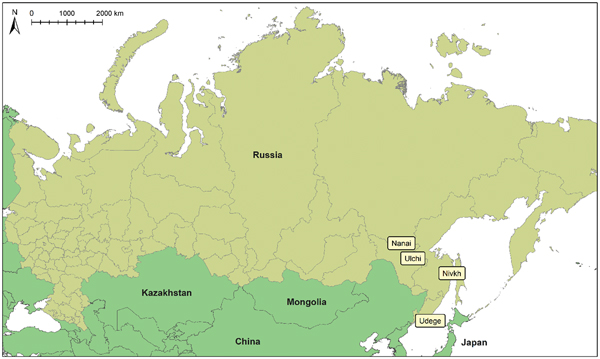
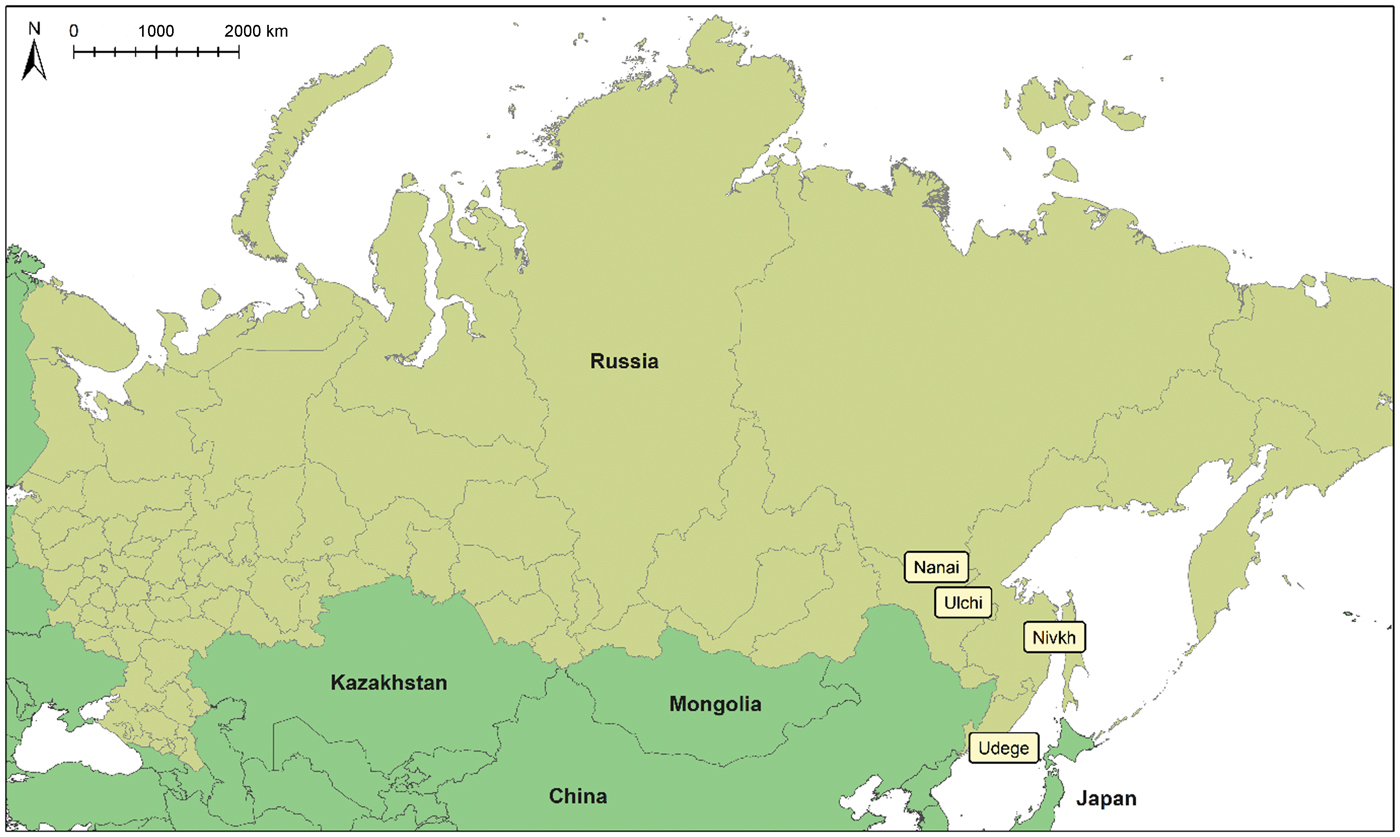
We present ethnographic evidence for a variety of human–animal relationships highlighting aspects of care and control among hunter-gatherer communities living in the easternmost parts of Siberia (see Figure 1). This region encompasses the area between Lake Baikal and the Pacific Ocean. Nanai, Nivkh, Ulchi and Udege are indigenous Siberian people inhabiting the territories known as Primorsky Krai and Khabarovsk Krai, often choosing to dwell along the Amur River or smaller river tributaries such as the Usurri, Kungari, Anyuy and others. Nivkh also inhabit the northern parts of Sakhalin Island. This geographical area is dominated by sub-arctic and humid continental climates and boreal (taiga) and temperate forests.
Location of groups discussed in the text (after Shnirelman Reference Shnirelman, Lee and Heywood Daly1999).
Nanai, Ulchi and Udege belong to a larger cluster of people speaking different Tunguso-Manchurian languages, whereas the language of Nivkhs is attributed to an isolated Palaeoasian linguistic group (Baranova et al. Reference Baranova, Bereznitskii and Gontmaher2008; Bereznitskii et al. Reference Bereznitskii, Gaer and Karabanova2003; Ivashenko et al. Reference Ivashenko, Kile and Smolyak1994; Startsev Reference Startsev2005). While there are several written accounts of the contacts between these indigenous people and Russian and Japanese travellers in the seventeenth and eighteenth centuries, substantial ethnographic material dates to the second half of the nineteenth century (Baranova et al. Reference Baranova, Bereznitskii and Gontmaher2008; Bereznitskii et al. Reference Bereznitskii, Gaer and Karabanova2003; Ivashenko et al. Reference Ivashenko, Kile and Smolyak1994; Startsev Reference Startsev2005). At that time the Far East was integrated into the Russian empire following the Treaties of Aigun (1858) and Beijing (1860) with China and the era of Russian colonization was followed by systematic ethnographic research on the people of the territory. Another considerable corpus of ethnographic data was gathered during the 1920s and 1930s under Soviet rule and at the onset of collectivization processes, as well as later on during the 1950s (Baranova et al. Reference Baranova, Bereznitskii and Gontmaher2008; Bereznitskii et al. Reference Bereznitskii, Gaer and Karabanova2003; Ivashenko et al. Reference Ivashenko, Kile and Smolyak1994; Startsev Reference Startsev2005).
Throughout their history, Far Eastern Siberian indigenous groups established contacts with their neighbours from Russia, China, Korea, and Japan as well, with the Ainu (Baranova et al. Reference Baranova, Bereznitskii and Gontmaher2008; Bereznitskii et al. Reference Bereznitskii, Gaer and Karabanova2003; Ivashenko et al. Reference Ivashenko, Kile and Smolyak1994; Startsev Reference Startsev2005). Their traditional hunter-gatherer ways of life based on hunting, fishing and gathering were affected by significant changes during the 1920s and 1930s, especially in economic and social terms, including the adoption of domestic animals and crop cultivation, the appearance of personal property and social differentiation. Though Christianized as a result of Russian influence, Christianity did not significantly impact their belief systems. The belief systems of all studied Siberian groups have been associated with animism, totemism, shamanism, fetishism and related magical practices which can be recognized within the same indigenous group (Baranova et al. Reference Baranova, Bereznitskii and Gontmaher2008; Bereznitskii et al. Reference Bereznitskii, Gaer and Karabanova2003; Ivashenko et al. Reference Ivashenko, Kile and Smolyak1994; Startsev Reference Startsev2005).
Care, reciprocity and the animal master
The tightly bound integration of social, spiritual and natural worlds of humans, landscape and animals by hunter-gatherers (Cannon Reference Cannon and Cannon.2011, 3) suggests that notions of care should be extended beyond strictly human–animal interactions. In specific reference to south Indian Nayaka hunter-gatherers, Bird-David (Reference Bird-David1990) introduced the concept of the ‘giving environment’, suggesting that hunter-gatherers perceive their environment as a giving parent in contrast to a reciprocating ancestor, the latter of which applies to Nayaka's cultivating neighbours. However, while some hunter-gatherers perceive their living environment as one that cares for them as if they were kin, others need to implement caring actions in order to create and sustain the web of inter-species relationships, including with the spirits, that ensures survival.
For hunter-gatherers of eastern Siberia, acts of care for the environment are critical in ensuring one's survival. A good relationship with the environment is carefully based on rationality and reciprocity. In their accounts of the Nanai people, Bereznitskii et al. (Reference Bereznitskii, Gaer and Karabanova2003, 76) note that Nanai ‘cared for wild animals by rationally using the wealth, richness of the taiga’.Footnote 1 Rationality in relying on the abundance of the environment is expressed in Ulchi beliefs that one should not take from nature, more than is needed to sustain a person's family, be it either a fish or a tree (Ivashenko et al. Reference Ivashenko, Kile and Smolyak1994). The need to exchange well with all inhabitants of the environment and retain reciprocal relations with them ensured that acts of caring involved constant awareness and conscious actions, sometimes motivated by knowledge of possible unfavourable outcomes of future hunting endeavours or fear of punishment. As noted among Udege people, if they make one wrong step the spirits will know and punish them (Startsev Reference Startsev2005).
It is well recognized that across many hunter-gatherer cultures reciprocal exchange between human and animal persons is considered to be related to the cycle of hunting and killing the animal and consumption of meat to the correct treatment of carcasses and/or performance of sacrifices that eventually leads to the regeneration of animals (Ingold Reference Ingold2000, 114; Jordan Reference Jordan2003a, 126–7; Russell Reference Russell2012; Tanner Reference Tanner1979, 153–81). It has also been proposed that hunters cultivate a relationship with spirits embodied in animals or in particular animal species which bestow individual animals to the hunters (Brightman Reference Brightman1993; Descola Reference Descola1994, 257–60; Ingold Reference Ingold and Ingold.1987, 245–55; Russell Reference Russell2012; Tanner Reference Tanner1979; Willerslev Reference Willerslev2007).
This well-known concept of the animal master is found among east Siberian hunter-gatherers’ beliefs as well. Spirits, masters or mothers of animals, such as Sangia Mother among the Udege people (Startsev Reference Startsev2005), release animals to humans and are therefore greatly revered. Respectful conduct of humans towards the spirits and animals ensured successful hunting outcomes and the continuation of favourable relations. If due care in tending these relationships ceased, animals would withhold themselves or would be withheld. The continuation and preservation of desired relations required care and was maintained through awareness and constant engagement with the environment, implementation of ritualized actions and varied cultural manifestations. The use of narratives, coded languages and music, but also particular tools and objects, stands out as important segments of hunting and ritual practices and highlights diversity in the treatment of particular animals, animal species and their remains.
The complexity of these practices can be seen in Nivkhs’ exploitation of fish and sea mammals. According to Baranova et al. (Reference Baranova, Bereznitskii and Gontmaher2008, 66), Nivkhs regarded sperm whales as sacred animals and therefore never hunted them. The most commonly hunted game throughout the year were seals. The ways in which Nivkhs used their language during their first boat hunt for seals after winter reveals the magical function of the narrative, as the animal is gently talked to and persuaded to be caught. Nivkhs would throw scape strands, yellow willowherbs, beans and tobacco from their boats into the water and ask the seal: ‘Come to the surface towards my tobacco. Feel sorry for me. With no eyes, right to the end of my paddle. Come to the surface’, or ‘The same way as my tobacco keeps itself above the water come to the middle part of my paddle’ (Ostrovskii Reference Ostrovskii1997, 24).
The beginning of a fishing season in springtime involved a use of a specialized language as well; however, this time, instead of using it to lure the fish to be caught, a taboo in using certain words was imposed. Special coded language would be implemented forbidding the use of the concrete word for fish or discussions of past fishing successes—or the fish or the spirits could interfere with the outcome of the fishing endeavour (Baranova et al. Reference Baranova, Bereznitskii and Gontmaher2008, 65). There were further actions undertaken to avoid causing offence: for example, Nivkhs took care never to cut or pierce a living fish and used a special wooden flapper to deafen them before fishing them out of the water. Similar practices were implemented during the hunt for dolphins, especially developed in the area of the Amur River estuary and considered to be the Nivkhs’ oldest hunting practice (Kreinovich Reference Kreinovich1935, 109). The hunt took place at the end of the winter when the ice melted and the dolphins swam into the Amur estuary in large numbers (Baranova et al. Reference Baranova, Bereznitskii and Gontmaher2008, 67). Dolphins were the only hunted sea animals welcomed on the shore by ‘music’, performed by an older woman rhythmically hitting two sticks on a wooden board, after which their meat was collectively shared (Baranova et al. Reference Baranova, Bereznitskii and Gontmaher2008, 67).
Ethnographic data indicate that there is no simple model in the treatment of animal remains. These practices varied from species to species and most probably also depended on their status in cosmological frameworks, as well as regional and local traditions of hunter-gatherer groups. For some animal species a complex rite was performed involving the use of designated plants and visual representations. For example, after killing an otter, Nivkhs from the Timovski district on the Sakhalin island would tie a cloth around the dead animal's neck and dried herbs (yellow willowherb and scape strands) would be placed beneath it (Baranova et al. Reference Baranova, Bereznitskii and Gontmaher2008, 73). The animal would then be placed on a wooden hanger made from a gnarly branch with notches and decorated with a depiction of the male otter. In the process of skinning, the eyes of the otter would be placed in a wooden case made from purple willow (Baranova et al. Reference Baranova, Bereznitskii and Gontmaher2008, 73). Udege people paid special attention to the way they would skin a marten. If the animal was caught in a trap during winter time, the skinning would have to be done after the body was warmed next to the fire, but first the head of the animal should have been wrapped in a cloth (Startsev Reference Startsev2005, 84). Failure to do so indicated that no more marten would be sent to the hunters (Startsev Reference Startsev2005, 84). Rules were followed when it came to skinning deer as well. Nivkhs would not use bows and arrows when hunting deer and would kill the pursued animal only with a knife or spear (Baranova et al. Reference Baranova, Bereznitskii and Gontmaher2008, 74). According to Baranova et al. (Reference Baranova, Bereznitskii and Gontmaher2008, 75), Nivkhs would skin the deer by first dismembering the joints and cutting off the hooves. Eye lenses would be cut out as well and afterwards, together with the bones, taken to the taiga and placed in the trunk of a tree (Baranova et al. Reference Baranova, Bereznitskii and Gontmaher2008, 75). Though respect and correct treatment of animals can be expressed through various cultural manifestations, it is the depositional practices of animal remains that have most implications for archaeology.
Caring and controlling pets, captives and companions
Hunters’ interactions with animals they relied on for food and raw materials are perhaps the most commonly discussed aspects of human–animal relationships in hunting and gathering communities. However, a broader variety of animal–human interactions should be considered as well, because many different animal species can be found sharing everyday living spaces with hunter-gatherers. For example, settlements and households of Nanai people are dwelling places for rabbits, foxes, geese, ducks, cranes, bears and dogs.
Nerissa Russell (Reference Russell2012, 262) notes that, although pets can be found across many different societies, after modern urban populations it is in the communities of hunter-gatherers and horticulturalists where pets seem to be most frequent, as bringing back the young of animals they hunted is a common practice (Bulmer Reference Bulmer, Sieveking, Longworth and Wilson.1976, 182; Harris Reference Harris1985, 189; Serpell Reference Serpell1986). Defining what makes an animal a pet is difficult (Russell Reference Russell2012, 260–62) and may include naming it, developing bonds of affection with it or simply deciding not to eat it. The animal must be tame and habituated to humans, thus enabling a simple ‘joy of sharing one's life with another creature’ free of any notions of profit or tangible products the animal can yield (Russell Reference Russell2012, 261). Bird-David's (Reference Bird-David2017) recent discussion of the need to consider hunter-gatherers in terms of multi-species communities and pluripresence is especially pertinent in this context, especially her stress on the experience of ‘being-with vivid and proximate others’ (2017, 18) including ‘non-human kin’. Knight (Reference Knight2012, 344) argues that the act of ‘juvenile live capture’ removes the pet from a category of animals that are ‘prey’ and embeds it in a ‘wholly different context of association’ through which they become ‘quasi-family members’.
The ways in which various communities defined and understood pets may have differed, as well as the levels of intimacy between the animal and the human, the amounts of displayed affection and the degrees to which the movement of the pet animal may or may not have been restricted, as well as their ability to provide food for themselves. Nevertheless, if the relationship with the animal was to be maintained, it required care and various caring actions which could in some cases be crucial for the animal's survival itself.
While it is possible that some animals in hunter-gatherer communities acquired the status of pets, ethnographic data also clearly illustrate that captive animals served utilitarian and/or ceremonial purposes. Nanai people kept some species of birds such as eagles and geese for the purpose of supplying feathers needed for fletching arrows (Bereznitskii et al. Reference Bereznitskii, Gaer and Karabanova2003, 89). Nivkhs would catch small foxes from their dens at the beginning of summer, keep them in cages and feed them with fish (Baranova et al. Reference Baranova, Bereznitskii and Gontmaher2008, 73). In autumn, when their fur was red, foxes were killed with a blunt arrow (Baranova et al. Reference Baranova, Bereznitskii and Gontmaher2008, 73), so as not to damage the fur. Keeping the animals in settlements required restricting their movement. While foxes were placed in cages, birds could have been tied down with a rope. These acts of controlling the range of animals’ activity had to be followed by at least very basic acts of care, such as providing them with food and water to ensure their survival in captivity.
Sharing living space within the same settlement required that humans and animals became accustomed to each other's everyday continual embodied presence and provided circumstances for new ways of knowing. The growth of multi-species habitual familiarity and intimacy depended on the actions undertaken and embodied, sensorial experiences. As Hamington notes (Reference Hamington2004, 51), in a caring relationship the body collects a variety of sensorial information, including visual, tactile and olfactory data, of which humans are often largely unaware, engaging their tone of voice, posture and hands into action (Hamington Reference Hamington2004, 33). Such sensorial information can easily be transmitted to animals as they are acknowledged to be in continuous and mostly unmediated relation with their sensory surroundings and ‘think with the whole of their bodies’ (Abram Reference Abram2010, 189). However, not all embodied behaviours, actions and habits can be defined as caring and sometimes caring and non-caring actions exist side-by-side—while some actions can be oriented towards the well-being of the animals with which hunter-gatherers interacted, others can be viewed as harmful.
Hunter-gatherers and bears
This is perhaps most clearly evident in the case of hunter-gatherer interactions with bears, which highlights the fluidity of human–animal relationships, extending from treating the same animal as a potential pet, or a captive, to finally killing and eating him or her at a ceremonial feast. As is widely recognized, east Siberian hunter-gatherer groups have accorded great significance to the bear: perceived variously as ancestors of indigenous groups or particular clans, they have been seen as guides between the otherworldly realms and the world of humans and in shamanistic frameworks as the shaman's guide through different levels of the Universe (Baranova et al. Reference Baranova, Bereznitskii and Gontmaher2008, 75; Bereznitskii et al. Reference Bereznitskii, Gaer and Karabanova2003, 169, 181). The bear festival was noted among the Nanai, Nivkh, Udege and Ulchi people. This was usually performed in the winter and comprised the ritual killing and consumption of a bear, followed by specific procedures in the treatment of the bear's remains. The ritual would be performed in order to secure the magical reincarnation of the animal itself, appease the spirits of the environment and secure successful hunting and possibly the reincarnation of ancestors (Bereznitskii et al. Reference Bereznitskii, Gaer and Karabanova2003, 18; Ivashenko et al. Reference Ivashenko, Kile and Smolyak1994, 111; Startsev Reference Startsev2005, 303). While some groups performed the ritual after hunting and killing the bear, Nivkhs and Ulchi would catch or acquire a bear cub, even by trade with their neighbours (Bereznitskii Reference Bereznitskii2003, 372; Naiimuka 1998 cited in Bereznitskii Reference Bereznitskii2003, 374), and keep it in the settlement until the festival.
As a cub, the bear would live in close vicinity to humans, in the household of the family that took care of it. Once the bear was around one metre in height, it would be confined to a cage-like dwelling structure (Plorchuk 1998 cited in Bereznitskii Reference Bereznitskii2003, 378). As the animal grew so did its housing, which at the same time became more and more elaborate in order to securely contain the bear. Despite the fact that the structure was being rebuilt as the animal matured over time, the overall space was kept small in order to restrict the animal's movement and prevent it breaking the structure. Life in such a limited space was potentially harmful to the animal's health and the hunter-gatherers in the settlement were possibly aware of this. Occasionally they would lead the bear out of the cage so that the animal could stretch its legs and would even bathe it. Confinement to captivity isolated the bear cub from possible siblings and the mother, which would sometimes be collaterally killed whilst protecting her young during the capture of the cub (Baranova et al. Reference Baranova, Bereznitskii and Gontmaher2008, 74). Once held in captivity, the bear, which unlike pack or herd animals would normally live solitarily, was subject to a life in the louder, more populated surroundings of a human settlement. Life in the settlement abounded with different noises which prevented the bear from going into periods of hibernation (Baranova et al. Reference Baranova, Bereznitskii and Gontmaher2008, 74) and caused disruptions to the animal's natural cycle. On the other hand, while in captivity the bear was regularly given water and fed well with berries, leaves and fish (Baranova et al. Reference Baranova, Bereznitskii and Gontmaher2008, 74), usually by elders or its ‘owner’. Sometimes a woman from the settlement was responsible for providing the bear with food from the period of its arrival until the festival (Ivashenko et al. Reference Ivashenko, Kile and Smolyak1994, 108). Women were also in charge of playing the musical instrument, resembling a drum, during the festival (Sachgun 1998 cited in Bereznitskii Reference Bereznitskii2003, 380). Occasionally the music was followed by singing, in which the woman that took care of the bear assumed the leading role as she also expressed her grief for the animal's death (Ivashenko et al. Reference Ivashenko, Kile and Smolyak1994, 108).
Hunter-gatherers and dogs
The complexity of human–animal relationships and related manifestations of care and control are further disclosed in interactions east Siberian hunter-gatherers established with dogs—the animals to which they most frequently and most closely related. Dogs are the oldest domestic species: they appear to have been independently domesticated in eastern and western Eurasia in the late Palaeolithic, with domestic dogs from the east moving into the west following this—presumably moving with human populations (Frantz et al. Reference Frantz, Mullin and Pionnier-Capitan2016). Looked at cross-culturally, Russell (Reference Russell2012, 280) stresses that ‘dogs have filled virtually every role in the whole spectrum of human–animal relationships’, including: Companion, Hunter, Herder, Guard, Scavenger, Labourer, Source of Food/Fur, Symbol and Pariah. Many of these relationships required particular forms of skilled and material mutual engagement—or ‘dog-craft’ (Loovers Reference Loovers2015)—to be maintained over time.
While aspects of relations formed by east Siberian hunter-gatherer groups with dogs allow us to view them as pets and companions, others indicate that they clearly surpass such categories. According to Ivashenko et al. (Reference Ivashenko, Kile and Smolyak1994, 73), Ulchi people expressed love towards dogs and would name them according to their physical characteristics and individual traits. Dogs were companions to Nivkh girls leaving their families to be married, when their mothers would ‘by all means give them a dog’ (Baranova et al. Reference Baranova, Bereznitskii and Gontmaher2008, 45). The affinity Nanai people had towards keeping dogs seemed to have been well known across the neighbouring Far East regions, as some Manchurian sources referred to areas inhabited by Nanai as the land of the dogs (Bereznitskii et al. Reference Bereznitskii, Gaer and Karabanova2003, 89). Possibilities for specific personal encounters between dogs and humans certainly existed, however, if viewed broadly: east Siberian indigenous people accorded great significance to dogs that assisted them in hunting and transportation—as, perhaps, working companions.
To east Siberian hunter-gatherer communities, dogs were of valuable assistance in hunting seals, deer, bear and other animals, as well as in pulling sledges or boats during winter and summer periods. Bonds developed by hunter-gatherers with dogs and the affection they exhibited towards them substantially derived from their mutual engagement in what would be considered their most important working activities, thus leading them to know characteristics of each dog, their temper and strength and how well they got on with humans (Bereznitskii et al. Reference Bereznitskii, Gaer and Karabanova2003, 140). Sometimes the same tasks would be performed by mutual physical engagement of humans and dogs, perhaps further blurring categorical distinctions between different types of persons. For example, during winter Udege people used sledges for transporting goods. According to Startsev (Reference Startsev2005, 200), the sledge was always pulled by both the ‘hunter’ and the dog. Given the fondness of dogs for action and movement, we can presume that, at least to some degree, these physical activities were not to their disliking, although they could potentially have been harmful to their health, especially in cases of pulling heavy goods.
While Udege did not differentiate between dogs accompanying hunting endeavours and those assisting in transportation, and would engage the same dogs in both activities, other east Siberian indigenous groups strictly distinguished between sledge pulling, ‘working dogs’ and those participating in hunting (Baranova et al. Reference Baranova, Bereznitskii and Gontmaher2008; Bereznitskii et al. Reference Bereznitskii, Gaer and Karabanova2003; Ivashenko et al. Reference Ivashenko, Kile and Smolyak1994), the last category being the more highly valued and respected. The distinction sometimes went so far that, even though the consumption of dog meat as well as that of bears among Ulchi people was restricted exclusively for ritual occasions, only the meat of sledge dogs was used. According to their explanations, a hunting dog is man's friend, while the other ones are working dogs (Ivashenko et al. Reference Ivashenko, Kile and Smolyak1994, 620.)
Dogs generally received a significant amount of everyday attention and care. During the winter Udege would share parts of their dwellings reserved for working activities with dogs (Startsev Reference Startsev2005, 144). Nanai especially valued hunting dogs and particularly took care of them. These dogs were always tied down under especially constructed shelters (Bereznitskii et al. Reference Bereznitskii, Gaer and Karabanova2003, 139), though this would mean that their movement was restricted, and provided with regular and nutritionally valuable food. Nanai were generally greatly concerned about how they fed all their dogs and would go to considerable effort in preparing special fish-based food (Bereznitskii et al. Reference Bereznitskii, Gaer and Karabanova2003, 139), and carefully planned their feeding regimes, especially before or during working periods. Such practices should lead to caution in assuming that dogs are proxies for human diets.
There are indications that not all relations with dogs were always seen as favourable. A Nanai legend states that once dogs and humans could understand each other and that they shared the same language, until once they hit a dog on his head with a wooden cup and from that moment dogs stopped understanding human language (Bereznitskii et al. Reference Bereznitskii, Gaer and Karabanova2003, 139). In addition to being good working companions, dogs had other roles as well and would be kept in captivity or killed for a number of ritual reasons. Dogs could be killed to settle disputes among clans involving cases of violence and murder (Startsev Reference Startsev2005, 24), or for their healing and lustrative purposes (Startsev Reference Startsev2005, 231). They were occasionally denied their freedom and held in captivity as animals to which a human soul might choose to translocate itself after death in order to stay in the vicinity of its human relatives (Ivashenko et al. Reference Ivashenko, Kile and Smolyak1994, 620), or could be killed at their owners’ funerals (Startsev Reference Startsev2005, 229) in order to follow them to their afterlife.
Care and control in the Mesolithic
In this section of our paper we highlight evidence for care and control within human–animal relationships in the Mesolithic of Europe. This synthesizes a range of published data: our original contribution here is simply in compiling material which is often presented in isolated studies and placing it within a framework of care and control inspired by our reading of the Siberian ethnographic material.
Peter Jordan's accounts of the treatment of animal remains in different locations by the Khanty (Jordan Reference Jordan2003a,Reference Jordan, Larsson, Kindgren, Knutsson, Loeffler and Åkerlundb), have been influential in Mesolithic archaeology. For example, Richard Chatterton (Reference Chatterton, Conneller and Warren.2006, 104–6) has highlighted the ‘intentional disposal of whole animal carcasses’ including aurochs, elk and boar into watery locations. In our terms, these are actions of care implemented after the hunt where care was manifest through the placement of whole or part bodies into appropriate locations. The ethnographic data indicate other forms of care, including special attention to the ways in which animals were skinned and how certain body parts, such as the head or eyes, were treated. These have received slightly less attention archaeologically—and, indeed, are much harder to document materially. However, selective treatment and deposition of animal remains has been noted at several Mesolithic sites. Evidence for differential treatment of aurochs skulls and red deer antler comes from the site of Auneau in the Paris basin (Leduc & Verjux 2014, 44–5, 50). Elk bones and antler deposited in the kettle hole lake from the Danish site of Lundby Mose indicate that only certain body parts of the animals were selected for deposition after being disarticulated for hide, sinew and meat removal as well as bone-marrow extraction, since elk heads, complete limbs and halves of rib-cages and halves of axial skeletons are missing from multiple events of deposition (Jessen et al. Reference Jessen, Buck Pedersen, Christensen, Olsen, Fisher Mortensen and Møller Hansen2015, 79).
The widespread ethnographic recognition of the importance of pets in hunter-gatherer contexts has seen little attention in archaeological discussion. The co-presence of different species in shared spaces has not received substantial archaeological attention for the Mesolithic period. With the exception of the potential taphonomic impact of dogs, the possibility that these co-presences have material consequences is under-developed. Occasional references to captive animals provide links to the ethnographic material reviewed here, such as an eagle from Swifterbant contexts at Hude I, Netherlands, with periostitis ossificans potentially caused by the pulling of feathers (Amkreutz & Corbey Reference Amkreutz, Corbey, Fokkens, Coles, Van Gijn, Kleijne and Ponjee.2008).
Relationships with bears identified in the ethnographic material are better known archaeologically. The possibility of complex beliefs linking bears and humans has been reviewed for the Upper Palaeolithic in parts of northern Europe (Germonpré & Hämäläinen Reference Germonpré and Hämäläinen2007). Most importantly for our present discussion, a brown bear mandible from La Grande-Rivoire, France, provides striking evidence of the relationships of care and control embedded in human–bear relationships in the Late Mesolithic (Chaix et al. Reference Chaix, Bridault and Picavet1997). A young bear was captured at age c. 4–7 months and a ‘rigid tie or thong … placed round the lower jaw’ (Chaix et al. Reference Chaix, Bridault and Picavet1997, 1070). This restraining device caused significant deformation to the developing jaw of the bear, which died at 6 years of age, probably having been deliberately killed (Chaix et al. Reference Chaix, Bridault and Picavet1997, 1072). Chaix et al. describe the bear as ‘tamed’ and rightly argue that ‘the capture of an animal and its temporary control by humans can be seen to be part of the complex network of relations that link people with the animal world’ (Chaix et al. Reference Chaix, Bridault and Picavet1997, 1072–3). From our perspective, the captive bear also highlights the balance of care and control in such relationships as well as the violence and power that humans exerted over the bear.
Bear may have been deliberately introduced to Ireland in the Mesolithic (Warren et al. Reference Warren, Davis, McClatchie and Sands2014), implying that it was carried there by boat. This possible introduction is one of a number of deliberate introductions of species to islands in the Mesolithic of northwest Europe, including boar (to Ireland and Baltic Islands), dog (certainly Ireland) and possibly deer (to Shetland). Russell (Reference Russell2012, 278) highlights the widespread nature of this practice and stresses that it often includes animals that do not appear to have a primary subsistence function, arguing that ‘people will often go to considerable lengths to ensure the supply of animals that are ritually required’. The movement of animals for non-subsistence reasons has not been considered adequately in the Mesolithic literature. In contrast to long-standing consideration of the movement of domestic animals into Britain at the start of the Neolithic, the practicalities of these crossings with animals have not been considered in detail. Establishing viable populations is likely to have required more than single breeding pairs (Russell Reference Russell2012, 276), which implies multiple sea-crossings with the animals in question, which were probably restrained. These animals required both care and control in different measure.
The status of dogs in the Mesolithic of Europe has been discussed extensively, especially in the context of the ritually elaborate burials of dogs at Skateholm, Sweden (Larsson Reference Larsson and Bonsall.1989; Reference Larsson, Vermeersch and Van Peer.1990). Treatment of dogs at Skateholm is highly varied: one dog was decapitated and placed across the shins of a sitting woman, another placed in a pit with flint knives and antler artefacts; some (but not all) dog burials cluster in a specific area, some human graves contain individual dog bones. Larsson argues that the emphasis on dogs in these rituals arises from human interactions with dogs ‘as an individual in its own right, as a companion to a deceased person, but also as a sacrificial object’ (Larsson Reference Larsson, Vermeersch and Van Peer.1990, 159) which was used to mediate the relationship between humans and red deer (Larsson Reference Larsson2013, 150). In any case, the emphasis on sacrifice, a ritual whose full implications exceed the frameworks of this contribution and a practice capable of eliciting strong emotional impact on both animals and humans (Argent Reference Argent and Broderick.2016), highlights again the violence and unequal power in human–animal relationships and the points at which care and control gave way to other relationships. The flint-tipped arrowhead found embedded between the ribs of a dog excavated in the waterlogged zone near the Mesolithic settlement in the vicinity of Allerum in southern Sweden clearly points towards dogs as victims of violence, whether as participants in violent events taking place between hunter-gatherer groups (Lidén 1942 cited in Vang Petersen Reference Vang Petersen, Grimm and Schmölcke.2013, 155) or as targeted victims themselves. In any case here humans evidently implemented acts of final control over the animal's life. Though exploited for their pelts and only occasionally used for food, as evident from skinning and/or filleting marks from their osteological remains (Street 1989; Karsten 2012, 65 cited in Vang Petersen Reference Vang Petersen, Grimm and Schmölcke.2013, 154), some Mesolithic dogs were taken care of by humans who provided them with nourishing food. Isotopic ratios examined on dogs from the north European Atlantic period coastal sites reflect a diet consisting of fish, shellfish and marine mammals which is otherwise considered foreign to the species (Benecke 1993, 58 cited in Vang Petersen Reference Vang Petersen, Grimm and Schmölcke.2013, 155).
These observations show how Mesolithic communities in Europe shared their lives with animals, and hint at the ways in which a framework of care and control offers us a better understanding of human–animal relationships in the period.
Discussion
Our intention in this paper was to explore human–animal interactions in hunter-gatherer communities by considering aspects of care and control of animals and increase archaeological awareness of these possibilities in the Mesolithic. Though caring stands out as an integral part of all our relationships and ways of knowing and feeling for others, considerations of care have been concealed and overlooked throughout history (Hamington Reference Hamington2004, 33) and underprivileged by notions of hierarchy and control in Western scholarly discourses (Argent Reference Argent and Broderick.2016, 23). Care has so far only sporadically been brought forward in archaeological discussions of animal–human interactions and overlooked in reflections of past and present hunting and gathering communities. Nevertheless, it can be acknowledged as one of the dominant aspects of human–animal relationships. However, care also stands in close relation with aspects of control. Furthermore, caring does not manifest in ideal forms. Viewed as a set of everyday actions aimed at sustaining a multitude of mutually interdependent existences (Puig de la Bellacasa Reference Puig de la Bellacasa2012, 198), care also reveals itself as messy, ambiguous and sometimes visceral. The impossibility of caring for everything inevitably causes disconnections in relations of reciprocity (Puig de la Bellacasa Reference Puig de la Bellacasa2012, 198), and the disruption of caring actions allows space for neglect, abuse of power relations and ultimately violence.
The corpus of ethnographic data refers to east Siberian indigenous people (Nivkhs, Nanai, Udege, Ulchi) that have not received much attention in anglophone hunter-gatherer literature and in comparison to some other Siberian groups have been less visible in anthropological or archaeological comparative discussions. This revealed a diversity of interspecies engagements in hunter-gathering communities where animals could have been perceived as respected prey, but were also kept as captives or co-existed with humans as companions and possibly pets. Though notions of human–animal reciprocity in hunter-gatherer communities and the model of the animal master have been substantially discussed, especially within the frameworks of anthropology they have so far not been addressed from the point of view of care.
Our ethnographic data about aspects of human reciprocity with the environment suggest that for hunter-gatherers of eastern Siberia, the environment is not unconditionally giving or caring. Good relationships with the environment are carefully sustained by rationality and reciprocity. Dependency on care in tending to such relationships influenced the implementation of conscious, ritualized and embodied actions and habits. This is especially evident in the treatment of hunted animals, where care discloses itself as a visceral engagement with the animals’ bodies—their flesh, tentacles, skin, eyes, bones and other remains had to be cut, dismembered and handled in an appropriate way in order for favourable relations to be sustained, in addition to a significant variety of such caring actions indicating that there is no simple model in the treatment of animal remains, which varied from species to species and most probably also depended on their status in cosmological frameworks. Though possibly implemented only at the start of hunting seasons and not at every subsequent similar occasion and thus implicating that care is sometimes disrupted, such ways of communicating can be seen as beneficial means of embodying flourishing reciprocal relations.
Mesolithic archaeological material examined from the point of view of care also highlighted possible caring and reciprocal actions implemented through distinct treatments and placements of animals bodies. Sensorial aspects and the potential effects of animal carcasses on human beings have already been highlighted in the archaeology of the Mesolithic by focusing on interactions between hunters and whooper swans (Overton & Hamilakis Reference Overton and Hamilakis2013). Nevertheless, within this framework of reciprocal interactions it is also hard to discern between care for favourable relationships with the environment and care for actual animals involved in practices through which these relations are sustained.
Direct care but also control of animals comes forward more clearly through other types of interactions. The complexity of hunter-gatherers’ interactions with animals is especially evident in cases of human–animal co-existences in settlements. With the exception of the potential taphonomic impact of dogs, the co-presence of different species in shared spaces has not received substantial archaeological attention for the Mesolithic period. Nevertheless, several animal osteological biographies indicate periods of everyday species co-presence tightly bound in interactions of care and control, which, at the very least, ensured their survival, but at the same time restricted their movement. Infections and deformations of bone tissue linked with human actions most probably caused animals pain and suffering.
The presence of animals kept for utilitarian reasons or ritual occasions—noted in the ethnographic material—and culminating in them being consumed as food, as in the case of the bear, challenges the assumptions that animals captured alive and brought to human settlements are removed from the sphere of hunting and food (Knight Reference Knight2012, 344) and further implies that reasons for their occurrences in settlements are distinct from the simple joy of co-presence considered to characterize relationships with pet animals (Russell Reference Russell2012, 265). Though such interactions and even animal–human bonds could potentially be developed between the bear cub and the family or particular persons who would take care of the animal whose final death did provoke emotions of grief, more obvious prospects for such relations are clearly visible in interactions with dogs. Dogs were given a significant amount of daily care and affection, they were less restricted in their movement and engaged in everyday activities with humans which allowed for more nuanced relationships to develop. Besides working companions, dogs could also have been pets, or they can be understood as animals simply caught up in mutual joie de vivre interactions with humans and even reciprocal animal–human caring relations.
However, even in the case of dogs, care towards individual animals could have given way to caring for sustaining other types of relationships, e.g. those of ritual nature requiring the death of the animal. The multitude and variety of archaeological evidence regarding the treatment of dogs throughout Mesolithic Europe at least allows such possibilities to be manifested through material culture as well. It also indicates that different caring and controlling actions could have been undertaken in hunter-gathering communities as means of ensuring desirable outcomes of a broad range of necessary practices and of controlling the outcomes of different types of relationships. Such notions inevitably highlight the complex, nuanced and ambivalent nature of human–animal relationships sometimes overlooked in the archaeology of the Mesolithic.
Acknowledgements
We are very grateful to Rosie Bishop, Ben Elliott, Peter Jordan and Nick Overton for perceptive comments on a draft of this paper, and regret we have not been able to expand on all of their insights. Two anonymous referees provided helpful further advice. We are very grateful to Rob Sands for assistance with the map. Needless to say, we are responsible for any errors of fact or judgement that remain.
This work was supported by European Union's Horizon 2020 research and innovation programme under Marie Skłodowska-Curie grant agreement no. 701636.