


Introduction
The long-lasting low fertility level in China since the turn of the century has caused a series of population problems, including a shortage of labour, population ageing and a decline in the population dividend. In the light of this challenge, in 2013 the Chinese Government decided to implement a selective two-child policy whereby married couples where either the husband or the wife was a single child were allowed to have two children, and this was then replaced by a universal two-child policy at the end of 2015 (Xinhua News Agency, 2013, 2015a). The two-child policy had three objectives: people’s intention to have two children would be satisfied and they would therefore become happier after doing so; there would be more births and thus the country’s population age structure would be optimized; the promotion of sustainable socioeconomic development (Xinhua News Agency, 2015b; Liu & Zhou, Reference Liu and Zhou2019).
Some Chinese researchers developed algorithms to study the major relationship between the first two objectives, i.e. fertility intention at the micro-level and short-term annual births at the macro-level. The logic was to represent actual fertility behaviour by fertility intention (Qiao, Reference Qiao2014; Zhai et al., Reference Zhai, Zhang and Jin2014; Wang, Reference Wang2016); in other words, these algorithms implicitly assumed that an intention to have a second child can be fully translated into actual childbirth. However, there is some gap between them, and the progression from intention to behaviour is influenced by various factors (Ajzen, Reference Ajzen, Kuhl and Beckmann1985; Miller, Reference Miller1995). For example, fertility postponement, decline in fecundity and work–family conflict make actual family size lower than intended parity, whereas sex preference for children and unintended births will lead to the reverse result (Bongaarts, Reference Bongaarts2001; Morgan & Taylor, Reference Morgan and Taylor2006).
Just before the implementation of the two-child policy, a longitudinal fertility survey (baseline: 2007; end-line: 2010) conducted in the Jiangsu Province of China showed that among those one-child mothers definitely intending to have a second child in 2007, only 43% of them indeed had another child during the 3-year interval (Zheng, Reference Zheng2011). The corresponding proportions among those mothers with an uncertain intention or definitely negative intention (i.e. not intending to have a second child) were about 10% and 2%, respectively (see also Qin et al., Reference Qin, Li and Qi2010; Jiang & Zhuang, Reference Jiang and Zhuang2017). In other words, the positive intention was only partly actualized, but the negative one was almost fully realized; consequently, the baseline intended parity was higher than the end-line family size – a result that has also been observed in other low-fertility countries (Westoff & Ryder, Reference Westoff and Ryder1977; Davidson & Beach, Reference Davidson and Beach1981; Monnier, 1989; Van de Giessen, Reference Van de Giessen, Keilman and Cruijsen1992; Schoen et al., Reference Schoen, Astone, Kim, Nathanson and Fields1999; Noack & Østby, Reference Noack and Østby2000; Bongaarts, Reference Bongaarts2001; Yang, Reference Yang2008; Vignoli & Régnier-Loilier, Reference Vignoli and Régnier-Loilier2010; Kuhnt & Trappe, Reference Kuhnt and Trappe2016).
Evidently, birth forecasting without taking the intention–behaviour gap into account can lead to seriously misleading results. Indeed, a study based on a flawed forecasting algorithm suggested that shortly after the implementation of the universal two-child policy, there would be a huge baby boom and annual births in China would rise to an unimaginable size of 50 million (Zhai et al., Reference Zhai, Zhang and Jin2014). (Note: this result was soon invalidated by actual births, the peak of which happened in 2016 and was less than 18 million.) In view of the forecasting pitfall, some Chinese researchers used revised algorithms to forecast births after the implementation of the two-child policy. For instance, it was assumed that in Yunnan Province, only two-thirds of women who desired to have a second child soon would indeed do so; based on the adjustment, the annual births were estimated to increase from 590 thousand to a peak level of 635 thousand, after implementation of the selective two-child policy (Luo et al., Reference Luo, Xu and Dai2014). Qiao (Reference Qiao2014) thought that, from fertility intention to actual birth result, there was some attrition at each step. For those mothers with a positive intention, there was about a 91% chance of stopping contraception; for those mothers stopping contraception, there was about a 94% chance of conception; for those mothers who conceived, there was a 98% chance of having a (live) second child. Based on such considerations, Qiao estimated that under the universal two-child policy, national annual births would reach a peak of between 22 and 27 million and that the total fertility rate (TFR) would reach a peak of between 2.17 and 2.68 in around 2017, which also overestimated actual births and fertility level to some degree.
Thus there is still a lack of a valid fertility intention-based algorithm to forecast births under the context of the universal two-child policy in China. Luo et al. (Reference Luo, Xu and Dai2014) and Qiao (Reference Qiao2014) essentially followed the method of limiting factors (Van de Giessen, Reference Van de Giessen, Keilman and Cruijsen1992; Van Hoorn & Keilman, Reference Van Hoorn and Keilman1997); however, as mentioned by Qiao himself, the adjustment coefficients for short-term fertility intentions were determined basically by subjective choice rather than solid empirical evidences (Qiao, Reference Qiao2014). Another major problem with the previous algorithms was that they mainly considered births from the positive intention, but almost never considered those births related to uncertain or negative intentions. By taking such gaps into account, this study first develops an algorithm, and then uses it to retrospectively forecast 2016–2018 annual births in Xi’an City – a metropolitan city in western China. The forecasting results are then compared with practical counts to justify the updated algorithm of birth forecasting by short-term fertility intentions. Policy implications are discussed based on the analysis results.
Methods
The evolution of China’s fertility policies in recent years
In three decades up to 2013, the so-called ‘one-child policy’ was implemented in China. Urban couples were basically allowed to have one child only; by contrast, rural couples were restricted less strictly, and in most provinces they were allowed to have another child if the first child was a girl (Gu et al., Reference Gu, Wang, Guo and Zhang2007). To solve the problems mentioned above and ‘promote balanced population growth in the long run’, the Central Committee of the Communist Party of China (CCCPC) made a decision to implement a selective two-child family planning policy on 12th November 2013 (Xinhua News Agency, 2013). The two-child family planning policy introduced in 2013 was not started simultaneously in different regions of China, but by the middle of 2014 it had been implemented throughout the country. However, national population sampling surveys indicated that the effect of the policy on births was not satisfactory, with births in 2015 being even fewer than those in 2014 by about 330 thousand or 2% (National Bureau of Statistics of the People’s Republic of China, 2020). Thus, the Chinese Government decided to introduce a universal two-child policy, i.e. almost all married couples were allowed to have two children, on 29th October 2015 (Xinhua News Agency, 2015); the implementation started simultaneously across the country from 1st January 2016.
The 2015 Xi’an Fertility Survey
When the universal two-child policy decision was made, the government of Xi’an City in Shaanxi Province requested that a team investigate the fertility decision-making of mothers of reproductive age (20–44 years) and with one child to assess the impact of the new policy on population size and public service demand in the city. The PPS (probability proportional to size) sampling survey was conducted in seven rural and urban districts of the city from October 2015 to January 2016, with 560 questionnaires completed (response rate of 560/1183≈47.34%). The vast majority of the survey questionnaires were filled in by telephone interview, and others were completed in a self-administered manner. The key questions relevant to the work were as follows: maternal intention to have a second child (answers: ‘intending to have’; ‘uncertain’; ‘not intending to have’); the intentional time frame or year of the second childbirth (only for mothers with positive or uncertain intentions). More details of the survey can be found in Appendix A of Liu and Lummaa (Reference Liu and Lummaa2019).
Despite a low response rate in the survey, the ultimate sample represented reasonably well the policy-targeted one-child mothers, i.e. those who would be impacted immediately by the universal two-child policy (they were not allowed to have a second child before the policy, and thus relaxation of the restriction was sudden in nature). Table 1 shows that the age distribution of the sampled mothers was more or less parallel to that of the policy-targeted population counted at the end of 2014, especially for the prime ages of childbearing, i.e. 25–34 years (Xi’an Municipal Bureau of Statistics and the 2015 National 1% Population Sample Survey Office in Xi’an, 2016). Additionally, the proportion of urban settlement in the sample (68.90%; 95% sampling error=3.91%) was consistent with that of the policy-targeted population (67.12%; Table 1). Although no maternal education information was available for the policy-targeted population, the proportion of those with a higher degree among the 20- to 44-year-old women of all parities was 53.56% in the city, and the corresponding proportion in the sample was 48.41% (95% sampling error=4.22%).
Population and sample counts of one-child mothers in Xi’an City in October 2015 a

a The population counts were from Population Information System of Shaanxi Province in December 2014 (all numbers corresponded to permanent residents, which included both household-registered residents and those persons who had moved from other places for more than 6 months but had no local household registration yet).
b Age was for the policy-targeted population in December 2014 and for the sample in October–December 2015.
c Policy-targeted mothers refer to those who were not allowed to have a second child before the implementation of the universal two-child policy, but were allowed to do so under the policy; in other words, they were the ‘targets’ to be liberated by the policy. As almost no one-child couples were allowed to have a second child before introduction of the policy in urban area, all urban one-child mothers are taken as policy-targeted ones.
d Before the implementation of the universal two-child policy, rural couples whose first child was a girl were allowed to have a second child in the city, and thus only rural couples whose first child was a son were policy-targeted couples. Here, the sex ratio at birth is taken as 110:100 (Bureau of Statistics and Office of the Sixth Population Census of Shaanxi Province, 2012).
e A very slight deviance from 100 due to rounding.
The algorithm: using the method of limiting factors to forecast annual births for 2016–2018
For the sake of simplicity, the analysis focuses first on the case without large-scale migration. The annual births in Xi’an City in each year of 2016–2018 can be expressed as follows:
 $${B_{i,y}} = {B_{2014}} + \Delta {B_{i,y}}$$
Here, B is annual births; i is the i th variant of forecasting (‘high variant’; ‘medium variant’; ‘low variant’); y is a given year during the 2016–2018 period; B 2014 is the annual births in the base year (i.e. 2014); ΔB is the change of annual births, in comparison with the base year figure. The year 2014 is selected as the base year because it was a time close to 2016–2018, but annual births had not yet been influenced by the two-child policy. Additionally, the birth count (98,000) was relatively accurate then. Thanks to a payment of ¥5 for each registration, all births were real-name registered in 2014; however, due to cancellation of this support, the registration is believed to be somewhat less accurate afterwards (although still informative).
As B 2014 was fixed, to forecast annual births in a given year, ΔB i,y needs to be forecasted. Within a short term, the change of annual births can be formulated in terms of the population size of reproductive-aged women and their fertility rate:
 $$\matrix{ \hskip-209pt{\Delta B = \sum\limits_a {P_a^A} f_a^A - \sum\limits_a {P_a^B} f_a^B} \cr \hskip-109pt{{\rm{ = }}\sum\limits_a {\left( {P_a^A - P_a^B} \right){{f_a^A + f_a^B} \over 2}} + \sum\limits_a {\left( {f_a^A - f_a^B} \right){{P_a^A + P_a^B} \over 2}} } \cr \hskip 8pt{{\rm{ = }}\sum\limits_a {\left( {P_a^A - P_a^B} \right){{f_a^A + f_a^B} \over 2}} + \sum\limits_a {\left[ {\left( {f_{a,1}^A + f_{a,2}^A + \cdots } \right) - \left( {f_{a,1}^B + f_{a,2}^B + \cdots } \right)} \right]{{P_a^A + P_a^B} \over 2}} } \cr \hskip-103pt{ \approx \sum\limits_a {\left( {P_a^A - P_a^B} \right){{f_a^A + f_a^B} \over 2}} + \sum\limits_a {\left[ {f_{a,2}^A - f_{a,2}^B} \right]{{P_a^A + P_a^B} \over 2}} } \cr } $$
Here, a is age group; P is population size; f is age-group-specific (period) fertility rate, f a =f a,1+f a,2 + …; A, B (after and before the implementation of the universal two-child policy); and 1, 2, … are birth orders. The two-child policy was mainly associated with a change of f a,2, and the fertility rates in other orders like f a,1 were more or less stable in the short term (e.g. Huang, Reference Huang2020).
Equation (2) indicates that the change in annual births can be decomposed into two components. In the case of Xi’an City, the population size of reproductive-aged women was basically stable; e.g. 20–44 years women declined just slightly from 1.96 million in 2015 to 1.90 million in 2017, after correcting for the population merged from an adjacent region in 2017 as described later (Xi’an Municipal Bureau of Statistics and the 2015 National 1% Population Sample Survey Office in Xi’an, 2016). Consequently, if just the original population was considered, the change of annual births was largely caused by the second component, i.e. the increase in second-order fertility rate with the change in fertility policy, and the annual births in Xi’an City were expected to increase. However, the national case was different: the population size of women aged 20–44 years declined from 267.17 million in 2015 to 249.97 million in 2018; more importantly, the population size of women around median age at first reproduction (25–29 years) declined by more than 13%, i.e. from 63.56 million in 2015 to 55.20 million in 2018 (National Bureau of Statistics of the People’s Republic of China, 2020). Thus, both components in Equation (2) were important in the national case, and the decrease in women’s population size partly explained why national births in 2018 (∼15.27 million) were even less than the figure in 2015 (∼16.59 million), when the universal two-child policy had not yet been implemented. This point was not noticed by Zhai et al. (Reference Zhai, Zhang and Jin2014) and Qiao (Reference Qiao2014), who just considered the second component and unavoidably overestimated national annual births from 2016 onwards.
To summarize, to forecast ΔB means a forecast of the increase of second-order births, i.e.
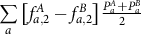 $\sum\limits_a {\left[ {f_{a,2}^A - f_{a,2}^B} \right]{{P_a^A + P_a^B} \over 2}} $
, in the case of the original population of Xi’an City. This component can be estimated by counting policy-targeted one-child mothers and their intention to have a second child. Table 1 shows the count results (note that both B
2014 and the count corresponded to the original population of Xi’an City at around the end of 2014). In principle, ΔB
i,y
should also include new mothers who had their first child during the 2016–2018 period and would have a second child during the same period. The case can be neglected, as the birth interval in current China is much longer than 2 years now (He et al., Reference He, Zhang, Zhuang, Wang and Yang2018). The formula for forecasting ΔB
i,y
is thus as follows:
 $$\Delta {B_{i,y}} \approx \sum\limits_a {\left[ {f_{a,2}^A - f_{a,2}^B} \right]{{P_a^A + P_a^B} \over 2}} {\rm{ \sim}}\mathop {colSums}\limits_y \left( {\sum\limits_j {{c_{i,j}} \times {\bf{P}} \times {{\bf{I}}_j} \times {{\bf{S}}_j}} } \right)$$
Here, j is an intention to have a second child (‘intending to have’; ‘uncertain’; ‘not intending to have’); c
i,j
is the predictive value of an intention in predicting actual births under a given forecasting variant; P is the (5×5 diagonal) population matrix of policy-targeted one-child mothers,
 ${\bf{P}} = diag\left( {{P_{20 - 24}},{P_{25 - 29}},{P_{30 - 34}},{P_{35 - 39}},{P_{40 - 44}}} \right)$
; I
j
is the (5×5 diagonal) survey-based fertility intention matrix (i.e. age group-specific probability of having a given intention),
 ${{\bf{I}}_j} = diag\left( {{I_{20 - 24,j}},{I_{25 - 29,j}},{I_{30 - 34,j}},{I_{35 - 39,j}},{I_{40 - 44,j}}} \right)$
; S
j
is a 5×3 matrix of time schedule of having the second child (i.e. age group-specific probability of selecting 2016, 2017 and 2018 as the time to give birth to the second child);
 $\mathop {colSums}\limits_y $
is the column sum (i.e. the sum of forecasted age group-specific births in the year y); and ‘∼’ means ‘forecasted by’.
Equation (3) essentially follows the method of limiting factors, which stemmed partly from Westoff and Ryder (Reference Westoff and Ryder1977). They noted that a principal objective of measuring fertility intentions was to forecast future fertility better, but (positively) intended fertility overestimated actual fertility at the aggregate level among married white women in the US. Consequently, they suggested that ‘one could employ a correction factor for this overstatement in making future forecasts’. This important idea was later developed by Lee (Reference Lee1980) and Van de Giessen (Reference Van de Giessen, Keilman and Cruijsen1992); according to the latter, ‘the limiting factors method applies reduction factors to individual expectations, which correct for unforeseen circumstances which have a negative effect on fertility’ and panel surveys are the best source of adjustment coefficients. Each limiting factor will have a ‘downward adjustment’ effect on realizing one’s expectation of additional number of children; e.g. with mothers definitely intending to have a second child as a reference, the adjustment coefficient for mothers with an uncertain intention might be 0.5 or less. Among the series of limiting factors, fertility intention and its certainty are evidently the most important ones (e.g. Westoff & Ryder, Reference Westoff and Ryder1977; De Beer, Reference De Beer1991; Van de Giessen, Reference Van de Giessen, Keilman and Cruijsen1992; Schoen et al., Reference Schoen, Astone, Kim, Nathanson and Fields1999). Up to now, the reliability of fertility forecasting by the method had been partly proved in countries like the Netherlands and the United States (Van de Giessen, Reference Van de Giessen, Keilman and Cruijsen1992; Van Hoorn & Keilman, Reference Van Hoorn and Keilman1997; Morgan, Reference Morgan2001).
Almost all the statistics in Equation (3) can be obtained either from population counts or from the 2015 Xi’an Fertility Survey. However, c i,j – the adjustment coefficient for fertility intention and a key parameter in forecasting – cannot be provided by a single-round survey. As a major difference from Luo et al. (Reference Luo, Xu and Dai2014) and Qiao (Reference Qiao2014), this study screens the relevant predictive values from other panel surveys of fertility intention in China and other countries. This approach, i.e. borrowing adjustment coefficients from spatially different populations, was once recommended by van Hoorn and Keilman (1997), and is similar to borrowing coefficients from temporally different populations, i.e. previous cohorts (Van de Giessen, Reference Van de Giessen, Keilman and Cruijsen1992; Morgan, Reference Morgan2001). (Note that there had been no special panel surveys of fertility intention in Xi’an City by 2015.)
A literature review suggests the range of c i,j (Table 2). The predictive value of a positive intention within a 3-year period was basically between 30% and 70%, with the midrange at 50% (for the reason mentioned by Spéder and Kapitány (Reference Spéder and Kapitány2014), the value for Bulgaria was exceptionally low; after excluding it, the mean of values shown in Table 2 was 0.455, not far from 0.5). Furthermore, the predictive value of an uncertain intention was between 10% and 20%, and that of a negative intention could be around 5%. Given such results, it makes sense to set the adjustment coefficients as in Table 3 for three intentions under each variant; evidently, the values in the medium variant are lower than those assumed by Qiao (Reference Qiao2014).
The predictive values (proportion of mothers having another child during a 3-year interval) of short-term intentions among mothers of one child from panel surveys in different countries a

a The results only report empirical cases with respect to fertility intention, but not fertility desire or ideal family size (see Miller, Reference Miller1995, for the differences among the three concepts). Additionally, the predictive values shown here may deviate from the results in those studies where actual fertility behaviour was represented by pregnancy instead of live births (e.g. Westoff & Ryder, Reference Westoff and Ryder1977).
b The first wave of Generations and Gender Survey (GGS) was conducted from 2000 to 2003 and the follow-up survey was conducted 3 years later.
c For intention to have a second child among one-child mothers in Jiangsu Province.
d For intention to have a second child among one-child mothers across China.
The set of predictive values (c i,j ) of intention to have a second child under the high, medium and low variants in retrospectively forecasting annual births in 2016–2018

Besides the issue of c i,j , there are two other differences between the algorithm here and previous ones. First, Equation (3) suggests that births related to uncertain and negative intentions should also be taken into account, besides those from positive intention. This issue was noticed by Van de Giessen (Reference Van de Giessen, Keilman and Cruijsen1992), but few researchers have done so in practice. Second, it might be unreasonable to think that the potential baby boom would be released completely within 3∼4 years (e.g. Qiao, Reference Qiao2014), and mothers’ own planning time frame for a second child should be taken into account in birth forecasting. This is the choice in the case of a positive intention. As there was larger uncertainty of births associated with uncertain and negative intentions, the corresponding forecasted births are assumed to follow a uniform distribution in the three years (i.e. the total expected births are evenly divided for 2016–2018).
There were a large number of immigrants to Xi’an City due to region-merging in 2017 and a policy to attract population in 2018. Consequently, the above forecasted results based on the original population of Xi’an should be adjusted for these two years. In the adjustment, it is assumed that the crude birth rate for these immigrants was the same as that of the original population. The final forecasted annual births in 2016–2018 can then be compared with official reports. Each year, the Bureau of Statistics of Xi’an City estimates annual births among the de facto population, i.e. household-registered residents and those persons who had moved from other places for more than 6 months but had no local household registration. The main basis of estimation is either sampling surveys (a 1% sampling survey is conducted every 5 years, with the latest one in 2015, and a 1‰ sampling survey is conducted annually in the interim) or population census (every 10 years; the latest one was in 2020) of births from the November of the previous year to the October of the current census or survey year. Before finalization and publication of a report, there will be a check using other data sources such as real-name registers of new births in hospitals and household registers from public security sectors, to avoid under-reporting. The published reports indicated that in around 2015 births were mainly of first and second order, and the proportion of third- and higher-order births was just 2% (Xi’an Municipal Bureau of Statistics & The 2015 National 1% Population Sample Survey Office in Xi’an, 2016); additionally, the crude birth rate and annual births had clearly increased after the implementation of the universal two-child policy (Xi’an Municipal Bureau of Statistics, 2019).
It is worth noting that Equation (3) is developed for birth forecasting in a special context, i.e. the introduction of a new two-child policy for a population with a relatively stable age structure. For a generalized application, Equations (1) and (3) can naturally be extended to women of all parities (here, p represents parity):
 $${B_{i,y}} = \mathop {colSums}\limits_y \left( {\sum\limits_p {\sum\limits_j {{c_{i,j,p}} \times {{\bf{P}}_p} \times {{\bf{I}}_{j,p}} \times {{\bf{S}}_{j,p}}} } } \right)$$
Results
Age group-specific intention and schedule to have a second child
Table 4 shows the age group-specific reproductive intentions of mothers in the 2015 Xi’an Fertility Survey. The proportions of positive and uncertain intentions declined with age, but that of a negative intention increased with age.
Age-group-specific intention to have a second child among one-child mothers surveyed in 2015 (N=560)

a Standard error of proportion.
b A very slight deviance from 100 due to rounding.
Table 5 shows the age group-specific schedule for having a second child among one-child mothers with a positive intention. Most of such mothers planned to give birth to their second child during the 2016–2018 period (i.e. in the first 3 years of implementation of the universal two-child policy), and mothers planning to give birth in 2019 or after decreased with age. The answers by mothers with an uncertain intention suggested that the proportions (preliminarily) planning to give birth within the 2016–2018 period were lower: 20–24 years, 30.3%; 25–29 years, 44.4%; 30–34 years, 67.4%; 35–39 years, 80%; and 40–44 years, 66.7%. The schedule question was not asked for mothers with a negative intention, but it seems unlikely that they would have a higher chance of giving birth in these three years than mothers with an uncertain intention, and thus the list of proportions for the latter was assumed to be the same for mothers with a negative intention.
The time schedule (%) of having a second child among mothers with a positive intention (N=95 a )

a Four mothers did not answer the question on fertility schedule and thus the sample here is less than the number of mothers intending to have a second child as reflected in Table 4.
b Standard error of proportion.
c A very slight deviance from 100 due to rounding (the same for 99.9).
Forecasting annual births in 2016–2018
Tables 1–5 provide all the data needed for retrospectively forecasting annual births in Xi’an City for 2016–2018 based on Equations (1) and (3). In the case of medium variant and a positive intention (i.e. i=2 and j=1 in Equation (3)), c i,j =0.5 and the relevant matrices are as follows:
 $${\bf{P}} = \left[ {\matrix{ {2.55} 0 0 0 0\cr0 {11.99} 0 0 0\cr0 0 {14.83} 0 0\cr0 0 0 {13.93} 0\cr0 0 0 0 {14.94}\cr} } \right],$$
 $${{\bf{I}}_j} = \left[ {\matrix{ {0.253} 0 0 0 0\cr0 {0.246} 0 0 0\cr0 0 {0.173} 0 0\cr0 0 0 {0.146} 0\cr0 0 0 0 {0.062}\cr} } \right]$$
 $${{\bf{S}}_j} = \left[ {\matrix{ {0.263} {0.474} {0.105}\cr{0.323} {0.258} {0.129}\cr{0.407} {0.296} {0.185}\cr{0.429} {0.214} {0.071}\cr{0.250} 0 {0.500}\cr} } \right]$$
In the case of medium variant and an uncertain intention (i.e. i=2 and j=2 in Equation (3)), c i,j =0.15 and the relevant matrices are as follows (P is the same as above):
 $${{\bf{I}}_j} = \left[ {\matrix{ {0.467} 0 0 0 0\cr0 {0.377} 0 0 0\cr0 0 {0.284} 0 0\cr0 0 0 {0.198} 0\cr0 0 0 0 {0.155}\cr} } \right],$$
 $${{\bf{S}}_j} = \left[ {\matrix{ {0.303/3} {0.303/3} {0.303/3}\cr{0.444/3} {0.444/3} {0.444/3}\cr{0.674/3} {0.674/3} {0.674/3}\cr{0.8/3} {0.8/3} {0.8/3}\cr{0.667/3} {0.667/3} {0.667/3}\cr} } \right]$$
The matrices for other scenarios can be computed similarly. Tables 6–8 show the forecasted results. If the sudden migrants in 2017 and 2018 were not considered, the peak of increase in births happened in the first year of the universal two-child policy, i.e. in 2016 (note that, when considering such migrants, annual births in 2017 and 2018 would be more than the figure in 2016; see footnote to Table 6). Under the medium forecasting variant, births would increase by 24,600 or 25% in 2016; the increase under the low forecasting variant would be 12,700 or 13%; hence, there was a certain degree of baby boom, but the increase in births was far less than a doubling. From Tables 6–8, it can also be realized that the increase in births to mothers with uncertain or negative intentions were of the same magnitude as that from mothers with a positive intention; actually, the former was even larger than the latter under high or medium variants in 2018.
The forecasted annual births (×10,000) in Xi’an City during the period 2016–2018: high variant

b The difference between forecasted annual births and those in the base year (2014), without considering a large number of migrants.
c Total births 1=the annual births in 2014 (i.e. 98,000) + increased births.
d Total births 2 is derived by adjusting total births 1 when considering a large number of migrants in 2017 and 2018 (the 2016 figure is not adjusted). In 2017, a new district (i.e. Xixian New District) was merged into Xi’an City from an adjacent city and thus the permanent (de facto) residents increased from 8,832,100 to 9,616,700. In 2018, the permanent (de facto) residents increased further to 10,003,700 due to a policy to attract population from other cities. The adjustment assumes the crude birth rate in the large-scale immigrants in 2017 and 2018 was the same as that in the original population of Xi’an.
Comparing forecasted annual births with official reports
The officially reported births in 2016 essentially spanned the period 2015.11∼2016.10 (note that the estimation of births in 2016.01∼2016.12 was actually based on the 1‰ population sampling survey of births in 2015.11∼2016.10; see Table 9). Since the universal two-child policy was implemented on 1st January 2016, the increase in births should happen mainly from October 2016 onwards, and thus the officially reported figure in 2016 essentially covered only one-third of the total increase in (second) births in the year. Accordingly, the forecasted births that corresponded to 2015.11∼2016.10 would be 9.80+2.46/3=10.62 under the medium variant and 9.80+1.27/3≈10.22 under the low variant. The annual births corresponding to 2016.11∼2017.10 and 2017.11∼2018.10 can be similarly forecasted under each forecasting variant (Table 9; essential adjustment for migration has been conducted). It can be seen that the forecasted figures under the low variant are largely consistent with the official reports.
Discussion
Based on the method of limiting factors, this study develops a birth-forecasting algorithm and uses it to forecast the annual births in Xi’an City in 2016–2018. The forecasted result basically matches the officially reported one, especially under the low variant. The preliminary success of the forecast supports the view that the intention–behaviour relationship could be relatively stable at an aggregate level – i.e. total intended births stably overestimate actual births. It therefore makes sense to forecast short-term births and fertility level by adjusting surveyed fertility intentions – an important idea that has not received sufficient empirical justification so far (Westoff & Ryder, Reference Westoff and Ryder1977; Ajzen, Reference Ajzen, Kuhl and Beckmann1985; Monnier, 1989; Van de Giessen, Reference Van de Giessen, Keilman and Cruijsen1992; Morgan, Reference Morgan2001; Berrington, Reference Berrington2004; Booth, Reference Booth2006; Philipov & Bernardi, Reference Philipov and Bernardi2011). The match between forecast and reality also emphasizes two points. First, the adjustment coefficients for the method of limiting factors should be based on panel surveys of fertility, which will have more empirical foundation than those subjectively assumed (e.g. Luo et al., Reference Luo, Xu and Dai2014; Qiao, Reference Qiao2014). Second, mothers with either an uncertain intention or a negative intention should not be neglected in forecasting.
The study results have important implications for China’s population and family planning work. First, the universal two-child policy has not been very successful, which calls for greater efforts in implementing fertility-friendly policies. The Chinese Government once raised an objective of an ‘appropriate fertility level’ – roughly TFR=1.8 – and ‘balanced population growth in the long run’ through implementing the two-child policy (Xinhua News Agency, 2015b). The long-term national population projections (e.g. Shi et al., Reference Shi, Chen and Zheng2018; Wang, Reference Wang2018) and the forecasting presented here indicate that under the current pattern of fertility intentions and their realization in women, this objective can by no means be automatically fulfilled. The fertility level would become increasingly lower than the objective; the expected baby boom was small and the annual increase in (second) births would be increasingly lower with time (Tables 6–8). This study’s algorithm suggests that, to improve fertility levels in China, the proportion and realization rate of positive fertility intention need to be improved. Currently, the Chinese Government is trying to reduce tax and provide a greater fertility stipend for couples with two children. It is also planning to construct large-scale public nurseries to care for children under the age of 3 years to alleviate work–family conflict and make women more confident to have two children. Unfortunately, to the best knowledge of the authors, the plan has not been implemented efficiently. Additionally, so-called paid maternity leave cannot be assured for women working in private enterprises. To assure the success of the two-child policy, immense efforts are needed to address these challenges.
Forecasted annual births (×10,000) in Xi’an City during the period 2016–2018: medium variant

Forecasted annual births (×10,000) in Xi’an City during the period 2016–2018: low variant

Comparison of forecasted births (×10,000) with the official estimations (×10,000)

a For example, the estimation of births in 2016.01∼2016.12 was actually based on the 1‰ population sampling survey of births in 2015.11∼2016.10. More specifically, births in 2016.01∼2016.12=births in 2016.01∼2016.10+births in 2016.11∼2016.12; the first part was directly estimated based on the sampling fraction and sampled babies born in 2016.01∼2016.10; the second part was estimated based on the crude birth rate in 2015.11∼2016.10.
b Data source: Xi’an Municipal Bureau of Statistics & NBS Survey Office in Xi’an (2020).
c By adjusting for time frame and large-scale immigration (see the footnote to Table 6), the estimated births are given by:
 $$\left( {9.8 + 1.27 \times {2 \over 3} + 0.97 \times {{10} \over {12}}} \right) \times {{961.67} \over {883.21}} \approx 12.47$$
d By adjusting for time frame and large-scale immigration, the estimated births are given by:
 $$\left( {9.8 + 0.97 \times {2 \over {12}} + 0.74 \times {{10} \over {12}}} \right) \times {{1000.37} \over {883.21}} \approx 11.98$$
Second, family planning services should by no means be weakened in the era of the two-child policy, as there will be a high proportion of second-born children to mothers with uncertain or negative intentions (in other words, a substantial proportion of births could be unintended; see Tables 6–8). A related phenomenon has been observed across the whole country. Without the restriction of the one-child policy, some couples might be less well prepared for pregnancy and childbirth. He et al. (Reference He, Zhang, Zhuang, Wang and Yang2018) noted that most young women of reproductive age in China tend to use short-acting contraception methods like condoms and withdrawal rather than long-acting methods like the IUD (intrauterine device). Additionally, family planning services have weakened after the implementation of the two-child policy. Presumably for these two reasons, abortion surgeries increased abruptly in the country from 6.24 million in 2013 to 9.62 million in 2014, but have stabilized thereafter (National Health Commission of the People’s Republic of China, 2019). In the light of these challenges, family planning services, including, but not limited to, the promotion of the benefits of planned pregnancy and births, visits or telephone interviews to pregnant women, guidance on reproductive health and psychological interventions for women with mental health problems such as post-partum depression, will be still needed.
Third, it would make sense to conduct well-designed routine surveys of fertility intentions in the coming years, as these will be more cost-effective and time-saving than a population census, and such surveys will be useful for forecasting population trends and demands for public services (see also Morgan, Reference Morgan2001). What is especially worth noting is that, as the 2017 China Fertility Survey is considered to be a high-quality survey of fertility intentions and behaviours of women of all ages and parities (He et al., Reference He, Zhang, Zhuang, Wang and Yang2018; Chen & Duan, Reference Chen and Duan2019; Wang et al., Reference Wang, Ma and Li2019), it is advisable that the Chinese Government conduct follow-up surveys on previously investigated women and also newly recruited ones. With large-scale panel surveys of fertility intentions, the forecast of short-term births B i,y – either for local regions or for the whole country – does not need to refer to births in a base year, but can be conducted with Equation (4) based on the fertility intentions of women of all parities (for the reason why Equation (3) cannot be used directly in the case of national population of China, see Methods). Additionally, with panel survey data, it is possible to forecast the long-term fertility level in terms of cohort complete fertility, when age-specific expected additional fertility is adjusted using appropriate methods like the inverse snowball method or partial adjustment model (De Beer, Reference De Beer1991; Van de Giessen, Reference Van de Giessen, Keilman and Cruijsen1992; Van Hoorn & Keilman, Reference Van Hoorn and Keilman1997). Once the forecasted complete fertility is translated into period age-specific fertility rates, e.g. through a parametric gamma model or UN model age patterns of fertility, it is convenient to conduct long-term population projections (Keilman, Reference Keilman2001; UN Department of Economic and Social Affairs & Population Division, 2010). Such an approach provides an alternative to other methods – e.g. time series methods – of long-run fertility forecast and population projection (Van Hoorn & Keilman, Reference Van Hoorn and Keilman1997; Morgan, Reference Morgan2001). Presumably, intention-based forecasting has more empirical foundation than traditional time-series methods in the case of sudden social changes like the introduction of a new population policy; by contrast, in a society with smooth transition, a time-series forecasting might suffice.
There are some limitations with the current study. First, the forecasting only considers some of the major births relationships (e.g. the intention–behaviour relationship) and thus certainly fails to capture all the causal paths leading to the increase of births in Xi’an City since the implementation of the universal two-child policy. Full causality is always hard to demonstrate in social sciences. Second, the sample size was small, which causes some bias in representing the policy-targeted population in the city (e.g. in time frame of birth planning, as shown in Table 5). Third, age-intention-specific predictive values of fertility intentions are not used in forecasting due to the limited literature from China; however, some studies from the Western literature suggest that such values might change with age (e.g., Vignoli & Régnier-Loilier, Reference Vignoli and Régnier-Loilier2010; Beaujouan et al., Reference Beaujouan, Reimondos, Gray, Evans and Sobotka2019). Although the overestimation of predictive values for some ages and underestimation for other ages by an averaged one (i.e. when merging women of different ages into an overall population) promote the over- and under-estimation of age-specific births to substantially cancel each other out, it is surely advisable to use finer age-specific predictive values whenever this is feasible.
Acknowledgments
Xi’an Municipal Health Commission (especially Chongli Duan, Shilei Fu, Yarong Liu, Qing Si, Chaojun Xie, Jinmei Zhang and Jianhua Zhao) provided support in data collection. The authors sincerely thank Yunqiu Li, Chunyang Wen, Jing Wen, Bingqing Yan, Qiqi Zhang, Tianyu Zhang and Yarong Zheng for their assistance in the survey, Shenghui Qu for his help on how to use the data from the Population Information System of Shaanxi Province, Yan Gong and Ye Zhang for clarifying official statistics of annual births and Yongkun Yin for mentioning the drastic increase in abortions in China in recent years.
Funding
This study was funded by the National Social Science Fund of China (to JL; grant number 16BRK002).
Conflicts of Interest
The authors have no conflicts of interest to declare.
Ethical Approval
The 2015 Xi’an Fertility Survey was approved by the Biomedical Ethics Committee of Xi’an Jiaotong University (Approval No. 2015-636) and informed consent was obtained from each interviewed subject.



