INTRODUCTION
Tropical rain forests are increasingly converted into plantations (Sharmah & Jha Reference SHARMAH and JHA2014), arable fields (Arias et al. Reference ARIAS, HEREDIA-ABARCA, SOSA and FUENTES-RAMÍREZ2012) and industrial land (Warren-Thomas et al. Reference WARREN-THOMAS, DOLMAN and EDWARDS2015, Zhai et al. Reference ZHAI, CANNON, SLIK, ZHANG and DAI2012). Most tropical plants, including tropical crops (e.g. banana, coffee, manioc, sugar, tea), form symbiotic relationships with soil microbes, including arbuscular mycorrhizal (AM) fungi (Janos Reference JANOS1980, Sieverding Reference SIEVERDING1991). AM fungi can benefit plant performance, improve soil aggregate stability (Rillig et al. Reference RILLIG, WRIGHT and EVINER2002), and affect plant community structure by mediating biotic interactions (Klironomos et al. Reference KLIRONOMOS, ZOBEL, TIBBETT, STOCK, RILLIG, PARRENT, MOORA, KOCH, FACELLI, FACELLI, DICKIE and BEVER2011, Moora & Zobel Reference MOORA, ZOBEL and Pugnaire2010). However, the effects of forest disturbance on AM fungal communities are poorly understood.
The outcomes of interactions between AM fungi and plants vary with the identity of the fungal partner (Smith & Read Reference SMITH and READ2008), and hence in relation to natural variation in the composition of local AM fungal communities (García de León et al. Reference GARCÍA DE LEÓN, CANTERO, MOORA, ÖPIK, DAVISON, VASAR, JAIRUS and ZOBEL2018a, Reference GARCÍA DE LEÓN, DAVISON, MOORA, ÖPIK, FENG, HIIESALU, JAIRUS, KOOREM, LIU, PHOSRI, SEPP, VASAR and ZOBELb; Uibopuu et al. Reference UIBOPUU, MOORA, ÖPIK and ZOBEL2012). Among the factors determining variation in AM fungal diversity are climate and edaphic conditions at large scales (Davison et al. Reference DAVISON, MOORA, ÖPIK, ADHOLEYA, AINSAAR, BÂ, BURLA, DIEDHIOU, HIIESALU, JAIRUS, JOHNSON, KANE, KOOREM, KOCHAR, NDIAYE, PÄRTEL, REIER, SAKS, SINGH, VASAR and ZOBEL2015), dispersal limitation at local scales (Kivlin & Hawkes Reference KIVLIN and HAWKES2011) and anthropogenic disturbance (García de León et al. Reference GARCÍA DE LEÓN, DAVISON, MOORA, ÖPIK, FENG, HIIESALU, JAIRUS, KOOREM, LIU, PHOSRI, SEPP, VASAR and ZOBEL2018b, Janos & Cain Reference JANOS and CAIN1998, Standish et al. Reference STANDISH, CRAMER and YATES2009). The majority of studies into disturbance effects on AM fungal communities have been conducted in temperate ecosystems (Moora et al. Reference MOORA, DAVISON, OPIK, METSIS, SAKS, JAIRUS, VASAR and ZOBEL2014, Verbruggen et al. Reference VERBRUGGEN, VAN DER HEIJDEN, WEEDON, KOWALCHUK and ROLING2012). Furthermore, studies from tropical regions have largely focused on agro-ecosystems, grasslands and annual plant species (Ohsowski et al. Reference OHSOWSKI, ZAITSOFF, ÖPIK and HART2014), and the effects of land use and soil disturbance on AM fungal communities in tropical rain forests remain poorly understood (Stürmer & Siqueira Reference STÜRMER and SIQUEIRA2011).
Intensive agriculture and forest clearcutting may decrease the richness and alter the composition of AM fungal communities (Moora et al. Reference MOORA, DAVISON, OPIK, METSIS, SAKS, JAIRUS, VASAR and ZOBEL2014, Mummey et al. Reference MUMMEY, CLARKE, COLE, O'CONNOR, GANNON and RAMSEY2010), by favouring certain AM fungal taxa and disfavouring others (Gottshall et al. Reference GOTTSHALL, COOPER and EMERY2017). It is possible that this reflects changes in the prevalence of specialist and generalist AM fungal taxa in terms of geographic (Moora et al. Reference MOORA, BERGER, DAVISON, ÖPIK, BOMMARCO, BRUELHEIDE, KÜHN, KUNIN, METSIS, RORTAIS, VANATOA, VANATOA, STOUT, TRUUSA, WESTPHAL, ZOBEL and WALTHER2011), habitat (Oehl et al. Reference OEHL, LACZKO, BOGENRIEDER, STAHR, BÖSCH, VAN DER HEIJDEN and SIEVERDING2010) or host plant species (Helgason et al. Reference HELGASON, MERRYWEATHER, YOUNG and FITTER2007) range. Generalist species are expected to be associated with disturbed habitats and specialist species with stable habitats (Clavel et al. Reference CLAVEL, JULLIARD and DEVICTOR2011, Futuyma & Moreno Reference FUTUYMA and MORENO1988). However, despite some attention on niche width among AM fungi (Bouffaud et al. Reference BOUFFAUD, CREAMER, STONE, PLASSART, VAN TUINEN, LEMANCEAU, WIPF and REDECKER2016, Helgason et al. Reference HELGASON, MERRYWEATHER, YOUNG and FITTER2007, Moora et al. Reference MOORA, BERGER, DAVISON, ÖPIK, BOMMARCO, BRUELHEIDE, KÜHN, KUNIN, METSIS, RORTAIS, VANATOA, VANATOA, STOUT, TRUUSA, WESTPHAL, ZOBEL and WALTHER2011, Oehl et al. Reference OEHL, LACZKO, BOGENRIEDER, STAHR, BÖSCH, VAN DER HEIJDEN and SIEVERDING2010, Vályi et al. Reference VÁLYI, RILLIG and HEMPEL2015) no conclusions have been drawn about the ecological correlates of specialism in AM fungi.
Slash-and-burn agriculture has long played an important role in indigenous societies throughout the tropics (Peña-Venegas et al. Reference PEÑA-VENEGAS, VERSCHOOR, STOMPH and STRUIK2017). In this agricultural system, plots are prepared for cultivation by burning of understorey vegetation and plant litter to release nutrients (de Rouw Reference DE ROUW1995, Junqueira et al. Reference JUNQUEIRA, STOMPH, CLEMENT and STRUIK2016). Existing evidence suggests that slash-and-burn agriculture may have relatively minor effects on AM fungal spore communities (Sharmah & Jha Reference SHARMAH and JHA2014, Stürmer & Siqueira Reference STÜRMER and SIQUEIRA2011), whereas clearcutting of tropical rain forests may threaten AM fungal communities and forest regeneration (Amelung & Diehl Reference AMELUNG and DIEHL1992, Rillig Reference RILLIG2004, Stürmer & Siqueira Reference STÜRMER and SIQUEIRA2011).
In this study, we addressed the effects of anthropogenic disturbance on soil AM fungal communities in a tropical rain forest in French Guiana, by comparing AM fungal communities along a gradient of disturbance intensity: in mature tropical rain forest, managed slash-and-burn and clearcutting areas. We hypothesized that disturbance would decrease AM fungal diversity, while increasing the prevalence of generalist taxa.
MATERIALS AND METHODS
Study area
Our study comprised two study sites, located at Kaw Mountain (4°32′N, 52°12′W) and Saint Antoine (4°40′N, 52°18′W) ~50 km south-east of Cayenne, in French Guiana. The altitude of study plots within these sites ranged from 38 to 281 m asl. The climate of the study area is tropical, with a mean annual temperature of 34°C and total annual precipitation of 6320 mm (Chave et al. Reference CHAVE, RIERA and DUBOIS2001). The soils are acidic and nutrient-poor. The landscape contains areas of different anthropogenic disturbance intensity, notably: clearcutting areas, representing severe disturbance, slash-and-burn systems, representing moderate disturbance, and weakly disturbed or undisturbed mature forest.
Mature forest comprises the majority of the area, while slash-and-burn agriculture is currently practiced in very few places and clearcutting is rare (Wallace & Painter Reference WALLACE and PAINTER2002). Altogether, we had six study plots. The Kaw Mountain site contained four plots (one rain forest, one slash-and-burn and two clearcut plots). The Saint Antoine site contained two plots only (one rain forest, and one slash-and-burn) due to a lack of available clearcutting plots.
Mature-rain-forest plots were situated on slight slopes and had a dense canopy of trees with diameter at breast height (dbh) in the range 10–300 cm, epiphytes, lianas and abundant lying deadwood. There were no visible signs of human impact in mature-forest plots, although there might have been some selective cutting in the past. The forest vegetation is predominantly arbuscular mycorrhizal (Béreau & Garbaye Reference BÉREAU and GARBAYE1994).
Slash-and-burn plots had a sparse layer of mature trees with dbh 50–80 cm, and signs of burning, which occurred at the time the areas were established, about 5 y prior to sampling. Abandoned banana plants and some other tropical crops – mainly manioc – grew in the understorey. Slash-and-burn plots were situated 200 m from mature forest.
Clearcutting plots were located in an area (0.5 × 0.5 km) where all trees had been logged and the soil surface levelled by bulldozers in order to investigate its potential as a gold-mining area. The area was abandoned soon afterwards (8 y prior to sampling). The clearcutting area served as a template of intensive land use in this study. Trees growing in the abandoned clearcutting area had a dbh of about 0–50 cm. We located our sampling plots near two opposite margins of the cleared area, ~250 m from the forest edge and 300 m apart from each other.
Sampling
A total of six plots with homogeneous within-plot conditions in terms of vegetation height and the identity of dominant plant species were selected (van der Maarel & Franklin Reference VAN DER MAAREL and FRANKLIN2005). Within each plot six topsoil (upper 5 cm) samples were collected in October 2013 from random positions in each plot, resulting in a total of 36 samples. Soil samples were dried with silica gel and stored airtight at room temperature prior to DNA extraction. Soil samples of 50 g were collected from each sample and pooled within each plot for further analysis of soil chemical properties (pHKCl, Ntot, P, K, Corg, Ca, Mg). International Organization for Standardization (ISO) protocols ISO 10390:2005, ISO 10694:1995 and ISO 13878:1998 were used to determine pH, organic carbon (Corg) and total nitrogen (Ntot) content (%), respectively. Soil available phosphorus (P), potassium (K), magnesium (Mg) and calcium (Ca) were determined based on the Mehlich III procedure. Samples were air-dried and kept dry prior to analysis. Chemical analyses were performed at the laboratory of the Agricultural Research Centre in Saku, Harjumaa, Estonia. Soil chemistry is summarized in Table 1.
Soil chemical properties in study plots experiencing different land use in French Guiana (mean ± SE). Phosphorus (P), potassium (K), calcium (Ca) and magnesium (Mg) are expressed in mg kg−1. Nitrogen and organic carbon are expressed in percentage.

Molecular analyses and bioinformatics
DNA was extracted from 5 g of each dry soil sample using the PowerMax Soil DNA Isolation Kit (MO BIO Laboratories, Inc., Carlsbad, CA, USA), according to Gazol et al. (Reference GAZOL, ZOBEL, CANTERO, DAVISON, ESLER, JAIRUS, ÖPIK, VASAR and MOORA2016). AM fungal DNA was amplified using the SSU rRNA gene primers NS31 and AML2 (Lee et al. Reference LEE, LEE and YOUNG2008, Simon et al. Reference SIMON, LALONDE and BRUNS1992) and 454-pyrosequenced as described in Saks et al. (Reference SAKS, DAVISON, ÖPIK, VASAR, MOORA and ZOBEL2014). Sequencing was performed on a Genome Sequencer FLX System with Titanium Series reagents (Roche Applied Science, Mannheim, Germany) at GATC Biotech (Konstanz, Germany) as described in Davison et al. (Reference DAVISON, ÖPIK, ZOBEL, VASAR, METSIS and MOORA2012) and Öpik et al. (Reference ÖPIK, ZOBEL, CANTERO, DAVISON, FACELLI, HIIESALU, JAIRUS, KALWIJ, KOOREM, LEAL, LIIRA, METSIS, NESHATAEVA, PAAL, PHOSRI, PÕLME, REIER, SAKS, SCHIMANN, THIÉRY, VASAR and MOORA2013).
Sequence reads were only retained if they contained the correct forward barcode and forward primer, were ≥170 bp long (excluding primers and barcodes) and had an average quality score ≥25. Longer sequences were trimmed to 520 bp to remove reverse primer sequences. A total of 110909 reads were obtained, among which 0.33% potentially chimeric reads were detected and removed using UCHIME v7.0.1090 in reference database mode (MaarjAM, Öpik et al. Reference ÖPIK, VANATOA, VANATOA, MOORA, DAVISON, KALWIJ, REIER and ZOBEL2010). Taxonomic information was assigned to the chimera-free reads, with barcode and primer removed, with a BLAST+ v2.5.0 search against the MaarjAM database of published Glomeromycotina SSU rRNA gene sequences. The MaarjAM database classifies the central part of Glomeromycotina SSU rRNA sequences into phylogenetically delimited sequence clusters – virtual taxa (VT, Öpik et al. Reference ÖPIK, VANATOA, VANATOA, MOORA, DAVISON, KALWIJ, REIER and ZOBEL2010) plus an in-house database (taxa not yet implemented in the public MaarjAM database, marked in ENA accessions by prefixes other than ‘VT’). In June 2017, the reference database (MaarjAM plus in-house database) contained a total 357 VT and 114 phylogenetic groups not yet assigned to VT. Criteria for a BLAST+ match were as in Davison et al. (Reference DAVISON, ÖPIK, ZOBEL, VASAR, METSIS and MOORA2012): sequence similarity ≥97%; an alignment length not differing from the length of the shorter of the query 454-read and reference database sequence by more than 5%; and a BLAST+ e-value < 1e-50.
In order to detect potentially new VT among reads that did not find a match in the MaarjAM database (nohits; 80358 sequences), we conducted a second BLAST+ search for these no hits against the non-redundant International Nucleotide Sequence Database Collaboration (INSDC, status of June 2017). We identified 2123 further potential Glomeromycotina sequences, with similarity and length coverage ≥90% against Glomeromycotina sequences from INSDC. Potential Glomeromycotina sequences were first clustered with 97% similarity using BLASTclust. Then, the four longest sequences from each cluster containing >10 reads, were aligned together with the non-redundant sequence set of the MaarjAM database (status as of June 2017) using MAFFT v. 7.309. From the aligned sequences (MaarjAM + potential new Glomeromycotina) a neighbour-joining phylogenetic analysis was run in TOPALi v2.5. Delimitation of undescribed VT based on the sequence alignment and sequence similarity following the procedure to update the MaarjAM database (Öpik et al. Reference ÖPIK, VANATOA, VANATOA, MOORA, DAVISON, KALWIJ, REIER and ZOBEL2010) indicated that there were three new VT among the putative Glomeromycotina sequences (TJ.GL3, TJ.GL4, TJ.GL5).
Representative sequences for these new VT were selected, added to the reference dataset, and a final BLAST+ search was conducted using the same parameters as above to generate a final sample by VT data matrix. This final BLAST+ search assigned 32674 reads (28% of quality filtered reads) to 128 VT. VT that were represented by one sequence (25 VT) were omitted from further analyses, leaving a final data matrix consisting of 36 samples, 103 VT and 32649 sequences. Numbers of sequences per sample ranged between 42 and 2530 with a median of 774 sequences per sample. Two representative sequences of each VT from each plot were submitted to the European Nucleotide Archive under accession number LT968864–LT969382.
Statistical analyses
AM fungal alpha diversity was measured as richness, i.e. the number of VT, and expected local diversity (hereafter called Chao extrapolated diversity) at full sample completeness (sample coverage) in order to account for differences in sampling intensity (read counts) per sample. Chao extrapolated diversity was computed using the Shannon index-based effective number of VT (q = 1) and extrapolation to an asymptote implemented in the iNEXT software. Although the properties of effective number of species when using high-throughput sequencing data remain to be explored, Chao extrapolated diversity might be a more conservative estimate of the habitat effects than the number of virtual taxa because it is probably less affected by rare species (Pärtel et al. Reference PÄRTEL, ÖPIK, MOORA, TEDERSOO, SZAVA‐KOVATS, ROSENDAHL, RILLIG, LEKBERG, KREFT, HELGASON, ERIKSSON, DAVISON, BELLO, CARUSO and ZOBEL2017a, Reference PÄRTEL, ZOBEL, ÖPIK, TEDERSOO and Tedersoob). Beta diversity was calculated as the Bray–Curtis multivariate distance to group centroid for samples in each land-use type as implemented in betadisper function in R package vegan.
In this study, the prevalence of generalist VT was characterized by computing the number of sequences of generalist and specialist VT. We defined generalist status in relation to geography, habitat, number of records per VT, and host specificity. For each of these categories, specialists and generalists were defined based on the number of category classes represented by each taxon in the MaarjAM database. The threshold for determining whether a given VT was generalist or specialist was calculated by dividing the maximum possible number of category classes by two. The resulting thresholds were essentially arbitrary. However, this data set did not allow a robust assessment of optimal thresholds, and by using this approach we kept our sampling design as balanced as possible, which was particularly important due to our relatively low sampling size.
Thus, generalist status was attributed as follows: (1) geographic generalists were VT present in more than three continents from a total of six; (2) habitat generalists were VT present in more than three habitats from a total of six; (3) abundance generalists were VT recorded from more than 100 locations worldwide, where the maximum number of recorded locations per VT is 214 (VT113); and (4) host generalists were VT recorded from the roots of more than 125 host plants from a maximum of 225 (VT113) host plant species per VT mentioned in the database.
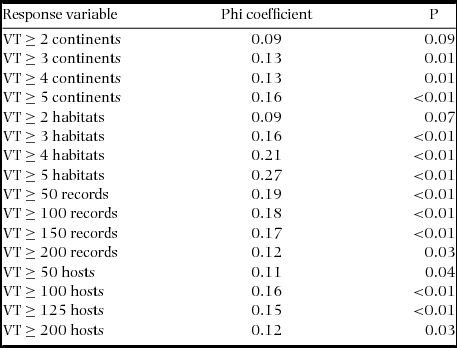
The functional structure of AM fungal communities was described based on the prevalence of generalist versus specialist VT. As far as we know, this is the first time that specialism has been used as a characteristic of AM fungi for the purpose of quantitative analysis. To place this characteristic in the context of earlier approaches, the Phi coefficient was used to compare the prevalence of cultured VT – a characteristic that has been proposed as an AM fungal trait related to ruderal lifestyle (García de León et al. Reference GARCÍA DE LEÓN, MOORA, ÖPIK, JAIRUS, NEUENKAMP, VASAR, BUENO, GERZ, DAVISON and ZOBEL2016a, Reference GARCÍA DE LEÓN, CANTERO, MOORA, ÖPIK, DAVISON, VASAR, JAIRUS and ZOBEL2018a, b) – and generalist taxa in the MaarjAM database (Öpik et al. Reference ÖPIK, VANATOA, VANATOA, MOORA, DAVISON, KALWIJ, REIER and ZOBEL2010), using 16 different proxies for generalist VT. This analysis indicated that the majority of proxies for generalist taxa (14 out of 16 proxies; 88%) are significantly associated with the cultured attribute (Appendix 1).
The effect of land-use type (clearcutting, slash-and-burn, rain forest) on AM fungal alpha diversity and beta diversity was assessed using linear mixed-effect models (function lmer from R package lme4). The effects of land-use type on the prevalence of generalist VT were assessed using generalized linear mixed-effect models with a binomial error distribution (function glmer from R package lme4). We tested for within-treatment differences between sites in response variables – by including site as a fixed factor in models – and dropped it from models because it was non-significant. Pairwise differences between land-use types were assessed using functions cld and glht (Tukey comparison) from multcomp R package.
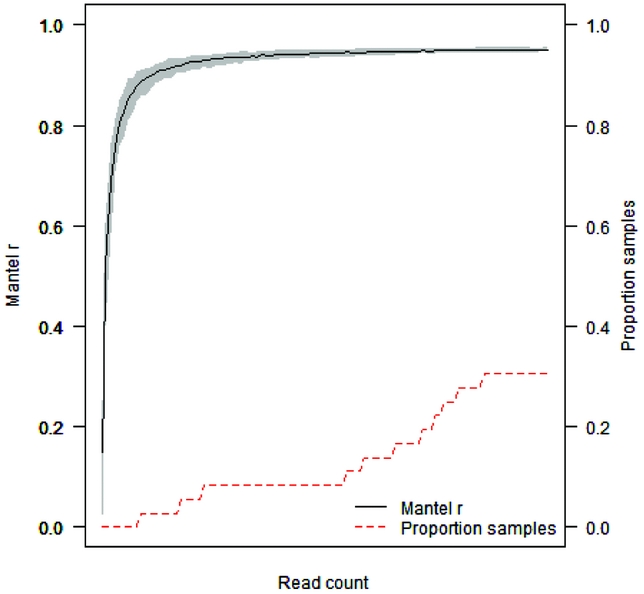
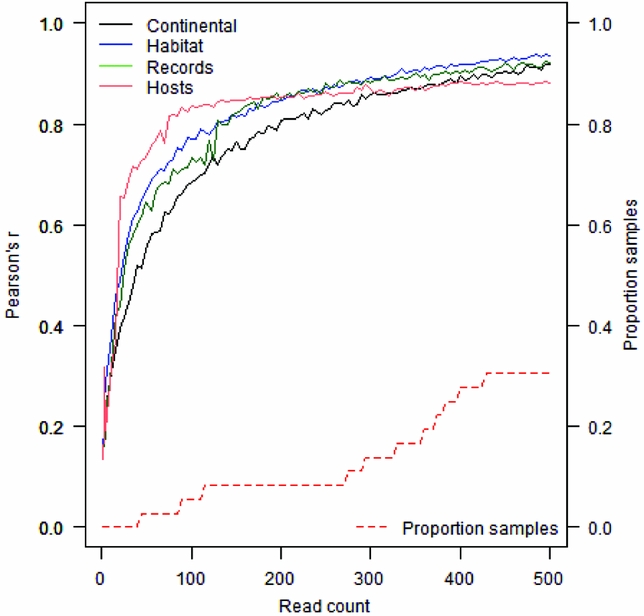
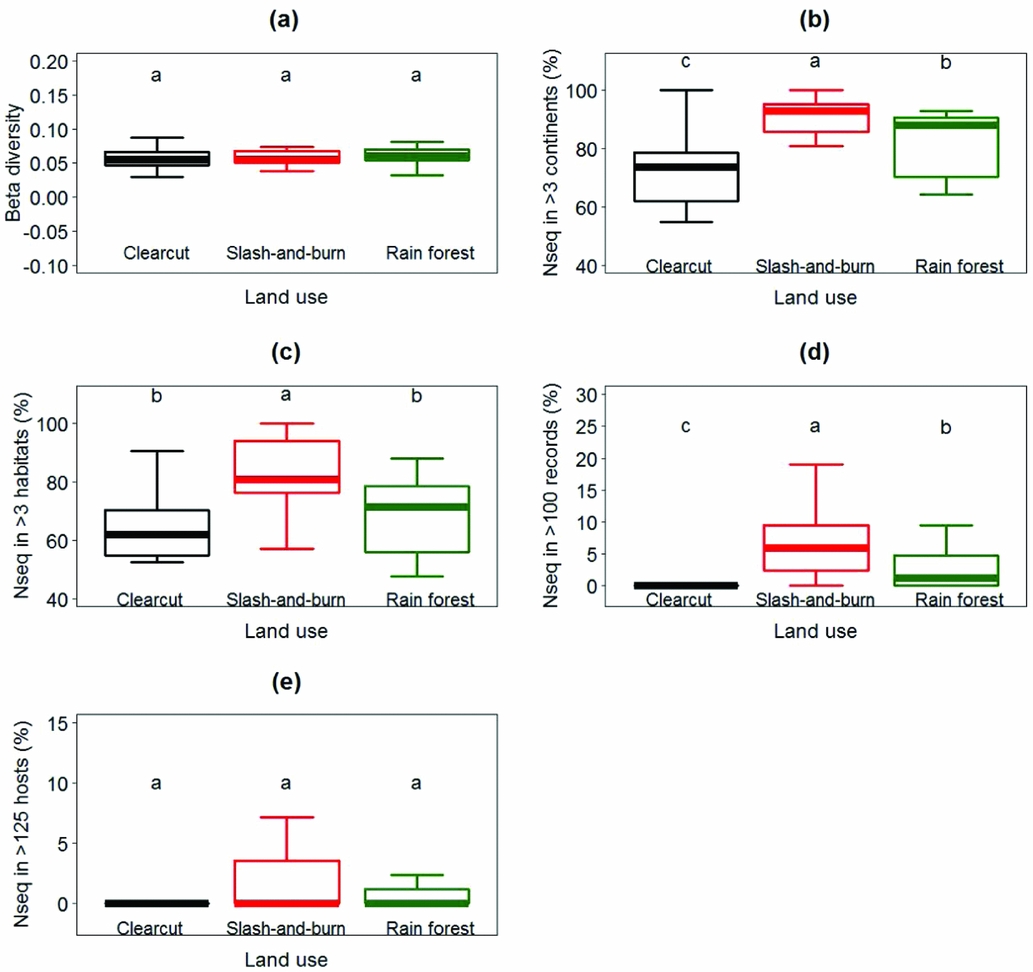
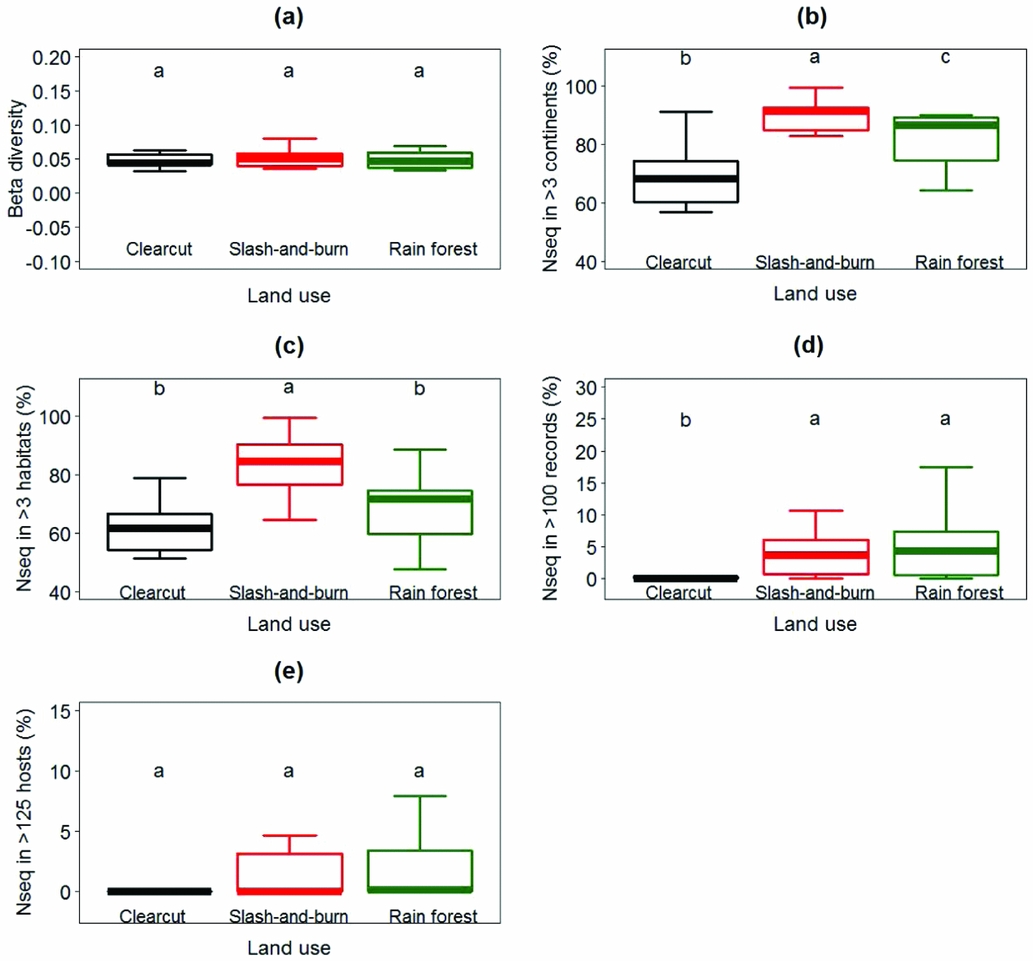
By using an asymptotic estimator for alpha diversity we accounted for differences among samples in sequencing depth. However, other response variables were directly derived from raw data. We tested the sensitivity of the beta diversity and generalist prevalence measures to differences in read depth per sample and recalculated the statistical models using data sets that were rarefied to the minimum and median number of reads per sample (using the function rrarefy from the vegan R package). For rarefying to the median number of sequences, samples with more sequences than the median were randomly subsampled, while samples with fewer sequences than the median were left unchanged. These analyses indicated that the accuracy of beta diversity (Appendix 2) and generalist proportion (Appendix 3) estimates was high even at low sequencing depth and that analysis of raw and rarefied datasets produced very similar relationships between characteristics of diversity and predictor variables (Appendices 4–5). Nonetheless, rarefying to the minimum number of sequences suggested a smaller impact of land use on AM fungal diversity in comparison with analysis of the raw data or data rarefied to the median number of sequences.
Shifts in AM fungal community composition in response to land-use type were visualized using principal coordinate analyses (PCoA) at the plot level with function cmdscale from the R package stats. Soil chemical variables were superimposed on the ordination using the envfit function from the vegan R package.
Permutation multivariate analysis of variance (PERMANOVA) was conducted to test for significant compositional differences among land-use types using function adonis in R package vegan. Non-independency of samples within plots was accounted for using restricted permutation. The permutation approach produced an exact test by generating all possible unique permutations of entire plots (n = 6), while leaving composition within plots unchanged (i.e. 720 permutations). Differences between land-use types were estimated using R-squared values from PERMANOVA models containing pairs of land use types (statistical significance could not be calculated for these models since the data subsets contained too few plots to allow restricted permutation).
In order to further assess differences in land-use preferences among AM fungal VT we performed indicator species analysis as implemented by function indval from R package labdsv. We chose a threshold level of 25% for the indicator value index according to Dufrêne & Legendre (Reference DUFRÊNE and LEGENDRE1997).
Results
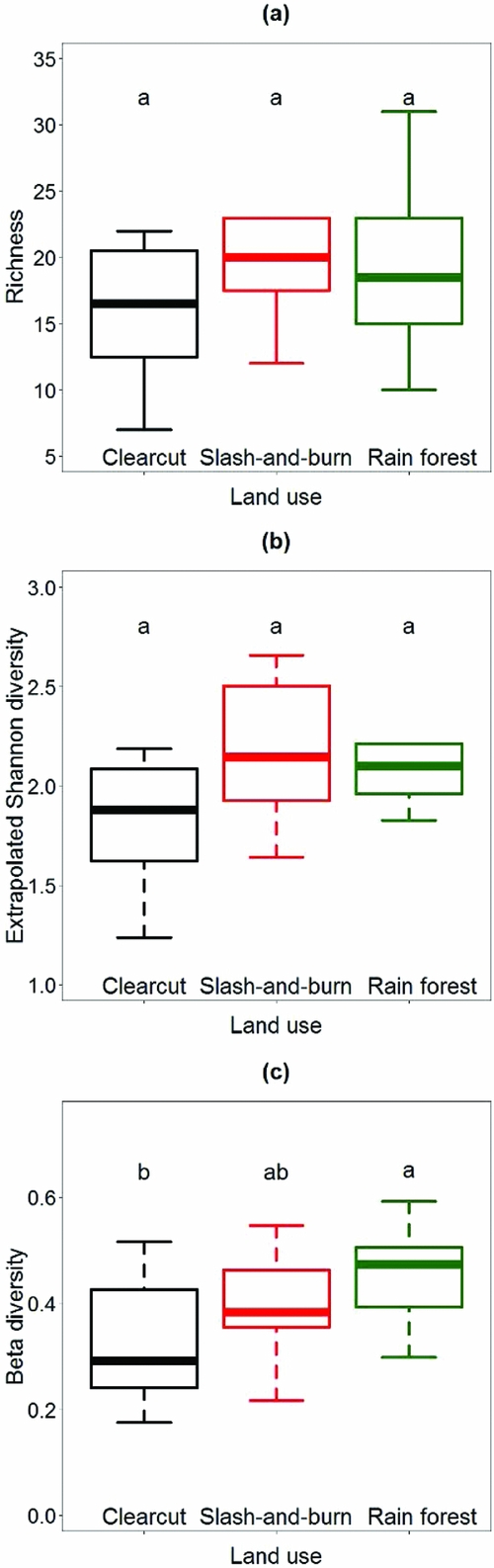
Land use did not influence AM fungal richness (ANOVA, χ2 = 1.2, P = 0.55, Figure 1a) or extrapolated Chao diversity per sample (ANOVA, χ2 = 2.9, P = 0.24, Figure 1b). However, land-use intensification decreased beta diversity (ANOVA, χ2 = 8.9, P = 0.01). Both clearcutting (average distance to median = 0.33), and slash-and-burn plots (average distance to median = 0.39), had lower within-plot beta diversity than rain forest (average distance to median = 0.46), but there were not significant differences between the slash-and-burn and rain forest (ANOVA, χ2 = 0.70, P = 0.40, Figure 1c).
Effect of land use in French Guiana on the number of arbuscular mycorrhizal fungal virtual taxa present in soil samples (n = 36) (a), Chao extrapolated diversity (n = 36) (b) and beta diversity (n = 6) (c). Thick lines represent medians; boxes indicate interquartile ranges; and whiskers show maximum and minimum values per sample.

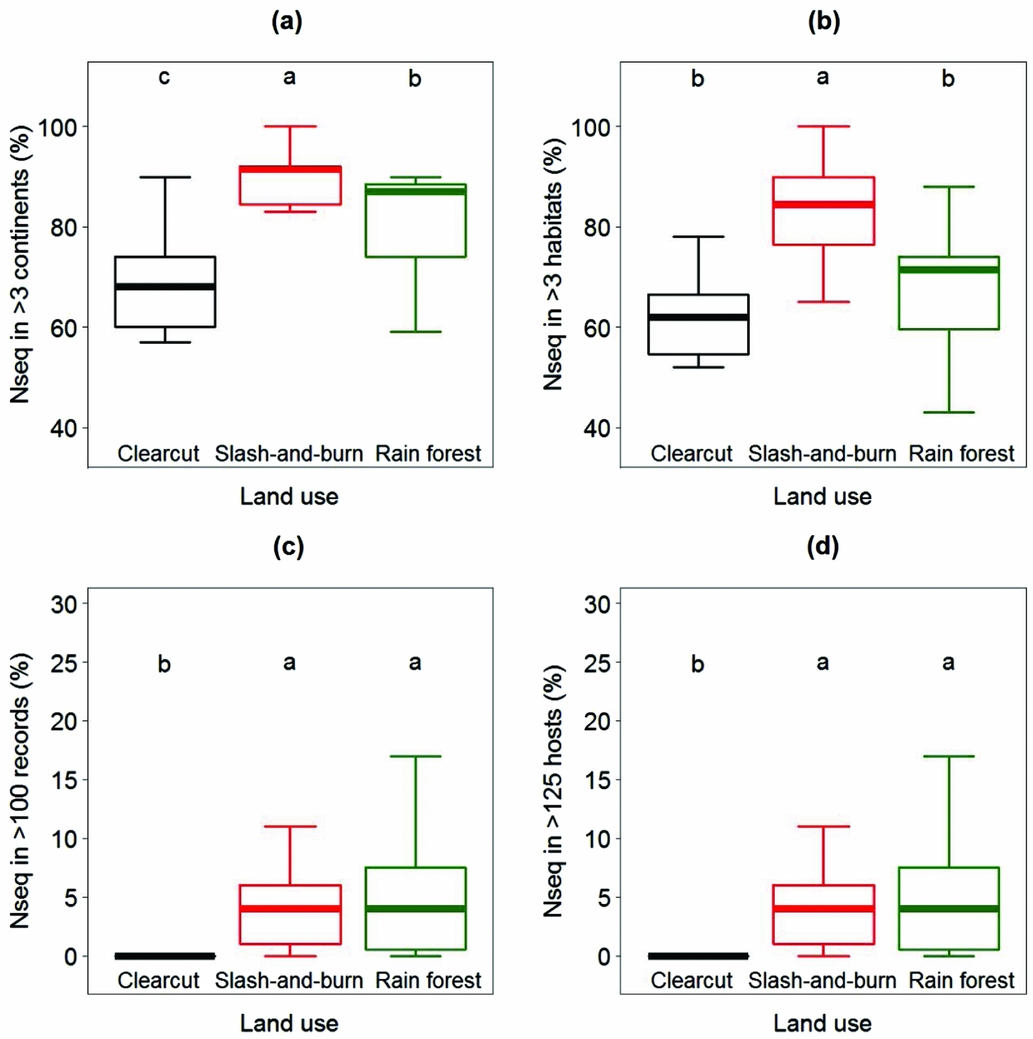
Clearcutting increased the prevalence of specialist AM fungi. Specifically, clearcut contained the highest proportions of virtual taxa that were geographic (ANOVA, χ2 = 109, P < 0.01, Figure 2a), habitat (ANOVA, χ2 = 17.1, P < 0.01, Figure 2b), abundance (ANOVA, χ2 = 16.8, P < 0.01, Figure 2c) or host (ANOVA, χ2 = 16.9, P < 0.01, Figure 2d) specialists.
Effect of land use in French Guiana on the proportion of sequences per soil sample (Nseq; n = 36 samples) from arbuscular mycorrhizal fungal taxa that represent geographic (a), ecological (b), abundance (c) and host plant (d) generalists. Thick lines represent medians; boxes indicate interquartile ranges; and whiskers show maximum and minimum values per sample.

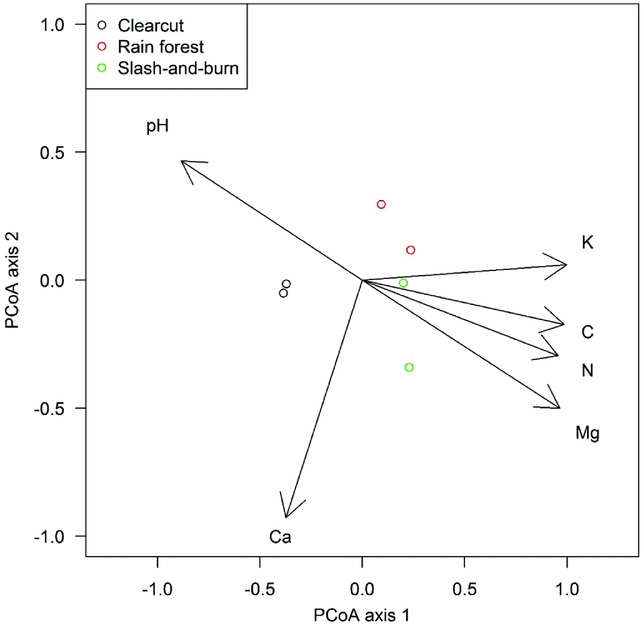
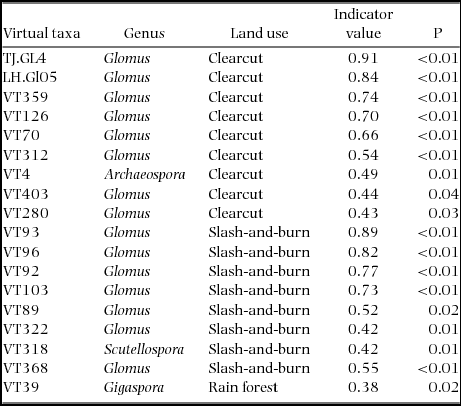
The taxonomic composition of AM fungal communities was quite different in areas of different land use, as shown in the ordination (Figure 3). In parallel with land use change, soil conditions, such as increased pH and decreased C and N content in disturbed areas, were correlated with AM fungal community composition (Table 1, Figure 3). Permutation multivariate analysis of variance revealed significant changes among AM fungal communities under different land uses (R2 = 27%, P <0.01): between clearcutting and slash-and-burn (R2 = 26%), between clearcutting and rain forests (R2 = 21%), and between slash-and-burn and rain forest (R2 = 12%). Although AM fungal communities were dominated by Glomus in all land uses, clearcutting indicator taxa also contained Archaeospora, slash-and-burn contained Scutellospora, and rain forests had one Gigaspora indicator taxon (Table 2).
Principal coordinates analysis of soil arbuscular mycorrhizal fungal communities in plots experiencing different land use in French Guiana (n = 6). Arrows indicate the directions of maximum correlation between plot soil chemical properties and the ordination configuration. Plot-level community data were generated by pooling data from individual soil samples within each plot.

Associations of AM fungal virtual taxa with land use types (clearcut, slash-and-burn, rain forest; n = 36 soil samples from 6 plots) in French Guiana, estimated using indicator species analysis (function indval from R package labdsv). The genus of the morphospecies related to each virtual taxon, the indicator value (i.e. a measure of both the specificity and sensitivity of the VT as an indicator of the land use type) and P-value (P) are shown.

DISCUSSION
Our results indicated that AM fungal alpha diversity in slash-and-burn areas and in clearcut areas, 5 and 8 y after disturbance, respectively, is comparable to that in mature tropical rain forest. The comparatively high levels of AM fungal alpha diversity recorded in the cleared areas may be explained by some fungi remaining after clearing and dispersal of other fungi from nearby areas. Some AM fungi disperse relatively efficiently, as demonstrated by recent results showing that AM fungi can reach newly exposed substrates within 1 y after disturbance (García de León et al. Reference GARCÍA DE LEÓN, MOORA, ÖPIK, JAIRUS, NEUENKAMP, VASAR, BUENO, GERZ, DAVISON and ZOBEL2016a, Nielsen et al. Reference NIELSEN, KJØLLER, BRUUN, SCHNOOR and ROSENDAHL2016). Furthermore, resilience of AM fungal communities to land-use intensification was shown by a recent study in tropical dry forest (Carrillo-Saucedo et al. Reference CARRILLO-SAUCEDO, GAVITO and SIDDIQUE2018).
Beta diversity of AM fungal communities was lowest in the clearcut area. Convergence of fungal community composition has primarily been attributed to homogeneous environmental conditions (Caruso et al. Reference CARUSO, HEMPEL, POWELL, BARTO and RILLIG2012), which was presumably the case in the studied clearcuts, where logging and clearing with bulldozers probably resulted in a fairly homogeneous substrate. Davison et al. (Reference DAVISON, MOORA, ÖPIK, ADHOLEYA, AINSAAR, BÂ, BURLA, DIEDHIOU, HIIESALU, JAIRUS, JOHNSON, KANE, KOOREM, KOCHAR, NDIAYE, PÄRTEL, REIER, SAKS, SINGH, VASAR and ZOBEL2015) found that beta diversity in woody ecosystems is usually higher than in treeless ecosystems and our results are consistent with that. Our analytical approach accounted for spatial dependence of observations within plots. However, we cannot rule out the possibility that the spatial design played a role in generating the observed patterns. The two clearcut areas were closer together than the slash-and-burn and mature forest areas, which may go some way to explaining the relatively low beta diversity in clearcuts.
Although local and regional studies have indicated the existence of AM fungal taxa that can be classified either as generalists or specialists within given datasets (Bouffaud et al. Reference BOUFFAUD, CREAMER, STONE, PLASSART, VAN TUINEN, LEMANCEAU, WIPF and REDECKER2016, Helgason et al. Reference HELGASON, MERRYWEATHER, YOUNG and FITTER2007, Moora et al. Reference MOORA, BERGER, DAVISON, ÖPIK, BOMMARCO, BRUELHEIDE, KÜHN, KUNIN, METSIS, RORTAIS, VANATOA, VANATOA, STOUT, TRUUSA, WESTPHAL, ZOBEL and WALTHER2011, Oehl et al. Reference OEHL, LACZKO, BOGENRIEDER, STAHR, BÖSCH, VAN DER HEIJDEN and SIEVERDING2010, Vályi et al. Reference VÁLYI, RILLIG and HEMPEL2015), there have been, to the best of our knowledge, no attempts to define specialist and generalist taxon groups on the basis of global distribution data. We used the MaarjAM database (Öpik et al. Reference ÖPIK, VANATOA, VANATOA, MOORA, DAVISON, KALWIJ, REIER and ZOBEL2010) to distinguish robust classes of generalist and specialist AM fungal taxa for geographic, habitat, abundance and host categories of specialism. We show for the first time that across all these categories, the share of specialist taxa was higher in the most disturbed habitat type, i.e. the clearcut area. This finding was contrary to our expectation, based on observations of macro-organisms, that generalist taxa would be favoured by disturbance. A possible explanation for the observed pattern is that tolerance to disturbance or rapid arrival in the disturbed area reflects specific traits in specialist fungi that otherwise restrict taxon occurrence in different ecological conditions. Recent studies by van der Heyde et al. (Reference VAN DER HEYDE, OHSOWSKI, ABBOTT and HART2017) and García de León et al. (Reference GARCÍA DE LEÓN, DAVISON, MOORA, ÖPIK, FENG, HIIESALU, JAIRUS, KOOREM, LIU, PHOSRI, SEPP, VASAR and ZOBEL2018b) confirm that disturbance tolerance of AM fungi is related to a set of specific traits. As ecosystems recover from disturbance one might expect the specialists to be replaced by generalist AM fungi. The positive correlation found between generalist and cultured AM fungal taxa is interesting in itself. Recent studies (García de León et al. Reference GARCÍA DE LEÓN, MOORA, ÖPIK, JAIRUS, NEUENKAMP, VASAR, BUENO, GERZ, DAVISON and ZOBEL2016a, Reference GARCÍA DE LEÓN, CANTERO, MOORA, ÖPIK, DAVISON, VASAR, JAIRUS and ZOBEL2018a, b) showed that cultured AM fungal taxa are favoured by disturbance at regional and global scales. It is therefore surprising that the present local study recorded fewer cultured taxa in disturbed plots. The strong disturbance caused by soil removal may have limited colonization of the new habitat to specialist fungi. However, further research is required to more thoroughly address the relationships between AM fungal traits and niche breadth.
Land use had a significant effect on AM fungal community composition, with communities in the clearcut area most distinct. This result is consistent with earlier studies showing that land-use intensity and soil type strongly affect AM fungal community composition as well as the presence and prevalence of several AM fungal taxa (García de León et al. Reference GARCÍA DE LEÓN, DAVISON, MOORA, ÖPIK, FENG, HIIESALU, JAIRUS, KOOREM, LIU, PHOSRI, SEPP, VASAR and ZOBEL2018b, Moora et al. Reference MOORA, DAVISON, OPIK, METSIS, SAKS, JAIRUS, VASAR and ZOBEL2014, Oehl et al. Reference OEHL, LACZKO, BOGENRIEDER, STAHR, BÖSCH, VAN DER HEIJDEN and SIEVERDING2010, Sepp et al. Reference SEPP, JAIRUS, VASAR, ZOBEL and ÖPIK2018). Both biotic and abiotic interactions may drive differences in AM fungal communities under different land-use regimes. Some studies have indicated that different host plants facilitate the establishment of different AM fungi among all propagules arriving at a given location (Fonseca et al. Reference FONSECA, DIAS, CAROLINO, FRANÇA and CRUZ2017), while others indicate that abiotic environmental filtering is a more dominant driving force in community assembly than AM fungal competition (Bouffaud et al. Reference BOUFFAUD, CREAMER, STONE, PLASSART, VAN TUINEN, LEMANCEAU, WIPF and REDECKER2016). In this study we cannot distinguish between effects of host plant and abiotic conditions. We have no data on the exact taxonomic composition of plant communities, but the physiognomy of communities was markedly different. In addition, land-use intensification was associated with changing soil conditions, notably increased pH and decreased soil carbon and nitrogen (Table 1, Figure 3). Changes in soil chemical properties due to the conversion of tropical rain forest into traditional agriculture have been reported elsewhere (Krashevska et al. Reference KRASHEVSKA, KLARNER, WIDYASTUTI, MARAUN and SCHEU2015).
We found that Glomus spp. were representative of clearcut and slash-and-burn land uses, which is in line with van der Heyde et al. (Reference VAN DER HEYDE, OHSOWSKI, ABBOTT and HART2017), who showed that species in the Glomeraceae were the most tolerant to host plant change, reduced plant carbon, and agricultural and chemical disturbance. AM fungal indicators for clearcutting areas contained Archaeospora taxa. Archaeospora spp. have been described as indicators of highly disturbed habitats elsewhere (García de León et al. Reference GARCÍA DE LEÓN, MOORA, ÖPIK, NEUENKAMP, GERZ, JAIRUS, VASAR, BUENO, DAVISON and ZOBEL2016b, Martínez-García et al. Reference MARTÍNEZ-GARCÍA, RICHARDSON, TYLIANAKIS, PELTZER and DICKIE2015). Slash-and-burn indicators included Scutellospora spp. Turrini et al. (Reference TURRINI, AVIO, BEDINI and GIOVANNETTI2007) showed that Scutellospora spp. are threatened by anthropogenic disturbance. There was one indicator for mature-rain-forest samples, a Gigaspora taxon, which is consistent with Gottshall et al. (Reference GOTTSHALL, COOPER and EMERY2017) who showed Gigaspora spp. were associated with soil management approaches with a low level of soil disturbance.
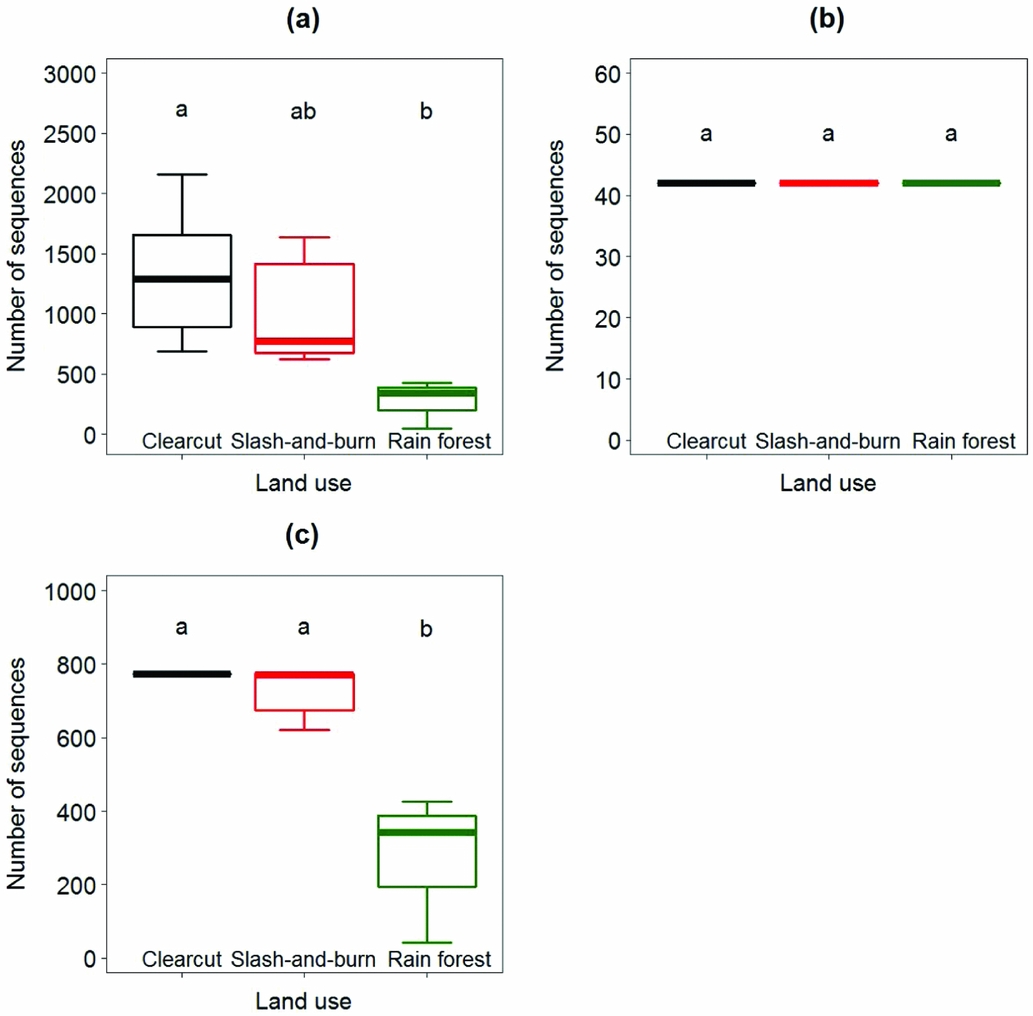
Although AM fungal communities persisted in slash-and-burn and clearcut areas, the abundance and inoculum potential of AM fungi remains unknown. Unfortunately, there was no information available about the number of propagules that were dispersed from nearby sources, which could be a good proxy of inoculum potential. The number of AM fungal sequences per sample was generally higher in clearcut and slash-and-burn areas, compared with mature rain forest (Appendix 6). However, the use of sequence counts as a proxy for AM fungal abundance has been criticized due to confounding effects of PCR bias (Gamper et al. Reference GAMPER, YOUNG, JONES and HODGE2008). Where it is not possible to measure numbers of dispersed propagules, the use of other measures to estimate AM fungal abundance, such as fatty acid quantification (Neuenkamp et al. Reference NEUENKAMP, MOORA, ÖPIK, DAVISON, GERZ, MÄNNISTÖ, JAIRUS, VASAR and ZOBEL2018), seems promising for future studies. In addition, comprehensive and spatially explicit information about how quickly slash-and-burn areas regenerate – lacking in the present study – would be extremely helpful.
We conclude that clearing of tropical rain forest is a severe disturbance that results in functional and compositional change in AM fungal communities. Slash-and-burn is a forest management strategy where disturbance occurs for 2–3 y followed by a period of natural regeneration. In this study system, abandoned slash-and-burn contained AM fungal communities that were relatively similar to those in mature forest. Earlier studies addressing the impact of slash-and-burn land use on AM fungal communities have demonstrated some initial negative effects on AM fungal communities (Cuenca et al. Reference CUENCA, CACERES, GONZALEZ and Varma2008). However, the cultivated plant species are generally responsive to AM fungal inoculum present in nearby forests and frequently exhibit high levels of AM fungal root colonization (Kalinhoff et al. Reference KALINHOFF, CÁCERES and LUGO2009). The balance of resistance and resilience in AM fungal communities experiencing different forms of disturbance deserves attention in future studies.
Acknowledgements
This study was supported by grants from the Estonian Research Council [IUT 20-28], and the European Regional Development Fund [Centre of Excellence EcolChange]. The authors are grateful to Tessa Camenzind for constructive criticism that helped to improve earlier versions of this manuscript.
Correlation between cultured status and different proxies of generalist status among arbuscular mycorrhizal fungal virtual taxa (VT). Cultured taxa are defined as those VT that contain sequences of known morphospecies identity according to the MaarjAM database (Öpik et al. Reference ÖPIK, VANATOA, VANATOA, MOORA, DAVISON, KALWIJ, REIER and ZOBEL2010). Generalist status is defined in terms of geographic distribution, ecological distribution, number of records, and host plant species, based on VT distribution data in the MaarjAM database.

Sensitivity analysis showing the relationship between sequencing depth (read count) and the precision of diversity estimates for AM fungal communities in soil samples from French Guiana. Precision was assessed using multivariate correlation (Mantel correlation) to estimate the similarity of community composition (Bray–Curtis distance) in sets of complete samples and samples that were randomly subsampled to lower sampling depth. Only samples with high sequence counts (> 500 reads) were included in the comparison (n = 25). To generate subsampled matrices, reads were randomly selected in each sample at sequencing depths between 1 and 500, with 100 random subsamples taken for each depth value. The black line represents median Mantel correlation (r) between full and subsampled matrices; the grey envelope shows the 2.5% and 97.5% quantiles of Mantel correlation. Correlation increased rapidly with increasing sequencing depth and increased little once sequencing depth was over 50 reads. The dashed red line indicates the cumulative proportion of samples with sampling depth greater than a given read count in the full French Guiana data set (n = 36).

Sensitivity analysis showing the relationships between sequencing depth (read count) and the precision of estimates of functional community composition for AM fungal communities in soil samples from French Guiana. Pearson's correlation was used to measure association between estimates of the proportions of generalist taxa per sample in sets of complete samples and samples that were randomly subsampled to lower sampling depth. Only samples with high sequence counts (> 500 reads) were included in the comparison (n = 25). To generate subsampled matrices, reads were randomly selected in each sample at sequencing depths between 1 and 500, with 100 random subsamples taken for each depth value. The solid lines represent median Pearson's correlation (r) using different categories of generalist taxa. Correlation between full and subsampled matrices increased rapidly with increasing sequencing depth and increased little once sequencing depth was over 50–100 reads. The dashed red line indicates the cumulative proportion of samples with sampling depth greater than a given read count in the full French Guiana data set (n = 36).

Effect of rarefying to the minimum number of sequences on measured relationships between land use and characteristics of diversity among soil arbuscular mycorrhizal fungal communities in French Guiana (n = 36 samples): beta diversity (a), and the proportion of sequences per sample (Nseq) belonging to taxa that represent geographic (b), ecological (c), abundance (d) and host plant (e) generalists. Thick lines represent medians; boxes indicate interquartile ranges; and whiskers show maximum and minimum values per sample.

Effect of rarefying to the median number of sequences (samples containing fewer than the median number of sequences were left unchanged) on measured relationships between land use and characteristics of diversity among soil arbuscular mycorrhizal fungal communities in French Guiana (n = 36 samples): beta diversity (a), and the proportion of sequences per sample (Nseq) belonging to taxa that represent geographic (b), ecological (c), abundance (d) and host plant (e) generalists. Thick lines represent medians; boxes indicate interquartile ranges; and whiskers show maximum and minimum values per sample.

The number of arbuscular mycorrhizal fungal sequences retained for analysis in soils of different land use in French Guiana (n = 36 samples): raw data (a), data rarefied to the minimum number of sequences (b), and data rarefied to the median number of sequences (c).