Health-related quality of life (HRQoL) is an important patient reported outcome used by healthcare professionals to inform treatment decisions and can also be combined with length of life to calculate the quality-adjusted life-year (QALY), a measure used in economic evaluations to support healthcare priority setting. In South Africa the use of economic evaluations for priority setting and resource allocation decisions are not yet formalized at the national level in the public (i.e., government) healthcare sector, but proposed reforms will result in significant changes in healthcare financing, management, and service delivery (among others) if universal healthcare coverage is implemented through National Health Insurance (NHI) by 2026. Most notably, it is proposed that several committees will advise the Minister of Health on aspects such as health technology assessment (HTA), coverage of cost-effective healthcare interventions, services within the NHI Fund and the pricing thereof (1).
No operational methodological HTA guidelines currently exist, but in 2012 the National Department of Health's issued the South African Guidelines for Pharmacoeconomic Submissions (SAGPS) which narrowly focuses on medicines within the private (i.e., medical insurance) health sector (2). Submissions are only accepted from manufacturers who do so voluntarily, however, the Director General can mandate a cost-effectiveness evaluation of any new or existing medicine regardless of the healthcare sector it is used in. To date there is no evidence that the SAGPS has been used as intended or that the Director General has enacted the SAGPS, but it represents a first step toward quantifying the value of new medicines and with some amendments, could become more aligned with general HTA principles and methodological guidelines in other countries that have established HTA agencies and methods (Reference Carapinha3;Reference Marsh and Truter4). A strength of the guideline is the detailed economic evaluation methodology and although it does not require a specific type of economic evaluation, it does state that quality of life (QoL) data should be presented in addition to the primary clinical outcome, thus indirectly suggesting that cost-utility analysis (CUA) may be preferred. It leaves the choice of QoL instrument open and does not exclude the option to convert QoL outcomes derived from non-multi-attribute utility instruments (MAUIs) to utility values using mapping algorithms, but it states that the QoL results should be from a South African perspective and that the instrument should be validated within the South African context. Only if no South African data are available then international information can be presented, if it is supported by compelling arguments of local relevance.
Considering South Africa's changing healthcare landscape and the difficulties in making reimbursement decisions in the absence of appropriate data, a systematic review was conducted to identify South African specific HRQoL studies that could inform CUAs within the context of a potential national HTA process. The review aimed to identify any evidence gaps and consequently, provide recommendations on evidence generation that will support decision making on medicines that are value for money to the South African public healthcare system.
Methods
The systematic review was conducted to identify the HRQoL data that have been generated in the South African population, describe its attributes, and determine whether it meets the SAGPS requirements. The study received ethical approval from the authors' university (approval number: H18-HEA-PHA-009).
Study Selection and Eligibility Criteria
The review followed the recommendations by the University of York's Centre for Reviews and Dissemination (CRD) (5) and the Cochrane Handbook (Reference Higgins and Green6) and was also registered on PROSPERO (registration number: CRD42019121379) (7).
Full text articles and abstracts were included if they reported results for South African study participants and reported HRQoL results from MAUIs or HRQoL data that could be mapped to such instruments. Direct preference elicitation studies using time trade-off and standard gamble methods were also included, but studies using rating scales such as the visual analog scale were excluded as it not preference based. A list of MAUIs preferred by the established HTA agencies such as the National Institute for Health and Care Excellence (NICE) in England, the Pharmaceutical Benefits Advisory Committee in Australia, and the Canadian Agency for Drugs and Technologies in Health (among others) was created. HRQoL instruments with existing mapping algorithms to MAUIs were identified from the University of Oxford's Health Economics Research Centre database (Reference Mukuria, Rowen, Harnan, Rawdin, Wong and Ara8). The Mapi Research Trust's PROQOLID™ database (9) was used to verify if instruments measured HRQoL and were patient reported outcomes measures. If uncertainty remained Medline, Google Scholar, and instrument Web pages were consulted. No restrictions were placed on the publication date and studies of any design or purpose were included. As all publications were in English, no publications were excluded based on language.
Search Strategies
Searches were performed on the 26th of January 2019 in the Web of Science (WoS) platform using Medline, WoS Core Collection (Science Citation Index Expanded 1993–present and Social Sciences Citation Index 1993–present), and SciELO (South African collection). The Cochrane Library was also consulted, where searches were conducted in the Cochrane Central Register of Controlled Trials, Cochrane Database of Systematic Reviews, Health Technology Assessment database, Database of Abstracts of Reviews of Effects, and National Health Service Economic Evaluation Database.
The search strategy used a combination of keyword and free text in the title and abstract, and subject heading terms (see Supplementary File, Supplementary Tables 1–5). The Medline search filter for health state utility values by Arber et al. (Reference Arber, Garcia, Veale, Edwards, Shaw and Glanville10) was adapted to the WOS platform and Cochrane Library. Health economics and HRQoL journals such as Value in Health, Journal of Patient Reported Outcomes, and Quality of Life Research, and conference proceedings from the International Society for Patient Outcomes Research and the International Society for Quality of Life were searched. The reference lists of the included publications were also reviewed.
Screening and Data Extraction
Results were exported into Microsoft Excel® and duplicate records removed, where after primary screening of the titles and abstracts was performed independently by two reviewers (SM and KD) who determined a publication's inclusion, that is, a “first pass” review. The first thirty articles constituted a pilot phase whereby the reviewers cross-checked their decisions and aligned on a publication's inclusion/exclusion. Articles not matching the eligibility criteria were excluded and full-text copies of remaining articles were obtained. Secondary screening of the full articles also included a pilot phase, conducted as per the primary screening methods. Any uncertainty was resolved by consensus between the two reviewers.
During a data retrieval pilot phase of the final included publications, one reviewer (KD) extracted information in Excel® using pre-determined fields. The second reviewer (SM) cross-checked and simplified the extraction table, provided feedback, checked the final version of the extraction table for accuracy and finally, incorporated coding for the analyses.
Multiple publications of the same study were retained under the publication considered the primary publication. For publications with missing data and where the first author was affiliated with a university, additional searches were made in masters and doctoral theses repositories because an exploratory bibliometric analysis of the final data set found many unconnected research clusters (Reference Marsh and Truter4), which is indicative of once-off research projects such as masters and doctors research. Nonetheless, some data remained missing and is described in the results as “not reported.”
Quality Assessment, Data Synthesis, and Analysis
Due to the anticipated broad nature of the included population, technologies, and HRQoL data, meta-analyses were not planned. Instead, a quantitative analysis using descriptive statistics was planned to describe the number of studies, timeframe, and data characteristics. A narrative approach was applied using a textual method to provide an overall assessment of the evidence's robustness for CUAs according to the NICE Decision Support Unit's Technical Support Document on the identification, review and synthesis of health state utility values from the literature (Reference Papaioannou, Brazier and Paisley11) and the SAGPS’ requirements.
Results
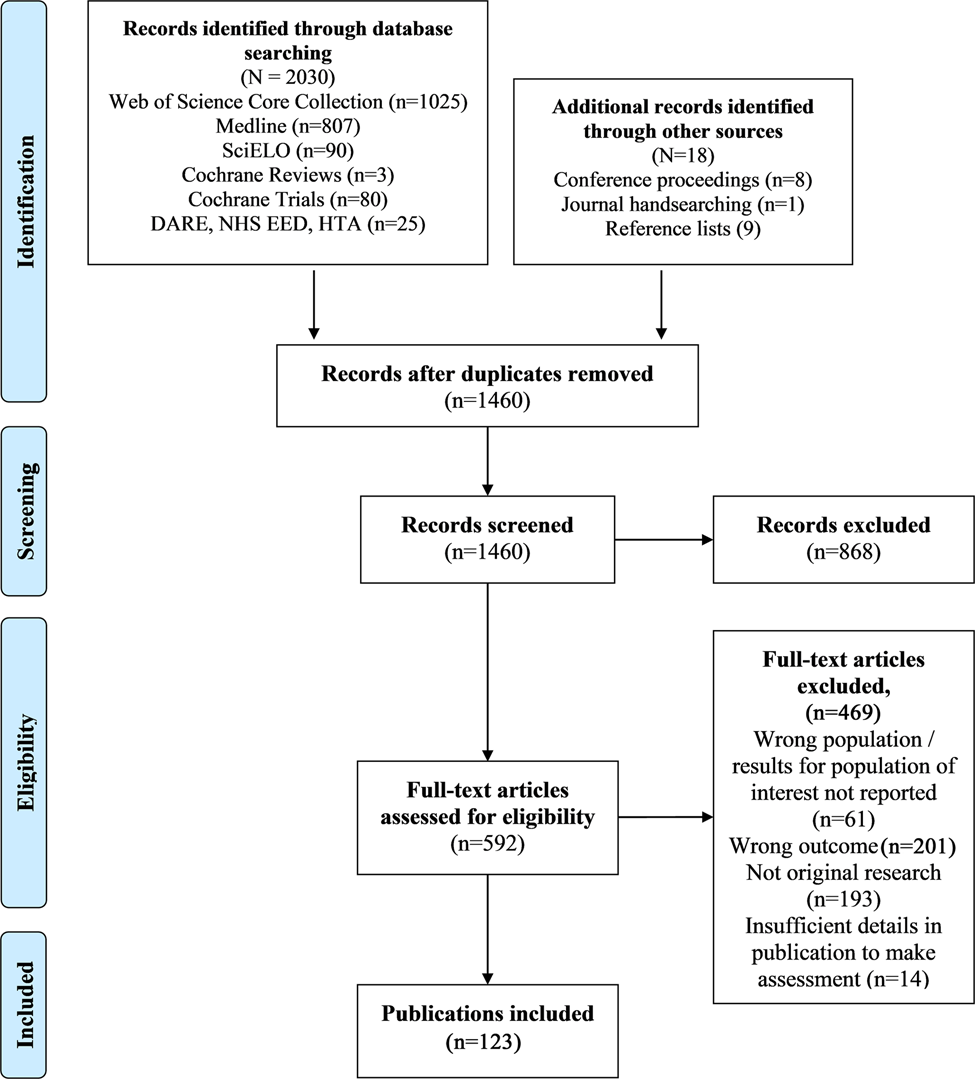
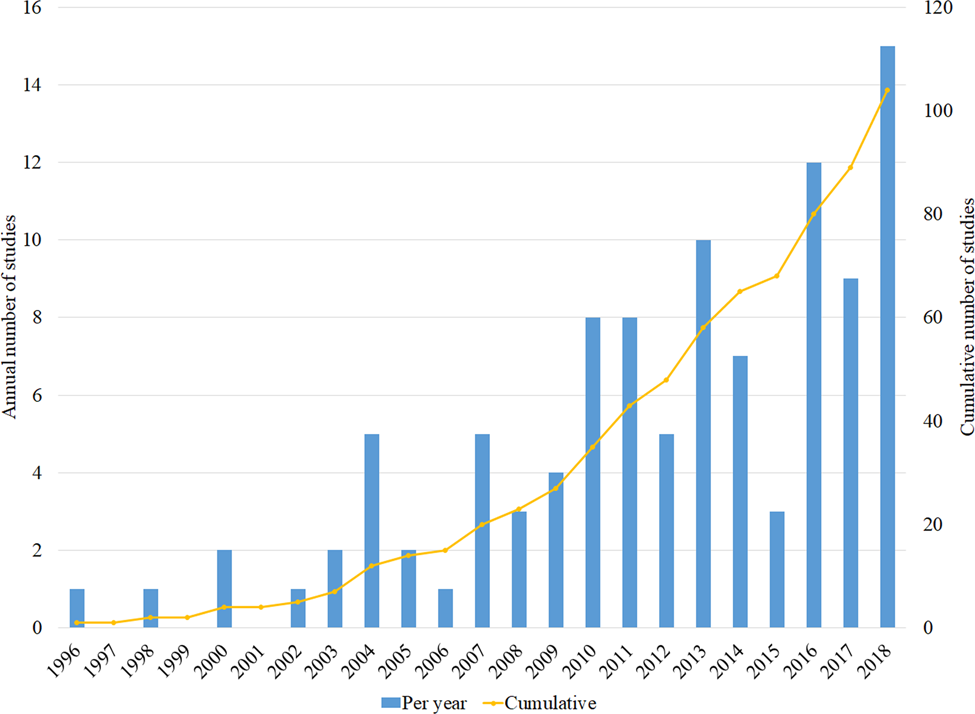
The PRISMA diagram is presented in Figure 1 (Reference Moher, Liberati, Tetzlaff, Altman and Group12). Most of the 592 publications retained for secondary screening were excluded because they did not report the use of MAUI or HRQoL instruments that could be mapped to a MAUI (n = 201), or did not present original research and instead referenced other publications or were study protocols without results (n = 193). The final data set thus comprised 123 publications, representing 104 studies (see Supplementary file 2 for the list of publications). Studies first appeared in 1996 with three quarters published between 2009 and 2018 (Figure 2). Studies were mostly conducted to measure HRQoL or to determine the factors that influence HRQoL results (n = 88) with the remainder reporting HRQoL instrument adaptation, validation, or translation of existing instruments previously developed in a non-South African setting (n = 14). Two studies reported both the instrument translation and validation, and results of using the instrument for measuring HRQoL.
PRISMA flow diagram of the included studies (Reference Moher, Liberati, Tetzlaff, Altman and Group12). DARE, Database of Abstracts of Reviews of Effects; HTA, Health Technology Assessment database; NHS EED, National Health Services Economic Evaluation database.

Annual and cumulative number of studies.

Population Characteristics, Interventions, and Study Locations
Eighty-one studies were conducted only in an adult population aged 18 years and older, increasing to ninety-two for studies that included both adults and people younger than 18, or only adults. Only eighteen studies were conducted in children and/or adolescents. Nearly a quarter of studies included people who were living with the human immunodeficiency virus (HIV), with or without co-morbid conditions (n = 24), people with tuberculosis (n = 7), people with unspecified chronic conditions (n = 7), or people requiring dialysis for advanced renal disease (n = 4). Most studies did not report the ethnic/cultural group in which the study was conducted (n = 47) or the language in which the instrument was administered in (n = 48). When reported, forty-three studies included multiple cultural groups and thirty-one studies used instruments in multiple languages. Overall, the English version of instruments were used most often (n = 37) followed by isiXhosa (n = 19), and isiZulu (n = 17). Details on whether validated translated versions, or the methods employed for translating the instruments, were reported infrequently. The three most used instruments were the European Quality of Life Questionnaire-5 dimensions (EQ-5D; n = 35), the Short Form-36 (SF-36; n = 23), and the World Health Organization Quality of Life-abbreviate questionnaire (WHOQOL-BREF; n = 10).
Of the ninety studies conducted to determine HRQoL outcomes or the factors influencing HRQoL outcomes, thirty-six did not report details of the intervention(s). Where reported, the interventions included oral and parenteral medication, healthcare services such as physiotherapy, nutritional, and exercise education and hospital treatments such as surgery, dialysis, and ventilation (among others).
Nearly two thirds of studies were conducted in a public health setting such as government hospitals, clinics, or community health centers (n = 67), and just over a quarter were conducted outside of a clinical setting, such as places of living, work, and learning institutions (n = 28). Six studies spanned both the private and public health sectors. Most studies were in the Western Cape province (n = 46), Gauteng (n = 30) and KwaZulu-Natal (n = 17). Only six studies were conducted across multiple provinces.
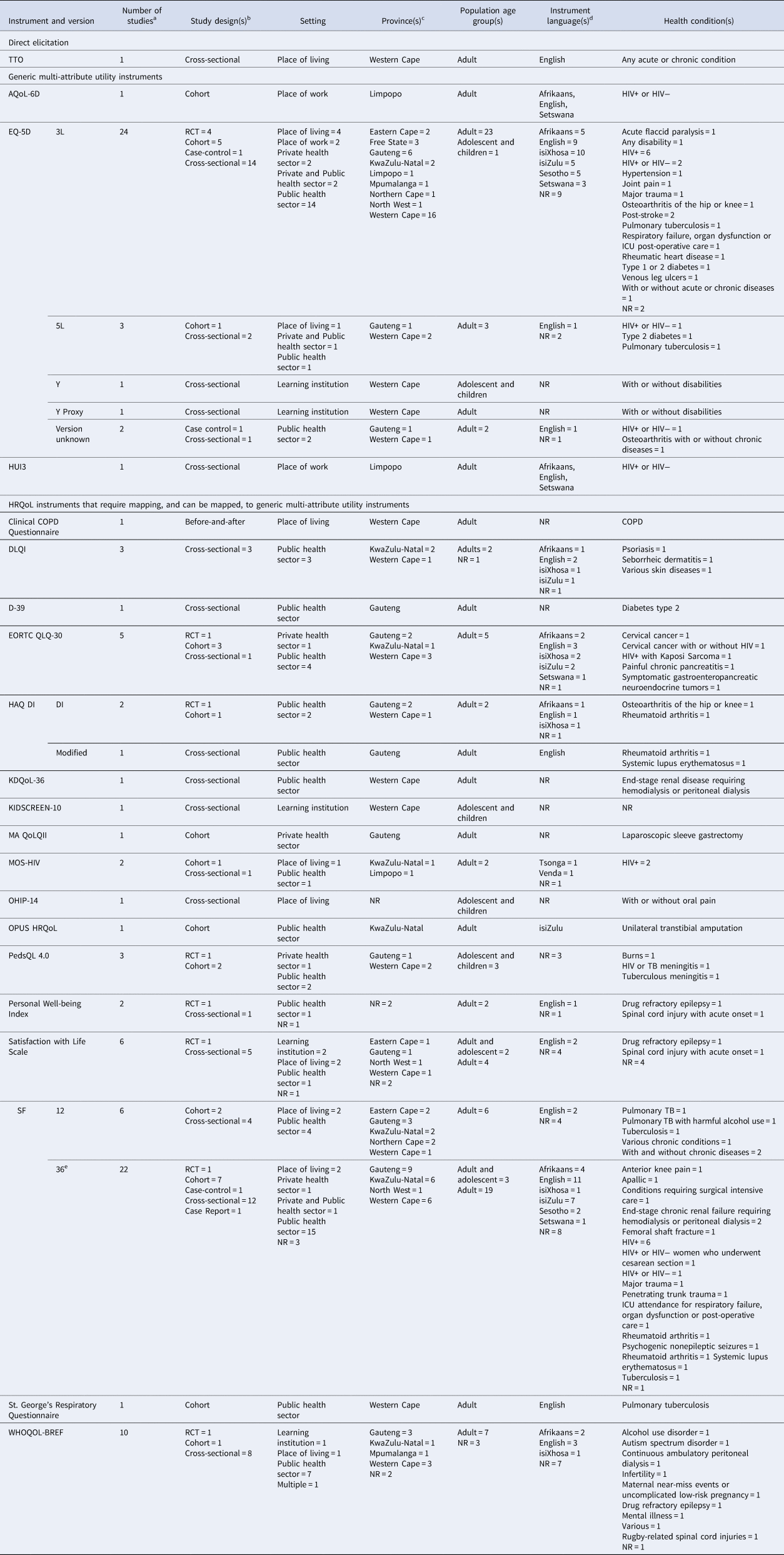
Table 1 provides a summary of the clinical study characteristics, according the HRQoL elicitation method and instrument used.
Methodology, patient, and health condition characteristics of studies generating HRQoL data

3L, 3 levels; 5L, 5 levels; AQoL-6D, Assessment of Quality of Life 6D; C30, Core Questionnaire; COPD, chronic obstructive pulmonary disease; CX24, Cervical Cancer module; D-39, Diabetes 39; DI, disability index; DLQI, dermatology life quality index; EQ-5D, European quality of life Questionnaire-5 Dimensions; EORTC QLQ, European Organization for Research and Treatment of Cancer Quality of Life Questionnaire; HAQ, Health Assessment Questionnaire; HAQ-HIV, human immunodeficiency virus; HRQoL, health-related quality of life; HUI3, Health Utility Index mark 3; ICU, intensive care unit; KDQoL, kidney disease and quality of life, MA QoLQII, Moorehead-Ardelt quality of life questionnaire II; MOS-HIV, Medical Outcomes Study HIV Health Survey; NR, not reported; OHIP, oral health impact profile; OPUS, Orthotics and Prosthetics Users' Survey; PedsQL, Pediatric Quality of Life Inventory; RCT, randomized controlled trial; SF, Short Form; TB, tuberculosis; TTO, Time Trade-Off; WHOQOL-BREF, World Health Organization abbreviated version; Y, youth.
a Some studies included multiple instruments, therefore the numbers are not cumulative.
b Excluding studies describing instrument development or validation.
c Some studies were conducted in multiple provinces, therefore the numbers are not cumulative
d Some studies used multiple language versions of an instrument, therefore numbers are not cumulative
e One study used the KDQOL-SF, for which there is no mapping algorithm, but because the results of the SF-36 component of the questionnaire was reported separately in the publication, the study was retained and is reported under the SF-36 results.
Methodological Aspects
In most studies measuring HRQoL outcomes (as opposed to instrument validation and/or translations studies), HRQoL was reported as the primary objective (n = 58), but only seven reported the details that showed the study was powered to measure the primary outcome. This may be due to the studies measuring HRQoL at a single time point or not being comparative: over half (n = 54) were cross-sectional and less than a third were cohort studies or randomized controlled trials (RCTs) (n = 19 and n = 8, respectively; ranging 6 wk to 83 mo). Two thirds of the longitudinal studies reported the details of the patients lost to follow-up but overall, three quarters of the 104 studies did not report details of how missing data were handled. Of the eleven studies that reported subgroup analyses, only two stated that it was pre-specified. Five of the eight RCTs specified that the intention-to-treat (ITT) population was used in the analyses.
Discussion
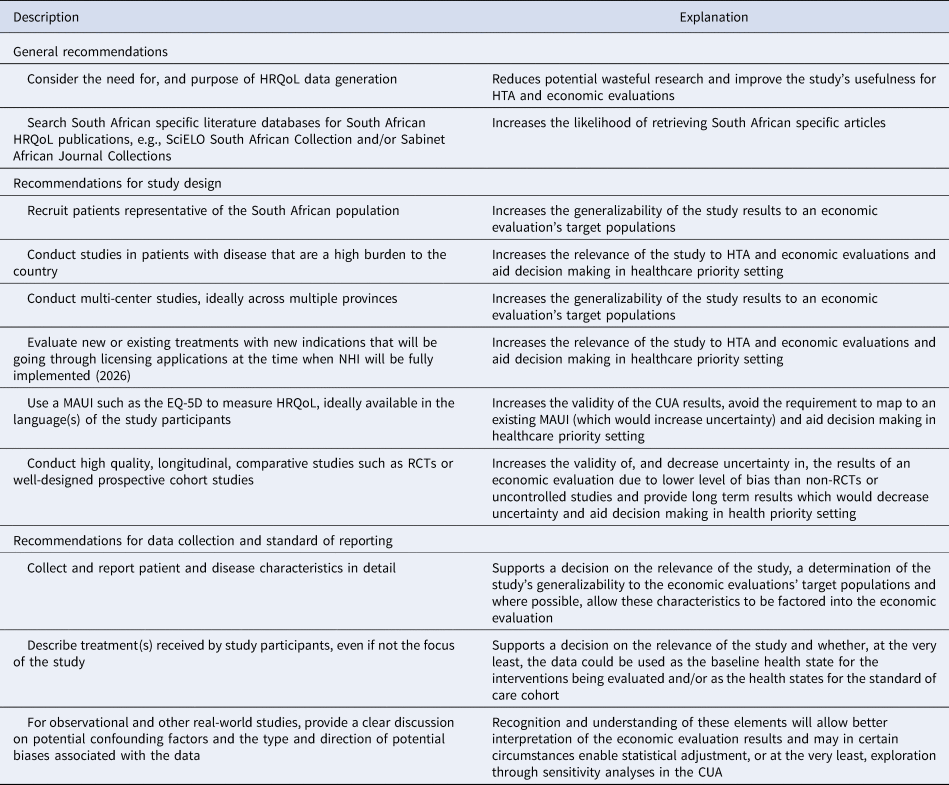
In anticipation of the implementation of NHI in South Africa by 2026 and the use of HTA and cost-effectiveness for coverage decisions, the systematic review aimed to understand the current HRQoL research landscape, identify any evidence gaps and provide recommendations on future evidence generation (Table 2).
Key recommendations for HRQoL data generation for CUAs used in HTAs in South Africa

CUA, cost-utility analysis; EQ-5D, European Quality of Life Questionnaire-5 dimensions; HRQoL, health-related quality of life; HTA, health technology assessment; MAUI, multi-attribute utility instrument; NHI, National Health Insurance; RCTs: randomized controlled trials.
For HTA purposes, evidence generation should be effective and efficient and the evidence should be sufficient and informative for decision makers (Reference Facey, Henshall, Sampietro-Colom and Thomas13). Technology developers and researchers in academia and clinical settings should therefore understand HTA principles and data requirements and have knowledge of economic evaluations. This can avoid wasteful research created through duplication of effort, poorly designed studies, inadequate outputs, or poor reporting.
A key element of HTA is its systematic nature, and the SAGPS requires that the evidence presented should be obtained through a comprehensive search. As shown, there is an existing body of HRQoL research in South African settings, but although searching two of the three databases listed by the SAGPS found most publications, eight additional articles were retrieved from reference list searching. Of these, five were included in the final data set but was published in South African journals not indexed in Medline, WOS Core Collection, or SciELO. Given that the SciELO South African collection only identified two publications not in the databases required by the SAGPS, it may be necessary to search other databases specific to South African journals such as Sabinet's African Journals Collection (14), which would have identified three of the five publications retrieved from reference lists.
Other key HTA data considerations are the population treated, the interventions and comparators and the outcomes relevant to patients and decision makers (the “PICO” concept), as well as the methods used to obtain the outcomes, the generalizability of the evidence, the types of economic evaluations, and management of uncertainty within the data (13;15). The SAGPS also has specific requirements relating to HRQoL, most notably the choice of instrument which should be validated using South African data and/or be valid in a South African setting (2). Encouragingly, several instruments were administered in multiple languages (Table 1) and a small number of studies also reported the validation and/or translation of existing instruments. These instruments would therefore meet the SAGPS requirements but most instruments were administered in English, which is only the sixth most spoken language at home and the second most spoken language outside the household (16). Instruments translated into isiZulu and isiXhosa, the first and third most common languages at home and outside the household, were also used frequently. The EQ-5D was the most used instrument and was administered across a range of populations with different ages, diseases, and ethnicities as well as in multiple settings, locations, and languages. Most relevant to researchers is that the 3L, 5L, and Youth versions are available in eight, seven, and five of the eleven official South African languages, respectively (17), thus facilitating its use. However, currently there is no value set with index values that reflect the South African general population's preference for each of the levels in each EQ-5D dimension (called a national tariff). This limits the EQ-5D's use for CUAs in South Africa because researchers will have to select another country's value set, which will increase uncertainty in the CUA results as it has been shown that applying different EQ-5D national tariffs to the same data may result in substantially different incremental QALY estimates (Reference Karlsson, Nilsson, Neovius, Kristensen, Gulfe and Saxne18). The need for South African value sets is also applicable to other preference-based measures such as the SF-6D, Health Utilities Index, and Assessment of Quality of Life. Further research to derive such value sets would support the use of these instruments for CUAs and may increase their usage.
It is unlikely, for the reasons discussed below, that the current collection of literature will provide sufficient information for future CUAs because of limitations in the study design and data reporting.
Economic evaluations typically estimate the long-term impact of at least two treatment options on health outcomes in people with pre-specified health conditions, but only twenty-seven studies in this review were longitudinal. Although it is not always feasible to conduct studies sufficiently long to capture the outcomes and treatments used over the entire course of a condition, studies intended to support CUAs should be sufficiently long to reflect the most common health states associated with a condition, especially for chronic and progressive diseases.
Few of the studies identified were RCTs, but most HTA methodological guidelines (including the SAGPS) prefer evidence from RCTs and consider data collected outside of highly controlled RCTs as complementary evidence. This is because of the bias that may be introduced by case-control and cohort study designs and the SAGPS points out that single arm, non-randomized, or quasi-experimental studies are often subject to major and non-quantifiable biases and consequently, comparative clinical outcomes claims based on such studies will be given less weight than RCTs (2). Furthermore, medicines have specific licensing conditions relating to the patient population and health condition for which it can be used, and results from uncontrolled studies should therefore be adjusted for confounding factors such as age, condition severity, presence of comorbidities and/or treatment history to minimize the risk of bias, and make them more relevant to the population in the economic model (19;20). Given the lifetime horizon of most CUAs, other data sources will be needed to estimate cost-effectiveness beyond the setting and time frame of an RCT and the observational studies identified in this review may fulfill that purpose. It can also be argued that observational studies provide evidence that is more reflective of real-world clinical practice and is therefore more generalizable.
As alluded to above, the population modeled in the CUA must represent the technology's intended target population. In this regard, HRQoL studies in children were underrepresented in the studies retrieved. However, this is not surprising as it is generally acknowledged that conducting HRQoL studies in children and young people are challenging (Reference Matza, Swensen, Flood, Secnik and Leidy21–Reference Duarte, Mebrahtu, Goncalves, Harden, Murphy and Palmer23). Although age was reported in nearly all studies, nearly 50 percent of studies did not report the population samples' race or ethnicity. Reporting such participant characteristics are important because it allows an initial decision on including the study in the economic evaluation and subsequently, an understanding of the generalizability and transferability of the CUA results to the target population. The forty-three studies conducted in multiple ethnic or cultural groups (representing just over 40 percent of the studies), would therefore be more generalizable and useable in national HTA in South Africa than studies conducted in only one ethnic or cultural group.
Equally important for HTA and economic evaluations is that the disease characteristics represented by the study population reflects the people who will be using the technologies. Given the high burden of infectious diseases such as HIV and tuberculosis in South Africa, it is understandable that these conditions were studied the most, but whereas tuberculosis was the leading cause of natural death according to the most recent population data, HIV was only the fifth leading cause of death in 2016 (24). Diabetes mellitus, heart diseases (excluding hypertensive and ischemic heart diseases), and cerebrovascular diseases were the second to fourth leading causes of death, yet only five studies evaluated HRQoL outcomes under these conditions. This may be due to a changing epidemiological landscape in South Africa: since 2011 there has been a shift away from deaths due to infectious diseases toward non-communicable diseases (24). Future HRQoL research for HTA should therefore be more representative of the high mortality and morbidity diseases, but conditions for which most new medicines will be licensed in South Africa should also be considered as these will most likely be the focus of economic evaluations under NHI. In the absence of a national horizon scanning system and a topic selection process that identifies and prioritizes technologies for HTAs, technology developers in South Africa have a key role to play in generating HRQoL data as they are most likely to know future priorities and timings for their product pipeline.
A clear description of all the technologies being used in a study is useful for HTA and economic modeling for three reasons. First, to understand whether the HRQoL results are relevant to current treatment practices and therefore useable for decision making. Second, for which, if any, of the health states modeled in the CUA the results can be used. Third, in some instances through statistical methods, it may be possible to adjust the effect of different treatments combinations or sequential treatments on the HRQoL results. However, of the ninety studies that reported HRQoL outcomes, only 60 percent reported the interventions' details. This could be due to the observational nature of most studies, meaning that patients received what would have been considered “standard of care” by the treating clinician. However, what is considered “standard of care” changes and depends on when and where the study was conducted. For example, the choice of treatment may be influenced by divergent health care spending by public and private healthcare institutions as well as a South African public healthcare system that is decentralized, thereby allowing provincial governments to set their own budgets (Reference van den Heever25). Relevant to this, just seven studies were conducted across multiple provinces and most studies were conducted in the Western Cape province, which is only the third most populated province (26). Additionally, the more rural and less industrialized provinces were poorly represented in the studies. It is encouraging that nearly two thirds of studies were conducted in public health facilities because more than 80 percent of South African's population are not beneficiaries of private medical insurance (27) and are therefore much more likely to use the public healthcare system.
The review did not evaluate the studies for quality because there are no agreed reporting standards for HRQoL data and choosing an assessment checklist or tool based on study design may not be appropriate (Reference Papaioannou, Brazier and Paisley19). However, some important general methodological points that may limit the validity of the results from the studies were noted. It was not possible to determine in almost two thirds of the studies that measured HRQoL as the primary end point, if they were sufficiently powered to detect a significant change in HRQoL or if they could detect a significant difference between treatments. This limits the validity and significance of those study results and conclusions. The SAGPS requires the use of the ITT population in the economic evaluation, but not all RCTs specified that the ITT population was used in the analyses and most longitudinal studies failed to report how missing data were handled, thereby potentially introducing bias and uncertainty in any future CUA. Additionally, the SAGPS discourages the use of subgroup analysis unless pre-specified and although only eleven studies reported subgroup analyses, only two stated that it was pre-specified.
Strengths and Limitations
To our knowledge, this is the first systematic review to consider the entire body of HRQoL evidence for economic evaluations in South Africa. The systematic review was robust and followed the recommendations to search across multiple literature databases using a combination of free-text, keywords, and indexed terms, to search conference proceedings and specialist health economics resources and to use supplementary search techniques (5;6;19). There were no time limits or restrictions on the types of publications included and no papers were excluded based on language. Nonetheless, it is possible that some studies could have been missed or that studies using non-MAUI to measure HRQoL could have been excluded because no mapping algorithms were found.
Conclusion
The systematic review identified the publications reporting South African specific HRQoL data that could be used in CUAs and found that the studies have been conducted in a range of settings and populations using mostly generic HRQoL instruments in multiple languages. These studies may provide generalizable, real-world data due to the observational and cultural representativeness thereof, but more comparative and longitudinal studies should be conducted as this is preferred for economic evaluations. Regardless of study design, authors should clearly report information on patient and disease characteristics and the treatments used to allow a decision on the use of the study in an economic evaluation and to avoid or minimize uncertainty in the analysis. For future national HTA, careful consideration should be given to conducting HRQoL research that is relevant to the South African healthcare system, patients, and decision makers by using appropriate study designs, reporting the methodology and results in full and disseminating findings in accessible publications.
Supplementary Material
The supplementary material for this article can be found at https://doi.org/10.1017/S0266462320000690
Acknowledgement
The authors thank Karien Dutton who screened the search results against the eligibility criteria and extracted the data for the analyses conducted in Excel®.
Financial Support
This research received no specific funding from any agency, commercial, or not-for-profit sectors.
Conflict of Interest
SM owns a company that provides market access services to pharmaceutical, biotechnology, and medical device manufacturers. No financial or other support was received from any clients for this study. IT reports no conflict of interest, financial, or otherwise.