




No CrossRef data available.
Forming attachments in foster care: Infant attachment behaviors during the first 2 months of placement
Published online by Cambridge University Press: 01 June 2004
Abstract
This study investigated the development of attachment relationships in 38 foster infant–caregiver dyads over the first 2 months of placement. We used the Parent Attachment Diary to measure foster infants' daily attachment behaviors, the Adult Attachment Interview to examine foster parents' attachment states of mind, and Ainsworth's Strange Situation to capture attachment classifications. We examined differences in diary scales (secure, avoidant, resistant, and coherence) as they related to age at placement and foster parent attachment, using hierarchical linear modeling and analyses of variance. The results indicated infants with autonomous foster parents and infants placed at younger ages showed higher early and overall levels of secure behavior, less avoidant behavior, and more coherent attachment strategies compared to infants placed with nonautonomous foster parents. Changes in attachment behaviors over time were not predicted by the models; however, there was a significant decrease in the daily coherence of attachment behaviors associated with Strange Situation disorganization. Finally, we found significant concordance between the diary and Strange Situation scales for secure and avoidant behaviors.This research is part of an ongoing study of infants in foster care conducted at the University of Delaware in collaboration with the Baltimore City Department of Social Services and Delaware Department of Family Services. This study was supported by a grant from the National Institute of Mental Health (R0152135) to the second author. We acknowledge the help of Kathleen Albus and Brady Bates with this project. Thanks are also due to Doris Loftin, Beverly Williams, and Gerri Robinson of the Baltimore City Department of Social Services, as well as John Bates, Darlene Lantz, and Kathy Way of the Delaware Division of Children, Youth, and Their Families. Our deepest gratitude is expressed to the caseworkers, foster families, and children at both agencies.
Information
- Type
- Research Article
- Information
- Copyright
- © 2004 Cambridge University Press
Over a half-million children are placed in foster care each year. The reasons for placement most often include severe neglect, physical maltreatment, abandonment, and/or sexual abuse perpetrated (or tolerated) by parents or other trusted caregivers. Rates of behavior problems, mood disorders, and personality disorders in the foster care population are particularly high compared to children of similar socioeconomic status (Pilowsky, 1995). It is difficult to dismiss the role of parental maltreatment and caregiving disruptions in these children's later psychiatric difficulties. In contrast, the quality of the relationship established with surrogate caregivers is likely to be an important factor affecting the child's developmental trajectory.
Early attachment research, which was carried out by Bowlby and other researchers in the 1940s and 1950s, attended closely to the adaptation of children to severe caretaking conditions (Bowlby, 1973; Burlingham & Freud, 1942, 1944; Robertson, 1953, 1958; Robertson & Bowlby, 1952; Schaffer, 1958; Spitz, 1946; Spitz & Wolf, 1946). This early research primarily consisted of observational studies of children housed in hospitals, institutions, or nurseries during World War II. Bowlby and others' detailed case studies provided some of the first descriptions of the effects of parental loss and caregiving deprivation on the formation of new attachment relationships, childhood development, and later psychopathology. Despite Bowlby's original focus, only recently have researchers begun to return their attention to attachment issues in institutionalized and fostered children as a way to understand their risk for later psychopathology (e.g., Chisholm & Ames, 1995; Chisholm, Carter, Ames, & Morison, 1995; Gunnar, Schuder, Morison, Ames, & Fisher, 1999; O'Conner, Marvin, Rutter, Olrick, & Britner, 2003). This study is reminiscent of the early observational work by Bowlby and others as it examines the process of forming new attachment relationships following maltreatment and parental separation. Specifically, this study attempts to quantify the process of attachment formation in infants placed into foster care.
The Challenge of Foster Care
Placement into foster care is intended to protect vulnerable children from further harm and, ideally, to provide them with a stable and safe home. Unfortunately, infants placed into foster care have suffered a number of “caretaking casualties” (Sameroff, 1975) before they enter care. For instance, these infants have often been exposed to harsh caretaking environments including abuse. On the basis of what is known about neglected and abused children's attachments to their caregivers, we expect that foster children most likely had insecure and especially disorganized attachments to their biological caregivers (Crittenden, 1985; Egeland & Sroufe, 1981; Radke–Yarrow, Cummings, Kuczynski, & Chapman, 1985; Spieker & Booth, 1988). Infants who have experienced severe neglect and/or abuse from caregivers show moderate (Crittenden, 1985; Lyons–Ruth, Connell, Zoll, & Stahl, 1987) to very high rates (Carlson, Cicchetti, Barnett, & Braunwald, 1989) of disorganized/disoriented attachment. Insecure strategies are developed to maximize the infant's experience of security and minimize anxiety in the context of an unavailable or rejecting caregiver. Disorganization represents a breakdown in goal directed behavior, often involving dissociative or freezing responses to overwhelming or frightening caregiver behaviors. These behaviors and strategies, if carried over into new relationships, can prove quite problematic and alienating (Sroufe, 1988).
In addition to possible maltreatment and a history of insecure attachment, infants placed into foster care suffer one or more major disruptions in their primary attachment relationships. Although most babies undergo everyday separations from their caretakers (e.g., visits to day care, babysitters, relatives, etc.), their ability to cope with separations declines as the separations exceed their capacity to hope for the caregivers' return (Bowlby, 1973; Burlingham & Freud, 1942, 1944; Robertson, 1953, 1958; Robertson & Bowlby, 1952; Schaffer, 1958; Spitz, 1946; Spitz & Wolf, 1946). For most children placed in foster care, the separation from a caretaker is often sudden and can last for weeks, months, or years. Human and many nonhuman primate infants show serious short- and long-term reactions to the experience of losing a primary caregiver, particularly if they are not provided with an adequate substitute caregiver (Bowlby, 1969/1982, 1973, 1980; Chisholm et al., 1995; Heinicke, 1956; Hinde & Davies, 1972; Hinde & Spencer–Booth, 1971; Levine, Coe, Smotherman, & Kaplan, 1978; Levine, Wiener, & Coe, 1993; Mendoza, Smotherman, Miner, Kaplan, & Levine, 1978; Robertson & Bowlby, 1952; Robertson & Robertson, 1971; Seay, Hansen, & Harlow, 1962; Singh, 1975; Spencer–Booth & Hinde, 1971; Suomi, Collins, & Harlow, 1976; Yarrow & Goodwin, 1973).
The Role of Foster Parent Attachment States of Mind
In addition to the foster child's own attachment history, the foster parent's state of mind regarding attachment has been found to be related to a foster child's tendency to seek out a new caregiver when in distress (Dozier, Stovall, Albus, & Bates, 2001). According to attachment theory, a parent's state of mind in regard to attachment influences how he or she will anticipate, interpret, and respond to attachment related events, including a child's attachment signals and needs. Parents can be classified as having autonomous, dismissing, preoccupied, or unresolved states of mind. Those parents who are classified as autonomous with regard to attachment tend to be available and responsive to their own infants (Main & Goldwyn, 1988). In turn, their children tend to go to them with the expectation of available and responsive care. By contrast, parents who are classified as nonautonomous with regard to attachment (dismissing or preoccupied) tend to be rejecting or inconsistently responsive to their children's neediness (Main & Goldwyn, 1988). Autonomous, dismissing, preoccupied, and unresolved parents tend to form secure, avoidant, resistant, and disorganized relationships, respectively, with their children.
Correspondence between parent and infant attachment organization is quite high, ranging from .75 to .85 among both middle and lower class dyads (Ainsworth & Eichberg, 1991; Carlson et al., 1989; Levine, Tuber, Slade, & Ward, 1991; Main & Goldwyn, 1988). Cross-cultural studies show similarly high correlations of .77 to .85 (Grossmann, Fremmer–Bombik, Rudolph, & Grossmann, 1988; van IJzendoorn, Kranenburg, Zwart–Woudstra, Van Busschbach, & Lambermon, 1991). A similarly high rate of correspondence (72%) between foster infant and foster parent attachment has been found (Dozier et al., 2001), suggesting that the foster parents' states of mind play an important role in the formation of these new attachments. It is important to note that the correspondence generally tends to be strongest when considering the adult autonomous and infant secure classifications and becomes weaker when insecure and unresolved/disorganized classifications are examined separately (van IJzendoorn, 1995).
The Present Study
This study attempts to quantify the early process that foster infants undergo as they form new attachment relationships with foster parents. For this study, we used a diary methodology to follow foster parents and infants during the first 2 months of placement. We were specifically interested in factors important to infants' abilities to seek care from foster parents when distressed, both early in placement and over the course of the first few months of placement. We also investigated factors important to the stabilization of secure, resistant, and avoidant attachment behaviors. In particular, we examined the differences in how quickly children's attachment behaviors stabilized by looking at changes in the daily coherence of attachment behaviors over time. Finally, we examined the relationship between the Parent Attachment Diary and Strange Situation data on a subset (n = 20) of foster children. This investigation extends the work of a previous case study of 10 foster infants in which we examined the development of new attachments using the Parent Attachment Diary (Dozier & Stovall, 1997; Stovall & Dozier, 2000).
Parent Attachment Diary
To examine a developing attachment relationship, multiple observations of infants' attachment behaviors need to be made over time. Although infant attachments are usually assessed with the well-validated Strange Situation (Ainsworth, Blehar, Waters, & Wall, 1978), this measure can only be administered every several months because children may become sensitized to the procedure. Another instrument that is often used to assess the quality of attachment is the Attachment Q-sort (Waters & Deane, 1985), which uses parents or other observers to describe children's behaviors. This instrument is also inappropriate for looking at a developing attachment for two reasons. First, although allowing for multiple observations, initial data collection indicated it was too difficult and time consuming for our foster parent sample. Second, observations of children's behavior with new caregivers (Heinicke, 1956; Robertson & Robertson, 1971) suggest that important changes in children's attachment behavior may occur daily. Neither the Q-sort nor the Strange Situation allows for collection of daily data. Therefore, a new methodology for assessing infant attachment was needed. We developed the Parent Attachment Diary to capture the daily attachment behaviors1
The behaviors captured in the diary are “organized” behaviors (secure, avoidant, and resistant). The Parent Attachment Diary was not designed to capture disorganized attachment behaviors, although this is currently being attempted.
In a preliminary study, children's attachment behaviors during times of distress were reported daily by foster parents from as close to the first day of placement as possible. Having multiple consecutive data points on each child allowed us to examine the developing attachment relationships and permitted analyses at the single subject level. The analyses revealed that, after some initial variability, predominant patterns of attachment behavior emerged and stabilized within 2 months of placement for most children. Of the 10 dyads studied, only those children placed in care before 12 months of age with foster parents having autonomous working models of attachment (n = 4) were reported to show consistent patterns of secure attachment behavior. All five children placed after 12 months of age showed patterns of insecure attachment behavior, even when placed with foster parents with autonomous working models.
The present investigation extends these initial findings with an examination of developing attachment relationships among a total of 38 foster infants and their foster mothers. In this larger sample, which includes the original 10 cases, we tested our preliminary findings regarding timing of placement and foster parent attachment state of mind. For each dyad, we collected approximately 60 days of daily data on the developing attachment during the first 2 months of placement. In addition, data were collected on foster parents' attachment classifications using the Adult Attachment Interview (AAI) and, in a subset of dyads (n = 20), we examined the quality of foster infant attachment strategies between 3 and 4 months after placement using the Strange Situation (Ainsworth et al., 1978). Failure to obtain Strange Situation data on 18 of the subjects was due to a variety of factors but primarily to either an inability to locate biological parents or the sudden removal of children from the relevant foster home.
We capitalized on the longitudinal and multilevel nature of diary data to examine differences in developing attachments between foster infants. At the first level, the diary provided multiple assessments of attachment behaviors “nested” within each infant. At the second level, infants varied on several dimensions (e.g., age, history, foster parent attachment). We used multilevel regressions, specifically Bryk and Raudenbush (1992) hierarchical linear modeling (HLM), to examine these data. First, we examined differences between infants with regard to the quality of attachment behaviors (secure, resistant, and avoidant) shown early in placement. HLM allowed us to examine the effects of age at placement and foster parent attachment on the levels of secure, avoidant, or resistant behaviors that were shown very soon after entering the home (initial or “early” status) and the impact of these variables on the change in attachment behaviors over time (i.e., within subject slopes of Behavior × Time).
We were also interested in the development of disorganized attachments in this at-risk sample. In addition to Strange Situation data, we examined the potential association between disorganized attachment classifications in the Strange Situation and behaviors reported in the diary. Foster parents were not asked to report directly on disorganized behaviors in the diary, primarily because of the observational skills and training required to detect these often subtle and fleeting behaviors. Instead, for this study we explored the association between the variability of the daily dairy behaviors (described below) and disorganization in the Strange Situation.
Finally, this study explores the association between Strange Situation scores and diary scores on a subset of the sample. These data help to provide further validation of the diary measure by examining how well foster parent ratings of infant behaviors correspond to those of independent observers.
Stabilization of coherent attachment strategies
The diary data produced daily rates of secure, avoidant, and resistant behaviors and these daily rates varied from day to day for each child. In our preliminary study, clear “patterns” of attachment behaviors emerged fairly quickly after placement for most children, but not for all. A stable pattern of attachment behavior was determined by the presence of one type of attachment behavior and the relative absence of other types of attachment behaviors across several days and weeks. For example, a child might display a mixture of secure, avoidant, and resistant behavior in response to the caregiver during the first week of placement. During the second week, however, secure and resistant behavior could drop to very low levels while avoidant behaviors remained high. Assuming this pattern continued, this child could be described as showing the emergence of an avoidant behavior pattern by the second week of placement. In another example, a child might display high levels of avoidant, resistant, and secure behavior throughout data collection, suggesting no stable, coherent attachment pattern. Finally, another child might show secure behavior and very little resistant or avoidant behavior immediately upon placement and throughout the 60 days of data collection. Although there were notable differences in how quickly infants appeared to show stable and coherent patterns of behavior in our preliminary sample, given the limited sample size, the daily variability was not systematically quantified and could not be meaningfully linked to higher order variables (timing of placement, etc.).
To explore the meaning of the variability in daily attachment behaviors over the first 2 months of placement in this larger sample, we created a scaled score that measured the daily “coherence,” or variability, of attachment strategies. The daily coherence rating reflected the consistency of a child's attachment behaviors each day across the three distressing situations in the diary. Put another way, each coherency score reflected the extent to which one particular attachment behavior was used by a child when he or she was hurt, scared, or separated from the parent that day. With approximately 60 daily coherence ratings for each child, we used longitudinal growth modeling to examine individual differences in the rate at which children became more or less coherent over time (i.e., showed more or less daily variability).
On a scale of 1–9, each child was assigned a daily coherence rating based on the relative levels of secure, avoidant, and resistant behaviors shown that day. Low coherence scores (i.e., high variability) reflected the use of several different attachment strategies across the day. For example, a child who displayed avoidant behaviors in reaction to one distressing incident but secure and resistant behaviors in reaction to other distressing incidents on the same day would score low on this scale for that day. High scores on this scale reflected the use of one type of attachment behavior across different distressing events. For example, a child showing only avoidant behavior across the three situations would be considered to show strong coherence for a particular day, having reacted to several distressing situations with one attachment strategy. It is important to note that this measure simply reflected the variability of behaviors each day but did not index what the substance (e.g., secure, avoidant, resistant) of the variance was. In addition, “coherence” of diary behaviors is not meant to be a substitute measure of attachment disorganization. Attachment disorganization represents micromoments of disorganization/disorientation during an otherwise organized behavioral strategy in response to the Strange Situation. Conversely, coherence reflects the mixing of behavioral strategies over the course of a day. Whether such coherence in infant behaviors may be linked to later attachment disorganization is the question this study attempts to address. Daily coherence was scored according to a computer program developed by the first author.
Hypotheses
Parent Attachment Diary and Strange Situation classifications
We expected to find a significant association between the behaviors reported by foster parents in the Parent Attachment Diary and the Strange Situation derived scores on secure, avoidant, and resistant behavior.
Differences in attachment behavior over time
After controlling for cumulative risk, we expected infants placed at younger ages to demonstrate higher early levels of secure behavior and lower early levels of avoidant and resistant behavior compared to infants placed later. Similarly, we expected infants placed with autonomous foster parents to show higher early levels of secure behavior and lower early levels of avoidant and resistant behavior compared to infants placed with nonautonomous foster parents. With regard to the changes in behavior over time, we expected younger infants and infants placed with autonomous foster parents to show more positive slopes in secure behavior over time compared to infants placed later, indicating growth in secure behaviors over time.
Stabilization of attachment strategies
Exploratory analyses were conducted to examine the association between early levels of coherence and age at placement, foster parent attachment, and cumulative risk status. In addition, we examined changes in coherence over time as associated with these same variables to test our hypothesis that infants placed earlier would display coherent strategies more quickly than infants placed later. We were also interested in the association between the coherence of daily attachment behaviors and Strange Situation scale scores rated on a subset (n = 20) of foster infants. We were particularly interested in the association between the coherence of behavior in the diary and disorganized/disoriented scores in the Strange Situation.
Methods
Overview
Thirty-eight foster infant–mother dyads participated in this study. All were part of a larger longitudinal study of the effects of interventions for foster parents, but none of the participants had yet received intervention services (Dozier et al., 2001). In cooperation with local child protective agencies, notification of an infant's placement into a foster home was obtained the day of placement; following verbal consent from the foster parent, a home visit was conducted within the first week of placement. During this initial visit, written consent was obtained from each foster parent to collect the AAI and Parent Attachment Diary measures. Foster parents were instructed on how to complete the Parent Attachment Diary; after successfully completing several practice entries, they were asked to fill out the diary each day for the next 60 days. Research assistants called the foster parents weekly to ensure compliance and discuss any problems with filling out the diaries. The AAI was conducted with foster parents within the first month after a new infant was placed in the home. The Strange Situation procedure was conducted between 3 and 4 months after placement and required the permission from both the foster and biological parents. Foster parents were paid for their participation.
Participants
The participants were the first 38 pairs of foster infants and foster mothers enrolled in the larger study from one of two Children's Protective Service Agencies in the mid-Atlantic area. Most of the children were from an urban environment. The infants included in this study ranged in age from 5 months to 28 months at the time of placement (M = 12.75, SD = 5.04) and 60% were male. The majority of the infants were from minority racial/ethnic backgrounds: 76% were African American and 5% were Hispanic or Asian American. The remaining 19% were European American. Children were excluded from participation if they suffered from any serious medical or neurological impairment that had been diagnosed by a physician or documented by the caseworker. The 20 children that participated in the Strange Situation did not differ significantly on any demographic variable from the larger sample. The first day of data collection ranged from day 2 to day 15 after placement in the home (M = 5.8 days, median = 6 days).
Most of the participating foster parents were African American (63%), the remaining 34% were European American, and all but one were female. All participating foster parents were the primary caregivers of the infants under study and none were biologically related. The foster parents' ages ranged from 29 to 79 years (M = 50.55, SD = 11.31). Most infant–caregiver dyads were matched in ethnicity (73.7%). The foster parents in this sample had spent a mean of 7.6 years as a foster parent (SD = 7.69), ranging from a few months to 38 years. The mean level of education was 12 years of schooling (SD = 2.1 years, range = 7–17 years). Slightly more than half of the foster parents were married or had a live-in partner (n = 22, 57.9%); the remainder were single, divorced, or widowed (n = 16, 42.1%). None of the foster parents had more than one foster child participating in the study and foster parents who took part in the Strange Situation did not differ demographically from those that did not.
Measures
Cumulative risk score
We assessed the presence of physical abuse, number of disruptions in care, and drug exposure for each child. All of the infants had experienced neglect, and some infants (n = 12, 31.6%) had also experienced physical abuse. Fourteen (36.8%) of the infants had documentation of prenatal drug exposure. About half of the infants (n = 17, 44.7%) were in their first foster care placement and 21 (55.3%) of the infants were in at least their second foster home (range = 2–5 previous placements). A cumulative risk score was created for each child by summing the number of risk factors that were present (i.e., physical abuse, more than one foster care placement, prenatal drug exposure). The cumulative risk score was used as a covariate in each of the analyses.
Foster parent state of mind regarding attachment
The foster parents' states of mind regarding attachment were assessed using the AAI (George, Kaplan, & Main, 1996). During the hour-long interview, subjects are asked to reflect upon their childhood experiences with caregivers. For instance, they are asked to describe the nature of the relationships with parents and to provide adjectives and supporting memories, and they are challenged to coherently integrate these experiences with the effects on their current personality and parenting. The interviews were transcribed and coded according to Main and Goldwyn's (1984–1998) classification system. Foster parents' attachment states of mind were rated as autonomous or free to evaluate attachment (F) and dismissing (D), preoccupied (E), or unresolved (U) behavior regarding trauma or loss. Foster parents who received the U classification also received a secondary F, D, or E classification.
Four coders, including the two authors, participated in the coding of the transcribed interviews. Coders were kept blind to all other data. All had been trained to code the AAI by Mary Main and Erik Hesse and had met reliability criterion of at least 85% agreement with Main and Hesse. Ten of the 38 transcripts (26%) were double coded. Interrater agreement was 80% for F, D, E, and U classifications. Disagreements about classifications were resolved through conference and by bringing in an independent third rater to reach consensus, when necessary.
Parent Attachment Diary
This measure allows for daily recording of infants' behaviors when they are distressed (e.g., hurt, scared, and separated) and in the presence of their primary caregiver. For this reason we describe the behaviors indicated in the diary as “attachment” behaviors. For each incident, foster parents used a checklist to record infants' initial help-seeking behavior (or lack thereof), their own behavioral responses, and infants' behavioral responses to the foster parents. Foster parents were also asked to provide a brief narrative describing the incident. They were asked to complete the diary for the first 60 days that a child was in the home. Coders assessed whether each child behavior involved proximity seeking/contact maintenance, successful calming by the parent, avoidance, or resistance. Behaviors considered proximity seeking included moving toward the parent, signaling for the parent, and wanting to be held by the parent. Successful calming was indicated by quickly being soothed by the parent without the display of angry or ambivalent behavior. For all analyses, proximity seeking/contact maintenance and successful calming scores were summed to yield one score for secure behavior. Behaviors that were coded as avoidant included the child acting as if he or she was not hurt or scared, ignoring the parent, and moving away from the parent when in need. The behaviors coded as resistant included angry behaviors while in distress, like kicking, hitting, or biting the parent, and showing a continual fussiness or inability to be soothed by the parent. Each behavior indicated by the mother was assigned a classification, unless it was determined that the situation itself was not sufficiently distressing to be considered relevant to the assessment of attachment (e.g., if the parent leaves the child with a familiar caregiver during a separation). In this case, the data were considered to be missing.
Two raters who had been trained in the coding of secure, avoidant, and resistant attachment classifications in the Strange Situation performed the scoring of the diaries. Interrater reliability on a subset (26%) of subjects was 0.88 for coding secure behaviors, 1.00 for avoidant behaviors, and 0.86 for resistant behaviors. For a more comprehensive discussion of the use and scoring of the Parent Attachment Diary, see Stovall and Dozier (2000).
Preliminary validation of Parent Attachment Diary
The behaviors in the diary were coded in a way that was theoretically and methodologically consistent with attachment theory and the scoring of individual differences in the Strange Situation. Although we use the terms secure, avoidant, and resistant to subdivide the types of behaviors recorded in the diary, these terms are considered descriptive in nature until their predictive utility and meaning is validated against existing measures. As reported earlier (Stovall & Dozier, 2000), preliminary efforts have been made to validate the diary against the Strange Situation with a heterogeneous sample of 42 biological and foster parent–infant dyads. Parents supplied 7 days of diary data and participated in the Strange Situation with their infants. Infants classified as secure in the Strange Situation obtained significantly higher secure behavior scores on the diaries than avoidant babies; babies classified as avoidant in the Strange Situation had higher avoidance scores in the diary than secure and resistant babies; and babies classified as resistant in the Strange Situation had higher resistance scores in the diary than secure and avoidant babies. In addition to the data being presented here, a more extensive validation study is currently underway.
Strange Situation
The Strange Situation (Ainsworth et al., 1978) is a standardized laboratory procedure that incrementally challenges an infant's relationship with a caregiver with the introduction of a stranger and two separations from the parent. After each brief separation, there is a 3-min reunion episode. Ratings of attachment quality are based primarily on the infant's ability to seek and receive comfort from the caregiver upon reunion and return to play.
Strange Situation data were obtained on 20 (52.6%) of the 38 dyads in this study between 3 and 4 months after placement. Failure to collect Strange Situation data resulted when birth parents could not be reached for permission or when the infant was moved from a foster home. Videotapes of each Strange Situation were carefully reviewed and scored according to Ainsworth et al.'s (1978) scoring system. Infants received scores on four 9-point scales including proximity seeking, contact maintenance, avoidance, and resistance. Disorganized/disoriented behaviors were also rated on a 9-point scale according to Main and Solomon's (1990) criteria. Trained and reliable raters, who were kept blind to all other data, classified infants into one of four categories based on the above scores: avoidant (A), secure (B), resistant (C), or disorganized/disoriented (D). All babies given a disorganized/disoriented classification also received a secondary classification of secure, resistant, or avoidant. The interrater agreement for the coding of these 20 tapes was 85%. Disagreements regarding infants' classifications were resolved by conference and by bringing in an outside coder, when necessary.
Results
Distribution of foster parent Attachment classifications
Using a three-way classification system of autonomous, dismissing, or preoccupied, 22 (59.5%) of the foster parents were coded as autonomous and 15 (40.5%) were coded as dismissing. The AAI data were missing for one subject. None of the interviews met the criteria for a preoccupied classification. Using a four-way classification system that includes unresolved, 15 (40.5%) foster parents were coded as autonomous, 11 (29.7%) as dismissing, and 11 (29.7%) as unresolved.
When examined as an independent variable, the foster parents' AAI classifications were dichotomized into two groups: nonautonomous and autonomous. It is common practice for unresolved classifications to be considered nonautonomous; however, some evidence suggests differential effects of unresolved/autonomous classifications compared to unresolved/nonautonomous classifications when considering parental behavior (Schuengel, Bakermans–Kranenburg, & van IJzendoorn, 1999). For this study, however, no differences were found on any of the outcome measures between the autonomous and nonautonomous groups when the autonomous group included unresolved foster parents. Thus, for each of the analyses described below, all unresolved classifications were coded as nonautonomous.
Distribution of foster infant Strange Situation classifications
As seen in Table 1, a total of 60% of the foster infants were classified as secure with their foster parent in a three-way (secure, avoidant, resistant) analysis. For two of the foster infants, the Strange Situation behaviors did not meet the criteria for avoidant, resistant, or secure behaviors and also did not meet Main and Solomon's (1990) criteria for coding of disorganized/disoriented behavior. With the help of outside consultants who had extensive experience with atypical populations, the coders concluded that these two children were unclassifiable (CC). In a four-way analysis of secure, avoidant, resistant, and disorganized attachment, 55% of the infants were classified as secure.
Three- and four-way Strange Situation classifications

Concordance between the Parent Attachment Diary and the Strange Situation
Further validation of the diary was examined by comparing the overall means of secure, avoidant, and resistant behavior as measured in the diary with continuous Strange Situation scores. Security in the diary was significantly correlated with Strange Situation proximity seeking scores, r (19) = .53, p < .05, and contact maintenance scores, r (19) = .46, p < .05. Security was negatively correlated with Strange Situation avoidance scores, r (19) = −.46, p < .05. Avoidance in the diary was negatively correlated with Strange Situation proximity seeking, r (19) = −.74, p < .001, and contact maintenance, r (19) = −.67, p < .005. Avoidance in the diary correlated at .58 with avoidance in the Strange Situation (p < .01). The correlation between resistance in the diary and resistant Strange Situation scores was not significant. See Table 2 for the full table of correlations.
Correlations between Parent Attachment Diary and Strange Situation scales

HLM procedure
Overview of analytic strategy
The HLM procedure (Bryk & Raudenbush, 1992) was used to examine the longitudinal data on attachment behaviors in this study. Diary data produced multiple observations of attachment behaviors that were recorded daily by foster parents for approximately 60 days. Thus, there were 2,280 possible days of data collection across subjects in this study. The longitudinal growth modeling tools available through HLM were used to estimate statistical models for these data on two levels. At the first level of analysis were the repeated daily observations of attachment behaviors (i.e., the within-subjects data on secure, avoidant, and resistant behaviors). At this level, longitudinal growth modeling estimated two parameters (i.e., a starting point or intercept and a slope or change over time) to model the relationship of secure, avoidant, and resistant behavior over time for each child. An example of a first level regression equation for secure behaviors is

where Sect is the secure behavior for day t and B0 is the intercept representing the “initial” level of secure behavior. In our analyses the intercept indicates security at Day 0, which is the first day of data collection, not the first day of foster care placement; B1 is the slope coefficient for the time variable (i.e., the change in the secure score as each day goes by); and Et is the random component of security on day t.
At the second level of analysis in HLM, the first level (within subjects) regression parameters (initial status and change over time) were modeled as a function of between-subjects variables. For this study we were interested in whether children's behaviors over time differed, depending on the age at which children were placed into care and the foster parents' attachment state of mind. In the second level of analysis there were two regression equations generated: one to model differences across subjects with regard to initial status and one to model differences across subjects with regard to change over time. In other words, the first level parameter estimates generated for each child (B0 and B1) became outcome data predicted by the between-subjects variable. For example, the second level of analysis tested whether initial levels of security were influenced by age at placement (i.e., do children placed earlier show higher initial levels of secure behaviors compared to children placed later?). They also tested whether changes in security over time were influenced by age at placement (i.e., do children placed earlier show more positive slopes in security than children placed later?).
Clarification of initial status
Using HLM, the intercept of the Level 1 analysis is defined as the initial status. However, this term was misleading for our purposes because initial status in the current study did not reflect behavior on the first day of placement. Rather, initial status was defined here as the first day of data collection, which ranged from Days 2 to 15 (M = 5.8 days, median = 6 days). For this reason, we chose to refer to the initial status as the early status.
HLM results
Separate analytical models were run for each outcome behavior (secure, avoidant, resistant). The outcome variables were examined separately to avoid problems with multicollinearity because these dependent variables were negatively correlated (r = −.76, p < .001). Exploratory analyses were conducted to examine the effects of the variables of secondary interest including child gender, ethnic match within the dyad, foster parent marital status, years spent as foster parents, income, and foster parent education. Using longitudinal growth modeling, none of these variables were found to be predictive of diary attachment behaviors. Similarly, each risk variable (drug exposure, physical abuse, and number of previous placements) was examined separately for its unique effects and found to be statistically nonsignificant. As such, all such variables (with the exception of the cumulative risk score) were excluded in subsequent analyses. Variables of primary interest (age at placement and foster parent attachment state of mind) also did not predict early levels of resistant behavior or change in resistant behaviors over time. These variables did, however, predict secure and avoidant behaviors.
Secure behavior
For these analyses, cumulative risk status was entered as a covariate and early status was defined as the first day of data collection (range = Days 2–15, M = 5.8 days, median = 6 days). Longitudinal growth modeling indicated that children's early levels of secure behavior were systematically related to age at placement and foster parent attachment (see Table 3) after controlling for risk status. Children placed at younger ages had higher early levels of secure behavior compared to children placed at later ages. As Table 3 indicates, neither the overall security slope nor the change in security slope from early to late placement was significant. Analyses also indicated that foster parents' attachment state of mind predicted children's early levels of security as measured by the diary. This effect was maintained when early status was redefined as the mean of the secure behavior on the first 14 days of placement and approached significance (p = .08) when early status was redefined as the mean of the first 7 days of placement. Children placed with parents with autonomous states of mind showed higher early levels of secure behavior than children placed with parents with nonautonomous states of mind. The effects of the foster parents' states of mind on the change in children's levels of secure behavior over time were not significant.
Multilevel regression results for age at placement effects on attachment behavior

Avoidant behavior
Longitudinal growth modeling indicated that, after controlling for the effects of cumulative risk status, children's early levels of avoidant behavior (defined as the first day of data collection) were systematically related to the age of placement and the foster parents' state of mind (see Table 3). Children placed at younger ages had lower early levels of avoidant behavior compared to children placed at later ages. In the same model, the foster parent attachment state of mind predicted early levels of avoidant behavior such that children placed with autonomous foster parents were reported to show lower early levels of avoidant behaviors compared to children placed with nonautonomous foster parents. Neither age of placement nor foster parent attachment was related to changes in the levels of avoidant behavior over time.
Stabilization of coherent attachment behaviors
Differences in how quickly attachment behaviors stabilized into a coherent pattern were examined by measuring changes in the daily coherence of attachment behaviors. Daily coherence of an infant's attachment strategies reflected the extent to which an infant displayed a consistent set of attachment behaviors (secure, avoidant, or resistant) in response to daily stressors. Infants' early levels of behavioral coherency were systematically related to age of placement and foster parent state of mind (see Table 4). Age at placement, which was entered as a continuous variable, was marginally significant (p = .07). However, when age was dichotomized as before and after 12 months of age, based on previous findings (Stovall & Dozier, 2000), we found that infants placed before 12 months of age had higher early levels of coherent behavior compared to infants placed after 12 months of age.
Multilevel regression results for coherence of attachment behavior

In the same model, children placed with autonomous foster parents displayed higher coherence early in placement than children placed with nonautonomous foster parents. Surprisingly, infants with higher cumulative risk also displayed higher coherence early in placement. However, higher cumulative risk was also associated with a significant decrease in coherence over time. Neither age at placement nor foster parent attachment predicted a change in coherence over time (p > .10). Age at placement and foster parent attachment also did not significantly predict overall average levels of coherence (p > .10).
We also explored the association between coherence in the diary and Strange Situation data available on a subsample (n = 20). Longitudinal growth modeling indicated that infants having a primary or secondary classification of secure in the Strange Situation displayed higher levels of coherence in the diary immediately upon placement (p < .05; see Table 5). With regard to disorganization, early levels of coherence were not related to disorganization/disorientation score but decreases in coherence over time were associated with disorganized/disoriented scores. Infants rated higher in disorganization in the Strange Situation showed a sharper decrease in coherence over time in the diary compared to infants rated lower in disorganization (p < .05). See Table 6 for the final parameter estimates.
Multilevel regression results for secure classification and coherence of attachment behavior

Multilevel regression results for continuous disorganized scores on coherence of attachment behavior

Mean level differences
Data analysis using HLM suggested that primary independent variables did not predict change over time in infants' secure and avoidant attachment behaviors, suggesting that these differences may be largely attributable to mean level differences. Consequently, we reexamined our data using linear regression techniques.
In the first step of the model, mean levels of secure behavior were entered as the dependent variable and age at placement, foster parent attachment state of mind, and their interaction were entered as the independent variables. Cumulative risk status was used as a covariate. This model was repeated for avoidant and resistant behaviors. Significant main effects for age at placement and foster parent attachment state of mind emerged in the first step of the regression equation for both avoidant and secure behavior, but not resistant behavior. Children placed earlier had higher mean levels of secure behavior compared to children placed later (t = 3.30, p < .01) and lower mean levels of avoidant behavior (t = 3.835, p < .001). In addition, children placed with parents with autonomous states of mind were reported to show higher mean levels of secure behavior (t = 2.401, p < .05) and lower mean levels of avoidant behavior (t = −3.342, p < .005) compared to children placed with nonautonomous parents. The second step of the regression equation in each model, which included the interaction between age at placement and foster parent state of mind, did not emerge as significant.
Discussion
Bowlby's observations of the effects of separation on children's development and their subsequent relationships were the foundation upon which he formulated his theory of attachment. Based on his observations, Bowlby concluded that “experiences of separation from attachment figures, whether of short or long duration, and experiences of loss or of being threatened with separation or abandonment; all act, we can now see, to divert development from a pathway that is within optimum limits to one that may lie outside them” (Bowlby, 1973, pp. 369–370). Although one of Bowlby's primary concerns was the adaptation of children to the loss of a parent, little attention has been paid to this topic by attachment researchers. As part of an effort to examine attachment issues for foster children, this study highlights the process of developing new attachment relationships.
Age and early placement behavior
During the first 2 months of placement, caregivers reported that infants placed at younger ages showed higher early levels of secure behavior and lower early levels of avoidant behavior relative to infants placed at older ages. These infants also displayed more coherent attachment strategies early in placement compared to infants placed later. In other words, within the first 2 weeks of placement infants younger than 12 months of age were more likely to display a single type of attachment behavior (secure, avoidant, resistant) under distress compared to infants who were older than 12 months of age. These data are consistent with previously reported findings on a smaller subsample (Stovall & Dozier, 2000). The findings suggest that during the first 2 months of placement, younger infants more consistently reach out to foster parents when they are hurt, scared, or separated from the parent and are comforted by the foster parents' responses, compared to older infants. Older infants seem to be more likely to withdraw from a new caregiver when they are hurt, scared, or separated and are rated as less coherent in their use of behavioral strategies early in placement, compared to younger infants. For these reasons, it may be easier to care for younger infants early in placement compared to older infants.
It is not clear if the findings result from greater difficulty forming a new attachment at a later age or from the length of time spent in adverse conditions. In support of the latter argument, it is known that exposure to maltreatment during the first year of life is associated with the development of insecure and disorganized attachment strategies (Crittenden, 1985; Egeland & Sroufe, 1981; Radke–Yarrow et al., 1985; Spieker & Booth, 1988) and it has negative consequences for subsequent relationships (e.g., Dodge, Pettit, & Bates, 1994; Sroufe, 1988; Taussig & Litrownik, 1997). In addition, parental loss may be more traumatic for older infants than younger ones (Tyrrell & Dozier, 1999; Yarrow & Goodwin, 1973). Older infants may be more likely to have moved around to different foster homes and thus to have suffered more disruptions than younger infants. To further explore the effects of age at placement on attachment behavior, we examined its association with infants' previous caretaking experiences. It was interesting that we found older infants were not more likely to have suffered physical abuse or to have had more previous placements (ps > .10). In addition, each of the age at placement findings was significant over and above the child's cumulative risk status. Thus, it is possible that it is the timing of the disruption itself, regardless of previous experience, that affects infants' abilities to reach out to new caregivers. Although there are other possible explanations, Yarrow and Goodwin's (1973) findings on the effects of age at placement support this hypothesis. However, gathering accurate data on children's abuse status is notoriously difficult (e.g., Giovannoni, 1989). It is possible that our null findings reflect the more systemic difficulty of determining foster infants' previous caregiving experiences.
Although age at placement predicted attachment behaviors and the rate of stabilization during the first 2 months of placement, age does not seem to play an important role in the eventual quality of attachment. In a separate larger study of foster infants' “consolidated” attachments, we measured the quality of attachment using the Strange Situation several months after placement. Contrary to our hypotheses, age at placement did not predict Strange Situation classifications (Dozier et al., 2001). However, quality of attachment was predicted by the foster parents' own attachment states of mind. In fact, the concordance between foster parent and infant attachment was consistent with concordance rates found among biologically reared infants (van IJzendoorn, 1995). This suggests to us that, despite their less consistent and more avoidant behaviors, even older infants eventually organized their attachment behaviors around the quality of caregiving provided by their foster parents.
Foster parent attachment state of mind
Our results suggest that infants placed with autonomous foster parents show higher levels of secure behavior and lower levels of avoidant behavior during the first week of placement. Infants with autonomous foster parents were also rated as displaying more coherent behavior strategies early in placement compared to those placed with nonautonomous foster parents. These findings are consistent with work with biological dyads that suggests that infants with autonomous parents are more likely to show secure behavior when in distress and to be rated as secure in the Strange Situation (e.g., Ainsworth et al., 1978; Main & Goldwyn, 1988; van IJzendoorn, 1995). These findings further suggest that, even within the first 2 months of placement, foster infants may be quickly organizing their behavior around the availability of the new foster parent. That is, infants seem to be picking up on and learning to respond to foster parents' cues regarding their responsivity within the first days and weeks of placement, with autonomous foster parents quickly engendering “secure” infant behavior.
Change in attachment behaviors over time
To our surprise, few of the variables that we assessed were found to be associated with changes in attachment behaviors over the first 2 months of placement. Neither age at placement nor foster parent attachment predicted change over time. By contrast, children with more risk factors (physical abuse, drug exposure, disruptions in care) became less coherent over time compared to children with few or no risk factors. Children with more risk factors were also reported to show decreasing levels of secure behavior over time. Taken together, this suggests that the history of maltreatment may have subtle detrimental effects on the developing attachment.
Our data suggest that the primary source of predictability in this sample is foster infants' early and mean levels of attachment behaviors, rather than changes in these behaviors over time. This implies that important differences lie in infants' early adjustment to foster care and that this early adjustment has long-term consequences for how the dyad continues to function under distress. Note that the bivariate correlations revealed no significant relationship between the timing of the initial data collection (days 2–15) and the diary values for secure, avoidant, or resistant behavior, further indicating that these early differences reflect real differences in infant behavior. Our findings highlight the need for interventions and provisions of support for foster parents much sooner after placement than is typically provided. The relationship between foster infants' attachment behaviors during the first weeks of placement and later consolidated attachments is currently being explored.
Coherence of diary behaviors and disorganized attachment
The Parent Attachment Diary does not measure disorganized attachment behaviors directly. Our experience indicates that the monitoring of subtle behaviors indicative of attachment disorganization requires a high level of training and cannot be reliably reported by foster parents. However, previous data on 10 subjects indicated varying rates at which foster infants showed a stable pattern of attachment behavior, with some infants showing stable patterns immediately and others showing no stability at all. With the larger sample available for this study, we attempted to examine these differences and their sequelae in a more systematic way. One of our interests was whether low coherence in the diary might tell us something about later attachment disorganization.
We found that infants who displayed a combination of secure, avoidant, and resistant behaviors early in placement were more likely to be classified as insecure in the Strange Situation measured several months later, but they were not more likely to be classified as disorganized specifically. The latter finding could be due to the small number of disorganized infants in the sample (n = 6). It was interesting that the disorganized/disoriented scores in the Strange Situation were associated with a decrease in coherence over the first 2 months of placement. This might suggest that an early indication of attachment disorganization could be the consistency with which infants rely on a particular behavior strategy when distressed. In contrast, attachment disorganization has been linked to infant fear in the presence of caregivers that stems from a history of frightening parental behavior (Lyons–Ruth, Bronfman, & Parsons, 1999; Schuengel et al., 1999; True, Pisani, & Oumar, 2001). Such a link has not been made with regard to behavioral coherence, making it difficult to equate one with the other. Future work needs to examine the underlying mechanisms of behavioral incoherence in the diary to draw further conclusions regarding its role as a risk factor for attachment disorganization. Another question to be addressed in future work is the association between low coherence in the diary and the more global breakdown reflected in the cannot classify classification.
Age and the nature of attachment behaviors reported in the diary
We interpret the effects of the age at placement as reflecting differences in infants' abilities to reach out to new caregivers. However, it is important to explore alternative explanations for these results. For instance, the attachment behaviors displayed by a 6- to 8-month-old are different from those displayed by a 16-month-old. Older infants have a different and more elaborated repertoire of behaviors from which to choose compared to younger infants. As such, older infants may simply be better able to produce clearer avoidant behaviors (withdrawing from the parent when in need, turning from the parent, walking away from the parent, etc.) compared to younger infants. The diary may therefore be insensitive to detecting insecure/avoidant behaviors in younger infants, which could account for why younger infants seem to show higher levels of secure behavior. Post hoc exploration of the diary responses, however, suggests otherwise. Although the nature of the avoidant behaviors displayed by younger infants differed from that of older infants, parents of younger infants did indeed report avoidant behaviors. Rather than, for example, walking away from a parent as in the case of an older infant, younger infants tended to show a lack of distress by not crying and by turning or looking away from the parent when distressed. Although these behaviors may be more subtle than the avoidant behaviors displayed by older infants, they were considered avoidant in diary analyses and were thus detected. Therefore, we suggest that the differences found between younger and older infants is likely to reflect true differences in the levels of avoidant behavior that is displayed.
Age at placement and foster parent characteristics
Although we argue that the age of placement effects are driven by something that the child is bringing to the relationship, we explored other possible explanations. Specifically, we wondered if there might be something about the foster parents who accept younger infants into their home that enables these infants to show more trusting behaviors when in need. For example, are foster parents with younger infants more likely to be better educated, have higher incomes, to have more support, or to have more experience as foster parents? To examine the possible confounding effects of foster parent characteristics, several post hoc analyses were conducted. These analyses indicated no systematic differences among foster parents who took younger babies into their homes. Level of education, income, marital status, and number of years spent as a foster parent were not associated with children's age at placement (ps > .10). These parents were also not more likely to have autonomous states of mind compared to other parents (p > .10). These data fail to provide evidence of confounding factors being responsible for the age of placement effect.
Foster parent attachment effects and report bias in the diary
One assumption of this study is that foster parents can accurately report their infants' attachment behaviors. A potential threat to the interpretation of our results is parental report bias and/or selective placement by foster parent attachment. There are limited data addressing the accuracy of foster parents' reports of foster child behavior, although at least one study suggests adequate agreement between foster parents and teachers regarding disruptive child behavior (Shore, Sim, Le Prohn, & Keller, 2002). Nonetheless, foster parents' own attachment states of mind may have influenced their diary reports, because attachment states of mind are theoretically linked to how a parent organizes and responds to attachment related events, including infant signals. Although we cannot definitively rule out this possibility, the Parent Attachment Diary was specifically designed to minimize the extent to which parents' own feelings or interpretations of child behavior entered into their reports. First, unlike commonly used parent report measures, including the Child Behavior Checklist (Achenbach & Edelbrock, 1983) or even the Attachment Q-sort, parents were not required to summarize their impressions of their children's behavior over days or weeks, but instead were asked to report on specific behaviors witnessed earlier in the day. Second, the diary items ask only about the presence of behavioral indicators of attachment (as opposed to having the parent subjectively qualify the behavior as secure, warm, cold, etc.). Using the checklist, parents marked only specific behaviors they had witnessed (e.g., called my name, smiled, turned away) and were not asked to indicate the extent to which they showed the behavior (e.g., never, sometimes, often) or to make judgments regarding the meaning or significance of these behaviors.
Perhaps the most important fact is that the observations of independent raters during the Strange Situation are consistent with foster parents' own reports of infant behavior in the home. A preliminary validation of the diary comparing diary ratings to those obtained in the Strange Situation indicate significant, although modest, agreement between parent and observer report (Stovall & Dozier, 2000). For instance, foster parents' ratings of secure behavior in the diary have been found to correlate positively with ratings of proximity seeking and contact maintenance and correlate negatively with avoidance in the Strange Situation.
Conclusions
This study examined new attachment relationships as they unfold using a diary methodology. Interestingly, infants placed early and infants placed with autonomous foster parents were reported to show secure behavior almost immediately after placement. The results are certainly heartening, suggesting that infants placed early and/or with autonomous foster mothers can quickly begin to turn to their new caregiver when hurt, scared, or separated, despite suffering a major separation and often a history of neglect and/or abuse. Our findings also suggest that the older an infant is placed the more likely it is that he or she will push the foster parent away during times of distress, at least during the first 2 months of placement. Similarly, an infant placed with a nonautonomous foster parent is likely to show avoidant behaviors during the first 2 months of placement. Finally, the attachment strategies of younger infants and those placed with autonomous foster parents stabilized more quickly than older infants and those placed with nonautonomous foster parents.
Although these data shed light on the development of new attachments in foster care, they leave many additional questions unanswered. First, it is not clear at this point if the effects of age at placement reflect the length of time in problematic care settings, the age at which disruption occurs, or for the age at which a new attachment is formed. Further research examining a larger sample of foster children could begin to disentangle these issues. Second, the issue of parental report bias remains. Despite the fact that attempts were made to minimize bias in the diary measure itself and to gather independent observational data to corroborate foster parent reports, the use of foster mothers as the source of information for both the foster children's attachment behaviors and for their own attachment organization remains a methodological limitation of the current study. More extensive observational data, perhaps in the home, are needed to more fully address this concern. Third, several issues that can have important implications for a foster child's ability to adapt to a new environment including visitation with biological parents, foster parent respites away from infants, and daycare, although infrequent events during the first 2 months of placement, were not addressed in this current study and warrant further attention. Our findings must be interpreted in the context of each of these limitations.
References
REFERENCES
Achenbach, T. M., &
Edelbrock, C.
(1983).
Manual for the Child Behavior Checklist and Revised Child Behavior
Profile.
Burlington, VT:
University of Vermont, Department of Psychiatry.
Ainsworth, M. D. S.,
Blehar, M. C.,
Waters, E., &
Wall, S.
(1978).
Patterns of attachment: A psychological study of the strange
situation.
Hillsdale, NJ:
Erlbaum.
Ainsworth, M. D. S., &
Eichberg, C. G.
(1991).
Effects on infant–mother attachment of mother's
unresolved loss of an attachment figure or other traumatic
experience. In
P. Marris,
J. Stevenson–Hinde, &
C. Parkes (Eds.),
Attachment across the life cycle (pp.
160–183).
New York:
Routledge.
Bowlby, J.
(1973).
Attachment and loss: Vol. 2. Separation.
New York:
Basic Books.
Bowlby, J.
(1980).
Attachment and loss: Vol. 3. Loss, sadness and depression.
New York:
Basic Books.
Bowlby, J.
(1982).
Attachment and loss: Vol. 1. Attachment.
New York:
Basic Books.
(Original work published 1969)
Bryk, A. S., &
Raudenbush, S. W.
(1992).
Hierarchical linear models in social and behavioral research:
Applications and data analysis methods.
Newbury Park, CA:
Sage.
Burlingham, D., &
Freud, A.
(1942).
Young children in wartime.
London:
Allen & Unwin.
Burlingham, D., &
Freud, A.
(1944).
Infants without families.
London:
Allen & Unwin.
Carlson, V.,
Cicchetti, D.,
Barnett, D., &
Braunwald, K.
(1989).
Disorganized/disoriented attachment relationships in maltreated
infants.
Developmental Psychology
25,
525–531.Google Scholar
Chisholm, K., &
Ames, E. W.
(1995).
A follow-up study of attachment security and indiscriminately
friendly behavior in Romanian adoptees.
Poster presented at the biennial meeting of the Society for Research
in Child Development, Indianapolis, IN.
Chisholm, K.,
Carter, M. C.,
Ames, E. W., &
Morison, S. J.
(1995).
Attachment security and indiscriminately friendly behavior in
children adopted from Romanian orphanages.
Development and Psychopathology
7,
283–294.Google Scholar
Crittenden, P. M.
(1985).
Maltreated infants: Vulnerability and resilience.
Journal of Child Psychology and Psychiatry
26,
85–96.Google Scholar
Dodge, K. A.,
Pettit, G. S., &
Bates, J. E.
(1994).
Effects of physical maltreatment on the development of social
relations.
Development and Psychopathology
6,
43–55.Google Scholar
Dozier, M., &
Stovall, K. C.
(1997).
Parent Attachment Diary.
Unpublished manuscript,
University of Delaware.
Dozier, M.,
Stovall, K. C.,
Albus, K. E., &
Bates, B.
(2001).
Attachment for infants in foster care: The role of caregiver state
of mind.
Child Development
72,
1467–1477.Google Scholar
Egeland, B., &
Sroufe, L. A.
(1981).
Developmental sequelae of maltreatment in infancy. In
R. Rizley &
D. Cicchetti (Eds.),
Developmental perspectives in maltreatment (pp.
77–92).
San Francisco, CA:
Jossey–Bass.
George, C.,
Kaplan, N., &
Main, M.
(1996).
Adult Attachment Interview
(3rd ed.).
University of California, Berkeley, Department of Psychology.
Giovannoni, J.
(1989).
Definitional issues in child maltreatment. In
D. Cicchetti &
V. Carlson (Eds.),
Child maltreatment: Theory and research on the causes and
consequences of child abuse and neglect (pp.
3–37).
New York:
Cambridge University Press.
Grossmann, K.,
Fremmer–Bombik, E.,
Rudolph, J., &
Grossmann, K. E.
(1988).
Maternal attachment representations as related to patterns of
infant–mother attachment and maternal care during the first
year. In
R. A. Hinde &
J. Stevenson–Hinde (Eds.),
Relations between relationships within families (pp.
241–260).
Oxford:
Clarendon Press.
Gunnar, M. R.,
Schuder, M.,
Morison, S. J.,
Ames, El W., &
Fisher, L.
(1999).
Stress hormone levels in adopted Romanian children: Associations
with long-term institutionalization and cognitive impairment. In
M. Dozier (Chair),
The continuum of caregiving deprivation: Effects on
psychophysiological, emotional, and cognitive functioning.
Symposium conducted at the meeting of the Society for Research in
Child Development, Albuquerque, NM.
Heinicke, C.
(1956).
Some effects of separating two-year-old children from their
parents: A comparative study.
Human Relations
9,
105–176.Google Scholar
Hinde, R., &
Spencer–Booth, Y.
(1971).
Effects of brief separation from mother on rhesus monkeys.
Science
173,
111–118.Google Scholar
Hinde, R. A., &
Davies, L.
(1972).
Removing infant rhesus from mother for 13 days compared with
removing mother from infant.
Journal of Child Psychology and Psychiatry
13,
227–237.Google Scholar
Levine, L.,
Coe, C. L.,
Smotherman, W. P., &
Kaplan, J. N.
(1978).
Prolonged cortisol elevation in the infant squirrel monkey after
reunion with mother.
Physiology and Behavior
20,
7–10.Google Scholar
Levine, L.,
Wiener, S. G., &
Coe, C. L.
(1993).
Temporal and social factors influencing behavioral and hormonal
responses to separation in mother and infant squirrel monkeys.
Psychoneuroendocrinology
18,
297–306.Google Scholar
Levine, L. V.,
Tuber, S. B.,
Slade, A., &
Ward, M. J.
(1991).
Mothers mental representations and their relationship to
mother–infant attachment.
Bulletin of the Menninger Clinic
55,
454–469.Google Scholar
Lyons–Ruth, K.,
Bronfman, E., &
Parsons, E.
(1999).
Maternal frightened, frightening, or atypical behavior and
disorganized infant attachment patterns.
Monographs of the Society for Research in Child Development
64,
67–96.Google Scholar
Lyons–Ruth, K.,
Connell, D.,
Zoll, D., &
Stahl, J.
(1987).
Infants at social risk: Relations among infant maltreatment,
maternal behavior and infant attachment behavior.
Developmental Psychology
23,
223–232.Google Scholar
Main, M., &
Goldwyn, R.
(1984–1998).
Adult attachment scoring and classification systems.
Unpublished manuscripts,
University of California at Berkeley.
Main, M., &
Goldwyn, R.
(1988).
Interview-based adult attachment classifications: Related to
infant–mother and infant–father attachment.
Unpublished manuscript.
Main, M., &
Solomon, J.
(1990).
Procedures for identifying infants as disorganized/disoriented
during the Ainsworth Strange Situation. In
M. T. Greenberg,
D. Cicchetti, &
E. M. Cummings (Eds.),
Attachment in the preschool years (pp.
121–160).
Chicago:
University of Chicago Press.
Mendoza, S. P.,
Smotherman, W. P.,
Miner, M. T.,
Kaplan, J., &
Levine, S.
(1978).
Pituitary–adrenal response to separation in mother and infant
squirrel monkeys.
Developmental Psychobiology
11,
169–175.Google Scholar
O'Conner, T. G.,
Marvin, R. S.,
Rutter, M.,
Olrick, J. T., &
Britner, P. A.
(2003).
Attachment following early institutional deprivation.
Development and Psychopathology
15,
19–38.Google Scholar
Pilowsky, D.
(1995).
Psychopathology among children placed in family foster care.
Psychiatric Services
46,
906–910.Google Scholar
Radke–Yarrow, M.,
Cummings, M.,
Kuczynski, L., &
Chapman, M.
(1985).
Patterns of attachment in two- and three-year-olds in normal
families and families with parental depression.
Child Development
56,
884–893.Google Scholar
Robertson, J.
(1953).
Some responses of young children to loss of maternal care.
Nursing Care
49,
382–386.Google Scholar
Robertson, J.
(1958).
Film: Going to hospital with mother.
New York:
New York University Film Library.
Robertson, J., &
Bowlby, J.
(1952).
Responses of young children to separation from their mothers.
Courrier du Centre Internationale de l'Enfance
2,
131–142.Google Scholar
Robertson, J., &
Robertson, J.
(1971).
Young children in brief separation: A fresh look.
Psychoanalytic Study of the Child
26,
264–315.Google Scholar
Sameroff, A.
(1975).
Transactional models in early social relations.
Human Development
18,
65–79.Google Scholar
Schaffer, H. R.
(1958).
Objective observations of personality development in early infancy.
British Journal of Medical Psychology
31,
174–183.Google Scholar
Schuengel, C.,
Bakermans–Kranenburg, M. J., &
van IJzendoorn, M. H.
(1999).
Frightening maternal behavior linking unresolved loss and
disorganized infant attachment.
Journal of Consulting and Clinical Psychology
67,
54–63.Google Scholar
Seay, B.,
Hansen, E., &
Harlow, H. F.
(1962).
Mother–infant separation in monkeys.
Journal of Child Psychology and Psychiatry
3,
123–132.Google Scholar
Shore, N.,
Sim, K. E.,
Le Prohn, N. S., &
Keller, T. E.
(2002).
Foster parent and teacher assessments of youth in kinship and
non-kinship foster care placements: Are behaviors perceived differently
across settings?
Children & Youth Services Review
24,
109–134.Google Scholar
Singh, M. E.
(1975).
Mother–infant separation of young monkeys in a free-ranging
natural environment.
Primates
18,
205–214.Google Scholar
Spencer–Booth, Y., &
Hinde, R. A.
(1971).
Effects of brief separations from mothers during infancy on
behavior of rhesus monkeys 6–24 months later.
Journal of Child Psychology and Psychiatry
12,
157–172.Google Scholar
Spieker, S. J., &
Booth, C. L.
(1988).
Maternal antecedents of attachment quality. In
J. Belsky &
T. Nezworski (Eds.),
Clinical implications of attachment (pp.
136–174).
Hillsdale, NJ:
Erlbaum.
Spitz, R. A.
(1946).
Hospitalism: A follow-up report.
The Psychoanalytic Study of the Child
2,
113–117.Google Scholar
Spitz, R. A., &
Wolf, K. M.
(1946).
The smiling response: A contribution to the ontogenesis of social
relations.
Genetic Psychology Monographs
34,
57–125.Google Scholar
Sroufe, L. A.
(1988).
The role of infant–caregiver attachment in development. In
J. Belsky &
T. Nezworski (Eds.),
Clinical implications of attachment (pp.
18–38).
Hillsdale, NJ:
Erlbaum.
Stovall, K. C., &
Dozier, M.
(2000).
The development of attachment in new relationships: Single subject
analyses for ten foster infants.
Development and Psychopathology
12,
133–156.Google Scholar
Suomi, S. J.,
Collins, M. L., &
Harlow, H. F.
(1976).
Effect of maternal and peer separation on young monkeys.
Journal of Child Psychology and Psychiatry
17,
101–112.Google Scholar
Taussig, H. N., &
Litrownik, A. J.
(1997).
Self- and other-directed destructive behaviors: Assessment and
relationship to type of abuse.
Child Maltreatment: Journal of the American Professional Society on
the Abuse of Children
2,
172–182.Google Scholar
True, M.,
Pisani, L., &
Oumar, F.
(2001).
Infant–mother attachment among the Dogon in Mali.
Child Development
75,
1451–1466.Google Scholar
Tyrrell, C., &
Dozier, M.
(1999).
Foster parents' understanding of children's problematic
attachment strategies: The need for therapeutic responsiveness.
Adoption Quarterly
2,
49–64.Google Scholar
van IJzendoorn, M. H.
(1995).
Adult attachment representations, parental responsiveness, and
infant attachment: A meta-analysis on the predictive validity of the
Adult Attachment Interview.
Psychological Bulletin
117,
387–403.Google Scholar
van IJzendoorn, M. H.,
Kranenburg, M. J.,
Zwart–Woudstra, H. A.,
Van Busschbach, A. M., &
Lambermon, M. W. E.
(1991).
Parental attachment and children's socio-emotional
development: Some findings on the validity of the Adult Attachment
Interview in The Netherlands.
International Journal of Behavioral Development
14,
375–394.Google Scholar
Waters, E., &
Deane, K. E.
(1985).
Defining and assessing individual differences in attachment
relationships: Q-methodology and the organization of behavior in infancy
and early childhood.
Monographs of the Society for Research in Child Development,
50, (
1–2,
Serial No. 209).Google Scholar
Yarrow, L. J., &
Goodwin, M. S.
(1973).
The immediate impact of separation: Reactions of infants to a
change in mother figure. In
L. J. Stone,
H. T. Smith, &
L. B. Murphy (Eds.),
The competent infant: Research and commentary (pp.
1032–1040).
New York:
Basic Books.
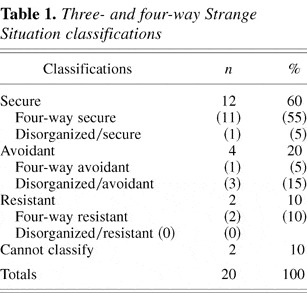
Three- and four-way Strange Situation classifications
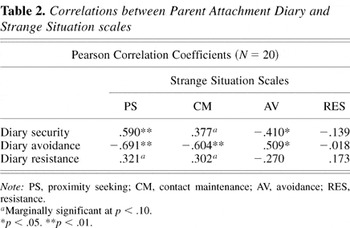
Correlations between Parent Attachment Diary and Strange Situation scales
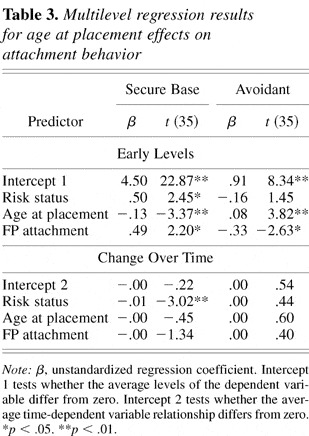
Multilevel regression results for age at placement effects on attachment behavior
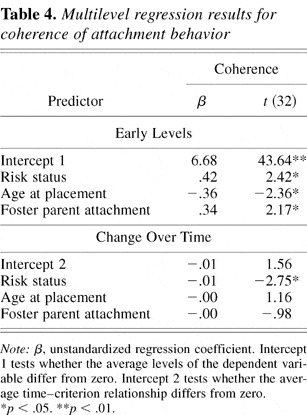
Multilevel regression results for coherence of attachment behavior
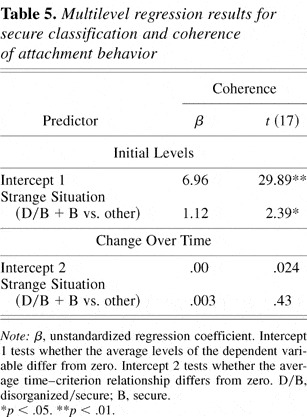
Multilevel regression results for secure classification and coherence of attachment behavior
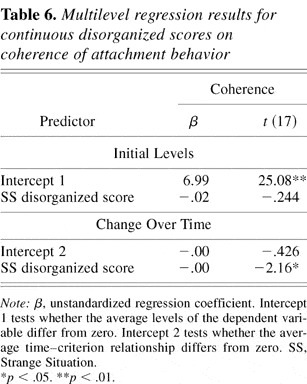
Multilevel regression results for continuous disorganized scores on coherence of attachment behavior
 You have
Access
- 188
- Cited by