Sepsis, characterised by a dysregulated immune response to infection, can lead to life-threatening organ dysfunction(Reference Singer, Deutschman and Seymour1). About 50 million instances of sepsis were reported worldwide, accounting for 20 % of all-cause death(Reference Rudd, Johnson and Agesa2). Sepsis continues to be a major cause of death globally despite advances in critical care medicine, with fatality rates as high as 46·7 %, significantly greater than those observed in other critically ill patients(Reference Rudd, Johnson and Agesa2). Although medical expenses differ between nations and areas, sepsis has a substantial financial impact on healthcare because of its high prevalence and the need for intensive care for patients who are very sick(Reference Van den Berg, Van Beuningen and Ter Maaten3,Reference Vaughan-Sarrazin, Bayman and Cullen4) . The primary goal in the management of sepsis is to promptly identify and treat the infection to prevent its progression, stabilise the patient and reduce mortality and associated complications(Reference Kamath, Hammad Altaq and Abdo5).
Sepsis interventions encompass early identification, prompt administration of antibiotics, fluid resuscitation, use of vasopressors to stabilise blood pressure, control of the infection source and provision of organ support as required(Reference Peake, Delaney and Bailey6). In response to the significant impact of sepsis, ongoing research in critical care is focused on identifying strategies to improve clinical outcomes for these patients, including the evaluation of nutritional supplementation(Reference Preiser, van Zanten and Berger7). Significant alterations in lipid metabolism have been observed in critically ill patients, underscoring the critical need to explore the relationship between nutritional interventions, lipid profiles and patient survival(Reference Green, Theilla and Singer8). n-3 fatty acid supplementation has been suggested as a dietary intervention for modulating the immune response in critical illnesses by suppressing pro-inflammatory mediators such as eicosanoids and NF-κB and enhancing anti-inflammatory mediators including resolvins and specific proteins(Reference Martin and Stapleton9–Reference Ariel and Serhan11).
The evidence on the effectiveness of n-3 supplementation in sepsis patients is still equivocal despite multiple comprehensive studies. For instance, Wang et al. (Reference Wang, Han and Feng12) discovered a favourable benefit of n-3 in lowering mortality among sepsis patients after conducting a comprehensive analysis of twenty-five randomised controlled trials (RCT). Also, a meta-analysis of nine RCT reported a significant reduction in mortality rate of sepsis patients following n-3 supplementation(Reference Wolbrink, Grundsell and Witteman13). In addition, a meta-analysis of forty-nine RCT demonstrated a significant decrease in the length of ICU stay (LOS) after n-3 enriched PN infusion(Reference Pradelli, Mayer and Klek14). On the other hand, Tao et al. (Reference Tao, Li and Shen15) found that while n-3 fatty acids did not lower mortality, they were associated with a shorter period of mechanical breathing in sepsis patients. This was based on a systematic assessment of eleven RCT. Also, a meta-analysis of twelve RCT revealed no significant change in the length of hospital stay of patients with acute respiratory distress syndrome (ARDS)(Reference Langlois, D’Aragon and Hardy16). Due to the conflicting evidence and also limitations of the previous meta-analysis such as equalising EPA/DHA with other mixed oil formulations and not differentiating between the route of administration (enteral v. parenteral), this comprehensive evaluation of systematic reviews and meta-analyses (SRMA) attempts to shed light on the advantages of n-3 supplementation in comparison with control groups in adult sepsis patients, in light of these discrepancies and uncertainties.
Methods
The methods outlined in the Grading of Recommendations Assessment, Development, and Evaluation (GRADE) handbook(Reference Guyatt, Oxman and Vist17), and the Cochrane Handbook for Systematic Reviews of Intervention studies(Reference Cumpston, Li and Page18), were followed in conducting this umbrella review. The (Population, Intervention, Comparison, Outcome) PICO model addressed the following topics: participants (patients with sepsis), intervention (various kind of n-3), comparator (placebo) and outcome (total mortality, duration of intensive care unit (ICU) stays and days on ventilator). This study’s protocol is listed with the International Prospective Register of Systematic Reviews under the identification number CRD42024582602 on September 2024, before data extraction.
Search strategy
The literature search and study selection were carried out by two separate writers, V.H. and H.I. The inclusion of papers was finished by an impartial third investigator (S.H.). Using relevant search terms (‘Meta-Analysis’[Title/Abstract] OR ‘meta-analyses’[Title/Abstract] OR ‘Meta-Analysis’[Title/Abstract] OR ‘meta-analyze’[Title/Abstract] OR ‘Systematic Review’[Title/Abstract] OR ‘Systematic Reviews as Topic’[MeSH Terms] OR ‘Meta-Analysis as Topic’[MeSH Terms] AND ‘n-3’[Title/Abstract] OR ‘n-3’[Title/Abstract] OR ‘fish oil’[Title/Abstract] OR ‘w-3’[Title/Abstract] OR ‘EPA’[Title/Abstract] OR ‘DHA’[Title/Abstract] OR ‘ALA’[Title/Abstract] OR ‘eicosapentaenoic’[Title/Abstract] OR ‘docosahexaenoic’[Title/Abstract] OR ‘α linolenic acid’[Title/Abstract] OR ‘fatty acids, n-3’[MeSH Terms] OR ‘Fish Oils’[MeSH Terms] OR ‘Eicosapentaenoic Acid’[MeSH Terms] OR ‘Docosahexaenoic Acids’[MeSH Terms] AND ‘Critical Care’[Title/Abstract] OR ‘Intensive Care Units’[Title/Abstract] OR ‘Critical Illness’[Title/Abstract] OR ‘Sepsis’[Title/Abstract] OR ‘shock septic’[Title/Abstract] OR ‘respiratory distress syndrome adult’[Title/Abstract] OR ‘Multiple Organ Failure’[Title/Abstract] OR ‘Critical Care’[MeSH Terms] OR ‘Intensive Care Units’[MeSH Terms] OR ‘Critical Illness’[MeSH Terms] OR ‘Sepsis’[MeSH Terms] OR ‘Multiple Organ Failure’[MeSH Terms] OR ‘shock, septic’[MeSH Terms]), a comprehensive search was conducted in the ISI Web of Science, PubMed/Medline and Scopus databases until February 2025 to find papers published in English (online Supplementary Table 1). We also manually searched every list of relevant research, reviews and meta-analyses in order to make sure no relevant papers were overlooked.
Eligibility criteria
Articles which met the following requirements might be included: (1) systematic reviews that conducted analyses and provided risk ratios (RR) or mean differences (MD) with 95 % CI for outcomes related to n-3 therapy, such as overall mortality, LOS and days on ventilation; (2) using n-3 in the intervention group compared with any control group (such as placebo, standard formulation, high-fat and low-carbohydrate diet) and (3) included two or more RCT that enrolled patients with sepsis aged 18 years and older. Research that did not include a meta-analysis or that included children, expectant mothers, or nursing mothers was eliminated. Excluded papers included narrative reviews, experimental studies, systematic reviews without meta-analyses and studies lacking effect estimates. Selected RCT were included in the reviews. When data from several RCT were available for the same result, we selected the article with the most complete details. To find papers that qualified, two reviewers (V.H and H.I.) went through the abstracts and titles. The entire texts of the chosen papers were then critically evaluated by the same set of reviewers. Any differences were worked out through conversation with S.H., the third author, until an agreement was obtained.
Data extraction
Two writers (V.H. and R.A.) carried out the data extraction independently. When there was a disagreement over eligibility, a third reviewer was consulted (S.H.). The first author’s name, the year of publication, the number of cases and participants in each study group (intervention and control), demographic information about the participants (age and sex), the study design, the type of n-3, the timing of the intervention, the length of the follow-up, the study outcomes, the effect sizes (RR and OR for mortality and MD for two other outcomes including LOS and days on mechanical ventilation) and the corresponding 95 % CI were among the data that were extracted from the chosen SRMA.
Assessment of methodological quality
The AMSTAR (A Measurement Tool to Assess Systematic Reviews) tool was used to evaluate the methodological quality of the included meta-analyses(Reference Shea, Reeves and Wells19). The Revised Cochrane Risk of Bias instrument for randomised trials (RoB1) was also used to assess the studies’ quality for possible bias(Reference Higgins20). The assessments were carried out by two writers, V.H. and F.K., and any differences were settled by consensus.
Data synthesis and analysis
In order to compute the RR, mean difference, along with the 95 % CI, each meta-analysis was reevaluated using the DerSimonian and Laird random-effects model(Reference DerSimonian and Laird21). The absolute effect was expressed as the risk difference, calculated as the difference in event rates between the intervention and control groups for binary outcomes(Reference Cumpston, Li and Page18). Using the I2 statistic, heterogeneity was evaluated(Reference Higgins, Thompson and Deeks22). Values between 0 % and 40 % may suggest insignificant heterogeneity, values between 30 % and 60 % may suggest moderate heterogeneity, values between 50 % and 90 % may reflect substantial heterogeneity and values between 75 % and 100 % are indicative of considerable heterogeneity, according to the Cochrane Handbook’s interpretation guidelines(Reference Cumpston, Li and Page18). To assess the cause of the heterogeneity, we conducted a subgroup analysis according to the following criteria: risk of bias, n-3 type (mixed oils, DHA, or EPA), duration of the intervention (≤ 7 or > 7 d) and kind of intervention (enteral or parenteral). The result of Egger’s regression test was a presentation of the publication bias estimate for each meta-analysis(Reference Egger, Smith and Schneider23). The statistical software STATA, version 16.0 (Stata Corp.), was used for the analyses. P values less than 0·05 was regarded as statistically significant.
Grading of the evidence
Using the GRADE technique(Reference Guyatt, Oxman and Vist17), the level of evidence for each outcome included in the umbrella review was assessed and classified as ‘high’, ‘moderate’, ‘low’ or ‘very low’ quality. Strong confidence that the absolute effect closely matches the estimated effect is indicated by a high grade. A moderate grade indicates that, while there is a slim probability of significant fluctuation, the absolute effect is probably quite similar to the estimated effect. A very low grade suggests that the real impact is likely to differ significantly from the estimated effect, but a low grade suggests a larger likelihood that the absolute effect might differ significantly from the estimated effect(Reference Balshem, Helfand and Schünemann24). Research constraints might include RCT that were originally rated as high-quality evidence being downgraded. A wide 95 % CI for the estimated effect or overlap with the minimal clinically important difference (MCID) indicate imprecision. Other limitations include the risk of bias, inconsistency (evidenced by significant unexplained heterogeneity, with an I² > 50 % and P < 0·05), indirectness of outcomes (where surrogate outcomes are substituted for key patient-centred outcomes)(Reference Guyatt, Oxman and Kunz25) and additional factors like publication bias and the use of dose–response gradients. The MCID for outcomes which there was inadequate evidence in the literature was ascertained by computing the baseline standard deviations for every outcome found in the primary trials that were part of the analysis. Then, half of the standard deviation variation in that result was determined as the MCID(Reference Norman, Sloan and Wyrwich26).
Result
Literature search
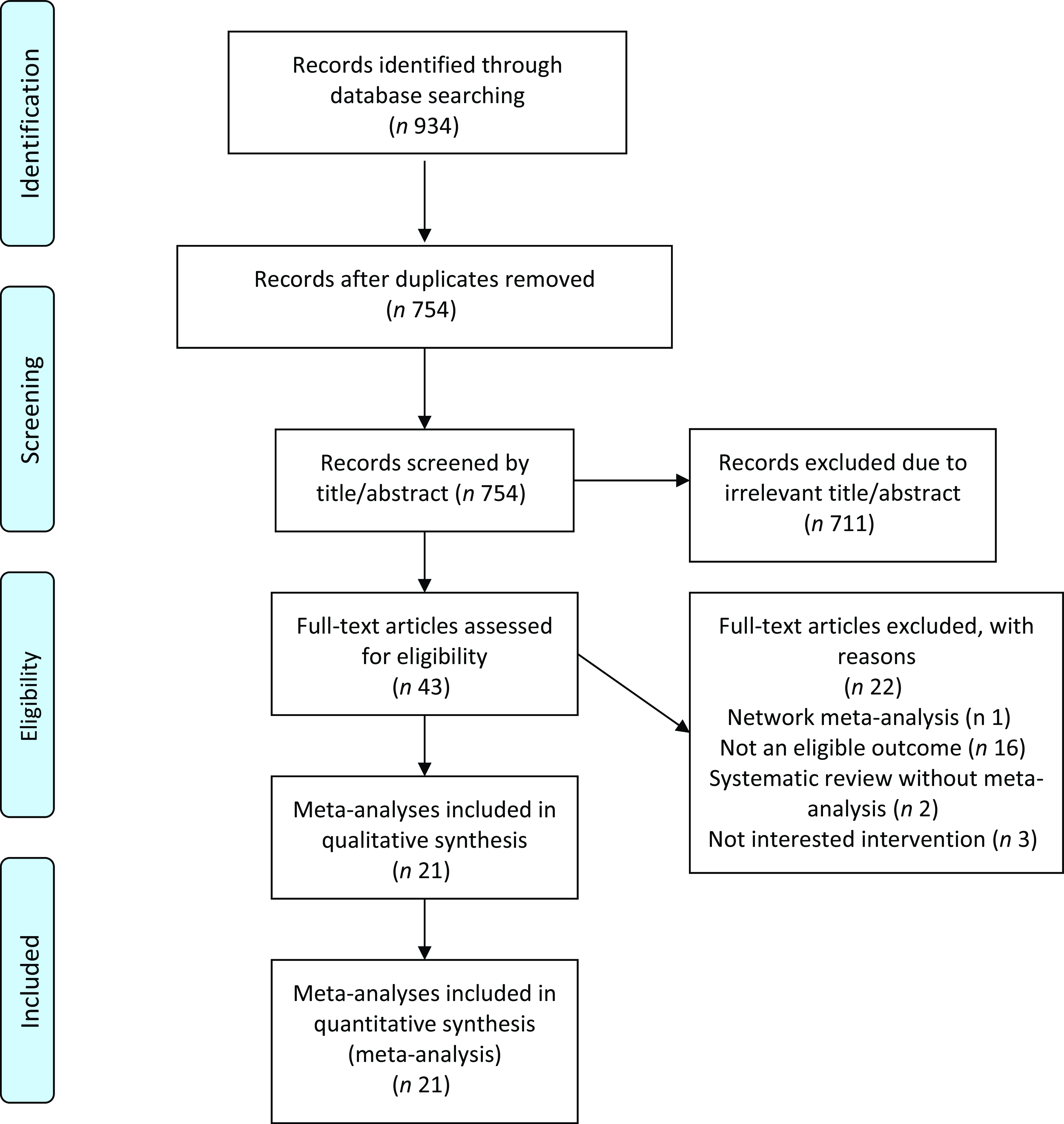
The process of study selection is outlined in detail in Figure 1. After eliminating duplicates, a total of 704 records were found through database searches, leaving 600 studies. Title and abstract screening led to the exclusion of 557 articles, leaving forty-three studies: one study was excluded because it was a network meta-analysis, sixteen studies were because they did not have an eligible outcome, two were systematic reviews without meta-analysis and three did not include the intervention of interest. Online Supplementary Table 2 lists the excluded studies and the reasons for their exclusion.
Literature search and study selection process.

In the end, thirty-four RCT from twenty-one SRMA(Reference Wang, Han and Feng12,Reference Pradelli, Mayer and Klek14–Reference Langlois, D’Aragon and Hardy16,Reference Wang, Su and Wang27–Reference Wirtitsch, Wessner and Spittler43) examined the efficacy of n-3 supplements in comparison with any control groups. From each eligible trial, three vital illness-related outcomes were gathered: days on ventilation, LOS and mortality. Patients with sepsis, septic shock, sepsemia, severe sepsis, multiple organ dysfunction syndrome, systemic inflammation response syndrome and septic shock with verified infection comprised the patient populations.
Characteristics of randomised controlled trials
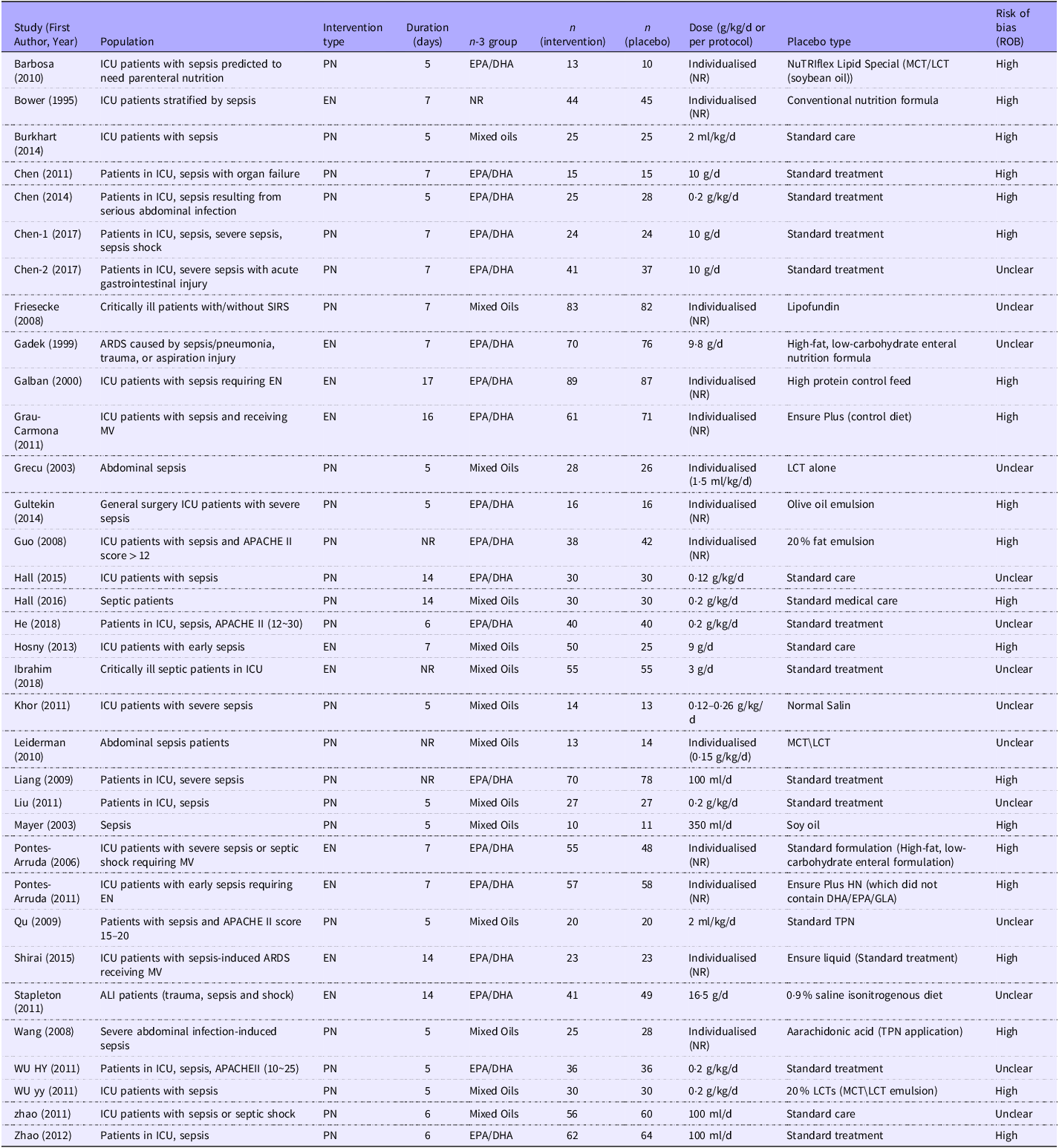
As shown in Table 1, the included studies covered a wide variety of patient groups and therapeutic settings and were published between 1995 and 2019. In the intervention groups, n-3 supplementation was administered via enteral nutrition or parenteral nutrition, with specific formulations including EPA, DHA and other n-3 PUFA. Depending on the clinical protocol of each trial, the n-3 dose ranged from 1·0 g/d to 7·2 g/d, and the length of the intervention varied from 5 d to 17 d. In the examined research, control groups were usually given standard therapies without further supplementation, modest dosages of n-3 or traditional diet formulae. Placebos such as normal saline were also employed in some trials, while a few studies did not specify the treatment provided to control groups.
Baseline characteristics of included studies

ALI, Acute Lung Injury; PN, parenteral nutrition; MV, Mechanical Ventilation; NR, not reported; EN, enteral nutrition; GLA, Gamma-Linolenic Acid; SIRS, systemic inflammation response syndrome ARDS, acute respiratory distress syndrome; ICU, intensive care unit; Placebo, comparator group not receiving n-3 intervention.
Methodological quality
The quality of the included meta-analyses was assessed using the AMSTAR 2 program(Reference Shea, Reeves and Wells19). Online Supplementary Table 3 in the online material provides comprehensive details regarding the domains of the AMSTAR 2 tool for each systematic review and meta-analysis. The main issues identified in the meta-analyses’ methodological quality assessment were the studies did not report the funding source(Reference Malekahmadi, Pahlavani and Firouzi28,Reference Dushianthan, Cusack and Burgess30,Reference Wan, Gao and Bi34,Reference Zhu, Zhang and Li36,Reference Manzanares, Dhaliwal and Jurewitsch37,Reference Pradelli, Mayer and Muscaritoli40–Reference Wirtitsch, Wessner and Spittler43) and not involving the effect of ROB in interpreting the results and discussion(Reference Wang, Han and Feng12,Reference Tao, Li and Shen15,Reference Malekahmadi, Pahlavani and Firouzi28,Reference Wan, Gao and Bi34,Reference Chen, Jiang and Zhou38,Reference Pradelli, Mayer and Muscaritoli40,Reference Pontes-Arruda, DeMichele and Seth41) , and failure to register the protocol prior to conducting the analysis(Reference Wan, Gao and Bi34,Reference Manzanares, Langlois and Dhaliwal35,Reference Manzanares, Dhaliwal and Jurewitsch37,Reference Pontes-Arruda, DeMichele and Seth41–Reference Wirtitsch, Wessner and Spittler43) . In summary, four(Reference Langlois, D’Aragon and Hardy16,Reference Wang, Su and Wang27,Reference Koekkoek, Panteleon and van Zanten31,Reference Lu, Sharma and McIntyre33) SRMA were rated to have high methodological quality, six(Reference Wang, Han and Feng12,Reference Pradelli, Mayer and Klek14,Reference Wolbrink, Grundsell and Witteman29,Reference Chen, Wang and Zhao32,Reference Manzanares, Langlois and Dhaliwal35,Reference Palmer, Ho and Ajibola39) were rated low and the rest were rated to have a critically low methodological quality, according to the AMSTAR overall judgement.
Findings from the meta-analysis
Mortality
From nine SRMA(Reference Tao, Li and Shen15,Reference Langlois, D’Aragon and Hardy16,Reference Wang, Su and Wang27,Reference Wolbrink, Grundsell and Witteman29,Reference Koekkoek, Panteleon and van Zanten31–Reference Lu, Sharma and McIntyre33,Reference Manzanares, Langlois and Dhaliwal35,Reference Chen, Jiang and Zhou38) , a total of thirty-three RCT were analysed to assess the effect of interventions on mortality rates. The studies included a wide range of sample sizes, ranging from 21 to 176 participants. Ten of the thirty-three studies examined enteral nutrition therapies; the other twenty-three studies looked into parenteral nutrition, with interventions lasting from 5 to 17 d.
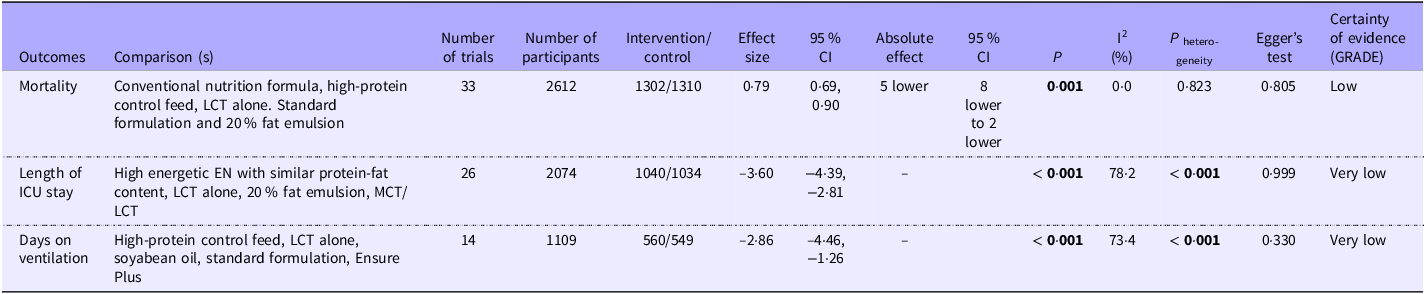
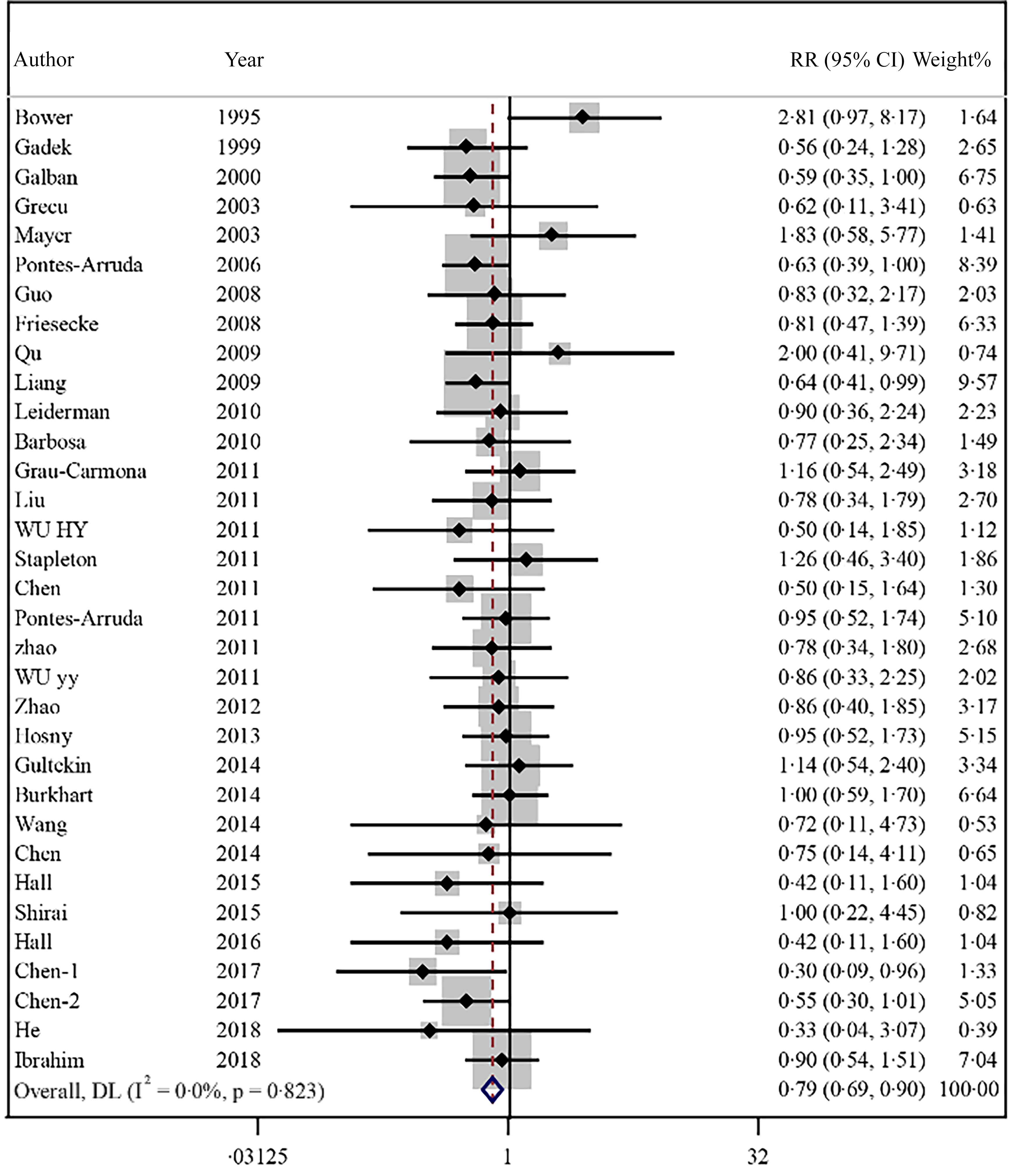
n-3 supplementation, when compared with a control group, significantly reduced mortality rates, regardless of the intervention period (RR: 0·79, 95 % CI 0·69, 0·90, P = 0·001, I²: 0·0 %, GRADE: low) (Table 2, Figure 2 and online Supplementary Table 4). The subgroup analysis demonstrated slight variations in the effectiveness of route of administrations, enteral (RR: 0·85, 95 % CI 0·67, 1·07) v. parenteral (RR: 0·76, 95 % CI 0·63, 0·90) interventions, with parenteral showing marginally better outcomes (online Supplementary Table 5). Additionally, supplementation with EPA/DHA specifically decreased mortality rates, with a relative risk of 0·7 (95 % CI 0·59, 0·83). Mixed oils, however, were less effective (RR: 0·90, 95 % CI 0·72, 1·12). To assess potential publication bias and heterogeneity, a funnel plot (online Supplementary Figure 1) and Egger’s test were used, showing no evidence of publication bias (P = 0·805). Based on the GRADE assessment, due to the low certainty of evidence in this regard, clinicians should prescribe n-3 supplement cautiously.
The effect of n-3 supplementation on each outcome in adult sepsis patients

LCT, long-chain triglyceride; ICU, intensive care unit; EN, enteral nutrition; MCT, medium-chain triglyceride.
Significant P-values are indicated in bold.
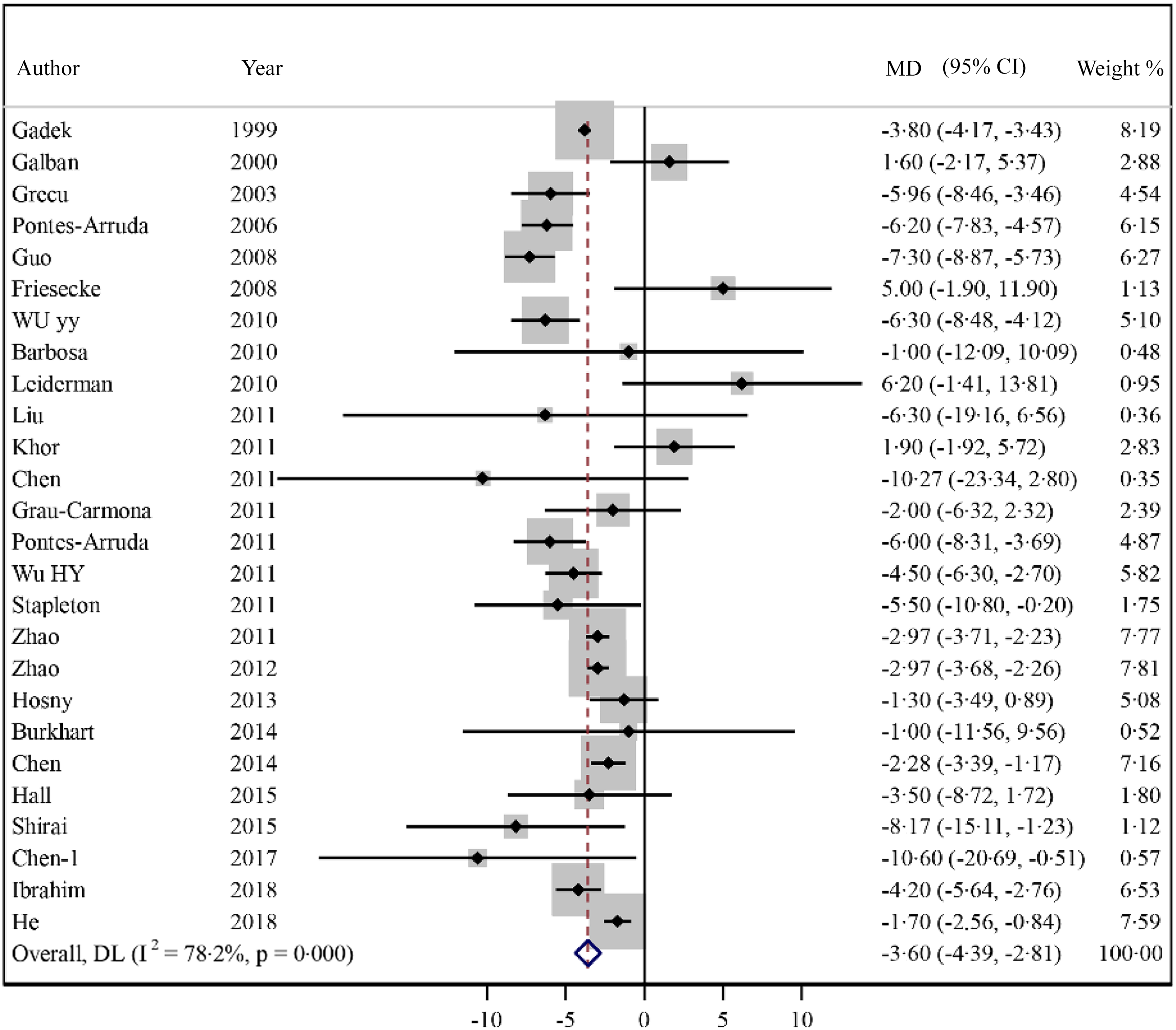
Forest plot of randomised controlled clinical trials illustrating the weighted mean difference in length of ICU stays between n-3 supplementation and control groups in adult sepsis patients.

Length of intensive care unit stays
In twenty-six primary trials across five SRMA(Reference Wang, Su and Wang27,Reference Koekkoek, Panteleon and van Zanten31,Reference Lu, Sharma and McIntyre33,Reference Manzanares, Langlois and Dhaliwal35,Reference Palmer, Ho and Ajibola39) , LOS for patients was analysed. The meta-analysis revealed that the group receiving n-3 supplementation had a significantly shorter LOS compared with the control group, with a MD of −3·6 d (95 % CI −4·39, −2·81, P < 0·001, I²: 78·2 %, GRADE: very low) (Table 2, Figure 3, and online Supplementary Table 4). Given the high level of heterogeneity (I² = 78·2 %), a subgroup analysis was conducted to identify potential sources of this variation.
Forest plot of randomised controlled clinical trials illustrating the weighted mean difference in mortality between n-3 supplementation and control groups in adult sepsis patients.

According to the subgroup analysis, the type of intervention (P for between-group heterogeneity = 0·001), the length of the intervention (P for between-group heterogeneity = 0·001) and the possibility of bias (P for between-group heterogeneity = 0·032) could all be responsible for the observed heterogeneity. Specifically, enteral interventions led to a greater reduction in LOS (–3·89 d, 95 % CI −5·16, −2·62) compared with parenteral interventions (−3·38 d, 95 % CI −4·52, −2·24). Moreover, EPA/DHA supplementation resulted in slightly better outcomes (–3·59 d) compared with mixed oils (–3·12 d). Despite this, the overall findings remained consistent across all subgroups (online Supplementary Table 5). To further investigate potential publication bias and assess the heterogeneity, a funnel plot (online Supplementary Figure 2) and Egger’s test were employed. Both methods showed no indication of publication bias (P = 0·999). Based on the GRADE assessment, due to the very low certainty of evidence in this regard, clinicians should prescribe n-3 supplement cautiously.
Days on ventilation
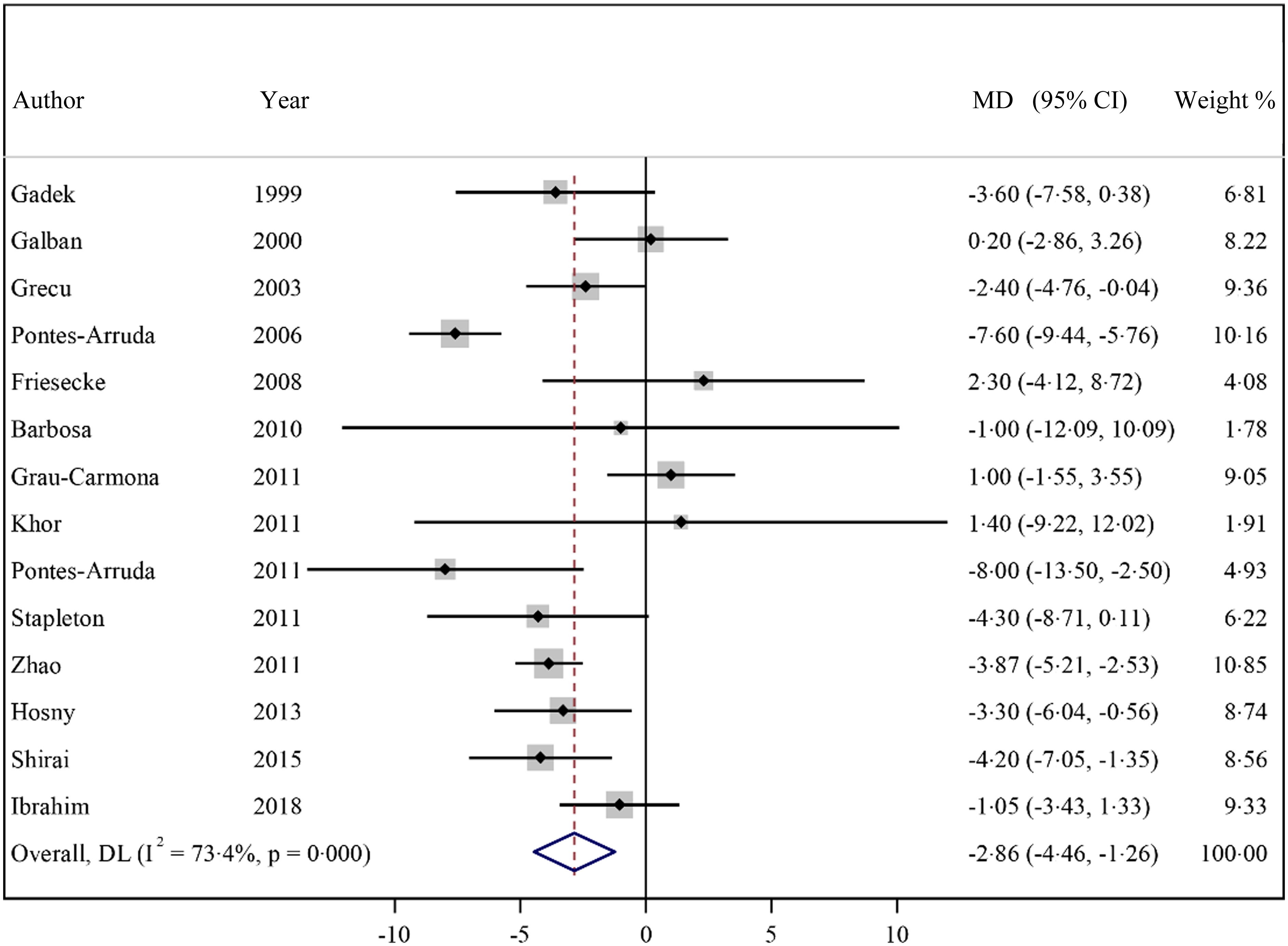
Across five SRMA(Reference Wang, Han and Feng12,Reference Tao, Li and Shen15,Reference Langlois, D’Aragon and Hardy16,Reference Wang, Su and Wang27,Reference Lu, Sharma and McIntyre33) , a total of fourteen primary trials reported on patients’ days spent on Mechanical Ventilation (MV). The meta-analysis revealed that patients receiving n-3 supplementation had a significantly shorter duration on ventilation, with a MD of −2·86 d (95 % CI −4·46, −1·26, P < 0·001, I² = 73·4 %, GRADE: very low) compared with the control group (Table 2, Figure 4, and online Supplementary Table 4).
Forest plot of randomised controlled clinical trials illustrating the weighted mean difference in days on ventilation between n-3 supplementation and control groups in adult sepsis patients.

Due to the high heterogeneity observed (I² = 73·4 %), a subgroup analysis was performed to explore potential factors contributing to this variation. The analysis suggested that the duration of intervention was a significant source of heterogeneity (P for between-group heterogeneity < 0·001), with interventions of ≤ 7 d showing greater reductions in ventilation days (–3·91 d, 95 % CI −5·79, −2·04) compared with those > 7 d (–1·62 d, 95 % CI −4·44, 1·20). Additionally, EPA/DHA supplementation showed a larger reduction in days on ventilation (–4·09 d, 95 % CI −6·33, −1·85) compared with mixed oils (–1·89 d, 95 % CI −3·27, −0·51) (online Supplementary Table 5). A funnel plot was constructed to assess the potential for publication bias (online Supplementary Figure 3), and Egger’s test indicated no evidence of such bias (P = 0·330). Based on the GRADE assessment, due to the very low certainty of evidence in this regard, clinicians should prescribe n-3 supplement cautiously.
Adverse events
Adverse events associated with n-3 interventions in sepsis patients were documented in several primary trials. Of the thirty-four studies that were examined, twenty-seven indicated that there were no participant side effects or discomfort. A few distinct problems were observed in the remaining seven trials. Two trials(Reference Pontes-Arruda, DeMichele and Seth41,Reference Ibrahim44) observed gastrointestinal problems, while another trial(Reference Grau-Carmona, Bonet-Saris and García-de-Lorenzo45) reported elevated gastric residual volumes. Two additional trials(Reference Pontes-Arruda, Aragão and Albuquerque46,Reference Stapleton, Martin and Weiss47) recorded a combination of gastrointestinal, cardiac and other systemic events, though severe adverse bleeding was rare. Interestingly, one trial(Reference Gadek, DeMichele and Karlstad48) found fewer adverse events in patients on a diet enriched with EPA and Gamma-Linolenic Acid (GLA), and another trial(Reference Khor, Liaw and Shih49) reported only minimal side effects, mainly a fish oil taste. Overall, while some adverse effects were identified, they were typically mild and manageable, with no indication of severe harm from n-3 supplementation.
Discussion
The results of current umbrella review indicate that n-3 supplementation may significantly improve clinical outcomes in adult sepsis patients. The analysis reveals a notable reduction in overall mortality, supported by low certainty of evidence, suggesting that n-3 fatty acids could play a beneficial role in lowering the risk of death in this patient population. Additionally, n-3 supplementation was associated with a shorter LOS, although the certainty of evidence was rated as very low. A significant reduction in the duration of mechanical ventilation was also observed, despite the evidence being of very low certainty. These findings highlight the potential of n-3 supplementation as an adjunctive therapy in the management of sepsis. However, further high-quality studies are needed to confirm these benefits and address the current limitations in the evidence.
The present umbrella review highlights the significant impact of n-3 supplementation on mortality outcomes in sepsis patients. These results align with Wang et al., who noted a similar reduction with intravenous n-3 administration(Reference Wang, Su and Wang27). Notably, parenteral administration shows a more pronounced effect on mortality reduction compared with enteral routes. This indicates that administration routes are critical for the efficacy of n-3 supplementation. Conversely, Pradelli et al. found no significant mortality reduction when comparing n-3 enriched parenteral nutrition to standard lipid emulsions(Reference Pradelli, Mayer and Klek14). This discrepancy may stem from the specific n-3 formulations used, as EPA/DHA alone significantly reduced mortality compared with mixed oils. Additionally, both short-term and long-term supplementation exhibited similar mortality effects, contrasting with Chen et al.’s findings of no significant reduction in various populations(Reference Chen, Wang and Zhao32). The current review provides moderate evidence supporting n-3 supplementation, highlighting the need for further research into patient selection to optimise therapeutic outcomes.
The present study indicates a significant impact of n-3 supplementation on LOS in sepsis patients, showing a reduction of −3·60 d across 2074 participants. This aligns with Malek Ahmadi et al., who reported a decrease of 2·97 d in LOS in a critically ill population, including patients with ARDS and severe trauma(Reference Malekahmadi, Pahlavani and Firouzi28). Subgroup analysis reveals that both enteral and parenteral routes reduce LOS, though enteral administration exhibits high heterogeneity, consistent with Wang et al., who noted benefits in sepsis patients with gastrointestinal dysfunction(Reference Wang, Han and Feng12). In contrast, Langlois et al. found no significant impact on LOS in ARDS patients receiving enteral n-3, likely due to challenges in achieving therapeutic levels(Reference Langlois, D’Aragon and Hardy16). However, the present study’s GRADE assessment suggests that these findings should be interpreted with caution due to low certainty of evidence.
n-3 supplementation has demonstrated a significant reduction in the duration of mechanical ventilation in sepsis patients, with an effect size of −2·86 d. This aligns with findings by Lu et al., who also reported reduced ventilator days in septic shock patients(Reference Lu, Sharma and McIntyre33). Subgroup analysis suggests that intervention type and supplementation duration influence outcomes, with enteral administration showing greater variability in patient response, contrasting with Dushianthan et al., who found inconclusive results in ARDS patients(Reference Dushianthan, Cusack and Burgess30). Additionally, Koekkoek et al. noted a significant reduction in ventilator dependency in ARDS patients receiving enteral fish oil, but not in the general critically ill population(Reference Koekkoek, Panteleon and van Zanten31). The EPA/DHA group showed a stronger effect compared with mixed oils. However, the GRADE assessment for this outcome indicates very low certainty of evidence, suggesting that these results should be interpreted with caution.
n-3 fatty acids are known to exert their beneficial effects in sepsis patients through multiple mechanisms. One significant mechanism is the modulation of the inflammatory response. n-3 fatty acids, particularly EPA and DHA, are precursors to specialised pro-resolving lipid mediators like resolvins and protectins, which help reduce the production of pro-inflammatory cytokines such as TNF-α, IL-1β and IL-6, thereby attenuating the systemic inflammatory response associated with sepsis(Reference Calder50). Additionally, n-3 fatty acids have been shown to enhance the function of macrophages and neutrophils, leading to improved bacterial clearance and reduced risk of secondary infections(Reference Heller, Rössler and Litz51). These fatty acids also exhibit cardioprotective effects by maintaining cell membrane integrity and reducing the incidence of arrhythmias, which is particularly crucial in critically ill patients(Reference Siriwardhana, Kalupahana and Moustaid-Moussa52). Furthermore, they can modulate the coagulation cascade, reducing the risk of disseminated intravascular coagulation, a common complication in sepsis(Reference Manzanares, Dhaliwal and Jiang53). Lastly, n-3 supplementation has been observed to improve endothelial function and reduce vascular permeability, thereby mitigating organ dysfunction and contributing to improved outcomes in sepsis patients(Reference Singer, Shapiro and Theilla54).
The strengths of this umbrella review lie in its rigorous methodological approach, including adherence to the Cochrane Handbook and GRADE guidelines, ensuring the evaluation of high-quality evidence. The study focuses on a critical issue, n-3 fatty acid supplementation in sepsis patients, which remains a topic of debate, making the findings particularly relevant for clinical practice. The inclusion of SRMA of RCT provides a comprehensive synthesis of existing evidence, enhancing the reliability of the conclusions drawn. The use of established quality assessment tools, such as AMSTAR and the Cochrane Risk of Bias tool, further strengthens the robustness of the findings. Additionally, the subgroup analyses add depth to the study by exploring variations in interventions and patient responses.
The study has several limitations. Despite the rigorous methodology, the heterogeneity among the included studies remains a concern, as reflected by the I² values. This variability may arise from differences in n-3 formulations, intervention durations and patient characteristics, potentially limiting the consistency of the results. The GRADE assessment revealed that the quality of evidence for some outcomes was rated as very low and low. These factors weaken confidence in the reliability of certain findings. Moreover, while subgroup analyses attempted to address heterogeneity, the results should be interpreted cautiously due to these underlying inconsistencies. Additionally, because the included studies that administered n-3 in the form of enteral and parenteral nutrition solutions calculated the prescribed dose in terms of kg of body weight of the patients or as a percentage of their energy requirements, the prescribed dose in the included studies was highly variable and it was not possible to calculate a single dose. Therefore, subgroup analyses for prescribed dose for all the study outcomes were not possible. Finally, the complexity of critically ill populations and variations in clinical settings may affect the generalisability of the study’s conclusions.
Conclusion
Overall, n-3 supplementation could improve mortality, especially when administered parenteral and in EPA/DHA form, not mixed form. Therefore, parenteral n-3 is more promising. Also, LOS was remarkably reduced by n-3, especially when administered enteral and in EPA/DHA form, not mixed form. Therefore, clinicians should value EPA/DHA form, not mixed oils. In addition, n-3 supplementation could improve ventilator dependence in patients with sepsis, especially when the duration of intervention was ≤ 7 d. However, due to the low to very low certainty of the evidence across these outcomes, these findings should be interpreted with caution. Further high-quality RCT are required to confirm these effects. It would be better that future studies will focus on standardised EPA/DHA formulations as the intervention and also specific study population like ARDS patients. Until stronger evidence is available, n-3 supplementation should be considered on a case-by-case basis, taking into account individual patient needs and clinical circumstances.
Supplementary material
For supplementary material/s referred to in this article, please visit https://doi.org/10.1017/S0007114525105436
Acknowledgements
Not applicable
No financial support was provided.
Writing the manuscript, searching and screening the data fell to V.H., H.I., F.K. and B.J. The data extraction was done by R.A. and V.H. The data analysis was done by M.K. and A.Z., and the text was carefully examined and amended by S.H. The final draft was reviewed and approved by all authors.
All authors declare that they have no conflict of interest.
Data described in the manuscript will be made available upon request pending.