




No CrossRef data available.
Article contents
Risk factors for gametocyte carriage in uncomplicated falciparum malaria in children
Published online by Cambridge University Press: 23 August 2004
Abstract
The risk factors associated with gametocytaemia at presentation and after treatment with different antimalarial drug regimens were evaluated in 767 children enrolled prospectively in 5 antimalarial drug trials between July 1996 and December 2002 in a hyperendemic area of southwestern Nigeria. The children were assigned to one of 6 treatment groups: chloroquine (CQ) only; pyrimethamine-sulfadoxine (PS) only; amodiaquine (AQ) only; CQ combined with chlorpheniramine (CQCP); or PS combined with CQ (CQPS) or AQ (AQPS). At enrolment, 115 (15%) of 767 children were gametocyte carriers. During follow-up, 15·6% of all patients (i.e. 120 patients) developed patent gametocytaemia, which in 85% (102 patients) had developed by day 7 following treatment. In a multiple regression model, 4 factors were found to be independent risk factors for the presence of gametocytaemia at enrolment: male gender (adjusted odds ratio [AOR]=0·55, 95% confidence interval [CI] 0·36–0·83, P=0·005), absence of fever (AOR=1·61, 95% CI 1·05–2·5, P=0·03), duration of illness >3 days (AOR=1·57, 95% CI 1·0–2·4, P=0·047), and asexual parasite densities less than 5000/μl (AOR=0·42, 95% CI 0·24–0·73, P=0·002). The presence of patent gametocytaemia at enrolment (AOR=0·04, 95% CI 0·02–0·07, P<0·001) and recrudescence of asexual parasites within 14 days were associated with the presence of gametocytaemia 7 or 14 days after enrolment (AOR=0·5, 95% CI 0·3–0·8, P=0·007). Delay in the time taken to clear the initial parasitaemia (>2 days) was associated with increased risk of subsequent gametocyte carriage. These findings may have implications for malaria control efforts in sub-Saharan Africa where control of the disease depends almost entirely on chemotherapy.
Information
- Type
- Research Article
- Information
- Copyright
- © 2004 Cambridge University Press
INTRODUCTION
The transmission of Plasmodium falciparum from humans to mosquitoes can only occur through the gametocyte, its sexual stage that develops from proliferating asexual parasite. Gametocytes, in turn, are essential for the infection of new hosts by the mosquito (Sinden et al. 1978; Carter & Graves, 1988). Although the mechanisms of the switch from asexual to sexual stage, and its modulation, are complex and incompletely understood (Carter & Miller, 1979; Mons, 1985), the process, and the infectivity of the gametocytes arising from the switch may be influenced by antimalarial drugs (Wilkinson et al. 1976; Butcher, 1997; Buckling et al. 1999).
In sub-Saharan Africa, increasing drug resistance in P. falciparum has led to increases in malaria-related morbidity and mortality (Trape et al. 1998; Trape, 2001) and is thought to be associated with increases in gametocyte carriage and gametocyte infectivity to mosquitoes (Robert et al. 1996, 2000; Hogh et al. 1998). In West African children, pre-treatment gametocyte carriage in those with acute falciparum infections may reach 14–17% (von Seidlein et al. 2001; Sowunmi & Fateye, 2003a); and children, in general, are thought to constitute a significant reservoir of infection in sub-Saharan Africa (Githeko et al. 1992; Bonnet et al. 2003).
A recent study from The Gambia (von Seidlein et al. 2001), an area of lesser intensity of malaria transmission than Nigeria (Salako et al. 1990), has shown that anaemia, absence of fever and parasitaemia less than 100000 asexual forms per μl were independent risk factors for gametocyte carriage at presentation in Gambian children. In addition, treatment with pyrimethamine-sulfadoxine (PS) alone was associated with increased risk of gametocyte carriage 7 days after treatment compared to chloroquine (CQ) or artemisinin-based combination therapy. It is unclear whether these factors, alone or in addition to others, are associated with gametocyte carriage in Nigerian children.
Although with increasing antimalarial drug resistance (Falade et al. 1997; Sowunmi et al. 1998a,b; Sowunmi, 2002) there have been associated increases in gametocyte carriage in Nigerian children (Sowunmi & Fateye, 2003a), there is little information on the risk factors associated with gametocyte carriage pre- or post-treatment in Nigerian children. Such information is necessary as it may potentially harness the efforts aimed at the management and control of drug resistance in the community. In the present study we evaluated the factors that influence the production of gametocytes in children presenting with acute, symptomatic, uncomplicated, P. falciparum malaria in a hyperendemic area of malaria in southwest Nigeria.
PATIENTS AND METHODS
Patients
The study took place between July 1996 and December 2002 in patients presenting at the University College Hospital in Ibadan, a hyperendemic area for malaria in southwestern Nigeria (Salako et al. 1990). Ethical clearance was provided by the local ethics committee. During the period, a series of antimalarial drug studies were conducted to evaluate the efficacy and safety of different treatment regimens. Studies on CQ were done during the entire 6-year period, those of chloroquine plus chlorpheniramine (CQCP) in the first 3 years, those of PS in the first 2 years and the last 2 years, those of amodiaquine (AQ) alone in the last 3 years, and those of combination antimalarials in the last 2 years. However, there was a considerable degree of overlap in the study periods. Details of the studies have been described before (Sowunmi et al. 1998a,b; Sowunmi, 2002, 2003; Sowunmi & Fateye, 2003a). Briefly, children with symptoms compatible with acute falciparum malaria who fulfilled the following criteria were enlisted in the study: age below 120 months, pure P. falciparum parasitaemia greater than 2000 asexual forms/μl of blood, negative urine tests for antimalarial drugs (Dill-Glazko and lignin tests), absence of concomitant illness, no evidence of severe malaria (WHO, 2000) and written informed consent given by parents or guardians. After enrolment and start of treatment (day 0), follow-up with clinical and parasitological evaluation was at days 1–7, and then on day 14, and when necessary, on days 21 and 28, for example, in patients who received PS combined with CQ (CQPS) or AQ (AQPS). Clinical evaluation consisted of a general clinical examination including measurement of weight, core temperature and physical examination.
Assessment of parasitaemia
Thick and thin blood films prepared from a finger prick were Giemsa-stained and were examined by light microscopy under an oil-immersion objective, at ×1000 magnification, by 2 independent assessors. Parasitaemia in thick films was estimated by counting asexual parasites relative to 1000 leukocytes, or 500 asexual forms, whichever occurred first. From this figure, the parasite density was calculated assuming a leukocyte count of 6000/μl of blood. Gametocytes were also counted in thick blood films against 1000 leukocytes assuming an average leukocyte count of 6000/μl of blood (Shaper & Lewis, 1971; Ezeilo, 1971; Sowunmi, Akindele & Balogun, 1995). A haematocrit was done at enrolment in 124 of the patients treated with CQPS or AQPS in order to evaluate the safety of combination antimalarial therapy.
Evaluation of response to drug treatment
Response to drug treatment was assessed using World Health Organization (WHO) criteria (WHO, 1973) as follows: S=sensitive, clearance of parasitaemia without recurrence; RI (mild resistance)=parasitaemia disappears but reappears within 7 to 14 days; RII (moderate resistance)=decrease of parasitaemia but no complete clearance from peripheral blood; RIII (severe resistance)=no pronounced decrease or increase in parasitaemia at 48 h after treatment. In those with sensitive or RI response, parasite clearance time (PCT) was defined as the time elapsing from drug administration until there was no patent parasitaemia for at least 72 h. Asexual parasite reduction ratio [PRR] (White, 1997) was defined as the ratio of day 0/day 2 parasitaemia.
Statistical analysis
Data were analysed using version 6 of the Epi-Info software (Anon., 1994), and the statistical program SPSS for Windows version 10.01 (SPSS, 1999). Proportions were compared by calculating χ2 with Yates' correction. Normally distributed, continuous data were compared by Student's t-tests and analysis of variance (ANOVA). In the drug treatment groups post-hoc comparisons were done using Tukey honestly significant difference (Tukey HSD). Data not conforming to a normal distribution were compared by the Mann–Whitney U-test and the Kruskal–Wallis test (or by Wilcoxon rank sum test). A multiple logistic regression model was used to test the association between gametocytaemia (yes or no at presentation or during follow up) and factors that were significant at univariate analysis: male gender, presence of fever, duration of illness before presentation, asexual parasitaemia at presentation, drug treatment, and recrudescence of asexual parasites within 14 days of initiating treatment. Because the study was conducted over a period of 6 years, time in years since the commencement of trials was included as a covariate in the model for pre-treatment gametocytaemia. The values presented below are generally means and standard deviations (S.D.) or standard error (S.E.) or median with interquartile range [IQR]. P values of <0·05 were taken to indicate significant differences.
RESULTS
Patent gametocytaemia (geometric mean 26, range 6–1344/μl) was present in 115 (15%) of the 767 children at enrolment.
Risk factors for gametocyte carriage at enrolment
The responses of the asexual parasitaemia to drug treatment and gametocyte carriage during and/or after treatment are shown in Table 1. PRR in children treated with AQPS or CQPS was significantly higher than all other treatment groups (P<0·001) with the exception of the AQ and PS groups, which, compared to CQPS, did not differ significantly (P=0·099 and 0·30 respectively, Tukey HSD). PCT was significantly shorter in those treated with AQPS and CQPS compared to other treatment groups (P<0·001) except AQ (P=0·052 and 0·25, respectively, Tukey HSD). PCT was also significantly shorter in those treated with AQ compared to CQ (P=0·019, Tukey HSD). Factors associated with gametocytaemia at enrolment are presented in Table 2. Male gender, absence of fever, duration of illness >3 days, and asexual parasite densities less than 5000/μl were related to the presence of gametocytaemia at enrolment. Neither age nor packed cell volume at presentation was an independent risk factor for gametocyte carriage (Table 2).
Table 1. Responses of asexual parasitaemia and gametocyte carriage following treatment with antimalarial drugs (Standard doses of drugs were given at presentation (day 0) and asexual parasitaemia quantification was done daily for 8 days (days 0–7) and then on day 14. Gametocyte carriage was assessed on days 0, 7 and 14. PRR, parasite reduction ratio; PCT, parasite clearance time; PS, pyrimethamine-sulfadoxine; CQ, chloroquine; CQCP, chloroquine plus chlorpheniramine; AQ, amodiaquine, pyrimethamine-sulfadoxine combined with chloroquine; AQPS, pyrimethamine-sulfadoxine combined with amodiaquine; RI=parasitaemia disappears but reappears within 7 to 14 days; RII=decrease of parasitaemia but no complete clearance from peripheral blood; RIII=no pronounced decrease or increase in parasitaemia at 48 h after treatment; S=sensitive response.)


Risk factors for gametocyte carriage during follow up
During follow-up, 15·6% of all patients (i.e. 120 patients) developed patent gametocytaemia which, in 85% (102 patients), had developed by day 7 following treatment. Gametocyte densities at enrolment were similar in all treatment groups, were significantly higher on day 14 in those treated with PS, and a significantly higher proportion of children treated with PS carried gametocytes throughout the duration of the study (Table 3). In the cohort of children in whom gametocytes were not detected at enrolment, 36 of 259 (13·9%) children treated with CQ, 9 of 82 (11·0%) treated with CQCP, 3 of 93 (3·2%) treated with AQ, 1 of 64 (1·6%) treated with CQPS, 3 of 64 (4·7%) children treated with AQPS, and 50 of 90 (55·6%) children treated with PS developed patent gametocytaemia within 7 days of enrolment. Thus, the proportion of children who developed gametocytaemia following treatment were significantly higher in those treated with PS compared with other treatment regimens (Chi2=136·9, P=<0·001).
Table 3. Gametocyte densities at enrolment and following treatment with antimalarial drugs (GMGD, Geometric mean gametocyte density; PS, pyrimethamine-sulfadoxine; CQ, chloroquine; CQCP, chloroquine plus chlorpheniramine; AQ, amodiaquine; COM, pyrimethamine-sulfadoxine combined with chloroquine or amodiaquine.)

The presence of patent gametocytaemia at enrolment, and recrudescence of asexual parasites within 14 days were associated with the presence of gametocytaemia 7 or 14 days after enrolment (Table 4). Delay in the time taken to clear the initial parasitaemia was associated with increased risk of subsequent gametocyte carriage, but this association was not significant following multivariate analysis (Table 4). Children treated with AQ, AQPS or CQPS were significantly less likely to have delayed (>2 days) parasite clearance compared with those treated with CQ or PS alone (Chi2=41·7, degree of freedom (D.F.)=5, P<0·001).
Table 4. Risk factors for Plasmodium falciparum gametocytaemia 7 days after treatment (PS, pyrimethamine-sulfadoxine; CQ, chloroquine; CQCP, chloroquine plus chlorpheniramine; AQ, amodiaquine; COM, pyrimethamine-sulfadoxine combined with chloroquine or amodiaquine.)

The presence of gametocytes on day 7 or 14 was significantly associated with treatment outcome by day 14 in children treated with CQ (Chi2=18·3, D.F.=1, P=<0·001) and CQCP (Chi2=10·1, D.F.=1, P=0·001), but not PS (Chi2=0·21, D.F.=1, P=0·64), and AQ (Chi2=0·24, D.F.=1, P=0·62) and AQPS or CQPS in which all children were clinically cured.
DISCUSSION
Gametocytes are often detectable in peripheral blood for a variable period after acute falciparum infection, with morphologically mature gametocytes being detectable in the blood 10–14 days after originating from merozoites (Thomson, 1911; Smalley, 1976). Carriage rates may vary widely and are dependent on several factors. In the current study, gametocyte prevalence was much higher than those reported from western Thailand (2%, Price et al. 1999) and Tanzania (8%, Akim et al. 2000) but similar to that from The Gambia (17%, von Seidlein et al. 2001) in the same region of Africa. However, despite regional differences in prevalence rates, the risk factors associated with gametocyte carriage were remarkably similar.
Gametocyte prevalence in the study area before the 1990s, a period of full sensitivity to CQ, was less than 2% (L. A. Salako, unpublished observation). Presently, in the area, CQ treatment of CQ-resistant infections is associated with significant gametocyte carriage and gametocytaemia, and slower clearance of gametocytaemia (Sowunmi & Fateye, 2003a,b). Therefore, it would appear that the present relatively high prevalence rate may, in part, be due to increasing CQ resistance. Seventy percent of all cases of acute malaria infections in our area of study occur in children aged less than 10 years (Salako et al. 1990); the similar gametocyte carriage in all age groups suggests that children aged below 10 years were uniformly susceptible to gametocyte carriage. In other studies involving a broader age range than we evaluated, a younger age was associated with increased gametocyte prevalence, for example, in Tanzania (Akim et al. 2000).
It is unclear why male gender is a risk factor for gametocyte carriage at presentation, despite similar duration of illness and other characteristics in both gender groups (data not shown). To our knowledge, this is the first report of the association between male gender and gametocyte carriage in African children with falciparum malaria. Could this simply be a chance finding? Plasma testosterone is often significantly raised in pre-pubertal-male than -female children (Griffin & Wilson, 1991), and testosterone and other corticosteroids may stimulate P. falciparum gametocytogenesis in vitro (Maswoswe, Peters & Warhurst, 1985; Lingnau et al. 1993). It seems possible that differences in sex hormone levels may be contributory, but hormone concentrations were not measured in the children. Gender-related differences as risk factors for gametocyte carriage require further evaluation in African children.
As was expected, duration of illness longer than 3 days was associated with increased risk of gametocyte carriage on presentation. In areas of low transmission, duration of illness longer than 2 days has also been associated with gametocyte carriage (Price et al. 1999). As longer established P. falciparum infections are more likely to produce gametocytes (Smalley, Brown & Bassett, 1981), it is likely that longer duration of illness before presentation allowed sufficient time for the progression of committed asexual parasites to gametocytes. Since absence of fever is associated with increased risk of gametocyte carriage, afebrile children may have harboured the infection for a longer period. Alternatively, children with longer duration of illness may have had a relatively shorter duration of fever resulting in reduced noxious effects of fever on gametocyte development. Low parasitaemia (as in the present study) and anaemia are also significantly associated with gametocyte carriage (Price et al. 1999; von Seidlein et al. 2001) but haematocrit values less than 25% were not associated with gametocyte carriage in our cohort of children. We have no clear explanation for this observation. Anaemia in uncomplicated falciparum malaria may be enhanced by pre-existing helminth infections (Nacher et al. 2002), and both conditions may enhance gametocyte carriage (von Seidlein et al. 2001; Nacher et al. 2002), frequently co-exist and, are common in tropical endemic regions.
Despite lower efficacy, CQ treatment resulted in lower gametocyte carriage than PS. A similar observation has been made in Senegal and The Gambia (Robert et al. 2000; von Seidlein et al. 2001). The ability to release more gametocytes into the circulation following PS treatment may, in part, be independent of parasite sensitivity to PS (Sowunmi & Fateye, 2003c) and may partly explain this observation. Irrespective of treatment regimen given, children with patent gametocytaemia at presentation were significantly more likely to be gametocytaemic 7 days later than children without patent gametocytaemia. This suggests that the drugs evaluated had little or no effect on mature circulating gametocytes.
As was expected, recrudescent infections were associated with higher gametocyte prevalence, as was delay in peripheral parasite clearance as parasites develop resistance to drugs. The increase in gametocyte carriage and density as resistance develops to antimalarial drugs may confer survival and propagation advantages on the parasite in the population (Handunnetti et al. 1996; Robert et al. 1996; Sutherland et al. 2002; Sowunmi & Fateye, 2003a,b). In the current study, delayed clearance of peripheral parasitaemia and increased recrudescence rates were most frequently seen in those treated with CQ or PS and least frequent in those treated with AQ, AQPS or CQPS. Similar observations have been made elsewhere (Price et al. 1999; Robert et al. 2000; Akim et al. 2000; von Seidlein et al. 2001). The significantly higher gametocyte density in those treated with PS than CQ at recrudescence of asexual parasitaemia would suggest that the former may have a higher propensity for the transmission of drug-resistant infections than the latter since gametocyte infectivity to mosquitoes may correlate with level of gametocytaemia (Tchuinkam et al. 1993; Robert et al. 2000). Since leukocyte counts may vary widely, one of the possible sources of errors in our estimation of gametocyte density is assuming an average leukocyte count of 6000/μl of blood.
The findings of the present study may have potential implications for the management of acute infections in this endemic area: prompt treatment of falciparum infections with effective drugs is often associated with low gametocyte carriage (and may invariably reduce transmission of gametocytes to mosquitoes); treatment of acute infections should, preferably, employ rapidly acting schizontocide to reduce the development of gametocytes. The artemisinin derivatives may reduce transmissibility by this mode of action (Price et al. 1996). Finally the findings may have important implications with respect to malarial control in sub-Saharan Africa, where combination antimalarial therapy (WHO, 2001a,b) is presently being proposed for the treatment of malaria in the region.
This study received financial support from the UNDP/World Bank/WHO Special Programme for Research and Training in Tropical Diseases. A.S. was supported by a WHO/TDR Career Development Award.
References
REFERENCES
AKIM, N. I. J.,
DRAKELEY, C.,
KINGO, T.,
SIMON, B.,
SENKORO, K. &
SAUERWEIN, R. W. (
2000).
Dynamics of Plasmodium falciparum gametocytaemia in symptomatic patients in an area of intense perennial transmission in Tanzania.
American Journal of Tropical Medicine and Hygiene
63,
199–203.CrossRefGoogle Scholar
ANON. (
1994).
Epi Info Version 6. A Word Processing Data Base and Statistics Program for Public Health on IBM-compatible Microcomputers.
Atlanta, GA:
Centers for Disease Control and Prevention.
BONNET, S.,
GOUAGNA, L. C.,
PAUL, R. E.,
SAFEUKUI, I.,
MEUNIER, J.-Y. &
BOUDIN, C. (
2003).
Estimation of malaria transmission from humans in two neighbouring villages in south Cameroon: evaluation and comparison of several indices.
Transactions of the Royal Society of Tropical Medicine and Hygiene
97,
53–59.CrossRefGoogle Scholar
BUCKLING, A.,
RANFORD-CARTWRIGHT, L. C.,
MILES, A. &
READ, A. F. (
1999).
Chloroquine increases Plasmodium falciparum gametocytogenesis in vitro.
Parasitology
118,
339–346.CrossRefGoogle Scholar
BUTCHER, G. A. (
1997).
Antimalarial drugs and the mosquito transmission of Plasmodium.
International Journal for Parasitology
27,
975–987.CrossRefGoogle Scholar
CARTER, P. &
MILLER, L. H. (
1979).
Evidence for environmental modulation of gametocytogenesis in Plasmodium falciparum in continuous culture.
Bulletin of the World Health Organization
57 (Suppl. 1),
37–52.Google Scholar
CARTER, R. &
GRAVES, P. M. (
1988).
Gametocytes. In
Malaria: Principles and Practice of Malariology, vol. 1 (
ed. Wernsdorfer, W. H. & McGregor, I.), pp.
253–306.
Churchill Livingstone,
Edinburgh.
EZEILO, G. C. (
1971).
Neutropenia in Africans.
Tropical and Geographical Medicine
23,
264–267.Google Scholar
FALADE, C. O.,
SALAKO, L. A.,
SOWUNMI, A.,
ODUOLA, A. M. J. &
LARCIER, P. (
1997).
Comparative efficacy of chloroquine, halofantrine and sulphadoxine-pyrimethamine in treatment of acute uncomplicated falciparum malaria in Nigerian children.
Transactions of the Royal Society of Tropical Medicine and Hygiene
91,
58–62.CrossRefGoogle Scholar
GITHEKO, A. K.,
BRANDLING-BENNET, A. D.,
BEIER, M.,
ATIELI, F.,
OWAGA, M. &
COLLINS, F. H. (
1992).
The reservoir of Plasmodium falciparum malaria in a holoendemic area of Western Kenya.
Transactions of the Royal Society of Tropical Medicine and Hygiene
86,
355–358.CrossRefGoogle Scholar
GRIFFIN, J. E. &
WILSON, J. D. (
1991).
Disorders of the testis. In
Harrison's: Principles of Internal Medicine, vol. 2
(ed. Wilson, J. D., Braunwald, E., Isselbacher, K. J., Peterdorsf, R. G., Martin, J. B., Fauci, A. S. & Root, R. K.), pp.
1765–1776.
McGraw-Hill,
New York.
HANDUNNETTI, S. M.,
GUNEWARDENA, D. M.,
PATHIRANA, P. P. S. L.,
EKANAYAKE, K.,
WEERASINGHE, S. &
MENDIS, K. N. (
1996).
Features of recrudescent chloroquine-resistant Plasmodium falciparum infections confer a survival advantage on parasites and have implications for disease control.
Transactions of the Royal Society of Tropical Medicine and Hygiene
90,
563–567.CrossRefGoogle Scholar
HOGH, B.,
GAMAGE-MENDIS, A.,
BUTCHER, G. A.,
THOMPSON, R.,
BEGTRUP, K.,
MENDIS, C.,
ENOSSE, S. M.,
DGEDGE, M.,
BARRETO, J.,
ELING, W. &
SINDEN, R. E. (
1998).
The differing impact of chloroquine and pyrimethamine/sulfadoxine upon the infectivity of malaria species to mosquito vector.
American Journal of Tropical Medicine and Hygiene
58,
176–182.CrossRefGoogle Scholar
LINGNAU, A.,
MARGOS, G.,
MAIER, W. A. &
SEITZ, H. M. (
1993).
The effects of hormones on the gametocytogenesis of Plasmodium falciparum in vitro.
Applied Parasitology
34,
153–160.Google Scholar
MASWOSWE, S. M.,
PETERS, W. &
WARHURST, D. C. (
1985).
Corticosteroid stimulation of the growth of Plasmodium falciparum gametocytes in vitro.
Annals of Tropical Medicine and Parasitology
79,
607–616.CrossRefGoogle Scholar
MONS, B. (
1985).
Induction of sexual differentiation in malaria.
Parasitology Today
1,
87–89.CrossRefGoogle Scholar
NACHER, M.,
SINGHASIVANON, P.,
SILACHAMROON, U.,
TREEPRASERTSUK, S.,
KRUDSOOD, S.,
GAY, F.,
MAZIER, D. &
LOOARESUWAN, S. (
2002).
Association of helminth infections with increased gametocyte carriage during mild falciparum malaria in Thailand.
American Journal of Tropical Medicine and Hygiene
65,
644–647.Google Scholar
PRICE, R. N.,
NOSTEN, F.,
LUXEMBURGER, C.,
TER KUILE, F. O.,
PAIPHUN, L.,
CHONGSUPHAJAISIDDHI, T. &
WHITE, N. J. (
1996).
Effects of artemisinin derivatives on malaria transmissibility.
Lancet
347,
1654–1658.CrossRefGoogle Scholar
PRICE, R.,
NOSTEN, F.,
SIMPSON, J. A.,
LUXEMBURGER, C.,
PAIPHUN, L.,
TER KUILE, F.,
VAN VUGT, M.,
CHONGSUPHAJAISIDDHI, T. &
WHITE, N. J. (
1999).
Risk factors for gametocyte carriage in uncomplicated falciparum malaria.
American Journal of Tropical Medicine and Hygiene
60,
1019–1023.CrossRefGoogle Scholar
ROBERT, V.,
MOLEZ, J-F. &
TRAPE, J-F. (
1996).
Short report: gametocytes, chloroquine pressure, and the relative parasite survival advantage of resistant strains of falciparum malaria in West Africa.
American Journal of Tropical Medicine and Hygiene
55,
350–351.CrossRefGoogle Scholar
ROBERT, V.,
AWONO-AMBENE, H. P.,
LE HESRAN, J-Y. &
TRAPE, J-F. (
2000).
Gametocytaemia and infectivity to mosquitoes of patients with uncomplicated Plasmodium falciparum malaria attacks treated with chloroquine or sulfadoxine-pyrimethamine.
American Journal of Tropical Medicine and Hygiene
62,
210–216.CrossRefGoogle Scholar
SALAKO, L. A.,
AJAYI, F. O.,
SOWUNMI, A. &
WALKER, O. (
1990).
Malaria in Nigeria: a revisit.
Annals of Tropical Medicine and Parasitology
84,
435–445.CrossRefGoogle Scholar
SHAPER, A. G. &
LEWIS, P. (
1971).
Genetic neutropenia in people of African origin.
Lancet
ii,
1021–1023.CrossRefGoogle Scholar
SINDEN, R. E.,
CANNING, E. U.,
BRAY, R. S. &
SMALLEY, M. E. (
1978).
Gametocyte and gamete development in Plasmodium falciparum.
Proceedings of the Royal Society of London, Series B
201,
375–399.CrossRefGoogle Scholar
SMALLEY, M. E. (
1976).
Plasmodium falciparum gametocytogenesis in vitro.
Nature, London
264,
271–272.CrossRefGoogle Scholar
SMALLEY, M. E.,
BROWN, J. &
BASSETT, N. M. (
1981).
The rate of production of Plasmodium falciparum gametocytes during natural infections.
Transactions of the Royal Society of Tropical Medicine and Hygiene
75,
318–319.CrossRefGoogle Scholar
SOWUNMI, A. (
2002).
A randomized comparison of chloroquine, amodiaquine and their combination with pyrimethamine-sulfadoxine in the treatment of acute, uncomplicated, Plasmodium falciparum malaria in children.
Annals of Tropical Medicine and Parasitology
96,
227–238.CrossRefGoogle Scholar
SOWUNMI, A. (
2003).
A randomized comparison of chloroquine and chloroqunie plus ketotifen, in the treatment of acute, uncomplicated, Plasmodium falciparum malaria in children.
Annals of Tropical Medicine and Parasitology
97,
103–117.CrossRefGoogle Scholar
SOWUNMI, A.,
AKINDELE, J. A. &
BALOGUN, M. A. (
1995).
Leukocyte counts in falciparum malaria in African children from an endemic area.
African Journal of Medicine and Medical Sciences
24,
145–149.Google Scholar
SOWUNMI, A. &
FATEYE, B. A. (
2003 a).
Asymptomatic, recrudescent, chloroquine-resistant, Plasmodium falciparum infections in Nigerian children: clinical and parasitological characteristics and implications for transmission of drug-resistant infections.
Annals of Tropical Medicine and Parasitology
97,
469–479.Google Scholar
SOWUNMI, A. &
FATEYE, B. A. (
2003 b).
Plasmodium falciparum gametocytaemia in Nigerian children: before, during and after treatment with antimalarial drugs.
Tropical Medicine and International Health
8,
783–792.Google Scholar
SOWUNMI, A. &
FATEYE, B. A. (
2003 c).
Gametocyte sex ratios in children with asymptomatic, recrudescent, pyrimethamine-sulfadoxine-resistant, Plasmodium falciparum malaria.
Annals of Tropical Medicine and Parasitology
97,
671–682.Google Scholar
SOWUNMI, A.,
ODUOLA, A. M. J.,
OGUNDAHUNSI, O. A. T. &
SALAKO, L. A. (
1998 a).
Comparative efficacy of chloroquine plus chlorpheniramine and pyrimethamine-sulphadoxine in acute uncomplicated falciparum malaria in Nigerian children.
Transactions of the Royal Society of Tropical Medicine and Hygiene
92,
77–81.Google Scholar
SOWUNMI, A.,
ODUOLA, A. M. J.,
OGUNDAHUNSI, O. A. T. &
SALAKO, L. A. (
1998 b).
Enhancement of the antimalarial effect of chloroquine by chlorpheniramine in vivo.
Tropical Medicine and International Health
3,
177–183.Google Scholar
SPSS (
1999).
SPSS for Windows Release 10.01 (Standard Version).
SPSS Inc,
Chicago, IL,
USA.
SUTHERLAND, C. J.,
ALLOUECHE, A.,
CURTIS, J.,
DRAKELEY, C. J.,
ORD, R.,
DURAISINGH, M.,
GREENWOOD, B. M.,
WARHURST, D. C. &
TARGETT, G. A. T. (
2002).
Gambian children successfully treated with chloroquine can harbor and transmit Plasmodium falciparum gametocytes carrying resistant genes.
American Journal of Tropical Medicine and Hygiene
67,
575–585.Google Scholar
TCHUINKAM, T.,
MULDER, B.,
DECHERING, K.,
STOFFELS, H.,
VERHAVE, J. P.,
COT, M.,
CARNEVALE, P.,
MEUWISSEN, J. E. H. T. &
ROBERT, V. (
1993).
Experimental infections of Anopheles gambiae with Plasmodium falciparum of naturally infected gametocyte carriers in Cameroon: factors influencing the infectivity to mosquitoes.
Tropical Medicine and Parasitology
44,
271–276.Google Scholar
THOMSON, D. (
1911).
I. A research into the production, life and death of crescents in malignant tertian malaria, in treated and untreated cases, by an enumerative method.
Annals of Tropical Medicine and Parasitology
5,
57–82.Google Scholar
TRAPE, J.-F.,
PISON, G.,
PREZIOSI, M.-P.,
ENEL, C.,
DU LOU, A. D.,
DELAUNAY, V.,
SAMB, B.,
LAGARDE, E.,
MOLEZ, J.-F. &
SIMONDON, F. (
1998).
Impact of chloroquine resistance on malaria mortality.
Life Sciences
321,
689–697.CrossRefGoogle Scholar
TRAPE, J-F. (
2001).
The public health impact of chloroquine resistance in Africa.
American Journal of Tropical Medicine and Hygiene
64 (Suppl.),
12–17.CrossRefGoogle Scholar
VON SEIDLEIN, L.,
DRAKELEY, C.,
GREENWOOD, B.,
WALRAVEN, G. &
TARGETT, G. (
2001).
Risk factors for gametocyte carriage in Gambian children.
American Journal of Tropical Medicine and Hygiene
65,
523–526.CrossRefGoogle Scholar
WHITE, N. J. (
1997).
Assessment of the pharmacodynamic properties of antimalarial drugs in vivo.
Antimicrobial Agents and Chemotherapy
41,
1413–1422.Google Scholar
WILKINSON, R. N.,
NOEYPATIMANONDH, S. &
GOULD, D. J. (
1976).
Infectivity of falciparum malaria patients for anopheline mosquitoes before and after chloroquine treatment.
Transactions of the Royal Society of Tropical Medicine and Hygiene
70,
306–307.CrossRefGoogle Scholar
WORLD HEALTH ORGANIZATION (
1973).
Chemotherapy of Malaria and Resistance to Antimalarials.
Technical Report Series No. 529.
WHO,
Geneva.
WORLD HEALTH ORGANIZATION (
2000).
Severe falciparum malaria. Transactions of the Royal Society of Tropical Medicine and Hygiene
94 (Suppl. 1).CrossRef
WORLD HEALTH ORGANIZATION (
2001 a).
The Use of Antimalarial Drugs. Report of a WHO Informal Consultation.
Document WHO/CDS/RBM/2001.33.
WHO,
Geneva.
WORLD HEALTH ORGANIZATION (
2001 b).
The Use of Antimalarial Drugs. Report of a WHO Informal Consultation.
Document WHO/CDS/RBM/2001.35.
WHO,
Geneva.
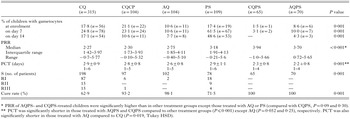
Table 1. Responses of asexual parasitaemia and gametocyte carriage following treatment with antimalarial drugs
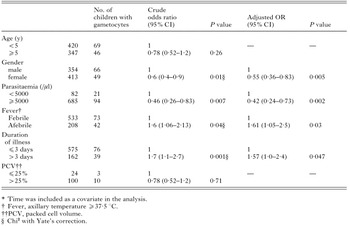
Table 2. Risk factors for Plasmodium falciparum gametocytaemia at enrolment*
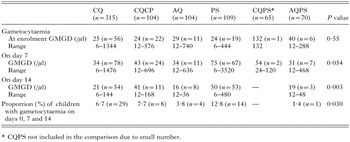
Table 3. Gametocyte densities at enrolment and following treatment with antimalarial drugs
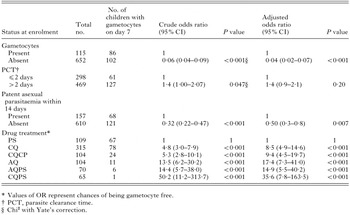
Table 4. Risk factors for Plasmodium falciparum gametocytaemia 7 days after treatment
 You have
Access
- 42
- Cited by