This study aims to inform understanding of pre-pandemic predictors of changes in adolescents’ adjustment during the COVID-19 pandemic and moderators of associations between risk factors prior to the pandemic and changes in adjustment during the pandemic. The present study is uniquely positioned to address these aims because of its long-term, multi-informant, prospective longitudinal design with a range of predictors assessed during adolescence prior to the pandemic, individuals’ reports of changes in their adjustment during the pandemic, and potential moderators of those relations in nine diverse countries. The premise is that human development, including psychological and behavioral phenomena potentially related to the COVID pandemic, is best understood through longitudinal study of families within diverse cultural contexts.
Pre-pandemic predictors of adjustment during the pandemic
The first goal of the present study was to advance understanding of how adolescents’ psychological and behavioral adjustment prior to the pandemic are related to reported changes in internalizing behavior, externalizing behavior, and substance use during the pandemic. Internalizing and externalizing behaviors generally show rank-order continuity over time (e.g., Hatoum, Rhee, Corley, Hewitt, & Friedman, Reference Hatoum, Rhee, Corley, Hewitt and Friedman2018), even if internalizing and externalizing behaviors, on average, increase during adolescence and decrease into adulthood (e.g., Petersen et al., Reference Petersen, Lindhiem, LeBeau, Bates, Pettit, Lansford and Dodge2018). However, both positive and negative life events, including experiencing a pandemic, can serve as turning points that disrupt trajectories of internalizing and externalizing behaviors (Miller & Votruba-Drzal, Reference Miller and Votruba-Drzal2017). Tendency for risk-taking may also predict changes in internalizing, externalizing, or substance use during the pandemic, although perhaps in complex ways. On the one hand, individuals who tend to take more risks may be less likely to report an increase in internalizing or externalizing problems during the pandemic if they are less likely, in general, to be anxious in the face of uncertainty or if they modify their behavior less in response to public health recommendations because they are more prone to taking risks that could compromise their health. On the other hand, individuals who tend to take more risks may be more likely to report an increase in substance use during the pandemic, as risk-taking is associated with substance use in late adolescence and early adulthood (e.g., LaSpada et al., Reference LaSpada, Delker, East, Blanco, Delva, Burrows, Lozoff and Gahagan2020). Other indicators of well-being, such as happiness and life satisfaction, also tend to show continuity over time, and even following positive events such as winning the lottery and negative events such as the death of a loved one often return to a baseline set point (Cummins, Reference Cummins2010), although changes in life circumstances can also affect long-term changes in well-being (e.g., Helliwell, Shiplett, & Bonikowska, Reference Helliwell, Shiplett and Bonikowska2020).
Natural disasters and public health crises are related to increases in mental health problems. For example, among Canadian adults who were quarantined in response to the severe acute respiratory syndrome (SARS) outbreak in 2003, 29% developed symptoms of posttraumatic stress disorder, and 31% developed depressive symptoms (Hawryluck et al., Reference Hawryluck, Gold, Robinson, Pogorski, Galea and Styra2004). In nationally representative samples of adults from the United States, rates of depression were three times higher during the COVID pandemic in March and April 2020 than prior to the pandemic (Ettman et al., Reference Ettman, Abdalla, Cohen, Sampson, Vivier and Galea2020). Rates of anxiety, depression, and stress were also high in Asia and Europe early in the COVID pandemic (Salari et al., Reference Salari, Hosseinian-Far, Jalali, Vaisi-Raygani, Rasoulpoor, Mohammadi, Rasoulpoor and Khaledi-Paveh2020).
What is less clear from prior studies is whether individuals who are at risk by virtue of being high in internalizing or externalizing problems, having a tendency for risky behavior, or being low in other aspects of psychological well-being prior to a pandemic would be at higher risk for an increase in adjustment problems during the pandemic. Most prior research on responses to pandemics (as well as natural disasters and other traumatic events, such as terrorist attacks) has been cross-sectional, making it possible to assess individuals’ well-being following the event but not how their adjustment prior to the event may predict their response. Addressing this question requires the availability of longitudinal data, including assessments prior to the pandemic, as in the present study.
Moderators of associations between pre-pandemic adjustment and adjustment during the pandemic
The second goal of the present study was to examine three personal and demographic factors that may moderate associations between pre-pandemic adjustment and adjustment during the COVID-19 pandemic: confidence in the government’s response to the pandemic, adolescents’ gender, and parents’ education. In prior research on responses to pandemics, individuals’ confidence in the government’s response has been found to have both direct and moderating effects on individuals’ behavior. For example, individuals in England, Scotland, and Wales were less likely to change their behavior (e.g., increased hand washing, avoiding crowded places) in the face of the A/H1N1 influenza (“swine flu”) pandemic if they did not believe that authorities could be trusted to control the spread of infection (Rubin, Amlôt, Page, & Wessely, Reference Rubin, Amlôt, Page and Wessely2009). Similarly, in Italy individuals who had more confidence in institutions at both the national and local level were more likely to follow restrictive measures during the initial months of the COVID pandemic (Guglielmi et al., Reference Guglielmi, Dotti Sani, Molteni, Biolcati, Chiesi, Ladini, Maraffi, Pedrazzani and Vezzoni2020). These findings suggest that individuals’ confidence in the government may be an important moderator of relations between adjustment prior to the pandemic and changes in adjustment during the pandemic.
On average, women have higher rates of anxiety and depression than men (Girgus & Yang, Reference Girgus and Yang2015), and men engage in more physically aggressive and delinquent behaviors than women (Björkqvist, Reference Björkqvist2018). It is possible that stressors disproportionately increase women’s internalizing problems and men’s externalizing problems, but some studies have found no gender differences in relations between exposure to stressors and internalizing and externalizing problems (Kim, Conger, Elder, & Lorenz, Reference Kim, Conger, Elder and Lorenz2003). Stressors themselves may also affect the life circumstances of men and women in different ways. For example, during the COVID pandemic women have lost their jobs at higher rates than men, and women have been more likely than men to take on the responsibilities of caring for children and overseeing their education when childcare facilities and schools closed (Bornstein, Reference Bornstein and Bornstein2021). Some of the youth participants in the present study are employed and some have become parents, but others are not yet employed or parents so the gender differences in responses to the pandemic reported for adults in paid employment and caring for children are less relevant for our young adult participants. Thus, the pandemic may have affected women’s well-being more than men’s, but whether pre-pandemic adjustment is related to adjustment during the pandemic differently for males and females remains an open question.
Individuals with fewer socioeconomic resources are likely to have more difficulty coping with financial disruptions and other stressors in the face of the pandemic than individuals with more socioeconomic resources (Patel et al., Reference Patel, Nielsen, Badiani, Assi, Unadkat, Patel, Ravindrane and Wardle2020). For example, more highly educated individuals are more likely to have jobs that can be done remotely from home and that are less vulnerable to lay-offs when businesses are struggling. In addition, individuals from higher socioeconomic backgrounds are more likely to have a financial safety net that can keep them out of poverty during the financial downturn caused by the pandemic.
COVID-19 in international perspective
If we had selected countries a priori to represent the most impactful places to study the psychological and behavioral implications of the COVID pandemic on human development, we would have selected many of the countries already participating in the longitudinal Parenting Across Cultures (PAC) project: China, Colombia, Italy, Jordan, Kenya, the Philippines, Sweden, Thailand, and the United States. Because one of the major contributions of the present study is the ability to report on changes in internalizing, externalizing, and substance use in samples from these nine countries, we devote attention here to the COVID-related situation in each PAC country as of March 2021 to provide background for understanding developmental contexts represented across the PAC sites. The situation in countries around the world continues to evolve, and we recognize that some of the information reviewed may become outdated as the pandemic continues to change. These country snapshots do not present profiles of identical information related to each site but rather are meant to highlight some site-specific issues that were particularly salient in each country.
China was the first country in which COVID-19 was identified and had the challenge of being the first country to grapple with the scope and nature of both the physical health implications and behavioral response, which it did quickly and effectively (Burki, Reference Burki2020). China also now provides early evidence that, even when the health situation was under control, citizens remained cautious. For example, many people became accustomed to wearing masks in public and continued to do so even when particular regions had not seen a COVID case in months (Hernández, Reference Hernández2020).
Around the world, but particularly in Latin America, including Colombia, stay-at-home orders have led to a spike in intimate partner violence and child abuse. For example, during the first 18 days of Colombia’s quarantine, daily domestic violence calls to the national hotline increased nearly 130% over pre-pandemic levels (Sigal, Ramos Miranda, Martinez, & Machicao, Reference Sigal, Ramos Miranda, Martinez and Machicao2020). Much of our Colombian sample resides in low socioeconomic status/high violence neighborhoods, wherein individuals and families might be at especially high risk for experiencing domestic violence. In terms of protective factors, however, preliminary data suggest that Colombia may have better pandemic-related endpoints in comparison to other countries because of a number of country-specific factors, such as a lower percentage of the population at risk (by age), characteristics of tropical regions that reduce the speed of virus transmission, and earlier implementation of preventive health policies (Amariles, Granados, Ceballos, & Montoya, Reference Amariles, Granados, Ceballos and Montoya2021).
Italy was the first western country hit by COVID-19. Drastic measures to reduce the spread of COVID were implemented in some areas (Gatto et al., Reference Gatto, Bertuzzo, Mari, Miccoli, Carraro, Casagrandi and Rinaldo2020). Nevertheless, Italy was hard hit in terms of death rates, largely because of the older average age of the Italian population compared to the average age in other countries. Since the initial lockdown, Italy has undergone repeated cycles of re-opening and then locking down again.
Jordan adopted strict measures right from the beginning to control the spread of the virus and was able to control it in a relatively short time (Alqutob et al., Reference Alqutob, Al Nsour, Tarawneh, Ajlouni, Khader, Aqel, Kharabsheh and Obeidat2020). Jordan was considered the first Arab country to reach zero cases but then saw additional resurgences in cases. The major concerns in Jordan are related to the education sector, where schools and universities are still locked down and not all students have access to distance learning. Despite government efforts to make education available to all students, resources are limited, especially in remote rural areas. As in other countries, economic challenges also are pressing, especially for families who lost their ability to earn income daily due to the lockdown. There are also concerns related to an increase in household violence between husbands and wives and from parents toward their children (Abuhammad, Reference Abuhammad2021).
Kenya, as is true of many sub-Saharan African nations, has a health system that is ill-prepared to deal with the pandemic. For example, Kenya has only 297 ventilators (and only 90 in public hospitals) for a population of 47 million (Miriri, Reference Miriri2020), compared to approximately 172,700 ventilators for a population of 331 million in the United States (Kliff, Satariano, Silver-Greenberg, & Kulish, Reference Kliff, Satariano, Silver-Greenberg and Kulish2020, although these numbers are in flux). Also like many countries in sub-Saharan Africa, however, COVID-19 arrived later than in countries in Asia, Europe, and North America, and Kenya acted quickly and decisively to implement social distancing and other prevention efforts.
The Philippines experienced the first confirmed COVID-19 death outside mainland China. The Philippines also exemplifies an economic context in which a large proportion of the population works in the informal sector, which is not taxed or monitored by the government, and thus is not eligible for work benefits, potentially worsening COVID financial burdens on families when they are no longer able to leave home to work. Our sample includes families recruited from impoverished neighborhoods in Manila and is therefore uniquely suited to examine effects of these economic stressors. In addition, 10% of the Filipino population works all over the world (but especially in Europe, the Middle East, and other parts of Asia). The remittances from these overseas Filipino workers have kept the economy and Filipino families afloat. The global pandemic has disrupted and displaced overseas workers, which has further added to the economic burdens of Filipino families.
Sweden has been unique in its response to COVID-19, in that widespread closures of public spaces and businesses were not instituted formally. Although universities and upper secondary schools switched to online teaching, primary and lower secondary schools, child care centers, restaurants, and other institutions have remained open throughout the pandemic. However, gatherings larger than 50 people are not allowed. Trust in the government, social institutions, and other people is generally high in Sweden (Stensöta & Bendz, Reference Stensöta and Bendz2020), which has contributed to the approach of having individuals make responsible decisions about social distancing and staying home as necessary without imposing widespread restrictions. However, the public’s confidence in the Swedish Public Health System has declined during the pandemic (Bloomberg, 2020). Like all other countries, though, Sweden is suffering an economic crisis due to COVID. Given that the children in our Swedish sample are college-aged and/or workers who have just begun their professional career, they are among the Swedes most likely affected by these educational and economic changes.
In Thailand, fears abound that economic inequality and its attendant risks will be exacerbated by the pandemic. For example, the lower 50% of the Thai population has only 1.7% of the nation’s wealth, and only 3% of poor households have access to a computer or reliable internet connection, severely limiting students’ ability to engage remotely in academic learning and adults’ ability to work from home (Asadullah & Bhula-or, Reference Asadullah and Bhula-or2020). Data collected during the first three weeks of the outbreak in Thailand suggested that adults’ confidence in the government was related to taking more personal measures to reduce infection, such as avoiding public transportation (Goodwin, Wiwattanapantuwong, Tuicomepee, Suttiwan, & Watakakosol, Reference Goodwin, Wiwattanapantuwong, Tuicomepee, Suttiwan and Watakakosol2020).
In the United States, the health and economic implications have been disruptive to the large majority of the population. All except four states ordered or recommended school closures for the last part of the 2019-2020 academic year, and stay-at-home and shelter-in-place orders were widespread, although variable in restrictiveness across states (Elassar, Reference Elassar2020). Although many states have reopened their economies, much of the population remains fearful of returning to regular activities, largely because public health officials have warned that the states are not yet meeting the criteria necessary to be able to do so safely (Centers for Disease Control and Prevention, 2021). Disparities have been notable in both infection and death rates from COVID across regional, ethnic, and socioeconomic groups within the United States (Chen & Krieger, Reference Chen and Krieger2021). We sample U.S. African American, European American, and Latinx families in equal proportions and therefore include groups that have experienced health disparities.
The present study
We capitalize on data collected in the Parenting Across Cultures (PAC) project both before and during the pandemic to address two primary research questions. First, do adolescents’ internalizing and externalizing problems, tendency for risk-taking, and well-being assessed prior to the pandemic predict youths’ changes in internalizing, externalizing, and substance use during the pandemic? Second, do youths’ confidence that the government is handling the COVID pandemic in the best possible manner, gender, and parental education moderate associations between risk factors prior to the pandemic and changes in internalizing, externalizing, and substance use during the pandemic?
Method
Participants
Participants were drawn from the Parenting Across Cultures project, which initially included 1,330 children (M = 8.59 years, SD = .68, range = 7 to 11 years; 50% girls), their mothers (N = 1,283, M = 37.04 years, SD = 6.51, range = 19 to 70 years), and their fathers (N = 1,170, M = 40.19 years, SD = 6.75, range = 22 to 76 years). Families were recruited through letters sent home from schools in Chongqing, China (n = 115), Medellín, Colombia (n = 108), Naples, Italy (n = 102), Rome, Italy (n = 111), Zarqa, Jordan (n = 114), Kisumu, Kenya (n = 100), Manila, Philippines (n = 120), Trollhättan/Vänersborg, Sweden (n = 129), Chiang Mai, Thailand (n = 120), and Durham, North Carolina, United States (n = 102 African Americans, n = 99 Latinx, n = 110 European Americans). Sampling focused on including families from the majority ethnic group in each country; two exceptions were in Kenya where we sampled Luo (3rd largest ethnic group, 13% of population) and in the United States where we sampled equal proportions of European American, African American, and Latinx families. To ensure economic diversity, we included students from private and public schools and from high- to low-income families, sampled in proportions representative of each recruitment area. Child age and gender did not vary across countries. Most parents were married (80%) and biological parents (96%); nonresidential/non-biological parents also provided data. Mothers (M EducationYears = 12.77, SD = 4.22) and fathers (M EducationYears = 12.90, SD = 4.26) each had approximately a high school education.
Data included in the present study were collected when youth participants were approximately ages 15, 16, and 20. The age 15 and 16 data points were completed for all participants prior to the onset of the COVID pandemic. 84% of the original study participants provided data at ages 15 and/or 16. Compared to the initial sample, families who remained in the study at age 15/16 did not differ on parental education, t(1317) = −0.00, p = .99, or child gender, χ2 (1, N = 1329) = 1.06, p = .30. COVID data at age 20 were collected using a truncated data collection period (March 23, 2020, to January 4, 2021). As a result, only 61% of the original sample provided data; this figure does not represent attrition from the ongoing longitudinal study but merely the participation rate during the compressed timeframe for COVID data collection. Compared to the initial sample, participants who provided COVID-related data did not differ on parental education, t(1317) = −.40, p = .69, but were more likely to be female, χ2(1, N = 1,329) = 16.98, p < .01. Among those with COVID data, 55% were female compared to 43% among those without COVID data. The analyses included only the participants who provided data during the pandemic. Missing data within this subsample with data during the pandemic were handled using full-information maximum likelihood estimation procedures (Curran, Obeidat, & Losardo, Reference Curran, Obeidat and Losardo2010).
Procedure
Measures were administered in the predominant language of each country, following forward and back translation and methodological validation to ensure the conceptual equivalence of the instruments (Erkut, Reference Erkut2010). Translators were fluent in English and the target language. In addition to translating the measures, translators noted items that did not translate well, were inappropriate for the participants, were culturally insensitive, or elicited multiple meanings and suggested improvements. Country coordinators and the translators reviewed the discrepant items and made appropriate modifications. Ultimately, measures were administered in Mandarin Chinese (China), Spanish (Colombia and the United States), Italian (Italy), Arabic (Jordan), Dholuo (Kenya), Filipino (the Philippines), Swedish (Sweden), Thai (Thailand), and American English (the United States and the Philippines).
The assessments at ages 15 and 16 lasted 1.5 to 2 hours and were conducted after parent consent and child assent in participant-chosen locations. Adolescents were given small gifts or monetary compensation for their participation, and parents were given modest financial compensation, families were entered into drawings for prizes, or modest financial contributions were made to children’s schools. The assessment at age 20 occurred during the COVID pandemic. Participants were emailed or texted a link to complete the measure online via Qualtrics or Facebook Messenger. Participants who were not able to complete the measure online completed the measure over the telephone or through a mailed questionnaire. Completion of the COVID measure took approximately 5 min. Procedures each year were approved by local Institutional Review Boards (IRBs) at universities in each participating country.
Measures
Adjustment prior to COVID
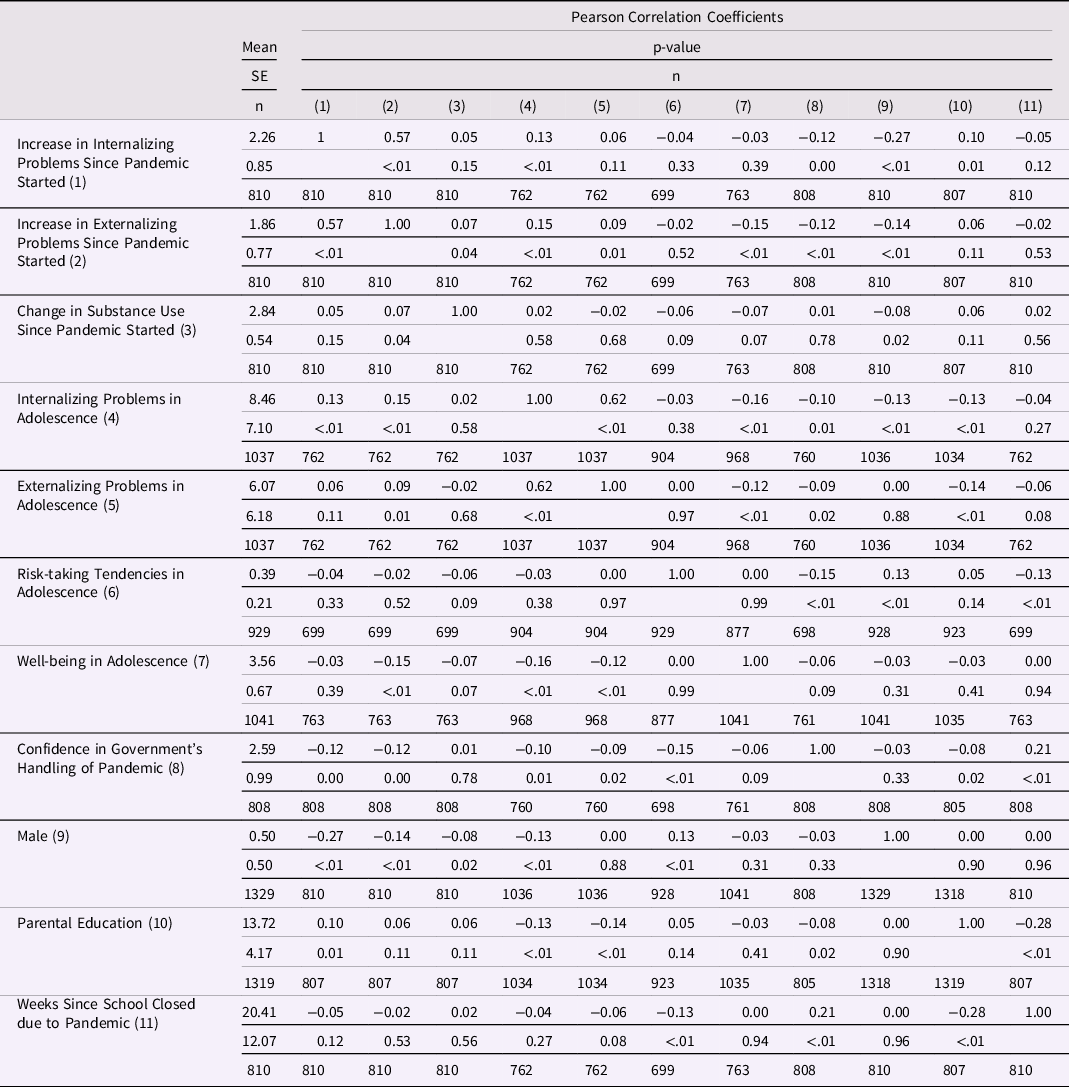
Mothers and fathers completed the Child Behavior Checklist (Achenbach & Rescorla, Reference Achenbach and Rescorla2001) when adolescents were 16. Participants were asked to rate how true each item was of the child during the last six months (0 = not true, 1 = somewhat or sometimes true, 2 = very or often true). The Internalizing Behavior scale summed across 31 items measuring behaviors and emotions such as loneliness, self-consciousness, nervousness, sadness, and anxiety. The Externalizing Behavior scale summed across 33 items capturing behaviors such as lying, truancy, vandalism, bullying, drug and alcohol use, disobedience, tantrums, sudden mood change, and physical violence. The Achenbach measures are among the most widely used instruments in international research, with translations in over 100 languages and strong, well-documented psychometric properties (e.g., Achenbach & Rescorla, Reference Achenbach and Rescorla2006). The Internalizing Behavior (mother α = .88; father α = .91) and Externalizing Behavior (mother α = .89; father α = .92) scale scores demonstrated strong internal consistency in the present sample. For this study, we used the average of parent reports of each construct (internalizing r = .49, p < .01; externalizing r = .56, p < .01). Descriptive statistics for these and all other variables used in the analyses are provided in Table 1.
Descriptive Statistics and Correlations

Tendency for risk-taking was assessed through the computerized Stoplight game completed at age 16. The full procedure and details regarding computer programming are provided in Steinberg et al. (Reference Steinberg, Albert, Cauffman, Banich, Graham and Woolard2008). In this task, participants are told they will “drive” a car to a party in a distant location before time runs out and are told that most people complete the task in under 2 minutes. The goal is to get to the party as quickly as possible in order to win a prize. From the perspective of a driver, participants view a road and scenery that change as the “car” travels to the party. A clock on the screen that counts down the time is initially set to 2 minutes and 30 seconds. Participants hear the clock ticking and music that grows progressively louder as the car nears the party. On the way to the party, the participant must drive through eight intersections, each with a traffic light. Participants watch a demonstration and listen to audio instructions prior to completing the task. The instructions explain that the traffic light may turn yellow as participants approach the intersection. If the light changes, participants must decide whether to stop (using the space bar) and wait for the light to change from yellow to red to green before proceeding or whether to proceed through the intersection. Participants are told that their decision will result in one of three outcomes: (1) If they do not brake and the car does not crash in the intersection, no time is lost; (2) If they break before the light turns red, the car will not crash, but approximately 3 seconds will be lost waiting for the light to turn green; or (3) If they do not brake or brake too late and the car crashes in the intersection, approximately 6 seconds more will be lost than if the participant had braked before the intersection. A video demonstrates these different possible outcomes. Participants do not know the outcome at each intersection in advance so must decide between low-risk, low-reward and high-risk, high-reward options. Tendency for risk-taking was measured as the percentage of intersections participants entered without braking. The task has been validated in all countries in the present study (Duell et al., Reference Duell, Steinberg, Icenogle, Chein, Chaudhary, Di Giunta, Dodge, Fanti, Lansford, Oburu, Pastorelli, Skinner, Sorbring, Tapanya, Uribe Tirado, Alampay, Al-Hassan, Takash, Bacchini and Chang2018).
Adolescents reported on five aspects of their well-being at age 15 using the EPOCH measure of adolescent well-being (Kern, Benson, Steinberg, & Steinberg, Reference Kern, Benson, Steinberg and Steinberg2016). The 20-item EPOCH measures engagement (being absorbed and involved in an activity or the world itself), perseverance (the tenacity to stick with things and pursue a goal despite challenges), optimism (having a sense of hope and confidence about the future), connectedness (feeling loved, supported, and valued by others), and happiness (a general feeling of cheer and contentment with life). Each characteristic is assessed with items rated on a 1 = not at all like me to 5 = very much like me scale. The items were averaged to create a composite measure of child well-being (α = .90). We utilized the alignment method (Muthén & Asparouhov, Reference Muthén and Asparouhov2014) to test for measurement invariance in factor loadings and intercepts across all cultural groups. All five characteristics, including connectedness (1% non-invariance), perseverance (4% non-invariance), optimism (2% non-invariance), happiness (0% non-invariance), and engagement (3% non-invariance) fell below Muthén and Asparouhov’s (Reference Muthén and Asparouhov2014) 25% threshold for acceptable non-invariance and are therefore reasonably non-invariant across cultures in our sample. Higher scores indicate better well-being.
Adjustment during the COVID pandemic
We developed a 19-item Experiences Related to COVID-19 instrument (Skinner et al., Reference Skinner, Godwin, Alampay, Lansford, Bacchini, Bornstein, Deater-Deckard, Di Giunta, Dodge, Gurdal, Pastorelli, Sorbring, Steinberg, Tapanya and Yotanyamaneewong2021), following a review of the literature on parent and adolescent stress responses following major traumatic events, including natural disasters (e.g., Bermudez et al., Reference Bermudez, Stark, Bennouna, Jensen, Potts, Kaloga, Tilus, Buteau, Marsh, Hoover and Williams2019) and previous public health crises such as the SARS outbreak (Hawryluck et al., Reference Hawryluck, Gold, Robinson, Pogorski, Galea and Styra2004) and H1N1 (Rubin et al., Reference Rubin, Amlôt, Page and Wessely2009). The measure was pilot-tested with a small sample in the United States, and minor revisions were made to the measure on the basis of initial responses. A subset of the items related to the study questions was used in the present study.
Participants rated changes in their anxiety, depression, anger, and argumentativeness now as compared to before the outbreak of COVID-19 in their community (e.g., “I feel more anxious now than I did before the outbreak” and “I get in more arguments now than I did before the outbreak”). Responses were rated on a 4-point scale with 1 = strongly disagree, 2 = somewhat disagree, 3 = somewhat agree, 4 = strongly agree. An internalizing scale was created by taking the mean of the two anxiety and depression items (r = .53, p < .01). An externalizing scale was created by taking the mean of the two anger and argumentativeness items (r = .53, p < .01).
Participants were also asked to think about their behavior in the year prior to the outbreak and now and to rate their use of cigarettes, alcohol, and illicit drugs on a 5-point scale with 1 = decreased a lot since the outbreak, 2 = decreased a little since the outbreak, 3 = stayed about the same since before the outbreak, 4 = increased a little since the outbreak, 5 = increased a lot since the outbreak. A substance use index was created by taking the mean of the three items. This measure of substance use is better conceptualized as an index than as a scale, with an increase in more types of substance use indicative of greater risk but with no expectation that using any given substance more is necessarily related to using the other substances more (Streiner, Reference Streiner2003).
Moderators
As part of the Experiences Related to COVID-19 instrument, participants were asked to rate their agreement with the statement “We recognize that many local, state, and federal government agencies are involved in the response to COVID-19. Balancing your perspective on all of these agencies…I am confident the government is handling the COVID-19 response in the best possible manner.” Responses were rated on a 4-point scale ranging from 1 = strongly disagree to 4 = strongly agree. Gender (coded 0 = female, 1 = male) and parental education (coded as the highest level of education attained by either parent, measured in years at the time of recruitment into the larger study) were also tested as moderators of the relations between adjustment prior to the pandemic and adjustment during the pandemic.
Covariates
We controlled for the number of weeks elapsed between widespread lockdowns (e.g., closures of schools, universities, and businesses) in each country/state and the COVID-19 data collection in all analyses.
Analytic plan
Analyses were performed in Mplus version 8 (Muthén & Muthén, Reference Muthén and Muthén2018) using multiple group path models and full information maximum likelihood to account for data missing at random. Initially, the path coefficients were held constant across countries, but the intercepts, covariances, and residual variances were allowed to vary by country. If the majority of the following fit statistics met established criteria, we deemed the model fit to be acceptable: non-significant chi-square test, comparative fit index greater than or equal to .95, root mean square error of approximation less than or equal to .06, and standardized root mean square residual less than or equal to .08 (Kline, Reference Kline2011). When the initial model did not yield acceptable fit, country-specific coefficients were released iteratively based on highest modification indices until acceptable model fit was achieved. For each outcome, an initial model assessed the impact of adolescent adjustment prior to the pandemic including internalizing problems, externalizing problems, risk-taking tendencies, and well-being. These models also controlled for confidence in the government response to the pandemic, adolescents’ gender, parents’ education, and weeks since the pandemic began. Standardized coefficients are presented to capture the standard deviation (SD) change in the outcome associated with a 1 SD increase in the predictor.
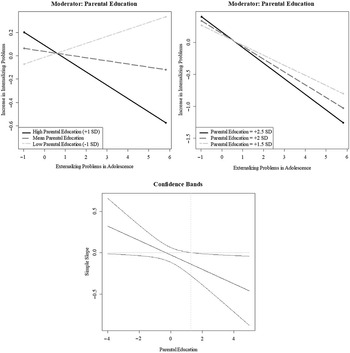
For each outcome, 12 additional models were estimated to assess whether the relation between the outcome and each pre-pandemic adjustment indicator (internalizing problems, externalizing problems, risk-taking tendencies, and well-being) was moderated by three potential moderators (confidence in the government response to the pandemic, adolescents’ gender, and parents’ education). Each moderation model included all the original predictors as well as the interaction between the moderator and the pre-pandemic adjustment indicator. When moderation was statistically significant, the slope capturing the relation between the outcome and pre-pandemic adjustment indicator was plotted for three values of the moderator (1 SD below M, at the M, and 1 SD above M). The regions of 95% significance for the slopes capturing the relation between the outcome and the pre-pandemic adjustment indicator at different levels of the moderator were also calculated (Preacher, Curran, & Bauer, Reference Preacher, Curran and Bauer2006) and graphed. In these figures, the straight black line plots the slope value at different levels of the moderators. The two curved lines reflect the 95% confidence band. The slope at a particular moderator value is significantly different from zero if the confidence band does not include a slope value of zero. Given that intercepts and sometimes coefficients vary across countries, these figures and analyses were produced for each country separately when the moderator was significant; however, only one representative figure for each moderated relation is presented. Supplemental Figures 1–11 display all the significant moderation effects for each country.
Results
The complete results are provided in Supplemental Tables 1–13. All models met acceptable fit criteria, and the fit statistics are included in Tables 2 and 3. Unless noted, the results presented are significant at the .05 level or less. Only results consistent across countries and related to the research questions are discussed.
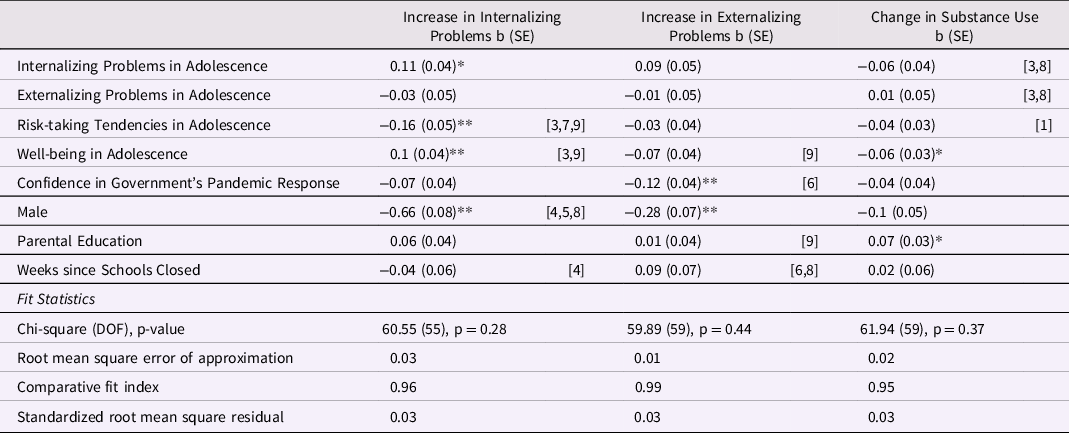
Full Information Maximum Likelihood Multiple Group Path Analyses Estimating Pre-pandemic Adolescent Psychological and Behavioral Adjustment on Maladaptive Behavior during the Pandemic

Numbers in brackets indicate countries for which the relation differs (1 = China, 2 = Colombia, 3 = Italy, 4 = Jordan, 5 = Kenya, 6 = Philippines, 7 = Sweden, 8 = Thailand, 9 = US). The complete set of results are found in Supplemental Table 1. b = standardized coefficient. *p < .05, **p < .01.
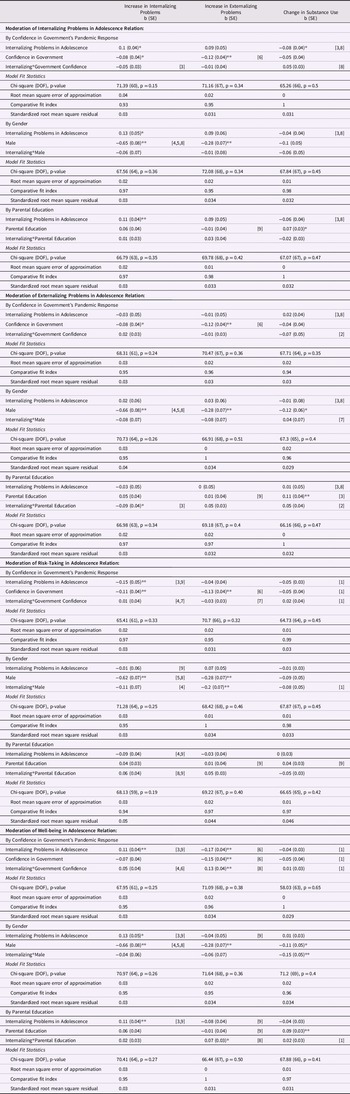
Summary of Moderation Models

Only the predictors relevant to moderation are present here; however, the complete set of predictors (as seen in Table 2) were included in these models. The numbers in brackets indicate countries for which the relation differs (1 = China, 2 = Colombia, 3 = Italy, 4 = Jordan, 5 = Kenya, 6 = Philippines, 7 = Sweden, 8 = Thailand, 9 = US). The complete results are found in Supplemental Tables 2–13. b = standardized coefficient. *p < .05, **p < .01.
Increases in internalizing problems during the pandemic
Across all countries, more internalizing problems in adolescence were associated with greater increases in internalizing problems during the pandemic (Table 2). Although externalizing problems in adolescence were not associated with increases in internalizing problems during the pandemic, in all countries except Italy, Sweden, and the United States lower risk-taking tendencies in adolescence were associated with greater increases in internalizing problems during the pandemic. In Italy and Sweden, risk-taking tendencies in adolescence were not significantly related to internalizing problems during the pandemic; however, in the United States greater risk-taking tendencies were associated with greater increases in internalizing problems during the pandemic (b = .25, SE = .10). In all countries except Italy and the United States, greater well-being in adolescence was associated with greater increases in internalizing problems during the pandemic (b = .10, SE = .04). In Italy and the United States, lower well-being in adolescence was associated with greater increases in internalizing problems during the pandemic (Italy: b = −.21, SE = .07; United States: b = −.27, SE = .08).
Increases in externalizing problems during the pandemic
Across all countries, internalizing problems, externalizing problems, and risk-taking tendencies in adolescence were not significantly related to externalizing problems during the pandemic. In all countries, lower well-being in adolescence was associated with greater increases in externalizing problems during the pandemic (b = −.07, SE = .04).
Changes in substance use during the pandemic
Only one of the pre-pandemic adjustment indicators was significantly related to changes in substance use during the pandemic. In all countries, greater well-being in adolescence was associated with decreased substance use during the pandemic (b = −.06, SE = .03).
Moderation of the relations between pre-pandemic psychological and behavioral adjustment and internalizing problems during the pandemic
When estimating increases in internalizing problems during the pandemic, in all countries except Italy, the interaction between externalizing problems in adolescence and parental education was significant. Column 1 of Figure 1 illustrates the relation between adolescent externalizing problems and increases in internalizing problems during the pandemic at low (1 SD below M), average, and high (1 SD above M) levels of parental education. However, the regions of significance analysis (Lower panel of column 1) revealed that the relation between adolescent externalizing problems and increases in internalizing problems during the pandemic was only significant at high levels of parent education (greater than 1.28 SD above the M). Consequently, none of the slopes presented in the first column were significantly different from zero. As seen in the 2nd column of Figure 1, at high levels of parental education (+1.5, +2, +2.5 SD above M) fewer externalizing problems in adolescence were associated with greater increases in internalizing problems during the pandemic. This relation was exacerbated as parental education increased as indicated by the steeper slopes at higher levels of education.
Moderation of the Relation between Pre-pandemic Adolescent Adjustment and Internalizing Problems during the Pandemic.
Results for Kenya are depicted; however, the patterns are the same for all the other countries except Italy. Supplemental Figure 2 provides the figures for all countries with significant moderation.

Moderation of the relations between pre-pandemic psychological and behavioral adjustment and externalizing problems during the pandemic
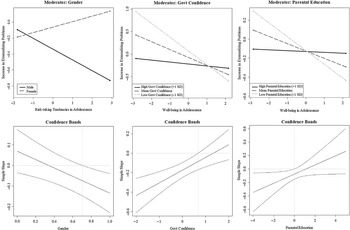
In all countries, there was evidence that the relation between risk-taking tendencies in adolescence and increases in externalizing problems during the pandemic was moderated by adolescents’ gender (1st column of Figure 2). The regions of significance analysis revealed that this relation was only significant for males. Among males only, lower risk-taking tendencies in adolescence were associated with greater increases in externalizing problems during the pandemic.
Moderation of the Relations between Pre-pandemic Adolescent Adjustment and Externalizing Problems during the Pandemic.
1st column: The displayed relation is significant for males but not females. Results for China are depicted; however, the patterns are the same for all other countries. Supplemental Figure 7 provides the figures for all countries with significant moderation.
2nd column: Results for China are depicted; however the patterns are the same for all other countries except Thailand and the Philippines. Supplemental Figure 8 provides the figures for all countries with significant moderation.
3rd column: Results for China are depicted; however, the patterns are the same for all other countries except Thailand. Supplemental Figure 9 provides the figures for all countries with significant moderation.

In all countries except the Philippines and Thailand, there was evidence that the relation between well-being in adolescence and increases in externalizing problems during the pandemic was moderated by confidence in the government’s handling of the pandemic. Lower levels of adolescent well-being were associated with greater increases in externalizing problems during the pandemic, but that relation was buffered by confidence in the government’s handling of the pandemic as illustrated by the flattening of the slope as government confidence increased (2nd column of Figure 2). An analysis of the regions of significance indicated that the slopes were significantly different from zero for mean and low levels (−1 SD) of government confidence. At somewhat high levels of government confidence (greater than .68 SD above the M), the relation between adolescent well-being and increases in externalizing problems was not significantly different from zero, indicating that government confidence protected youth against the increases in externalizing problems associated with low levels of well-being in adolescence.
In all countries except Thailand, lower levels of well-being in adolescence were associated with greater increases in externalizing problems during the pandemic, but that relation was buffered by parental education as illustrated by the flattening of the slope as parental education increases (3rd column of Figure 2). An analysis of the regions of significance indicates that the slopes were only significantly different from zero at parental education levels below the grand mean. At parental education levels at or above the mean, the relation between adolescent well-being and increases in externalizing problems was not significantly different from zero, indicating that average to high parental education levels protected youth against the increases in externalizing problems associated with low levels of adolescent well-being.
Moderation of the relations between pre-pandemic psychological and behavioral adjustment and substance use during the pandemic
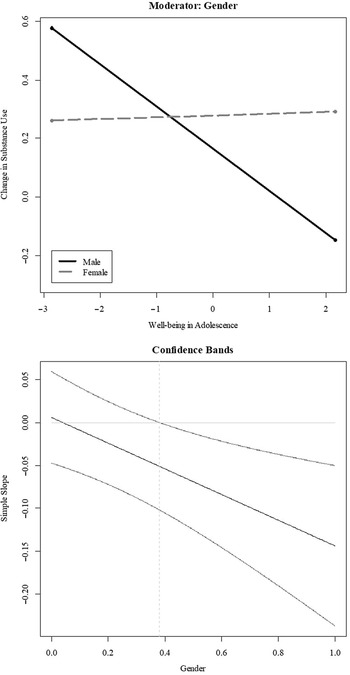
In all countries, there was evidence that the relation between well-being in adolescence and changes in substance use during the pandemic was moderated by adolescents’ gender (Figure 3). The regions of significance analysis revealed that this relation was only significant for males. Among males only, greater well-being in adolescence was associated with decreased substance use during the pandemic.
Moderation of the Relations between Pre-pandemic Adolescent Adjustment and Substance Use during the Pandemic.
Results for China are depicted; however, the patterns are the same for all other countries except Thailand. Supplemental Figure 11 provides the figures for all countries with significant moderation.

Discussion
This study aimed to advance understanding of adolescents’ pre-pandemic predictors of changes in adjustment during the COVID-19 pandemic and moderators of associations between risk factors prior to the pandemic and changes in adjustment during the pandemic. The project is uniquely positioned to address these aims because of its multi-informant, prospective longitudinal design in nine diverse countries. Governments and health organizations worldwide are concerned about both the short- and long-term effects of the COVID pandemic on the development of young people, so the present study provides needed information regarding risk and protective factors for changes in adjustment during the COVID pandemic.
Our first research question was whether adjustment assessed prior to the pandemic would predict changes in youths’ internalizing, externalizing, and substance use during the pandemic. Across all nine countries, adolescents with more internalizing problems prior to the pandemic were more likely to report increases in internalizing problems during the pandemic. However, adolescents’ externalizing problems prior to the pandemic were not related to reported changes in internalizing, externalizing, or substance use during the pandemic in any countries. Tendency for risk-taking prior to the pandemic was related to reported decreases in internalizing behavior during the pandemic in some countries, perhaps because the uncertainties of life during the pandemic were less distressing for individuals with less aversion to risk, although this explanation is speculative. Finally, greater well-being prior to the pandemic predicted increases in internalizing behavior in some countries but decreases in externalizing behavior and substance use in all nine countries during the pandemic, which suggests that well-being can be protective in relation to some changes but a risk factor for others. Youth who have a history of high well-being prior to the pandemic may feel that their lives are more disrupted by the pandemic and experience more hardship than they are used to, increasing their internalizing problems, yet these youths’ previous well-being may also make it unlikely that they start demonstrating externalizing problems or using substances.
Our second research question was whether associations between risk factors prior to the pandemic and changes in internalizing, externalizing, and substance use during the pandemic would be moderated by confidence in the government’s handling of the COVID pandemic, gender, and parental education. In all except two countries, lower levels of well-being prior to the pandemic predicted an increase in externalizing problems during the pandemic, but not when youths had confidence in their government’s response to the pandemic. Higher levels of parental education attenuated the relation between lower levels of well-being prior to the pandemic and an increase in externalizing during the pandemic, but strengthened the relation between externalizing prior to the pandemic and an increase in internalizing behavior during the pandemic, which suggests differences in risk and protective factors for internalizing versus externalizing behavior during the pandemic. Adolescents’ gender was a significant moderator of the link between tendency for risk-taking prior to the pandemic and an increase in externalizing behavior during the pandemic and between well-being prior to the pandemic and substance use during the pandemic; in both cases, these associations were significant only for males.
Across predictors and outcomes, the general pattern of findings was that youth who were at higher risk prior to the pandemic by virtue of having more internalizing problems, more externalizing problems, a greater tendency for risk-taking, or lower well-being were at greater risk for increases in problems during the pandemic. Prior cross-sectional research earlier in the COVID pandemic demonstrated higher national rates of depression in the United States in the first two months of the pandemic than prior to the pandemic (Ettman et al., Reference Ettman, Abdalla, Cohen, Sampson, Vivier and Galea2020) and high rates of anxiety, depression, and stress early in the pandemic in Asia and Europe (Salari et al., Reference Salari, Hosseinian-Far, Jalali, Vaisi-Raygani, Rasoulpoor, Mohammadi, Rasoulpoor and Khaledi-Paveh2020). Our pattern of longitudinal findings builds on this earlier research by showing how individuals’ adjustment assessed prior to the pandemic predicts self-reported changes during the pandemic.
Some of the associations between pre-pandemic adjustment and change in internalizing, externalizing, and substance use during the pandemic were moderated by confidence in the government’s response to the pandemic, adolescents’ gender, and parents’ education. Previous research has demonstrated that individuals in Italy were more likely to adhere to restrictive measures implemented during the initial months of COVID if they had more confidence in national and local institutions (Guglielmi et al., Reference Guglielmi, Dotti Sani, Molteni, Biolcati, Chiesi, Ladini, Maraffi, Pedrazzani and Vezzoni2020). We extended this finding by demonstrating that, in seven of the nine countries in the present study, confidence in the government’s handling of the pandemic moderated the link between well-being and externalizing such that lower well-being prior to the pandemic was predictive of an increase in externalizing problems during the pandemic only for individuals who lacked confidence in their government’s handling of the pandemic. In addition, the relation between low levels of well-being prior to the pandemic and increases in externalizing during the pandemic was attenuated by high levels of parental education, perhaps because more highly educated parents were likely better positioned to access educational or mental health supports during the pandemic and to have a financial buffer to protect against some economic stresses during the pandemic.
It is also notable, however, that not all four aspects of adjustment assessed prior to the pandemic consistently predicted changes in internalizing, externalizing, and substance use during the pandemic. Internalizing and externalizing behaviors generally show rank-order continuity over time (e.g., Hatoum et al., Reference Hatoum, Rhee, Corley, Hewitt and Friedman2018). Entrenched patterns of behavior do not always change, even in the face of major disruptive life events, although life events can alter trajectories of internalizing and externalizing behaviors (Miller & Votruba-Drzal, Reference Miller and Votruba-Drzal2017). In addition, associations between pre-pandemic adjustment and reported changes in internalizing, externalizing, and substance use during the pandemic often were not moderated by confidence in the government’s handling of the pandemic, adolescents’ gender, or parental education.
Although there were some site-specific exceptions, most of the findings were consistent across countries that differed markedly in infection and death rates from the pandemic as well as government responses to the pandemic (see https://www.bsg.ox.ac.uk/research/research-projects/coronavirus-government-response-tracker). These similarities likely reflect, at least in part, similarities across countries in disruptions to daily life. Even in Sweden, a country that has been unusual in not implementing the widespread shutdowns common in other countries, upper-level secondary schools and universities moved to online learning, and large gatherings were discouraged; Sweden did not stand out from the other countries in any of the analyses.
The study’s strengths include the availability of longitudinal data collected before the onset of the COVID pandemic as well as data collected during the initial months of the pandemic from adolescents, mothers, and fathers in nine countries. The study also had limitations. First, although we included participants from nine countries, making this a diverse, international sample, the samples were not nationally representative. Findings should not be generalized to entire countries but instead interpreted as reflecting the experiences of local samples in a diverse range of countries. Second, participants reported whether their internalizing, externalizing, and substance use increased, decreased, or stayed about the same during the pandemic compared to before the pandemic, but we did not have the same measures of these constructs available both before and during the pandemic to be able to assess change scores. Third, the county-specific sample sizes that resulted from the compressed data collection timeframe necessary to quickly examine the impact of the pandemic are smaller than would be ideal. The small country-specific sample sizes may reduce our power and the likelihood of finding significant relations but do not diminish the validity of our significant findings. The reduced power does, however, provide reason to be cautious about strong interpretation regarding the relations that were not significant. Fourth, we acknowledge that many predictors and moderators not included in the present study are also important for understanding changes in adjustment during the COVID pandemic. Expanding the range of predictors, moderators, and outcomes remains an important direction for future research that aims to understand human development during the COVID pandemic.
This study demonstrated that in a range of countries that differed in infection and death rates and government responses to the COVID pandemic, adolescents’ internalizing problems, externalizing problems, tendency for risk-taking, and well-being prior to the pandemic predicted changes in some aspects of adjustment during the pandemic. These relations were generally consistent across countries, with some nuances specific to particular aspects of adjustment, and were sometimes moderated by confidence in the government’s handling of the pandemic, adolescents’ gender, and parents’ education. The findings suggest the importance of emphasizing well-being at the population level, as has been implemented in some countries as they measure subjective well-being along with more traditional measures of population health such as life expectancy, both as a desired outcome in the moment and as a protective factor in the face of widespread stressful life events.
Supplementary material
To view supplementary material for this article, please visit https://doi.org/10.1017/S0954579421001139
Acknowledgments
We gratefully acknowledge the families who have participated in this study and the research assistants who have helped collect data.
Funding statement
This work was supported by the Eunice Kennedy Shriver National Institute of Child Health and Human Development (JEL, grant number RO1-HD054805), Fogarty International Center (JEL, grant number RO3-TW008141), National Institute on Drug Abuse (grant number P30 DA023026), the Intramural Research Program of the NIH/NICHD, USA, and an International Research Fellowship at the Institute for Fiscal Studies (IFS), London, UK, funded by the European Research Council (ERC) under the Horizon 2020 research and innovation program (MHB, grant number 695300-HKADeC-ERC-2015-AdG).
Conflicts of interest
None.