Introduction
The determinants of maternal and child health care in India have received considerable attention in demographic as well as public health literature, but little attention has been paid to the health care of adolescent mothers and their children. Despite substantial improvement in the public health sector in India, the proportion of adolescent deaths (due to pregnancy or during childbirth) to total maternal mortality remains incongruously high at 10% (Government of India, 2009). A number of studies have documented that the rate of newborn deaths to adolescent mothers is, on average, about 50% higher than that to mothers in their twenties. About 16 million adolescent girls aged 15–19 give birth each year, and almost 95% of these births occur in developing countries (WHO, 2008). Such pregnancies have been consistently associated with increased risk of adverse pregnancy outcome, especially low birth weight, prematurity and high rates of neonatal, postneonatal (Kamal, Reference Kamal2009) and infant mortality and morbidity (Raj et al., Reference Raj, Saggurti, Balaiah and Silverman2009). This link between early childbearing and health outcomes is the potential cause of death among women in the age group 15–19 (Reynolds et al., Reference Reynolds, Wong and Tucker2006). That is why the United Nations has includedand prioritized improving maternal health and reducing infant mortality in the Millennium Development Goals (United Nations, 2009). This action has demanded the urgent need to understand the factors likely to affect the health of adolescent mothers and their children, particularly in India, which represents South Asian countries, where more than a third of all maternal and child deaths occur (Bhutta et al., Reference Bhutta, Gupta, de'Silva, Manandhar, Awasthi, Hossain and Salam2004).
Maternal mortality is affected by a range of factors, socioeconomic and cultural, such as women's status in the household and society, their educational and economic status, accessibility of facility (distance, transport) and availability and quality of care (availability of staff and equipment in the health facility). Thaddeus & Maine (Reference Thaddeus and Maine1994) grouped these factors into a framework called the ‘Three Delays’ model, which proposes that pregnancy-related mortality is overwhelmingly due to delays in seeking appropriate medical help, reaching a facility in time and receiving adequate care. In India, marriage at a very young age is considered the main reason for early pregnancy (Raj et al., Reference Raj, Saggurti, Balaiah and Silverman2009), compounded with poverty, low status of women, poor education and low level of contraceptive use (Dangal, Reference Dangal2005). Many studies have observed that the main reasons for adverse health consequences for teenage mothers are that these adolescents often lack experience and tend to be psychologically less mature and emotionally less stable, which leads to poor maternal and child health outcomes (LeGrand & Mbacke, Reference LeGrand and Mbacke1993). Additionally, some life circumstances such as poverty and single-parent households place girls at a higher risk of becoming teenage mothers (Dangal, Reference Dangal2005).
The differences between how adolescent mothers and older mothers use child services, especially immunization, are not clear. The unadjusted analysis of Demographic and Health Survey (DHS) data from 1986 to 1989 shows that in eleven out of 21 countries, children aged 12–35 months born to mothers younger than 20 were less likely to have been vaccinated than the children of mothers aged 20–34 (Boerma et al., Reference Boerma, Sommerfelt, Rutstein and Rojas1990). A study controlling for confounding factors in Mali and Burkina Faso found that children born to urban teenagers were significantly less likely to be vaccinated than children born to mothers aged 25–29 (LeGrand & Mbacke, Reference LeGrand and Mbacke1993). Research consistently shows that low income, cost of services (Filippi et al., Reference Filippi, Ronsmans, Campbell, Graham, Mills, Borghi, Koblinsky and Osrin2006) and programmatic factors (Sunil et al., Reference Sunil, Rajaram and Zottarelli2006) are important constraints on service utilization, and that socioeconomic as well as demographic factors such as economic status, education and birth interval are strong predictors of utilization of services (Navaneetham & Dharmalingam, Reference Navaneetham and Dharmalingam2002; Gage & Calixte, Reference Gage and Calixte2006; Ram & Singh, Reference Ram and Singh2006; Sunil et al., Reference Sunil, Rajaram and Zottarelli2006; Saikia & Singh, Reference Saikia and Singh2009). Additionally, a few studies have discussed both accessibility and availability (Kandel et al., Reference Kandel, Kiros, Schaffran and Hu2004; Gage & Calixte, Reference Gage and Calixte2006; Mohanty & Pathak, Reference Mohanty and Pathak2009) or in some cases, only accessibility (Stephenson & Tsui, Reference Adhikari, Bott, Jejeebhoy, Shah and Puriet2002; Wagle et al., Reference Wagle, Sabroe and Nielsen2004) as determinants of health service utilization.
The context of maternal and child health care for adolescents becomes crucial due to their susceptibility to early sexual activity and childbearing, which in turn accelerates the potential chance of maternal as well as child mortality. These phenomena are applicable to both developed countries like the United States (Rosenfield et al., Reference Rosenfield, Charo and Chavkin2008) and developing countries like India (Hampton, Reference Hampton2010). Recent statistics show that about 30–70% of married young women (aged 20–24 years) in Bangladesh, Nepal and India were married before the age of 18 (Raj et al., Reference Raj, Saggurti, Balaiah and Silverman2009; UNICEF, 2011). The reasons why adolescent mothers are at a greater disadvantage than older mothers in India include lack of education due to early age at marriage and low contraceptive use resulting in unplanned pregnancies, which in turn contributes to high maternal and child mortality (Raj et al., Reference Raj, Saggurti, Balaiah and Silverman2009). Adolescent childbearing has an adverse micro- and macro-level impact; that is, on the health of the adolescents and their infants at the individual level and at societal levels too (WHO, 2008).
While documenting the facts from developing countries (Fatusi & Hindin, Reference Fatusi and Hindin2010) like Malaysia (Omar et al., Reference Omar, Hasim, Muhammad, Jaffar, Hashim and Siraj2010), Vietnam (Klingberg-Allvin et al., Reference Klingberg-Allvin, Graner, Phuc, Höjer and Johansson2010) and Egypt (Rasheed et al., Reference Rasheed, Abdelmonem and Amin2011), it was observed that adolescent mothers are more likely to face severe delivery complications resulting in higher morbidity as well as mortality for both mother and child. Very few empirical research studies in India have focused on adolescents' utilization of maternal and child health care services. This paper attempts to assess the determinants of maternal and child health indicators with reference to adolescent mothers, and place these in the context of existing policy and practice. Three key health components are measured: adolescent women who received full antenatal care, those who have undergone safe delivery care and children born to adolescent women who received full immunization. It is hoped that the analysis will enhance the understanding of how adolescent's health-care-seeking behaviour is associated with proximate determinants and how development strategies can improve the provision and use of maternal and child health care services to achieve the targeted safe motherhood and childhood initiatives included in the Millennium Development Goals (United Nations, 2009).
Data and Methods
The present study utilizes data from the third round of the Demographic and Health Survey (DHS), known as the National Family Health Survey (NFHS), carried out in India during 2005–06. The NFHS is a large-scale, multi-round survey conducted in a representative sample of households covering more than 99% of the population throughout India. The third wave of NFHS (NFHS-3), conducted in 2005–06, is the outcome of the collaborative efforts of many organizations such as the International Institute for Population Sciences (IIPS), United States Agency for International Development (USAID), Department for International Development (DFID), United Nations Children's Fund (UNICEF) and United Nations Population Fund (UNFPA). The survey covers a representative sample of about 124,385 ever-married women in the age group 15–49, who were captured in two phases from 29 states of India, and out of all ever-married women interviewed 23,955 were in the 15–19 age group. The data recorded 56,438 births that occurred in the last five years preceding the survey. Among the women interviewed, 5253 were found to have had the experience of childbirth in their teens (age 15–19) during the five years preceding the survey date. This study considers only the most recent births and excludes multiple births. The principal objective of NFHS-3 was to provide state and national estimates of fertility, family planning practices, infant and child mortality, maternal and child health and utilization of health services by mothers and children. The survey also includes information on the quality of health and family welfare services and provides indicators of the status of women, women's reproductive health and domestic violence. The survey provides state-level estimates of demographic and health parameters as well as data on various socioeconomic and programme dimensions, which are critical for bringing about the desired change in demographic and health parameters.
The term ‘adolescent mother’ refers only to ever-married women who have had the experience of childbirth in their teens (age 15–19) during the five years preceding the survey date. The present study measures three outcome variables, namely, full antenatal care, safe delivery and full immunization. Full antenatal care includes those mothers who had a minimum of three antenatal visits, at least two tetanus toxoid injections during the pregnancy or received one tetanus toxoid injection during the pregnancy and at least one in the three years prior to the pregnancy, and received iron and folic acid tablets for 90 days or more (WHO, 2006). The provision of all components of antenatal care to the pregnant women is an integral part of the Reproductive and Child Health Programme in India (Ministry of Health and Family Welfare, 2011). However, delivery conducted either in a medical institution or home delivery assisted by a doctor/nurse/LHV/ANM/other health professional are termed ‘safe deliveries’ (WHO, 2006). According to the guidelines developed by WHO (1998), children aged 12–23 months who received one dose each of BCG and measles, and three doses each of DPT and polio vaccine, were defined as being fully immunized. The analysis for full antenatal care as well as safe delivery was restricted to 5253 women aged 15–19 years with at least one child during the five years preceding the survey date. The analysis of full immunization was limited only to children in the age group 12–23 months born to adolescent women. Therefore, the sample size was reduced to 1607.
Important socioeconomic and demographic predictors included in the analysis were: age of women (<18 and 18–19 years), education of women (illiterate, literate but below primary, primary but below middle, middle but below high school and high school and above), place of residence (rural and urban), mass media exposure (no exposure and any exposure), education of husband (illiterate, literate but below primary, primary but below middle, middle but below high school and high school and above), wealth quintile (poorest, poorer, middle, richer and richest), religion (Hindu, Muslim and others), caste (Scheduled Caste (SC), Scheduled Tribe (ST), Other Backward Class (OBC) and general), women's autonomy (low and high), birth order and interval (first birth order, birth order 2/3 and interval <24 months and birth order 2/3 and interval >24 months), family structure (nuclear and joint) and health provider visits.
It is worth mentioning that exposure to mass media has been assessed by considering how often the respondents read the newspaper, listen to the radio and watch television or cinema. Similarly, a relative index of household wealth was calculated from a standard set of assets owned by the household, including ownership of consumer items and dwelling characteristics. Individuals were ranked on the basis of their household score and divided into quintiles, each representing 20% of the score, between 1 (poorest) and 5 (wealthiest) (IIPS & Macro International, 2007).
Women's autonomy has been computed by taking three dimensions into account, namely, women's mobility (freedom to visit places unescorted), access to economic resources and decision-making authority (Jejeebhoy, Reference Jejeebhoy2002). The NFHS-3 data provide information about the three different dimensions giving scope to construct an index to assess women's autonomy. On the basis of available information, the composite female autonomy index has been computed for analysis. Some researchers argue that the three dimensions of women's autonomy sometimes have an independent effect on the outcome of interest (Bloom et al., Reference Bloom, Wypij and Dasgupta2001; Furuta & Salway, Reference Furuta and Salway2006). However, Singh et al. (Reference Ladusingh and Singh2007) analysed the sex differentials in child mortality in India considering the Composite Index of Women Autonomy (CIWA). This study also found no significant difference between a separate analysis considering all the dimensions of women's autonomy and the combined composite index. In the construction of the autonomy index, different variables have been taken into account, such as decision to go to a health facility, involvement in major and daily household purchases, decision to visit family or relatives and decision to spend husband's money (women's decision-making); allowed to go market, health facilities and outside the home/village/community (mobility autonomy); and economic security assessed by two indicators, namely, has money for own use and has own bank account. A higher weight was allocated if the women were involved in decision-making or did not require permission to go out. The women's autonomy index has been categorized into low and high autonomy.
The survey has information based on recent contact with health workers. The term ‘health worker visit’ encompasses a visit by any health worker, namely, an auxiliary nurse–midwife (ANM), lady health visitor (LHV), anganwadi worker (AWW), accredited social health activist (ASHA), multi-purpose worker (MPW) or other community health worker. These grassroots health personnel can provide a wide array of health services (Suwal, Reference Suwal2001).
Since regional variation in the utilization of maternal and child health care is evident (IIPS & Macro International, 2007), attention was paid to adjust the estimates for region of residence. For this purpose, India was divided into six regions based on the geographical locations and cultural settings. The six regions were: north (Jammu & Kashmir, Himachal Pradesh, Punjab, Haryana, Rajasthan, Delhi and Uttaranchal), central (Uttar Pradesh, Madhya Pradesh and Chhattisgarh), east (Bihar, Jharkhand, West Bengal and Orissa), north-east (Arunachal Pradesh, Assam, Manipur, Meghalaya, Mizoram, Nagaland, Sikkim and Tripura), west (Gujarat, Maharashtra and Goa) and south (Andhra Pradesh, Karnataka, Kerala and Tamil Nadu).
To identify determinates of maternal and child health care utilization among adolescent women and their children, bivariate and multivariate analyses were performed. Bivariate analyses were performed to examine the nature of association between utilization of maternal and child health care services by selected socioeconomic and demographic background characteristics. Multivariate analyses used logistic regression to investigate which factors best explain and predict the utilization of the health outcome. Three outcome variables, namely full antenatal care, safe delivery and full immunization, were considered for the multivariate analyses. It is worth mentioning that all the variables identified as significant in the bivariate analyses using the chi-squared test were included in the binary logistic regression model. The results are presented by estimated odds ratio with 95% confidence intervals (CIs). The appropriate sampling weight has been supplemented to perform the whole analysis. The analyses were conducted using SPSS version 15.0 (SPSS Inc, 2006).
The third wave of the National Family Health Survey (2005–06) was conducted under the scientific and administrative supervision of the International Institute for Population Sciences (IIPS), Mumbai, India. The institute conducted an independent ethics review of the 2005–06 NFHS protocol. Data collection procedures were also monitored and approved by the ORC Macro institutional review board.
Results
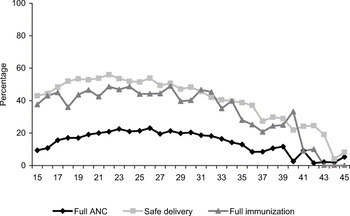
Figure 1 shows that the pattern of maternal and child health care utilization by women in the age group 15–49 does not seem to be linear, because women in the age group 22–30 years utilized more full antenatal care, safe delivery and full immunization for their children than their elder and younger counterparts.
Utilization of maternal and child health care services by women's age, India, NFHS-3 (2005–06).

Profile of the respondents
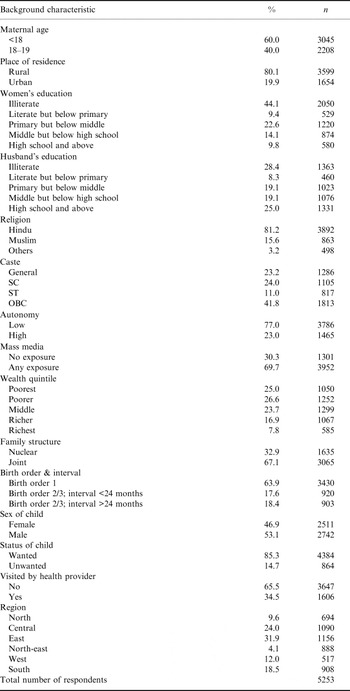
Table 1 represents the weighted percentage distribution of the respondents who underwent their last childbirth in their teens during the five years preceding the survey date, by background characteristics. Among the respondents, 60% were aged less than 18 years of age at the time of childbirth. Eighty per cent belonged to rural areas, and 44% had no formal education. About 81% were Hindus and 42% of adolescents were from other backward classes. Among the respondents who had experience of childbirth in their teens, 77% had low autonomy and 30% had no mass media exposure. About 25% of the respondents belonged to the poorest wealth quintile.
Percentage distribution of women who had at least one live birth in their teens (aged 15–19) during the last five years preceding the survey by background characteristics, NFHS-3 (2005–06), India

Note: All ‘n’ values are unweighted.
Differentials in the utilization of maternal and child health care
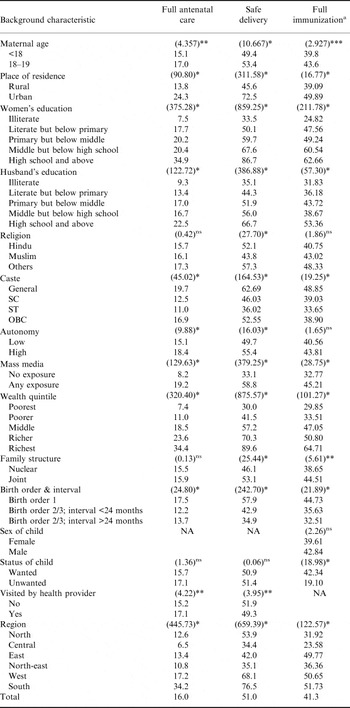
To identify the factors associated with the utilization of skilled maternal and child health care, namely, full antenatal care, safe delivery and full immunization, the bivariate differential of the selected socioeconomic and demographic characteristics was examined. Table 2 shows the weighted percentage of women and their children who utilized maternal and child health care services by selected background characteristics. Overall, 16% of the respondents received full antenatal care, 51% underwent safe delivery and 41% of the children born to adolescent mothers received full immunization. The rates of receiving full antenatal care and safe delivery care were 15% and 49%, respectively, among those women who delivered their last child below the age of 18 years. About 40% of the children of women who delivered their child when they were less than 18 years received full immunization. The rates of utilization of full antenatal care, safe delivery and full immunization were 14%, 46% and 39%, respectively, among the rural respondents.
Percentage of women who had at least one live birth in their teens (aged 15–19) during the last five years preceding the survey by usage pattern of maternity and child health care services and by background characteristics, NFHS-3 (2005–06), India

Note: Figures in parentheses are the χ2 statistics; χ2 test applied for each variable.
Levels of significance:
* p < 0.01;
** p < 0.05;
*** p < 0.10; ns, not significant; NA, not applicable.
a For full immunization, percentage of children aged 12–23 months born to adolescent women.
The rate of safe delivery care was 34% among women with no formal education, and was substantially higher at 87% for those with higher education or above. Similarly, antenatal care (8%) and full immunization (25%) were low among uneducated women compared with women with higher education or above (35% and 63% respectively). About one in four and three in four women whose husbands had higher education or above utilized full antenatal care and underwent safe delivery, respectively. Full immunization was 53% among children belonging to fathers who had higher education or above. Nearly 57% of women from other religions utilized safe delivery care, while the corresponding figures for Hindu and Muslim women were 52% and 44%, respectively. The utilization of full antenatal care (11%), safe delivery (36%) and full immunization (34%) was lowest among women from scheduled tribes. It was also found that the utilization of full antenatal care (18%) and safe delivery (55%) was higher among women who had high autonomy. Children belonging to mothers who had had exposure to mass media received higher (45%) full immunization care. Similarly, the rates of utilization of full antenatal and of safe delivery care were 19% and 59%, respectively, among women who had any exposure to mass media. Only 7% of adolescents belonging to the poorest wealth quintile received full antenatal care, while 30% of the women and their children belonging to the poorest wealth quintile utilized safe delivery care and received full immunization, respectively. The utilization of all three services was higher among those with first-time experience of childbirth. The findings revealed that the utilization of all three services was highest in the southern region, where about 34%, 77% and 52% of women and their children utilized full antenatal, safe delivery and full immunization, respectively.
Determinants of full antenatal care utilization
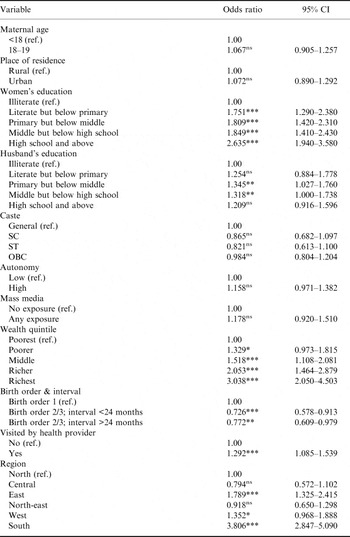
Results of the multivariate analysis reiterate that women's education, husband's education, economic status, birth order, health provider's visit and region are the significant determinants of full antenatal care utilization. Women's education emerged as a vital determinant in the utilization of full antenatal care (Table 3). Women with middle and higher education were 1.8 times (CI=1.410–2.430) and 2.6 times (CI=1.940–3.580) more likely to utilize full antenatal care compared with uneducated women, respectively. Moreover, the odds of receiving full antenatal care among women who had formal education but below primary level were higher compared with those among uneducated women (OR=1.751, CI=1.290–2.380). Birth order was also found to be a significant determinant in the utilization of full antenatal care. Women who had had previous experience of childbirth were less likely to utilize full antenatal care compared with those women who experienced childbirth for the first time. A health provider visit led to a significant increase in the utilization of full antenatal care. The odds of receiving full antenatal care were higher among women whom the health provider visited compared with those women whom the health provider had not visited (OR=1.292, CI=1.085–1.539). The wealth quintile showed a significant positive effect on the utilization of full antenatal care. Women from the richer and the richest wealth quintiles were 2.1 times (CI=1.464–2.879) and 3 times (CI=2.050–4.503), respectively, more likely to use full antenatal care compared with women from the poorest wealth quintile. Another significant finding is the regional variation in the utilization of antenatal care. Compared with women from the north region, full antenatal care utilization was found to be more likely among women from the south (OR=3.806, CI=2.847–5.090), followed by women belonging to the east region (OR=1.789, CI=1.325–2.415).
Binary logistic regression model showing odds ratios and confidence intervals for receiving full antenatal care among women who had at least one live birth in their teens (aged 15–19) during the last five years preceding the survey, NFHS-3 (2005–06), India

Levels of significance:
* p<0.10;
** p<0.05;
*** p<0.01; ns, not significant.
Determinants of safe delivery care
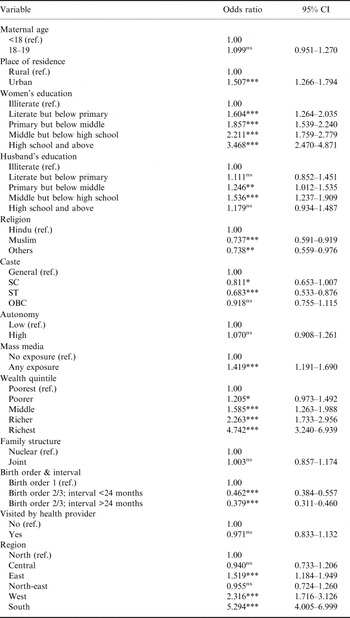
Table 4 demonstrates the results of the multivariate analyses of the utilization of safe delivery care. The results show that place of residence, women's education, husband's education, religion, caste, mass media exposure, economic status, birth order and region are statistical significant determinants in the utilization of safe delivery.
Binary logistic regression model showing odds ratios and confidence intervals for receiving safe delivery among women who had at least one live birth in their teens (aged 15–19) during the last five years preceding the survey, NFHS-3 (2005–06), India

Levels of significance:
* p<0.10;
** p<0.05;
*** p<0.01; ns, not significant.
Urban women, compared with their rural counterparts, were more likely to undergo safe delivery (OR=1.507, CI=1.266–1.794). As expected, safe delivery care increases with the women's educational level. Compared with uneducated women, those with high school education and above were more likely to use safe delivery care (OR=3.468, CI=2.470–4.871). Although husband's education appeared to be a significant factor for the utilization of safe delivery care, it was not as strong a factor as women's education. This could be because the husband's education is strongly associated with the wife's education. When one is included in the regression model, the other may not show a strong effect. The likelihood of using safe delivery was low among women belonging to Muslim (OR=0.737, CI=0.591–0.919) and other religions (OR=0.738, CI=0.559–0.976) compared with women belonging to the Hindu religion. The probability of utilizing safe delivery was found to be less among scheduled castes (OR=0.811, CI=0.653–1.007) and scheduled tribes (OR=0.683, CI=0.533–0.876) compared with women from other castes. Women who had exposure to mass media were more likely to utilize safe delivery care than women who did not have any mass media exposure (OR=1.419, CI=1.191–1.690). The economic status of female adolescents was one of the most significant determinants in the utilization of safe delivery care. As compared with adolescents who were poor, the adolescents from the richer quintile, as well as those from the middle wealth quintile, were 2.3 times (CI=1.733–2.956) and 1.6 times (CI=1.263–1.988), respectively, more likely to use safe delivery care. The probability of safe delivery care was found to be less among women who had had previous experience of childbirth than among women with first-time childbirth experience. The regional variation shows that the odds of utilization of safe delivery were higher in the south (OR=5.294, CI=4.005–6.999), followed by the west (OR=2.316, CI=1.716–3.126) and east regions (OR=1.519, CI=1.184–1.949) compared with the north.
Determinants of full immunization
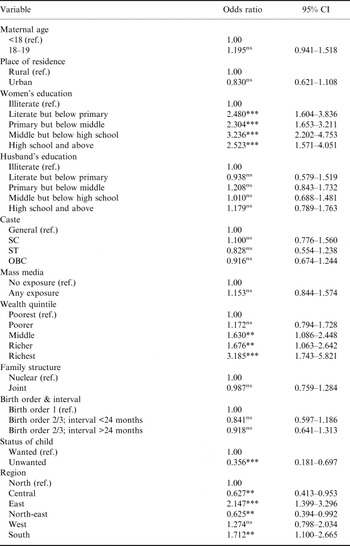
The results of the multivariate analyses on the use of full immunization for children aged 12–23 months are presented in Table 5. Women's education, wealth status, status of child and region of the country emerged as significant factors affecting the utilization of full immunization.
Binary logistic regression model showing odds ratios and confidence intervals for receiving full immunization among children aged 12–23 months born to adolescent women aged 15–19 years, NFHS-3 (2005–06), India

Levels of significance:
** p<0.05;
*** p<0.01; ns, not significant.
Women's education shows a significantly positive association with children receiving full immunization. The odds of receiving full immunization among children of mothers with primary and middle education were 2.3 times (CI=1.653–3.211) and 3.2 times (CI=2.202–4.753), respectively, higher compared with children of uneducated mothers. Children of mothers who were literate, but below the primary educational level, were 2.5 times (CI=1.604–3.836) more likely to receive full immunization compared with children of uneducated mothers. The likelihood of receiving full immunization was found to be 3.2 times (CI=1.743–5.821) higher among children from the richest wealth quintile than from those of the poorest wealth quintile. The results documented the status of children as a significant determinant for receiving full immunization. The odds of receiving full immunization were found to be less among unwanted children compared with wanted children (OR=0.356, CI=0.181–0.697). Again, region emerged as a strong significant factor affecting the utilization of full immunization. Children of adolescent mothers from the east were 2.1 times (CI=1.399–3.296) more likely to receive full immunization, followed by the south (OR=1.712, CI=1.100–2.665), compared with children from the north. However, the odds of receiving full immunization were less in the central region (OR=0.627, CI=0.413–0.953) followed by the north-east (OR=0.625, CI=0.394–0.992) region compared with the north.
Discussion and Conclusion
The present study examines the utilization of maternal and child health care services among women who had their last childbirth during their adolescence in the five years preceding the survey date. The study used data from the Indian National Family Health Survey (NFHS) conducted in 2005–06. The objective of the study was to investigate factors affecting the use of three key maternal and child health care utilization, namely, full antenatal care, safe delivery and full immunization, among married female adolescents and their children in India.
A curvilinear pattern was evident between age and the utilization of select maternal and child health care services. Women in the middle childbearing ages seemed to utilize more maternal and child health services compared with their peers in the early or late childbearing ages. Studies by Obermeyer & Potter (Reference Obermeyer and Potter1991) and Gage (Reference Gage1998) also found a curvilinear relationship. However, a few studies have found a positive relationship between age and the use of maternal and child health care services (Pebley et al., Reference Pebley, Goldman and Rodriguez1996; Celik & Hotchkiss, Reference Celik and Hotchkiss2000).
The study has identified several determinants that have a significant influence on the utilization of maternal and child health care services in India. These include women's education, economic status, birth order and region. Factors that affect the utilization of maternal and child health services among adolescent mothers require attention on a few key fronts that have emerged from this study. Women's education, economic status and region were common significant predictors for the utilization of three maternal and child health care services. Although husband's education was identified as a significant factor in the utilization of full antenatal care and safe delivery, it was less pronounced compared with women's education. This was probably because women's education, as well as other socioeconomic and demographic factors, substantially reduces the effect of husband's education. The urban–rural differences in the utilization of maternal and child health care show a significant effect in the case of safe delivery care. One reason could be the easy access to public and private health care facilities in urban areas. Moreover, rural women are readily influenced by traditional practices that run contrary to modern delivery practices (Mekonnen & Mekonnen, Reference Mekonnen and Mekonnen2002).
Religion had a significant effect on the utilization of safe delivery, though it did not affect the utilization of antenatal care or child immunization. This finding is inconsistent with that of an earlier study, which highlighted that Hindu and Muslim women are alike in not availing themselves of delivery care services in an all-age-group women sample (Salam & Siddiqui, Reference Salam and Siddiqui2006). Similarly, caste did not influence the utilization of antenatal care and full immunization, but utilization of safe delivery was found to be significantly lower among adolescent women from scheduled tribes. In the Indian context, caste may be considered broadly as a proxy for socioeconomic status and poverty. Scheduled tribes, which are considered a socially and geographically disadvantaged group, have a higher probability of living under adverse conditions (Nayar, Reference Nayar2007). Furthermore, scheduled tribes mostly receive benefits from the primary health care programme, where the government spends most of the public funds (Rao et al., Reference Rao, Selvaraju, Nagpal and Sakthivel2005). Thus, the utilization of health care services such as antenatal care and full immunization could be more conducive. However, delivery practices among scheduled tribes have been severely affected by a shortage of trained birth attendants, who are the key personnel who ensure proper and timely delivery care services in the community (Saroha et al., Reference Saroha, Altarac and Sibley2008). Serious efforts are needed to increase the number of trained birth attendants in tribal communities, provide proper training to existing human resources, and strengthen Emergency Medical Obstetric Care (EMOC) at primary health care centres in tribal areas.
The results from both bivariate and multivariate analyses confirmed the importance of women's education for the utilization of maternal and child health care services, net of other socioeconomic and demographic determinants. This result is consistent with the hypothesis and findings from other studies in developing countries (Jafarey et al., Reference Jafarey, Kamal, Qureshi and Fikree2008; Ahmed et al., Reference Ahmed, Creanga, Gillespie and Tsui2010; Amin et al., Reference Amin, Shah and Becker2010; Bhutta et al., Reference Bhutta, Chopra, Axelson, Berman, Boerma and Bryce2010; Hussein et al., Reference Hussein, Newlands, D'Ambruoso, Thaver, Talukder and Besana2010; Ronsmans et al., Reference Ronsmans, Chowdhury, Koblinsky and Ahmed2010). The effect of education on maternal and child health care utilization for adolescent women is much more pragmatic than that for older women. Despite several programmatic efforts, early marriage continues to characterize the lives of large proportions of young women in India. At the national level, nearly half (47%) of the women aged 20–24 were married by the time they were 18 years old and this proportion is as high as one in two to three in five among several states (IIPS & Macro International, 2007). Early marriage tends to curtail young women's educational opportunities. Those who marry early tend to have low levels of educational attainment (Mensch et al., Reference Mensch, Bruce and Greene1998; Lloyd & Mensch, Reference Lloyd and Mensch2006; ICDDRB, 2007) and are often expected to leave school in order to devote their time to the care of their new home or to childbearing and childcare (Jensen & Thornton, Reference Jensen and Thornton2003).
Early childbearing and related poor maternal and child health experiences of adolescent women are intimately linked to their educational status. Education serves as a proxy for information, cognitive skills and values; education affects health-seeking behaviour through a number of pathways (Raj et al., Reference Raj, Saggurti, Balaiah and Silverman2009). Women with higher education are more likely to know the long-term benefits of the utilization of services compared with women with less education or uneducated women. Educated mothers are more likely to take advantage of public health care services (Shawky & Milaat, Reference Shawky and Milaat2001), seek high-quality services and have greater ability to use health care inputs that offer improved care than women with no education (Celik & Hotchkiss, Reference Celik and Hotchkiss2000). Education may impart feelings of self-worth and self-confidence to women, which some have argued are more important in bringing about changes in health-related behaviour than exposure to relevant information (Chanana, Reference Chanana, Jeffery and Basu1996). Education is likely to enhance a wife's communication with her husband and other members of the family on health-related issues. It also increases the decision-making capacity about her own health and that of her children (Celik & Hotchkiss, Reference Celik and Hotchkiss2000; Navaneetham & Dharmalingam, Reference Navaneetham and Dharmalingam2002). Also, an educated woman will be able to use subtle means to influence her in-laws' decisions and at the same time introduce the family to new ideas about the value of skilled health care (Furuta & Salway, Reference Furuta and Salway2006).
Economic status was found to be another significant factor (after women's education) affecting the utilization of the three selected maternal and child health care services in India. Adolescent women belonging to the richest households were three and five times more likely to use full antenatal care and safe delivery, respectively, compared with adolescent women from the poorest households. The same pattern was reflected in the case of full immunization among children, where children of the richest wealth quintile were three times more likely to receive full immunization than the children from the poorest quintile. The pattern clearly shows the wide range of inequality that exists across economic groups. Previous studies also concluded that the poor–rich gap in the utilization of maternal and child health care services has widened and programmes are barely reaching the poor sections of society (Mohanty & Pathak, Reference Mohanty and Pathak2009; Pathak & Mohanty, Reference Pathak and Mohanty2010). This is probably because poor households do not have the resources for health care expenses, as their priority is to meet their basic daily needs, whereas wealthier households can spend a higher proportion of their earnings on health care. Low coverage of immunization among children of adolescent mothers could be the result of their additional workload, providing economic support to the family and possible ignorance of child immunization.
However, the Government of India launched the Janani Surkasha Yojana (JSY) in 2006 (Government of India, 2006) under the broad umbrella of the National Rural Health Mission (NRHM), which provides financial support to pregnant mothers, though the scheme covers women aged 19 years and above to promote late marriage. Since the present study covers women aged 15–19 years, the proposal to extend required financial support to women below 19 years of age under the JSY scheme could help to improve maternal and child health care, especially for women from the poorest sections of society. Moreover, there is need to spread awareness about available maternal and child health care schemes among poor adolescent women who face a number of obstacles that limit their ability to exercise informed choice and who are least likely to use maternal health services. Evidence has shown that access and cost are serious barriers to maternal health care service utilization among poor adolescent women (Adhikari, Reference Adhikari, Bott, Jejeebhoy, Shah and Puriet2003; Onah et al., Reference Onah, Ikeako and Iloabachie2006; Fotso et al., Reference Fotso, Ezeh and Oronje2008).
The results of this study provide a slightly different assessment of the role of women's autonomy in pregnancy care compared with previous studies. Previous studies concluded that women's decision-making autonomy was a determinant factor in receiving pregnancy care (Basu, Reference Basu1992; Bloom et al., Reference Bloom, Wypij and Dasgupta2001; Das et al., Reference Das, Gandotra, Pandey and Shah2002; Mistry et al., Reference Mistry, Galal and Lu2009). However, the current study found that women's autonomy did not have a significant impact on the utilization of the three maternal and child health care services. A study in Nepal found that the association between decision-making variables and skilled maternal health care utilization was weak (Furuta & Salway, Reference Furuta and Salway2006). One possible explanation could be the effect of age, which restricts financial freedom and freedom to go to the health facility, especially in the presence of other older women in the household (Mumtaz & Salway, Reference Mumtaz and Salway2005). Studies have highlighted that mothers-in-law and other older women in the household play a dominant role in determining the reproductive behaviour of young couples (Santow, Reference Santow1995). A study in Pakistan by Mumtaz & Salway (Reference Mumtaz and Salway2005) states that maternal health services are usually controlled by older women, who have a culturally ordained responsibility to look after the younger women's reproductive and maternal health needs. In some cases, women who report being involved in decision-making are actually not autonomous agents who can garner enough household resources to meet their own needs without the final say from other elder women in the household, because decisions regarding the management of pregnancy are within the domain of older female relatives (Furuta & Salway, Reference Furuta and Salway2006). Other studies from India also established that when husbands, mothers-in-law and girls agreed on the importance of a health need, it would be addressed quickly (Prakash et al., Reference Prakash, Swain and Negi1994; Barua & Kurz, Reference Barua and Kurz2001). Putting pressure on young married women not to use modern contraceptives and to become pregnant in the first year of marriage was the strongest influence mothers-in-law and other elder in-laws exhibited in the study carried out in Maharashtra, India (Barua & Kurz, Reference Barua and Kurz2001). The adjusted effect after controlling other individual- and village-level factors showed that daughters-in-law had lower odds of obtaining adequate prenatal and delivery care from a trained person in India compared with wives of household heads (Mistry et al., Reference Mistry, Galal and Lu2009). Given these combined findings when studying the adolescent age group, it might be as important to understand the autonomy of older household females as well as the woman's own autonomy levels when researching utilization of maternal and child health care services.
The effect of birth order is consistent with other studies that have indicated that women are significantly more likely to use maternal health care services for their first child (Adekunle et al., Reference Adekunle, Filippi, Graham, Onyemunwa, Udjo and Hill1990; Stewart & Sommerfelt, Reference Stewart and Sommerfelt1991; Akin & Munevver, Reference Akin and Munevver1996; Celik & Hotchkiss, Reference Celik and Hotchkiss2000). A recent study in India highlighted that a substantial proportion of young women reported the experience of at least one pregnancy-related complication during pregnancy, delivery or the postpartum period for the first birth (Santhya et al., Reference Santhya, Jejeebhoy and Ghosh2008). The findings also highlighted limited care seeking during the antenatal period and at delivery for the second and higher order births compared with the first birth. There are perhaps three possible explanations for this. First, women with a first-child pregnancy pose health risks and are probably more cautious about their pregnancy and therefore seek maternal health care services (International Council for Research in Women, 2007; Raj et al., Reference Raj, Saggurti, Balaiah and Silverman2009). Second, as the number of children borne increases, women may tend to believe that modern health care is not necessary and tend to rely more on past experience (Mekonnen & Mekonnen, Reference Mekonnen and Mekonnen2002). Third, a higher birth order suggests a greater family size and hence lower resources (both time and money) available to seek formal health care (Wong et al., Reference Wong, Popkin, Guilkey and Akin1987; Elo, Reference Elo1992; Bhatia & Cleland, Reference Bhatia and Cleland1995). However, there is need to examine the causes and constraints related to the utilization of maternal health care services by higher order births among young women. Special efforts must be made by health care providers to reach higher order young mothers for timely and appropriate counselling regarding the advantages of availing themselves of maternal and child health care services.
The variations in the utilization of maternal and child health care services across the different regions of the country may be partly linked with the diversity of regions in terms of availability of resources and the state of socioeconomic and demographic progress. The states covered under the north and central regions include five Empowered Action Group States (EAG) characterized by low women's education, poor exposure to mass media and low mean age at marriage. Moreover, the socioeconomic and demographic indicators are below average compared with those in other regions. Higher utilization of the three maternal and child health care services was found in the south and west regions. States belonging to the south and west regions achieved replacement level fertility, low child and infant mortality and improved socioeconomic status (Ladusingh & Singh, Reference Ladusingh and Singh2007). Full antenatal care utilization is significantly higher in the south region, followed by the east and west regions. Moreover, the results show that safe delivery was found to be high in the south, east and west regions, where the odds of utilization of full antenatal care were higher compared with the north. This finding supports the notion that utilization of antenatal care services may lead to the utilization of other maternal health services such as institutional delivery (Ram & Singh, Reference Ram and Singh2006). However, the National Rural Health Mission (NRHM) has focused on states of the north, central and north-east regions, and has devoted special attention to adolescent women. The focus should be more on states like Uttar Pradesh, Rajasthan and Madhya Pradesh of the north and central regions, where about one in four women aged 15–19 have already started childbearing (IIPS & Macro International, 2007).
This study concludes that the utilization of maternal and child health services by adolescent mothers and their children is far from satisfactory. Moreover, the adverse effect of the low coverage of these services could lead to high maternal mortality, adverse pregnancy outcomes and poor maternal health. A recent study focused on a series of unfavourable health conditions of children born to adolescent mothers, ranging from high malnutrition to prevalence of diarrhoea and acute respiratory infection (Raj et al., Reference Raj, Saggurti, Balaiah and Silverman2009). The present study adds to the evidence underscoring the need for programmes that cater for the needs of adolescent and newlywed young girls, which may differ from those of married adults. The most effective way to address low coverage of maternal and child health among adolescent women is to support higher education for the girl child. If the government could implement and support higher education for girls more effectively, women would be more conscious about proper and timely utilization of health care services both for themselves and for their children. In a country like India where women's autonomy is very low, along with the rigid cultural traditions and family norms, access to education among married adolescents could be promoted by working effectively with the existing community structure. It is essential to bring recognition to communities about the importance of female education in improving the health of mothers and their children as well as generating financial support for the family. The promotion of distance school/college/university education could be an effective approach, as it does not require students to be physically present in traditional educational setting such as classrooms, allowing women to pursue their studies in a flexible educational environment alongside their regular housework. To ensure high enrolment in these distance-learning centres, the government should provide financial support to poor married adolescent women, so their education will not be a financial burden to their family. Additionally, there is a need to build awareness about the adverse effects of early pregnancy, particularly among poor and uneducated adolescent women. At the same time, there is an imperative need not only to change community and family attitude towards early marriage, but also to favour postponement of pregnancy and not link a young woman's security within the marital family with her early childbearing ability (Barua et al., Reference Barua, Waghmare and Venkiteswaran2003). Special attention is required to enforce the recent law on the Prohibition of Child Marriage Act 2006 (Government of India, 2007). It is important to ensure that policies and programmes related to the Department of Women and Child Development and Department of Youth reach young people, thus enabling them to recognize the importance of preventing early marriage and improving maternal and child health among adolescent women.
Acknowledgments
An earlier version of this paper was presented at the Global Maternal Health Conference (GMHC) held in New Delhi in 2010. The comments of the participants helped in the revision of this paper. The authors thank Professor Sulabha Parsuraman, Dr Manoj Alagarajan and Dr Abhishek Singh from the International Institute for Population Sciences (IIPS), Mumbai, India, for their useful comments and suggestions. They also acknowledge the editor and anonymous reviewers whose constructive suggestions helped immensely to improve this paper.