Mare's milk (MM) is a valuable raw material and a very attractive product for scientific research to address the issue of cow's milk allergy, as it is characterised by a high similarity to the properties, components and fractions of breast milk (Miranda et al. Reference Miranda, Mahé, Leroux and Martin2004; Potočnik et al. Reference Potočnik, Gantner, Kuterovac and Cividini2011). The distribution of di- and tri-glycerides is similar between mares’ and women's milk (Malacarne et al. Reference Malacarne, Martuzzi, Summer and Mariani2002). Moreover, the similar ratio of whey proteins to casein may be a good argument to select this milk over other animal milk as a dietary substitute for humans (Uniacke-Lowe et al. Reference Uniacke-Lowe, Huppertz and Fox2010). The richness in the whey protein content of mare's milk makes it more favourable to human nutrition than cow's milk because of the relatively higher supply of essential amino acids (Hambrćus, Reference Hambrćus1993). There is a growing interest in mare's milk consumption and it is used especially in a fermented form e.g., koumiss, airag. These dairy beverages contain diverse microbial strains, such as Lactobacillus, Lactococcus, Kluyveromyces, Candida and Saccharomyces (Montanari et al. Reference Montanari, Zambonelli, Grazia, Kamesheva and Shigaeva1996; Litopoulou-Tzanetaki & Tzanetakis, Reference Litopoulou-Tzanetaki, Tzanetakis, Robinson, Batt and Patel2000). Chen et al. (Reference Chen, Wang, Chen, Liu, Zhang and Sun2010) stated that the presence of angiotensin converting enzyme (ACE) inhibitory peptides in koumiss supports the claim of its beneficial effects on cardiovascular health. However, there is no data in the literature concerning the health-oriented and immunoreactive properties of mare's milk and its usage in therapy for allergic people.
According to the World Health Organisation, allergy is third on the list of the most frequent chronic diseases. Patient reports of cow's milk allergy (CMA) range between 1–17·5%, 1–13·5%, and 1–4% in preschoolers, children 5 to 16 years of age and adults, respectively (Fiocchi et al. Reference Fiocchi, Brozek, Schünemann, Bahna, von Berg, Beyer, Bozzola, Bradsher, Compalati, Ebisawa, Guzman, Li, Heine, Keith, Lack, Landi, Martelli, Rancé, Sampson, Stein, Terracciano and Vieths2010). Patients suffering from CMA are often recommended to avoid the intake of dairy products. Because milk is a great source of easily absorbed calcium and contains vitamins, antioxidants, lactoferrin and lysozyme, which are essential components of the diet, strict avoidance of its consumption is frequently risky and can cause a nutritional imbalance. In the case of newborns and infants artificially fed and not tolerating cow's milk, milk replacements are used, e.g.: soy formulas, cow's milk hydrolysates or elemental amino acid formulas (Fiocchi et al. Reference Fiocchi, Brozek, Schünemann, Bahna, von Berg, Beyer, Bozzola, Bradsher, Compalati, Ebisawa, Guzman, Li, Heine, Keith, Lack, Landi, Martelli, Rancé, Sampson, Stein, Terracciano and Vieths2010; De Greef et al. Reference De Greef, Hauser, Devreker, Veereman-Wauters and Vandenplas2012). Scientists are focused on the creation and examination of low-antigenic and -allergenic sources of proteins with a similar value for the organism as cow's milk. Therefore, it must be noted that a primary focus of study on CMA is striving to ensure the safety of intake milks from animals other than cows, such as mares.
There is evidence that among the mammalian milks (cow, sheep, mare, goat), mare's milk was found to be the least reactive substitute, as detected by both ELISA (enzyme-linked immunosorbent assay) and EAST (enzyme allergosorbent test) methods (Docena et al. Reference Docena, Rozenfeld, Fernandez and Fossati2002). Consistent with data from Curadi et al. (Reference Curadi, Giampietro, Lucenti and Orlandi2001), mare's milk is tolerated by 96% of children with CMA. Businco et al. (Reference Businco, Giampietro, Lucenti, Lucaroni, Pini, Di Felice, Lacovacci, Curadi and Orlandi2000) suggested that mare's milk with the appropriate modifications can be regarded as a good substitute for cow's milk in most children with severe IgE-mediated cow's milk allergy.
Mammalian milk contains proteins that can be wholly or partially resistant to gastrointestinal enzymes, and this is generally considered to be one of the risk factors for allergenicity (Fiocchi et al. Reference Fiocchi, Brozek, Schünemann, Bahna, von Berg, Beyer, Bozzola, Bradsher, Compalati, Ebisawa, Guzman, Li, Heine, Keith, Lack, Landi, Martelli, Rancé, Sampson, Stein, Terracciano and Vieths2010). In the dairy industry, different techniques can be used to decrease the immunoreactivity of dairy products, such as physical, enzymatic or chemical reactions (Bonomi et al. Reference Bonomi, Fiocchi, Frøkiaer, Gaiaschi, Iametti, Poiesi, Rasmussen, Restani and Rovere2003; Wróblewska et al. Reference Wróblewska, Karamać and Szymkiewicz2003). One of these techniques, fermentation, is one of the oldest methods of processing and preserving food. Microbial fermentation can modify allergen reactivity, and it is considered to be a good way to reduce antigenicity (El-Ghaish et al. Reference El-Ghaish, Ahmadova, Hadji-Sfaxi, Eddine El Mecherfi, Bazukyan, Choiset, Rabesona, Sitohy, Popov, Kuliev, Mozzi, Chobert and Haertlé2011a; Chen et al. Reference Chen, Song, Jia and Wang2012). Fermented milk beverages have been shown to exert a positive effect on human health (Parvez et al. Reference Parvez, Malik, Ah Kang and Kim2006). Therefore, we hypothesised that lactic acid fermentation and simulated digestion of the mare's milk would beneficially decrease its antigenic potential.
The aim of the study was to determine the reactivity of digested mare's milk fermented by Lactobacillus casei LCY, Streptococcus thermophilus MK10 and Bifidobacterium animalis Bi30 with antibodies directed against selected cow's milk allergens.
Materials and methods
Mare's milk samples
The mare's milk was collected from 12 warmblood Wielkopolski breed mares (Genactiv, Poznań, Poland). After milking, aliquots of samples were immediately chilled to 4 °C and kept frozen at −20 °C.
Chemical analysis of mare's milk
The chemical composition of mare's milk was analysed with a MilkoScan™ FT2 infrared milk analyser (Foss, Hilleroed, Denmark).
Bacterial strain selection
The lactic acid fermentation process was carried out by the bacterial strains Lactobacillus casei LCY (Lb. casei), Streptococcus thermophilus MK10 (Str. thermophilus) and Bifidobacterium animalis Bi30 (Bifido. animalis) (IAR&FR PAS, Olsztyn, Poland). The incubation of mare's milk with bacteria lasted: Lb. casei – 16 h, Str. thermophilus – 16 h and Bifido. animalis – 24 h to obtain similar values of colony-forming units per ml (cfu/ml). The selected bacterial strains (100 μl of 1×10⁹ cfu/ml) were added to 10 ml mare's milk. The fermentation with Lb. casei, Str. thermophilus was carried out under aerobic conditions and fermentation with Bifido. animalis was carried out under anaerobic conditions. The samples were cooled to 4 °C.
Total number of bacteria
MRS agar (PS 60; BIOCORP, Warsaw, Poland) was used to assess the total number of Lb. casei bacteria. M17 Broth (PS 108; BIOCORP, Warsaw, Poland) was used to enumerate Str. thermophilus. Incubation was carried out under aerobic conditions (37 °C/48 h). Garche's agar (Bactocasitone peptebale, yeast extract, L-cysteine, hydrochloride, lactose, sodium acetate, MgSO4×7H2O, Na2HPO4×12H2O, KH2PO4, agar; pH 6·4) was used to count the total number of Bifido. animalis under anaerobic conditions (37 °C/48 h). The acidification activity of the bacteria was measured after fermentation. All samples were cooled to −20 °C for future analysis.
Simulation of digestion processes
A three-step in vitro assay was carried out according to Laparra & Sanz (Reference Laparra and Sanz2010) with modifications. Human saliva (non-standardised specimen; collected from 3 healthy donors after 2 h fasting), porcine pepsin (EC 3.4.23.1; P-7000, Sigma, Steinheim, Germany) (800–2·500 units/mg protein), pancreatin (EC 232-468-9; P7545, Sigma) (activity, 8×USP specifications) and bile extract porcine (EC 232-369-0; B8631, Sigma) were used to simulate human digestion in the mouth, the stomach and the intestine. Aliquots of the different samples (3 ml) were weighed in tubes (50 ml). In the first step of the digestion, 0·5 ml of the human saliva (pH 6·5–7·4) was used (incubation 5 min/37 °C). Aliquots were diluted with an additional 4 ml of a saline solution (140 mM NaCl, 5 mM KCl adjusted to the 3 pH). Gastric digestion was started by adding pepsin (0·1 M HCl/pH 3) to the samples that were incubated (37 °C/1 h) with gentle agitation in a rocking platform shaker. A pancreatin-bile extract (0·1 NaHCO3/6·9–7 pH) was added to the samples and the gastrointestinal mixture was incubated (37 °C/2 h). After the in vitro digestion, the samples were cooled to −20 °C.
Immunoreactivity of milk proteins – (competitive ELISA)
The ELISA method was carried out according to the method described earlier (Wróblewska et al. Reference Wróblewska, Kołakowski, Pawlikowska, Troszyńska and Kaliszewska2009). Briefly, microtitre plates were coated with antigen diluted in 0·05 M carbonate buffer (9·6 pH) and incubated overnight at 4 °C. Then, samples or standard antigen and polyclonal rabbit antibodies (IgG; from the collection of the IAR&FR PAS, Olsztyn, Poland) were added and incubated (37 °C/2 h). The wells were washed and filled with the horseradish peroxidase (HRP)-conjugated with goat anti-rabbit IgG (Sigma A6154). The reagent 3,3′,5,5′-tetramethylenbenzidine (TMB) (Sigma T5525) was used as a substrate solution. The plates were incubated (37 °C/15 min). The reaction was stopped by the addition of 2 M H2SO4. Absorption was measured at wavelengths of 450 nm using a plate reader Sunrise (Tecan, Männedorf, Switzerland) and powered by Magellan data analysis software (Tecan).
Tricine SDS-polyacrylamide gel electrophoresis (Tricine SDS-PAGE)
Tricine SDS-PAGE electrophoresis was carried out in a Mini PROTEAN 3 Cell (Bio-Rad). The gels were prepared according to Shägger & von Jagow (Reference Schägger and von Jagow1987). The separating gel was 16·5% T, 3% C and the stacking gel was 4% T, 3% C. Protein samples were diluted by adding an equal volume of double-concentrated sample buffer (125 mM Tris-HCl, pH 6·8, 4% SDS, 50 mg DTT, 20% glycerol and bromophenol blue) and heated at 100 °C for 5 min. The gels were run in Tris-tricine buffers at 30 V for 30 min. and 100 V for 120 min. Low molecular weight markers (Sigma M3913) ranging from 6·5 to 66 kD were used as a standard. The gels were stained with a 0·2% solution of Coomassie Brilliant Blue R-250 (Serva 17524, Heidelberg, Germany). To obtain optimal results, different aliquots of the samples were applied to the gels: 10 μl of samples before digestion (diluted 1 : 9) and after the saliva (diluted 1 : 1) and pepsin steps (undiluted), 15 μl of samples after the pancreatin/bile salt step (undiluted) and 5 μl of molecular ladder. The bands with molecular weights corresponding to proteins from the samples were compared with the protein standards. The degradation of proteins was quantified by densitometry analysis of the gels with Quantity One V4.6.1 software (Bio-Rad, CA, USA).
Statistical analysis and calculations
Each of the experiments was conducted in triplicate. The results were statistically analysed by one-way analysis of variance (ANOVA) using statistical software (10.0 version StatSoft, Cracow, Poland). The significance of the dates was assessed by Duncan's multiple-range test. A P value of *P<0·05, **P<0·01, ***P<0·001 was considered statistically significant. The standard deviation (sd) values are included. The relative standard deviation (RSD) has been calculated as the ratio of the standard deviation to the mean.
The immunoreactivity was calculated from the standard curves of the standard antigens. All the analyses were carried out in triplicate and the averaged values were converted to concentration equivalents in μg per μl. The antigenicity of proteins was estimated as the 50% inhibition of antigen binding towards a standard protein. It was calculated as follows: x 1/x 2×100%=immunoreactivity of the tested antigen, where x 1=50% of the concentration of the standard antigen, x 2=50% of the concentration of the tested probe antigen. Inhibition rate (IR %) means the percentage of decrease of immunoreactivity.
Results
Chemical analyses of mare's milk
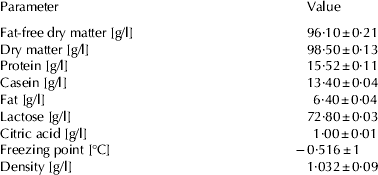
The mare's milk was characterised by a profile of chemical compounds (Table 1). The assessment of the quality of the milk was carried out within the experiment and showed a high amount of lactose (72·8 g/l; 0·03 sd) and a low amount of fat (6·40 g/l; 0·04 sd) and proteins (15·52 g/l; 0·11 sd), especially caseins (13·4 g/l; 0·04 sd). The content of dry matter and fat-free dry matter were 98·5 g/l (0·21 sd) and 96·1 g/l (0·21 sd), respectively. The mare's milk samples contained 0·1 g/l (0·01 sd) citric acid. The density was 1·032 g/l (0·09 sd) and freezing point was −0·516 °C (1 sd).
The chemical composition of mare's milk
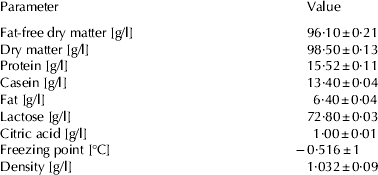
Values expressed as the mean±sd (standard deviation)
Lactic acid fermentation
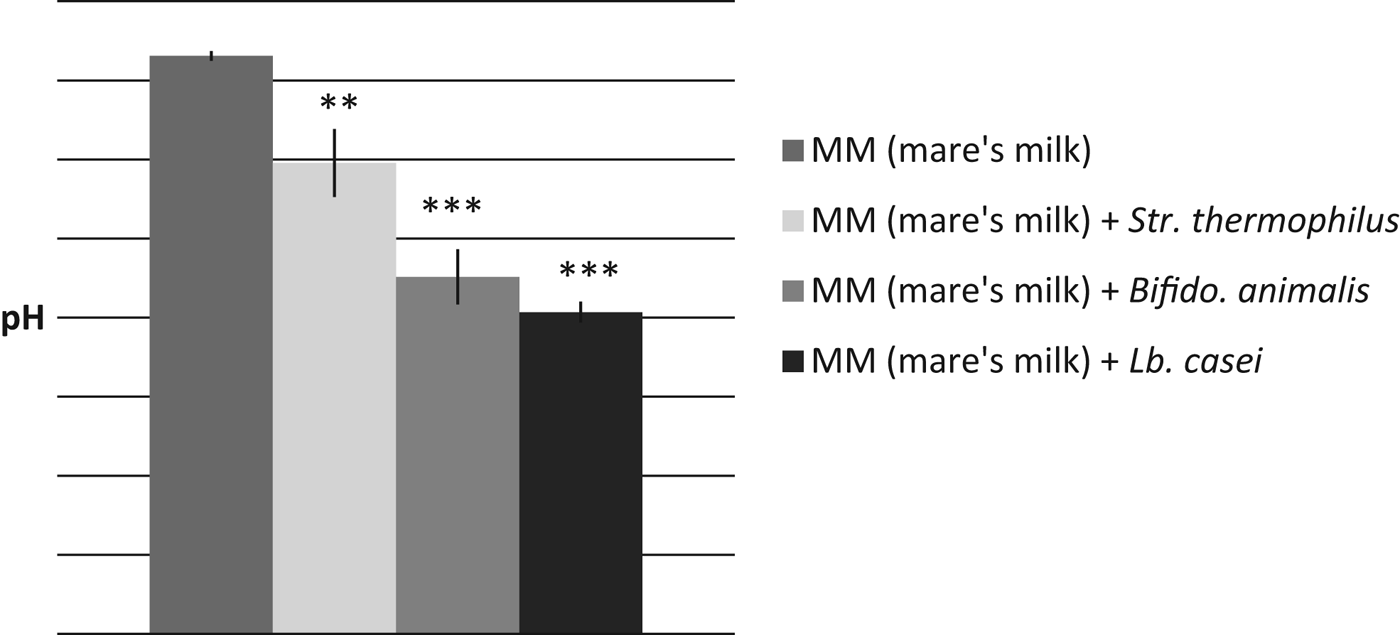
The time of fermentation was optimised. During the fermentation, the concentration of bacteria increased from 1×10⁷ cfu/ml to approximately: Lb. casei–1·30×109 cfu/ml (1·84×108sd), Bifido. animalis–1·85×109 cfu/ml (4·6×108sd), Str. thermophilus–1·24×109 cfu/ml (1·40×108sd). The acidification activity of the bacteria after fermentation varied for the different strains (Fig. 1). The Lb. casei and Bifido. animalis strains increased the acidity to pH 4·05 (sd=0·13) and 4·5 (sd=0·35), respectively. The unfermented mare's milk had a pH of 7·29 (sd=0·06). The Str. thermophilus was characterised by the smallest pH reduction (pH 5·94; sd=0·43) (Fig. 1).
Acidification of mare's milk and fermented products. MM+Str. thermophilus–mare's milk fermented by Streptococcus thermophilus MK10; MM+Lb. casei – mare's milk fermented by Lactobacillus casei LCY; MM+Bifido. animalis – mare's milk fermented by Bifidobacterium animalis Bi30. The standard deviation of the pH value is indicated; P values of *P<0·05, **P<0·01, ***P<0·001 were considered to be statistically significant.

The immunoreactivity of fermented products from mare's milk
The immunoreactivity profiles depended on the variability of epitopes in the antigen. The presence of α-lactalbumin (α-la), β-lactoglobulin (β-lg), α-casein (α-cas), β-casein (β-cas), κ-casein (κ-cas), bovine serum albumin (BSA), and lactoferrin (LF) epitopes in the samples was assessed using an ELISA method (Table 2). The most significant change in the reduction in a protein's immunoreactivity was observed in the mare's milk sample fermented with Lb. casei (β-cas – 74%). That product was characterised by the highest IR in α-la (35%), β-lg (41%), and α-cas (13%) proteins in comparison to the other fermented products. During simulated digestion, increases in immunoreactivity among antigens in products treated with Str. thermophilus (α-la, BSA) and Bifido. animalis (α-cas) were observed, but not in the sample treated with Lb. casei. Fermentation with the Str. thermophilus strain had slightly less capacity to reduce the immunoreactivity of the mare's milk proteins. The product treated with Bifido. animalis reduced the BSA and LF immunoreactivity levels to a much greater extent than the other samples (BSA – 20%; LF – 11%). Lactic acid fermentation proved to be a useful method, leading to a decrease in the immunoreactivity of β-lg, β-cas, κ-cas and LF.
The immunoreactivity of mare's milk and its fermented products

MM+Str. thermophilus – mare's milk fermented by Streptococcus thermophilus MK10; MM+Lb. casei – mare's milk fermented by Lactobacillus casei LCY; MM+Bifido. animalis – mare's milk fermented by Bifidobacterium animalis Bi30 LF – lactoferrin
Immunoreactivity is expressed in μg/μl; IR – % decrease of immunoreactivity in comparison with mare's milk; sd – standard deviation; ↑- significant increase in immunoreactivity; P values of *P<0·05, **P<0·01, ***P<0·001 were considered to be statistically significant
Electrophoresis of mare's milk fermented products after digestion
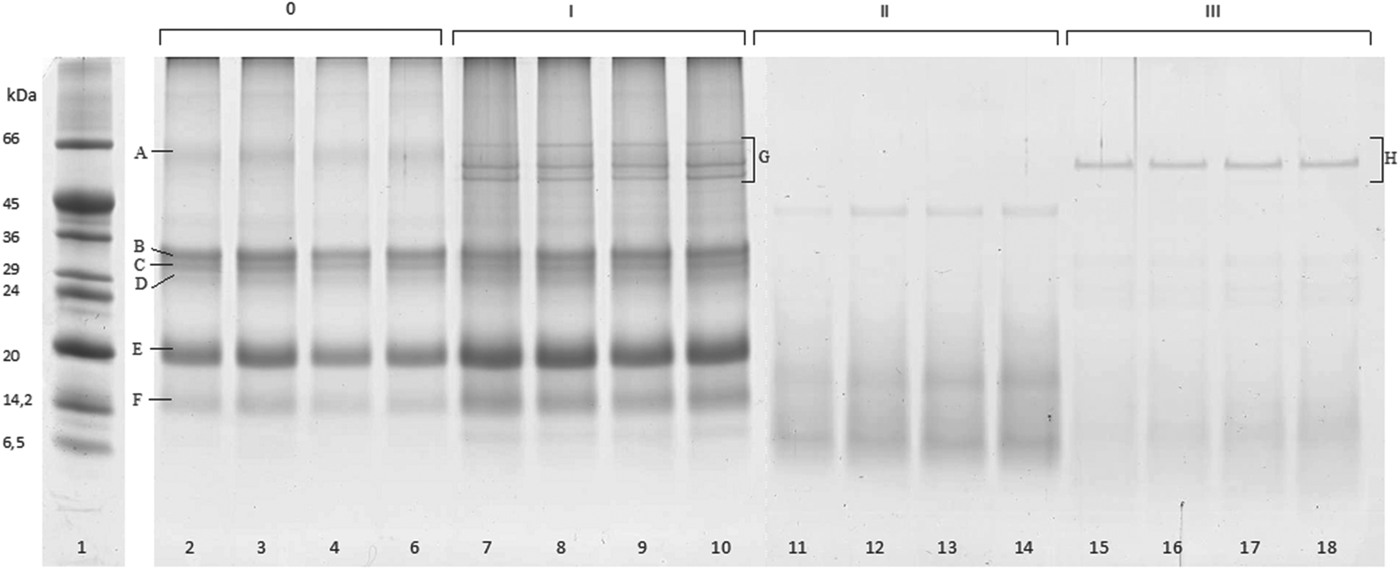
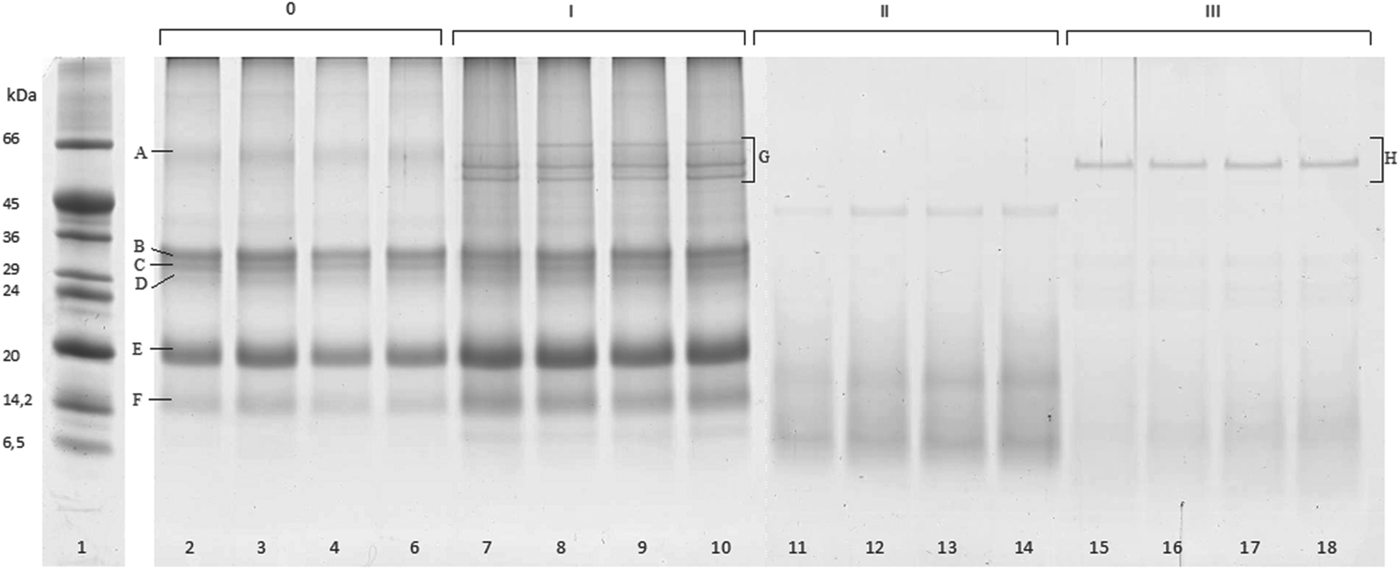
In this study, mare's milk and three fermented mare's milk-based products were digested by simulated processes in vitro. Changes in the milk's protein profiles before and after fermentation were analysed by Tricine SDS-PAGE electrophoresis (Fig. 2). The proteins corresponded to the molecular weight of BSA, the casein complex (α-, β-, κ-casein), β-lg, and α-la and were noted before digestion and after the saliva enzyme reaction. The proteins were partly degraded in the subsequent step. The products obtained with Lb. casei, Str. thermophilus and Bifido. animalis were characterised by a visibly high content of low molecular mass proteins/polypeptides. The higher molecular weight proteins (66–29 kDa) were degraded after in vitro pepsin digestion, and only negligible traces of proteins that correspond to a molecular weight 20–25 kDa were still present after the last step of digestion. Electrophoretic analysis showed that samples of fermented mare's milk varied slightly (the differences were not statistically significant; calculations are based on densitometry analysis) after the pepsin and pancreatin/bile salts steps, and a high level of all of the proteins was degraded. After saliva digestion, the bands corresponding to a molecular weight of 66–45 kDa originated from the saliva, and after the last step of digestion, the band corresponding to a molecular weight lower than 66 kDa originated from pancreatin (data were obtained by comparison with the single enzymes).
Tricine SDS-PAGE analysis of mare's milk and its fermented products. 1 – low molecular marker; 0 – before digestion/diluted 1:9 (2–6); I – samples after saliva stage, diluted 1:1 (7–10); II – samples after pepsin stage, undiluted (11–14); III – samples after pancreatin/bile salts stage, undiluted (15–18); 2,7,11,15 – mare's milk; 3,8,12,16 – mare's milk fermented by Lb. casei; 4,9,13,17 – mare's milk fermented by Str. thermophilus; 5,10,14,18 – mare's milk fermented by Bifido. animalis. Letters indicate the proteins with molecular weights corresponding to: A – BSA; B, C, D – casein complex; E – β-lg; F – α-la; G – bands originating from saliva; H – bands originating from pancreatin/bile salt.
Immunoreactivity of in vitro digested samples
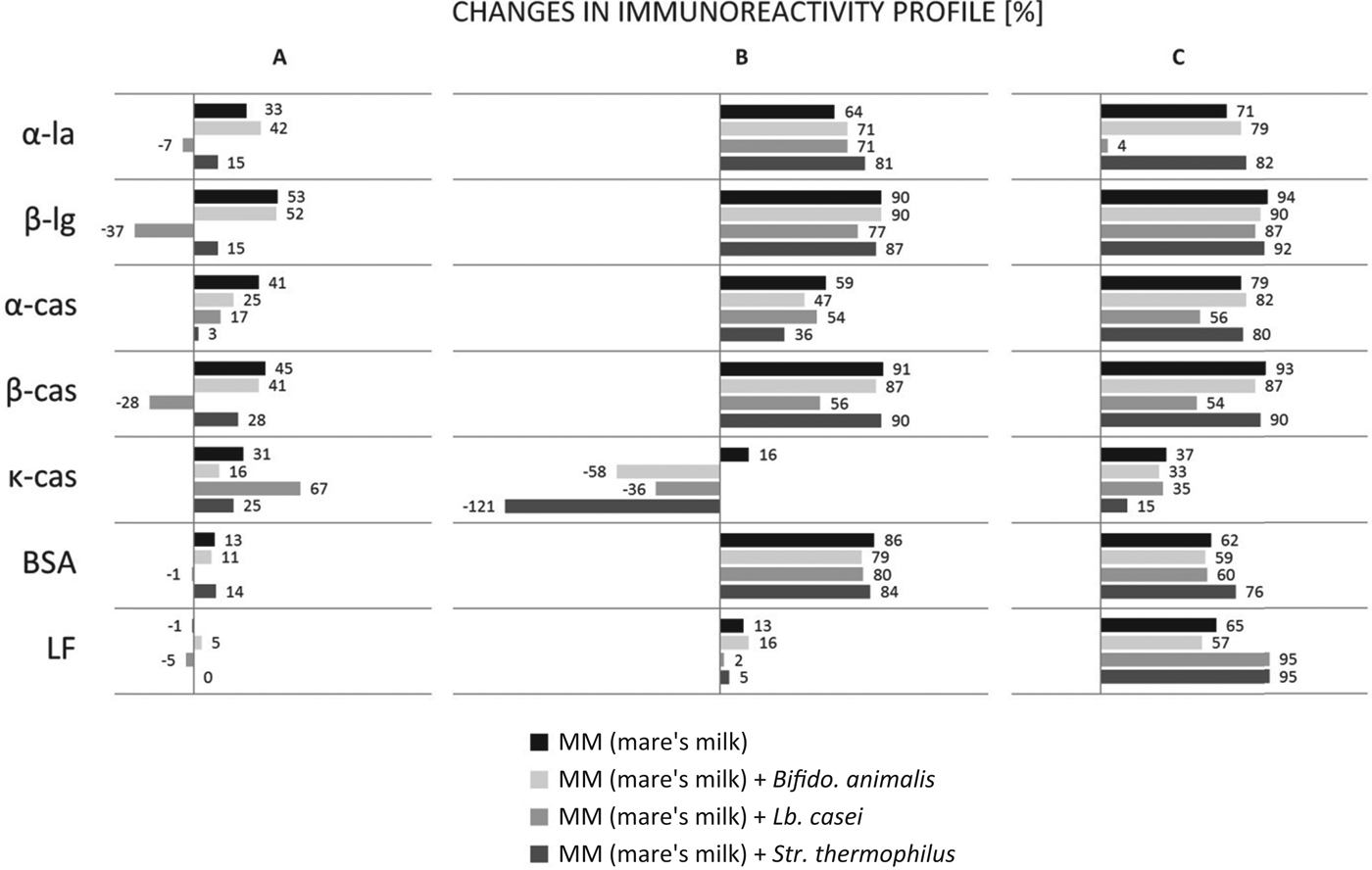
The decrease in immunoreactivity was different for each evaluated antigen (Fig. 3). The immunoreactivity of almost all of the proteins was decreased, with the exception of α-la, β-lg, β-cas, BSA and LF in the mare's milk treated with Lb. casei and LF in the mare's milk after the first step of digestion. At that step, the highest reduction was observed for κ-cas from mare's milk treated with Lb. casei (67%). The κ-cas immunoreactivity in all fermented products after pepsin digestion was increased. A significant increase in the α-la, β-lg, β-cas, and BSA reactivity was observed only after digestion with saliva and pepsin. The strain that was the most effective at reducing immunoreactivity was the Str. thermophilus, which caused 95% (LF), 93% (β-cas), 82% (α-la), 76% (BSA) reductions, respectively, in immunoreactivity. The Bifido. animalis strain used during the experiment was beneficial in reducing the immunoreactivity of α-cas (82%) and Lb. casei reduced the immunoreactivity of LF (95%).
Assessment of immunoreactivity by type of antigen in comparison with undigested samples (A) after the saliva stage; (B) after the pepsin stage; (C) after the pancreatin/bile salts stage. Negative values indicate an increase in immunoreactivity. The means of the values are expressed in %. RSD>0·01<0·83.
Discussion
Mare's milk is a very unique product due to the high amount of lactose and low amount of fat and proteins, especially caseins, in comparison with animals other than cows (cattle, buffalo, goat, sheep, camel) (Barłowska et al. Reference Barłowska, Szwajkowska, Litwińczuk and Król2011). The chemical composition and especially the content of lactose in mare's milk are similar to mother's milk (Malacarne et al. Reference Malacarne, Martuzzi, Summer and Mariani2002). The protein content of mare's milk compounds (Table 1) was similar to those previously reported (Pieszka et al. Reference Pieszka, Luszczynski and Szeptalin2011).
Milk processing technologies are a good strategy for destroying or modifying allergenicity (Bu et al. Reference Bu, Luo, Chen, Liu and Zhu2013). One of these techniques is fermentation, in which some proteolytic enzymes can induce the degradation of milk protein allergens (Bu et al. Reference Bu, Luo, Zhang and Chen2010; El-Ghaish et al. Reference El-Ghaish, Rabesona, Choiset, Sitohy, Haertlé and Chobert2011b; Ahmadova et al. Reference Ahmadova, El-Ghaish, Choiset, Rabesona, Drouet, Chobert, Kuliev and Haertlé2013, Shi et al. Reference Shi, Luo, Xiao, Li, Xu and Yao2014). According to the literature, little research on the immunoglobulin-binding capacity of fermented mare's milk has been carried out. However, an ELISA method used in a study on cow's milk β-lg by Maier et al. (Reference Maier, Okun, Pittner and Lindner2006) showed that the immunochemical response of whey proteins in fermented samples (naturally fermented raw milk and naturally fermented pasteurised milk, sour milk, and acidophilus milk) was lower than that of non-fermented references. Kleber et al. (Reference Kleber, Maier and Hinrichs2007) found that lactic acid fermentation can attenuate β-lg antigenicity in cow's skim milk and sweet whey. Their results indicated a greater than 70 and 90% reduction in the antigenicity of sweet whey and skim milk, respectively, compared with untreated samples. In a study by Jędrychowski & Wróblewska (Reference Jędrychowski and Wróblewska1999), the immunoreactivity of β-lg and α-la from cow's milk was reduced to 99% by selected strains from 399 lactic acid bacteria. In our study, the Lb. casei caused the highest decrease in the immunoreactivity of the mare's milk proteins (5–74%) after fermentation in comparison with Bifido. animalis (4–35%) and Str. thermophilus (0–35%) (Table 2). Fermentation with the Str. thermophilus strain resulted in the lowest immunoreactivity of proteins in comparison with the other strains. Bu et al. (Reference Bu, Luo, Zhang and Chen2010) indicated that after the fermentation of cow's milk with lactic acid bacteria, the antigenicity of whey proteins significantly decreases, with an inhibition rate of 53–87% for α-la and 86–95% for β-lg compared with unfermented milk (P<0·05). In our research, the highest inhibition rate of mare's milk α-la was 35% and β-lg was 41%. However, the differences in the values obtained could be because in our study, half of the inoculum volume for the preparation of fermented milk was used compared with that in Bu et al. (Reference Bu, Luo, Zhang and Chen2010). Degradation of the proteins and the diversity of the proteinases and hydrolysis ability, which is characteristic for each specific strain (Oberg et al. Reference Oberg, Broadbent, Strickland and McMahon2002; Ehn et al. Reference Ehn, Allmere, Telemo, Bengtsson and Ekstrand2005; Pescuma et al. Reference Pescuma, Hébert, Bru, Font de Valdez and Mozzi2012), explains the differences in immunoreactivity between fermented products obtained in our experiment. The changes in immunoreactivity suggest that the nature, structure and activity of the epitopes may be completely different depending on the microbiological activity of the selected strains.
The observed changes in immunoreactivity after the first step of digestion might be associated with the existence of enzymes (α-amylase, lingual lipase) in the saliva, which can affect the interactions between proteins and other milk compounds, such as lipids and carbohydrates. Enzymatic proteolysis may decrease the immunoreactivity of food allergens (Wróblewska et al. Reference Wróblewska, Karamać, Amarowicz, Szymkiewicz, Troszyńska and Kubicka2004); however, it may also increase the protein antigenicity by exposing more antigenic sites (Pahud et al. Reference Pahud, Monti and Jost1985; Bu et al. Reference Bu, Luo, Zhang and Chen2010). In our experiment, the decrease in immunoreactivity during digestion was observed, although increases in reactivity with antibodies were also detected (Fig. 3). β-Lg is suspected to be one of the most significant allergens in cow's milk. Bossios et al. (Reference Bossios, Theodoropoulou, Mondoulet, Rigby, Papadopoulos, Bernard, Adel-Patient, Wal, Mills and Papageorgiou2011) claim that digestion did not reduce the allergenic reactivity of cow's β-lg to a clinically insignificant extent. In our in vitro study, the decrease in mare's milk β-lg immunoreactivity after digestion was 87–94%. The immunoreactivity of κ-cas after pepsin digestion in all fermented products was higher than before digestion, which may indicate stronger hydrolytic capacity of some bacterial proteases, which can induce the disclosure of the κ-casein epitopes. Moreover, most of the lowest inhibition rate values after all steps of digestion were observed for κ-cas. According to the literature, casein is rapidly and extensively degraded by proteolytic enzymes during digestion, most likely because the caseins have an open and flexible structure, with peptide bonds easily exposed to the gastrointestinal enzymes (Inglingstad et al. Reference Inglingstad, Devold, Eriksen, Holm, Jacobsen, Liland, Rukke and Vegarud2010).
Allergenic activity might be attributed to unmasking or masking of new allergenic epitopes, an increase in the visibility of epitopes, inactivation or destruction of epitope structures, formation of new epitopes or improved access of previously hidden epitopes (Bernad et al. Reference Bernad, Creminon, Negroni, Peltre and Wal1999; Sathe et al. Reference Sathe, Teuber and Roux2005). Our results are consistent with the statement of Chatchatee et al. (Reference Chatchatee, Jarvinen, Bardina, Beyer and Sampson2001) that some of the major epitopes could be located in inaccessible regions of the molecule and are not accessible to antibodies unless the protein is denatured or degraded, for instance during digestion. Furthermore, resistance to protein-degrading enzymes in the gastrointestinal tract is a feature of various food allergens and is generally considered to be one of the risk factors for allergenicity (Untersmayr & Jensen-Jarolim, Reference Untersmayr and Jensen-Jarolim2008). Inglingstad et al. (Reference Inglingstad, Devold, Eriksen, Holm, Jacobsen, Liland, Rukke and Vegarud2010) claimed that equine milk with fast-digesting proteins could be considered as a replacement for cow's milk in the diet of people with special needs, such as infants and the elderly. In our experiment, the Tricine SDS-PAGE electrophoresis (Fig. 2) revealed that the main mare's milk proteins after digestion experienced a pronounced degradation, which is supported by the fact that the proteins had the lowest immunoreactivity after digestion.
In conclusion, lactic acid fermentation could significantly reduce the immunoreactivity of mare's milk proteins. This decreased immunoreactivity suggests that mare's milk proteins and fermented mare's milk-based products could be considered as part of a replacement for cow's milk for people with digestive problems. Additional studies concerning the choice of the most effective bacterial strains at reduction of the immunoreactive properties of mare's milk are necessary in order to use mare's milk as primary prevention in infants with cow's milk allergy.
The authors gratefully acknowledge the Genactiv Company for supplying the mare's milk samples for the tests. This work was supported by the statutory fund of the Department of Immunology and Food Microbiology, Institute of Animal Reproduction and Food Research of the Polish Academy of Sciences in Olsztyn. The author, Joanna Fotschki, is a beneficiary of the project ‘Scholarships for Ph.D. students of Podlaskie Voivodeship.’