The integration of materials science and nanotechnology has given rise to the field of nanocomposites, characterized by at least one nanoscale dimension within the phases involved. Since their inception circa 1990, polymer nanocomposites (PNCs) composed of nanoparticles in the form of spheres, rods or plates have garnered considerable interest from both academia and industry (Okamoto & Ray, Reference Okamoto and Ray2004). These ‘materials of the new century’ are celebrated for their exceptional properties that enable a wide array of innovative applications (Ray & Okamoto, Reference Ray and Okamoto2003). Nanocomposites enable polymers to display diverse thermal and functional properties (Kaplan Can & Şahin, Reference Kaplan Can and Şahin2015). Although PNCs have gained substantial recognition for these properties, the challenge remains to effectively integrate these materials with functional polymers to optimize their potential (Liang et al., Reference Liang, Zhang, Biesold, Choi, He and Li2021).
Organically modified layered silicates, or nanoclays, are extensively utilized in various fields, including coatings, cosmetics, drug delivery and gas adsorption (Okada & Usuki, Reference Okada and Usuki2006). The functional properties of copolymers and terpolymers can be finely tuned by selecting appropriate mole percentages and integrating these nanoclays, which typically involve at least two distinct monomers (Kelley et al., Reference Kelley, Albert, Sullivan and Epps2013; Murugesan & Scheibel, Reference Murugesan and Scheibel2020). With ∼30 types of nanoclays available, each tailored for specific applications due to its unique mineralogical composition (Mobaraki et al., Reference Mobaraki, Karnik, Li and Mills2022), their potential in biomedical applications is significant. Research has explored their use in chemotherapy, scaffold design, bone adhesion, wound healing, drug delivery, tissue reconstruction and enzyme immobilization (Rawtani & Agrawal, Reference Rawtani and Agrawal2012; Mortimer et al., Reference Mortimer, Jack, Musumeci, Martin and Minchin2016; Wu et al., Reference Wu, Feng, Jiao and Zhou2017).
However, while there is growing interest in these materials, there is a clear gap in understanding as to how the inclusion of specific types of nanoclays, particularly bentonite, can lead to more efficient drug-delivery systems and other biomedical innovations (Mir et al., Reference Mir, un Nisha, Ahmed, ur Rehman, Mallakpour and Mustansar2025). The advancement of material technology has opened new avenues for polymer–nanoclay composites, which offer greater density and strength, larger surface areas, greater elasticity and enhanced fire resistance, along with remarkable thermomechanical, optoelectronic and magnetic properties (Nazir et al., Reference Nazir, Mohamad Kassim, Mohapatra, Gilani, Raza, Majeed, Jawaid, Qaiss and Bouhfid2016). These properties enable the development of high-performance composites that significantly outperform traditional materials. Polymer–clay nanocomposites (PCNs), featuring clay particles with dimensions smaller than the nanometre scale, exhibit significant hardness and barrier resistance (Van Es, Reference Van Es2001). The diverse applications of clays are attributable to their biocompatibility, environmental friendliness, affordability and versatility (Müller et al., Reference Müller, Bugnicourt, Latorre, Jorda, Echegoyen Sanz and Lagaron2017). Despite these promising features, the mechanisms through which these clays interact with the organic matrices at the molecular level remain underexplored, limiting their broader industrial and biomedical application. Clays are particularly favoured for biomedical applications due to their safety and ecological benefits (Li et al., Reference Li, Wei, Chiu, Su, Peng and Lin2010; Vergaro et al., Reference Vergaro, Abdullayev, Lvov, Zeitoun, Cingolani, Rinaldi and Leporatti2010; Sánchez-Fernández et al., Reference Sánchez-Fernández, Peña-Parás, Vidaltamayo, Cué-Sampedro, Mendoza-Martínez and Zomosa-Signoret2014). Historically, clays have been studied for their ability to combat infections, reduce diarrhoea and inflammation, purify blood and heal ulcers (Ranjan et al., Reference Ranjan, Verma, Dave, Jha, Mallakpour and Mustansar2025).
Their notable attributes include high permeability, specific surface characteristics, low density, extensive surface coverage and excellent biological compatibility (Williams & Haydel, Reference Williams and Haydel2010; Singh et al., Reference Singh, Kaur, Kaur and Kaur2015). However, the specific biocompatibility and interactions of bentonite with various drugs and therapeutic agents remain areas where further studies are needed to fully realize its potential (Wirtu et al., Reference Wirtu, Jule, Nagaraj, Ramaswamy, Nagaprasad and Ramaswamy2025).
Among the various types of clays, natural bentonite, with its unique mineral composition and specific physicochemical properties, stands out as a material of particular interest in many applications. While many studies have focused on the general properties of bentonite, the incorporation of modified bentonite in polymer matrices to create nanocomposites is still a relatively underexplored field. Natural bentonite primarily forms through the weathering or hydrothermal alteration of volcanic ash in sedimentary environments, particularly under alkaline conditions. This alteration process results in the formation of bentonite deposits, which are commonly found in regions with significant volcanic activity, such as marine basins, lakes or areas with long-standing hydrothermal systems. Bentonites are predominantly composed of montmorillonite, a 2:1 layered aluminosilicate mineral, which imparts swelling properties and a high cation-exchange capacity to bentonite (Borah et al., Reference Borah, Nath and Saikia2022).
In addition to its primary mineral, bentonites may also contain accessory minerals such as quartz, feldspar, kaolinite, illite and calcite. These minerals contribute to the swelling behaviour and high cation-exchange capacity characteristics of bentonite, which are essential for its diverse applications. The presence of these minerals also influences the physical properties of the clay. For instance, quartz or feldspar can reduce expansion, whereas kaolinite or illite can impact the cation-exchange capacity and chemical reactivity. The mineralogical composition thus plays a crucial role in determining the suitability of bentonite for various applications (Grim & Guven, Reference Grim and Guven2011).
The ability of bentonite to undergo ion-exchange reactions is particularly important for improving its compatibility with organic matrices. Ion-exchange processes involve the substitution of small molecular cations (e.g. Na+ or Ca²+) with larger organic cations, which improves the dispersion of bentonite in polymer matrices and facilitates the formation of nanocomposites. These ion-exchange processes enhance the potential of bentonite to be utilized not only in drug delivery, but also in environmental and pharmaceutical applications, thus increasing the versatility of this material (Marouf et al., Reference Marouf, Dali, Boudouara, Ouadjenia, Zahaf and Uddin2021).
Bentonite’s physicochemical properties, such as swelling behaviour, cation-exchange capacity and thermal stability, are directly influenced by its mineralogical composition. The 2:1 layered structure enables bentonite to absorb water and swell, making it ideal for applications requiring high viscosity or water retention. Its cation-exchange properties allow bentonite to adsorb and exchange ions, and the presence of minerals such as quartz improves its thermal stability (Borah et al., Reference Borah, Nath and Saikia2022).
A detailed understanding of bentonite’s mineralogical composition and physicochemical properties is essential for optimizing its use in various industrial, pharmaceutical and environmental applications. This understanding allows for the development of specific functional materials that cater to the demands of next-generation drug-delivery systems. Water-soluble copolymers containing anhydrides (known as ‘polyanions’) and their derivatives exhibit significant physiological and biological effects, including antibacterial and anticancer properties, immune system stimulation and enhanced resistance to tumours, viruses and bacteria (Donaruma et al., Reference Donaruma, Ottenbrite and Vogl1980; Ottenbrite, Reference Ottenbrite, Carraher and Gebelein1982; Gorshkova & Stotskaya, Reference Gorshkova and Stotskaya1998).
Bentonite not only can inhibit the growth of cancer cells (Sabzevari et al., Reference Sabzevari, Sabahi, Nikbakht, Azizi, Dianat-Moghadam and Amoozgar2024), but also can be used as a carrier for imaging/therapeutic agents in theranostic anticancer products (Chan et al., Reference Chan, Lu, Chung, Chang, Li and Chen2021). Due to its excellent biocompatibility, bentonite is widely used for the oral (Sabzevari & Sabahi, Reference Sabzevari and Sabahi2022) and ocular (Zhao et al., Reference Zhao, Hu, Ke, Long, Mao and Li2024) delivery of drugs. This further underscores bentonite’s unique role as a promising material for controlled drug release, providing a foundation for novel therapeutic strategies.
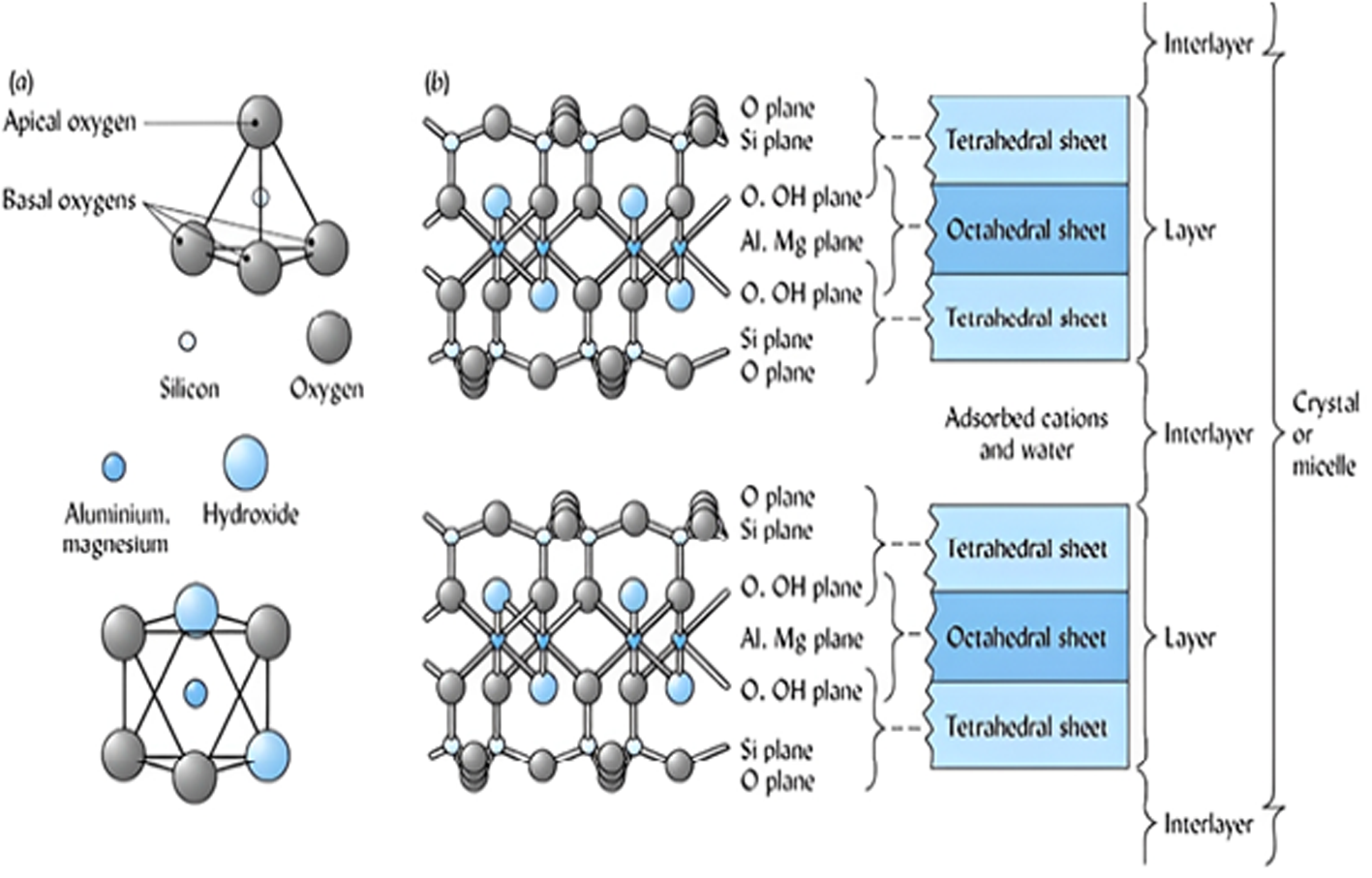
Structure of the bentonite clay (Masindi, Reference Masindi2015).

Bentonite has long been used as a binder, emulsifier, suspending agent and viscosity modifier in pharmaceuticals (Murray, Reference Murray2006; Modabberi et al., Reference Modabberi, Namayandeh, López-Galindo, Viseras, Setti and Ranjbaran2015). The clay, characterized by its 2:1 layered structure of tetrahedral and octahedral sheets (Scheme 1), plays a crucial role in determining the chemical and physical properties of bentonite (Srasra et al., Reference Srasra, Bergaya, Van Damme and Ariguib1989). The effectiveness of bentonite in pharmaceuticals is closely linked to its primary component of a 2:1 layered structure, which is crucial for its chemical and physical properties. However, the interaction between the untreated clay and organic matrices is limited, posing challenges for the creation of nanocomposites. To overcome this, ion-exchange processes are employed to modify the clay’s surface by substituting small molecular cations with organic cations, thereby improving its compatibility with various polymer matrices (Lan & Pinnavaia, Reference Lan and Pinnavaia1994).
In this study, charge transfer complex (CTC) polymerization was used to synthesize copolymers and terpolymers of PCNs. This study addresses a critical gap in the literature by using modified nanoclays and comparing their properties in the context of thermally stable and bioactive nanocomposites for drug-carrier systems. The research focuses on producing modified nanoclays using three different alkyl ammonium salts, which are then employed in synthesizing poly(3,4-dihydro-2H-pyran-alt-maleic anhydride) (poly(DHP-alt-MA)) and poly(3,4-dihydro-2H-pyran-co-maleic anhydride-co-vinyl acetate) (poly(DHP-co-MA-co-VA)) nanocomposites (Can et al., Reference Can, Sevim, Şahin and Gürpınar2022). Previous studies have examined copolymers of poly(DHP-alt-MA) and related nanocomposites, as well as terpolymer/organically modified bentonite nanocomposites, due to the their potential anticancer and antitumor properties (Can et al., Reference Can, Doğan, Rzaev, Uner and Güner2005, Reference Can, Sevim, Şahin and Gürpınar2022) This study compares the thermal characteristics, stability and viscoelastic properties of these nanocomposites, exploring the structural changes induced by the incorporation of three distinct alkyl ammonium salts to elucidate characteristics that have not been studied before in the literature.
Experimental
Materials
The initial monomer 3,4-dihydro-2H-pyran (DHP), supplied by Sigma-Aldrich, was distilled before use. Maleic anhydride (MA; melting point: 52.8°C; Fluka) was purified before use by recrystallization from anhydrous benzene and sublimation in a vacuum. Vinyl acetate (VA) was supplied by Aldrich. 2,2-Azobisisobutyronitrile (AIBN; Fluka), used as an initiator, was twice recrystallized from a chloroform solution with methanol. Bentonite was supplied by Sigma-Aldrich (Chemical Abstracts Service (CAS) number 1302-78-9) as a hydrophilic bentonite nanoclay. The organo-bentonite was prepared from octadecyltrimetilammonium bromide (ODTMAB; Fluka), hexadecyltrimetilammonium bromide (HDTMAB; Sigma-Aldrich) and tetradecyl(trimethyl)ammonium bromide (TDTMAB; Sigma-Aldrich). Other reagents, including organic solvents, were purified using ordinary methods.
Organophilic modification of bentonite
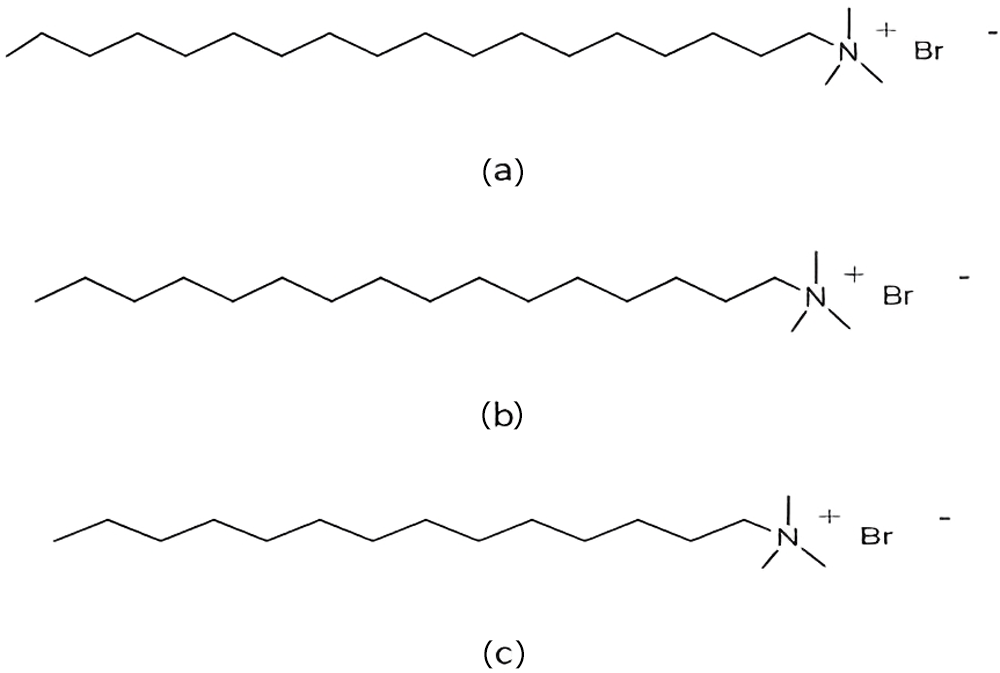
Through a cation-exchange reaction with ODTMAB, HDTMAB and TDTMAB (Scheme 2), natural bentonite underwent modification to yield organophilic clay. This process, documented in previous research, leads to the modification of bentonite (Can et al., Reference Can, Sevim, Şahin and Gürpınar2022).
Chemical structures of (a) ODTMAB, (b) HDTMAB and (c) TDTMAB salts (Can et al., Reference Can, Sevim, Şahin and Gürpınar2022).

Polymer synthesis: copolymer and terpolymer procedures
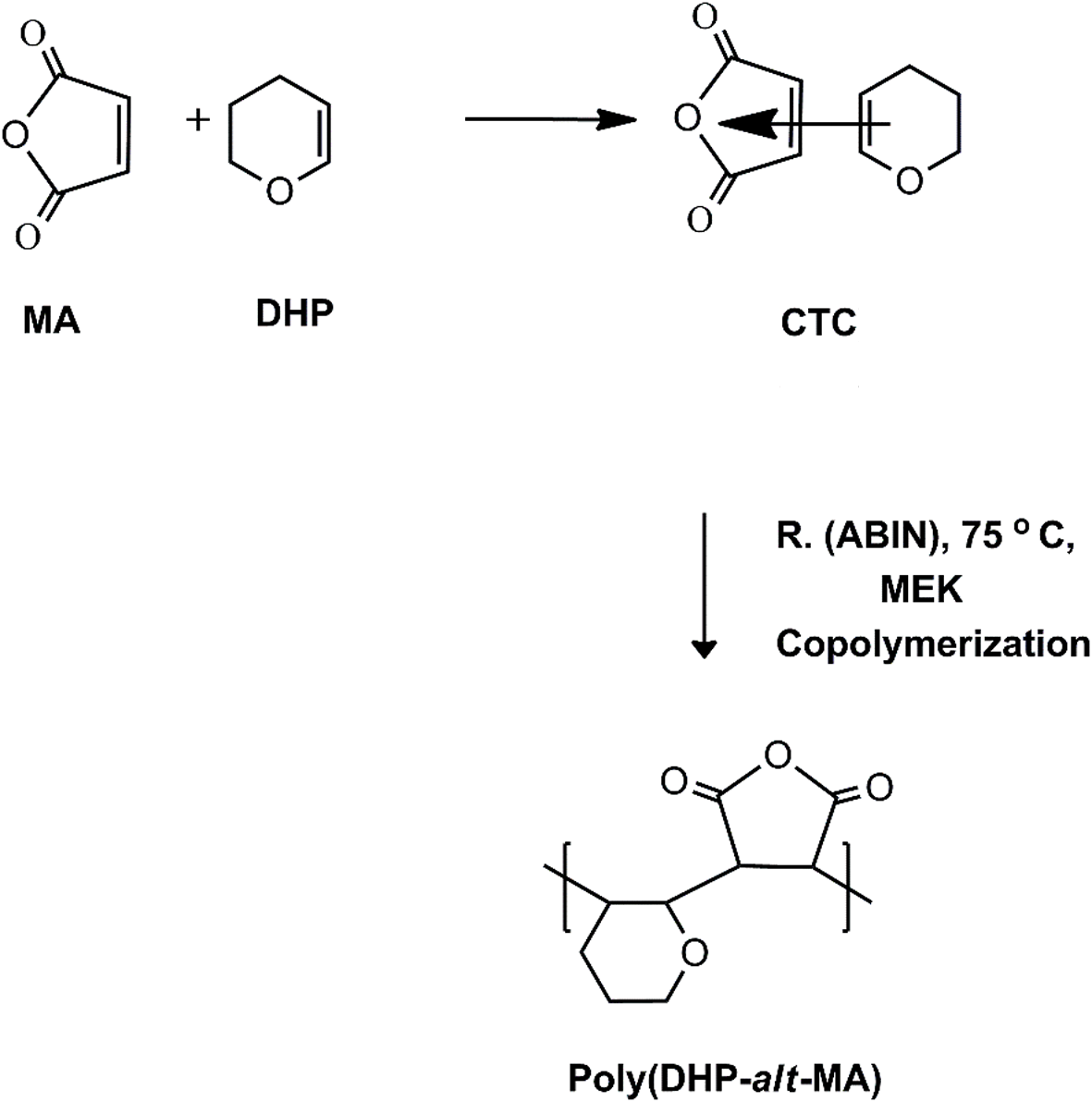
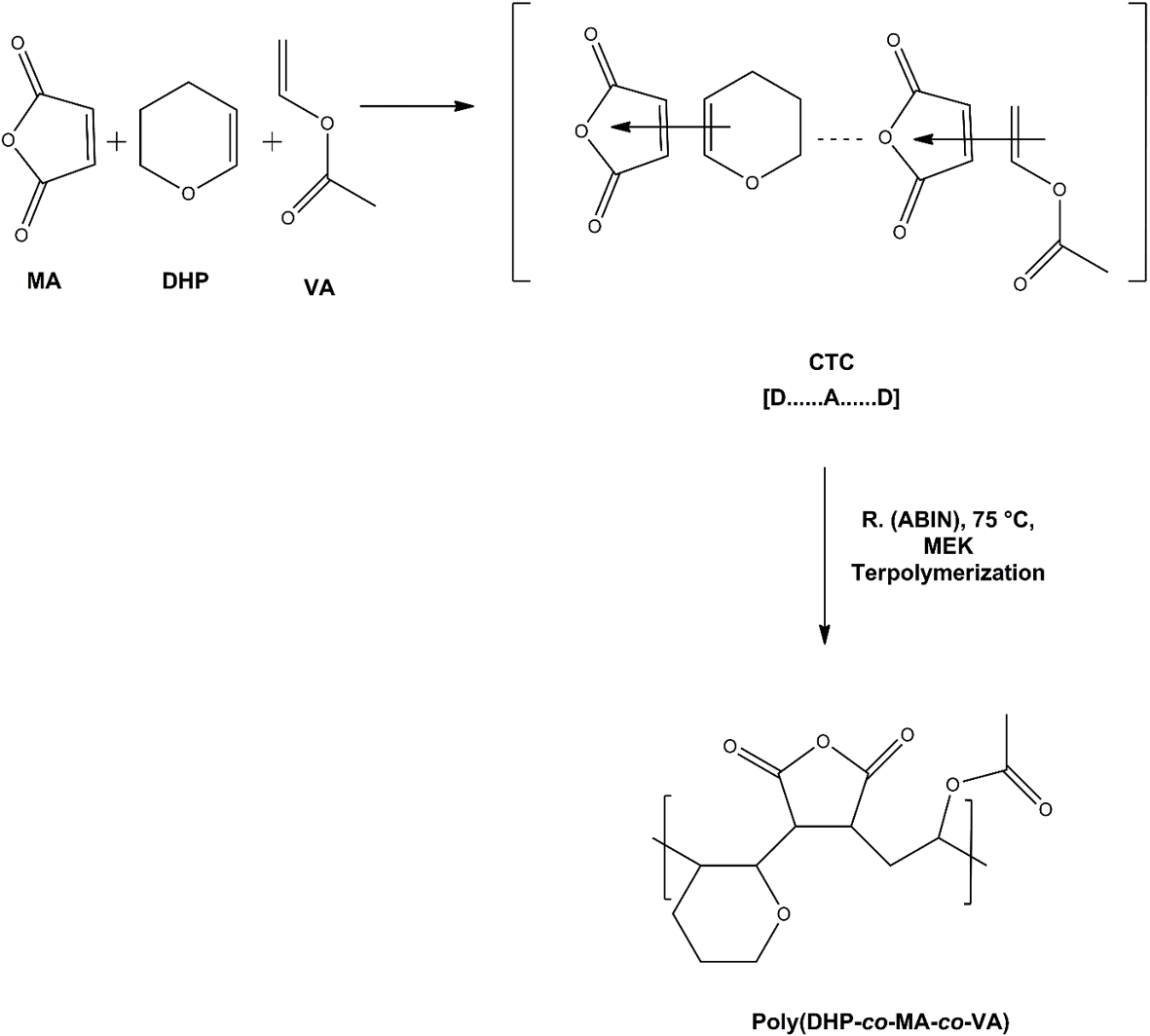
Monomers including DHP, MA and VA were utilized during the polymerization processes. Radical solution polymerization was conducted, employing CTC formation with electron acceptor and donor monomer systems (Scheme 3). The monomer ratios by weight were set at 50:50 for DHP:MA and at 25:50:25 for DHP:MA:VA (Scheme 4). As a preliminary stage of polymerization, DHP, MA and VA monomers were dissolved in a methyl ethyl ketone (MEK) solvent at a ratio of 70% (monomer/solvent), with AIBN used as the initiator (0.5% by weight of total monomers). The copolymerization and terpolymerization procedures were carried out in glass tubes, dissolving the monomers and initiator (AIBN) in MEK for 9 h at 75°C under a nitrogen atmosphere, employing a constant-temperature glycerin bath. After this, the copolymer, existing in a homogeneous phase, was precipitated in diethyl ether, while the terpolymer was precipitated in n-hexane within an ice bath. The purified polymers underwent rinsing in diethyl ether and were dried under vacuum at 40°C until reaching a constant weight.
Schematic representation of the synthesis of alternate copolymers via the CTC method (Can et al., Reference Can, Sevim, Şahin and Gürpınar2022).

Preparation of PCNs
Copolymer–clay and terpolymer–clay nanocomposites (PCNs) were prepared to the same composition as the copolymers and terpolymers by using organically modified clays and starting monomer feeds. Organo-bentonites prepared with alkyl ammonium salts were used at a rate of 5.0% of the total mass of clay, monomer and initiator.
Preparation pathway of terpolymerization of DHP, MA and VA monomers via CTC (Can et al., Reference Can, Sevim, Şahin and Gürpınar2022). A = electron acceptor; D = electron donor.

Organo-bentonites were suspended in 15 mL MEK at room temperature in a glycerin bath for 1 h. With the addition of monomers, the organo-clays were mixed for 3 h to form a suspension. Following this 3 h mixing period, the initiator and residual solvent were introduced, and the reaction proceeded for an additional 9 h at 75°C under a nitrogen atmosphere within the tubes. The copolymer–clay nanocomposites were precipitated in diethyl ether in an ice bath, whereas the terpolymer–clay nanocomposites were precipitated in n-hexane in an ice bath. The filtered nanocomposites were subsequently dried under vacuum at 40°C until a constant weight was achieved.
Thermogravimetric analysis, differential thermal analysis and differential scanning calorimetry measurements
To investigate the structural and thermal properties of the poly(DHP-alt-MA) copolymer, the poly(DHP-co-MA-co-VA) terpolymer and the nanocomposites derived from these structures, thermogravimetric analysis (TGA), differential thermal analysis (DTA) and differential scanning calorimetry (DSC) analysis were conducted. The samples were analysed using a Shimadzu DTG 60 H instrument at a flow rate of 10 mL min–1, at a sample weight of 2–5 mg and in a nitrogen environment.
Dynamic mechanical analysis measurements
Dynamic mechanical analysis (DMA) of the copolymers and nanocomposites was performed using a TA Q800 Dynamic Mechanical Analyzer. Mixtures of polymers and nanocomposites with Al2O3 (50:50 wt.%) were prepared, and these powdered mixtures were loaded onto the DMA device using a dust trap. DMA curves were taken at a constant frequency (ω = 1 Hz) over the temperature range of 20–200 °C and a 3°C min–1 temperature scanning range.
Results and discussion
Thermal analysis of organophilic modification bentonite
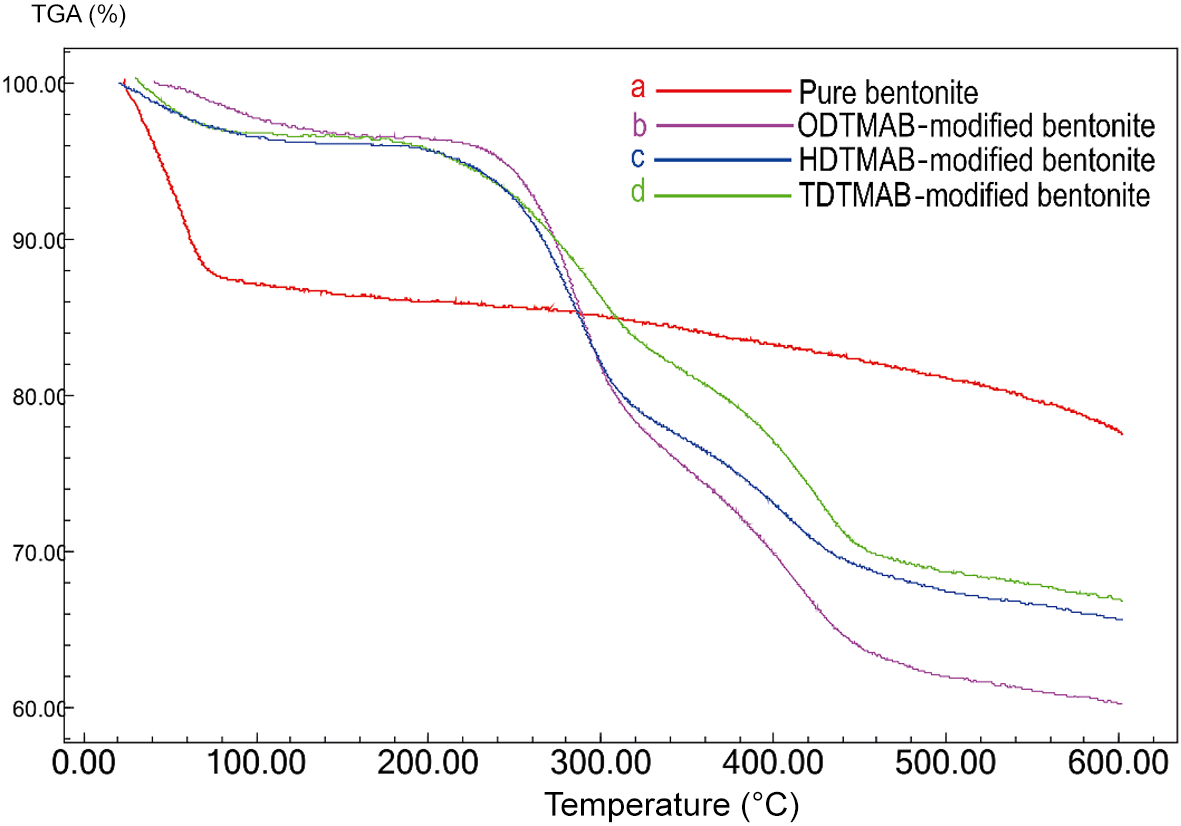
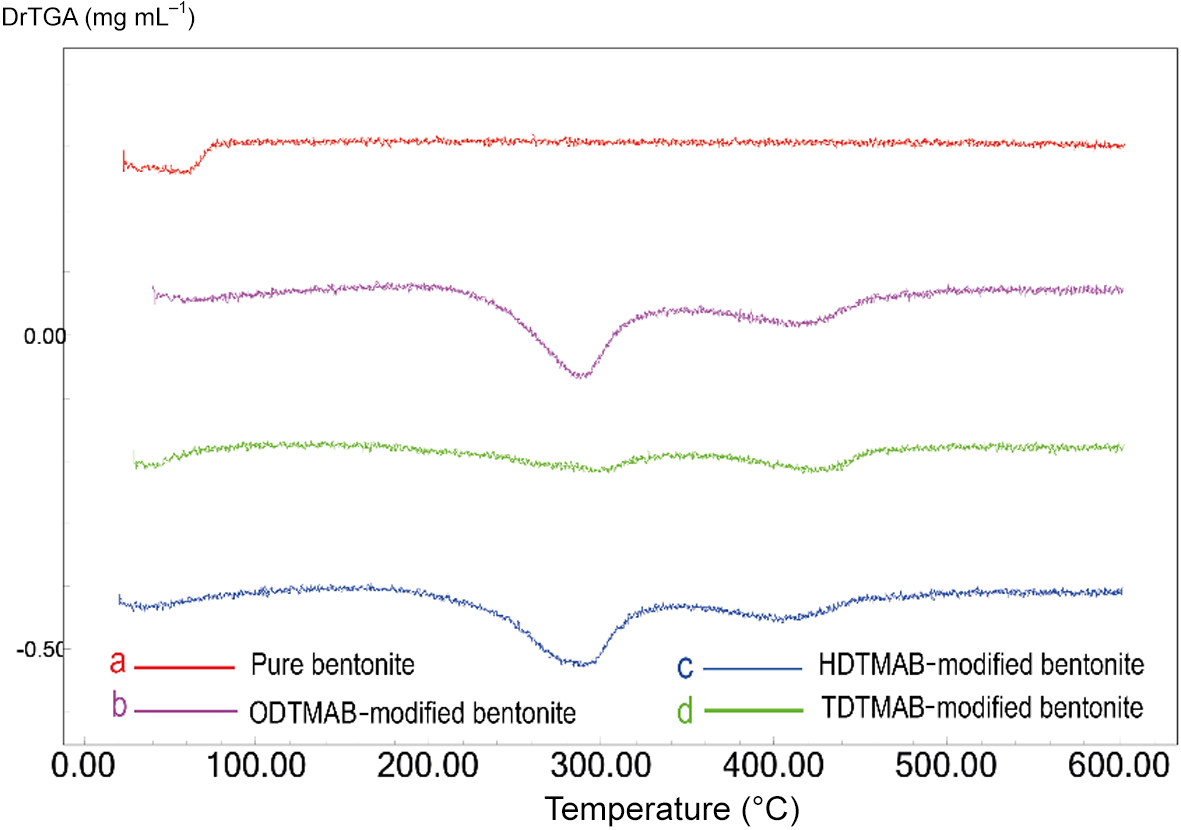
Thermal analysis of the organophilic modification of bentonite via organoammonium salts was followed by TGA. Figs 1 & 2 display the compositions of three distinct organoammonium-modified bentonites, as well as the TGA and first derivative (DTG) of the TGA curve of bentonite. At 100°C, pristine bentonite (Figs 1a & 2a) revealed a 13% mass loss. This phenomenon might be interpreted as the loss of the structure-attached H2O from the bentonite structure. After modification, the transformation of the character of Na+-bentonite from hydrophilic to hydrophobic was also observed. It displays a one-step degradation when taking into account the temperature-dependent mass loss of bentonite (Fig. 1a). Some 80% of the pristine bentonite, which represents its ultimate thermal stability, is shielded from breakdown between 100°C and 600°C. The transfer of heat is efficiently inhibited by bentonite, an inorganic material that is well known for its thermal stability and barrier qualities. Moreover, the TGA and DTG diagrams of bentonites modified with long aliphatic chains, including C14, C16 and C18, show different cascade degradation behaviours in comparison to the behaviours shown by bentonite materials. In contrast to bentonite mass loss–temperature curves, organo-bentonite complexes exhibit two-step degradation. At 100°C, the first degradation is the loss of water. In all organo-bentonite structures, the most significant degradation occurs between 280°C and 300°C. The decomposition of long aliphatic chains in bentonite due to various organoammonium salts might account for this significant degradation peak.
TGA of (a) bentonite, (b) ODTMAB-modified bentonite, (c) HDTMAB-modified bentonite and (d) TDTMAB-modified bentonite structures.

Differential thermogravimetric analysis (DrTGA) of (a) bentonite, (b) ODTMAB-modified bentonite, (c) HDTMAB-modified bentonite and (d) TDTMAB-modified bentonite and structures.

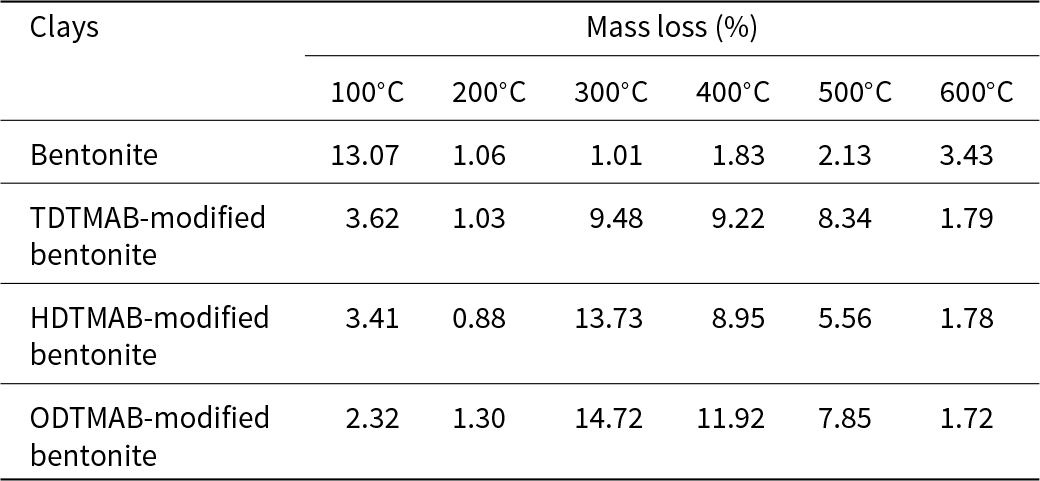
Table 1 shows that the percentages of weight decrease detected in the HDTMAB- and ODTMAB-modified bentonites were 13.73% and 14.72%, respectively. When the DTG peaks were examined, we observed that the degradation stages in both the HDTMAB- and ODTMAB-modified nanostructures were similar (i.e. the structures’ C16 and C18 chain lengths were similar). Furthermore, the bentonite structure changed with the addition of TDTMAB (C14) and demonstrated a 9.48% mass reduction. In all of the modified bentonite structures, the change that occurred in step 2 was smaller.
Thermoanalytical results of bentonite, TDTMAB-modified bentonite, HDTMAB-modified bentonite and ODTMAB-modified bentonite.

The elimination of smaller structures from the compounds could explain the thermal decomposition peaks that occurred at ∼400°C and 500°C. The thermogram of the greatest degradation (Fig. 1b) was determined to correspond to the structure containing C18 chains modified with ODTMAB (39.3%) at ∼600°C. The bentonite treated with TDTMAB (33.48%) was the modified structure that demonstrated the least amount of heat degradation (Fig. 1d). The thermograms and mass loss percentage values show that ion-exchange reactions can modify bentonite through the addition of aliphatic long-chain structures to ODTMAB, HDTMAB and TDTMAB.
DMA of organophilic modification bentonite
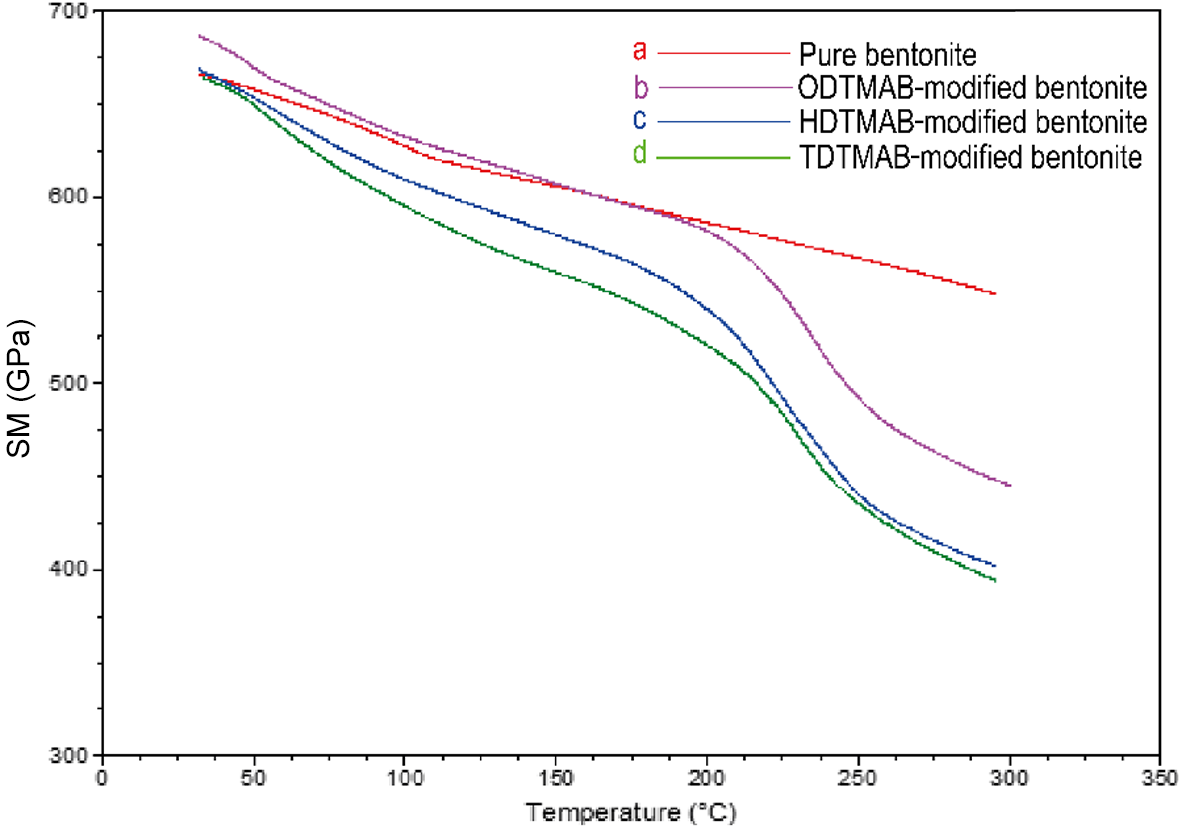
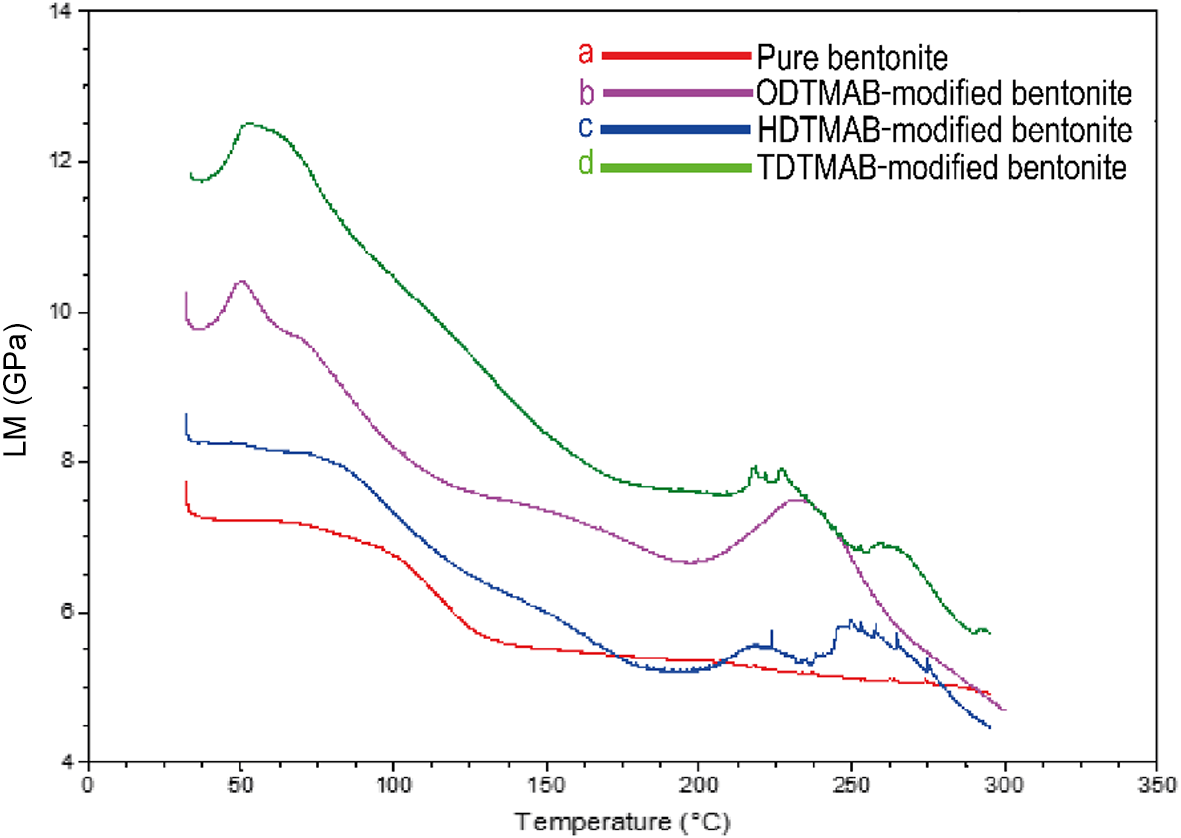
DMA is an important method that provides deep insights into the behaviours and characteristics of materials. Designed especially for the complex analysis of polymers, DMA uses a sinusoidal stress application method to investigate the viscoelastic properties of materials. By accurately measuring strain in response to stress, DMA facilitates understanding of the modulus, which defines stiffness and damping properties as storage modulus (SM) and loss modulus (LM), respectively. These metrics provide important insights into energy storage and dissipation mechanisms within the material matrix, as well as quantifying the material’s elastic and viscous responses. Fig 3 displays the SM diagrams of organoclay compounds that have been changed with bentonite and alkyl ammonium groups of C14, C16 and C18, as shown in the DMA data. After analysing the graphs shown in Fig. 3b–d, it is evident that there are significant differences in the SM. The different carbon numbers of the ammonium salts used in the modification process are responsible for these differences. Observations indicate that bentonite exhibits the maximum level of strength, with the organoclay modified with C18 ammonium salt displaying the strength value closest to that of bentonite (Fig. 3b). Upon examining the SM curves depicted in Fig. 3, it is evident that there is minimal disparity resulting from alterations in the glassy zone, namely below 100°C. However, the SM values exhibit a clear correlation with the length of the carbon chain in the glass transition region (100–200°C). Whereas a similar tendency is found in the ductile area between 200°C and 300°C, the SM values decrease as the carbon number decreases when the alkyl groups enter the bentonite structure. The SM values of layered silicate structures were separated and effectively changed with alkyl chains. Upon study of the LM–temperature (LM–T) curves illustrated in Fig. 4 for both virgin and modified bentonite formations, considerable variations in the silica layers are observed according to the length of the alkyl chains employed. The effective alteration of the inorganic bentonite structure with extended aliphatic groups leads to a proportionate increase in the LM value related to the number of carbon atoms in the chain.
SM–temperature curves of (a) bentonite, (b) ODTMAB-modified bentonite, (c) HDTMAB-modified bentonite and (d) TDTMAB-modified bentonite structures.

LM–temperature curves of (a) bentonite, ODTMAB-modified bentonite, (c) HDTMAB-modified bentonite and (d) TDTMAB-modified bentonite structures.

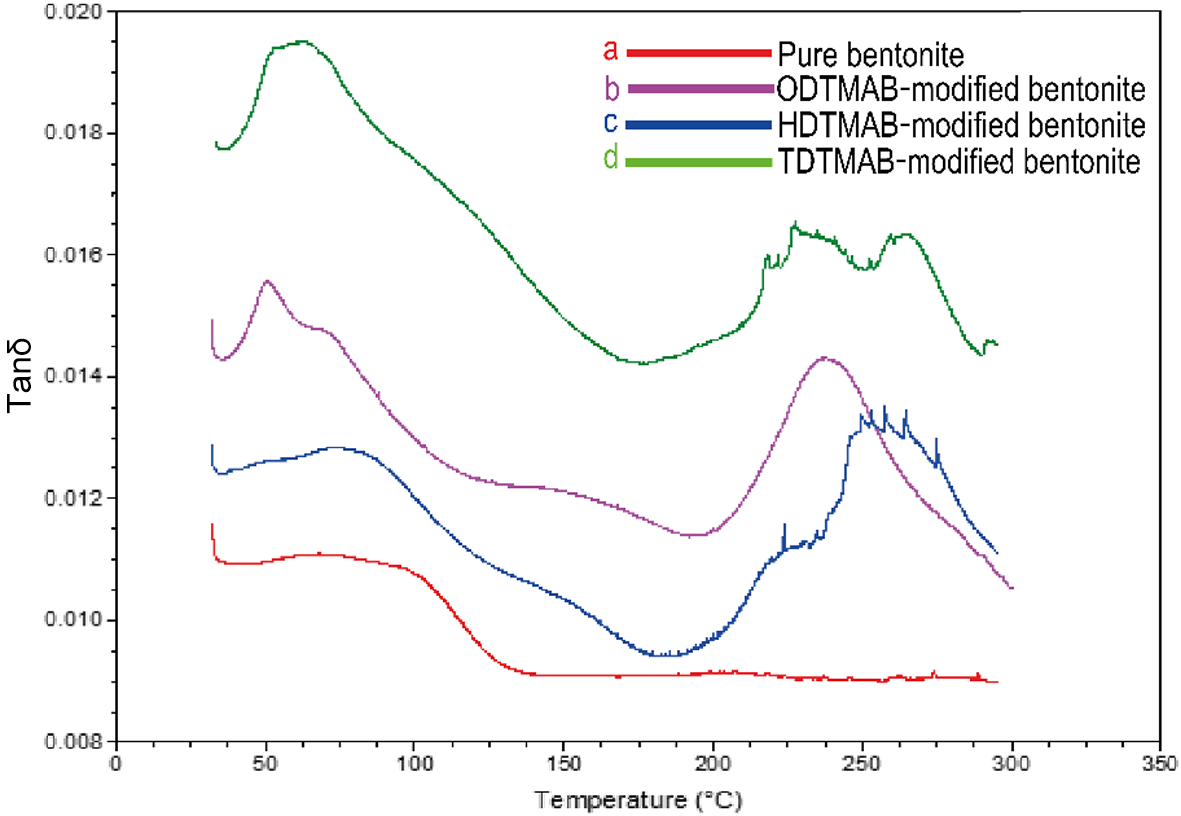
Tanδ, a crucial parameter determined from DMA curves, represents the ratio between the viscous and elastic moduli, providing a measure of damping inside a material. This ratio, indicative of the material’s energy-dissipation capabilities, gives insights into its efficiency at absorbing energy. Tanδ is defined according to Equation 1:
 \begin{align}\text{tan}\delta\,=\,\text{LM/SM}\end{align}
In the alteration with the alkyl group containing C14 in Fig. 5, two peaks are detected in the tanδ curves (Fig. 5c), one of which diminishes upon modification with C16. When the alteration is done using C18 (Fig. 5b), just a single peak is detected. The single symmetrical peak maximum occurring at the centre of the two maximum peaks found at C14 and C16 in the tanδ–temperature curves demonstrates that C18 represents the most suitable alteration.
Tanδ–temperature curves of (a) bentonite, (b) ODTMAB-modified bentonite, (c) HDTMAB-modified bentonite and (d) TDTMAB-modified bentonite structures.

Thermal analysis of the poly(DHP-alt-MA) copolymer and its nanocomposites
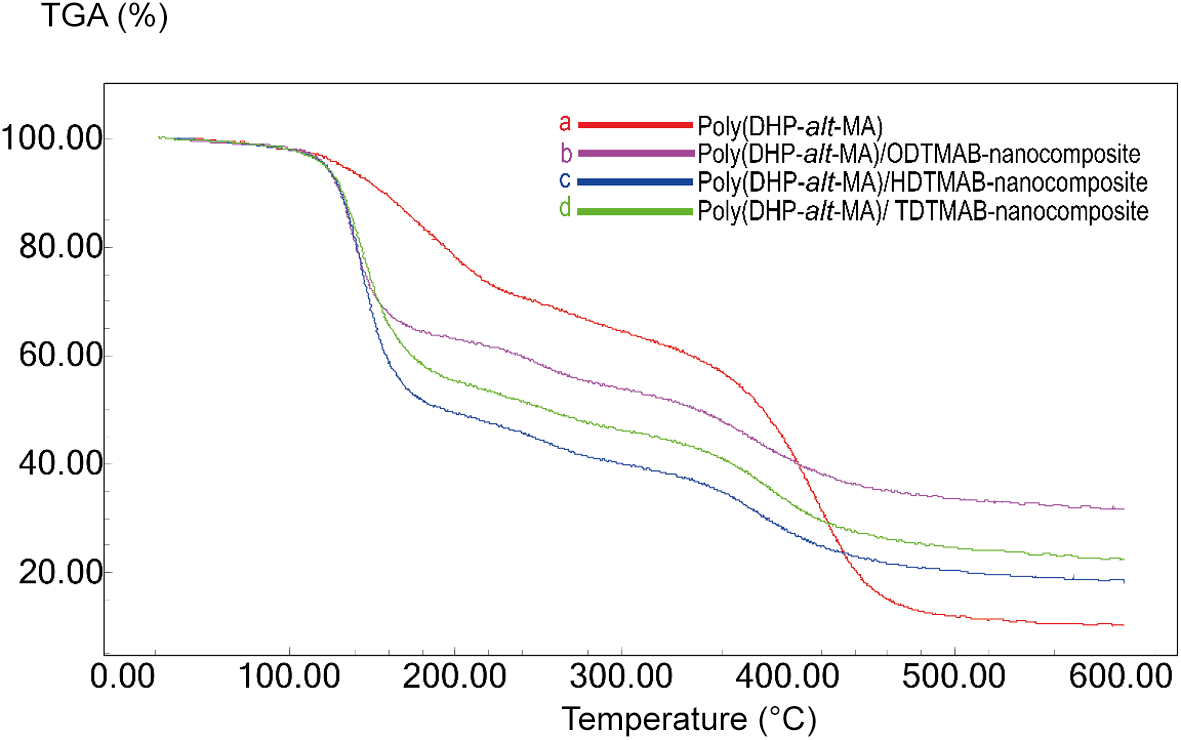
Copolymers and nanocomposite structures obtained with three different organoammonium salt modifications were characterized using the thermal methods TGA, DTA and derivative (DrDTA). Fig 6 shows the mass loss–temperature thermograms for the copolymer and its modified nanocomposites. The TGA thermogram presented in Fig. 6a for poly(DHP-alt-MA) shows a two-step degradation process, with the initial decomposition occurring at 250°C, followed by a subsequent decomposition at 420°C. Considering the 31.7% mass loss, the maximum degradation step at 420°C from the DHP structure, which has groups that are more easily separated from the structure, can be interpreted as the degradation at which species such as CO2 are removed from the anhydrite ring (56.17% by weight). The predominant breakdown can be linked to the decomposition of the C–H linkages within the backbone of the polymer chain.
TGA of poly(DHP-alt-MA) and organoclay PNCs.

In contrast to the copolymer, the nanocomposites exhibit a distinct three-step degradation pattern in their thermal properties. The mass loss–temperature thermograms up to 600°C show that it is the copolymer structure that loses most mass from the nanocomposites. Upon examination of the thermoanalytical data for the nanocomposites, it becomes evident that the initial step involves a loss of mass attributed to the evaporation of crystal water between 100°C and 150°C, a phenomenon that is also observed in the pristine bentonite structure. The second decomposition second step is the step in which the greatest mass loss is seen. The mass losses of nanostructures modified with ODTMAB, HDTMAB and TDTMAB were 36.93%, 50.66% and 44.65%, respectively. A 10% mass loss was observed in all three nanostructures, similarly to the copolymers, between 250°C and 300°C. The third step of degradation is observed in the nanostructures between 350°C and 400°C. By adding three different organoclay structures modified via copolymerization at 5.0%, nanostructures with similar thermal stabilities were obtained (Figs 6 & 7).
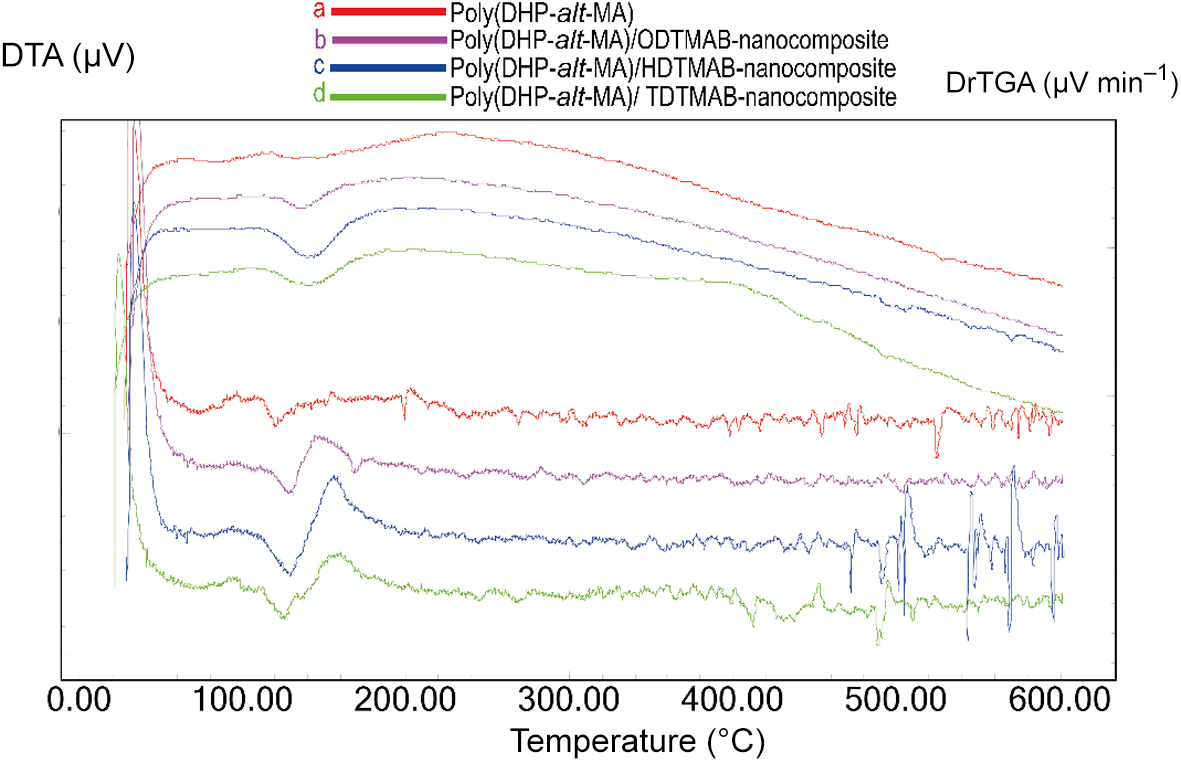
DTA and DrDTA–temperature curves of poly(DHP-alt-MA) and organoclay–copolymer nanocomposites.

Table 2 displays the thermoanalytical data obtained using DSC, DTA and DMA (tanδ) curves. Glass transition temperature (T g) DTA (Fig. 7), DSC and DMA analyses are used comparatively. When the T g values found using three different methods are compared with regard to the C14–C18 chain lengths, there is very good agreement between the T g values obtained from DTA and DSC. The T g values of the hybrid structures resulting from the incorporation of inorganic materials were found to be higher than that of the copolymer (132.7°C).
Thermoanalytical results for the poly(DHP-alt-MA) and poly(DHP-alt-MA)/organo-bentonite nanocomposites.

The C16–C18 T g values of nanocomposites modified with HDTMAB and ODTMAB were found to be very similar (140.56°C and 140.78°C, respectively). As a result of the characterization using these thermal methods, it is observed that the nanostructures obtained by using inorganic–organic-modified structures in the copolymerization environment gain thermal stability, and carbon chain lengths play an important role in this. Among these methods, DMA was found to be the most sensitive approach for determining T g.
DMA of the poly(DHP-alt-MA) terpolymer and its nanocomposites
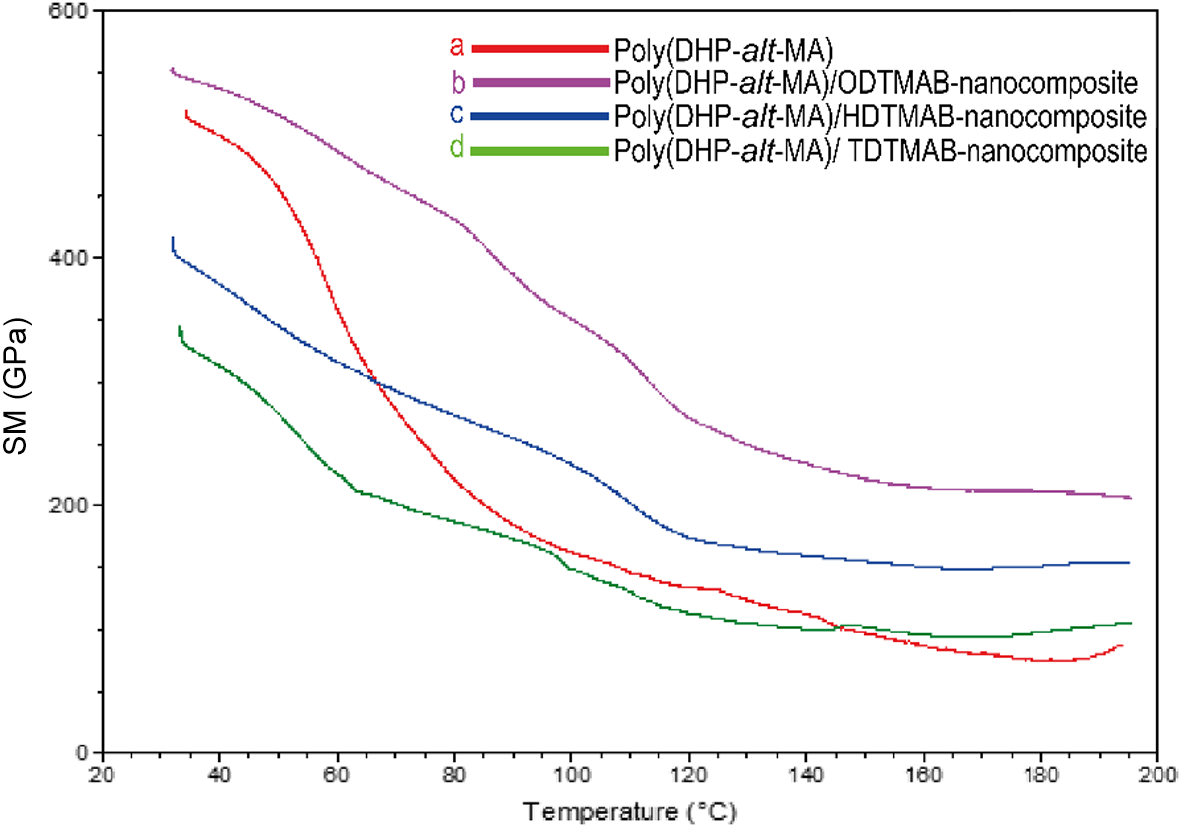
DMA parameters can be utilized to improve our understanding of the distribution of an organoclay structure in a polymer matrix. Looking at the SM–temperature (SM–T) curve (Fig. 8), the copolymer–clay nanocomposite structure constructed with the C18 alkyl group (Fig. 8a) displays the greatest SM value. High SM values are displayed by copolymer–clay nanocomposites and PCNs in the glassy area of the SM–T curve, reaching temperatures of up to 60°C. The sequential copolymer’s SM exhibits a significant decrease with increasing temperature, particularly in the 60–80°C region. However, it was shown that when the carbon chain length grew, the elastic modulus of the nanostructures made with C14, C16 and C18 modified clays increased as well. In the SM–T curve, glass transitions were observed in areas exhibiting elastic behaviour. This indicates that the layered silicate structure is distributed throughout the polymer matrix.
SM–temperature curves of copolymer and organoclay–copolymer nanocomposites: (a) poly(DHP-alt-MA), (b) poly(DHP-alt-MA)/ODTMAB–bentonite nanocomposite, (c) poly(DHP-alt-MA)/HDTMAB–bentonite nanocomposite and (d) poly(DHP-alt-MA)/TDTMAB–bentonite nanocomposite.

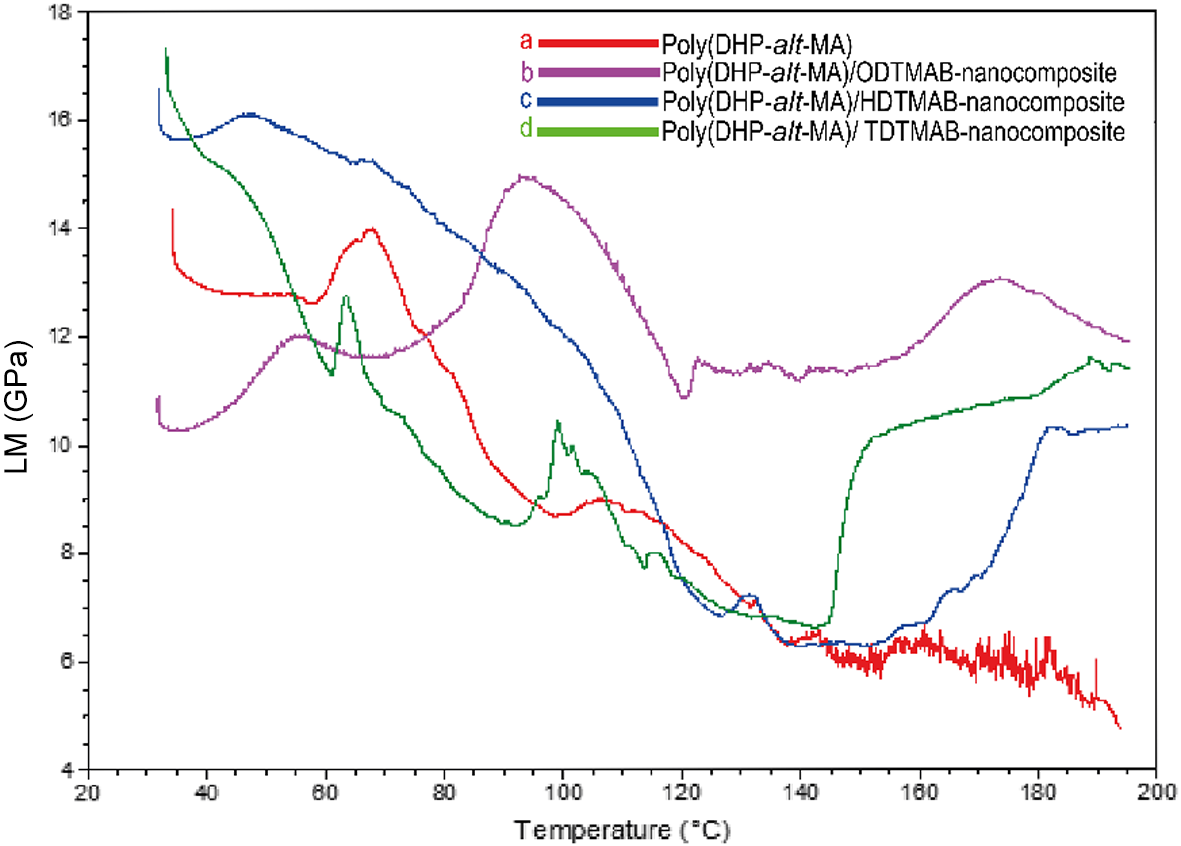
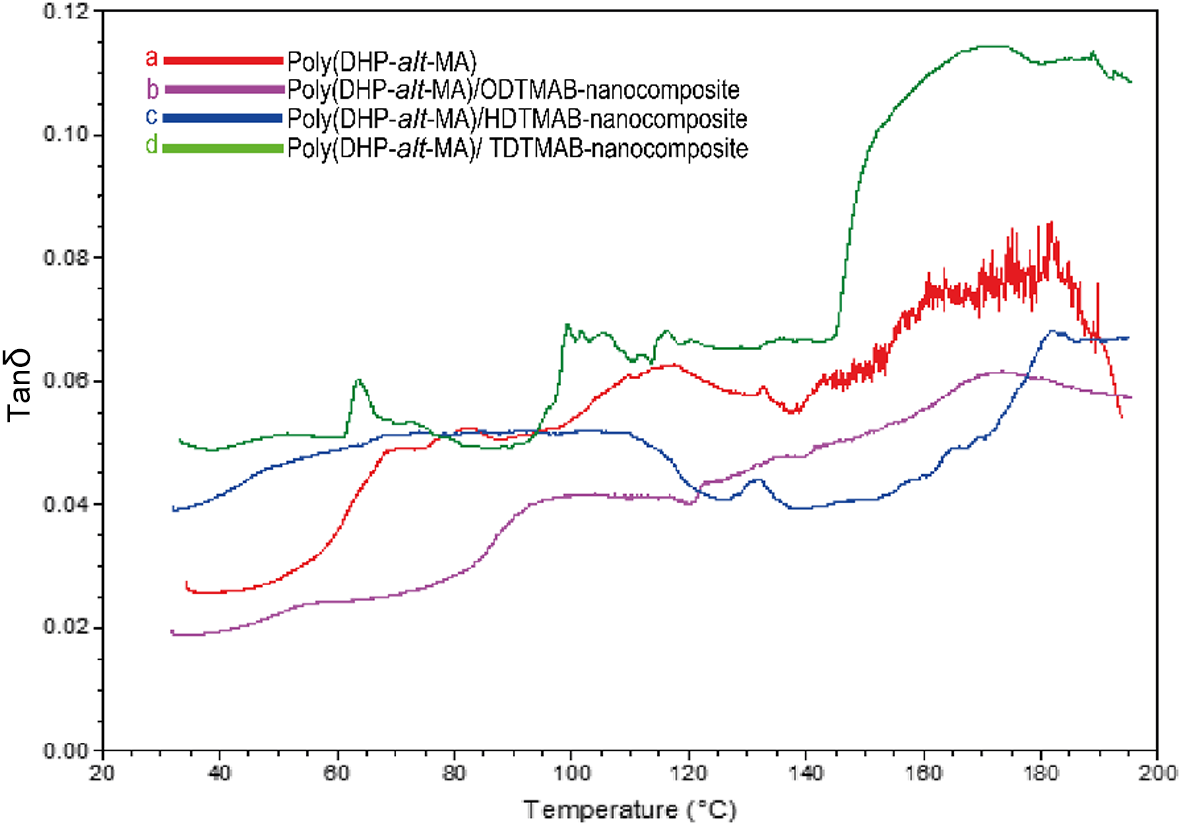
The graphs representing the LM (Fig. 9) and tanδ (Fig. 10) indicate the maxima at which T g increases as temperature rises (Table 2). The fact that the damping is minimal below the glass transition and increases when the system reaches the T g area of the glass transition would indicate that the ‘micro-Brownian’ motion between the molecular chains has started (Ray & Okamoto, Reference Ray and Okamoto2003). The scenario here may be explained by the fact that not all segments relax concurrently, as the glassy portions retain more energy. When the material reaches the rubbery zone, the segments in the solid state become loose and release extra energy.
LM–temperature curves of copolymer and organoclay–copolymer nanocomposites: (a) poly(DHP-alt-MA), (b) poly(DHP-alt-MA)/ODTMAB–bentonite nanocomposite, (c) poly(DHP-alt-MA)/HDTMAB–bentonite nanocomposite and (d) poly(DHP-alt-MA)/TDTMAB–bentonite nanocomposite.

Tanδ–temperature curves of copolymer and organoclay–copolymer nanocomposites: (a) poly(DHP-alt-MA), (b) poly(DHP-alt-MA)/ODTMAB–bentonite nanocomposite, (c) poly(DHP-alt-MA)/HDTMAB–bentonite nanocomposite and (d) poly(DHP-alt-MA)/TDTMAB–bentonite nanocomposite.

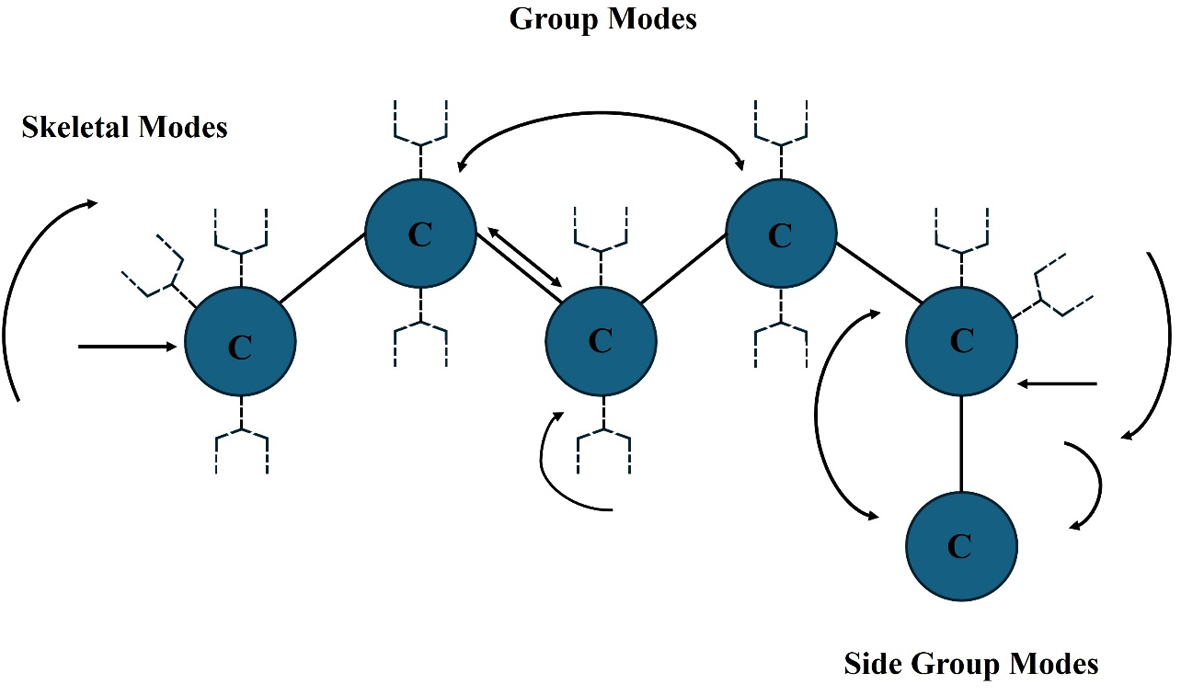
The dispersion of polymer chains caused by their interaction and entanglement with various polymer chains can be attributed to micro-Brownian motion. As is shown in Scheme 5, the greatest possible damping is seen where polymer chains are in contact with one another under harmonic stress. In this situation, the LM drops below the glass transition, and near the glass transition the segments tend to increase in movement and resist flowing (Ray & Okamoto, Reference Ray and Okamoto2003). Tanδ values in nanocomposite structures are influenced by the polymer matrix and the way in which the nanocomposite forms. Tanδ values were recorded at higher temperatures, indicating broadened transitions in the nanostructures generated by modification with C14, C16 and C18 alkyl groups. Table 2 provides the glass transition temperature values determined from the peak maxima in the T g and tanδ curves for both the copolymer–clay nanocomposites and PCNs.
Molecular modes of the glass transition temperature (T g).

Thermal analysis of the poly(DHP-co-MA-co-VA) terpolymer and its nanocomposites
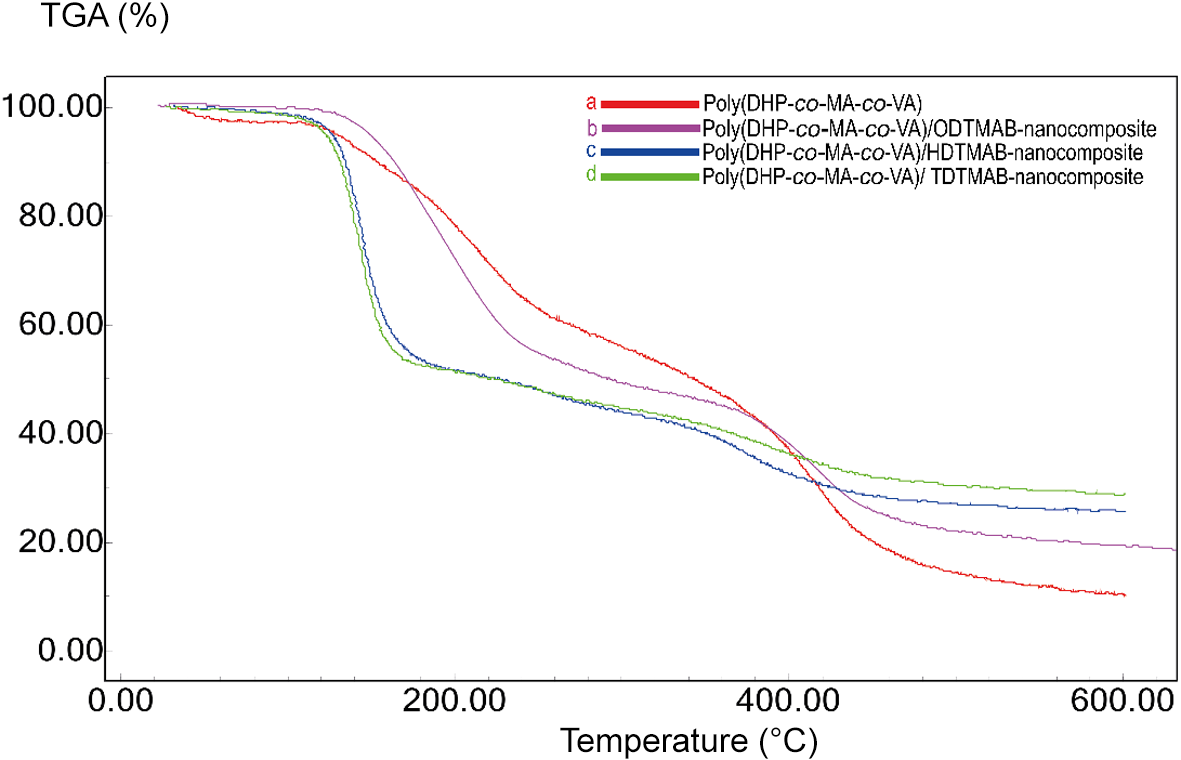
Thermal techniques were used to evaluate the thermal characterization of nanostructures made using terpolymers and three distinct alkyl ammonium salts. Fig 11 displays the temperature thermograms and mass loss percentages for the modified nanocomposites and terpolymers. Upon examining the poly(DHP-co-MA-co-VA) terpolymer thermogram shown in Fig. 11a, it can be observed that the terpolymer structure exhibits a two-step degradation, similar to the copolymer. Two degradation temperatures are observed: one at 280°C and the other at 420°C. The groups that are more readily removed from the terpolymer structure are those whose mass loss is 41.06% up to 300°C. The mass loss in the copolymer thermogram is reported to be 34.85% in the first decay up to 300°C and 44.05% in the terpolymer.
TGA–temperature curves of terpolymer and organoclay–terpolymer nanocomposites.

This variation might be the result of the terpolymer absorbing more hydrated components into its matrix and becoming more organically organized due to the VA content. The degradation process in which species such as CO2 are extracted from the VA groups and anhydride ring may be understood as the maximal degradation phase at 420°C, which results in a mass loss of 45.7%. Again, the mass loss in the terpolymer (Fig. 11a) during the second phase of degradation is larger than that found in the copolymer. Based on a broad examination of Fig. 11, the terpolymer structure is identified as exhibiting a maximum mass loss rate of 89.74% in the mass loss–temperature thermograms up to 600°C. When the thermograms of nanocomposites generated with three different organoammonium salts are investigated (Fig. 11b–d), the overall breakdown stages occur in three steps, unlike in the terpolymer.
On the thermograms, mass loss is noticed to occur due to the elimination of crystal water between 100°C and 180°C, which is also lost in the bentonite structure. The stage at which the greatest mass loss is recorded is the first-line decay up to 200°C. The mass losses of HDTMAB- and TDTMAB-modified nanostructures up to 200°C are 48.37% and 47.69%, respectively. However, the ODTMAB-modified nanostructure lost less mass than the other modified structures at this stage, as just 27.75% of it deteriorated. The substantial mass loss induced by lengthy alkyl chains in the first stage was not detected in the ODTMAB-modified nanocomposite.
This can be explained by the fact that the terpolymer and modified clay layers interact chemically more with ODTMAB than with TDTMAB in the modified nanostructures. Between 200°C and 360°C, the ODTMAB-modified nanocomposite structure lost mass at a rate of 22.99%, which is identical to that of the terpolymer, whereas the HDTMAB- and TDTMAB-modified nanostructures saw mass losses of ∼7%. The terpolymer retained 89.74% of its initial mass following heat treatment up to 600°C, whereas the structures modified with ODTMAB retained 80.72%, 74.35% and 71.21% of their initial masses under identical conditions.
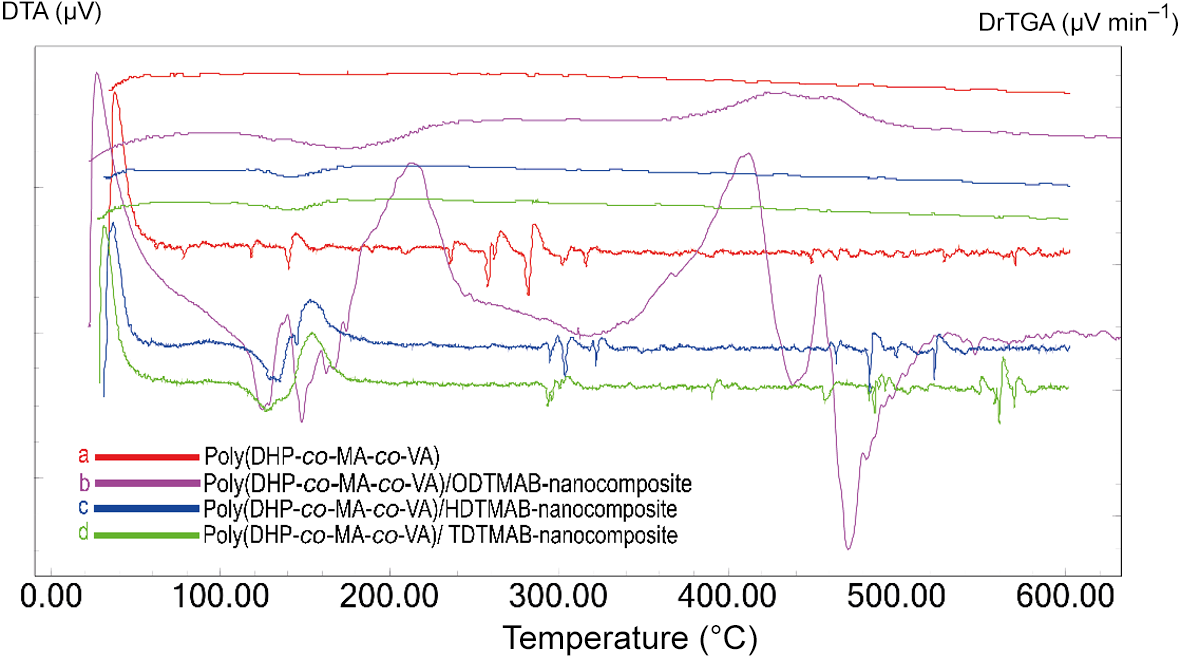
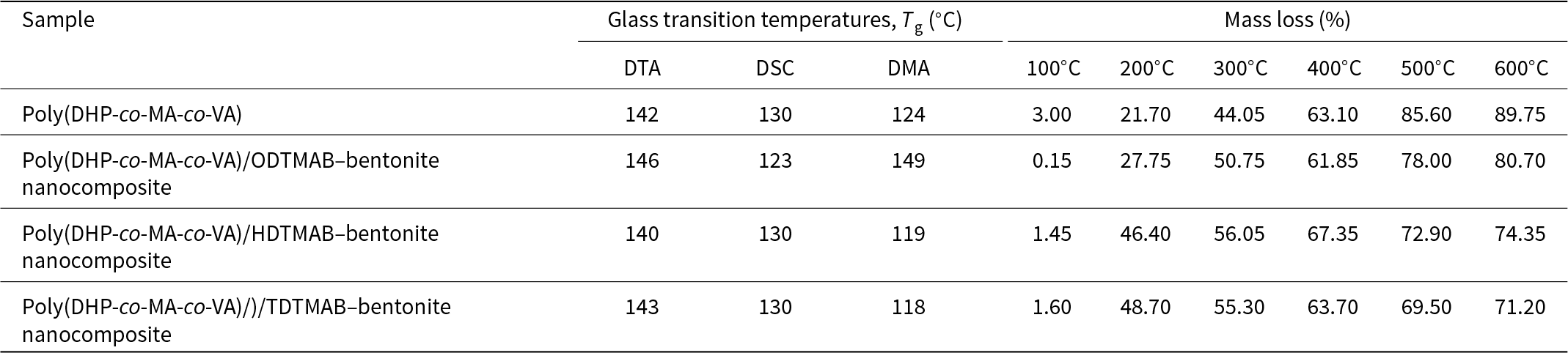
HDTMAB and TDTMAB were degraded. By incorporating three different inorganic–organic materials modified through 5% polymerization, nanocomposite structures with similar thermal stabilities were obtained. Thermal characterization revealed that the thermal stabilities of nanocomposites obtained using bentonite structures modified with organoammonium salts in a terpolymerization environment increase. Furthermore, the chain length of the salts with long carbon chains used in the modification plays a significant role in this thermal stability. Table 3 presents the mass loss percentages of the terpolymer and its nanocomposites, along with the glass transition temperatures obtained using three different methods. Glass transition temperatures were derived from the DTA (Fig. 12) and DMA (tanδ) curves, showing consistent trends across the methods. Notably, no significant difference in glass transition temperature (T g) was observed between the terpolymer and its nanocomposites.
DTA and DrDTA–temperature curves of terpolymer and organoclay–terpolymer nanocomposites.

Thermoanalytical results of poly(DHP-co-MA-co-VA) and poly(DHP-co-MA-co-VA)/organo-bentonite nanocomposites.

Table 3 shows the thermoanalytical data obtained by using DSC, DTA and TGA thermal techniques. The glass transition temperature was used to compare the DTA and DSC analyses. Considering the C14–C18 chain lengths, the T g values obtained from DTA and DSC are highly compatible. The T g values of the hybrid structures obtained as a result of the addition of inorganic material to the structures were found to be higher than that of the copolymer (132.7°C). The C16–C18 T g values of the nanocomposites modified with HDTMAB and ODTMAB were found to be very similar to each other (140.56°C and 140.78°C, respectively). As a result of the characterization carried out using these thermal methods, it is observed that the nanostructures obtained by using inorganic–organic-modified structures in a copolymerization medium acquire thermal stability, and carbon chain lengths play an important role in this.
DMA of the poly(DHP-co-MA-co-VA) terpolymer
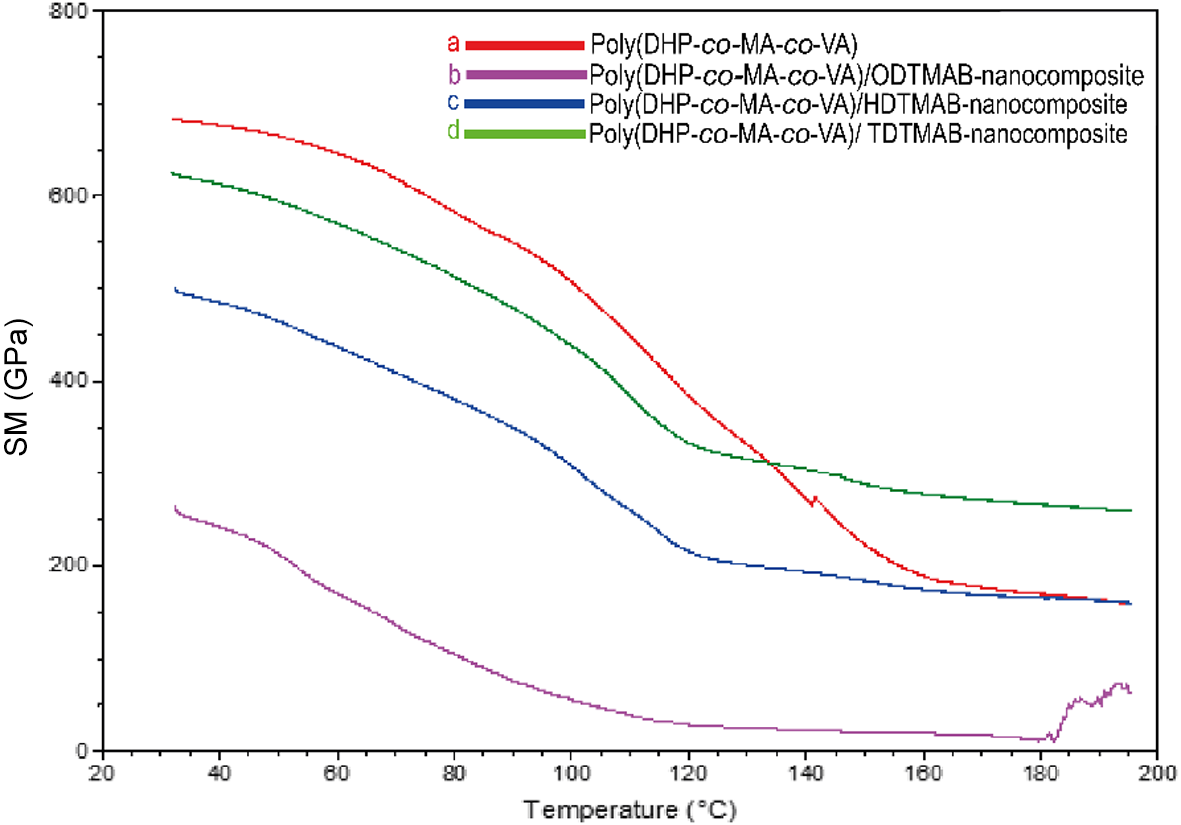
The viscoelastic behaviour of powdered copolymers and their nanocomposites (PCNs) was investigated using DMA. To evaluate the homogeneous distribution of the organoclay structure in the polymer matrix and to provide information on its distribution properties, DMA parameters were assessed. When examining the SM–T curve (Fig. 13), the structure of the copolymer–clay nanocomposite, which was made using the C18 alkyl group (Fig. 13a), exhibited the greatest SM value.
SM–temperature curves of terpolymer and organoclay–terpolymer nanocomposites: (a) poly(DHP-co-MA-co-VA), (b) poly(DHP-co-MA-co-VA)/ODTMAB–bentonite nanocomposite, (c) poly(DHP-co-MA-co-VA)/HDTMAB–bentonite nanocomposite and (d) poly(DHP-co-MA-co-VA)/TDTMAB–bentonite nanocomposite.

High SM values for the copolymer and PCN are suggested by the glassy zone that is present during the SM–T bending process up to 60°C. With increasing temperature (60–80°C), the SM value of the sequential copolymer reduces rapidly. The changes in carbon chain length cause clays treated with C14, C16 and C18 groups to exhibit different patterns in their SM values. Although our results at first suggested that the elastic modulus would increase with longer carbon chain lengths (Fig. 13), further investigation showed that, despite its shorter carbon chain length, C14’s SM had the highest such value among the PCNs over the whole temperature range. Similar observations were made regarding the glass transition and the elastic response in the SM curves. This shows that the layered silicate structure is spread throughout the polymer matrix (Lan & Pinnavaia, Reference Lan and Pinnavaia1994; Rzayev, Reference Rzayev and Mittal2010).
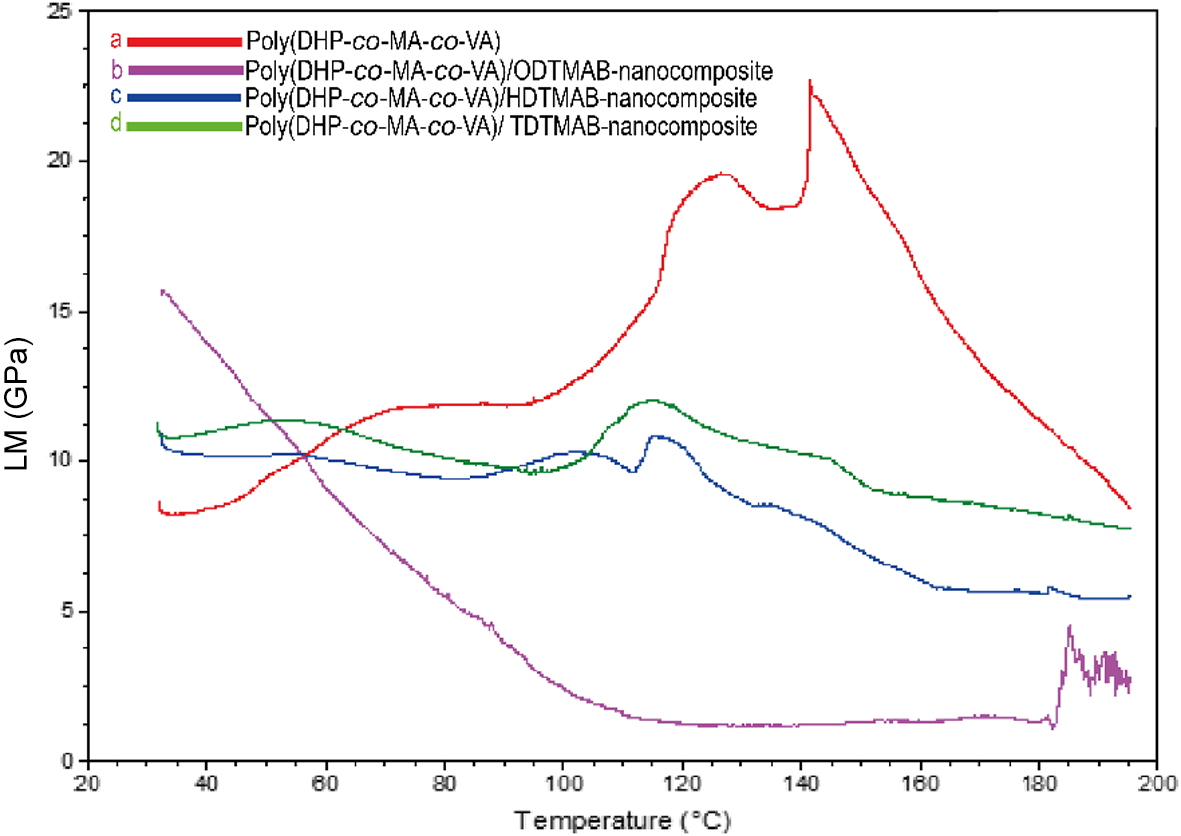
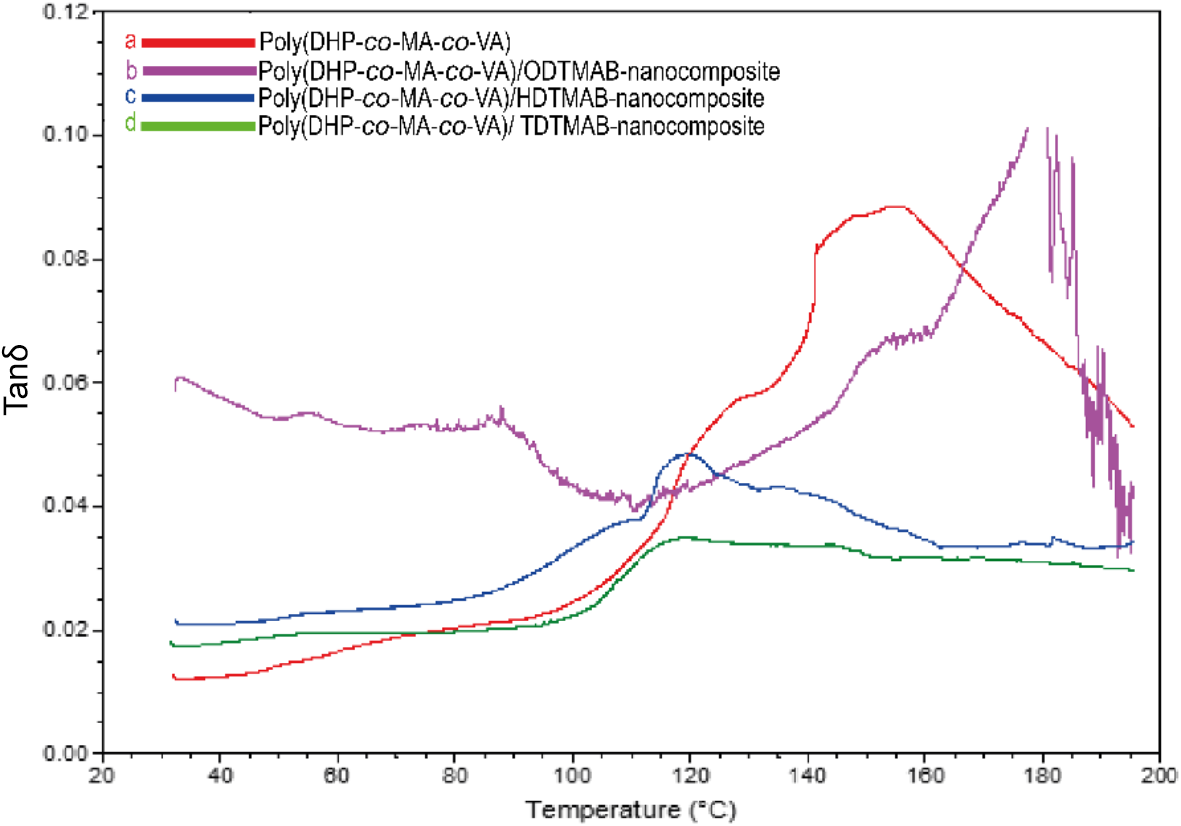
The temperature increases lead to the T g maxima in the LM and tanδ curves (Figs 14 & 15). The onset of ‘micro-Brownian’ movement between the molecular chains is indicated by the damping being low below T g and increasing as the system gets closer to the T g area (Okamoto, Reference Okamoto, Lau, Hussain and Lafdi2009). This can be explained by the fact that not all segments unwind together, as the glassy segments retain more energy. Regarding the rubbery region, it is believed that the segments in a solid state become liberated and release excess energy. Micro-Brownian movement in a polymer chain refers to the local segmental motion of polymer chains, where individual segments move and interact with neighboring chains, facilitating chain diffusion. Maximum damping is seen when polymer chains contact each other under harmonic stress. In this situation, the LM declines above T g, and at approximately T g the segments start to increase in movement and display minimal resistance to flowing (Okamoto, Reference Okamoto, Lau, Hussain and Lafdi2009). In nanocomposite structures, tanδ values change based on the creation of the nanocomposite and polymer matrix. Tanδ values were recorded at higher temperatures, indicating extended transitions in nanostructures modified with C14, C16 and C18 alkyl groups (Patel et al., Reference Patel, Somani, Bajaj and Jasra2006).
LM–temperature curves of terpolymer and organoclay–terpolymer nanocomposites: (a) poly(DHP-co-MA-co-VA), (b) poly(DHP-co-MA-co-VA)/ODTMAB–bentonite nanocomposite, (c) poly(DHP-co-MA-co-VA)/HDTMAB–bentonite nanocomposite and (d) poly(DHP-co-MA-co-VA)/TDTMAB–bentonite nanocomposite.

Tanδ–temperature curves of terpolymer and organoclay–terpolymer nanocomposites: (a) poly(DHP-co-MA-co-VA), (b) poly(DHP-co-MA-co-VA)/ODTMAB–bentonite nanocomposite, (c) poly(DHP-co-MA-co-VA)/HDTMAB–bentonite nanocomposite and (d) poly(DHP-co-MA-co-VA)/TDTMAB–bentonite nanocomposite.

The terpolymer shows a greater elastic modulus than the copolymer structure and the copolymer–clay nanocomposites according to an analysis of the SM–T curves of the terpolymer and terpolymer–clay nanocomposites. This typical SM–T behaviour is consistent with copolymer structures. The SM is 700 GPa in the glassy zone (up to 60°C) and is greater than that of the copolymer (∼500 GPa). In contrast to nanostructures in the glass transition zone (80–140°C), there is a rapid reduction in the terpolymer structure up to ∼200 GPa. The copolymer structure is stable at ∼100 GPa. We might gain more understanding of this phenomenon by studying the interaction between three separate monomer groups that engage in CTCs, resulting in nanostructures that demonstrate improved compatibility with shorter carbon chains due to their lower volume of occupancy (Ray & Okamoto, Reference Ray and Okamoto2003; Kaplan et al., Reference Kaplan, Sadler, Little, Franz and Orris2012).
In the thermal investigation, maxima at ∼120°C were detected in the LM–temperature (LM-T) and tanδ–temperature (tanδ–T) curves. Preceding these peaks, sub-glass transition (sub-T g) events were identified, which were attributed to the mobility of side groups or aliphatic chains inside the polymer backbone. The T g values of the terpolymer and its nanostructures were obtained by utilizing the maxima of the tanδ–T curves. Table 3 displays the T g values obtained using DMA. The large peaks found above the glass transition temperature range (140–180°C) can be attributed to two phenomena: physical cross-linking and pseudo-melting of functional groups inside the terpolymer. Physical cross-linking is most likely the result of interactions between functional groups such as carboxyl or hydroxyl groups. However, the pseudo-melting response indicates the softening or partial melting of these groups when subjected to thermal stress. This reveals a complicated interplay of molecular interactions and heat effects inside the terpolymer architecture.
Conclusion
The current study utilized an in situ solution polymerization method to synthesize poly(DHP-alt-MA) and poly(DHP-co-MA-co-VA) copolymers along with their respective nanocomposites. These nanocomposites were created by modifying bentonite, which has a layered silicate structure, using three different alkyl ammonium salts (ODTMAB, HDTMAB and TDTMAB) through ion-exchange processes. After modification, the character of bentonite transformed from hydrophilic to hydrophobic. CTC reactions led to the formation of poly(DHP-alt-MA) copolymers and poly(DHP-co-MA-co-VA) terpolymers containing electron acceptor–donor groups and nanocomposites incorporating clays modified with long alkyl chains of organoammonium salts.
The dynamic mechanical properties and thermal behaviours of these products were investigated using DMA, DSC, DTA and TGA. The evaluation of the dynamic mechanical characteristics across the modified bentonite configurations, including poly(DHP-alt-MA) and poly(DHP-co-MA-co-VA), and the resulting PCNs provided significant insights. Particularly noteworthy was the discovery that organoclay matrices modified with both pristine bentonite and alkyl ammonium groups such as C14, C16 and C18 exhibited the greatest mechanical strength among all bentonite derivatives. Furthermore, the organoclay treated with C18 ammonium salt showed strength values closest to those of bentonite. Upon examining the copolymer and terpolymer structures and their respective nanocomposites, it became evident that the terpolymer exhibits a greater elastic modulus compared to both the copolymer and the copolymer–clay and terpolymer–clay nanocomposites. The thermal analysis results indicated that bentonite undergoes modification through ion-exchange reactions with ODTMAB, HDTMAB and TDTMAB, resulting in decreased thermal stability due to the addition of aliphatic long-chain structures to the modified forms. Thermograms of the copolymer–clay nanocomposites revealed a distinct three-step process, unlike the two-step process observed in the copolymer alone. However, there was no significant difference in the thermal stabilities among the copolymer and terpolymer and their nanocomposites.
Competing interests
The authors of the manuscript declare that they have no scientific and/or financial conflicts of interest with other people or institutions.