1. Introduction
Work is vitally important for the physical and mental health of people with and without disabilities (Achterberg et al., Reference Achterberg, Wind, De Boer and Frings-Dresen2009; Dean et al., Reference Dean, Shogren, Hagiwara and Wehmeyer2018; Fryers, Reference Fryers2006; Hall et al., Reference Hall, Kurth and Hunt2013; Helliwell et al., Reference Helliwell, Layard, Sachs and De Neve2020; Ipsen, Reference Ipsen2006; Kamerāde et al., Reference Kamerāde, Wang, Burchell, Balderson and Coutts2019; Linn et al., Reference Linn, Sandifer and Stein1985; Muller et al., Reference Muller, Peebles, Chiu, Iwanaga, Tang, Brooks and Chan2017). Gainful employment enables working-age adults to live independently, raise a family, access health care, connect with people, live a life with dignity, and contribute to the society (Fryers, Reference Fryers2006). On the other hand, unemployment, income inequality, and poverty are associated with poor physical and mental health, due to the loss of income, poor access to health care, stigma, social isolation, and psychological distress (Driscoll & Bernstein, Reference Driscoll and Bernstein2012; Linn et al., Reference Linn, Sandifer and Stein1985; McKee-Ryan et al., Reference McKee-Ryan, Song, Wanberg and Kinicki2005). The employment-to-population ratio of 28% for working-age adults with disabilities is significantly lower than the 68% rate for working-age adults without disabilities, elevating their risk for poor physical and mental health (U.S. Bureau of Labor Statistics, 2020).
Intellectual disabilities (ID) is characterized by significant limitations in both intellectual functioning and in adaptive behavior, which covers many everyday social and practical skills (American Association of Intellectual and Developmental Disabilities, 2020). In the United States, the U.S. Census Bureau has reported that approximately 1.2 million (0.5%) civilian, noninstitutionalized adults had ID in 2010 (Brault, Reference Brault2012). The employment rate of 34% for working age adults with ID was reported by a Gallup survey commissioned by the Special Olympics organization (Siperstein et al., Reference Siperstein, Heyman and Stokes2013). Of the people with ID who were employed at the time of the Gallup survey, only 26% held full-time jobs and only one-third of these individuals had employer-based health insurance. The low competitive employment rate for people with ID makes them disproportionally vulnerable to the negative consequences of unemployment.
Because of low levels of physical activity and high levels of sedentary behavior, people with ID are at risk for a number of secondary health conditions including obesity, diabetes, heart problems, and depression (Hsieh et al., Reference Hsieh, Hilgenkamp, Murthy, Heller and Rimmer2017). Other health problems that are common in people with ID include motor deficits, epilepsy, allergies, otitis media, mental illness, vision and hearing impairments, oral health problems, and constipation (May & Kennedy, Reference May and Kennedy2010). Poor physical and mental health can significantly affect the odds of people with ID finding and maintaining long-term employment (Chan et al., Reference Chan, Chiu, Bezyak and Keegan2012). Ipsen and colleagues (Ipsen, Reference Ipsen2006; Ipsen et al., Reference Ipsen, Seekins and Ravesloot2010) examined the relationship between health behaviors and employment participation using data from the Behavioral Risk Factor Surveillance System, the United States’ premier system of health-related telephone surveys, which collects state data about residents regarding their health-related risk behaviors, chronic health conditions, and use of preventive services. Results indicated that physical activity and exercise increased the probability of employment for people with disabilities, and many secondary health conditions, including physical deconditioning, fatigue, sleep problems, weight problems, pain, depression, and social isolation, respond well to health promotion “behavioral” interventions (Ipsen, Reference Ipsen2006).
There is also empirical evidence to support the relationship between employment and health in people with and without disabilities (Dean et al., Reference Dean, Shogren, Hagiwara and Wehmeyer2018; Hall et al., Reference Hall, Kurth and Hunt2013; Kamerāde et al., Reference Kamerāde, Wang, Burchell, Balderson and Coutts2019; Muller et al., Reference Muller, Peebles, Chiu, Iwanaga, Tang, Brooks and Chan2017). Kamerāde and colleagues (Reference Kamerāde, Wang, Burchell, Balderson and Coutts2019) reported that even people who work just one or two days a week will reap the same physical and mental health benefits as people who work full-time. Hall et al. (Reference Hall, Kurth and Hunt2013) examined the Medicare and Medicaid claim data of 810 working-age adults with prevalent disabilities and found significantly lower rates of smoking, reduced medical costs, and higher levels of self-reported health status and quality of life among employed adults with disabilities in comparison to unemployed adults with disabilities. Muller et al. (Reference Muller, Peebles, Chiu, Iwanaga, Tang, Brooks and Chan2017) evaluated the relationship between employment status and health-related quality of life outcomes in adults with fibromyalgia. They found that employment, both full- and part-time, significantly predicted health-related outcomes. People with fibromyalgia who were employed full-time had the lowest number of secondary health conditions and better overall functioning, physical and mental health, and life satisfaction in comparison to those without employment. The bidirectional relationship between health and employment may have significant implications for conceptualizing and designing health and employment interventions for people with ID.
To improve the health and employment outcomes of individuals with ID, it is essential to fund research and practice based on scientific merit to identify health promotion and employment interventions that have the potential to promote optimal health and employment outcomes for persons with ID. In an initial scoping search of the health and employment literature, we found a large quantity of systematic reviews related to secondary health conditions, health promotion, and employment of people with ID. When ample reviews already exist, Corry, While, Neenan, and Smith (2014) recommended that researchers should conduct a systematic review of these existing systematic reviews to provide an overview of the available evidence. This is a logical and appropriate next step, allowing the findings of separate reviews to be compared and contrasted, providing concise and robust evidence and valuable information for rehabilitation health research and practice (Smith et al., Reference Smith, Devane, Begley and Clarke2011). For this reason, a systematic review of reviews was deemed the most appropriate approach for bringing together the state-of-the-science of research related to health and employment of people with ID.
1.1. Purpose of the Study
The purpose of the present study was to synthesize the findings from systematic reviews that evaluated the relationships among secondary health conditions, health promotion interventions, and employment outcomes of people with ID. In addition, quality of the included reviews will be evaluated using a critical appraisal tool for systematic reviews that includes randomized and nonrandomized studies: the “A MeaSurement Tool to Assess systematic Reviews” (AMSTAR; Shea et al., Reference Shea, Hamel, Wells, Bouter, Kristjansson, Grimshaw and Boers2009).
1.2. Review Questions
-
1. What types of secondary health conditions commonly affect people with ID?
-
2. What types of health promotion interventions are effective for people with ID?
-
3. What is the relationship between health status and employment of people with ID?
2. Method
2.1 Study Process
This study is a systematic review of systematic reviews of relationships among secondary health conditions, health promotion interventions, and employment of individuals with ID. Systematic reviews should build on a protocol that describes the rationale, hypothesis, and planned methods of the review (Moher et al. Reference Moher, Shamseer, Clarke, Ghersi, Liberati, Petticrew and Stewart2015). Smith et al.’s (Reference Smith, Devane, Begley and Clarke2011) recommended methodology for systematic reviews of systematic reviews was used to guide the conduct of this review. The reporting of this systematic review adhered to the Preferred Reporting Items for Systematic Reviews and Meta-Analysis (PRISMA-P checklist), which is detailed, well-described protocols to facilitate the understanding and appraisal of the review methods, for the reporting of systematic reviews (Moher et al. Reference Moher, Shamseer, Clarke, Ghersi, Liberati, Petticrew and Stewart2015).
2.2 Identification of Literature
The electronic databases that were searched in this study: PubMed, PsycINFO, ERIC, ABI/Inform, Academic Search Complete, the Cochrane Library, and the Campbell Collaboration. Targeted articles were limited to peer reviewed English language publications, published between January 2000 and June 2020. To identify additional relevant studies, the literature search was extended to include review of the reference lists of the final records, articles based on expert recommendations, and hand-searched articles using Google scholar. The search was conducted in June 2020.
2.3 Search Strategy
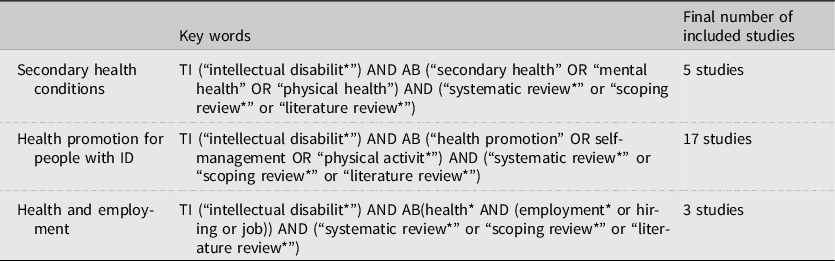
In each database, the term intellectual disability was combined with search terms relating to secondary health conditions, health promotion, and employment. Specifically, search strings were developed and adopted for use across databases. First, “Intellectual disabilit*” needs to be included in the title. Second, “secondary health,” “mental health,” “physical health,” “employment*,” “hiring or job,” “health promotion”, “self-management,” “physical activit*” needs to be included in the abstract. Third, “systematic review,” “scoping review,” or “literature review also needs to be included in the abstract. Search terms in strings were combined using the Boolean operand “OR” and across strings using the Boolean operand “AND” (see Table 1).
Keywords of each research question

2.4 Screening and Eligibility
All articles identified by database search were exported to Endnote Web. Duplicates and irrelevant records were removed. Remaining records were screened for inclusion using the inclusion criteria for three reviewing processes: 1) title review, 2) abstract review, and 3) full article review. The senior author and the second author independently reviewed the titles to determine relevancy of the articles for the present study. After the individual review, any disagreements on ratings were discussed. The inter-rater agreement was 96% for title review. The articles that did not reach agreements were kept for the abstract reviewing. Second, those authors independently reviewed the abstracts of the remaining articles after the title review. The same procedure was taken, with a 100% agreement rate. Third, those authors independently reviewed the remaining articles entirely. The same procedure was taken, with a 96% agreement rate.
2.5 Inclusion Criteria
To be included in this systematic review, the original systematic reviews had to meet a minimum set of the following criteria:
-
1. It is a systematic review article.
-
2. The focus of the review is on secondary health conditions of people with ID, health promotion interventions for people with ID, and he relationship between health and employment of people with ID.
-
3. The target population is working-age adults with ID (ages between 16 and 65 years).
-
4. It follows an evidence-based protocol of systematic review (e.g., PRISMA checklist)
-
5. It is published in English.
-
6. It is published between January 2000 and June 2020
-
7. It is peer-reviewed.
2.6 Quality Appraisal
Each included study was critically appraised for its methodological quality by the senior author and the second author. They independently reviewed the quality of each systematic review article selected for this study using the assessment of multiple systematic reviews (AMSTAR) is an empirically validated instrument for investigating the methodological quality of systematic reviews (Pieper et al., Reference Pieper, Koensgen, Breuing, Ge and Wegewitz2018; Shea et al., Reference Shea, Hamel, Wells, Bouter, Kristjansson, Grimshaw and Boers2009).
3. Results
3.1 Study Selection
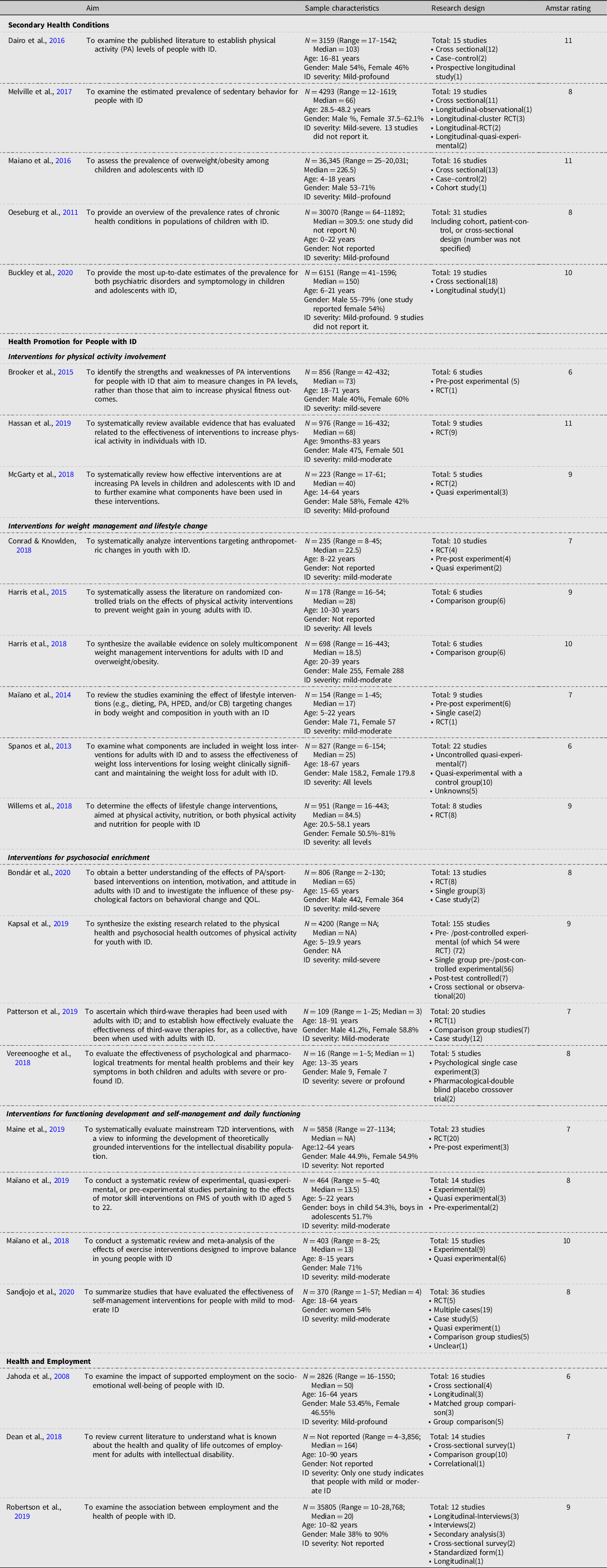
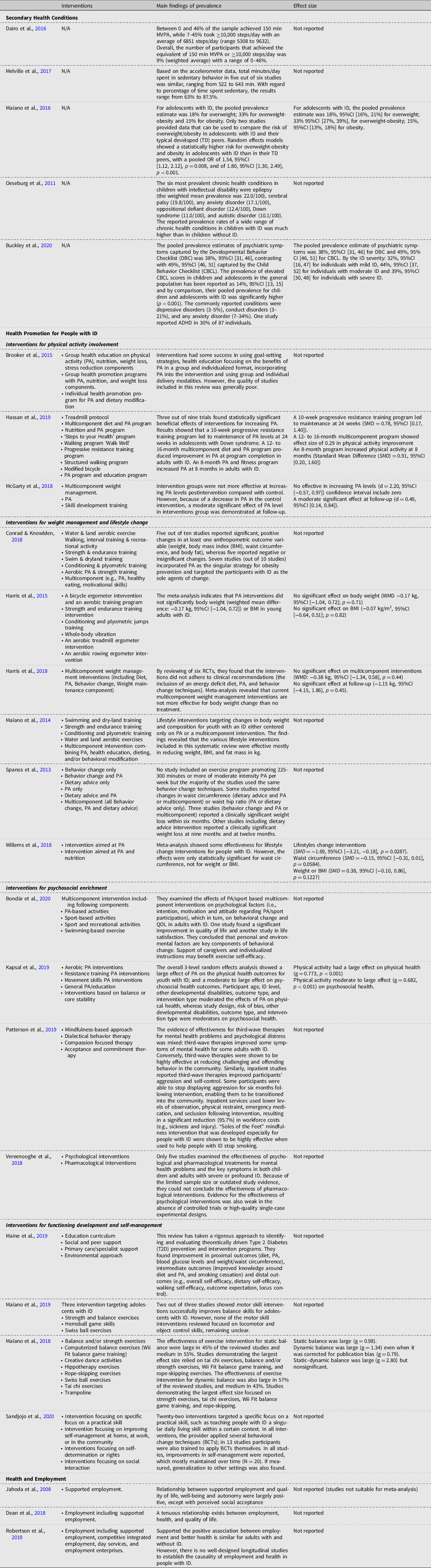
The electronic database searches generated a total of 204 articles, and additional-search (i.e., reviewing of the reference lists of the final records, articles based on expert recommendations, and hand-searched articles using Google scholar generated another 8 articles). By removing the duplicates (31 articles), it resulted in 115 articles. The title review process eliminated 41 irrelevant articles; the inter-rater agreement between reviewers was 96%. The abstract review process eliminated another 28 articles with an inter-rater agreement of 100%. Full-text review resulted in 21 more articles being excluded with an inter-rater agreement of 96%. In the end, 25 articles were retained (see Fig. 1). Those articles were categorized in three themes including secondary health conditions and ID (5 articles), health promotion for people with ID (17 articles), and health and employment (3 articles). The articles characteristics were summarized in Table 2. Main findings were summarized in Table 3.
PRISMA flow diagram of the literature in the systematic review.
aAdditional search include reviewing of the reference lists of the final records, articles based on expert recommendations, and hand-searched articles using Google Scholar.

Study characteristics

Interventions and main findings of each articles

3.2 Secondary Health Conditions and ID
We identified five systematic reviews of secondary health conditions in people with ID (Buckley et al., Reference Buckley, Glasson, Chen, Epstein, Leonard, Skoss and Downs2020; Dairo et al., Reference Dairo, Collett, Dawes and Oskrochi2016; Maiano et al., Reference Maïano, Hue, Morin and Moullec2016; Melville et al., Reference Melville, Oppewal, Elinder, Freiberger, Guerra-Balic, Hilgenkamp and Gine-Garriga2017; Oeseburg et al., Reference Oeseburg, Dijkstra, Groothoff, Reijneveld and Jansen2011). In the present study, the average AMSTAR ratings for systematic review articles in the secondary health conditions section is 9.60 (SD = 1.52), a rating higher than 9 is considered high quality.
Dairo et al. (Reference Dairo, Collett, Dawes and Oskrochi2016) reviewed 15 nonrandomized studies that examined physical activity (defined as 150 minutes of moderate to vigorous physical activity [MVPA] per week or walking more than 10,000 steps per day) among people with ID. The publication range of these articles is between 2004 and 2013, with sample size ranging from 17 to 1542 (median 103, pooled sample was 3156). Findings of these studies indicated that between 0 and 46% of people with ID were able to achieve the 150 minutes/week MVPA goal, while 7 to 45% were able to walk 10,000 steps per day, with an average of 6851 steps/day. In 2010, the World Health Organization estimated that, globally, 23% of adults without disabilities were physically inactive (men 20% and women 27%). Clearly, the percentage of individuals with ID who are physically inactive is significantly higher than that of the global general population.
Melville et al. (Reference Melville, Oppewal, Elinder, Freiberger, Guerra-Balic, Hilgenkamp and Gine-Garriga2017) retrieved 19 articles (5 randomized studies and 14 nonrandomized studies) that examine sedentary behavior based on accelerometer or inclinometer data, or overall time spent in specific sedentary behaviors such as watching TV or using the computer in people with ID. The publication range of these articles is between 2003 and 2015, with sample size ranging from 12 to 1619 (median = 66, pooled sample was 4293). Based on the accelerometer data, total minutes per day spent on sedentary behavior were similar in 83% of the studies, ranging from 522 to 643 minutes per day. With regard to percentage of time spent on sedentary activities, the range is between 63% and 88%. Comparing to 462 minutes/day and 55% of time on sedentary activities among people without disabilities (Matthews et al., Reference Matthews, Chen, Freedson, Buchowski, Beech, Pate and Troiano2008), adults with IDs are more sedentary than adults without IDs.
Maiano et al. (Reference Maïano, Hue, Morin and Moullec2016) extracted 16 studies (nonrandomized studies) to examine the obesity and overweight rates among people with ID. The publication range of these articles is between 1985 and 2015, with sample sizes ranging from 25 to 20,031 (median = 227, pooled sample was 36,345). Overweight is defined as age- and gender-specific body mass index (BMI) between 85th and 95th percentile or weight-length index (WLI) between 110% and 119%. Overweight-obese is indicated if age- and gender-specific BMI was over 85th percentile or WLI over110%. Obesity is defined as age- and gender-specific BMI over 95th percentile or WLI over 120%. For children, the pooled prevalence estimate was 15%, 95%CI [10%, 20%] for overweight, 30%, 95%CI [22%, 39%] for overweight to obesity, and 13%, 95%CI [10%, 16%] for obesity. For adolescents, the pooled prevalence estimate was 18% 95%CI [16%, 21%] for overweight, 33%, 95%CI [27%, 39%] for overweight-obesity, and 15%, 95%CI [13%, 18%] for obesity. Two studies provided data that can be used to compare the risk of overweight/obesity in adolescents with ID and their peers without ID. Random effects models showed a statistically higher risk for overweight–obesity and obesity in adolescents with ID than their peers without ID, with a pooled odd ratio of 1.54, 95%CI [1.12, 2.12], p < 0.01 for overweight-obesity and 1.80, 95%CI [1.30, 2.49], p < 0.01 for obesity.
Oeseburg et al. (Reference Oeseburg, Dijkstra, Groothoff, Reijneveld and Jansen2011) reviewed 31 articles that examined prevalence rates of chronic health conditions in populations of children with ID. The publication range of these articles is between 1996 and 2008, with sample size ranging from 64 to 11892 (median was 309.5, pooled sample was 30070). The average AMSTAR rating for these five articles is 10.00 (SD = 1.41). AMSTAR ratings between 9 and 11 are considered high quality (Pieper et al., Reference Pieper, Koensgen, Breuing, Ge and Wegewitz2018). They reported the prevalence rates of somatic chronic health conditions (epilepsy, cerebral palsy, visual problems, hearing problems, and miscellaneous somatic chronic health conditions); congenital malformations (genetic–chromosomal/sex-linked malformations and other chromosomal, endocrine/metabolic diseases malformations); pervasive developmental disorder (autistic disorder, pervasive developmental disorder other than autistic disorder); attention-deficit/hyperactivity disorder (ADHD)/hyperkinetic disorder; and miscellaneous psychiatric disorders among children with ID. They used the “weighted mean prevalence rate (WMPR)” to aggregate the prevalence rates of the different chronic health conditions to a single resultant score, so that studies with large populations contributed more to the weighted mean than did smaller ones. The six most prevalent chronic health conditions in children with ID were epilepsy (WMPR = 22.0/100, CI [20.8, 23.2]), cerebral palsy (WMPR = 19.8/100, CI [18.6, 21.1]), any anxiety disorder (WMPR = 17.1/100, CI [15.1, 19.4]), oppositional defiance disorder (WMPR = 12.4/100, CI [10.7, 14.4]), Down syndrome (WMPR = 11.0/100, CI [10.5, 11.4]), and autistic disorder (WMPR = 10.1/100, CI [8.8, 11.6]). The reported prevalence rates of a wide range of chronic health conditions in children with ID were much higher than in children without ID.
Buckley et al. (Reference Buckley, Glasson, Chen, Epstein, Leonard, Skoss and Downs2020) reviewed 19 nonrandomized studies with sample sizes ranging from 25 to 20,031 (median = 150, pooled sample was 6151). The publication range of these articles is between 1986 and 2016. They demonstrated that the pooled prevalence of psychiatric symptoms captured by the Developmental Behavior Checklist (DBC; Dekker et al., 2002) was 38%, 95%CI [31%, 46%], contrasting with 49%, 95%CI [46%, 51%] captured by the Child Behavior Checklist (CBCL; Achenbach, 1991), and the pooled prevalence of psychiatric symptoms was 49%, 95%CI [46%, 51%]. The prevalence of elevated CBCL scores in children and adolescents in the general population has been reported as 14%, 95%CI [13%, 15%], and by comparison, the pooled prevalence for children and adolescents with ID was significantly higher (49%, p < 0.001). The prevalence estimates of psychiatric disorders using diagnostic interviews varied across studies the authors reviewed. The commonly reported conditions were depressive disorders (3–5%), conduct disorders (3–21%), and anxiety disorder (7–34%). One study in their review (Gothelf et al. Reference Gothelf, Goraly, Avni, Stawski, Hartmann, Basel-Vanagaite and Apter2008) reported ADHD in 30% of 87 individuals.
3.3 Health Promotion for People with ID
A total of 17 systematic reviews on health promotion were selected for the present study. These articles were grouped into interventions for: 1) physical activity (Brooker et al., Reference Brooker, Van Dooren, McPherson, Lennox and Ware2015; Hassan et al., Reference Hassan, Landorf, Shields and Munteanu2019; McGarty et al., Reference McGarty, Downs, Melville and Harris2018); 2) weight management and lifestyle change (Conrad & Knowlden, Reference Conrad and Knowlden2018; Harris et al., Reference Harris, Hankey, Murray and Melville2015, Reference Harris, Melville, Murray and Hankey2018; Maïano et al., Reference Maiano, Normand, Aime and Begarie2014; Spanos et al., Reference Spanos, Melville and Hankey2013; Willems et al., Reference Willems, Waninge, Hilgenkamp, van Empelen, Krijnen, van der Schans and Melville2018); 3) psychosocial enrichment (Bondár et al., Reference Bondár, di Fronso, Bortoli, Robazza, Metsios and Bertollo2020; Kapsal et al., Reference Kapsal, Dicke, Morin, Vasconcellos, Maïano, Lee and Lonsdale2019; Patterson et al., Reference Patterson, Williams and Jones2019; Vereenooghe et al., Reference Vereenooghe, Flynn, Hastings, Adams, Chauhan, Cooper and Langdon2018); and 4) self-management and daily functioning (Maine et al., Reference Maine, Brown, Dickson and Truesdale2019; Maïano et al., Reference Maïano, Hue, Morin, Lepage, Tracey and Moullec2018, Reference Maïano, Hue and April2019; Sandjojo et al., Reference Sandjojo, Eltringham, Gebhardt, Zedlitz, Embregts and Evers2020). Common approaches included single- and multicomponent health education, physical and recreational activity, behavioral change, psychosocial therapies, and caregiver engagement interventions. In the present study, the average AMSTAR ratings for systematic review articles in the health promotion section is 8.18 (SD = 1.42), a rating between 5 and 8 is considered medium quality.
3.3.1 Physical Activity
Three systematic reviews evaluated the effectiveness of health promotion interventions for improving physical activity among people with ID (Brooker et al., Reference Brooker, Van Dooren, McPherson, Lennox and Ware2015; Hassan et al., Reference Hassan, Landorf, Shields and Munteanu2019; McGarty et al., Reference McGarty, Downs, Melville and Harris2018). The publication range of these articles is between 2004 and 2017, with an aggregated sample size of 2055. The age range was between 9 months and 83 years.
McGarty et al. (Reference McGarty, Downs, Melville and Harris2018) reviewed two randomized studies and three nonrandomized studies. Meta-analysis results indicated that physical activity (PA) interventions were not more effective at increasing physical activity post-intervention (d = 0.20, 95%CI [0.57, 0.97]. However, because of reduction in physical activity level in the control group, a moderate significant effect was observed at follow-up (d = 0.49; 95%CI [0.14, 0.84]; medium effect size). A similar finding was reported by Hassan et al. (Reference Hassan, Landorf, Shields and Munteanu2019), with positive outcomes in three out of nine studies. Brooker et al. (Reference Brooker, Van Dooren, McPherson, Lennox and Ware2015) reviewed six studies with significant outcomes. However, the evidence quality of these studies was deemed to be relatively poor. Among these six studies, three showed significant improvement in physical activity level, two demonstrated significantly higher mean frequency of self-report physical activity per week, and one showed significantly more time spent on light intensity physical activity and less time spent on sedentary behavior. One article published by Shields et al. Reference Shields, Taylor, Wee, Wollersheim, O’Shea and Fernhall(2013) was included in the review articles published by Hassan et al. (Reference Hassan, Landorf, Shields and Munteanu2019) and McGarty et al. (Reference McGarty, Downs, Melville and Harris2018). Results indicated that a 10-week progressive resistance training program led to maintenance of physical activity levels at 24-week follow-up in adolescents with Down syndrome (intellectual disability; d = 0.78, 95%CI [0.17, 1.40]; large effect size]). Additionally, Hassan et al. (Reference Hassan, Landorf, Shields and Munteanu2019) concluded that a 12- to 16-month multicomponent diet and physical activity interventions improved physical activity levels post intervention (d = 0.30, between small and medium effect size). They also reported a large effect size for an 8-month physical activity and fitness program (d = 0.91, 95%CI [0.20, 1.60]; large effect size).
3.3.2 Interventions for Weight Management and Lifestyle Change
In the present study, we located six systematic reviews that are related to weight management and lifestyle change. These reviews comprised 61 studies published between 1982 and 2016 and 2973 individuals with mild to moderate ID, ages between 5 and 67 years (Conrad & Knowlden, Reference Conrad and Knowlden2018; Harris et al., Reference Harris, Hankey, Murray and Melville2015, Reference Harris, Melville, Murray and Hankey2018; Maïano et al., Reference Maiano, Normand, Aime and Begarie2014; Spanos et al., Reference Spanos, Melville and Hankey2013; Willems et al., Reference Willems, Waninge, Hilgenkamp, van Empelen, Krijnen, van der Schans and Melville2018). Findings of these systematic review articles are mixed.
Conrad and Knowlden (Reference Conrad and Knowlden2018) reviewed 10 weight management intervention articles, five reported positive outcomes including reduction in weight, fat mass, fat percentage, BMI, waist circumference, and energy intake. Maiano et al. (Reference Maiano, Normand, Aime and Begarie2014) also reported that weight management and physical activity intervention successfully led to changes in weight, BMI, and fat mass. However, nine intervention studies (N = 154) reported that weight management and lifestyle change interventions had no or minuscule effect on BMI and weight loss. Spanos et al. (Reference Spanos, Melville and Hankey2013) examined 17 intervention studies and concluded the results are mixed for the following approaches (a) behavior change only, (b) behavior change and physical activity, (c) dietary advice or physical activity alone, (d) dietary advice and physical activity, and (e) multicomponent (all three components). Ten studies demonstrated weight and BMI reduction, only three studies reported clinically significant weight loss (5%) at six months post intervention, but none of these studies included clinical guidelines of moderate intensity physical activity (225 to 300 minutes) per week as one of the outcome variables. Harris et al.’s (Reference Harris, Hankey, Murray and Melville2015) systematic review included six RCTs that used physical activity interventions to prevent weight gain. All physical activity interventions had no effect on body weight (weight mean difference [WMD] = −0.17 kg, 95%CI [−1.04, 0.72], p = 0.71). Four studies investigated BMI as an outcome. The pooled effect size illustrated that physical activity intervention had no effect on BMI (−0.07 kg m−2, 95%CI [−0.64, 0.51], p = 0.82]) in comparison with the control group. Harris et al. (Reference Harris, Melville, Murray and Hankey2018) evaluated 6 studies that described multicomponent weight management interventions. Results showed no significant differences in body weight change between the multicomponent interventions group and the control group, WMD = −0.38 kg, 95%CI [−1.34, 0.58], p = 0.44 or at 12 months follow-up, WMD = −1.15 kg, 95%CI [−4.15, 1.86], p = 0.45. Willems et al.’s (Reference Willems, Waninge, Hilgenkamp, van Empelen, Krijnen, van der Schans and Melville2018) systematic review and meta-analysis comprised eight studies. Findings revealed a significant decrease in waist circumference (N = 350; SMD = −1.69, 95%CI [−3.21, −0.18], p = 0.029); no significant effects on body composition (N = 612; d = −0.15, 95%CI [−0.31, 0.01], p = 0.058) and physical capacity (N = 125; SMD = 0.38, 95%CI [−0.10, 0.86], p = 0.123).
3.3.3 Interventions for Psychosocial Enrichment
Four systematic reviews were composed of 147 studies and 5,131 individuals with mild to severe ID who were between 15 and 65 years old. Gender difference was not reported in these reviews (Bondár et al., Reference Bondár, di Fronso, Bortoli, Robazza, Metsios and Bertollo2020; Kapsal et al., Reference Kapsal, Dicke, Morin, Vasconcellos, Maïano, Lee and Lonsdale2019; Patterson et al., Reference Patterson, Williams and Jones2019; Vereenooghe et al., Reference Vereenooghe, Flynn, Hastings, Adams, Chauhan, Cooper and Langdon2018). Two reviews used physical activity or sports-based intervention to improve psychosocial functioning (Bondár et al., Reference Bondár, di Fronso, Bortoli, Robazza, Metsios and Bertollo2020; Kapsal et al., Reference Kapsal, Dicke, Morin, Vasconcellos, Maïano, Lee and Lonsdale2019). The other two reviews had a focus on the effects of psychological and pharmacological treatment and third-wave therapies (the holistic promotion of psychological and behavioral process associated with health and well-being) on psychosocial outcomes (Vereenooghe et al., Reference Vereenooghe, Flynn, Hastings, Adams, Chauhan, Cooper and Langdon2018). Kapsal et al. (Reference Kapsal, Dicke, Morin, Vasconcellos, Maïano, Lee and Lonsdale2019) conducted a systematic review and meta-analysis of 109 studies and 4200 persons with ID, they concluded that physical activity had a large effect on physical health (e.g., muscular strength endurance, physiological outcomes, or balance/stability; Hedges’ g = 0.78, p < 0.001) and a moderately large effect on psychosocial health (e.g., psychological outcomes, behavioral outcome and social outcomes; Hedges’ g = 0.682, p < 0.001). They also reported that severity, types of outcome, and types of intervention moderated the effects of physical activity on physical health, whereas study design, risk of bias, types of intervention, and outcome moderated the effect of physical activity on mental health. Overall, resistance training had the most physical health benefits, whereas movement and sports skills training appeared to have both physical and psychosocial health benefits.
Bondár et al. (Reference Bondár, di Fronso, Bortoli, Robazza, Metsios and Bertollo2020) examined 13 studies (ten physical activity interventions and three sports-based intervention) to determine the effects of these interventions on psychological health, behavioral change, and quality of life. They found no evidence that physical activity and sports-based interventions had any effect on behavior change and quality of life. They reported mixed findings on the effect of caregiver involvement on behavior change.
Vereenooghe et al. (Reference Vereenooghe, Flynn, Hastings, Adams, Chauhan, Cooper and Langdon2018) reviewed five studies (N = 16) that had a focus on individuals with severe or profound ID. Three of these studies evaluated the effect of pharmacological interventions, and two examined the effect of psychological interventions. This review demonstrated that both psychological and pharmacological interventions had no significant effects on mental health outcomes. Patterson et al. (Reference Patterson, Williams and Jones2019) reviewed 20 studies (N = 109) to evaluate the effect of third-wave therapies including the mindfulness-based approach, dialectical behavior therapy, compassion focused therapy, and acceptance and commitment therapy. The overall finding reviewed mixed results for psychological distress and mental health problems. Anxiety, depression, psychological distress, and obsessive–compulsive disorder symptom scores were improved after these interventions. Third-wave therapies had impact on behavior-related outcomes, including challenging/offending behavior and smoking reduction
3.3.4 Interventions for Self-Management and Daily Functioning
Four systematic reviews comprising 88 studies (N = 7095) conducted between 1969 and 2018 that evaluated the effect of self-management and daily functioning interventions for people with mild to moderate ID (Maine et al., Reference Maine, Brown, Dickson and Truesdale2019; Maïano et al., Reference Maïano, Hue, Morin, Lepage, Tracey and Moullec2018, Reference Maïano, Hue and April2019; Sandjojo et al., Reference Sandjojo, Eltringham, Gebhardt, Zedlitz, Embregts and Evers2020). Age of the participants ranged from 5 to 64 years, and the number of men and women were similar. Interventions included balance and/or strength exercise, computerized game (Xbox 360 Kinect, Wii Fit), developmental physical education program, therapeutic sensorimotor training, and miscellaneous physical activity and exercise training (e.g., adapted play, handball techniques, creative dance, hippotherapy exercise, rope-skipping exercise, Swiss ball exercise, Tai Chi and trampoline). Maïano et al. (Reference Maïano, Hue, Morin, Lepage, Tracey and Moullec2018) evaluated exercises on both static (i.e., the body is static) and dynamic balance (i.e., the body is moving or in reaction to stimuli or external perturbations). Results demonstrated that a significant and large improvement in static (pooled effect size, Hedges’ g = 0.98) and dynamic (g = 1.34) balance compared with the control group, even after correcting for publication bias (g = 0.79). Maïano et al. (Reference Maïano, Hue and April2019) concluded that motor skill interventions (i.e. balance and strength exercises or hems ball game skills) were effective for improving balance skills among adolescents with mild to moderate ID.
Maine et al. (Reference Maine, Brown, Dickson and Truesdale2019) examined 23 studies (N = 5858) that had a focus on the effectiveness of mainstream type 2 diabetes education programs that included education curriculum, social and peer support, primary care/specialist support, and environmental approaches on proximal (a direct impact upon type 2 diabetes progression risk factors), intermediate (an impact on patients’ knowledge of type 2 diabetes and self-management behaviors that can improve proximal outcomes), or distal outcomes (enhancing intermediate outcomes leading to behavioral change and improvements in disease management to stay healthy). Under proximal outcomes, Maine et al. (Reference Maine, Brown, Dickson and Truesdale2019) reported five studies (21.7%) improved diet, three studies (13%) improved physical activity, three studies (13%) improved blood glucose levels, and three studies (13%) reduced body weight. Intermediate outcomes: five studies (21.7%) improved dietary knowledge and practices, one (4.3%) improved physical activity, and one (4.3%) improved smoking cessation outcomes. Distal outcomes: 5 studies (21.7%) including overall self-efficacy, lower depression, healthy diet, physical activity intentions, dietary self-efficacy, walking self-efficacy, outcome expectation, locus of control, illness belief score reduced diabetes-related distress. Lastly, Sandjojo et al. (Reference Sandjojo, Eltringham, Gebhardt, Zedlitz, Embregts and Evers2020) reviewed self-management interventions for people with mild to moderate ID using behavioral change techniques (BCTs). Twelve studies were multicomponent interventions (12/36 studies, 33.3%). The rest of the interventions targeted a singular practical skill for a specific context (e.g., classroom training, video demonstration simulations, pictorial instructions, etc.). In general, self-management effects are long lasting and generalizable to different settings (e.g., buying groceries at an unfamiliar supermarket)
3.4 Health and Employment
Three systematic reviews examined the association between health and employment of people with ID (Dean et al., Reference Dean, Shogren, Hagiwara and Wehmeyer2018; Jahoda et al., Reference Jahoda, Kemp, Riddell and Banks2008; Robertson et al., Reference Robertson, Beyer, Emerson, Baines and Hatton2019). The average AMSTAR ratings for systematic review articles in health and employment is 7.33 (SD = 1.53), which indicates a medium level of quality.
Jahoda et al. (Reference Jahoda, Kemp, Riddell and Banks2008) reviewed 16 studies (N = 2826) that examined the impact of supported employment on socio-emotional well-being of people with ID. The publication range of these articles is between 1967 and 2005. The sample sizes of these studies varied greatly ranging from 16 to 1550. Excluding the Kregel et al. (Reference Kregel, Wehman and Banks1989; N = 1550) study, the average sample size of these studies is reduced to 85 (Median = 50). The majority of the research studies selected had a sample size of less than 100. Most of the studies were nonrandomized investigations without controlling for selection bias and longitudinal studies without matched groups. After reviewing these 16 empirical research studies, Jahoda et al. (Reference Jahoda, Kemp, Riddell and Banks2008) concluded that there was a significant relationship between supported employment and quality of life, well-being, and autonomy but not perceived social acceptance. However, they did not report any statistics or effect sizes for studies in their review, which is a major limitation. Importantly, the less than stellar quality of the studies included in their review would suggest major weaknesses in employment and health studies of individuals with ID conducted between 1967 and 2005.
Dean et al. (Reference Dean, Shogren, Hagiwara and Wehmeyer2018) conducted a systematic review of 14 studies to examine the extent to which employment influences health outcomes of people with ID. Studies in their review were conducted between 1988 and 2018. Seven of the 14 studies investigating health outcomes of employment were conducted in the last 10 years. Sample sizes of these studies were not reported. Most of the studies were nonrandomized studies without controlling for selection bias. Similar to the review conducted by Jahoda et al. (Reference Jahoda, Kemp, Riddell and Banks2008), the authors did not provide any effect size, descriptive, mean difference, and correlation statistics for the reviewed articles. After reviewing these articles, Dean and colleagues (Reference Dean, Shogren, Hagiwara and Wehmeyer2018) concluded that there was a positive relationship between employment and quality of life. However, they also discussed methodological issues related to these studies (including small sample sizes, lack of prospective designs, varying types of measures and measurement) and caution that no definitive conclusion about the nature of the work–health relationship can be drawn from their systematic review.
Robertson, Beyer, Emerson, and Baine (Reference Robertson, Beyer, Emerson, Baines and Hatton2019) identified 12 studies (N = 35805) to review the association between employment and the health of people with ID. The publication range of these articles is between 1990 and 2018. The sample sizes of these studies varied greatly ranging from 10 to 28798, with a median of 201. Fifty percent of the research studies selected had a sample size greater than 100. Most of the studies were based on survey data. Robertson et al. (Reference Robertson, Beyer, Emerson, Baines and Hatton2019) reported that, for people with ID, working for 16 or more hours per week was associated with better positive self-rated health (odds ratio [OR] = 4.31, 95%CI [1.64,11.31]) than people with ID who were not in the labor force (Emerson et al. Reference Emerson, Hatton, Robertson and Baines2014). Similarly, individuals with ID who were unemployed had greater prevalence of poor mental health compared to persons with ID who were employed full-time. The authors concluded that their review supported the view that the well-established association between employment and better health is similar for adults with and without ID. There was no randomized studies identified in any of the three systematic reviews.
4. Discussion
The purpose of this systematic review of systematic reviews study was to evaluate the quality of the systematic reviews conducted to evaluate secondary conditions, health promotion, and employment of people with ID. We used AMSAR for assessing the quality of systematic reviews to confirm the remaining 25 systematic review articles’ quality. The most frequently used criteria of AMSTER rating is low (score 0 to 4), medium (score 5 to 8), and high (scores 9 to 11; Pieper et al., Reference Pieper, Koensgen, Breuing, Ge and Wegewitz2018). The average AMSTAR rating for the 25 systematic review articles in the present study was 8.36 (SD = 1.55), indicating that the quality of these systematic review articles is fairly good and conform to systematic review guidelines like PRISMA. The quality of the systematic review articles for secondary health conditions was the highest, followed by health promotion; the quality of the systematic review articles for health and employment received the lowest average AMSTAR rating. The lower rating for health and employment is expected as none of the four systematic review articles provided any information on effect size for the articles in their reviews.
Our review of systematic reviews related to secondary health conditions clearly indicated a high rate of secondary health conditions among people with ID. Similar to other disability groups, because of a sedentary lifestyle and unhealthy diet, obesity, diabetes, heart problems, and depression are common among individuals with ID. These reviews also identified ID-specific health problems including epilepsy, cerebral palsy, visual problems, hearing problems, autism spectrum disorder, attention-deficit/hyperactivity disorder, and mental health problems. The high prevalence of secondary health conditions underscores the need for rehabilitation counselors and other disability service providers to include health promotion interventions as a vocational rehabilitation strategy for people with ID (Chan et al., Reference Chan, Chiu, Bezyak and Keegan2012; Ipsen, Reference Ipsen2006; Ipsen et al., Reference Ipsen, Seekins and Ravesloot2010).
Specifically, obesity has been identified as a common health concern among people with ID. Weight management and lifestyle change are the most common interventions, including food and nutrition education, health behavior change programs, weight management programs, and a variety of physical activity and leisure activity programs. In our review of systematic reviews of health promotion and ID, we found that there are significantly more randomized studies in this topic area than there are in other domains. Physical activity interventions are generally effective in improving activity levels of people with ID, as they help people with ID in the treatment group maintain their levels of physical activity after the treatment, while the physical activity level of people in the control group deteriorates over time. There is some evidence to indicate weight management + physical activity interventions can lead to positive changes in weight, BMI, and fat mass of people with ID. However, there are also studies that showed weight management and lifestyle change programs are not effective in reducing body weight. There is also no clear evidence that multicomponent interventions are better than single component interventions. These findings suggest that exercise and physical activity alone are not sufficient to reduce body weight. For people with ID, physical activity and eating healthy may be more effective in reducing body weight.
In terms of psychosocial interventions, there is evidence to suggest that physical activity has a moderate effect on psychological health. There is no strong evidence to support the effect of pharmacological treatment on psychosocial outcomes. The effect of third-wave therapies including the mindfulness-based approach, dialectical behavior therapy, compassion focused therapy, and acceptance and commitment therapy is inconclusive, with some evidence to support their positive effect on reducing symptoms related to anxiety, depression, psychological distress, and obsessive–compulsive disorder. There is evidence to support balance exercise, strength training, computerized games (Xbox 360 Kinect, Wii Fit), therapeutic sensorimotor training, and alternative physical activity and exercise training (e.g., adapted play, handball techniques, creative dance, hippotherapy exercise, rope-skipping exercise, Swiss ball exercise, Tai Chi, and trampoline) are effective in improving gait functioning of people with ID. Overall, there is good evidence to indicate the effectiveness of self-management and adaptive functioning training.
The bidirectional relationship between health and employment is well documented (Hall et al., Reference Hall, Kurth and Hunt2013; Ipsen, Reference Ipsen2006; Linn et al., Reference Linn, Sandifer and Stein1985; Muller et al., Reference Muller, Peebles, Chiu, Iwanaga, Tang, Brooks and Chan2017). In our review of systematic reviews of health and employment, we found only articles on the impact of work on health outcomes of people with ID. In general, there is evidence to indicate that competitive employment and supported employment are effective in improving the physical and mental health of people with disabilities.
4.1 Implications for Future Research
It is apparent that people with ID are vulnerable to a large number of secondary health conditions. Poor physical and mental health can limit their employment opportunities and longevity of their employment. There is no longitudinal study that focuses on the effect of good physical and mental health on employment outcomes of people with ID. This problem can be addressed if disability and health researchers would include employment as one of their outcome variables for their health promotion research. The authors of these systematic reviews also expressed concerns about the quality of the health issues, health promotion, and employment studies in terms of methodological rigor, lack of fidelity measures for the interventions, varying quality of process and outcome measurements, and the need for well-designed randomized studies. Future research with a focus on validating a battery of psychometrically sound measures for health promotion and employment research and the development and validation of empirically supported health promotion intervention for children and adults with ID is warranted.
4.2 Implications for Rehabilitation Counseling Practice
Good physical and mental health is an important condition for functioning optimally and integrating fully into all aspects of society, including work and independent living (Chan et al., Reference Chan, Tansey, Iwanaga, Bezyak, Wehman, Phillips, Strauser and Anderson2020). Health promotion interventions for people with ID have the potential to improve secondary health conditions, community participation, employment, and quality of life (Chan et al., Reference Chan, Tansey, Iwanaga, Bezyak, Wehman, Phillips, Strauser and Anderson2020). Ipsen (Reference Ipsen2006) reported that physical activity and exercise increase the probability of employment for people with disabilities. She indicated that many secondary conditions, including physical deconditioning, fatigue, sleep problems, weight problems, pain, depression, and social isolation, respond well to health promotion “behavioral” interventions. These results provide a strong rationale for the inclusion of health promotion services in vocational rehabilitation agencies.
One of the health self-management education programs recommended by the Centers for Disease Control and Prevention (CDC) is the Living Well with a Disability program, a self-management intervention developed by researchers at the University of Montana in partnership with the national network of Centers for Independent Living (CILs) and with support from CDC’s Disability and Health Branch (Ipsen et al., Reference Ipsen, Ravesloot, Arnold and Seekins2012; Ravesloot et al., Reference Ravesloot, Seekins and White2005, Reference Ravesloot, Seekins, Cahill, Lindgren, Nary and White2007, Reference Ravesloot, Seekins, Traci, Boehm, White, Witten and Monson2016; Seekins et al., Reference Seekins, Clay and Ravesloot1994). The “Living Well” curriculum helps participants achieve early success in self-management of quality-of-life goals to build confidence for making health behavior changes. The program includes 11 chapters with an orientation session and 10 weekly, 2-hour sessions. This intervention program has been validated by Ravesloot and colleagues (Reference Ravesloot, Seekins and White2005), indicating that this health self-management intervention is successful in reducing the average degree of limitation people report due to secondary conditions, the number of symptom days they experience, and their health care costs ($807 per person due to reductions in healthcare utilization) while increasing their overall life satisfaction and the behaviors they used to improve health status. Importantly, they found that increased physical activity is significantly related to improved health conditions. As a health promotion behavioral intervention, the Living Well program may be suitable for people with ID. Rehabilitation counselors, transition specialists, and other disability service providers and their agencies can purchase this relatively inexpensive curriculum and integrate health promotion as part of the vocational rehabilitation strategy and services to improve physical health, mental health, and employment outcomes of people with ID.
4.3 Limitations
The inclusion of eight systematic reviews that were overall of relatively high methodological quality based on AMSTAR ratings (i.e., AMSTER rating from 9 to 11) strengthens the evidence reported in this systematic review of systematic reviews. We only included systematic review articles in our analysis, which may limit the generalizability of the findings. For example, some researchers pointed out that for vocational rehabilitation, systematic reviews which concentrate on the top tiers of the evidence hierarchy (randomized clinical trials) may exclude many studies that are not evidence-based practices but nonetheless important for improving disability employment and inclusion practices and provide guidance for future research directions (Dijkers, Reference Dijkers2009; Johnston et al., Reference Johnston, Vanderheiden, Farkas, Rogers, Summers and Westbrook2009). We initially included scoping reviews in our database search; however, we did not find high-quality scoping reviews of our research topics and ended up focusing on only systematic reviews. In the future, it is also recommended to include studies using other research methods if the research topics under study are complex and have not been empirically and systematically examined sufficiently. Second, there were some redundant articles among the systematic reviews that we considered in our study. Therefore, there may be a chance that those articles weighed more heavily in our results.
5. Conclusion
In this systematic review of systematic reviews of secondary health conditions, health promotion, and employment of people with ID, we confirm that children and adults with ID as a group have higher rates of adverse health conditions than people without ID, health promotion intervention to help people engage in health promoting behaviors can improve the health of individuals with ID and their ability to find and maintain employment. Meaningful work activities and competitive, integrated employment in turn can improve physical and mental health of people with ID. Further dissemination of these two related key findings are needed. For example, transition-age youth with disabilities and their families engaging in career planning need to know health benefits of employment when engaging in career planning. Likewise, these findings have critical implications for vocational, community, and other health professionals in increasing awareness of the interrelationship of health and employment. Rehabilitation counselors, transition specialists, and other disability service providers should consider including health promotion as a strategy to improve employment outcomes of their clients with ID. Additionally, further research in this area is also merited to better understand the directionality and causality of this relationship between factors.
Acknowledgment
The contents of the journal publication were developed under a grant from the National Institute on Disability, Independent Living, and Rehabilitation Research (NIDILRR grant number 90RTEM0003). NIDILRR is a Center within the Administration for Community Living (ACL), Department of Health and Human Services (HHS). The contents of this journal article do not necessarily represent the policy of NIDILRR, ACL, or HHS, and you should not assume endorsement by the Federal Government.