


INTRODUCTION
The relationship between ethnic diversity and the provision of public goods has received widespread attention over the past two decades. This is because it provides powerful insights into the developmental struggles of ethnically diverse societies: across a range of contexts, diverse populations produce fewer public goods than do more homogeneous populations (Alesina, Baquir, and Easterly Reference Alesina, Baqir and Easterly1999; Baldwin and Huber Reference Baldwin and Huber2010). From this perspective, ethnic heterogeneity imposes a “diversity penalty” that impedes long-term growth by reducing investment in critical public goods like schools, health clinics, and infrastructure. The evidence for this relationship is extensive and robust, at least for ethnic diversity at relatively high levels of aggregation like the city, state/province, or national levels, where a large majority of previous empirical studies have focused.Footnote 1 A deeper consideration of how the local spatial distribution of ethnic groups affects the broader relationship has only recently attracted some attention (Ejdemyr, Kramon, and Robinson Reference Ejdemyr, Kramon and Robinson2015; Trounstine Reference Trounstine2016).
We argue that the spatial distribution of ethnic groups at the local level has a significant impact on the general relationship between ethnic diversity and public goods provision. When ethnic groups are geographically segregated, the magnitude of the diversity penalty is significantly reduced: even when controlling for both aggregate and local levels of ethnic diversity, the provision of public goods is generally greater where ethnic groups are locally segregated, relative to where they are locally mixed. Remarkably, heterogeneous areas that are locally segregated may, in some instances, even have a higher provision of public goods than otherwise comparable homogeneous areas. In short, the spatial segregation of ethnic groups can significantly reduce or even neutralize the diversity penalty in the provision of public goods.
The mitigating effect of segregation comes from a novel theory that we call the spatial interdependence of public goods provision. Most studies focus implicitly or explicitly on an intra-level dynamic, where ethnic diversity inhibits the coordination necessary for optimal public goods provision at one level of analysis, typically the city, state, or country.Footnote 2 We add an additional dimension to this through the incorporation of inter-level dynamics, where the spatial distribution of ethnic groups at the community level (where many public goods are utilized) affects the inter-level advocacy processes with the city, district, province, or state level (where decisions on public goods allocations are typically made).
We demonstrate the spatial interdependence of public goods provision through a decision-based framework that captures the calculus of policymakers when determining the allocation of public goods to the communities under their control. We argue that each community uses the public goods provided to other communities in an administrative area as a leverage point to better advocate for increased allotment to their own community, thereby linking the two levels in a dynamic process. The intuition for the theory rests on (1) the idea that segregated (and thus more locally homogeneous) communities are more effective at intra-level collective action necessary to support advocacy efforts and (2) that increased provision of public goods to one (relatively homogeneous) locality will strengthen the inter-level advocacy efforts of other localities, which are able to demand matching increases. This sibling rivalry-like effect creates a virtuous cycle that increases the overall provision of public goods beyond what is expected by both the aggregate level and local levels of ethnic diversity.
We assess this theoretical prediction with rich and highly disaggregated data on segregation and public goods provision from Indonesia in the year 2000, just after the fall of Suharto’s three-decade-long authoritarian regime known as the New Order. With the world’s fourth-largest population and over 700 indigenous ethnolinguistic groups, Indonesia’s diversity and size make it particularly well suited for this analysis. We construct a large nationwide dataset using individual-level data from the 2000 Population Census (199.5 million observations), as well as the 2000 Village Census (Potensi Desa or PODES) of 50,576 villages. The Population Census data are used to create measures of ethnic fractionalization (EF) and segregation, while the measures of public goods provision come from the Village Census. To our knowledge, this is the largest national-level empirical analysis of ethnic diversity and public goods provision.
Consistent with existing theory, we first find evidence of a negative association between public goods and ethnic heterogeneity at the local level, even after controlling for ethnic heterogeneity at the level where those decisions are made. After then controlling for local and aggregate ethnic heterogeneity, we find a strong positive association between ethnic segregation and public goods that are determined at subnational levels, namely middle schools, high schools, health centers, and asphalt roads. This supports our theory of interdependence in which the greater provision of public goods in homogeneous localities raises the provision of public goods in other localities in the same administrative area via externalities associated with local advocacy effectiveness. Even after accounting for a wide range of potential confounding variables, the association between segregation and public goods provision remains robust. We subject our results to sensitivity analyses to determine the degree to which the results are robust to selection on unobservables, and find that our results are unlikely to be explained by unobserved selection effects.
Further reinforcing the empirical basis of our theoretical claims, we show that public goods that are allocated based on national-level policies, and are therefore less subject to local advocacy efforts, do not show a statistical association between ethnic heterogeneity, ethnic segregation, and public goods. This underscores the conditional importance of local advocacy efforts, dependent on the decision level for each particular good. Demonstrating this makes an important contribution to questions raised by Kramon and Posner (Reference Kramon and Posner2013), who find that distributional outcomes—including public goods provision—are highly conditional on the good itself. They call for a better understanding of why the provision of certain goods are more subject to social structural factors like ethnic diversity than others. The advocacy mechanism that we propose provides insights into this puzzle by demonstrating that the effect of ethnic diversity on public goods provision is conditional on the level of decision-making for each particular good.
The applicability of our theory is most intuitive in democratic systems where formal mechanisms ensure responsiveness to local advocacy through bottom-up electoral accountability. We provide evidence for several informal mechanisms that likewise induce decision-makers to be responsive to local advocacy, even in top-down hierarchical systems where decision-makers are appointed, rather than elected. A key condition for the theory is that decision-makers must be responsive not only to the majority ethnic group, but also to minority groups. In the absence of this, minority groups would not be able to leverage disparities in public goods provision in their lobbying efforts, thus precluding a general increase through the interdependence mechanism.
These conditions were met in Indonesia during Suharto’s New Order regime, where local leaders had formal and informal incentives to be responsive to local demands. Moreover, Suharto’s Golkar party sought support from a broad spectrum of ethnic groups rather than exclusively from one particular group.Footnote 3 Given that we find evidence of interdependence in Suharto’s authoritarian regime and the expectation that more democratic systems would provide even stronger incentives for government officials to be responsive to local advocacy efforts, we argue that our theory is applicable in cases from full democracies to competitive authoritarian regimes that hold elections.
While other work has examined the effects of ethnic segregation on outcome variables like the quality of government (Alesina and Zhuravskaya Reference Alesina and Zhuravskaya2011), the salience of ethnicity (Oliver Reference Oliver2010), or political attitudes and participation (Kasara Reference Kasara2013), the relationship between ethnic segregation and public goods has only recently attracted theoretical and empirical attention (Ejdemyr, Kramon, and Robinson Reference Ejdemyr, Kramon and Robinson2017; Trounstine Reference Trounstine2016). This article builds on this crucial dimension, thereby contributing to the growing body of research on the broader relationship between ethnic diversity and public goods provision. It also illustrates the importance of the level of aggregation in statistical analyses, since findings may be conditional not only on level of aggregation, but also on the interaction between levels.
ETHNICITY AND PUBLIC GOODS
The provision of public goods relies fundamentally on the ability of a group to coordinate toward collective action. A great deal of research has examined why ethnic diversity inhibits coordination, and thus ultimately inhibits the provision of public goods. Habyarimana et al. (Reference Habyarimana, Humphreys, Posner and Weinstein2007) survey this research and group the microlevel explanations into three families of mechanisms. The first is preferences. Here, individuals in the same ethnic group are conjectured to prefer similar public goods (commonality of preferences), making it relatively easy to reach consensus when deciding on the types of public goods to provide. In addition, individuals may derive greater utility when coethnics benefit from public goods, relative to when public goods benefit non-coethnics (other-regarding preferences). The second family is termed technology. Here, coethnics are better able to coordinate because they have access to a common set of tools that facilitate coordination (efficacy). This includes the ability of coethnics to draw upon shared language, experience, and other modes of interaction that can reduce barriers to cooperation. It also includes findability, which allows coethnics to more easily identify and therefore punish each other for noncooperation. The third family is termed strategy. In what resembles a stag hunt game, individuals base their decision on whether to cooperate on their expectations of what others will do. If an individual anticipates that a coethnic will cooperate, she is more likely to cooperate herself; if she expects a non-coethnic to defect, she is more likely to defect herself. In this way, the negative biases that are typically directed toward out-group members become self-fulfilling.
The studies reviewed by Habyarimana et al. (Reference Habyarimana, Humphreys, Posner and Weinstein2007) are generally ambiguous about how dyadic coordination failures as described by the various mechanisms aggregate to inhibit the provision of public goods in diverse areas. Specifying this linkage more clearly requires careful consideration of how diversity affects the capacity or incentives of state actors to allocate resources for public goods. Toward this end, it is useful to distinguish between the level at which public goods are decided from the level at which they are consumed.
As a function of convenience and data availability, most studies on the relationship between ethnic diversity and the provision of public goods measure diversity at high levels of aggregation, typically at the city, state, or national levels (Alesina, Baqir, and Easterly Reference Alesina, Baqir and Easterly1999; Easterly and Levine Reference Easterly and Levine1997; Khwaja Reference Khwaja2009). In the case of city- or state-level analyses, this coincides with the level at which most decisions over the allocation of resources toward public goods are made. We thus refer to these as the decision level. By contrast, the beneficiaries of many public goods—including schools, health facilities, roads, and policing—are often geographically concentrated in local communities below the decision level. We call this the user level. With the exception of Miguel and Gugerty (Reference Miguel and Gugerty2005); Ejdemyr, Kramon, and Robinson (Reference Ejdemyr, Kramon and Robinson2017); and Trounstine (Reference Trounstine2016), existing work has not specifically examined how user-level diversity affects public goods provision as distinct from the effects of decision-level diversity.
Discerning between the decision and user levels allows for more precise specification of how diversity inhibits public goods provision. The aforementioned studies implicitly consider only the intra-level dimension of collective action, where the mechanisms summarized by Habyarimana et al. (Reference Habyarimana, Humphreys, Posner and Weinstein2007) prevent collective action at both the decision and user levels independently. We call this the consensus problem: At the decision level, administrators in diverse areas are inhibited from reaching consensus on which public goods to fund, thus depressing overall levels of allocation, while at the user level, the consensus problem prevents diverse communities from adequately supporting public goods initiatives.
We argue that there is also an important inter-level problem, where diversity at the user level inhibits effective advocacy toward decision makers at the decision level, which further depresses the provision of public goods. We term this the advocacy problem. Our study makes a unique contribution by incorporating the intra- and the inter-level interactions, thereby accounting for consensus and advocacy problems. Consistent with theory, we expect ethnic heterogeneity at the decision and user levels to be associated with a depression of public goods provision. We show, however, that the inclusion of the inter-level effect provides additional explanatory power beyond the conventional intra-level explanations.
The inter-level effect is shaped by the spatial distribution of ethnic groups at the user level. This dimension, as alluded to earlier, has not received sufficient attention in the aforementioned studies on diversity and public goods provision. Before proceeding further, it is useful to illustrate intuitively what we mean by spatial segregation. In keeping with the Indonesian case that we use to test our theory, we use District to refer to the decision level and Village to refer to the user level in Figure 1 below. Note that in Indonesia, “village” is often used to refer both to rural communities (desa) and urban neighborhoods (kelurahan).
Districts with Varying Levels of Ethnic Segregation

We begin by showing three idealized districts (A, B, and C), each comprised of two equally sized villages. All three districts have the same proportion of ethnic groups X and Y, yet the spatial distribution of those groups differs markedly between districts. In District A, ethnic groups X and Y are completely segregated into Villages A1 and A2, respectively. By contrast, in District C, the two ethnic groups each comprise half of the populations of Villages C1 and C2. District B presents an intermediate case where each village consists of a majority of one ethnic group, with the other group a minority. It is important to note that the aforementioned studies on the relationship between ethnic diversity and public goods provision—which examine diversity at relatively high levels of aggregation—would treat Districts A, B, and C as equally diverse. This is because all three would have an identical EF score, which remains the dominant measure of ethnic diversity employed in the literature.Footnote 4 The figure clearly illustrates, however, that despite identical EF scores at the district (decision) level, the spatial distribution of groups below the decision level creates substantially different user-level villages, and produces distinct inter-level dyads.
La Ferrara and Mele’s (Reference La Ferrara and Mele2006) study of segregation and public school funding in the United States is, to our knowledge, the earliest study to examine how ethnic segregation affects public goods provision. It argues that the homogeneity of one subarea may affect the provision of public goods in other subareas: that is, homogeneous subareas with wealthier ethnic groups may have an incentive to increase public goods to make their communities more attractive to wealthy coethnics. This competition among subareas may thus result in greater public goods overall for the entire area, producing a positive relationship between segregation and public goods provision. Ejdemyr, Kramon, and Robinson (Reference Ejdemyr, Kramon and Robinson2017) arrive at a related conclusion, arguing that elites are able to target coethnics more efficiently in segregated areas, thus leading to a greater distribution of goods in those areas. Another recent article comes to the opposition conclusion: Trounstine (Reference Trounstine2016) finds that of 25 cities in the United States, more segregated cities are also more politically polarized. This, in turn, inhibits political cooperation, which has the effect of dampening spending on public goods.
Our article builds on these studies in several ways. While La Ferrara and Mele (Reference La Ferrara and Mele2006) were influential in laying the groundwork for the study of segregation and public goods, their approach examines cases where the decision level does not differ from the user level. As such, their study disregards the potential effect of the inter-level advocacy channel, focusing only on the intra-level consensus-related channel. Trounstine (Reference Trounstine2016) provides a compelling argument and evidence for contexts where there is a strong correlation between ethnicity and political affiliation, as in the United States. The U.S. context differs from Indonesia since it has localities in which politicians can cater largely to the majority group to the exclusion of minority groups. Our article sheds light on contexts where this correlation is not strongly pronounced, in which case the political polarization mechanism may not materialize and the negative relationship is unlikely to hold. Ejdemyr, Kramon, and Robinson (Reference Ejdemyr, Kramon and Robinson2017) focus on the decision level, arguing that segregation affects the ability of elites to more efficiently target coethnics. In contrast to their supply-side approach, we examine the interplay between decision and user levels by highlighting the variation in advocacy effectiveness at the user level on the demand side.
A THEORY OF ETHNIC SEGREGATION AND PUBLIC GOODS PROVISION
The aforementioned studies argue that ethnic heterogeneity imposes a “diversity penalty” on the provision of public goods through the mechanisms summarized by Habyarimana et al. (Reference Habyarimana, Humphreys, Posner and Weinstein2007). We present a new theory, which we term spatial interdependence, that proposes an explanation for how ethnic segregation can reduce or even neutralize the diversity penalty by strengthening the efficacy of inter-level advocacy efforts. In this theory, higher levels of public goods provided to other communities in the same administrative area can give user-level agents greater leverage when advocating for more public goods to be provided to their own community. This mechanism creates a dynamic interdependence between communities that approximates a sibling rivalry. As the mechanism depends on the level of goods provided to other areas, it is especially pronounced in segregated areas, since these have more homogenous constituent communities that, ceteris paribus, receive more public goods than their unsegregated counterparts through the conventional intra-level coordination effects. The result of the interdependence mechanism is to boost aggregate levels of public goods provision in segregated areas beyond what we would expect based on user-level and decision-level heterogeneity alone. In short, we argue that ethnic diversity can affect public goods provision through two broad channels. The first is the conventional account as summarized by Habyarimana et al. (Reference Habyarimana, Humphreys, Posner and Weinstein2007); the second is a novel channel that arises through the interdependence of communities.
Conceptual Framework
We demonstrate the interdependence mechanism through a conceptual framework that captures the decision calculus of a policymaker who can direct resources toward public goods in the communities under her control. We then use this framework to generate observable implications, which we test in the empirical section of the article. We present our conceptual framework in three steps. First, we discuss the decision-making process of public goods provision and lay out the relationship between the decision level and user level. We argue that this process is not purely top-down, but rather that it involves bottom-up advocacy from the user level. Second, we incorporate ethnic heterogeneity as a key factor in determining the effectiveness of advocacy. Finally, we enrich our framework by introducing the interdependence between multiple user-level units.
Advocacy and Public Good Provision
We consider an institutional structure where a given decision level has multiple user-level units under its control. In keeping with the Indonesian case that we use in our empirical study, we call the decision-level unit the district and the relevant decision-level policymaker the district head. Because the user level for many public goods in the Indonesian context is the village, the village will be the user level for this discussion. Each village advocates for the provision of public goods from the decision level and receives public goods as per the district head’s decision. The type and amount of public goods that each village receives is dependent on the village's ability to effectively lobby the district head. Consuming public goods provides utility to the villages; village-level utility, in turn, affects the loyalty and support provided back to the district head.
The district head’s problem is to maximize her utility by allocating budget resources for public goods across the villages and keeping the remainder as her own private budget surplus. The district head is concerned both with staying in power by garnering sufficient support from her constituents and attaining rents. By allocating resources for public goods, she gains support from her constituents based on their satisfaction with their allocation of public goods. Remaining resources can be used for private rents or patronage to further bolster support.
This model is intuitive for political regimes in which district heads are democratically elected by village-level constituents. There, bottom-up advocacy from each village provides information on preferences vis-à-vis public goods, and the need to secure reelection gives the district head an incentive to be responsive. We argue that the model is also applicable to contexts in which subnational authorities are not elected, as responsiveness to village-level preferences can foster a supportive or quiescent population. Azam (Reference Azam2001), for example, uses a theoretical model and empirical evidence to illustrate the incentive for the decision level to be responsive to user-level preferences for public goods in various multiethnic African countries, some of which are authoritarian or competitive authoritarian.Footnote 5 The argument rests on the notion that the state and ethnic groups are connected through elites from the various ethnic communities. In return for their loyalty, the ethnic group “delegates” demand redistributive policies that channel public investment to their communities. As Azam (Reference Azam2001, 438) argues, “[w]hen the benefits of public expenditure are distributed broadly [to their communities], the ‘delegates’ of the ethnic groups can usually obtain renewed support for the state from their people.” In other words, as long as the decision-maker derives some utility from having a cohesive and loyal population in the area under her control, she has incentives to be responsive to public goods preferences, even in the absence of elections.
Ethnicity and Public Goods Provision
An extensive body of research has addressed the relationship between ethnic diversity (that is, EF) and public goods provision, as ethnically heterogeneous villages face disadvantages in their coordination effort vis-à-vis their more homogeneous counterparts through the mechanisms enumerated in Habyarimana et al. (Reference Habyarimana, Humphreys, Posner and Weinstein2007). From the perspective of a district head, inhibited coordination manifests itself in more fragmented demands and, therefore, a lower payoff for providing public goods, since the diverse preferences are more difficult to satisfy. In aggregate, this results in a diversity penalty on public goods provision in heterogeneous villages. The magnitude of the diversity penalty imposed by conventional mechanisms is a function of village-level Fractionalization, which we denote with EFV, where higher values correspond to greater fractionalization.
Interdependence and Public Goods Provision
We enrich the model by introducing a novel mechanism that arises from externalities in the provision of public goods, which we call the interdependence mechanism. So far, we have focused on intra-level dynamics in the village and on the dyadic inter-level relationship between an isolated village and its district head. We argue that the interdependence mechanism arises because the advocacy efforts of one village are dependent on the amount of public goods provided to other villages in the same district. The logic is simple: when one village receives public goods, another village can more effectively demand additional provisions as well, citing equity. Alternatively, the provision of a particular public good in one village may help villagers in another village coordinate on that same good, likewise improving advocacy efforts. In short, the externalities from public goods in villages within a district create a sibling rivalry effect that improves the effectiveness of advocacy efforts.Footnote 6
To illustrate the mechanism, let us consider a simple case in which a district consists of two villages of identical size, namely Village 1 and Village 2. Without interdependence, the more homogeneous the village (that is, the lower the fractionalization), the more public goods it will obtain as a function of the traditional mechanisms described in Habyarimana et al. (Reference Habyarimana, Humphreys, Posner and Weinstein2007). The interdependence mechanism creates an additional factor. When both villages are ethnically homogeneous, interdependence leads to higher levels of public goods provision in both villages as a result of a positive feedback loop. To begin, greater cohesion and coordination on public goods in Village 1 increases their provision through the conventional mechanisms. New public goods in Village 1, in turn, improve the effectiveness of Village 2’s advocacy efforts. As that leads to new public goods, it has a positive effect on the advocacy efforts of Village 1, creating the feedback loop that raises the aggregate level of public goods in the district.
The direction and magnitude of the interdependence effect is dependent on village fractionalization via the conventional mechanisms. If two villages are highly fractionalized, poor coordination toward public goods will depress their provision, preventing the emergence of a positive feedback loop. A negative loop is imaginable if declining public goods provision in some villages undermines the ability of another village in the same district to simultaneously demand an increase for themselves. Thus, the interdependence mechanisms allows us to specify the relationship between EF in one village and public goods provision in another village of the same district: as the fractionalization of Village 2 increases, the level of public goods provided in Village 1 decreases.
Ethnic Segregation and Public Goods Provision
To extend our argument to districts with more than two villages, we connect the notion of ethnic segregation as an aggregate measure of local homogeneity to public goods provision. We first define how spatial distribution is captured by a measure of ethnic segregation, and then discuss how it influences public goods provision through the interdependence mechanism described above.
Measuring Ethnic Segregation
We adopt the notion of ethnic segregation from Goodman and Kruskal (Reference Goodman and Kruskal1954), which captures the degree to which EF of subunits (in this case, villages) is lower than the EF of an aggregate unit (in this case, district). For District J, consisting of N J villages indexed by i, the Goodman-Kruskal segregation index is defined as
 $$\begin{eqnarray}
Segregation_{J}&=&\sum _{i=1}^{N_J} \frac{n_i}{n_J} \left( 1 -\frac{EFV_i}{EFD_J} \right)\nonumber\\
&=&1-\sum _{i=1}^{N_J} \frac{n_i}{n_J}\cdot \frac{EFV_i}{EFD_J},
\end{eqnarray}$$
where Segregation J is the Goodman-Kruskal segregation index for District J, n i and n J are the populations of Village i and District J, and EFV i and EFD J are EF of Village i and District J, respectively. We compute EF at the district-level (EFD J) as follows:
 $$\begin{equation}
EFD_J=1-\sum \limits _k\pi _{J,k}^2,
\end{equation}$$
where πJ, k is the proportion of each ethnic group k in District J. Likewise, EF at the village-level (EFV i) is given by
 $$\begin{equation}
EFV_i=1-\sum \limits _k\pi _{i,k}^2,
\end{equation}$$
where πi, k is the proportion of each ethnic group k in the Village i.
In short, ethnic segregation measures the weighted sum of the deviation of fractionalization of each subunit from the fractionalization at the higher level. Weighting by the population of each subunit captures the relative contribution of each subpopulation to the whole. When ethnic groups are completely segregated at the lower level units, that is, EFV i = 0 for all i, Segregation J will be one. This is the case of District A in Figure 1 shown earlier where each village has EF of 0 while the district fractionalization is 0.5. In contrast, when the EF of each of the lower-level units is exactly the same as the overall fractionalization at the upper level, that is, EFV i = EFD J for all i in unit J, then the ethnic segregation index will be zero. This is the case of District C in Figure 1, where each village has EF of 0.5, which is also the same as the district fractionalization. For an intermediate case, such as District B in Figure 1, if the ratio between the majority and the minority ethnic groups is 0.75 to 0.25, then EF at the village level is 0.375, implying that the Goodman-Kruskal segregation index is 0.25. A general conclusion directly from Equation (1) is that, controlling for the same value of EFD, the higher the weighted average of EFV across villages is in the district, the lower the segregation measure of that district will be.
Ethnic Segregation and the Interdependence Mechanism of Public Goods Provision
To connect the Goodman-Kruskal measure of ethnic segregation described in the previous section to the public goods provision for some village j, we rewrite Equation (1) as
 $$\begin{equation}
Segregation_{J}=1-\frac{n_j}{n_J}\cdot \frac{EFV_j}{EFD_J}-\sum _{i\ne {j}} \frac{n_i}{n_J} \cdot \frac{EFV_i}{EFD_J}.
\end{equation}$$
Equation (4) shows that for some Village j located in District J, the segregation measure of that district could be decomposed into the contribution of the village’s own EF (the second term on the right-hand side) and the contribution of EF from all other villages in the same district (the last term on the right-hand side), normalized by the EF of the district (EFD J). The (negative) contribution of Village j’s EF to District J’s segregation is small when Village j accounts for only a small share of District J’s total population. In the limit, when there are infinitely many villages in the district and each village is infinitesimal (that is,  $\frac{n_j}{n_J}$ approaches zero), the second term on the right-hand side approaches zero. In such a case, from the perspective of each village, the district segregation could be reinterpreted as the weighted average of EF of all other villages in the district.
This insight has an important empirical implication. If each village in the sample is small relative to the overall size of the district, then the district’s segregation index could be used as a proxy for the weighted average of EF from all other villages in the district. As we have shown in the hypothetical case of a two-village district, a village tends to have lower public goods when the other village is more ethnically fractionalized and therefore is less effective at garnering public goods. The extension to the case of districts with multiple villages is clear: a village located in a less segregated district (where other villages have higher EF) is likely to have lower public goods provision than an otherwise similar village in a more segregated district (where other villages have lower EF). Intuitively, comparing two districts with identical EF, the district that is less ethnically segregated will have higher average EF at the village level. Higher fractionalization at the village level will, in turn, not only lead to lower public goods provision in each of the villages through the traditional mechanism (proxied by village fractionalization), but could also create negative externalities on other villages in the district (the interdependence mechanism), resulting in each village in the district receiving even fewer public goods than in the case where interdependence is absent.
Since the mean number of villages in our sample of Indonesian districts is 185 villages per district, the ethnic segregation of districts is a reasonable proxy for the weighted average of EF of the other villages in a district given the relatively small contribution of each village’s fractionalization to segregation. It is important to weight the degree of homogeneity of a village by its population size to capture the contribution to the district’s segregation, since a large homogeneous community should impact the spatial distribution of the overall district more than a small community of equal homogeneity. Weighted averages are also consistent with our theoretical mechanism. This is because a larger village has more individuals with access to public goods, hence allowing other villages to use this village more persuasively as leverage in advocating for their own public goods. If we find empirically that district segregation is positively correlated with a village’s level of public goods even after controlling for EF in the village and district, we can attribute this to the interdependence of public goods provision as predicted by our theory. This is the main hypothesis that we test in our empirical analysis.
Scope Conditions
In this section, we describe the scope conditions for the interdependence theory. For interdependence to obtain in the conceptual framework we develop, decision-makers must (1) be at an administrative level that has responsibility over local public goods provision and allows for communication with community-level leaders, (2) be responsive in some way to community-level advocacy efforts, and (3) not rely exclusively on majority ethnic groups, but build support among and show responsiveness to minority groups.
The first condition includes systems in which decisions over pubic goods are made at levels that are neither so high as to be beyond the reach of local advocacy, or so low as to lack the resources with which to fund public goods. In most contexts, this would correspond to cities or districts, as in the Indonesian case. Thus, the theory requires a certain devolution of resources that can be used for local public goods.
Second, due to the importance of local advocacy in the interdependence mechanism, the theory requires a political context in which decision-makers seek the political support of citizens and therefore have incentives to be responsive to local lobbying efforts. This is most intuitive in democratic systems where formal mechanisms ensure responsiveness through bottom-up electoral accountability. In the section “Local Advocacy” and Appendix A, we provide evidence for several informal mechanisms that likewise induce decision-makers to be responsive to local advocacy, even in top-down hierarchical systems where decision-makers are appointed. This stems mainly from the potential codependence between levels of government, in which the decision-maker relies on the loyalty of lower-level leaders who supply her with the information necessary for effective decision-making, work to secure the support of the local population to implement policies, and potentially mobilize political support for their superiors. That loyalty can be secured through responsiveness to local demands. In competitive authoritarian systems like New Order Indonesia, the presence of elections reinforces these informal incentives for decision makers, even if the elections are highly skewed. The interdependence dynamic may even emerge in some authoritarian contexts without any elections, provided that the regime relies on local officials to generate mass support and bolster the legitimacy of the state.
Finally, the third condition requires that decision-makers are responsive to multiple ethnic groups, rather than relying predominantly on only majority groups. In the absence of this, minority groups may not be able to leverage disparities in public goods between communities to call for greater provisions for themselves, preventing the interdependence dynamic from taking hold. The condition is most likely to be fulfilled in contexts where there are incentives for governments to build broad and multiethnic coalitions that include minority groups.Footnote 7
EMPIRICAL STRATEGY
The example in Figure 1 presented earlier demonstrates that despite identical levels of EF at the district level, within-district spatial distribution of ethnicities, as measured by ethnic segregation, can be markedly different. More generally, it is possible that when we consider three measures of ethnic diversity, namely, (1) EF at the district level, (2) EF at the village level, and (3) ethnic segregation at the district level, there could be two villages that share identical values for two of the three measures while having different values for the remaining measure.
To illustrate this, let us consider Districts D, E, F, and G as shown in Figure 2. Several comparisons can be drawn from this figure. First, Villages D1 and E1 have identical values of EFV and segregation, but Village D1 is located in a district with lower EFD than Village E1. Second, Villages E1 and F1 have the same values of EFV and EFD, but Village E1 is in the district with a higher segregation index than Village F1. Finally, Villages F1 and F2 share the same EFD and segregation, but Village F1 has lower EFV than Village F2. The implication from this insight is that each of the three measures of ethnic diversity contains unique information about how ethnic groups are distributed spatially.
Districts with Varying Levels of Ethnic Segregation

The main empirical model we will estimate is therefore as follows:
 $$\begin{eqnarray}
&&PublicGoods_i=\alpha + \beta EFD_J + \gamma EFV_i \nonumber\\
&&\quad+\, \theta Segregation_J+\kappa ^{\prime }_J\phi +\chi ^{\prime }_i\lambda +\varepsilon _i,
\end{eqnarray}$$
where subscript J denotes district J and subscript i denotes village i in district J while κJ and χi are vectors of district and village control variables. There are three main predictions from this regression. First, we expect that β is negative. The reason is that the district with high EF is less effective in advocating for funding for public goods from the central government. Therefore, a village in this district will, in turn, receive a smaller allocation of public goods. The traditional mechanisms that drive this prediction work at the district level (decision level) and are described in Habyarimana et al. (Reference Habyarimana, Humphreys, Posner and Weinstein2007). Second, we expect that γ is also negative. Again, this is related to the advocacy effectiveness of homogeneous villages. Finally, the main coefficient of interest for testing our theory of interdependence is θ, which we expect to be positive. As discussed in the previous section, when a village is small relative to the district, ethnic segregation at the district level could be viewed as the weighted average of EFV of all other villages in the district and hence as a proxy for the interdependence mechanism that the provision of public goods in one village also depends on EF of others.
To illustrate these predictions, let us return to the example in Figure 2. In this case, we hypothesize that the level of public goods in Villages D1, D2, and D3 is higher than in Villages E1, E2, and E3 even though they all have the same EFV = 0 and the same Segregation = 1. This is because Villages D1, D2, and D3 are located in the district with lower EF, EFD = 0.44 versus 0.67. Villages E1, E2, and E3, in turn, are more likely to have more public goods than Village F1 even though all of them have the same EFV = 0 and EFD = 0.67. This is because Villages E1, E2, and E3 are located in a district with greater segregation, 1 versus 0.5. Village F1 then should have more public goods than Village F2 and F3, even though they are all located in the same district. This is because Village F1 has lower EFV than the other two villages, 0 versus 0.5. Finally, Villages G1, G2, and G3 have lower public goods than Villages F2 and F3 due to higher EFV, 0.67 versus 0.5, and lower segregation, 0 versus 0.5. Note that this illustration emphasizes the need for an analysis of public goods that takes into consideration multiple levels simultaneously. An analysis at the aggregate level would only obscure the effects from within-district ethnic allocation and predict the same public goods provision for all villages in Districts E, F, and G.
A clear empirical concern here is that ethnic segregation may be endogenous of public goods since households may migrate with their coethnics to areas of higher public goods, introducing other unobserved confounds.Footnote 8 Thus, any correlation between segregation and public goods may be an artifact of selection on unobservables. Because we have been unable to find a suitable instrumental variable that satisfies the exclusion restriction, we are unable to identify the effect of segregation on public goods provision. In observational studies, a common heuristic to assessing whether results are robust to selection on unobservables is to examine whether the estimated coefficient of the explanatory variable is stable even with the addition of control variables on the intuition that, if unobservables could be included as controls, the movement in the coefficient would be similar to the movement associated with the inclusion of observables (Oster Reference Oster2016).
We adopt Oster’s (Reference Oster2016) sensitivity framework to determine the ratio of the degree of selection of the explanatory variable on unobservables relative to observables,  $\tilde{\delta }$. This allows us to assess the degree to which our results are robust to selection on unobservables.
The remainder of this article provides an empirical analysis of our theoretical predictions.
PUBLIC GOODS IN INDONESIA
We use the case of Indonesia to test the relationship between ethnic segregation and public goods provision. Indonesia is, in many regards, an ideal case for this test. With over 700 indigenous languages and roughly 6,000 inhabited islands across the 5,000-kilometer-wide archipelago, it is the world’s second most linguistically diverse country behind Papua New Guinea (Gordon Reference Gordon2005).
This section provides an overview of the decision processes through which public goods were provided during Suharto’s New Order regime (1965–1998), the period in which much of the stock of public goods observed in the year 2000 was built. We focus on the influence that village-level actors had on district and provincial authorities in lobbying for local public goods. We then offer anecdotal evidence establishing the plausibility of our interdependence mechanism.
Decision-Making under the New Order
Suharto’s New Order regime was both authoritarian and highly centralized, with each tier of government appointed by higher-level executives. President Suharto held the ultimate authority, appointing governors at the provincial level with input from the Minister of Home Affairs and token input from provincial legislatures. Below the province was the district level, which included rural districts and urban municipalities. These were governed by district heads and mayors, respectively, who were appointed by governors with nominal input from district legislatures. District heads and mayors appointed subdistrict heads, below which was the village level with urban neighborhood heads (lurah) and rural village heads (kepala desa). While lurah were appointed by district heads, kepala desa were elected by villagers, albeit among candidates vetted and then approved by district heads (Tuerah Reference Tuerah1998, 211; MacAndrews Reference MacAndrews1986, 21–25). Elections were held for the national, provincial, and district legislatures, but they were heavily biased in favor of Suharto’s ruling Golkar party. We describe the political system in greater detail in Online Appendix A.1.1.
Because local public goods were funded primarily by mechanisms from the national budget, the centralized nature of the government was reflected in a top-down decision-making process in which decisions made by lower level officials were subject to approval from higher tiers of government. We detail the government planning process and decision-making over local public goods in Online Appendices A.1.1 and A.1.2.
Local Advocacy
Despite the top-down nature of government, village heads and even appointed urban neighborhood heads had incentives to advocate for public goods on behalf of their communities. As socially embedded actors in their own communities, they were subject to social pressures to represent the community’s interests to higher-level authorities (Rasyid Reference Rasyid1982, 20). Elections for rural village heads added an additional mechanism to foster responsiveness to community interests (Antlöv Reference Antlöv, Antlöv and Cederroth1994, 85).Footnote 9
The decisions over most local public goods were made by district-level officials (Shah et al. Reference Shah1994). Formal proposals for public goods were made by village heads and lurah, which stipulated the type of facility (for example, a school, health facility, or road) and location desired by the village, and offered the village labor necessary to help with construction (Rasyid Reference Rasyid1982, 41–3). This provided village-level officials with a formal channel through which to influence the decision process. Village-level officials also informally lobbied district-level officials for more public goods (Tuerah Reference Tuerah1998, 246). Although district heads were not accountable to village heads in the formal hierarchical structure of the state, the de facto codependent nature of their relationship gave village officials leverage in lobbying for public goods. The professional advancement of district heads was tied to their ability to secure support for the ruling Golkar party in their districts (Slater Reference Slater2008, 265). They relied on village officials to mobilize voters at the local level. To do this effectively, village officials needed the support of the local population, which could be fostered by delivering them benefits. This enabled a quid pro quo relationship in which a heavy turnout for Golkar was delivered in exchange for public goods (Galizia Reference Galizia1996, 146).Footnote 10
The Diversity Penalty and Interdependence: An Illustration
To establish the plausibility of our mechanism, we now turn to three cases drawn from Hoshour’s (Reference Hoshour2000) ethnographic research conducted during the New Order in Riau Province. Each case is described in greater detail and supplemented with further anecdotal evidence in Online Appendix A.1.3. The first two cases contrast the lobbying effectiveness of an ethnically diverse community with that of a homogeneous community to illustrate the diversity penalty for local advocacy in Indonesia. The third case then provides an example of the sibling rivalry dynamic that can emerge from disparities in public goods.
Hoshour (Reference Hoshour2000, 339–40) documents the struggles of ethnically diverse Christians in Riau to coordinate lobbying efforts for a new church. The initially unified congregation was comprised of Bataks, Javanese, and Javanese Sumatrans. Tensions over which language to conduct sermons in—Batak or Indonesian—eventually fragmented the diverse congregation into separate, linguistically homogeneous congregations, after which “. . .district officials received competing, rather than unified proposals for the [new] church” that undermined the lobbying efforts.
In contrast, Hoshour (Reference Hoshour2000, 425–32) describes how the Sakai, an indigenous ethnic group residing in isolated enclaves in Riau, effectively lobbied district officials to act on their behalf.Footnote 11 The episode began when land claimed by the Sakai was confiscated by a rubber and palm oil company. Despite their relative isolation, the ethnically homogeneous Sakai were able to effectively coordinate to lobby district and subdistrict officials for intervention. The officials responded to these efforts by issuing letters to the company demanding compensation for the Sakai. Their efficacy, despite being more politically marginalized than their Riau Christian counterparts, illustrates the coordination, mobilization, and lobbying advantages conferred by ethnic homogeneity.
Finally, we present a case involving relations between indigenous communities and participants of the Transmigration Program, a state-sponsored migration program in which poor households from Java, Bali, and Madura were resettled to less densely populated areas in Indonesia. To incentivize migration, the government provided private benefits such as land, housing, and temporary food subsidies, in addition to public goods such as roads, irrigation, schools, and health facilities (MacAndrews Reference MacAndrews1986, 175–8). As Hoshour (Reference Hoshour2000, 514) notes, disparities in public goods provision between migrants and indigenous groups soon fueled “social jealously” and other resentments that threatened to stoke interethnic conflict. Responding to complaints, the governor of Riau increased the proportion of local participants who could access the transmigration program and associated state resources from 20% to 50% in 1994, essentially equalizing access.Footnote 12 This case is a clear illustration of disparities in public goods triggering the sibling rivalry dynamic and leading ultimately to an equalization of provision. There is no theoretical reason to believe that the sibling rivalry dynamics evident here apply only to areas affected by the transmigration program. Indeed, our statistical analysis provides evidence for interdependence even when excluding areas that were directly affected by transmigration, supporting the general applicability of the mechanism.
DATA
The Central Bureau of Statistics (Badan Pusat Statistik, BPS) has collected granular data across the entire country that allow us to test our theory more generally. We use data from two sources. First, we use the 2000 Population Census to construct our district and village diversity measures. This dataset includes over 199.5 million individuals from the entire country. Second, we use the 2000 Village Census (PODES) to construct measures of village and district public goods provision as well as control variables for characteristics of villages. From these sources, we exclude villages in Aceh and Papua from our sample since these provinces were in the midst of civil conflict in 2000, resulting in unreliable data. We also exclude Jakarta and the top decile of urbanized districts and municipalities from our study, since public facilities in those areas were in very close geographic proximity, making them more subject to spillovers and potentially qualitatively different from the vast majority of less urbanized localities.Footnote 13 In the end, our sample consists of 50,576 villages, which includes both rural villages (desa) and urban neighborhoods (kelurahan).
Although BPS conducted the PODES village censuses roughly every three years, we focus only on the 2000 PODES for two reasons. First, Indonesia underwent substantial decentralization and political liberalization in the 2000s, which led to a wave of district splitting following the fall of Suharto’s regime of three decades in 1998. While there were 292 districts in 1999, the number of districts increased to 497 in 2012.Footnote 14 As demonstrated by Pierskalla (Reference Pierskalla2014), district splitting was endogenous to ethnic heterogeneity. Second, the Population Census is conducted only once a decade, so our measures of ethnic heterogeneity are time-invariant during the entire decade following the 2000 Census.
A potential concern arises from using EF and segregation in 2000 to study public goods that could have been provided earlier. This concern is less serious if the distribution of ethnicities was relatively stable over the decades before 2000, and our results can be viewed as the steady state level of public goods. However, if the change in ethnic distribution was correlated to the level of public goods, then reverse causality could potentially contaminate our results. For Indonesia, the most significant changes in ethnic distribution in the past century were from Transmigrasi. In our empirical analysis, we also provide a robustness check that is limited to nontransmigrant villages only, that is, those with ethnic distributions that are more stable over the long-term (see Online Appendix Table A6). Our conclusions remain unchanged.
Dependent Variables: Access to Public Goods
Our empirical analysis focuses on three types of public goods: (1) schools, (2) health facilities, and (3) roads. This section describes our measures and the decision-making process for each of these public goods.
The decision level for each public good determines whether the advocacy-related mechanisms are likely to affect its provision. If district-level officials have substantial influence over the provision and location of a public good, then there is greater scope for influence by local advocacy efforts organized by user groups. In these cases, we could anticipate evidence of the interdependence mechanism. However, if the provision and location of a public good is imposed by higher-level actors at the provincial or national level—especially via explicit formulae determined by national line ministries—there is less scope for discretion by local leaders, thus obviating the effect of local advocacy. In these cases, evidence of interdependence should not appear.
Schools
The most significant source of funds for various local public goods were the Presidential Instruction (Inpres) grants, which Suharto used to bolster local development. According to the World Bank, the Inpres initiatives led to the largest expansion of primary schools in the world (World Bank 1990). This program allocated schools according to a formula based on the number of primary-school aged children in a locality without access to a primary school, thereby removing local discretion over their placement of primary schools. By contrast, the allocation and location decisions for middle schools and high schools were subject to substantial discretion by district-level officials, who were also tasked with acquiring land for the school buildings (Shah et al. Reference Shah1994, 66).
The user level for schools varies according to grade level. As noted in Table 1, the number of villages per primary school is 0.45, indicating a user level below the village level. By contrast, the village to middle school ratio is 5.29, indicating a user level above the village. For high schools, the number of villages that share each high school is 14.97, which corresponds to slightly more than one per subdistrict, since the number of villages per subdistrict is 17.46.
User and Decision Levels of Public Goods

Sources: PODES 2000; Shah et al. (Reference Shah1994)
We proxy for the level of educational public goods using the distance (km) of villages to the nearest (1) high school, (2) middle school, and (3) primary school. Given the differential degree of local discretion over allocation, we expect evidence for advocacy and the interdependence mechanism for high schools and middle schools, but not for primary schools.
Health Centers
Health Centers (Puskesmas) are government facilities that provide basic health services and were staffed by at least one doctor and roughly five nurses. The ratio of villages to health centers in 2000 was 8.51, which corresponds to approximately two for each subdistrict. Smaller health subcenters (Puskesmas Pembantu) provided more basic health services and were generally staffed by one nurse on a rotating basis. The ratio of villages to health subcenters in 2000 was 3.07, indicating a user level slightly above the village level.
Suharto’s Inpres program sought to improve nationwide coverage of frontline health services through these health centers and subcenters. The Inpres-funded expansion concentrated predominantly on subcenters, which were funded at a ratio of 10:1 relative to centers (Shah et al. Reference Shah1994, 63). As such, provision decisions over the Inpres-funded subcenters were driven primarily by national formula-based policies, and thus did not give significant discretion to district-level governments. By contrast, the basic national-level allocation policy for health centers left far more discretion to local officials, leaving the decision over their precise location largely in the hands of district government officials (Shah et al. Reference Shah1994, 66-8; Tajima Reference Tajima2014, 75).
Because health subcenters are located in places with limited access to health centers, we assess access to the nearest health centers or subcenters together. We proxy for the provision of health facilities by the distance (km) of villages to the nearest (1) health center and (2) health center or subcenter, together. As health center placement was subject to greater district discretion and subcenter placement was much more heavily determined by national policy formulae, we should find evidence of advocacy and the interdependence mechanism in the former measure, but not the latter.
Roads
In contrast to the distance measures of other public goods, our proxy for asphalt roads is a dummy variable that takes a value of one if the main access road of a village is asphalt and zero otherwise. The ratio of villages per asphalt access road is 1.83, indicating a user level near the village level.
The provision of budgetary resources for roads was generally given by the center, through a range of funding mechanisms allocated to provinces and districts. Once general-use funds were in district coffers, district authorities had significant discretion not only over the location of roads, but also over whether to even apply the funds to roads versus other applications. Even for the formula-based Inpres program for district-level roads, there was considerable district-level discretion on their placement, due to the ambiguity of inputs in the formulae (Shah et al. Reference Shah1994, 67). Thus, the decision level for asphalt roads is the district, which makes them subject to local advocacy and interdependence.
In Table 1, we summarize the user level and decision level for each public good as well as whether segregation is predicted by the theory to have a positive effect on the provision of each public good based on the degree of district-level discretion.
Ethnicity Variables
Our measures of EF and segregation rely on individual data on self-identified ethnicity from the entire 2000 Population Census, which we use to compute EF at the district-level (EFD) from Equation (2) and EF at the village-level (EFV) from Equation (3). Using these measures of EFD and EFV, we then use Equation (1) to compute Segregation.
Control Variables
In addition to the ethnicity variables above, we control for a range of village- and district-level confounds using data from PODES 2000 that may plausibly be associated with both ethnic distribution and public goods. Because some policies allocate public facilities according to the population size of administrative areas, variation in population at both the district and village levels could confound results. We thus control for the logarithm of village population and district population. Similarly, because the accessibility of public facilities is a consideration for their allocation, we control for both village area and district area.
We can expect more urbanized villages and districts to be associated with greater public goods provision, while potentially also correlating with ethnicity variables. Thus, we control for village-level units that are officially classified as urban neighborhoods (kelurahan) and the percentage of urban neighborhoods in a district as well as a control for whether a majority of each village is employed in agriculture. This agricultural variable captures whether a village unit exhibits urban or rural characteristics beyond what is reflected by the formal urban/rural categorization.Footnote 15 We also include a control for whether the village is located in a hilly location, since hilly terrain is often associated with weaker state penetration in Southeast Asia (Scott Reference Scott2009; Tajima Reference Tajima2014), and a variable for the distance to the district capital.
There are reasons to believe that the level of development in a village and district may be associated with greater public goods provision, which may also correlate with ethnicity variables. We thus control for the poverty rate of the village and district, which were computed using the government National Family Planning Body's classification of poor households (“prasejahtera” and “sejahtera I”).Footnote 16
It is also possible that patronage may confound any association between segregation and public goods, particularly if more segregated areas happen to also have more clientelistic relationships with district officials. To account for this, we include certain features of villages and their leaders that would make them more effective at advocating for public goods. Thus, we control for village head characteristics such as the age of the village head in 2000, and whether the village head had tertiary schooling. In addition, as a proxy for the village head’s power within the village, we include a variable for whether the village head, as opposed to an outside agency official, determines whether households are classified as poor. This classification allows households to access a range of benefits set aside for poor households. In addition to these baseline controls, we also include controls for voter turnout and whether Golkar garnered the most votes in the last election.
Table A1 in the Online Appendix reports descriptive statistics of public facilities, ethnicity variables, district controls, and village controls for the villages in our sample.
EMPIRICS
We test the interdependence theory by assessing the degree to which EF undermines public goods provision and segregation enhances public goods provision as in Equation (5). In particular, the dependent variable, PublicGoods i, is proxied by different measures of four public goods. Because a shorter distance from public goods (schools and health facilities) indicates a greater provision of public goods, the predicted sign of θ is negative for our distance measures. Because the variable for asphalt roads is its presence, the predicted sign of θ for the asphalt road estimates is positive. The following describes the models in our main results in Table 2 as well as each of robustness tests in the Online Appendix.
Ethnic Segregation and Public Goods

Province dummies included, but not reported. Standard errors are in parentheses and are cluster robust at the district level. * p < 0.05, ** p < 0.01. † Coefficient for Segregation moves away from zero with the inclusion of controls.  $\tilde{\delta }$ computed with R max set at 2.2 times the R 2 of the controlled regression.
For each of these public goods, we first present the ordinary least squares (OLS) regressions on EF of the district (EFD) and a baseline set of the aforementioned control variables. We then present regressions that add EF at the village level (EFV). This more disaggregated measure of EF proxies for the diversity penalty that we have argued undermines the ability of localities to advocate for public goods. These regressions include the aforementioned control variables and province fixed effects with cluster robust standard errors at the district level.
The third and fourth columns for each public good are OLS regressions that assess our claim that greater ethnic segregation should be associated with greater public goods provision. A positive association between segregation and public goods after controlling for EFD and EFV would support our theory of interdependence, in which the greater provision of public goods in one village due to local homogeneity raises the provision of public goods in other villages beyond what fractionalization can explain. While the third regression includes only province fixed effects, the fourth regression adds the aforementioned control variables to ensure that the correlation between segregation and public goods is not an artifact of potential observable confounds.
To facilitate substantive comparisons of the coefficient sizes of the variables, we have standardized the continuous explanatory and control variables by two standard deviations following Gelman (Reference Gelman2008). This allows for a comparison of continuous and binary variables. Included at the bottom of the fourth column for each public good are the results of the sensitivity analysis. The  $\tilde{\delta }$ reported is the ratio of the magnitude of the effect of unobservables to the observables on segregation that would be required for the coefficient θ to equal zero for the models in which inclusion of the controls moves θ toward zero.
Main Results
In Table 2, we examine the degree to which EF and segregation explain the distance of each village to the nearest middle school, high school, and health center, as well as the presence of asphalt access roads. We report the full results including the control variables in Online Appendix A.3.
Consistent with expectations from the canonical EF models, the coefficients on EFD indicate a negative relationship between district-level ethnic diversity and the provision of middle schools, high schools, health centers, and asphalt roads (columns 1, 5, 9, 13), albeit not quite reaching conventional levels of statistical significance except in the case of health centers. When EFV is added (columns 2, 6, 10, and 14), the coefficients for EFV in the regressions for distance to high schools, health centers, and asphalt roads are associated with lower public goods provision at a p-value below 0.05.
Consistent with the interdependence theory, Segregation in the third set of models (columns 3, 7, 11, and 15) is significantly associated with greater provision of all four public goods.Footnote 17 In particular, the coefficients for segregation in the models for the distance to middle schools, high schools, and health centers are negative, while the coefficient on the presence of asphalt roads is positive. The p-values for the coefficients on ethnic segregation are all at least below the 0.05 level.
When the controls are added in the fourth set of models (columns 4, 8, 12, and 16), the coefficients for Segregation remain significant and in the predicted direction. Compared with the second set of models, the inclusion of ethnic segregation weakens the coefficient on EFV. The stronger effects of segregation suggest that the spillovers of greater effectiveness of advocacy in homogeneous villages on other villages in the district are more important than the individual advocacy effectiveness of homogeneous villages.
Strikingly, for asphalt roads, Segregation remains significant while EFD and EFV are statistically indistinguishable from zero. That is, for asphalt roads, the effect of the diversity penalty on advocacy as proxied by EF at the village level is overridden by the interdepedence effect as proxied by ethnic segregation. Similarly, the weakening of the coefficient on EFV for the other public goods when accounting for ethnic segregation suggests that the interdependence effect in segregated districts is greater than the direct effects of homogeneity in individual villages.
The coefficients on Segregation in the fourth set of models with controls are very similar in magnitude to the coefficients in the uncontrolled models. The stability of these coefficients suggests that the models would be robust to the addition of further unobserved controls. In fact, the coefficients on Segregation for all four public goods become greater in magnitude (that is, they move away from zero) with the inclusion of the controls. According to Oster (Reference Oster2016), given that the coefficients increase in magnitude as observables are added, the results are likely to be robust to the inclusion of unobservables.
Examining the full results in Tables A4 and A5 allows for a comparison of the substantive size of the coefficient for ethnic segregation vis-à-vis the other variables. As noted above, the continuous variables have been standardized by two standard deviations, which allows their coefficients to be compared on the same scale. The coefficient for Segregation is statistically significant in each fourth set of models, while the coefficient of EFD is significant only for health centers; that of EFV is significant for high schools and health centers. In the health center model, the coefficient for Segregation is 188% of the magnitude of EFV and 62% of the magnitude of EFD. That is, the coefficient for segregation appears to be significantly stronger than village fractionalization and approaching the magnitude of district fractionalization. For high schools, the size of the coefficient is almost twice the magnitude of that for EFV, indicating a significantly larger effect. For asphalt roads, the size of the coefficient for segregation is much larger than that for EFD and EFV, which are also statistically insignificant. Among the control variables, the most substantively important variables are the distance to the district center, urban status (kelurahan), log of the village population, the village area, and whether the village is on hilly terrain. These controls are consistently significant across each of the fourth set of models and have larger coefficients than Segregation. However, the coefficient for Segregation is generally within a factor of two of the coefficients for urban and hilly terrain.
Public Goods Determined by Higher-Level Decisions
Central to the scope conditions of our argument is the level at which public goods are decided. When specific public goods are decided at a level that is too high to allow user groups access to decision-makers, we should no longer find evidence for the advocacy and interdependence mechanisms, which we clearly find for public goods determined at lower levels. That is, to highlight the importance of the advocacy linkages between the decision and user levels, it is useful to examine whether ethnic segregation is not associated with greater public goods when decisions for their allocations are made at a higher level. As mentioned earlier, primary schools and health subcenters were largely driven by national formula-based redistributive policies. As such, we examine whether the distance to primary schools and the distance to health centers or subcenters are unaffected by ethnic segregation.
Consistent with our expectations, when we estimate Equation (5) on the distance to the closest health center/subcenter and primary schools, Table 3 shows that the coefficients for ethnic segregation are insignificant, indicating that interdependence does not explain variation in health subcenters and primary schools. Moreover, the fractionalization measures are insignificant in the controlled regressions, consistent with the irrelevance of local advocacy for these public goods. These results are similar to previous findings that the Inpres policy was successful in addressing distributional issues in public goods (Ravallion Reference Ravallion1988; Duflo Reference Duflo2001).
Ethnic Segregation and Public Goods Targeted by Presidential Instructions

Province dummies included, but not reported. Standard errors are in parentheses and are cluster robust at the district level. * p < 0.05, ** p < 0.01.
Public Goods in Rural Villages versus Urban Neighborhoods
As mentioned earlier, while urban neighborhood heads (lurah) are appointed by district heads and mayors, rural village heads (kepala desa) are elected with vetting and approval by district heads. For this reason, we should expect rural village heads to be more responsive to community demands than appointed lurah and therefore to advocate for local needs more strongly. The empirical implication for our theory is that, given the greater advocacy efforts that rural village heads are likely to exert, we should find stronger evidence of interdependence in rural villages (desa) compared with urban neighborhoods (kelurahan). We present the fully controlled models for each of the four public goods for desa and kelurahan in separate samples in Table A5. Consistent with our prediction, segregation is significantly correlated with greater public goods for each of the models for the desa sample, but not for kelurahan. A policy implication of this finding is that more decentralized decision processes are more likely to exhibit greater public goods in ethnically segregated areas than top-down decision processes.
Robustness Tests and Further Discussion
In this section, we assess the robustness of our results to various alternative explanations. In particular, we examine the potential that the findings are a result of a government-sponsored transmigration policy, coethnicity between villages and districts, patronage, or spillovers.Footnote 18
Transmigration
We begin with the possibility that the association between public goods and ethnic segregation may be an artifact of the government transmigration policy of incentivizing migration from densely populated Java and Bali to the less-densely populated outer islands through the provision of public facilities. Moreover, because our study relies on demographic and public goods data from the year 2000, we examine whether the results hold even for areas that were not the recipient of transmigration populations. The sample of nontransmigration sites are likely to be more demographically stable than the full sample, and therefore more likely to approximate the equilibrium level of public goods for a given distribution of ethnic groups. To address these possible confounds, we estimate the same models as in Table 2 for a sample of villages that excludes transmigrant villages (proxied by whether the majority ethnic group is Javanese outside of Java or Balinese outside Bali). As Table A6 in the Online Appendix shows, the results on ethnic segregation still hold.
Coethnicity
Another alternative explanation, which follows Bates (Reference Bates1974) as well as Ejdemyr, Kramon, and Robinson (Reference Ejdemyr, Kramon and Robinson2017), is that public goods allocations will be greater where district decision-makers are coethnics with villagers, and that this might correlate with local-level homogeneity and segregation. In the absence of a variable for coethnicity between district and village heads, we use a variable we call Coethnicity, which indicates whether a village has the same majority ethnic group as the district. After controlling for this variable, the results as shown in Table A7 in the Online Appendix remain robust.
Patronage and Advocacy
In the baseline controls, we already account for various factors that may make some villages more effective at advocating for public goods from higher-level authorities, including the age of the village head, whether the village head had tertiary schooling, and whether the village head was the official that determined the poverty status of households (see expanded results in Table A2). Moreover, we also estimate models that control for voter turnout in the previous election and whether Suharto’s Golkar party garnered the most votes in the 1999 election, both of which would theoretically be associated with patronage. We include these as separate results in the Online Appendix (Tables A8 and A9), due to incomplete data and attrition from imperfect crosswalks linking different datasets. These additional results further corroborate the main results.
There may also be variation in the financial resources available to district officials to apportion to localities. In more resource-constrained districts, district officials may be unable to respond to the lobbying efforts of villages as extensively as in districts with larger budgets. To account for this, we examine whether the results are affected by inclusion of the district budget in 2000, as shown in the Online Appendix (Table A10). The results remain substantively unchanged. Moreover, the results are robust to the inclusion of all of these additional variables simultaneously (Table A11).
Spillovers
As noted in Table 1, with the exception of primary schools, the public goods in this study typically provide benefits to more than one village. Thus, if a village receives one of these public goods, it is also likely to benefit other villages nearby. This has important implications for the sibling rivalry effect of comparing access to public goods, as its magnitude will be affected by the size of the catchment area of public goods. For example, if a village can send its children to a middle school placed in a nearby village, the interdependence mechanism will be relatively weaker. However, if the village lies outside of the catchment area of the new middle school, it may then strongly activate the interdependence mechanism. This also has clear empirical implications: In more compact districts, villages should benefit from public goods located in other areas, so we expect the interdependence effect to be weaker. By contrast, in geographically more disperse districts, the interdependence effect should be stronger because public goods located in some villages are less likely to be beneficial to other villages due to the greater average distances between villages. To account for this, we have already excluded the most urbanized areas. Furthermore, as an additional test, we examine the interaction between the district area and segregation, and find that the segregation effect is stronger in geographically larger districts (Table A12).
CONCLUSION
The strong negative correlation between ethnic diversity and public goods provision is among the most robust findings in the political economy of development. Most of the existing studies that address this relationship, however, measure diversity at relatively high levels of aggregation, thereby disregarding rich variation in local-level diversity. By examining diversity at both higher and lower levels of aggregation, this study captures an important additional determinant of the relationship between diversity and public goods: spatial segregation. We show both theoretically and empirically that the local segregation of ethnic groups reduces the diversity penalty in the provision of public goods. This clearly establishes the presence of an interdependence mechanism that exists alongside the preference, technology, and strategy mechanisms through which ethnic diversity is conventionally thought to reduce the provision of public goods.
While the local segregation of ethnic groups may reduce the diversity penalty in regards to public goods provision, it introduces numerous serious countervailing costs. Residents of ethnic enclaves are deprived of the contact with noncoethnics that can otherwise reduce prejudice and the general salience of ethnic identity. This may reinforce ethnic cleavages and inhibit the formation of unifying national identities that can facilitate the interethnic cooperation that is particularly important in contexts with a history of ethnic conflict.
The advantages of spatial segregation for advocacy efforts highlight the vulnerability of ethnically mixed communities, especially in instances where they compete with segregated communities over a finite pool of resources. This underscores a fundamental trade-off in decentralized systems: Decentralization can potentially increase responsiveness to local preferences, but since it relies on local communities to advocate on behalf of those local preferences, diverse and less-segregated communities are penalized more substantially than they are in centralized, top-down systems. This provides an additional powerful insight into why many of the apparent developmental advantages of decentralized systems have failed to materialize.
Although our study is based on data from the year 2000, which preceded Indonesia’s “Big-Bang” decentralization, we anticipate that the effects we capture have become even stronger following decentralization and further democratization, as the ability of local communities to advocate for public goods from relevant decision-makers has increased. This calls for complementary redistributive policies from higher levels of governments targeted toward ethnically intermingled communities to counteract these disadvantages.
SUPPLEMENTARY MATERIAL
To view supplementary material for this article, please visit https://doi.org/10.1017/S0003055418000138. Replication materials can be found on Dataverse at: https://doi.org/10.7910/DVN/ZDYXYI.
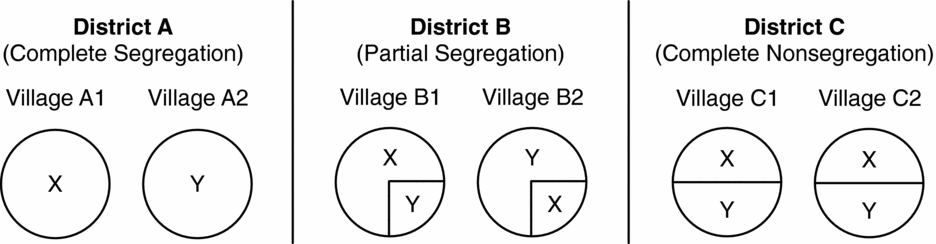

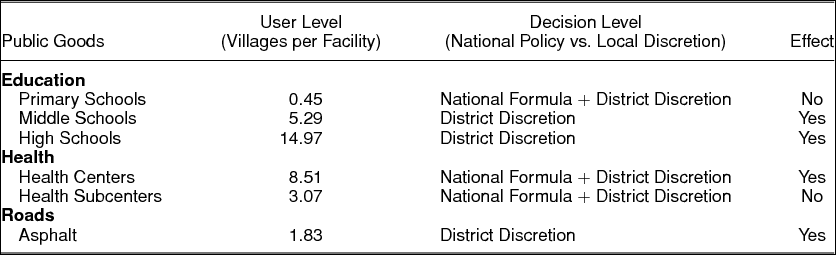
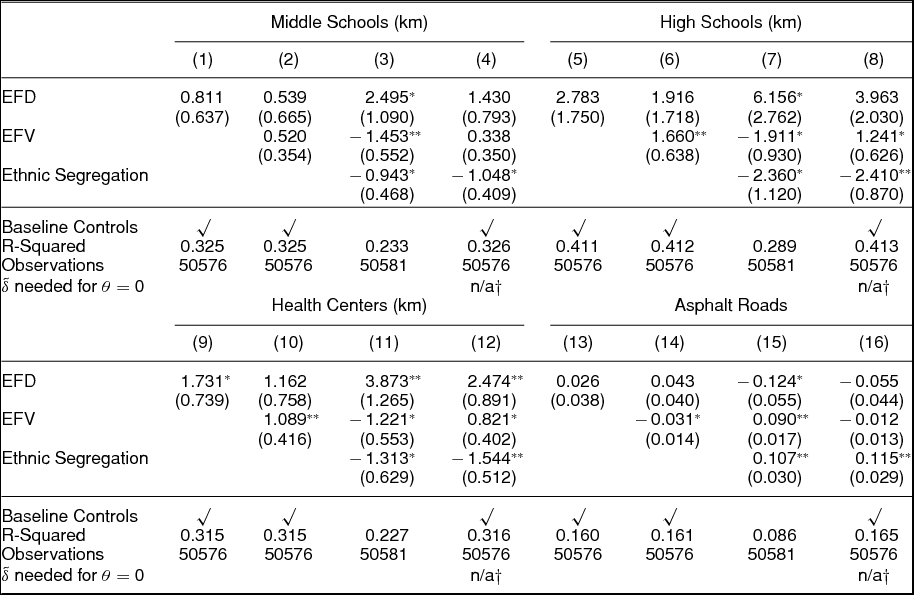
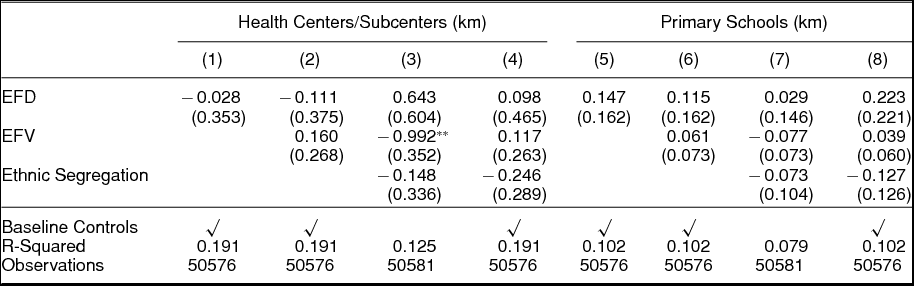




Comments
No Comments have been published for this article.