Researchers have long been fascinated by individuals and groups of people who succeed despite encountering hardship. Resilience, which comes from the Latin words re (back) and salire (to jump, leap; Agnes, Reference Agnes2005), has varied definitions, but the consensus is that resilience refers to a dynamic system of processes that result in positive adaptation in the context of adversity (Masten et al., Reference Masten, Lucke, Nelson and Stallworthy2021). Adversity is multifarious and has been associated with conditions that affect everyday life experiences and developmental outcomes of children and their caregivers with widespread negative consequences. These conditions, often including poverty, socioeconomic disadvantage (Béné et al., Reference Béné, Newsham, Davies, Ulrichs and Godfrey-Wood2014), community violence (Boyd et al., Reference Boyd, Jones, Quinn, Gale, Williams and Lateef2022), and social isolation, can take a toll on families, leading to family disruptions (Nurco et al., Reference Nurco, Kinlock, O’Grady and Hanlon1996), compromised parenting, and elevated risk for compromised health and overall development (Murry, Reference Murry2019). Notably, those who are able to overcome and navigate adversity appear to be stronger and better prepared for future adversities, demonstrating resilience (Fraser et al., Reference Fraser, Richman and Galinsky1999; Patel et al., Reference Patel, Rogers, Amlôt and Rubin2017; Walsh, Reference Walsh2003).
Concerns have risen in recent years regarding insufficient empirical evidence, poor operationalization of the resilience construct, as well as questions about the extent to which adversity and traumatic events build and promote resilience (Macedo et al., Reference Macedo, Wilheim, Gonçalves, Coutinho, Vilete, Figueira and Ventura2014). These concerns served as the impetus for the current manuscript. We sought to advance the field of resilience research by critically reviewing underlying theoretical assumptions and summarizing studies to gain greater insight on several key issues: (1) what constitutes positive responses to adversity?; (2) how is resilience defined conceptually and measured operationally?; (3) how has the field of resilience evolved?; (4) who defines what, when, and how responses are manifestations of resilience, instead of, for example, resistance? How can resistance, which at times leads to positive adaptations, be incorporated into the study of resilience?; and (5) are there case examples that demonstrate ways to address structural oppression and the pernicious effects of racism through system-level interventions, thereby changing environmental situations that sustain toxic waters requiring acts of resilience to survive and thrive? We begin with a brief overview of conceptual definitions of resilience, followed by a summary of theoretical frameworks and underlying assumptions.
Resilience: positive response to adversity
A critical area in studies of adversity and resilience includes efforts to identify factors that explain how and why certain individuals show positive responses to adversity. Initial studies attributed natural-inherited traits (such as temperament; Rutter, Reference Rutter, Kent and Rolf1979), as key processes that explained why some individuals were able to successfully navigate adversity or to become resilient. This perspective was also compounded by acquired traits such as ego resiliency, which describes growth that can emerge from adverse experiences, noting that some individuals not only recover but also advance their capacity to adapt, even when confronting ever-changing environmental demands (Luthar et al., Reference Luthar, Cicchetti and Becker2000). However, this perspective has been met with great criticism, as the underlying assumptions of trait resilience inadvertently place the burden of navigating adversities on the individual. Thus, when one does not successfully overcome adversities, it is assumed that the individual does not have what it takes to manage difficult life circumstances. While trait resilience is still used to guide studies of resilience, this framing has been met with great criticism as resilience has been shown to arise due to factors and systems that are external to individuals (Luthar et al., Reference Luthar, Cicchetti and Becker2000; Masten, Reference Masten2014). If adversity-coping behaviors can be socially learned, then opportunities to intervene and build/promote resilience are plausible. In this regard, studies that identify causal pathways through which individual attributes interact with and through environmental and social contexts, such as families, schools, peers, and other social relationships, have advanced the field of resilience to include transactional social-ecological frameworks (Kuldas et al., Reference Kuldas, Dupont, Foody, Smith and Norman2021). This perspective acknowledges the interdependence of social adaptive systems and ways in which individuals respond to risk. Moreover, social interactions are transactional relationships in which one’s immediate social environment not only affects an individual, but humans have the agency to also influence their environment. This transformational process has a reciprocal influence on the interaction between the environment and individuals’ capacity to adapt and accommodate adversity. As such, child-parent, student-teacher, peers, and relationships with wider society play a critical role in modifying the negative consequences of risk, through support and resources that dissuade negative outcomes (Sameroff, Reference Sameroff2009). Thus, navigating risk to achieve resilience is a transactional human developmental process, as proximal and distal processes in one’s environment interact to influence adaptation in the face of adversity (Stokols et al., Reference Stokols, Lejano and Hipp2013).
This transactional social-ecological perspective assumes that behaviors and responses are influenced by proximal and distal environments that surround individuals to influence developmental processes and capacity, and the extent to which an individual successfully navigates adversity is thought to reflect resilience. Moreover, Masten (Reference Masten2001) argued that resilience “does not come from rare and special qualities, but from the everyday magic of ordinary, normative human resources in the minds, brains, and bodies of children, [as well as] in their families and relationships” (p.235). In other words, resilience is “ordinary magic,” characterized as an ecological construct, where positive outcomes emerge from and through interactions between individuals’ capacity, their context, access to resources and support, including cultural relevance, meaning, and perception of how to adapt or overcome adversity (Bryant et al., Reference Bryant, Anderson and Notice2022; Ungar, Reference Ungar2013). In this sense, one’s positive response to adversity emerges from the interaction of individual and contextual characteristics; the application of this framework has varied in acknowledgment of this important differential.
Evolution of resilience theory
Different conceptualizations of resilience are byproducts of varied underlying assumptions in theoretical frameworks and conceptual models. Moreover, theoretical frameworks and conceptual models guiding resilience research have evolved over time. For example, at its inception in the 1970s, resilience theory was rooted in the study of adversity and the harmful impacts of adverse life experiences on people (van Breda, Reference Van Breda2018). This focus was characteristic of social and medical sciences at the time, which centered on identifying the origins of illness and the causes of the breakdown of social and physical well-being (van Breda, Reference Van Breda2018). These early studies demonstrated that vulnerability, which comprised a variety of factors, including a family history of illness, maternal risk behaviors in the pre- or post-natal period (i.e., substance use, postpartum depression, inadequate neonatal care, etc.), and broader familial or societal risk factors (i.e., marital discord, poverty, war), contributes to negative developmental outcomes (van Breda, Reference Van Breda2018). These vulnerabilities have wide-ranging negative consequences, including physical, psychological, social, and intellectual outcomes (Werner et al., Reference Werner, Simonian, Bierman and French1967).
In the course of these studies though, researchers also found that the relationship between vulnerability and negative outcomes was extremely variable. While many people did, indeed, have negative outcomes in response to vulnerability, not all did. Some may have experienced an initial decline in functioning but recovered, others did not show any deterioration, and still, others achieved even higher levels of functioning than before the adverse event (Masten, Reference Masten2011). These results were surprisingly different from the universal pattern the researchers had anticipated, leading to theoretical frameworks to explain typologies of exceptional individuals not negatively impacted by adversity as ‘invincible’ (Dahlin et al., Reference Dahlin, Cederald, Antonovsky and Hagnell1990; Werner & Smith, Reference Werner and Smith1982, as cited in van Breda, Reference Van Breda2018). The notion of invincibility was, in fact, one of the first definitions of resilience as an outcome of adversity (Werner & Smith, Reference Werner and Smith1982). Theories of resilience were further advanced through the shift in clinical research acknowledgment of the contributions of competence as a response to adversity that, in turn, fostered health promotion (van Breda, Reference Van Breda2018).
Another wave of theoretical advancement emerged from developmental science, setting forth the developmental resilience framework, which included not only individual characteristics, as influential factors explaining variability in adversity response, but also various contextual factors, such as family, extended families, peers, and teachers, as protective drivers of the resilience processes (Masten et al., Reference Masten, Best and Garmezy1990). The notion of contextual factors was later expanded to include adversities emerging from sociohistorical and environmental systems, including oppression, discrimination, and marginalization (Bernard et al., Reference Bernard, Smith and Lanier2022; García Coll et al., Reference García Coll, Lamberty, Jenkins, McAdoo, Crnic, Wasik and Vázquez García1996; Murry et al., Reference Murry, Berkel and Liu2018), highlighting the need to understand unique ways in which macro-system-structural factors and processes not only create adversities, but also influence how individuals, families, and communities navigate challenges emerging from social and structural system.
While there is an acknowledgment in resilience theories that contexts matter, structural, contextual processes, and factors have not been included in theories of resilience. This omission was noted by Luthar (Reference Luthar1999), who highlighted the need for more consideration of context-specific protection and vulnerability processes that are unique to populations who are disproportionately at elevated risk for experiencing adversity, for example, minoritized populations. Documenting unique ways in which these populations overcome adversities, and in turn, manifest resilience can inform preventive interventions. Given that rates of exposure to adversity and disparities are higher among African Americans compared to non-African Americans, we sought to summarize research examining the study of adversity and resilience in African American families, with consideration given to generational shifts in approaches undertaken to link adversity and resilience, as pathways to address and advance health equity (e.g., Murry et al., Reference Murry, Berkel and Liu2018). In the next section, we summarize generations of resilience research, giving specific attention to the evolving studies of resilience among African Americans. We end this section with a call to action for researchers, practitioners, and policymakers to address the causes of adversity (i.e., the murky upstream waters) that require African Americans and other minoritized populations to build resilience in order to live, thrive, and succeed.
Generations of resilience research on African Americans
Resilience research on African Americans reflects generations of studies. The first generation focused on detecting or identifying the causes of inequities by denouncing the widely applied social deviance model of African American families emerging in the Moynihan’s report (Moynihan, Reference Moynihan1965; see Billingsley, Reference Billingsley1968), followed by the identification of key strengths that African American families relied on to navigate and survive in a hostile environment (Hill, Reference Hill1973). This generation also included writings that established the foundations for understanding how and why adversity causes health disparities and inequities as well as factors ameliorating risks faced by African Americans. One stream of research attributed inequities to structural factors, such as industrial automation, exclusionary labor policies, racial discrimination, and political practices (Clark, Reference Clark1965). Others contend that inequities were not due to societal or system-level structures but attributed to individuals’ cultural deficits or deprivation (Bobo, Reference Bobo, Smelser, Wilson, Mitchell and Eds.2000; Bonilla-Silva, Reference Bonilla-Silva1997). Specifically, poverty and its consequences disproportionately affected African Americans because of unwillingness to work hard, delay gratifications, control impulsiveness, due to being uneducated, trapped in a cycle of poverty, and psychologically unstable (Clark, Reference Clark1965). This social deficit model perpetuated the research on African Americans for decades, with limited emphasis on resilience. The second generation of resilience research, however, included studies to understand and explore reasons why inequities are maintained and perpetuated. More specifically, scholars during this time sought to gain greater insight into how families were able to survive and thrive in and through adversities to achieve healthy functioning (Dunham, Reference Dunham1965; Robins, Reference Robins1966; Suttles, Reference Suttles1968). A notable emergence in this generation was Norman Garmezy’s (Reference Garmezy1971) work, which posed questions about the development of inner-city families, who despite being impacted by racism, poverty, inner-city conditions, and other adverse situations, they and their children were “invulnerable” (pg. 4), a term later characterized as “resilient.” A key driver of reduced vulnerability is the African American community.
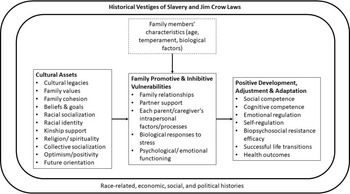
Thus, the third generation reflects a strengths-based, solution-focused emphasis on acknowledging the causes and how to reduce inequities, focusing on micro-level processes in the individual, family, and community, emphasizing their protective nature. Thus evolved a generation of research focused on documenting resilience through the protective nature of communities and family assets. Hill’s (Reference Hill1973) book, the Strengths of Black Families, provided the foundational basis for the identification of strengths, assets, and resilience in Black families, noting five fundamental sources for survival: strong work orientation; strong religious orientation; strong belief in family; strong achievement orientation; and adaptability of family roles. Hill’s strength and asset-based resources have been, more recently, characterized as a rare perspective and have characterized the protective processes that African Americans rely on to navigate adversities, namely toxic waters, as strength-based, cultural assets (Murry et al., Reference Murry, Berkel and Liu2018). These protective processes are figuratively illustrated as “rubber suits” (see Fig. 1) that include optimism, characterized as goggles to protect a vision of hopefulness for the future. Despite living and raising children in impoverished and crime-ridden neighborhoods, optimism combined with positive affectivity (e.g., good interpersonal relationships) enabled rural African American mothers to overcome the deleterious effects of environmental conditions on their daily lives (Cutrona et al., Reference Cutrona, Russell, Hessling, Brown and Murry2000). The rubber suits also include the protectiveness of kinship support, illustrating the presence of family and relatives as support systems. Several studies have reported fewer depressive symptoms among mothers with more kinship support than among those with less kin support (Black et al., Reference Black, Cook, Murry and Cutrona2005; Dominguez & Watkins-Hayes, Reference Dominguez and Watkins-Hayes2003; Murry et al., Reference Murry, Brody, Simons, Cutrona and Gibbons2008). Another part of the rubber suits includes residing in a supportive and cohesive community, in which community members monitor and sanction appropriate behavior. Studies have demonstrated the long-term protective effects of community socialization against negative outcomes, such as deviant peer affiliation, conduct disorder, and sexual risk behavior (Berkel et al., Reference Berkel, Murry, Hurt, Chen, Brody, Simons, Cutrona and Gibbons2009; Browning et al., Reference Browning, Burrington, Leventhal and Brooks-Gunn2008). Having access to other adults in the community who come together to support parents and monitor neighborhood children is a process referred to as collective socialization or collective efficacy (Burton & Jarrett, Reference Burton and Jarrett2000). Collective socialization can also encourage prosocial development among youth through community members’ oversight and establishing norms for sanctioning appropriate behavior and processes to monitor and correct misbehavior. When community residents band together in this way, the process of parental monitoring reaches beyond household boundaries and represents a measure of trust and agreement among adults about acceptable conduct for children (Berkel et al., Reference Berkel, Murry, Hurt, Chen, Brody, Simons, Cutrona and Gibbons2009).
The toxic water protective rubber suit: African Americans’ strength-based, cultural assets.
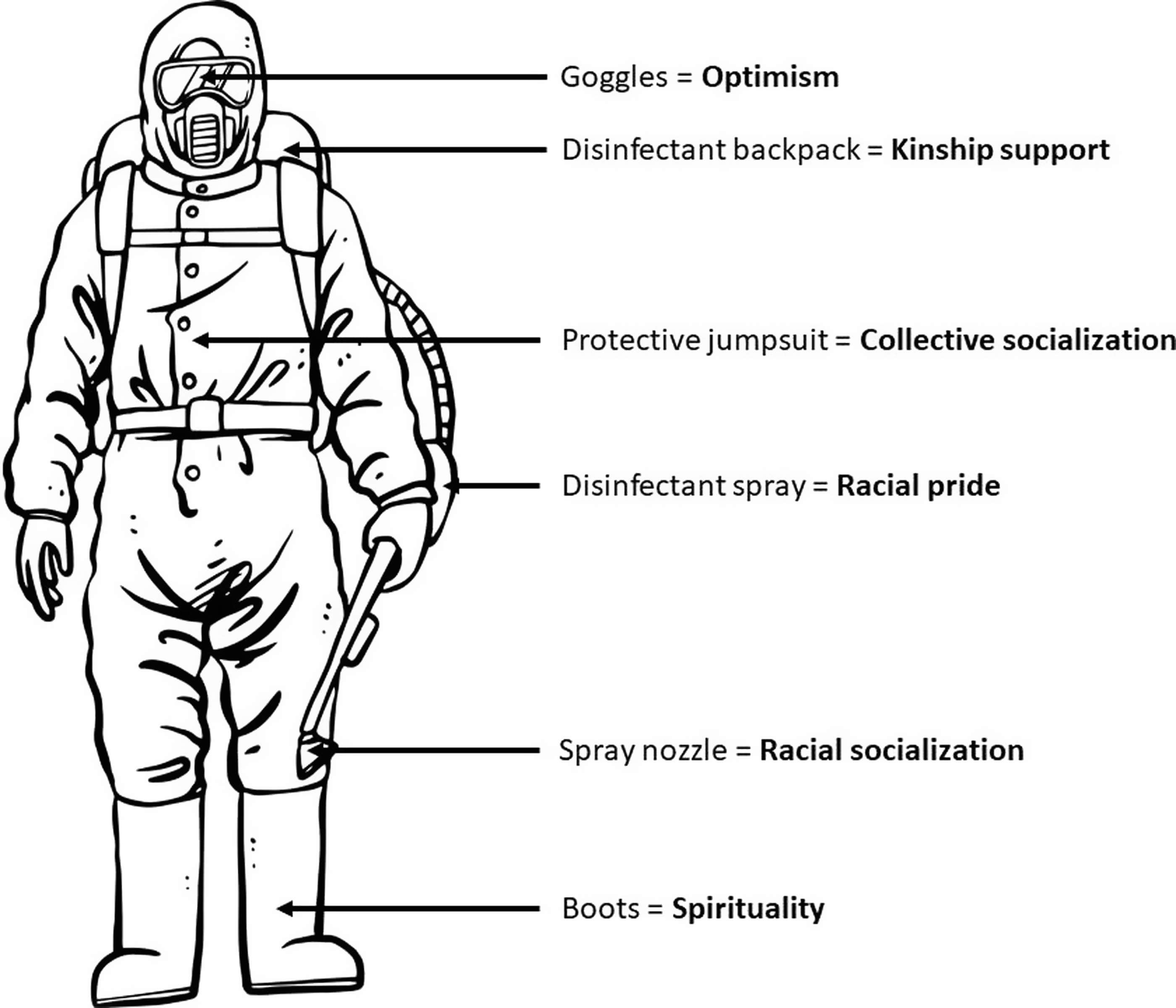
The rubber suit also includes racial socialization, illustrated in Figure 1 as a spray nozzle that families use to protect themselves and their children by spreading messages about ways to prepare for direct race-related experiences, including racial pride. Racial pride, in turn, acts as a “disinfectant” spray that protects youth by fostering identity-promoting positive adjustment and development (Murry et al., Reference Murry, Berkel and Liu2018). Brown’s (Reference Brown2008) study of African American students, for example, revealed that racial socialization messages and perceived social support from parents served as a protective function for students, enhancing resilience capacity as youth transition from high school to college. Spirituality is illustrated as boots that assist African Americans to keep moving forward despite adversities. The African American church is one of the most significant and influential institutions in the African American community (Lincoln & Mamiya, Reference Lincoln and Mamiya1990). Spirituality has been associated with a range of emotional protective processes, including happiness, hope, faith, optimism, strength, confidence, forgiveness, trust, and meaning (Mattis, Reference Mattis2001). Church involvement promotes positive behavior and developmental outcomes through its impact on moral development, racial pride, and self-esteem (Butler-Barnes et al., Reference Butler-Barnes, Williams and Chavous2012). Thus, the rubber suit portrays the third generation’s focus on micro and ecosystem-level mechanisms that are often associated with African Americans’ resilience. The suit illustrates a dynamic system that African Americans rely on to respond to challenges that threaten the function, survival, and development of their families and communities.
An underlying assumption guiding the first three generations of resilience is the premise that individuals bend, rather than break, in response to adversity or traumatic situations (Bryant et al., Reference Bryant, Anderson and Notice2022). This perspective, however, falsely leads researchers to overlook systemic structural oppression and racial discrimination, major stressors confronted by marginalized populations that have been associated with a plethora of disparities. Racism creates and sustains environments and conditions that have been characterized, metaphorically, as toxic, hazardous, polluted waters that African American families swim in as they navigate everyday life experiences (Murry, Reference Murry2019). Racism and oppression create a pervasive sense of fear and terror that impact every aspect of minoritized families’ lives, with implications for their health and safety. Structural and systems of oppression and discrimination, manifestations of toxic waters, create rivers of social, economic, educational, political, and legal conditions that influence health, including housing, income, employment, and education (Braveman & Gottlieb, Reference Braveman and Gottlieb2014). These rivers are commonly described as social determinants of health (CDC, 1999).
While the capacity to overcome these structural challenges has been widely documented, recent studies have noted that, what may appear to be resilience at first, that is African Americans stretching to navigate their environments, may be a deceptive manifestation of resilience, thereby masking skin-deep processes that contribute to numerous disparities (Brody et al., Reference Brody, Yu, Chen, Miller, Kogan and Beach2013). For instance, Brody and colleagues (2013; 2020) found, in their longitudinal study of African American youth, that despite exposure to chronic adversity, many of the youth demonstrated developmental competence in several domains, such as academic success and positive psychological adjustment. However, a deeper examination showed that their academic resilience was accompanied by a physiological toll (i.e., early aging manifested by metabolic syndrome and insulin resistance) later in adulthood (Brody et al., Reference Brody, Yu, Chen and Miller2020). Furthermore, as minoritized individuals attempt to stretch, bend, or adapt to these toxic conditions, forces in society (e.g., systematic racism and social injustices) actively work to block their efforts, taking a greater toll on development and overall health outcomes (Bryant et al., Reference Bryant, Anderson and Notice2022). Concomitantly, the stretch or resilience is accompanied by excessive strain, unmet expectations, and burdens that lead to physiological and psychological disruptions (e.g., weathering, allostatic load; Anderson, Reference Anderson2019; Bryant et al., Reference Bryant, Anderson and Notice2022). This perspective acknowledges the unique, yet multidimensional, contribution of sociohistorical and structural oppression as adversities and demonstrates ways in which theoretical and conceptual understanding of resilience research has evolved over time.
The capacity to navigate sociohistorical and structural oppression that should take a toll but instead is met with surviving and thriving has been characterized as “ordinary magic” (Masten, Reference Masten2001). This characterization emphasizes and applauds the strengths of African Americans as being able to cope mystically with adversities using commonplace resources. However, while focusing on the magic in “ordinary magic” may be enchanting and captivating, these studies fall short of telling the whole story. Anderson (Reference Anderson2019) argues that these coping processes may, indeed, foster temporal positive adaptations; however, continuous exposure to structural oppression may create more damaging vulnerabilities long-term. Further, critical reframing of resilience research by scholars like Johnson & Arditti (Reference Johnson and Arditti2023) has called upon researchers to adopt more contextualized approaches to the study of resilience that are intersectional and situate resilience interventions as complementary instead of a stand-in for institutional change. This school of thought facilitated a fourth generation of studies of resilience, which focus on redirecting attention from toxic waters that require the need to wear rubber suits to upstream policies and practices that create and sustain optimal conditions (Murry et al., Reference Murry, Gonzalez, Debreaux, Coates and Berkelin press). Therefore, the fourth generation of research attempts to address and identify solutions for clearing the murky waters, not simply applauding the efficacy of African Americans’ rubber suits.
Often debated in this fourth generation of research is the question—on whom does the onus of clearing the murky waters fall? In this vein, community activism may offer insight into ways to turn the focus on engaging community members to seek their guidance to not only improve community outcomes but also to create system-level changes (Gil, Reference Gil, In and Tifft2005). Such engagement may not only provide insight into their perspectives on how changes in upstream policies and practices may eliminate the need to wear rubber suits but also ways in which they are pushing back against the murky waters, through resistance. In fact, early works of Carol Stack (Reference Stack1974) confer the protective nature of support and cohesion in the African American community that buffer its members in the face of adversities (Sampson & Groves, Reference Sampson and Groves1989). Thus, we confer that what might be viewed as resilience, may in fact be acts of resistance. We view acts of resistance as proactive coping to challenge and confront oppressive systems, by refusing to use the rubber suits in order to stretch, accommodate, or bounce back in response to marginalization. In our analogy of the rubber suits, some processes, illustrated as the covering and spraying mechanisms, go beyond keeping the murky waters out. In fact, these cultural assets represented in the rubber suit are employed by African American families to change their oppressive environments. Efforts to resist may include consciously and intentionally transforming systems of oppression through agency, creating counter-narratives, developing social positions that construct the self as the meaning maker, defining the situation, reimagining an equitable and just society, engaging in practical community organizing activities to transform social structures and culture, thereby build an equitable social world (Vogel & O’Brien, Reference Vogel and O’Brien2022).
However, the unfolding of resilience research to include resistance in the fourth generation demonstrates the expansion of transformation that goes beyond the efforts of marginalized individuals but can guide system-level change through interventions. For example, Ungar (Reference Ungar2013) describes resilience interventions occurring as either a first-order change (i.e., where individuals initially attempt to make changes in their environment to cope with adversity, acts of resilience), a second-order change (i.e., a focus on the environment and modifying adverse conditions, acts of resistance) or combination of both. We contend that the emergence of the fourth generation of resilience research moves beyond explaining how populations cope with oppression to an action-oriented framework that disentangles the first and second-order changes, exploring ways in which responses to adversity are geared toward acts to fight against rather than navigate stress-inducing environments.
In fact, African Americans have a longstanding history of resistance to social structures and systems that seek to oppress, minoritize, and marginalize them (Ward, Reference Ward, Garrod, Ward, Robinson and Kilkenny1999). Many do persist, despite chronic adversity, which is often celebrated as resilience; surviving and thriving may occur through acts that disrupt structurally oppressive waters. This resounding call encourages the need to continue advancing resilience research that applies action-oriented frameworks. In this endeavor, there is a need to not only consider ways to eliminate systemic structural oppressive factors that require resilience (Jones et al., Reference Jones, Anderson and Stevenson2021; Rogers & Way, Reference Rogers and Way2021) but also to intentionally disentangle resilience and resistance. A brief overview of the uniqueness of resilience and resistance and potential ways in which both responses may overlap is discussed in the following section.
Resilience and resistance are not the same
As previously noted, resistance is conceptualized as strategies and actions individuals use to respond to, negotiate, dispute, and change adverse or challenging situations (Das et al., Reference Das, Pitts, Arevalo, Cox, Blood, Hughes, Coulanges, Keryc, Rogers and Way2022; Giroux, Reference Giroux1983; Robinson & Ward, Reference Robinson and Ward1991; Rogers & Way, Reference Rogers and Way2018). At the crux of the application of resistance theories to studies of minoritized populations is the premise that they are not passively impacted by adversity, especially in situations emerging from structurally oppressive systems (Solorzano & Bernal, Reference Solorzano and Bernal2001). Instead, they choose overt (e.g., boycotts, demonstrations) or subtle (e.g., persistence in school, nurturing racial pride, creation of an online subculture) means to respond to societal mores, expectations, and stereotypes that dehumanize them in various contexts (Das et al., Reference Das, Pitts, Arevalo, Cox, Blood, Hughes, Coulanges, Keryc, Rogers and Way2022; Rosales & Langhout, Reference Rosales and Langhout2020; Solorzano & Bernal, Reference Solorzano and Bernal2001). Moreover, strategies and actions to change oppressive systems may occur through acts of resistance intended to reclaim or preserve humanity (Wray-Lake et al., Reference Wray-Lake, Halgunseth and Witherspoon2022).
As efforts are undertaken to disentangle resilience and resistance, it is important to note the ongoing scholarly debate about what constitutes optimal or real resistance (Rosales & Langhout, Reference Rosales and Langhout2020). Giroux (Reference Giroux1983), for instance, suggests that resistance is characterized by two intersecting dimensions: (a) a critique of social oppression and (b) an interest in social justice. Solorzano and Bernal (Reference Solorzano and Bernal2001) building on these dimensions (i.e., critique and interest), created a framework to explain resistance among minoritized youths in the school context. Applying this framework, Solórzano and Bernal (Reference Solorzano and Bernal2001) identified four types of resistance: reactionary behavior (i.e., no critique or interest), self-defeating resistance (i.e., critique but no interest), conformist resistance (i.e., interest but no critique), and transformational resistance (i.e., both critique and interest). Of these four categories, transformational resistance, which is characterized by a deep understanding of social oppression and a strong desire for social justice, is considered most optimal, or real, since it more likely leads to transformation in an oppressive system.
Another aspect of the debate focuses on the need to specify outcomes emerging from acts of resistance. Should acts result in the transformation of oppressive systems to be considered resistance (Rosales & Langhout, Reference Rosales and Langhout2020)? For example, resistance among African Americans is often associated with social movements, such as the Civil Rights Movement, the Black Powers Revolution of the 1960s, and more recently, the Black Lives Matter Social Movement. Yet, besides these overt forms of resistance, Robinson and Ward (Reference Robinson and Ward1991) acknowledge that everyday acts of resistance can be covert and also emphasize that not all types of resistance lead to optimal transformative outcomes. Covert acts of resistance may be engaged in for survival and/or liberation. Prominently, the key differentiating factor between these two types of resistance is that resistance for survival enables minoritized individuals to endure and persist despite adversity. Resistance for liberation, on the other hand, results in galvanizing and strengthening, which may lead to systemic, structural change (Robinson & Ward, Reference Robinson and Ward1991). A more in-depth description of these two forms of resistance is provided in the following section.
Resistance for survival may include multiple strategies, such as rejecting oppressive educational and sociopolitical systems. An example is studies applying Ogbu’s (Reference Ogbu2004) oppositional culture theory to demonstrate ways in which minoritized youth may seek alternative ways to oppose structural oppressive systems. To demonstrate rejecting oppressive and marginalized educational systems, youth may mask intellectual abilities as acts of rejecting assimilation, using substances, engaging in violence, social isolation, and other structurally and contextually driven adaptive behaviors (Murry et al., Reference Murry, Berkel, Brody, Miller and Chen2009). These acts of resistance for survival, while transitory responses to oppression, may result in long-term harm, leading to disconnection from the larger minoritized group, and in some cases unintentionally legitimize stereotypes (Robinson & Ward, Reference Robinson and Ward1991; Rogers & Way, Reference Rogers and Way2016; Solorzano & Bernal, Reference Solorzano and Bernal2001; Ward, Reference Ward, Garrod, Ward, Robinson and Kilkenny1999).
Resistance for liberation, on the other hand, are acts that build and cultivate strong community network ties that can be transformative, creating a counternarrative that rejects negative stereotypes. For example, intentionally supporting African American businesses and appreciating their African American identities by refusing to alter their behavior to suit and fit in better with the dominant cultural group (Martin et al., Reference Martin, Boadi, Fernandes, Watt and Robinson-Wood2013) are acts of liberation. Similarly, African American women, who resist liberation, are less likely to engage in code-switching (i.e., modifying their mannerisms and language) to make others comfortable and elicit positive social interactions and acceptance from the dominant cultural group treatment (Leath et al., Reference Leath, Butler-Barnes, Ross and Lee-Nelson2021; Martin et al., Reference Martin, Boadi, Fernandes, Watt and Robinson-Wood2013). Essentially, we argue that the main difference between resistance and resilience is intent, orientation, and subsequent responses toward oppressive systems. While resilience is portrayed as the capacity to overcome odds and succeed despite adversity, resistance aims to undermine oppressive structures by either attempting to alter them or fighting against the logic of imposed socially constructed prescriptions (Rosales & Langhout, Reference Rosales and Langhout2020). For example, parents, while engaging in racial socialization, often intentionally and purposefully provide strategies for their children to push back against systems that negatively impact them. This form of socialization is preparation for racial bias (Hughes et al., Reference Hughes, Rodriguez, Smith, Johnson, Stevenson and Spicer2006).
Despite this robust discussion, the distinction between resistance and resilience is not often clear, due to an interplay between both concepts, as processes or strategies that define and described resilience and resistance often converge. Indeed, an indicator signifying resilience, is racial socialization, as it has been shown to promote academic achievement and positive youth development despite racial adversity (Evans et al., Reference Evans, Banerjee, Meyer, Aldana, Foust and Rowley2012; Murry et al., Reference Murry, Berkel, Brody, Miller and Chen2009). However, beyond simply facilitating positive adaptation, despite exposure to adversity, Ward (Reference Ward, Garrod, Ward, Robinson and Kilkenny1999) argues that successful racial socialization “prepares African American children to psychologically resist their racial subordination” (p. 175). Furthermore, an extension of racial socialization, ethnic-racial socialization, is also thought to promote different types of resistance. Das et al. (Reference Das, Pitts, Arevalo, Cox, Blood, Hughes, Coulanges, Keryc, Rogers and Way2022), for example, noted that the majority of African American mothers in their sample who engaged in preparation for bias did so to promote resistance for survival (e.g., self-patrolling, ignoring discrimination, focusing on hard work). Adding to this school of thought, Das et al. (Reference Das, Pitts, Arevalo, Cox, Blood, Hughes, Coulanges, Keryc, Rogers and Way2022) also observed that preparation for bias may also foster resistance for liberation (e.g., self-advocacy, building critical consciousness, affirming their African American identity, and racial pride). Further, patterns of both resilience and resistance in parental racial socialization conversations with their children (Das et al., Reference Das, Pitts, Arevalo, Cox, Blood, Hughes, Coulanges, Keryc, Rogers and Way2022). Stevenson and Arrington (Reference Stevenson and Arrington2009) coined the term “adaptive racial socialization”, which Murry and colleagues (Reference Murry, Berkel, Brody, Miller and Chen2009) noted that balancing messages of racial pride and [preparation for bias] proactive awareness of racism served a protective function against racial adversity (i.e., resilience), construing strategies to navigate (i.e., resilience), as well as challenge negative stereotypes that are perpetuated by oppressors (i.e., resistance).
Preparation for racial bias may, in fact, facilitate critical consciousness development, a level of awareness of structural oppression. We contend that this cognitive developmental process may be a form of resistance and, in so doing, may lead to resilience. Critical consciousness development is a three-pronged process, wherein individuals begin to reflect upon their experiences of oppression and identify structural causes (critical reflection). Racial oppression awareness may in turn trigger internal thoughts about the extent to which one has the ability to individually or collectively act upon oppressive systems (critical agency). Collectively, these processes may serve as an impetus to engage in actions within and outside of existing systems to address the root of structural inequity (critical action; Hope et al., Reference Hope, Smith, Cryer-Coupet and Briggs2020). According to Hope and colleagues (Reference Hope, Smith, Cryer-Coupet and Briggs2020), experiences of individual, institutional, and cultural racism are directly related to critical action (Hope et al., Reference Hope, Smith, Cryer-Coupet and Briggs2020).
Jones et al. (Reference Jones, Anderson, Gaskin-Wasson, Sawyer, Applewhite and Metzger2020) advanced these ideologies by focusing specifically on identifying forms of race-related approach-oriented coping, termed racially attuned collective coping. This coping strategy is thought to be a key process in the promotion of positive adaptive outcomes among African American adolescents, occurring through activism, that is acts of racial collectivism (i.e., joining boycotts, civic demonstrations). Critical consciousness, in this instance, critical agency, appears to serve an influential role in predicting both positive behavioral and cognitive responses to the consequences of marginalization, that is acts of both resilience and resistance.
While individuals may act in ways that demonstrate their personal resistance to racism, they may also respond in ways that seek collective redress from experiences of racial oppression and marginalization (Robinson & Ward, Reference Robinson and Ward1991). Collective socialization, or the establishment of large kinship networks, has been shown to provide support to both parents and youth to navigate challenges and adversity (Murry et al., Reference Murry, Berkel and Liu2018). This community-level protection can also be leveraged as a resistance strategy, laying the foundation for grassroots, collective activism (Stephen, Reference Stephen2009). Just as with racial socialization, certain components of collective socialization, often construed as resilience, can also be leveraged as an act of resistance. Moreover, the interplay between resistance and resilience is also depicted in their co-existence and bidirectional processes. For instance, on one hand, in resilience research, the term ‘resistance’ refers to a pattern of resilience; one where steady and positive development is noted despite environmental adversity (Masten & Wright, Reference Masten, Wright, Reich, Zautra and Hall2010). On the other hand, Tara Yosso (Reference Yosso2000) combines the two acts, coining the term “resilient resistance”, which was later included in Solorzano and Bernal’s (Reference Solorzano and Bernal2001) transformational resistance framework, to suggest that these two processes can co-exist.
Concomitantly, resilient resistance refers to conforming in order to survive and/or succeed; therefore, resilient resistant acts fall between conformist and transformational resistance (Yosso, Reference Yosso2000). Adhering to our conceptualization of resistance as actions that challenge oppressive systems causing adversity, such acts do not simply “overcome” to achieve positive development, but can also resist cultural stereotypes, and in turn foster resilience. Ward (Reference Ward, Garrod, Ward, Robinson and Kilkenny1999) observed these coping patterns among both African American and biracial children. Case in point, results from a qualitative study of African American female students in a predominantly white institution showed that maternal ethno-gendered racial socialization promoted resistance against stereotypes, which was described as the first step in the process of resilience and coping (Johnson et al., Reference Johnson, Yoon and House2022). Another example is engaging in alternative ways to achieve academic success in response to oppressive educational systems, as resistance leads to resilience, is noted in the works of Gaylord-Harden and colleagues (2018). These scholars applied the calibration framework to explain how African American males resist race-related experiences of “othering” by resisting the internalization of this imposed positionality by teachers and peers. One strategy is developing hypermasculine attitudes (Cunningham et al., Reference Cunningham, Swanson and Hayes2013) and disengaging cognitively and physically from schools to avoid negative encounters (Murry et al., Reference Murry, Berkel, Brody, Miller and Chen2009). In other words, high levels of hyperarousal and hypervigilance can be a resistance coping strategy for African American males that allows them to adapt to contexts where threats are imminent, uncertain, and racially charged (Cassidy & Stevenson, Reference Cassidy and Stevenson2005; Cunningham et al., Reference Cunningham, Swanson and Hayes2013). For example, Cunningham and colleagues (2013) found that when African American adolescent males experienced mistreatment within their communities (e.g., by police officers, salespeople, and neighbors), they were more likely to employ hypermasculine resistance behaviors.
From an ecological perspective, resistance at the individual, family, and community level boosts and facilitates a cyclic byproduct, psychological resilience, of African American children (Jones et al., Reference Jones, Anderson and Stevenson2021; Ward, Reference Ward, Garrod, Ward, Robinson and Kilkenny1999). This theoretical explanation of the reciprocal relationship between resilience and resistance warrants more empirical exploration. With this in mind, we turn our focus to a critical examination of five years of research on studies of resilience among African American families (Murry, 2017–2022) to explore, retrospectively, the extent to which patterns of both resilience and resistance are embedded in a cultural-asset, strength-based framework.
Scoping review: critical review of Murry et al., studies of African American families navigating adversities
In this section, we draw on aspects of the “rubber suit” analogy to critique the extent to a selection of published papers from a body of research examining ways in which African American families navigate adversity and demonstrate evidence of resilience, resistance, and domains of resistance (survival & liberation). To conduct this review, we leveraged a reflexive-selective scoping review of the lead author’s articles from the past 5 years in order to generate a sample for understanding where protective mechanisms within African American families were framed as resistance, resilience, both, or neither. Given the similarity of these terms, we were also mindful of their conflation and interplay.
Thus, an adapted scoping review integrated essential aspects of Arksey and O’Malley’s (Reference Arksey and O’Malley2005) framework, which focuses on 5 stages: (1) identifying research questions; (2) identifying relevant studies; (3) selecting studies based on criteria; (4) charting out the data; and (5) aggregating, synthesizing, and writing up results. This framework, a widely recognized method for scoping reviews, is based on its structured format and was used to guide and inform strategies and approaches for selecting, reviewing, and analyzing the selection of articles. While this effort has limitations in generalizability by focusing on a specific body of work, we have balanced these limitations with the critical end goal of being able to say something substantial about the framings used in this specific scholarship. We also hope that others may learn from the lessons we have learned from critical reflection of our own work.
Research questions and purpose
The overall purpose of this endeavor was to gain insight into ways in which African American families navigate adversity, conducting a post hoc review of existing studies posing the following questions: (1) What is the nature of the conceptualization of resistance and resilience across the selection of publications? (2) Are there key differences between investigations that feature resistance, resilience, or both? and (3) What domains or themes of resistance–specifically resistance for survival versus resistance for liberation–does the sample illustrate? Further, our purpose included critically interrogating the selected publications, and reflecting on the tensions and interplay between resilience and resistance, as discussed above. As such, the final section of our analysis more deeply critiques the approaches revealed by this review and contributes to a refined conceptualization of African American resilience-resistance research.
Article review and selection
We conducted an intentionally selective scoping review of the lead author’s publications of the past five years (2017–2022) as a means for generating a data set for employing our critique of resilience and resistance within the literature on African American families and youth. At the start, there were 32 peer-reviewed journal articles–including peer-reviewed commentaries and editorials—identified studies matching the publication year criteria; book chapters, gray literature, and publications in press were not included in this review. These 32 articles were then screened using the following eligibility criteria: (a) publication must feature or focus on African American youth and families; and (b) publication must discuss implications for this population, with regard to systemic racism and other forms of oppression. This inclusion process involved assessing publication titles and abstracts and reviewing full-text articles. The second and third authors met to discuss and validate the selected sample, which resulted in 14 publications.
Charting the data
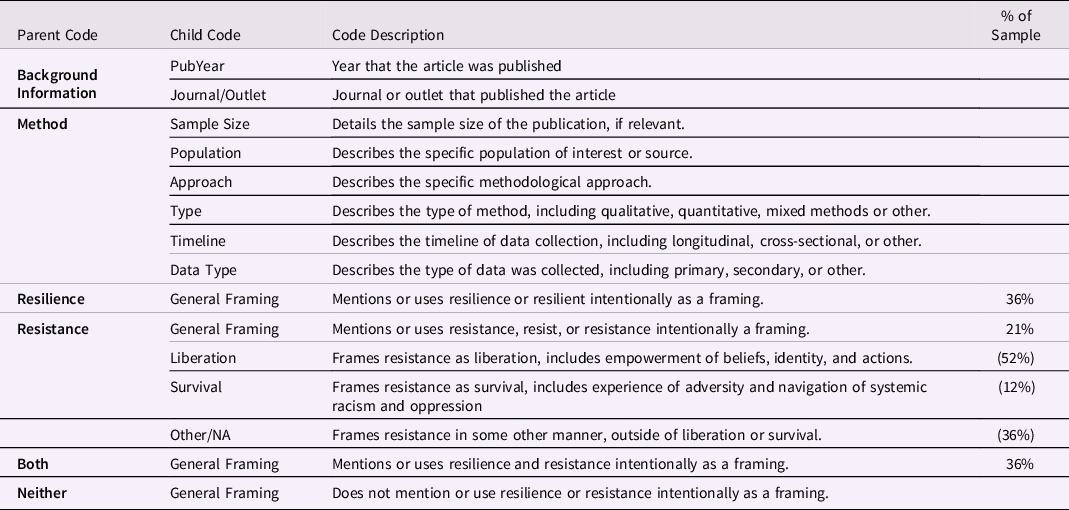
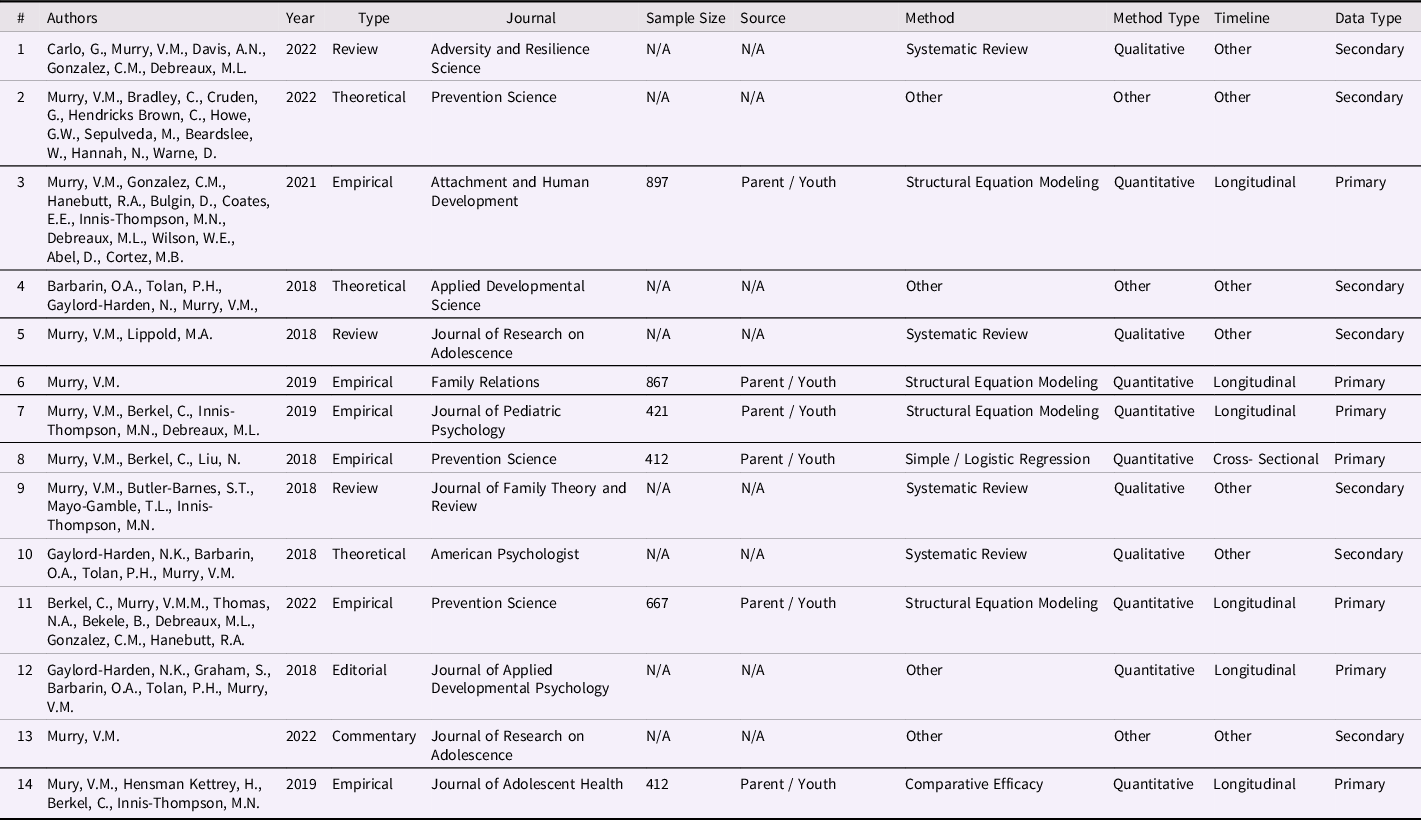
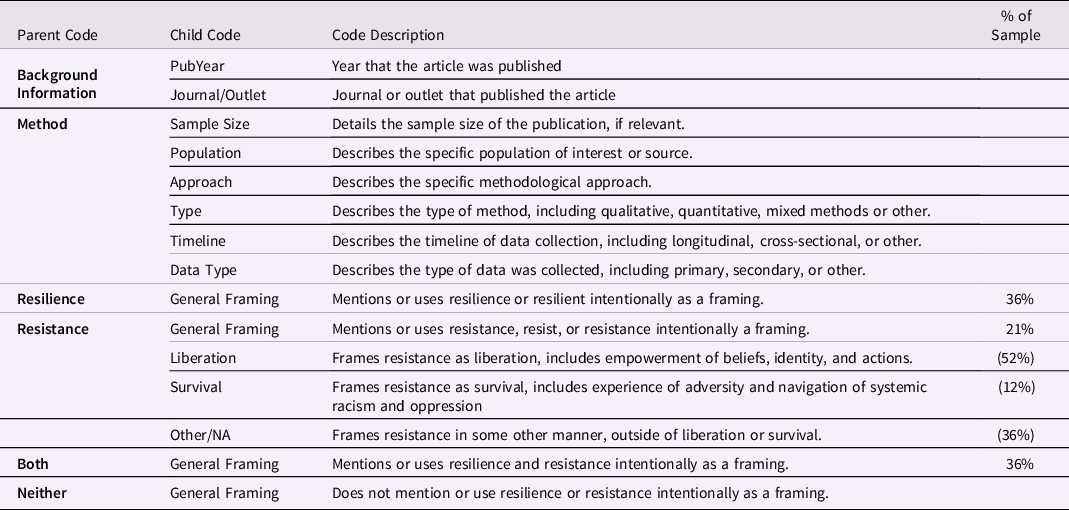
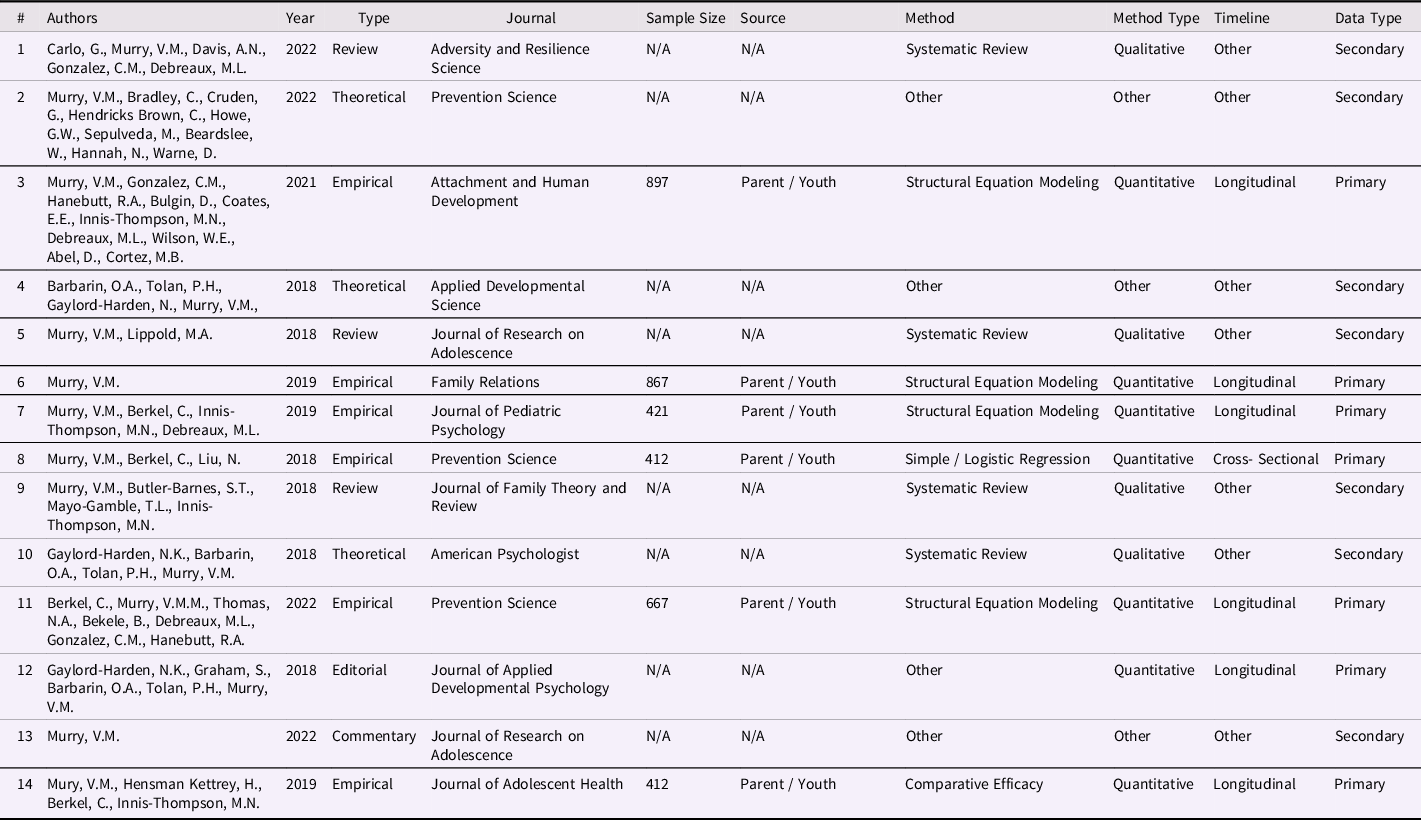
The full-text versions of all 14 publications were compiled and assessed based on a variety of criteria. Specifically, we coded for background information (e.g., publication year, journal outlet, authorship), methodological aspects (e.g., sample size, population, approach, type, timeline, and data type), and for framings utilizing resilience and resistance within each manuscript. The latter group of codes was particularly important, as coding for instances of resilience and resistance–employing Robinson & Ward’s (Reference Robinson and Ward1991) resistance for survival versus liberation framework–worked to address our three research questions. The sample was qualitatively coded using open coding after loading article PDFs into MAXQDA, an advanced qualitative coding software (VERBI Software, 2022). Outside of open coding using this codebook, we also leveraged document text search features provided by the software to ensure that no mentions or references to resilience (i.e., “resilience,” “resilient,” “resiliency”) or resistance (i.e., “resistance,” “resist,” “resistant,”) were omitted from the coding process. MAXQDA allowed the research team to code, memo, and assess inconsistencies throughout the coding process. All inconsistencies–including unclear coding and discussions regarding differentiating resistance for liberation and survival–were addressed via ongoing conversations. The full codebook is provided in Table 1; background information codes and an overview of the entire sample are provided in Table 2. The next section will aggregate and synthesize the results.
Codebook for charting selected articles
Descriptive insight for publications sample
Results
Descriptive analysis of our selective sample of papers revealed that most were published between 2018 and 2022 via a variety of journals, the most common of which was Prevention Science (3 publications) and Journal of Research on Adolescence (2 publications). Six of the publications were empirical articles, 3 were theoretical, 3 were reviews, and there was 1 commentary and 1 editorial. Of the 6 studies with specified participants, sample sizes ranged from 412 to 897 (M = 612.7); all 6 of these studies included both African American parent and youth participants as a part of the analyses. An examination of methodological approaches revealed the following: 4 were systematic reviews, 4 utilized structural equation modeling, 1 used regression, and 1 involved comparative effectiveness of intervention modalities, while the remaining reviews, commentaries, and conceptual papers did not employ a specific method. Further, quantitative studies made up 50.0% of the sample (7 publications), while 4 articles were qualitative (28.6%); 3 publications (21.4%) did not involve data collection so were coded as “Other.” Six publications involved longitudinal data analysis and only 1 included a cross-sectional design, with 7 publications categorized as “other” without a specific timeline for data analysis (i.e., reviews, theoretical). Finally, the type of data involved in the sample’s publications was evenly split between primary and secondary data: 7 publications each. For example, reviews and theoretical pieces were coded as secondary analyses given that they relied on previously collected data and sources as a foundation for claims made.
Of our sample (n = 14), 13 publications (92.9%) meaningfully referenced resistance or resilience relevant to African American youth and families; this reflects the relevance and application of resistance and resilience concepts in studies seeking to elucidate realities faced by African American youth and families. The remaining article, by Murry et al. (Reference Murry, Berkel, Inniss-Thompson and Debreaux2019) investigated the comparative effectiveness of three delivery modalities of the Pathways for African American Success (PAAS) program. The missing reference to resilience or resistance may be because the article focused more on program modality efficacy, as opposed to the implications of the program for resistance or resilience processes. Five studies referenced resilience only, 3 studies referenced resistance only, and 5 studies referenced both. Table 1 explores the breakdown of publications based on the terminology referenced. Of these 13 publications featuring resistance, resilience, or both, references of the terms of interest ranged from 2 to 20 per manuscript, with an average of 8.7 relevant references. Across the sample, there were 88 resilient-related references (e.g., resilience, resilient, resiliency) as compared with 33 resistance-related references (e.g., resist, resistance).
Relevance of terminology in references: resilient, resilience, resistance, and resilience-resistance
Several commonalities emerged among the use of the terms resilient and resilience within publications (see Table 3 for exemplars). For instance, resilience was oftentimes framed as a protective factor influenced by other processes. This observation was noted by Berkel and colleagues (Reference Berkel, Murry, Thomas, Bekele, Debreaux, Gonzalez and Hanebutt2022) in this manner: “African American parents’ use of racial socialization is a determining factor in nurturing these key elements of resilience (p. 2). Another common framing of resilience consisted of explicitly naming behaviors and practices used as a strategy for coping, however, these coping mechanisms were largely discussed “in spite of” oppressive forces (i.e., systematic racism). For example, Barbarin and colleagues (2016) explained, “The Positive Youth Development framework highlights the propitious influence of familial and community assets that promote resilience and prosocial development in spite of chronic adversity” (p. 4). A third framing of resilience was a bit more nuanced; resilience was framed as a goal or named “resilient” as something for African American youth and families to become, however, it was not linked to liberatory practices. An illustration of this included Carlo and colleagues (2022) opening that, “despite their experiences with oppression, many minority children have been able to succeed and demonstrate resilience in the context of a racialized society (p. 5). One publication stood out in its critique of resilience. Murry, Bradley, and colleagues’ (2022) article titled, “Re-envisioning, Retooling, and Rebuilding Prevention Science Methods to Address Structural and Systemic Racism and Promote Health Equity.” This article outlined the need to “disrupt individual resilience,” tying this new vision to structural change and social justice frameworks.
Review of selected peer-reviewed manuscripts by the first author (n = 14)

Similarly, central themes also emerged across the three publications that only referenced “resistance” within the context of African American youth and families (See Table 3 for exemplars). For example, instances in which resistance was framed as a reaction or mechanism for survival; for example, Gaylord-Harden and colleagues (2018) clearly delineated the ways in which resistance may manifest as behaviors that seem deviant or negative but are actually coping strategies that are engaged to survive in the midst systematic racism. These authors shared, “confronted with a sense of “otherness” from teachers and peers, African American males may cope by developing hypermasculine attitudes… disengage cognitively and physically from schools to avoid negative encounters” (Gaylord-Harden et al., Reference Gaylord-Harden, Barbarin, Tolan and Murry2018, p. 8). Expectedly, resistance was also framed as an explicit opposition to oppression, or a liberatory practice, which in this case involved critical reflection on the part of African American parents, Murry (Reference Murry2022) explained,
“A key ingredient in this exchange is parents’ own critical reflections of racism, and that their child is growing up in racialized institutions, and therefore must be prepared for racialized experiences, knowing when to resist and be confident in their ability to offer adaptive racializing coping strategies that were effective for their children” (p. 3).
Other usages featured resistance as adaptive and proactive, framing it more as a racism-stress coping strategy. Murry, Berkel, and colleagues (2018) briefly outlined, “resistance strategies, and racially specific content, including how to proactively respond to racism” (p. 2). To further capture this variation of domains of resilience Robinson & Ward’s (Reference Robinson and Ward1991) framework, Table 1 outlines how often each instance of resistance was categorized across the sample. Resistance references coded as “other” included those only referring to a citation or those which used “resist” as a verb unrelated to the topic of interest. The next section describes more of the interplay between resilience and resistance as exhibited within publications that utilized both terms explicitly.
The critique of resilience-resistance framing employed in the selected papers reiterates the theoretical dispositions featured above and supports Robinson & Ward’s (Reference Robinson and Ward1991) framework differentiating resistance as survival versus liberation. However, investigation of the selected publications revealed the utilization of both resilience and resistance, demonstrating a blurring of differentiation, as well as a potential for more critically examining the intersection. In this vein, a critical evaluation of both resilience and resistance may offer greater insight into the extent to which resilience framings in the literature may actually represent resistance, and, specifically, the action-oriented intent of responses. This perspective gives rise to a critical question: Is race-stress coping resistance for liberation or resistance for survival? Gaylord-Harden and colleagues (2021) seem to suggest as much in their claim that, “Researchers are demonstrating that resilience is more complex and multi-layered than previously presumed. Moreover, as this study illustrates these findings point to more subtle, person-specific, and positive development/resilience-oriented interventions” (p. 4). Murry, Bradley, and colleagues (2022) critique this intersection further, adding that Prevention Science’s focus on individualistic frameworks or micro-level instead of macro-level interventions is “reinforced by existing service systems, including schools and public health agencies, that emphasize individual responsibility for health or education without attending to the social and economic conditions that increase health risk and disrupt individual resilience (Murry et al., Reference Murry, Bradley, Cruden, Brown, Howe, Sepùlveda, Beardslee, Hannah and Warne2022, p. 5). These authors noted that “programs that focus on building individual and family resilience often ignore the upstream environmental factors and processes that create and sustain chronic exposure to discrimination and systemic racism, or the social structures necessary to sustain” (Murry et al., Reference Murry, Bradley, Cruden, Brown, Howe, Sepùlveda, Beardslee, Hannah and Warne2022, p. 5). Thus, while there is a need for preventive interventions that move beyond families and individuals to increase resilience and include skill and capacity building to promote resistance, the greatest need is for system-level action-oriented change that eliminates the need to navigate oppressive toxic waters.
Reimagining adversity response research: removing structural toxins
To jumpstart this process, this section offers a framework to reimagine the field of resilience and resistance research, offering insights on plausible ways to engage in action-oriented practices and policies that disrupt systems and structures that create, perpetuate, and sustain toxic waters. While numerous social determinants pour downstream to pollute the waters, we focus on two critical systems, education, and health care, because of their reciprocal nature. A plethora of studies have documented the causal link between education and health, such that those with more education are healthier and have longer life spans compared to those with fewer years of schooling (Case & Deaton, Reference Case and Deaton2021). Moreover, educational attainment predicts not only income but also resources, with social and psychological benefits (Assari et al., Reference Assari, Caldwell and Bazargan2019) and can create conditions that affect one throughout the life course, from prenatal to aging (Lynch, Reference Lynch2006). In the following section, a brief discussion of structural and system-level processes and practices that create adversities in schools and healthcare settings is presented, followed by recommendations of ways to facilitate level change through action-oriented system-level transformation.
Disrupting and removing toxins in schools
Schools play a critical role in shaping the life course. Paulle (Reference Paulle2013), in the book, “Toxic Schools,” makes a strong argument that attending schools where students are exposed to threatening, frightening, violent, and environmentally hazardous conditions can cause stressful and toxic situations, compromising both mental and physical problems. According to Boen et al. (Reference Boen, Kozlowski and Tyson2020), toxic school experiences have not only short-term consequences but also long-term patterns of health inequities long after school completion. African American students disproportionately experience toxic schools has been attributed to racial discrimination. These experiences often emerge through peers, school staff, and oppressive discriminatory policies (Fisher et al., Reference Fisher, Wallace and Fenton2000), including disinvestment in schools with high populations of African American students. The consequences of structural oppression and discrimination are manifested through disparities in grading, representativeness of teaching materials, disciplinary and expulsion practices, and imposed anti-Blackness in dress code policies (Brady et al., Reference Brady, Winston and Gockley2014; Fisher et al., Reference Fisher, Wallace and Fenton2000; Marcelo & Yates, Reference Marcelo and Yates2019). The downstream effects can be observed in students experiencing low expectations and academic worth, discouraged from enrolling in gifted and college prep courses, relegated to special education classes, insulted, disrespected, or misjudged and stereotyped by peers and school staff (Fisher et al., Reference Fisher, Wallace and Fenton2000; Goodwin et al., Reference Goodwin, Chen and Long2021; Marcelo & Yates, Reference Marcelo and Yates2019). Exposure can lead to compromised youth behavioral and mental health functioning, as well as decreased school engagement, school connectedness, academic persistence, academic self-efficacy, and early school leaving (Bottiani et al., Reference Bottiani, McDaniel, Henderson, Castillo and Bradshaw2020; Gale, Reference Gale2020; Goodwin et al., Reference Goodwin, Chen and Long2021; Griffin et al., Reference Griffin, Stitt and Henderson2020; Murry et al., Reference Murry, Berkel, Brody, Miller and Chen2009; Seaton & Douglass, Reference Seaton and Douglass2014).
While these experiences are imminent from school toxins, the burden to navigate this environment is heavily placed on African American youth and families, wherein youth are encouraged to build resilience through effective problem-solving, self-encouragement, seeking emotional and social support, bolstering racial identity and racial connectedness, and increasing academic commitment (Amemiya & Wang, Reference Amemiya and Wang2018; Austin et al., Reference Austin, Jeffries, Winston and Brady2022; Chavous et al., Reference Chavous, Rivas-Drake, Smalls, Griffin and Cogburn2008). A few studies have documented ways in which African American youth may engage in resistance strategies in schools. Resistance strategies in schools include how adolescents push back on structural forces (Collins, Reference Collins2009), such as silence, distance, emotional expression, anger, and confrontation (Andrews, Reference Andrews2012; Kelly, Reference Kelly2018). Other forms of resistance include protesting against maltreatment, advocating for social and restorative justice to improve treatment and school conditions, and sharing their critical reflections and actions with others in and outside the school environment (Austin et al., Reference Austin, Jeffries, Winston and Brady2022; Kelly, Reference Kelly2018). Kelly (Reference Kelly2018) reported that African American girls develop strategies for critical resistance in schools, engaging in critical dialog with peers in online spaces as a platform to voice injustices when their schools are not safe and supportive. Several scholars noted that African American students may passively resist by disconnecting from completing school assignments, socially isolating while in school, and outwardly expressing their frustrations in ways that can be misconstrued as defiance and behavior concerns (Amemiya & Wang, Reference Amemiya and Wang2018; Kelly, Reference Kelly2018). These acts of resistance often result in labeling, as students may be deemed as “troublemakers,” or are mistreated and denigrated when actively or passively questioning the assumptions and values of their teachers or standing up against discrimination (Kelly, Reference Kelly2018). These reactionary processes are African American youths attempting to cover themselves to navigate toxic waters flowing in and through school settings.
Research has highlighted an array of policy and practice implications for education settings to enhance sociocultural resilience at a systemic level. The social-ecological perspective states that schools can utilize direct and indirect strategies to enhance positive adaptation for children and families (Masten & Motti-Stefanidi, Reference Masten and Motti-Stefanidi2020; Ungar, Reference Ungar2011). Directly, schools can utilize school-wide interventions and prevention programs aimed at disseminating an anti-bias curriculum, restorative justice practices, or a school-wide culturally tailored resilience curriculum that highlights the impact of systems on educational outcomes, cultural strengths, and empowerment (Darling-Hammond et al., Reference Darling-Hammond, Fronius, Sutherland, Guckenburg, Petrosino and Hurley2020; Elisha & Collins, Reference Elisha and Collins2022; Graham et al., Reference Graham, Yaros, Lowe and McDaniel2017; Richards et al., Reference Richards, Romero, Deane, Carey, Zakaryan, Quimby, Gross, Thomas, Velsor-Friedrich, Burns and Patel2016). Indirectly, school resilience strategies may include fostering relationships between school staff, students, and their families, providing safe learning environments and safe spaces in schools for discussing race and identity, and engaging in culturally responsive teaching and classroom management practices (Amemiya & Wang, Reference Amemiya and Wang2018; Austin et al., Reference Austin, Jeffries, Winston and Brady2022; Brady et al., Reference Brady, Winston and Gockley2014; Gale, Reference Gale2020; Goodwin & Long, Reference Goodwin and Long2022; Kelly, Reference Kelly2018; Theron, Reference Theron2016). Schools should foster critical consciousness and cultural pluralism to enhance the climate, safety, and support for African American students, especially girls (Amemiya & Wang, Reference Amemiya and Wang2018; Kelly, Reference Kelly2018).
Schools can also ensure that students are learning in an equitable racial school climate with high expectations, high levels of teacher support, peers with high academic values, and classrooms focused on academic attainment in terms of individual improvement or growth rather than focus on academic competition (Amemiya & Wang, Reference Amemiya and Wang2018; Brady et al., Reference Brady, Winston and Gockley2014; Gale, Reference Gale2020; Golden et al., Reference Golden, Griffin, Metzger and Cooper2018). Schools should also aim to remove zero-tolerance policies and other exclusionary discipline practices at the school and district-wide levels and critically examine the sources of students’ anger and behavioral concerns (Austin et al., Reference Austin, Jeffries, Winston and Brady2022; Kelly, Reference Kelly2018). Further, schools should intervene against discrimination by supporting students, creating and sustaining a safe reporting system, and providing consistent consequences and accountability against maltreatment (Austin et al., Reference Austin, Jeffries, Winston and Brady2022; Earnshaw et al., Reference Earnshaw, Rosenthal, Carroll-Scott, Peters, McCaslin and Ickovics2014; Goodwin et al., Reference Goodwin, Chen and Long2021). Finally, district and state-level school policies should ensure equity in funding by ensuring that schools’ funding allocation matches their training and implementation needs regarding direct and indirect social-ecological resilience strategies to prevent and effectively intervene in African American youth’s educational, mental health, and behavioral outcomes.
Disrupting and removing toxins in the healthcare context
Health and healthcare systems also create, sustain, and perpetuate inequities, primarily attributed to the structural racism in historical healthcare policies and practices that continue today (Bailey et al., Reference Bailey, Feldman and Bassett2021; National Center for Health Statistics, 2016; Yearby et al., Reference Yearby, Clark and Figueroa2022). For example, two policies, the Establishment of the Hospital Survey and Construction Act and the Hill-Burton Act enacted in 1946, while publicly described as efforts to address hospital bed shortages in the areas of highest need, particularly the rural South, this policy allowed for “separate-but-equal” facilities for nearly two decades (Yearby, Reference Yearby2020). Policies such as these, and others to follow, set the stage for the disparate health care with disparities and consequences that continue today. It is worth noting that compared to White Americans, African Americans disproportionately have lower rates of influenza vaccination, higher blood pressure, higher maternal mortality, higher rates of firearm injury, and higher rates of depression, which is not happenstance (National Center for Health Statistics, 2016).
Multiple medical organizations, including the American Psychiatric Association and American Academy of Pediatrics, have penned public apologies acknowledging the discriminatory and racist practices that directly and negatively impacted minoritized groups (American Academy of Pediatrics Board of Directors, 2020; American Psychiatric Association, 2021). Recent attention to the need to address the root causes of racism as a contributor to health inequities has set forth a call for system-level changes (Braveman, Reference Braveman2017). While some evidence of change has emerged, there remains a significant opportunity for the healthcare field to do more to disrupt producing policies and practices that contribute to downstream “toxic waters” that affect health outcomes (Garner et al., Reference Garner and Yogman2021). In the following section, we provide potential strategies that the health and healthcare system can implement to disrupt and remove toxins and advance equity thereby reducing disparities that disproportionately affect African Americans.
Individual healthcare provider actions
A robust body of literature describes how exposure to adverse experiences in childhood can detrimentally impact physical and mental health over the life course (Bethell et al., Reference Bethell, Newacheck, Hawes and Halfon2014; Brown et al., Reference Brown, Anda, Tiemeier, Felitti, Edwards, Croft and Giles2009; Gilbert et al., Reference Gilbert, Breiding, Merrick, Thompson, Ford, Dhingra and Parks2015). The capacity to navigate adversities, while having short-term positive outcomes, can have long-term detrimental health impacts, causing early aging, as evident by the onset of chronic disease during young adulthood (Brody et al., Reference Brody, Yu, Chen, Miller, Kogan and Beach2013). Healthcare providers, especially pediatricians, treat patients during critical developmental stages, from birth to young adulthood, a window of opportunity for preventive intervention and examine policies and practices that may hinder access to quality care and services (Williams & Cooper, Reference Williams and Cooper2019). In addition, incorporating clinical knowledge and practices to fit the ecological, contextual, and cultural needs of patients are ways to ensure access to high-quality care (Cooley et al., Reference Cooley, Ritschel, Frazer and Blossom2019; Paulus et al., Reference Paulus, Ohmann, Möhler, Plener and Popow2021).
In fact, patients’ displeasure with medical service may be met with resistance, manifested in a range of responses, including not adhering to recommended medical advice and not keeping scheduled appointments. Essex (Reference Essex2022) describes resistance as an opportunity to disrupt the status quo and when such behaviors occur, particularly among youth, pediatricians can offer empathetic listening and explore the reasoning driving the youth’s resistance. Resistance may be attributed to a patient’s response to harmful policies or a challenge to unfair assumptions and treatment. Rather than mislabeling youth as “disobedient” or “disruptive”, an inquisitive examination of the root causes of the youth’s behavior is warranted. In addition to seeking insight from youth to understand responses, it may be helpful to engage caregivers to gain greater insight and develop an action plan that aligns with the causes of resistance (Garner et al., Reference Garner and Yogman2021).
Given their clinical experience, healthcare providers are in unique positions to observe ways in which inequities associated with social determinants of health affect their patients (Boudreau et al., Reference Boudreau, Hamling, Pont, Pendergrass and Richerson2022). Pediatricians, for example, can gather information to track and monitor ways in which systemic and structural barriers affect health equity. For example, intake information can offer insights into whether their patient is experiencing poor-quality education, residing in unsafe neighborhoods, or experiencing unstable housing (Halfon et al., Reference Halfon, DuPlessis and Inkelas2007). Such knowledge capabilities provide opportunities to treat the “whole child,” going beyond providing excellent and equitable healthcare to all patients. Healthcare providers can leverage their unique vantage point as an advocate for their patients (Halfon et al., Reference Halfon, DuPlessis and Inkelas2007).
Serving in this role is not new, by engaging in resistance advocacy, healthcare workers facilitated the improvement of sanitation as early as the 1800s (Hamlin, Reference Hamlin2008). Advocacy can take many forms (Paulson, Reference Paulson2001), such as letter writing or public statements; attending meetings, vigils, or town halls; social media campaigns; or media interviews; formal act of advocacy by communicating with local, state, or federal legislators on specific themes or topics. Elevate awareness of critical health-related issues by sharing de-identified stories and providing relevant data, all of which provide lawmakers with the personal context of the issue. The health of patients is clearly impacted by policies (Centers for Disease Control and Prevention (CDC, 1999). However, policy and legislative leaders often do not have the same level of clinical or research expertise compared to those in healthcare (Schering & Writer, Reference Schering and Writer2022). Of the 535 Members of the 118th Congress, there are 26 medical professionals- only 2 are pediatricians. Therefore, to further impact change upstream, medical providers have an opportunity to add their voice as policymakers to utilize their unique understanding of the interconnectedness of policy and health (Boudreau et al., Reference Boudreau, Hamling, Pont, Pendergrass and Richerson2022). For example, advocating for firearm injury prevention to save the life of their patients.
Firearm violence is a public health crisis in the United States (Lee et al., Reference Lee, Dodge and Terrault2022). In 2020 firearm injuries overtook motor vehicle collisions as the leading cause of death for US children (Goldstick et al., Reference Goldstick, Cunningham and Carter2022). African American youth are disproportionately affected by firearm violence and these inequities have widened in the last decade (Andrews et al., Reference Andrews, Killings, Oddo, Gastineau and Hink2022). Overall, pediatric mortality is lower in states with stricter firearm laws (Goyal et al., Reference Goyal, Badolato, Patel, Iqbal, Parikh and McCarter2019). Firearm safety policies such as universal background checks and child access prevention laws have been shown to reduce deaths in children (Goyal et al., Reference Goyal, Badolato, Patel, Iqbal, Parikh and McCarter2019). Pediatricians and other healthcare providers all too often see the devastating impacts of fatal and nonfatal firearm injuries. Therefore, they are ideally positioned to speak on behalf of children and families on this issue. For example, by raising awareness among parents through the media about the efficacy of safe storage (Grossman et al., Reference Grossman, Mueller, Riedy, Dowd, Villaveces, Prodzinski, Nakagawara, Howard, Thiersch and Harruff2005). Healthcare providers can also speak with legislators about the impact of firearm injuries on their patients and provide data to support firearm safety policies. To further address the root causes of firearm violence, healthcare providers can partner with community-based organizations through mechanisms such as hospital-based violence intervention programs shown to reduce future injuries or violent crime involvement in a cost-effective manner (Becker et al., Reference Becker, Hall, Ursic, Jain and Calhoun2004). This same framework can be applied to other health disparities, such as maternal mortality or hypertension.
Other health advocacy equity approaches may include supporting comprehensive and more equitable healthcare access, and the expansion of Medicaid in the 10 states, primarily in the South, which are yet to adopt this policy (Lee et al., Reference Lee, Dodge and Terrault2022). Medicaid programs are a major source of health coverage for minoritized individuals and, as such, can help to address health disparities (Metzger et al., Reference Metzger, Asti, Quinn, Chisolm, Xiang, Deans and Cooper2021).
Institutional actions
Healthcare providers have a powerful voice and important role in disrupting systems of oppression. Individual action is a crucial component in this endeavor- but so is collective action. Through the collective layers of driven individuals alongside proactive institutions, more meaningful change can occur.
Social determinants or drivers of health (SDOH) affect 50-80% of variation in health outcomes with poverty, education, and employment having the largest impact (Hood et al., Reference Hood, Gennuso, Swain and Catlin2016). While advancing health equity through clinical care is of certain importance, addressing the ways in which social determinants of health impact health outcomes is essential. This requires systems to expand assessment to screen for SDOH by instituting policies at all outpatient and Emergency Department visits or at the time of admission to the hospital (Hacker et al., Reference Hacker, Auerbach, Ikeda, Philip and Houry2022). In one institution-wide study examining resource utilization after food insecurity screening, 61% of interested families were connected to food resources (Fritz et al., Reference Fritz, Thomas, Brittan, Mazzio, Pitkin and Suh2021). The Centers for Medicare and Medicaid Services is now requiring hospitals to report SDOH measures in the domains of food insecurity, housing instability, transportation needs, utility difficulties, and interpersonal safety (Hacker et al., Reference Hacker, Auerbach, Ikeda, Philip and Houry2022). These policies should be delivered equitably and integrated within existing referral networks of community resources. This includes providing services through proactive, equitable and integrated approaches with healthcare delivery collocated with nonmedical professionals and resources (e.g., early developmental intervention services or legal services). In their study of collaborative community-clinical partnerships Beck et al. (Reference Beck, Marcil, Klein, Sims, Parsons, Shah, Riley, Bignall, Henize, Kahn and Unaka2021) describe cross-sector partnerships, medical-financial, medical-legal, clinic-based food pantries, and access-expanding programs to address upstream causes of childhood poverty and implications for child health outcomes. This innovative approach was strengthened by the consistent use of co-design, community organizing, and community-engaged methodology to enhance equitable partnerships, transparency, and accountability.
Finally, institutions must assess their environments for race-based care delivery, create inclusive climates, and adopt antiracist policies and programs (Olayiwola et al., Reference Olayiwola, Joseph, Glover, Paz and Gray2020). One concrete example is eliminating the usage of race-based models such as calculating the risk of pediatric urinary tract infection or vaginal birth after cesarean section (Wright et al., Reference Wright, Davis, Joseph, Ellison, Heard-Garris and Johnson2022). Antiracist frameworks involve conscious, active, and ongoing efforts to comprehensively address the multidimensional aspects of racism in our society. Infrastructure for racial justice should be prioritized consistently in strategic visioning, hiring practices, and engaging community partners (Olayiwola et al., Reference Olayiwola, Joseph, Glover, Paz and Gray2020). Key to the success of these policies is embedding antiracist education into medical curriculum and faculty development (e.g., resistance education and emphasizing physicians’ roles in health and equity) (Hagopian et al., Reference Hagopian, West, Ornelas, Hart, Hagedorn and Spigner2018).
Conclusions
In our paper, we sought to advance the field of resilience research by gaining greater insight into what constitutes resilience and potential mislabeling race-stress coping behaviors for resilience when actions are aligned with resistance. Our discovery included reviewing classic empirical and conceptual works, reflecting on our own body of research, and exploring a world in which oppressive structures, systems, practices, and policies would engage in action-oriented efforts to detoxify downstream works, such that the need for resilience and resistance would no longer be uniquely required of African Americans and other minoritized populations. Several key conclusions emerged. First, while studies of resilience are based on assumptions that navigating adversities requires drawing on strengths and coping strategies to overcome odds through “ordinary ways of managing challenges”, Wray-Lake et al. (Reference Wray-Lake, Halgunseth and Witherspoon2022) theorized that there may be a potential mislabeling of this process. That is, there is a need to reexamine how individuals and families respond to racism, as what has been characterized as resilience may overlap with resistance there may be overlaps between resilience coping and resistance. Results from our adapted scoping review offered empirical support for this call to action.
We also offer insight on ways to disrupt upstream policies and practices to clean the murky, toxic waters rather than requiring individuals, families, and communities to draw on their strengths and cultural assets to swim in the murky waters (Rogers & Way, Reference Rogers and Way2021). Our case study of two systems urges school administrators and teachers, and healthcare service providers to leverage their privileged positions to acknowledge their positions of power and dismantle practices and policies and also engage in resistance action-oriented efforts (Barker, Reference Barker2005; Wray-Lake et al., Reference Wray-Lake, Halgunseth and Witherspoon2022). Not only does this encourage resisting as a collective societal experience, but it also takes away the focus from fixing individuals to cleaning the murky waters (Rogers & Way, Reference Rogers and Way2021). Cleaning the toxic waters will not eradicate the internal fabric of the walls that hold the waters, as the foundational basis of our society is built on the historical vestiges of slavery and Jim Crow law. We propose a modification to Murry et al., Integrative Model for the Study of Stress in Black American Families to one that illustrates ways in which African American families can redirect their strengths and cultural assets from navigating and resisting murky, toxic waters, to the enhancement of family promotive and inhibit ubiquitous vulnerabilities and in turn foster positive development and adjustment for caregivers, their children, and communities (See Fig. 2). In so doing, rubber suits will no longer be needed to survive—an area of research to serve as the impetus for the next generation of resilience research.
Proposed integrative model for the study of stress in African American families without sociocultural contextual stressors.
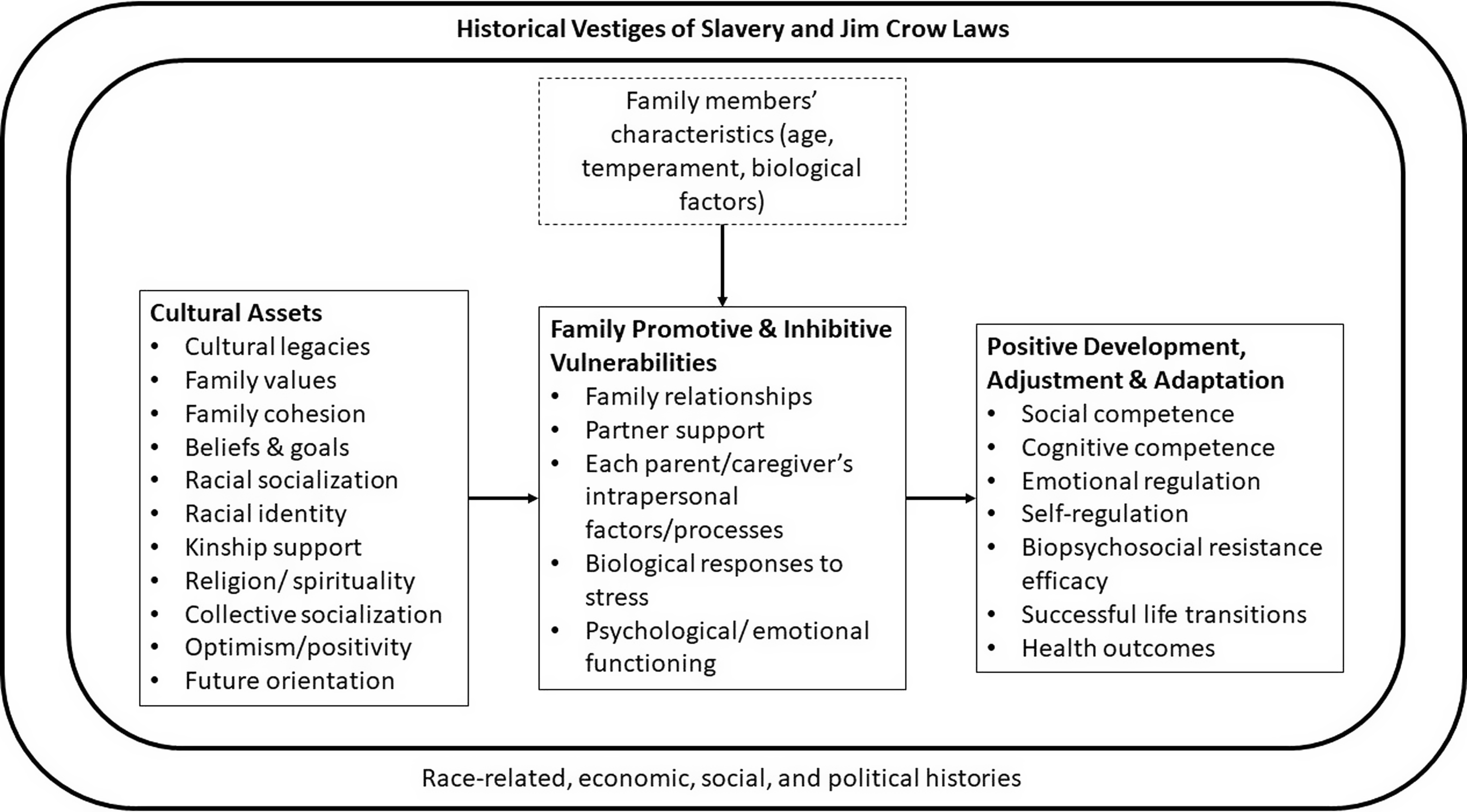
Funding statement
This research was supported by funds from the National Institute on Drug Abuse (NIDA) Core Center of Excellence grant [P30 DA027827]; the National Institute of Mental Health (NIMH) [MH48165, MH62669]; the Centers for Disease Control and Prevention (CDC) [029136-02]; NIMH [MH62666] and NIDA [DA021898, DA18871]; and NIMH [MH062668].
Competing interests
None.