Introduction
Pastoralists often shepherd more than one species of livestock by employing either sequential grazing in which two species do not graze together but one species grazes after another or by co-grazing different species simultaneously (Animut and Goetsch, Reference Animut and Goetsch2008; Gonzales-Pech et al., Reference González-Pech, Torres-Acosta, Sandoval-Castro and Tun-Garrido2015). In this way, the rangelands can be better exploited as some livestock species are primarily grazers, such as sheep, some are intermediate feeders, such as goats, and some are browsers, such as camels and, therefore, these animals consume different forages (Hofmann, Reference Hofmann1989). There is an inverse relationship between dietary overlap of the species and potential livestock stocking rate of co-grazing animals (Animut and Goetsch, Reference Animut and Goetsch2008). In addition to the more efficient use of the rangelands, raising more than one species of livestock buffers the risks of losses if one of the species suffers from a disease or extreme environmental conditions more so than another (Boru et al., Reference Boru, Schwartz, Kam and Degen2014).
Sheep and goats are the most widespread and common of all livestock, with goats consuming a greater variety of forages and being able to penetrate areas that are more arid than sheep. Livestock raised by pastoralists are generally well-adapted to the climatic conditions and are relatively tolerant of local diseases, but are low producing in terms of milk production and reproductive performance (Degen, Reference Degen2007).
Traditionally, Negev Bedouin depended on nomadic pastoralism for their lifestyle and livelihood. Sheep, mostly triple purpose fat-tailed Awassi, and crossbred goats, known locally as Baladi or Negev, were herded together. These livestock provided the Bedouin with milk, meat, wool, hair and faeces (Degen et al., Reference Degen, Benjamin and Hoorweg2000). Today, there are approximately 250 000 Bedouin in the Negev and they own about 350 000 sheep and goats (Degen et al., Reference Degen, El-Meccawi and Kam2019). The sheep and goats are herded in mixed flocks of usually between 50 and 200 animals, and both species are raised mainly for meat. Much of the wool shorn from the sheep is simply discarded, and the number of sheep and goats that are milked has been decreasing over the years due, in part, to a shortage of labour. Less than 10 000 Bedouin (about 1000 families) derive their main source of livelihood from livestock (Degen, Reference Degen and Dana2011).
In a previous study, we found that the behaviour and dietary selection of sheep and goats tended to be similar at the peak of lush pasture, but differed with a decline in biomass availability and quality of the pasture (Kam et al., Reference Kam, El-Meccawi and Degen2012). This period is the most difficult for the free grazing animal, and energy requirements are often not met. It was during this period in the present study that we compared resting metabolic rate (RMR) and field metabolic rate (FMR) between Awassi sheep and Baladi goats by employing the heart rate method (Brosh, Reference Brosh2007). We hypothesized that the energy expenditure of these desert-adapted small ruminants would be relatively low when compared to other sheep and goat breeds, as the sheep and goats in the present study are well-adapted to desert conditions. We also determined biomass availability and the activity budgets of the two species.
Material and methods
Site of study
The study took place from 10 March to 31 March 2017 (34o25′N; 31o22′E., 100 m a.s.l.) in the northern Negev. This is a semi-arid area having deep loess soils. Annual rainfall averages 250 mm, all occurring in the winter from October to April, with 60% generally falling in December and January. However, there are large annual variations in total rainfall and in its temporal and spatial distribution. Winters are mild. The coldest month, January, has a mean minimum and maximum air temperature of 7 and 18°C, respectively. Summers are hot and dry lasting from June to November. The hottest month, August, has a mean minimum and maximum air temperature of 20 and 34°C, respectively.
The native vegetation consists mainly of annual herbaceous species. The predominant plants are the annuals, Stipa capensis, Medicago radiate, Medicago truncatula, Echinops polyceras, Malva parviflora, Centaurea aegytiaca, Peganum harmala and Schismus arabicus, the trees Acacia saligna, Pistacia lentiscus and Tamarix aphylla and the shrubs Atriplex halimus, Lycium shawii and Retama raetam. Seasonal chemical composition and estimated metabolizable energy of these plants have been reported (Kam et al., Reference Kam, El-Meccawi and Degen2012). For the purpose of this paper, we were interested in whether the animal was grazing or browsing. Seasonal plant development and biomass production depend on the amount and distribution of rainfall and on the availability of soil nutrients. Before rainfall, herbage ground cover is often grazed out completely. After the onset of significant rains, germination and emergence take place after 5–15 days, depending on air temperature. Vegetation development is slow in cold December and January, but, with rising air temperatures, increases exponentially (van Keulen et al., Reference van Keulen, Seligman and Benjamin1981).
Animals, management and activity budget
The sheep and goats used in this study were part of a mixed flock of 70 sheep and 30 goats shepherded by two Bedouins. The sheep had been shorn 2 weeks prior to the study. The animals were watered at 06:30, then free-ranged on natural pasture for 11 h daily, from 07:00 to 18:00, after which time they were watered and corralled overnight. Activity budget was determined in six Awassi sheep and six Baladi goats by recording times of grazing, browsing and other activities of each animal for 5 min every hour during the 11 h grazing period over 2 days. The same six sheep and goats were observed, but selected randomly, each hour, and all measurements were made by the same observer, who had made these observations previously (Kam et al., Reference Kam, El-Meccawi and Degen2012). The sheep and goats were all males and about 1 year of age. Negev Bedouin are Moslems who prefer male sheep and goats for traditional slaughter. Males should be intact and not have ‘flaws’, such as having a broken horn. For this reason, a relatively large number of intact males are raised, especially near the festival of sacrifice (eid al-adha – ُ ديع ىحضلاا) and for ceremonies such as fulfilling a vow (fadou – دف َو) and honouring the dead.
Vegetation biomass
Available herbaceous vegetation biomass was determined on 20 March 2017, following procedures of Tadmor et al. (Reference Tadmor, Brieghet, Noy-Meir, Benjamin and Eyal1975). In brief, above ground biomasses in 20 random 25 × 25 cm quadrats were estimated visually, then were harvested at ground level, oven dried and were weighed. In addition, the above ground biomass of another 100 random samples were estimated only visually, but were not harvested. The equation generated from the linear regression of visual estimations on measured biomass in the first 20 samples was used to correct the visual estimations in the latter 100 samples and the 120 total samples were used to estimate biomass availability. All measurements were made by the same person.
Resting and field metabolic rates
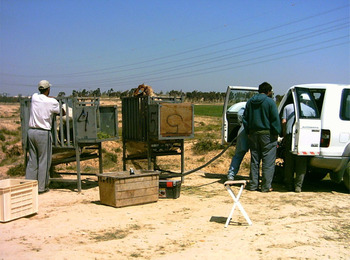
The FMRs of four sheep and four goats, which had been observed in the activity measurements, were estimated using heart rate (HR) measurements (Brosh, Reference Brosh2007). In this method, O2 uptake (L/h) and HR (beat per minute, bpm) were determined simultaneously in each animal. Two metabolic cages were placed in the field for measuring one sheep and one goat at the same time. A small generator provided the required source of power and a vehicle next to the cages contained the analyser and accessories for measuring oxygen uptake (Fig. 1). An open circuit mask system was used to measure O2 consumption in which a calibrated flow meter regulated 30 litres/min through the system. The exhaled air was dried (drierite column) and then analysed for O2 content (Servomex 1400, Crowborough, Sussex, UK), while the air temperature and humidity were measured with electronic sensors ((HygroClip S, Rotronic AG, Basserdorf, Switzerland). Oxygen consumption, air temperature and humidity were recorded every 5 s using a system data logger (Model DT80, DataTaker Pty Ltd, Thermo Fisher Scientific, Australia) and then the data were transformed to standard temperature and pressure (Brosh et al., Reference Brosh, Henkin, Ungar, Dolev, Orlov, Yehuda and Aharoni2006). The temperature and relative humidity of the expired air oxygen meter measurements were corrected each day using the method of N2 recovery of the system (see McLean and Tobin Reference McLean and Tobin1990). For measuring HR, body collars containing coded HR sensors (Polar Wearlink) and suitable data loggers (Polar S610, Kempele, Finland) were fitted on the sheep and goats. Measurements of HR and O2 were accepted after relatively steady values were recorded, which took approximately 20 min. Each sheep and goat was measured on four occasions, one time in the morning and one time in the evening on two separate days. The 2 days were not consecutive but were separated by 14 days before the HR measurements in free grazing animals. The O2 pulse (O2P) was then calculated from the ratio of O2 uptake and heart rate for each individual animal. As the sheep and goats had been grazing but had not fasted, we considered the energy conversion of the O2 uptake to be equivalent to RMR during the active (alpha)-phase of the animals. This allowed comparisons between the species in the present study and species in other studies as measurements in the other studies were also made during the alpha-phase.
Colour online. Simultaneous measurements of oxygen consumption and heart rate in an Awassi sheep and a Baladi goat maintained in metabolic cages outdoors under natural pasture in the Negev Desert.

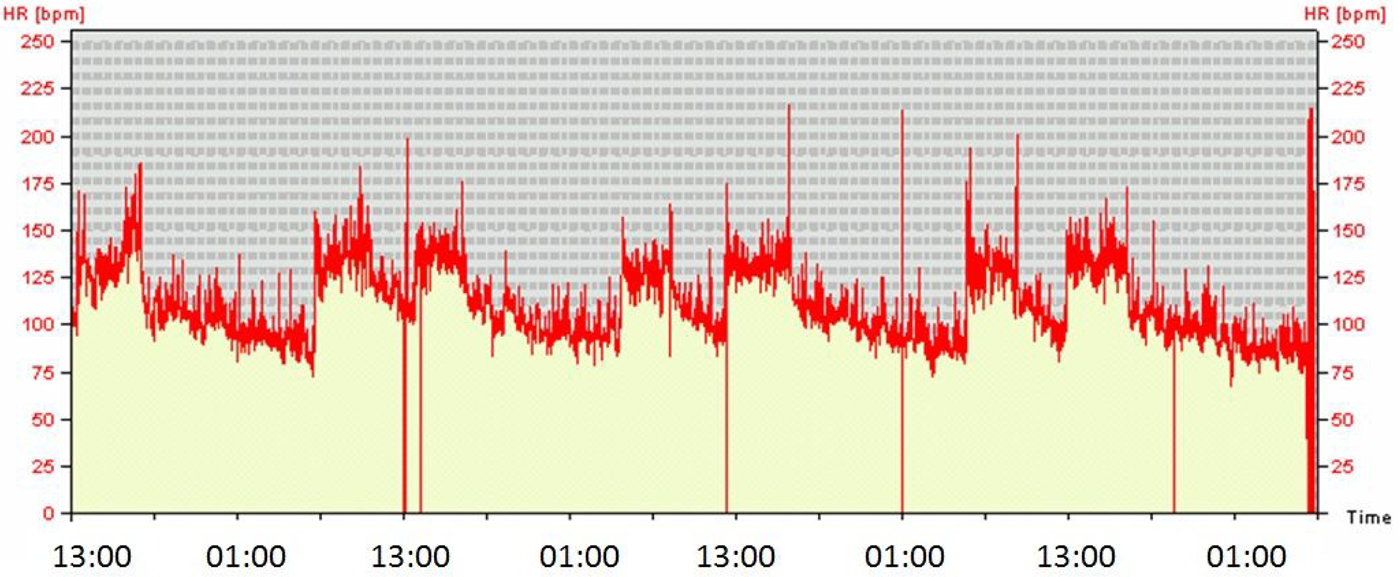
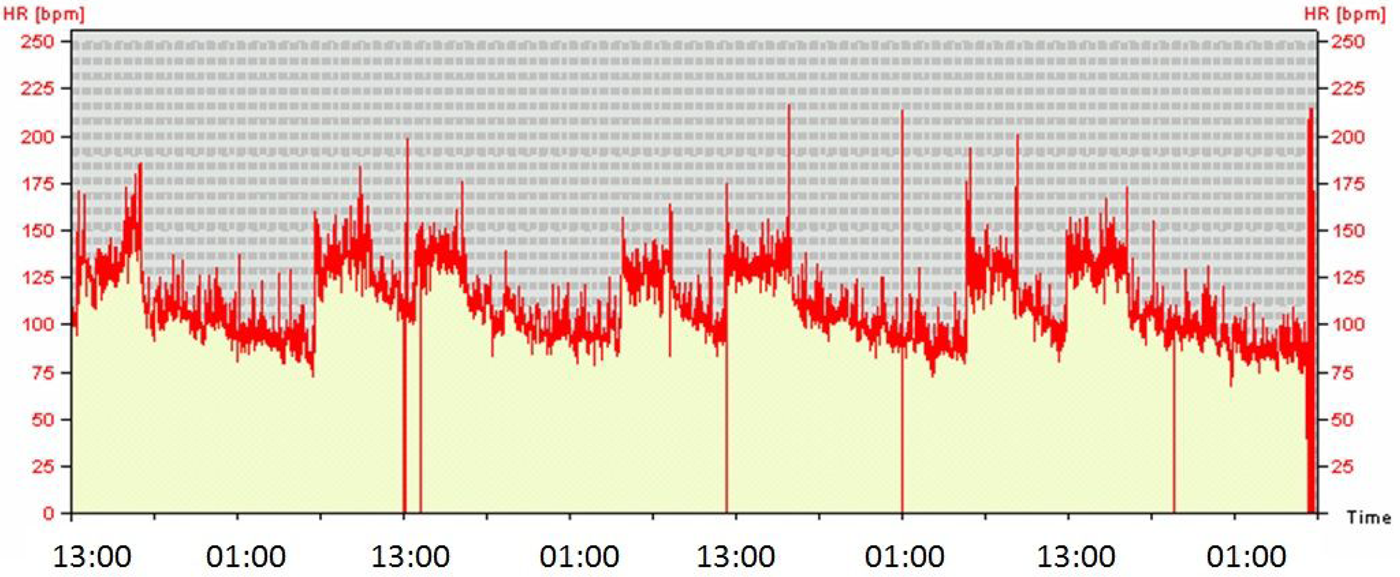
The HR was measured on the same eight animals over 4 days while free ranging and FMR of each animal was determined from its integrated HR and its individual O2P (Fig. 2). Energy expenditure was determined by assuming an energy equivalent of 20.47 kJ/l O2 consumption in both the penned and free grazing animals (Nicol and Young, Reference Nicol and Young1990).
Colour online. Heart rate (HR) measurements of a free-grazing Awassi sheep over four consecutive days. Data were recorded every 60 s starting at 13:00 h.
Statistical methods
An ANOVA was used to test for differences between animal species in RMR, FMR and different activities (Statistica 7.0, StatSoft Ltd., Milton Keynes, UK). Effect size, which is the magnitude of differences between the groups and indicates the reliability of the statistics, was computed for each variable. An effect size (d) of 0.2 was considered small, 0.5 as medium and 0.8 as large (Cohen, Reference Cohen1988; Murphy and Myors, Reference Murphy and Myors1998). Walker (Reference Walker2008) stated ‘that a small effect size is one in which there is a real effect’. Values are presented as means ± s.d. and P < 0.05 was chosen as the level required for significance.
Results
The Cohen d-value was large (>0.8) for most comparisons and, therefore, P-values were reliable. There were 67.7 ± 3.75 g DM/m2 of herbaceous vegetation biomass which was drying rapidly and becoming more fibrous. Approximately 71% (Table 1) of the 11 h at pasture was spent on foraging by both sheep and goats, with no difference between species. However, sheep grazed more than goats P < 0.001; whereas goats browsed more than sheep (P < 0.001). High effect sizes supported both analyses (Table 1).
Behaviour of Awassi sheep (n = 6) and Baladi goats (n = 6) on natural pasture in the Negev Desert

ns, not significant.
The proportion (±SD) of the time spent on the activities in 11 h of free-ranging per day are presented.
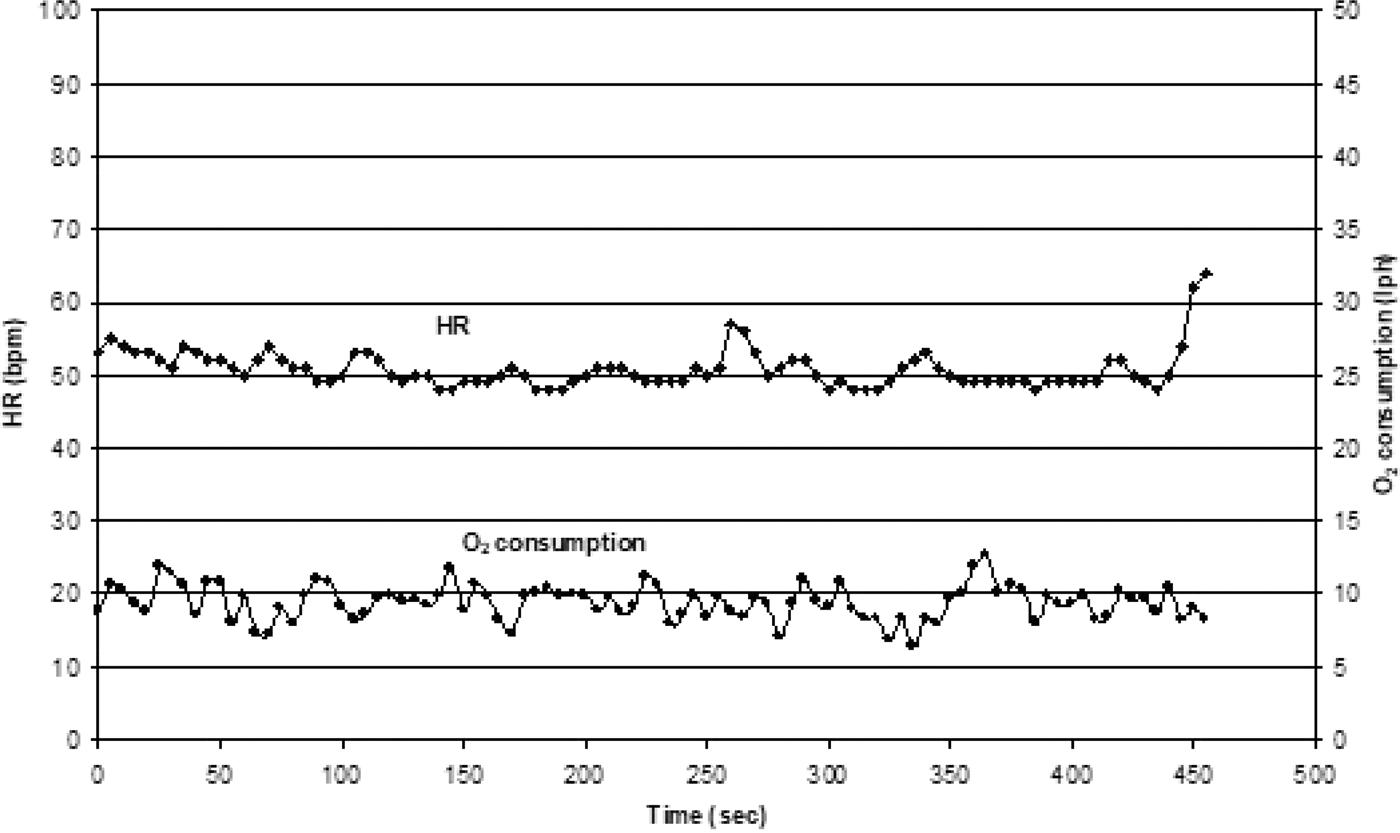
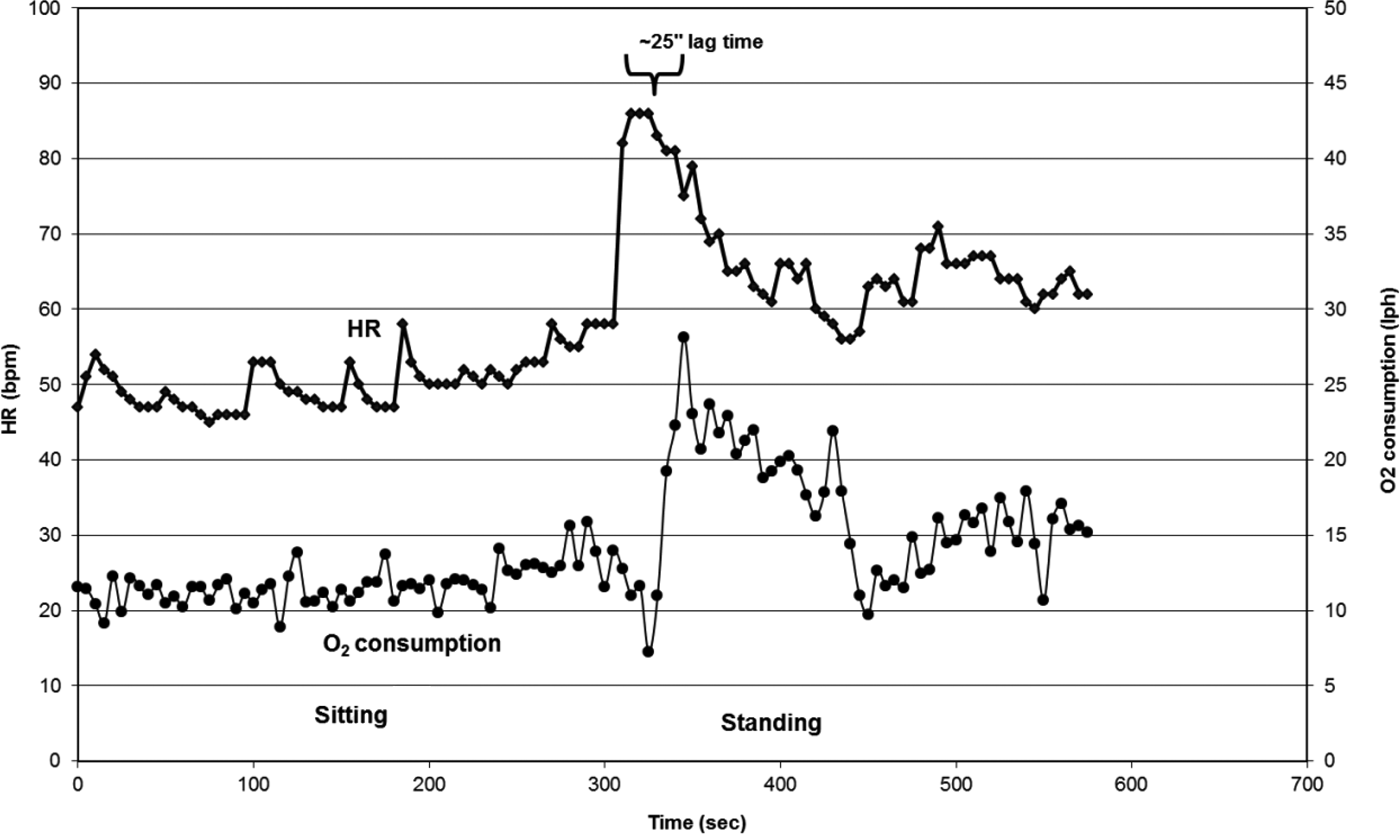
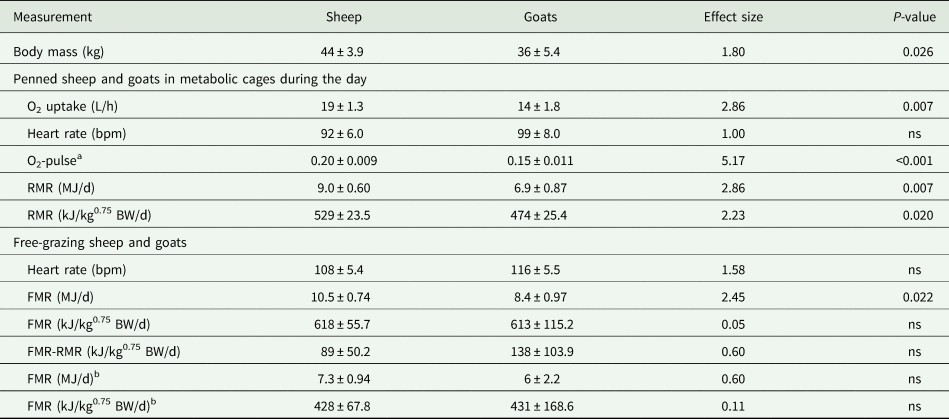
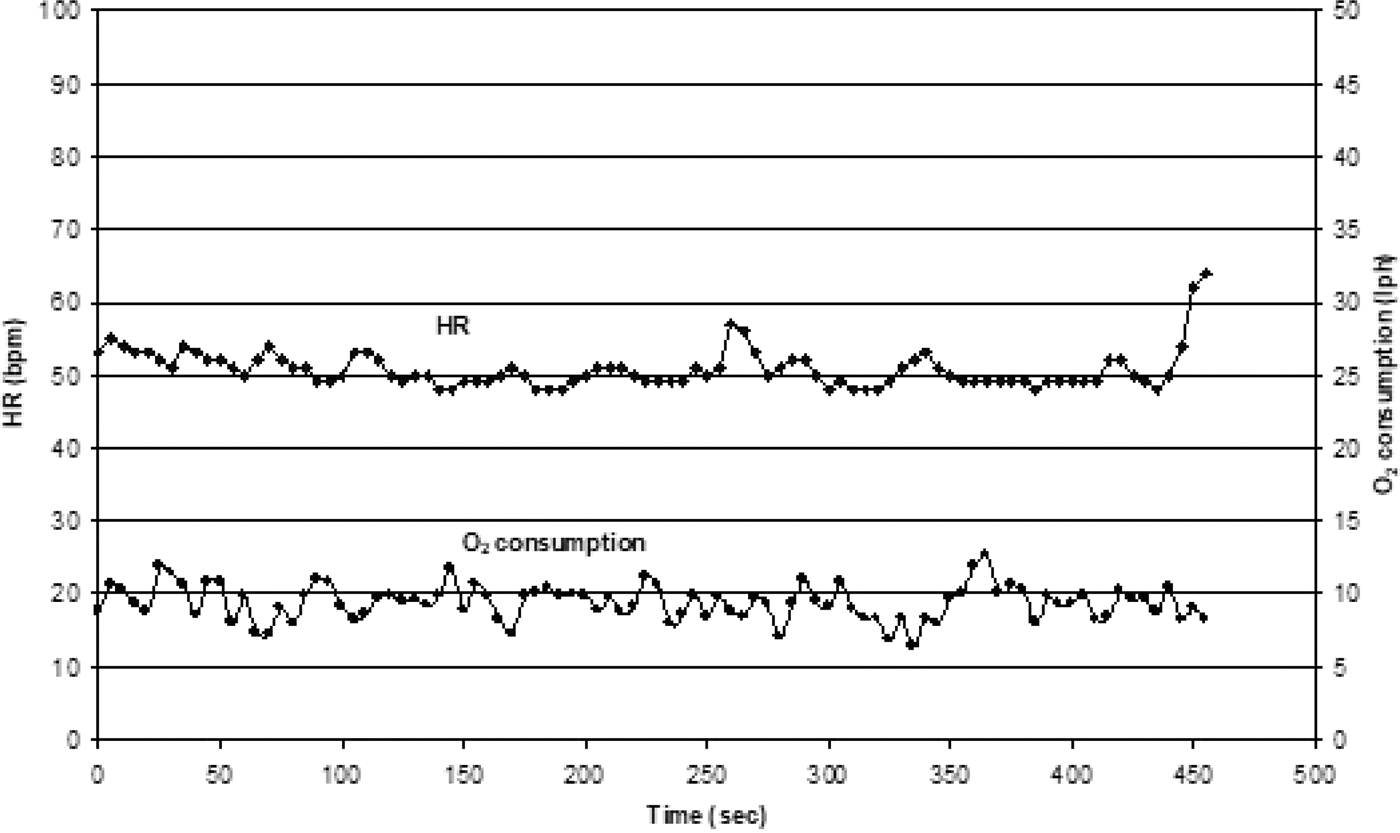
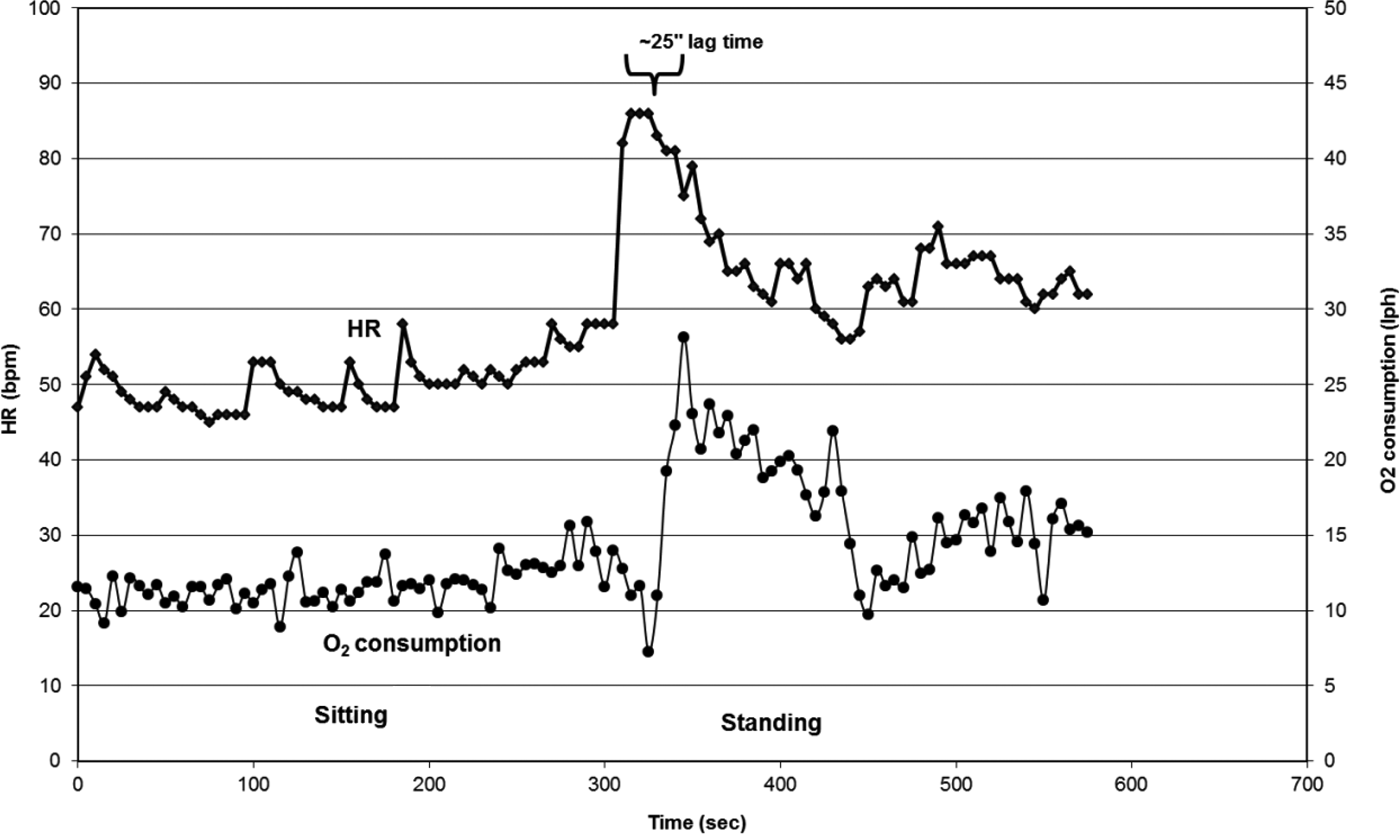
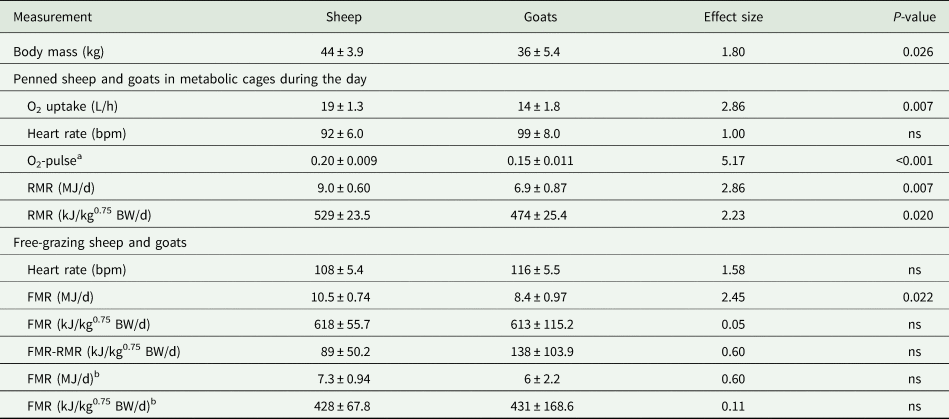
Mean body mass of the four sheep was 44.0 ± 3.94 kg and of the four goats was 35.5 ± 5.42 kg. The animals remained seemingly non-stressed throughout the measurements; this was indicated by the steady values of HR and O2 consumption (Fig. 3). Even small changes in posture, such as between sitting and standing, were detected by the measuring system. For example, in Fig. 4, the sheep was sitting for approximately 300 s and then stood up and remained standing. There was an increase in HR and O2 uptake when the sheep stood up, which then decreased as the sheep remained standing, but was still higher than the initial sitting. However, the O2P remained relatively constant throughout the changes. The O2 uptake measurement lagged about 25 s behind the HR measurement. In metabolic cages, O2 consumption (litre O2/min) was 30.8% higher in sheep than in goats (P = 0.007); whereas HR (bpm) was 7.8% lower, but not significantly so, in sheep than in goats. From these measurements, RMR (kJ/kg0.75/d) was 11.6% (P < 0.001) and O2P was 33.3% (P = 0.007) higher in sheep than in goats. FMR did not differ between species. When compared to RMR, FMR increased by 89 ± 50.2 kJ/kg0.75 BW/d or 17% in sheep and by 138 ± 103.9 kJ/kg0.75 BW/d or 29% in goats. Variation was high, in particular in goats, and the difference between goats and sheep was not significant (Table 2). During the non-active (rho) phase, that is, during the 13 h of non-grazing, the minimal metabolic rate was lower than the RMR, by 19% in sheep and 9% in goats (Table 2).
Simultaneous measurements of heart rate (HR) and oxygen consumption in a sitting Baladi goat. The near steady measurements indicate resting state with minimal stress.
Simultaneous measurements of heart rate (HR) and oxygen consumption in an Awassi sheep. Both graphs are similar in shape but O2 lagged by approximately 25 sec due to the system response time. The sheep sat for approximately 300 seconds and then stood up and remained standing.
Body mass, oxygen (O2) uptake, heart rate, O2-pulse and resting metabolic rate (RMR) of Awassi sheep (n = 4) and Baladi goats (n = 4) when penned in metabolic cages during the day, and heart rate and field metabolic rates (FMR) when free-grazing
ns, not significant.
a O2-pulse = O2 uptake (litre/h)/heart rate (bpm).
b Minimal FMR during 13 h of non-grazing.
Values are means ± s.d.
Discussion
The heart rate method to determine energy expenditure
Different versions of the heart rate method have been used to determine energy expenditure in a number of free-living ruminants, including sheep and goats (Barkai et al., Reference Barkai, Landau, Brosh, Baram and Molle2002; Animut et al., Reference Animut, Goetsch, Aiken, Puchala, Detweiler, Krehbiel, Merkel, Sahlu, Dawson, Johnson and Gipson2005). The pros and cons of the HR method have been discussed in detail and have been compared with other methods in a number of reviews (Butler et al., Reference Butler, Green, Boyd and Speakman2004; Brosh, Reference Brosh2007; Lachica and Aguilera, Reference Lachica and Aguilera2008). The HR method assumes that the ratio between O2 and HR (O2-pulse) remains constant; however, with stress, HR can increase at a proportionately faster rate than O2 and, consequently, energy expenditure would be underestimated (Brosh, Reference Brosh2007). In addition, the ratio between O2 and HR can differ among individuals within a species (Yamamoto et al., Reference Yamamoto, McLean and Downie1979; Renecker and Hudson, Reference Renecker and Hudson1985) and, therefore, a calibration should be done for each individual separately (Butler et al., Reference Butler, Green, Boyd and Speakman2004). This is often not done, but a more robust group mean is used (Richards and Lawrence, Reference Richards and Lawrence1984; Miwa et al., Reference Miwa, Oishi, Anzai, Kumagai, Ieiri and Hirooka2017). The main advantage of the HR method is that it allows long-term measurements on free-ranging animals with a minimal amount of disturbance.
Caution has to be taken when comparing energy expenditure values in the literature, as there can be large differences among studies due to the method employed. This was well illustrated in a report of energy expenditure by Miwa et al. (Reference Miwa, Oishi, Anzai, Kumagai, Ieiri and Hirooka2017) in Japanese Brown cows, Japanese Saanan goat wethers and Corriedale sheep wethers under both housed and grazing conditions. Energy expenditures in this study (Miwa et al., Reference Miwa, Oishi, Anzai, Kumagai, Ieiri and Hirooka2017) using the HR method were 28–126% higher than the dynamic body acceleration method. The HR method was not based on the relationship between HR and energy expenditure of the individuals or even breeds being measured, but ‘on a meta-analysis using compiled heart rate and EE data from a variety of ruminants under laboratory conditions’ (Miwa et al., Reference Miwa, Oishi, Anzai, Kumagai, Ieiri and Hirooka2017). In the present study, O2P was determined for each animal individually to minimize errors due to individual animal differences. To improve the accuracy of the measurements, O2P was determined close to the time of the FMR measurements (Brosh, Reference Brosh2007) and, in addition, the animals in the RMR and FMR measurements had access to the same pasture and, presumably, consumed the same diet.
Energy expenditure of sheep and goats
Comparisons between sheep and goats have been made extensively, with most studies on behaviour, dietary selection, dietary intake and digestion (Ngwa et al., Reference Ngwa, Pone and Mafeni2000; Omphile et al., Reference Omphile, Aganga, Tshireletso and Nkele2004; Dove and Mayes, Reference Dove and Maye2005; Sanon et al., Reference Sanon, Kaboré-Zoungrana and Ledin2007; Kam et al., Reference Kam, El-Meccawi and Degen2012; Gonzales-Pech et al., Reference González-Pech, Torres-Acosta, Sandoval-Castro and Tun-Garrido2015; Askar et al., Reference Askar, Nassar, Badawy, Eid, Guada and Farid2016). We are aware of only a few studies in which FMR was compared in co-grazing sheep and goats, and, apparently, all originated from the same research team in Langston, Oklahoma. Animut et al. (Reference Animut, Goetsch, Aiken, Puchala, Detweiler, Krehbiel, Merkel, Sahlu, Dawson, Johnson and Gipson2005) used the HR method to compare FMR in Katahdin sheep and crossbred Boer goat wethers grazing a grass/forb pasture at three stocking rates over 2 years. There was no difference between species in the first year (550 and 562 kJ/kg0.75 BW/d for sheep and goats, respectively), and sheep had a higher FMR than goats in the second year, 578 v. 539 kJ/kg0.75 BW/d. In a similar study using the same breeds of sheep and goats, in which mimosa was alley-cropped in the grass/forb pasture, sheep had a higher FMR than goats, 608 v. 529 kJ/kg0.75 BW/d (Animut et al., Reference Animut, Goetsch, Aiken, Puchala, Detweiler, Krehbiel, Merkel, Sahlu and Dawson2007). Beker et al. (Reference Beker, Gipson, Puchala, Askar, Tesfai, Detweiler, Asmare and Goetsch2010) also used HR to estimate energy expenditure in Angora, Boer and Spanish goats and Rambouillet wether sheep, co-grazing pastures with varying number of mimosa (Albizia julibrisin) trees. The mean FMRs of the Angora, Boer and Spanish goats were 589, 688 and 624 kJ/kg0.75 BW/d for an average of 633 kJ/kg0.75 BW/d for the goat breeds, which was higher than the 497 kJ/kg0.75 BW/d for the sheep breed. The CO2-entry rate method was used to determine FMRs in Angora goats, Spanish goats and Suffolk × Rambouillet sheep wethers co-grazing an improved or a natural native grass-based pasture (Herselman et al., Reference Herselman, Hart, Sahlu, Coleman and Goetsch1999). The FMR of the sheep breed was higher than the goat breeds on both pastures, 631 v. 456 and 552 kJ/kg0.75 BW/d on the improved pasture and 682 v. 527 and 577 kJ/kg0.75 BW/d on the natural pasture. Overall, in these studies, there was no consistent trend in FMR when comparing sheep and goats, with sheep being higher, lower or not different than goats. The energy expenditure of the grazing Awassi sheep (618 kJ/kg0.75 BW/d) and Negev goats (613 kJ/kg0.75 BW/d) in the present study were in the range of the above mentioned FMRs and fell within the ‘no difference between species group’. The FMR of the Awassi sheep in this study was similar to the FMR of Awassi sheep grazing natural pasture in the Negev in an earlier study, where the average was 640 kJ/kg0.75 BW/d (Benjamin et al., Reference Benjamin, Chen, Degen, Abdul Aziz and Al Hadad1977).
In a review by Shinde and Karim (Reference Shinde and Karim2007), eight different FMR measurements in sheep were summarized from six publications, which included three sheep breeds (Romney, Malpura and five on Merinos; mean body mass = 40.1, range 25–45 kg). Methods of energy expenditure estimation in these studies included the CO2-entry rate method, time energy budget method and energy required to maintain energy balance. Mean FMR for all the studies was 481 kJ/kg0.75 BW/d (range 362–612 kJ/kg0.75 BW/d) and, therefore, the FMR of the sheep in the present study was 28% (range 1–71%) higher than the mean of the eight measurements. All eight measurements in the review were lower than the FMR in the grazing Awassi sheep. However, in two studies in arid areas of Australia in which doubly-labelled water was employed, FMRs of South Australian Merino ewes co-grazing natural pasture with kangaroos were substantially higher than in the Awassi in the present study. The Merino ewes grazing an autumn pasture of 44 g DM/m2 had an FMR of 884 kJ/kg0.75 BW/d (Munn et al., Reference Munn, Dawson, McLeod, Croft, Thompson and Dickman2008) and different Merino ewes grazing a summer pasture of 33 g DM/m2 had an FMR of 1125 kJ/kg0.75 BW/d (Munn et al., Reference Munn, Kalkman, Skeers, Roberts, Bailey and Dawson2016). Therefore, these Merinos, which were expected to have relatively low energy expenditures because of the hot, dry area they inhabit, had higher FMRs than the grazing Awassi sheep by 41% and 79%.
For goats, Lachica et al. (Reference Lachica, Barroso and Prieto1997; Reference Lachica, Somlo, Barroso, Boza and Prieto1999) estimated energy expenditure in grazing Grandina goats in two studies by summing the energy costs of different activities. Non-grazing goats expended 414 kJ/kg0.75 BW/d and grazing goats expended 489 kJ/kg0.75 BW/d, which were 14% and 25%, respectively, less than the goats in this study. Herselman et al. (Reference Herselman, Sahlu, Hart and Goetsch1998) used the CO2 entry rate technique to measure FMR in Alpine goats. The FMR in dry does averaged 693 kJ/kg0.75 BW/d (range of 607–745 using three equations), which was 13% greater than the Baladi goats in the present study. We had hypothesized that the FMR would be relatively low for the sheep and goats in the present study, as it has been reported that animals inhabiting arid areas, in particular goats, have lower metabolic rates than animals inhabiting non-arid areas (Silanikove, Reference Silanikove1994). However, comparisons with other breeds were inconsistent because a multitude of factors, such as genotype, air temperature, feed availability and landscape, affect FMR and, consequently, our hypothesis was not supported.
The mean energy expenditure of the sheep in the eight studies above (Shinde and Karim, Reference Shinde and Karim2007) when not grazing was 331 kJ/kg0.75 BW/d and, therefore, the increase in energy expenditure when grazing was 150 kJ/kg0.75 BW/d or 45%. This increase in energy expenditure was the cost of activities, mainly for foraging. The sheep and goats in the present study allocated 17% and 29% of the total energy expenditure, whereas the sheep in the review allocated 31% (range 17–39%). Both the RMR and FMR in the present study were higher than the expenditures in the review, especially for the FMR measurements. However, the cost of activities estimated in this manner has to be viewed with caution, because of the different methods used in estimating RMR and FMR.
Based on other studies, there is evidence that the FMRs in the present study were close to the minimal levels in each species. Yaks grazing lush, high-quality summer pasture had a higher FMR than yaks grazing a sparse, low-quality winter pastures (Ding et al., Reference Ding, Wang, Brosh, Chen, Gibb, Shang, Guo, Mi, Zhou, Wang, Qiu and Long2014), and heifers consuming a high energy diet had a higher FMR than heifers on a low energy diet (Brosh et al., Reference Brosh, Aharoni, Degen, Wright and Young1998). The sheep and goats were consuming low-quality pasture, which would indicate a low FMR for the animals. However, there is also evidence that the FMRs of the sheep and goats in the present study were close to their maximal levels. In studies in arid Australian areas (Munn et al., Reference Munn, Dawson, McLeod, Croft, Thompson and Dickman2008, Reference Munn, Kalkman, Skeers, Roberts, Bailey and Dawson2016), ewes in summer had a higher FMR than in autumn; pasture availability was lower and air temperature was higher in summer than in autumn. In the study by Herselman et al. (Reference Herselman, Hart, Sahlu, Coleman and Goetsch1999), the sheep and goats consuming natural pasture had higher FMRs than consuming improved pasture. Furthermore, according to NRC (1981), at least in goats, energy expenditure is expected to increase above maintenance by 25% for light activities, by 50% in semi-arid rangelands and by 75% for long-distance travel on sparsely vegetated grasslands. The sheep and goats in the present study appeared to fit into the first category.
Conclusions
The RMR was higher in sheep than in goats with no difference in FMR between species. Energy expenditure for activities, as a proportion of FMR, did not differ between species. In comparing the FMRs of the sheep and goats in this study with sheep and goat species of other studies, differences were inconsistent and, therefore, our hypothesis was not supported.
Acknowledgements
We thank three anonymous reviewers for helpful suggestions, Abdullah Abou-Rachbah for technical help, Mussa Abu-Kaf for the use of his flock and his hospitality and Ali el-Assem for information on sheep and goat husbandry.
Financial support
None.
Conflict of interest
We declare no conflicts of interests.
Ethical standards
All procedures on the animals were approved by the ethics’ committee of the Ben-Gurion University of the Negev.