Kawasaki disease is an acute form of systemic vasculitis that most commonly causes paediatric acquired heart disease in developed countries. Reference Newburger, Takahashi and Burns1 Several studies describe the clinical characteristics and coronary events associated with coronary artery abnormalities in Kawasaki disease. Reference Fukazawa, Kobayashi and Mikami2–Reference Miura, Kobayashi and Kaneko4 However, few reports compare the formation and shape of coronary artery abnormalities with and without steroid use. This study mainly sought to evaluate the characteristics and describe the clinical course and formation of coronary artery abnormalities in a single centre. We also evaluated the impact of steroids on the form and shape of coronary artery abnormalities.
Methods
Patients
We conducted a retrospective analysis and evaluated patients with Kawasaki disease who underwent coronary angiography and echocardiography between July 2003 and March 2018 at our centre. Twenty-nine patients were included. We reviewed medical records and obtained data on age, sex, duration of illness, duration of fever, treatment, and outcome. We divided the patients into the steroid and non-steroid groups. The use of steroids was not randomised in our study. Patients with severe Kawasaki disease were transferred from other hospital to our institute for further treatment. Our hospital does not use steroids in the acute treatment of Kawasaki disease as the institution’s management. The steroid group included patients who were used steroid in other hospital. For example, it included Kawasaki disease patients who were added steroids which it based on a Risk Score by pre-assessment and added steroids due to intravenous immunoglobulin resistance. We compared the number, placement, and length of coronary artery abnormalities as obtained by coronary angiography between the two groups. The study was approved by the Aichi Children’s Health and Medical Center Review Board (Approval No. 2,019,028).
Evaluation of coronary artery abnormalities
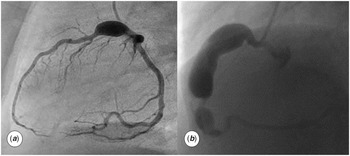
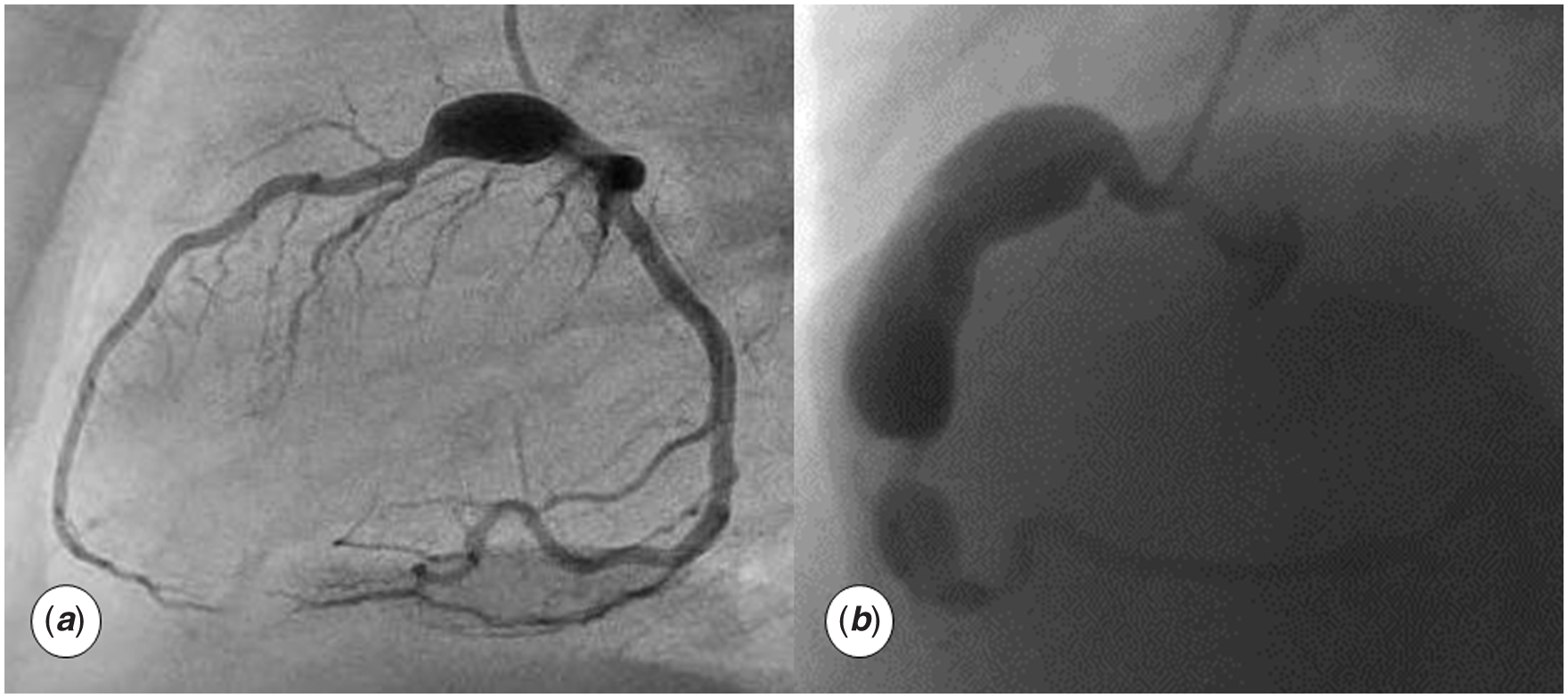
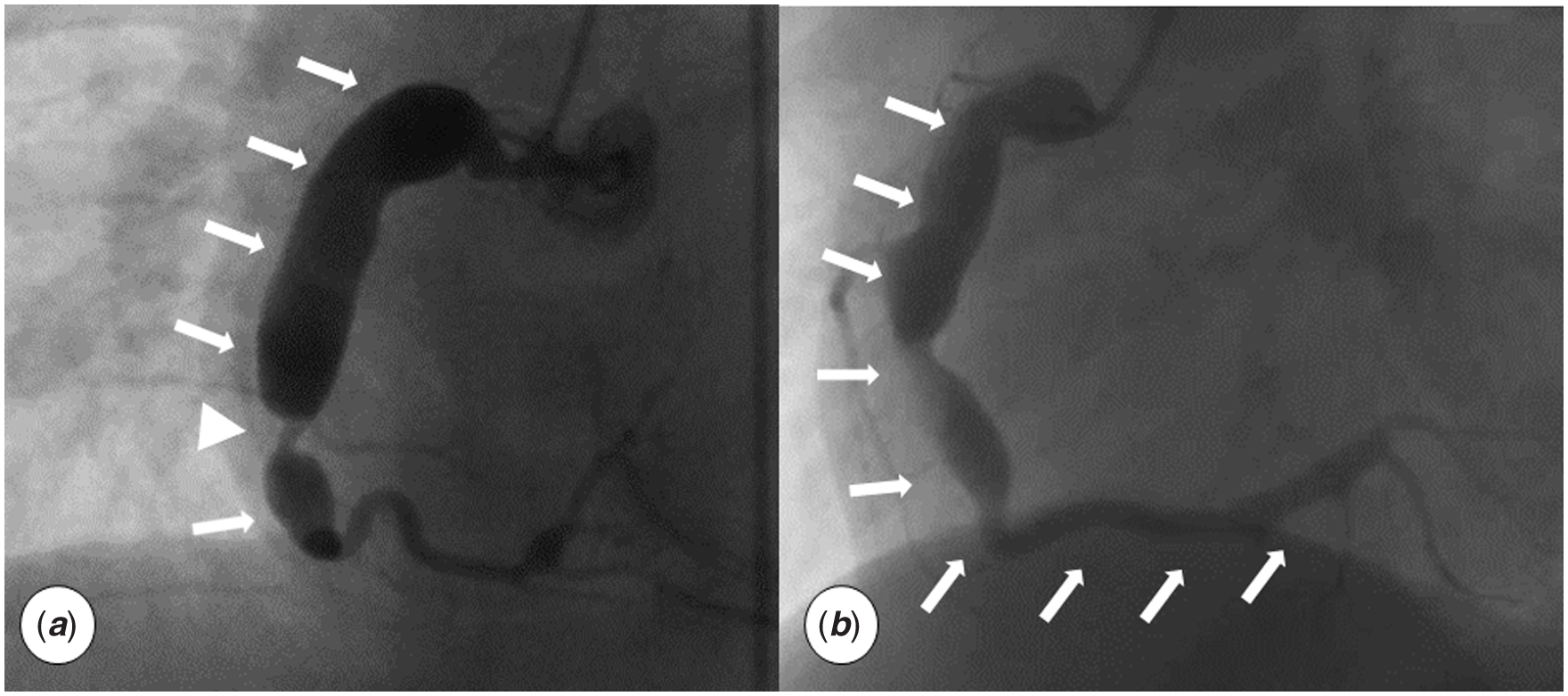
We evaluated the position, number, size, and length of coronary artery abnormalities. Coronary artery abnormality position was classified by left coronary artery only, right coronary artery only, or bilateral coronary arteries. The number of coronary artery abnormalities was defined by aneurysm-like formations on cardiac catheterisation. The coronary artery abnormality size was evaluated using the maximum diameter (mm) of the coronary artery as measured by echocardiography and z-score (Lambda–Mu–Sigma method). Reference Kobayashi, Fuse and Sakamoto5 The z-score of the coronary arteries 2 years after the onset of Kawasaki disease was also evaluated. The coronary artery z-score was defined as follows: 1) no involvement: always < 2; 2) dilation only: 2 to < 2.5, or if initially > 2, a decrease in z-score ≥ 1 during follow-up; 3) small aneurysm: ≥ 2.5 to < 5; 4) medium aneurysm: ≥ 5 to < 10 and absolute dimension < 8 mm; and 5) large or giant aneurysm: ≥10 or absolute dimension ≥ 8 mm. Reference McCrindle, Rowley and Newburger6 The coronary artery abnormality length was evaluated by cardiac catheterisation with the American Heart Association classification with one segment only, two segments only, or three segments or more. In multiple coronary aneurysms, the largest and longest coronary artery abnormality was used for analysis. Based on imaging findings, coronary event outcomes were defined as stenosis (≥ 50% of coronary artery diameter) or obstruction. We also evaluated a 2-year event-free survival according to these definitions. All the evaluations were performed by two doctors who majored in paediatric cardiology. We show how to evaluate coronary artery abnormalities in Figure 1.
Definition of coronary artery abnormalities (CAAs) based on position, number, size, and number of segments. ( a ) Position: left coronary artery only; number: one; size: 7 mm in diameter and z-score 8.9; and number of segments: one segment. ( b ) Position: right coronary artery; number: two; size: maximum 8 mm in diameter and z-score 10; and number of segments: two segments.
Statistical analysis
Categorical variables are expressed as number (percentage) and were compared using Fisher’s exact test. Continuous variables were analysed using the Mann–Whitney U-test to compare non-normally distributed variables between the two groups. To evaluate the effects of treatments on the outcomes, the probability of a 2-year event-free ratio was estimated using the Kaplan–Meier method. The event-free ratio was calculated from the date of diagnosis to the first event, such as a coronary event, or to the last follow-up. All statistical analyses were performed using the EZR statistical software package (version 1.3.6; Saitama Medical Center, Jichi Medical University, Saitama, Japan). A p-value ≤ 0.05 was considered statistically significant.
Results
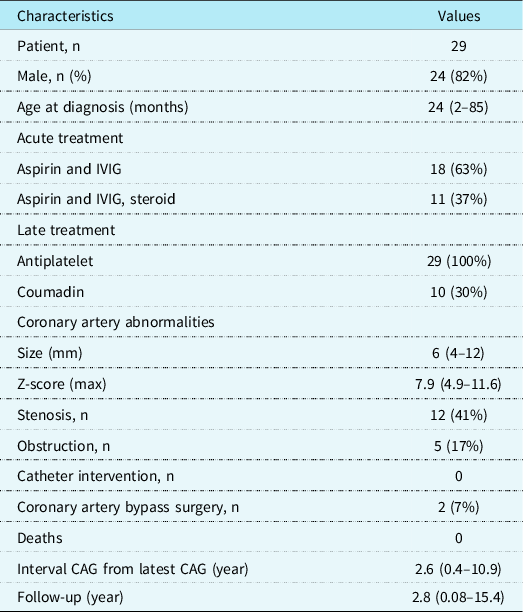
The characteristics of the patient population are shown in Table 1. Twenty-nine patients were diagnosed with coronary artery abnormalities at our institution (24 male; median age, 24 months [range: 2–84 months]). Eighteen patients were treated with aspirin and intravenous immunoglobulin (63%, non-steroid group), whereas 11 were treated with aspirin and intravenous immunoglobulin plus steroids (37%, steroid group). The median duration of illness at initial steroid administration was 8.5 days (range: 4–12).
Characteristics of the patient population who underwent catheter examination at our hospital
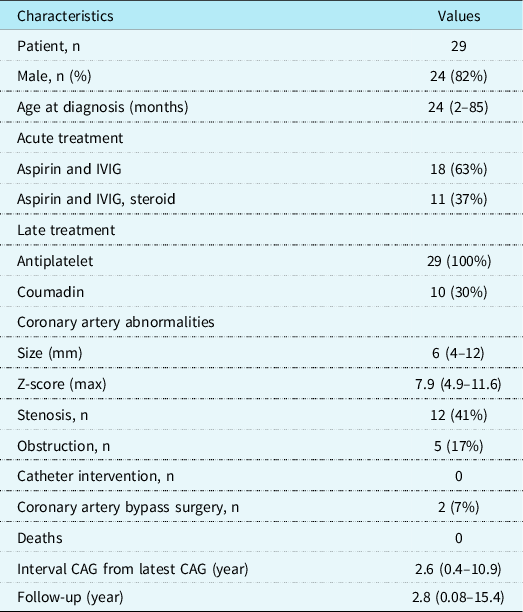
CAA = coronary artery abnormalities; CAG = coronary angiography; IVIG = intravenous immunoglobulin.
Values are expressed as median (range) or number (percentage).
Z-scores were calculated by Lambda-Mu-Sigma.
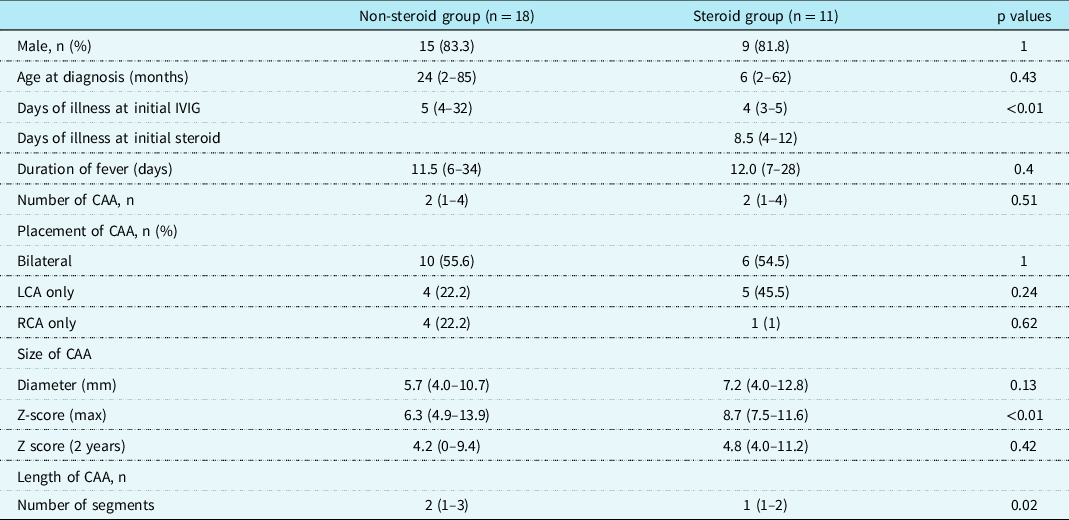
The baseline patient characteristics did not differ significantly in sex, age at diagnosis, and duration of fever between the two groups. However, the duration of illness at initial intravenous immunoglobulin was longer in the non-steroid group than in the steroid group (non-steroid versus steroid, 5 days versus 4 days; p < 0.01) (Table 2).
Comparison of patients’ characteristics between the steroid and nonsteroid groups
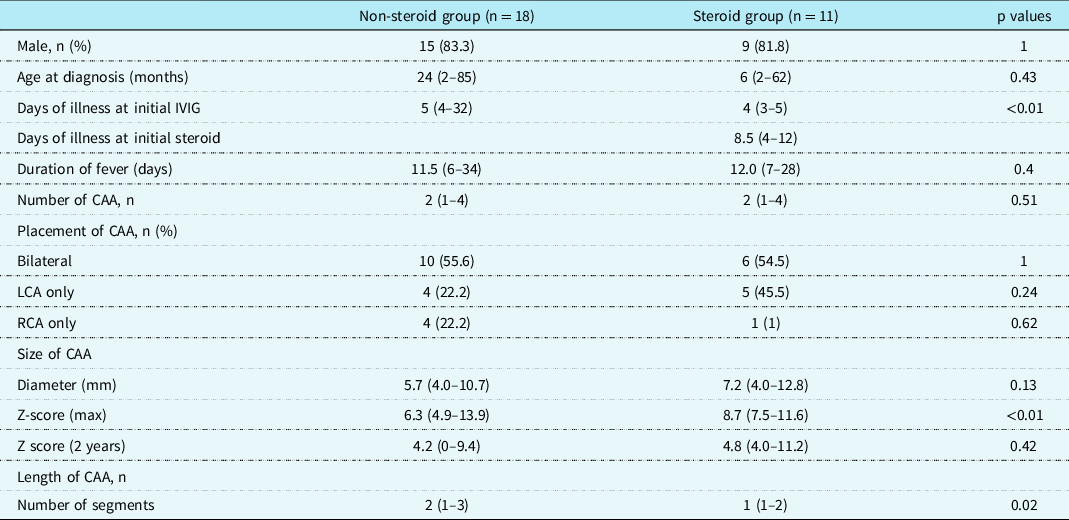
CAA = coronary artery abnormalities; CAG = coronary angiography; IVIG = intravenous immunoglobulin; LCA = left coronary artery; RCA = right coronary artery.
Values are expressed as median (range) or number (percentage).
Z-scores were calculated by Lambda-Mu-Sigma.
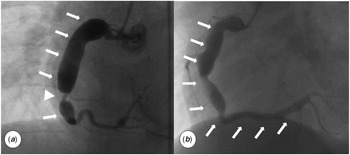
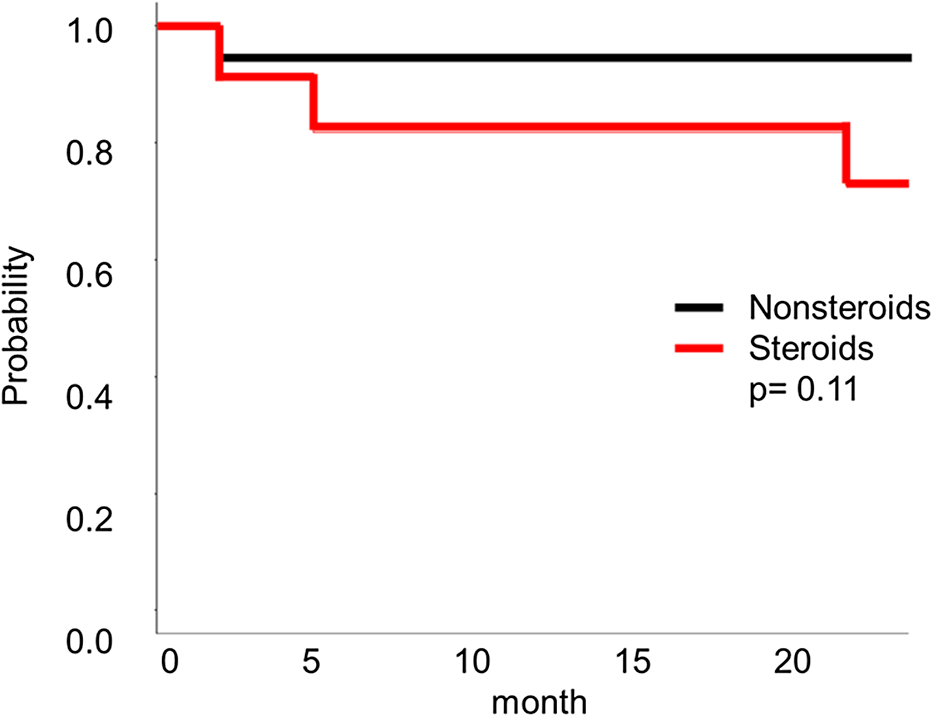
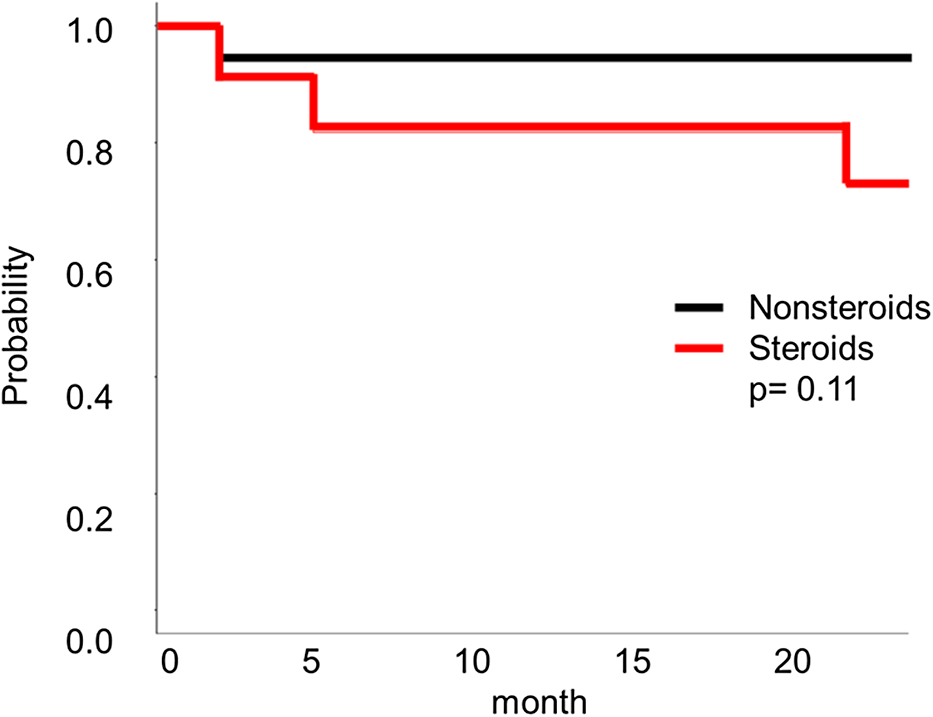
When we compared the coronary artery abnormalities between the non-steroid and steroid groups, no significant differences were found in the position, number, and size. However, significant differences were found in the maximum z-score (max) for coronary artery abnormalities (non-steroid group versus steroid group, 6.3 versus 8.7; p < 0.01) and number of segments for coronary artery abnormalities (non-steroid group versus steroid group, two segments versus one segment; p = 0.02) (Table 2). No significant differences were found in the z-score (2 years) for coronary artery abnormalities (non-steroid group versus steroid group, 4.2 versus 4.8; p = 0.42). We show representative coronary artery abnormalities (coronary artery abnormalities) between the two groups (Fig 2). Furthermore, no significant difference was observed in the 2-year event-free ratio for coronary stenosis and obstruction (non-steroid versus steroid, 94% versus 81.8%; p = 0.11) (Fig 3).
White arrows show representative coronary artery abnormalities (CAAs). The white triangle shows the normal diameter of coronary arteries. ( a ) CAA treated with steroids. CAA in the right coronary artery was restrictive, and the remainder of coronary arteries looks normal. ( b ) CAA not treated with steroids. The segment is longer compared with that under steroid treatment.
The 2-year event-free ratio was 94% in the non-steroids group versus 81.8% in the steroids group (p = 0.11). Coronary stenosis and obstruction might occur quicker in the steroids group compared to the non-steroids group.
Discussion
This is the first paper describing the characteristics of coronary artery abnormalities specifically due to Kawasaki disease, with steroids as the intervention. We found that the z-scores for the size and number of segments for coronary artery abnormalities were larger and fewer, respectively, in the steroid group. The effect of acute steroid use in Kawasaki disease is controversial. Previous study has shown no improvement in outcomes with the addition of methylprednisolone to intravenous immunoglobulin treatment with Kawasaki disease. Reference Newburger, Sleeper and McCrindle7 On the other hand, several studies showed that steroids were beneficial for patients with acute Kawasaki disease in preventing the development of coronary artery abnormalities. Reference Kobayashi, Saji and Otani8–Reference Okada, Hara and Maki11 However, in those settings, the z-scores for coronary artery abnormalities in most patients were limited to those for dilatations to small aneurysms and were not included those for medium to giant aneurysms. In our study, on the other hand, almost all z-scores for coronary artery abnormalities were those for medium giant aneurysms, since the z-scores obtained were from cases where catheterisation was performed. Therefore, this study was able to investigate coronary artery abnormalities that require intervention and need careful follow-up.
Previous studies have shown that the use of steroids is a risk factor for coronary artery abnormalities. Reference Chen, Dong and Kiuchi12–Reference Sudo, Monobe and Yashiro17 More recently, in patients with acute Kawasaki disease under steroids, the effectiveness of steroids as rescue therapy or for intravenous immunoglobulin resistance has remained unknown. The use of steroids in patients with acute Kawasaki disease who were resistant to initial intravenous immunoglobulin treatment or had a longer duration of illness might have resulted in a higher coronary artery abnormality z-score. Reference Okada, Hara and Maki11,Reference Kibata, Suzuki and Hasegawa18 In our study, the median duration of illness at steroid administration was 8.5 days. The morphological characteristics of coronary artery abnormalities in this study may reflect the use of steroids in patients with long-term Kawasaki disease or long-term intravenous immunoglobulin resistance, rather than the current method of adding steroids to the initial intravenous immunoglobulin treatment. A previous study showed that, in abdominal aortic aneurysms, steroids use probably contributed to the disintegration of aortic wall involvement and vasculitic damage in patients with autoimmune disorders such as progressive systemic sclerosis, rheumatoid arthritis, and systemic lupus erythematosus, thereby resulting in aortic aneurysmal enlargement. Reference Ohara, Miyata and Sato19 The other study showed that steroid use is an important risk factor for abdominal aortic aneurysms expansion. Reference Tajima, Goto and Ohara20 In the case report, it was suspected that steroids played a role in brachial artery aneurysm development as a result of tissue weakening and immunosuppression having a synergistic effect. Reference Hamdulay, Laws and Ruiz21 We think that steroid administration for patients with a longer duration of fever for Kawasaki disease or coronary artery abnormalities also might be associated with aggravated coronary artery abnormalities.
We hypothesise that steroids suppress dilatation and small aneurysms in the early stage of acute Kawasaki disease but cannot suppress medium aneurysms, which may exhibit changes in the intima of the coronary arteries, thus inhibiting natural healing mechanisms. Furthermore, steroids possibly cannot suppress strong inflammation in long-term Kawasaki disease with intravenous immunoglobulin resistance. Steroids suppress some inflammation in coronary arteries, such as dilatation and small aneurysms. However, impaired vascular remodelling, such as in large and giant coronary artery abnormalities, might be caused by steroid use. In our study, no significant differences were found in the z-score (2 years) for coronary artery abnormalities between non-steroid and steroid group. No significant difference was observed in the 2-year event-free ratio for coronary stenosis and obstruction. Previous study showed that patients who received steroids had the rate of coronary artery abnormality regression were similar between non-steroid and steroid group. Reference Dionne, Burns, Dahdah, Tremoulet, Gauvreau and deFerranti22 The same results were obtained in our study.
Our study has several limitations. First, the study was limited by the very small number of cases and the retrospective design. Second, our study is not randomised trial and patient selection bias exists because only patients with Kawasaki disease who underwent catheterisation were included. Third, consistency was not observed in the methods of steroid administration methods. Fourth, the severity of Kawasaki disease in the steroid and non-steroid groups might not be equal because data such as symptoms of Kawasaki disease and laboratory findings were not obtained.
Conclusions
In conclusion, steroids might be associated with coronary artery abnormalities with a larger size and fewer segments in patients with Kawasaki disease. Steroids partly suppress the inflammatory process in the coronary arteries but might not suppress strong inflammation in medium and larger aneurysms. Further studies involving larger datasets are needed to demonstrate the long-term consequences in coronary imaging findings.
Acknowledgements
We thank all doctors from the Department of Cardiology and Infectious Immunology in Aichi Children’s Health and Medical Center for their clinical observation, dedicated care, and treatment of the patients and their family members.
Financial support
This research received no specific grant from any funding agency, commercial or not-for-profit sectors.
Conflicts of interest
None.