








1. Introduction
Let X be an irreducible non-degenerate projective variety and let
 $L\rightarrow X$
be a globally generated line bundle of degree d. We denote by
 $\psi_L: X \rightarrow \mathbb{P}:=\mathbb{P}(H^0(L)^*)$
the morphism induced by L. The reduced degree of X, is defined as
 \begin{align*}\operatorname{red}\deg(X):=\frac{\deg(\psi_{L_*}(X))}{\mathrm{codim}_{\mathbb{P}}\,X+1},\end{align*}
where the degree in the numerator stands for the degree of the image cycle
 $\psi_{L_*}(X)$
. Equivalently, this can be expressed as
 \begin{align*}\operatorname{red}\deg(X)=\frac{\deg L}{h^0(L)-\dim X}.\end{align*}
The invariant
 $\operatorname{red} \deg(X)$
plays a significant role in the study of the geometry of X; it satisfies the inequality
 \begin{align*}\operatorname{red} \deg(X)\geqslant 1,\end{align*}
and a classical result of Eisenbud and Harris asserts the following: if
 $X\subset \mathbb{P}^n$
is smooth and is not contained in any hyperplane
 $\mathbb{P}^{n-1}\subset \mathbb{P}^n$
, then
 $\operatorname{red} \deg(X)$
attains its minimum value if and only if X is either a rational normal scroll or the Veronese surface in
 $\mathbb{P}^5$
(see [Reference Eisenbud and HarrisEH85]).
Mumford [Reference MumfordMum77] introduced the notion of linear stability for projective varieties, formulated as a property of the linear system L embedding a variety
 $X \subset \mathbb{P}(H^0(L)^*)$
. Accordingly, a variety X of dimension r is called linearly stable (respectively, linearly semistable) if, for all subspaces
 $W\subset H^0(L)$
such that the image of the projection
 \begin{align*} \pi_W: \mathbb{P}(H^0(L)^*) \dashrightarrow \mathbb{P}(W^*) \end{align*}
induced by W has dimension r, the following inequality holds:
 \begin{align*} \operatorname{red} \deg(\pi_W(X)) \gt \operatorname{red} \deg (X) \quad (\mbox{respectively},\ \operatorname{red} \deg(\pi_W(X)) \geq \operatorname{red} \deg (X)). \end{align*}
The notion of linear (semi)stability for generated coherent systems of higher rank has recently been proposed in Castorena, Hitching, and Luna [Reference Castorena, Hitching and LunaCHL23].
Let E be a vector bundle over a smooth projective curve C, generated by a subspace of sections
 $V \subseteq H^0(C,L)$
; that is, the evaluation map
 $V \rightarrow E_{|x}$
is surjective for every point
 $x\in C$
. Note that
 $\dim V \gt \mathrm{rk}\, E$
, whenever E is non-trivial. In this context, the linear slope of E with respect to V is defined as
 \begin{align*}\lambda(E, V):=\frac{\deg E}{\dim V-\mathrm{rk}\, E}.\end{align*}
When
 $V=H^0(L)$
we write
 $\lambda(E)$
for brevity.
A globally generated coherent system (E, V) of type (n, d, k), that is, a pair consisting of a vector bundle E of rank n and degree d, generated by a subspace
 $V\subseteq H^0(E)$
with
 $\dim V=k$
, is said to be linearly stable (respectively, linearly semistable) if, for every generated subsystem (F, W), the inequality
 \begin{align*}\lambda(E, V) \lt \lambda(F, W) \quad(\mbox{respectively},\ \lambda(E, V) \leqslant \lambda(F, W) )\end{align*}
holds.
It follows directly from the Riemann–Roch and Clifford theorems that the canonical bundle
 $K_C$
of a smooth curve C is linearly semistable. Barja and Stoppino [Reference Barja and StoppinoBS08] showed that, if
 $V\subseteq H^0(K_C)$
is a general subspace of codimension
 $c\leqslant \operatorname{Cliff}(C)/2$
, then
 $(K_C, V)$
is linearly stable.
Recall that, among the line bundles L of fixed degree d satisfying
 $h^0(L), h^1(L)\geq 2$
, those computing the
 $\operatorname{Cliff}(C)$
attain the maximum number of sections. As a result, the linear slope
 $\lambda$
associated with such line bundles is expected to be minimal, suggesting that these line bundles should be linearly (semi)stable. This expectation was confirmed in Mistretta and Stoppino [Reference Mistretta and StoppinoMS12, Proposition 3.3], where the authors established the linear semistability of such line bundles. The proof is based on a comparison between the Clifford index of L and the Clifford indices of its generated subbundles.
We recall the definition of higher-rank Clifford indices introduced by Lange and Newstead [Reference Lange, Newstead and SchmittLN08] (cf. Definition 2.1). Given a rank-n vector bundle E of degree d we define
 $\operatorname{Cliff}(E):= \mu(E)- (2/n)h^0(E) +2$
and the n-Clifford index of C as
 \begin{align*}\operatorname{Cliff}_n(C):=\inf\{\operatorname{Cliff}(E): E\ \mbox{is semistable with}\ h^0(E)\geqslant 2n,\ \mu(E)\leqslant g-1\}.\end{align*}
The concept of higher-rank Clifford indices requires slope semistability of the bundles in question. This means that the argument used in the case of line bundles does not directly generalize to higher rank. However, we prove that vector bundles computing the rank-two Clifford index of the curve C are linearly semistable.
We begin by observing that, for any line subbundle L of a generated semistable and rank-n vector bundle E, generated by a subspace
 $V\subseteq H^0(E)$
and satisfying a certain numerical condition, the number of sections of L can be bounded in terms of
 $h^0(E)$
and the rank of E. As a consequence, we show that the linear slope of any globally generated invertible subsheaf of E is greater than
 $\lambda(E)$
. Then we prove that the Clifford index of a globally generated (not necessarily semistable) rank-two vector bundle can be effectively compared with
 $\operatorname{Cliff}(C)$
under certain additional assumptions (see Lemma 3.3). These observations allow us to establish the following theorem, which addresses question 5 in [Reference Castorena, Hitching and LunaCHL23] in the rank-two case.
Theorem 1.1 (Theorems 3.6 and 3.7). Let C be a non-hyperelliptic curve and let E be a vector bundle computing
 $\operatorname{Cliff}_2(C)$
. Then E is linearly semistable. Moreover, E fails to be linearly stable if and only if one of the following conditions holds:
-
(i) E contains a globally generated line subbundle L with
 $h^0(L)=h^0(E)/2$
; or
-
(ii) E contains a rank-two globally generated locally free subsheaf T such that
$\operatorname{Cliff}(T)=\operatorname{Cliff}_2(C)$
.


Our approach to proving Theorem 1.1 differs from the method proposed in [Reference Castorena, Hitching and LunaCHL23]. Since Lemma 3.3 appears unlikely to generalize to higher ranks, determining whether vector bundles computing
 $\operatorname{Cliff}_n(C)$
are linearly semistable for
 $n\geq 3$
remains an open challenge.
On the other hand, the slope (semi)stability of the Lazarsfeld–Mukai bundle associated with a generated coherent system (E, V), namely the kernel bundle of the surjective evaluation morphism
 \begin{align*}\phi_{E, V}: V\otimes \mathcal{O}_C \rightarrow E\end{align*}
denoted by
 $M_{E, V}$
, implies the linear (semi)stability of (E, V); but the converse does not hold in general. Various counterexamples are known; see, for instance, [Reference Castorena, Mistretta and Torres-LópezCMTL22, Theorem 1.1]. However, there are cases in which linear (semi)stability does imply the (semi)stability of the corresponding Lazarsfeld–Mukai bundle. In this direction, Castorena and Torres-López [Reference Castorena and Torres-LópezCTL18] showed that linear (semi)stability implies (semi)stability for any generated line bundle on a general curve.
For arbitrary curves, Mistretta and Stoppino formulated a pioneering conjecture asserting that if (L, V) is a
 $g^r_d$
, that is, a coherent system of type
 $(1, d, r+1)$
satisfying
 \begin{align*}d-2r\leqslant \operatorname{Cliff}(C),\end{align*}
then the linear (semi)stability of (L, V) implies the (semi)stability of the associated Lazarsfeld–Mukai bundle
 $M_{L, V}$
(see [Reference Mistretta and StoppinoMS12, Conjecture 6.1], and Conjecture 2.11 herein). They verified the conjecture in various cases, in particular the case
 $V=H^0(L)$
, thus concluding the (semi)stability of
 $M_L$
for line bundles computing
 $\operatorname{Cliff}(C)$
.
We propose a higher-rank version of the Mistretta–Stoppino (MS) conjecture (see Conjecture 2.12(ii) herein) and verify it in certain cases for rank
 $n=2$
. The first key idea in our proof is that the so-called Butler diagram associated to E can be related to the Butler diagrams of
 $L\subset E$
with
 $h^0(L)=2$
, and that of its corresponding quotient bundle (Proposition 4.7). The second crucial point is that, whenever
 $h^0(L)\geq 2$
, one can compare the linear slopes of L, E, and
 $E/L$
. Using these two observations, we prove the following.
Theorem 1.2 (Theorems 4.8 and 4.14). Let E be a vector bundle computing
 $\operatorname{Cliff}_2(C)$
and suppose that either E admits a line subbundle L with
 $h^0(L)=2$
or
 $h^0(E)\leqslant 6$
. Then E is linearly (semi)stable if and only if the associated Lazarsfeld–Mukai bundle
 $M_E$
is (semi)stable.
The concept of linear stability for generated coherent systems is closely related to the Butler conjecture (see [Reference Brambila-Paz and Torres-LópezBPTL16, Reference Castorena and HitchingCH24, Reference Mistretta and StoppinoMS12]). This conjecture predicts that, on a general curve C, the Lazarsfeld–Mukai bundle
 $M_{E, V}$
is semistable whenever (E, V) is a general
 $\alpha$
-stable coherent system, for small values of
 $\alpha$
(Conjecture 2.15). Butler’s conjecture is known to hold for rank-one general generated coherent systems on general curves [Reference Bhosle, Brambila-Paz and NewsteadBBPN15, Reference Farkas and LarsonFL25]. In higher rank, the conjecture holds for coherent systems (E, V) of type (2, d, 4) in a certain range of d (see [Reference Brambila-Paz, Mata-Gutiérrez, Newstead and OrtegaBPMG+19]). Castorena and Hitching [Reference Castorena and HitchingCH24] proved the conjecture for coherent systems of type (2, d, 5) under the assumptions that either
 $d=2\delta_2$
, or
 $d=2\delta_2-1$
and
 $g \equiv 3 \textrm{ mod } 2$
(see Definition 2.3) for curves of genus
 $g\geq 18$
. They proved this result by relating the stability of
 $M_{E, V}$
not only to the linear stability of a generated coherent system (E, V) but also to its
 $\alpha_L$
-stability for sufficiently large
 $\alpha_L$
. In contrast, inspired by the ideas in [Reference Brambila-Paz, Mata-Gutiérrez, Newstead and OrtegaBPMG+19] and relying on Lemma 3.3, we take a different approach. Specifically, we analyze the elements of
 $S_0(2, d, 5)$
and
 $S_0(3, d, 5)$
from the linear stability point of view and show either that a coherent system (E, V) is linearly stable, which, in our setting, is equivalent to the stability of its Lazarsfeld–Mukai bundle, or that the dimension of the locus of systems where this property does not hold is less than the expected dimension of
 $S_0(2, d, 5)$
. We obtain the following theorem.
Theorem 1.3 (Theorem 6.16). Suppose C is a general curve and
 $2\delta_2\leqslant d\leqslant 3g/2$
. Then, the Butler conjecture holds non-trivially for coherent systems of type (2, d, 5).
Notation. Throughout the paper, C will denote a complex projective smooth curve. The canonical line bundle over C will be denoted by
 $K_C$
. For any sheaf E over C, we abbreviate
 $H^i(C, E)$
and
 $h^i(C, E)$
to
 $H^i(E)$
and
 $h^i(E)$
, respectively.
2. Preliminaries
2.1. Clifford indices and the gonality sequence
We begin by recalling the classical Clifford index and the higher Clifford indices of C, as introduced by Lange and Newstead [Reference Lange, Newstead and SchmittLN08].
Definition 2.1.
-
(i) The Clifford index of C is defined as
(2.1)in which
\begin{align}\operatorname{Cliff}(C):=\min\{\operatorname{Cliff}(L): \textit{L } \mbox{is a line bundle with } h^0(L)\geq 2, \, h^1(L)\geq 2\},\end{align}
$\operatorname{Cliff}(L):=\deg(L)-2h^0(L)+2$
.
-
(ii) If
$E\rightarrow C$
is a vector bundle of rank n and degree d, then where
\begin{align*}\operatorname{Cliff}_n(C)&:= \inf\{\operatorname{Cliff}(E): E\ \mbox{is semistable with}\ h^0(E)\geq 2n, \, \mu(E)\leqslant g-1\}, \\\gamma_n(C)&:= \inf\{\operatorname{Cliff}(E): E \ \mbox{is semistable with}\ h^0(E)\geq n+1,\, \mu(E)\leqslant g-1\},\end{align*}
$\operatorname{Cliff}(E):=\mu(E)-(2/n)h^0(E)+2.$
We say that a vector bundle E of rank n contributes to the n-Clifford index if it is semistable and satisfies
$h^0(E)\geq 2n$
and
$\mu(E)\leqslant g-1$
. If, in addition,
$\operatorname{Cliff}_n(C)= \operatorname{Cliff}(E)$
, we say that E computes the n-Clifford index.








Remark 2.2. If L is a line bundle computing
 $\operatorname{Cliff}(C)$
, the equality
 $\operatorname{Cliff}(\bigoplus^nL)=\operatorname{Cliff}(L)$
shows that
 $\operatorname{Cliff}_n(C)\leqslant \operatorname{Cliff}(C)$
.
Definition 2.3. The gonality sequence
 $\{\delta_r\}_{r\geq 1}$
of C is defined as
 \begin{align}\delta_r:=\min \{ d: \textit{C } \mbox{admits a $g^r_d$}\}.\end{align}
As a well-known and useful fact, the following inequalities hold:
 \begin{align}\delta_1-3\leqslant \operatorname{Cliff}(C)\leqslant \delta_1-2.\end{align}
Since
 $\operatorname{Cliff}_2(C)\leqslant \operatorname{Cliff}(C)$
, it follows that
 $\operatorname{Cliff}_2(C)\leqslant \delta_1-2$
; however, the inequality
 $\delta_1-3\leqslant \operatorname{Cliff}_2(C)$
does not hold in general. Recall that, for a general curve C,
 \begin{align*}\delta_r= \left\lceil \frac{rg}{r+1}+r \right \rceil.\end{align*}
The following lemma is a crucial observation in our arguments.
Lemma 2.4.
Suppose E is a rank-two bundle computing
 $\operatorname{Cliff}_2(C)$
. If E admits a line subbundle M such that
 $h^0(M) \geq 2$
, then
 \begin{align*}\operatorname{Cliff}_2(C)=\operatorname{Cliff}(E)=\operatorname{Cliff}(M)=\operatorname{Cliff}(E/M)=\operatorname{Cliff}(C).\end{align*}
Moreover, the following equality holds:
 $h^0(E)=h^0(M)+h^0(E/M)$
.
Proof. Given that E computes
 $\operatorname{Cliff}_2(C)$
, this follows directly from [Reference Lange and NewsteadLN13, Lemma 2.6].
2.2 Lazarsfeld–Mukai bundles
Recall that a coherent system of type
 $(n, d, n+m)$
on C is a pair (E, V) where E is a vector bundle of rank n and degree d, and V is an
 $(n+m)$
-dimensional subspace of
 $H^0(E)$
. A coherent system (E, V) is called complete if
 $V=H^0(E)$
and non-complete otherwise. It is called globally generated if the evaluation morphism
 \begin{align} \phi_{E, V}: V\otimes \mathcal{O}_C \rightarrow E\end{align}
is surjective.
If (E, V) is a globally generated coherent system, then the kernel
 $M_{E,V}$
of
 $\phi_{E, V}$
in the exact sequence
 \begin{align} 0 \rightarrow M_{E,V} \rightarrow V\otimes\mathcal{O}_C \stackrel{\phi_{E, V}}{\longrightarrow} E\rightarrow 0\end{align}
is called the Lazarsfeld–Mukai bundle of (E, V). We abbreviate
 $M_E$
for
 $M_{E, V}$
when
 $V=H^0(E)$
, and we refer to it as the Lazarsfeld–Mukai bundle of E.
2.3. Butler diagram
For a globally generated coherent system (E, V) and for a subbundle
 $S\subseteq M_{E, V}$
, there exists the following diagram.

We refer to Diagram (2.6) as the Butler diagram of (E, V, S), and abbreviate it to the Butler diagram of (E, S) when
 $V=H^0(E)$
.
The vector subspace
 $W \subset V$
is determined as
 \begin{align*}W^*:=\mathrm{Im} (V^*\rightarrow H^0(S^*)).\end{align*}
Then,
 $W^*$
generates
 $S^*$
, and
 $F_S$
is defined as
 \begin{align*}F_S:=[\ker (W^*\otimes \mathcal{O}_C\rightarrow S^*)]^*.\end{align*}
Throughout this paper, we set
 \begin{align}I_S:=\mathrm{Im}\, \alpha_S, \quad N_S:=\ker \alpha_S.\end{align}
We now record some useful properties of the Butler diagram. For further details, see, for instance, [Reference Mistretta and StoppinoMS12, Remark 2.2].
Properties 2.5.
-
(i) The bundle
$F_S$
is globally generated by
$W\subseteq H^0(E)$
. -
(ii) The map
$\alpha_S$
is non-zero.
-
(iii) We have
$H^0(F_S^*)=0$
. -
(iv) If S is assumed to be a destabilizing subbundle of E with maximal slope and
$\mathrm{rk}(F_S)\gt n$
, then
(2.8)If, in addition, E is semistable, then
\begin{align}\deg(F_S)\leqslant \frac{\dim W-\mathrm{rk}(F_S)}{\dim W-\mathrm{rk}\,I_S}\cdot \deg(I_S).\end{align}
(2.9)The last inequality is strict because
\begin{align}\deg (E)\geq \deg (I_S)\gt \deg F_S.\end{align}
$\mathrm{rk}\,F_S \gt \mathrm{rk}\,I_S$
.



Set
 $Q:=M_E/S$
in Diagram (2.6). We will also use the following result from [Reference Castorena and Torres-LópezCTL18, Theorem 1.1(3)].
Lemma 2.6.
If S is stable of maximal slope, then
 $H^0(Q)=0$
.
2.4. Linear stability
For a generated coherent system (E, V) of type (n, d, k) with
 $d\gt0$
, the linear slope of (E, V), denoted by
 $\lambda(E, V)$
, is defined in [Reference Castorena, Hitching and LunaCHL23] as
 \begin{align*}\lambda(E, V):=\frac{d}{k-n}.\end{align*}
When
 $V=H^0(E)$
, we abbreviate
 $\lambda(E, V)$
as
 $\lambda(E)$
.
Recently, Castorena, Hitching, and Luna have extended the notion of linear stability to coherent systems, as developed in [Reference Castorena, Hitching and LunaCHL23] and [Reference Castorena and HitchingCH24]. We recall the following definition from [Reference Castorena, Hitching and LunaCHL23].
Definition 2.7. A generated coherent system (E, V) of type (n, d, k), with
 $d\gt0$
, is called linearly stableFootnote
1
(respectively, semistable) if, for each globally generated coherent subsystem (F, W) of (E, V), with
 $\deg(F)\gt 0$
, we have
 \begin{align*}\lambda(F, W) \gt \frac{d}{k-n} \quad\left(\text{respectively,}\ \lambda(F, W) \geq \frac{d}{k-n}\right).\end{align*}
Remark 2.8. If M is a locally free subsheaf of a vector bundle E, then its saturation
 $M^s\subset E$
satisfies
 $\mu(M)\leqslant \mu(M^s).$
It follows that one can equivalently define the (semi)stability of vector bundles by checking the slope of their subbundles. However, this argument fails in the realm of linear (semi)stability: although a subsheaf
 $M\subset E$
may be globally generated, its saturation
 $M^s$
need not preserve this property.
Barja and Stoppino [Reference Barja and StoppinoBS08] proved that if
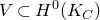 $V\subset H^0(K_C)$
is a general subspace of codimension
 $\leqslant \operatorname{Cliff}(C)$
then
 $(K_C, V)$
is linearly semistable. They used this fact to study a lower bound for the slope of fibered surfaces. In an analogous manner, Mistretta and Stoppino proved the following Proposition in [Reference Mistretta and StoppinoMS12, Proposition 3.3].
Proposition 2.9.
Let C be a curve of genus
 $g\geq 2$
. Let
 $L\in \mathrm{Pic}(C)$
be a globally generated line bundle such that
 $\deg(L)-2(h^0(L)-1)\leqslant \operatorname{Cliff}(C)$
. Then L is linearly semistable. It is linearly stable unless
 $L=K_C(D)$
with D an effective divisor of degree two, or C is hyperelliptic and
 $\deg(L)=2(h^0(L)-1)$
.
Remark 2.10 (i) The equality in Proposition 2.9 does not imply that L computes the Clifford index of C. In fact, there exist line bundles L for which
 $\operatorname{Cliff}(L)=\operatorname{Cliff}(C)$
but
 $h^1(L)\leqslant 1$
. By definition, such a line bundle L does not contribute to the Clifford index of C. For example, consider a general line bundle L of degree
 $(g-1)/2$
on a general curve of odd genus
 $g=2g_1+1$
. Then
 $\operatorname{Cliff}(K\otimes L^*)=\operatorname{Cliff}(C)$
, but
 $K\otimes L^*$
does not compute the Clifford index of C, because
 $h^0(L)=0$
and thus does not contribute to
 $\operatorname{Cliff}(C)$
. However, Proposition 2.9 applies to the line bundle
 $K\otimes L^*$
, as it satisfies the inequality stated there.
(ii) A similar situation occurs for the line bundles appearing in Lemma 2.4. Since E is semistable with
 $\mu(E)\leqslant g-1$
, the line bundle M satisfies
 $\deg(M)\leqslant g-1$
. Therefore, it contributes to
 $\operatorname{Cliff}(C)$
and, by Lemma 2.4, it computes
 $\operatorname{Cliff}(C)$
. However, there is no guarantee that
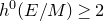 $h^0(E/M) \geq 2$
, and in that case
 $E/M$
would not compute
 $\operatorname{Cliff}(C)$
, even if Lemma 2.4 shows that
 $\operatorname{Cliff}(E/M)=\operatorname{Cliff}(C)$
. In particular, by [Reference Mistretta and StoppinoMS12, Proposition 3.3] and [Reference Mistretta and StoppinoMS12, Theorem 5.1], we have that
 $M_{E/M}$
is linearly semistable in general and stable under the hypothesis in [Reference Mistretta and StoppinoMS12, Proposition 3.3].
The slope stability of the Lazarsfeld–Mukai bundle
 $M_{L,V}$
is investigated in Mistretta [Reference MistrettaMis08], and the following conjecture due to Mistretta and Stoppino [Reference Mistretta and StoppinoMS12, Conjecture 6.1] proposes a relation with the linear stability of (L, V).
Conjecture 2.11 (MS conjecture). Let (L,V) be a generated linear series as above. If
 $\deg(L)-2(\dim V-1)\leqslant \operatorname{Cliff}(C)$
, then (L,V) is linearly (semi)stable if and only if
 $M_{L,V}$
is (semi)stable.
Mistretta and Stoppino proved Conjecture 2.11 under certain conditions, including the case
 $V=H^0(L)$
, which plays a crucial role in our arguments (see [Reference Mistretta and StoppinoMS12, Theorem 5.1]). For higher ranks, we expect that at least the following extension of Conjecture 2.11 holds.
Conjecture 2.12
Let E be a globally generated vector bundle computing
 $\operatorname{Cliff}_n(C)$
with
 $n\geq 2$
. Then the following hold:
-
(i) E is linearly (semi)stable; and
-
(ii) E is linearly (semi)stable if and only if
$M_{E}$
is (semi)stable.

Remark 2.13. The globally generated condition in Conjecture 2.12 is redundant when
 $n=2$
, as Lange and Newstead [Reference Lange and NewsteadLN10] proved that every vector bundle computing the rank-two Clifford index is primitive; that is, both E and
 $K\otimes E^*$
are globally generated.
2.5. Butler’s conjecture
For a given coherent system (E, V) and a non-negative real number
 $\alpha$
, we say that (E, V) is
 $\alpha$
-stable (respectively,
 $\alpha$
-semistable) if for each coherent subsystem (F, W) of (E, V) we have
 \begin{align*}\mu_\alpha(F,W) \lt \mu_\alpha(E,V) \quad(\text{respectively},\ \mu_\alpha(F,W) \leqslant \mu_\alpha(E,V)),\end{align*}
where
 $\mu_\alpha(F, W)$
is defined to be
 \begin{align*}\mu_\alpha(F, W):= \frac{\deg(F)+\alpha\cdot \dim W}{\mathrm{rk}(F)}.\end{align*}
For
 $\alpha\gt 0$
, there exists a moduli space
 $G(\alpha, n, d, n+m)$
parameterizing
 $\alpha$
-semistable coherent systems of type
 $(n,d,n+m)$
over C. If (E, V) is
 $\alpha$
-stable for small values of
 $\alpha$
, then E would be semistable as well. For
 $\alpha$
close to 0, following [Reference Brambila-Paz, Mata-Gutiérrez, Newstead and OrtegaBPMG+19] and [Reference Castorena and HitchingCH24], we set
 \begin{align*}S_0(n,d,n+m) := \{(E,V ) \in G(\alpha, n,d,n+m) : (E,V )\ \mbox{generated}\}.\end{align*}
The locus
 $S_0(n, d, n+m)$
is expected to have dimension equal to the Brill–Noether number
 $\beta(n, d, n+m)$
, given by
 \begin{align*}\beta(n, d, n+m)=n^2(g-1)+1-(n+m)\cdot [(n+m)-d+n(g-1)].\end{align*}
Definition 2.14. Let (E, V) be a coherent system.
-
(i) A coherent subsystem
$(F, W) \leqslant (E, V)$
is said to be
$\alpha$
-destabilizing if
$\mu_\alpha(F, W) \geq \mu_\alpha(E, V)$
. -
(ii) A subbundle
$F \leqslant E$
is said to destabilize E if
$\mu(F) \geq \mu(E)$
. If E is semistable and admits a destabilizing subbundle, then E is referred to as a strictly semistable bundle. -
(iii) Similarly, a coherent subsystem
$(F, W) \leqslant (E, V)$
is said to linearly destabilize (E, V) if
$\lambda(F, W) \leqslant \lambda(E, V)$
. If (E, V) is linearly semistable and admits such a subsystem, then it is called a strictly linearly semistable coherent system.







Conjecture 2.15 (D. C. Butler). Suppose that C is a general curve and (E,V) a general element of any component of
 $S_0(n,d,n+m)$
. Then the coherent system
 $(M_{E, V}^*, V^*)$
is
 $\alpha$
-stable for
 $\alpha$
close to 0, and the map
 $(E,V ) \mapsto (M_{E, V}^*, V^*)$
gives a birational equivalence between
 $S_0(n, d, n+m)$
and
 $S_0(m, d, n+m)$
.
Definition 2.16. Following [Reference Brambila-Paz, Mata-Gutiérrez, Newstead and OrtegaBPMG+19] and [Reference Castorena and HitchingCH24], we shall say that Butler’s conjecture holds non-trivially for type
 $(n, d, n+m)$
if
 $S_0(n, d, n+m)$
is non-empty and Conjecture 2.15 holds.
3. Linear stability of bundles computing the second Clifford index
We begin this section with two lemmas that will play a central role in many of the arguments throughout the paper.
Lemma 3.1.
Suppose (E, V) is a rank-n globally generated coherent system with
 $\mu(E)\leqslant g-1$
and
 $d_E/n-(2/n)\dim V+2\leqslant \operatorname{Cliff}(C)$
. If E is semistable and
 $L\subset E$
is an invertible subsheaf, then
 \begin{align} \dim [H^0(L)\cap V]\leqslant \frac{\dim V}{n} . \end{align}
In particular, if
 $\operatorname{Cliff}(E)=\operatorname{Cliff}_2(C)$
and there is a line subbundle
 $L\subset E$
with
 $h^0(E)=2h^0(L)$
, then E is strictly semistable.
Proof. Since
 $\dim V\geq n+1$
, the assertion holds whenever
 $\dim [H^0(L)\cap V]\leqslant 1$
. However, if
 $\dim [H^0(L)\cap V]\geq 2$
then, using
 $\mu(L)\leqslant \mu(E)\leqslant g-1$
, we obtain
 $h^1(L)\geq 2$
. Thus, L contributes to the Clifford index and we have
 \begin{align*}d_L- 2\dim [H^0(L)\cap V]+2\geq d_L-2h^0(L)+2\geq \operatorname{Cliff}(C)\geq \frac{d_E}{n}-\frac{2}{n}\dim V+2.\end{align*}
This, together with the inequality
 $d_L\leqslant d_E/n$
, which follows from the semistability of E, establishes the assertion.
For the second part, by Lemma 2.4, we have
 \begin{align*}\operatorname{Cliff}_2(C)=\operatorname{Cliff}(E) =\operatorname{Cliff}(L)=\operatorname{Cliff}(C).\end{align*}
Therefore, the condition
 $h^0(E)=2h^0(L)$
implies
 $\deg(E)=2\deg(L)$
, as required.
Corollary 3.2.
Let C be a non-hyperelliptic curve and suppose that the vector bundle E computes
 $\operatorname{Cliff}_n(C)$
. If L is a non-trivial and globally generated invertible subsheaf of E, then
 $\lambda(L)\geq \lambda(E)$
.
Proof. Since
 $L\subset E$
is non-trivial and a globally generated line bundle on C, then
 $h^0(L)\geq 2$
. Moreover, as
 $\mu(E)\leqslant g-1$
, the line bundle L contributes to
 $\operatorname{Cliff}(C)$
. Thus, by Remark 2.2 we have
 \begin{align*}d_L-2h^0(L)+2\geq \operatorname{Cliff}_n(C)=\frac{d_E}{n}-\frac{2}{n}h^0(E)+2.\end{align*}
This is equivalent to
 \begin{align*}\frac{d_L}{h^0(L)-1}-2\geq \frac{d_E-2(h^0(E)-n)}{n\cdot (h^0(L)-1)}.\end{align*}
Therefore, it suffices to prove
 \begin{align*}\frac{d_E-2(h^0(E)-n)}{n\cdot (h^0(L)-1)}\geq \frac{d_E}{h^0(E)-n}-2,\end{align*}
which is equivalent to
 $ n\cdot h^0(L) \leqslant h^0(E).$
Thus,
 $\lambda(L)\geq \lambda(E)$
by Lemma 3.1.
Lemma 3.3.
Let F be a globally generated vector bundle of rank two on C, which is not semistable and satisfies
 $\mu(F)\leqslant g-1$
. Assume further that F does not admit the trivial line bundle as a quotient. Then
 \begin{align*}\operatorname{Cliff}(F)\geq \operatorname{Cliff}(C).\end{align*}
Proof. Let
 $0\rightarrow L_1\rightarrow F\rightarrow L_2 \rightarrow 0$
be the short exact sequence obtained from the Harder–Narasimhan filtration of F with
 $\deg(L_1)\gt\mu(F)\gt\deg(L_2)$
. The assumption of non-semistability of F implies that
 $F\not\simeq \mathcal{O}_C \oplus \mathcal{O}_C$
. Since F does not admit a trivial quotient by assumption,
 $L_2$
cannot be the trivial line bundle, and since
 $L_2$
, as quotient of F, is globally generated, hence
 $h^0(L_2)\geq 2$
. As
 $\deg(L_2)\lt g-1$
, the line bundle
 $L_2$
contributes to
 $\operatorname{Cliff}(C)$
.
From
 $\deg(L_1)\gt\deg(L_2)$
we conclude that, if
 $h^0(L_1)\leqslant h^0(L_2)$
, then
 $\operatorname{Cliff}(L_1)\gt\operatorname{Cliff}(L_2)$
.
Likewise, if
 $h^1(L_1)\leqslant h^0(L_2)$
, then from
 \begin{align*}\deg(K\otimes L_1^*)=(2g-2-d_F)+\deg(L_2)\geq \deg(L_2),\end{align*}
we get
 $\operatorname{Cliff}(K\otimes L_1^*)\geq \operatorname{Cliff}(L_2)$
. Now, since
 $\operatorname{Cliff}(L_1)=\operatorname{Cliff}(K\otimes L_1^*)$
, we have
 $\operatorname{Cliff}(L_1)\geq\operatorname{Cliff}(L_2)$
.
If
 $h^0(L_1)\gt h^0(L_2)$
and
 $h^1(L_1) \gt h^0(L_2)$
, then
 $L_1$
contributes to
 $\operatorname{Cliff}(C)$
. Hence, the result follows from
 \begin{align*}\operatorname{Cliff}(F)\geq \frac{\operatorname{Cliff}(L_1)+\operatorname{Cliff}(L_2)}{2}\geq \operatorname{Cliff}(C). \end{align*}
Remark 3.4. Let F be as in Lemma 3.3, and (E, V) be as in Lemma 3.1.
-
(i) If F admits a trivial quotient, then its Clifford index can be strictly smaller than
$\operatorname{Cliff}_2(C)$
. For instance, suppose that C is a general curve and recall that
$\delta_2= \lceil 2g/3+2 \rceil$
. Then, there exists an integer t such that and the Brill–Noether number
\begin{align*}\delta_2\leqslant t \lt 2\bigg[ \frac{g-1}{2}\bigg]+4,\end{align*}
$\rho(g, 2, t)$
is non-negative in this range. Hence, there exists a globally generated line bundle
$L\in W^2_{t}$
. Now, the bundle
$F:=L\oplus \mathcal{O}_C$
is also globally generated and satisfies
\begin{align*}\operatorname{Cliff}(F)\lt\operatorname{Cliff}(C) =\operatorname{Cliff}_2(C).\end{align*}
-
(ii) If
$\operatorname{Cliff}_2(C)=\operatorname{Cliff}(C)$
, then
$V=H^0(E)$
would be the only subspace of
$H^0(E)$
satisfying the conditions in Lemma 3.1. If
$\operatorname{Cliff}_2(C)\leqslant \operatorname{Cliff}(C)-1$
and E is a bundle computing
$\operatorname{Cliff}_2(C)$
, then every hyperplane
$V\subset H^0(E)$
fulfills the assumptions of Lemma 3.1. See Lange and Newstead [Reference Lange and NewsteadLN11, Reference Lange, Newstead, Faber, Farkas and de JongLN12] for examples of curves with this property. -
(iii) A surjection
$E\to \mathcal{O}_C \to 0$
will split by [Reference BallicoBal95, Lemma 1.1]. Therefore, if E admits a trivial quotient, the trivial quotient bundle would be a direct summand of E; however, this fact is not required in Lemma 3.3.











Proposition 3.5.
Suppose C is a non-hyperelliptic curve, and let E be a semistable vector bundle with
 $\mu(E)\leqslant g-1$
. Assume (E, V) is a globally generated rank-two coherent system such that
 \begin{align*}\frac{d_E}{2}-\dim V+2\leqslant \operatorname{Cliff}(C).\end{align*}
If (F, W) is a globally generated subsystem of (E, V), where
 $F\subset E$
is a non-semistable, rank-two locally free subsheaf of E, then
 $\lambda(F, W)\geq \lambda(E, V)$
.
Moreover, if E computes
 $\operatorname{Cliff}_2(C)$
and
 $V=H^0(E)$
, then
 $\lambda(F)\gt \lambda(E)$
unless
 $\operatorname{Cliff}(F)=\operatorname{Cliff}_2(C)$
or F admits a globally generated line subbundle L with
 $h^0(L)=h^0(F)$
and
 $\deg(L)=\deg(F)$
.
Proof. If F does not admit a trivial quotient, then by Lemma 3.3 we have
 $\operatorname{Cliff}(F)\geq \operatorname{Cliff}(C)$
. Therefore,
 \begin{align*}d_F-2(\dim W-2)\geq d_F-2(h^0(F)-2)\geq 2\operatorname{Cliff}(C)\geq d_E-2(\dim V-2), \end{align*}
which implies
 \begin{align*}\frac{d_F-2(\dim W-2)}{2(\dim W-2)}\geq \frac{d_E-2(\dim V-2)}{2(\dim W-2)}\gt \frac{d_E-2(\dim V-2)}{2(\dim V-2)}.\end{align*}
Thus,
 \begin{align*}\frac{1}{2}\lambda(F, W)-1\geq \frac{d_E-2(\dim V-2)}{2(\dim W-2)}\gt \frac{d_E-2(\dim V-2)}{2(\dim V-2)}=\frac{1}{2}\lambda(E, V)-1,\end{align*}
as desired.
If F has a representation
 $0\to L\to F\to \mathcal{O}_C\to 0$
, then
 \begin{align*}\lambda(F, W)\geq \lambda(L, H^0(L)\cap W).\end{align*}
Since
 $h^0(L)\geq 2$
and
 $\mu(L)\leqslant \mu(E)\leqslant g-1$
, the line bundle L contributes to
 $\operatorname{Cliff}(C)$
. Therefore, we have
 \begin{align*}d_L-2\dim [W\cap H^0(L)]+2\geq d_L-2h^0(L)+2\geq \operatorname{Cliff}(C)\geq \frac{d_E}{2}-\dim V+2, \end{align*}
which implies
 \begin{align*} \frac{d_L}{\dim W\cap H^0(L)-1}-2\geq \frac{d_E-2(\dim V-2)}{2(\dim W\cap H^0(L)-1)}.\end{align*}
Therefore, it suffices to prove that
 \begin{align*}\frac{d_E-2(\dim V-2)}{2(\dim W\cap H^0(L)-1)}\geq \frac{d_E}{\dim V-2}-2,\end{align*}
which follows from
 \begin{align*}2\dim [W\cap H^0(L)] \leqslant \dim V.\end{align*}
Thus, by Lemma 3.1,
 $\lambda(L, W\cap H^0(L))\geq \lambda(E, V)$
.
The second statement follows immediately from our argument.
Now, we turn to completing the proof of Conjecture 2.12(i) in the case
 $n=2$
.
Theorem 3.6.
Let C be a non-hyperelliptic curve, and assume that E is a vector bundle that computes
 $\operatorname{Cliff}_2(C)$
and
 $5\leqslant h^0(E)$
. Then, E is linearly semistable. The bundle E fails to be linearly stable if and only if either:
-
(a) E admits a rank-two globally generated locally free subsheaf T with
$\operatorname{Cliff}(T)=\operatorname{Cliff}_2(E)$
; or
-
(b) E contains an invertible subsheaf L with
$h^0(L)=h^0(E)/2$
.


Proof. Taking Proposition 3.5 and Corollary 3.2 into account, it suffices to exclude the possibility that globally generated rank-two locally free subsheaves of E, which are semistable, destabilize E linearly.
Suppose
 $F\subset E$
is a globally generated, locally free, and semistable subsheaf of rank two. Then
 $h^0(F)\geq 3$
and
 $\mu(F)\lt\mu(E)\leqslant g-1$
. We consider two cases.
First, assume that
 $h^0(F)\geq 4$
. Then F contributes to
 $\operatorname{Cliff}_2(C)$
, and hence
 $\operatorname{Cliff}_2(F)\geq \operatorname{Cliff}_2(E)$
. Therefore,
 $d_F/2-(h^0(F)+2)\geq d_E/2-(h^0(E)-2)$
, from which it follows that
 \begin{align*}\frac{d_F-2(h^0(F)-2)}{2(h^0(F)-2)}\geq \frac{d_E-2(h^0(E)-2)}{2(h^0(F)-2)} \geq \frac{d_E-2(h^0(E)-2)}{2(h^0(E)-2)}.\end{align*}
Thus,
 $\lambda(F)\geq \lambda(E),$
as desired.
Second, if
 $h^0(F)=3$
, then
 $h^0(\det(F))\geq 2$
, so
 $d_F\geq \delta_1$
. By Equation (2.3),
 $\operatorname{Cliff}_2(C) \leqslant \delta_1 -2$
, hence any vector bundle E computing
 $\operatorname{Cliff}_2(C)$
satisfies the following inequality:
 \begin{align}d_E\leqslant 2h^0(E)+2\delta_1-8.\end{align}
Therefore, the inequality
 $\lambda(F)=d_F\leqslant \lambda(E)$
together with (3.2) implies
 \begin{align*}\delta_1\leqslant \frac{2h^0(E)+2\delta_1-8}{h^0(E)-2},\end{align*}
which is equivalent to
 \begin{align*} \delta_1\cdot(h^0(E)-4)\leqslant 2(h^0(E)-4).\end{align*}
This is impossible since
 $h^0(E)\geq 5$
and C is non-hyperelliptic.
The second statement of the theorem holds by our argument in the previous part of this proof and in the proof of Proposition 3.5.
Theorem 3.7.
Let E be a vector bundle computing
 $\operatorname{Cliff}_2(C)$
satisfying
 $h^0(E)=4$
. Then, E is linearly semistable, and it is linearly stable if and only if E does not admit any invertible subsheaf L with
 $h^0(L)=2$
.
Proof. Since E computes
 $\operatorname{Cliff}_2(C)$
and
 $h^0(E)=4$
, inequality (3.2) gives
 $d_E\leqslant 2\delta_1$
. By Lemma 3.1 and the semistability of E, the only possibility for a non-trivial line subbundle L of E to be globally generated is
 $h^0(L)=2$
and
 $\deg(L)=\delta_1$
. So
 $\lambda(L)=\lambda(E)$
holds for any non-trivial globally generated invertible subsheaf
 $L\subset E$
.
If F is a globally generated locally free subsheaf of E satisfying
 $\mathrm{rk}\,F=2$
and
 $\deg(F)\gt0$
, then the inequality
 $\deg(F)\geq \delta_1$
holds by
 $h^0(F)=3$
. From
 $\delta_1\leqslant \deg(F)=\lambda(F)$
and
 $\lambda(E)\leqslant \delta_1$
, we conclude that
 $\lambda(F)\geq \lambda(E)$
.
Assume now that the equality
 $\lambda(F)=\lambda(E)$
holds, so
 $d_F=d_E/2\leqslant \delta_1.$
Consider the exact sequence
 \begin{align} 0\rightarrow \mathcal{O}_C\rightarrow F\rightarrow \det F \rightarrow 0,\end{align}
and observe that
 $h^0(\det F)\leqslant 2$
since
 $d_F\leqslant \delta_1$
. Being a quotient of a globally generated bundle,
 $\det F$
is also globally generated and of positive degree. So
 $h^0(\det F)=2$
, and
 $d_F=\delta_1$
, by the definition of
 $\delta_1$
. Therefore, in the extension (3.3), all sections of
 $\det F$
lift to F.
On the other hand, using the basepoint-free pencil trick, one checks that the multiplication map
 \begin{align}\mu: H^0(K)\otimes H^0(\det F)\rightarrow H^0(K\otimes (\det F))\end{align}
is surjective. The injectivity of the dual map
 \begin{align*}\mu^{\perp}: \mathrm{Ext}^1(\det F, \mathcal{O}_C) \rightarrow \mathrm{Hom}(H^0(\det F), H^1(\mathcal{O}_C)) \end{align*}
implies by [Reference Lange and NewsteadLN13, Lemma 2.8] that the only extension of
 $\det F$
by
 $\mathcal{O}_C$
, in which every section of
 $\det F$
lifts, is the trivial extension. Therefore,
 $F=\mathcal{O}_C\oplus \det F$
and so
 $\det F$
is an invertible subsheaf of E as required.
Corollary 3.8.
Let C be a non-hyperelliptic curve, and suppose that E computes
 $\gamma_2(C)$
, with
 $\gamma_2(C)$
as in Definition 2.1
. Then, E is linearly semistable. Furthermore, the bundle E fails to be linearly stable if and only if E has a rank-two locally free subsheaf
 $ \ T$
with
 $\operatorname{Cliff}(T)=\operatorname{Cliff}_2(E)$
, or E contains a line subbundle L with
 $h^0(L)=h^0(E)/2$
.
Proof. If
 $h^0(E)\geq 4$
, then E computes
 $\operatorname{Cliff}_2(C)$
as well. Therefore, the result follows from Theorems 3.6 and 3.7.
If
 $h^0(E)=3$
, then
 $M_E$
is a line bundle and thus stable. Therefore, E is linearly stable.
Remark 3.9.
-
(i) If C is hyperelliptic, and E is a rank-two semistable vector bundle with
$\operatorname{Cliff}(E)=0$
, then
$E=mg^1_2\oplus mg^1_2$
, for
$1\leqslant m\lt g-1$
, by [Reference ReRe98, Proposition 2]. Hence, E is linearly semistable, but not linearly stable. The bundle E has a line subbundle computing
$\operatorname{Cliff}(C)$
and also contains a rank-two semistable subbundle computing
$\operatorname{Cliff}_2(C)$
. -
(ii) There exist non-hyperelliptic curves carrying bundles computing
$\operatorname{Cliff}_2(C)$
and containing a line subbundle L such that
$\operatorname{Cliff}(L)=\operatorname{Cliff}(C)=\operatorname{Cliff}_2(C)$
. See Examples (iii) and (vi) in Section 5. These examples of E, which are linearly semistable but not linearly stable, confirm the occurrence of the case in Theorem 3.6(b). -
(iii) The existence of a line bundle L computing
$\operatorname{Cliff}(C)$
and admitting an invertible subsheaf T with
$\operatorname{Cliff}(T)=\operatorname{Cliff}(C)$
is related to the schemes of secant loci. On a general curve, the pencils
$g^1_{\delta_1}$
are the only line bundles computing
$\operatorname{Cliff}(C)$
, and any invertible subsheaf of these bundles has at most one non-zero section. So, the equality
$\operatorname{Cliff}(T)=\operatorname{Cliff}(C)$
, with T a non-trivial globally generated invertible subsheaf of
$g^1_{\delta_1}$
, is impossible.










If C is an arbitrary curve, then, for an effective divisor
 $D\in C_t$
, two line bundles L and
 $L(-D)$
both compute
 $\operatorname{Cliff}(C)$
, and
 $\deg(L)\leqslant g-1$
, then we conclude from
 $\operatorname{Cliff}(L)=\operatorname{Cliff}(L(-D))$
that
 \[2(h^0(L)-h^0(L(-D)))=\deg(L)-\deg(L(-D))=t.\]
Thus,
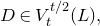 $D\in V_t^{t/2}(L),$
where
 \[V_t^{t/2}(L):=\{D\in C_t :h^0(L)-h^0(L(-D))\leqslant t/2\}\]
is the scheme of secant loci of degree t. Therefore, the (non-)existence of a line bundle and its locally free subsheaf, both computing the Clifford index, can be controlled by the (non-)emptiness of
 $V_t^{t/2}(L)$
.
The existence of a bundle E computing
 $\operatorname{Cliff}_2(C)$
and admitting a rank-two locally free sheaf T with
 $\operatorname{Cliff}_2(T)=\operatorname{Cliff}_2(C)$
is unknown to us. It is proved in [Reference Bakker and FarkasBF18, Theorem 4] that any vector bundle E computing
 $\operatorname{Cliff}_2(C)$
on a general curve of even genus
 $g\geq 10$
satisfies
 $h^0(E)=4$
. Since by [Reference Lange and NewsteadLN10] E is globally generated, any locally free rank-two subsheaf F of E satisfies
 $h^0(F)\leqslant 3$
. It is also unknown to us whether there exists a rank-two locally free subsheaf
 $F\subseteq E$
such that
 $\operatorname{Cliff}(F)=\operatorname{Cliff}(E)$
. As in the case of line bundles, this requires further investigation into the geometry and (non-)emptiness of generalized secant loci, which are Brill–Noether-type loci on certain Quot schemes of bundles over C studied in Hitching [Reference Hitching, Gothen, Melo and Teixidor i BigasHit24].
4. Conjecture 2.12 in two special cases
4.1. Bundles admitting a subpencil
In this subsection, we establish the MS conjecture for rank-two bundles that admit a line subbundle L with
 $h^0(L)=2$
.
Definition 4.1. A bundle E is said to admit a subpencil if there exists a line subbundle
 $L\subset E$
such that
 $h^0(L)=2$
.
In the following, we will use the notation of Section 2.3. The next lemma is a restatement of [Reference Mistretta and StoppinoMS12, Lemma 4.3] for higher ranks, and we omit its proof.
Lemma 4.2.
Suppose E computes
 $\operatorname{Cliff}_n(C)$
and for
 $S\subset M_E$
the exact sequence
 \begin{align} 0\rightarrow \bigoplus^{r_{F_S}-1}\mathcal{O}_C\rightarrow F_S \rightarrow \det F_S\rightarrow 0 \end{align}
induces an exact sequence on global sections. Assume
 $\deg(E)\leqslant \delta_1\cdot(h^0(E)-n)$
and
 $\mathrm{rk}(F_S)\geq 2$
. Then
 $\mu(S)\leqslant \mu(M_E)$
and the equality holds if and only if:
-
•
$W=H^0(F_S)$
, with W as in Diagram (2.6); and
-
•
$\delta_1=\dfrac{\deg(F_S)}{h^0(\det F_S)-1}=\dfrac{\deg(E) }{h^0(E)-n}$
.

Theorem 4.3.
Let E compute
 $\operatorname{Cliff}_2(C)$
and
 $S\subset M_E$
be of maximal slope with
 $\mathrm{rk}\,F_S\geq 2$
. If S destabilizes
 $M_E$
, that is,
 $\mu(S)\geq \mu(M_E)$
, and
 $\mathrm{rk}(I)=1$
, where
 $I:=\mathrm{Im}(\alpha_S)$
, then the sequence (4.1) induces an exact sequence on global sections. Moreover,
 $\deg(F_S)\geq \delta_1\cdot(h^0(\det(F_S))-1)$
.
Proof. The proof proceeds along the same lines as the argument in [Reference Mistretta and StoppinoMS12, Theorem 5.1].
By the semistability of E, we have
 $\deg(I)\leqslant \deg(E)/2$
. Since
 $I\neq E$
, it follows that
 $M_{I, W}$
is a proper subbundle of
 $M_E$
. So
 $\mu(M_{I, W})\leqslant \mu(S)$
, and consequently
 $\deg(F_S)\leqslant \deg(I)$
. Therefore,
 \begin{align} \deg(F_S)\leqslant\frac{\deg(E)}{2}\leqslant g-1. \end{align}
Hence
 $\det(F_S)$
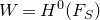
contributes to
 $\operatorname{Cliff}(C)$
, because it is non-trivially generated. Thus,
 \begin{align} \deg(\det(F_S))-2h^0(\det(F_S))+2\geq \operatorname{Cliff}(C)\geq \frac{\deg(E)}{2}-h^0(E)+2=\operatorname{Cliff}_2(C). \end{align}
This, by (4.2), implies that
 $h^0(E)\geq 2\cdot h^0(\det(F_S)).$
In particular, we have
 \begin{align} \frac{h^0(\det(F_S))-1}{h^0(E)-2}\leqslant\frac{1}{2}. \end{align}
Since
 $F_S$
is globally generated, it fits in an extension
 \begin{align}0\rightarrow \bigoplus^{r_S-1}\mathcal{O}_C\rightarrow F_S\rightarrow \det F_S\rightarrow 0,\end{align}
by [Reference AtiyahAti57, Theorem 2]. Now, we show that the extension (4.5) induces an exact sequence on global sections. Otherwise, we would have
 \begin{align*}h^0(\det F_S)-1\gt h^0(F_S)-\mathrm{rk}(F_S)\geq \mathrm{rk}\,S \geq \deg (\det (F_S))\cdot\frac{h^0(E)-2}{\deg(E)},\end{align*}
where the leftmost inequality follows from
 $\mu(S)\geq \mu(M_E)$
. From this, and since we have
 \begin{align*}\frac{\deg(E)}{h^0(E)-2}=2+\frac{2\operatorname{Cliff}_2(C)}{h^0(E)-2}\end{align*}
by definition of
 $\operatorname{Cliff}_2(C)$
, it follows that
 \begin{align*}\deg(\det F_S)&\lt\frac{\deg(E)}{h^0(E)-2}\cdot(h^0(\det F_S)-1)=(h^0(\det F_S)-1)\left(2+\frac{2\operatorname{Cliff}_2(C)}{h^0(E)-2}\right)\\&= 2(h^0(\det F_S)-1)+2\cdot\left(\frac{h^0(\det F_S)-1}{h^0(E)-2}\right)\cdot \operatorname{Cliff}_2(C).\end{align*}
In combination with inequality (4.4), this yields
 \begin{align}\deg(\det F_S)\lt2(h^0(\det F_S)-1)+\operatorname{Cliff}_2(C).\end{align}
This contradicts (4.3). Therefore, the exact sequence (4.5) induces an exact sequence on global sections.
By the exactness of the sequence of global sections of (4.5), the last assertion follows from [Reference Mistretta and StoppinoMS12, Proposition 4.2].
Remark 4.4. Recall that if E computes
 $\operatorname{Cliff}_2(C)$
then, by the definition of the second Clifford index together with
 $\operatorname{Cliff}_2(C)\leqslant \operatorname{Cliff}(C)$
, we get
 \begin{align*}\deg(E)\leqslant 2\operatorname{Cliff}_2(C)+2h^0(E)-4\leqslant 2\operatorname{Cliff}(C)+2h^0(E)-4.\end{align*}
By (2.3) this gives
 $\deg(E)\leqslant 2\delta_1-4+2h^0(E)-4$
. Since
 $h^0(E)\geq 4$
, we have
 $(h^0(E)-2)/2\geq 1$
. Summarizing we get
 \begin{align*} \deg(E)\leqslant 2\delta_1-4+2h^0(E)-4\leqslant 2(\delta_1-2)\cdot \left (\frac{h^0(E)-2}{2}\right)+2h^0(E)-4=\delta_1\cdot (h^0(E)-2),\end{align*}
with equality holding if and only if either C is hyperelliptic and
 $d_E=2(h^0(E)-2)$
, or
 $h^0(E)=4$
.
Corollary 4.5.
Let E be a vector bundle that computes
 $\operatorname{Cliff}_2(C)$
and let
 $S\subset M_E$
be a vector subbundle of maximal slope. If E is linearly stable, then we have
 $\mu(S)\lt \mu(M_E)$
.
Proof. If
 $\mathrm{rk}(F_S)=1$
, then the assertion follows directly from the definition of linear stability. If
 $\mathrm{rk}(F_S)\geq 2$
and
 $\mu(S)\geq \mu(M_E)$
, then the only possibility (by Lemma 4.2, Theorem 4.3, and Remark 4.4) is that
 $\mu(S)=\mu(M_E)$
, in which case
 \begin{align*}\deg(E)=\delta_1\cdot (h^0(E)-2).\end{align*}
Remark 4.4 then implies that either C is hyperelliptic and
 $d_E=2(h^0(E)-2)$
, or
 $h^0(E)=4$
. If
 $h^0(E)=4$
, then
 $\overline{I}_S$
, the saturation of
 $I_S$
, is a line subbundle of E. Since
 $h^0(I_S)\geq 2$
we also have
 $h^0(\overline{I}_S)\geq 2$
. Lemma 3.1 implies that
 $h^0(\overline{I}_S)\leqslant 2$
, and so
 $h^0(\overline{I}_S)=2$
. As E is semistable we have
 $\deg(\overline{I}_S)\leqslant d_E/2$
. Moreover, since E is linearly semistable, the results of the previous section imply that
 $\deg(\overline{I}_S)=\lambda(\overline{I}_S)\geq\lambda(E)$
. Summarizing, we obtain
 $\lambda(\overline{I}_S)=\lambda(E)$
, which contradicts the assumption that E is linearly stable.
If C is hyperelliptic and
 $d_E=2(h^0(E)-2)$
, then by [Reference ReRe98, Proposition 2] we have
 $E=mg^1_2\oplus mg^1_2$
, with
 $0\lt m\lt g-1$
, again contradicting the linear stability of E.
Lemma 4.6.
Let E be a rank-two vector bundle computing
 $\operatorname{Cliff}_2(C)$
, and let
 $L\subset E$
be a line subbundle with
 $h^0(L)\geq 2$
. Then, we have
 \begin{align*}\lambda(L)\geq \lambda(E)\geq \lambda(G),\end{align*}
where
 $G:=E/L$
.
Proof. Since E computes
 $\operatorname{Cliff}_2(C)$
,
 $h^0(E)\geq 4$
, the inequality
 $\lambda(L)\geq \lambda(E)$
is a direct consequence of Theorems 3.6 and 3.7.
Since, by Lemma 2.4, we have
 $\operatorname{Cliff}(G)=\operatorname{Cliff}(E)=\operatorname{Cliff}(C)$
, it follows that
 \begin{align*}\lambda(G)=\frac{\operatorname{Cliff}(C)}{h^0(G)-1}+2 \quad\text{and}\quad \lambda(E)=\frac{2\operatorname{Cliff}(C)}{h^0(E)-2}+2.\end{align*}
Therefore,
 $\lambda(G)\leqslant \lambda(E)$
is equivalent to
 \begin{align} \frac{\operatorname{Cliff}(C)}{h^0(G)-1}\leqslant \frac{2\operatorname{Cliff}(C)}{h^0(E)-2}, \end{align}
which is immediate whenever
 $\operatorname{Cliff}(C)=0$
. Otherwise, by Lemma 3.1, we obtain
 \begin{align*}2h^0(L) \leqslant h^0(E),\end{align*}
Proposition 4.7. Let (E, V) be a globally generated coherent system and let
 \begin{align} 0\rightarrow (F_1, V_1)\rightarrow (E,V) \rightarrow (F_2, V_2)\rightarrow 0 \end{align}
be an exact sequence of globally generated coherent systems induced from an exact sequence
 \begin{align}0\rightarrow F_1\stackrel{i}{\longrightarrow} E \stackrel{\pi}{\longrightarrow} F_2 \rightarrow 0.\end{align}
Suppose a subbundle
 $S\subset M_{E, V}$
fits into a short exact sequence
 \begin{align}0\rightarrow S_1\rightarrow S \rightarrow S_2\rightarrow 0, \end{align}
where
 $S_i\subset M_{F_i, V_i}$
are subbundles and
 $I= \mathrm{Im}\, \alpha_S$
,
 $I_i= \mathrm{Im}\, \alpha_{S_i}$
,
 $i=1,2$
, where
 $\alpha_{S_i}$
are the corresponding morphisms in the Butler diagram (2.6). Then the following hold.
-
(i) If
$S_2=0$
, then
$F_S=F_{S_1}$
and
$ I\cong I_1$
. -
(ii) If
$S_1=0$
, then
$F_S\cong F_{S_2}$
and
$ I\cong I_2$
. -
(iii) If
$S_i\neq 0$
and either the morphism
$H^0(S^*)\rightarrow H^0(S_1^*)$
is surjective or
$\dim V_1=2$
, then we obtain the exact sequence
together with the following commutative diagram.
\begin{align*}0\rightarrow F_{S_1}\rightarrow F_S \rightarrow F_{S_2}\rightarrow 0,\end{align*}
(4.11)





Proof. Let
 \begin{align}0\rightarrow V_1\stackrel{\bar{\imath}}{\longrightarrow} V \stackrel{\bar{\pi}}{\longrightarrow} V_2 \rightarrow 0\end{align}
be the exact sequence of vector spaces, induced by the exact sequence (4.8). The exact sequence (4.10) then gives rise to the following commutative diagram.

From this we obtain an exact sequence
 $0\rightarrow W_2^* \rightarrow W^* \rightarrow W_1^*$
, where
 $W^*:=\mathrm{Im}\, \theta$
,
 $W_i^*:=\mathrm{Im}\, \theta_i$
for
 $i=1, 2$
. Consequently, we obtain the following commutative diagram.

Proof of (i). If
 $S_2=0$
, then
 $\gamma_1$
in Diagram (4.13) is injective. So its restriction to
 $W^*$
gives an isomorphism from
 $W^*$
to
 $W_1^*$
. As
 $S=S_1$
, we obtain
 $F_S=F_{S_1}$
. The isomorphism
 $I\cong I_1$
is immediate by the injectivity of i in the following commutative square.

Proof of (ii). If
 $S_1=0$
, then
 $\theta_1$
in Diagram (4.13) vanishes. In particular,
 $W_1^*=0$
. Thus, for any
 $v\in V^*$
, we have
 \begin{align} \theta(v)=\theta(v_1+v_2)=\theta_2(v_2),\end{align}
where
 $v_1\in V_1^*$
and
 $v_2\in V_2^*$
. Hence,
 $W\cong W_2$
. From the third row of Diagram (4.14), it follows that
 $F_S\cong F_{S_2}$
.
Now, in order to prove that
 $I\cong I_2$
, it suffices to prove that
 $\ker\alpha_S \cong \ker\alpha_{S_2}.$
Recall that
 $\alpha_S$
is defined as
 \begin{align*}\alpha_S:= (\gamma_{E,V}\circ \phi_{E,V}^*)^*,\end{align*}
where
 $\phi_{E,V}^*$
is the dual of the evaluation morphism (2.4), and
 $\gamma_{E,V}$
is the dual of
 $W\otimes \mathcal{O}_C \rightarrow V \otimes \mathcal{O}_C$
, making the following diagram commutative.

Here we identify
 $F_S^*$
with its image in
 $W^*\otimes \mathcal{O}_C$
.
Similarly
 $\alpha_{S_2}=(\gamma_{E,V}\circ \bar{\pi}\circ \phi_{F_2,V2}^*)^*$
, where
 $\bar{\pi}$
is the induced morphism in (4.12). Therefore, the proof will be complete whenever we show that
 \begin{align*}\mathrm{Im}(\gamma_{E,V}\circ \phi_{E,V}^*) \cong \mathrm{Im} (\gamma_{E,V}\circ \bar{\pi}\circ \phi_{F_2,V2}^*).\end{align*}
Likewise, by the commutative square

it suffices to prove that
 \begin{align*}\mathrm{Im}(\gamma_{E,V}\circ \phi_{E,V}^*)\cong\mathrm{Im}(\gamma_{E,V}\circ \phi_{E,V}^*\circ \pi^*).\end{align*}
As well, we have
 $V\otimes\mathcal{O}_C=(V_1\otimes\mathcal{O}_C)\oplus(\overline{V_2}\otimes\mathcal{O}_C)$
with
 $V_2\cong \overline{V_2}\leqslant V$
.
Consider the following commutative diagram

and observe that
 \begin{align}(\phi_{E, V}^*)^{-1}(\overline{V}_2\otimes\mathcal{O}_C)=\pi^*(F_2^*).\end{align}
Recall by (4.16) that we have
 \begin{align} \gamma_{E, V}(V^*\otimes \mathcal{O}_C)=\gamma_{E, V}(\overline{V}_2^*\otimes \mathcal{O}_C).\end{align}
This, together with the commutativity of Diagram (4.19), gives
 \begin{align*}\gamma_{E, V}\circ\phi_{E, V}^*(E^*)=\gamma_{F_2, V_2}\circ\phi_{F_2, V_2}^*(F_2^*),\end{align*}
as required.
Proof of (iii). If
 $\gamma_1$
in Diagram (4.13) is surjective, the second and third rows in Diagram (4.14) are exact on the left. Hence, we obtain Diagram (4.11).
When
 $\dim V_1=2$
, the bundle
 $F_{S_1}$
is a line bundle. In the diagram

the composition morphism
 $i\circ \alpha_{S_1}$
is non-zero. It follows that the morphism
 $h_1$
must also be non-zero.
Since
 $F_{S_1}$
is a line bundle, any non-zero morphism from it to a torsion-free sheaf is injective. Thus,
 $h_1$
is injective, and the desired commutative diagram is obtained.
Now, we complete the proof of Conjecture 2.12(ii) for bundles that compute
 $\operatorname{Cliff}_2(C)$
and admit a subpencil.
Theorem 4.8.
Let E be a vector bundle of rank two and degree d, admitting a line subbundle
 $L\subset E$
with
 $h^0(L)=2$
. Suppose further that
 $\operatorname{Cliff}(E)=\operatorname{Cliff}_2(C)$
. Then E is linearly (semi)stable if and only if the Lazarsfeld–Mukai bundle
 $M_E$
is (semi)stable. Moreover, if C is non-hyperelliptic, then
 $M_E$
is stable if and only if E is linearly stable and
 $h^0(E)\gt4$
. If C is hyperelliptic, then
 $M_E$
is strictly semistable if and only if E is an extension of the form
 \begin{align*}0\rightarrow g^1_2 \rightarrow E\rightarrow tg^1_2\rightarrow 0. \end{align*}
Proof. If
 $M_E$
is (semi)stable, then E is linearly (semi)stable. Indeed, if F is a locally free subsheaf of E generated by
 $W\subset H^0(F)$
, then
 $M_{F, W}$
is a subsheaf of
 $M_E$
. Therefore, the (semi)stability of
 $M_E$
implies
 \begin{align*}-\lambda(F, W)=\mu(M_{F, W})\leqslant \mu(M_{E})=-\lambda(E),\end{align*}
as required.
Conversely, we suppose that E is linearly (semi)stable and prove that
 $M_E$
is (semi)stable. Note that, if
 $H\subset E$
is a globally generated invertible subsheaf of E such that
 $\lambda(H)=\lambda(E)$
, then we have
 $\mu(M_H)=\mu(E)$
and
 $M_E$
would be strictly semistable. We now assume that E is linearly stable and aim to show that
 $M_E$
is stable.
Let
 $G:= E/L$
and recall by Lemma 2.4 that both of the line bundles L and G compute
 $\operatorname{Cliff}(C)$
. Furthermore, all sections of G lift to E. Therefore, we obtain a sequence of bundles
 \begin{align*}0\rightarrow M_L\rightarrow M_E\rightarrow M_G \rightarrow 0.\end{align*}
Now, a subbundle S of
 $M_E$
sits in an exact sequence
 $0\rightarrow S_1\rightarrow S\rightarrow S_2 \rightarrow 0,$
where
 $S_1\subset M_L$
and
 $S_2\subset M_G$
. We take S to be also of maximal slope. If
 $\mathrm{rk}\,F_S=1$
, then
 $F_S$
is a line subbundle of E, and the linear stability of E implies
 $\mu(S)\lt\mu(M_E)$
.
If
 $\mathrm{rk}\,F_S\geq 2$
, then, since
 $S_2\subset M_G\subset H^0(G)\otimes \mathcal{O}_C$
is a subsheaf of the trivial bundle
 $H^0(G)\otimes \mathcal{O}_C$
, it cannot be a torsion sheaf. Furthermore, note that
 $S_2\neq 0$
. Otherwise, given that
 $h^0(L)=2$
, we would have
 $\mathrm{rk}(F_S)=1$
. Therefore, we distinguish between two cases.
Case (i). If
 $S_1=0$
, then by Proposition 4.7, we have
 $\mathrm{rk}\,\alpha_S=\mathrm{rk}\,\alpha_{S_2}=1$
. Corollary 4.5 implies that
 $\mu(S) \lt \mu(M_E)$
.
Case (ii). Let
 $\mathrm{rk}\,S_1=1$
and
 $\mathrm{rk}\,S_2\geq 1$
. We may assume, without loss of generality, that
 $S_1=M_L$
. Since
 $h^0(L)=2$
, Proposition 4.7 yields the exact sequence
 \begin{align*}0\rightarrow F_{S_1}\rightarrow F_S \rightarrow F_{S_2}\rightarrow 0,\end{align*}
where
 $F_{S_1}=L$
.
Let
 $d_1:=\deg(M_L)$
,
 $f_2:=\deg(S_2)$
, and
 $r_2:=\mathrm{rk}(S_2)$
. Then the slope inequality
 \begin{align*}\mu(S)=\frac{d_1+f_2}{1+r_2}\leqslant \mu(M_E)=\frac{d_1-d_G}{1+\mathrm{rk}(M_G)}\end{align*}
is equivalent to
 \begin{align*}d_1\cdot (\mathrm{rk}(M_G)-r_2)+f_2\cdot \mathrm{rk}(M_G)\leqslant -d_G-f_2-r_2\cdot d_G.\end{align*}
According to [Reference Mistretta and StoppinoMS12, Proposition 3.3 and Theorem 5.1], the bundle
 $M_G$
is semistable, so
 $\mu(S_2)\leqslant \mu(M_G)$
, that is,
 \begin{align*} f_2\cdot \mathrm{rk}(M_G)\leqslant -r_2\cdot d_G. \end{align*}
Thus, it suffices to show that
 \begin{align*}d_1\cdot (\mathrm{rk}(M_G)-r_2)\leqslant -d_G-f_2,\end{align*}
which is equivalent to
 \begin{align}d_1\leqslant \mu(M_G/S_2).\end{align}
On the other hand, by Lemma 4.6 we have
 \begin{align*}- d_1 = \lambda(L)\geq \lambda(G) = -\mu(M_G),\end{align*}
from which it follows that
 $d_1\leqslant \mu(M_G)$
. Finally, by the semistability of
 $M_G$
, we obtain
 $d_1\leqslant \mu(M_G)\leqslant \mu\left(M_G/S_2\right)$
, as desired.
Furthermore, the equality
 $\mu(S)=\mu(M_E)$
can occur only if G is strictly linearly semistable. According to [Reference Mistretta and StoppinoMS12, Proposition 3.3], this happens if and only if either
 $G\cong K_C(D)$
for some effective divisor D of degree two, or C is hyperelliptic and
 $\deg(G)=2(h^0(G)-1)$
. However, since
 $d_G\leqslant 2g-2$
, the line bundle G cannot be of the form
 $K_C(D)$
for such a divisor. Therefore, the equality
 $\mu(S)=\mu(M_E)$
is impossible when C is non-hyperelliptic.
If C is hyperelliptic and
 $\deg(G)=2(h^0(G)-1)$
, then E is an extension of the form
 \begin{align*}0\rightarrow g^1_2\rightarrow E \rightarrow tg^1_2\rightarrow 0,\end{align*}
where
 $t:=h^0(G)-1$
. In this case, it follows that E is strictly linearly semistable.
Corollary 4.9.
Let E be a rank-two bundle computing
 $\operatorname{Cliff}_2(C)$
and admitting a line subbundle of L with
 $h^0(L)=2$
. Then
 $M_E$
is semistable.
Remark 4.10. In [Reference Brambila-Paz, Mata-Gutiérrez, Newstead and OrtegaBPMG+19, Theorem 5.10] it was shown that, in the moduli space
 $S_0(2,d, 4)$
of
 $\alpha$
-stable rank-two coherent systems for small
 $\alpha$
, the locus parameterizing globally generated pairs (E, V) with the property that the kernel
 $M_{E,V}$
of the evaluation map
 $V \otimes \mathcal{O}_C \rightarrow E $
is semistable lies (in some range of the degree) precisely away from the locus of pairs (E, V) admitting subpencils; see Definition 6.1. Although the
 $\alpha$
-stability of (E, V) for small
 $\alpha$
implies semistability of E, this result does not contradict Corollary 4.1 because there is not necessarily a lift from the vector bundle E computing
 $\operatorname{Cliff}_2(C)$
to the moduli space
 $S_0(2,d, 4)$
.
4.2. Case
$\mathrm{rk}\,E=2$
,
$h^0(E)\leqslant 6$


In this subsection, we prove Conjecture 2.12(ii) for rank-two vector bundles admitting a small number of global sections.
Proposition 4.11.
Let E be a rank-two bundle computing
 $\operatorname{Cliff}_2(C)$
and let S be a maximal stable destabilizing subbundle of
 $M_E$
. If
 $\mathrm{rk}\,F_S:=r+2\geq 3$
, then every exact sequence
 \begin{align} 0\rightarrow \mathcal{O}_C^{\oplus r}\rightarrow F_S\rightarrow F\rightarrow 0 \end{align}
induces an exact sequence on global sections.
Proof. Since
 $H^0(F_S^*)=0$
by Property 2.5(iii), F must be non-trivial. Moreover, since F is globally generated, we have
 $h^0(F)\geq 3$
. Additionally, F does not admit a trivial quotient. Otherwise,
 $F_S^*$
would contain the trivial bundle as a subsheaf, which contradicts
 $H^0(F_S^*)=0$
.
Assume
 $h^0(F)=3$
and observe that
 $r+2\leqslant h^0(F_S) \leqslant r+h^0(F)=r+3$
. If
 $h^0(F_S)=r+3$
, then we have the assertion. If
 $h^0(F_S)=r+2$
, then
 $h^0(F_S)=\mathrm{rk}(F_S)$
, which is possible only if
 $F_S$
is the trivial bundle; however, as we have already mentioned, this is impossible.
Suppose
 $h^0(F)\geq 4$
and note that, by Property 2.5(4) of Butler’s diagram,
 $\deg F = \deg F_S \lt \deg E$
, hence
 \begin{align*} \mu(F) = \frac{\deg F}{2} \leqslant \mu(E) \leqslant g-1. \end{align*}
Since
 $H^0(F_S^*)=0$
, the bundle
 $F_S$
does not admit a trivial quotient; therefore, F also cannot admit a trivial quotient either. Then, we conclude that
 \begin{align} \frac{\deg(F)}{2}-h^0(F)+2\geq \operatorname{Cliff}(C)\geq \frac{d_E}{2}-h^0(E)+2, \end{align}
either by the definition of
 $\operatorname{Cliff}_2(C)$
when F is semistable, or by Lemma 3.3 when F is non-semistable. Since
 $\deg F\lt \deg E$
, inequality (4.25) implies that
 $h^0(F)\lt h^0(E)$
. As in the proof of Theorem 4.3, it follows that, if the map
 $H^0(F_S)\rightarrow H^0(F)$
is not surjective, then
 \begin{align*}\deg(F) \lt 2(h^0(F)-2)+2\operatorname{Cliff}_2(C).\end{align*}
This contradicts (4.25) and completes the proof.
Lemma 4.12.
Suppose E computes
 $\operatorname{Cliff}_2(C)$
and S is a semistable subbundle destabilizing
 $M_E$
with maximal slope and
 $\mathrm{rk}\,F_S=r+2\geq 3$
. Then
 \begin{align}h^0(F_S)\leqslant h^0(E)+r-\frac{rd_E}{2(h^0(E)-2)} .\end{align}
Proof. Since S is of maximal slope and destabilizes
 $M_E$
, and
 $\mathrm{rk}\,F_S=r+2\geq 3$
, we have
 \begin{align}\deg(F_S)\leqslant \frac{\dim W-\mathrm{rk}\,F_S}{\dim W-2}\cdot d_E\end{align}
by Equation (2.8). By [Reference AtiyahAti57, Theorem 2],
 $F_S$
sits in an exact sequence
 $0\rightarrow \mathcal{O}_C^{\bigoplus (r+2) }\stackrel{i}{\longrightarrow} F_S \rightarrow \det F_S \rightarrow 0$
. A rank-two quotient F,
 \begin{align*} 0\rightarrow \mathcal{O}_C^{\bigoplus r }\rightarrow F_S \rightarrow F \rightarrow 0, \end{align*}
of an injective map induced by the restriction of i to
 $\mathcal{O}_C^{\bigoplus r}$
, satisfies the conditions of Lemma 3.3, as in the proof of Proposition 4.11. Therefore,
 \begin{align*} d_F-2h^0(F)\geq d_E-2h^0(E). \end{align*}
Since, by Proposition 4.11, the sequence
 $0\to \mathcal{O}_C^{\oplus r}\to F_S\to F\to 0$
induces an exact sequence on sections, we obtain
 $\deg(F_S)-2(h^0(F_S)-r)\geq d_E-2h^0(E)$
. Using (4.27), this gives
 \begin{align*} 2[h^0(E)-h^0(F_S)+r]\geq \frac{d_E}{\dim W-2},\end{align*}
as required.
Remark 4.13. Observe that, by the Snake Lemma, we have an inclusion
 $ N_S\hookrightarrow Q_S,$
with
 $N_S$
as in (2.7) and
 $Q_S:=M_E/S$
. Furthermore, under the hypothesis of Lemma 4.12, we have
 $H^0(Q_S)=0$
, by Lemma 2.6. So,
 $h^0(F_S)\leqslant h^0(I_S)\leqslant h^0(E)$
. Inequality (4.26) shows that, except possibly for the case
 $d_E=2(h^0(E)-2)$
, it holds that
 $h^0(F_S) \lt h^0(E)$
.
Theorem 4.14.
Suppose that E computes the rank-two Clifford index with
 $h^0(E)\leqslant 6$
, and that C is non-hyperelliptic. Then E is linearly (semi)stable if and only if
 $M_E$
is (semi)stable.
Proof. As in Theorem 4.8, if
 $M_E$
is (semi)stable, then E is linearly (semi)stable. In order to prove the reverse statement, if E is strictly linearly semistable, with a globally generated invertible subsheaf
 $L\subset E$
satisfying
 $\lambda(L)=\lambda(E)$
, then we have
 $\mu(M_L)=\mu(E)$
; therefore
 $M_E$
would be strictly semistable. Hence, we may assume E is linearly stable and prove that
 $M_E$
is stable.
Take a subbundle
 $S\subset M_E$
of maximal slope. If either
 $\alpha_S$
is injective, or
 $\mathrm{rk}(I_S) =1$
, then
 $\mu(S)\leqslant \mu(M_E)$
, either by the linear stability of E or by Lemma 4.2, respectively. In particular, this implies that we may assume
 $\mathrm{rk}(F_S)\geq 3$
.
If
 $\alpha_S$
is injective, then the equality
 $\mu(S)=\mu(M_E)$
implies that E is strictly linearly semistable. If
 $\mathrm{rk}( I_S)=1$
, then we can apply Lemma 4.2, from which the equality
 $\mu(S)=\mu(M_E)$
implies that
 $\deg(E)=\delta_1\cdot(h^0(E)-2)$
. By Remark 4.4, if
 $h^0(E)=4$
, then
 $\overline{I}_S$
, the saturation of
 $I_S$
, is a line subbundle of E and satisfies
 $h^0(\overline{I}_S)=2$
, by Lemma 3.1. Hence
 $\lambda(\overline{I}_S)=\lambda(E)$
, and so E is strictly linearly semistable as desired. If
 $d_E=2(h^0(E)-2)$
, then E is strictly linearly semistable as in Theorem 4.8.
In the course of our proof, we focus solely on the case
 $h^0(E)=6$
, as the other cases,
 $h^0(E)\in \{4, 5\}$
, are analogous and simpler. Recall that S can be assumed to be semistable, and we can also assume
 $d_E\gt2(h^0(E)-2)$
. By Remark 4.13 this implies that
 $h^0(F_S)\lt h^0(E)$
, so
 $\dim W\leqslant 5$
. Since we are assuming
 $\mathrm{rk}\,F_S\geq 3$
, we have
 $\dim W-\mathrm{rk}\,F_S\leqslant 2$
.
If
 $\dim W-\mathrm{rk}\,F_S=2$
, then
 $S^*$
contributes to
 $\operatorname{Cliff}_2(C)$
, and we have
 $\operatorname{Cliff}_2(S^*)\geq \operatorname{Cliff}_2(E)$
. From this, if
 $\mu(S)\geq \mu(M_E)$
, we obtain
 \begin{align*}d_E-4h^0(S^*)\geq 2d_E-4h^0(E)=2d_E-24.\end{align*}
This implies that
 $d_E\leqslant 8$
, since
 $h^0(S^*)\geq 4$
. By applying the Clifford theorem for E, together with [Reference ReRe98, Proposition 2], we conclude that E must be isomorphic to one of the following:
 $\mathcal{O}_C\oplus\mathcal{O}_C$
, or
 $K\oplus K$
, or C is hyperelliptic and
 $E=g^1_2\oplus g^1_2$
. However, all these possibilities are ruled out under the assumptions
 $\mu(E)\leqslant g-1$
and
 $d_E=8$
. Hence, we conclude that
 $\mu(S)\lt \mu(M_E)$
.
If
 $\dim W-\mathrm{rk}\,F_S=1$
, then
 $S^*$
contributes to
 $\operatorname{Cliff}(C)$
, and we have
 $\operatorname{Cliff}(S^*)\geq \operatorname{Cliff}_2(E)$
. From this, the assumption
 $\mu(S)\geq \mu(M_E)$
would imply that
 \begin{align*}3d_E\leqslant 8,\end{align*}
which is clearly absurd. Hence, we conclude that
 $\mu(S)\lt \mu(M_E)$
.
Corollary 4.15.
Suppose E computes
 $\operatorname{Cliff}_2(C)$
,
 $h^0(E)\leqslant 6$
, and C is non-hyperelliptic. Then
 $M_E$
is semistable.
Remark 4.16. If S is as in Theorem 4.12, we have
 $h^0(F_S)\leqslant h^0(E)$
, which follows from the properties of the Butler diagram. However, depending on the geometry of C, Theorem 4.12 provides sharper inequalities.
Let C be a general curve of genus
 $g=8$
, and E an extension of the form
 \begin{align*}0\rightarrow Q \rightarrow E \rightarrow K\otimes Q^* \rightarrow 0,\end{align*}
where Q is a
 $g^1_3$
. Then E computes
 $\operatorname{Cliff}_2(C)$
, and we have
 $h^0(E)=6$
and
 $d_E/(h^0(E)-2)=\frac{7}{2}$
.
If C is a general curve of odd genus
 $g\geq 9$
, then the semistable vector bundles of type
 \begin{align*}0\rightarrow Q \rightarrow E \rightarrow Q \rightarrow 0,\end{align*}
where Q is a
 $g^1_{\delta_1}$
on C, compute
 $\operatorname{Cliff}_2(C)$
. We have
 $h^0(E)=4$
and
 \begin{align*}\frac{d_E}{h^0(E)-2}=\left\lfloor \frac{g-1}{2} \right\rfloor = \operatorname{Cliff}(C).\end{align*}
See [Reference Lange and NewsteadLN13, Proposition 7.2(3) and Theorem 7.4(3)].
Remark 4.17.
-
(i) Since semistability is a crucial component in defining higher-rank Clifford indices, the approach by Mistretta and Stoppino is not applicable to vector bundles of rank
$\geq 2$
. One of our key results, building upon the work of Lange and Newstead, is that the Clifford index of globally generated co-rank-zero subbundles of bundles computing
$\operatorname{Cliff}_2(C)$
is nearly comparable to
$\operatorname{Cliff}(C)$
. -
(ii) A pivotal component in Mistretta and Stoppino’s approach to Conjecture 2.11 is a Castelnuovo-type lower bound on the degree of certain line bundles. Specifically, if the multiplication map
$H^0(L)\otimes H^0(K)\rightarrow H^0(K\otimes L)$
is not surjective, then
$\deg(L)\geq \delta_1\cdot (h^0(L)-1)$
. However, this result does not readily extend to higher-rank vector bundles. In contrast, our methodology connects the argument to the equivalence between linear stability and slope stability for line subbundles and quotient bundles of the rank-two bundles involved.




5. Examples
Lange and Newstead [Reference Lange and NewsteadLN13] characterized the bundles that compute
 $\operatorname{Cliff}_2(C)$
and
 $\gamma_2(C)$
in several cases by producing a list of such vector bundles. In this section, we analyze the (semi)stability of Lazarsfeld–Mukai bundles associated to their bundles.
Recall that, according to the results of Section 3, all these bundles are linearly (semi)stable. Therefore, the (semi)stability of the Lazarsfeld–Mukai bundles of the corresponding Lange–Newstead bundles follows, in many cases, from the results of the previous section.
-
(i) If E computes
$\gamma_2(C)$
with
$h^0(E)=3$
, then its Lazarsfeld–Mukai bundle is a line bundle, which is stable. On the other hand, if E computes
$\gamma_2(C)$
with
$h^0(E)\geq 4$
, then it also computes
$\operatorname{Cliff}_2(C)$
. Thus, it suffices to discuss only the bundles that compute
$\operatorname{Cliff}_2(C)$
. It is straightforward to see that, if
$L_1$
and
$L_2$
are line bundles with
$\deg L_1=\deg L_2$
and
$h^0(L_1)=h^0(L_2)$
, then the Lazarsfeld–Mukai bundle of
$E:=L_1\oplus L_2$
is semistable. Based on this observation, we will omit further discussion of semistability of bundles of this type. -
(ii) If C is a curve of Clifford dimension two, then it is a smooth plane curve of degree
$\delta_2$
. If H is the unique hyperplane bundle on C, then
$h^0(H)=3$
and
$H\oplus H$
is the only bundle computing
$\operatorname{Cliff}_2(C)$
(see [Reference Lange and NewsteadLN13, Proposition 3.1]). -
(iii) If C is a Petri curve of genus 5, then the bundles E computing
$\operatorname{Cliff}_2(C)$
admit one of the following presentations [Reference Lange and NewsteadLN13, Proposition 5.7]:







-
•
$0\rightarrow Q \to E\to Q \to 0$
with
$h^0(E)=4$
; -
•
$0\to Q \to E\to K\otimes Q^* \to 0$
with
$h^0(E)=4$
; or -
•
$0\to M \to E\to K\otimes M^* \to 0$
with
$\deg(M)=2$
and
$h^0(M)=1$
and E admits no subpencil.







The Lazarsfeld–Mukai bundles of all such bundles are semistable by Corollary 4.15, as they all satisfy
 $h^0(E)=4$
.
-
(iv) The Lazarsfeld–Mukai bundle of any bundle computing
$\operatorname{Cliff}_2(C)$
over a tetragonal curve of genus 6 or 7 is semistable by Corollary 4.15, as they all satisfy
$h^0\leqslant 6$
. -
(v) The Lazarsfeld–Mukai bundle of a bundle computing
$\operatorname{Cliff}_2(C)$
over a general curve of genus 8 is semistable by Corollary 4.15, as they all satisfy
$h^0\leqslant 6$
. -
(vi) For a general curve of genus
$g\geq 7$
with
$g\neq 8$
, the following types of bundles may compute
$\operatorname{Cliff}_2(C)$
(see [Reference Lange and NewsteadLN13, Theorem 7.4]):


-
• Bundles which are extensions of the form
$0\to Q_1\to E \to Q_2\to 0$
with
$h^0(E)=4$
(including the trivial extension). The Lazarsfeld–Mukai bundles of these bundles are semistable by Corollary 4.15, as they all satisfy
$h^0(E)=4$
. -
• Possibly, bundles which are extensions
$0\to Q_1\to E \to K\otimes Q^*_2\to 0$
where all sections of
$K\otimes Q^*_2$
lift. The Lazarsfeld–Mukai bundles of such bundles, would be semistable by Theorem 4.8. -
• Stable bundles that do not possess a line subbundle with
$h^0\geq 2$
. The Lazarsfeld–Mukai bundles of such bundles, if they exist, are stable whenever
$h^0(E)\leqslant 6$
.






6. Rank-two Butler conjecture
In this section, we apply the concept of linear stability, together with the preceding arguments, to establish an affirmative result for the rank-two Butler conjecture within a specific range of degrees. The results in this section are for general smooth curves. Recall that for any curve C, we have
 $\delta_2(C)\leqslant \lceil 2g/3 +2 \rceil $
and the equality holds on a general curve.
6.1. Background on the rank-two Butler conjecture
Definition 6.1. Let C be a smooth curve of genus g, following the terminology in [Reference Brambila-Paz, Mata-Gutiérrez, Newstead and OrtegaBPMG+19] and [Reference Castorena and HitchingCH24].
-
(i) We say that a coherent system (E, V) on C admits a subpencil (respectively, a subnet) if there exists a rank-one coherent subsystem (L, W) such that
$W\subset V\cap H^0(L)$
with
$\dim W = 2$
(respectively,
$\dim W=3$
). We denote by
$P_0(n, d, k)$
(respectively,
$N_0(n, d, k)$
) the locus in
$S_0(n, d, k)$
of coherent systems (E, V) admitting a subpencil (respectively, a subnet). -
(ii) We denote by
$T(n, d, n+m)$
the locus in
$S_0(n, d, n+m)$
where the Butler conjecture is fulfilled, i.e.,
\begin{align*} T(n, d, n+m):=\{(E, V)\in S_0(n, d, n+m) \mid (M^*_{E, V}, V^*)\in S_0(m, d, n+m) \}. \end{align*}






We recall some facts required for the computations in this section. According to [Reference Bradlow, García–Prada, Muñoz and NewsteadBGPM+03, Proposition 3.2], the dimension of the space of extensions of coherent systems of the form
 \begin{equation}0\rightarrow (F_1, W_1)\rightarrow (E_0, V_0)\rightarrow (L_2, W_2)\rightarrow 0,\end{equation}
where
 $(F_1, W_1)$
and
 $(L_2, W_2)$
are coherent systems of types
 $(n_1, d_1, k_1)$
and
 $(n_2, d_2, k_2)$
, respectively, can be computed using the invariants
 $C_{21}$
and
 $C_{12}$
defined by
 \begin{align} C_{21}:= n_1n_2(g-1)-d_1n_2 +d_2n_1 +k_2d_1-k_2n_1(g-1)-k_1k_2,\end{align}
with
 $C_{12}$
defined by interchanging the indices in
 $C_{21}$
.
In the special case
 $n_1=n_2=1$
,
 $k_1=2$
, and
 $k_2=3$
, these expressions reduce to
 \begin{align}C_{21}=2d_1+d_2-2g-4, \quad C_{12}=d_2+d_1-g-5.\end{align}
On the other hand, the Zariski tangent space to the moduli space
 $G(n,d,k;\alpha)$
at a point
 $(E,V)\in G(n,d,k;\alpha)$
is isomorphic to
 $\mathrm{Ext}^1((E,V), (E,V))$
whose dimension is the Brill–Noether number
 $\beta(n,d,k)$
plus the dimension of
 $\mathrm{Ext}^2$
. Then one can write
 $\beta(n,d,k)$
in terms of the Brill–Noether number of the coherent systems appearing in the extension (6.1) as follows ([Reference Bradlow, García–Prada, Muñoz and NewsteadBGPM+03, Corollary 3.7]):
 \begin{align*}\beta(n,d,k)=\beta(n_1,d_1,k_1) + \beta(n_2,d_2,k_2) +C_{12} + C_{21} -1.\end{align*}
We briefly review the main steps of the argument of [Reference Brambila-Paz, Mata-Gutiérrez, Newstead and OrtegaBPMG+19].
-
(i) The locus
$T(n, d, n+m)$
is open in
$S_0(n, d, n+m)$
. See [Reference Brambila-Paz, Mata-Gutiérrez, Newstead and OrtegaBPMG+19, Lemma 3.2]. -
(ii) The map
$D: (E, V) \mapsto (M^*_{E, V}, V^*) $
induces an isomorphism See [Reference Brambila-Paz, Mata-Gutiérrez, Newstead and OrtegaBPMG+19, Proposition 3.8].
\begin{align*}T(n, d, n+m)\cong T(m, d, n+m).\end{align*}
-
(iii) The locus
$P_0(n, d, n+m)$
is closed in
$S_0(n, d, n+m)$
and under a certain numerical hypothesis,
$\dim P_0(2, d, 4)\lt \beta(2, d, 4)$
. We also have
$\dim S_0(n, d, n+m)\geq \beta(n, d, n+m)$
, whenever
$S_0(n, d, n+m)$
is non-empty. See [Reference Brambila-Paz, Mata-Gutiérrez, Newstead and OrtegaBPMG+19, Lemma 4.5 and Proposition 5.8]. -
(iv) Butler’s conjecture holds for
$(n,d,n+m)$
if and only if
$T(n,d,n+m)$
is dense in
$S_0(n,d,n+m)$
and
$T(m,d,n+m)$
is dense in
$S_0(m,d,n+m)$
. See [Reference Brambila-Paz, Mata-Gutiérrez, Newstead and OrtegaBPMG+19, Theorem 3.9]. -
(v) For any irreducible component
$X\subseteq S_0(2, d, 4)$
one has
$\dim X\cap T(2, d, 4)=\dim X$
.
















Summarizing points (i)–(iii), we obtain that, for any irreducible component X of
 $S_0(2, d, 4)$
, the locus
 $T(2, d, 4)\cap X$
is dense in X. Consequently, Butler’s conjecture would hold non-trivially once the non-emptiness of T(2, d, 4) is established. This approach was employed in [Reference Brambila-Paz, Mata-Gutiérrez, Newstead and OrtegaBPMG+19] to prove Butler’s conjecture for coherent systems of type (2, d, 4).
Here, we adopt a similar approach to prove Butler’s conjecture for coherent systems of type (2, d, 5) with
 \begin{align}2\delta_2\leqslant d\leqslant \frac{3g}{2}.\end{align}
In particular, we will show that T(2, d, 5) is dense in
 $S_0(2,d,5)$
, and that T(3, d, 5) is dense in
 $S_0(3,d,5)$
. We also establish the non-emptiness of T(2, d, 5) and T(3, d, 5).
Remark 6.2. Since
 $D(D(E, V))=(E, V)$
, we obtain the equivalence
 \begin{align}T(n, d, n+m)\neq \emptyset \quad\iff\quad T(m, d, n+m)\neq \emptyset.\end{align}
However, the density of
 $T(n, d, n+m)$
in
 $S_0(n, d, n+m)$
does not imply the density of
 $T(m, d, n+m)$
in
 $S_0(m, d, n+m)$
.
Convention. Since, by the definition of
 $\delta_2$
, the inequality (6.4) does not hold for all genera g, we impose the following restrictions on
 $g=g(C)$
, throughout this section.
-
• If
$g\equiv 0 \pmod{3}$
, then
$g\geq 24$
. -
• If
$g\equiv 1 \pmod{3}$
, then
$g\geq 28$
. -
• If
$g\equiv 2 \pmod{3}$
, then
$g\geq 32$
.



6.2. Density of
$T(3, d, 5)\subseteq S_0(3, d, 5)$

Theorem 6.3.
Let C be a general curve and let (E, V) be a generated coherent system of type (3, d, 5) with
 $2\delta_2\leqslant d\leqslant3g/2$
. Furthermore, assume that (E, V) does not admit a subnet. Then, the following statements are equivalent:
-
• (E, V) is linearly (semi)stable;
-
•
$M_{E, V}$
is slope (semi)stable.

Proof. If
 $M_{E,V}$
is (semi)stable, then (E, V) is trivially linearly (semi)stable. Conversely, suppose that (E, V) is linearly stable and consider an invertible subsheaf
 $S\subsetneq M_E$
.
We consider the Butler diagram for (E, V, S) (cf. Section 2.3). If
 $\dim W=2$
, where W is as in Diagram (2.6), then
 $F_S$
is a locally free subsheaf of E. The linear stability property of E implies that
 $\mu(S)\lt\mu(M_{E,V})$
.
If
 $\dim W=3$
, then
 $\mathrm{rk}\,F_S=2$
and one can prove as in Lemma 6.8 that
 $\deg(F_S)\leqslant 2g-2$
. Hence, we conclude by Lemma 3.3 that
 \begin{align*}\operatorname{Cliff}_2(F_S)\geq \operatorname{Cliff}(C)=\left\lfloor\frac{g-1}{2}\right\rfloor\!,\end{align*}
whenever
 $h^0(F_S)\geq 4$
. Therefore,
 $\deg(F_S)\geq g+1, $
by which we obtain
 \begin{align*}\mu(S)\leqslant -(g+1)\lt-\frac{3g}{4}\leqslant \mu(M_E).\end{align*}
If in the case
 $\dim W=3$
, one had
 $h^0(F_S)=3$
, then
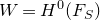 $W=H^0(F_S)$
and either
 $(F_S, H^0(F_S))$
is a rank-two generated subsystem of (E, V) or
 $I_S$
is an invertible subsheaf of E. In the former case we have
 $\mu(S)\lt\mu(M_E)$
, by the linear stability of (E, V). While in the latter case we have
 $W\leqslant V\cap H^0(I_S)$
, and so
 $(I_S, W)$
is a subnet of (E, V), which contradicts the assumption. Summarizing, we have
 $\mu(S)\lt\mu(M_E)$
in the case
 $\dim W=3$
.
If
 $\dim W\geq 4$
, then
 $\deg S^*\geq \delta_3= \lceil3g/4+3\rceil$
, and therefore
 \begin{align*}\mu(S)\leqslant -\left\lceil\frac{3g}{4}+3\right\rceil\lt-\frac{3g}{4}\leqslant \mu(M_E). \end{align*}
Theorem 6.4.
Let C be a general curve and let (E, V) be a generated coherent system of type (3, d, 5) with
 $2\delta_2\leqslant d\leqslant3g/2$
. If E is semistable and (E, V) does not admit generated rank-two subsystems (T, W) with
 $\dim W=3$
, then (E, V) is linearly stable.
Proof. If L is an invertible subsheaf of E, then
 $\deg(L)\leqslant d/3\leqslant g/2$
, because E is semistable. As C is general
 $h^0(L)\leqslant 1$
, so E does not admit any non-trivial generated invertible subsheaf.
Since (E, V) admits no rank-two subsystem (T, W) with
 $\dim W=3$
, so E does not contain any rank-two non-trivial generated subsheaf.
If
 $\mathrm{rk}\,F=3$
, then
 $h^0(F)=4$
and
 $M^*_F$
is a line bundle with
 $h^0(M^*_F)\geq 4$
. So
 $\deg(F)=\deg(M^*_F)\geq \delta_3$
and we obtain
 $\lambda(F)=\deg(F)\geq \delta_3\gt3g/4\geq \lambda(E, V)$
.
We denote by
 $N^2_0(3, d. 5)$
the locus of generated coherent systems of type (3, d, 5) admitting a generated subsystem of type (2, d, 3).
Corollary 6.5.
One has
 $S_0(3, d, 5)\setminus N^2_0(3, d, 5)\subseteq T(3, d, 5).$
Proof. If
 $(F, U)\in S_0(3, d, 5)\setminus N^2_0(3, d, 5)$
, then (F, U) is linearly stable by Theorem 6.4. As (F, U) is
 $\alpha$
-stable for small values of
 $\alpha$
, so F is semistable, and any line bundle
 $L\subset F$
satisfies
 $\deg(L)\leqslant g/2\lt \delta_2$
. Therefore, (F, U) does not admit subnets. We conclude by Theorem 6.3, that (F, U) is stable. Therefore,
 $D(F, U)=(M^*_{F, U}, U^*)$
is
 $\alpha$
-stable for all
 $\alpha$
, in particular
 $(F, U)\in T(3, d, 5)$
by definition of T(3, d, 5).
Proposition 6.6.
Let C be a general curve and
 $X\subseteq \overline{N^2_0(3, d, 5)}$
be an irreducible component. Then, either a general element of X is linearly stable or we have
 \begin{align*}\dim X \lt\beta(3, d, 5).\end{align*}
Proof. Observe first that, as in the proof of Theorem 6.4, an arbitrary coherent system
 $(E,V)\in S_0(3,d,5)$
cannot contain a non-trivial globally generated rank-one subsystem. Furthermore, if
 $(E_1,W)$
is a globally generated rank-three subsystem of (E, V), then
 $ \lambda(E_1, W)\gt\lambda(E, V),$
again by the proof of Theorem 6.4.
If
 $(E, V)\in X$
is a general element, then (E, V) sits in an exact sequence
 \begin{align}\gamma: 0\rightarrow (F, W)\rightarrow (E, V)\rightarrow (L, \overline{W})\rightarrow 0,\end{align}
where (F, W) and
 $(L, \overline{W})$
are generated coherent systems of types
 $(2, d_F, 3)$
and
 $(1, d_L, 2)$
, respectively.
Since F is globally generated, we have
 \begin{align}d_F\ge \delta_2.\end{align}
Indeed, since E is semistable, we have
 $d_F\leqslant g,$
which implies that
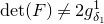 $\det(F)\neq 2g^1_{\delta_1}$
. Therefore, we may apply [Reference Teixidor i BigasTB09, Proposition 2.2], from which it follows that, in the sequence
 $0\rightarrow \mathcal{O}_C \rightarrow F \rightarrow \det(F) \rightarrow 0$
, not all sections of
 $\det(F)$
lift to F. In particular, we have
 $h^0(\det(F))\geq 3$
, and hence
 $\deg(\det(F))\geq \delta_2$
. This establishes (6.7).
Suppose first that every non-trivial and generated rank-two locally free subsheaf
 $F\subset E$
satisfies
 $h^0(F)\geq 4$
. Then, (E, V) is linearly stable. In order to see this, since E is semistable and
 $\mu(E)\lt\delta_1$
, E does not contain any non-trivial invertible subsheaf. If
 $F\subset E$
is any rank-two globally generated subsheaf, then F does not admit a trivial quotient bundle, otherwise F would have a subpencil, which is not possible since
 $\mu(E)\lt\delta_1$
. According to Lemma 3.3 we have
 $d_F\geq g+2$
. So,
 \begin{align*}\lambda(F, W)\geq g+2 \gt\frac{3g}{4}\geq \lambda(E, V),\end{align*}
as required.
Assume next that (E, V) contains a subsystem (F, W) as in (6.6) and
 $W=H^0(F)$
. We consider the sequence
 $0\rightarrow M^*_{L, \overline{W}}\rightarrow M^*_{E,V}\rightarrow M^*_F\rightarrow 0,$
which by
 $M_{L, \bar{W}}=L^*$
is actually the sequence
 \begin{align}\eta: 0\rightarrow L\rightarrow M^*_{E,V}\rightarrow M^*_F\rightarrow 0.\end{align}
Note that any element of
 $H^0(F)^*\subseteq H^0(M^*_F)$
lifts to a section of
 $M^*_{E, V}$
because the elements of
 $H^0(F)^*=W^*$
lift to
 $V^*$
. Therefore,
 $\eta\in \operatorname{Coker}(P_\eta)$
, with
 $P_\eta$
the multiplication map associated to the extension
 $\eta$
in (6.8). We distinguish two cases.
-
• For any F appearing in the sequence
$\gamma$
with
$h^0(F)=3$
, we have
$h^0(M^*_F)\geq 4$
. -
• There exists F appearing in the sequence
$\gamma$
with
$h^0(F)=3$
such that
$H^0(F)^*= H^0(M^*_F)$
.



If we are in the first case, then
 $\deg(M^*_F)\geq \delta_3$
. So
 $\lambda(F)\geq \delta_3\gt 3g/4 \geq \lambda(E, V)$
. From here and from the observation at the beginning of this proof, we conclude that (E, V) is linearly stable.
Denoting by
 $X_0$
the locus of coherent systems (E, V) satisfying the property for the second case, we set
 \begin{align*}t:=\min\{h^0(L): (L, \overline{W})\ \mbox{appears in the sequence (6.6) with}\ (E,V)\in X_0\}.\end{align*}
Then
 $t\geq 2$
. We shall prove that
 \begin{align}\dim X_0\lt \beta(3, d, 5)=\beta(2, d, 5).\end{align}
As (6.8) is obtained from (6.6) uniquely, we have
 \begin{align} \dim X_0\leqslant \beta(1, d_F, 3)+\beta(1, d_L, t)+\dim \operatorname{Coker}(P_\eta)-1.\end{align}
First subcase. If
 $t\geq 3$
, take a coherent system
 $(E,V)\in X_0$
such that (E, V) admits a sequence as (6.6) with
 $h^0(L)=t$
. For general
 $q\in C$
, the multiplication map
 \begin{align*}P^q_\eta: H^0(M^*_F(-q))\otimes H^0(K\otimes L^*) \rightarrow H^0(K\otimes M^*_F\otimes L^*(-q))\end{align*}
satisfies
 \begin{align*}\dim \ker P^q_\eta=h^0(K\otimes L^*\otimes M_F(q))\leqslant 1.\end{align*}
Hence
 $\dim \mathrm{Im}\, P_{\eta}^q \geq 2h^0(K\otimes L^*) - 1$
, and since
 $\dim \mathrm{Im}\, P_\eta \geq \dim \mathrm{Im}\, P_{\eta}^q \geq 2h^0(K\otimes L^*) - 1$
, we have
 \begin{align}\dim \operatorname{Coker} P_\eta \leqslant h^0(M_F^*\otimes K \otimes L^*) -2h^0(K\otimes L^*) +1.\end{align}
Assume first that
 $t=3$
. Then
 $(M_{E,V}^*, V^*) \in N_0(2,d,6)$
and we have
 \begin{align*}\beta(2,d,5)&=(\beta(2,d,5)-\beta(2,d,6))+\beta(2,d,6)\\&=(2g-d+9)+[\beta(1,d_F,3)+\beta(1,d_L,3)+\bar{C}_{21}+\bar{C}_{12}-1],\end{align*}
with
 $\bar{C}_{21}$
and
 $\bar{C}_{12}$
the invariants associated to the types
 $(1, d_F, 3)$
and
 $(1,d_L, 3)$
. From this, by (6.10), the inequality (6.9) holds if
 \begin{align*}\dim \operatorname{Coker}(P_\eta)\lt \bar{C}_{21}+\bar{C}_{12}+(2g-d+9).\end{align*}
On the other hand, a direct computation implies
 \begin{align*}\bar{C}_{21}+\bar{C}_{12}=3d-4(g-1)-18.\end{align*}
Therefore, by (6.11), we have to prove that
 \begin{align} h^0(M_F^*\otimes K \otimes L^*)\lt 2h^0(K\otimes L^*)+2d-2g-6.\end{align}
By the Riemann–Roch theorem,
 $h^0(K\otimes L^*)=g-d_L+2$
, and therefore the inequality (6.12) turns out to be
 \begin{align*} h^0(M_F^*\otimes K \otimes L^*) \lt2(g-d_L+2)+2d-2g-6=2d-2d_L-2.\end{align*}
This, by a simple computation, is equivalent to
 \begin{align} h^0(L\otimes M_F)\lt d_F+d_L-g-1=d-g-1.\end{align}
Since, by (6.7), we have
 $\deg(L\otimes M_F)\leqslant g/6$
, thus
 \begin{align}h^0(L\otimes M_F)\leqslant 1.\end{align}
Now, (6.13) holds as follows:
 \begin{align*}d-g-1\geq 2\delta_2-g-1\geq 2\left(\frac{2g}{3}+1\right)-g-1=\frac{g}{3}+1\gt1\geq h^0(L\otimes M_F),\end{align*}
for
 $g\geq 4$
.
Still within the first subcase, suppose that
 $t\geq 4$
. According to [Reference Bradlow, García–Prada, Muñoz and NewsteadBGPM+03, Corollary 3.7],
 \begin{align*}\beta(2, d, 5)=\beta(1, d_F, 3)+\beta(1, d_L, 2)+C_{21}+C_{12}-1,\end{align*}
with
 $C_{21}$
and
 $C_{12}$
the invariants associated to the types
 $(1, d_F, 3)$
and
 $(1, d_L, 2)$
. So, (6.9) will hold if
 \begin{align*} \dim \operatorname{Coker}(P_\eta)\lt [\beta(1, d_L, 2)-\beta(1, d_L, t)]+C_{21}+C_{12}.\end{align*}
Taking into account the equality
 \begin{align*}C_{21}+C_{12}=-3(g-1) +3d_L +2d_F -12,\end{align*}
obtained from (6.3), a straightforward calculation shows that
 \begin{align*}[\beta(1, d_L, 2)-\beta(1, d_L, t)]+C_{21}+C_{12}=t\cdot h^0(K\otimes L^*) -5g +5d_L +2d_F -11.\end{align*}
Therefore, it remains to prove that
 \begin{align}\dim \operatorname{Coker}(P_\eta)\lt t\cdot h^0(K\otimes L^*) -5g +5d_L +2d_F -11.\end{align}
Hence, in view of (6.11), it suffices to show that
 \begin{align}h^0(M_F^*\otimes K \otimes L^*) \lt (t+2)h^0( K \otimes L^*) -5g+5d_L +2d_F-12.\end{align}
By (6.14), we have
 \begin{align}h^0(M_F^*\otimes K \otimes L^*) = h^0(M_F\otimes L)+(g-1)-d_L+d_F \leqslant g+d_F-d_L.\end{align}
On the other hand, we have
 $h^0( K \otimes L^*)=t+g-d_L-1.$
Hence by (6.17), inequality (6.16) will follow once we show that
 \begin{align*}g+d_F-d_L\lt (t+2)(t+g-1-d_L) - 5g +5d_L +2d_F -12,\end{align*}
which is equivalent to
 \begin{align*}0\lt (t+2)(t+g-1-d_L) - 6g +6d_L +d_F -12=:B.\end{align*}
Since
 $d_L\leqslant g$
, the invariant B satisfies
 \begin{align*}B=(t-4)g-(t-4)d_L+(t+2)(t-1)+d_F-12\geq d_F+18-12\gt0,\end{align*}
as needed.
Second subcase. If
 $t=2$
, i.e., for some rank-one coherent system
 $(L, \overline{W})$
appearing in the sequence (6.6), we have
 $\overline{W}=H^0(L)$
, then
 $V=H^0(E)$
and the sequence (6.6) is a sequence of complete coherent systems. Furthermore, all sections of
 $H^0(L)$
lift to E. Therefore, the extension
 $\eta$
in (6.6) belongs to
 $\operatorname{Coker} P_\gamma$
, where
 $P_\gamma$
is the multiplication map associated with this sequence. If
 $\mathcal{F}$
denotes the locus over which F varies, then
 \begin{align*}\dim X_0\leqslant \dim \mathcal{F}+\beta(1,d_L,2)+\dim \mathrm{Ext}^1(L, F)-1-\dim \mathrm{Im}(P_\gamma).\end{align*}
The association
 $F\mapsto D(F, H^0(F))\in S_0(1, d_F, 3)$
is injective, implying that
 \begin{align*}\dim X_0\leqslant \beta(1, d_F, 3)+\beta(1,d_L,2)+\dim \mathrm{Ext}^1(L, F)-1-\dim \mathrm{Im}(P_\gamma).\end{align*}
Consider that for any
 $E\in \mathrm{Ext}^1(L, F)$
we have
 $M_E^*\in \operatorname{Coker}(P_\eta)$
. Therefore, the injective association
 $(E,H^0(E))\mapsto D(E, H^0(E))$
implies
 \begin{align}\dim X_0\leqslant \beta(1,d_F,3)+\beta(1,d_L,2)+\dim \operatorname{Coker}(P_\eta)-1-\dim \mathrm{Im}(P_\gamma).\end{align}
Therefore, (6.9) will hold if
 \begin{align} \dim \operatorname{Coker}(P_\eta)-\dim \mathrm{Im}(P_\gamma)\lt C_{21}+C_{12}=-3(g-1) +3d_L +2d_F -12.\end{align}
By (6.11) and since
 $h^0(K\otimes L^*)=g-d_L+1$
, we have
 \begin{align*}\dim \operatorname{Coker} P_\eta&\leqslant h^0(M_F^*\otimes K \otimes L^*) -2h^0(K\otimes L^*)+1 \\&=h^0(M_F^*\otimes K \otimes L^*) -2\cdot(g-d_L+1)+1.\end{align*}
Since
 $h^0(L\otimes M_F)\leqslant 1$
by (6.14), we obtain
 \begin{align*}h^0(K\otimes L^*\otimes M_F^*)=h^0(L\otimes M_F)-d_L+d_F+g-1\leqslant g+d_F-d_L.\end{align*}
Thus
 \begin{align*}\dim \operatorname{Coker} P_\eta\leqslant g+d_F-d_L-2\cdot(g-d_L+1)+1=d_F+d_L-g-1=d-g-1.\end{align*}
On the other hand,
 $\dim \mathrm{Im}(P_\gamma)=2 \cdot (2g-d_F+1)-h^0(K\otimes L^*\otimes F^*),$
and since F is generated,
 \begin{align*}h^0(L\otimes F)\leqslant h^0(L)+h^0(L\otimes \det(F))\leqslant 2+d-g+3\leqslant \frac{g}{2}+5.\end{align*}
Hence, we obtain
 \begin{align*}h^0(K\otimes L^*\otimes F^*)=h^0(L\otimes F)+2(g-1)-d_F-2d_L\leqslant \frac{5g}{2}+3-d_F-2d_L,\end{align*}
and therefore
 \begin{align*}\dim \mathrm{Im}(P_\gamma)\geq (4g-2d_F+2)-\left(\frac{5g}{2}+3-d_F-2d_L\right)=\frac{3g}{2}-d_F+2d_L-1.\end{align*}
Summarizing, we conclude that
 \begin{align*}\dim \operatorname{Coker}(P_\eta)-\dim \mathrm{Im}(P_\gamma)\leqslant (d-g-1)-\left(\frac{3g}{2}-d_F+2d_L-1\right)=d+d_F-2d_L-\frac{5g}{2}.\end{align*}
Hence, inequality (6.19) will hold if
 \begin{align*}d+d_F-2d_L-\frac{5g}{2}\lt-3(g-1)+3d_L+2d_F-12,\end{align*}
which follows immediately from
 $d_L\gt\delta_1$
.
Corollary 6.7.
If non-empty, then
 $T_0(3,d,5)\subseteq S_0(3, d, 5)$
is dense.
Theorem 6.8
Let C be a general curve and (E, V) be a generated coherent system of type (2,d, 5) with
 $2\delta_2\leqslant d\leqslant3g/2$
. Then, the following statements are equivalent:
-
• (E, V) is linearly (semi)stable;
-
•
$M_{E, V}$
is slope (semi)stable.

Proof. If
 $M_{E,V}$
is (semi)stable, then (E, V) is trivially linearly (semi)stable. Conversely, suppose (E, V) is linearly stable, and consider a proper semistable subbundle
 $S\subsetneq M_E$
. If
 $\mathrm{rk}\,S=1$
and S destabilizes
 $M_E$
, then
 $\deg(S^*)\leqslant d_E/3\le g/2$
. This is impossible on a general curve because
 $h^0(S^*)\geq 2$
.
Now assume
 $\mathrm{rk}\,S=2$
, so
 $3\leqslant \dim W\leqslant 5$
. Note that
 $Q=M_E/S$
is a subsheaf of the trivial bundle
 $V/W\otimes \mathcal{O}_C$
. Therefore,
 $\deg Q\leqslant 0$
, implying
 $\deg(M_E)\leqslant \deg S$
, and consequently
 \begin{align*}\deg S^*\leqslant \deg M^*_E =\deg E\leqslant \frac{3g}{2}\leqslant 2g-2.\end{align*}
Hence, if
 $4\leqslant \dim W\leqslant 5$
, then
 $S^*$
contributes in
 $\operatorname{Cliff}_2(C)$
. The inequality
 $\mu(S)\geq \mu(M_E)$
would imply
 \begin{align*}\operatorname{Cliff}_2(C)\leqslant \frac{-\deg(S)}{2}-2\leqslant \frac{d_E}{3}-2\leqslant \frac{g}{2}-2,\end{align*}
which contradicts the equality
 $\operatorname{Cliff}_2(C) = \operatorname{Cliff}(C)$
. This, by [Reference Bakker and FarkasBF18], is absurd on a general curve.
If
 $\dim W=3$
, then
 $\alpha_S$
is injective and the result follows from the definition of linear (semi)stability for E.
Theorem 6.9.
Let C be a general curve and (E, V) a generated coherent system of type (2, d, 5) with
 $2\delta_2\leqslant d\leqslant3g/2$
. If (E, V) does not admit a rank-one subsystem (L, W) with
 $\dim W=3$
, i.e.,
 $(E, V)\notin N_0(2, d, 5)$
, then (E,V) is linearly stable.
Proof. If (L, W) is a globally generated subpencil of (E, V), and
 $\dim W=2$
, then
 $\lambda(L, W)=d_L\geq \delta_1\gt g/2\geq d_E/3= \lambda(E, V)$
.
Assume (F, U) is a globally generated subsystem of (E, V), with a rank-two locally free subsheaf of E and
 $U \subset H^0(F)\cap V $
. Since
 $\lambda(F, U)\geq \lambda(F)$
, to prove
 $\lambda(F, U)\geq \lambda(E, V)$
, it suffices to consider the case
 $U=H^0(F)$
. Thus, we assume
 $h^0(F)=4$
. Note that F cannot be an extension of the form
 $0\rightarrow L\rightarrow F\rightarrow \mathcal{O}_C \rightarrow 0$
, because otherwise (
 $L, H^0(L)$
) would be a rank-one subsystem of (E, V) with
 $h^0(L)\geq 3$
.
Suppose that F is semistable. Since, as in Theorem 6.8, we have
 $\mu(F)\leqslant 2g-2$
, hence F contributes to
 $\operatorname{Cliff}_2(C)$
, and by Mercat’s theorem for rank-two bundles [Reference Bakker and FarkasBF18], we have
 \begin{align} \operatorname{Cliff}(F)\geq \operatorname{Cliff}_2(C)=\operatorname{Cliff}(C)\geq \frac{g-1}{2}-1. \end{align}
If F is non-semistable and admits no trivial quotient, then the inequality (6.20) holds by Lemma 3.3. In either case we have
 $g+1\leqslant\deg(F)$
. Therefore, for each subspace
 $U \subseteq H^0(F)$
generating F with
 $U\subset V\cap H^0(F)$
, we have
 \begin{align*}\lambda(E, V)\leqslant\frac{g}{2}\lt\frac{g+1}{2}\leqslant\frac{\deg(F)}{2}=\lambda(F) \leqslant\lambda(F, U).\end{align*}
Assume finally that
 $h^0(F)=3$
, then we have
 $\lambda(F)=d_F\geq \delta_1\gt g/2\geq \lambda(E, V)$
, as required.
Corollary 6.10.
Suppose C is a general curve and d is an integer with
 $2\delta_2\leqslant d\leqslant3g/2$
. Then, we have
 \begin{align*}S_0(2, d, 5)\setminus N_0(2, d, 5)\subseteq T(2, d, 5).\end{align*}
Lemma 6.11.
The locus
 $N_0(n, d,n+m)$
is closed in
 $S_0(n, d, n+m)$
and
 $N_0(2, d,5)$
does not fill any irreducible component of
 $S_0(2, d, 5)$
.
Proof. A verbatim repetition of the proof of [Reference Brambila-Paz, Mata-Gutiérrez, Newstead and OrtegaBPMG+19, Lemma 4.5] shows that
 $N_0(n, d, n+m)$
is closed in
 $S_0(n, d, n+m)$
.
In order to prove the second statement, likewise in Proposition 6.6, we shall prove that
 \begin{align}\dim X\lt \beta(2, d, 5) \end{align}
for any irreducible component
 $X\subset N_0(2, d, 5)$
. If
 $(E, V)\in X$
is a general element, then (E, V) sits in an exact sequence
 \begin{align}\gamma_2: 0\rightarrow (F, W)\rightarrow (E, V)\rightarrow (L, \overline{W})\rightarrow 0,\end{align}
where (F, W) and
 $(L, \overline{W})$
are generated coherent systems of types
 $(1, d_F, 3)$
and
 $(1, d_L, 2)$
,respectively.
Since
 $h^0(F)\geq 3$
, we have
 $d_F\ge \delta_2$
, and as E is semistable, we have
 $d_F\leqslant 3g/4\lt\delta_3$
, so
 $h^0(F)=3$
. Then any subsystem (F, W) appearing in the sequence (6.22) is complete. Additionally, since
 $F\neq 2g^1_{\delta_1}$
, we have
 $h^0(M_F^*)=h^0(F)=3$
by [Reference Teixidor i BigasTB09, Theorem 2.4].
As in Proposition 6.6, we consider the sequence
 \begin{align}\eta_2: 0\rightarrow L\rightarrow M^*_{E,V}\rightarrow M^*_F\rightarrow 0,\end{align}
and we have
 $\eta_2\in \operatorname{Coker}(P_{\eta_2})$
, with
 $P_{\eta_2}$
the multiplication map associated to the extension
 $\eta_2$
in (6.23). We also set
 \begin{align*}t:=\min\{h^0(L): (L, \overline{W})\ \mbox{appears in the sequence (6.22) with}\ (E,V)\in X\}.\end{align*}
Again, we have
 \begin{align} \dim X\leqslant \beta(1, d_F, 3)+\beta(1, d_L, t)+\dim \operatorname{Coker}(P_{\eta_2})-1.\end{align}
First subcase. If
 $t=2$
, i.e., for some rank-one coherent system
 $(L, \overline{W})$
appearing in the sequence (6.22), we have
 $\overline{W}=H^0(L)$
, then
 $V=H^0(E)$
and the sequence (6.22) is a sequence of complete coherent systems. Furthermore, all sections of
 $H^0(L)$
lift to E. Therefore, the extension
 $\gamma_2$
in (6.22) belongs to
 $\operatorname{Coker} P_{\gamma_2}$
, where
 $P_{\gamma_2}$
is the multiplication map associated with this sequence and we have
 \begin{align}\dim X\leqslant \beta(1,d_F,3)+\beta(1,d_L,2)+\dim \operatorname{Coker} (P_{\gamma_2})-1.\end{align}
Therefore, (6.21) will hold if
 \begin{align}\dim \operatorname{Coker} (P_{\gamma_2})\lt C_{21}+C_{12},\end{align}
which in this case is
 $C_{21}+C_{12}=3d_L+2d_F-3g-9$
. Since
 $\deg (K\otimes F^*\otimes L^*) \lt \delta_2$
,
 \begin{align*}\dim \mathrm{Ker} (P_{\gamma_2})=h^0(K\otimes L^*\otimes F^*)\leqslant 2.\end{align*}
Hence,
 \begin{align*}\dim \operatorname{Coker} P_{\gamma_2}&\leqslant h^0(K\otimes L \otimes F^*) -2h^0(K\otimes F^*)+2 \\&=h^0(K\otimes L \otimes F^*)-2\cdot(g-d_F+2)+2.\end{align*}
Since
 $\deg(F\otimes L^*)\leqslant 0$
and
 $L\neq F$
, so
 $h^0(F\otimes L^*)=0$
. Thus,
 \begin{align*}\dim \operatorname{Coker} P_{\gamma_2}\leqslant (g+d_L-d_F-1)-2\cdot(g-d_F+2)+2=d_F+d_L-g-4=d-g-3.\end{align*}
So we have to prove
 $d-g-3\lt 3d_L+2d_F-3g-9$
, which is equivalent to
 \begin{align}2g+6\lt d_L+d.\end{align}
If
 $d=2\delta_2$
, then it is shown in the proof of [Reference Castorena and HitchingCH24, Theorem D] that a coherent system
 $(E, V)\in S_0(2,d, 5)$
does not admit any subnet. Hence
 $N_0(2, 2\delta_2, 5)=\varnothing$
, and therefore we assume that
 $d\geq 2\delta_2+1$
. Now, the inequality (6.27) follows from
 $d+d_L\geq 3\delta_2+1 \gt2g+6 $
.
Second subcase. If
 $t\geq 3$
, take a coherent system
 $(E,V)\in X$
, admitting a sequence as (6.22) with
 $h^0(L)=t$
. Consider the multiplication map
 \begin{align*}P_{\eta_2}: H^0(M^*_F)\otimes H^0(K\otimes L^*) \rightarrow H^0(K\otimes M^*_F\otimes L^*)\end{align*}
associated to the exact sequence (6.23). Since
 $\det(M_F^*)=F$
, we have the following exact sequence:
 \begin{align}0\rightarrow \mathcal{O}_C\rightarrow M_F^* \stackrel{\theta}{\longrightarrow} F\rightarrow 0.\end{align}
Likewise in [Reference BajravaniBaj20], we derive the following diagram

in which
 $H:=\mathrm{Im}(H^0(\theta))$
. See also [Reference Asefi Nazarlou, Bajravani and HitchingANBH25]. The Snake Lemma applied to Diagram (6.29) gives
 \begin{align*}\dim \mathrm{Ker}(P_{\eta_2})\leqslant \dim \mathrm{Ker}(P).\end{align*}
Consider now that
 $\dim H=2$
and F is generated by H. So, by the basepoint-free pencil trick, we obtain
 \begin{align*}\mathrm{Ker}(P)=H^0(K\otimes L^*\otimes F^*).\end{align*}
Therefore,
 $\dim \mathrm{Ker}(P)\leqslant 2$
, so
 $\dim \mathrm{Ker}(P_{\eta_2})\leqslant 2$
and
 $\dim \mathrm{Im}(P_{\eta_2})\geq 3\cdot(h^0(L)+g-d_L -1)-2.$
Hence,
 \begin{align}\dim \operatorname{Coker} P_{\eta_2} \leqslant h^0(K\otimes M_F^* \otimes L^*) -3\cdot (g-d_L +2)+2.\end{align}
Now, by (6.24), we shall prove
 \begin{align*}\dim \operatorname{Coker}(P_{\eta_2})\lt[\beta(1,d_L,2)-\beta(1,d_L,t)]+(3d_L+2d_F-3g-9),\end{align*}
for
 $t\geq 3$
, and by (6.30) this will hold if
 \begin{align*} h^0(K\otimes M_F^* \otimes L^*) -3\cdot (g-d_L +2)+2\lt [\beta(1,d_L,2)-\beta(1,d_L,t)]+(3d_L+2d_F-3g-9),\end{align*}
which is equivalent to
 \begin{align}h^0(K\otimes M_F^* \otimes L^*) &\lt [\beta(1,d_L,2)-\beta(1,d_L,t)]+2d_F -5 \nonumber\\&=(t-2)(g-d_L+1)+t(t-2)+2d_F -5.\end{align}
Now, in the exact sequence
 \begin{align*}0\rightarrow K\otimes L^*\rightarrow K\otimes L^*\otimes M_F^* \rightarrow K\otimes L^*\otimes F\rightarrow 0,\end{align*}
obtained from (6.28), we have
 $h^0(K\otimes L^*\otimes F)\leqslant g$
, because
 $\deg(F\otimes L^*)\leqslant 0$
. Therefore,
 \begin{align}h^0(K\otimes L^*\otimes M_F^*)\leqslant g+(t+g-d_L -1).\end{align}
Summarizing, by (6.31) and (6.32) we have to prove that
 \begin{align*}g\lt(t-3)(g-d_L+1)+(t-1)(t-2)+2d_F-5.\end{align*}
Since
 $t\geq 3$
and
 $g-d_L+1\geq 0$
, it suffices to prove
 \begin{align*}(t-1)(t-2)+2d_F-5\gt g,\end{align*}
which by
 $d_F\geq \delta_2$
is immediate.
Corollary 6.12.
If non-empty, then
 $T_0(2,d,5)\subseteq S_0(2, d, 5)$
is dense.
6.3. Non-emptiness and Butler’s conjecture
As before, let C be a general curve. We recall the following lemma from [Reference Castorena and HitchingCH24], which is a key tool in producing rank-two vector bundles with prescribed number of sections.
Lemma 6.13 [Reference Castorena and HitchingCH24, Lemma 4.1]. Let
 $L_1$
and
 $L_2$
be generated line bundles over C. For
 $i\in \{1,2\}$
, write
 $\deg L_i =: l_i$
and
 $h^0(L_i) =: k_i$
. Suppose that
 \begin{align} l_2 \gt k_1k_2 +(k_2-1)(g-1-l_1).\end{align}
Then, there exists a non-trivial extension
 $0 \rightarrow L_1 \rightarrow E \rightarrow L_2 \rightarrow 0$
in which all sections of
 $L_2$
lift to E. In particular, the coherent system
 $(E,H^0(E))$
is of type
 $(2,l_1 + l_2, k_1 + k_2)$
and generated.
Lemma 6.14.
-
(i) The locus
$S_0(2, d, 5)$
is non-empty for
$d\geq 2\delta_2$
. -
(ii) The locus T(2, d, 5) is non-empty whenever
$ 2\delta_2\leqslant d \leqslant 3g/2$
.



Proof. (i) We apply an argument analogous to that used in the proof of [Reference Castorena and HitchingCH24, Theorem D]. Let
 $\beta\geq 0$
be an integer. Since C is general, there are globally generated line bundles
 $L_1\in W^1_{\delta_2+\beta}$
and
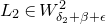 $L_2\in W^2_{\delta_2+\beta+\epsilon}$
with
 $\epsilon\in \{0, 1\}$
.
As the locus
 $S_0(2, d, 5)$
is proved to be non-empty for
 $d=2\delta_2$
in [Reference Castorena and HitchingCH24, Theorem D], we prove the non-emptiness of
 $S_0(2, d, 5)$
for
 $d\geq 2\delta_2+1$
. If
 $\beta=0$
, then we take
 $\epsilon=1$
and observe that
 \begin{align*}\delta_2+1 \gt 6+2\cdot (g-1-\delta_2).\end{align*}
Therefore, by Lemma 6.13, there exists a non-trivial extension
 $e: 0\rightarrow L_1\to E\to L_2\to 0$
, with
 $L_1\in W^1_{\delta_2}$
and
 $L_2\in W^2_{\delta_2+1}$
such that all sections of
 $L_2$
lift to E.
If
 $\beta\geq 1$
, then the inequality
 \begin{align*}\delta_2+\beta+\epsilon \gt 6+2\cdot (g-1-\delta_2-\beta)\end{align*}
holds for all g. So, again by Lemma 6.13, there exists a non-trivial extension
 $e: 0\rightarrow L_1\to E\to L_2\to 0$
such that all sections of
 $L_2$
lift to E. Since
 $L_1$
and
 $L_2$
are globally generated, so is the coherent system
 $(E, H^0(E))$
. Observe that, for an arbitrary invertible subsheaf M of E, either
 $L_1\cap M=0$
or
 $L_1\cap M$
is a subsheaf of
 $L_1$
and M is actually a subsheaf of
 $L_1$
, so
 $h^0(M)\leqslant 2$
. In the former case there is a non-zero map
 $M \rightarrow L_2$
. Since the extension (e) is non-trivial,
 $\deg M \leqslant \deg L_2-1 = \delta_2 + \beta +\epsilon - 1 $
(otherwise
 $M\simeq L_2$
). Hence
 $\deg M \leqslant \delta_2 + \beta$
. Since
 $L_2$
is globally generated, its non-trivial subsheaves have at most two sections. So
 $h^0(M) \leqslant 2 $
, for any non-trivial subsheaf M of E. Therefore,
 \begin{align*}\mu_\alpha(M, W)\leqslant \delta_2+\beta+2\alpha\lt \delta_2+\beta+\frac{5\alpha}{2}=\mu_\alpha(E, H^0(E)),\end{align*}
for
 $W\leqslant H^0(M)$
, implying that
 $(E, H^0(E))$
is
 $\alpha$
-stable for any
 $\alpha \gt0$
. Consequently
 $S_0(2, d, 5)$
would be non-empty for d in the given range.
(ii) The bundles E constructed in part (i) do not admit any invertible subsheaf with at least three sections. Hence, they are linearly stable by Lemma 6.9. Therefore,
 $M^*_E$
is stable by Lemma 6.8, so
 $M^*_E$
is
 $\alpha$
-stable for all
 $\alpha\gt0$
. We conclude that
 $(E, H^0(E))\in T(2, d, 5)$
, by definition.
Lemma 6.15.
The locus T(3, d, 5) is non-empty for
 $ 2\delta_2\leqslant d\leqslant 3g/2$
.
Theorem 6.16.
Suppose C is a general curve and
 $2\delta_2\leqslant d\leqslant 3g/2$
. Then, the Butler conjecture holds non-trivially for coherent systems of type (2, d, 5).
Proof. It follows from Corollary 6.10, and Lemmas 6.11 and 6.14 that T(2, d, 5) is non-empty and dense in
 $S_0(2, d, 5)$
.
According to Lemma 6.3 and Proposition 6.4, a general element of any irreducible component
 $X\subseteq S_0(3, d, 5)$
belongs to T(3, d, 5). This together with Lemma 6.15 implies that T(3, d, 5) is non-empty and dense in
 $S_0(3, d, 5)$
.
Remark 6.17. Our result on Butler’s conjecture extends [Reference Castorena and HitchingCH24, Theorem D] to a large range of degrees. The approach is also different: we use the linear equivalence of the coherent systems of type (2, d, 5) in that range and analyze the components of
 $S_0(2,d,5)$
and
 $S_0(3,d,5)$
from the linear stability point of view, whereas in [Reference Castorena and HitchingCH24] the authors establish that, in a certain range of the degree, a coherent system of type (2, d, 5) is
 $\alpha$
-stable for a large
 $\alpha$
in order to prove that the kernel bundle is semistable.
Remark 6.18. Castorena and Hitching [Reference Castorena and HitchingCH25] proved new results on the (semi)stability of Lazarsfeld–Mukai bundles in higher ranks. In particular, they show [Reference Castorena and HitchingCH25, Theorem 5.4] that there exists a degree threshold
 $d_0$
such that, for every bundle E of rank r and degree
 $d\geq d_0$
, there exists a generating subspace of sections
 \[V\subseteq H^0(E), \quad \dim V=r+2,\]
for which (E, V) is linearly stable while
 $M_{E,V}$
fails to be semistable.
Even under the additional assumption that (E, V) is
 $\alpha$
-stable for sufficiently small values of
 $\alpha$
, their result does not contradict ours. Indeed, as follows from their proof, their argument seems to rely heavily on the lower bound on the integer
 $d_0$
, which is bounded below by
 $2\delta_3+1$
for
 $r=2$
. Hence, their result applies only in the range
 \[d\geq 2\delta_3+1,\]
which lies outside the degree range considered in our work.
Acknowledgements
During this project, AB visited George Harry Hitching at OsloMet University and wishes to thank him for his warm hospitality and for highly enjoyable and insightful conversations on this topic. He would also like to thank Abel Castorena for helpful discussions. The authors are also sincerely grateful to the anonymous referees for their careful reading of the manuscript and for several insightful comments and suggestions that improved the article.
Financial support
The first-named author was supported by a George Forster Fellowship at Humboldt-Universität zu Berlin. He is deeply grateful to Gavril Farkas and the Alexander von Humboldt Foundation for their generous support.
Conflicts of interest
None.
Journal information
Moduli is published as a joint venture of the Foundation Compositio Mathematica and the London Mathematical Society. As not-for-profit organisations, the Foundation and Society reinvest
 $100\%$
of any surplus generated from their publications back into mathematics through their charitable activities.


 Open access

