Introduction
Cognitive reserve (CR) refers to individual differences in task performance that may allow some people to be more resilient than others with respect to coping with brain pathology (Stern, Reference Stern2012). CR has been mainly described in epidemiological observations in the context of ageing and Alzheimer' disease, and its role has been explored in dementia prevention, intervention and care (Livingston et al., Reference Livingston, Huntley, Sommerlad, Ames, Ballard, Banerjee and Mukadam2020). It has been suggested that CR also plays a key role in both the onset of schizophrenia spectrum disorder (SSD) (Barnett, Salmond, Jones, & Sahakian, Reference Barnett, Salmond, Jones and Sahakian2006; Gunnell, Harrison, Rasmussen, Fouskakis, & Tynelius, Reference Gunnell, Harrison, Rasmussen, Fouskakis and Tynelius2002; Khandaker, Barnett, White, & Jones, Reference Khandaker, Barnett, White and Jones2011; Koenen et al., Reference Koenen, Moffitt, Roberts, Martin, Kubzansky, Harrington and Caspi2009) and the course of the disease (Amoretti et al., Reference Amoretti, Bernardo, Bonnin, Bioque, Cabrera, Mezquida and Torrent2016, Reference Amoretti, Cabrera, Torrent, Mezquida, Lobo and Gonzalez-Pinto2018; Barnett et al., Reference Barnett, Salmond, Jones and Sahakian2006; de la Serna et al., Reference de la Serna, Andres-Perpina, Puig, Baeza, Bombin, Bartres-Faz and Castro-Fornieles2013; Leeson et al., Reference Leeson, Sharma, Harrison, Ron, Barnes and Joyce2011; Van Rheenen et al., Reference Van Rheenen, Cropley, Fagerlund, Wannan, Bruggemann, Lenroot and Pantelis2020). A recent systematic review found that people with high CR seems to have a lower risk of developing schizophrenia, and more benign forms of the illness with a later age at psychosis onset, and better cognitive, functional and clinical outcomes (Herrero et al., Reference Herrero, Contador, Stern, Fernandez-Calvo, Sanchez and Ramos2020). In addition, CR has been associated with better clinical, neuropsychological and functional outcomes in patients diagnosed with a first episode of psychosis (FEP) at 2-year follow-up (Amoretti et al., Reference Amoretti, Rosa, Mezquida, Cabrera, Ribeiro, Molina and Group2020), even in those diagnosed during childhood or adolescence at 5-year follow-up (Camprodon-Boadas et al., Reference Camprodon-Boadas, de la Serna, Baeza, Puig, Ilzarbe, Sugranyes and Castro-Fornieles2020).
In the absence of specific tools to establish CR at illness onset, several proxies have been used as quantitative measures to estimate CR in FEP patients. Many studies consider a single variable, such as intelligence quotient (IQ) (Barnett et al., Reference Barnett, Salmond, Jones and Sahakian2006; Gonzalez-Ortega et al., Reference Gonzalez-Ortega, Gonzalez-Pinto, Alberich, Echeburua, Bernardo, Cabrera and Selva2019; Leeson, Harrison, Ron, Barnes, & Joyce, Reference Leeson, Harrison, Ron, Barnes and Joyce2012), level of education (Kanchanatawan et al., Reference Kanchanatawan, Sriswasdi, Thika, Stoyanov, Sirivichayakul, Carvalho and Maes2018) and premorbid functioning (Buonocore et al., Reference Buonocore, Bechi, Uberti, Spangaro, Cocchi, Guglielmino and Cavallaro2018). However, a composite measure that combines several CR proxies may be preferable (Amoretti et al., Reference Amoretti, Cabrera, Torrent, Mezquida, Lobo and Gonzalez-Pinto2018; de la Serna et al., Reference de la Serna, Andres-Perpina, Puig, Baeza, Bombin, Bartres-Faz and Castro-Fornieles2013). Furthermore, due to the heterogeneity of FEP patients at illness presentation and course (Cocchi et al., Reference Cocchi, Cerati, Lora, Meneghelli, Monzani, Percudani and Preti2013), subgrouping these patients using methods such as cluster analysis is a very useful approach for understanding the variability in aetiologies and outcomes (Dollfus et al., Reference Dollfus, Everitt, Ribeyre, Assouly-Besse, Sharp and Petit1996; Pan et al., Reference Pan, Pu, Chen, Huang, Cai, Tao and Palaniyappan2020).
The current study aims to explore the role of CR by means of a composite score that includes premorbid IQ, years of education and premorbid adjustment in a large sample of FEP patients using cluster analyses and a longitudinal design. We hypothesise that patients with a higher CR will present later age at illness onset and shorter duration of untreated psychosis (DUP); they will show as well a more favourable long-term clinical course, in form of less severe positive and negative symptoms, and better cognitive performance both at baseline and at follow-ups.
Materials and methods
Settings
Data for the current study were obtained from a large cohort of patients representative of the general population of individuals suffering from a FEP in an epidemiological catchment area, which is the autonomous community of Cantabria, located in the Northern coast of Spain. FEP was defined as first contact for schizophrenia or related syndromes (according to the ICD-10) with any public mental health service. Individuals with a FEP of non-affective psychosis were treated in a longitudinal intervention programme (Programa de Atención a Fases Iniciales de Psicosis, PAFIP) conducted at the University Hospital Marqués de Valdecilla. Referrals to the PAFIP came from the inpatient unit and emergency room, and from other health-care workers throughout the region of Cantabria. After the initial contact by a qualified psychiatric nurse, an experienced psychiatrist carried out a formal interview for a full assessment of the patient and confirmed the presence of schizophrenia and other primary psychotic disorders. PAFIP includes inpatient and outpatient care and provides multidisciplinary (psychiatric nursing, psychology, psychiatry and social work) and specific and personalised clinical attention from the first contact with PAFIP staff up to 3 years (Crespo-Facorro, Gonzalez-Blanch, & Pelayo-Teran, Reference Crespo-Facorro, Gonzalez-Blanch and Pelayo-Teran2005; Crespo-Facorro et al., Reference Crespo-Facorro, Perez-Iglesias, Ramirez-Bonilla, Martinez-Garcia, Llorca and Luis Vazquez-Barquero2006; Pelayo-Teran et al., Reference Pelayo-Teran, Perez-Iglesias, Ramirez-Bonilla, Gonzalez-Blanch, Martinez-Garcia, Pardo-Garcia and Crespo-Facorro2008; Son et al., Reference Son, Gomez-Revuelta, Ayesa-Arriola, Vazquez-Bourgon, Foz, Ruiz-Veguilla and Crespo-Facorro2021).
Participants
From February 2001 to January 2017, all referrals to PAFIP were screened for patients who met the following criteria: (1) 15–60 years; (2) living in the catchment area; (3) experiencing their FEP; (4) no prior treatment with antipsychotic medication or, if previously treated, a total lifetime of adequate antipsychotic treatment of <6 weeks; and (5) DSM-IV criteria for brief psychotic disorder, schizophreniform disorder, schizophrenia, or schizoaffective disorder. Patients were excluded for any of the following reasons: (1) meeting DSM-IV criteria for drug dependence, (2) meeting DSM-IV criteria for mental retardation (IQ below 70), or (3) having a history of neurological disease or head injury. A temporary diagnosis (according to DSM-IV diagnostic criteria for clinical categories within inclusion criteria) was given at the initial presentation, and was validated 6 months after the baseline visit by means of the Structured Clinical Interview for DSM-IV (SCID-I) (First, Spitzer, Gibbon, & Williams, Reference First, Spitzer, Gibbon and Williams1996). The diagnoses were confirmed following the same methodology 6 months after the baseline visit and revalidated at 3 years follow-up. All patients included in PAFIP from 2001 to 2008 were invited for a reassessment 10 years after initial presentation, which comprised the PAFIP-10 study group (Ayesa-Arriola et al., Reference Ayesa-Arriola, Ortiz-Garcia de la Foz, Martinez-Garcia, Setien-Suero, Ramirez, Suarez-Pinilla and Crespo-Facorro2019). Diagnosis were revalidated in this moment as well. All diagnosis were carried out by the same psychiatrist (BC-F).
Measures
Premorbid and sociodemographic information was recorded from interviews with patients, their relatives and from medical records on admission. Sex, age, age at psychosis onset (defined as the age when the emergence of the first continuous psychotic symptom occurred), and DUP(defined as the time from the first continuous psychotic symptom to initiation of adequate antipsychotic drug treatment), socioeconomic status derived from the parents’ occupation (‘low qualification worker’ v. ‘other’), living area (‘urban’ v. ‘rural’, defined as more or less than 10 000 inhabitants, respectively), relationship status (‘married/cohabiting’ v. ‘single/divorced/separate or widowed’), living status (‘alone’ v. ‘other’), employment status (‘employed’ v. ‘unemployed’), and first degree family history of psychosis, which was based on the subject and family reports (‘yes’ v. ‘no’), as well as tobacco, alcohol and cannabis consumption (self-referred) as dichotomous (no/yes) measures were recorded. Premorbid social adjustment was measured by the Premorbid Adjustment Scale (PAS) (Cannon-Spoor, Potkin, & Wyatt, Reference Cannon-Spoor, Potkin and Wyatt1982).
Clinical data were collected at three different points. The same senior consultant psychiatrist (BC-F) interviewed patients at the baseline, 3-year and 10 years follow-up. Clinical symptoms of psychosis were assessed by the Scale for the Assessment of Negative Symptoms (SANS) (Andreasen, Reference Andreasen1983) and the Scale for the Assessment of Positive Symptoms (SAPS) (Andreasen, Reference Andreasen1984). SANS-SAPS dimensions of positive (scores for hallucinations and delusions), disorganised (scores for formal thought disorder, bizarre behaviour and inappropriate affect) and negative (scores for alogia, affective fattening, apathy and anhedonia) symptoms were calculated. Manic symptoms were assessed with the Young Mania Rating Scale (YMRS) (Young, Biggs, Ziegler, & Meyer, Reference Young, Biggs, Ziegler and Meyer1978), general psychopathology was assessed with the Brief Psychiatric Rating Scale (BPRS) (expanded version of 24 items) (Flemenbaum & Zimmermann, Reference Flemenbaum and Zimmermann1973) and Clinical Global Impression (CGI) scale, and depressive symptom severity was measured using the Calgary Depression Scale for Schizophrenia (CDSS) (Addington, Addington, & Maticka-Tyndale, Reference Addington, Addington and Maticka-Tyndale1993). Functional outcome was assessed with the Disability Assessment Scale (DAS) (Mañá, Ivorra, & Girón, Reference Mañá, Ivorra and Girón1998).
Clinical stability was established based on electronic medical record and an interview with the patient and caregivers and, following (Mayoral-van Son et al., Reference Mayoral-van Son, de la Foz, Martinez-Garcia, Moreno, Parrilla-Escobar, Valdizan and Crespo-Facorro2016) criteria for discontinuation, it was confirmed when no relapse or clinical exacerbation, no record of hospitalisations, no suicide attempts, no changes in the prescribed antipsychotic treatment and no changes in his/her functional status was reported during the previous year.
Baseline neurocognitive domains were evaluated when the patients’ clinical status permitted in order to maximise cooperation and occurred at a mean of 10.5 weeks after intake. The same trained neuropsychologists (RA-A and ES-S) carried out the neuropsychological assessments of the FEP patients. In addition, a group of 187 healthy controls (HC) that were used to standardise the raw scores was neuropsychologically assessed. Briefly, this group of healthy volunteers (40 females, age range 15–50 years) were initially recruited from the community through advertisements. They had no current or past history of psychiatric, neurological or general medical illnesses, including substance abuse and significant loss of consciousness, as determined by using an abbreviated version of the Comprehensive Assessment of Symptoms and History (CASH).
The tests were grouped in the following cognitive domains consistently shown to be impaired in schizophrenia (Nuechterlein et al., Reference Nuechterlein, Barch, Gold, Goldberg, Green and Heaton2004): (1) Verbal memory: the Rey Auditory Verbal Learning Test (RAVLT) (Rey, Reference Rey1964); (2) Visual memory: Rey Complex Figure (RCF) (Osterrieth, Reference Osterrieth1944); (3) Working memory: WAIS-III digits forward and backward subtests (Wechsler, Reference Wechsler1997); (4) Executive function: Trail Making Test (TMT) (Reitan & Wolfson, Reference Reitan and Wolfson1985); (5) Processing speed: WAIS-III digit symbol subtest (Wechsler, Reference Wechsler1997); (6) Motor dexterity: Grooved Pegboard Test (Lezak, Reference Lezak1995); (7) Attention: Continuous Performance Test (CPT) (Cegalis & J., Reference Cegalis and Bowlin1991). According with previous methodology (Reichenberg et al., Reference Reichenberg, Harvey, Bowie, Mojtabai, Rabinowitz, Heaton and Bromet2009), a measure of Global Cognitive Functioning (GCF) was calculated. Briefly, using raw scores from the previously mentioned healthy comparison sample, T-scores (M = 50, s.d. = 10) were calculated and converted into deficit scores ranging from 0 (indicating no deficit) to 5 (denoting severe deficit). A single score for GCF was obtained as the average of the deficit scores on the seven cognitive domains.
Assessment of cognitive reserve
Our determination of the CR clusters was based on previous literature (Amoretti et al., Reference Amoretti, Cabrera, Torrent, Mezquida, Lobo and Gonzalez-Pinto2018; Buonocore et al., Reference Buonocore, Bechi, Uberti, Spangaro, Cocchi, Guglielmino and Cavallaro2018; de la Serna et al., Reference de la Serna, Andres-Perpina, Puig, Baeza, Bombin, Bartres-Faz and Castro-Fornieles2013). Briefly, (de la Serna et al., Reference de la Serna, Andres-Perpina, Puig, Baeza, Bombin, Bartres-Faz and Castro-Fornieles2013) created a composite score from several CR proxies (IQ, Education-Occupation, Leisure-Social activities) using a Confirmatory Factor Analysis. Amoretti et al. (Reference Amoretti, Cabrera, Torrent, Mezquida, Lobo and Gonzalez-Pinto2018) also created a composite score from several CR proxies (IQ, Education-Occupation, Premorbid Adjustment) using principal component analysis (PCA). Buonocore et al. (Reference Buonocore, Bechi, Uberti, Spangaro, Cocchi, Guglielmino and Cavallaro2018) produced three CR profiles from a k-means cluster analysis that used IQ and Premorbid Adjustment as CR proxies.
Three variables were selected as input variables to be included in the PCA.
(1) Premorbid IQ was estimated with the Vocabulary subtest WAIS-III (Lezak, Reference Lezak1995; Wechsler, Reference Wechsler1997). Vocabulary, as a measure of crystallised intelligence, has been widely used to generate an estimate of the IQ (Ayesa-Arriola et al., Reference Ayesa-Arriola, Setien-Suero, Neergaard, Belzunces, Contreras, van Haren and Crespo-Facorro2018; Ringe, Saine, Lacritz, Hynan, & Cullum, Reference Ringe, Saine, Lacritz, Hynan and Cullum2002). The choice of WAIS-III Vocabulary as a proxy measure for premorbid intelligence was based on it being a measure of crystallised intelligence associated with an individual's knowledge base, which includes linguistic information such as the phonology and semantics of the intended speaker's native language. WAIS Vocabulary subtest is validated and normed for most nations, enabling cross-cultural comparisons and, as stated by de Oliveira and colleagues (de Oliveira, Nitrini, Yassuda, & Brucki, Reference de Oliveira, Nitrini, Yassuda and Brucki2014), ideal premorbid IQ measures should only be slightly impacted by a neurocognitive disease; the authors confirmed the stability of vocabulary during the progression of dementia.
(2) Years of education that were established attending Spanish education system as follows: primary education, which includes three cycles of 2 years each for students primarily between 6 and 12 years of age and that is completed in 8 years; secondary education, which includes 4 school years for students primarily between 12 and 16 years of age, after which students choose to take baccalaureate or vocational training; and higher education, which includes university and higher levels of vocational training, that ranges from 13 years (when the first year of higher education is completed) to 22 years (when the PhD is completed).
(3) Premorbid functioning was evaluated using the PAS (Cannon-Spoor et al., Reference Cannon-Spoor, Potkin and Wyatt1982), a retrospective interview focused on individual and academic adjustment at different time periods of the patient' life. It covers childhood, early adolescence, late adolescence and adulthood. A general score assesses the highest level achieved before illness onset on education, school/job performance and quality of life. The general PAS is composed of nine items rated on a Likert scale ranging from 0 to 6, with 0 indicating perfect adjustment and 6 indicating severe impairment. The total score was calculated by adding all the items and dividing the result by 9 (Crespo-Facorro et al., Reference Crespo-Facorro, Pelayo-Teran, Perez-Iglesias, Ramirez-Bonilla, Martinez-Garcia, Pardo-Garcia and Vazquez-Barquero2007).
Data analyses
The data were analysed using the R statistical computer program version 3.6.1. Cluster analyses were performed using R packages (script available upon request).
The possible relationships between premorbid IQ, years of education and premorbid functioning were explored using PCA and hierarchical clustering (HC) applied to the mean-centred and SD-scaled (z-transformed) data. The HC analysis was based on Euclidean distance and Ward' linkage method. The results were visualised by means of dendrograms and a PCA biplot of the first two principal components.
The number of clusters examined was selected by visual inspection of the dendrograms and confirmed by discriminant functional analysis. Clusters (using K-means results) were compared on sociodemographic, clinical and cognitive variables on different assessments, using analysis of variance (ANOVA) on numeric variables and chi-square on categorical variables. Kruskal–Wallis and Fisher tests were performed when needed. Post hoc Bonferroni corrections were conducted to examine pairwise relationships between clusters. All statistical tests were two-tailed, and significance was determined at the 0.05 level.
Results
Study description
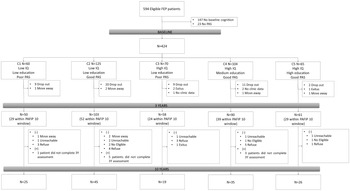
Out of the 594 patients who were assessed at baseline and were eligible participants, 424 underwent the baseline sociodemographic and cognitive assessments required to perform the clustering analysis. Those FEP patients who not completed the neuropsychological assessment were more frequently not Caucasian and from a low socioeconomic status, presented poorer premorbid IQ, had completed less years of education and were not studding or working (see online Supplementary 1). Among these 424 participants, 362 (85.4%) were reassessed at the 3-year follow-up. A total of 150 of these FEP patients provided information at the 10-year follow-up assessment (see Fig. 1).
Flow chart of FEP patients in the study.

Establishing clusters
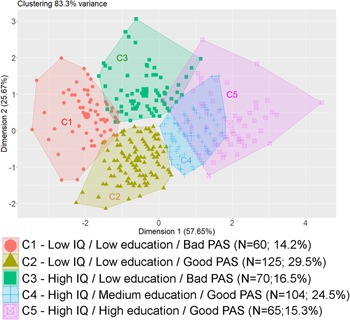
The agglomeration schedule suggested a five-cluster solution (see Fig. 2). Two principal components explained 83.3% of the variability: the first component, which was formed by 33.28% premorbid IQ, 40.3% years of education and 26.41% premorbid adjustment, explained 57.7% of the variability; the second component, which was formed by 33.16% premorbid IQ, 1.58% years of education and 64.87% premorbid adjustment, explained 27.7% of the variability.
Cluster membership.

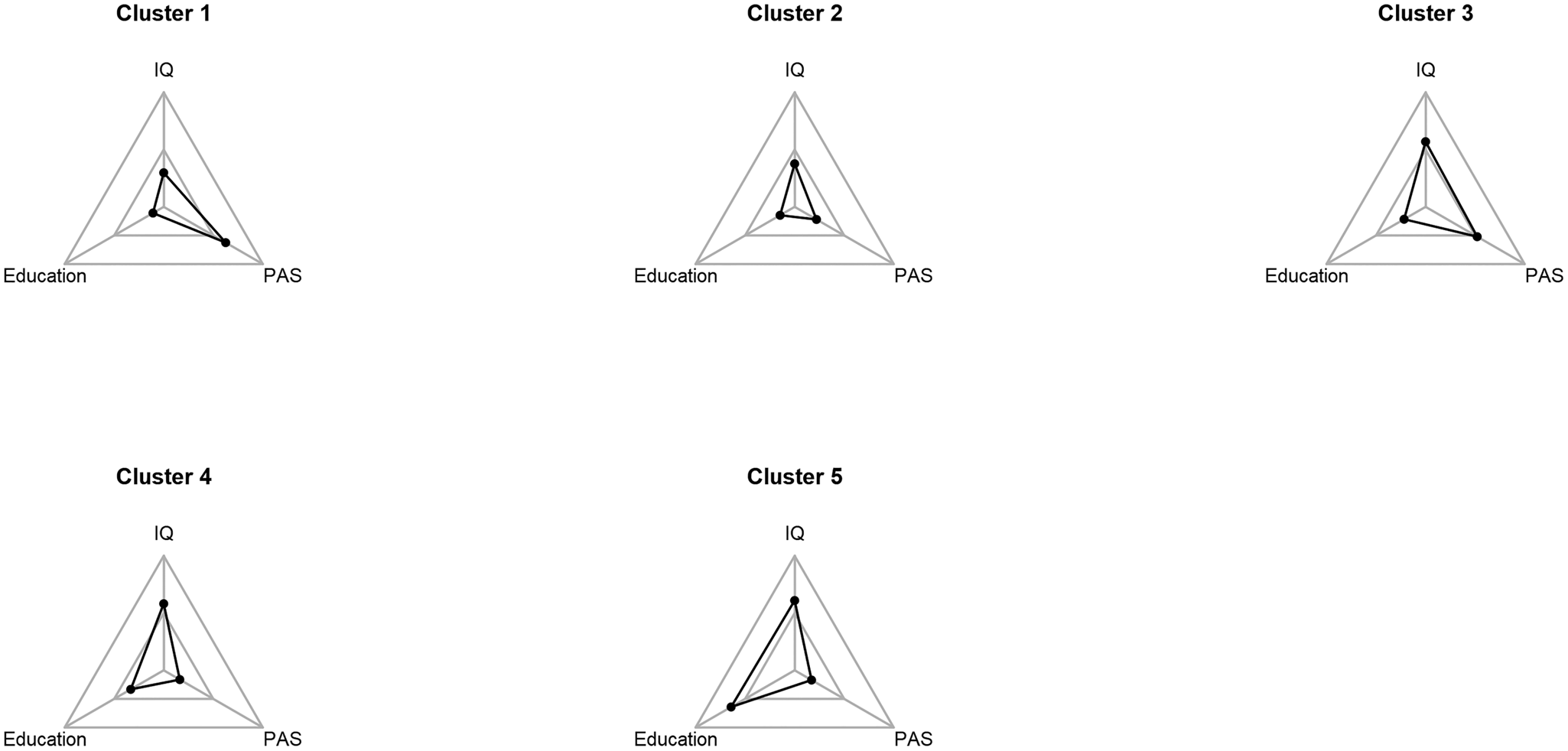
The five clusters were as follows: C1 (N = 60; 14.2%) was characterised by low IQ (mean = 80.3; median = 80), few years of education (mean = 7.7; median = 8) and poor premorbid adjustment (mean = 6.26; median = 6.11); C2 (N = 125; 29.5%) was characterised by low IQ (mean = 87.0; median = 85), low education (mean = 8.4; median = 8 years) and good premorbid adjustment (mean = 2.2; median = 2.22); C3 (N = 70; 16.5%) was characterised by normal IQ (mean = 103.4; median = 100), low education (mean = 9.5; median = 8 years) and poor premorbid adjustment (mean = 5.21; median = 5.09); C4 (N = 104; 24.5%) was characterised by normal IQ (mean = 104.5; median = 105), medium education (mean = 11.3; median = 12 years) and good premorbid adjustment (mean = 1.63; median = 1.48); and C5 (N = 65; 15.3%) was characterised by normal IQ (mean = 106.8; median = 105), higher education (mean = 16.3; median = 17 years) and good premorbid adjustment (mean = 1.71; median = 1.11) (see Fig. 3).
Profile of each CR cluster.

Baseline comparisons between clusters at baseline and at the 3-year and 10-year follow-up assessments
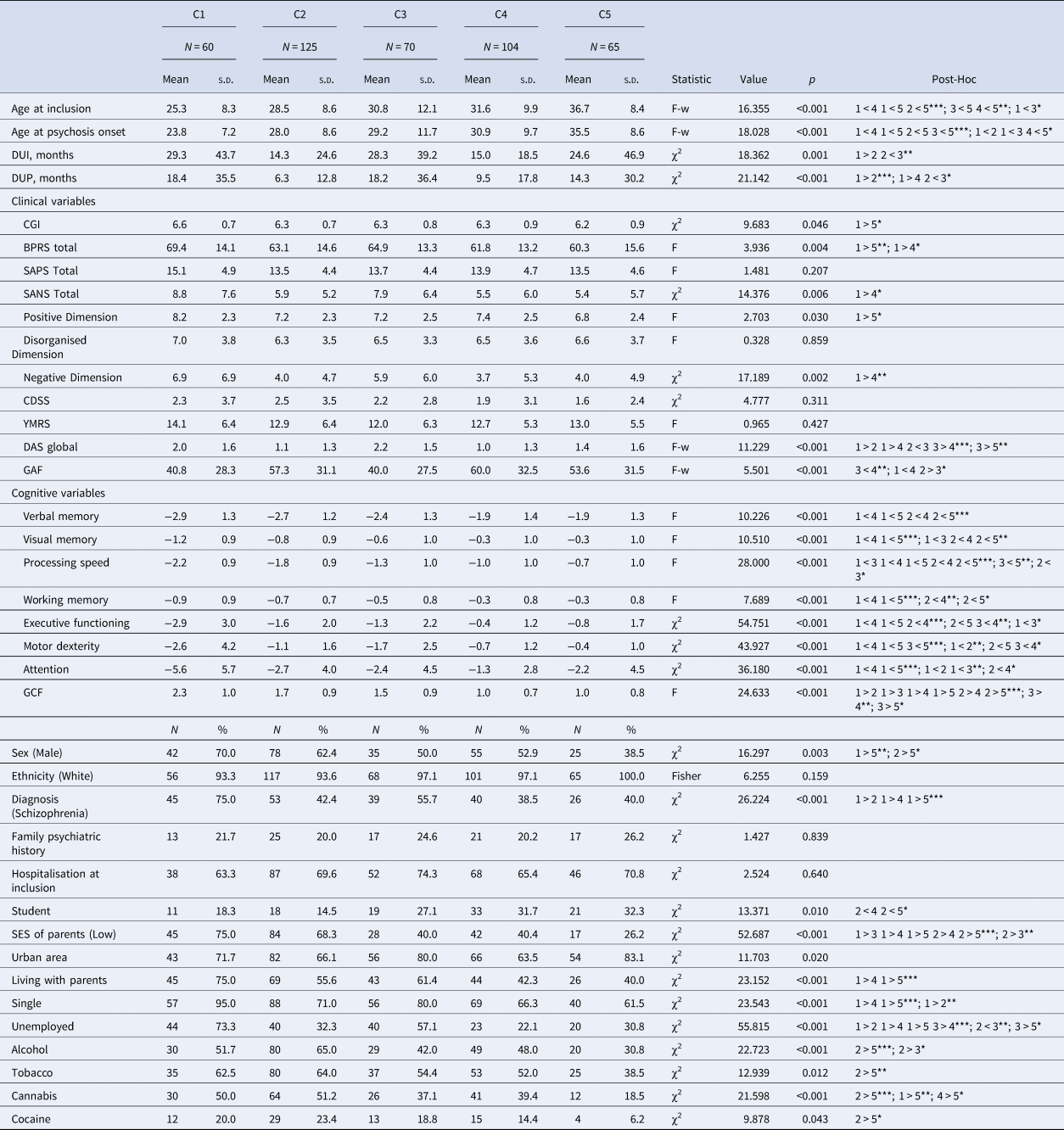
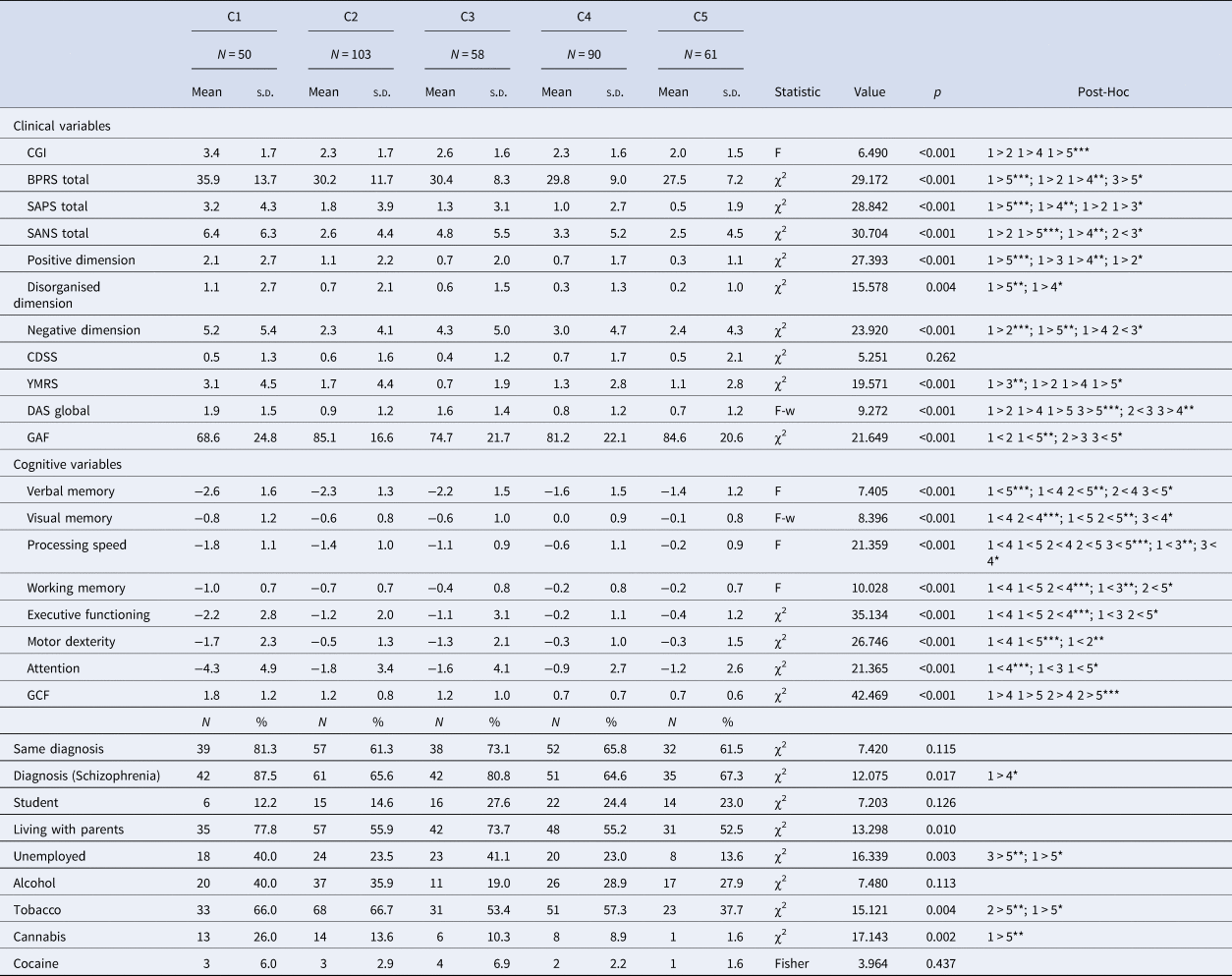
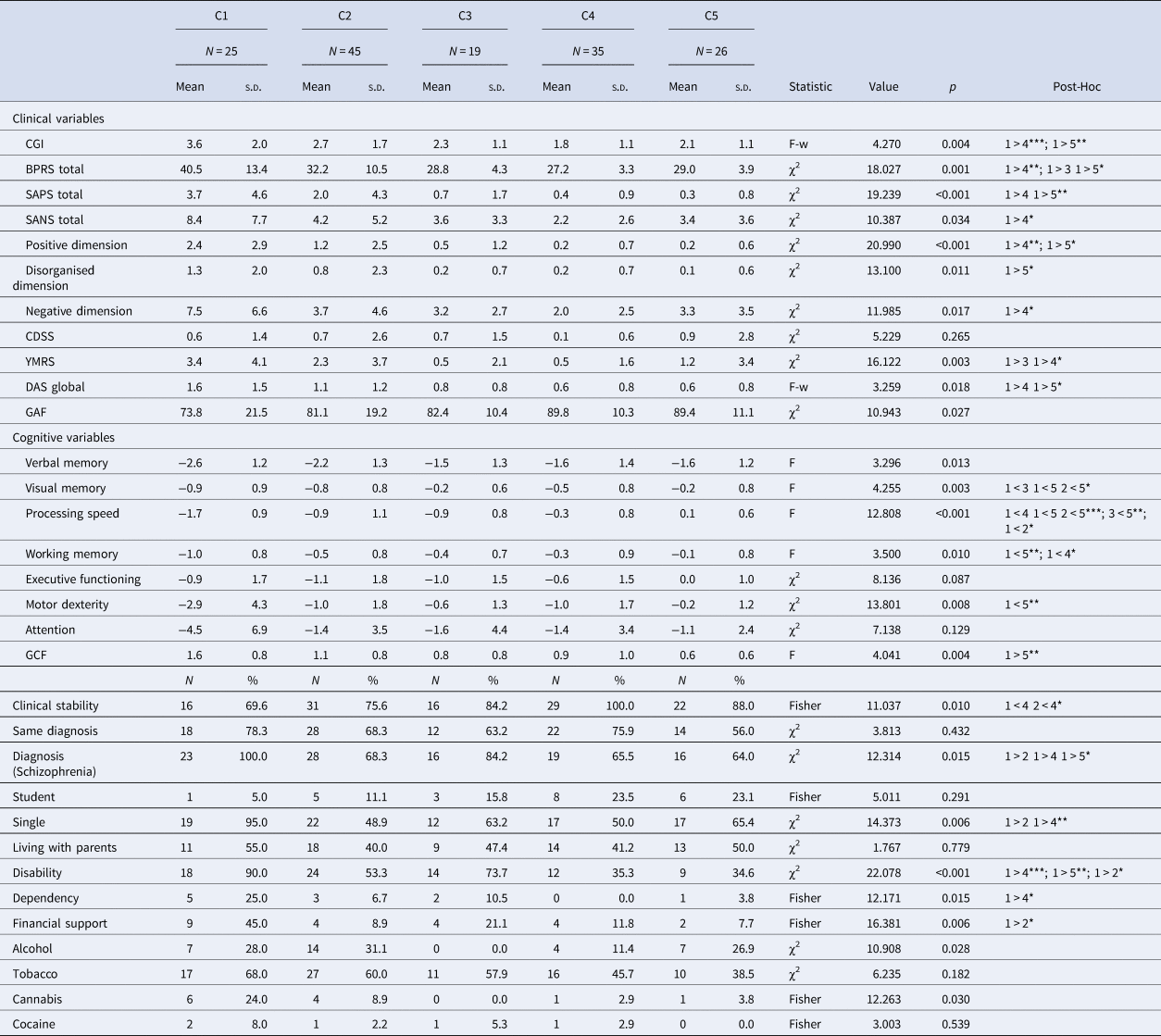
The results of ANOVAs and χ2, Fisher and Kruskal–Wallis tests revealed significant differences on several variables (see Tables 1–3). Post hoc comparisons of clusters with significantly larger effects are summarised below.
Comparisons between CR clusters at baseline

C1=Low IQ/Low education/Poor PAS, C2=Low IQ/Low education/Good PAS. C3=High IQ/Low education/Poor PAS, C4=High IQ/Medium education/Good PAS, C5=High IQ/High education/Good PAS,DUI=Duration of Untreated Illness, DUP=Duration of Untreated Psychosis, CGI=Clinical Global Impression, BPRS=Brief Psychiatric Rating Scale, SAPS=Scale for the Assessment of Positive Symptoms, SANS=Scale for the Assessment of Negative Symptoms, CDSS=Calgary Depression Scale for Schizophrenia, YMRS=Young Mania Rating Scale, DAS=Disability Assessment Scale, GAF=Global Assessment of Functioning, GCF=Global Cognitive Functioning, SES=Socioeconomic status.
*p < 0.05; **p < 0.01; ***p < 0.001.
Comparisons between CR clusters at 3-year follow-up

C1=Low IQ/Low education/Poor PAS, C2=Low IQ/Low education/Good PAS. C3=High IQ/Low education/Poor PAS, C4=High IQ/Medium education/Good PAS, C5=High IQ/High education/Good PAS,CGI=Clinical Global Impression, BPRS=Brief Psychiatric Rating Scale, SAPS=Scale for the Assessment of Positive Symptoms, SANS=Scale for the Assessment of Negative Symptoms, CDSS=Calgary Depression Scale for Schizophrenia, YMRS=Young Mania Rating Scale, DAS=Disability Assessment Scale, GAF=Global Assessment of Functioning, GCF=Global Cognitive Functioning.
*p < 0.05; **p < 0.01; ***p < 0.001.
Comparisons between CR clusters at 10-year follow-up

C1 = Low IQ/Low education/Poor PAS, C2 = Low IQ/Low education/Good PAS. C3 = High IQ/Low education/Poor PAS, C4 = High IQ/Medium education/Good PAS, C5 = High IQ/High education/Good PAS,CGI = Clinical Global Impression, BPRS = Brief Psychiatric Rating Scale, SAPS = Scale for the Assessment of Positive Symptoms, SANS = Scale for the Assessment of Negative Symptoms, CDSS = Calgary Depression Scale for Schizophrenia, YMRS = Young Mania Rating Scale, DAS = Disability Assessment Scale, GAF = Global Assessment of Functioning, GCF = Global Cognitive Functioning.
*p < 0.05; **p < 0.01; ***p < 0.001.
Baseline comparisons between clusters
C1: Patients in cluster C1 were younger at illness onset (mean = 23.8; median = 21.3 years) than those in other clusters, and their DUP (mean = 18.4; median = 8.0 months) was longer than those in clusters C2 and C4. The percentage of patients with schizophrenia diagnosis (75%), single (95%) and unemployed (73%) was higher in C1 than in clusters C2, C4 and C5. The percentage of patients with low socioeconomic status (75%) was higher than that in clusters C3, C4 and C5, and that of those living with their parents (75%) was higher than that in clusters C4 and C5. These patients showed more severe symptomatology than those in clusters C4 and C5: higher scores on positive symptoms than that in cluster C5 and in negative symptoms than that in cluster C4. They performed worse on attention tests than those in other clusters and were more frequently classified as having global cognitive deficits (88%), significantly different than those in clusters C4 (47%) and C5 (41%).
C2: The percentage of patients in cluster C2 who were studying at baseline assessment (14.5%) was lower than those in clusters C4 (32%) and C5 (32%) and of those with low socioeconomic status (68%) higher than in clusters C3 (40%), C4 (40%) and C5 (26%). Tobacco, cannabis, alcohol and cocaine consumption was more frequent in this cluster than in cluster C5 (alcohol consumption as well as in cluster C3). These patients performed better than those in cluster C1 on motor dexterity tests and worse than those in cluster C4 on attention tests.
C3: Patients in C3 were younger (mean = 29.2; median = 23.9 years) at psychosis onset than those in cluster C5 and older than those in C1. Their DUP (mean = 18.2; median = 5.0 months) was longer than those in cluster C2. The percentage of patients who were unemployed (57%) was higher than in clusters C2, C4 and C5. Their performance on visual memory tests was better than those in cluster C1 but worse than those in cluster C4 on executive functioning tests, and they were more frequently (67%) classified as having global cognitive deficits than those in cluster C5 (41%).
C4: Patients in C4 had better functional outcomes than those in clusters C1 and C3. Patients in cluster C4 performed better than those in clusters C1 and C2 on visual memory, verbal memory, processing speed and executive functioning tests and better than those in clusters C1 and C3 on motor dexterity tests.
C5: Patients in C5 were significantly older (mean = 35.5; median = 34.1 years) at psychosis onset than those in other clusters. The percentage of females (61.5%) was significantly higher than that in clusters C1 (30%) and C2 (38%). These patients performed better than those in clusters C1 and C2 on visual memory, verbal memory, processing speed and executive functioning tests and better than those in clusters C1 and C3 on the motor dexterity test. Cannabis consumption was significantly lower (18.5%) than in FEP patients in clusters C1 (50%), C2 (51%) and C4 (39%).
Three-year follow-up comparisons between clusters
C1: The percentage of cannabis users in C1(26%) was higher than that in cluster C5 (2%). These patients showed more severe symptomatology than those in clusters C2, C4 and C5. The positive symptoms were more severe than that in cluster C3 and manic symptoms more severe than that in all other clusters. The patients in C1 had worse functional outcome than those in clusters C2, C4 and C5 and performed significantly worse than those in clusters C4 and C5 on all cognitive domains, and worse than those in cluster C3 on processing speed and working memory tests. They also performed worse than that in cluster C2 on motor dexterity test. Patients in clusters C1 were more frequently (76%) classified as having global cognitive deficit, and significantly different than those in clusters C4 (31%) and C5 (32%).
Cluster C2: Patients in cluster C2 performed worse than those in clusters C4 and C5 on verbal memory, visual memory, processing speed, working memory and executive functioning tests. The negative symptoms were less severe than in those in cluster C3. The patients in clusters C2 were more frequently (60%) classified as having global cognitive deficits, and significantly different than those in clusters C4 (31%) and C5 (32%).
C3: Patients in cluster C3 showed more severe symptomatology (BPRS) than those in cluster C5 and had worse functional outcome than those in clusters C2, C4 and C5. They performed worse than those in cluster C5 on verbal memory and than those in cluster C4 and C5 on processing speed.
C4: Patients in cluster C4 performed better than those in cluster C3 on visual memory. These patients were less frequently classified as having cognitive deficit (31%) than those in cluster C3 (60%).
C5: The patients in cluster C5 presented a percentage of tobacco consumption (38%) lower than those in clusters C1 (66%) and C2 (67%). The unemployment rate in this cluster (14%) was significantly lower than that in clusters C1 (40%) and C3 (41%) at 3-year follow-up.
Ten-year follow-up comparisons between clusters
C1: One hundred per cent of patients in C1 were diagnosed with schizophrenia, a percentage significantly higher than those in clusters C2 (68%), C4 (66%) and C5 (64%). These patients were more frequently single (95%) and received disability-related financial support (90%) than those in clusters C2 (53%), C4 (35%) and C5 (35%). They showed more severe symptomatology (CGI, BPRS), particularly more severe positive symptoms and worse functionality than those in clusters C4 and C5. The patients in C1 performed significantly worse than those in clusters C3 and C5 on visual memory, than those in clusters C2, C4 and C5 on processing speed, significantly worse than those in clusters C4 and C5 on working memory, and significantly worse than those in cluster C5 on motor dexterity. They were also more frequently (81%) classified as having a global cognitive deficit than those in clusters C3 (24%), C4 (37%) and C5 (17%).
C2 and C3: The patients in cluster C2 required fewer social resources than those in C1 (9% and 45%, respectively), and those in C3 presented less severe symptomatology (BPRS) than those in C1. The patients in clusters C2 and C3 presented worse performance in the processing speed domain than those in C5 and worse than the patients in C2 in the visual memory domain.
C4 and 5: All patients in cluster C4 were considered clinically stable at the 10-year follow-up reassessment, with a higher percentage than those in clusters C1 (70%) and C2 (76%). The patients in cluster C5 showed less severe disorganised symptomatology than those in cluster C1. They performed better than those in clusters C1 and C2 on visual memory and better than those in clusters C1, C2 and C3 on processing speed. These patients were less frequently classified as having global cognitive deficits (17%) than those in clusters C1 (81%) and C2 (59%).
Discussion
The present study provides a characterisation of FEP patients in terms of their CR at illness onset. Five identifiable clusters, which were identified based on a composite measure of CR and formed by the proxies premorbid IQ, years of education and premorbid adjustment, were characterised by significant differences that deserve to be further detailed. The clustering method adds on the classic classifications of cognitive performance, usually made in three groups (poor, medium, high) (Ayesa-Arriola et al., Reference Ayesa-Arriola, Setien-Suero, Neergaard, Belzunces, Contreras, van Haren and Crespo-Facorro2018; Dickinson et al., Reference Dickinson, Zaidman, Giangrande, Eisenberg, Gregory and Berman2020; Joyce, Hutton, Mutsatsa, & Barnes, Reference Joyce, Hutton, Mutsatsa and Barnes2005), a more detailed study of the heterogeneity. The composite measure of these three proxies combines the contributions from diverse backgrounds and displays consistent relationships with several sociodemographic characteristics and cognitive domains, providing a picture of overall CR in FEP patients.
CR cannot be observed or directly measured, and the validation of questionnaires and composite measure proxies for assessing CR has become a key area of concern for researchers (Kartschmit, Mikolajczyk, Schubert, & Lacruz, Reference Kartschmit, Mikolajczyk, Schubert and Lacruz2019). A wide range of composite proxies, such as educational attainment, occupational complexity, premorbid intelligence, social engagement, cognitive stimulation, leisure and physical activity, could display positive associations with cognitive function (Boyle et al., Reference Boyle, Knight, De Looze, Carey, Scarlett, Stern and Whelan2021). Regarding our results, we observed that years of education emerged as a distinguishable factor, particularly for the extreme clusters (7 years in those in C1 and 16 years in those in C5). As stated by Farfel et al., (Reference Farfel, Nitrini, Suemoto, Grinberg, Ferretti and Leite2013), even a few years of formal education contributes to CR, confirming a dose effect of education. Our results showed that higher levels of schooling were associated with the lowest cognitive impairment. The FEP patients in C4 and C5 outperformed those in clusters C1 and C2 in most cognitive domains at baseline and at the 3-year follow-up. At the 10-year follow-up, better performance was evident on visual memory, processing speed, working memory and general cognitive functioning, which was particularly significant between patients in clusters C1 and C5, showing those in C5 higher scores. Previous results in our group support that higher education was associated with better baseline neurocognitive performance, particularly in processing speed and motor dexterity domains, and improvements in memory and processing speed at follow-up (Ayesa-Arriola et al., Reference Ayesa-Arriola, Miguel-Corredera, de la Foz, Neergaard, Correa-Ghisays, Setien-Suero and Crespo-Facorro2021). Thus, as stated by Wilson et al. (Reference Wilson, Yu, Lamar, Schneider, Boyle and Bennett2019), the contribution of formal education to CR could be associated with global cognitive function. For this reason, the role of premorbid adjustment in the measurement of CR resulted in a remarkable finding. The interest in premorbid adjustment is based on aspects such as the percentage of good work/school performance and social/personal functioning in clusters C2–C4–C5 (approximately 75% of FEP patients were active, working and schooling, prior illness onset) observed in our sample of FEP patients. In contrast, 40% of these patients in clusters C1 and C3 were not active or presented a significant decline (59% in C1 and 43% in C3, respectively). Cuesta et al. (Reference Cuesta, Sanchez-Torres, Cabrera, Bioque, Merchan-Naranjo, Corripio and Group2015) found that poorer premorbid adjustment and sociodemographic factors were related to a lower premorbid intellectual reserve and general cognitive impairment. Interestingly, in our study, the patients in C2, having good premorbid adjustment, showed low CR associated with low premorbid IQ and low education. Thus, unexpectedly, premorbid IQ by itself, despite showing a slight gradable ascent, might not be sensitive enough to detect differences between the clusters with low CR C1–C2 and moderate and high CR C3–C4–C5. We have indeed previously studied the role of premorbid IQ, suggesting that a low premorbid IQ could be a morbid manifestation in FEP patients (Ayesa-Arriola et al., Reference Ayesa-Arriola, Setien-Suero, Neergaard, Belzunces, Contreras, van Haren and Crespo-Facorro2018).
Attending our results and in line with Leeson et al., (Reference Leeson, Harrison, Ron, Barnes and Joyce2012), the more frequent use of cannabis and cocaine in C2 was associated with good premorbid function but not with a higher premorbid IQ. In this regard, Yucel et al. (Reference Yucel, Bora, Lubman, Solowij, Brewer, Cotton and Pantelis2012) suggested that this association may be driven by a subgroup of ‘neurocognitively less impaired’ patients, who only developed psychosis after a relatively early initiation of drug use. As stated by Meier et al. (Reference Meier, Caspi, Ambler, Harrington, Houts, Keefe and Moffitt2012), based on their results observed in the prospective study conducted with the Dunedin cohort, cannabis could have a remarkable neurotoxic effect on the adolescent brain. Ringen et al. (Reference Ringen, Nesvag, Helle, Lagerberg, Lange, Loberg and Melle2016) found that patients with SSD and premorbid cannabis use had higher illness severity, even after controlling for the effects of premorbid functioning and current cannabis abuse. Leeson et al. (Reference Leeson, Harrison, Ron, Barnes and Joyce2012) found that cannabis was related to bringing forward the onset of psychosis in people who otherwise have good prognostic features, indicating that an early age at onset can be due to a toxic action of cannabis rather than an intrinsically more severe illness. Many patients abstain over time, but among those who persist, the evolution is worse (Setien-Suero et al., Reference Setien-Suero, Neergaard, Ortiz-Garcia de la Foz, Suarez-Pinilla, Martinez-Garcia, Crespo-Facorro and Ayesa-Arriola2019).
In terms of clinical characteristics, both positive and negative symptoms were more severe in the group with the lowest CR at baseline and follow-up assessments. Previously, Amoretti et al. (Reference Amoretti, Rosa, Mezquida, Cabrera, Ribeiro, Molina and Group2020) found that CR was related to clinical symptoms, cognitive domains and functioning in FEP patients. Looking into the lowest CR cluster (C1) in detail, the severity in symptoms goes along with earlier age at illness onset, longer DUP, male sex and schizophrenia diagnosis. The association between late age at illness onset, known to be more frequent in females (Ayesa-Arriola et al., Reference Ayesa-Arriola, de la Foz, Setien-Suero, Ramirez-Bonilla, Suarez-Pinilla, Son and Crespo-Facorro2020), and higher CR is intuitive explained: the presumably longer exposure to achievements in professional and personal life, in the form of occupational, educational and leisure activities, may result in higher CR (Scarmeas & Stern, Reference Scarmeas and Stern2003). The longer DUP could be linked to the hypothesis of the neurotoxic effects of untreated psychosis in neurodegeneration (Anderson, Voineskos, Mulsant, George, & McKenzie, Reference Anderson, Voineskos, Mulsant, George and McKenzie2014), and schizophrenia diagnosis could be associated with alterations that occurred during development, as confirmed by polygenic scores (Dickinson et al., Reference Dickinson, Zaidman, Giangrande, Eisenberg, Gregory and Berman2020). We conducted secondary analyses limited to schizophrenia patients that revealed no remarkable differences between clusters, showing the patients in C1 just more severe positive symptoms. This reflect that schizophrenia diagnosis by itself could not explain the differences in CR observed in FEP patients. Together, these results suggest that early-life cognitive abnormalities, as a consequence of a distinct genetic aetiology, translated into the lower CR observed in those patients in C1.
In summary, our findings suggest that there are some FEP patients who could benefit from CR because they had a good premorbid adjustment and a convenient IQ that allowed them to achieve a higher education level. However, there are others with similar levels of premorbid functioning but low premorbid IQ and education, which frequently are drug uses, translating into diminished CR and worse outcome. Identifiable factors such as earlier age at illness onset, longer DUP and male sex, together with low education, premorbid IQ, and low premorbid adjustment could distinguish CR groups. Thus, the elucidation of factors that confer vulnerability to low CR requires further research because these patients may be particularly amenable to intervention if detected early enough. FEP patients with high CR maintain higher levels of cognitive functioning. This means that they could navigate adversity more successfully and create opportunities in unfavourable circumstances. Lifestyle factors can also increase or maintain CR, such as attaining more education, working in more complex occupations or simply being exposed to challenging mental activities (e.g. reading, playing board games) and regular physical exercise (Park & Bischof, Reference Park and Bischof2013). This can bring both labour market returns to higher skills acquisition and savings in healthcare due to the high costs associated with severe mental disorders such as psychosis.
Strengths and limitations
To the best of our knowledge, this is the first study that approaches the study of CR using cluster methodology and a long-term (10 years) longitudinal design in a large sample (N = 424) of FEP patients. Previously, Buonocore et al. (Reference Buonocore, Bechi, Uberti, Spangaro, Cocchi, Guglielmino and Cavallaro2018) used a similar methodology in a cross-sectional study in a total of 60 chronic schizophrenia patients. Along with these strengths, several limitations must be mentioned. That is, the impossibility to use a validated tool for measuring CR, such as the CRASH (Amoretti et al., Reference Amoretti, Cabrera, Torrent, Bonnin, Mezquida, Garriga and Bernardo2019), because this is a relatively new instrument. This limitation goes hand in hand with the use of indirect measures of premorbid functioning and premorbid IQ used to approximate direct measures. In addition, the lack of measures for other proxies associated with CR, such as occupational both attainment and complexity, leisure and social activities, known as important components of CR (Lee et al., Reference Lee, Kang, Kim, Woo, Lee and Cho2020), is a relevant limitation. The mental stimulation of these activities before and after illness onset could be associated with better memory, processing speed, executive functioning and language abilities, and could decrease the risk of cognitive impairment (Yates, Ziser, Spector, & Orrell, Reference Yates, Ziser, Spector and Orrell2016). Finally, we cannot rule out the influence of information that was not recorded between 3- and 10 years follow-up but could have affected the outcome.
Future directions for research should include gaining a better understanding of CR in FEP patients. This will require comparison of genetic markers and neuropsychological measures to identify unique and shared mechanisms. The pathways and causal nature of these relationships need further exploration.
Conclusions
CR could be considered a relevant factor at illness onset and a moderator of outcome in FEP. A high CR could work as a protective factor for global cognitive impairment and more severe symptomatology. These findings indicate that the assessment of CR should be a priority for clinicians caring for those with a diagnosis of FEP in order to lead to a more informed management plan and specific intervention programmes. In addition, CR could improve our understanding of the long-term functioning of patients with a non-affective FEP. Finally, clinical interventions focused on increasing CR and documenting long-term benefits are interesting and desirable.
Supplementary material
The supplementary material for this article can be found at https://doi.org/10.1017/S0033291721003536
Acknowledgements
The authors wish to thank the PAFIP research team and all patients and family members who participated in the study.
Financial support
This work was supported by the Instituto de Salud Carlos III (PI14/00639 and PI14/00918). Dr Ayesa-Arriola is funded by a Miguel Servet contract from the CarlosIII Health Institute (CP18/00003), carried out on Fundación Instituto de Investigación Marqués de Valdecilla. No pharmaceutical company has financially supported the study.
Conflict of interest
The authors have no conflict of interest to declare.
Data availability statement
The data that support the findings of this study are available on request from the corresponding author, RAA.