





No CrossRef data available.
Article contents
The changing epidemiology of outbreaks due to Ralstonia spp.: contamination of commercially manufactured injectables and solutions
Published online by Cambridge University Press: 28 September 2026
Abstract
An abstract is not available for this content. As you have access to this content, full HTML content is provided on this page. A PDF of this content is also available in through the ‘Save PDF’ action button.
Information
- Type
- Commentary
- Information
- Copyright
- © The Author(s), 2026. Published by Cambridge University Press on behalf of The Society for Healthcare Epidemiology of America
References
Rodriguez-Saldaña, CA, Chiroque-Zavala, M, Quindes-Jaimes, M, et al.
Ralstonia pickettii as an emerging pediatric pathogen: a mini-review of current evidence. Front Pediatr 2026;14:1763328. doi: 10.3389/fped.2026.1763328.CrossRefGoogle Scholar
Ryan, MP, Adley, CC.
Ralstonia spp.: emerging global opportunistic pathogens. Eur J Clin Microbiol Infect Dis 2014;33:291–304. doi: 10.1007/s10096-013-1975-9.CrossRefGoogle ScholarPubMed
Ryan, MP, Pembroke, JT, Adley, CC.
Ralstonia pickettii: a persistent gram-negative nosocomial infectious organism. J Hosp Infect 2006;62:278–284. doi: 10.1016/j.jhin.2005.08.015.CrossRefGoogle ScholarPubMed
DAlessandro, D, Nusca, A, Napoli, C. Are liquids an efficient vehicle of healthcare associated infections? A review of reported cases in Italy (2000-2014). Ann Ig 2016;28:416–431. doi: 10.7416/ai.2016.2124.Google ScholarPubMed
Luna-Vilchez, M, Santiago Abal, ML, Aguirre Chávez, H, et al.
Ralstonia pickettii outbreak in pediatric intensive care units, Peru-2025. Infect Control Hosp Epidemiol 2026:1–6. doi: 10.1017/ice.2026.10448.CrossRefGoogle ScholarPubMed
Saunders, M, Weaver, A, Stretch, R, et al. Outbreak of Ralstonia pickettii associated with contamination of saline products distributed internationally, the United Kingdom, 2024. 2024;Euro Surveill 29:2400384.CrossRefGoogle ScholarPubMed
Krone, M, Rauschenberger, V, Blaschke, V, Claus, H, Kurzai, O, Kampmeier, S.
Ralstonia pickettii bloodstream infections with potential genomic link to internationally distributed contaminated saline solution, Germany, October 2023. Euro Surveill 2024;29:2400010.CrossRefGoogle ScholarPubMed
Kimura, AC, Calvet, H, Higa, JI, et al. Outbreak of Ralstonia pickettii bacteremia in a neonatal intensive care unit. Pediatr Infect Dis J 2005; 24:1099–1103.CrossRefGoogle Scholar
Kismet, E, Atay, AA, Demirkaya, E, et al. Two cases of Ralstonia pickettii bacteremias in a pediatric oncology unit requiring removal of the Port-A-Caths. J Pediatr Hematol Oncol 2005;27:37–38. doi: 10.1097/01.mph.0000149960.89192.b0.CrossRefGoogle Scholar
Barbut, F, Kosmann, M-J, Lalande, V, Neyme, D, Coppo, P, Gorin, NC. Outbreak of Ralstonia pickettii pseudobacteremia among patients with hematological malignancies. Infect Control Hosp Epidemiol 2006; 27:642–644.CrossRefGoogle ScholarPubMed
Forgie, S, Kirkland, T, Rennie, R, Chui, L, Taylor, G.
Ralstonia pickettii bacteremia associated with pediatric extracorporeal membrane oxygenation therapy in a Canadian hospital. Infect Control Hosp Epidemiol 2007; 28:1016–1018.CrossRefGoogle Scholar
Jhung, MA, Sunenshine, RH, Noble-Wang, J, et al. A national outbreak of Ralstonia mannitolilytica associated with use of a contaminated oxygen-delivery device among pediatric patients. Pediatrics 2007; 119:1061–1068.CrossRefGoogle ScholarPubMed
Gröbner, S, Heeg, P, Autenrieth, IB, Schulte, B. Monoclonal outbreak of catheter-related bacteraemia by Ralstonia mannitolilytica on two haemato-oncology wards. J Infect 2007; 55:539–544.CrossRefGoogle ScholarPubMed
Mikulska, M, Durando, P, Pia Molinari, M, et al. Outbreak of Ralstonia pickettii bacteraemia in patients with haematological malignancies and haematopoietic stem cell transplant recipients. J Hosp Infect 2009;72:187–188. doi: 10.1016/j.jhin.2009.02.016.CrossRefGoogle ScholarPubMed
Block, C, Ergaz-Shaltiel, Z, Valinsky, L, et al. Déjà vu: Ralstonia mannitolilytica infection associated with a humidifying respiratory therapy device, Israel, June–July 2011. Euro Surveill 2013;18:20471. doi:10.2807/ese.18.18.20471-en.CrossRefGoogle Scholar
Ross, B, Steinmann, J, Buer, J, et al. Outbreak with Ralstonia pickettii caused by contaminated magnesium vials. Dtsch Med Wochenschr 2014; 139:323–326.Google ScholarPubMed
Choudhury, H, Jindal, A, Pathengay, A, Flynn, HWJ. An outbreak of Ralstonia pickettii endophthalmitis following intravitreal methotrexate injection. Clin Ophthalmol 2015; 9:1117–1120.CrossRefGoogle ScholarPubMed
Lai, H-W, Shen, Y-H, Chien, L-J, et al. Outbreak of Ralstonia pickettii bacteremia caused by contaminated saline solution in Taiwan. Am J Infect Control 2016; 44:1191–1192.CrossRefGoogle ScholarPubMed
Liu, C-X, Yan, C, Zhang, P, Li, F-Q, Yang, J-H, Li, X-Y.
Ralstonia mannitolilytica-induced septicemia and homology analysis in infected patients: 3 case reports. Jundishapur J Microbiol 2016; 9:e34373.CrossRefGoogle ScholarPubMed
Edwards, BD, Somayaji, R, Missaghi, B, Chan, WW, Bois, AJ. Prosthetic joint and implant contamination caused by Ralstonia pickettii: a report of three cases. SICOT J 2017; 3:32.CrossRefGoogle ScholarPubMed
Lucarelli, C, Di Domenico, EG, Toma, L, et al.
Ralstonia mannitolilytica infections in an oncologic day ward: description of a cluster among high-risk patients. Antimicrob Resist Infect Control 2017; 6:20.CrossRefGoogle Scholar
de Souza, DC, Palmeiro, JK, Maestri, AC, et al.
Ralstonia mannitolilytica bacteremia in a neonatal intensive care unit. Rev Soc Bras Med Trop 2018; 51:709–711.CrossRefGoogle Scholar
Shankar, M, Rampure, S, Siddini, V, Ballal, HS. Outbreak of Ralstonia mannitolilytica in hemodialysis unit: a case series. Indian J Nephrol 2018; 28:323–326.CrossRefGoogle ScholarPubMed
Thet, MK, Pelobello, MLF, Das, M, et al. Outbreak of nonfermentative Gram-negative bacteria (Ralstonia pickettii and Stenotrophomonas maltophilia) in a hemodialysis center. Hemodial Int 2019; 23:E83–E89.CrossRefGoogle Scholar
Said, M, van Hougenhouck-Tulleken, W, Naidoo, R, Mbelle, N, Ismail, F. Outbreak of Ralstonia mannitolilytica bacteraemia in patients undergoing haemodialysis at a tertiary hospital in Pretoria, South Africa. Antimicrob Resist Infect Control 2020; 9:117.CrossRefGoogle Scholar
Güzel Tunçcan, Ö, Dizbay, M, Özger, HS, et al. Monoclonal outbreak of Ralstonia solanacearum catheter-related bloodstream infection associated with contaminated package of normal saline solution in a tertiary care hospital. Turk J Med Sci 2021; 51:1027–1032.CrossRefGoogle ScholarPubMed
Forero, SVC, Blanco, ITO, Martinez-Vernaza, S, et al. Outbreak of Ralstonia pickettii bacteremia caused by contaminated hydromorphone in a university hospital in Bogota, Colombia. Open Forum Infect Dis 2021;8(Suppl 1):S497.CrossRefGoogle Scholar
Aranas, DR, Demot, BA, Cajulao, TPT. Outbreak of Ralstonia bacteraemia among chronic kidney disease patients in a haemodialysis unit in the Philippines. Western Pac Surveill Response J 2022; 13:1–6.CrossRefGoogle Scholar
Rajendran, UD, Sundaramoorthy, S, Sethuraman, G.
Ralstonia mannitolilytica sepsis in neonatal intensive care unit - Be(a)ware of the multidrug resistant nosocomial bug. Trop Doct 2022; 52:216–217.CrossRefGoogle ScholarPubMed
Tüzemen, NÜ, Önal, U, Kazak, E, et al. An outbreak of Ralstonia insidiosa bloodstream infections caused by contaminated heparinized syringes. J Infect Chemother 2022; 28:1387–1392.CrossRefGoogle ScholarPubMed
Rajachandran, K, Varghese, GS, Kumar, JV, Mathew, KT. Outbreak of nosocomial infection from an unusual source. Indian J Crit Care Med 2022; 26:1042–1044.CrossRefGoogle ScholarPubMed
Menekşe, Ş, Hacıseyitoğlu, D, Süzük Yıldız, S, Bayrakdar, F. An outbreak of Ralstonia pickettii bloodstream infection and clinical outcomes. J Infect Dev Ctries 2022; 16:705–711.CrossRefGoogle ScholarPubMed
Bedir Demirdag, T, Ozkaya-Parlakay, A, Bayrakdar, F, et al. An outbreak of Ralstonia pickettii bloodstream infection among pediatric leukemia patients. J Microbiol Immunol Infect 2022; 55:80–85.CrossRefGoogle ScholarPubMed
Baker, MA, Rhee, C, Tucker, R, et al.
Ralstonia pickettii and Pseudomonas aeruginosa bloodstream infections associated with contaminated extracorporeal membrane oxygenation water heater devices. Clin Infect Dis 2022; 75:1838–1840.CrossRefGoogle ScholarPubMed
Kim, G, Yoo, RN, So, H, et al. Clinical manifestation of Ralstonia mannitolilytica infection in pediatric patients and epidemiological investigation of outbreaks. J Korean Med Sci 2023; 38:e252.CrossRefGoogle ScholarPubMed
Fabricci, M, Trinca, A, Talotti, L, et al. A urokinase-associated outbreak of Ralstonia mannitolilytica bloodstream infections in haemodialysis patients in north-eastern Italy, January to April 2023. Euro Surveill 2023;28:2300328.CrossRefGoogle ScholarPubMed
Wu, HHL, Collier, J, Crosby, L, et al. Peritoneal dialysis-associated peritonitis presenting with Ralstonia pickettii infection: a novel series of three cases during the COVID-19 pandemic. Semin Dial 2023; 36:70–74.CrossRefGoogle ScholarPubMed
Çelen, SS, Zhumatayev, S, Yalçın, K, et al. Central line-associated bloodstream infection outbreak related to Ralstonia pickettii-contaminated saline in a pediatric hematopoietic stem cell transplant center. Turk J Pediatr 2024; 66:421–428.CrossRefGoogle Scholar
Mehra, K, Khera, D, Didel, S, Tak, V. Outbreak of Ralstonia pickettii blood stream infection in pediatric intensive care unit. Indian J Pediatr 2024; 91:636.CrossRefGoogle ScholarPubMed
Viana-Cárdenas, E, Triana, A, Cárdenas-Álvarez, J, Carvajal-Diaz, E, Mendoza, H, Viasus, D. A large multicenter Ralstonia pickettii outbreak in critically ill patients during the COVID-19 pandemic: epidemiological and clinical characteristics of 66 cases. J Infect Prev 2024; 25:85–88.CrossRefGoogle ScholarPubMed
Marris, DK, Latham, DN, Swift, DC, et al. A multijurisdictional healthcare-associated outbreak of Ralstonia pickettii from contaminated saline, Australia 2023. Int J Infect Dis 2025;152:107431.CrossRefGoogle Scholar
Alshuhri, S, Alosaimi, A, Alnafee, K, et al.
Ralstonia mannitolilytica infection in a tertiary care center: an outbreak report. Am J Infect Control 2025; 53:302–307.CrossRefGoogle Scholar
Şahin, EA, Özgen Top, Ö, Aysert Yildiz, P, et al. Outbreak of bacteremia caused by Ralstonia insidiosa isolated from a contaminated blood gas syringe. Turk J Med Sci 2025; 55:265–270.CrossRefGoogle ScholarPubMed
Pillonel, T, Blanc, D, Jacot, D, et al. Draft genomes of 12 Ralstonia mannitolilytica isolates recovered from hospitalized patients and contaminated cosmetic water sprays. Microbiol Resour Announc 2025; 14:e0030025.CrossRefGoogle ScholarPubMed
Sandfort, M, von Laer, A, Kampmeier, S, et al. Nosocomial outbreak of Ralstonia pickettii infections likely linked to saline solutions in Germany from August 2023 to March 2024-challenges in medical product-related outbreaks. Microorganisms 2025; 13:2102.CrossRefGoogle Scholar
Nannapaneni, VP, Rameshbabu, M, Sundaramoorthy, S, Sethuraman, G. Source identification and clinical outcomes of Ralstonia outbreaks in a neonatal intensive care unit: a case series from a tertiary care centre. Trop Doct 2025; 55:113–120.CrossRefGoogle Scholar
Sebastian, A, Gupta, N, Banerjee, B, et al.
Ralstonia pickettii bacteremia: a retrospective review of records. Indian J Med Microbiol 2025; 53:100786.CrossRefGoogle ScholarPubMed
Cancela Costa, A, Blanc, DS, Bertelli, C, et al. A nosocomial outbreak of Ralstonia mannitolilytica linked to cosmetic water mist sprays in the intensive care unit of a tertiary care hospital, Switzerland, 2024. Euro Surveill 2025;30:2500287.CrossRefGoogle ScholarPubMed
Burzyńska, J, Tukendorf, A, Fangrat, M, Dzierżanowska-Fangrat, K. Unveiling Ralstonia spp. in the neonatal intensive care unit: clinical impacts and antibiotic resistance. Antibiotics (Basel) 2025; 14:
259.CrossRefGoogle ScholarPubMed
Prieto, MF, Yasenzaniro, P, Chas, P, et al. Outbreak of Ralstonia mannitolytica in immunocompromised patients associated with a contaminated drug. Pharm pharmacol Int J 2025;13:77–80.CrossRefGoogle Scholar
Alp, S, Okalin, SS, Eren-Kutsoylu, OO, et al. Outbreak of Ralstonia pickettii bacteremia related to sterile distilled water in patients with hematological and oncological malignancies. Epidemiol Infect 2026;154:e75.CrossRefGoogle ScholarPubMed
Chen, YY, Huang, WT, Chen, CP, et al. An outbreak of Ralstonia pickettii bloodstream infection associated with an intrinsically contaminated normal saline solution. Infect Control Hosp Epidemiol 2017;38:444–448. doi: 10.1017/ice.2016.327.CrossRefGoogle ScholarPubMed
Pellegrino, FL, Schirmer, M, Velasco, E, de Faria, LM, Santos, KR, Moreira, BM.
Ralstonia pickettii bloodstream infections at a Brazilian cancer institution. Curr Microbiol 2008;56:219–223. doi: 10.1007/s00284-007-9060-1.CrossRefGoogle Scholar
Zellweger, C, Bodmer, T, Täuber, MG, Mühlemann, K. Failure of ceftriaxone in an intravenous drug user with invasive infection due to Ralstonia pickettii
. Infection 2004;32:246–248. doi: 10.1007/s15010-004-3033-0.CrossRefGoogle Scholar
Coward, A, Kenna, DTD, Woodford, N, Turton, JF, members of the UK CF Surveillance Working Group. Structured surveillance of Achromobacter, Pandoraea and Ralstonia species from patients in England with cystic fibrosis. J Cyst Fibros 2020;19:388–393. doi: 10.1016/j.jcf.2019.11.005.CrossRefGoogle ScholarPubMed
Green, HD, Bright-Thomas, R, Kenna, DT, Turton, JF, Woodford, N, Jones, AM.
Ralstonia infection in cystic fibrosis. Epidemiol Infect 2017;145:2864–2872. doi: 10.1017/S0950268817001728.CrossRefGoogle ScholarPubMed
Hahn, MW. Broad diversity of viable bacteria in ‘sterile’ (0.2 microm) filtered water. Res Microbiol 2004;155:688–691. doi: 10.1016/j.resmic.2004.05.003.CrossRefGoogle ScholarPubMed
Shaban, RZ, Sotomayor-Castillo, C, Nahidi, S. Global burden, point sources, and outbreak management of healthcare-associated Burkholderia cepacia infections: An integrative review. Infect Control Hosp Epidemiol 2020;41:777–783. doi: 10.1017/ice.2020.184.CrossRefGoogle ScholarPubMed
Tavares, M, Kozak, M, Balola, A, Sá-Correia, I.
Burkholderia cepacia complex bacteria: a feared contamination risk in water-based pharmaceutical products. Clin Microbiol Rev 2020;33:e00139-19. doi: 10.1128/CMR.00139-19.CrossRefGoogle ScholarPubMed
Doran, J, Foster, C, Saunders, M, et al. Two concurrent nationwide healthcare-associated outbreaks of Burkholderia cepacia complex linked to product contamination, UK and Ireland, 2010-2023. Infect Control Hosp Epidemiol 2025;46:1006–1012. doi: 10.1017/ice.2025.10232.CrossRefGoogle ScholarPubMed
Agergaard, CN, Porsbo, LJ, Sydenham, TV, et al. Contaminated dicloxacillin capsules as the source of an NDM-5/OXA-48-producing Enterobacter hormaechei ST79 outbreak, Denmark and Iceland, 2022 and 2023. Euro Surveill 2023;28:2300108. doi: 10.2807/1560-7917.ES.2023.28.9.2300108.CrossRefGoogle Scholar
Mesini, A, Di Pilato, V, Contu, D, et al. Uncovering a multi-centre outbreak of Candida viswanathii candidaemia caused by contaminated milrinone in Italy. Abstract L0023, presented at ESCMID Global 2026, Munich, Germany April 19, 2026.Google Scholar
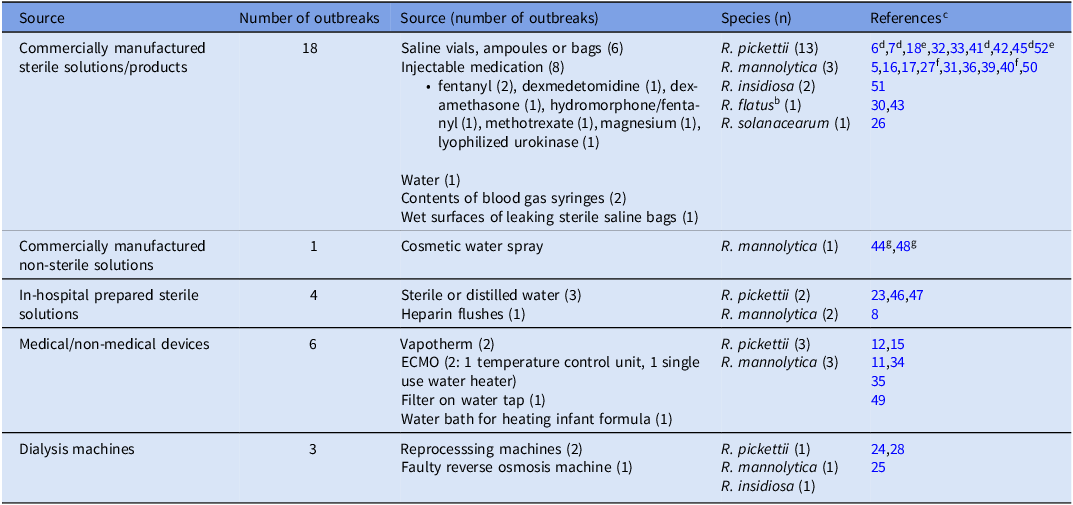
Table 1. Hospital outbreaks of infection due to Ralstonia spp. reported in which sources of infection were identified, 2005–2026aTable 1 long description.
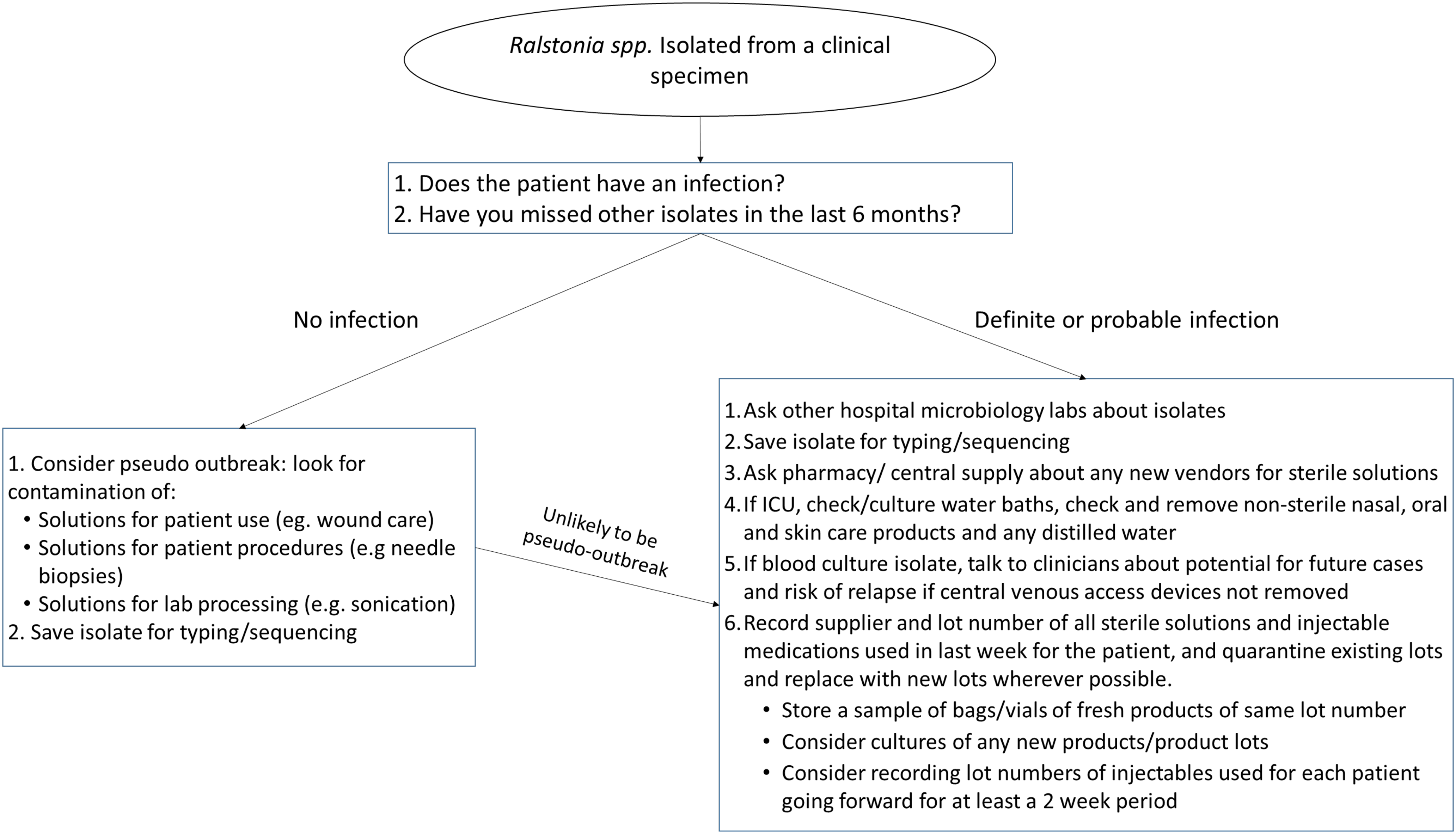
Figure 1. Actions to consider when Ralstonia spp. is isolated from a clinical specimen.
 You have
Access
Ralstonia is a genus of primarily environmental gram negative bacteria which are closely related to Burkholderia. Reference Rodriguez-Saldaña, Chiroque-Zavala and Quindes-Jaimes1–Reference Ryan, Pembroke and Adley3 They are relatively avirulent, but often antibiotic-resistant, and they are increasingly recognized as causing outbreaks and pseudo-outbreaks related to contamination of sterile aqueous solutions used in hospitals. Reference Rodriguez-Saldaña, Chiroque-Zavala and Quindes-Jaimes1–Reference Alp, Okalin and Eren-Kutsoylu51 The outbreak described by Luna-Vilchez et al. in this issue of ICHE provides a new example due to Ralstonia picketii contamination of commercially prepared injectable dexmedetomidine vials, linked by whole genome sequencing (WGS) to outbreaks caused by different injectable products in the UK, Germany and Australia. Reference Luna-Vilchez, Santiago Abal and Aguirre Chávez5–Reference Krone, Rauschenberger, Blaschke, Claus, Kurzai and Kampmeier7,Reference Marris, Latham and Swift41 These multi-country outbreaks with different products illustrate the problems associated with the growing complexity of global pharmaceutical supply chains. Reference Saunders, Weaver and Stretch6,Reference Krone, Rauschenberger, Blaschke, Claus, Kurzai and Kampmeier7,Reference Marris, Latham and Swift41,Reference Sandfort, von Laer and Kampmeier45
The continued reporting of Ralstonia outbreaks—and the likelihood that many more exist but remain unpublished—raises the question of what infection prevention and control (IPAC) professionals can do to minimize their impact, while regulators work on increasing the microbiologic safety of injectables and other solutions which should be sterile.
In most hospitals, clinical isolates of Ralstonia spp. are very rare, with fewer than one clinical isolate per year. Reference Luna-Vilchez, Santiago Abal and Aguirre Chávez5,Reference Saunders, Weaver and Stretch6,Reference Krone, Rauschenberger, Blaschke, Claus, Kurzai and Kampmeier7,Reference Barbut, Kosmann, Lalande, Neyme, Coppo and Gorin10,Reference Forgie, Kirkland, Rennie, Chui and Taylor11,Reference Gröbner, Heeg, Autenrieth and Schulte13,Reference Fabricci, Trinca and Talotti36,Reference Pellegrino, Schirmer, Velasco, de Faria, Santos and Moreira53 Occasional community-acquired bacteremias occur in persons who inject illicit drugs, and the airways of individuals with advanced cystic fibrosis may become colonized with Ralstonia spp. Reference Zellweger, Bodmer, Täuber and Mühlemann54–Reference Green, Bright-Thomas, Kenna, Turton, Woodford and Jones56 In contrast to rarity in human-derived samples, Ralstonia are very common in aquatic environments. Reference Rodriguez-Saldaña, Chiroque-Zavala and Quindes-Jaimes1 As noted by Luna-Vichez et al., Ralstonia are able to pass through the 0.2 micron filters often used to sterilize aqueous solutions, Reference Rodriguez-Saldaña, Chiroque-Zavala and Quindes-Jaimes1,Reference Gröbner, Heeg, Autenrieth and Schulte13,Reference Hahn57 and also able to grow across a wide range of temperatures, to tolerate low nutrient conditions, and to form biofilms. Reference Ryan, Pembroke and Adley3,Reference DAlessandro, Nusca and Napoli4,Reference Krone, Rauschenberger, Blaschke, Claus, Kurzai and Kampmeier7 It is perhaps not surprising, then, that a steady stream of outbreaks and pseudo-outbreaks due to Ralstonia spp. have been published over the last 40 years. A 2006 review identified 27 descriptions, beginning in 1982. Reference Ryan and Adley2 In the 20 years since that review, at least 48 reports of 44 outbreak investigations involving Ralstonia spp. have been published (Table 1). Reference Luna-Vilchez, Santiago Abal and Aguirre Chávez5–Reference Chen, Huang and Chen52
Hospital outbreaks of infection due to Ralstonia spp. reported in which sources of infection were identified, 2005–2026 a
Table 1. Long description
A table detailing hospital outbreaks of Ralstonia spp. infections, categorized by source, number of outbreaks, species involved, and references. The table has five columns: Source, Number of outbreaks, Source (number of outbreaks), Species (n), and References. The sources are divided into five categories: Commercially manufactured sterile solutions/products, Commercially manufactured non-sterile solutions, In-hospital prepared sterile solutions, Medical/non-medical devices, and Dialysis machines. Each category lists specific sources of infection and the number of outbreaks associated with each. The species column lists the types of Ralstonia involved in each outbreak. The references column provides citations for each outbreak. Row 1: Commercially manufactured sterile solutions/products, 18, Saline vials, ampoules or bags (6), Injectable medication (8) including fentanyl (2), dexmedetomidine (1), dexamethasone (1), hydro-morphine/fentanyl (1), methotrexate (1), magnesium (1), lyophilized urokinase (1), Water (1), Contents of blood gas syringes (2), Wet surfaces of leaking sterile saline bags (1), R. pickettii (13), R. mannitolytica (3), R. insidiosia (2), R. flatus (1), R. solanacearum (1), References include 6,7,18,32,33,41,42,45,52,5,16,17,27,31,36,39,40,50. Row 2: Commercially manufactured non-sterile solutions, 1, Cosmetic water spray, R. mannitolytica (1), References include 44,46. Row 3: In-hospital prepared sterile solutions, 4, Sterile or distilled water (3), Heparin flushes (1), R. pickettii (2), R. mannitolytica (2), References include 23,46,47, 8. Row 4: Medical/non-medical devices, 6, Vapotherm (2), ECMO (2: 1 temperature control unit, 1 single use water heater), Filter on water tap (1), Water bath for heating infant formula (1), R. pickettii (3), R. mannitolytica (3), References include 12,15, 11,34, 35, 49. Row 5: Dialysis machines, 3, Reprocessing machines (2), Faulty reverse osmosis machine (1), R. pickettii (1), R. mannitolytica (1), R. insidiosia (1), References include 24,28, 25.
a Of 43 clusters identified and investigated, 32 described outbreaks with sources identified and are shown in the Table. For seven outbreaks a source could not be identified. Reference Kismet, Atay and Demirkaya9,Reference Gröbner, Heeg, Autenrieth and Schulte13,Reference Mikulska, Durando and Pia Molinari14,Reference Lucarelli, Di Domenico and Toma21,Reference de Souza, Palmeiro and Maestri22,Reference Rajendran, Sundaramoorthy and Sethuraman29,Reference Çelen, Zhumatayev and Yalçın38 In 2 clusters (each of 3 isolates) Reference Liu, Yan, Zhang, Li, Yang and Li19,Reference Wu, Collier and Crosby37 the isolates were unrelated by WGS or PFGE (in one other outbreak, a single isolate of R. pickettii was unrelated to others), and there were 2 pseudo-outbreaks (one related to sonication of resected prosthetic joint components prior to culture, Reference Edwards, Somayaji, Missaghi, Chan and Bois20 and one related to attempted disinfection of blood culture bottles with a disinfectant solution diluted in tap water). Reference Barbut, Kosmann, Lalande, Neyme, Coppo and Gorin10
b One outbreak reported 9 isolates of R. pickettii (highly related by WGS) and one isolate of R. flatus Reference Luna-Vilchez, Santiago Abal and Aguirre Chávez5 , and two were predominantly due to R. mannolytica but also included isolates of R. picketii. Reference Fabricci, Trinca and Talotti36,Reference Nannapaneni, Rameshbabu, Sundaramoorthy and Sethuraman46
c–gThree outbreaks were each described in two different publications (references Reference Lai, Shen and Chien18 and Reference Chen, Huang and Chen52, Reference Forero, Blanco and Martinez-Vernaza27 and Reference Viana-Cárdenas, Triana, Cárdenas-Álvarez, Carvajal-Diaz, Mendoza and Viasus40, and Reference Pillonel, Blanc and Jacot44 and Reference Cancela Costa, Blanc and Bertelli48) and one in four publications (references Reference Saunders, Weaver and Stretch6,Reference Krone, Rauschenberger, Blaschke, Claus, Kurzai and Kampmeier7,Reference Marris, Latham and Swift41 and Reference Sandfort, von Laer and Kampmeier45).
Outbreaks of Ralstonia spp. are predominantly associated with positive blood cultures (often drawn from central venous access devices (CVADs)), and most cases occur in intensive care, hematology/oncology or transplant units. Although the case fatality rate is low, Ralstonia spp.’s resistance to antibiotics may delay effective therapy, Reference Rodriguez-Saldaña, Chiroque-Zavala and Quindes-Jaimes1 and numerous publications document that successful therapy may require removal of infected CVADs. Reference Kismet, Atay and Demirkaya9,Reference Gröbner, Heeg, Autenrieth and Schulte13,Reference Bedir Demirdag, Ozkaya-Parlakay and Bayrakdar33,Reference Çelen, Zhumatayev and Yalçın38,Reference Chen, Huang and Chen52
Strikingly, 18 of the 42 outbreaks reports published in the last 20 years (including 14 of 21 with identified sources reported in the last 5 years) document outbreaks associated with commercially supplied sterile solutions (Table 1). Reference Luna-Vilchez, Santiago Abal and Aguirre Chávez5–Reference Chen, Huang and Chen52 Of course, outbreak reports are a biased view of overall occurrence, and larger, longer outbreaks are more likely to be reported. Nonetheless, it is of concern that the median number of cases associated with these outbreaks was 13 (range 2–66) and the median duration was 12 (range 1–56) weeks.
There are a number of barriers to the rapid investigation and management of Ralstonia spp. outbreaks. Isolates are sufficiently rare that they may not be on microbiology and IPAC department lists of sentinel organisms requiring investigation of single cases. Reference Block, Ergaz-Shaltiel and Valinsky15 Until recently, most hospitals would have trusted commercial sterile solutions to be sterile and would investigate other potential sources first. Most often, contamination is not specific, and at relatively low concentrations, such that attack rates may be low for any particular product (22%, 32% and 34% in outbreaks reporting data), Reference Luna-Vilchez, Santiago Abal and Aguirre Chávez5,Reference Bedir Demirdag, Ozkaya-Parlakay and Bayrakdar33,Reference Chen, Huang and Chen52 and 2–3 weeks may pass between infections. Reference Kimura, Calvet and Higa8,Reference Sebastian, Gupta and Banerjee47,Reference Alp, Okalin and Eren-Kutsoylu51 In addition, most hospitals do not track particular lot numbers of frequently used products such as sterile normal saline, and it may not be possible to identify which lot was given to a particular patient. Microbiology and IPAC departments may not have previously needed procedures for culturing sterile solutions, and the low concentrations of bacteria present mean that multiple specimens of each lot and product may need to be tested. Reference Ross, Steinmann and Buer16,Reference Lai, Shen and Chien18,Reference Bedir Demirdag, Ozkaya-Parlakay and Bayrakdar33 Finally, presumably because of the combination of limited virulence and the ability to form biofilm, patients may not present with infections until several days after their exposure to contaminated medications. Thus infections may continue to be diagnosed after the contaminated lot of medication is no longer being used. In one outbreak involving saline lock solutions for CVADs, one infection occurred 31 days after exposure to the contaminated lot, Reference Menekşe, Hacıseyitoğlu, Süzük Yıldız and Bayrakdar32 and in another, new cases continued to appear for 16 days after the contaminated solution was withdrawn. Reference Menekşe, Hacıseyitoğlu, Süzük Yıldız and Bayrakdar32
Nonetheless, recognition of these barriers and consideration of the experiences of existing outbreak investigations should assist IPAC teams in reducing the size and duration of outbreaks. MALDI-TOF now reliably identifies Ralstonia spp, and any clinical isolate of a Ralstonia spp. should generate an investigation (Figure 1). Isolates from ICUs in patients with CVADs are most likely to be bacteremias if an injectable sterile solution is the source, while respiratory or wound isolates are more likely to be associated with solutions or devices used for respiratory/skin care. Isolates from patients cared for in hemodialysis units may be either medication-associated or associated with contamination of water sources for dialysis. The few studies of Ralstonia spp colonizing or infecting persons with cystic fibrosis have not identified injectables or sterile solutions as sources, but have also not investigated the potential for such outbreaks. Reference Coward, Kenna, Woodford and Turton55,Reference Green, Bright-Thomas, Kenna, Turton, Woodford and Jones56
Actions to consider when Ralstonia spp. is isolated from a clinical specimen.
In four of the 18 sterile solution outbreaks (and 1 additional outbreak traced to contamination of a non-sterile water spray), cases were identified at multiple hospitals: asking other hospitals to watch for cases may help in identifying which products to investigate. Finding, removing and (if necessary) replacing lots of non-sterile mouth, respiratory, and skin care products used in the involved care unit removes some potential sources of infection easily. Asking whether any solutions are prepared in pharmacy, what non-sealed water baths are present in the unit, and whether anyone might have mistaken distilled water for sterile water in solutions being used can identify other potential risks that can be promptly mitigated. However, the actions most likely to identify a source are to ask about new lots or suppliers of injectable or other sterile solutions and to record which solutions—and if possible what lots of them—have been used in care for the affected patient. Collecting a sample of the lots of saline and injectable medications used for the patient (and if that is not possible, each of the lots commonly used in the ICU) is valuable: in several outbreaks, products and/or lots of products suspected to be the source were no longer available after several cases resulted in an investigation. Replacing existing lots (with quarantine to permit future use if cultures are negative) whenever possible avoids on-going new exposure and cases while the investigation continuess. This is of particular value because the need to perform multiple cultures of different sources may extend the duration of the investigation.
Setting up systems for identifying and recording lots of different solutions used for each patient, and culturing solutions, are more time-consuming and might be considered only if a second infection is identified. However, it may be useful to have the microbiology laboratory prepared to implement cultures. Methods for culturing sterile solutions in reported outbreaks varied from direct plating onto a variety of solid media, Reference Krone, Rauschenberger, Blaschke, Claus, Kurzai and Kampmeier7,Reference Liu, Yan, Zhang, Li, Yang and Li19,Reference Fabricci, Trinca and Talotti36,Reference Alshuhri, Alosaimi and Alnafee42,Reference Cancela Costa, Blanc and Bertelli48 to inoculation into nutrient broth prior to plating, Reference Aranas, Demot and Cajulao28,Reference Burzyńska, Tukendorf, Fangrat and Dzierżanowska-Fangrat49 to filtration with 0.45 or 0.2um filters prior to plating or incubation in broth, Reference Kimura, Calvet and Higa8,Reference Barbut, Kosmann, Lalande, Neyme, Coppo and Gorin10,Reference Jhung, Sunenshine and Noble-Wang12,Reference Ross, Steinmann and Buer16,Reference Sandfort, von Laer and Kampmeier45 to pharmacologic methods for water sterility testing. Reference Rajendran, Sundaramoorthy and Sethuraman29 In two investigations, samples were culture negative by direct plating, but positive when 10 ml samples were added to blood culture bottles. Reference Fabricci, Trinca and Talotti36,Reference Alshuhri, Alosaimi and Alnafee42 Few outbreaks describe the number of samples processed, but in those that did, 1/10 (10%), 3/16 (19%) and 5/10 (50%) of samples were reported as positive. Reference Ross, Steinmann and Buer16,Reference Lai, Shen and Chien18,Reference Bedir Demirdag, Ozkaya-Parlakay and Bayrakdar33 Typing of even one clinical isolate by WGS permits comparisons to strains from previously reported outbreaks, which may also assist in the identification of products. Reference Luna-Vilchez, Santiago Abal and Aguirre Chávez5–Reference Krone, Rauschenberger, Blaschke, Claus, Kurzai and Kampmeier7
Ralstonia spp. are, of course, not the only source of outbreaks due to contaminated medication and care products. The closely related genus Burkholderia also causes outbreaks due contaminated injectable medications and sterile saline in vulnerable patients with CVADs in ICUs or NICUs, as well as pseudo-outbreaks. Reference Shaban, Sotomayor-Castillo and Nahidi58,Reference Tavares, Kozak, Balola and Sá-Correia59 However, Burkholderia spp. are also resistant to commonly used antiseptics and have the capacity to metabolize parabens and many other compounds. Reference Shaban, Sotomayor-Castillo and Nahidi58–Reference Doran, Foster and Saunders60 This means that, in contrast to Ralstonia spp., Burkholderia frequently cause outbreaks associated with contamination of non-sterile pharmaceutical and personal care products, ranging from docusate to baby wipes to mouthwash. They frequently contaminate non-sterile ultrasound gel, and have also been reported to contaminate sterile lots. As with Ralstonia, if a single specimen from a non-CF ICU patient yields Burkholderia spp., and investigation should ensue. Reference Doran, Foster and Saunders60
Other recent outbreaks due to contaminated injectable medications highlight the need for IPAC teams to be alert to the potential for other species to be linked to medication administration. The finding of NDM-producing Escherichia coli colonization/infection associated with contamination of capsules containing cloxacillin manufactured in India demonstrates that contamination may be of carriers and dry products. Reference Agergaard, Porsbo and Sydenham61 The recent identification of candidemias due to Candida wiswanathii in multiple hospitals in Italy associated with contaminated vials of injectable milrinone, also manufactured in India, is a reminder that, although Ralstonia and Burkholderia are the most common microbes associated with outbreaks due to contaminated aqueous solutions, other environmental bacteria and fungi can also be sources. Reference Mesini, Di Pilato and Contu62 Being alert to unusual pathogens causing infections in vulnerable patients—particularly bloodstream infections in ICUs—may offer opportunities to prevent infection.
Financial support
No financial support was provided relevant to this article.
Competing interests
All authors declare that there are no relevant conflicts of interest.