Influenza is a highly contagious infection, and seasonal influenza viruses have a reproduction number of 1–2, Reference Biggerstaff, Cauchemez, Reed, Gambhir and Finelli1 indicating that the infection can persist in a population in the absence of appropriate control measures. In addition, the crowding of patients with influenza in hospitals, the transmissibility of the influenza virus before symptom onset and maximal viral shedding within 2 days after symptom onset promote nosocomial transmission of influenza. Reference Carrat, Vergu and Ferguson2 Nosocomial outbreaks of influenza occur concurrently with community epidemics of influenza, and hospital-acquired (HA) influenza leads to increased morbidity and mortality among hospitalized patients. Reference Maltezou and Drancourt3 Therefore, droplet precautions, including isolation and cohort placement of patients with influenza as well as standard precautions, should be adopted for hospitalized patients with influenza. Environmental infection prevention and control (IPC) measures are also needed to control nosocomial transmission of influenza. Reference Baek, Seo and Choi4,Reference Uyeki, Bernstein and Bradley5 However, most previous reports have described nosocomial outbreaks in specialized wards for neonates, critically ill patients, immunocompromised patients, and the elderly. Reference Maltezou and Drancourt3,Reference Voirin, Barret, Metzger and Vanhems6 A few studies have focused on nosocomial transmission of influenza and the impact of IPC measures in general wards for patients with acute illnesses. Reference Coleman, Ng and Mahesh7–Reference Youngs, Marshall and Farragher10 Fewer children than adults have chronic underlying conditions at increased risk of severe influenza (eg, cardiopulmonary, renal, and hepatic diseases as well as immunosuppression, extreme obesity, and residence in long-term care facilities Reference Baek, Seo and Choi4,Reference Uyeki, Bernstein and Bradley5 ). Thus, the transmission dynamics of HA influenza and its clinical impact in pediatric general wards need to be assessed independently of adult wards. Secondary hospitals, where a few children with underlying diseases are hospitalized, may exhibit different circumstances from tertiary hospitals, where more children with underlying diseases are hospitalized. As different strains of influenza virus circulate every year, studies of influenza should be performed over several consecutive years rather than 1 or 2 years.
In this study, we evaluated the transmission dynamics of influenza in a pediatric general ward of a secondary hospital where several IPC measures, including isolation and cohort placement of children with influenza, were applied. In addition, the clinical characteristics of children with community-acquired (CA) influenza or HA influenza during 5 consecutive influenza seasons were evaluated.
Methods
Patients and study design
Children aged <15 years who were admitted to the Department of Pediatrics of Daejeon St. Mary’s Hospital (Daejeon, Republic of Korea) between September 2015 and August 2020 with a diagnosis of influenza were included in this study. Our hospital is a 660-bed, university-affiliated, secondary hospital. The pediatric general ward occupies half of the seventh floor in 1 of the 2 hospital buildings and is spatially separated from the orthopedic ward on the same floor. Each ward has a separate entrance, and patient movement between the wards is rare. The pediatric ward includes 4 single-bed rooms, 2 two-bed rooms, 3 three-bed rooms, 1 four-bed room, and 3 six-bed rooms. Nasopharyngeal swab samples were subjected to a rapid influenza detection test (RIDT, Alere BinaxNOW Influenza A & B Cards, Abbott, IL, USA) or multiplex polymerase chain reaction (mPCR) test (Allplex Respiratory Panels 1, 2, and 3, Seegene, Seoul, Republic of Korea) according to the treating physician’s preference. Influenza was diagnosed when either test yielded positive results for the influenza virus. During the study period, children diagnosed with influenza were admitted to either a single-bed room (isolation) or a multibed room designated for children with influenza (cohort placement). For children diagnosed with influenza after admission, isolation or cohort placement was recommended as soon as possible after the diagnosis was confirmed. Cohort rooms were operated flexibly depending on the number of hospitalized children with influenza among multibed rooms in the pediatric general ward during community epidemics of influenza (usually between December and April). During the study period, the following IPC measures were adopted in our hospital: (1) influenza vaccination for healthcare workers (HCWs); (2) influenza surveillance for inpatients; (3) environmental IPC measures; (4) standard precautions, including hand hygiene and regular monitoring for adherence to hand hygiene; and (5) droplet precautions, including isolation and/or cohort placement of patients with influenza and mask use when entering patient rooms. The medical records of the included children were retrospectively reviewed to collect demographic data, including sex and age and clinical data as well as the type of identified influenza virus, presenting symptoms, clinical diagnosis, underlying disease, outcomes (oxygen therapy, admission to the intensive care unit), and antiviral treatment. The room number for each included child was traced during hospitalization, and the number of children with noninfluenza diseases exposed to children with influenza in the same room and the duration of exposure were determined. Clinical changes and laboratory test results for influenza in exposed children were reviewed. The proportion of HA influenza cases was calculated, and demographic and clinical factors were compared between children with CA influenza and those with HA influenza. Secondary attack rates for exposed children were calculated and compared between children exposed to CA influenza and those exposed to HA influenza. This study was approved by the Institutional Review Board of Daejeon St. Mary’s Hospital, which waived the requirement for informed consent (approval no. DC22RISI0037).
Definitions
HA influenza was diagnosed when symptoms of influenza (eg, fever, malaise, headache, myalgia, cough, sore throat, and rhinorrhea) developed ≥3 days after admission or <3 days after discharge from previous hospitalization. CA influenza was diagnosed when symptoms developed before or <3 days after admission. Exposed children were defined as hospitalized children with noninfluenza diseases who stayed with children with influenza during their contagious period (up to 7 days after symptom onset) in the same multibed room for >1 day. Transmission of the virus from an index patient to an exposed patient was confirmed when HA influenza was diagnosed in an exposed child <3 days after the last exposure to the index patient and the same type of influenza virus was identified in both patients. A nosocomial outbreak was declared when 2 or more children were diagnosed with HA influenza within 3 days. The number of patients diagnosed with HA influenza among the exposed children was divided by 100 patient days for all exposed children to determine the secondary attack rate. For children who were discharged within 3 days of their last exposure to influenza and did not undergo outpatient follow-up, the occurrence of HA influenza was evaluated based on the day of discharge. Excluding these children, the occurrence rate of HA influenza and secondary attack rates were also calculated for the subgroup analysis. Each influenza season was set from September to August, and this study included the following 5 influenza seasons: 2015–2016, 2016–2017, 2017–2018, 2018–2019, and 2019–2020.
Statistical analysis
For the comparison between children with CA influenza and those with HA influenza, categorical and continuous data were compared using the χ2 test and Mann-Whitney test, respectively. We used SPSS version 21 software (IBM, Armonk, NY) to perform all statistical analyses. The threshold of statistical significance was set at P < .05.
Results
Clinical characteristics of children with CA influenza and HA influenza
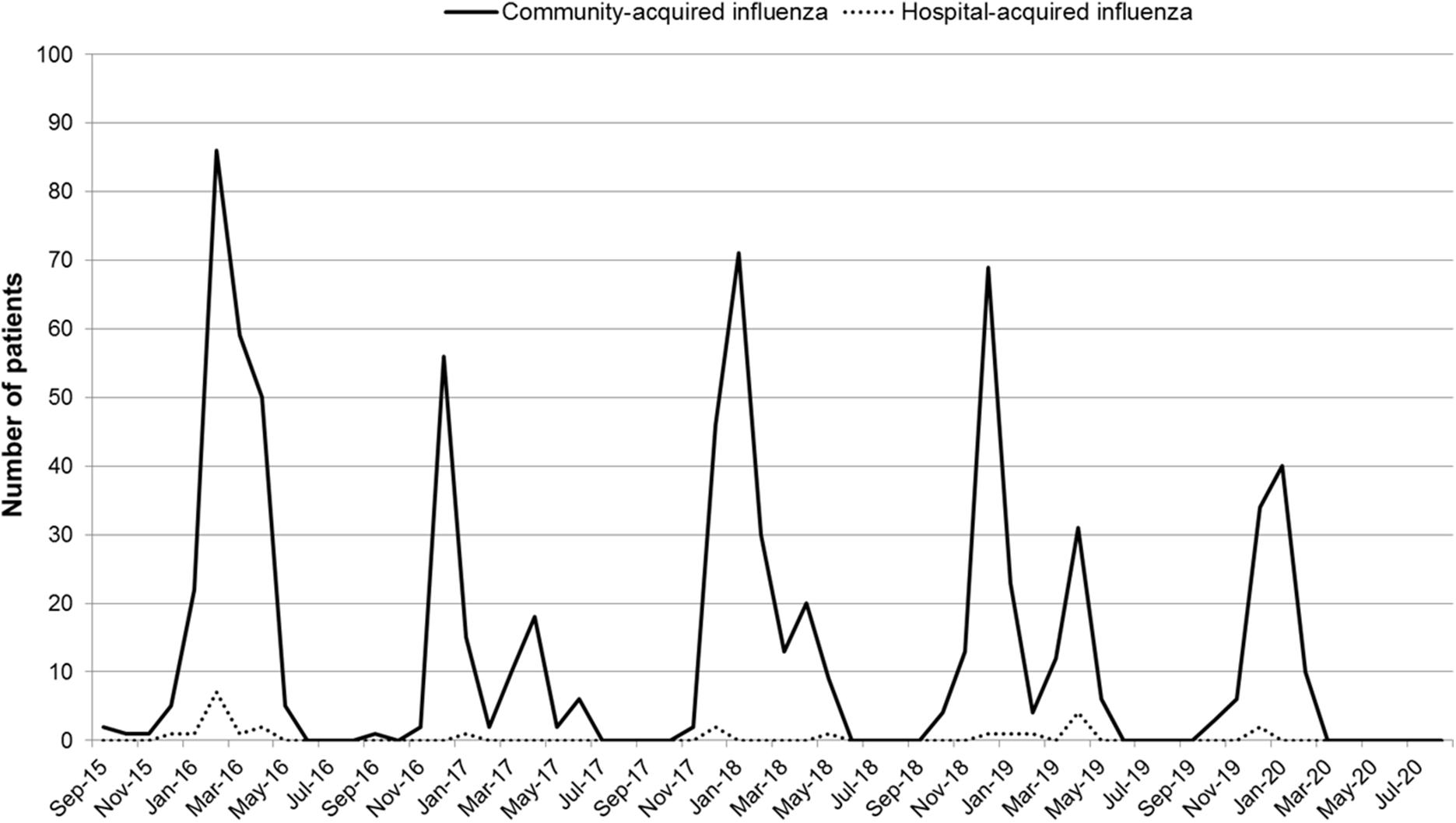
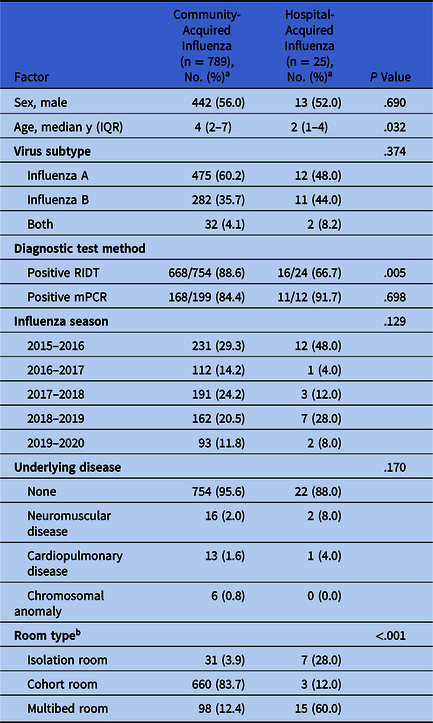
During the study period, influenza was diagnosed in 814 children, with CA influenza in 789 (96.9%) and HA influenza in 25 (3.1%). Of the 25 children with HA influenza, symptoms developed at a median of 5 days (range, 3–19) after admission in 19 children (76.0%) and at a median of 2 days (range, 1–2) after discharge from previous hospitalization in 6 children (24.0%). The monthly distributions of CA influenza and HA influenza cases were similar (Fig. 1), and the proportions of HA influenza in each influenza season were comparable (Table 1). Nosocomial outbreaks occurred over 3 days in February 2016 (n = 3 children) and over 7 days in April 2019 (n = 5 children).
Monthly distributions of community-acquired and hospital-acquired influenza cases.

Comparison of Demographic and Epidemiologic Characteristics Between Children With Community-Acquired Influenza and Those With Hospital-Acquired Influenza

Note. IQR, interquartile range; mPCR, multiplex polymerase chain reaction; RIDT, rapid influenza detection test.
a Data are no. (%), unless otherwise indicated.
b Patient rooms on admission for the community-acquired influenza group and those on the diagnosis of influenza for the hospital-acquired influenza group.
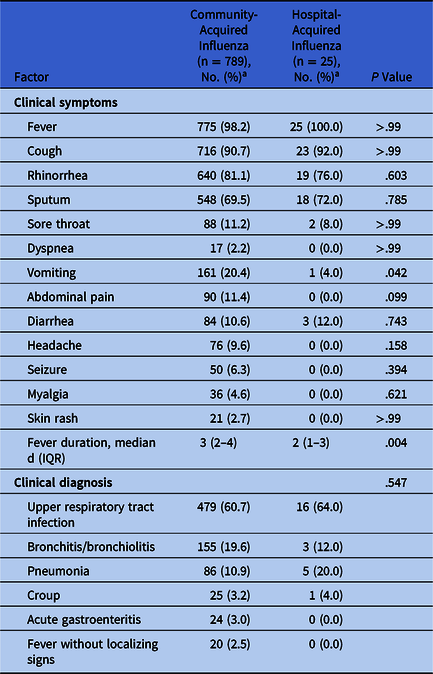
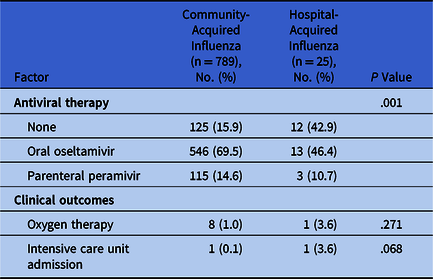
Children with HA influenza were significantly younger than those with CA influenza (P = .032) (Table 1). The positivity rates of the mPCR test were comparable between the 2 patient groups, whereas the positivity rates of the RIDT were significantly lower in the children with HA influenza than in those with CA influenza (P = .005) (Table 1). The presenting symptoms and clinical diagnoses were comparable between the 2 patient groups (Table 2). Significantly fewer children with HA influenza received antiviral therapy than those with CA influenza (P = .001) (Table 3), whereas fever duration was shorter in the former group (P = .004) (Table 2) and clinical outcomes were comparable between the 2 patient groups (Table 3).
Comparison of Clinical Manifestations Between Children With Community-Acquired Influenza and Those With Hospital-Acquired Influenza

Note. IQR, interquartile range.
a Data are no. (%), unless otherwise indicated.
Comparison of Treatment and Outcomes Between Children With Community-Acquired Influenza and Those With Hospital-Acquired Influenza

Transmission dynamics of influenza in the pediatric general ward
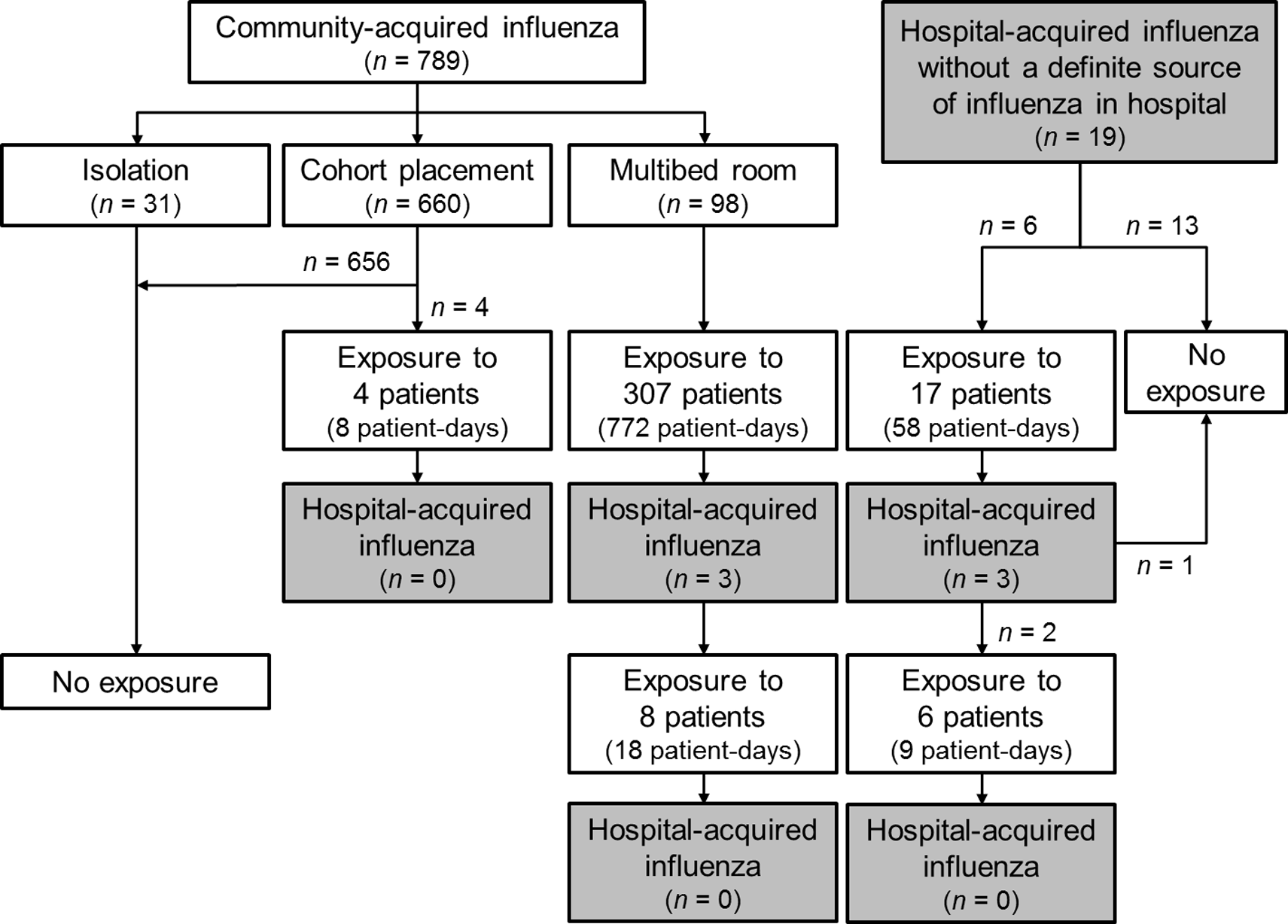
The tracing records of room numbers and exposed children for the included children were analyzed to determine the transmission dynamics of influenza in the ward and to define index cases of children diagnosed with HA influenza. Of the 789 children with CA influenza, 31 (3.9%) were isolated and 660 (83.7%) were placed in a cohort on the day of admission (Fig. 2). The remaining 98 (12.4%) children were admitted to multibed rooms occupied by children with noninfluenza diseases, and each one exposed 1–13 children with noninfluenza diseases to influenza; 307 children with noninfluenza diseases were exposed to 98 children with influenza during 772 patient days (Fig. 2). Of the 307 exposed children, 3 (1.0%) were diagnosed with HA influenza, with a secondary attack rate of 0.4 per 100 patient days. Excluding 28 children without outpatient follow-up after discharge within 3 days of their last in-hospital exposure to influenza, 279 children were exposed to influenza during 683 patient days. Moreover, 3 patients (1.1%) were diagnosed with HA influenza (secondary attack rate, 0.4 per 100 patient days). Some children with noninfluenza diseases were admitted to the cohort rooms. Each of 4 children with influenza who had been placed in a cohorts exposed 1 child with noninfluenza disease to influenza, resulting in 4 children being exposed to influenza during 8 patient days. None of the exposed children was diagnosed with HA influenza (Fig. 2).
Disposition of the study population.

Among the 25 children with HA influenza, 3 (12.0%) were diagnosed with HA influenza after in-hospital exposure to children with CA influenza, as described above. Each of them exposed 1–6 children with noninfluenza diseases to influenza due to delayed diagnosis of HA influenza, and 8 children with noninfluenza diseases were exposed during 18 patient days (Fig. 2). None of the exposed children were diagnosed with HA influenza. Also, 19 children (76.0%) were diagnosed with HA influenza without definite in-hospital exposure to influenza (Fig. 2): 3 children (15.8%) were admitted <3 days after discharge from other hospitals, 7 children (36.8%) were diagnosed with HA influenza during their stay in isolation rooms, and 9 children (47.4%) were diagnosed with HA influenza during their stay in multibed rooms without patients with influenza. Furthermore, 6 (31.6%) of them had stayed for >1 day after symptom onset with children with noninfluenza diseases in the same rooms owing to delayed diagnosis of influenza or delayed isolation or cohort placement after the diagnosis of influenza. Each of them exposed 1–9 children with noninfluenza diseases to influenza, and consequently, 17 children with noninfluenza diseases were exposed during 58 patient days (Fig. 2). Of the 17 exposed children, 3 (17.6%) were additionally diagnosed with HA influenza; 2 of them further exposed 2 children with noninfluenza diseases for 4 patient days and 2 children with noninfluenza diseases for 5 days, respectively. None of the 4 exposed children were diagnosed with HA influenza (Fig. 2). In total, 25 children with HA influenza exposed 31 children with noninfluenza diseases to influenza during 85 patient days, and 3 (9.7%) of them were diagnosed with HA influenza, with a secondary attack rate of 3.5 per 100 patient days. HA influenza occurred more frequently in children exposed to HA influenza than in those exposed to CA influenza (odds ratio, 10.86; 95% confidence interval, 2.09–56.33; P = .005). The index patients could be defined for 6 (27.3%) of 22 children with HA influenza, excluding 3 children admitted <3 days after discharge from other hospitals. Excluding 1 child without outpatient follow-up after discharge within 3 days of the last in-hospital exposure to influenza, 30 children were exposed to influenza during 83 patient days. Also, 3 (10.0%) were diagnosed with HA influenza, with a significantly higher secondary attack rate than that in children exposed to CA influenza (3.6 per 100 patient days; odds ratio, 10.22; 95% confidence interval, 1.97–53.14; P = .006).
Among all the study participants, 342 children with noninfluenza diseases were exposed to 113 children with influenza during 865 patient days in the same room, and 6 (1.8%) of them were diagnosed with HA influenza, with a secondary attack rate of 0.7 per 100 patient days (Fig. 2).
Discussion
In this study, 3.1% of children hospitalized with influenza were identified as having HA influenza in a secondary hospital. With the adoption of IPC measures, including isolation and cohort placement of children with influenza, the proportion of HA influenza and secondary attack rates in our pediatric general ward were low. However, nosocomial transmission occurred more frequently in children with HA influenza than in those with CA influenza.
Previous studies have reported that HA influenza was identified in 4%–35% of hospitalized patients with influenza. Reference Coleman, Ng and Mahesh7–Reference Martin, Honemann and Liebert18 The proportion of HA influenza in this study was lower than that reported in a ward consisting of only single-bed rooms and adopting several IPC measures (9.7%). Reference Bischoff, Petraglia, McLouth, Viviano, Bischoff and Palavecino19 Considering that most children were placed in cohorts rather than isolated on admission in this study, cohort placement seems to be sufficient for reducing nosocomial transmission of influenza when there is a lack of single-bed rooms if other IPC measures are concurrently applied. The operation of a designated ward for adult patients with influenza led to a decrease in the HA influenza rate. Reference Youngs, Marshall and Farragher10 For children in this study, the operation of cohort rooms in a general ward also reduced the HA influenza rate. In addition to the IPC measures, a relatively high rate of influenza vaccination in Korean children (>50%) might decrease HA influenza at our hospital because previous influenza vaccination was associated with a short duration of viral shedding in children with influenza. Reference Han, Rhim, Kang and Lee20,Reference Roosenhoff, Reed and Kenwright21 Meanwhile, index patients were identified in only 27.3% of our children with HA influenza, and a previous study with a low HA influenza rate (6.6%) identified index patients in 24.6% of the patients with HA influenza. Reference Luque-Paz, Pronier and Bayeh12 Therefore, IPC measures for HCWs or visitors, potential sources of nosocomial transmission of influenza, should be emphasized, even in hospitals with a low HA influenza rate: improving vaccination rates of HCWs, strict exclusion of ill HCWs from work, universal mask use by HCWs and visitors during the community epidemic of influenza, and screening of symptomatic visitors. The patient movement outside the room, even in the ward, should be controlled.
Despite the low HA influenza rate, the secondary attack rate among children exposed to HA influenza was significantly higher than that among children exposed to CA influenza, which is consistent with previously reported results. Reference Coleman, Ng and Mahesh7,Reference Shinjoh, Takano, Takahashi, Hasegawa, Iwata and Sugaya22 Because influenza viral shedding peaks within 2 days after symptom onset, Reference Carrat, Vergu and Ferguson2 patients infected during hospitalization can have higher infectivity than those admitted from the community after several days of illness. Therefore, hospitalized patients suggestive of influenza should be tested, isolated, or placed in a cohort, and treated as soon as possible to prevent nosocomial transmission. Although the RIDT provides results within 15 minutes, its positivity rate was significantly lower in children with HA influenza than in those with CA influenza in this study. The Infectious Diseases Society of America recommends using a PCR test rather than an RIDT to diagnose influenza in inpatients. Reference Uyeki, Bernstein and Bradley5 For rapid diagnosis with high sensitivity, a PCR-based point-of-care test (POCT), which can be operated by untrained personnel with a turnaround time of <30 minutes, might be useful. However, a higher transmission rate from patients with HA influenza than from those with CA influenza was still observed in an adult study using a PCR-based POCT. Reference Coleman, Ng and Mahesh7 Considering that children with HA influenza were less likely to receive antiviral therapy than those with CA influenza in this study, early antiviral therapy for patients with HA influenza may reduce secondary transmission. However, the significant usefulness of early antiviral therapy for inpatients with influenza and PCR-based POCT for reducing nosocomial transmission of influenza has not been defined. Reference Gallouche, Terrisse and Larrat9,Reference Youngs, Marshall and Farragher10,Reference Peaper, Branson and Parwani23,Reference Hayden, Asher and Cowling24
In this study, we found comparable clinical manifestations and outcomes between children with CA influenza and children with HA influenza. Previous reports have shown inconsistent results regarding increased clinical severity in patients with HA influenza compared to those with CA influenza. Many studies in specialized wards, including patients at risk for severe complications of influenza, have reported increased clinical severity in patients with HA influenza. Reference Maltezou and Drancourt3 In this study, <5% of the included children had underlying diseases, and their proportions were comparable between children with HA influenza and those with CA influenza. The small number of children with underlying diseases might have led to the generally low severity in this study. This may be the case in other primary and secondary acute-care hospitals, especially in pediatric wards. Recent studies, including a higher proportion of patients with underlying diseases in the group with HA influenza than in the group with CA influenza, have reported comparable clinical severity between the 2 patient groups. Reference Macesic, Kotsimbos, Kelly and Cheng15–Reference Martin, Honemann and Liebert18 Hospitalized patients with CA influenza tend to have more severe symptoms and signs than those of outpatients with CA influenza. Reference Han, Rhim, Kang and Lee20 Meanwhile, some children with HA influenza complained of mild symptoms and could be treated as outpatients if they were not hospitalized. This may have reduced the clinical severity of children with HA influenza in this study, and a shorter fever duration in children with HA influenza than in those with CA influenza might represent their intrinsic lower severity.
This study had several limitations. Due to its retrospective nature, the patient histories of influenza vaccination and symptoms suggesting influenza in HCWs, household members, and visitors could not be investigated. Some children with HA influenza whose symptoms developed within 3 days after discharge might have been missed if they did not visit our hospital after discharge. However, the HA influenza and secondary attack rates were similar when including and excluding the 29 children lost to follow-up after discharge. If outpatients with CA influenza were included, the clinical severity between children with CA influenza and those with HA influenza might be significantly different. The study results may not be applicable to tertiary hospitals that treat many children with underlying chronic diseases; these hospitals might need differentiated and more aggressive IPC strategies than those used in primary or secondary hospitals to control nosocomial transmission of influenza. Phylogenetic analysis of the identified influenza viruses provides more accurate information on transmission dynamics and index cases than epidemiological analysis Reference Blackburn, Frampton and Smith25,Reference Tamo, Turk and Boni26 ; therefore, genetic analysis of the influenza virus and epidemiological analysis of patients should be performed concurrently in future studies.
In conclusion, cohort placement of children with influenza in the pediatric general ward of a secondary hospital is an effective measure for controlling nosocomial transmission of influenza. However, other IPC measures targeting HCWs and visitors and for the early diagnosis and treatment of children with HA influenza should be concomitantly applied.
Acknowledgments
The authors thank the members of the Infection Prevention and Control Unit of Daejeon St. Mary’s Hospital, especially Dr. Sun Hee Park, for their efforts in establishing and performing IPC strategies.
Financial support
No financial support was provided relevant to this article.
Conflicts of interest
All authors report no conflicts of interest relevant to this article.